This month we are learning about sitcoms with one name, and today is Angie. Angie had a short run from February 1979 until September of 1980, producing 36 episodes. It was one of the few Garry Marshall shows not to be a long-running hit. He created it with Dale McRaven. We all know Marshall’s amazing career with Happy Days, Laverne and Shirley, The Odd Couple, not to mention all of his great movies. McRaven also had a prolific career as a producer and writer. He’s listed as producer for The Partridge Family, The Betty White Show, Mork and Mindy, and Perfect Strangers. His writing credits includes all of these shows, as well as The Dick Van Dyke Show, That Girl, Get Smart, The Odd Couple, and Room 222 among others.
📷ihearthollywood.com
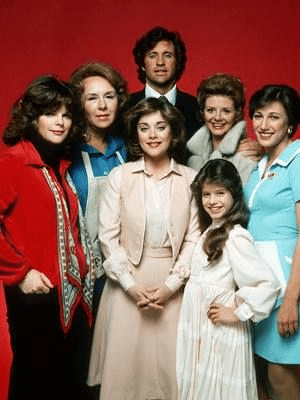
The cast was quite talented: Donna Pescow played Angie, Robert Hays was her boyfriend-later-husband, the amazing Doris Roberts was her mother Theresa before Raymond came along, and Debralee Scott played her sister Marie.
Bradley Benson is a young pediatrician who comes from a wealthy family comprised of his stuffy father Randall (John Randolph), his overbearing sister Joyce (Sharon Spelman), and her daughter Hillary (Tammy Lauren). The show is set in Philadelphia.
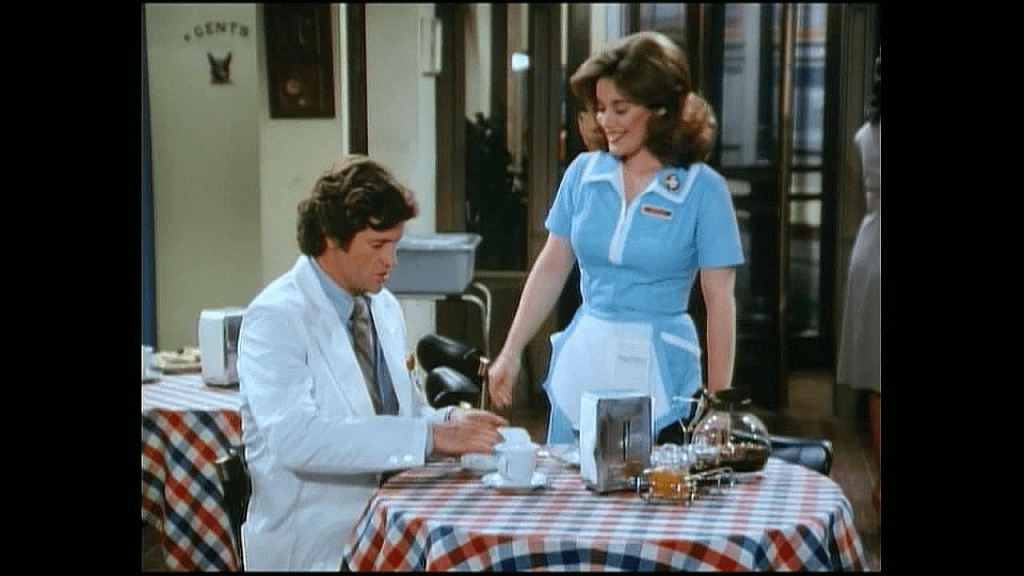
Angie is a coffee-shop waitress who falls in love with Brad. Many scenes are set in the diner with Angie’s friend and co-waitress Didi (Diane Robin). When their families argue about wedding plans, Brad and Angie elope. Later Angie’s mother plans a small family wedding for the two families to get to know each other, and Brad buys the coffee shop for Angie.
At the beginning of the second season, Angie sells the coffee shop to buy a salon with her mother.
📷imdb.com
The theme song was “Different Worlds,” written by Norman Gimbel and Charles Fox. Gimbel is still hard at work and has amassed 494 credits so far while Fox has 131 credits for many impressive television series and big-screen films. Maureen McGovern sang it; she’s best known for her top-forty hit “The Morning After.”
The show was sandwiched between Happy Days and Three’s Company on Tuesday nights, which ensured great ratings. This one was fifth its first week. The show just could not find its fan base. By the end of the season, the Nielsen ratings had fallen drastically, and the show had moved to Monday nights following Monday Night Football. Angie wasn’t the only show to struggle in this time slot. Once it was moved, three other shows—One in a Million, Goodtime Girls, and Laverne and Shirley—all tried this scheduling spot. I’m not sure if the shows were just not very good in 1979, if people were too busy to watch television, or the network heads were inexperienced, but when you look at the schedule from 1979 most prime times had a different show in the slot every season of the year. When it’s not only one show on a network moving, but many shows on a network moving and then all networks having a bunch of shows moving, how are viewers supposed to figure out where anything was? Out of the 54 new shows debuting in 1979, by the next season every network basically had one hit show out of the bunch: ABC-Hart to Hart, CBS-Trapper John MD, and NBC-The Facts of Life. While these are all decent shows, none of them were classics in my opinion. In 1980 another 30 shows were brand new.
📷rewatchclassictv.com
The show was put on hiatus. It did return in April on Saturday nights, but it was officially canceled in May.
When you look at this show on paper, it had all the right elements. First of all, we have Garry Marshall and Dale McRaven, very successful creators and writers. The cast was amazing. Even the theme song was composed and sung by extremely talented people. Then you have the fact that there were not a lot of great shows debuting this year; a decent show should have crushed it. So, what happened here?
I think I’m putting the blame for this one on the network. I watched the pilot and while pilots are meant to pull you back for the next one, most pilots aren’t the best of the series. Some of the pilots for shows I love are almost dreadful. This pilot was not dreadful. The characters were likable, the writing was funny, and the theme was not overdone over the years. It was similar to The Mothers-In-Law from a decade earlier but more of a Dharma and Greg (which came two decades later) where they fall in love despite their economic differences.
📷youtube.com
This series was better than a lot of shows that are currently on the air. I did watch another later episode where the couple elopes. Once again, the writing was good and the characters were a bit eccentric, but the writers knew how far to go to keep them likable and charming rather than odd. If ABC had kept it in a time slot for more than a month or two and given it a bit of time, it might have been a big hit.
If you want to check it out, let me know what you think. For a late seventies/early eighties show, it’s aged very well.
This month our blog series is “It’s Their Show.” Today we are taking a look at The Mickey Rooney Show. This show debuted on NBC in 1954. It was on for one season, producing 39 episodes.
📷singingnewstv.com
Rooney plays Mickey Mulligan, a Guest Relations Staff member who works at a television network, hoping to land an acting career by taking acting lessons at night. It’s interesting that they set the show at a television network, because only 56% of families had televisions in 1954. It’s also interesting that Rooney was playing a young adult, although he was in his mid-thirties.
Mulligan is not content with his salary of $47.62 a week. Lucky for him, his girlfriend Pat (Carla Balenda) is a secretary to the studio program manager, Charles Brown (John Hubbard). Rounding out the cast is the head of the network (John Hoyt) and Mickey’s best friend Freddie (Joey Forman). Freddie also works at the network, and the two friends often grab lunch at the Hamburger Hut.
📷internetarchive.com
To make ends meet, Mickey lives with his parents, Joe (Regis Toomey) and Nell (Claire Carleton). Joe is a retired police officer who met his wife when he arrested her because she was a burlesque dancer.
There were a lot of talented people behind the camera on this show. Blake Edwards was one of the creators, an executive producer, and one of the writers on the show. He would write and produce several shows including Richard Diamond Private Detective and Peter Gunn before moving into movies in the sixties. Later in life he would be known for the Pink Panther movies and marrying Julie Andrews.
Van Alexander was an arranger for Capitol Records, and he produced the soundtrack for the show. He was a collaborator with Ella Fitzgerald and worked on Bewitched and I Dream of Jeanne as well as big-screen productions.
📷BBC.com Van Alexander
Leslie H. Martinson was one of the primary directors for the show, working on 33 of the episodes. In a Television Academy interview, he discussed working on the series. He said he often had to shoot around Mickey’s role because Mickey was off at the racecourse and then they’d film him when he showed up. He said Rooney was a genius with the way he reacted to things and often his expressions made the entire scene worthwhile.
NBC scheduled the show on Saturday night against The Jackie Gleason Show, which was one of the most popular shows on television at the time. There were some derogatory comments made about Gleason by Rooney that got leaked to the public, and it caused a lot of turmoil for the show before it even aired.
📷amazon.com
The show started with a tagline, sort of like the beginning of That Girl had. While Rooney is boxing, someone yells “Hey Mulligan.” I watched episode 8 of the first year, “Tiger Mulligan.” In this episode, Mulligan’s parents are watching television when Mickey comes home from the gym where he’s working out to be an amateur boxer. His dad is ecstatic, but his mom is not too happy. His girlfriend agrees with her, and she doesn’t like having to sit around by herself at night. His mom, who is a fun character, convinces him that he’s trained too hard and is overly weak. She sets him up by gluing some items to the shelf and making a jar impossible to open. He thinks his mom is stronger than he is and that he needs to pull out of the fight. However, his dad realizes what she’s up to and when he calls her on it, Mickey gets excited for the match. However, at the ring he realizes that his opponent looks like a weakling but has a strong right arm. The fight ends with both of them passing out when they see blood. I really enjoyed the writing, the characters, and the music; I will say that the laugh track was a bit hard to get used to though.
I know something has to go up against the big hits on the television schedule, but it seems like this would have been a fun show if it had competed against a show that wasn’t in the top ten. The entire series is available on DVD if you want to check it out.
As we wind up our “Go West Young Man” blog series, we turn our attention to CimarronStrip for the last blog of the series. This show was only on the air for one season, from 1967-68. It was produced by the creators of Gunsmoke, America’s most beloved western. Like The Virginian, it was a 90-minute show.
📷mubi.com
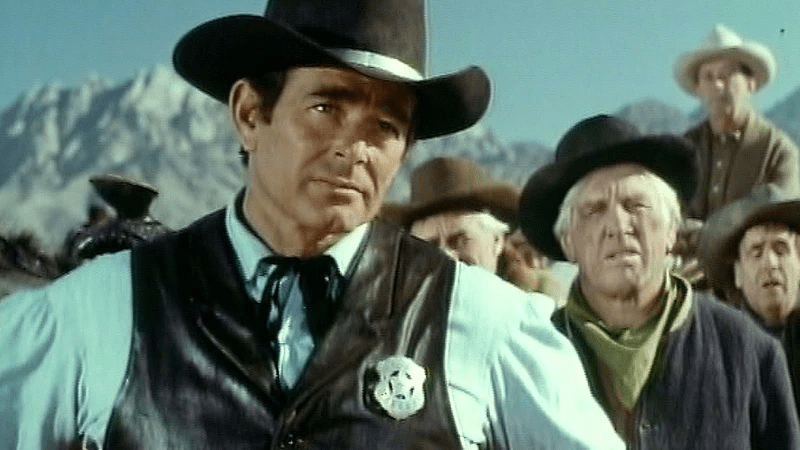
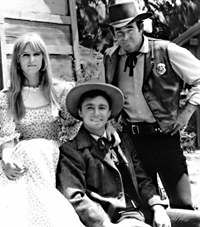
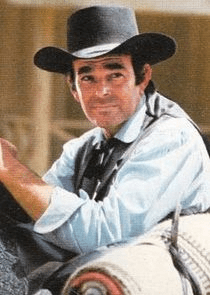
Set in the Oklahoma in 1890, the series occurred in a geographical region called No Man’s Land, an ungoverned area for several decades. Marshal Jim Crown (Stuart Whitman) tries to bring law and order there. Crown arrives only to learn that the sheriff has resigned, and it’s up to him to bring peace to the area with no Army support. We get to know Dulcey Coopersmith (Jill Townsend) who comes to live with her father, but upon her arrival, she discovers he is dead. Her father’s partner MacGregor (Percy Herbert) has let their Wayfarer’s Inn become a bit dilapidated, but Dulcey is determined to bring it back. Marshal Crown stayed there when he was in Cimarron City. Francis Wilde (Randy Boone) often served as Crown’s deputy.
📷pinterest.com
Rounding out the cast is the bartender at the Inn, Fabrizio (Jack Braddock); Major Covington at a nearby Army fort (Andrew Duggan); a Dr. Kihlgren (Karl Swenson); and Hardy Miller (Robert J. Wilke).
The show was on Thursday nights, up against Batman, The Flying Nun, and Bewitched on ABC. It faced Daniel Boone and Ironside on NBC. Definitely some tough competition.
The theme song was composed by Maurice Jarre, who was the scorer for the films Lawrence of Arabia and Doctor Zhivago for which he won two Oscars.
The show never attained the ratings numbers it needed to keep its place on the schedule. From what I have been able to find out, it was well written and well cast. Guest stars kept it interesting, and the scenery was beautifully filmed.
📷tvmaze.com
I’m guessing the main reason the show didn’t make it was just viewer fatigue with the western genre. There were already shows like Bonanza and Gunsmoke which were hugely popular. One more western might just have been one too many, no matter how good it was. In addition to the western series, some of the shows that were on the air when Cimarron Strip debuted included That Girl, Hogan’s Heroes, Mannix, Batman, Lost in Space, Get Smart, and Rowan and Martin’s Laugh In—very different choices than westerns. I do remember Arnold the pig on Green Acres always wanting to watch westerns on television. We still fall prey to this on the major three networks. After ER became popular, the next season featured ten new medical shows. And then most of them get cancelled, not necessarily because they’re bad but because it’s just an overload of medical shows.
Most people don’t want the same supper every night even if it’s steak or lasagna. That said, this seemed to be a steak kind of show, so just because it couldn’t survive the mass onslaught of westerns in the sixties doesn’t mean it’s not worth watching. If you check it out, let me know what you think.
This month our blog is devoted to The Bill Dana Show which was on the air for two seasons in the early sixties.
📷dvdplanetstore.com
Bill Dana is not a name remembered much anymore but, in the sixties, he was a huge celebrity. There is some tough talk about why he was so famous. During the late fifties and early sixties, especially as so many radio shows transitioned to television, there were some politically incorrect shows. This one teetered on the edge of it, in the same ways the show Life with Luigi did.
Bill Dana’s alter ego, Jose Jimenez, debuted on The Steve Allen Show in the late fifties. Jimenez was a Mexican immigrant. He saw the United States through a different lens than people who grew up here. He often was amused by what he saw going on around him. However, he was not the lazy stereotype Mexican. Jimenez was hard working and wise in many ways. He was not offensive in the way Amos and Andy were. Dana was a Hungarian Jewish man playing a Hispanic man so that was not well received either.
While I still love so many programs from the fifties and sixties that hold up well today and have delightful characters, many programs from this time make us cringe and we are embarrassed for the television industry at that time.
There are also many performers that may have bordered on sexual and ethnic political incorrectness, many of their characterizations may not be offensive, but I sure don’t find any humor in them.
📷 Jose Jimenez televisoinacademyawards.com
Remember this was during the Civil Rights Movement era, so things were beginning to get examined more closely in pop culture. Even if Jose was a good guy, his exaggerated accent set him up more of a caricature than a character.
While there was some blowback from the Latino community, many fans adored Jimenez. Danny Thomas and Sheldon Leonard decided to give Jose his own show after he made a few appearances on The Danny Thomas Show. NBC put the show on its schedule without even seeing a pilot because he was so popular.
While the quick sketches with Jose were in your face humor, putting the character in his own television series gave the writers time to develop him more and make him more dimensional. Leonard made this a workplace sitcom which was different for him since so many of their shows—The Dick Van Dyke Show, The Danny Thomas Show, That Girl, Good Morning World—were all balancing personal and work life. Earl Hagen, who wrote so many great tunes for the Leonard group, wrote this one as well.
The show aired September 22, 1963, and ran for a season and a half, ending January of 1965.
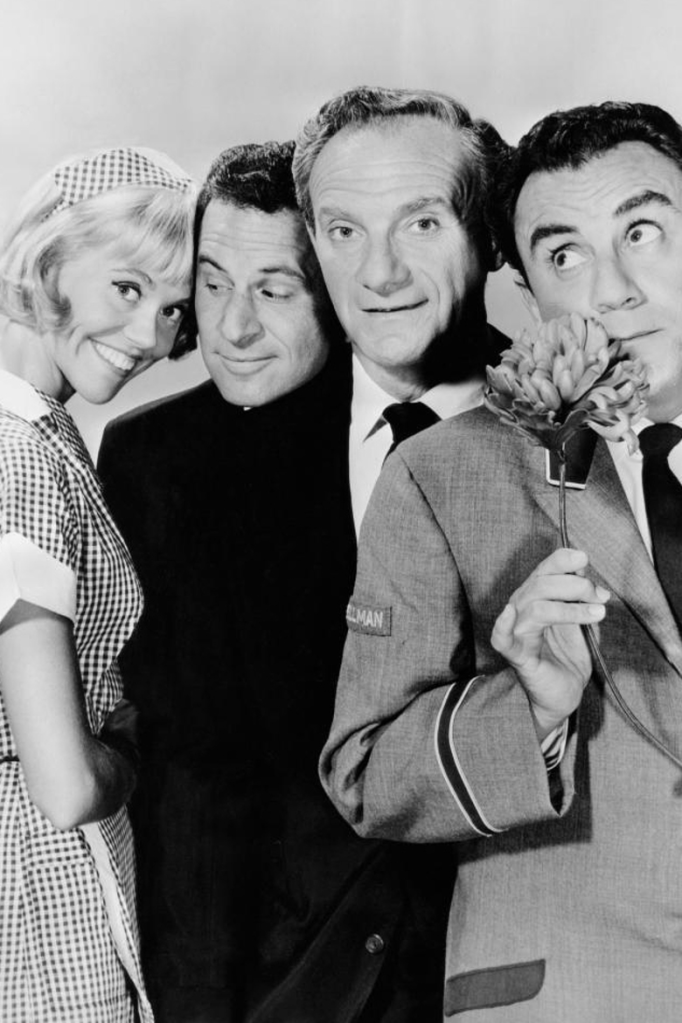
Jimenez is a bellhop at a luxury New York hotel. He lives in a special staff apartment, eats in the hotel kitchen, and interacts with most of the guests. He is surrounded by a great cast which we’ll get to know in more detail this month. Don Adams was Byron Glick, house detective. Jonathan Harris took on the role of Mr. Phillips, the hotel manager. Fellow bellhop Eddie (Gary Crosby) is always trying to get Jose to lose his rose-colored view of life. For season 2. Maggie Peterson plays waitress Susie.
The ratings were not great. Perhaps viewers had a harder time connecting this Jose to the caricature Jose. Certainly, more criticism came from the Latino community as the show went on. In addition to Jose, there was feedback on other shows that used stereotypical Mexican characters and in commercials like the Frito Bandito.
📷washingtonpost.com
Jose had one cameo role in Batman when he meets the duo and introduces himself as “My name—Jose Jimenez” in 1966. That was the final appearance of the character and a few years afterward, Dana read an obituary that he wrote for Jose at a Latino civil rights meeting in Los Angeles, and he became an activist for the Latino community, so there was some good coming out of the situation.
The show was canceled partway through season two. Another factor in the show’s ratings was the fact that it was on Sunday nights up against Lassie, a family favorite. However, the show did somehow receive an Emmy nomination for outstanding sitcom. No surprise it didn’t win. Despite being a mediocre show with some nugget of greatness here and there, it was up against McHale’s Navy, The Farmer’s Daughter, and the show that won, The Dick Van Dyke Show.
If The Bill Dana Show had just been a show about “a guy” who arrives from Mexico to work in a posh hotel, and we saw life through his eyes, good and bad in America, the concept could have been fun and more accepted. It appears that the writing was pretty good and it had a great cast. Jose was just not the character to build the show around.
As we are in the middle of our What in the World? blog series, today it’s a forgotten sitcom from the sixties: Good Morning World.
📷wikipedia.com
This series was created by Sam Denoff and Bill Persky, the team behind That Girl. The concept was based on Persky and Denoff’s time as writers for a New York radio station in the fifties.
In fact, William B. Williams, a WNEW DJ was given screen credit because the title was based on his daily greeting, “Hello, World.” William B. Williams was quite a character and an icon in the world of music. He was born in 1923 and after attending the University of Syracuse, he got a job with WAAT in New Jersey. He filled in for a DJ who failed to come to work but then was fired for, believe it or not, wearing red socks to work. He was hired by WNEW in New York City. He became a beloved radio icon. The radio station said at his funeral there was a huge crowd outside which included taxi drivers, sanitation workers, bookies, waitresses, singers, songwriters, politicians, housewives, first responders, and even the Rockettes.
📷radiohalloffame.com William B. Williams
According to the radio station’s website, “William B. Williams respected singers and songwriters, music and musicians, and it showed. He had a permanent, perhaps profound, effect on the lexicon of pop music.
He bestowed the ‘Count’ on Basie and the ‘Duke’ on Ellington. Billie Holiday was ‘Lady Day.’ Ella Fitzgerald was the ‘First Lady of Song.’ Louis Armstrong was ‘Pops.’ Sinatra was ‘Francis Albert,’ the ‘Chairman of the Board.’ Nat ‘King’ Cole was simply ‘Nathaniel.’”
The show was produced by Sheldon Leonard and Carl Reiner. Looking at that alone and you would expect it to be a hit.
The premise was two radio disc jockeys who have a morning show, “Lewis and Clarke,” in Los Angeles. Dave Lewis is happily married, and Larry is a lady’s man and party boy.
They had some problems casting this show. Roddy McDowell and Sharon Farrell were cast as the married couple. Then Ron Rifkin replaced McDowell. Then they were both let go and David Lewis was played by Joby Baker, his wife Linda was played by Julie Parrish, and Ronnie Schell was cast as Larry Clarke.
📷pinterest
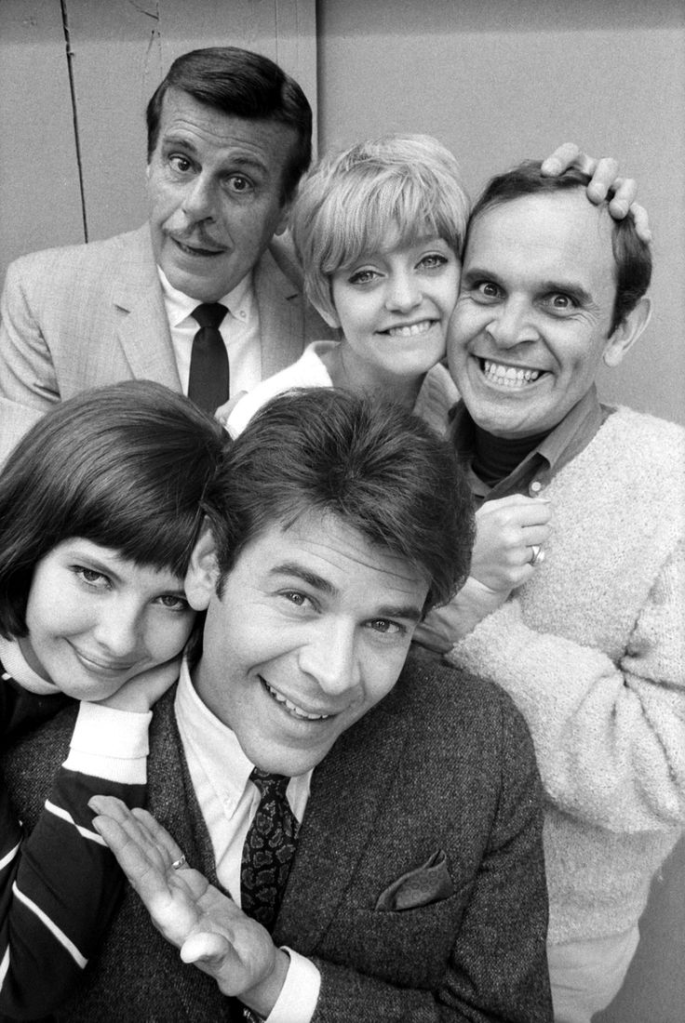
Billy de Wolfe and Goldie Hawn were fun additions to the cast. De Wolfe played Roland Hutton, the stuffy station manager. Hawn was Linda’s best friend Sandy Kramer.
The series debuted on CBS in 1967. It was on Tuesday nights, sponsored by Procter and Gamble. It was competing with N.Y.P.D., a police crime show and Tuesday Night at the Movies which began half an hour before Good Morning World.
Given that the talent behind The Dick Van Dyke Show was contributing to this show as well, it’s not surprising that it seems to be a mixture of The Dick Van Dyke Show and the later Mary Tyler Moore Show. Like Dick Van Dyke, the show features the DJs’ home and work life; like Mary Tyler Moore, you have a Lou Grant-type manager, and we learn about life at a radio station.
The theme music was by David Grusin. The opening was a different look for a sitcom. It’s a bouncy theme that begins with an alarm clock ticking, the guys quickly getting ready, morning traffic, life in LA, and the two DJs barely getting into their chairs before the show started.
The show was not awful in ratings, but the network had two concerns. They still were not sure Baker and Parrish were the right actors to play the married couple, and Parrish had some health concerns that affected the show. They were also concerned that the show did not pull in more of the viewers who were watching The Red Skelton Show which was on before Good Morning World. I don’t think that is surprising. I’m guessing people who enjoyed watching Red Skelton would not love this show as much and vice versa. Full disclosure, I am not a Red Skelton fan. I didn’t find his humor funny, and I have read too many stories shared by actors and writers who experienced his ego and lack of respect dealing with coworkers.
📷imdb.com
The network made the decision not to renew the show for a second season. Schell, who had been playing a private on Gomer Pyle: USMC, another Leonard/Reiner show, returned to military life with a promotion to corporal.
Goldie Hawn was free to accept an offer to appear on Martin and Rowan’s Laugh In which was a turning point for her career. De Wolfe became part of the cast of his close friend Doris Day’s show.
Baker never starred in another show, but he was a busy character actor. Parrish was later cast in Return to Peyton Place and also stayed busy in television; she later had a recurring role on Beverly Hills 90210.
This would be an easy series to binge watch with 26 episodes available. S’more Entertainment released the series on DVD in 2006 and its’ on Roku, so viewers can check it out for free.
This month we are right in the middle of one of my favorite blog series, What a Character. This week we are delving into the career of Noam Pitlik; in addition to his acting, he won an Emmy for his work as a director. Which show? Let’s find out.
Pitlik was born in Philadelphia in 1932. After graduating from high school, he enrolled at Gratz College and later was a theater major at Temple University in 1954. Pitlik had a two-year stunt in the Army and earned a master’s degree in theater at New York University.
He began his acting career on WCAU in a western. In 1951, he was hired for the set design and construction crew for the Philadelphia Experimental Theater. He carried a bit of his hometown with him when he was part of the Summer Theater Guild in Indiana, Pennsylvania in the “Philadelphia Story.” He was hired for his Broadway debut in an off-Broadway production of The Threepenny Opera.”
📷imdb.com
In 1961 he moved to Los Angeles and received his first television roles, appearing on Cain’s Hundred and Dr. Kildare. Cain’s Hundred was not a show I remembered hearing much about. It was about a former underworld lawyer who works with the federal government to bring the top 100 criminals to justice. The show lasted one season. Pitlik had a variety of offers for shows throughout the sixties. Most of them were dramas and westerns, but we also see him on My Favorite Martian, The Munsters, Gidget, The FlyingNun, The Monkees, The Andy Griffith Show, The Doris Day Show, Get Smart, That Girl, and I Dream of Jeannie.
During the sixties, he married for the first time. His marriage with Jesse Blostein in 1967 would only last three years.
Pitlik also appeared in fourteen films and eight made-for-tv movies. The most memorable films are The Graduate, Fitzwilly, and The Fortune Cookie.
📷famousfix.com
The seventies were his most prolific decade of acting. He appeared in 26 different series, often in 2-5 different episodes. You’ll see Pitlik in reruns in a variety of genres including Hogan’s Heroes, Room 222, Bewitched, LoveAmerican Style, All in the Family, The FBI, Cannon, Mannix, The PartridgeFamily, The Bob Newhart Show, The Odd Couple, and Barney Miller. His last acting appearance was in Becker in 1998.
The seventies were also when he tried the role of husband again, marrying Linda Hirsch in 1974; this marriage also lasted three years.
He began directing in the seventies and obtained 39 directing credits throughout the next two decades.
📷imdb.com
In an interview with Temple University for the Alumni Review in 1979, Pitlik said that the switch in his career was not “a case of my needing to change functions for economic reasons. I used to figure out what I made a day as an actor, and it was obscene. I changed for emotional reasons. I had become very frustrated by the kinds of things I was doing in acting, and I was looking for a change in my life that would be more challenging. I enjoyed acting, but I never seemed to get enough to do.” His first episode as director was on The New Dick Van Dyke Show. He directed 12 episodes for The Practice and 11 for Taxi.
However, Barney Miller was where he perfected his skill as director for 102 of its 171 episodes. In 1979, he won an Emmy as Director for the show. He beat out Paul Bogart for All in the Family, Alan Alda and Charles Dubin for M*A*S*H, and Jay Sandrich for Soap. He also received a Peabody Award and a Directors Guild of America Award for his work on Barney Miller. He lost the Emmy in 1981 to James Burrows for Taxi. His co-nominees included Jerry Paris for Happy Days, Linda Day for Archie Bunker’s Place, Burt Metcalfe and Alan Alda for M*A*S*H, and Rod Daniel for WKRP in Cincinnati.
📷tumblr.com Cast of Barney Miller
In the Temple interview, Pitlik said that his “main responsibility is to create an atmosphere in which each of the people involved in the production can conform to their best work. Although a director oversees all aspects of the production, there are many people involved, and he’s dependent on all of them. There’s no more collaborative business than the television business. Each person contributes to the success or failure of a show whether he or she is a writer, actor, cameraman, or whatever.”
In 1995 he began directing episodes of The Home Court and did so for 14 of the 20 episodes. I must admit I do not remember this show at all. The synopsis was Sydney Solomon was a family court judge who had to deal with the toughest prosecuting attorneys and repeat offenders. However, her biggest challenges came when dealing with her kids, four boys aged 11-19.
📷pinterest.com
Pitlik had better luck with his third marriage to Susan Whittaker which lasted from 1986 until his death in 1999. Whittaker was a television producer. Noam passed away from lung cancer at age 66.
Like Jerry Paris, Pitlik had a very successful acting career before finding his passion behind the camera. If you are responsible for directing a series, Barney Miller is a great accomplishment. It was fun to learn more about his career both in front of and behind the camera.
Today we began our “What a Character” blog series. Typically, when we discuss character actors, we are looking at actors who were busy in the forties, fifties, and sixties, but in the past sixty years, there have been a lot of great character actors as well. Today we are looking at the career of Richard Schaal.
Schaal was born in Chicago in 1928. His dad was a machinist, and his mom was a telephone operator. After he graduated, he ran a construction company before joining the Second City comedy troupe in 1959, not long after it began.
In 1950 he married Lois Treacy. I could not find a divorce date, but it was some time before 1964. They had a daughter Wendy who is also an actress.
Eventually he made his way to California. He had seventeen film credits on his resume; most of them were not too memorable, but he was in The Russians Are Coming, The Russians Are Coming and Slaughterhouse Five.
📷imdb.com
Television is where he made most of his acting appearances. He began his TV career in 1964 in East Side/West Side. This was a show I had not heard of before. Apparently, it was on for one year and starred George C. Scott as a social worker trying to help his clients in the mix of cultures that makes up New York City.
Schaal would find a few more roles in the sixties on several shows including The Dick Van Dyke Show, That Girl, and I Dream of Jeannie.
In the sixties, Schaal met Valerie Harper and they married in 1964.
During the seventies, he collected roles on many sitcoms including The Doris Day Show, The Partridge Family, Love American Style, The Bob Newhart Show, and The Mary Tyler Moore Show.
📷foxnews.com
On The Mary Tyler Moore Show, he played Howard Arnell, Paul Arnell, Chuckles the Clown, and Dino. Not surprisingly, he made appearances on Rhoda and Phyllis.
In 1970, Schaal and Harper wrote a script for Love American Style for “Love and the Visitor” which aired on season two, episode 5 where a bridegroom ends up in the wrong girl’s bedroom. Harper said they were part of the Writers Guild, but their hearts were in acting and once she got the part of Rhoda, the writing stopped.
Harper discussed Schaal during an interview with the Television Academy. She describes him as her former husband and good friend. She said she and Schaal hosted a talk show with Skitch Henderson for about a year in the mid-sixties. They did interviews and sketches. She said after that they decided to move to Los Angeles.
📷imdb.com The Russians Are Coming The Russians Are Coming
The seventies were also a busy time for Schaal who continued to find roles on television. You can see him on dramas such as Nero Wolfe and Hardcastle and McCormick. He also was on sitcoms including Harper Valley PTA and JustOur Luck. He had a recurring role during this decade on Trapper John MD from 1981-85. The show was a sequel of M*A*S*H and portrayed Trapper later in life. Schaal played Dr. David Sandler. He also accepted a role on It’s a Living in 1980. His daughter Wendy was part of the cast. She has a very successful career and has appeared in many popular series. From 2005-2023, she was one of the voices in American Dad.
In 1980 he tried marriage a third time with Tasha Brittain. They would divorce in 1989.
📷pinterst.com
Schaal retired in 1990 and passed away in 2014 in Los Angeles. No cause of death was provided. He did have spinal surgery in the late 90s and was in a wheelchair after that.
Sadly, I could not find a lot of information about Schaal or his personal life. He had a successful career, but it’s too bad there wasn’t more improvisational work at the time. It sounds like he was very gifted in that area. He didn’t have as much luck in love, but at least, according to Valerie Harper, he was a great guy and they remained good friends. He was one of those character actors who added so much to the television industry, especially in the sixties and seventies.
This month we are starting a new blog series, Casting Celebrities. We’re going to take a look at four shows that featured a group of celebrities every week. We’ll learn more about Love, American Style; Fantasy Island; The Love Boat, and Supertrain. When we discuss Supertrain, we’ll also look at the small number of stars who appeared on all four shows.
Today we begin with Love, American Style. This show was an iconic 1970s show. Like Laugh In, the clothing, furnishings, and vocabulary do not make it timeless. But it was a lot of fun. This fast-paced anthology series featured two to four mini episodes each week, and between them were quick skits, often featuring a brass bed. Each smaller episode is titled “Love and the _______.”
📷gms.com The regular cast
A troupe of players was featured on each show for the in-between skits. These regulars included William Callaway, Buzz Cooper, Phyllis Davis, Mary Grover, James Hampton, Stuart Margolin, Lynn Marta, Barbara Minkus, and Tracy Reed. Margolin went on to a regular role in TheRockford Files; Tracy Reed was featured in McCloud and Knot’s Landing; Phyllis Davis was part of the cast of Vega$ and Magnum PI, and James Hampton will be familiar if you watched The Doris Day Show or F-Troop.
The show had a memorable and catchy theme song. Written by Arnold Margolin, the first year it was performed by The Cowsills. The snappy melody was set to the following words:
Love, Love, Love
Love, American Style, Truer than the Red, White and Blue. Love, American Style, That’s me and you.
And on a star-spangled night my love,
My love come to me. You can rest you head on my shoulder. Out by the dawn’s early light, my love I will defend your right to try.
Love, American Style, That’s me and you.
📷imdb.com
During the second and subsequent years that Love, American Style was on the air, the theme song was performed by the Ron Hicklin Group. The Ron Hicklin Group could be heard in a variety of motion pictures and commercials, and they also appeared on recordings with stars such as Paul Revere and the Raiders and Cher. John and Tom Bahler, brothers who sang under The Charles Fox Singers were also part of this group. The band provided television theme song recordings including Batman, That Girl, Happy Days, and Laverne and Shirley. They also did the singing for The Partridge Family theme and songs performed on the show as well as the Brady Bunch Kids. Ron retired in the early 2000s, and Tom does a variety of things. He is also known for writing Bobby Sherman’s hit, “Julie Do You Love Me?”. John married Janet Lennon, one of the Lennon sisters who performed on The Lawrence Welk Show. He currently lives in Branson and conducts the “new” Lawrence Welk orchestra.
Paramount Television developed the show. The executive producer of the show was Arnold Margolin, Stuart’s brother. There were 53 different directors during the four-year run. The series received Emmy nominations for Outstanding Comedy Series in 1970 and 1971; Best Music Composition in 1971, 1972, and 1973, winning in 1973; and winning the Emmy in 1970 for Outstanding Original Music and Lyrics.
📷rewatchclassictv.com
Many people wrote for the show, but Garry Marshall and Jerry Belson received the most credits. One of the writers, Peggy Elliott, was interviewed by the Huffington Post in May of 2013, and she talked about her time writing for the show.
“But the show I loved writing the most, was Love, American Style. For every other show, I was writing for characters created out of someone else’s head. Sure, we could create the occasional guest-star role, and we had been told to make every role, no matter how small, a real person. ‘Think of the actor who’s playing that delivery boy,’ I can hear Billy Persky, the co-creator or That Girl, say: ‘This is a big break for him — it’s the biggest role he’s had so far. Give him something to work with.’
But with Love, American Style, every character was our very own; every situation came out of our heads. Each segment of the hour the show ran each week was a one-act play created entirely by us. Added to the attraction was the fact that we could say and do things that were taboo on every other TV show in the early ‘70s. Arnold Margolin, co-creator of the show with Jim Parker, told me recently that the creative side of the network wanted the show to be more daring, while the censors kept their red pencils ready. There was a full-time position on the show just to run interference.
We must have put both sides through the hoops with one episode we wrote: ‘Love and The Hand-Maiden.’ A young guy was dating a centerfold model. As their relationship developed, he discovered that she had no problem with shedding her clothes, but she always kept her hands covered — with artful poses in magazines, and with gloves in real life. He became obsessed with seeing her hands and came up with one ruse after another to get her to take off her gloves. We had a ball writing it, with one double-entendre after another.”
📷imdb.com
If you were a star of any kind in the early 1970s, you most likely were on Love, American Style. The show produced 108 episodes, and those shows featured 1112 different actors. Some of the famous names showing up in the credits include Milton Berle, Sid Caesar, Phyllis Diller, Arte Johnson, Ozzie and Harriet Nelson, Regis Philbin, Burt Reynolds, Sonny and Cher, Flip Wilson, and Jo Anne Worley.
Brad Duke wrote a biography about Harrison Ford, and he said Ford had fond memories of appearing on Love, American Style. “He recalled that he had been given little time to prepare his wardrobe for the role of a philosophical hippie in the November 1969 episode, “Love and the Former Marriage.” He appeared on set with long hair and a beard thinking they were appropriate for the role. He was surprised when he was told he needed a haircut and trim and then was given a navy blue dress shirt and vinyl burgundy jeans with a large belt. They even had a scarf with a little ring to put around my neck. And I thought, someone has made a mistake here. So, rather than argue with the wardrobe people, I put on the clothes and went to find the producer. I walked on the set and he was pointed out. I tapped his shoulder and when he turned around he had on the same clothes I did. He was a hippie producer I guess. At least the check went through, and I got paid.”
The best way to get a good understanding of what the show was like is to look at a couple of the episodes.
January 23, 1970: Love and the Big Night
📷facebook.com
Starring Ann Elder, Buddy Lester, Frank Maxwell, Julie Newmar, and Tony Randall, this episode is often listed as a favorite of viewers. Randall is a married businessman who escorts his voluptuous secretary (Newmar) to her apartment after a late night at the office. Eager to get home to his wife, Randall hurriedly tries to open a stubborn jar of mayonnaise and winds up covered with mayo. Newmar cleans his suit, but while it’s drying, it’s stolen. After a series of amusing mishaps, Randall finally gets back to his own apartment and creeps into bed with his wife–only to find out she’s not there.
February 25, 1972: Love and the Television Set
📷that’s entertainment.com
It starred Harold Gould, Marion Ross, Ron Howard, and Anson Williams. Reading this list of names might give you a hint about what happened to this episode after it aired. Garry Marshall had written a pilot about a 1950s family that did not sell. He turned it into an episode for Love, American Style. George Lucas caught the episode and was impressed with Ron Howard and offered him a role in his new movie American Graffiti about 1950s teens. The movie was so popular that the network decided to put Marshall’s pilot in the fall line-up as Happy Days. Harold Gould’s role was given to Tom Bosley for the series. When Love, American Style went into syndication, this episode was retitled “Love and the Happy Days.”
October 22, 1970: Love and the Bashful Groom
📷listral.com
This is the episode I recall when I think of the series. When I watched it originally, I was staying overnight at my grandparents’ house and my grandmother was shocked at the “vulgarity.” It really seems quite tame today, but back then it probably was unexpected. She would approve of Tom Bahler marrying Janet Lennon though because I watched Lawrence Welk with her and my grandfather whenever I was at their house.
In this episode, Paul Petersen, Christopher Stone, Meredith MacRae, Jeff Donnell, and Dick Wilson are featured. Harold (Petersen) and Linda (MacRae) are getting married. He learns that she grew up in a nudist colony and is not comfortable being naked for his wedding. After a soul-searching talk with his best friend, and realizing he loves Linda enough to be uncomfortable, he decides to go through with the ceremony. He gets to the church a bit late and walks in, only to see that everyone else is dressed in their Sunday best. His bride informs him that they always dress up for weddings. One of the congregation members says something like “Let’s not make him uncomfortable,” and they all begin to undress. Of course, you see nothing improper, no naked bodies, only clothes flying. This was probably not the best episode to “expose” my grandmother to as a first glimpse of the show.
The show lasted for four years and was cancelled in 1973. In 1985, a reboot was created, but it was on in the mornings and only lasted a few months. The show was on at the same time as everyone’s favorite game show, The Price is Right. For the 1998 fall season, a pilot was created for prime time, but it was never ordered. While doing my research for this blog, I noticed that there was a Love, American Style project in production, so we may see it resurface again. I’m not sure I would want to watch a contemporary version of the show though. It was such a product of its time, and I fear what a current version would be like after seeing the reboot of Match Game which has been airing the past few years.
This month we are celebrating some of our favorite Supportive Men, actors who usually are not the star of a show but add the special flavor only they can to some of our favorite shows.
Before we move on to our topic today, can I just say a huge THANK YOU to all of you who have joined me on this journey through classic television. Today is my 400th blog and it has been so much fun. Next week will be 401, but for today we are looking at the career of Vic Tayback.
📷graduation photo
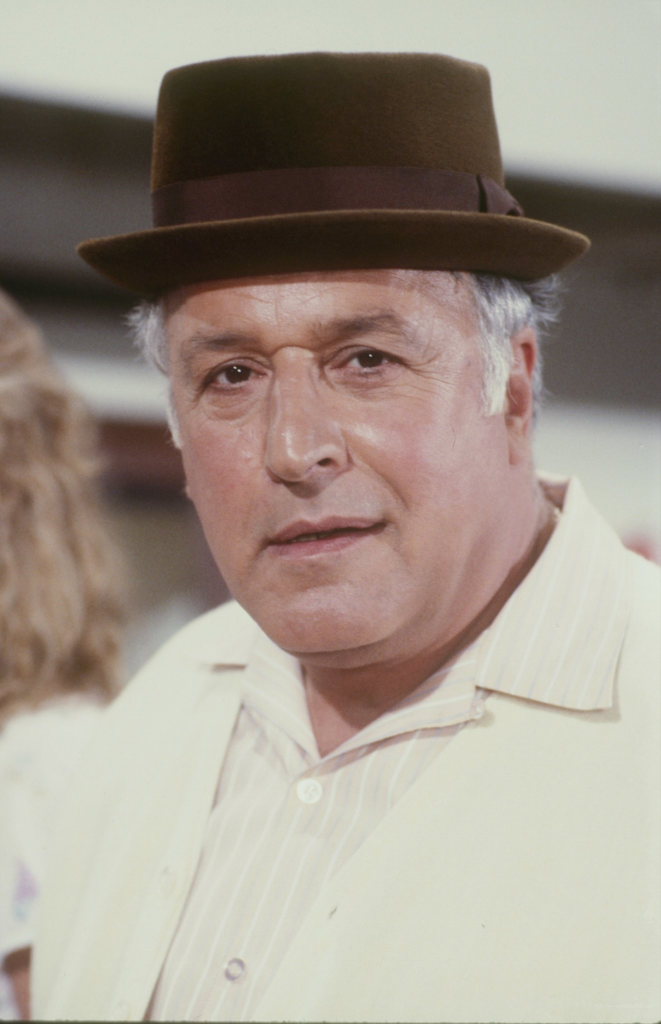
Most of us probably know him best as Mel on Alice; he played Mel Sharples in both the original movie, Alice Doesn’t Live Here Anymore, as well as the television show that was on for nine years.
Tayback was born in Brooklyn in 1930. His parents settled there after leaving Aleppo, Syria. During his teenage years, the family moved to California where he attended Burbank High School. He loved sports and played on a variety of teams, his favorite being football.
After high school, he enrolled at Glendale Community College. He also spent some time with the US Navy.
With his love of sports, he decided to attend the Frederick A. Speare School of Radio and TV Broadcasting to be a sports broadcaster. While there he was required to perform in a production of “Stalag 17” for one of his classes. He wasn’t thrilled about doing so, but he realized that he loved making people laugh and decided to switch his career to acting. While trying to break into the industry, he paid his dues driving a cab and working as a bank teller.
📷embarrassingtreasures.com Family Affair
The first of Tayback’s astounding 151 acting credits occurred in 1958 in a little-remembered series, Buckskin. This western was set in Annie O’Connell’s boarding house in Buckskin, Montana in 1880 and the stories were told by ten-year-old Jody. Vic continued to receive a few other appearances on television in the late fifties, as well as two films.
In the sixties, Tayback’s career took off. He would show up on 32 television episodes and 9 big-screen films, including With Six You Get Eggroll with Doris Day and Brian Keith. His tv roles were in comedies such as F-Troop, I Dream of Jeannie, Family Affair, Get Smart, The Monkees, and That Girl. He also could be seen in a variety of dramas that included 77 Sunset Strip, Dr. Kildare, Rawhide, Cimarron Strip, Star Trek, and Mission Impossible.
📷newyorkdailynews.com The Cheap Detective
The sixties also found Vic in the role of groom. In 1963, Tayback married Sheila Barnard, and they remained married until his death.
During the seventies, his appearances escalated to more than forty television series and ten movies. Some of his television shows included Bonanza, TheMary Tyler Moore Show, Bewitched, Columbo, Mannix, Ironside, Mod Squad, The Partridge Family, All in the Family, Barney Miller, Cannon, Medical Center, Family, and Hawaii Five-0. His movies included a few genres running from Disney’s The Shaggy DA to Papillon (Papillon was the story of a French convict who befriends a fellow criminal in South America in the 1930s, and he plans an escape).
It was during the mid-seventies that he was offered the role of Mel Sharples. In 1974 the movie was released, and the television show aired in 1976. The show was very popular with viewers. Vic said he and Mel were somewhat similar characters. While people still quote Flo on the show with her “Kiss my grits,” Tayback had his own tagline on the show, “Stow it.”
📷imdb.com Alice
If you didn’t see the show, it featured a greasy-spoon diner in Phoenix, Arizona. Alice moves there after the death of her husband with her son Tommy. She becomes a waitress at Mel’s along with sassy Flo and shy, gullible Vera. Despite the bad food, they have a lot of regulars who come in for a meal. If you want to visit the restaurant, the building it was based on is at 1747 NW Grand Ave in Phoenix and was called Pat’s Family Restaurant. (It was also featured in American Graffiti.) It is now called Mel’s Diner. According to Trip Advisor, it is ranked #448 out of 1795 restaurants in Phoenix.
📷imdb.com
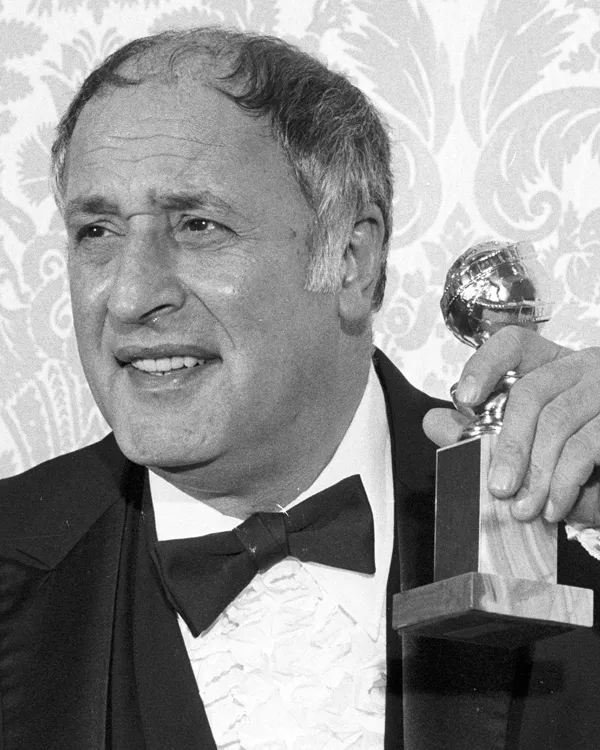
The role of Mel won Tayback Golden Globe awards in both 1979 and 1980. In 1978 he was nominated for an Emmy as Supporting Actor in a Comedy. While he did not win, he was in some amazing company. That year, fellow nominees included Harry Morgan and Gary Burghoff for M*A*S*H, Tom Bosley in Happy Days, and Rob Reiner from All in the Family, who took home the win that year.
The series aired on Saturday nights and the first year was in the top thirty. In 1977, its second season, it was moved to Sunday nights, following All in the Family where it rose into the top ten. In 1979, All in the Family left the airwaves, and Alice then followed One Day at a Time. Seasons three-five, it continued to be in the top thirty. In 1981, the show was moved to Monday nights up against M*A*S*H where it fell out of the top 30. However, season seven found it back on Sundays following The Jeffersons where it rose back into the top thirty. However, it took another dive in ratings the next year and then was cancelled. I think it probably stayed on the air a year or two beyond when it should have. However, interestingly enough, the year it was cancelled, CBS introduced 15 new shows. I’m not sure most people have ever heard of any of them; they were all gone by 1986 with the exception of The Twilight Zone (reboot) and West 57th, which was a news show aimed at younger audiences.
Vic was also an avid horse-racing fan and owned quite a few thoroughbreds. On Alice, Mel was also a track fan, and sometimes the writers asked Mel for names of horses they could use, and he often gave them names of his horses.
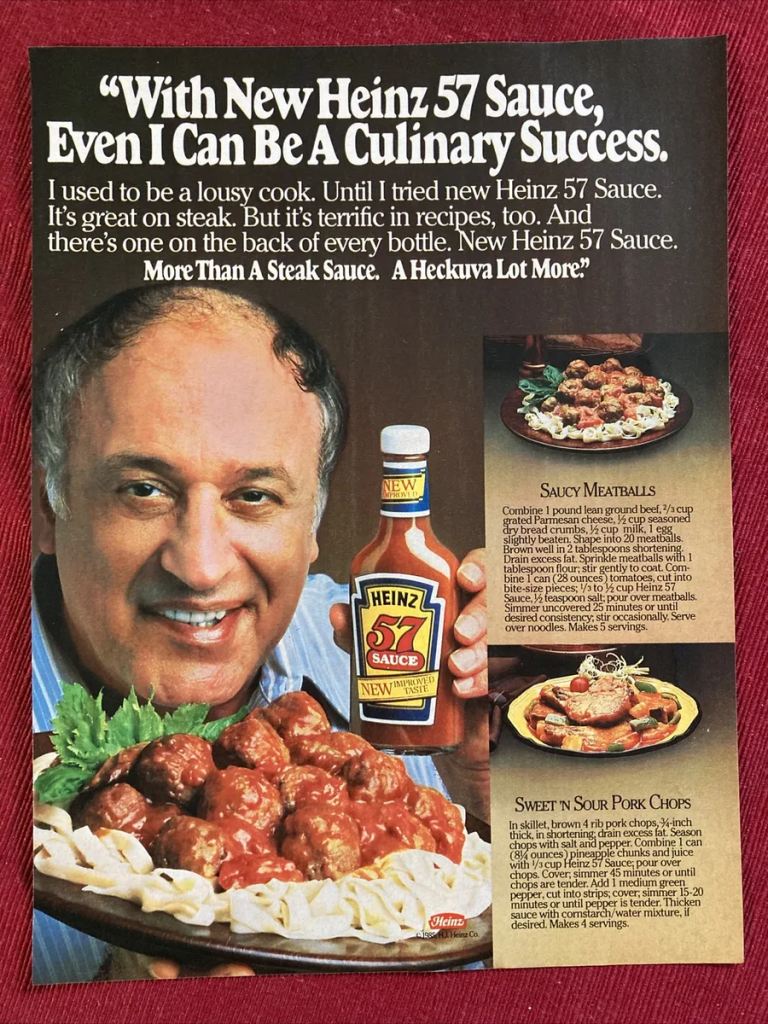
On the show, Vic was often made fun of for his bad cooking. In a 1985 interview he said, “If I walked into a restaurant, the other diners would look around and say, ‘I hope you’re not cooking.’” Heinz then offered him the role of spokesperson for their Heniz 57 sauce and his line in the commercials, was “I used to be a lousy cook.” He was also remembered for an Aqua Velva commercial he did with Pete Rose.
Unfortunately, Tayback was a heavy smoker which caused heart trouble for him. While doing Alice, he had a triple-bypass surgery. While he did try to quit numerous times, he just could never kick the habit. In 1990, he died from a heart attack at age 60.
📷goldenglobes.com
While we were cheated of several decades of performances from Vic with his early death, he did leave an amazing legacy in the Company of Angels theater in Los Angeles. According to its website, “In 1959, a group of actors, including Tayback, Leonard Nimoy, Richard Chamberlin, and Vic Morrow founded the theater to provide a space for actors and other theater artists to work on their craft free of commercial constraints.”
Thank you, Vic Tayback, for deciding to make people laugh in your career and investing in the future of acting so those memories continue in the future.
We are discussing some of our favorite actors who were typically supporting actors. In the case of today’s subject, he did star in a television show, but he was so great in other assisting roles, we are including him here as well. Today we get to know Dick Van Patten.
📷nypldigitalcollections.com Off Broadway
Van Patten was born in 1928 in Queens, New York. His father was an interior decorator, and his mother worked in advertising. Joyce Van Patten is his sister. Van Patten began working as a model and actor while he was still a child. He was only four when he joined John Robert Powers, a modeling agency, where made $5 an hour.
His first Broadway appearance was in “Tapestry in Gray” when he was seven, and he appeared in many plays by the time he graduated from the Professional Children’s School in New York City.
At that time, he moved to Hollywood. In 1949 he accepted the role of Nels Hansen on the early sitcom, Mama, about a Norwegian family living in San Francisco. The show was on the air until 1957, for a total of 327 episodes.
In 1954 Van Patten married Patricia Poole. She was a professional dancer, part of the June Taylor Dancers on The Jackie Gleason Show. Their son Vincent was on Apple’s Way in the mid-seventies, with 65 credits to his name. He is married to Eileen Davidson, who is Ashley Abbot in The Young and the Restless.
📷wikipedia.com On the set with friend Dick Van Dyke
Van Patten’s sister Joyce also began her career as a child. With 160 acting credits, she also has been very busy for decades, starring in The Good Guys. She was married to Martin Balsam from 1957-1962, another prolific actor. Van Patten’s niece Talia, who has also amassed more than 100 acting credits, was married to George Clooney and then John Slattery, star of several shows including Mad Men. So, this is a well-known family in entertainment.
In the fifties and sixties, most of Van Patten’s roles on television were in dramas and a few westerns. In the seventies, he took on his first comedy roles, appearing on I Dream of Jeannie, The Governor and JJ, Arnie, That Girl, Sanford and Son, The Doris Day Show, The Paul Lynde Show, Love American Style, The New Dick Van Dyke Show, Maude, Phyllis, Happy Days, and One Day at a Time, among others. He also accepted a few drama roles on shows such as Cannon, Adam-12, The Streets of San Francisco, Medical Center, and Barnaby Jones. After appearing on The New Dick Van Dyke Show in 1971, Van Patten and Van Dyke became life-long friends.
He appeared in 36 movies, his first being Violent Midnight in 1963. Spaceballs, RobinHood: Men in Tights, and High Anxiety, all with Mel Brooks, were probably his best-known films. In 2014, Van Patten said working with Brooks was “great. It’s like a game. It’s not like work. He keeps you laughing the full day on the set. He’s just a funny man.” Van Patten also accepted 28 made-for-tv movie roles.
In 1977, he took on the role that would make him a household name: that of Tom Bradford on Eight is Enough. He played a newspaper publisher with eight kids. His wife dies early in the series, and Tom remarries.
Van Patten auditioned for the role of Tom Bradford but was not given the part. When the producers watched the first day of shooting, they scrapped the entire production. Fred Silverman then hired Van Patten.
📷showbizcheatsheet.com Cast of Eight is Enough
It’s interesting to wonder what his career would have been like if he had declined Eight is Enough and accepted the role he was offered of Dr. Adam Brinker on The Love Boat. Since he had already agreed to appear on Eight is Enough, the role went to Bernie Kopell.
In an interview with the St. Petersburg Times in 1989, Van Patten discussed his character on Eight is Enough: “Tom Bradford is a lot like the real me. He’s a man who always put his career second to his family. As long as everything was OK at home, he was OK too.”
Sadly, the cast did not learn of the cancellation of Eight is Enough from the network. Van Patten said “nobody called me to tell me it was canceled. I read it in the paper.”
Van Patten never received a starring role again, but he did keep very busy in the eighties and nineties appearing in many popular shows, including Love Boat, Murder SheWrote, The Facts of Life, Growing Pains, and Diagnosis: Murder.
He was in a handful of shows in the 2000s with Hot in Cleveland in 2011 being his last appearance on television.
He published a book in 2009 titled Eighty is Not Enough!, his memoir. He had also written Launching Your Child in Show Biz: A Compete Step-By-Step Guide and Totally Terrific TV Trivia. In 2001, he was honorary mayor of Sherman Oaks, California.
Van Patten was an animal advocate, and he created Natural Balance Pet Foods and the National Guide Dog Month to raise awareness and money for nonprofit guide dog schools.
Van Patten also participated in a variety of hobbies. Like Tom Bradford, he loved spending time with this family. He also owned thoroughbreds and attended horse racing events. He enjoyed playing poker, golf, swimming and reading. Most Sundays he headed to the tennis courts to meet Alan Alda, Mel Brooks, and Gene Wilder.
📷latimes.com
In 2006, Van Patten suffered a diabetic stroke. He made a full recovery and lived another nine years, passing away in 2015 from diabetes complications. He was still married to Patricia.
His son Tommy on Eight is Enough, Willie Aames, said Van Patten “was truly a gem who will be missed.” His second wife, Abby, on the show played by Betty Buckley, recalled that “every day on the set he was a happy, jovial person, always generous and ready to play, tease, and always keep us laughing. He was the consummate professional, a wonderful actor, master of comedy, and a kind and generous human being.”
📷imdb.com
Van Patten had an extremely successful career. For more than seven decades he was part of the entertainment community. In addition to his stage productions, films, and television work, he appeared in more than 600 radio show episodes and was in Weird Al Yankovic’s music video “Smells Like Nirvana.” He said that he had “fun doing this and going through my life. I’ve had a great life. It was exciting. I worked with the most interesting people, and I traveled all over the country.”
His reflection on his work is great advice for all of us. Van Patten said that he wanted to express the “single idea that has governed my entire life, that every moment of life is precious, that every step we take is an adventure, that every day on earth is a gift from God.” Thanks, Dick Van Patten, for leaving us with this inspiration and for taking your gifts and presenting them to us in the form of many wonderful memories.



















 thewritelife61