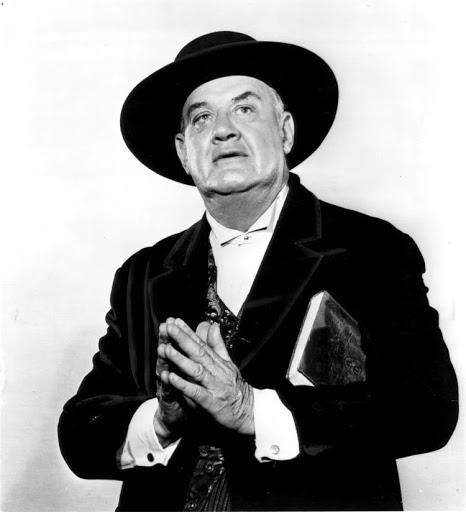
Leon Ames: What a Character!

We are part way through our October blog series, “What a Character.” Today we look at someone we all remember from the golden days of television: Leon Ames. 
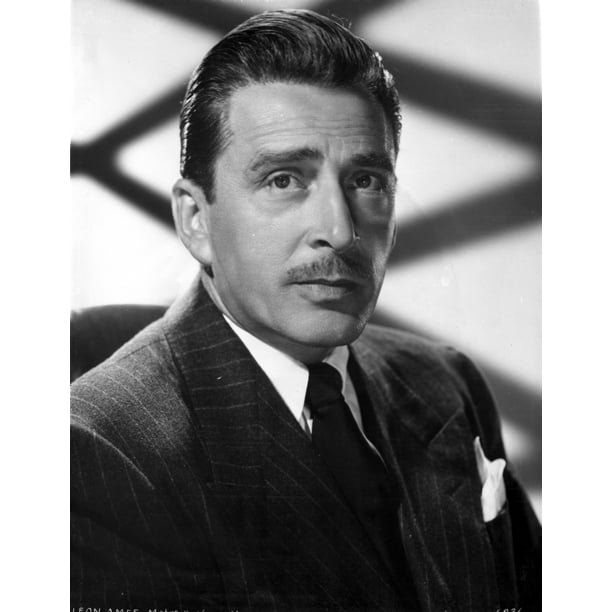
Leon Ames Photo Print (8 x 10) - Walmart.com - Walmart.com
Photo: walmart.com

Ames was born Harry Wycoff in Portland, Indiana and was raised on a farm. He said he changed his name because it was often misspelled which I can understand because some sources say “Wykoff,” and some say “Waycoff” in addition to “Wycoff.” Ames was his mother’s maiden name.

After graduation, he enrolled in Indiana University at Bloomington. He then served in the field artillery for WWI and later transferred to the flying corps.

After his discharge, at some point, he began working as the stage manager for the Charles K. Champlin Theatre Company. He had always wanted to be an actor and soon began acting with the group, eventually gettng the lead in a Los Angeles production of “Tomorrow and Tomorrow.” For three years he was with the Stuart Walker Stock Company in Cincinnati, Ohio. Broadway would be a big part of his early career as he debuted in 1933 in “It Pays to Sin” and went on to perform in another eleven shows.

In 1937, Ames decided to make the move to Hollywood. At that time, he met Christine Gossett, and the couple married in 1938. Leon and Christine appeared in several films together including Eighth Wife and Suez, but after having two children, Christine retired from acting to raise the children. The couple was together for the rest of Ames’ life.

Ames accumulated 158 acting credits; 125 of those were on the big screen. His debut came in 1931 in Quick Millions and his last role was as the grandfather in Peggy Sue Got Married in 1986.

Even though 5/6 of his career was spent in films, I am including him in our television character series because the 1/6 of his career in television made quite an impact. From 1951 until 1979, he would appear in 29 different shows, and five of those would be as a regular cast member.

Life With Father | Nostalgia Central
Life with Father cast–Photo: nostalgiacentral.com

Not surprisingly, given his depth of film work, he began his television career in a variety of drama shows such as Screen Directors Playhouse and Studio One. In 1953 he was cast as Clarence Day in Life with Father, adapted from the film. Unfortunately, the show only lasted for a limited number of episodes. I’m not sure how this show fit into the television schedule because it was on for three seasons; a few sources listed 8 episodes, imdb.com lists 10 episodes, and tvseriesfinale.com mentions 27 episodes; even then, it would mean 9/year which doesn’t seem to make a lot of sense. Fun fact, this was the first show in Hollywood to be filmed in color.

After the cancellation of Life with Father, he continued to guest in dramas, but was once again offered a recurring role in a comedy on Father of the Bride in 1950, another television show that was adapted from the big screen.

Pin on Mayberry
Ames with Aneta Corsaut on The Andy Griffith Show–Photo: pinterest.com

In the sixties, he gravitated toward sitcoms, showing up in The Lucy Show, Please Don’t Eat the Daisies, The Beverly Hillbillies, and The Andy Griffith Show.
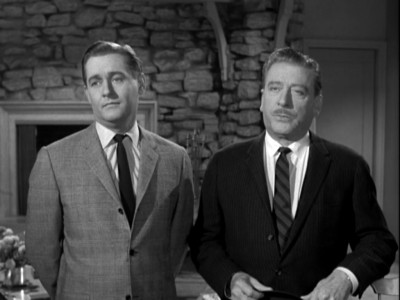
DVD Talk
With Alan Young on Mister Ed–Photo: pinterest.com

It was during this time, that Leon probably became best known to television fans.  From 1963-1965, he portrayed Gordon Kirkwood on Mister Ed. During the early seasons of the show Roger (Larry Keating) and Kay Addison (Edna Skinner) lived next to Wilbur Post (Alan Young) who owns Mister Ed. They become good friends with Wilber and his wife Carol (Connie Hines). Keating died in 1963 and Ames and his wife Winnie (Florence MacMichael) buy the Addison home. We also learn that Kirkwood was Wilbur’s former commanding officer when they were in the US Air Force.

In a frightening experience, in February of 1964, an intruder entered the Ames household and held Leon and Christine hostage, demanding $50,000. Ames phoned his business manager and asked him to go to the bank and then bring the money to the house. Once he got the money, the intruder left Ames tied up in the house and forced Christine to drive him in their car. Before leaving, he forced both the business manager and a guest at the home into the car trunk. Luckily, before Ames’ manager brought the money to the house, he had called police who eventually caught up with the car, surrounded it, and freed the hostages.

His next regular role was that of Dr. Roy Osborne on My Three Sons.  I enjoyed his performances on this show.  At first, Robbie thinks he is too old-fashioned to be Katie’s Ob/Gyn because he delivered her, but Robbie soon learns his caring ways and wealth of experience is invaluable.
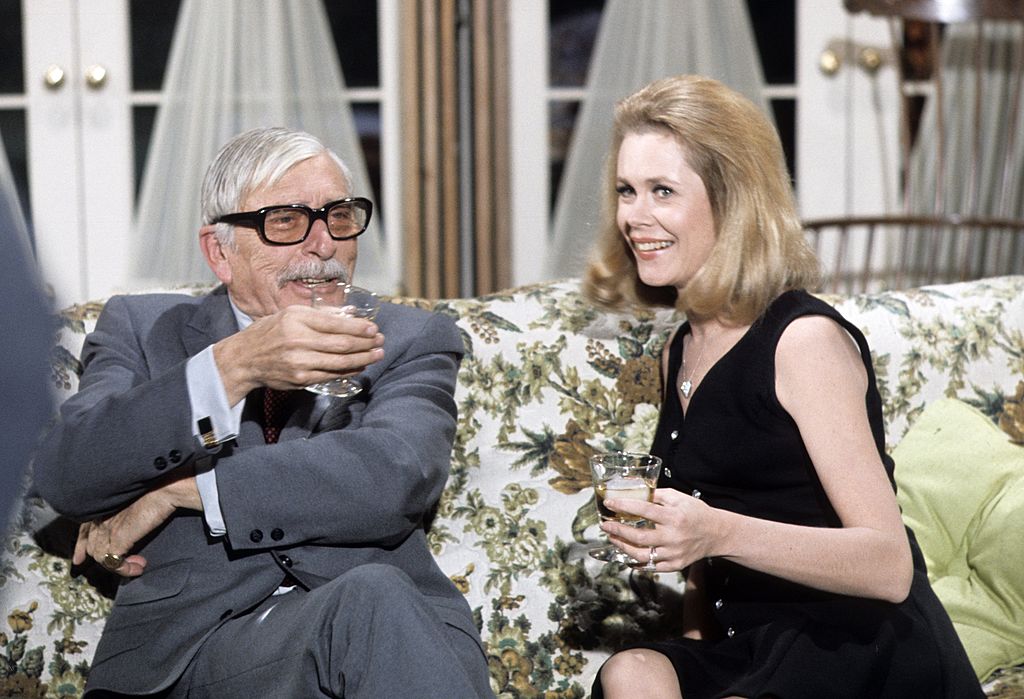
Leon Ames — Life and Death of the Notable 'Mister Ed' Actor
Ames and Elizabeth Montgomery on Bewitched–Photo: amomama.com

The remainder of his television career was spent in a variety of genres including Bewitched, The Virginian. Apple’s Way, and Emergency, among others.

Ames was one of the founders of the Screen Actors Guild in 1933 and became president of SAG in 1957. In 1980, Ames was the recipient of the Screen Actors Guild Life Achievement Award.

In addition to his acting duties, in the sixties, Ames opened several Ford dealerships in California.

Leon died in October of 1993 after having a stroke.
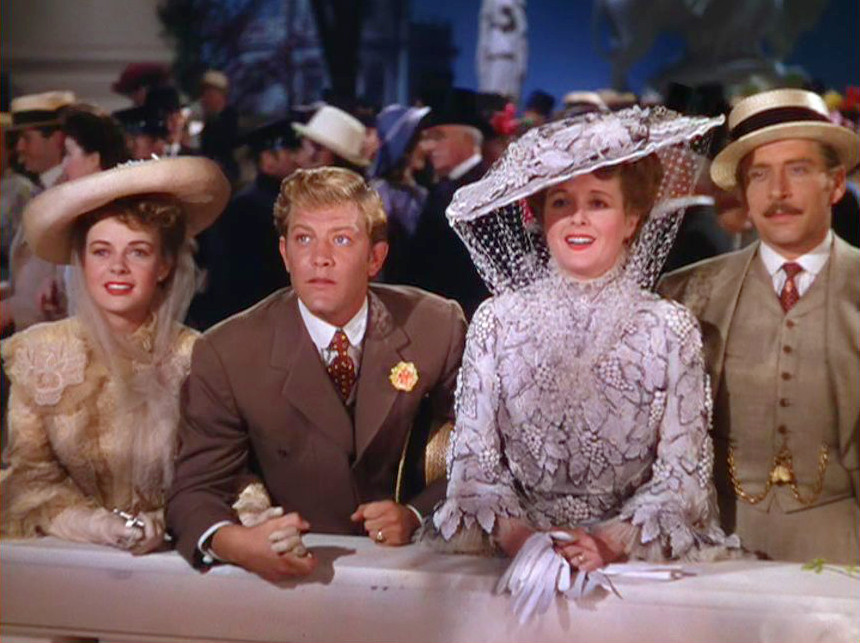
DREAMS ARE WHAT LE CINEMA IS FOR...: MEET ME IN ST. LOUIS 1944
Meet Me in St. Louis Photo: pinterest

One of my favorite roles of Ames was as the father in Meet Me in St. Louis. He had that perfect gruffness for a paternalistic role but made it obvious that there was a giant teddy bear just below the surface. What a character he was.

Say Jell-o to Don Wilson

As we continue with our “They Call Me Wilson” series, today we learn about the career of Don Wilson.  With 33 movie credits, he only starred in seven television shows, but if you were a fan of Jack Benny or Batman, you will recognize him immediately.

Photo: oldtimeradio.com

Wilson was born in 1900 in Nebraska. Not much is known about his early life, but in one interview in 1980, he mentioned he went to high school in Boulder, CO. He played football at the University of Colorado and was an excellent golfer.

Denver was also the place he began his radio career, singing on KFEL in 1923. Wilson talked about a group he was part of, the Columbia Trio, in Denver beginning in 1925; they played on the radio and appeared in clubs when they needed a late substitute. One of their clients for commercials was for Piggly Wiggly and the store brought the three musicians to California when the company decided to open up new stores in California and renamed them the Piggly Wiggly Trio.

By the end of the decade, he was working full time at station KFI and later at KHJ both in Los Angeles. In an interview later in his life, he said he bought a Packard from Earle C. Anthony, and the Cadillac sponsor Don Lee, who owned KFI did not take it kindly and fired Wilson.

Apparently, he couldn’t decide which direction he wanted his career to go. During the early thirties, he worked as a sportscaster and covered the opening of the 1932 Summer Olympics for NBC. He also announced five Rose Bowls. He was mentored by Ted Hussey and said he was the greatest sports announcer bar none as well as a generous and knowledgeable man.

He took on Broadway roles in 1932 and 1934. He also began radio announcing for programs in the mid-thirties, first working with Benny in 1934.

Being perhaps indecisive, he also had a hard time with his love life. His first marriage was to Lucy Saufley in 1927; in 1940, he divorced Saufley and he married Peggy Kent whose father was president of 20th Century Fox. In 1942, the same month his divorce became final , he married a Polish countess, Marusia Radunska and this relationship lasted seven years. When he married his fourth wife, Lois Corbett in 1950, he finally found a lifetime partner.

He would be a member of the Jack Benny television family for 31 years, but when he was hired, although it was as a permanent cast member, he was at least the fourth announcer in two years to work on the show. Wilson said he thinks he was chosen partly because he laughed at all the right lines. He said luckily, in person, Benny was much more generous with his salary than was portrayed on the show.

When Benny made the foray into television in 1950, Wilson went along and would continue to costar on the show until it ended in 1965.

The cast of The Jack Benny Show-Photo: tvtropes.com

Although Don was listed as announcer for the Benny show, like Harry Von Zell on Burns and Allen, he was really part of the cast. His good-natured, friendly manner and booming Midwestern voice made him a pleasant person who often took the brunt of jokes by Benny, often due to his 6 foot, 300-pound physique. Wilson’s wife Lois appeared as his wife on the show for fifteen years, so it was a family affair. She also acted on other radio shows.

Benny producer Irving Fein, said Don “was a great foil for Jack. He was the hearty announcer who tried to get the commercial on the air and Jack would try to thwart him. Sometimes Don would have the Sportsmen Quartet sneak in the commercial. Don would tell Jack the Sportsmen were going to do a song. Then they would sing a chorus of a song and the final chorus would be the commercial.” The first commercial Wilson pitched on the show was for General Tires. Jell-O, part of General Foods, sponsored the show for ten years, and Lucky Strike then took over for another fifteen years.

Photo: jackbennypodcast.com

His coworkers said he rarely misspoke his lines, but when he did, they took advantage of it. In an interview on speakingofradio.com, Don told a story that during one 1950 broadcast, he relayed a bunch of information and Jack asked him when he learned all that and Don said he read it in columnist Drew Pearson’s article, but he mistakenly said Dreer Pooson. Later during the murder-mystery story, Benny approached Frank Nelson and asked, “Pardon me, are you the doorman?” Instead of the written line, Nelson asked, “Well who do you think I am, Dreer Pooson?” That line got a lot of applause and laughter.

He said Benny was a quiet listener and preferred to stay in the background reacting to other actors. However, Wilson said that “when he was eventually on, he could top everybody. . . He wasn’t a one-liner comedian . . . he was a real thoroughbred professional, start to finish.  He always demanded the very, very best that he could possibly get and if ever there was an irreplaceable man, Jack Benny would be that man.”

Wilson with Jack Benny and Dennis Day–Photo: radiospirits.info

Don discussed how the show worked. He said “Jack’s philosophy was that the bigger he could make the supporting people, the bigger the Jack Benny Show became and the bigger Jack Benny therefore became.”  Wilson said he was thoughtful and generous and would not allow anything off-color in the show, so it was fit for family watching. He said in one episode, Benny sat off to one side and the cast spoke to him, but he didn’t actually utter a line until the last few minutes of the show. He said Jack often came up with the idea for a show but then turned it over to the writers and let them do their part.

He said some of his most enjoyable shows were when he traveled with Jack performing for military audiences. Jack would try to move the brass, so the enlisted men could have front-row seats.

Wilson did announcing work for a variety of programs in the heyday of radio. He worked with Bing Crosby, Fanny Brice, and Alan Young. He also worked for Chesterfield when they sponsored a show with Glenn Miller.  When Miller went into the war, Harry James took over that spot, and Don continued working with him.

Wilson said in the early years of television, they did two live presentations, one for the east coast and one for the west coast.  In between they would tweak lines and rehearse those changes. Eventually, the show was taped, so the cast did not have to do two live performances.

Radio Guide, in addition to other award groups, awarded Don the Announcer of the Year Award for fifteen years straight.

While on Benny’s show, Don also made several appearances on other television shows in the fifties and sixties. He showed up on Screen Directors Playhouse in 1955 and on The Red Skelton Show in 1959. He was a preacher on Death Valley Days in 1959.

Photo: radiospirits.com

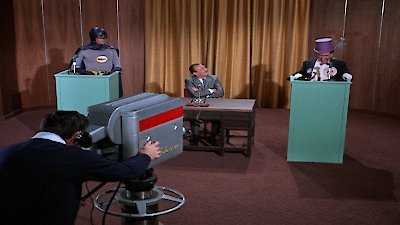
In the sixties, he could be seen in the Mel-O-Toons in 1960 which presented short, five-minute stories often based on fairy tales. He was also on Harrigan and Son in 1961. His last role was after Jack Benny went off the air. He was Walter Klondike, a newscaster spoof on Walter Kronkite, on Batman in 1966.

Watch Batman Season 2 Episode 18 - Dizzoner the Penguin Online Now
Photo: yidio.com

Don passed away due to a stroke in 1982.

I really enjoyed listening to several interviews with Don. He was so appreciative of his career and the people he was able to work with during his entertainment opportunities. Listening to someone who was able to get in on the beginning of radio and then do the same thing with television was very interesting and informative. I hope he realizes how much we all appreciated him.