The Elegance of What’s My Line

This month, we are looking at popular fifties stars and shows. While the show we are talking about today outlasted the fifties by almost another decade, it gained its popularity during the 1950s. Today we are learning about What’s My Line.
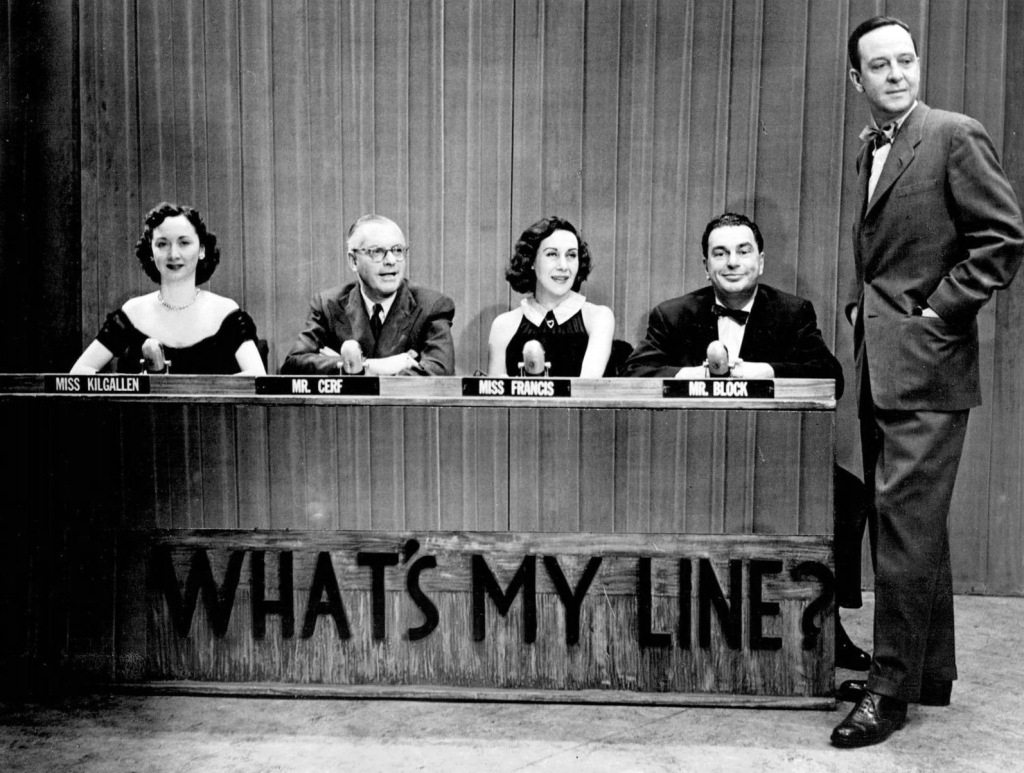
đź“·wikipedia.com

This panel game show was on CBS. It debuted in 1950 and ran until 1967. The show was produced by Mark Goodson and Bill Todman, and the working title was Occupation Unknown. Perhaps the title should have been What’s My Schedule. The show began on Thursday nights as a live show. Later in season one, it switched to every other Wednesday and then moved to every other Thursday. In October of 1950, it landed on Sunday nights where it would remain throughout the rest of its life.

The original series, which was usually broadcast live, debuted on Thursday, February 2, 1950, at 8:00 p.m. ET. After airing alternate Wednesdays, then alternate Thursdays, finally on October 1, 1950, it had settled into its weekly Sunday 10:30 p.m. ET slot where it would remain until the end of its network run on September 3, 1967.
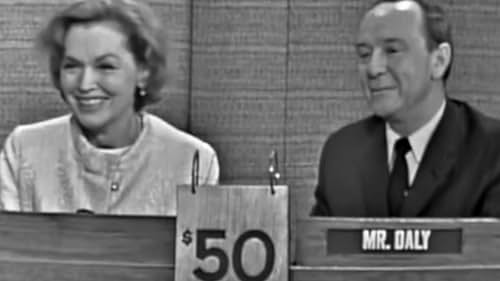
đź“·imdb.com

Celebrity panelists ask contestants questions to figure out their occupation. While most of the contestants were not famous, there was a “mystery guest” segment. The panelists were blindfolded for this segment and asked questions to determine the celebrity. People enjoyed watching the panelists banter with each other and the sophisticated humor they shared with us.

Each episode had four panelists. The most famous panelists were Dorothy Kilgallen, Arlene Francis, and Bennett Cerf. John Daly was the moderator. The first show in the series featured New Jersey governor Harold Hoffman, Kilgallen, poet Louis Untermeyer, and psychiatrist Richard Hoffman. Later in season one, Arlene Francis came  on board with Kilgallen, Untermeyer and writer Hal Block. In season two, Cerf replaced Untermeyer and Steve Allen took over for Block in season three. When Steve Allen left to host The Tonight Show, comedian Fred Allen was part of the panel from 1954 until his death in 1956. Kilgallen was killed in 1965 and her replacement varied for two years. Her death is a mystery itself and well worth reading about. Many people think she was killed because of her investigation into JF Kennedy’s assassination.

đź“·facebook.com

The panelists started the series wearing business clothing, but by 1953 they shifted to formal attire with the men showing up in suits and ties and women in formal gowns and gloves. Unfortunately, we never got to see the beautiful colors of these clothes. Until 1966 everything was filmed in black and white. In the final season, the show was broadcast in color, but the kinescopes were saved in black and white.

Both critics and television viewers liked the show, and it won an Emmy for Best Quiz or Audience Participation Show in 1952, 1953, and 1958.

Because it was a game show, most of the 700 episodes were on kinescope, 16 mm filming. Because many original shows in that era were recorded via kinescope onto silver nitrate film, many networks destroyed recordings to recover the silver. After learning that the network was not keeping the recordings, Goodson and Todman offered to pay for the broadcast and retained the recordings from season three on, however many of those were also lost along the way. A variety of the episodes are stored at different archive centers around the country. My home state houses one from 1951 at the University of Wisconsin Center for Film and Theater Research in Madison.
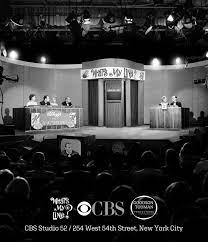
đź“·facebook.com

The remaining kinescopes which have been digitized have been seen on television on the Game Show Network and 757 of them exist on YouTube.

Many of us remember the reruns and seeing the contestant come on stage and write their name on a chalkboard as Daily said “Will you enter and sign in please.” The very first contestant was Pat Finch who was a hat check girl at the Stork Club.

The first mystery guest was New York Yankees shortstop Phil Ruzzuto. Many of these guests used fake voices to answer questions. Some of the mystery guests who appeared on the show included Julie Andrews, Louis Armstrong, Lucille Ball, Jack Benny, James Cagney, Gary Cooper, Joan Crawford, Salvador Dali, Sammy Davis Jr., Doris Day, Aretha Franklin, Ava Gardner, Judy Garland, Jackie Gleason, Alfred Hitchcock, Bob Hope, Ginger Rogers, Roy Rogers, Eleanor Roosevelt, James Stewart, Elizabeth Taylor, and John Wayne.
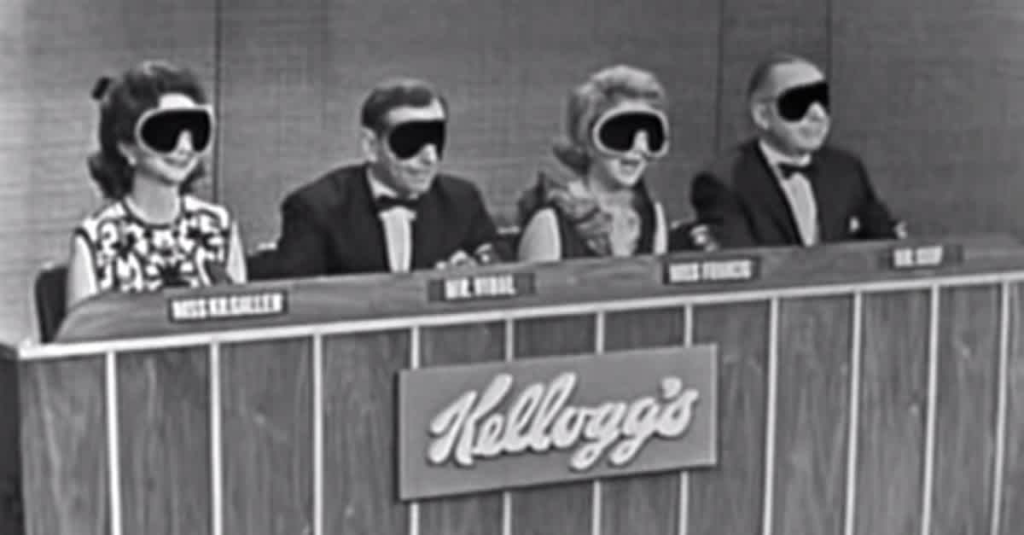
đź“·littlethings.com Blindfolds come out for a mystery guest

The emcee would choose a panelist who could ask yes or no questions. If the answer was yes, they could continue until they got a no response and then the next panelist would be able to pose questions. If the contestants answered no, Daily flipped a card; when the contestant had ten cards, they won $50.

If you have heard of or even used the term “Is it bigger than a breadbox?,” you might want to know that it came from the show. Steve Allen asked the question in 1953, and it became a standard question after that night. In fact, on one episode, the guest was a breadbox maker, and when Daly could not help laughing at the question, Allen figured it out.
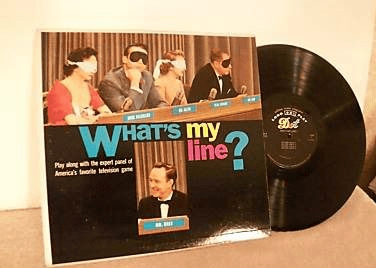
In 1967 The New York Times broke a story that CBS was canceling many of their game shows. None of the panelists had been told that the show was not renewed. Despite the fact that the low costs of the game shows made them profitable, the low ratings led the network to conclude that game shows were no longer suitable for prime-time schedules.

After the show was canceled in 1967, it did go into syndication five days a week. Soupy Sales joined Francis and Cerf on the panel of the reboot. A variety of other panelists took the fourth seat including Joyce Brothers, Jack Cassidy, Bert Convy, Joel Grey, Meredith MacRae, Henry Morgan, Gene Rayburn, and Nipsey Russell. The show ended in 1974. Cerf died during the run of the syndicated series.

It’s hard to believe, but Colonel Harland Sanders was on the show as founder of Kentucky Fried Chicken, although he was not easily recognized at the time, so he was not a mystery guest. While no president ever appeared while in office, Ford, Carter, and Reagan all appeared on the show.

đź“·youtube.com We switched to a first-name basis in the 70s

It would be fun to see this show on television today, but I’m afraid it would not be the same. In the way that Dick Cavett had a manner of interacting with guests to ask amazing questions with his humor and intelligence, this game show had that same atmosphere. Today, I think the banter would border more on crudeness than wit. There is something charming about a panel of very intelligent people talking with each other, trying to determine the identities of the people they were interviewing while being dressed to the nines that was fun to sit in on and be a part of. I guess that’s why this show is in our series where we are saluting the fifties because that was the era where it could shine.

This is Your Life, Warts and All

đź“·themoviedatabase.com

Continuing with our blog series about stars and shows from the fifties, I immediately thought about the show that is somewhat documentary, somewhat variety, somewhat talk show—This is Your Life.

The show aired on NBC from 1952-1961. It was created and hosted by Ralph Edwards. Guests were lured to the show for various reasons only to learn that they were the star of the show with appearances by their former colleagues, friends, and family. Edwards tried a reboot in 1971 that only lasted for a year, and Joseph Campanella tried again in 1983 but it was not successful.

Edwards had been asked by the US Army to do something special for paraplegic soldiers at a rehab hospital in California. He decided to talk about a young soldier’s life to help him realize the value of his past and have hope for his future, something like It’s a Wonderful Life with Jimmy Stewart. In the forties, it became a radio show, alternating episodes about celebrities and ordinary people.

đź“·bigredbook.com Laurel and Hardy

Some of the most-loved episodes were about Johnny Cash, Dick Clark, Nat King Cole, Bobby Darrin, Don DeFoe, Shirley Jones, Buster Keaton, Laurel and Hardy, Harold Lloyd, Roy Rogers, Mack Sennett, Dinah Shore, Danny Thomas, Dick Van Dyke, and Betty White.

Some of his shows had complex elements and thought-provoking memories. In one episode, Rev. Kiyoshi Tanimoto was the guest. He survived the atomic bombing of Hiroshima. In the midst of bringing on family and friends, Edwards brought out Robert A. Lewis. Lewis was the copilot of the Enola Gay, the plan that dropped the bomb on Hiroshima. On another episode, Dr. Kate Newcomb from a small Wisconsin town talked about her million pennies drive. She was raising funds for a small community hospital. Viewers were so inspired, they donated more than $112,000 in pennies.

đź“·wikipedia.com

Some television fans loved the shows and the sentimental scenes; others made fun of the situations thinking it all too much. Edwards was criticized at times for bringing up subjects that were painful for the guests to endure on the air.

It caught on overseas as well and versions were produced in Australia, Chile, Denmark, France, Israel, the Netherlands, New Zealand, Norway, Peru, Spain, Sweden, and the United Kingdom.

The concept even made it into animation. In 1955 Warner Bros. animator Friz Freleng created “This is a Life?” which honored Bugs Bunny with Elmer Fudd as narrator. Daffy Duck, Yosemite Sam, and Granny all made appearances. In 1960, Walt Disney had “This is Your Life Donald Duck,” a tribute to Donald by Jiminy Cricket.

đź“·imdb.com

I have to admit that I have never seen the show; but I have seen tons of parodies about the series. The concept sounds good on paper but in the actual filming I think it got away from the producers and became a show that often forced people to live a bad experience all over again instead of just honoring where they currently were in their life journey.

Whoa Nelly: Roy Rogers Rides the New West in a Jeep

đź“·tvtrops.com

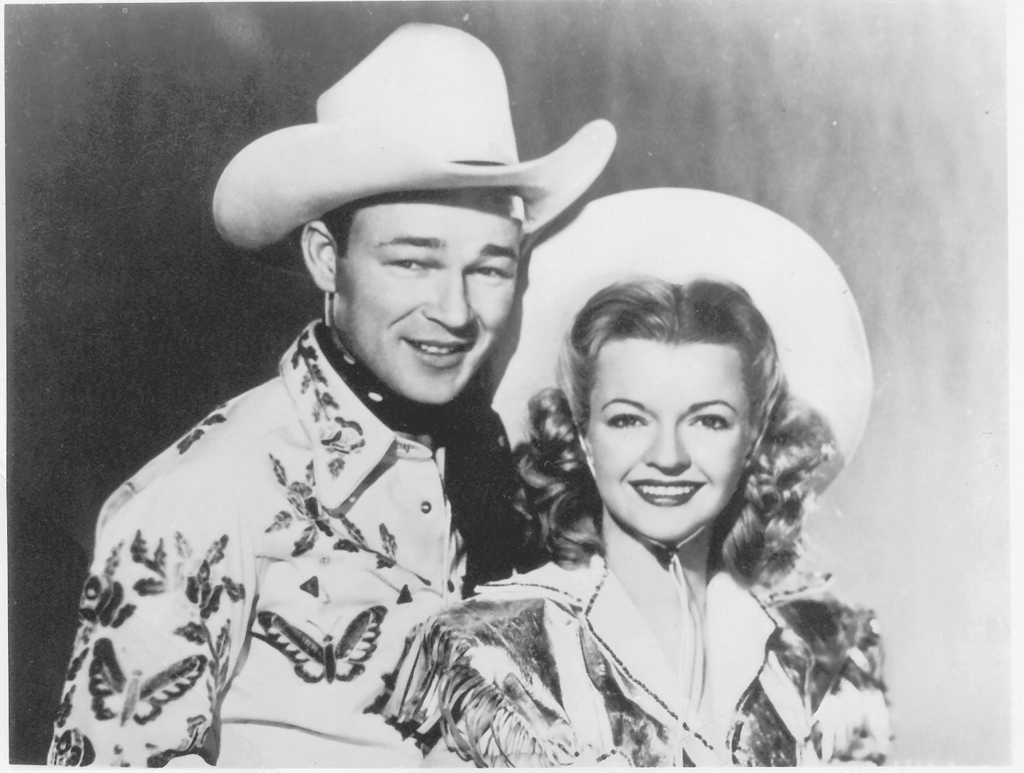
We are Riding the Range today with Roy Rogers and Trigger. This western moved from radio (1944-1955) to television for six years from 1951 through 1957. While I have heard a lot about The Roy Rogers Show, I was surprised to learn that this show had a contemporary setting. Rather than being set in the Old West, it was set in the fifties with automobiles, modern appliances, and telephones.

The show featured Rogers who owned a ranch; his wife Dale Evans who was the owner of the Eureka Café and Hotel in Mineral City; and Pat Brady, who was Roy’s friend and Dale’s cook. Roy often traveled with his horse Trigger and his German Shepherd Bullet. Dale’s horse was named Buttermilk.

Sheriff Tom was played by Harry Harvey Sr. and Reed Howes, depending on the episode.

In many of the episodes, Rogers and Evans took in abandoned children and became surrogate parents to them. This mirrored real life. The couple adopted five children from a variety of ethnicities and received many awards for their humanitarian work with children.

đź“·cowboysandindiansmagazine.com

Despite the 1950s setting, cowboys and cowgirls were hanging about the town. Just like the westerns set in the 1800s, the town folk were busy with bank robberies, cattle rustling, con artists trying to steal land, and an assortment of other bad guys.

In an article on reddit.com (https://www.reddit.com/r/Westerns/comments/vw8i9ca_tv_western_each_year_1951_the_roy_rogers_show/), the show was described as surreal with everyone looking like they stepped out of the 1800s but using electric lights and modern technology. Some of the plots were described: corrupt ranchers stealing each other’s land aplenty, crooked lawmen, a mayor trying to steal money from an Indian burial ground, weak-willed sheriffs, thieving professors, con men, and more.

đź“·barnfinds.com

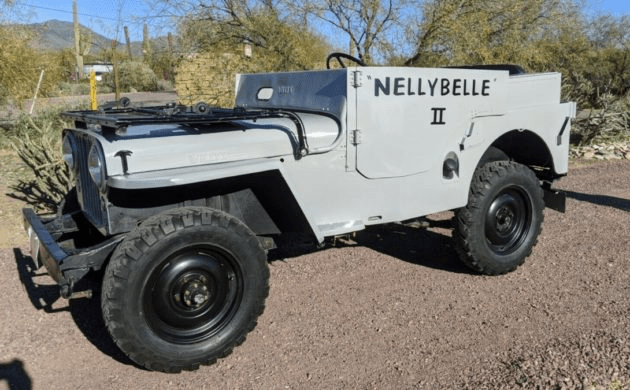
Even if you don’t know a lot about Roy Rogers, you probably know the theme song from this series, “Happy Trails.” It was written by Dale Evans, and she and Roy sang the song. Another thing you probably know from this show is the expression, “Whoa Nelly.” Pat Brady had a jeep, a 1946 Willys CJ-2A, that often didn’t behave very well. Sometimes the jeep began moving without a driver. Even with a driver, it might get a bit out of control. When it did, Brady would yell “Whoa Nelly” because the jeep’s name was Nellybelle.

The show was in the top thirty for most of its existence. I’m not sure what the competition was because it was on from 6-7 pm, so it doesn’t show up on most television schedules. One hundred episodes were made, ensuring that it would be around for syndication.

Critics also liked the show, and it was nominated for an Emmy for Best Western or Adventure Series in 1955. Other nominees included Annie Oakley, Death Valley Days, and the Adventures of Wild Bill Hickok. It lost to a show most of us probably aren’t familiar with at all, Stories of the Century. It looks like it might have been an interesting show. According to imdb.com, it was about a railroad detective, Matt Clark, who roamed the west, tracking down outlaws and bandits who are preying on the railroad. It was only on the air for one season.

Merchandising was a big industry during this decade. The show spun out comic books, playsets, costumes, pistols, lunch boxes, and board games, just to name a few.

In 1961, the show was rerun on Saturday mornings. The show can still be found on several networks in 2024.

I remember my mom had fond memories of Roy Rogers growing up. She would have been ten when this show first aired. Generations of kids have tuned in, taking the opportunity to visit the Old West, well sort of—more like the Old West with benefits, like phones and cars.

Denver Pyle: Oil Was Just His Side Business

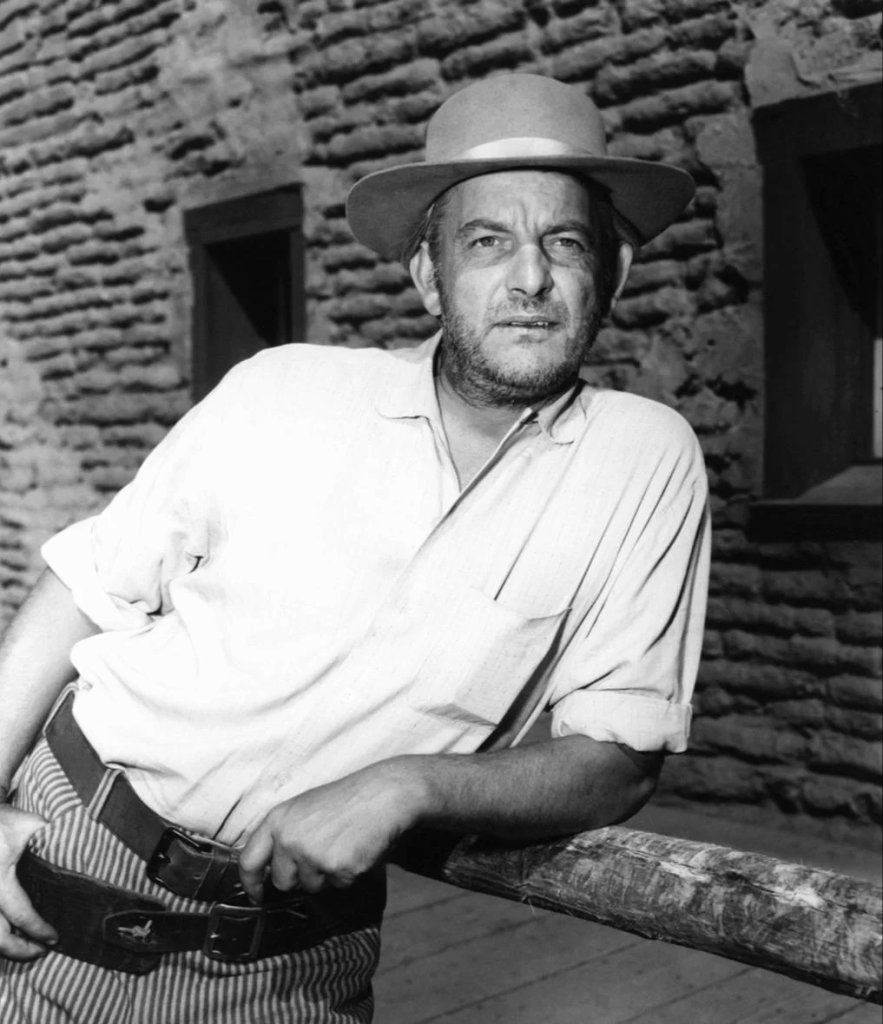
This month we are getting up close and personal with some of our favorite television stars. Today we are getting to know one of the most prolific actors to appear on classic television: Denver Pyle. Denver amassed acting credits for 263 different television series and movies during a fifty-year career.

Photo: Facebook.com

Denver was born Denver Dell Pyle in 1920 in Colorado, but not in Denver, in Bethune. His father was a farmer. His brother Willis became an animator who worked at the Walt Disney Animation Studios and UPA. Also, an interesting note is that Ernie Pyle, the famous journalist and war correspondent, was his cousin.

Photo: reddit.com

After his high school graduation, Pyle enrolled at Colorado State University but dropped out to pursue a show business career. He was a drummer for a band and then bounced around in different jobs including working in the oil fields, working shrimp boats in Texas, and as an NBC page. When WWII began, he joined the Merchant Marine. He was injured in the battle of Guadalcanal and received a medical discharge. Following his stint in the war, Pyle worked as a riveter at a Los Angeles aircraft plant. While there, he was spotted by a talent scout in an amateur theater production. Pyle decided he wanted a career in the entertainment business and trained under Maria Ouspenskaya and Michael Chekhov.

His first movie roles occurred in 1947 in The Guilt of Janet Ames and Devil Ship. He would continue polishing his film career for the next fifty years, with his last big-screen feature being Maverick in 1994.

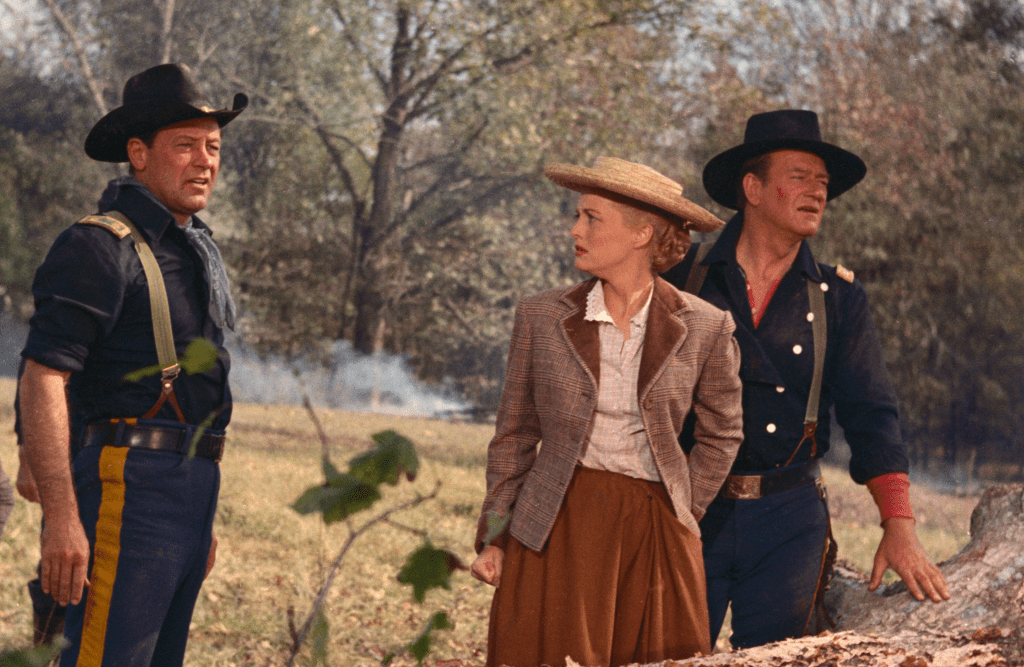
When he was filming The Alamo with John Wayne in 1960, Wayne realized Pyle had an eye for photography. He made arrangements with the PR office to hire Pyle as the official set photographer for the film.

Photo: ladylavinia’s1932blog.wordpress.com

He received his first television role in 1951 in The Cisco Kid. He gravitated toward westerns and in the fifties would appear in many of them including Roy Rogers, Gunsmoke, The Range Rider, Hopalong Cassidy, Annie Oakley, The Gene Autry Show, The Adventures of Kit Carson, The Lone Ranger, The Adventures of Jim Bowie, and The Tales of West Fargo.

In 1955, Pyle married Marilee Carpenter. They had two children and divorced in 1970.

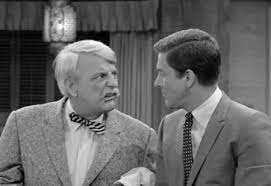
The sixties still provided many roles in westerns (The Life and Legend of Wyatt Earp, Have Gun Will Travel, Bonanza, The Rifleman, Gunsmoke, and Death Valley Days among others), but he also began appearing on dramas and sitcoms: to name a few, Route 66, The Dick Van Dyke Show, Dr. Kildare, The Twilight Zone, Perry Mason, and Gomer Pyle USMC.

On Dick Van Dyke Photo: sitcomsonline.com

In many of these shows, he returned nine or ten times to guest star in episodes. During the run of Perry Mason, Pyle would play a victim, a defendant, and a murderer on the show.

He received the first recurring roles of his career during this era on sitcoms. On Tammy, he played Grandpa Tarleton in 1965-66, and from 1963-66, he portrayed Briscoe Darling on The Andy Griffith Show. He only appeared in Mayberry six times but left a lasting impression on fans.

After playing Briscoe, Pyle invested in oil, buying oil wells thought to be near the end of their production. In the eighties, technology allowed the wells to produce more oil; Pyle made much more from oil than he did acting. However, he continued his career because he said, “I look at it this way, acting provides the cash flow I need for oil speculation, and besides that, I like acting. It’s fun.”

Doris Day Show Photo: thrillingdaysofyesteryear.com

His career did not slow down too much throughout the seventies and eighties. In the seventies, you could watch him in The Waltons, Streets of San Francisco, Cannon, and Barnaby Jones. The eighties featured him in The Love Boat, Murder She Wrote, Dallas, and LA Law.

During this time, he also received three other regular cast roles. From 1968-1970, he played Doris Day’s father in The Doris Day Show. From 1977-78. He was Mad Jack in The Life and Times of Grizzly Adams, and in 1979-85, he took on Uncle Jesse in The Dukes of Hazard. In fact, his last acting credit was for a made-for-tv movie where he once again portrayed Jesse in The Dukes of Hazzard Reunion! in 1997.

Dukes of Hazzard Photo: twitter.com

In 1991, Pyle married a second time. He wed Tippie Johnston and they remained married until his death. The couple did a lot of fundraising for charity including Special Olympics and Denver Pyle’s Children’s Charities. In addition, Pyle sponsored Uncle Jesse’s Fishing Tournament in Texas. For the ten years, he ran it, it raised more than $160,000 to support children’s needs.

In 1997, Pyle died on Christmas from lung cancer.

If you watch reruns from any decade of classic television, you will be very familiar with Denver Pyle. Although he was part of the cast in five very popular shows, it would have been fun to see him get the starring role in a show. It’s amazing to realize how many shows he was a part of. Considering he was in the television business for forty years and for almost fifteen of those years, he was busy being part of the cast of a weekly show, that left 25 years to amass 250 other series that he found time to appear on; that is almost one a month for 25 years—very impressive.

Mel TormĂ© Jazzed Up a Few TV Scripts

76 Mel torme ideas | music, great american songbook, jazz
Photo: pinterest.com

We are in the midst of our blog series about unique television writers. If I mention the name Mel Tormé to you, you probably think exceptional musician, composer, and singer. You might specifically mention “The Christmas Song” which he composed the music and cowrote the lyrics for. (His cowriter was Bob Wells.)

If I say think writing, you might be able to recall that he wrote several musical biographies including Traps- The Drum Wonder: The Life of Buddy Rich, The Other Side of the Rainbow: Behind the Scenes on the Judy Garland Television Series, or My Singing Teachers. You might have even read his autobiography It Wasn’t All Velvet or Wynner, a novel he wrote in 1978.

However, I’m guessing most of you don’t realize that he also tried his hand at writing scripts for television.

Melvin Tormé was born in Chicago in 1925. He was a child prodigy and first performed professionally at age 4 with the Coon Sanders Orchestra, singing “You’re Driving Me Crazy,” at a local restaurant.

He played drums in the drum and bugle corps of his grade school, Shakespeare Elementary. From 1933-1941 he had roles in several radio programs including “The Romance of Helen Trent” and “Jack Armstrong, All American Boy.” He wrote his first song at age 13. At age 16, his song, “Lament to Love” was a hit for Harry James.

Mel Torme & The Mel-Tones at Singers.com - Vocal Harmony A Cappella Group
The Mel-Tones Photo: singers.com

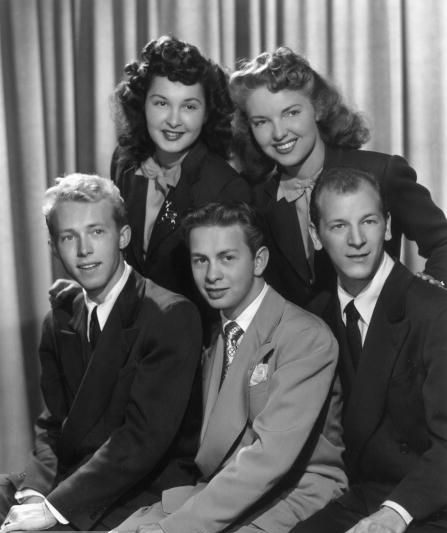
Tormé graduated from Hyde Park High School. Shortly after, he was a singer and drummer with a band led by Chico Marx from 1942-1943. In 1944, he formed Mel Tormé and His Mel-Tones.

Tormé took his stint in the Army, and when he was discharged in 1946, he returned to the entertainment business. He was nicknamed “The Velvet Frog” by DJ Fred Robbins when he sang at the Copacabana. He always hated the nickname.

During the fifties, he had a radio program, “Mel Tormé Time,” and he recorded a variety of albums. He primarily performed jazz but he loved classical music as well, preferring Delius and Grainger. He wrote more than 250 songs. In the sixties, he strayed into pop music.

Mel had his first television appearance as an actor in 1960 on Dan Raven. He showed up on a few different series including The Lucy Show. In the 1980s, he made nine appearances on Night Court and found a new generation of fans.

Mel Torme & Harry Anderson, Night Court (1991) | Movie stars, Harry  anderson, Singer
On Night Court Photo: pinterest.com

During his career, he tried marriage four times, but the first three ended in divorce. In 1996 he suffered from a stroke that ended his musical career. Three years later, he passed away.

No doubt, he had a full and successful career. He had a multitude of skills he experimented with during his professional life. I would like to spend some time looking at part of his career that is not well known. He did help with the writing for a brief time when The Judy Garland Show was on the air. In the late sixties he continued writing for the small screen.

In 1967, Mel wrote his first television script. His first successful episode was for the 1967 show Run for Your Life. It’s not a well-remembered show, but it aired from 1965-1968. It was about a successful lawyer Paul Bryan (Ben Gazzara) who learns he is terminally ill with two years to live. He decides to accomplish everything on his bucket list, and each week he talks about the people he meets and the places he visits.

The Frozen Image
The Frozen Image Photo: run4.us

Mel not only wrote the script for “The Frozen Image,” but he starred in the episode as well. The premise is that a married Las Vegas singer (Diana Burke) who doesn’t want to get old, hires Paul as her manager.

He must have enjoyed it because the next year, he wrote a script for The Virginian called “The Handy Man.” The long-running show was on the air from 1962-1971 and was set in Wyoming in the late 1800s.

In this episode, a legal fight over a strip of land between the Shiloh and Bowden ranch turns nasty. The Bowdens think Shiloh has hired a gunfighter who turns out to be a handyman.

The Virginian" The Handy Man (TV Episode 1968) - IMDb
The Handyman Photo: imdb.com

In 1974, Tormé scripted another story, this time for Mannix. From 1967-1975, Mannix solved a variety of cases. Originally working for a company, he starts his own business with secretary/friend Peggy Fair, whose husband, a policeman, had been killed. They also work with a police department contact, Tobias. Mel’s story, “Portrait in Blues,” features a couple of musicians, one of whom is almost electrocuted while performing.

Mannix" Portrait in Blues (TV Episode 1974) - IMDb
Portrait in Blues Photo: imdb.com

The last television project Mel worked on as a writer was a made-for-television movie called The Christmas Songs in 1979. With cowriter Thomas V. Grasso, Mel penned the script and starred in the movie with Richard Basehart, Billy Davis, Jr., Jo Ann Greer, Les Brown and His Band of Renown, Rich Little, Marilyn McCoo, Maureen McGovern, Sons of the Pioneers, Roy Rogers, and George Shearing. I could not find much about this movie, so if anyone remembers watching it or knows anything more about it, please let me know.

With all the success that he had in the music industry, I was amazed to learn Mel wrote for television. I stumbled across it by accident when I was researching Mannix and decided to learn a little more about his writing career. I could not find any other information about his writing career. I did reach out to his son Steve March-TormĂ© . He said that he had not realized that his father wrote television scripts but said, “I’m not surprised. He tried his hand at a lot of areas of the business and was almost always very successful at them. Very bright guy.” Steve’s stepfather, Hal March, was another celebrated television writer and star. (For more about Steve March-TormĂ© , see his website, stevemarchtorme.com.)

It’s been a lot of fun to learn more about Mel TormĂ©’s television writing career. As someone who only knew him for his musical skills, it was fun to see another side of the performer. As someone who has always thought it would be fun to write for a sitcom, kudos to him for trying something new and succeeding. Hopefully, he is an inspiration to some of us who think we have to settle for the space we are in now to reach out and try something entirely different–and to remember that the success is in the trying.