Celebrating the Single Life: From Ann Sothern to Mary Tyler Moore

Today marks the beginning of National Singles Week. So, we’re taking a closer look at two women who were single and okay with it.

ann6

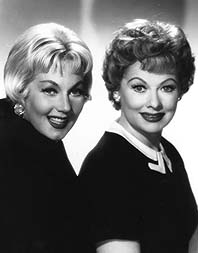
In the 1950s, Ann Sothern starred in two sitcoms that were almost one and the same. From 1953-57, we watched her in Private Secretary. Susie McNamara was the assistant to Peter Sands at his theatrical agency. When it went off the air due to contract disputes, Susie moved to a New York hotel, and in 1958, she morphed into Katy O’Connor. The show ran until 1961, and Sothern brought three of her former cast members to the hotel with her with new identities.

mary3

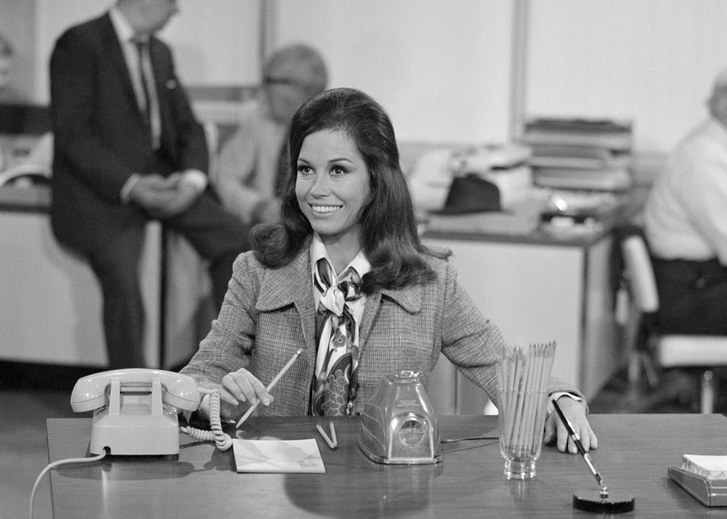
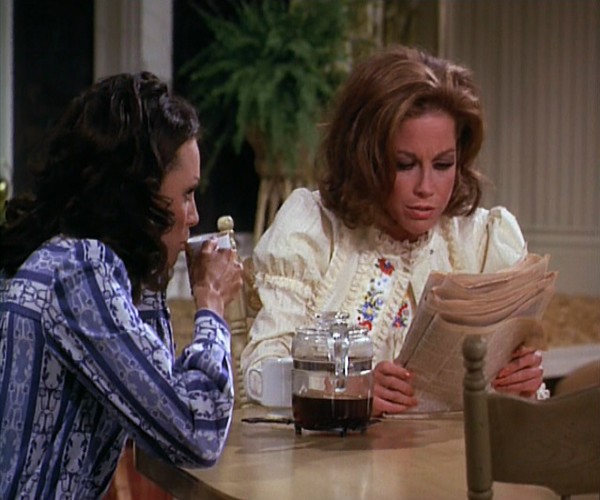
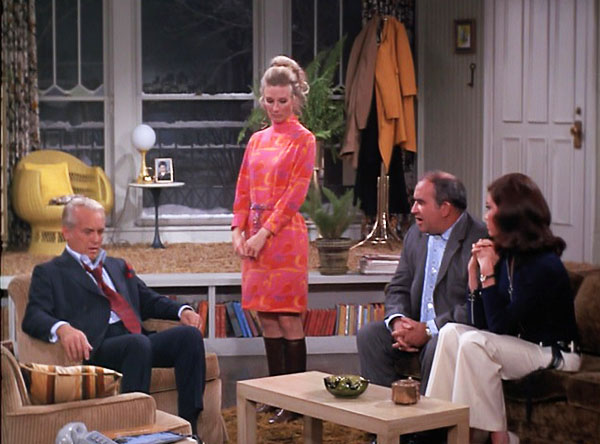
In 1970, we met Mary Richards. Mary is an independent career woman. She’d like to meet the right guy, but till he shows up, she’d rather be alone than in an unfulfilling relationship. Like Susie and Katy, Mary’s workmates become part of her extended family.

ann3

Ann Sothern was one of the first, if not the first, single working woman to appear on a sitcom. Susie previously worked as an actress and was a WAC in World War II. Her best friend Vi (Ann Tyrrell) is the receptionist at the agency. Susie often meddled in her boss’s private affairs, especially his female relationships. She could be described as a bit ditzy, but she also ran the office and was very bright.

ann10

Sothern was praised for her acting ability. She was nominated for Emmys three years in a row, but lost to Loretta Young in 1955, Lucille Ball in 1956, and Nanette Fabray in 1957. Lucille Ball, one of her closest friends, called Ann “the best comedian in this business, bar none.”

ann8

To ensure she came across as a serious career woman, great care was taken with the set. It was a state-of-the-art office with the most up-to-date equipment. Connie Brooks, on Our Miss Brooks, was praised by teachers for her realistic portrayal of an educator. Similarly, Ann Sothern was a heroine to secretaries throughout the country. In real life, Sothern was a smart business woman. She invested her money well, owned a variety of companies and a large ranch. She produced Private Secretary and insisted it be preserved on film. As a result, it went into syndication where it was titled “Susie.” From 1987-1990, it aired on Nick at Nite, creating a new fan base for the show.

ann1

The show holds up well. The scripts are a bit predictable and stereotyped, but it reflected the time. Susie McNamara gave young women hope that there was more to life than getting married and raising a family, although that was still an important role for women.

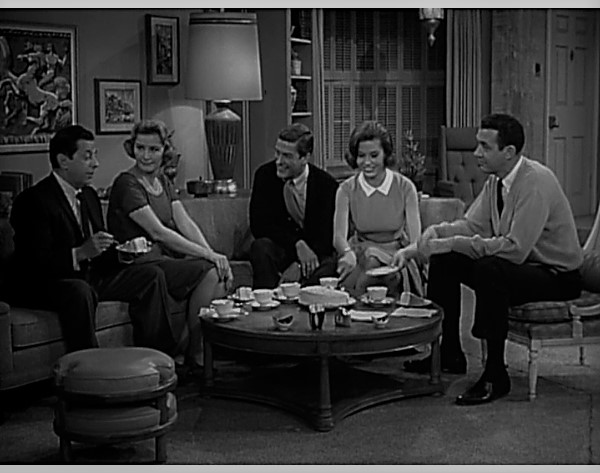
When Sothern was helping to run a posh hotel, Laura Petrie was at home, running her household. She gave up her dancing career to do so, but she was much more than a wife and mom. She and her husband were co-parenting at that time, and they were friends. She and Rob entertained a lot. Laura supported Rob’s friendship with Sally Rogers, one of his co-writers on this television show. She was a career woman who was very funny and smart, albeit lonely.

laura2

Nine years later, The Mary Tyler Moore Show debuted. Laura Petrie had become Mary Richards, a single career woman making her way to Minneapolis. Mary lived alone, dated infrequently, and spent a lot of her time at work or with her new best friend who lived in the apartment above her.

mary10

While we got to know Susie at work, we just got to know Mary. We saw her at her best and her worst. We saw her joyful, depressed, frustrated, angry, and saw her uncertainty as she navigated life alone.

mary7

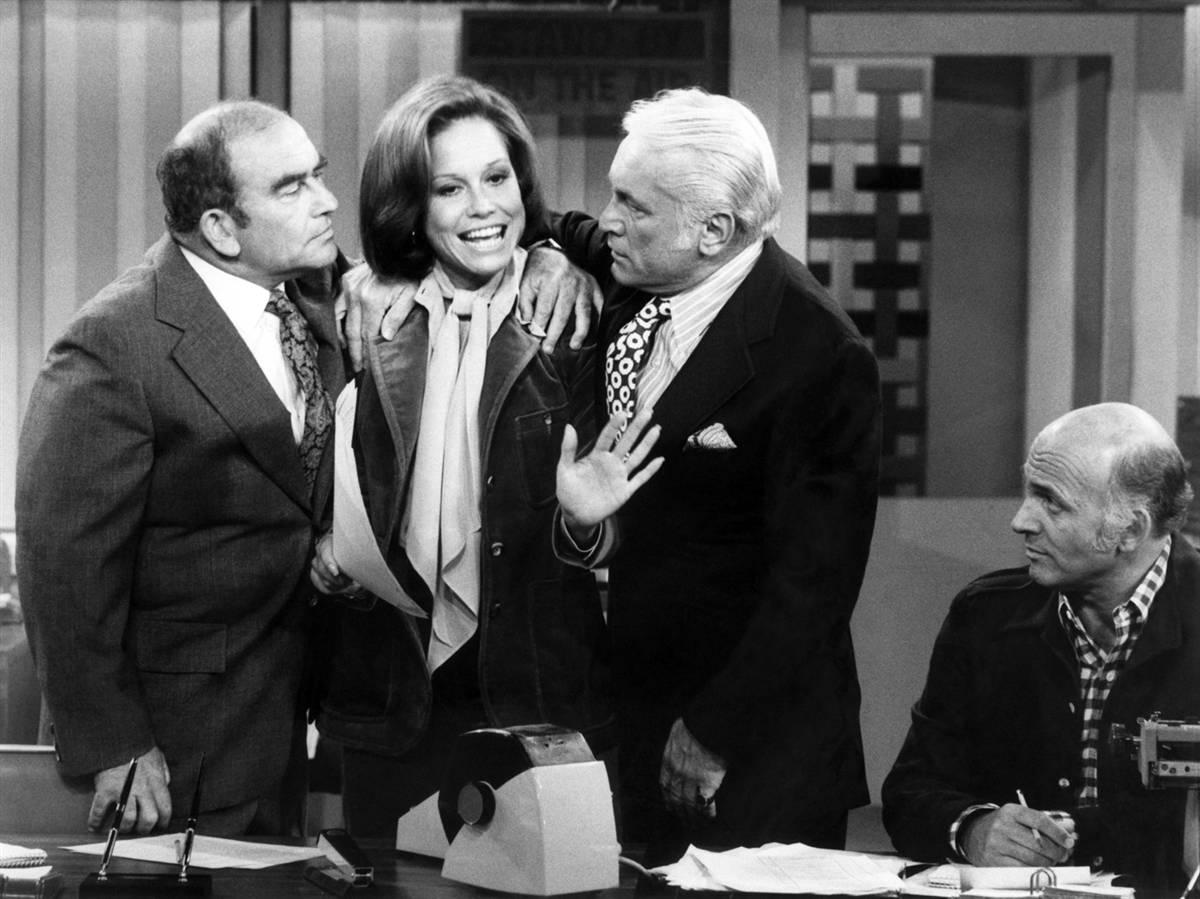
Mary’s coworkers became her family. Mary wasn’t ditzy, although she occasionally did a ditzy thing or two. She didn’t try to fix her boss’s problems; she had problems of her own, but she was always there for her WJM family.

mary4

Mary would have liked to find the right guy, but until he came along she was satisfied with her life the way it was. She spent her money any way she wanted. She could wear her pajamas all day on Saturday. She had a fun, modern wardrobe. Work gave her great delight, and it also could be extremely stressful.

mary12 - Copy

Murray was her best friend at work. He and Mary shared a lot of life. We knew part of Murray was in love with Mary, but we also knew neither of them would ever act on any of those possible feelings since he was married.

murray

Mary was smart and funny. She was an assistant producer for the daily news. Her office space was not as elaborate as Susie’s. There was never enough money at work or at home.

mary8

The times had allowed Mary to move to the city by herself and set up a home. However, even Mary Richards was not allowed to be a divorcé. The network vetoed the original script and converted Mary to a formerly engaged girl whose relationship fell apart. During the run of the show, her boss’s wife asked for a divorce, so the show still ended up featuring a divorced character.

mary11 - Copy

The Mary Tyler Moore Show was one of the best-written shows in television history. Like M*A*S*H and The Bob Newhart Show, the ensemble of characters drove the show and they were realistic and likeable. The show received 29 Emmys, including three years in a row for Best Comedy (1975-1977). The series tackled a lot of social issues during its run, including equal pay for women, marital infidelity, ethical behavior when Mary goes to jail to protect a news source,  dealing with death of a friend, and Mary’s sleeping pill addiction–real issues facing women at that time.

This was a sophisticated show. It was not predictable. Mary was nice, sometimes too nice for her own good. When everyone else called Mr. Grant Lou, Mary couldn’t bring herself to do it. We were always rooting for her. She had hopes, dreams, and ambitions, and a realistic attitude about life.

mary13 - Copy

It seems like a big leap between Susie McNamara and Mary Richards, but there were a lot of smaller steps in between. Marlo Thomas’s That Girl provided another smart, funny woman who chose to give up her teaching job to pursue an acting career in New York. Ann Marie was another link in the chain that helped move women forward. While she did have a boyfriend and became engaged during the run of the show, Marlo Thomas ended the show with their marriage up in the air.

Marlo-Thomas-That-Girl-750x968

Mary’s life was more realistic than Susie’s. When the Ann Sothern Show ended, Katy and her boss (still played by Don Porter) kiss, and you know that they will end up married, and Katy will no longer be running the office.

murphy-brown-1-e1532979112153

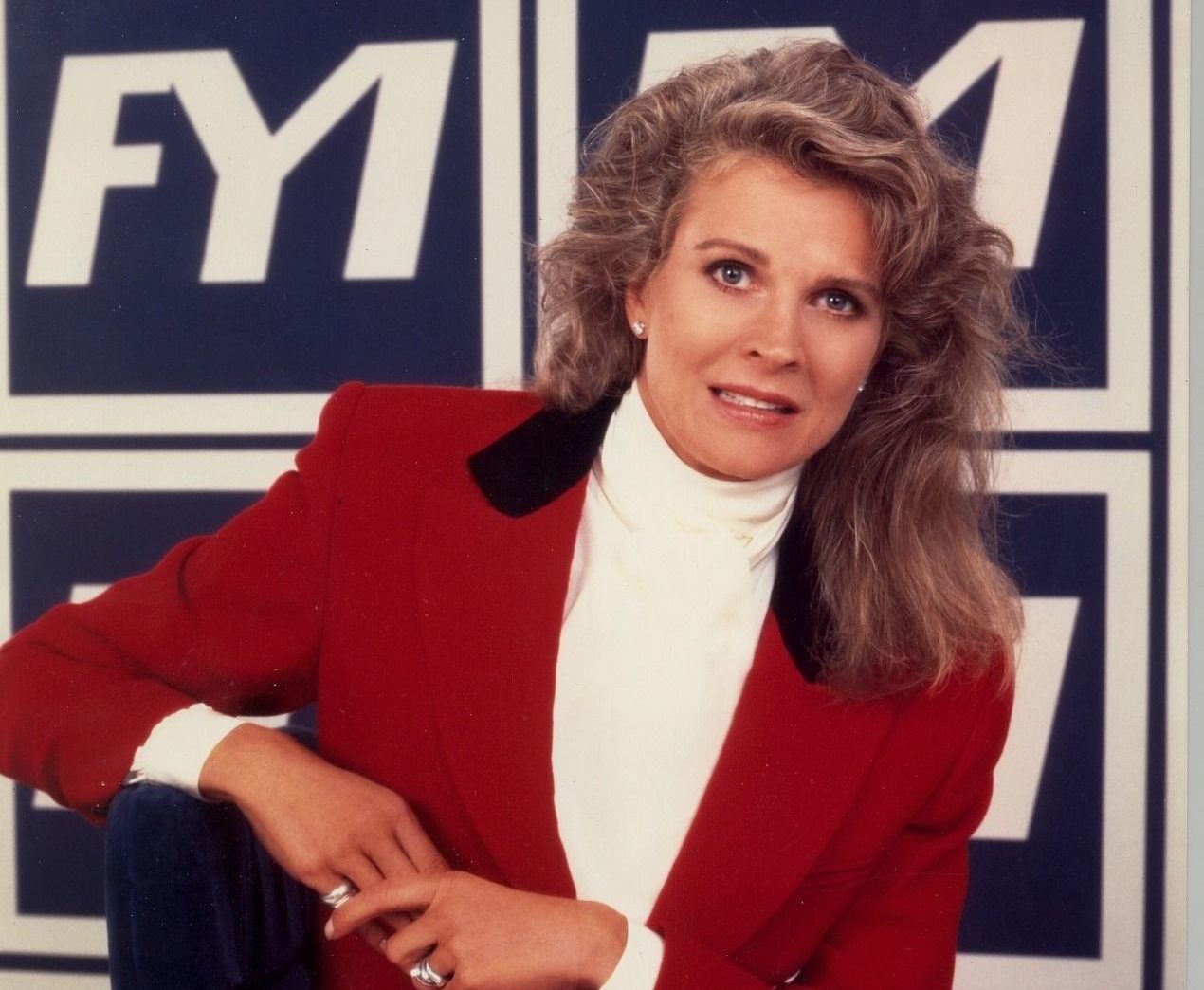
When Mary Tyler Moore’s show ended, everyone on the WJM staff was fired except the totally incompetent Ted Baxter. We don’t know what Mary will be doing, but she has choices. Perhaps she found another news job in a new city. I like to think she found a position in management at a local corporation. Maybe she fell in love with one of the employees she was supervising. I think when she retired and turned on the television, she was watching Murphy Brown’s FYI program, celebrating the leaps women were taking in the workforce.


The Teacher We All Wished We’d Had: Our Miss Brooks

We kicked off the month looking at the successful transition of Burns and Allen from radio to television.  There were many shows that couldn’t make the leap to the small screen, and several that did very well like The Jack Benny Show and I Love Lucy. Our Miss Brooks not only had a successful radio show, but when their television show debuted, the radio show kept going. Many of the cast members starred in both mediums. In addition, they made it to the big screen with a movie and a comic book.

brooks6


So, what enabled Our Miss Brooks to do what many shows could not?  Let’s look a little closer at the series and the behind-the-scenes work that kept the show on the air for four seasons, producing 130 episodes.

brooks8

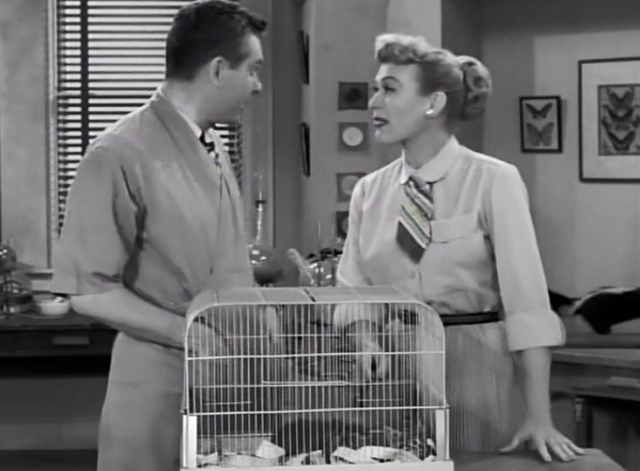
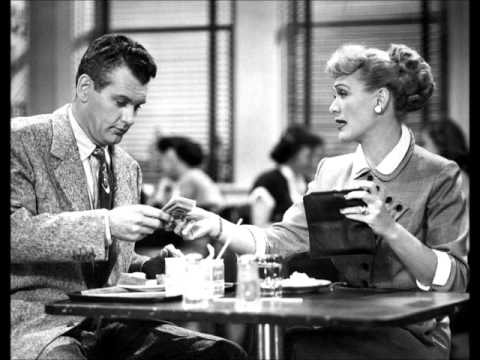
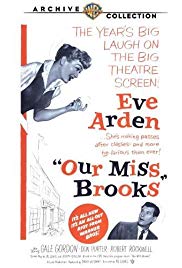
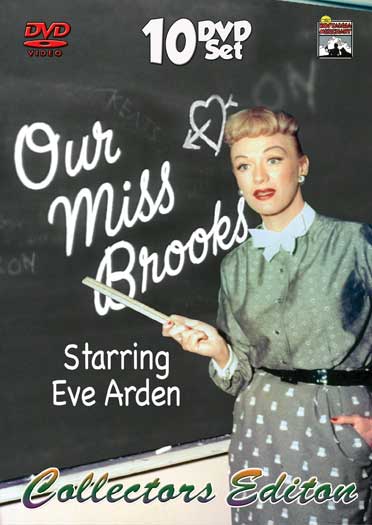
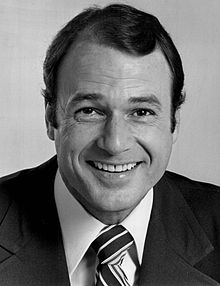
Connie Brooks (Eve Arden) is an English teacher at Madison High. She and her principal, Mr. Conklin (Gale Gordon), do not always see eye to eye, but she is close to his daughter Harriet and Harriet’s boyfriend Walter (Richard Crenna) who gives Miss Brooks a ride to school. She wants to be close to Mr. Boynton (Robert Rockwell), the science teacher, but he is oblivious to her charms. She rents a room from Mrs. Davis (Jane Morgan) where she lives with Mrs. Davis’s cat, Minerva.

brooks5


We also get to know Fabian “Stretch” Snodgrass (Leonard Smith), basically a “dumb jock” who is Walter’s best friend and Daisy Enright (Mary Jane Croft), another English teacher who is Connie’s love rival for Mr. Boynton.

The show debuted July 19, 1948 on the radio. The show program was sponsored by Colgate-Palmolive-Peet for its entire run which ended in 1957. The first choice for Miss Brooks was Shirley Booth, and the show was titled “Our Miss Booth.” In Gerald Nachman’s book Raised on Radio, he states Booth concentrated too much on the disadvantages of being a school teacher to be funny. There is an audition with her from April of 1948 and while she sounds pleasant, she doesn’t have the sarcastic wit of Arden. The television show began in 1953 and was sponsored by General Foods.


brooks12

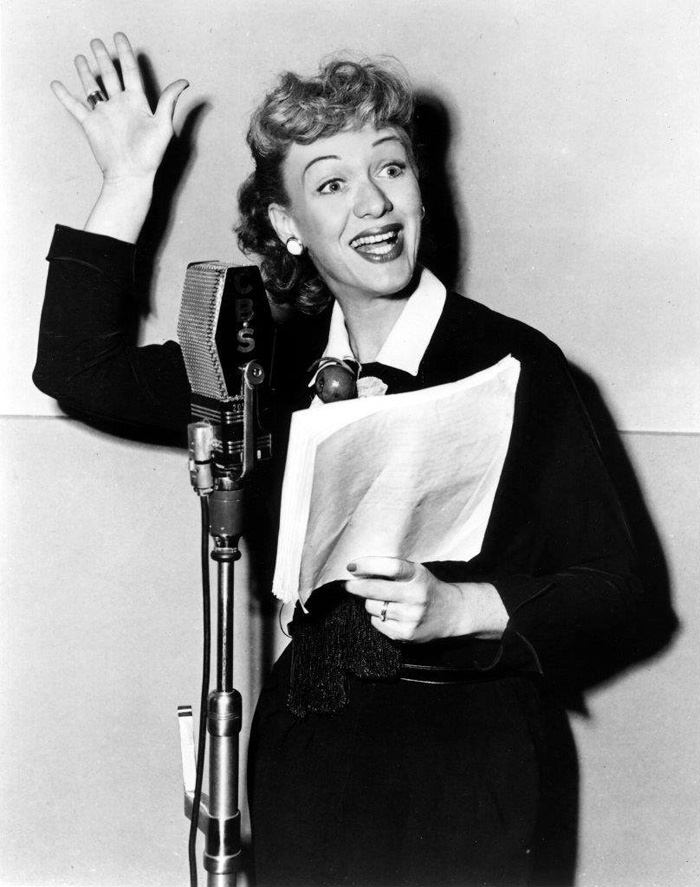
Our Miss Brooks was a ground-breaking show featuring a single woman (teachers were usually single, and marriage might have ended her career). She was not a scatterbrained female like Lucy or Joan in I Married Joan, and she was not a housewife like June Cleaver or Donna Reed. She was a bright, attractive working woman. Eve remembered her third-grade teacher fondly and tried to give Miss Brooks some of her qualities. Eve was known for her sassy movie roles; one of the things she appreciated about the character of Connie Brooks was that it allowed her to be a warm, fun-loving person who had a self-deprecating side.

brooksa

The show was a Desilu Production, so they shared equipment and crews with I Love Lucy, as well as a director (William Asher) at times, to save money.

The show was funny because it is based on believable characters. Connie Brooks has a great sense of humor. Many of the plots involve misunderstandings or her trying to keep Walter out of trouble with Mr. Conklin. Here are a few episode summaries.

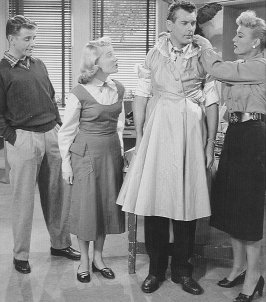
Miss Davis unknowingly uses school funds to buy Connie a new dress. Now Connie must sell the dress to return the money. Mr. Boynton even models the dress for the kids.

brooks7


Mr. Boynton asks Connie to play the role of Mrs. Boynton. She is thrilled,  imagining what it could lead to, until she realizes he meant his mother, not his wife.

Walter is listening to his home-made radio. Storm warnings come over the air for Bombay. Miss Brooks mistakenly thinks it is for their area and takes precautions to evacuate the school and prepare for a hurricane.

Mr. Conklin is furious when his bike is taken at the grocery store, and he wants the thief punished. Miss Brooks finds out that a poor boy borrowed it for his birthday and then returned it to the store. She goes to great lengths to protect the youngster.

brooks4


Radio Mirror magazine nominated Eve Arden as the top-ranking comedienne two years in a row for her characterization of Miss Brooks. The National Education Association recognized her for her sympathetic portrayal of teachers.

brooks3


Eve Arden was nominated for an Emmy for Best Actress Starring in a Regular Series in 1954, 1955, and 1956—winning in 1954. Gale Gordon was nominated for Best Supporting Actor in 1955, and the show was nominated Best Situation Comedy in 1954 and 1955.

Image result for images of our miss brooks


Eve Arden had to fight the same battle many celebrities do when they have a hit show. She handled her fame of being known as Miss Brooks with grace and practicality. As she explained it: “I originally loved the theater. I still do. And I had always wanted to have a hit on Broadway that was created by me. You know, kind of like Judy Holliday and Born Yesterday. I griped about it a little, and someone said to me, ‘Do you realize that if you had a hit on Broadway, probably 100 or 200,000 people might have seen you in it, if you’d stayed in it long enough. And this way, you’ve been in Miss Brooks, everybody loves you, and you’ve been seen by millions.’ So, I figured I’d better shut up while I was ahead.”


brooks13

While the TV series never resolved the Boynton-Brooks romance, the 1956 film did. It was directed by Al Lewis, who directed many of the television episodes. In the movie, Miss Brooks is unaware that Mr. Boynton is saving money, so he can ask her to marry him. He is hoping to get a promotion to head of the department. In a subplot, Connie is having issues with a student who is failing her class. He has no friends because he is very arrogant. When she meets his wealthy father, she understands why he has no friends and she tries to help him.  Also, Mr. Conklin is running for Coordinator of Education, primarily to stop the other nominee, Superintendent Stone, who has threatened to fire Conklin. Miss Brooks decides to be Conklin’s campaign manager despite her butting heads with him most of the time. If Conklin wins, Mr. Boynton might be promoted to principal. In the end, Boynton finally proposes, only to have a chimpanzee steal away the ring.


Our Miss Brooks comic. (1956)

The movie was a box-office failure. After the movie, Dell Comics released a comic book titled “Our Miss Brooks.” In past decades, it sold for hundreds of dollars in mint condition. Today it can be found on ebay for under $50.

A fun fact I learned was that Eve Arden was born Eunice Quedens. When she was encouraged to take a different stage name, she looked over her cosmetic jar labels. She picked “Eve” from “Evening in Paris” and “Arden” from “Elizabeth Arden.”

brooks1

While many of the plots for Our Miss Brooks are predictable and not overly creative, it was a innovative sitcom. The scripts were well written, and the humor still works today. I could not find any channels currently broadcasting Our Miss Brooks, but it does appear on Me TV from time to time. The radio shows can be heard on Sirius Radio, channel 148. Of course, there are a variety of DVDs featuring the show. Add it to your list to understand why Eve Arden was so popular with women in the 1950s.

brooks14

Today, I Get to Introduce You to One of My Very Favorite People, Blanche Morton, via Bea Benadaret

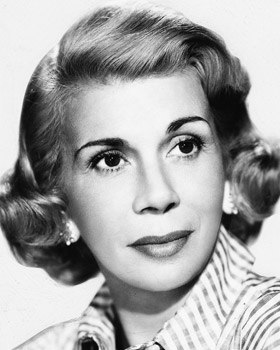
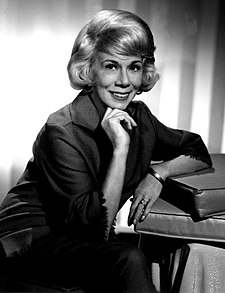
This week I’m excited to learn more about one of my favorite entertainers—Bea Benardaret. Bea had a long and successful career in radio and television, as well films. Nick-named Busy Bea, she would get credit for making more than 1000 radio and television appearances.

bea2

Born in 1906 in New York City, she was raised in San Francisco. Her first radio appearance occurred when she was 12 years old in Beggar’s Opera.  While still in high school, Bea went to work for radio station KFRC where she acted, sang, wrote, produced, and announced. She went on to the Reginald Travis School of Acting.

bea15

She married Jim Bannon in 1938. Their marriage would last until 1950 and produce two children, Maggie and Jack. She later married Gene Twombly in 1958 and remained married until her death.  Jack tells a story about when his mother was very pregnant with his sister. While exiting a cab, she fell and broke her pelvis.  It was so traumatic that her brunette locks turned white. At that time, she began dyeing her hair the blonde color we would all recognize once she transitioned to television.

Bea’s son Jack became an actor who has 91 credits for television and movie work. He appeared on Petticoat Junction 15 times, but was best known for his role of Art Donovan on Lou Grant. He was married to Ellen Travolta and passed away in the fall of 2017.

bea21

Bea could probably win the award of most-often misspelled name. You can find her name spelled Benardaret correctly or Benederet or Benadaret. On several episodes of Burns and Allen, you can even find credits spelling her first name “Bee.”

bea20

After graduation, she entered the radio business full time. She moved to Hollywood in 1936 and found work on The Jack Benny Show and shortly after with Orson Welles’ Mercury Theater in 1937. She was featured in 36 different radio shows with her most famous roles being Gertrude Gearshift on The Jack Benny Show, Eve Goodwin on The Great Gildersleeve, Millicent Carstairs on Fibber McGee and Molly, Gloria the maid on The Adventures of Ozzie and Harriet, and Iris Atterbury on My Favorite Husband. She received a starring role in Granby’s Green Acres, the forerunner of the Green Acres Show.

bea5

In 1943, she became one of the primary voices of Warner Brothers Merrie Melodies and Looney Toons cartoons. She met Mel Blanc during this time and they remained friends for life.

bea1

Bea also received roles in six films including a government clerk in Notorious (1946), one of two women Gene Kelley and Frank Sinatra encounter on the subway in On the Town (1949), and Tender is the Night (1962).

Bea’s first television role was my favorite character—Blanche Morton on the George Burns and Gracie Allen Show. Bea had appeared on their radio show and when the duo transitioned into television, she made the move with them. From 1950-1958 she was Gracie’s best friend and long-suffering wife of Harry Morton. Bea credited George Burns for teaching her about comedy. Bea was awarded two Emmy nominations for her portrayal of Blanche.

Not long after she was obligated to play Blanche, Lucille Ball offered her the role of Ethel Mertz on her new show I Love Lucy. Bea had to decline, but she did make an appearance on the show in 1952. Her “husband” on My Favorite Husband and Granby’s Green Acres was Gale Gordon.  He, too, was approached to play Fred Mertz; however, similarly to Bea’s situation, he had already agreed to transition from radio to television on Our Miss Brooks. He too would costar on the show and later he was able to work with Lucille Ball again on her other television shows.

bea3

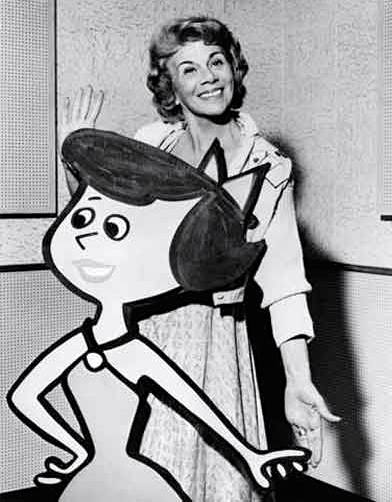
In 1960 Bea accepted the role of the housekeeper on Peter Loves Mary. That same year she agreed to provide the voice for Betty Rubble when The Flintstones debuted on Friday nights. She would provide voices on The Flintstones for 112 episodes.

bea11

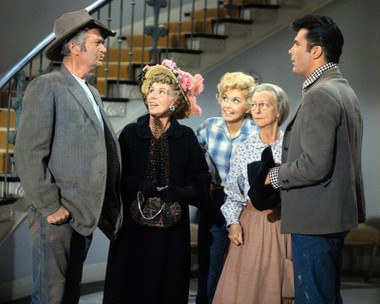
Paul Henning was one of the writers for Burns and Allen. He and Bea became friends in the 1940s, and in 1962 he created a show called The Beverly Hillbillies. He brought in Bea for the role of Granny, but when Bea saw Irene Ryan’s audition, she told Paul he had definitely found his Granny. He then created the role of Pearl Bodine for Bea. She would appear in 22 episodes. Donna Douglas, who played Elly May, said that “watching her timing is like watching a ballerina. She’s so effortless.”

When Henning created a spin-off in Petticoat Junction, the role of Kate Bradley was written specifically for Bea. She appeared in 179 of the episodes of the show that aired from 1963-1969. Henning’s wife’s family ran the Burris Hotel in Eldon, Missouri that catered to salesmen traveling by railroad, and those stories became the basis for Petticoat Junction. Kate, a widow, runs the hotel with help of her Uncle Joe who is often busier trying to avoid work than helping out. She has three daughters Billie Jo, Bobby Jo, and Betty Jo. (During the show’s run, there would be three Billie Jo’s, and two Bobby Jo’s but only one Betty Jo, who was portrayed by Linda Kay Henning, Paul’s daughter.)

bea13

Charley Pratt and Floyd Smoot run the Cannonball, a train that enables the Bradleys to travel to Pixley and Hooterville. Cut off from the main railroad twenty years earlier in a trestle demolition, the train caters to local residents, often stopping to move cows or let someone visit a neighbor between official stops. Sam Drucker runs the general store in Hooterville and is always the center of local society. Though it was never made too obvious, Kate and Sam had a special relationship, and we always assumed that once the girls were grown and gone, and Sam was ready for retirement, he and Bea would end up together. The old-fashioned hotel offers home cooking and a nostalgic feel. Other titles considered were Ozark Widow, Dern Tootin’, and Whistle Stop. When Steve Elliott, the crop duster, came to town, he dated Billie Jo. They made a glamorous couple, but a season or two later, he realized he truly loved Betty Jo, the youngest and the tomboy who helped in repair his plane. They married and had a daughter, Kathy Jo.

bea23

In 1967 Smiley Burnette (Charley) passed away. In 1968 Bea became ill and died that year from lung cancer and pneumonia. Bea’s second husband, Gene Twombly, passed away four days later from a heart attack. June Lockhart was brought on to the show as Dr. Janet Craig to help be a mother figure to the girls. Ratings declined in season 6 with the loss of Bea; however, the network renewed the show for another year so there would be five years of colored episodes for syndication. Ratings increased during the last year, but in 1969 when the new administration cancelled all the rural shows, Petticoat Junction received its walking papers too.

bea12

There were always rumors that there would be a reunion from the show, but that never happened, although the cast did take on both the Brady Bunch and Leave it to Beaver crews on Family Feud in 1983.

bea22

Bea was known for her laugh. By all accounts, she was a kind woman and extremely professional in all her roles. While I enjoy Petticoat Junction, I adore Gracie Allen, and am always happy to indulge myself watching Burns and Allen Show episodes. Bea holds her own on the show and makes a wonderful practical counterpart to Gracie’s illogical logic. If I had a time machine, one of the first visits I would make would be back to 1950 to enjoy a cup of coffee with Gracie and Blanche.

bea16