Peyton Place: Where Television Soap Opera Began

I admit that this month I may be a bit out of my element. We are going to learn about the soap opera genre in a series called “I Met My Twin When I Married My Mother’s Neighbor’s Uncle’s Grocer’s Best Friend’s Attorney Who is Also My Fourth Cousin Once Removed.” While my best friend Bonnie and I eagerly tuned in to The Young and the Restless when it began in seventh grade, and I popped in and out for a decade or so afterward, most of my soap opera memories involve my mother. I remember her ironing in the living room while watching As the World Turns. She also kept up with the events on Days of Our Lives and may have watched a few others off and on.

Photo: mubi.com

First in our series is one of the earliest television operas: we are traveling to Peyton Place.

This soap began on ABC in September of 1964 and was on the air for five years.

It was based on the novel Peyton Place by Grace Metalious. The first couple of years were in black and white and the second half of the shows were in full color.

A lot of the cast went on to be very active in television: Mia Farrow, Ryan O’Neal, Barbara Parkins, Christopher Connelly, David Canary, Mariette Hartley, and Lana Wood.

The show had a rocky beginning. Producer Paul Monash wanted to bring the show to prime time based on the success that the show Coronation Street had in England. He refused to call it a soap opera, preferring the term “high-class anthology drama.” A pilot was shot in 1962; after several changes, the pilot finally aired in 1964. The early episodes were taken from the novel and the 1957 film that was also based on the book. However, eventually, new stories had to be created. The setting was changed from an unknown location in the 1940s to present-day Massachusetts.

Peyton Place Archives, Camden ME Photo: camdenpubliclibrary.com

The opening credit included a photo of a church steeple and the words “Peyton Place” on screen while the bells rang. Announcer Dick Tufeld said, “This is the continuing story of Peyton Place.” Suddenly we see the town square, a rolling stream, and cast members while a summary of the previous episode is related.

Peyton Place was an immediate hit. It began life airing twice a week but then increased to three episodes in June of 1965. Dorothy Malone, one of the stars, had emergency surgery, so she was replaced with Lola Albright until she fully recovered.

In the first season, Dr. Michael Rossi (Ed Nelson) arrives in town from New York City to open his medical practice. Newspaper editor Matthew Swain (Warner Anderson) is a new friend. Matthew’s cousin Allison MacKenzie (Mia Farrow) is in love with his older brother Rodney (Ryan O’Neal). We understand that her mother Constance (Dorothy Malone) highly disapproves of the relationship. The town was named for Martin Peyton, the Peyton Mill owner, who was Rodney’s grandfather.

Rodney disapproves of his father Leslie’s (Paul Langton) relationship when he catches him with his secretary Julie (Kasey Rogers). Rodney has been dating her daughter Betty (Barbara Parkins). He breaks up with Betty and begins seeing Allison. Betty discovers that she is pregnant and then miscarries. Rodney marries her not knowing about the miscarriage. We also learn that Elizabeth Carson was murdered in a beachfront home.

The movie version 1957 Photo: dailymotion.com

Dr. Rossi becomes closer to Constance although he butts heads with Dr. Morton (Kent Smith). Dr. Morton threatens to destroy Rossi’s career when Catherine, Rodney’s mother, dies; then he learns that the pathologist made a huge error which actually caused the death. Betty decides to become a nurse and is hired as an aide at the hospital. Her father George (Henry Beckman) has a nervous breakdown and is admitted to a local sanitarium. Barbara Parkins told a reporter that when she met Bette Davis, the famous actress asked her, “When are you going to let go of Rodney Harrington?”

Elliot Carson (Tim O’Connor), Alison’s birth father who had been in prison for 18 years, returns to Peyton Place. He had been accused of murdering his wife Elizabeth, but we know that Catherine had been responsible. Once Elliott’s name is cleared he marries Constance and they explain to Allison that he is her father. Norman falls in love with a local girl Rita (Patricia Morrow) whose mother owns a local tavern.

Photo: pinterest.com

Steven Cord (James Douglas) is an attorney who moves to town. Dr. Morton’s daughter Claire (Mariette Hartley) gets divorced and returns to Peyton Place to practice medicine. She becomes interested in Dr. Rossi. When Matt decides to retire, he sells the local paper to Elliot.

If you are confused after reading these plots, don’t despair. I read through numerous times and still feel like I’m reading War and Peace. There are other subplots as well; these were just the major ones. Whew! I guess we know when someone says their life is like a soap opera, we know now what that means.

I won’t get into all the plot twists that happen during the rest of the series, but rest assured that there are murders, accidents, affairs, betrayals, addictions, and financial shenanigans.

When Mia Farrow became more popular, Dorothy Malone was written off the show after complaining about Farrow getting a bigger role, She sued 20th Century Fox for breach of contract; the case was settled out of court.

They didn’t have the only feud however. Ruth Warwick did not care for working with Ryan O’Neal. She said he was someone “who was so in love with himself it was pitiable.”

Mia Farrow left in 1966 and ratings began to decrease. In her memoir, Farrow said that she never expected this show to succeed. Once it became popular, she tried to get out of her contract. Her husband, Frank Sinatra, used his clout to get her out of it two years later, so she could travel with him.

The writers’ script had Allison run away from the town; two years later a new character showed up with a baby she claimed was Allison’s.
The Miles Family Photo: pinterest.com

The show went back to two episodes a week. By 1968 most of the original characters had left the show. Today it is not unusual for soap opera characters to come and go, but that was not the original plan.

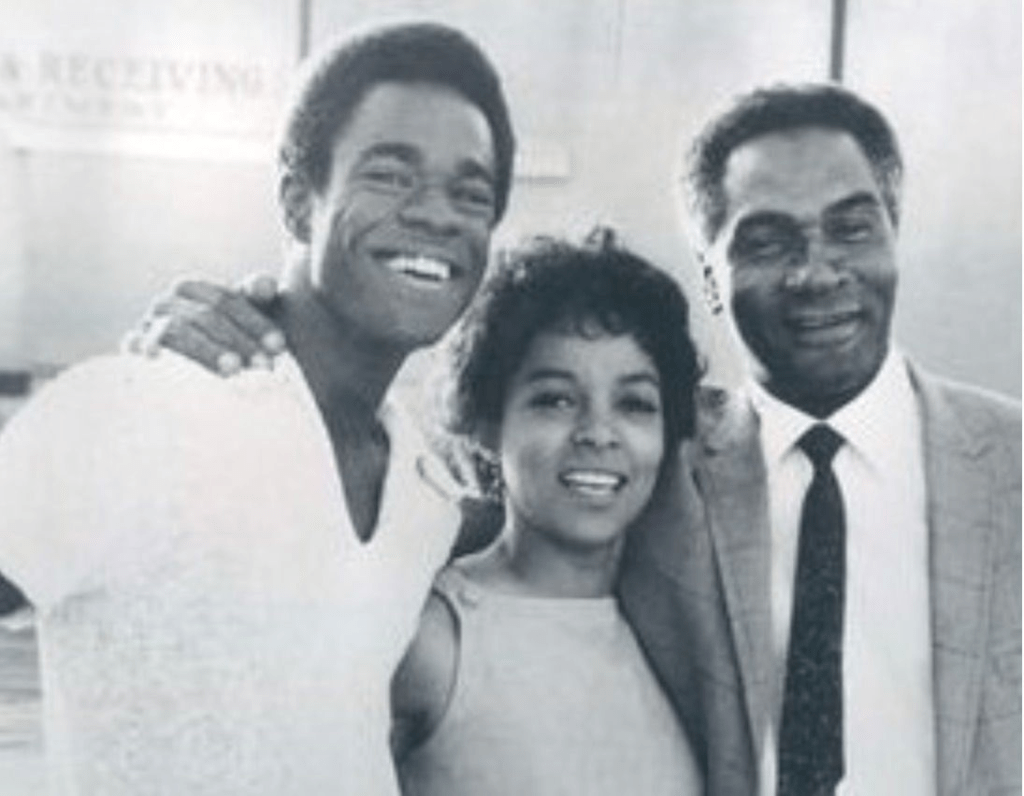
In the same year, the show developed several non-white characters played by Ruby Dee, Percy Rodriguez, and Glynn Turman. The series brought several black writers aboard as well as Ruby’s husband Ossie Davis as a consultant.

In an effort to increase ratings, new characters were brought on board and new subjects were added to scripts like the war, the draft, riots, music, and belief in God. The ratings never recovered, and the show was canceled in June of 1969.

The series was revived as a daytime serial in 1972 but after less than a year, Return to Peyton Place was also canceled.

In 1977 NBC aired Murder in Peyton Place. It was advertised as a reunion movie and it focused on the deaths of Rodney and Allison. In 1985, Peyton Place: The Next Generation was produced to stir up interest for a new series, but that never happened.

Author Grace Metalious Photo:providencejournal.com

I’m not sure why people were so enthralled with Peyton Place. I guess it’s the same reasons we have Fifty Shades of Gray decades later. Metalious, the author of the original novel, explained the genesis of her book: “To a tourist, these towns look as peaceful as a postcard picture. But if you go beneath that picture, it’s like turning over a rock with your foot-all kinds of strange things crawl out.”

During the five years it was on the air, Peyton Place had more than 100 actors on the show and 20 writers. The set expanded from a few homes around a town square to a more vibrant town with shops, a factory, a hospital, a fire station, and a wharf. Plots got more complex.

The show was eventually sold to fifty different countries with eight million viewers in Great Britain. Apparently, many Europeans based their idea of what an American town was like on this show.

Soap operas certainly had a spot in America’s hearts for decades. Just this past year, the last daytime soap opera moved to a streaming service and people were up in arms. I don’t know about you, but when I want to walk in nature it is to see the trees, listen to the birds, and smell the flowers. I tend to leave rocks alone. Maybe I am focusing on a fake façade, but I’m content not to see what is crawling around beneath the surface.
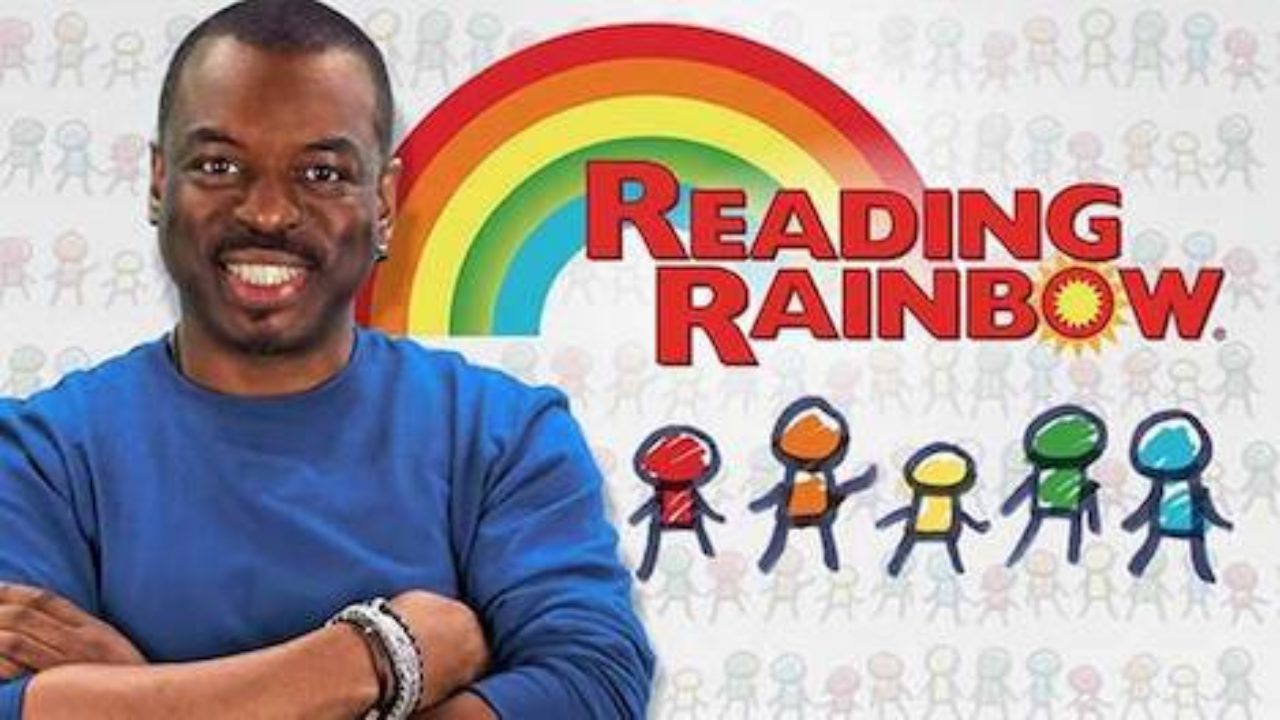
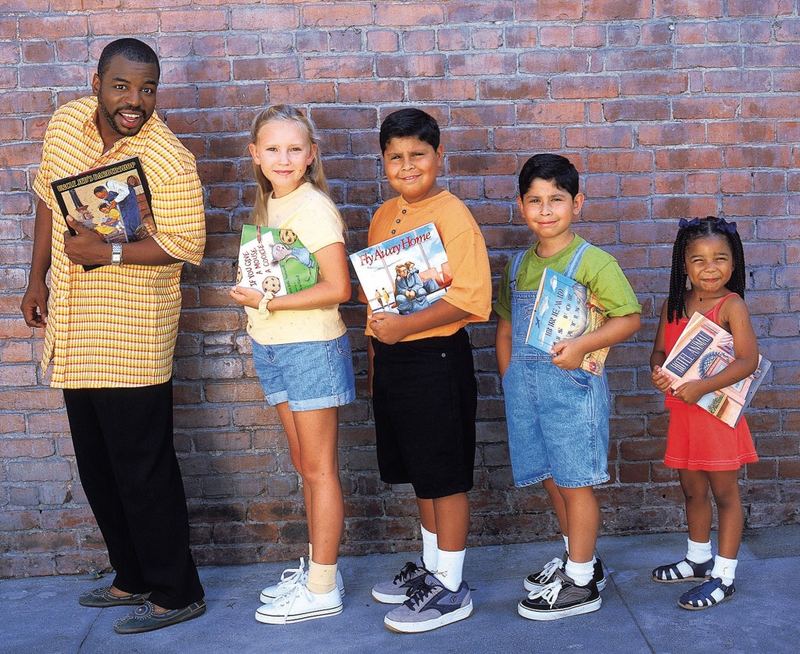
Add Some Color to Your Life with Reading Rainbow

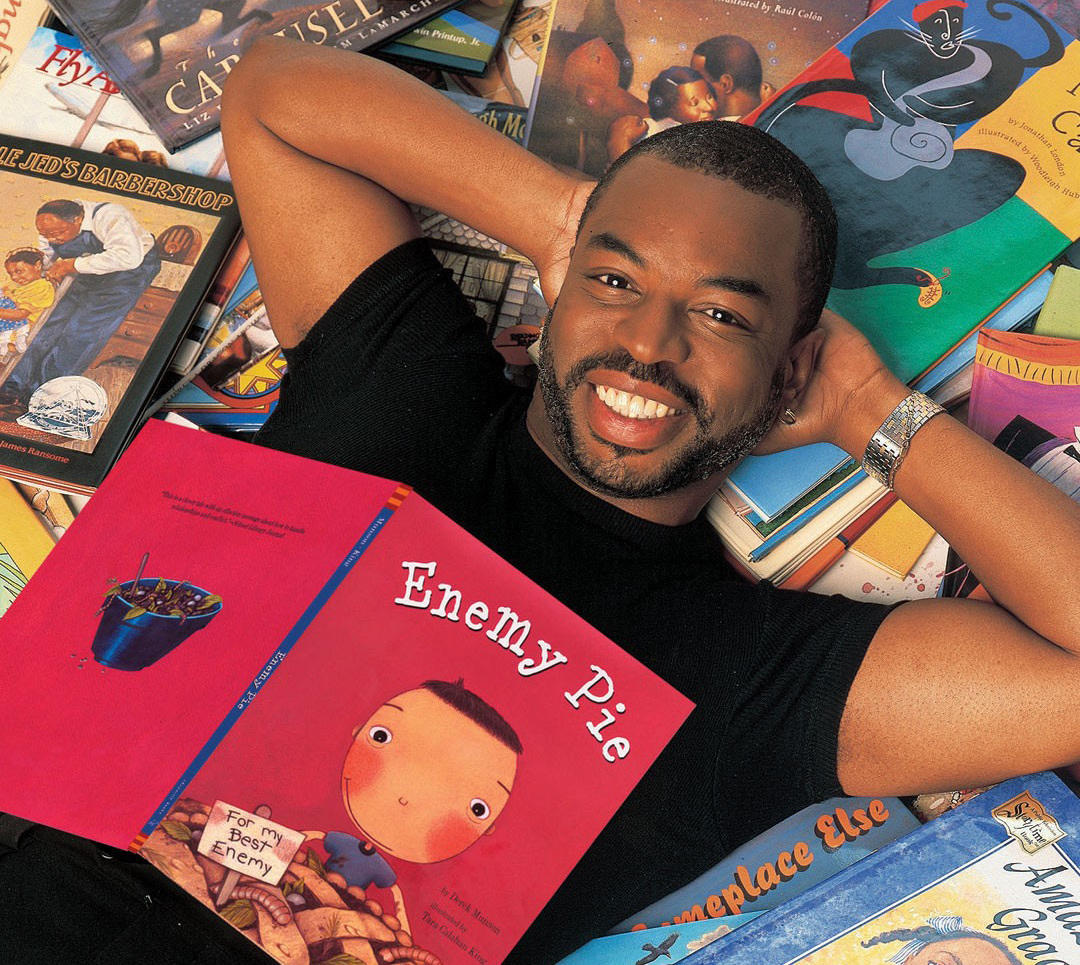
Reading Rainbow was an American 30-minute children’s series that was broadcast on PBS. The show began in 1983. Producing 155 episodes, the series aired new episodes until 2006 and then showed reruns until 2009.

How Reading Rainbow Inspired Me
Photo: bookriot.com

The show was developed to encourage children to read. Twila Liggett created the show with Cecily Truett Lancit and Larry Lancit of Lancit Media Productions. Lynne Ganek, Tony Buttino, and host LeVar Burton were also part of the creative team. The group met with Fred Rogers, Joan Ganz Cooney, and The Electric Company crew to explore ways to make television more engaging to fans. During an interview in 2003, Burton said “I think reading is part of the birthright of the human being. It’s just such an integral part of the human experience—that connection with the written word.”

Many educators found that during the summer, children lost a lot of their reading abilities because they were watching “uneducational” television and not reading. The producers of the show wanted to air a new program during the summer months that would keep kids excited about reading even when they weren’t in school. It was a great goal, but the show was often threatened with cancellation due to a lack of funding.

The show received more than 200 awards including a Peabody Award. Ten of its twenty-six Emmys were for Outstanding Children’s Series. It was the third-longest children’s show on the air right after, you guessed it, Mister Rogers and Sesame St.

LeVar Burton Asks Fans to Help Bring Back 'Reading Rainbow' | The Takeaway  | WNYC Studios
Photo: WNYC Studio.com

A topic was introduced in each episode and then a featured children’s book was read, often narrated by a celebrity. After the story, Burton visited places relating to the theme of the day. The show ended with book suggestions for kids to read. In an Esquire interview in 2019, Burton discussed why listening to books is so important: “It gives you the opportunity to, without the mechanism of reading, engage immediately in your imagination. When you’re reading, you’re multitasking. You’re reading and making the movie in your head. When you’re listening to storytelling, there’s no activity, there’s no multitasking—you’re indeed in your imagination as you’re engaged with the content of the story. It’s a shortcut for visualization.”

Steve Horelick was the composer of the theme song with Dennis Neil Kleinman and Janet Weir writing lyrics. The show had three versions of the song with the third version sung by Chaka Khan.

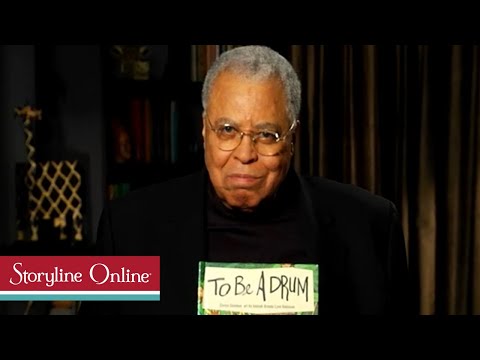
There are a lot of great stars who showed up to read to kids, including Ruth Buzzy, Julia Child, Ossie Davis, Ruby Dee, Kermit the Frog, Peter Falk, Jane Goodall, and Run D-M-C.

Margret Aldrich in wrote an article in 2014, and she chose the top ten books from the series. It’s a great place to start if you want to find a couple of books to read to your child.

To Be A Drum read by James Earl Jones - YouTube
James Earl Jones Photo: youtube.com
  1. All the Colors of the Race by Arnold Adoff, read by Maya Angelou.
  2. Sunken Treasure by Gail Gibbons, read by Robert Morse
  3. On the Day You Were Born by Debra Frasier, read by Patrick Stewart.
  4. Amazing Grace by Mary Hoffman, read by Tyne Daly.
  5. Animal Café by John Stadler, read by Martin Short.
  6. The Magic Schoolbus Inside the Earth by Joanna Cole, read by Keshia Knight Pulliam.
  7. Paul Bunyan by Steven Kellogg, read by Buddy Ebsen
  8. Arthur’s Eyes by Marc Brown, read by Bill Cosby.
  9. Bringing the Rain to Kapiti Plain by Verna Aardema, read by James Earl Jones.
  10. Abiyoyo by Pete Seeger and Michael Hays, read by Pete Seeger.

So, why was the show canceled? According to John Grant, who is in charge of content at WNED Buffalo, the show’s home station, “The show’s run is ending because no one—not the station, not PBS, not the Corporation for Public Broadcasting—will put up the several hundred thousand dollars needed to renew the show’s broadcast rights.” And, just like that, the last chapter was closed for good.

Burton Calls On 'Star Trek' Fans To Bring 'Reading Rainbow' To The Next  Generation | KRWG
Photo: npr.org

Reading Rainbow was an essential motivation for kids to read. However, adults have to realize that they also have to make time for reading. Let’s allow Levar to have the last word. In that Esquire interview, he also talked about why all of us need to read:

“You need to make the time. You have time to eat; you have time to sleep; you have time to love. I think reading for pleasure is an act of self-care, genuinely. I really do, especially in today’s world. You’ve gotta turn off the news; you’ve got to create some escape time in your imagination. You have to feed yourself, people! Otherwise, we have a tendency to get locked into the circumstances of life, and less engaged in the solution aspect of ourselves. It’s really critical for us to read for pleasure. One of the miracles of the modern era is that on my iPad, and consequently, because of the Cloud, on my phone, I carry a library of reading material. I mean, literally a library. It’s so available. We just have to shift our awareness a degree in that direction.”

Car 54, Where Are You: Muldoon and Toody: The Bert and Ernie of the NYPD

Car 54, Where Are You? aired on NBC beginning September of 1961. I was surprised to learn that there are only 60 episodes in this series. The show revolves around officers Gunther Toody, Badge 1432 (Joe E. Ross) and Francis Muldoon, Badge 723 (Fred Gwynne). Their patrol car is Car 54, and they are with the 53rd precinct in New York. Toody and Muldoon are complete opposites which is why they get along so well. Toody is short, extremely talkative and not overly bright.  He’s married to Lucille (Beatrice Pons), a bit of a loud, overbearing woman. Muldoon is tall, quiet and very smart. He’s a bachelor who lives with his mother (Ruth Masters) and two younger sisters.

Photo: imdb.com

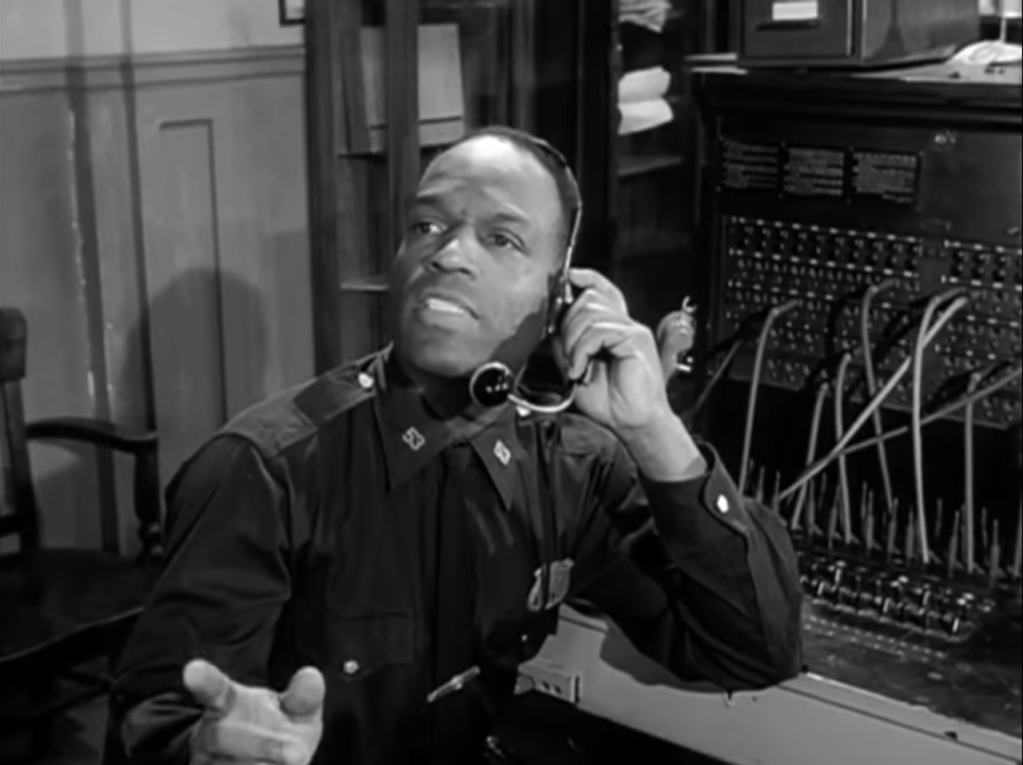
Rounding out the large cast are officers Dave Anderson (Nipsey Russell), Omar Anderson (Ossie Davis), Kissel (Bruce Kirby), Nelson (Jim Gormley), Nicholson (Hank Garrett, O’Hara (Albert Henderson), Schnauser (Al Lewis), Steinmetz (Joe Warren), and Wallace (Frederick O’Neal), as well as Captain Block (Paul Reed), Sergeant Abrams ( Nathaniel Frey), Sylvia Schnauser (Charlotte Rae), and Claire Block (Patricia Bright).

A young Nipsey Russell Photo: yahoo.com

Nat Hiken (the creative force behind The Phil Silvers Show) created the series. He wrote many of the scripts and also directed several episodes, one of which he won an Emmy for. The show was nominated for three other Emmys. It was up for Outstanding Program Achievement in the Field of Humor in 1961 which went to The Bob Newhart Show (not that Bob Newhart show, this was a variety show hosted by Newhart) and for Outstanding Writing Achievement in Comedy in both 1961 and 1962 but got beat out both years by Carl Reiner for The Dick Van Dyke Show.

As recounted in Martin Grams, Jr.’s book Car 54, Where Are You?, after visiting a New York police precinct house and noticing what a communal feel it had, unlike any of the depictions of police on television, Hiken came up with the idea for a police-themed situation comedy. He continued to do research by spending weeks in a precinct squad room during late 1960, getting a feel for how the officers talked and interacted amongst each other, members of the community, and even repeat offenders, who were often treated more like family than threats. Hiken enlisted the support of Eupolis Productions and then pitched the idea to Proctor & Gamble, who agreed to finance a pilot.

Fred Gwynne and Al Lewis were coworkers before they were relatives Photo: shoutfactorytv.com

According to Kliph Nesteroff in the definitive account of Joe E. Ross’ tawdry life off-screen, “King of Slobs: The Life of Joe E. Ross,” Hiken originally wanted to cast Jack Weston in the role of Gunther Toody (televisionheaven.co.uk says it was Jack Warden) and Mickey Shaughnessy as Francis Muldoon, but contract negotiations broke down with both, so he turned to Ross and Fred Gwynne as suitable replacements, though in Ross’ case he later regretted it.

John Strauss who had collaborated with Hiken on the theme song for The Phil Silvers Show, teamed up with Hiken once again for this theme. Strauss was married to Charlotte Rae, who appeared on the show. Strass was the composer, and Hiken wrote the lyrics. The familiar theme song is:

There’s a hold-up in the Bronx,

Brooklyn’s broken out in fights;

There’s a traffic jam in Harlem

That’s backed up to Jackson Heights.

There’s a scout troop short a child,

Khrushchev’s due at Idlewild,

Car 54, where are you?

The show was originally titled “The Snow Whites.” (Maybe because the sponsor made Chlorox bleach.) The show was given a great time slot on Sunday nights between Walt Disney’s Wonderful World of Color and Bonanza. The producers thought the working title would confuse viewers since the show followed Disney. Since the theme song was already written, the last line of the song became the show’s title.

Critics were split on the show. While many people praised the series, some reviewers considered it disrespectful. The Chicago Sun Times deemed it “a preposterous (and sometimes cruel) depiction of the policeman.” The Dallas Times Herald stated, “The humor might be there, all right, but not much of it was showing.” The Alabama Journal complained, “It is insulting to the law enforcement and to the general public.” However, many policemen liked the show and found it funny.

The show was filmed at Biograph Studios in the Bronx and on location. The cars were painted bright red and white which photographed perfectly. There is some controversy about the patrol cars. Some articles listed them as Savoys, some as Dodges. According to Martin Grams blog from May 4, 2012,  “On June 29, 1961, Arthur Hershkowitz signed the contract and during the first week of July, the following four automobiles were delivered to Eupolis Productions”: two 1961 Plymouth Belvederes, one Dodge Dart, and one Plymouth, all four-door sedans. Grams said “the cars were returned to the dealership and when the show was renewed for season two, the following cars were delivered”: two 1962 Plymouth Belvederes, three 1962 Plymouth Furys, one 1962 Dart 330, and a 1962 Chrysler New Yorker.  One article I read said that the large circular object on the dashboard between the officers was an auxiliary fan used before air conditioning was available.

Despite the success of Car 54, which placed 20th in the ratings for 1961-62, Hiken soon began to feel overwhelmed with his responsibilities.  Apparently, NBC wanted part ownership in the show in exchange for renewing it for season three, and Hiken would not agree to the deal. The show’s sponsor Proctor and Gamble tried to talk CBS into taking the show over, but there was no room on their schedule. Hiken was a bit burnt out with writing, directing, and overseeing the show and was exasperated with Ross who caused a lot of issues not remembering his lines, so Hiken ended the show and never worked on another series again.

Considering the short time that the show was on the air, there was a full slate of guest stars including Carl Ballantine, Tom Bosley, Wally Cox, Hugh Downs, Margaret Hamilton, Katherine Helmond, Hal Linden, Mitch Miller, Charles Nelson Reilly, Sugar Ray Robinson and Jean Stapleton.

The episodes are well written and similar to other sitcoms at the time.

Photo: shoutfactory.com

In one, Toody is feeling henpecked by Lucille, but musters the courage to become king of his castle after seeing a stirring performance of Shakespeare’s “The Taming of the Shrew.”

In another, Muldoon shares a childhood experience when the kids at school called him “Horse Face.” Toody, trying to console him, says “Don’t worry Francis, kids just repeat what other people say” and later added “After all, Francis, everybody liked Black Beauty.”

One script has Toody working an undercover detail in Brooklyn with a female cop posing as his wife and a small boy as his child. When his wife’s sister spots him, the rumors begin.

Even though there were only 60 episodes, the show went into syndication in 1964. It was one of the staples on Nick at Nite in the 1980s, aired on Comedy Central in the 1990s, and a few years ago it could be seen on both MeTV and Decades. The show came out on DVD in 2011 and 2012.

Like any show that was even somewhat successful, the show had a film made based on the series in 1994. The big screen version starred John C. McGinley as Muldoon, David Johansen as Toody, Rosie O’Donnell as Toody’s wife Lucille and Fran Drescher as Velma Velor. Not surprisingly, it was a dud. One reviewer said it “was one of the worst movies to ever come out of Hollywood.”

One fun fact I learned doing research for this blog was that this show was William Faulkner’s favorite tv show. He hated television but visited a friend’s house weekly to watch the show.

Photo: amazon.com

This show debuted during the decade when merchandising was a big part of every show. There were at least six comic books based on the show. There was a board game, puppets of Toody and Muldoon, and a car model.

The show was funny in its prime, but I’m not sure it holds up as well today as other shows from the sixties. However, two seasons of DVDs is not a large investment, so check out an episode on youtube and see what you think.