Sylvia Field: What a Character

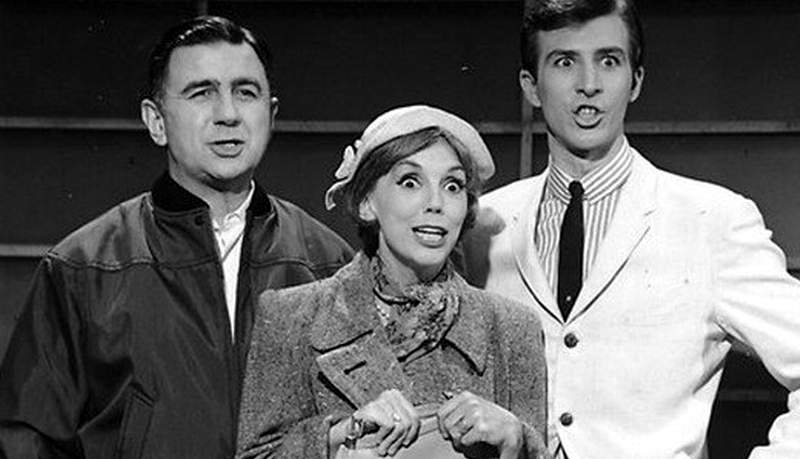
We are in the middle of our blog series for November, “What a Character!” Today we get to meet the delightful Sylvia Field.

Born Harriet Louisa Johnson in 1901 in Allston, Massachusetts, Field always knew she wanted to act. When she was ten, she saw Maude Adams in “Peter Pan,” and she decided that would be her career as well. After being diagnosed with diphtheria, she was not allowed to attend school for a while. So, when she was feeling better, she ventured down the street to a motion picture company that was filming movies. She was allowed to join the cast and became the “leading lady of the extras.”  

📷facebook.com

Eventually she decided to move to New York. At only 17, she made her Broadway debut in “The Betrothal.” She never did go back to school.

📷wikipedia.com 1927 Broadway shot

A decade later she got her first shot at the big screen in The Home Girl. She was signed by Fox Studios in 1939. Her last acting credit was also for a film, The Cruz Brothers and Miss Malloy in 1980. While she fit a few movies in her career, most of her appearances were on television.

After she began her film career, she married Robert Frowhlich in 1924; they were only married five years. In 1930 she tried marriage again with Harold Moffat; he passed away eight years later. In 1941 she married Ernest Truex, and they remained together until his death in 1973.

Truex had an interesting background. He was born in Kansas where his father was a doctor. In exchange for medical services, one of his father’s patients gave Ernest acting lessons. Ernest performed Shakespeare as a five-year-old child, and was given the nickname, “The Youngest Hamlet.” As a nine-year-old, he and his mother toured the country while he performed. Before he was a decade old, he was in his first Broadway show with Lillian Russell.
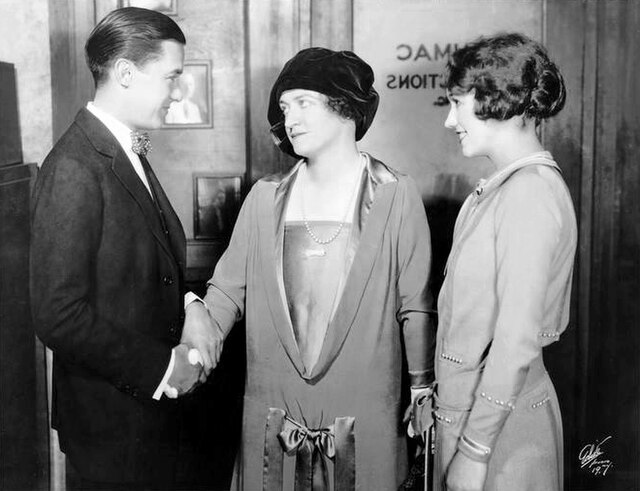
📷wikipedia. The Butter and Egg Man by George Kaufman

In the movies he played the quiet, ineffectual boss. Like Field, he was also a regular cast member in three shows. His were Jamie, Mister Peeper, and The Ann Sothern Show.

Field and Truex traveled around the country in plays together before starring in a local New York series featuring members of their family. The couple had a blended family with Field’s daughter Sally Moffat and Truex’s three sons. All four of the kids became actors. I’m guessing it was like The Adventures of Ozzie and Harriet. The show was on the air for three years before Truex and Field decided to move to California.

Sylvia’s first television appearance was on the Chevrolet Tele-Theater in 1948. She continued accepting roles on many of the drama shows through the mid-fifties. In 1952 she got her first cast role as Mrs. Remington on Mister Peepers. Ernest Truex was also part of the cast, playing Mr. Remington. They played the parents of Nancy, the school nurse, Mister Peepers’ fiancé. (Field and Truex would work together again on a 1966 episode of Petticoat Junction, “Young Love,” as well as in The Ann Sothern Show.)

📷who’sdatedwho.com Field and Truex

After Mister Peepers was canceled, she accepted a few spots on current shows including The Ann Sothern Show, Father Knows Best, Perry Mason, and The Thin Man.

In 1958 Sylvia received another cast offer to become Aunt Lila on both Annette and The Mickey Mouse Club. These shows shared cast members, so if you were cast on one of them, it was a buy one, get one deal.

Aunt Lila only lasted a year, which was a good thing, because Field was free to accept the role of Martha Wilson on Dennis the Menace, beginning in 1959. She defended Dennis to her husband George for almost four seasons.

Before the 1962 season, her tv husband Joseph Kearns passed away. For the season, Gale Gordon was brought in as George’s brother John, who was staying with Martha while George was away on personal business. However, the next year, Field was written out of the show, and John’s wife Eloise took her place, played by Sara Seegar. John and his wife bought the house from George and Martha, and no explanation was given to why they moved away. Sylvia and Jay North, who played Dennis, remained friends for the rest of her life.

📷WPRI.com Field, North, and Kearns

For the rest of her career, she would show up on television shows including Hazel, Occasional Wife, and Lassie. After Truex’s death, Sylvia accepted a couple of roles but spent much of her time fishing, golfing, watching baseball, and taking care of her avocado orchard. Eventually she had to move to a nursing home where she passed away in 1998.

I always enjoyed Martha Wilson. She and George took on the role of Dennis’s pseudo grandparents. While George was gruff, everyone knew he loved Dennis. Martha was more affectionate and always waiting with cookies, ready to hear about his latest exploits. Field seemed to have a great life. She had a prolific career and then was able to enjoy retirement which so many actors find impossible to do.

Occasional Wife: Occasionally Watched by Viewers

We are in the midst of a month of blogs that feature sitcoms we don’t hear much about anymore. Today’s series is Occasional Wife.

In September 1966, the show debuted on Tuesday nights on NBC.

📷wikipedia.com

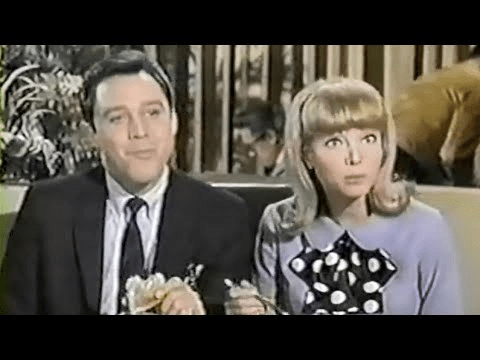
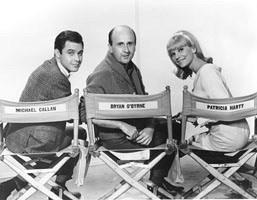
The show was about Peter, a junior New York business executive (Michael Callahan). When he realized married men are more likely to be promoted at his company, Brahms Baby Food, he asks hat check girl Greta (Patricia Harty) to pose as his wife for company functions. When he offers to pay for her rent and art lessons, she agrees, thinking it will be an occasional performance, but every time someone from the office drops by, Peter runs upstairs to bring her down to his apartment until they leave. One of the funniest parts of the show was the tenant played by Bryan O’Byrne who watches Peter and Greta running up and down the fire escape.

If you wondered if the name Patricia Harty sounds familiar, yes it does. She was Blondie and we talked about her in the first blog of this series.

📷imdb.com

The opening is reminiscent of Dragnet with its introduction “There are eight million stories in the Naked City. Some are violent, some sad, but one of them is just plain cuckoo. This is a modern fable about two young people who make a bargain only to find out they were going to get a lot more than they bargained for. We call our fable Occasional Wife and it stars Michael Callan and Patricia Harty.”

The series was created by Lawrence J. Cohen and Fred Freeman. Vin Scully, legendary sportscaster, provided the narration for the show. It started off ranked 18th but by the end of the season, it had dropped to 64th and was cancelled.

The show was up against The Red Skelton Hour and The Rounders. If you have been reading my blog any amount of time, you probably have heard me complaining about Red Skelton. I honestly could not stand watching the show and did not find it at all funny, but I also have read way too many accounts of what a jerk he was to his writers, cast members, and anyone else who he worked with. However, at this time, his show was in the top ten. The Rounders on the other hand, probably didn’t take many viewers away from this sitcom. The premise of the show, according to imdb.com, was that Howdy Lewis and Ben Jones are in debt to Jim Ed Love, second richest man in the state. They find some happiness with girlfriends Ada and Sally at the Longhorn Cafe.

📷popculturereferences.com

It sounds like Peter and Greta were flat characters and the comedy only relied on the situation of the fake marriage. Viewers would probably have liked to see some chemistry between the two and allow them to struggle with getting closer instead of both being happily single. There must have been some chemistry there because the actors married after the show ended. Just like their sitcom, their marriage failed to last two years.

This sitcom was one of the first series to eliminate the use of a laugh track. Now canned laughter is an industry standard, but they decided to can the canned laughter and not invite a live audience. I wonder if this might have affected viewers whether they knew it or not.

📷youtube.com

Bob Claver discussed his time producing this show in a Television Academy interview. Claver thought the show was funny and peppy, but he said they couldn’t make it a hit, even with Harry Ackerman as executive producer.

As with the other two series we discussed this month, Blondie and My Sister Eileen, you might be better off to run up or down your own fire escape and skip watching the show to get in a few extra steps.

Joan Tompkins: What a Character

We are starting a blog about Supportive Women, great actresses who made classic television so much better. I’m beginning with Joan Tompkins.

📷tvtime.com

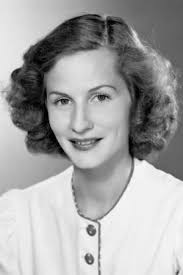
Tompkins was born in 1915 in Mount Vernon, NY. She began her career in stock theater companies in New York in the thirties before appearing on Broadway in several shows including “My Sister Eileen,” “Pride and Prejudice,” and “Fly Away Home.” Henry Fonda was in several the plays with Joan.

In 1936 she married actor Stephen Ker Appleby in New York, but five years later they divorced. Appleby was born in Wales and known best for his 1960s movies. He lived to be 100. From 1942-1951 she was married to Bruce MacFarlane before they divorced. McFarlane died in 1967 and had 28 acting credits in television and film. Joan would then marry a third actor in 1951, Karl Swenson, “the man of a thousand voices.” The two worked together on the radio. Many fans of Little House on the Prairie would recognize Karl as Lars Hanson. Swenson obtained an amazing 175 credits, primarily on television during the two decades before his death.

After WWII Joan became a foster parent for a crippled Polish boy, Tomasz Machcinski. He later became a photographer. In 1994, their story was made into a documentary, “Child from a Catalog.” Machcinski’s life story was very interesting. He was born in the Kampinos Forest in Gorki, Poland. He spent his childhood living in hospitals and orphanages. After developing a relationship with Joan, he graduated as a precision mechanic in 1963. In 1966, he took up photography and created thousands of self-portraits. Some were as historic characters. He chose the stories, make up, and costumes. He once said that he didn’t “use wigs, tricks, but I use everything that happens to my body, such as hair regrowth, tooth loss, diseases, aging, etc.” He has had exhibits in Copenhagen, Beverly Hills, Warsaw, New York, and Paris. Machcinski passed away in 2022.

📷wallofcelebrities.com

Tompkins had a long radio career. She was the voice of Nora Drake on “This is Nora Drake” which was on CBS radio until 1959.

She began her television career in 1954 on an episode of Ponds Theater. Almost all of her 93 acting credits were for television shows. She had a recurring role on a soap, Valiant Woman, appearing in 176 of the 1027 episodes of the show as Marion Walker. Throughout the fifties, she showed up in several dramas as well as The Donna Reed Show, Bachelor Father, and Father Knows Best.

During the sixties, she had two recurring roles. She played Mrs. Brahms on Occasional Wife in 1966-67. I remember her on My Three Sons; between 1967-1970, she appeared as Lorraine Miller, Katie’s mom, nine times.

You can catch glimpses of her on many of your favorite shows from the sixties and seventies, including Hazel; The Danny Thomas Show; Perry Mason; Gomer Pyle: USMC; Dr. Kildare; The Man From UNCLE; Bewitched; Bonanza; The Brady Bunch; Marcus Welby, MD; The Mary Tyler Moore Show; The Mod Squad; and The Bob Newhart Show.

📷imdb.com My Three Sons

Her last television appearances were in 1980. She played Grandma Gertie in an episode of Eight is Enough and a physician in a made-for-tv film, The Night the City Screamed.

Karl and Joan moved to Beverly Hills where they founded an acting company. Karl directed the plays Joan appeared in. After Karl’s death in 1978, Joan joined a writing group and wrote several books. She died at home in 89.

Joan Tompkins is another one of those actresses that made television better during the fifties, sixties, and seventies. I’m glad we could learn a bit more about her and her career.

The Phyllis Diller Show: So Much Potential

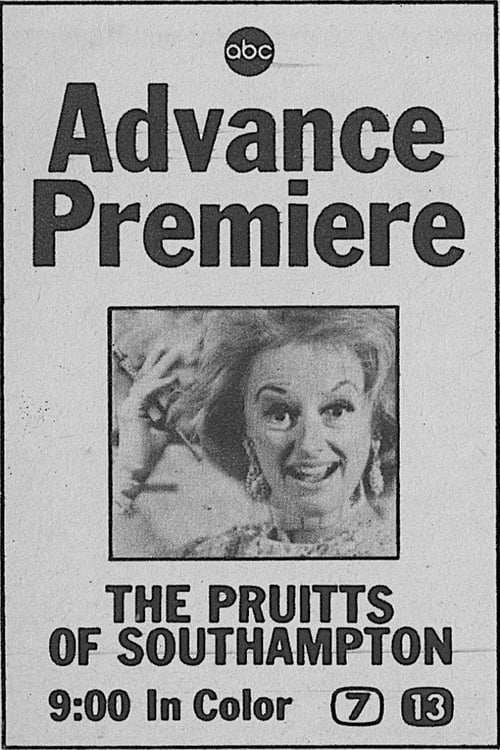
This month’s blog series is “It’s My Show.” Today we are beginning with a show I’ve discussed a few times over the years that had the perfect cast and concept, but it was cancelled after only one season: The Phyllis Diller Show which also went by The Pruitts of Southampton.

Image result for images of the pruitts of southampton
Photo: pinterest.com

The show was created by David Levy in 1967 and was loosely based on the book House Party by Patrick Dennis.  Levy was also the creator/producer for The Addams Family which aired from 1964-1966. The shows also shared composer Vic Mizzy who wrote the themes for both series. Mizzy also wrote the catchy tune from Green Acres. The opening theme song had Phyllis Diller dancing, skipping, and singing through the mansion, and the lyrics were:

PD: Howcha do howcha do, howcha do my dear
What a LOVELY surprise, nice to see you here.

RG: All the bills have been long overdue my dear.

PD: File them under I.O.U…
Howcha do, howcha do, Well HELLO, it’s you!
Like my beads, like my dress?
Aren’t they marvy-poo?
They belong to the internal revenue.
And they got us eating stew.

CHORUS: The Pruitts of Southampton,

Image result for images of the pruitts of southampton


Live like the richest folk,
But what the folk don’t know is that
The Pruitts are flat broke!

PD: Howcha do, howcha do, howcha do, my dear

RG: We are out of champagne, and I’m stuck, my dear.

PD: Ask the butler to lend you a buck, my dear.
Howcha do, howcha do, howcha do…

The Pruitts, an incredibly wealthy family, live in the Hamptons. After going through an IRS audit, the family realizes they owe so much in back taxes, $10,000,000 in fact, that they were now broke. The IRS agrees to let them continue living in their mansion because they think exposing such a wealthy family’s poverty would cause a lot of repercussions.

Image result for images of the phyllis diller show
Photo: pinterest.com

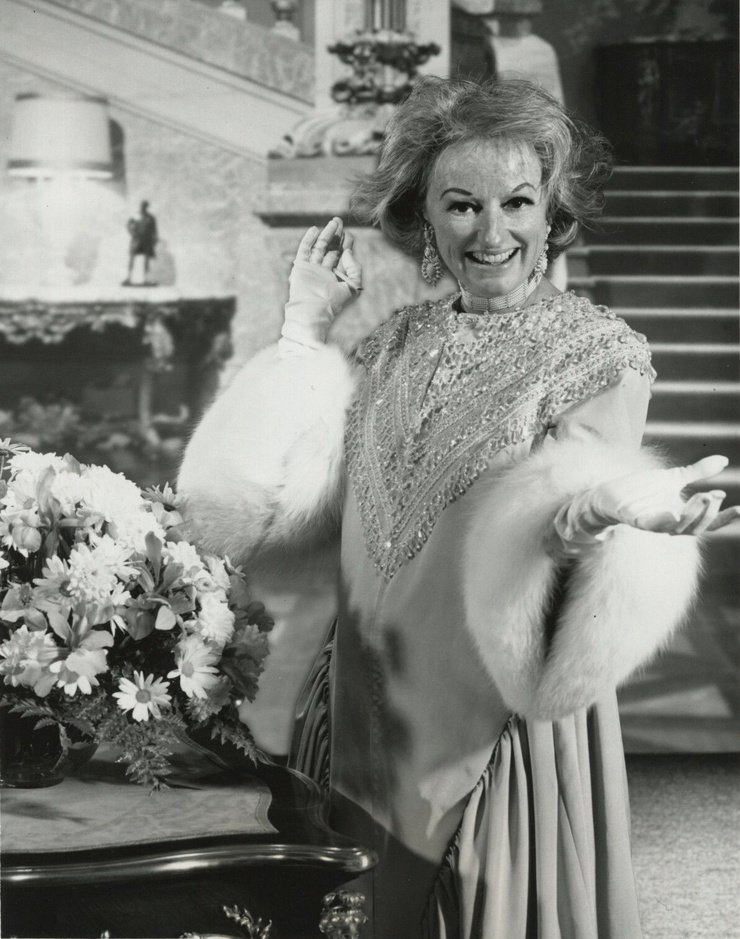
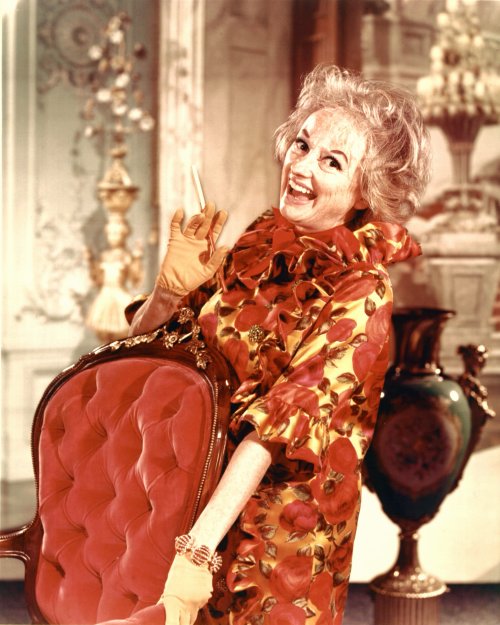
Phyllis Diller starred as Phyllis Pruitt. Phyllis lives with her uncle Ned (Reginald Gardiner), her brother Harvey (Paul Lynde), her daughter Stephanie (Pam Freeman), brother-in-law (John Astin), and their butler (Grady Sutton). Midseason, the show was revamped and the family brings in boarders to raise money, including Norman Krump (Marty Ingels) and Vernon Bradley (Billy De Wolfe). They should have been able to raise a bit of money with 68 bedrooms in the house. Other characters included Regina Wentworth (Gypsy Rose Lee), their nosy neighbor and Baldwin (Richard Deacon), the IRS agent. The incredible Charles Lane plays Max.

In addition, there were a lot of guest stars during that single season including Ann B Davis, Bob Hope, Arte Johnson, John McGiver, Louie Nye, Hope Summers, and Mary Wickes.

The shots of the family home were filmed at the Vanderbilt mansion, Biltmore.

The show began on Tuesday nights. At the time, The Red Skelton Hour was one of the most popular shows on television and was tough competition. When the show was revamped, it moved to Friday nights where it was up against Friday Night at the Movies and T.H.E. Cat.  If you don’t remember that show, don’t feel bad, you probably remembered very few of the new series that debuted that year.

Image result for images of the pruitts of southampton
Photo: nostalgiacentral.com

1967 was not a very profitable year for sitcoms specifically. Besides Phyllis Diller’s show, the season aired Run Buddy Run, Mr. Terrific, The Jean Arthur Show, Occasional Wife, and Pistols and Petticoats. That Girl was one of the few shows to return the following season.

Even though it was named as one of the worst sitcoms ever in several TV Guide listings, critics at the time praised the show. Phyllis Diller was nominated for a Golden Globe for Best Actress in 1967. Marlo Thomas won, but there was some great competition including Elizabeth Montgomery, Barbara Eden, and Barbara Stanwyck.

Image result for images of the pruitts of southampton
Photo: listal.com

One reviewer on imdb.com titled their review “The worst thing I have ever seen in my life” and followed up with a review that said, “Just kidding, this show is amazing and hilarious and that is why I gave it a 10/10.”

When Vic Mizzy discussed the show in a Televison Academy interview, he said the director was not any good, the scripts weren’t as funny as they could have been and sometimes Phyllis didn’t know her part. He thought those were the reasons the show failed. He thought it could have been unbelievabley funny.

One day Vic got a large check from England and it turns out the show was a hit there decades after it was aired in the United States.

I watched a couple of the episodes on youtube for this blog. Phyllis Diller was in rare form. Her hair is crazy like always and slapstick was part of her performance. The laugh track was annoying, but the show was funny at times. Pam Freeman was a breath of fresh air. In one of the episodes, Phyllis and her brother-in-law were trying to finance a pizza-making machine. They had to work around the fact that Baldwin from the IRS put a pay phone in the home to keep them from making so many long-distance calls.  One of the funniest scenes was when Phyllis and her brother-in-law climb up one of the phone poles to tap into the line to talk to Baldwin pretending to be other people in order to get Baldwin to approve their financing. Phyllis had to come up with a variety of different voices during the calls. You could definitely hear a bit of Green Acres influence in the background music for this show. This was a show that only could have been produced in the sixties.

One of the best parts of watching the show was seeing the old commercials.  I had forgotten the one about Joy dish soap when the dinner guests could see themselves in the plates. It just reminded me it was joyful to see these old shows in their entirety.

It was a fun show to learn about with an outstanding cast and should have been much more successful than it was. Whether the failure came from the director, the scripts, or some other behind-the-scenes issue, I’m not sure. It’s worth watching an episode or two just to see the wackiness that was associated with some sixties shows, but if I have to watch ten episodes of a show, I’ll take That Girl every time.


Gee, Mom There’s Nothin’ To Watch on TV

After complaining about the number of lack-luster shows on the 2016-17 schedule, I decided to look back 50 years to see how the line-up looked in 1966.  I was surprised to learn that things haven’t really changed too much.

One of my all-time favorite shows aired in the fall of 1966–That Girl.  I’ll write about the show next week.  Two other shows that debuted in 1966 were Family Affair and The Monkees, shows I would not consider classic comedies but shows we remember nonetheless.

Let’s take a look at the other shows from fall of 1966.  Let me know how many of these, if any, you remember.

The Hero – Richard Mulligan (later to star in Soap and Empty Nest) plays Sam Garret, a TV actor on a western who was scared of horses, allergic to sagebrush, and extremely clumsy.  If you don’t’ remember this show, don’t feel bad; it only lasted four months.

19661

Hey Landlord – A writer (Will Hutchins) and a comedian (Sandy Baron) become landlords for a Manhattan brownstone.  Apparently they only had a one-year lease, because they were gone by 1967.  Cast members included Ann Morgan Guilbert (Milly from the Dick Van Dyke Show) and Sally Field (Gidget, the Flying Nun, and Nora on Brothers and Sisters).

19662

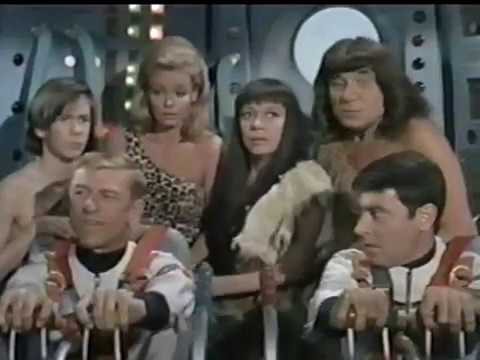
It’s About Time – Two astronauts break the time barrier and end up in the Prehistoric Era. After saving a boy, they get to know his family.  When they return home in 1966, they realize the family hid themselves aboard the rocket.  The astronauts have to keep them secret from NASA officials, and the family has to learn to live in a modern society.  Someone might have dreamed about Jeannie, but no one dreamed about this show.

19663

The Jean Arthur Show – Movie star Jean Arthur is part of a mother-son law firm, Marshall & Marshall.  Arthur gets involved in their clients’ wacky situations.  After three months, they were legally cancelled.

1966

Love On a Rooftop – Judy Carne and Peter Duel are a young couple living in San Francisco.  He’s an apprentice architect and she’s an art student who gave up her rich father’s money for marrying him.  Rich Little played their neighbor Stan who composed menus for a living.  The network said “Sock it to Them” by cancelling the show.

19665

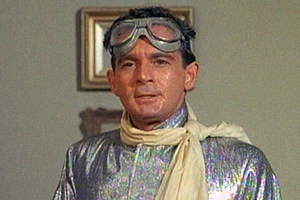
Mr. Terrific – Two friends Stanley and Hal are roommates.  Stan works for the government. When they give him a pill, he becomes Mr. Terrific, crime solver.  They send him on missions, but the pill only lasts an hour so it wears off at the worst of times.  I don’t think the network thought it too terrific, because it was gone in seven months.

19666

My Name’s McGooley, What’s Yours? – The show centered around a scheming father, his daughter and her husband, a beer-guzzling loser.  I think it took longer to read the title than to watch the episodes because it was not renewed for the next year.

19667

Occasional Wife – A baby food company only hires married men as executives, so Peter convinces his friend Greta to pose as his wife when necessary.  They live on different floors of the same apartment building and get into a lot of complicated situations.  Apparently viewers only watched occasionally because it was cut from the schedule.

19668

Pistols ‘n Petticoats – Ann Sheridan came to the TV screen to play Hank, short for Henrietta, a member of a family in Wretched, Colorado in 1871.  The family has to keep law and order in the town because the local sheriff is incompetent.  People did believe they were wretched, and it was gone before 1967.

19669

The Pruitts of Southhampton – The premise of this show was that a formerly wealthy family realizes they owe $10,000,000 in taxes and has to downsize their lifestyle while keeping it from all their friends.  The network agreed they were poor and cut it for 1967.  What was amazing about this show not being a hit was the cast:  John Astin, Richard Deacon, Billy De Wolfe, Phyllis Diller, Reginald Gardiner, Marty Ingels, Gypsy Rose Lee, Paul Lynde, John McGiver, and Louis Nye.  Talk about a dream cast.

196610

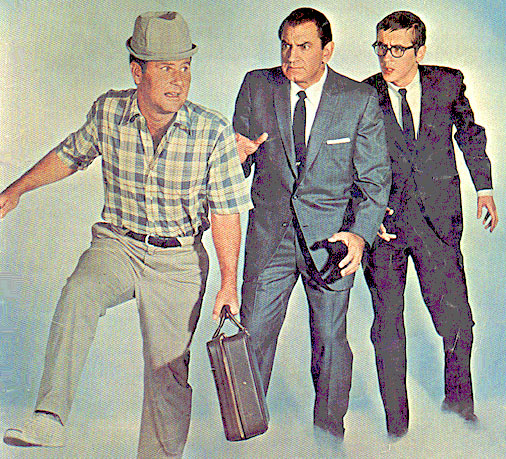
Rango – Tim Conway starred in this western sitcom.  His Rango character was totally inept and was assigned to a town with a 20-year peaceful record where he couldn’t get into trouble.  Of course, after he arrives, a crime spree begins.  ABC decided the show inept as well, and it was cancelled after a few months.

196611

The Rounders – Westerns were definitely a theme in 1966.  In this version, two not-very-bright cowboys are hired as hands at a ranch.  After four months, the network rounded up the cast and ran them out of Dodge.

196612

Run Buddy Run – Buddy Overstreet, a shy accountant, is in a steam room when he overhears gangsters plotting a murder.  When they realize Buddy knows their plan, they try to capture him.  After only four months, the network cancelled Buddy before the gangsters could.

196613

The Tammy Grimes Show – Tammy Grimes, a Broadway star, plays a young heiress who’s on a small allowance until she turns 30.  She tries to fulfill her elaborate lifestyle with wacky schemes.  Dick Sargent (Darrin on Bewitched) plays her boring twin brother.  Perhaps the show had a small allowance too because it only lasted three weeks!

196614

Whoo!  This line-up of shows makes Family Affair, which lasted five years, and The Monkees, which lasted two years, look like successful, classic shows.  It doesn’t make this fall’s shows any better, but at least we’re in good company.  We’ll talk about That Girl next week.