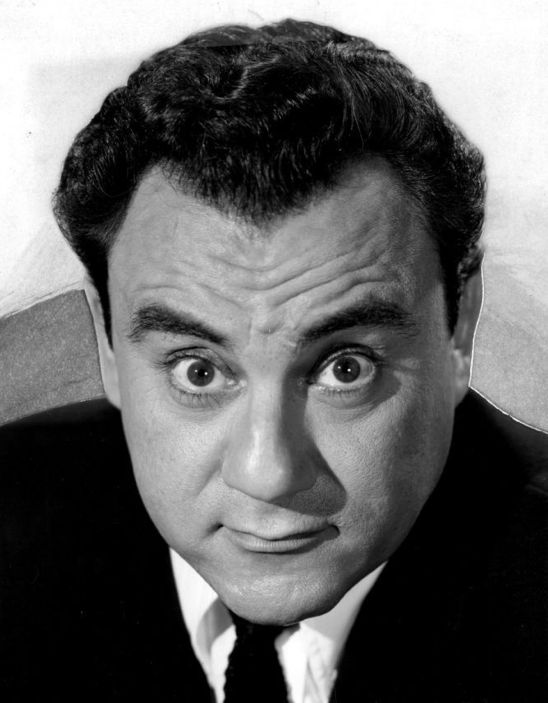
This month we are exploring The Bill Dana Show for our blog series. Last week we talked a bit about the show itself, and for the rest of the weeks, we are looking at some of the other cast members’ careers. Today we begin with Bill Dana himself.
📷findagrave.com
Dana was born William Szathmary in Quincy, Massachusetts in 1924. He was the youngest of six children. His older brother Arthur was fluent in several languages and inspired Bill to learn different accents.
Dana served with the US Army during WWII as a machine gunner and was awarded the Bronze Star Medal.
After the war, Bill enrolled at Emerson College. After graduation, he was hired as a page at NBC’s Studio 6B, or 30 Rock. He was also trying to break into comedy performing around New York. During the fifties he appeared on The Imogene Coca Show. He also did some writing and producing for The Spike Jones Show.
He met Don Adams and began writing routines for him in the fifties. He and Don would be part of each other’s lives for a bit. Don would be one of the cast members on The Bill Dana Show. Dana would appear on Adams’ show Get Smart, and Dana’s older brother Irving was the composer of the Get Smart theme song. Bill would also cowrite the script for the Get Smart film The Nude Bomb.
📷thenewyorktimes.com
In the late fifties, Steve Allen hired Dana as a writer. Bill created a character, Jose Jimenez, for the “Man in the Street” segments of Allen’s show. Soon Jose became his alter ego. He made appearances as Jose on The Red Skelton Show, The Spike Jones Show, The Danny Thomas Show, and The Ed Sullivan Show. He even had a comedy album featuring the character.
Dana told a story on Ed Sullivan’s show that some people truly thought he was Jose Jimenez. One lady who met him out and about asked if his birth name was Jose Jimenez and he told her, “No, it’s Bill Szathmary.” She said “Wow, no wonder you changed it to Jimenez.”
In 1961, Dana began a recurring role on The Danny Thomas Show. He played Jimenez as an elevator operator. People responded so well that Danny Thomas and Leonard Sheldon spun off the character, now a bellhop at a luxury New York hotel, and The Bill Dana Show was created. In addition to Adams, Jonathan Harrison was part of the cast and Maggie Peterson joined them in season two. The show was on the air for one and a half seasons.
As we discussed last week, some people saw Jimenez as a hard-working immigrant who noticed some of the crazy things Americans did, and others saw him as a stereotyped Latino caricature. The pre-show Jimenez fit the second description better and the show Jimenez leaned more toward the first portrayal. However, as the character developed, viewers were not flocking to the show. It was also up against Lassie which at the time was a huge family show on Sunday nights.
📷wikipedia.com
The last time Jimenez was on the screen as a character was a 1966 episode of Batman in a cameo on the famous wall. Later Dana apologized for his caricature of Jimenez and became a bit of an activist for Latino causes. The National Hispanic Media Coalition endorsed the Jose Jimenez character and invited Dana to sit on their advisory board.
Dana jumped back and forth from actor to writer for a couple of decades. He wrote the script for All in the Family’s episode “Sammy’s Visit” starring Sammy Davis Jr. He also wrote for Bridget Loves Bernie, Chico and the Man, Donny and Marie, The Smothers Brothers Comedy Hour, and Matlock.
His acting landed him in The Courtship of Eddie’s Father, Love American Style, The SnoopSisters, Police Woman, McMillan and Wife, Ellery Queen, Switch, Vega$, Fantasy Island, The Facts of Life, and Empty Nest among a few others.
He had recurring roles on two additional shows during his career. He was on St. Elsewhere as Howie Mandel’s character’s father for three episodes. He also was Angelo on six episodes of The Golden Girls.
One of his last projects was founding the American Comedy Archives at Emerson College. He and Jenni Matz interviewed more than 60 comedians for this archive, including Phyllis Diller, Norman Lear, Carl Reiner, Betty White, and Jonathan Winters.
Dana was a man of many talents. He also ran a talent management company and an advertising agency. He wrote a book, The Laughter Prescription, with Dr. Laurence J. Peter.
Dana passed away in June of 2017 at his home in Nashville.
Certainly, Dana had a full career. I think starting off with the Jose debacle probably kept him from getting different roles early in his career. He also didn’t seem to know what he wanted to be when he grew up. Was he a comedy writer? A dramatic writer? A variety show writer? Was he an actor? A talent agent? An author? Not that you can’t be more than one thing in life, but in the span of three decades he never seemed to settle on one or two careers. Hopefully he had fun and enjoyed all the different hats he wore.
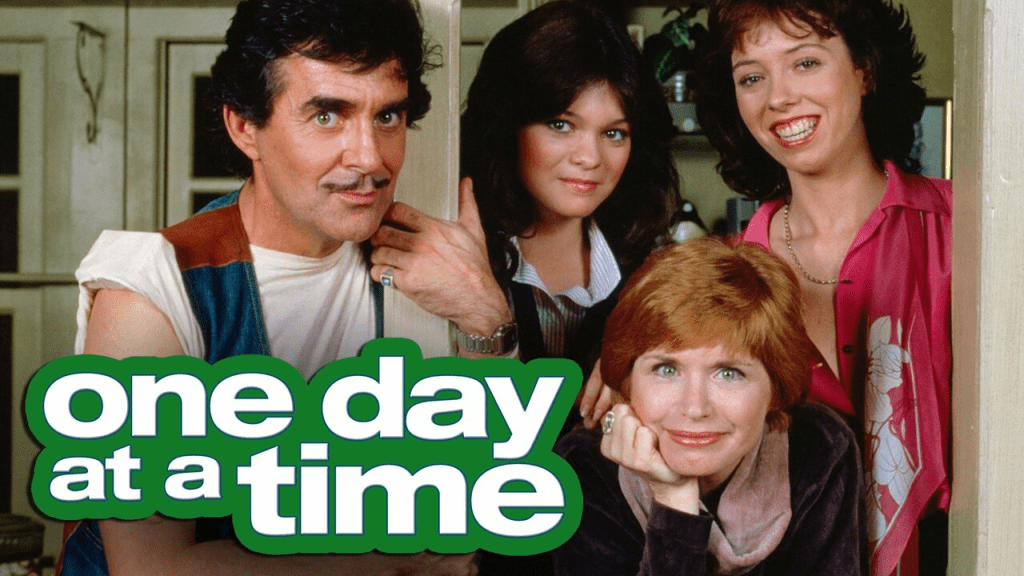
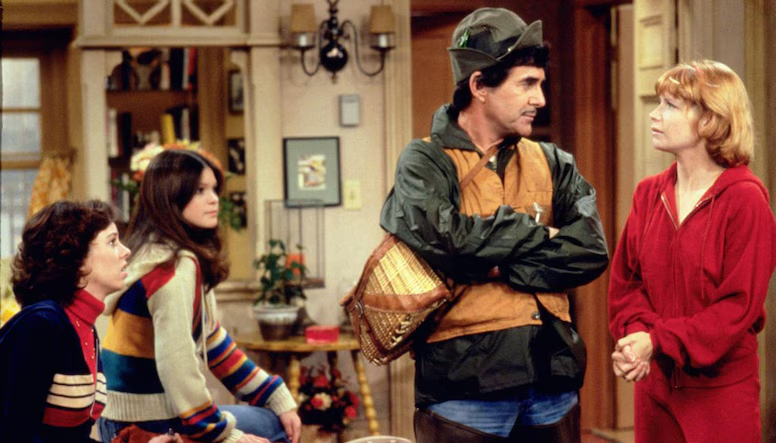
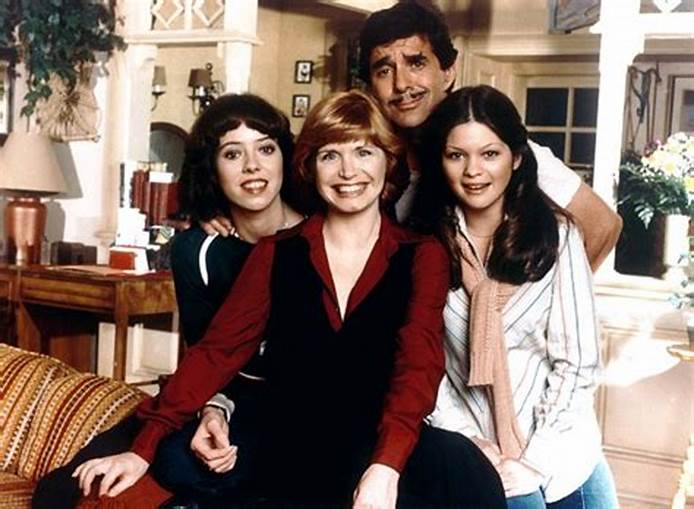
For this Reboot series, we are ending with One Day at a Time. This show was about a divorced mom, Ann Romano (Bonnie Franklin) whose father is not in the picture much anymore. She moves her two teenaged daughters, Barbara (Valerie Bertinelli) and Julie (Mackenzie Phillips) from Logansport, Indiana to Indianapolis. Barbara is the funny daughter who is always doing the right thing, while Julie is rebellious and angry. Schneider (Pat Harrington Jr.) is their building supervisor, and he takes on a bit of a parental role with the girls.
📷tvinsider.com
In the early seasons, Ann dates her divorce lawyer David (Richard Masur). However, after becoming engaged, Ann realizes David wants children of his own and she is not ready to go down that road again, so they break up. Her ex remarries and he eventually enters their lives again.
Julie marries Max (Michael Lembeck), a flight attendant, and they eventually have a daughter. Barbara marries a dental student Mark (Boyd Gaines). In the finale, Ann decides to take a job in London and Schneider moves to Florida to take care of his niece and nephew.
The series was created by husband-and-wife team Whitney Blake and Allan Manings. Blake was Dorothy Baxter on Hazel. Blake based the show on her experiences as a single mother raising three children. It debuted in 1975 and aired until 1984.
📷enews.com
Franklin was not happy with the scripts in the first season. She said that she threatened to quit unless the quality improved for the second season.
Phillips dealt with substance abuse, and she was fired after the fifth season. She did come back later for a few appearances. When she entered rehab in 1980, the plot was that Julie and Max moved to Houston. In the seventh season, she returned for a two-part episode. In the final season, she collapsed on the set. When the producer asked her to take a urinalysis test, she told them not to bother and she was fired for the last time. Lembeck continued with the show, and he raised their daughter after it was said Julie left them. While Phillips was unkind, to put it nicely, to Bertinelli early in the series, they eventually became closer. Bertinelli was one of the few people who stood by her after she released a shocking autobiography. Later Glenn Scarpelli joined the cast as Alex. His father had been Ann’s boyfriend and after his father dies in a car accident, Alex asks to move in with Ann and Barbara.
📷mentalfloss.com
Family members Nanette Fabray and Shelly Fabares both took roles in the series; Nanette played Ann’s mom and Shelly was a coworker. Howard Hesseman also joined the cast as Sam who would marry Ann.
The show was filmed before a studio audience. That surprised me a bit. I went back to watch a few shows for this blog, and I was surprised how dark the series was for a sitcom. Many of the shows, especially Norman Lear shows, were not very light-hearted. I remember liking this show as a teenager/young adult, but I must admit, they were hard to sit through the second time around, and it is not a show that I would choose to watch again.
The theme song was “This Is It.” Brill Building composed the music with lyrics by Jeff and Nancy Barry. Polly Cutter sang the song.
It is amazing that the show did so well in the ratings because it was moved around on the schedule eleven times during its run. For most of its life, it was in the top 20.
📷tmz.com
The show still had decent ratings after its nine seasons, but Franklin decided she was ready to be done. Harrington was the only cast member to win an Emmy. A 1984 spinoff was discussed for Schneider, but that show never came to fruition. It seems fitting for Harrington to win the Emmy. He has 166 acting credits, and appeared in movies with Elvis Presley and Robert Redford. He said 100 actors auditioned for the role of Schneider. He said that he was a family man with four kids and needed to put food on the table, so he went for it.
In 2005, there was a One Day at a Time Reunion on CBS. Franklin, Phillips, Bertinelli, and Harrington discussed their time on the show. The documentary featured private interviews with Masur, Fabares, Fabray, Lembeck, and Scarpelli.
At least three seasons were released on DVD, but I have not seen any references to seasons four-nine.
📷deadline.com
In 2017 a reboot was made of One Day at a Time. Three original cast members showed up on the new series. Phillips appeared as a counselor and former veteran leading a support group with PTSD, Glenn Scarpelli was in season three, and Lembeck directed the season one episode “Sex Talk.”
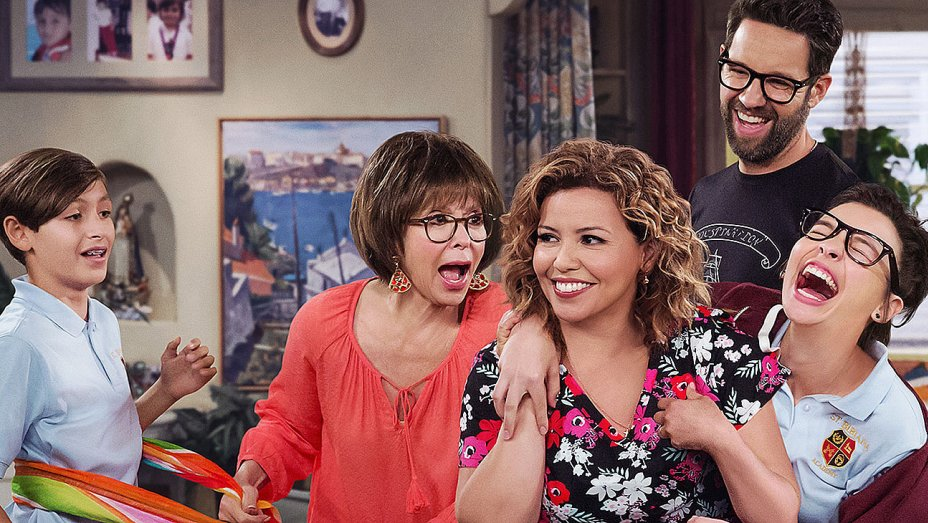
The remake was developed by Gloria Calderon Kellett and Mike Royce with a Latino cast for Netflix. The stars were Justina Machado, Todd Grinnell, Marcel Ruiz, Stephen Tobolowsky, and Rita Moreno. The Cuban family lives in LA. A single mother and former veteran dealing with PTSD, Penelope Alvarez (Justina Machado) lives with her daughter, Elena (Isabella Gomez), and son Alex (Marcel Ruiz), and her mom Lydia (Rita Moreno). Pat Schneider (Todd Grinnell) is the supervisor. Penelope works for Dr. Leslie Berkowitz (Stephen Tobolwsky). The reboot also focused on some tough subjects including mental illness, immigration, sexism, homophobia, gender identity, and racism. It aired for four seasons.
The critics were all on board. It was listed as one of the best shows of 2017 and received a variety of awards including four Emmy nominations. Robert Lloyd of the Los Angeles Times wrote that it was “lively without being rushed” and David Wiegand of the San Francisco Chronicle felt it “was nicely written . . . and the performances are almost universally engaging.” Verna Gay of Newsday called Machado “flat out terrific.”
📷superlagar.live
This time around, Gloria Estefan sang “This Is It.”
The series was canceled after four seasons. The network said it did not have enough viewers, despite the fact that Rotten Tomatoes gave it a 100% rating for every year. It was praised for dealing with many hard subjects and featuring a matriarchy of three generations of women who make their way through life and support each other even when they don’t agree with each other.
I think that the failure of this show to make it to five seasons is a common factor that we will see in streaming shows. Networks had more of an incentive to keep shows around when there were fewer options. Now there are so many shows available that it’s almost impossible to know what is available to watch. Considering that three networks used to get most of the viewers tuning in, now you can multiply that by hundreds. I’m not sure what it will take to keep a show running more than three years anymore.
I hope you enjoyed taking a look at four reboots that succeeded in bringing back original viewers and building a new fan base for themselves. I’d love to hear if any of these were shows you would root for.
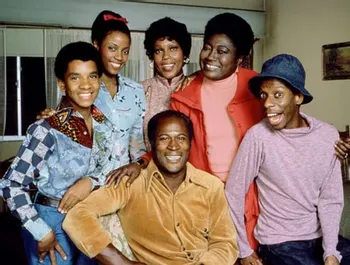
Last week we looked at shows that debuted in 1973, fifty years ago in our “Potpourri” blog series. Today we are concentrating on one of the successful shows of that 1973 class (and there were not a lot of them): Good Times and I’m am considering this blog “Flopourri” for Florida Evans.
Cast of Good Times Photo: tvtropes.com
For those of you who have been with me for the past six and a half years. You may be surprised to find me featuring a Norman Lear show. I readily admit that I have a Norman Lear bias. It’s nothing personal with Norman, but I just did not enjoy most of his shows: All in the Family, The Jeffersons, Maude, Diff’rent Strokes, Sanford and Son, and Carter Country, among others. I did think that Mary Hartman, Mary Hartman was an interesting concept, just too hard to sustain, and I admit that I liked Fernwood Tonight. I still bypass these shows on MeTV and Antenna TV when they are on the schedule. However, I will be the first to say that they were important historical shows in the evolution of television. They were relevant shows that changed the way sitcoms were written and presented a lot of important topics for people to debate.
So, whether I enjoyed watching Good Times or not, and it was not, it was an important show that gained a devoted following and was on for six seasons, producing 133 episodes. The show was produced by Lear and created by Eric Monte and Mike Evans. Evans played Lionel Jefferson on The Jeffersons. He left the show to work on this series and when Good Times was canceled, he returned to The Jeffersons.
Florida Evans (Esther Rolle) was Maude’s maid. Maude was a spinoff from All in the Family and Good Times was a spinoff from Maude, so this was the first show to be created from a spinoff.
Photo: showbizzcheatsheets.com
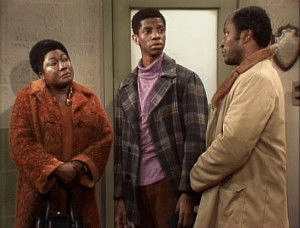
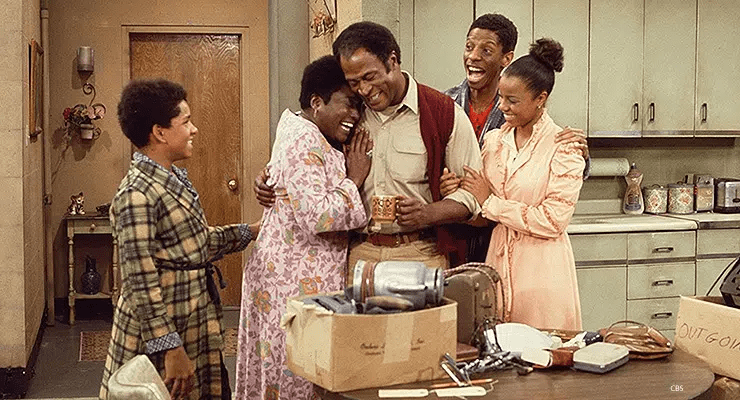
The Evans family lives in the Chicago projects. The area is not named but the opening and closing credits show photos of Cabrini-Green. The family consisted of Florida, her husband James (John Amos), their kids JJ, 17 (Jimmie Walker), Thelma, 16 (BerNadette Stanis), and Michael, 13 (Ralph Carter). The show also featured Florida’s best friend Willona (Ja’Net DuBois) and Nathan Bookman (Johnny Brown), the building superintendent. The family never has enough money. James is often out of work, but he also works two jobs when he gets a chance to bring in money for their family. He is a proud man and does not believe in handouts.
Many of the shows deal with gang warfare, financial issues, muggings, unemployment, rent parties, racism, and evictions. It was one of the first shows to have an almost all-black cast. Florida and James are good parents who try to teach their children values and ethical behavior. Michael was an especially interesting character who was intelligent, an advocate who loved African American history, and tried his best to make the world a better and more fair place to live.
Photo: JacksonUpperco.com
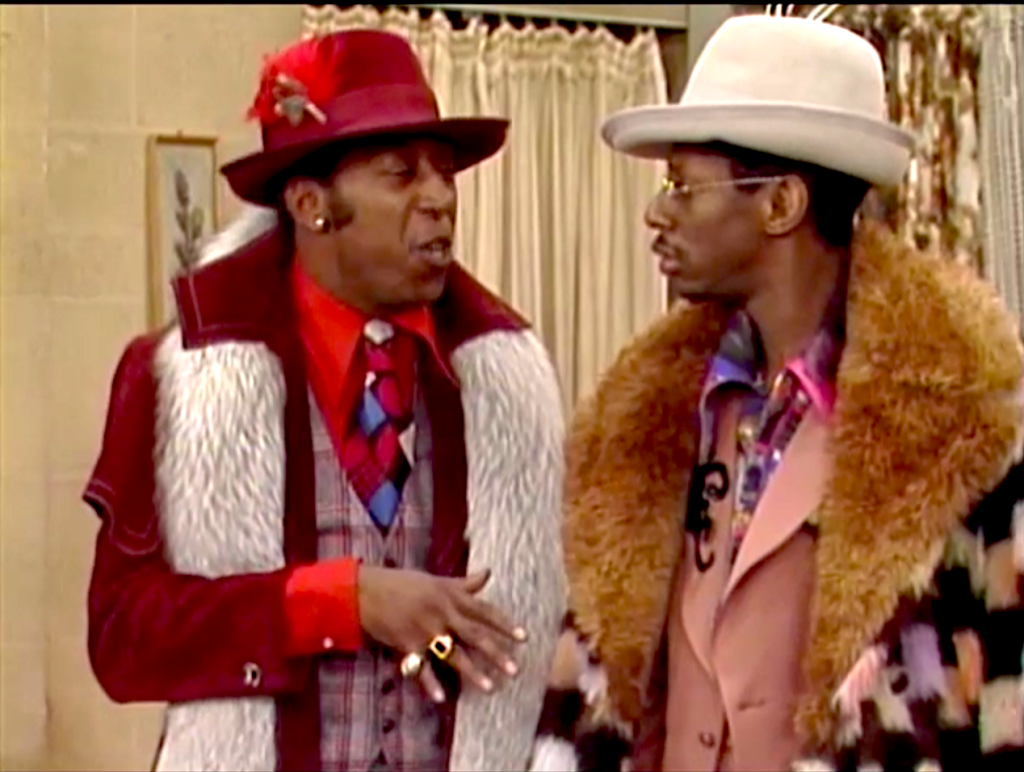
Other recurring characters include Ned the Wino (Raymond Allen), who often can be seen in their building. In one episode, JJ, an artist, paints Ned as Jesus and, in another, well-meaning Michael tries to reform him by letting him stay at their house but it does not work out. Carl Dixon (Moses Gunn) is a shop owner in the area. After James’ death, Florida begins dating him and eventually they marry and move to Arizona. Esther tells Willona in a later season that Carl died from lung cancer. Pimp Marion Williams (Theodore Wilson) is a neighbor who is known for his flashy clothing and jewelry. Lenny (Dap Sugar Willie) is the neighborhood hustler who sells stolen items. Wanda (Helen Martin) runs a women’s support group in their building. Alderman Fred C. Davis (Albert Reed Jr.) is a politician with a shady past.
A lot of celebrities appeared on the show during its run including Debbie Allen, Sorrell Booke, Rosalind Cash, William Christopher, Gary Coleman, Alice Ghostley, Ron Glass, Robert Guillaume, Gordon Jump, Jay Leno, Charlotte Rae, Philip Michael Thomas, and Carl Weathers.
The theme, a gospel-sounding song with a choir in the background, was composed by Dave Grusin and the lyrics were written by Alan and Marilyn Bergman. It talked about the hard living conditions the family had to endure which was not thought of as “Good Times.” Performed by Jim Gilstrap and Blinky Williams, the lyrics were:
Good Times. Any time you meet a payment. – Good Times. Any time you need a friend. – Good Times. Any time you’re out from under. Not getting hassled, not getting hustled. Keepin’ your head above water, Making a wave when you can.
Temporary lay offs. – Good Times. Easy credit rip offs. – Good Times. Scratchin’ and surviving. – Good Times. Hangin in a chow line – Good Times. Ain’t we lucky we got ’em – Good Times.
Photo: thatsentertainment.com
One of my favorite things about the show was the use of nicknames, maybe because my family is fond of nicknames as well. James called Thelma “Baby Girl” and referred to Michael as the “Militant Midget” for his activism. Willona’s name for Michael was “Gramps,” while JJ called him “Miguel.” The other residents also got their own monikers including Willona as “The Rona Barrett of the Projects” and Wanda as “Weeping Wanda.”
Good Times was created as a show that focused on Rolle and Amos. Both stars expected the show to deal with serious topics even though it was a comedy. They also wanted the characters to be positive role models.
JJ began to be featured in more of the episodes. “Dynomite” became his catchphrase and he said it at least once in every episode. As the writers focused more on his character and the way he behaved, important topics were put on the back burner sometimes.
Both Rolle and Amos felt that the character of JJ and the way he was being developed as more of a foolish and unintelligent person was creating a negative role model. Both stars became disillusioned with the direction of the show and voiced their criticism, Amos more often. They thought the uneducated, slacker type of behavior that JJ expressed was harmful to young viewers. Lear finally fired Amos at the end of the third season because of his negative opinions. The cast had no idea that he had been fired until they read the script where he passed away. Rolle quit at the end of season four.
Walker didn’t see it the same way. He said in an interview that he does not remember saying one word to Amos or Rolle that was not part of the script. He defended his character saying that he didn’t commit overly criminal acts on the show and compared his character to the Fonz on Happy Days. He does have a point. He was deeply hurt that Amos and Rolle, along with many black community members, considered his character a “perpetuation of negative stereotypes.”
Photo: showbizcheatsheet.com
Perhaps part of the controversy came from Walker’s own personality. He considered himself a comedian, not an actor. He said he was never comfortable with the dramatic storylines. Lear wanted Jimmie to take acting classes but he refused. Rolle, Amos, and Carter were dramatic actors and took their roles more seriously. When Rolle died in 1998, Walker was the only cast member who did not attend her funeral.
In season five, Janet Jackson joined the cast as Penny, an abused girl abandoned by her mother, adopted by Willona. Ratings began to decline. With Rolle’s absence, the essence of the show was gone.
Producers asked Rolle to come back even as a guest role. Rolle rejoined the cast for season six after she was promised higher-quality scripts. She also wanted the character of Carl Dixon written out of the show. She felt Florida would not have remarried so quickly, but that was how writers depicted her absence from the show when she left.
However, it was too late and the show continued to decline in ratings. The continual moving of the show on the schedule also didn’t help things. The show began on Friday nights for season one; moved to Tuesdays for seasons two and three; had two different time slots on Wednesdays for seasons four and five; and ended up moving three different times for season six: Saturday at 8 for episode one, Saturday at 8:30 for episodes 2-10, and Wednesdays at 8:30 for episodes 11-22.
Photo: pinterest.com
The series finale in 1979 gave each character a happy-ever-after. JJ becomes a comic book artist. Michael begins college and moves into the dorms. Thelma and her husband move to the Gold Coast when he gets an offer from the Chicago Bears. Thelma is pregnant and they ask Florida to move with them to help care for the baby. Coincidentally, Willona becomes head buyer for her boutique and moves into the same luxury apartments with Penny.
Unfortunately, the show is remembered now more for its controversy than anything else. Amos talked about his “early departure from the show, I felt that with two younger children—one of whom aspired to become a Supreme Court Justice . . . and the other a surgeon . . . there was too much emphasis being put on J.J. and his chicken hat saying ‘Dynomite!” every third page when just as much emphasis and mileage could have been gotten out of my other two children and the concomitant jokes and humor that could have come out of that.” He later said in an interview with VladTV that the scripts on the show led to “an inaccurate portrayal of African-Americans. Their perception or their idea of what a Black family would be and what a Black father would be was totally different from mine, and mine was steeped in reality.”
He did have good things to say about Rolle and her character: “Florida was the glue that kept the family together. It showed a Black family that had the same trials and tribulations as the rest of America, especially those who were financially challenged . . . it told the story of who we were on a comedic basis. And I’ve always contended, as some of my mentors taught me, the best way to get a message across to people is through humor.”
Photo: urbanhollywood411.com
Rolle concurred as she told Ebony in 1975 about JJ: “He’s eighteen and he doesn’t work. . . He can’t read or write. He doesn’t think. The show didn’t start out to be that. Michael’s role of a bright, thinking child has been reduced.”
Walker was interviewed at age 70 by Rebeka Knott and still disagrees with his costars. In that interview, he said that his co-stars, “killed the goose that laid the golden egg. These people, anytime you said anything, they get crazy, they get upset. They don’t get it man.”
So, what are we to make of the show and its success or failure? It still remains an important program in television history. It featured a black cast and focused on a family that struggles with many issues both white and black low-income families could identify with. If Michael had appeared in a reality show as an adult, perhaps it would have been The Cosby Show. A lot of families, black and white, could identify with the issues of that show as well. And, hopefully, they understood where the success of that second generation came from–parents who worked hard and taught their children important values and emphasized hard work and goals that allowed the next generation to have more success than the previous one.
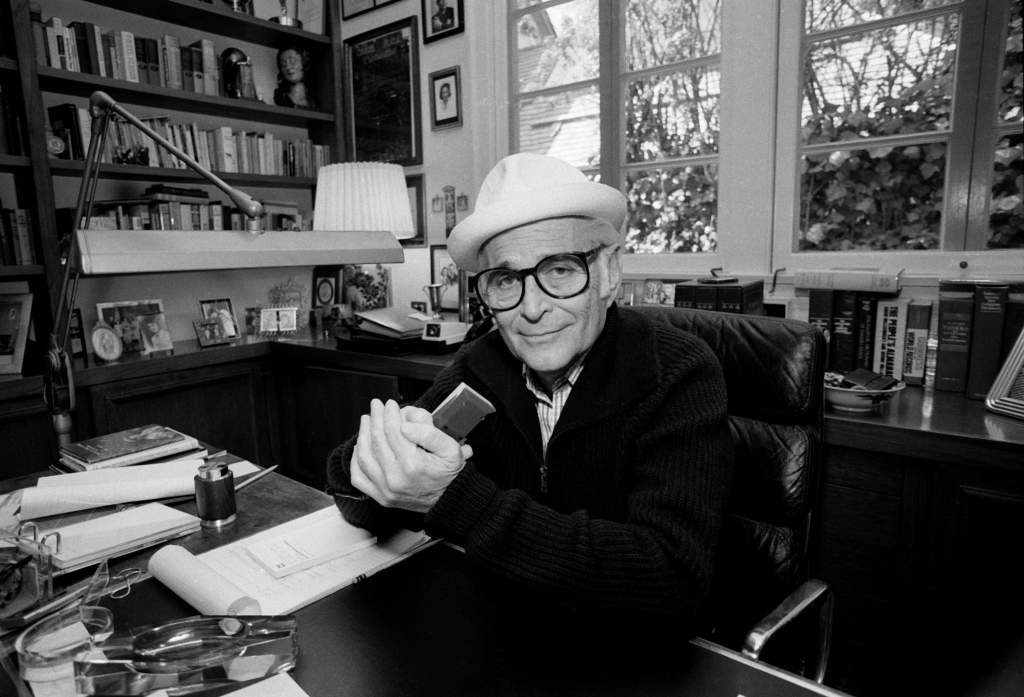
Norman Lear Photo: vibe.com
It’s actually what any good television show does. Regardless of the setting and the characters, it teaches us about how other people live and provides plots many of us can identify with or teaches us about other characters whom we can appreciate and learn more about their individual struggles and journeys whether they follow the same path we do or take a different fork in the road.
It would be interesting to talk with Rolle and Amos today to get their perspective. They were right to ask for better scripts and to showcase their other children who had bigger dreams and hopes. But perhaps Walker is also not that far off. He did portray a different type of character– one that obviously many people identified with or enjoyed spending time with. Don’t most families have a combination of good and not-so-good role models? Hopefully, we learn as much from the characters in our lives who make poorer decisions as we do from those who choose wisely. I’ll leave it up to you whether you think the tv show is worth watching today or not.
This week we are winding up our series of favorite female actors with Charlotte Rae. If you remember last week we learned about June Lockhart. Charlotte was born a year after June and died a year before her, and their careers were very similar. Both were actresses for more than six decades, appeared in Broadway, movies, and television.
Rae was born in Milwaukee, WI in 1926. Her parents were Russian Jewish immigrants. Her mother Esther had been friends with Golda Meir since childhood. For her first ten years, the family lived above her father’s tire business. In 1936 they moved to a home in Shorewood. At age 16, she became an apprentice with the Port Players, a professional theater company that came to Milwaukee for the summer. After graduation, Charlotte did some radio work and did some performing with the Wauwatosa Children’s Theatre.
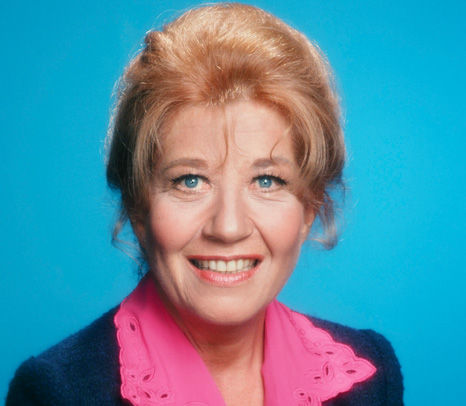
Photo: legacy.com
Although she never completed her degree, Rae attended Northwestern University. She and Cloris Leachman became friends there. She also met Agnes Nixon, Charlton Heston, Paul Lynde, and Claude Akins. In later years she would always recommend wanna-be actors get a degree first.
Photo: thejewishnews.com
In 1948, she moved to New York City where she performed in theater and nightclubs. She worked at a variety of clubs including the Village Vanguard and the Blue Angel. During her early days, a radio star told her that her last name of “Lubotsky” would not work well, and she replaced it with her middle name of Rae.
In 1951 she received her first television job on Once Upon a Tune. She would appear on ten other drama theater shows during the fifties. In an interview with Milwaukee Talks in 2016 she said, “When I started out, I wanted to be a serious actor, I never thought I’d get into comedy.”
The same year, Rae married composer John Strauss. They had two sons, but in the mid seventies he came out as a bisexual. Rae was not interested in an open marriage, so the couple decided to divorce in 1976.
Charlotte also loved singing, and she released an album in 1955, Songs I Taught My Mother. Rae also loved being on the stage. In the seventies, Vanguard Records went out of business, and Rae was able to buy back the album for $5000.
She would have stage roles in “Three Wishes for Jamie” in 1952, “The Threepenny Opera” in 1954, “Li’l Abner” in 1956, and “Pickwick” in 1965 among others. Later in her career she would also appear in several off-Broadway shows.
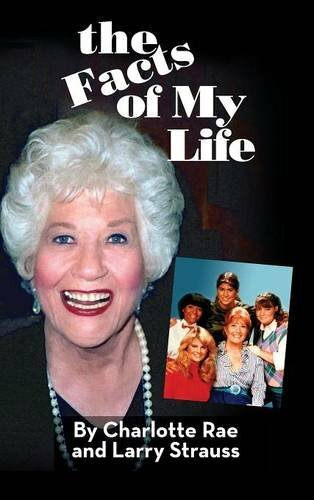
Photo: amazon.com
In 1958, she got a break with a guest spot on The Phil Silvers Show which led to her getting the part of Sylvia Schnauzer, the wife of Leo Schnauzer (Al Lewis) on Car 54 Where Are You when it debuted in 1961. Her husband John did the music for the show. Apart from that role, most of the other television work she did in the sixties was in drama series.
Photo: pinterest.com
Rae also appeared in 14 big-screen movies. Can I take a shameless plug and say that one of my favorite Charlotte Rae roles is in Hello Down There? This movie from 1969 screams IT’S THE SIXTIES from the moment it starts until it ends, but it’s a great sit-back-and-just watch movie. If nothing else, it has an amazing cast including Tony Randall, Janet Leigh, Ken Berry, Jim Backus, Merv Griffin, and Richard Dreyfuss among others.
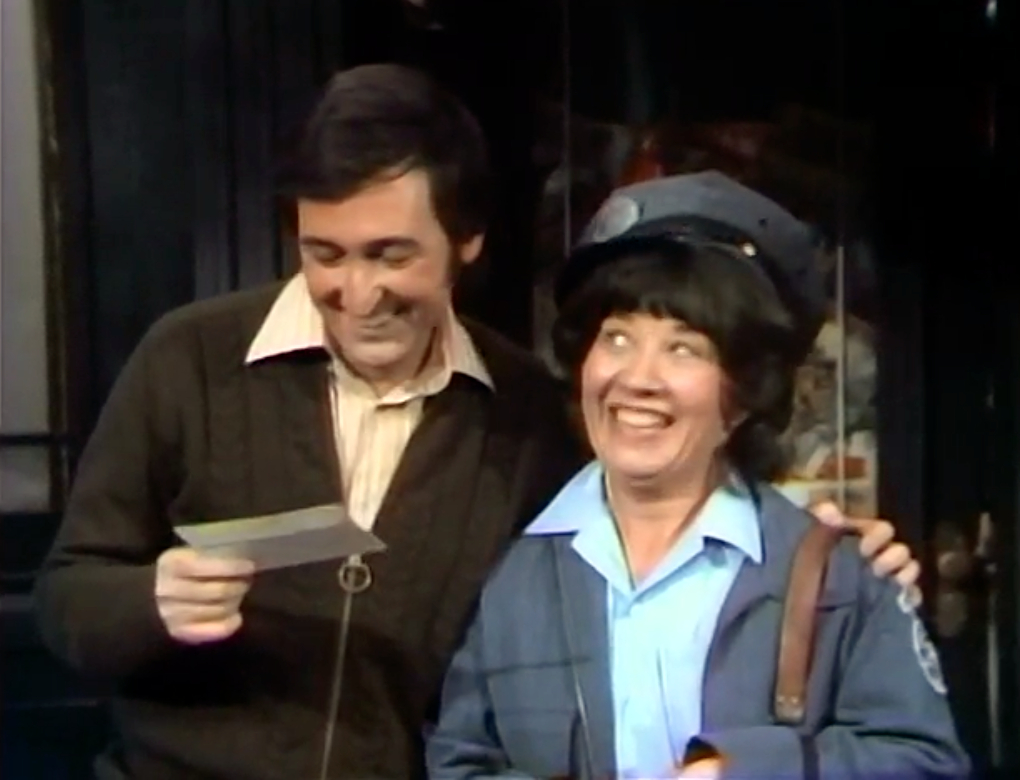
Photo: muppet wiki fandom.com
The seventies were her busiest decade of work. She started with a recurring role on Sesame Street as Molly the Mail Lady. During the early seventies you could see her on The Partridge Family, McMillan and Wife, Love American Style, and The Paul Lynde Show. I always appreciated her character on The Partridge Family. When Danny is thinking about quitting school to get on with life, she plays his very smart and creative guidance counselor.
In 1974 Rae moved to Los Angeles. She did guest spots on All in the Family and Good Times, both Norman Lear shows. In 1975, she became a regular on Lear’s show, Hot l Baltimore. She played Mrs. Bellotti, whose son lived at the hotel. The show was a bit controversial and was cancelled after the first season.
During the remainder of the seventies, Rae kept busy working for a variety of genres. You could have seen her on The Flying Nun, Barney Miller, The Rich Little Show, All’s Fair, CPO Sharkey, Family, The Eddie Capra Mysteries, and on her friend Cloris Leachman’s show Phyllis.
In 1978 Norman Lear was working on Diff’rent Strokes about a single father who adopts two brothers whom he raises along with his daughter with help from his housekeeper. Lear signed Rae on as the housekeeper. Charlotte wanted to do the series, but as she related in a Television Academy interview, she was under contract at CBS when NBC made the offer. She had a few weeks left on her CBS option. The network offered her the role of a lady sheriff on a new western but it didn’t ring true to her, and she didn’t want to do it. While she was filming an Eddie Capra Mystery episode, she drove over to explain her predicament to Lear. He said that Bud Grant owed him a favor and he did indeed get her out of the contract.
One episode on the first season was “The Girls’ School” when Edna Garrett is asked to help out at Kim’s private school called East Lake. She does but at the end of the episode decides she’d rather be working in the Drummond home.
Photo: imdb.com
In an interview with the Television Academy, Rae said she thought she was going to be fired from Diff’rent Strokes. She noticed her lines getting fewer and fewer and when she was called into talk with the producer, she thought that was it. However, they proposed a spinoff show for her based on “The Girls’ School” episode called The Facts of Life. They wanted Edna to become housemother for the boarding students at the school. It was a prestigious private school now called Eastland. The writers were focusing on issues affecting high school age girls including weight gain, dieting, depression, drug and alcohol use, dating, mental illness, and other subjects that kids that age deal with. Rae said the show was about growing up, family, love, and working out problems. “I had a lot of input with issues like suicide, divorce, death. I’m really very proud.”
Charlotte was a single mother and afraid to lose her Diff’rent Strokes income on a possibility that might not pan out. The producers wrote into her contract that if the show was cancelled, she could return to Diff’rent Strokes, so she agreed.
Photo: redbook.com
The first season gained some fans, but ratings were so-so. For the second season, some cast changes were made and the show was moved from Fridays to Wednesdays. The show finished in the top thirty that year, and Rae became a household name. In 1982, Rae received an Emmy nomination. (She lost to Carol Kane from Taxi.) During the 1984 and 1985 seasons, Rae asked to be used less. She felt that the girls were older and would rely more on each other than a housemother for discussions about life issues.
When discussing the character of Edna, Rae explained “I want to bring in as much humanity as possible, as well as humor. I’ve tried to make her a human being with dimensions. The way they write her now is with a great deal of sensitivity and understanding. But I don’t want her to be Polly Perfect, because she must have human failings and make mistakes. She’s also a surrogate mother to the girls. I told them I wanted to be firm with the girls because I know it’s important. Parents must lay down ground rules for their children to help them grow up and to learn responsibility for their actions. They must learn to stand on their own two feet.”
No doubt that this show took place in the 1980s Photo: pinterest.com
Rae wanted to do more theater and she wanted to travel. When she decided to leave the series, Cloris Leachman replaced her in the role. The two-part finale of the eighth season had Edna Garrett marrying and moving to Africa with her husband to work for the Peace Corps. Her sister Beverly (Rae’s real sister’s name) comes for the wedding and then decides to stay with the girls at school. Cloris Leachman was signed on for two seasons. At the end of her time, she was willing to continue for another season, but cast members Nancy McKeon and Mindy Cohn were ready to end the show and take on new projects. It was not the end of the show, however. In 2001 a television reunion movie aired with much of the original cast. In 2007 the entire cast was invited to the TV Land Awards where they sang their old theme song.
Murder She Wrote Photo: backofthecerealbox.com
Charlotte took on several other roles after leaving the show. During the eighties and nineties, she appeared on The Love Boat, St. Elsewhere, Murder She Wrote, Sisters, and Alex Mack among others.
She was busy until she passed away, and continued to act throughout the 2000s, including an appearance on King of Queens, and a recurring role on ER. Her last acting credit on television was in 2014’s Girl Meets World.
In 2015, Rae wrote her memoirs with her son Larry. At many of her book signings, adults came to purchase the book and told her over and over that they had been latch-key kids and saw Edna as a second mother to them. A description from Amazon sums up the book: “Charlotte Rae’s career spans more than seventy years, from the golden age of television to Shakespeare in the Park, the New York Cabaret scene of the late 1940s and 50s to her hit series, The Facts of Life and well beyond. Off stage and screen, Charlotte’s life has been one of joy and challenge, raising an autistic son, coming to terms with alcoholism, the heartache of a broken marriage, the revelation of a gay husband and the sudden challenge of facing middle-age with financial and emotional uncertainties–a crisis she ultimately turned into the determination that brought her stardom. The Facts of My Life is the first opportunity for Charlotte’s fans to explore the fascinating story of her extraordinary life: poignant and hilarious, a story of courage and triumph, one that speaks for a generation of women breaking barriers, taking on challenges, overcoming personal tragedy, and paving the way for others.”
Rae suffered from several health issues. In the early seventies, she joined Alcoholics Anonymous which was a critical part of the rest of her life. In 1982, she had a pacemaker implanted. It worked well for thirty years, but then stopped, requiring surgery for another smaller device. She also had open heart surgery to replace her mitral valve. Pancreatic cancer ran in her family, so she was screened often and when she was diagnosed with cancer, it was early so she had six months of chemotherapy and was then declared cancer free. In 2017, she was diagnosed with bone cancer. She died at her home in 2018. Todd Bridges from Diff’rent Strokes, tweeted, “You were loved by everyone on our show.”
Photo: doyouremember.com
Charlotte said she never minded fans coming up to her because she realized that in being a television actor you were in people’s homes. “It was an intimate relationship.”
She said she wanted to be remembered as someone who took people out of themselves into a different world and allowed them to laugh or cry, and that would make her happy because we need as many laughs as we can get.
Thank you, Charlotte for making us cry a little and laugh a lot.
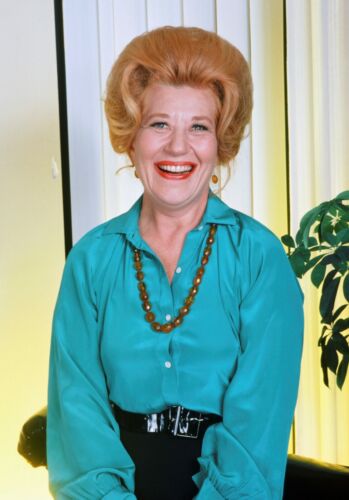
To begin the new year, we are looking at some of my favorite female television stars. We begin the series with Doris Roberts, everybody’s favorite mother.
Photo: findagrave.com
Doris was born in 1925 in St. Louis. When her parents split up, she went to the Bronx with her mother, and they lived with her grandparents. Her parents ran the Z.L. Rosenfield Agency which provided stenographic services to playwrights and actors. After studying journalism at New York University, she decided to try her hand acting, taking classes at The Neighborhood Playhouse School of the Theatre in New York City and working with Lee Strasberg at the Actor’s Studio. In the fifties, she could be seen in a variety of Broadway shows including The Desk Set, The Last of the Red-Hot Lovers, and Bad Habits. She worked with Shirley Booth on The Desk Set and credited Booth with being her acting mentor.
Photo: NY Daily News
In 1951 she accepted her first role in television, appearing on the show Starlight Theatre. She accepted roles on several 1950s drama shows. In 1956, Doris married Michael Cannata. They divorced in 1962, and a year later she married William Goven, a playwright. They would stay together until his death in 1986.
Doris was offered her first film role in Something Wild in 1961. She would go on to appear in more than 30 movies.
Her television career also began to expand in the sixties when she appeared in about nine drama series. However, it was the seventies when she hit her stride. During that decade, she would make appearances in Mary Hartman, All in the Family, Family, Rhoda, and The Mary Tyler Moore Show in addition to several others.
Helping Phyllis find a job on The Mary Tyler Moore Show Photo: METV.com
On All in the Family, Doris played a bar patron who befriends Edith. Originally, Roberts was offered the role of Vivian on Norman Lear’s show, Maude but at the last minute, Lear asked Rue McClanahan to take the role over. Later Norman stated that he thought Roberts’ character was too similar to Bea Arthur’s Maude. On Mary Hartman, Mary Hartman, she played a faith healer Dorelda Doremus.
Photo: yahoosports.com
Doris mentioned that Lily Tomlin encouraged her to move to Los Angeles in 1973. After her relocation, Roberts received her first recurring character roles. She would appear in Soap as Flo Flotsky on four episodes, five episodes of Barney Miller, and she had a regular spot as the star’s mother on Angie which ran from 1979-1980.
Photo: SBS.com
Her career continued to flourish throughout the eighties. She had recurring roles on as a gabby hairdresser on Maggie and on Alice as Lavin’s mother, and she was a regular on Remington Steele where Roberts played a former IRS agent who becomes the receptionist for the agency. In addition, she could be seen on Fantasy Island, St. Elsewhere, The Love Boat, Mr. Belvedere, and Cagney and Lacey, along with a variety of other shows.
Her appearance on St. Elsewhere gave her an Emmy win for a guest appearance, playing a homeless woman.
Roberts on St. Elsewhere Photo: amazon.com
In the decade of the nineties, we saw her on Empty Nest, Murder She Wrote, and The King of Queens, among others. However, it was in 1996 when she was offered the role that would change her life. From 1996-2005 she came into our living rooms every week as Marie Barone on Everybody Loves Raymond.
Photo: KTLA.com
More than 100 actresses were considered for the role. She was nominated for seven Emmys, winning four of them (2001, 2002, 2003, and 2005). Amazingly, Ray Romano as Ray Barone, Peter Boyle as his dad Frank, Patricia Heaton as his wife Debra, Brad Garrett as his brother Robert and Doris Roberts appeared in all 210 episodes of the series.
Photo: wonderwall.com
Ray Romano discussed the appeal Roberts had for viewers: “Here’s how good she was: She played the most intrusive, overbearing, nosy woman—always starting fights and whatnot and meddling in our business—and yet, when I asked the fans who their favorite character was, all the time it was her. She was so good at portraying the love that was underneath.” In an interview with Entertainment Tonight, Doris described the character of Marie Barone: “Nine glorious years; everything good comes to an end. She doesn’t give in, she doesn’t give up and she never takes no for an answer.”
Doris remained friends with the cast, especially her on-screen husband Frank played by Peter Boyle. After his death, Roberts remembered him: “Peter was so different from the characters he played. He was brilliant, well read, sensitive, a gentleman.” Roberts was able to visit him at home and in the hospital and to be with the family after his passing.
Photo: today.com
From 2006-2014, her work continued. In addition to a recurring role on The Middle, she appeared on Law and Order, Grey’s Anatomy, Hot in Cleveland, and Desperate Housewives, along with six other less-known shows. Her role on The Middle gave her a chance to work with her Everybody Loves Raymond costar, Patricia Heaton again.
In addition to her acting career, Roberts was a dedicated activist. She testified before Congress about age discrimination in Hollywood, worked with a variety of animal rights groups, and was chairwoman for the Children with AIDS Foundation. She also had a variety of hobbies including traveling, philanthropy, collecting wine, dancing, singing, and cooking. She claimed her favorite movie was Gone with the Wind.
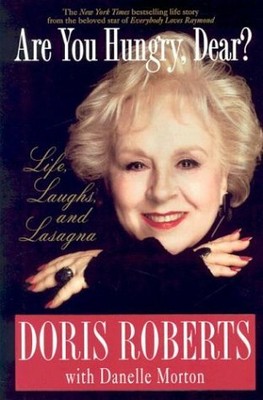
In 2003, Roberts published her memoir cowritten with Danelle Morton, titled, Are You Hungry Dear? Life, Laughs, and Lasagna. She included many of her favorite recipes in the biography.
In 2016, Roberts died following a stroke. Romano said “Doris Roberts had an energy and a spirit that amazed me. She never stopped. Whether working professionally or with her many charities, or just nurturing and mentoring a green young comic trying to make it as an actor, she did everything with such a grand love for life and people, and I will miss her dearly.”
Patricia Heaton said Doris’s television husband Peter Boyle was sick so the cast was able to prepare themselves for his death, but Doris died quickly. Heaton said “Roberts was funny and tough and loved life, living it to the fullest.”
Photo: televisionacademy.com
One of my favorite quotes by Doris Roberts is that “everybody is a teacher if you listen.” Thanks for teaching and entertaining us for more than six decades.
As we wind up the “Valerie”-themed blogs, of course we have to include Valerie Bertinelli.
I’m guessing Valerie Bertinelli might have chosen a different career than acting if her family moves had been to other US cities. She was born in Delaware where her father was an executive with General Motors. Apparently, sometime during her childhood, the family (she has three brothers) lived in Louisiana, Oklahoma, and Michigan though I could not find definite dates. Barbara ended up in California during high school. When she lived in California, one of her friend’s dad was a television producer.
Photo: pinterest.com
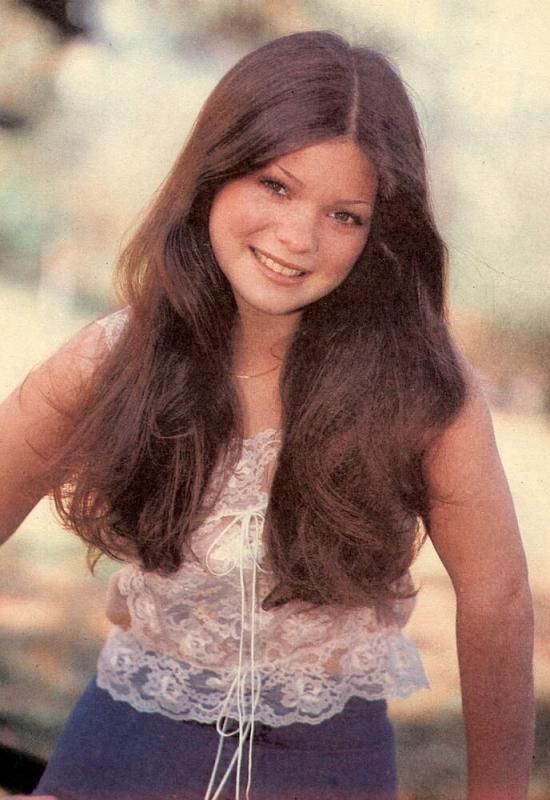
She transferred to the Tami Lynn School of Artists to study acting, and Tami Lynn became her personal manager during the 1970s. Unlike child stars who appear on various shows before getting their big chance, Valerie appeared in one episode of Apple’s Way in 1974 and then was offered the role of Barbara Cooper on One Day at a Time which ran from 1975-1984. During the show’s run, she showed up in the Nancy Drew Mysteries show, one movie, and five made-for-television movies.
Photo: tvseriesfinale.com
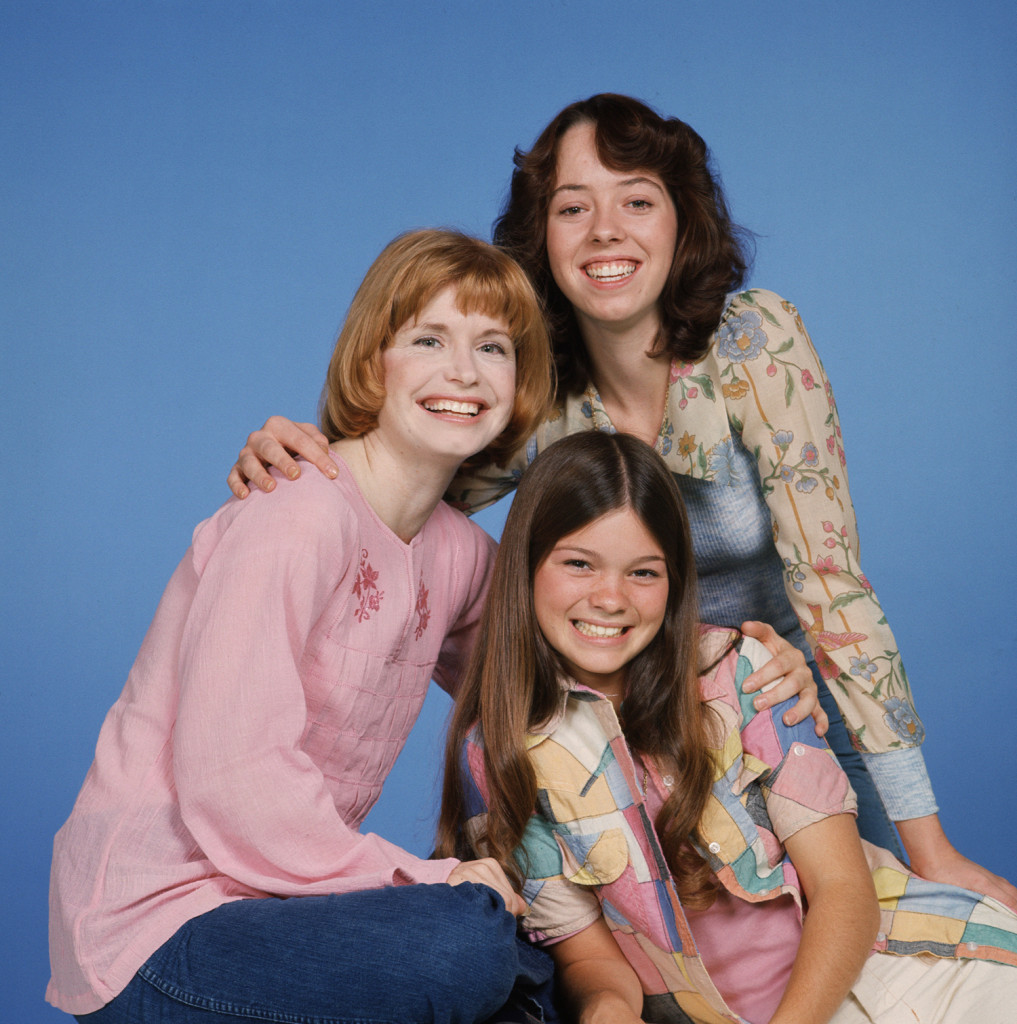
One Day at a Time was one of Norman Lear’s string of 1970s hits. Bonnie Franklin starred as a divorced mother trying to raise two daughters, Barbara and Julie (Mackenzie Phillips). Schneider (Pat Harrington Jr.) was the maintenance man who became part of their “family.” Valerie was fifteen when the show began. She quickly became one of America’s sweethearts. Although it was a comedy, the show covered some darker subjects. It cast dealt with a lot of drama due to Mackenzie’s drug addiction and personal problems.
LOS ANGELES – MAY 3: ONE DAY AT A TIME cast members, (clockwise from top) Mackenzie Phillips (as Julie Cooper); Valerie Bertinelli (as Barbara Cooper) and Bonnie Franklin (as Ann Romano). (Photo by CBS via Getty Images)
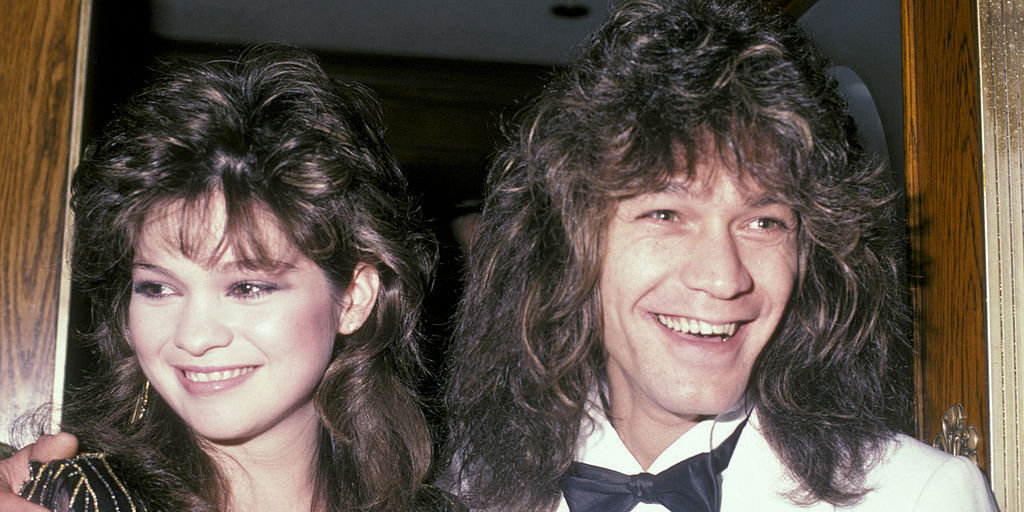
In 1981 Valerie took her brother to a Van Halen concert and met Eddie Van Halen. They dated but got married sooner than most people expected. The marriage had a lot of ups and downs; the couple had a son, but by 2001 they separated and divorced in 2007.
Photo: countryliving.com
When One Day at a Time ended (it was not cancelled by the network, but Bertinelli and Franklin were ready to move on in their careers), Bertinelli again took on one movie role and quite a few television movies.
Photo: pinterest.com
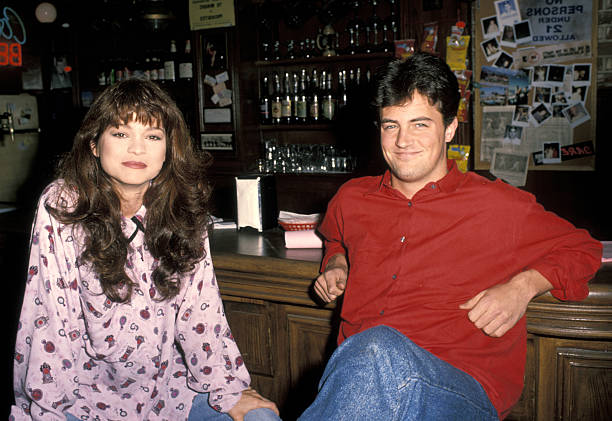
Valerie turned down several offers because of nudity. She was in the running as Ariel in Footloose and as Chloe in The Big Chill. With no major movie offers, Bertinelli returned to television to star in Sydney in 1990. Matthew Perry costarred in this show as Sydney’s brother, a rookie cop. Sydney moves to New York and opens a detective agency. The show only lasted a season.
Valerie Bertinelli and Matthew Perry (Photo by Ron Galella, Ltd./Ron Galella Collection via Getty Images)
In 1993, she again gave television a try, starring in Café Americain. On this show, Valerie is Holly Aldrige, a young American living in France. She gets a job as a waitress at a café where she meets a quirky group of people who become friends, despite her inability to speak French. Unfortunately, this one also lasted one season.
In 2001, Valerie joined the cast of Touched by an Angel for the show’s final two seasons, playing Gloria.
Photo: motherhoodlater.com
From 2010-2015 she was one of the stars in what might be her favorite role, Melanie Moretti on Hot in Cleveland. Three friends (Bertinelli, Jane Leeves, and Wendie Malick) are heading for Paris when their plane is forced to make an emergency landing in Cleveland. The three pals decide to stay in the city because they think they will be more popular with men in Cleveland than Paris. Their new landlord is Betty White.
Photo: blogspot.com
I reference this as perhaps her favorite role because it didn’t have any of the drama of One Day at a Time, and she seemed to truly enjoy her time on the show and her castmates. She said her favorite time of day was sharing coffee with her costars on the show. In a Yahoo Entertainment interview, she said “I mean, if Hot in Cleveland came back, I would be there yesterday. I miss that show so much.”
Photo: screenertv.com
Bertinelli has also discussed working with legend Betty White: “I mean we all know Betty’s funny, obviously, but there was such an ease to it. I know people think I’m crazy when I say this, but she literally glowed. She’s not of this world. She’s just got this beautiful glow aura about her, just because she’s such a kind, sweet soul. And I just adore her.”
HOT IN CLEVELAND co-stars, from left, Jane Leeves, Betty White, Valerie Bertinelli and Wendie Malick pose for a portrait on Tuesday, Nov. 27, 2012 in New York. (Photo by Charles Sykes/Invision/AP)
Bertinelli also loved the rapport shared by the stars that shined through their performances. As she described them: “You can see how these characters love each other no matter what, no matter how stupid they get. I think it’s just the way we feel about each other, and plus, the writers happen to write some really, really funny shows. I mean, the writers on this were just beyond funny.” The cast still keeps in touch regularly.
Photo: observer.com
During the run of the show, Valerie married Tom Vitale whom she had been involved with for seven years.
Photo: foodnetwork.com
Since the end of Hot in Cleveland, Valerie has found a new career as a cooking star. She has hosted Valerie’s Home Cooking, Kids Baking Championship, Family Food Showdown, and Family Restaurant Rivals on the Food Network. Valerie won two Emmys for her Valerie’s Home Cooking show.
Valerie has a couple of famous relatives. Courteney Cox is a cousin, and when Bertinelli appeared on the show, Who Do You Think You Are? about genealogy, she learned she was related to Kind Edward I of England through her mother.
Valerie recently reflected on the reboot of One Day at a Time which features a Cuban family. Although most of the recent reboots have been flops, this show seems to be holding its own. Bertinelli discussed it: “It’s an amazing show. The women that are doing it are really so talented, and it’s got a lot to say . . . they’re doing a great job of staying topical . . . and shining a light on things that we need to look at. And keeping it funny at the same time.”
Perhaps we’ve learned more about Valerie through her cooking show than her acting. What do we know? The first dish she learned to make was lasagna. Her favorite cookbooks are by Ina Garten because “when you follow her directions, it really comes out perfectly.”
Photo: foodnetwork.com
Coconut creamer is her must-have item, but she admits that she is a condiment horder especially with mustard, having about fifteen in her fridge. She loves lemon desserts, prefers savory over sweet, and likes to cook to music.
Her favorite food cities are Los Angeles and New Orleans. She credits her mother and grandmother with teaching her to cook. If she held a dinner party and could invite anyone, dead or alive, she would include Jesus, Pope Francis, Barak Obama, and Marilyn Monroe.
Photo: celebrityspeakersbureau.com
Valerie’s personal life has been filled with a lot of highs and lows, like the rest of us, but she seems to have settled into a place where she is happy and productive and just enjoying what she is doing. You can’t ask for more than that.
As we wind up our series of “oddly wonderful” shows, we take a look at two shows that were set in the same community and may be two of the most unusual shows to ever air on television—Mary Hartman, Mary Hartman and Fernwood 2-Night.
If you read my blog often, you know I am not usually a fan of Norman Lear shows, and while these two series are very different from a typical Norman Lear show, unfortunately, I only enjoyed one of them. Lear’s shows were filmed at Metromedia Square in Hollywood. When he got ready to tackle these shows, there was no room left there. He arranged to rent space from KTLA which was across Fernwood Street. The staff started calling KTLA “Fernwood” which became the name of the town in Ohio where Mary lives.
Photo: next-episode.net
Lear said he
created the show to deal with consumerism.
The original show was was a campy show but had likable and thoughtful characters. Like Soap, this show had a brilliant cast and satirized soap series. It was called Mary Hartman, Mary Hartman, because the writers said dialogue on a soap opera was often said twice. Lear filmed the pilot and offered it to the three major networks who all passed. The show began as a syndicated show (it began on 50 stations) and was only on from January 1976 till May 1977. Unlike Soap, this show produced a huge number of episodes, 325 to be exact. It aired daily on weekdays.
Like the Tates and Campbells, Mary suffered through bizarre plots and unbelievable story lines, including adultery, mass murder, disease, homosexuality, religious cults, UFO sightings, and a nervous breakdown.
Photo: imdb.com Dodie Goodman as Martha
Louise Lasser (who had been married to Woody Allen) portrayed Mary. She was married to Tom (Greg Mullavey). Tom worked at an auto assembly plant. Dody Goodman played Mary’s mother Martha. Debralee Scott played her sister Lorraine. The cast was rounded out by amazing supporting characters including Mary Kay Place as Mary’s best friend Loretta; Graham Jarvis as Charlie, Loretta’s husband and Tom’s best friend; Claudia Lamb as Heather, Mary and Tom’s daughter; Martin Mull as Garth Gimble who killed his wife; Dabney Coleman, Fernwood’s mayor; Gloria DeHaven who had an affair with Tom; Orson Bean as Rev. Brim, Shelley Fabares as Eleanor Major, a woman Tom falls in love with after Mary leaves him; Ed Begley Jr. as Steve; and Doris Roberts as Dorelda Doremus, a faith healer.
Photo: tumblr.com Mary Kay Place as Loretta
Mary wore her hair in braids like Pippi Longstocking. One article described her as a life-size Raggedy Ann. She was indecisive and switched her emotions quickly and without reason. Mary went through one crisis after another until she couldn’t function anymore. One of the things that led to Mary’s breakdown was that she believed everything she saw on television and it made her crazy that she could not see the waxy yellow build up the commercials claimed was on her floor. She was also dealing with marital problems and boredom.
Photo: moviestillsdb.com
Right from the beginning, the show displayed its weird story lines. In the first episode, the Lombardi family of five is murdered and the neighborhood tries to catch the Fernwood Flasher, who later turned out to be Mary’s grandfather. There were a lot of strange deaths in this show. Jimmy Joe Jeeter was electrocuted in the tub, Coach Leroy drowned in chicken noodle soup, and Garth Gimble impaled his wife on a bottle brush Christmas tree.
In 1977, Lasser decided to leave the show. The rest of the cast continued on and accounted for her disappearance by announcing that she had run off with Sgt Dennis Foley. The show then became Forever Fernwood.
Photo: tumblr.com
Later that year, Fernwood 2-Night was spun off. Martin Mull was now Garth’s twin brother Barth and was the host of a late-night talk show with Jerry Hubbard (Fred Willard) as his “Ed McMahon”.
One of my favorite things about this show was Frank DeVol, the composer, who played Happy Kyne with his band the Mirth Makers (Eddie Robertson, Tommy Tedesco, Frank Marocco, and Colin Bailey) on the show. Happy never looked happy; he had a side business, a fast-food restaurant called Bun ‘n Run.
Photo: sonypicturesmuseum.com
Alan Thicke was the head writer on the show. Lear thought it should all be improvised, but Thicke said it needed a balance of scripting with ad-lib.
In the same way Mary Hartman satirized soap operas, this show satirized late-night talk shows. The guests were a mix of real and fictional people. For example, Tom Waits appeared on the show when his bus broke down in Fernwood. I don’t remember a lot about this show specifically, but I remember thinking it was very funny.
Photo: sonypicturesmuseum.com
After the first season, the show was moved to California where celebrities would be more likely to appear on the show.
Photo: nostalgiacentral.com
I have never seen either of these shows in reruns and like most of the shows we learned about this month, I think they are better left as a remnant of the era they debuted in. Although few people seem to remember Mary Hartman, Mary Hartman, it was listed #21 on TV Guide’s list of best one-hundred shows in 2003. When thinking about the classic shows that had been on the air by 2003, that says a lot about what TV Guide thought about the quality of this show.
Lear had to tow a fine line on this show. With the types of crises Mary encountered and the bleak life that was portrayed of a housewife in Fernwood, Ohio, it was close to tragic. The exaggerated number of catastrophes and despairing situations kept it slightly in the humor genre. The demise of the show is often blamed on Lasser’s leaving, but in my opinion, it could not have continued to sustain viewers much longer than it was on the air. How many crises can be cooked up that hadn’t happened, and when did the tragic overtake the comedy for most viewers? Again, it’s a show best viewed in its decade.
In my rating of odd, wonderful, or oddly wonderful, I give Fernwood 2-night wonderful, and I’m afraid I have to give Mary Hartman an odd rating. It was a hard show to watch. If you wanted drama, there was too much humor in it, but if you wanted comedy, it was way too dark. I’d love to hear from you on your ratings for these two little-remembered shows.
While it is not uncommon for stars to transition from television to movies–think about Robin Williams, Sally Field, Melissa McCarthy, and Tom Hanks–it is less likely to see stars move from the big screen to the small screen. Jane Fonda has transitioned to television in Frankie and Grace and Fred MacMurray did it with My Three Sons. For most stars, the move has not worked out very well. Let’s look at a few stars who tried to make the conversion.
That Wonderful Guy – Jack Lemmon (1949)
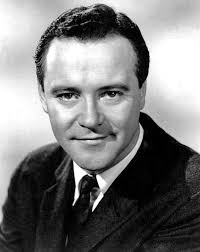
Neil Hamilton (best known as Commissioner Gordon on Batman) plays Franklin Westbrook, a conceited drama critic who dislikes almost everything. Jack Lemmon plays Harold, a Midwesterner who thinks working for Westbrook will help him become worldly and give a boost to his acting career. His girlfriend is played by his real wife Cynthia Stone. The episodes revolved around his romantic and business adventures in New York City. Perhaps Westbrook panned the show because it was cancelled after three episodes.
Heaven for Betsy – Jack Lemmon (1952)
Three years later, Lemmon gave it another try. In this show, Lemmon plays Peter Bell, a toy store buyer. His wife Cynthia again played his wife Betsy. The series was based on a sketch “The Couple Next Door” that Lemmon and his wife played regularly on the Frances Langford/Don Ameche Show. Each episode lasted 15 minutes, and it told about the newlyweds’ struggles in New York City. Instead of three episodes, this series lasted three months.
Honestly Celeste – Celeste Holm (1954)
After playing Ado Annie in Oklahoma, Holm tried her hand at television. She plays Celeste Anders, a Minnesota college professor living in Manhattan, who is getting journalism experience working for the NY Express. Celeste wrote stories ranging from modern art to underprivileged families. She also dated the publisher’s son Bob Wallace, played by Scott McKay. After three months, she was sent back to school in Minnesota. What was most surprising about this failure was that Norman Lear (who would go on to create dozens of shows) and Larry Gelbart (who later created M*A*S*H) were both part of the writing staff.
Going My Way – Gene Kelly (1962)
Bridging television and movies, Gene Kelly redid Bing Crosby’s movie from 1944 for the small screen. Kelly is Father Chuck O’Malley, a progressive priest assigned to the slums of New York. Father Fitzgibbon played by Leo G. Carroll is a cantankerous, old priest. Dick York was his boyhood pal Tom Colwell who ran the community center. Mrs. Featherstone (Nydia Westman) played the rectory housekeeper. The list of guest stars on the show was very impressive, but after a year, the network told Kelly to keep going and cancelled the show.
The Bing Crosby Show – Bing Crosby (1964)
I guess Bing decided if Gene Kelly could enter television with his old movie, he might also give it a try. He plays Bing Collins a former singer. He is now an electrical engineer married to Ellie (Beverly Garland) with two daughters Janice (Carol Faylen), 15, and boy crazy and Joyce (Diane Sherry), 10, who had a high IQ. It lasted one season. Not surprisingly, this series also attracted a lot of big-name guest stars including Frankie Avalon, Jack Benny, Dennis Day, Joan Fontaine, and George Gobel. Apparently, Garland had a thing for engineers because she would marry aeronautical engineer Steve Douglas on My Three Sons.
Mickey – Mickey Rooney (1964)
Mickey plays Mickey Grady who leaves the Coast Guard to manage a posh hotel, Newport Arms in California, with his wife Nora (Emmaline Henry) and two young boys. His real son plays one of his sons on the show. Sammee Tong plays the hotel’s manager. The former supervisor has left a lot of problems for Mickey. The show was cancelled in January airing only 17 episodes.
One of the Boys – Mickey Rooney (1982)
After vowing never to work on television again, Rooney tried it again 18 years later. Now he plays 66-year-old Oliver Nugent, rescued from a nursing home by his grandson Adam Shields (Dana Carvey). Adam is a college student who takes him in. Adam’s roommate, Jonathan Burns (Nathan Lane) is not so happy about the situation. Oliver looks for a job and lands one singing in a restaurant. Also appearing in the cast was Scatman Crothers who sang with Oliver and had also left the nursing home. A young Meg Ryan played Adam’s girlfriend Jane. The show debuted at 18th place in the ratings but by within a month it had dropped to 68th. Even with this cast, the show was cancelled after an unlucky 13 episodes.
Jimmy Stewart Show – Jimmy Stewart (1971)
Jimmy Stewart jumped to the small screen with great anticipation and excitement by viewers. He played anthropology professor Jim Howard. Howard teaches at Josiah Kessel College, started by his grandfather. His house is full with his wife, his son Peter, Peter’s wife Wendy, and his grandson Jake. He also has a young son Teddy, who happens to be the same age as his grandson. His friend Luther Quince often stops by to eat and give advice. Jim talks to the audience during the show and wishes them love, peace, and laughter at the end of each episode. Even beloved Jimmy Stewart was unable to save this show which was cancelled after one season.
THE JIMMY STEWART SHOW, (back row, l to r): Ellen Geer, Jonathan Daly, (front):Julie Adams, Jimmy Stewart, Dennis Larson, Kirby Furlong, 1971-72
The Doris Day Show – Doris Day (1968)
Doris Day was the most successful actor moving from film to television. However, I think the reason she managed to keep her show on the air for five seasons was because she changed the format so often that CBS did not realize it was the same show. In 1968, Day is Doris Martin, a widow with two kids. She moves from the city to Mill Valley, CA to live on her father’s ranch.
The second season she commutes to San Francisco after accepting a job as an executive secretary to Michael Nicholson (MacLean Stevenson), the editor of Today’s Magazine. Rose Marie was Myrna Gibbons and Denver Pyle again played her father Buck Webb.
In 1970, Doris and the kids move to an apartment over an Italian restaurant run by Kaye Ballard and Bernie Kopell. Billy De Wolfe was her neighbor. Now Doris is writing feature stories for the magazine.
When the show returned the next fall, Doris was single and a reporter for a magazine. Her new boss was Cy Bennett (John Dehner) and she had a boyfriend Peter Lawford but later her boyfriend turned into Patrick O’Neal. There was no restaurant.
By 1973, the network caught up with all the changes and cancelled the show.
It was interesting that so many actors failed in television when they were such celebrated movie stars. The radio stars seemed to have better luck making the transition. Jack Benny and Burns and Allen had long-lasting and popular shows. It’s hard to imagine actors like Ryan Gosling, Amy Adams, Julia Roberts, or Ben Affleck bombing on a television series today.
I think for now I will continue to choose to watch Pillow Talk, Move Over Darling, Harvey, ThePhiladelphia Story, Some Like It Hot,Singing in the Rain, and Hope and Crosby’s Road movies and set aside the television DVDs these stars appeared in.
February has finally arrived. Some of us are getting a bit tired of winter, so this is a popular month for travel to a warmer destination. If you aren’t able to physically get away, stay home and watch the February Sweeps, the only time you’re guaranteed new episodes of your favorite show for a month straight. This week I decided to look at sitcoms set in hotels or resorts. I did not discuss Fantasy Island or The Love Boat because I thought we could talk about them another time.
Based on the length of many of these shows, the hotel business is a tough one to be successful in. Let’s look at a bunch of shows that didn’t last too long.
Stanleywas a show starring Buddy Hackett and his girlfriend played by Carol Burnett that aired in 1956. Stanley ran a newsstand in the lobby of a New York City hotel. The hotel owner was played by Paul Lynde. The show was cancelled in March of 1957, supporting the philosophy that no news is good news.
Happy starred George and Gracie’s son, Ronnie Burns. Ronnie was married to a woman played by Yvonne Lime and they were co-owners and managers of the Desert Palm, a ritzy resort. Included in the cast was their Uncle Charlie and the co-owner played by Doris Packer. Happy was their son who commented on what was going on, sort of like Family Guy’s Stewie. It was a summer entry in 1960, but 9 months later it gave birth to a cancellation which made the cast not Happy. I don’t know why, but apparently viewers could accept a talking horse or a talking car, but not a talking baby.
Another show that began as a summer replacement was Holiday Lodge in 1961. Johnny Wayne and Frank Shuster, two comedians from Canada, played social directors at a New York state hotel. They tried to provide entertainment but always ran into trouble, including being taken off the air after a few episodes.
The Bill Dana Show was interestingly based on the character Jose Jiminez developed by Dana for the Steve Allen Show and later brought to the Danny Thomas Show. In 1963 The Bill Dana Show portrayed Jiminez as a bellhop at the New York City Park Central Hotel and the show centered on him trying to get used to life outside Mexico. Often his dream sequences took him into bizarre situations. The most interesting fact about this show might be that the house detective was played by Don Adams who went on to star in Get Smart. Jimeniz’s dream became a nightmare when the show was cancelled after 42 episodes.
One of the most controversial shows to air on television in the 1970s was Hot L Baltimoredebuting in the fall of 1975. Many stations refused to air the show because it was lewd and racy. Norman Lear, the producer behind All in the Family, Maude, and The Jeffersons developed the concept based on a play. The cast was made up of a desk clerk, his girlfriend, the manager, a hooker, an unemployed waitress, a dying man, a gay couple, and an eccentric woman. After four months, the waitress was not the only one unemployed because the show was done.
The Last Resort was developed by MTM in 1979, the company that created The Mary Tyler Moore Show, Rhoda, and Phyllis. The resort, set in the Catskills in upper New York, included a bunch of college students working their way through school. It featured a stereotyped crew including the brilliant premed student, a bookworm, a snob, an overweight clumsy guy, the pastry chef who left her wealthy husband to pursue her career, a Japanese chef, and a maitre’d who ran the place like a drill sergeant. It was cancelled after three episodes. Retooled, it came back in December only to be finished for good in March when the last resort of The Last Resort was no more.
Checking Inmust be in the running for the shortest show to appear on television. In 1980, Marla Gibbs, playing Florence the maid on The Jeffersons, got her own show, transferring to a hotel in New York City where she was the head housekeeper. She answered to a snobby manager played by Larry Linville who would later become Frank Burns on M*A*S*H. The rest of the cast included an assistant, a house detective, a maintenance supervisor, and a bellboy. After several weeks, the hotel was shut down and Florence went back to working for The Jeffersons.
The Golden Girls was one of the most beloved shows in television, but I’m guessing few people remember The Golden Palace which debuted in 1992. After Dorothy got married, the other three characters decide to invest in a hotel in Miami. Only two employees are left at the hotel: a manager and a chef. After 24 shows, no one was left at the hotel.
In 1999 Payne, a remake of the British show Fawlty Towers hit the air. Set in a California inn, Whispering Pines, the hotel was owned by Royal Payne and his wife Constance. It went on the air in March. At the end of April, the network ended its Payne by taking two aspirins and cancelling the show.
Compared to some of the shows, Whoopi! might have seemed successful, lasting an entire season. Set in the Lamont Hotel in New York City, a one-hit wonder musician played by Whoopi Goldberg decides to put her money into a hotel and run it the way she sees fit. She has an assistant from Iran, a brother who is a conservative Republican, and his girlfriend who is white but acts more African American than the black members of the hotel. Of course, these three characters give her much controversy to deal with. The network, acting as referee, blew the whistle and cancelled the entire thing after one year.
In 2008 Do Not Disturb debuted. If you missed it, don’t feel bad. It debuted on Fox and featured The Inn, a hip Manhattan hotel. The staff is not as competent as they appear to their guests. The manger is arrogant, the head of human resources is loud and tactless, the front desk clerk is an aging model who does not want to be a desk clerk or older, the reservations clerk is a famous musician wannbe, and the head of housekeeping has problems at home. The network, not wanting to disturb the viewing public, pulled the plug after three shows. Larry, played by Jesse Tyler Ferguson, would go on to star in ModernFamily in 2009.
Before you begin to think shows about hotels are doomed, let’s check in with four successful shows that knew how to make a profit.
From 1996-2001The Jamie Foxx Show on WB featured Jamie Foxx as a musician who moves to California to work at his aunt and uncle’s (played by Ellia English and Garett Morris) hotel, King’s Tower. He has two co-workers played by Christopher B. Duncan and “Fancy” played by Garcelle Beauvais. He is interested in Fancy, but she doesn’t feel the same until the final two seasons when they become engaged. The show aired 100 episodes before the network finally got reservations.
Disney’s Suite Life of Zach and Cody set in the Tipton Hotel ran from 2005-2008. The twins lived in the hotel because their mother was the lounge singer. Somewhat like Eloise at the Plaza, the boys got into mischief and interacted with other employees including the wealthy heiress London Tipton, the candy counter salesgirl Maddie Fitzpatrick, and the manger Marion Moseby. In 2008 the show sailed off, literally, and became Suite Life on Deck running until 2011.
With 184 episodes, Newhartdebuted in 1982. With its quirky cast of characters, it became a big hit. Set in Vermont, Dick Loudon (Bob Newhart) is a writer who buys the hotel and runs it with his wife Joanna (Mary Frann). Their handyman George Utley (Tom Poston) and their maid Stephanie Vanderkellen (Julia Duffy) make life both easier and more difficult at the inn. Later Dick becomes a local television celebrity working with Michael Harris (Peter Scolari) who marries Stephanie. Larry, (William Sanderson) his brother Darryl (Tony Papenfuss) and his other brother Darryl (John Voldstad) are memorable characters. Darryl and Darryl never speak until the final episode. That finale has the best ending ever in a television series when Bob Newhart wakes up in bed, tells his wife he had a really weird dream, and we see the wife is Suzanne Pleshette, his wife Emily from The Bob Newhart Show in which he played a psychiatrist from 1972-78. This series delightfully captured the life in a small New England town until 1990.
While Newhart is hard to top, my favorite hotel sitcom is Petticoat Junction which featured the Bradley Girls from 1963-1970. Kate (Bea Benaderet) ran the hotel with her three daughters Billie Jo, (Jeannine Riley till 1965, Gunilla Hutton until 1966, and Meredith MacRae until 1970), Bobby Jo (Pat Woodell until 1965 and Lori Saunders through 1970, and Betty Jo (Linda Henning), along with her Uncle Joe (Edgar Buchanan). The Shady Rest is near Hooterville, so we get to know a variety of town folk including Sam Drucker who runs the general store; Floyd and Charley, who run the Cannonball train; and Steve Elliott, crop duster, who is Billie Jo’s boyfriend first but later marries Betty Jo; and we run into the Ziffels and the Douglases from the show Green Acres. It’s a charming and heart-warming show loaded with loveable but zany characters. It ran for 222 episodes, even surviving the death of Bea Benaderet, who was replaced by Janet Craig (June Lockhart), a woman doctor who moves into the hotel. The amazing Charles Lane shows up throughout the series as Homer Bedloe, a railroad employee whose sole mission is shutting down the Cannonball.
If you can’t physically travel this month, take some time and watch a season or two of Newhart or Petticoat Junction, and you can still get away and experience life in a small-town hotel.




























 thewritelife61