Don Adams: Always Smart

This month our blog series is titled “All About The Bill Dana Show.” The first week in March we learned about the show and now we have been spending time with some of the cast. We end our series with Don Adams.

Adams was born Donald James Yarmy in Manhattan in 1923. Don was a blend of cultures, Hungarian Jewish on his dad’s side and Irish-American on his mom’s. Don was raised Catholic while his brother Dick was raised Jewish. I could not find out what their sister decided to do. She later became a writer under the name Gloria Burton and wrote a script for Get Smart. His brother was also an actor. Dick has about 50 acting credits and appeared in many of the most popular sitcoms during the sixties and seventies, including three appearances on Get Smart.

Adams dropped out of high school and went to work as a theater usher. In 1941 he joined the US Marine Corp. At one point he was injured during a Japanese assault on Tulagi. He was the only survivor from his platoon. While recovering, he came down with blackwater fever, a side effect from malaria and was evacuated to New Zealand. He was not expected to recover, but when he did, he was sent back to the US as a Marine drill instructor.

After his discharge, he moved to Florida to work as a comedian. He refused to do material he considered “blue” and was fired.

In 1947 he married Adelaide Efantis, and her stage name was Adelaide Adams. Don decided to take the name Adams as well for his stage name. He worked as a commercial artist and cashier to support their family.

In 1954, Don was the winner of Arthur Godfrey’s Talent Scouts with a comedy act written by Bill Dana. He began making appearances on The Steve Allen Show, where Dana was a writer. In 1961 he became a regular on the Perry Como Show.

About this time, Don and Adelaide divorced, and Adams married Dorothy Bracken, another actress. They split up in 1977 when he married Judy Luciano, also an actress but that marriage also ended in divorce. (I could only find one credit for his last two wives; Bracken was on Get Smart, while Luciano appeared on The Love Boat.)

While discussing his marriages, Don said “I’m no longer independently wealthy. I guess it’s the result of too many wives, too many kids and too much alimony. I’ve been paying alimony since I was 14 and child support since 15. That’s a joke, but not by much. . . I like getting married, but I don’t like being married.”

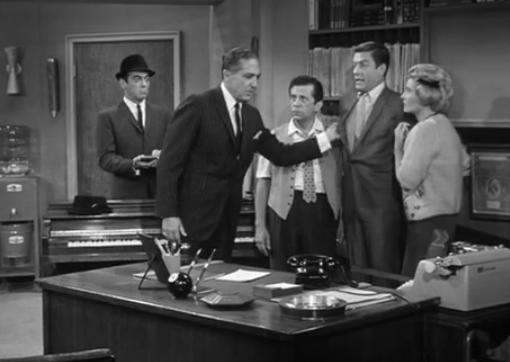
In 1963 Adams was offered the role of Byron Glick, hotel detective on The Bill Dana Show. As we’ve discussed this month, the show was on the air for a season and a half. While working on the show, Don was also the voice of cartoon Tennessee Tuxedo which he continued doing until 1973.

During those years he also made an appearance on The Danny Thomas Show and on Pat Paulsen’s Comedy Hour.

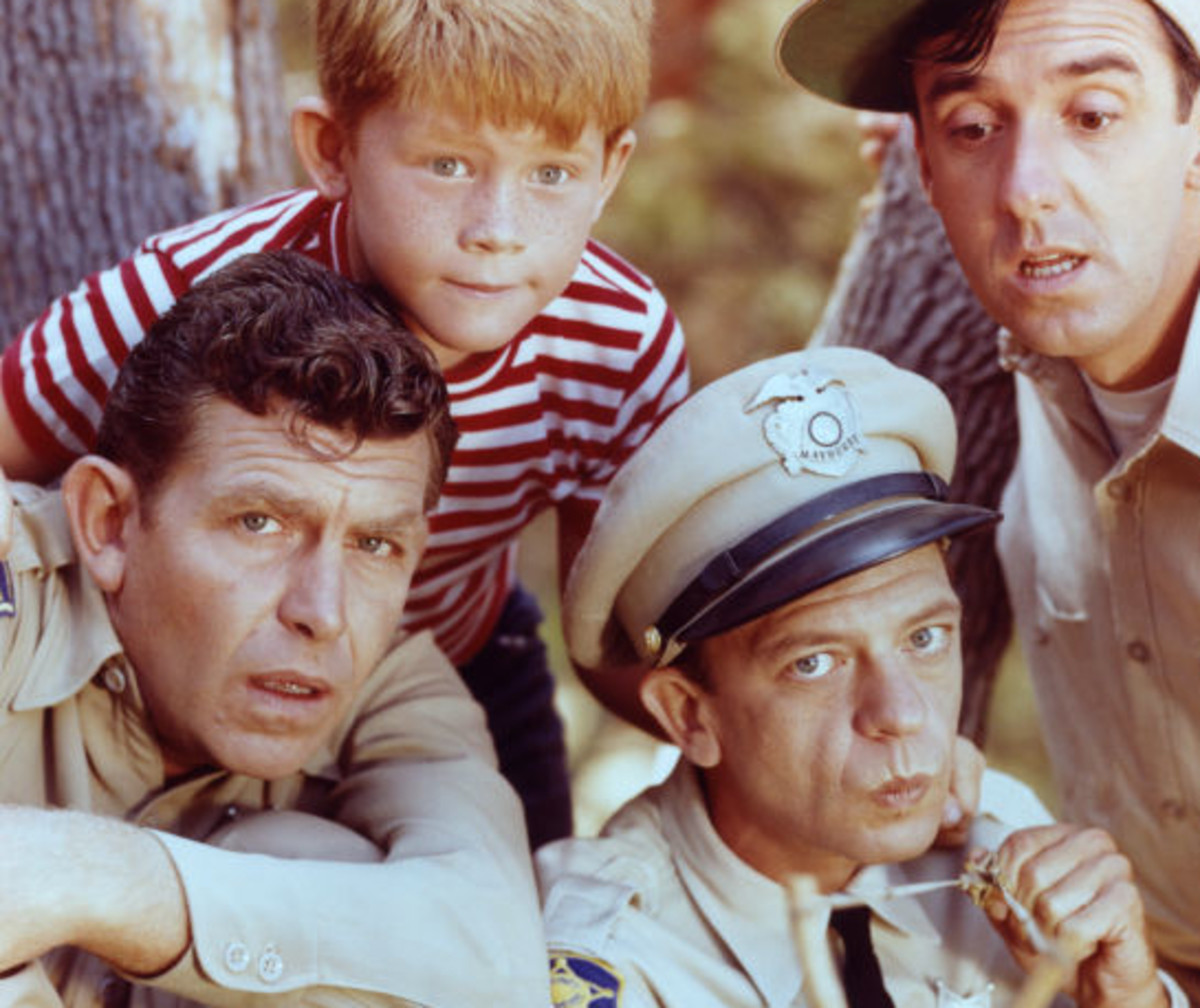
In 1965 he was offered the role of Maxwell Smart in a new spy satire, Get Smart.

The sixties saw westerns being overtaken by spy shows such as The Man From U.N.C.L.E., I Spy, The Pink Panther, and The Avengers. Mel Brooks and Buck Henry decided to try their hand at writing a campy sitcom and Get Smart was born.

The role of Smart was created for Tom Poston, but ABC turned it down, and NBC said yes. They had Adams under contract, so he got the part. Rounding out the cast was Edward Platt as the Chief and Barbara Feldon as Agent 99.

Smart and 99 had great chemistry and married in a later season. Feldon and Adams remained life-long friends.

One of the most memorable parts of the show was all the catch phrases Adams created on the show including “Sorry about that Chief,” “Would you believe,” and “Missed it by that much.”

In addition to acting, Adams worked as a producer and director on the show. He was nominated for an Emmy from 1966-1969. He won three of those, losing to William Windom for the little-remembered one-season show, My World and Welcome to It. Lloyd Haynes from Room 222 and Bill Cosby for The Bill Cosby Show were also nominated that year.

The show moved to CBS for the final season, but the ratings never recovered, and the show was canceled after that year.

Like so many of our successful actors with unusual characters, Adams suffered from typecasting after the show ended. He did become part of two additional sitcom casts during his career.

In 1971 he was on The Partners. According to imdb.com, the plot is that “Lennie Crooke and George Robinson are inept detectives teamed up to solve crimes. Captain Andrews is their exasperated boss, Sgt. Higgenbottom is a smarmy co-worker, and Freddy confesses to most of the neighborhood crimes.” Adams played Crooke, but the show only produced 20 episodes.

In 1985, Adams tried a sitcom again on Check it Out. This one was about a grocery store and its employees. Adams played Howard Bannister. The show lasted three seasons, ending in 1988. The show was not very popular in the US but was a hit in Canada.

In between those two shows, Adams appeared in a handful of series including Fantasy Island, The Fall Guy, The Love Boat, Empty Nest, and Nick Freno: Licensed Teacher. He made most of his salary appearing in nightclubs. He also had his Smart character resurrected in several big screen films and television series.

Because of the typecasting, he returned to animation and found a lot of success, especially with Inspector Gadget which he voiced from 1983-1999.

He also tried his hand at a game show. Called Don Adams’ Screen Test, it had an interesting concept. The show was filmed in two 15-minute parts; Adams would randomly select an audience member to recreate a scene from a Hollywood movie such as From Here to Eternity with Adams as director. It ended after 26 episodes.

In his spare time, it sounds like he visited the racetracks, betting on horses. He also spent a night a week at the Playboy Mansion playing cards with Caan and Rickles. He loved history and studied Abraham Lincoln and Adolf Hitler in depth. He also wrote poetry and painted.

Don passed away in 2005 from a lung infection and lymphoma. The eulogists at his funeral included James Caan, Bill Dana, Barbara Feldon, and Don Rickles.

It’s hard to know what to make of Adams’ career. Obviously, he was hard working, an excellent Marine, and a man of many interests. He was fired for not performing blue material but then put horse racing and gambling above the needs of his family, according to several of his friends. He created the amazing role of Maxwell Smart, one of the best characters in television history, but that feat kept him from achieving other great roles in the following decades due to typecasting. It sounds like Check It Out was very popular in Canada, so maybe if he had been given a few chances to create characters different from Smart in a couple other sitcoms, it would have helped.

I feel bad for those actors who are so successful in the characters they help create that they are barred from future jobs, but then again, those characters are some of the best actors in television: George Reeves as Superman, Ray Walston as My Favorite Martian, Henry Winkler from Happy Days, Frank Cady from Green Acres, and Jack Klugman from The Odd Couple. I guess you trade being warmly remembered for fewer quality roles.

Apart from Get Smart, I knew little about Adams before writing this blog, so it was fun to get to know him a bit.
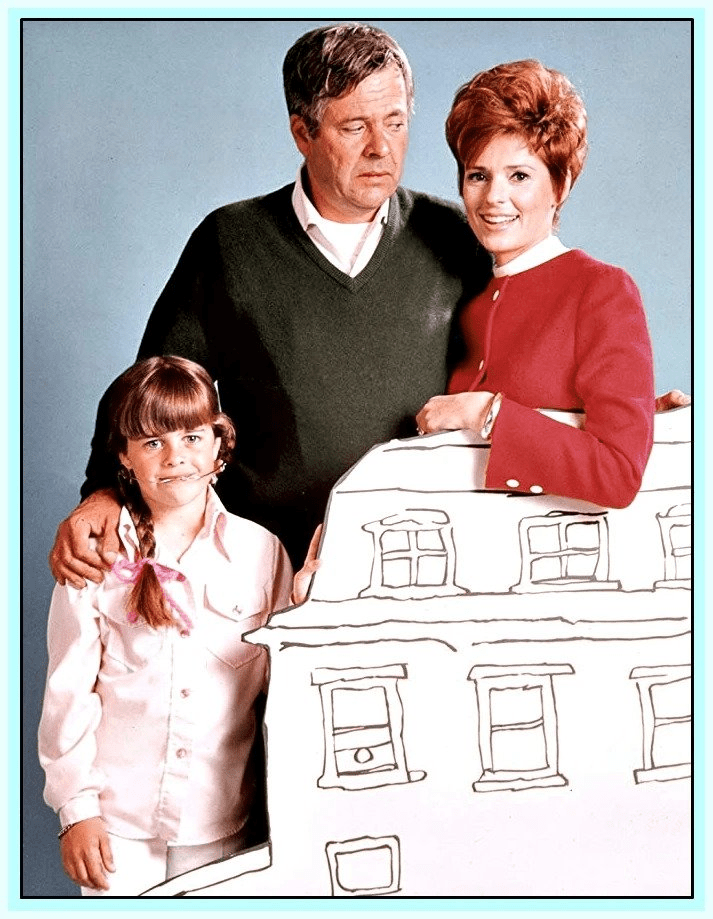
My World . . . And Welcome To It: Just a Fantasy

This month we are in the midst of What in the World? Every sitcom has the word “world” in it. On deck today is My World . . . and Welcome to It. This half-hour show was based on the cartoons of James Thurber. It debuted in 1969 and was on the air for a year.
📷martin crookall- wordpress.com

William Windom played John Monroe a cartoonist who works for a magazine similar to the New Yorker called The Manhattanite. Monroe lives with his wife Ellen (Joan Hotchkis) and their daughter Lydia (Lisa Gerritsen). John often daydreams about his daughter’s future and the “older” Lydias were played by Talia Shire and Cindy Williams.

The name John Monroe was Thurber’s alto-ego in his book Owl in the Attic. He frequently daydreams and those are cleverly incorporated into the series.

The episodes opened with John observing different aspects of his life. The use of the cartoons created a fantasy life dream world where he escaped life situations he could not process.

Mel Shavelson created the show for NBC. He wrote and directed the pilot with one of my all-time favorites Sheldon Leonard as executive producer. The animation in the series was done by DePattie-Freleng Enterprises.

Rounding out the cast was Henry Morgan as Philip Jensen, a magazine writer based on Robert Benchley and Harold J. Stone as editor Hamilton.

📷moviedatabase.com

The show was on Monday nights at 7:30 and was up against Gunsmoke. While it had a lot of great reviews from the critics, the viewers were not there in droves. Percy Shain of the Boston Globe referred to the show as “a joy and treasure.” Bob Williams of the New York Post wrote that it was “it’s warm, it’s witty, and it’s a sophisticated cut above the best of the TV network situation comedies.”

Not every critic treated it so kindly, however. Jack Gould of the New York Times felt it was “hackneyed gibberish relieved only by an occasional Thurber drawing” and Norman Mark of the Chicago Daily News decided that it “tried to appeal to all parts of the TV audience and failed.”

Perhaps Barry Harrison of the Washington Evening Star understood the show better than the other critics and had “an uneasy feeling [that] it is not long for TV.” His prediction came true when the series was canceled after one season.

According to Howard Anderson Jr. in his Television Academy interview, one of the major reasons for the cancellation was that it was so expensive to do the filming with a blue screen behind Windom for all the animation.

And then after it was canceled, it won the Emmy for Outstanding Comedy and Windom picked up the Emmy for Leading Role in a Comedy. The series it was up against included Love American Style, Room 222, The Bill Cosby Show, and The Courtship of Eddie’s Father. Windom won over Lloyd Haynes in Room 222 and Bill Cosby of The Bill Cosby Show.

📷billmadison.blogspot.com

The fans did send a lot of mail to the network, but with the so-so ratings and the fact that the animation made this one an expensive show to create, NBC did not put it back on the schedule.

After the show ended, Windom created a one-man play based on Thurber’s works and toured the country throughout the seventies. Perhaps if the network had given it some time after winning the Emmys, this show might have been more successful. It sounds like an interesting concept, although I also get the feeling that it might not have appealed to women; many of the descriptions I read discussed John’s fantasies that his wife and daughter were things to escape from. It’s worth taking a look at and seeing how it has fared over the last sixty years.

Ruth McDevitt: What a Character – Delightfully Daffy

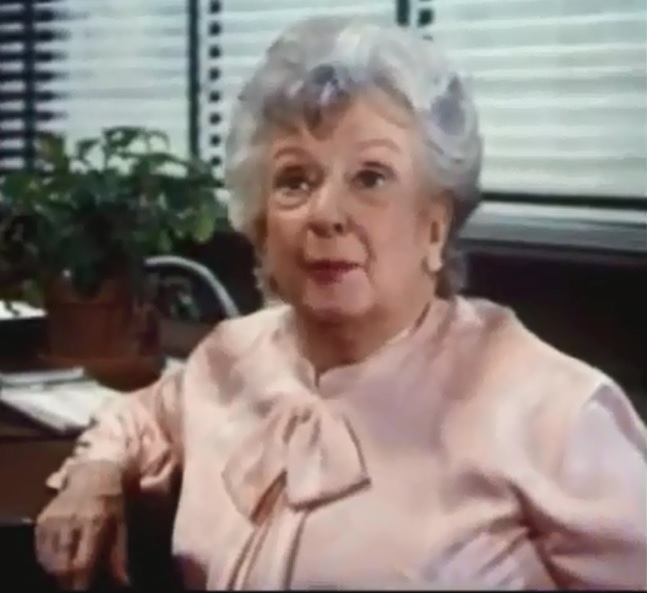
One of my favorite blog series is beginning again today: “What a Character !” Our first character actor is Ruth McDevitt. You might not recognize her name, but the minute you see a photo of her you will definitely recognize this busy television star. Her on-screen personality is perfectly captured in her imdb biography where she is described as “delightfully daffy and quite an apple dumpling of a darling, a cheerfully wizened character.”

On Love American Style with Meredith McCrae Photo: pinterest

Ruth was born in Michigan but she spent most of her early life in Ohio. Her father was the county sheriff and both of her parents were musicians. After graduation, she attended college (some sites give her college as Bowling Green and others Wooster) and after her graduation, she studied at the Toledo Dramatic Academy. She then moved to New York to attend the American Academy of Dramatic Art.

When she married Patrick McDevitt in 1928, she decided to devote her time to her husband, giving up her career. Her husband was a widowed contractor who lived in Florida, so she made the move south and participated in a variety of women’s clubs and community groups. Unfortunately, her husband passed away in 1934, and she then returned to her acting profession in her forties. She made her debut on Broadway in 1940 in several shows and later appeared in “Arsenic and Old Lace” in 1942 and “The Solid Gold Cadillac” in 1954.

In the thirties, Ruth also began her radio career, taking on the roles of Rosemary’s mother in “Keeping up with Rosemary” and Jane in “This Life is Mine.”

The Birds with Tippi Hedren Photo:

Ruth also found success on the big screen. Her first movie role was in The Guy Who Came Back in 1951. She would appear in a variety of movies during her career including The Birds, The Parent Trap, The Shakiest Gun in the West, Mame, and Angel in My Pocket.

With Frank DeVol in The Parent Trap Photo: imdb.com

It was in television that she found most of her fame. Her first appearances were in 1949 when she was cast in A Woman to Remember, The Ford Theater Hour, and Suspense. She continued to receive dramatic roles throughout the fifties. From 1953-54, she appeared in seven episodes of Mister Peepers as his mother.

Pistols and Petticoats Photo: pinterest

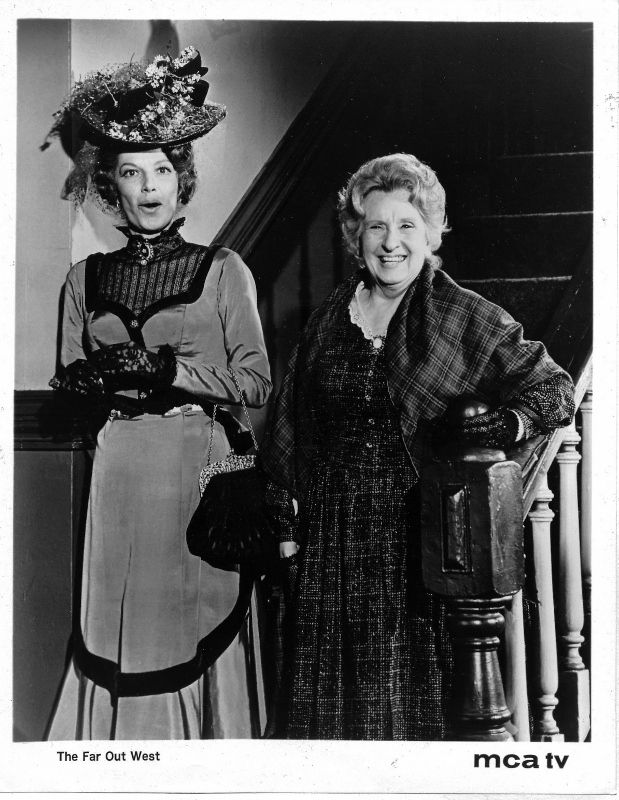
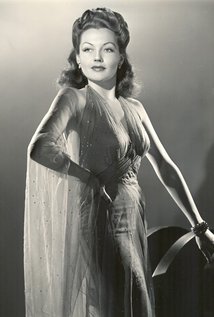
Ruth began the 1960s in several medical shows and then transitioned to comedies appearing in The Andy Griffith Show, The Ghost and Mrs. Muir, The Debbie Reynolds Show, I Dream of Jeanne, and Mayberry RFD. She received a recurring role in The Doctors in 1963 as Mrs. McMurtrie. She also became a cast member of Pistols and Petticoats in 1966. She was described as pistol-toting grannie, Effie Hanks. The show was set in Colorado in 1871 where the Hanks family are beloved residents and run things better than the sheriff does. It was canceled after its first season. Ann Sheridan starred in the tv series and she passed away a couple of months before the show was canceled.

The 1970s was Ruth’s busiest decade. She showed up in various dramas including Ironside, McCloud, Mannix, and The Rookies. She popped up in Gunsmoke and Little House on the Prairie and took part in the medical shows Marcus Welby and Medical Center.

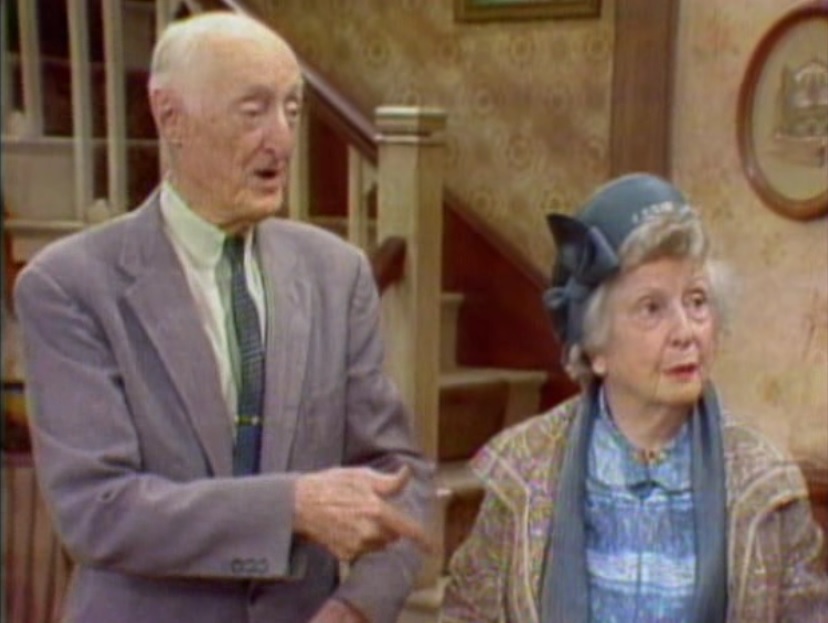
With Bert Mustin on All in the Family Photo:

However, comedies kept her employed. She accepted roles on My World and Welcome to It, The Courtship of Eddie’s Father, That Girl, Here’s Lucy, Love American Style, Nanny and the Professor, Bewitched, Room 222, and Phyllis. among others.

She accepted a recurring role on All in the Family as Jo Nelson from 1973-1975. Her last starring role was in Kolchak: The Night Stalker from 1974-1975. Darren McGavin plays a newspaper reporter who specializes in solving supernatural mysteries. His only friend was a coworker who also had a column in the paper played by McDevitt. The show supposedly inspired the X Files in part.

Photo: wiki-fandom.com

Ruth’s last two roles were in 1976 in made-for-tv movies. She passed away the same year from natural causes at age 80.

Whenever I write about these character actors, it makes me happy and sad. I respect them so much and appreciate the depth they add to make our television series better, but I am always disappointed that there is so little information available about their lives and careers. I very much enjoyed getting to know Ruth McDevitt a little better—she certainly was a character and we all benefit from that.

Did I Tell You The One About The Farmer’s Daughter: The Chemistry of Inger Stevens and William Windom

Photo: abebooks.coom

This blog takes a look at a show that is beginning to fade from viewers’ memories. The Farmer’s Daughter debuted in the fall of 1963, starring Inger Stevens as Katy Holstrum and William Windom as Glen Morley.

The show was based on the 1947 movie of the same name starring Loretta Young and Joseph Cotten in the lead roles.

Katy was a student who needed to earn some money and became a governess/housekeeper for Morley’s boys, Steve (Mickey Sholdar), age 14 and Danny (Rory O’Brien), age 8. Morley is a congressman. While Morley is sophisticated and refined, Katy is a no-nonsense type of girl from Minnesota. Morley’s mother Agatha (Cathleen Nesbitt) also lives with the family. The cast is rounded out by Philip Coolidge as Cooper, the family’s butler. In the early seasons, it is obvious that Glen and Katy are falling for each other, and many of the plots are one of them being jealous of the other. In the movie, Katy runs for Congress, but she is not as involved in politics in the television show.

Photo: worthpoint.com

Screen Gems produced the show which aired on ABC. The show was sponsored by Lark Cigarettes and Clairol. The two stars often promoted the products at the end of the episode. In season one, the show was on Friday nights against Burke’s Law on CBS and The Fight of the Week on NBC. Season two found the show opposite The Flintstones and The Addams Family. The show moved to Tuesday nights for season three against A Man Called Shenandoah and Ben Casey. The show was never in the top 25 but, it had respectable ratings. The critics liked the show, and it was nominated for an Emmy for outstanding comedy in 1964 but lost to Mary Tyler Moore for The Dick Van Dyke Show. It was also nominated for Emmys for writing, directing, and best actress. Stevens won the Golden Globe for best female tv star. TV Guide conducted a popularity poll, and she won the female performer of the year with David Janssen of The Fugitive, winning male performer.

At the end of season two, Katy and Glen become engaged. The third season brought full-color episodes. Early in the third season, they marry. After that ratings fell significantly, and the show was not renewed for a fourth season. In the finale, Katy adopts Danny and Steve. The chemistry between Glen and Katie and waiting to see if they got together or not kept viewers tuning in.  Once they married, viewers were not as invested.

Photo: en.wikipedia.org

In 1957, Inger was signed to a seven-picture contract with Paramount. In 1959, she survived after swallowing an overdose of pills and she seemed to recover with a renewed zeal to work on her career and life situation.

Stevens became a favorite actress of many viewers after The Farmer’s Daughter. The cast and crew liked her very much and she was easy to work with. She never got upset when filming ran long or had complications. She and Windom often played practical jokes on each other to bring fun to the workplace. She recalled eating an onion sandwich one day right before they filmed a kissing scene.

After the show was cancelled, she was cast in the movie, A Guide for the Married Man in1967. She then starred in films with Jimmy Stewart, Dean Martin, and Clint Eastwood. She appeared in the made-for-tv film, Run Simon Run with Burt Reynolds in 1970. After seeing the film, Aaron Spelling cast her in an upcoming series, Zig Zag to air in the fall. The show was about a trio who work on hard-to-solve murders. When the show went on the air in 1970, Yvette Mimieux had to take over Inger’s role.

Photo: commons.wikimedia.org

Unfortunately, the sunny disposition Stevens portrayed to the world hid a sad and tragic life and she committed suicide before the show aired. Her housekeeper found her in April; she was semi-conscious and died on the way to the hospital. The cause of death was determined to be acute barbiturate intoxication. The public was saddened and surprised to learn how unhappy she was.

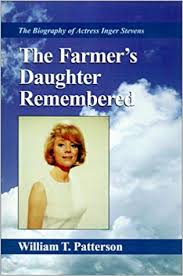
In 2000, William Patterson published the book, The Farmer’s Daughter Remembered. He dove into her life and tried to determine whether she meant to commit suicide or not.

Photo: pinterest.com

Windom also starred in the series, My World and Welcome to It as cartoonist John Monroe and as Dr. Seth Hazzlett on Murder She Wrote in 1985. His first movie role was in To Kill a Mockingbird in 1962. In addition to other films and Broadway, he traveled performing one-man shows of both James Thurber and Ernie Pyle. He passed away of congestive heart failure in 2012 at 88.

Cathleen Nesbitt would continue appearing in television series until 1982 when she passed away at age 93. Although she had appeared in many films, The Farmer’s Daughter was the only series she was featured in regularly.

Photo: en.wikipedia.org
Cathleen Nesbitt

Mickey Sholdar only appeared in five other shows after The Farmer’s Daughter. His last acting appearance was in the movie Babe. I could not verify how he spent his life up to now.

Photo: sitcomsonline.com
Mickey Sholdar and Rory O’Brien

Rory O’Brien, like Sholdar, only appeared in a few shows after the series ended. He was also in one film afterward, Little Big Man. O’Brien left the acting profession in the early 1970s. I could not find any other information on him either.

Photo: famousfix.com
Phillip Coolidge

Philip Coolidge was in many acclaimed movies before he took the role on The Farmer’s Daughter. Like most of his cast mates, he only appeared in a few shows in the mid-1960s, and he passed away in 1967.

Photo: pinterest.com

The show was aired in syndication on CBN, but I cannot find any other channels that carried it, and I cannot find any evidence that it was ever released on DVD. It’s too bad because the show featured a couple with great chemistry and the quick pace of the story and well-written dialogue that made the show memorable will be lost if no one is able to see the show in the future.

Sheldon Leonard: A True TV Pioneer

leonard4

The Depression changed the course of Sheldon Leonard’s life. He was born in Manhattan to Jewish parents. He went to Syracuse University on an athletic scholarship. While there, he was president of the dramatics club. His degree was in finance, and he landed a job at a prestigious brokerage firm. Then the Depression hit, and he was out of a job. He had to fall back on the only other skill he could think of which was acting.

In 1931 he married Frances Bober whom he was married until his death. They would have two children.

Acting was not quick money either though. It took five years until he landed his first major Broadway role in Hotel Alimony in 1934. It did not have a long run, but his next two shows were more successful: Having a Wonderful Time in 1937 and Kiss the Boys Goodbye in 1938.

leonard7

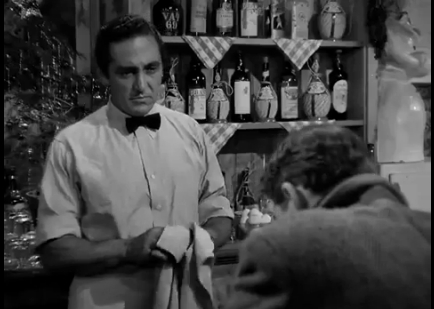
He then entered film work. He had several very small roles in a couple of movies and a couple of shorts, but in 1939 he was cast in Another Thin Man, the popular movie series with William Powell and Myrna Loy. That began his career as a heavy, often being cast as a gangster. He would appear in To Have and Have Not with Bogie and Bacall in 1944. In 1946 he was cast as the bartender in It’s a Wonderful Life with Jimmy Stewart and Donna Reed. Because it has become a Christmas staple, it has brought Sheldon a lot of recognition. Sheldon would appear in 74 movies during his career, 69 of them by 1952.

leonard2

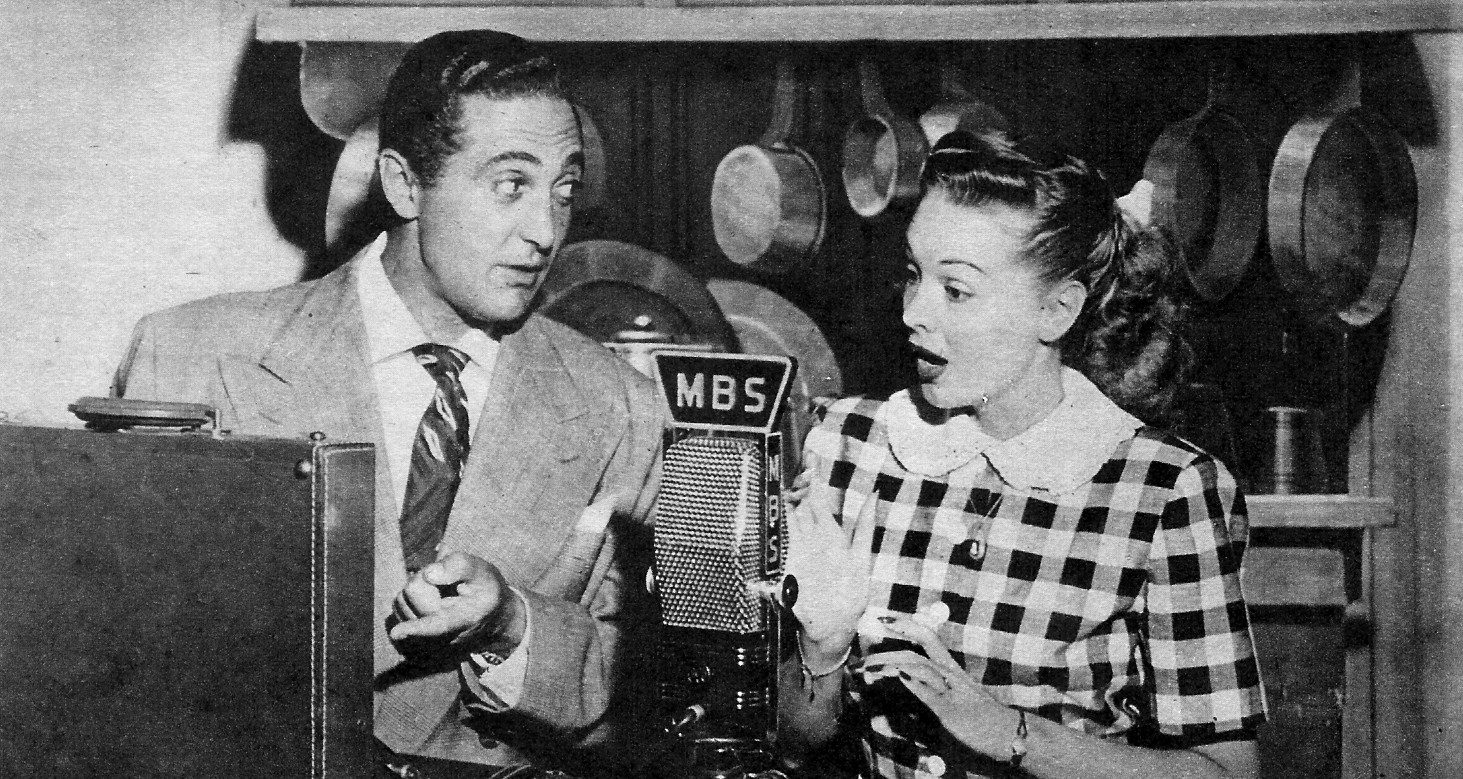
During this time, he also gave radio a try. He was working on both sides of the mic. He sold scripts to several shows including Broadway is My Beat. He also portrayed his stereotyped gangster role on many shows including as Grogan on The Phil Harris, Alice Faye Show. You could hear him on Jack Benny, Burns and Allen, Bob Hope, Duffy’s Tavern, the Halls of Ivy, and The Judy Canova Show, among others.

sheldon6

Photo: radiospirits.com

It was only a matter of time before Sheldon took his talents to television. He appeared in four episodes of Your Jeweler’s Showcase in 1952. In addition, he was listed as producer and director for several of these episodes. He appeared in I Love Lucy in 1953 as vacuum salesman Harry Martin and several I Married Joan episodes in 1952-53. One of my favorites was his role as Johnny Velvet on Burns and Allen when he kidnaps Gracie but takes her back because she drives him crazy. In 1954 he co-starred in The Duke which lasted 13 episodes.  This show featured an artistic boxer who leaves the ring to open a nightclub. Sheldon also directed the pilot as well as some early episodes of Lassie and The Real McCoys.

leonard14

However, the show that made him a household name was his director/producer role on Make Room for Daddy, Danny Thomas’s hit sitcom. The show was in the top ten, and Sheldon even found time to appear on the show 19 times. The show continued from 1953-1964. Leonard had found his sweet spot. During his career, he would direct and produce shows such as The Dick Van Dyke Show, The Andy Griffith Show, Gomer Pyle USMC, and I Spy.

sheldon4

Sheldon convinced Carl Reiner to step back from acting as Rob Petrie and produce The Dick Van Dyke Show. That conversation resulted in Dick Van Dyke accepting the role, leading to 158 episodes. If you watch carefully, you will notice Sheldon appearing twice on the show in minor roles. The show was nominated for 25 Emmys and won 15.

leonard12

Sheldon also is credited with creating the spinoff. One of Danny Thomas’s episodes was set in North Carolina where he gets picked up for speeding in a rural town and has a run-in with Sheriff Andy Taylor. This episode turned into the long-running The Andy Griffith Show which was on the air from 1960-1968 netting 249 episodes. The show won 6 of the 9 Emmys it was nominated for.

sheldon3

The spinoff was so successful he did it again, moving Jim Nabors as Gomer Pyle from the gas station attendant on The Andy Griffith Show to his own show, Gomer Pyle USMC. That show was on the air for five years (150 episodes), and Sheldon would also make an appearance there as Norman Miles.

Thomas and Leonard as L&T Productions were also behind the The Joey Bishop Show and The Bill Dana Show. Thomas and Leonard’s shows were notable for emphasizing characters and relationships over slapstick or situation comedy. You cared about the characters even when they were a little kooky like Gomer Pyle or Barney Fife. They were committed to high-quality scripts. Many of the writers they employed went on to successful shows of their own including Danny Arnold for Barney Miller; Garry Marshall and Jerry Belson for The Odd Couple, Happy Days, and Laverne and Shirley, Mork and Mindy; and Bill Persky and Sam Denoff for That Girl and Kate and Allie. L&T Productions ended in 1965.

leonard9dga.org

Photo: dga.com

In the mid-1960s Sheldon produced I Spy. He cast Bill Cosby and Robert Culp as secret agents.  This was the first series to star a black actor in a lead role. In a March 7, 2016 Modern Times article, David Fantle and Tom Johnson discussed Sheldon Leonard and I Spy. Leonard said he knew what he was doing. “Race was very much an issue at that time,” he said. “I was intellectually conscious of it, but emotionally unaware of it. When I say emotionally unaware, I mean I was free to think of Cosby as the man to fill the slot I needed. Intellectually I knew the problems I’d have to face to get him on the air.” I Spy was a humorous suspense show and was known for its exotic locations, filming in countries such as Hong Kong, England, Morocco, France, and Greece among others. The critics rewarded Leonard. The show was nominated for Outstanding Dramatic Series Emmy every year of its three-year run and earned Leonard an Emmy nomination for directing in 1965.

sheldon7

Sheldon was also the producer behind Accidental Family and Good Morning World, both shows debuting in 1967 and ending in 1968 and My World and Welcome to It in 1969. Accidental Family was about a widower who is a stand-up comedian. He buys a California farm which is managed by Sue Kramer who is also his son’s governess and his love interest. Good Morning World was about morning disc jockeys in LA. One is happily married, and one is a ladies’ man. Goldie Hawn was the next-door neighbor and Billy De Wolfe was their boss. On My World and Welcome To It, John Monroe is a married man with a daughter. He frequently daydreams and fantasizes about life. This show was unusual in that it included some animation along with the live action.

sheldon9

In the Fantle and Johnson article referenced above, Leonard also talked about his favorite sitcom. He said his favorite might be the one that needed the most attention. “My favorite show was cancelled after the first year. My World and Welcome to It, based on the writings of James Thurber and starring William Windom. It won every award, and they cancelled . . . It was satire and above their (the network bosses’) heads. That show and I Spy are my favorites.”

In the early 1970s Sheldon would produce From a Bird’s Eye View and Shirley’s World. From a Bird’s Eye View was a sitcom about two stewardesses, Millie from England and Maggie from America. Millie was always getting into mischief and Maggie bailed her out. Shirley’s World starred Shirley MacLaine as a photographer who travels the world for her London-based magazine. The locales were similar to I Spy.

leonard3bigeddie

In 1975 Sheldon starred in a new sitcom, Big Eddy which only lasted for ten episodes. He was Eddie Smith was the owner of the Big E Sports Arena in New York. He was an ex-gambler fighting the impulse to get back into it. He has a bunch of eccentric people in his life including his ex-stripper wife Honey and their granddaughter Ginger.

In the 1980s, Sheldon would continue to show up on various television shows, appearing in Sanford and Son, The Cosby Show, Matlock, Murder She Wrote, and Cheers.

Along with author Mickey Spillane, Leonard was one of the first two people to become a Miller Lite spokesman. In his New York accent, he tells the audience, “I was at first reluctant to try Miller Lite, but then I was persuaded to do so by my friend, Large Louis.”

Sheldon Leonard passed away at the age of 89 in 1997. His wife Frances passed away in 1999.

leonard1

Sheldon Leonard is undoubtedly one of the greatest television producers. Most of his shows were consistently in the top ten. They are classic shows still on the air today.  Sheldon required scripts that brought characters to life. He created spinoffs when he believed in the characters. He was not afraid to take risks. Besides casting Bill Cosby, he cast Lois Nettleton as divorced Sue Kramer on Accidental Family. This was in the mid-1960s and yet when Mary Tyler Moore’s show aired in 1970, the network refused to allow her to be a divorced character.

In the Mercurie Blogspot from November 10, 2013, Carl Reiner discussed Leonard: “Sheldon has mentored more people in our business than anyone else I know. He knew how to teach what he knew, and what he knew was situation comedy with the three-camera technique. Sheldon was a producing genius who understood comedy. He had four or five shows going, but he would walk in and give his intelligence and his time to every script that was being read for the week. And we always came away with a better script because we would discuss and argue and come to a better situation.”

sheldon5

Garry Marshall was also quoted in this same article: “Sheldon was a sort of man’s man, yet he had all the creative sensitivity of the artist. No matter what story you were working on, he could help you fix it. He would never put down your idea. If I had to describe Sheldon in one word, it would be gentleman. He was a Renaissance man with a New York accent—and possibly a gun!”

The Herb Garden Germination

Photo: americanprofile.com

As a salute to Leonard, the writers of The Big Bang Theory, named their main characters Sheldon and Leonard in honor of Sheldon Leonard.

sheldon1

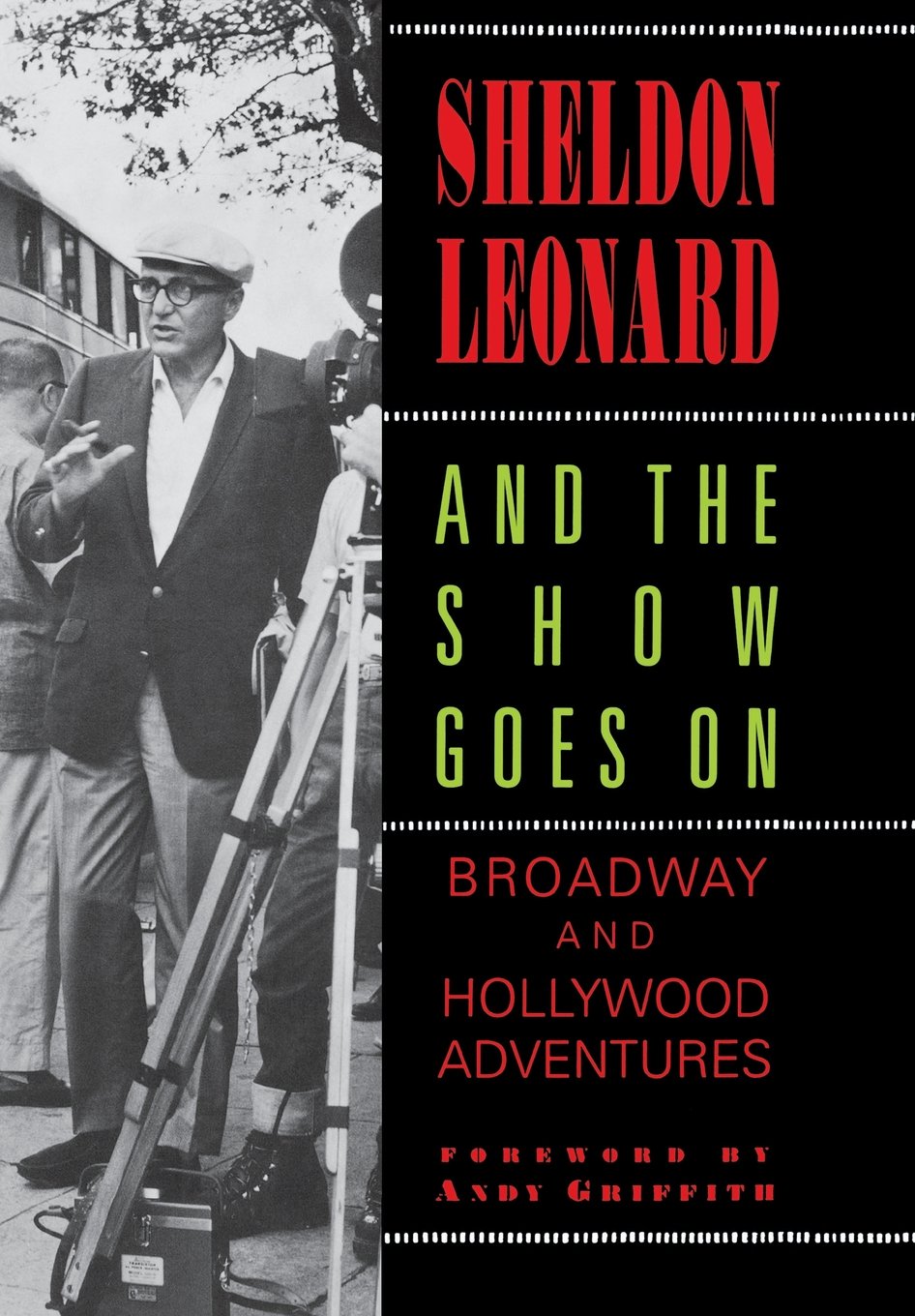
Sheldon himself seems to explain his success best. After working on his memoir in 1995, And the Show Goes On: Broadway and Holiday Adventures, he said “I was driven by an urge to survive and being very self-indulgent. I never did anything for very long that I didn’t like or enjoy. I would survive only on my own terms. I had to enjoy what I was doing, and I would have done what I did even if nobody paid me. That’s the secret of success in any business: do it well and enjoy doing it.”

leonard11

He did it all well, and we all enjoyed it.

Just When You Think It Can’t Get Any Weirder, It Does

Although I love The Big Bang Theory and Modern Family, there are a lot of shows on television today that make me shake my head.  It’s amazing what is airing when you scroll through the channels:  Vanilla Ice Goes Amish, I Cloned My Pet, Doomsday Preppers, and these are some of the best reality shows out there.  However, when I researched sitcoms from the classic era, I also found a lot of weird concepts there also.  Let’s take some time to look at a few of them.


unusual1

Boss Lady (1951)

Lynn Bari was Gwen Allen, owner and operator of Hillendale Homes Construction Co. which was owned by her father.  While this show would not seem unusual at all today, back in 1951 it was not common to see a woman the boss of a construction crew. This show began on the Dumont network and then switched to NBC for twelve episodes, running as a summer replacement from July to September 1952.


Where’s Raymond? (1953)

Believe it or not, this was a musical sitcom.  Ray Bolger (who had sang and danced as The Scarecrow in The Wizard of Oz) was a song and dance man named Ray Wallace living in Pelham, New York. He had a girlfriend named Susan (Marjie Millar) and a business partner Peter (Richard Erdman). Verna Felton from December Bride was his understudy’s mother-in-law. The show lasted 2 ½ years on ABC.


The People’s Choice (1955)

Ok, pay attention, because the basis of this show is confusing. Socrates (Sock) Miller played by Jackie Cooper is a Bureau of Fish and Wildlife Orinthologist studying to be a lawyer.  Honestly! He has car trouble one day and is picked up (and picked up) by the mayor’s daughter Mandy who thinks he should be on the city council. Sock decides to be a lawyer to support Mandy.   In the finale to year one, the two elope and conceal their marriage for the entire second season.  When the show came back for a third year, the mayor finds out about the marriage, Sock gets his law license, and Sock’s free-loading pal Rollo (Dick Wesson) moves in with the couple.  Now Sock is managing a real estate development. Just when you thought it could not get more confusing, Sock’s basset hound Cleo would do tricks and comment directly to the audience about situations occurring on the show. LSD had not even become a social problem yet, so it was not responsible for this show, so I’m not sure how this crazy mess stayed on the air for 104 episodes.


TSDDIAN EC004

Dick and the Duchess (1957)

Dick Starrett (Patrick O’Neal) is a claims adjuster in London.  There are some exciting scenarios to provide interest. He meets and marries Jane (Hazel Court) a duchess. She becomes his wife and assistant, although she still expects to live in the manner she has become accustomed to.  She humorously gets involved in his investigations. The network must not have thought she was that funny helping out because  CBS cancelled it after 25 episodes.


Mr. Ed (1961)

Let me say, I do not put Mr. Ed in the same category as Dick Van Dyke Show, That Girl, or Bachelor Father, but I don’t mind catching an episode or two now and then.  When looking at strange concepts for show, this one does have to go into the mix.

When the creator asked Young to appear in the show, he turned him down twice. A pilot was made without him. It did not sell, so producers Arthur Luben and Al Simon decided to enter it directly into syndication, and Young then agreed to take on the role. It was very successful, so CBS bought it.

Wilbur Post (Alan Young) is a married architect. Wilbur and his wife Winnie (Connie Hines) bought their house with a horse included. Their neighbors were played by Edna Skinner and Larry Keating. What no one else realized (including his wife), was that Wilbur was the only human who could understand Ed and talk with him.  Ed was quite the character; he was a hypochondriac; a voracious reader; a playboy, or play horse; loved Carl Bernstein and wanted to decorate his stable in Chinese modern.

The voice of Ed was a highly guarded secret until the show ended in 1967 when it was revealed to be Rocky Lane. Ed was played by Bamboo Harvester, a palomino. One interesting fact about this show is that it has been seen in 57 different countries.


My Mother the Car (1965)

This is another one of those shows you roll your eyes about.  Dave Crabtree (Jerry Van Dyke) lives in LA.  He wants to buy a new station wagon, and when he goes shopping, he realizes his mother’s voice is coming through the radio of a 1928 Porter.  Ann Sothern provides his mother’s voice. Of course, he buys the car which irritates his family, but they don’t know his secret. He also has to deal with a car connoisseur who wants to buy the car for his collection. Maybe it’s a Freudian slip, but I’m a bit offended that a mother is portrayed as an old jalopy as opposed to a new, sleek car, but I digress. This show was only on the air for a year and then the radio was turned off.


unusual11

The Second Hundred Years (1967)

Here is the premise of this one:  In 1900, 33-year-old Luke Carpenter (Monte Markham) is prospecting for gold in Alaska.  An avalanche occurs, and he is buried alive and frozen.

In 1967, Luke’s son Edwin, who is 67, is told that his father has been found alive.  Dad looks 33, but his identity and past has become a top-government secret.  He is released into the custody of Edwin (Arthur O’Connell) and grandson Ken (also Monte Markham). Luke has a hard time adjusting to life in the 1960s. I know you are surprised, but the show was cancelled after 30 episodes.


My World and Welcome to It (1969)

This show was based on James Thurber’s writings. The show was set in Connecticut where John Monroe (William Windom) was a cartoonist for Manhattanite Magazine. He was intimidated by his wife Ellen (Joan Hotchkiss). To escape his boring and nagging life, he escapes into a secret world where his cartoons come alive and he is a king. He drifted between real and fantasy lives. NBC cancelled the show after a year, but CBS picked it up and aired it from May-September of 1972. So, the presence of LSD does explain the writing on this one. What it doesn’t explain is that this show won two Emmys in 1970 : Outstanding Continued Performance by and Actor in a Leading Role in a Comedy Series and Outstanding Comedy Series. The competition for comedy included Love American Style, Room 222, The Bill Cosby Show, and The Courtship of Eddie’s Father.


The Roller Girls (1977)

Meet the Pittsburgh Pitts, an all-women roller derby team, owned and managed by Don Mitchell (Terry Kiser). The Pitts were pretty but useless when it came to roller derby. James Murtaugh played the team’s announcer Howie Devine. After four episodes, the network agreed this really was the pits and it was cancelled.


unusual14

Apple Pie (1978)

This show aired for one episode – I thought they used to call that a movie. (A couple sources say 2 episodes, perhaps a mini-series.) The show is set in Kansas City, Missouri. A hairdresser named Ginger Nell Hollyhock (Rue McLanahan) is lonely and decides to advertise in the local paper for a family. She ended up with a con artist, Fast Eddie (Dabney Coleman), a tap-dancer daughter, a son who wanted to fly just like birds do, and a grandfather figure (Jack  Guilford).


So, when you think you’ve seen it all before, you probably have. I would not be the least surprised to read that in the fall there will be a reality show that features a roller derby team, or a woman who advertised for a family in the personal ads, or an insurance adjustor married to royalty.

I do have to say that both Dick and the Duchess and My World and Welcome To It  seem to have some die-hard fans who appreciate the shows  I guess I should watch a few more episodes.

Listen up you sitcom developers; if you think you have a concept that’s a bit too far out there, it will probably be a big hit. After all, who would have guessed a show about an alien from Ork who traveled in an egg, and gave birth to a 79-year old man would score high ratings?