As we ponder the What in the World? blog series this month, today we are taking a look at Shirley’s World.
This sitcom starred Shirley MacLaine as a photographer. For a variety of reasons, this show was doomed to fail. Let’s learn why that was the case.
📷imdb.com
ABC aired this show in 1971. It was co-produced by ITC Entertainment, a British company and American producer Sheldon Leonard. As I’ve said many times, Sheldon is one of my favorite classic television people. When he did a show, quality was guaranteed. In this sitcom, Shirley Logan (Shirley MacLaine) worked at World Illustrated magazine and her editor Dennis Croft (John Gregson) sent her around the world on assignments. However, Shirley always managed to find herself in dangerous situations while trying to help clients she was only supposed to photograph. One site described it as “the indomitable and highly resourceful Shirley met more than her share of high drama and intrigue—meeting would-be Soviet defectors, interviewing film stars, and even becoming a circus clown—with a few hilarious moments along the way.”
The opening of the show is very confusing. It’s a collage of photos one after another of Shirley with her camera out and about. If you didn’t know what the show was about, and it sounds like a lot of the crew and cast never did figure that out, you would assume this was a documentary or a mystery show. It does not read as a comedy.
There is a similarity to Sheldon Leonard’s series I Spy with shows set around the world. Rather than being videotaped, this series was shot on film. Because it was set all over, the producers decided against a laugh track or live audience. This gave the sense of a mini film; although laugh tracks can be annoying, the lack of laughter was also a detriment for a sitcom.
📷rewatchclassictv.com
I could not determine what set things off, but MacLaine and her British crew had what was often described as a “mutual loathing” of each other. She also seemed to have issues with the writers. After voicing often how much she disliked some of the scripts, she was banned from seeing them until 48 hours before shooting began. Eleven writers were credited with scripts, including Rob Reiner. From what I read about “fans,” the writing did leave a lot to be desired.
The show aired Wednesday nights. It was up against the second half of Medical Center and the NBC Mystery Movie which included Columbo, McMillan and Wife, and McCloud. So not only was it against two shows in the top 20, but if someone began watching either of those two shows, they were not switching halfway through the episode to watch Shirley’s World.
David Hofstede reviewed the show in his Comfort TV blog in February of 2023 (https://comforttv.blogspot.com/2023/02/shirley-you-cant-be-serious-visiting.html). As he tells us, “I gave up after ten episodes because all of them suffered from the same flaws. There’s nothing here for a viewer to follow that seems at all credible. Shirley MacLaine’s acting talent is unquestionable, from The Apartment to Sweet Charity to Terms of Endearment. Yet here she doesn’t seem to know what to do with the character or the situations she encounters. She laughs in serious moments—is that because she didn’t know what else to do?”
📷rewatchclassictv.com
Another review mentioned that apart from one small reference to Shirley being from Idaho, we don’t know anything about her.
In the early decades of television, we saw many stars who made that transition to television beautifully—Burns and Allen, Jack Benny, Debbie Reynolds, but there are also plenty like Henry Fonda and Jimmy Stewart who didn’t.
I understand 20/20 is everything as we look back in time, but it’s hard to understand how this show even got on the air. We have a great film star in MacLaine and an amazing producer in Leonard, and that is about it for the positives.
The show was expensive to create due to overseas locations and untypical filming techniques, it was poorly written, the character was never developed, the bi-nation crew didn’t get along, it was put on the schedule against two top-twenty shows that were an hour long, and never seemed to figure out if it was a sitcom, a drama, or a mystery.
Some things are just not meant to be, and Shirley’s World appears to be one of them.
This month we are starting a new blog series, Casting Celebrities. We’re going to take a look at four shows that featured a group of celebrities every week. We’ll learn more about Love, American Style; Fantasy Island; The Love Boat, and Supertrain. When we discuss Supertrain, we’ll also look at the small number of stars who appeared on all four shows.
Today we begin with Love, American Style. This show was an iconic 1970s show. Like Laugh In, the clothing, furnishings, and vocabulary do not make it timeless. But it was a lot of fun. This fast-paced anthology series featured two to four mini episodes each week, and between them were quick skits, often featuring a brass bed. Each smaller episode is titled “Love and the _______.”
📷gms.com The regular cast
A troupe of players was featured on each show for the in-between skits. These regulars included William Callaway, Buzz Cooper, Phyllis Davis, Mary Grover, James Hampton, Stuart Margolin, Lynn Marta, Barbara Minkus, and Tracy Reed. Margolin went on to a regular role in TheRockford Files; Tracy Reed was featured in McCloud and Knot’s Landing; Phyllis Davis was part of the cast of Vega$ and Magnum PI, and James Hampton will be familiar if you watched The Doris Day Show or F-Troop.
The show had a memorable and catchy theme song. Written by Arnold Margolin, the first year it was performed by The Cowsills. The snappy melody was set to the following words:
Love, Love, Love
Love, American Style, Truer than the Red, White and Blue. Love, American Style, That’s me and you.
And on a star-spangled night my love,
My love come to me. You can rest you head on my shoulder. Out by the dawn’s early light, my love I will defend your right to try.
Love, American Style, That’s me and you.
📷imdb.com
During the second and subsequent years that Love, American Style was on the air, the theme song was performed by the Ron Hicklin Group. The Ron Hicklin Group could be heard in a variety of motion pictures and commercials, and they also appeared on recordings with stars such as Paul Revere and the Raiders and Cher. John and Tom Bahler, brothers who sang under The Charles Fox Singers were also part of this group. The band provided television theme song recordings including Batman, That Girl, Happy Days, and Laverne and Shirley. They also did the singing for The Partridge Family theme and songs performed on the show as well as the Brady Bunch Kids. Ron retired in the early 2000s, and Tom does a variety of things. He is also known for writing Bobby Sherman’s hit, “Julie Do You Love Me?”. John married Janet Lennon, one of the Lennon sisters who performed on The Lawrence Welk Show. He currently lives in Branson and conducts the “new” Lawrence Welk orchestra.
Paramount Television developed the show. The executive producer of the show was Arnold Margolin, Stuart’s brother. There were 53 different directors during the four-year run. The series received Emmy nominations for Outstanding Comedy Series in 1970 and 1971; Best Music Composition in 1971, 1972, and 1973, winning in 1973; and winning the Emmy in 1970 for Outstanding Original Music and Lyrics.
📷rewatchclassictv.com
Many people wrote for the show, but Garry Marshall and Jerry Belson received the most credits. One of the writers, Peggy Elliott, was interviewed by the Huffington Post in May of 2013, and she talked about her time writing for the show.
“But the show I loved writing the most, was Love, American Style. For every other show, I was writing for characters created out of someone else’s head. Sure, we could create the occasional guest-star role, and we had been told to make every role, no matter how small, a real person. ‘Think of the actor who’s playing that delivery boy,’ I can hear Billy Persky, the co-creator or That Girl, say: ‘This is a big break for him — it’s the biggest role he’s had so far. Give him something to work with.’
But with Love, American Style, every character was our very own; every situation came out of our heads. Each segment of the hour the show ran each week was a one-act play created entirely by us. Added to the attraction was the fact that we could say and do things that were taboo on every other TV show in the early ‘70s. Arnold Margolin, co-creator of the show with Jim Parker, told me recently that the creative side of the network wanted the show to be more daring, while the censors kept their red pencils ready. There was a full-time position on the show just to run interference.
We must have put both sides through the hoops with one episode we wrote: ‘Love and The Hand-Maiden.’ A young guy was dating a centerfold model. As their relationship developed, he discovered that she had no problem with shedding her clothes, but she always kept her hands covered — with artful poses in magazines, and with gloves in real life. He became obsessed with seeing her hands and came up with one ruse after another to get her to take off her gloves. We had a ball writing it, with one double-entendre after another.”
📷imdb.com
If you were a star of any kind in the early 1970s, you most likely were on Love, American Style. The show produced 108 episodes, and those shows featured 1112 different actors. Some of the famous names showing up in the credits include Milton Berle, Sid Caesar, Phyllis Diller, Arte Johnson, Ozzie and Harriet Nelson, Regis Philbin, Burt Reynolds, Sonny and Cher, Flip Wilson, and Jo Anne Worley.
Brad Duke wrote a biography about Harrison Ford, and he said Ford had fond memories of appearing on Love, American Style. “He recalled that he had been given little time to prepare his wardrobe for the role of a philosophical hippie in the November 1969 episode, “Love and the Former Marriage.” He appeared on set with long hair and a beard thinking they were appropriate for the role. He was surprised when he was told he needed a haircut and trim and then was given a navy blue dress shirt and vinyl burgundy jeans with a large belt. They even had a scarf with a little ring to put around my neck. And I thought, someone has made a mistake here. So, rather than argue with the wardrobe people, I put on the clothes and went to find the producer. I walked on the set and he was pointed out. I tapped his shoulder and when he turned around he had on the same clothes I did. He was a hippie producer I guess. At least the check went through, and I got paid.”
The best way to get a good understanding of what the show was like is to look at a couple of the episodes.
January 23, 1970: Love and the Big Night
📷facebook.com
Starring Ann Elder, Buddy Lester, Frank Maxwell, Julie Newmar, and Tony Randall, this episode is often listed as a favorite of viewers. Randall is a married businessman who escorts his voluptuous secretary (Newmar) to her apartment after a late night at the office. Eager to get home to his wife, Randall hurriedly tries to open a stubborn jar of mayonnaise and winds up covered with mayo. Newmar cleans his suit, but while it’s drying, it’s stolen. After a series of amusing mishaps, Randall finally gets back to his own apartment and creeps into bed with his wife–only to find out she’s not there.
February 25, 1972: Love and the Television Set
📷that’s entertainment.com
It starred Harold Gould, Marion Ross, Ron Howard, and Anson Williams. Reading this list of names might give you a hint about what happened to this episode after it aired. Garry Marshall had written a pilot about a 1950s family that did not sell. He turned it into an episode for Love, American Style. George Lucas caught the episode and was impressed with Ron Howard and offered him a role in his new movie American Graffiti about 1950s teens. The movie was so popular that the network decided to put Marshall’s pilot in the fall line-up as Happy Days. Harold Gould’s role was given to Tom Bosley for the series. When Love, American Style went into syndication, this episode was retitled “Love and the Happy Days.”
October 22, 1970: Love and the Bashful Groom
📷listral.com
This is the episode I recall when I think of the series. When I watched it originally, I was staying overnight at my grandparents’ house and my grandmother was shocked at the “vulgarity.” It really seems quite tame today, but back then it probably was unexpected. She would approve of Tom Bahler marrying Janet Lennon though because I watched Lawrence Welk with her and my grandfather whenever I was at their house.
In this episode, Paul Petersen, Christopher Stone, Meredith MacRae, Jeff Donnell, and Dick Wilson are featured. Harold (Petersen) and Linda (MacRae) are getting married. He learns that she grew up in a nudist colony and is not comfortable being naked for his wedding. After a soul-searching talk with his best friend, and realizing he loves Linda enough to be uncomfortable, he decides to go through with the ceremony. He gets to the church a bit late and walks in, only to see that everyone else is dressed in their Sunday best. His bride informs him that they always dress up for weddings. One of the congregation members says something like “Let’s not make him uncomfortable,” and they all begin to undress. Of course, you see nothing improper, no naked bodies, only clothes flying. This was probably not the best episode to “expose” my grandmother to as a first glimpse of the show.
The show lasted for four years and was cancelled in 1973. In 1985, a reboot was created, but it was on in the mornings and only lasted a few months. The show was on at the same time as everyone’s favorite game show, The Price is Right. For the 1998 fall season, a pilot was created for prime time, but it was never ordered. While doing my research for this blog, I noticed that there was a Love, American Style project in production, so we may see it resurface again. I’m not sure I would want to watch a contemporary version of the show though. It was such a product of its time, and I fear what a current version would be like after seeing the reboot of Match Game which has been airing the past few years.
This month we are looking at some of our favorite classic television actors. If you are a big fan of Oklahoma or Green Acres, you will be well acquainted with our star today, Eddie Albert. Let’s learn a bit more about his life and career.
Photo: imdb.com
Eddie was born Edward Albert Heimberger in 1906 in Illinois. When he was one, his family moved to Minneapolis. When he was six, he became a paper boy. He and his schoolmate, Harriet Lake, were in the drama club. Harriet would later change her name to Ann Sothern. After graduating in 1926, Albert enrolled at the University of Minnesota to major in business.
He began his career in earnest, but the stock market crash derailed his job search. He worked a variety of jobs including singer, trapeze artist, and insurance salesman.
Photo: closerweekly.com
In 1933 he moved to New York City and cohosted a radio show called “The Honeymooners-Grace and Eddie Show,” with costar Grace Bradt. He was on the show three years and then Warner Brothers offered him a contract.
Albert also had an early career on Broadway with lead roles in “Room Service” and “The Boys From Syracuse.” He also began working on television. In 1936, NBC hosted a play of his “The Love Nest” on their experimental television station W2XBS, now WNBC.
His first movie role occurred in 1938 in Brother Rat. He would make 25 additional films during the next decade and then another 50 big-screen movies before his career ended, with his last one being the Narrator in Death Valley Days in 1995.
During his odd-job era, Albert had toured Mexico as a clown and trapeze artist with the Escalante Brother Circus while working for the US Army intelligence, photographing German boats in Mexican harbors. In 1942, he enlisted in the US Coast Guard. In 1943, he resigned in order to accept an offer as a lieutenant in the US Naval Reserve. He rescued 47 marines under heavy enemy fire in 1943 and was awarded a Bronze Star.
Eddie and Margo Photo: facebook.com
After returning from the War, Albert married Mexican actress, Margo. Their son also became an actor and their daughter took on the role of Eddie’s business manager. His son had more than 130 credits, the first being in 1963. You probably saw him on many of your favorite shows. Unfortunately, he passed away from lung cancer only a year after his father died.
During the late forties to the early sixties, Albert returned to Broadway for roles in “Miss Liberty,” “The Seven-Year Itch,” and “The Music Man.”
Albert had a long and active television career. During the fifty years that he was working in the industry, he appeared in almost 100 different shows. His first appearance was in the Ford Theater Hour in 1948.
Throughout the fifties, Eddie showed up in many of the early drama series on television. The sixties found him, along with most other actors of that decade, showing up on a variety of westerns, including Laramie, Tales of West Fargo, The Virginian, and Wagon Train. He was offered roles in several dramas as well, including Dr. Kildare, The Outer Limits, and The Man From U.N.C.L.E.
Photo: cinemacats.com
In 1965 he received the starring role of Oliver Douglas in Green Acres. For six seasons, he extolled the virtues of farming over the big city rat race. While Oliver had a harder time fitting into Hooterville life, his elegant wife Lisa was accepted immediately. If you have been reading my blog for a while, you know I love this show. I am more impressed with it now, fifty years later. There is so much sophisticated humor and wit in the show and I love getting to know the quirky characters who live in the Hooterville community. As Oliver Douglas, Albert was also on The Beverly Hillbillies and Petticoat Junction. The show was purged with the other rural comedies, even though the ratings were still quite high.
The seventies and eighties kept Albert busy on television and in films. He appeared on many shows including Columbo, McCloud, Here’s Lucy, Simon & Simon, Hotel, Murder She Wrote, and thirtysomething.
He opted to star in one more television series in Switch from 1975-78. He starred as ex-cop Frank McBride who started a detective agency with ex-con Pete Ryan (Robert Wagner).
Much of Eddie’s life was spent as an activist for social and environmental causes. He participated in the first Earth Day. He founded the Eddie Albert World Trees Foundation and was national chairman for the Boys Scouts of America’s conservation program. From 1985-1993, he was the spokesperson for the National Arbor Day Foundation. He was a trustee of the National Recreation and Park Association and became a member of the U.S. Department of Energy’s advisory board.
In addition, he was involved with Meals for Millions and was a consultant for the World Hunger Conference. Meals for Millions was a project that created nutritional meals for three cents each! They were sent to 129 different countries and added up to more than 6.5 million pounds of food. He and Albert Schweitzer participated in a documentary about malnutrition in Africa, and he often campaigned against DDT. He was also a director for the U.S. Council on Refugees and promoted organic gardening. Albert was also the founder of City Children’s Farms, a program to get inner-city kids involved in gardening.
I’m not sure when he had any other time for leisure and recreation, but he loved jogging, swimming, golfing, traveling, sculpting, beekeeping, sailing, reading, making wine, gardening, and playing guitar.
Photo: classicmoviehub.com
He 1995, Albert was diagnosed with Alzheimer’s disease. His son temporarily retired from acting to care for his father. In 2005, Eddie passed away from pneumonia.
When Albert passed away, we lost much more than an actor, although we did lose a great actor. I was so impressed with how much he did for the economy. He told a great story about his former costar Eva Gabor. She loved her fashion. They were great friends and like any couple, married or not, they had their differences. She never understood his passion for wildlife conservation. She asked him, “Every time you hear about a sick fish, you make a speech, vy?” And he patiently explained that we needed to preserve nature and save wild animals. A few days later she showed up in a gown made of feathers. He told her she should not be wearing it, and she said it was so chic. Albert told her that she was a role model, and when other women saw her gown, they would want one and many birds would die just to supply the feathers. Lisa just laughed and seriously said, “But Eddie, feathers don’t come from birds.” So he asked her where they did come from and she said, “Dahlink, Pillows! Feathers come from pillows.” In addition to being a great actor and an amazing activist, he was also a good and patient friend.
Today in our Supportive Women blog series, today we are delving into the career of Stefanie Powers.
Photo: themoviestore.com
Stefania Zofya Paul was born in 1942 in Hollywood, California, Her parents divorced when she was little, and she rarely saw her father again. At age fifteen, she began dancing for Jerome Robbins. During her career she has appeared on the stage many times, the first time in 1964 in “Under The Yum-Yum Tree.” She also appeared on the British stage in several productions including “The King and I.”
She graduated from Hollywood High, although she was given her first contract at age 16 with Columbia Pictures. She made 15 films in those early years with some of the great stars including James Caan, Bing Crosby, Sammy Davis, Ava Gardner, Maureen O’Hara, Roger Moore, Lana Turner, and John Wayne.
Her first role was in the made-for-tv movie Now is Tomorrow in 1958. Out of her 118 acting credits, 25 would be big-screen movies with 37 made-for-tv movies. The other half of her appearances were on television series.
The Girl From U.N.C.L.E. Photo: pinterest.com
In the 1960s she showed up in many shows including the sitcoms The Ann Sothern Show and Please Don’t Eat the Daisies and dramas including Bonanza and Route 66.
In the middle of the decade, she was cast in her first starring television role as April Dancer on The Girl From U.N.C.L.E. Although it would only last one season, she became well known for her spy missions on the series.
In 1966 Stefanie married Gary Lockwood, another actor; with 95 credits, he also had a long and successful career. They divorced in 1972. Shortly after her divorce, she met William Holden and they were together until his death in 1981; Powers described them as soul mates.
Powers was kept busy in the seventies, making appearances on a variety of shows including Love American Style; The FBI; Owen Marshall, Counselor at Law; The Mod Squad; Barnaby Jones; McCloud; Marcus Welby, MD; Medical Center; Cannon; The Rockford Files; and McMillan and Wife.
Although she made a few random appearances on small screen series, her last three major roles were as a regular cast member on three shows: The Feather and Father Gang, Hart to Hart, and TheDoctors.
The Feather and the Father Gang is not a show I remember at all. She starred with Harold Gould as a con man and she was his daughter, a lawyer, who helped him solve crimes.
Hart to Hart Photo: thetelegraph.com
Jennifer Hart is the role that Powers was best known for. She starred with Robert Wagner as her husband Jonathan on Hart to Hart. They are a wealthy married couple similar to Nick and Nora Charles on The Thin Man who continued to get mixed up in murders wherever they go. The show was on the air for five years from 1979 to 1984. Stefanie received two Emmy nominations for her role of Jennifer Hart. In 1981 she was beat out by Barbara Babcock for Hill Street Blues and in 1982 she was beat out by Michael Learned for Nurse.
Wagner lobbied for Powers to be cast as his wife because she had worked with him in an earlier show of his in 1968, To Catch a Thief.
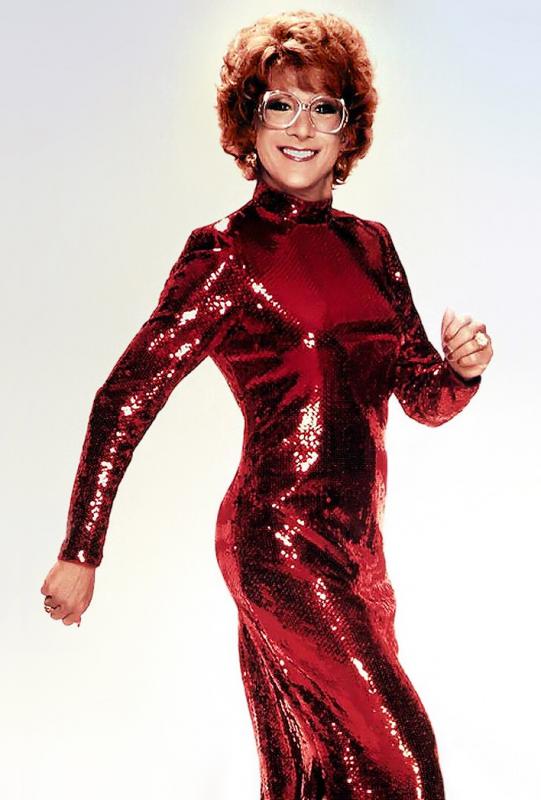
Several other actresses who were being considered for the role were Lindsay Wagner and Suzanne Pleshette. Fun fact, if you watch Tootsie with Dustin Hoffman, you will see him wearing a red, sequenced dress that was worn by Powers as Jennifer two years earlier in the episode “Color Jennifer Dead” in 1980.
After the show was canceled, they paired up again for eight made-for-tv movies about the Harts. The couple also starred in a stage production of “Love Letters” at the Chicago Theater in 1993.
Ironically, Powers was in the same ballet class with Natalie Wood and Jill St. John. While Powers played Robert Wagner’s wife on the show, Wood and St. John were married to him in real life.
In 1993 she tried marriage again with Patrick Houitte de La Chesnais. They were together for six years before divorcing.
Powers has kept busy in the last two decades. In 2003, she released a CD, “On the Same Page,” songs from the great composers. She is a polo player and was one of the first foreign members of the Royal County of Berkshire Polo Club; in 2005 she competed in the Joules United Kingdom National Women’s Championship which was held in Ascot.
In 1982, Stefanie founded the William Holden Wildlife Foundation and became a director of the Mount Kenya Game Ranch and Wildlife Conservancy in Kenya. She and Holden were passionate about wildlife conservation. She also works with the Cincinnati and Atlanta zoos.
Powers spends her time in residences in Los Angeles, London, and Kenya. She apparently speaks six different languages.
With Soulmate William Holden Photo:tumblr.com
After smoking for twenty years, Powers was diagnosed with alveolar carcinoma, a type of lung cancer. She underwent surgery to remove part of her lung in 2009.
She was cast in a movie, Prism, that is in pre-production currently. It was apparently inspired by true events—as imdb describes it, “the infiltration of the Sinaloa Cartel and the inner sanctum of Joaquin El-Chapo Guzman by a US task force detective who goes deep undercover to expose Chapo and his criminal empire.”
Powers has had an amazing career and an even more amazing life. She is able to live on three different continents, enjoys a variety of activities, has a purpose in her life, and found her soul mate. Her life could easily become a movie script but if she was not available, I’m not sure who they would get to play her.
This month we are looking at some of our favorite “Supportive Women.” Today we are taking a closer look at the career of Linda Evans.
Photo: vintageeveryday.com
Born Linda Evenstad in 1942 in Hartford, Connecticut, she was the middle child of three sisters. Both her parents were professional dancers. When she was six months old, the family moved to North Hollywood. Linda graduated from Hollywood High School with Stefanie Powers, who we will be talking about next week. Like Morgan Fairchild, who we will be discussing in two weeks, Linda took drama classes to help her deal with shyness.
Linda was engaged to Patrick Curtis, but they never married. He later became a press agent and married Raquel Welch.
Linda’s first two roles were on two of my favorite sitcoms. In 1960, she guest starred on Bachelor Father where Bentley Greg (John Forsythe) raised his niece Kelly (Noreen Corcoran) with the help of his houseboy Peter (Sammee Tong). Her second appearance was on The Adventures of Ozzie and Harriet. During the sixties, she would appear on a variety of shows including Dr. Kildare, Wagon Train, and My Favorite Martian.
Photo: pinterest.com
Her first made-for-tv movie was 1962’s Buttons with Beaus, and her first big screen feature came a year later in Twilight of Honor; her second movie was Beach Blanket Bingo in 1965 where she played Sugar Kane.
It was in 1965 that Evans began dating film director John Derek. They would marry in 1968 and separate in 1973 when Linda learned he was dating the actress who became known as Bo Derek.
1965 was also the year she was offered her first role as a regular cast member of a series. She became Audra Barkley from 1965-1969 on The Big Valley. The western was very popular. Similar to Bonanza, in this show, Victoria Barkley managed to raise her family and keep the villains at bay.
She and Barbara Stanwyck, who played her mother Victoria on the show, became very close. Stanwyck continued to refer to her as Audra after the show ended. Linda says Barbara was a great mentor and friend to her.
In 1967 when Derek was filming Evel Knievel’s famous motorcycle jump over the fountains at Caesar’s Place in Las Vegas, he asked Linda to take over one of the cameras, and she shot the famous footage of Knievel’s devastating crash.
During the 1970s she kept busy with television appearances on dramas including McCloud, Banacek, Harry O, McMillan and Wife, and The Rockford Files.
With “mom” Barbara Stanwyck Photo: imdb.com
In 1975, she married Stan Herman, a real estate tycoon. They were married four years before splitting up. She never married again.
From 1976-1977 she again accepted a role as a regular on the show Hunter. The series only lasted fourteen episodes before being canceled. Not to be confused with the show from the 1980s, in this one, US government special agents James Hunter (Tony Franciscus) and Marty Shaw (Evans) take on missions around the world. He posed as a bookstore owner, and her cover was a model. I admit I have never seen this show, but it sounds like a seventies version of I Spy.
During the 1980s, her career was split between two primary shows: The Love Boat and Dynasty. Dynasty was on the air from 1981-1989. When Dallas became extremely popular, ABC commissioned Aaron Spelling to come up with a primetime soap opera of its own. Evans was back on the air working with John Forsythe again as Blake Carrington, her wealthy husband. The basic premise of the show was that it was an upper-class version of the Hatfields and the McCoys with the Carringtons and the Colbys feuding in the oil business in Denver, Colorado.
Dynasty with Forsythe and Collins Photo: imdb.com
Evans and Forsythe remained close friends for the rest of his life. She said he was “so magical. This show was so serious and he was funny personally. We’d be fighting and people would be strangling each other and he made me laugh all day long, I’ll be forever grateful to him for that.” The person Linda was often strangling was Joan Collins who played Alexis Carrington Colby, Blake’s first wife.
By 1984 the show had reached number one in the rankings. Linda was nominated for an Emmy for Outstanding Lead Actress in a Drama Series in 1983. She was beat out by Tyne Daly from Cagney and Lacey.
After the show was canceled, Evans stepped out of the limelight for the most part. She did film five made-for-tv movies during the 1990s and guest starred on Germany’s version of The Love Boat, Das Traumschiff, in 2020. In 2021, she was in a big-screen feature, Swan Song.
In 2011 Evans published a book, Recipes for Life: My Memories, a combination of candid memoir and inspirational cookbook. Despite her perfect figure, one of her weaknesses is pizza. On premierspeakers.com on April 10, 2018, she was quoted as saying “I love pizza so much, that if you wake me up in the middle of the night and ask me if I’d like to eat a slice, I’ll say YES. Kenny Rogers used to have it delivered to me while I was filming The Gambler.
Photo: dailyexpress.com
Linda seemed to enjoy her career. She is remembered for several well-known characters in Audra Barkley and Crystal Carrington. While she has given up acting for the most part, I would not be surprised to see her back on the big screen for another part or two if it’s the right offer.
One of my favorite blog series is beginning again today: “What a Character !” Our first character actor is Ruth McDevitt. You might not recognize her name, but the minute you see a photo of her you will definitely recognize this busy television star. Her on-screen personality is perfectly captured in her imdb biography where she is described as “delightfully daffy and quite an apple dumpling of a darling, a cheerfully wizened character.”
On Love American Style with Meredith McCrae Photo: pinterest
Ruth was born in Michigan but she spent most of her early life in Ohio. Her father was the county sheriff and both of her parents were musicians. After graduation, she attended college (some sites give her college as Bowling Green and others Wooster) and after her graduation, she studied at the Toledo Dramatic Academy. She then moved to New York to attend the American Academy of Dramatic Art.
When she married Patrick McDevitt in 1928, she decided to devote her time to her husband, giving up her career. Her husband was a widowed contractor who lived in Florida, so she made the move south and participated in a variety of women’s clubs and community groups. Unfortunately, her husband passed away in 1934, and she then returned to her acting profession in her forties. She made her debut on Broadway in 1940 in several shows and later appeared in “Arsenic and Old Lace” in 1942 and “The Solid Gold Cadillac” in 1954.
In the thirties, Ruth also began her radio career, taking on the roles of Rosemary’s mother in “Keeping up with Rosemary” and Jane in “This Life is Mine.”
The Birds with Tippi Hedren Photo:
Ruth also found success on the big screen. Her first movie role was in The Guy Who Came Back in 1951. She would appear in a variety of movies during her career including The Birds, The Parent Trap, The Shakiest Gun in the West, Mame, and Angel in My Pocket.
With Frank DeVol in The Parent Trap Photo: imdb.com
It was in television that she found most of her fame. Her first appearances were in 1949 when she was cast in A Woman to Remember, The Ford Theater Hour, and Suspense. She continued to receive dramatic roles throughout the fifties. From 1953-54, she appeared in seven episodes of Mister Peepers as his mother.
Pistols and Petticoats Photo: pinterest
Ruth began the 1960s in several medical shows and then transitioned to comedies appearing in The Andy Griffith Show, The Ghost and Mrs. Muir, The Debbie Reynolds Show, I Dream of Jeanne, and Mayberry RFD. She received a recurring role in The Doctors in 1963 as Mrs. McMurtrie. She also became a cast member of Pistols and Petticoats in 1966. She was described as pistol-toting grannie, Effie Hanks. The show was set in Colorado in 1871 where the Hanks family are beloved residents and run things better than the sheriff does. It was canceled after its first season. Ann Sheridan starred in the tv series and she passed away a couple of months before the show was canceled.
The 1970s was Ruth’s busiest decade. She showed up in various dramas including Ironside, McCloud, Mannix, and The Rookies. She popped up in Gunsmoke and Little House on the Prairie and took part in the medical shows Marcus Welby and MedicalCenter.
With Bert Mustin on All in the Family Photo:
However, comedies kept her employed. She accepted roles on My World and Welcome to It, The Courtship of Eddie’s Father, That Girl, Here’s Lucy, Love American Style, Nanny and the Professor, Bewitched, Room 222, and Phyllis. among others.
She accepted a recurring role on All in the Family as Jo Nelson from 1973-1975. Her last starring role was in Kolchak: The Night Stalker from 1974-1975. Darren McGavin plays a newspaper reporter who specializes in solving supernatural mysteries. His only friend was a coworker who also had a column in the paper played by McDevitt. The show supposedly inspired the X Files in part.
Photo: wiki-fandom.com
Ruth’s last two roles were in 1976 in made-for-tv movies. She passed away the same year from natural causes at age 80.
Whenever I write about these character actors, it makes me happy and sad. I respect them so much and appreciate the depth they add to make our television series better, but I am always disappointed that there is so little information available about their lives and careers. I very much enjoyed getting to know Ruth McDevitt a little better—she certainly was a character and we all benefit from that.
We are winding up the blog series, “One-Named Detectives,” and I think we saved the most interesting private eye for today: Columbo.
Photo: americana.com
Columbo was on the air from 1971-2003, the longest of the five detectives we looked at in this series (Cannon, Kojak, Mannix, Matlock, and Columbo), but oddly had the fewest episodes with 68 (Cannon had 120, Kojak had 117, Matlock with 181, and Mannix had the most with 194).
Richard Levinson and William Link created Columbo (they also were the force behind Mannix). Levinson and Link met in junior high and they were a writing team until 1987 when Levinson passed away. This show was a bit different; it actually had two pilot episodes in 1968 and 1971. It originally aired from 1971-1978 in The NBC Mystery Movie series. It alternated with McMillan and Wife, McCloud and Hec Ramsey. ABC revived the show from 1989-2003, but it was not a weekly show then either. Falk didn’t want a weekly show, so the series was scheduled for one Wednesday a month. For season two, the series was moved to Sunday nights where it continued until 1978.
Falk with Hector Elizondo–Photo: columbophile.com
In the original concept for the show, Columbo was described as smooth-talking and cultured. The first choice for an actor to play the role was Bing Crosby who declined. When Falk showed up for his audition, he came in wrinkled clothing, aimlessly chattered, and seemed a bit scatter brained so the producers changed the character.
The show had some interesting directors. One of the directors on the show was Steven Spielberg who directed “Murder by the Book.” Falk himself directed the final episode of season one, “Blueprint for Murder.” Nicholas Colasanto who played Coach on Cheers directed two of the shows, “Etude in Black” and “Swan Song.” Patrick McGoohan directed five episodes (including three he guest starred in), as well as producing and writing two others. Falk’s friend actor Ben Gazzara directed “A Friend in Deed” and “Troubled Waters.”
On Columbo, we see the crime being committed long before we meet Lt Columbo (Peter Falk), so we know who committed the crime from the beginning. The fun of the episode is in watching Columbo investigate the crime and how he solves it. Columbo never introduces himself with his first name and no other character in the show uses it either. In season four, Colonel Rumford asks Columbo if he has a first name, and his response is “I do, but usually only my wife uses it.” Apparently, in one episode, a badge is scanned and lists his name as Frank, but William Link stated that Columbo was written without a first name.
Photo: pinterest.com
Columbo was a very disheveled detective who always showed up in a rumpled raincoat, smoking a cigar and appearing as if he was not quite all there. Falk used his own wardrobe for the character. The infamous raincoat was one he bought for $15 in 1967 when he got caught in a New York City rainstorm.
However, behind the façade of an inept policeman was a brilliant mind. He asked a lot of seemingly non-essential questions and paid attention to every detail. After interviewing a suspect, he always said, “Just one more thing.” Falk improvised during filming. He might ask for a pencil, search for something or throw in an unscripted line and did it to create a genuine confusion on the part of the other actor so it appeared more realistic.
This was definitely a one-man show, but there were a few characters who had recurring roles: Mike Lally played a bartender in 25 episodes, John Finnegan was Barney on 13 shows, and Bruce Kirby as Sgt George Kramer was seen nine times.
Photo: recordonline.com
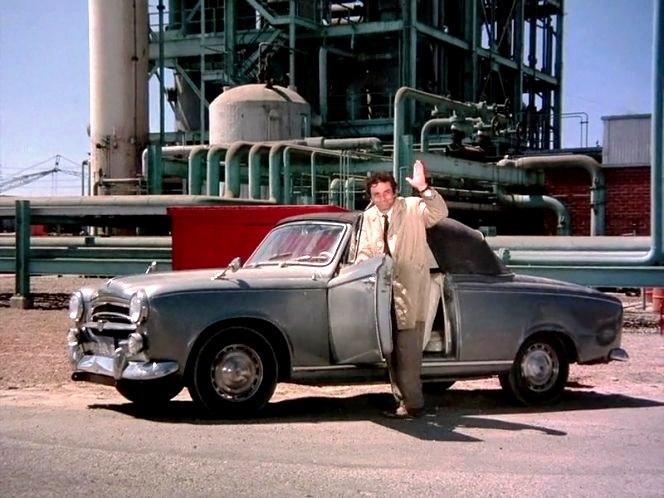
Columbo’s car is a 1959 Peugeot 403. Apparently, only 504 convertibles with two doors were made that year. When NBC cancelled the series, the car was sold. ABC had to locate a replacement when they picked the show up later. You can tell the difference because the license plate from NBC seasons was 044-APD and the plate from ABC shows was 448-DBZ.
Most of the suspects on the show were clever, wealthy people who think they have covered their tracks and have a solid alibi.
For only 68 episodes, there were a lot of famous guest stars on the show. Some stars even portrayed two different criminals including Jack Cassidy, Robert Culp, George Hamilton, Patrick McGoohan, and William Shatner. Other guest stars showing up were Anne Baxter, Johnny Cash, Faye Dunaway, Jose Ferrer, Ruth Gordon, Lee Grant, Janet Leigh, Vera Miles, Ray Milland, Leonard Nimoy, Donald Pleasence, Dick Van Dyke, and Robert Vaughn.
Falk with Dick Van Dyke–Photo: amazon.com
There was a variety of music written for each episode of the show. The Mystery Movie Theme was written by Henry Mancini and was used for the NBC shows. Both Quincy Jones and Mike Post also wrote versions of The Mystery Movie theme. One song uniquely belonging to Columbo was “This Old Man.” Falk can be heard humming or whistling it in various episodes after it was introduced in a 1973 show.
The show received thirteen Emmys during its run. Falk won the Emmy the first season and again in 1976. He was nominated in 1973, 1977 and 1978 but lost to Richard Thomas, James Garner and Ed Asner respectively. The series was nominated in 1972, 1973, 1976, 1977, and 1978 (winners were Elizabeth R Masterpiece Theater; The Waltons; Police Story; Upstairs, Downstairs; and The Rockford Files).
Photo: wallpapersplanet.net
The show was very popular and was broadcast in 44 countries. There is a statue of Columbo in his coat in Budapest, Hungary on Falk Miksa Street. The story behind it is that according to then-mayor Antal Rogan, Falk is a relative of Falk Miksa who was a Hungarian writer and politician, but I could not verify if that was true or not. What is true is that it was put up in 2014 at a cost of $63,000.
When he is questioning witnesses, Columbo often throws in random references to his wife and or something the couple liked to do, but we never see her in the series. However, later a show was created, Mrs. Columbo starring Kate Mulgrew. Falk’s real-life wife Shera Danese was cast in six of the Columbo episodes, always appearing as a different character.
A group of novels was adapted from the Columbo tv series by MCA written by Alfred Lawrence, Henry Clements, and Lee Hays.
Columbo has been a popular show in syndication and can currently be seen on ME TV Sunday nights. The shows run from 70-98 minutes which probably makes syndication interesting. The entire set is available on DVD for about $50.
Unfortunately, Peter Falk was diagnosed with dementia in 2007, and by 2009 he could not recognize photos of himself and did not remember playing Columbo. He passed away in 2011.
Columbo
It’s been fun looking at these five detectives for this series. When I put this together, I chose five private eyes I thought would make good articles. What I didn’t realize, is that four of them were all from the same era. In fact, in 1973, Columbo was on Sunday nights followed by Mannix and both were in the top twenty and on Wednesday nights Cannon was on followed by Kojak and both were in the top ten. The following year, Sunday nights featured Kojak before Mannix which was still in the top 20 and they were on at the same time as Columbo. Cannon eventually moved to Sunday night but also spent part of the year on Wednesdays where it was also in the top twenty. Matlock debuted in the late eighties, after the other shows except Columbo had all gone off the air.
Cannon, Kojak, Mannix, Matlock, and Columbo—five very different types of detectives who had one thing in common: good writing. Check them all out and I’d love to hear which one is your favorite.
Continuing the “What a Character” series, today we look at the career of Nita Talbot. Born in 1930 in New York as Anita Sokol, Talbot had an almost fifty-year-long career. She began appearing in films in 1949 with It’s a Great Feeling (and would go on to make another 30), but it was in television that she had her greatest success. It’s a Great Feeling starred Doris Day and Jack Carson in a parody of what goes on behind the scenes of the making of a Hollywood movie.
Photo: pinterest.com
She was married to Don Gordon from 1954-1958 and to Thomas Geas from 1961 until sometime in the 1970s. I could not narrow it down to any specific year. Both of her husbands were also actors. Her sister Gloria was the wife of Carl Betz who co-starred as Alex Stone on The Donna Reed Show.
Photo: pinterest.com Joe and Mabel
Talbot began her television career in 1950 on Repertory Theater. Appearing in 32 different shows throughout the fifties, many of her appearances were in dramas, primarily shows with different plays weekly. Talbot had a recurring role on Man Against Crime starring Ralph Bellamy, appearing in 9 of the 123 episodes. Later in the decade she was cast in Joe and Mabel in 1956. Nita played the role of Mabel, a manicurist who was dating cab driver Joe. The show only lasted four episodes. At the end of the decade, she would have a recurring role on The Thin Man as Beatrice/Blondie Dane a con artist.
Photo: pinterest.com Gomer Pyle
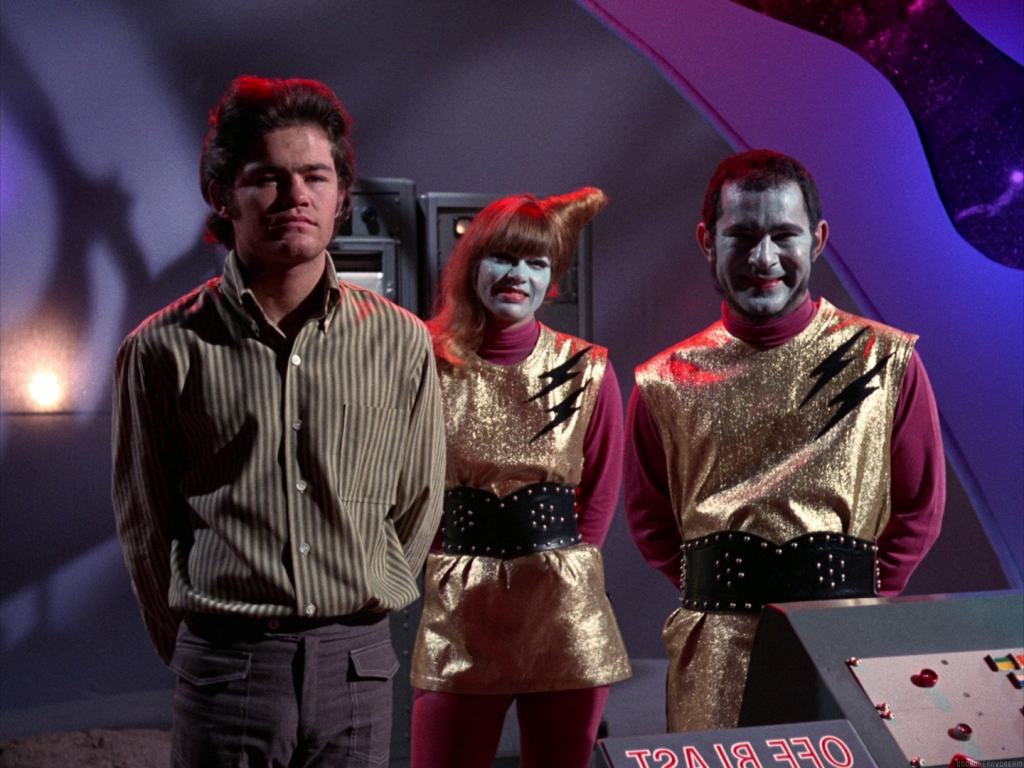
Nita would take on roles in 29 different shows in the sixties. This decade was her “western” season. She did appear in Gomer Pyle and The Monkees, but most of her roles were in westerns, including Gunsmoke, Maverick, The Man from Blackhawk, Rawhide, The Virginian, Daniel Boone, and Bonanza.
Photo: pinterest.com
During this ten-year period, she would be cast in three shows, one drama, and two comedies. In 1960, she could be seen in Bourbon Street Beat about a New Orleans detective agency where she played Lusti Weather. She co-starred in one sitcom this decade with Jim Backus in The Jim Backus Show. Backus plays Mike O’Toole, who struggles to keep his news service business afloat. Talbot played the role of Dora, one of O’Toole’s reporters. The show only lasted for one season.
At the end of the decade, Talbot was offered the role that she would become best known for. Although she only appeared in seven episodes of Hogan’s Heroes, she earned an Emmy nomination for Best Supporting Actress in a Comedy Series in 1967-68 season for her role of Marya, a Russian spy.
Photo: pinterest.com Hogan’s Heroes
One of her taglines was “Hogahn darlink.” While Hogan could charm most women, he never was certain when he could or couldn’t trust Marya, but he was often coerced to join forces with her against the Germans.
She continued her thriving television career during the seventies with another 26 shows; four of those would be permanent or recurring roles; however, none of them lasted very long.
In 1971, she was offered the role of Maggie Prescott in Funny Face starring Sandy Duncan. Duncan played a college student who worked part time as an actress and Talbot was her agent. When CBS picked up the pilot, they made several changes which resulted in Talbot’s role being dropped.
Photo: blogspot.com Here We Go Again
1973 found her as part of the cast of Here We Go Again. The show portrayed life after divorce for two couples. It should have been renamed, There We Went because the show only lasted for 13 episodes before being canceled.
Photo: rebeatmag.com The Monkees
In 1977 she joined the cast of Soap, playing Sheila Fine, who has an affair with Burt Campbell’s son Peter.
In 1979, Supertrain debuted. It was supposedly the most expensive show ever made. It was a “Love Boat” on the rails. The supertrain traveled across the country and every week passengers found love and solved life problems on their journeys. The show was derailed after nine episodes.
In between these roles, she tended to appear primarily in crime shows in the 1970s such as Mannix, McCloud, Columbo, Police Story, The Rockford Files, Charlie’sAngels, and Police Woman.
Photo: pinterest.com The Partridge Family
Her roles diminished a bit in the eighties with 13 appearances and 9 in the 1990s. She would be cast in one additional sitcom in 1988, Starting from Scratch. This show starred Bill Daily and Connie Stevens as a divorced couple. Stevens leaves her second husband to come back to her ex-spouse and two sons. Talbot played Rose. The show seemed to get good ratings and currently people are rating them 4.5-4.8 out of 5.0, so I’m not sure why it was canceled after a year.
Photo: pinterest.com
Talbot retired in the late 1990s and is hopefully enjoying a less-busy life. She had a long and successful career and certainly was a character!
Before launching into this week’s topic, I wanted to say thank you to everyone who has been following and reading my blog. This week begins my fourth year writing this blog. I was worried I would find enough topics to fill the first year but next year is already outlined, so another year of classic television is on the way. It has been a lot of fun, and I’ve learned a lot.
This month we are looking at crime-solving duos. We start our series learning a bit more about McMillan and Wife. McMillan and Wife began as part of The Sunday NBC Mystery Movie which included Columbo and McCloud. The shows rotated each week, so fewer episodes were produced of each than a typical weekly show.
Photo: memorabletv.com
McMillan and Wife debuted in 1971 and was on the air until 1977, yet only forty episodes were produced. Leonard Stern was the creator, writer, and executive producer of the show; he previously produced Get Smart.
Photo: imdb.com
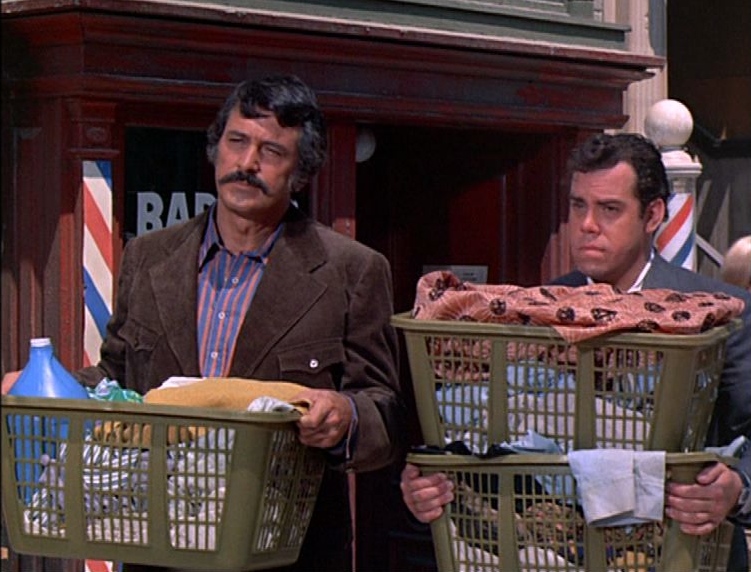
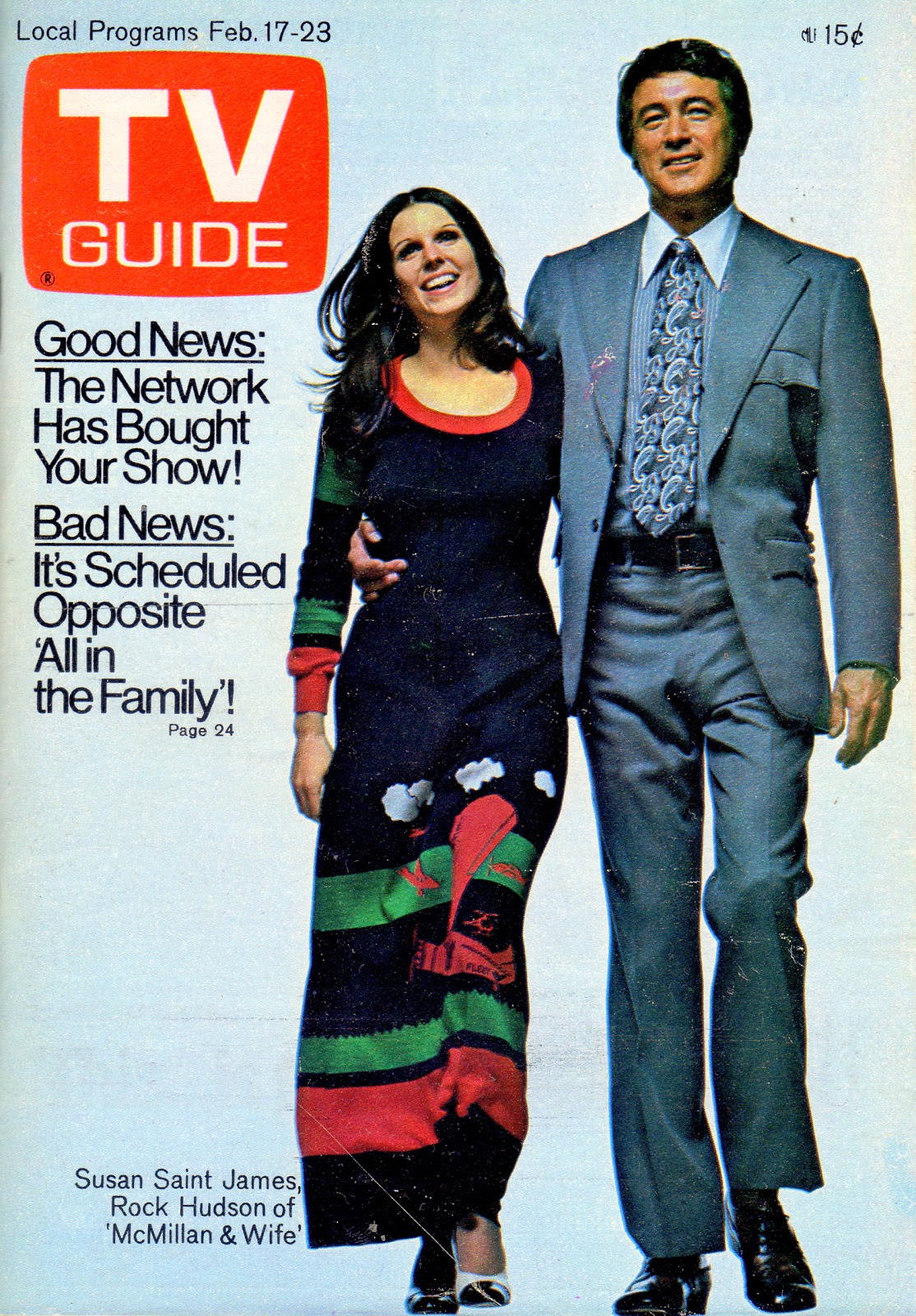
Stewart “Mac” McMillan (Rock Hudson) was an attorney and US Navy veteran who apparently had been involved in some CIA activities. He is now Commissioner of Police in San Francisco. He gets involved in high-profile cases. His wife is Sally (Susan St. James), and her father was a detective for the San Francisco Police Department; she learned a lot from him and helps her husband solve crimes. Sargent Charlie Enright (John Schuck) helps Mac with his cases. Sally and Mac have no children (it’s confusing because Sally was pregnant twice on the show, but the children are never mentioned in the show later). Their housekeeper Mildred (Nancy Walker) also lives with the couple. Mildred’s character resembles the role Thelma Ritter played in Pillow Talk, where Hudson starred with Doris Day. She is a sarcastic, hard-drinking woman and is always ready to offer her opinion, but she is devoted to Mac and Sally.
Photo: afinalcurtaincall.blogspot.com
Once Hudson was cast as Mac, the show got priority in development. Several actresses were considered for the role of Sally, including Diane Keaton and Jill Clayburgh, but Hudson was most comfortable with St. James.
Photo: pinterest.com
Hudson was 21 years older than St. James, but their relationship worked. Mac is supposed to be in his 40s and Sally in her 20s (he was 46 at the time and she was 25). Sally is self-confident and is not afraid to speak her mind. However, she is also a wife who loves her husband, and one of the running gags on the show is that Mac had dated a lot of women in his past, and when Mac and Sally are out and about, they typically run into some gorgeous woman who says, “Hi Mac.” Sally usually responds with a jealous comment or a withering look. The difference in their ages actually worked well for demographics. Hudson appealed to older viewers while St. James attracted younger viewers.
Photo: popflock.com
Often the cases Mac solves happen during events the couple attends. One episode featured a burglary at a charity event they were attending; once they found a skeleton in their house after an earthquake. Another show had Mac abducted by mobsters and replaced with a surgically-made twin replacing him.
Photo: youtube.com
An interesting fact is that the interior of their house in the pilot episode was in fact Hudson’s home. In the first regular episode, the MacMillans bought a new house. In the final season, the setting changed to an apartment.
Photo: madman.com.au
Sally and Mac led a glamorous life. The scripts were well written, and the dialogue was witty and clever. The couple was often compared to Nick and Nora Charles in the Thin Man movies. Mac and Sally have a lot of their best conversations after they go to bed at night.
Photo: sitcomsonline.com
Sally was known for wearing a football jersey for her nightgown. The jersey was an authentic 49ers Jersey, number 18, George Washington, a wide receiver. Washington was a four-time Pro Bowler. He made a guest appearance on the show in season four, “Guilt by Association.”
Considering that there were only forty episodes produced, this show had an incredible number of guest stars. I apologize for the long list, but it’s the only way to capture how impressive it is. The stars included sport celebrities Dick Butkus, Rosie Grier, Alex Karras, and Bobbie Riggs.
Photo: amazon.com
It also featured a Who’s Who of television sitcom royalty: John Astin, Meredith Baxter, Tom Bosley, Michael Constantine, Bert Convy, Wally Cox, Richard Deacon, William Demarest, Donna Douglas, Barbara Feldon, Norman Fell, Buddy Hackett, Larry Hagman, Alan Hale, Shirley Jones, Stacy Keach, Bernie Kopell, Julie Newmar, Charlotte Rae, Charles Nelson Reilly, Dick Sargent, Natalie Schafer, Susan Sullivan, Karen Valentine, and Dick Van Patten.
The show, like McCloud and Columbo, was quite popular with viewers. The ratings were impressive until the sixth season.
Unfortunately, the last season had too many changes to overcome. St. James decided to leave to concentrate on her movie career. Schuck left to star in the sitcom, Holmes and Yo-Yo, and Walker left for her own sitcom, The Nancy Walker Show. Sadly, Walker and Schuck would have been better off staying because both their shows lasted only 13 episodes. St. James starred in a couple of movies, but they weren’t anything memorable. She would go on to star in Kate and Allie in 1984.
Photo: cult-tv-lounge.blogspot.com
On the show, Sally was killed in an airplane crash. Mildred was said to leave to open a diner, so her sister Agatha (Martha Raye) took over her job. Schuck made a few appearances but was said to have been given a promotion to lieutenant which kept him too busy to assist Mac much. The show may have been able to overcome one of these changes but not all of them. Much of the strength of the show was the relationship between Mac and Sally. Walker’s funny bantering and actions provided a comedic relief for the show. When Raye took over, she was just scatterbrained and loud; the appeal of Walker was not part of her character.
Photo: imdb.com
It’s wonderful the show lasted five good seasons, but it might have lasted many more if the original cast had been retained. At the other end of the spectrum, Columbo aired off and on until 2003 and is remembered by more viewers.
DVDs were released for all six seasons between 2005 and 2014. With only forty shows in the series, this would be a fun binge-watching week-end show to tackle.
For the month of June, we are celebrating some of our favorite fathers. One of my favorite dads was Carl Betz in his role as Dr. Alex Stone on The Donna Reed Show.
Photo: imdb.com
Betz was born in Mary of 1921 in Pittsburgh, PA. He came from an upper middle-class family, and his father was a laboratory chemist.
While still
in school, Betz started a rep theater company with several friends. They
performed plays in his grandmother’s basement.
During WWII, he served in the army. He was deployed to Italy and North Africa and left the military as a technical sergeant with the Corps of Engineers.
Photo: loadtve.biz
When he returned to the States, he enrolled at Carnegie Institute of Technology (now Carnegie Mellon) in Pittsburgh, majoring in drama. While going to school at Carnegie, he played football and made an appearance in the Sugar Bowl against Texas Christian University.
His first job after graduation was a radio announcer. He moved to New York and worked as a doorman at Radio City Music Hall while auditioning for Broadway productions. He received his first part in “The Long Watch” in 1952. He then toured in “The Voice of the Turtle” with Veronica Lake.
In discussing
his work as a young adult, he said, “Those were good times for the beginning
actor. There were so many summer stock companies. We worked for room and board
and the princely sum of $45 a week. By
eliminating haircuts, we managed to keep ourselves in shaving cream, clean
shirts, and beer.”
Twentieth Century Fox offered him a contract, and he received a number of supporting roles in films. In 1953, he made an incredible six movies.
In 1952 he
married Lois Harmon. They had one son and divorced in 1961.
His first job on television was a soap opera, Love of Life. Throughout the fifties and sixties, he performed in a variety of plays, including “The Seven-Year Itch” and “The Zoo Story.”
Photo: ebay.com On Perry Mason
In the mid-1950s, he began appearing on television shows, and shows up in reruns on Perry Mason, Gunsmoke, Alfred Hitchcock Presents, and Mike Hammer.
Photo: famousdude.com
In 1958, Carl was offered the role of Alex Stone on The Donna Reed Show, and he was with the show until it ended in 1965. The heart-warming show centered around Donna and Alex Stone, a pediatrician, and their two children, Jeff (Pete Petersen) and Mary (Shelly Fabares). Betz continued his stage career in his off time with the show.
Photo: betrendsetter.com
Both Carl and Donna were protective of their television children. In an interview in 2011 when Petersen was 66, he discussed his second set of parents. “They made a commitment to Shelley and me as surrogate parents to be on our side and be with us for the long haul. They kept that commitment up to their deaths.”
As Alex, Betz was the voice of reason. When anyone got too worried, he gave advice and put things in perspective. He had a fun side to him and could always see the humor in situations. He was a caring doctor and had fun in life, realizing death and illness were always lurking around the corner. He often made fun of Donna and the kids but in a loving way, not cruel. His comments typically illustrated that things were not as dower as they appeared. But when there was an emergency or a serious situation, he was calm and collected and took charge.
Carl continued to take roles during breaks in taping for The Donna Reed Show. In 1964, Betz received amazing reviews for his performance as the Rev. T. Lawrence Shannon in “The Night of the Iguana.”
During his time on the show, he ironically married Gloria Stone, and they would remain married until his death in 1978.
Photo: commons.wikimedia.org With co-star Stephen Young
In 1967, he starred in Judd for the Defense where he played an attorney. Clifton Judd, a lawyer based in Texas, would travel across the country to defend a client. Many cases involved labor unions, draft evasions, civil rights, and murder. The series featured a number of guest stars, including Ed Asner, Mike Farrell, Norman Fell, Beverly Garland, Ron Howard, Ted Knight, Cloris Leachman, Ruta Lee, Gavin MacLeod, Vera Miles, Tom Selleck, and Dennis Weaver. The critics gave the show great reviews, but the ratings were always a struggle. In 1969, ABC cancelled the series and that same year, Betz won the Emmy for Outstanding Performer by an Actor in a Leading Role in a Dramatic Series.
Photo: moviestore.com
Once the series was cancelled, Betz continued in plays and also picked up several television appearances on a variety of shows, such as Love American Style, Medical Center, McCloud, The Mod Squad, Ironside, The FBI, Mission Impossible, BarnabyJones, and Quincy ME. Since he handled comedy so well on The Donna Reed Show, I was surprised to learn that most of his career was spent on drama or crime shows.
Photo: mashable.com On Love American Style with Harrison Ford
In 1977, Betz was diagnosed with lung cancer. He kept the illness a secret until November when he was hospitalized. He died in January of 1978, 56 years young. Ironically, thinking about celebrating fathers, my dad also died at age 56.
Photo: commons.wikimedia.org
From all accounts, Carl Betz wanted to be an actor from a very young age. Fortunately, he was able to spend most of his life in the entertainment business. Unfortunately, his life ended much too early, and his career was cut short. Any time someone can spend their life pursuing their passion, it’s a life well spent. Happy Father’s Day to one of our favorite dads.





















 thewritelife61