“Don’t give up before the miracle happens.” ― Fannie Flagg, I Still Dream About You

Fannie Flagg is one of those performers who I have seen all my life but know little about. I thought it would be fun to learn about her show business career. Like me, she started writing later in life as her second career.  I wanted to know how that whole dream fulfillment came about. Let’s get to know Fannie Flagg.

fannie5

She was born Patricia Neal in Alabama in 1944. Flagg, of Finnish ancestry, spent most of her childhood in the Birmingham area. It sounds like she had a “normal” childhood. Although she liked writing, she had problems because she was dyslexic which she did not realize until she was an adult. She was an archery champion at age 12. By age fifteen, she thought about entering a convent. Luckily for us she didn’t. In high school she was a cheerleader and a saxophone player in the band.

As a teen, she entered the Miss Alabama pageant, where she won a scholarship to the Pittsburgh Playhouse Theater Acting School. Acting might have been in her blood because both her father and her grandfather were motion picture machine operators. The summer she returned home, the woman who cohosted the Morning Show in Birmingham was leaving, so Fannie was able to replace her.

Who knows what direction Flagg’s career would have taken if the head of WBRC-TV were not so tight-fisted. Flagg asked for a raise and they denied it, so she quit her job and moved to New York City. She had to take on a new name since there was already a quite famous Patricia Neal in show business. Her grandfather suggested “Fannie” because so many comediennes used the name and a friend came up with “Flagg.”
fannie18

Her first television job was on CBS Repertoire Workshop in 1964. During this time, Fannie recorded two comedy albums with various skits that included parodies of famous women. She appeared on a variety of talk shows including The Joey Bishop Show, The Dick Cavett Show, The Merv Griffin Show, The Johnny Cash Show, Dinah!, and The Rosie O’Donnell Show.

fannie17

Flagg got her first film role in 1970 in Five Easy Pieces with Jack Nicholson. The next year she appeared in Some of My Best Friends Are.

five easy pieces

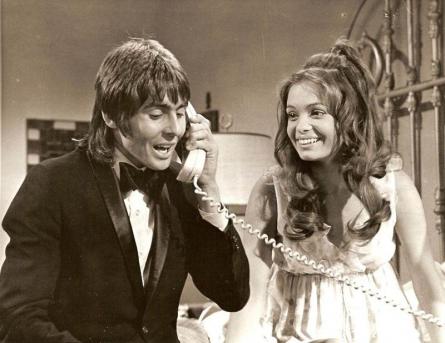
It was also in 1971 that she received an offer for her first series. Fannie says she stumbled into the role.  She had been doing concerts and performing with stock companies. She was on the west coast and stopped in at her agent’s California office to meet the staff.  A man came in and looked her up and down and then left. The next day she learned she was given the part of Dick Van Dyke’s sister on The New Dick Van Dyke Show. The man in the office the day before had been looking for someone who could pass for Dick’s sister in real life.

fannie2

The New Dick Van Dyke Show was on the air from 1971 till 1973. Carl Reiner created the series for Van Dyke. Van Dyke was Dick Preston, a local talk show host. Van Dyke was signed to a three-year contract and given permission to film in Arizona where he lived. Hope Lange was his wife Jenny, Angela Powell their daughter Annie, Flagg his sister Mike, David Doyle was his boss Ted, and Marty Brill and Nancy Dussault were their best friends Bernie and Carol Davis.

The show began its life on Saturday night with All in the Family, Funny Face, and The Mary Tyler Moore Show.  The series didn’t garner very high ratings, so the second season found the show on Sunday nights when ratings decreased drastically. Flagg was mentioned by several critics as being very funny in her role. Fannie credited Dick Van Dyke as her acting mentor, as well as one of her best friends.

Because Dick had a three-year contract, rather than cancel the show, CBS changed the structure. Dick gets a role on a soap opera, so he and his family move to Hollywood. They changed out most of the cast members so Flagg moved on. The show followed Here’s Lucy. The ratings improved significantly, but after the third year, Dick quit to go back to Arizona.
fannie12

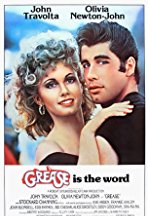
Throughout the 1970s, Fannie continued to get both television and film offers. She appeared on Love American Style, The New Candid Camera, Wonder Woman, and Fernwood Tonight. She was also in several films including both Rabbit Test and Grease in 1978.

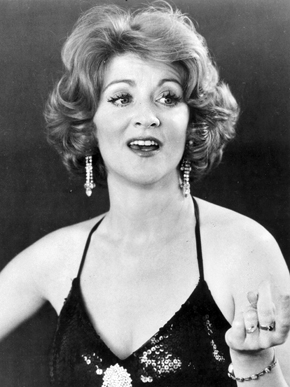
During the 1970s, Flagg was a fixture on game shows. She is best known for Match Game where she usually sat next to Richard Dawson.  With all the different versions of Match Game, she appeared in 529 episodes of the show. She is famous for wearing unusual tops on Match Game. It was while on the game show that Fannie received a note from a teacher who noticed a particular pattern in her misspellings on the show. She mentioned she might have dyslexia which is when Flagg first began to investigate and learn she did indeed suffer from the disease. When asked about two her costars on Match Game, namely Charles Nelson Reilly and Brett Somers, Flagg said, “Besides being hilarious, Brett and Charles were two of the smartest people I have ever known. On “Match Game,” they got such a big kick out of each other! They razzed one another and everybody else on the panel mercilessly, and they were particularly relentless on the people they really liked. It was never mean or hurtful, and they loved it when you razzed them back.”

She continued, One of the happiest times in my life was in 1980 when I was doing “The Best Little Whorehouse in Texas” on Broadway, and Charles, Brett and I were staying at the Wyndham Hotel at the same time. Every day at around 4 o’clock in the afternoon they would come to my room for cocktails. Many is the time I would come home from after the show and they would still be sitting there having a good time. The only thing that changed was the position of Charles’ toupee.”

In addition to “Best Little Whorehouse in Texas,” Flagg toured with Come Back to the Five and Dime, Jimmy Dean, Jimmy Dean.”

Fannie continued her acting career into the 1980s. From 1981-1982 she took a role as Cassie Bowman on Harper Valley PTA starring Barbara Eden. The show was based on the hit song, “Harper Valley PTA” by Jeannie Riley. Sherwood Schwartz produced the first eleven episodes.  The show moved around a bit from Thursdays at 8 to Saturdays at 8 to Saturdays at 8:30. Barbara played Stella, a mom who ignores Southern small-town standards by wearing mini skirts and speaking her mind. She reveals the hypocrisy of the other PTA members, making her a target of their comments. The show did not last long enough to accumulate enough episodes for syndication, but it occasionally shows up on independent networks.

Flagg was on The George Burns Comedy Week series and on The Love Boat three times. Her final films were done at the beginning and end of the 1990s. Her last movie was Crazy in Alabama in 1999 written by her friend Mark Childress.
fried-green-tomatoes with cafe -- horizontal

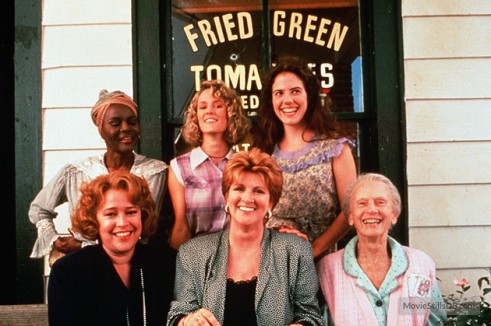
She also had a cameo in 1991 in Fried Green Tomatoes, a movie based on her novel, Fried Green Tomatoes at the Whistle Stop Café. She co-wrote the screenplay and received an Oscar nomination. The book is told in the past and the present by Ninnie Threadgoode and Evelyn Crouch who talk about the town of Whistle Stop, Alabama and the bonds the women forged in the 1920s and 1930s. The novel, published in 1987, was on the New York Times bestseller list for 36 weeks. This was her most famous novel, but it was not her first.

Flagg felt a pull toward writing as a child. She had written a play when she attended Catholic school. Because her father worked at the cinema, she had seen a lot of movies. She wrote a play about two career girls who lived in an apartment over the Copacabana nightclub in New York City. A man named Mr. Truman called and asked to come for tea. The girls assume it’s President Truman and go all out getting ready and inviting their friends. It turns out to be an insurance salesman. Her teacher phoned her mother to say the nuns were concerned because she used the word “martini” 16 times. Her mother had to explain that Fannie watched a lot of movies and the family was not sitting around drinking martinis every night.

She won first prize at the county fair for an essay titled, “Why I Want to Be Bald Headed.” She wrote it because she hated her mother braiding her hair so tightly every morning.

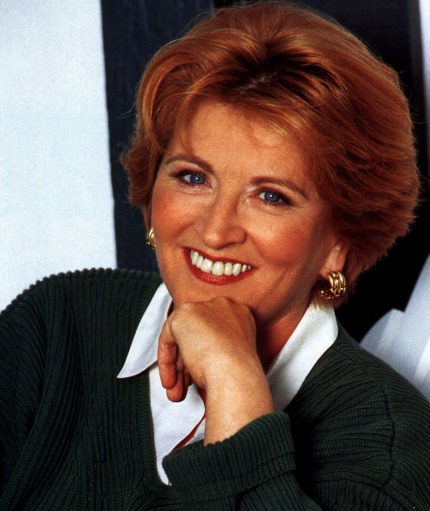
In the 1960s, Flagg wrote skits for a night club in New York—Upstairs at the Downstairs. She filled in for a sick actress one night when Allen Funt was in the audience. He invited her to become a staff writer on Candid Camera where she acted as well.
fannie9

Flagg decided to attend a conference in 1978 to see Eudora Welty. She had to write a short story for a contest based on the word “childhood.” As Flagg tells it,

“I went to the grocery store, and I bought one of those spiral notebooks. I wrote a story called Daisy Fay and the Miracle Man about something that had actually happened to me in childhood,” says Flagg. “I wrote it as an 11-year-old child, and I thought that if they saw any mistakes, they would think I did it on purpose.”

Flagg won the contest. “I couldn’t believe it. I was thrilled, but at the same time I felt like such a cheat and a liar,” says Flagg. An editor there said that he wanted to talk with her about her writing a fleshed-out novel based on her short story. Flagg burst into tears and said, “I’m so sorry, but I can’t write a book.” When he asked her why, she replied, “Because I can’t spell.” Flagg says the editor looked at her like she was crazy and said, “What do you think we have editors for?”

She’s been writing ever since.

Fannie Flagg has found her niche.  Since that first novel, she has continued to write, publishing ten books in all. Her most recent release was The Whole Town is Talking in 2016. In 2012 she won the Harper Lee Distinguished Alabama Author award and presented it to Fannie in person.

As an adult, Fannie collects lamps from the 1940s and 1950s. She loves going on cruise ships, which might explain her three appearances on The Love Boat.  If you were a Match Game fan, it will not surprise you to learn that she loves wearing stripes with polka dots.

Fannie just seems like a delightful and fun person to be around.  She is on my list of people to have dinner with. I have recently began reading her books and I love them.  She writes about quirky, not strange, characters who seem true to life. It’s been fun getting to know a bit more about her life and career.

fannie1


Hi Bob!

There are several actors I find delightful; no other word quite fits. So, for the rest of this month, I thought it would be fun to get to know more about a few of them. Today we start with Bill Daily.

bill1

Bill was born in Des Moines, Iowa in 1928. His childhood was not innocent and carefree.  His father was in prison, and Bill only saw him once. He died when Bill was very young. Life with his mother and step-father was not a walk in the park either. He rarely spent time with his mother, and he described his stepfather as a “terrible person.” He spent a lot of time in Kansas City with his aunt and uncle who were great role models for him.

When Bill was 12, his family moved to Chicago and he attended Lane Technical High School.  Daily struggled in school because he had dyslexia, but he learned to use humor to make it easier. It started a pattern of using humor to overcome obstacles.

After school he decided to earn his living as a musician. He had learned to play the bass at a young age. He played with jazz bands all over the Midwest. He was drafted into the army and was sent to Korea with an artillery unit, but he later was transferred to an entertainment division. During the war, he met actor/musician Dick Contino, and the two would travel to various units giving shows. Contino would sing and play the accordion and Daily, who was an accomplished musician, would play the stand-up bass. He also developed a stand-up comedy bit.

Returning to the entertainment industry after his military stint, Daily began performing stand-up comedy. In 1949 Daily married his first wife Patricia Anderson. They adopted two children and divorced in 1976.

He enrolled at the Goodman Theatre School and worked for a Chicago NBC station, WMAQ as an announcer and a floor manager. When he was preparing for a Chicago-area Emmy Award broadcast, he asked an acquaintance Bob Newhart to develop a routine about press agents. That routine turned into “Abe Lincoln vs. Madison Avenue.”  He described Bob as a shy man and a comic genius. He referred to him as “the nicest man that ever lived. The nicest man I ever met. Great father . . . great kids . . . great wife.”

Daily became a regular guest as a comedian on The Mike Douglas Show which was produced in Chicago. Steve Allen saw him and brought him on his show as a comedian and sidekick.

daily14bewitched

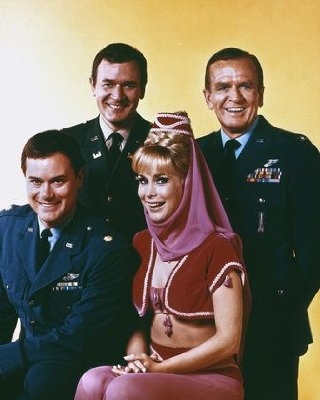
In the 1960s, Daily began his television career. He appeared on Bewitched, My Mother the Car, and The Farmer’s Daughter. Sidney Sheldon liked his work and offered him a role of Major Roger Healey in the pilot of I Dream of Jeannie.

daily5

The role of Major Healey turned into a regular costarring role. The show was on the air for five years from 1965-1970.  Daily even got to write one of the episodes: “Jeannie the Matchmaker.”

daily17

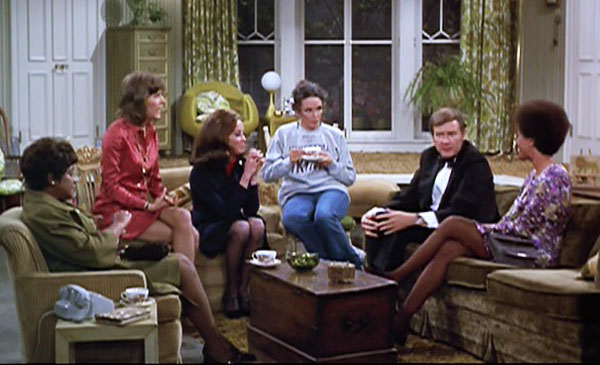
In 1972 he appeared in Getting Together, a spin-off from The Partridge Family. He also was in The Mary Tyler Moore Show, and two episodes of Love American Style. That same year, he got the role of Howard Borden on The Bob Newhart Show. Borden was a pilot, naïve and a bit excitable but a true friend. The show was on the air from 1972-1978. When it ended, he went back to guest starring on television series including The Love Boat, Trapper John MD, and CHiPs.

daily3

In the mid-1970s, he became a semi-regular on Match Game, filling in when Richard Dawson left, appearing on 85 episodes. Daily described Charles Nelson Reilly as “brilliant.” He spent summers at Gene Rayburn’s home in Hyannis Port.

daily6

In 1977 Daily married for a second time. He met Vivian when they were both traveling and performing in Lover’s Leap. They had a daughter and divorced in 1980.

In 1985, Bill was offered his own show called Small & Frye. Daily played a neurotic doctor; unfortunately, the show only lasted three months before it was canceled. He tried another show of his own in 1988 called Starting from Scratch which lasted one season before getting the axe.

daily13

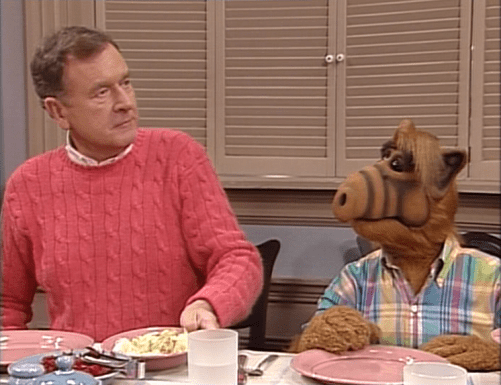
That would be his last regular series although he made four appearances on ALF as Larry the psychiatrist. ALF claimed to have learned about psychiatry from watching the Bob Newhart Show. Jack Riley, Elliot Carlin on Bob’s show, appeared as a patient on the show. Riley and Daily were friends from Chicago days.

I Dream of Jeannie continued to keep Daily busy as well. Two made-for-tv movies were made as sequels: I Dream of Jeannie . . . Fifteen Years Later in 1985 and I Still Dream of Jeannie in 1990.

daily16

Daily tried marriage for a third time in 1993. He and Becky were married until her death in 2010. I found it funny that the couple had a dog named Hi Bob, named for the line that he said over and over on the Newhart show.

daily2

Daily retired to Albuquerque. He was a weekly guest host on a radio station there from 2006-2009. He has also appeared in plays at Albuquerque Little Theater where several other celebrities have performed over the years.

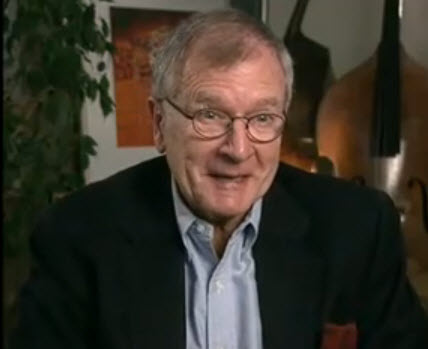
In 2016 Gary Levine, a writer for the Naples Herald interviewed Daily by phone. Here is part of that interview:

“Daily explained that while he was capable and proficient at reading music, he was hurried to inform me of his inability to read.  Bill indicated that he struggled with Dyslexia and was unable to read without assistance.

At this moment, you are likely wondering how an actor, unable to read, can adhere to a script.

“I memorized them, with my daughter.”  As he and his wife found themselves unable to have children, the couple adopted two children, Patrick and Kimberley.  Kimberley has since passed away, however, Daily credits her with assisting him to read and learn his lines.  Patrick and Bill appear to be extremely close and reside near one another.  Patrick works in the film industry doing camera work on various films and productions.

“The scripts were brilliant,” he remarked, “but I couldn’t read.”  Daily continued, “I was so grateful that I was working.”

 Expectedly, the dialogue quickly transitioned to Barbara Eden.  Daily’s first adjective: ‘brilliant.’  He indicated that massive lines would form, desperate to see her, wherever they travelled.  “It’s her!  No one else could have played Jeannie.  Don’t bother trying.  I’ve tried many times.  There’s no one.  She had the look, the charm…she was sophisticated.  There was no one like her…ever.”

bill2

Bill Daily just seems like a great guy who would get along with everybody. He has played two endearing characters in Roger Healey and Howard Borden. He seems to be enjoying retirement and working with a local theater in Albuquerque. His sense of humor is quite apparent in all of his interviews. Most impressive is how kind he seems to be, especially dealing with such an unhappy childhood.

daily1

Love and the Funny Show

ABCFriday_1972

There was something magical about the Friday evening television schedule from 1971-1973.  Anyone who was born in the late 1950s or early 1960s can remember sitting down in front of the television at 7 pm (central time) for the Brady Bunch and staying put through The Partridge Family, Room 222, The Odd Couple, and Love, American Style.  Sitting through an entire evening of shows was almost unheard of back then, but we binge watched every Friday night. While the boys were divided between Marcia Brady and Laurie Partridge, every girl of that age had was in love with Keith Partridge.  Watching an episode of The Partridge Family today makes me feel 10 again. For the next five weeks, I’m taking a look at each of the shows that made this schedule so enjoyable.

las18

Today we begin with Love, American Style. This show was an iconic 1970s show. Like Laugh In, the clothing, furnishings, and vocabulary do not make it timeless. But it was a lot of fun. This fast-paced anthology show featured two to four mini episodes each week, and between them were quick skits, often featuring a brass bed. Each smaller episode is titled “Love and the _______.”

A troupe of players was featured on each show for the in-between skits. These regulars included William Callaway, Buzz Cooper, Phyllis Davis, Mary Grover, James Hampton, Stuart Margolin, Lynn Marta, Barbara Minkus, and Tracy Reed. Margolin went on to a regular role in The Rockford Files; Tracy Reed was featured in McCloud and Knot’s Landing; Phyllis Davis was part of the cast of Vega$ and Magnum PI, and James Hampton will be familiar if you watched The Doris Day Show or F-Troop. Both Reed and Davis were featured on Love Boat episodes which had a similar format to Love, American Style.

The show had a memorable and catchy theme song. Written by Arnold Margolin, the first year it was performed by The Cowsills.  You will see a lot of overlap between these five Friday night shows, and music is one of those cross-overs. The Partridge Family was based on the life of The Cowsills.

During the second and subsequent years that Love, American Style was on the air, the theme song was performed by the Ron Hicklin Group. The Ron Hicklin Group could be heard in a variety of motion pictures and commercials, and they also appeared on recordings with stars such as Paul Revere and the Raiders and Cher. John and Tom Bahler, brothers who sang under The Charles Fox Singers were also part of this group. The group provided television theme song recordings including Batman, That Girl, Happy Days, and Laverne and Shirley. They also did the singing for The Partridge Family theme and songs performed on the show as well as the Brady Bunch kids. Ron retired in the early 2000s, and Tom does a variety of things. He is also known for writing Bobby Sherman’s hit, “Julie Do You Love Me?”. John married Janet Lennon, one of the Lennon sisters who performed on The Lawrence Welk Show. He currently lives in Branson and conducts the “new” Lawrence Welk orchestra.

hicklin singers

The snappy melody was set to the following words:

Love, Love, Love

Love, American Style,
Truer than the Red, White and Blue.
Love, American Style,
That’s me and you.

And on a star-spangled night my love,

My love come to me.
You can rest you head on my shoulder.
Out by the dawn’s early light, my love
I will defend your right to try.

Love, American Style,
That’s me and you.

Paramount Television developed the show. The executive producer of the show was Arnold Margolin, Stuart’s brother. There were 53 different directors during the four-year run. The series received Emmy nominations for Outstanding Comedy Series in 1970 and 1971; Best Music Composition in 1971, 1972, and 1973, winning in 1973; and winning the Emmy in 1970 for Outstanding Original Music and Lyrics.

las8

Many people wrote for the show, but Garry Marshall and Jerry Belson received the most credits. One of the writers, Peggy Elliott, was interviewed by the Huffington Post in May of 2013, and she talked about her time writing for the show.

“But the show I loved writing the most, was Love, American Style. For every other show, I was writing for characters created out of someone else’s head. Sure, we could create the occasional guest-star role, and we had been told to make every role, no matter how small, a real person. ‘Think of the actor who’s playing that delivery boy,’ I can hear Billy Persky, the co-creator or That Girl, say: ‘This is a big break for him — it’s the biggest role he’s had so far. Give him something to work with.’

But with Love, American Style, every character was our very own; every situation came out of our heads. Each segment of the hour the show ran each week was a one-act play created entirely by us. Added to the attraction was the fact that we could say and do things that were taboo on every other TV show in the early ‘70s. Arnold Margolin, co-creator of the show with Jim Parker, told me recently that the creative side of the network wanted the show to be more daring, while the censors kept their red pencils ready. There was a full-time position on the show just to run interference.

We must have put both sides through the hoops with one episode we wrote: ‘Love and The Hand-Maiden.’ A young guy was dating a centerfold model. As their relationship developed, he discovered that she had no problem with shedding her clothes, but she always kept her hands covered — with artful poses in magazines, and with gloves in real life. He became obsessed with seeing her hands and came up with one ruse after another to get her to take off her gloves. We had a ball writing it, with one double-entendre after another.”

If you were a star of any kind in the early 1970s, you most likely were on Love, American Style.  The show produced 108 episodes, and those shows featured 1112 different actors. Some of the famous names showing up in the credits include Milton Berle, Sid Caesar, Phyllis Diller, Arte Johnson, Ozzie and Harriet Nelson, Regis Philbin, Burt Reynolds, Sonny and Cher, Flip Wilson, and Jo Anne Worley. Karen Valentine from Room 222, Ann B Davis and Robert Reed from The Brady Bunch, and both Jack Klugman and Tony Randall from The Odd Couple show up along the way.

Brad Duke wrote a biography about Harrison Ford and he said Ford had fond memories of appearing on Love, American Style. “He recalled that he had been given little time to prepare his wardrobe for the role of a philosophical hippie in the November 1969 episode, “Love and the Former Marriage.” He appeared on set with long hair and a beard thinking they were appropriate for the role. He was surprised when he was told he needed a haircut and trim than given a navy blue dress shirt and vinyl burgundy jeans with a large belt. They even had a scarf with a little ring to put around my neck. And I thought, someone has made a mistake here. So, rather than argue with the wardrobe people, I put on the clothes and went to find the producer. I walked on the set and he was pointed out.  I tapped his shoulder and when he turned around he had on the same clothes I did. He was a hippie producer I guess. At least the check went through, and I got paid.”

harrison1love and the former marriage

The best way to get a good understanding of what the show was like is to look at a couple of the episodes.

January 23, 1970: Love and the Big Night

Starring Ann Elder, Buddy Lester, Frank Maxwell, Julie Newmar, and Tony Randall, this episode was often listed as a favorite. Randall is a married businessman who escorts his voluptuous secretary (Newmar) to her apartment after a late night at the office. Eager to get home to his wife, Randall hurriedly tries to open a stubborn jar of mayonnaise and winds up covered with mayo. Newmar cleans his suit, but while it’s drying, it’s stolen. After a series of amusing mishaps, Randall finally gets back to his own apartment and creeps into bed with his wife–only to find out she’s not there.

February 25, 1972: Love and the Television Set

It starred Harold Gould, Marion Ross, Ron Howard, and Anson Williams. Reading this list of names might give you a hint about what happened to this episode after it aired. Garry Marshall had written a pilot about a 1950s family that did not sell.  He turned it into an episode for Love, American Style. George Lucas caught the episode and was impressed with Ron Howard and offered him a role in his new movie American Graffiti about 1950s teens. The movie was so popular, that the network decided to put Marshall’s pilot in the fall line-up as Happy Days. Harold Gould’s role was given to Tom Bosley for the series. When Love, American Style went into syndication, this episode was retitled “Love and the Happy Days.”

October 22, 1970: Love and the Bashful Groom

This is the episode I recall when I think of the series. When I watched it originally, I was staying overnight at my grandparents’ house and my grandmother was shocked at the “vulgarity.” It really seems quite tame today, but back then it probably was unexpected. She would approve of Tom Bahler marrying Janet Lennon though because I watched Lawrence Welk with her and my grandfather whenever I was at their house.

In this episode, Paul Petersen, Christopher Stone, Meredith MacRae, Jeff Donnell, and Dick Wilson are featured. Harold (Petersen) and Linda (MacRae) are getting married. He learns that she grew up in a nudist colony and is not comfortable being naked for his wedding.  After a soul-searching talk with his best friend, and realizing he loves Linda enough to be uncomfortable, he decides to go through with the ceremony.  He gets to the church a bit late and walks in, only to see that everyone else is dressed in their Sunday best. His bride informs him that they always dress up for weddings. One of the congregation members says something like “Let’s not make him uncomfortable,” and they all begin to undress.  Of course, you see nothing improper, only clothes flying. This was probably not the best episode to “expose” my grandmother to as a first glimpse of the show.

The show lasted for four years and was cancelled in 1973. In 1985, a reboot was created, but it was on in the mornings and only lasted a few months.  The show was on at the same time as everyone’s favorite game show, The Price is Right. For the 1998 fall season, a pilot was created for prime time, but it was never ordered. While doing my research for this blog, I noticed that there was a Love, American Style project in production, so we may see it resurface again.  I’m not sure I would want to watch a 2019 or 2020 version of the show though. It was such a product of its time, and I fear what a current version would be like after seeing the reboot of Match Game which has been airing the past year or so.

Let’s all write to Antenna TV and Me TV to see if they will make the original 1971 television schedule happen, and we can watch these original shows again, reliving the excitement we experienced the first time around.

Next week we get to know The Odd Couple.


The Amazing, But Much Too Short, Career of Richard Deacon

Richard Deacon, 1960s

Richard Deacon was born in Philadelphia, Pennsylvania in 1921, but most of his adolescence was spent in Binghamton, New York. When he was only 11, he contracted polio. He took up dancing to build up his leg muscles.

Deacon’s first career choice was to become a doctor.  He was working as an orderly at the Binghamton Hospital when World War II began. He tried to join the Navy; they suggested he try the Army.  He did and joined the medical corps.

After the war, he studied medicine at Ithaca College but soon switched to acting. He studied drama for a couple of years and was the actor in residence at Bennington College.  After spending some time in New York, he headed to California to look for work.  After paying his dues as a bartender, he finally got a break and was offered a role in a film, Invaders From Mars.

When he first began his career, Helen Hayes advised him to become a character actor as opposed to a leading man.  It was great advice, and he was one of the most beloved and prolific actors during the golden age of television. During his career, he appeared in 66 movies on the big screen, guest starred on 92 different television shows, and starred in six series.

In the 1950s, he appeared in 48 television shows including Burns and Allen, The Life of Riley, Bachelor Father, and the Gale Storm Show.  He had regular roles in two sitcoms.

The Charles Farrell Show debuted in 1956. Farrell played himself as the manager of the Palm Springs Racquet Club, a resort he actually owned and operated. It was a summer replacement for I Love Lucy and only lasted 12 episodes. Richard played Sherman Hall.

deacon8

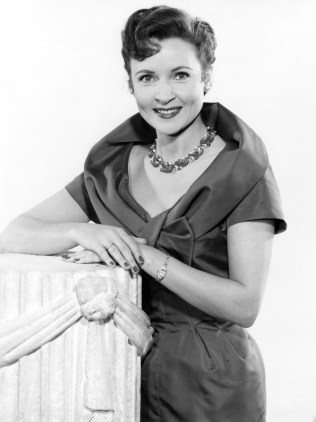
In 1957, he got another chance at being a regular in a sitcom, Date with the Angels starring Betty White. Deacon played Roger Finley.  This show lasted one year.

Richard continued his productive acting career, appearing in 43 shows in the 1960s.  He could be seen in a wide range of shows including Bonanza, The Rifleman, My Three Sons, Make Room for Daddy, Perry Mason, The Donna Reed Show, The Twilight Zone, Mr. Ed, I Dream of Jeannie, Get Smart, The Munsters, and The Addams Family. He was also appearing in a number of films during this decade. He appeared in four sitcoms on a regular basis during the ’60s.

Leave It to Beaver aired from 1957-1963. Deacon played Fred Rutherford, father of Clarence, or Lumpy, Rutherford, Wally’s friend. During the 6 seasons it was on the air, Fred was in 63 episodes.

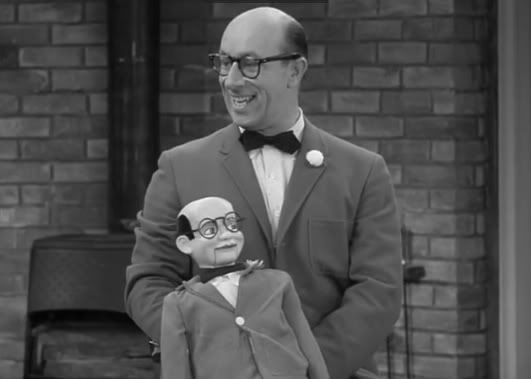
Part way through the series, he was offered another regular role, that of Mel Cooley on The Dick Van Dyke Show.  From 1961-1966, he brightened the screen in 82 shows, putting up with his brother-in-law’s bullying and Buddy Sorrel’s belittling. Deacon had high praise for everyone connected with The Dick Van Dyke Show.

One day Morey Amsterdam was goofing around with Richard and said he didn’t think his hair had fallen out, he thought it had imploded and fallen into his brain, clouding his thinking.  Carl Reiner came running on the set and said to add that dialogue to the show.  From then on, there was an insult fest between Buddy Sorrell and Mel Cooley. When the writers were trying to come up with a comeback from Mel to Buddy, Reiner asked Deacon how he would respond to someone who continued to torment him.  Deacon replied, “Yeecchh!” and his trademark phrase was invented.

deacon9

Bud Molin, Dick Van Dyke Show film editor described Deacon as “the funniest human being on the face of the earth.” Carl Reiner said it was a joy to have him around and everyone on the show loved him.

Deacon, Leonard, Reiner, Paris

The Dick Van Dyke Show was one of the best shows ever written. It won the Outstanding Comedy Emmy in 1963, 1964, and 1966. After the cast of the Dick Van Dyke Show decided to end the show on its own terms, leaving the air with its quality reputation intact, Deacon was offered another sixties role.

Phyllis Diller had a fantastic cast on her show, The Pruitts of South Hampton, or The Phyllis Diller Show as it became known in syndication. This was about a formerly wealthy family who found out they owed $10,000,000 in back taxes.  They try to appear that they still have their wealth, while living in very reduced circumstances.  The cast included Louis Nye, John Astin, Reginald Gardiner, Paul Lynde, Gypsy Rose Lee, Billy De Wolfe, John McGiver, and Marty Ingels in addition to Diller and Deacon.  I don’t know how this show did not succeed, but it was taken off the air after only one year. Diller and Deacon continued to work together both on an episode of Love, American Style and in the production of Hello Dolly in the 1969-1970 season.

deacon14

Once the Diller show was canceled, Deacon was offered a role on The Mothers-In-Law starring Kaye Ballard and Eve Arden. Deacon took over the role of Roger Buell mid-way through the series. The concept was two families who didn’t necessarily get along were neighbors whose children  married so they had to find ways to get along and keep the peace.

deacon4

After the show was cancelled, he continued to stay busy with his acting career.  He also appeared in 17 episodes of Match Game and several Family Feud episodes.

deacon7

Deacon was a life-long bachelor.  He was a closeted gay man who had to keep his sexual orientation secret to keep his options open to work for companies like Disney. He was also a gourmet chef.  In the 1980s, he hosted a Canadian cooking show about microwave cooking, writing a book that sold almost two million copies. He spent a lot of his spare time working with SYNANON, an agency that helped teenage drug addicts.

On the night of August 8, 1984, he was suffered a heart attack in his Beverly Hills home. He was rushed to Cedars Sinai Hospital, where he died later that night. He was 63 years old.

deacon15 - Copy

Everything I read about Richard Deacon painted him as a gracious, friendly, very funny man who was caring and kind.  He had an amazing career, with 180 acting credits within a 30-year period.  The legacy he left was a rich and full acting life. Pretty good for a guy who chose to be a character actor and was humble enough to turn down two offers to star in his own show.

The White Stuff

It’s hard to imagine anyone with a more versatile or longer-lasting occupation than Betty White.  During her career, she’s starred in 12 sitcoms, had recurring roles on 17 shows, and appeared in another 45 series. In addition, she was in 14 movies; 18 movies made for television; and 305 different shows as herself, including 326 episodes of Match Game, 85 guest spots on the $10,000 Pyramid, 52 appearances on Entertainment Tonight, and 40 times on To Tell the Truth.

Born January 17, 1922 in Oak Park, Illinois, Betty was an only child.  Her family moved to California when she was quite young. Her original goal was to become a Park Ranger, but that career was closed to women at that time.  She started her entertainment career in radio, because she was told she was not photogenic. When World War II broke out, she joined the American Women’s Voluntary Services. She was briefly married to Dick Barker, a pilot; they married and divorced in 1945.  In 1947 she married Lane Allan, an agent, but they divorced in 1949.

327blog16

Her career took a major leap in 1952 when Life with Elizabeth was picked up by the network. Betty was the star and producer of the show from 1952-1955. Her show gave her total control both behind and in front of the camera.  She was the first woman to produce a sitcom. She was only 28 years old and living with her parents when this opportunity presented itself.

During the 1950s Betty would also star in the sitcom Date with the Angels, as Vickie Angel.  Vickie and her husband, an insurance salesmen, involved their friends and neighbors in a variety of comic situations. She also appeared on variety shows such as Jack Paar Tonight, as well as The Betty White Show, a talk show.  In 1956, she began an alliance with the Tournament of Roses parade which she co-hosted for 19 years.

The 1960s found her starring in her first movie, Advise and Consent in 1962, portraying Kansas senator Elizabeth Ames Adams. She also began her long partnership with game shows, earning the title, “First Lady of Game Shows.” It was when she appeared on Password that she met her third husband, Allen Ludden, who was the host.  They married in 1963 and were happily living life until his death in 1981. (Note: Wisconsin claims Allen Ludden because he was born in Mineral Point in 1917.)

In the 1970s, Betty re-entered the television series realm.  She guest-starred on the Mary Tyler Moore Show during its fourth season as television host Sue Ann Nivens, the Happy Homemaker. She was such a hit that she became a regular for the rest of the series’ run. In 1977, she and Georgia Engel starred in The Betty White Show (not to be confused with the talk show in the 1950s) which only lasted one season. Because of her affiliation with the Mary Tyler Moore Show, the Tournament of Roses replaced her as host, and she then took on the task of co-hosting the Macy’s Thanksgiving Parade for ten years.

327blog18

In the 1980s, at age 60, Betty’s career continued to steamroll. She became a regular on Mama’s Family, which aired from 1983-86. In 1985, she accepted the role of Rose Nyland on The Golden Girls.  Originally slated for the part of Blanche, it was suggested that Rue McClanahan and Betty switch roles to keep from becoming typecast.  The role of Rose Nyland kept her busy through 1993.  Golden Girls ended production in 1992; the next season, Estelle Getty, Rue McClanahan, and Betty White reprised their roles for one season on Golden Palace.

During the 1990s, Betty continued her television work. She had a regular role on Maybe This Time where she played Shirley Wallace, a much-married woman, who pushes her daughter, recently divorced, into a relationship, when she just wants to run the family coffee shop and avoid dating altogether. She also was in all 30 episodes of Ladies Man, where she again plays the mother of the main character. He is trying to raise a daughter from his first marriage and a daughter from his current marriage while dealing with a wife, and ex-wife, and a mother.

327blog15

As the new century turned over in 2000, at 78, Betty just continued to add to her acting credits.  She had regular roles on Boston Legal and The Bold and the Beautiful.  She also starred in Hot in Cleveland for its entire five-year run. She continued appearing on a variety of television shows during that decade.

327blog9

During her career, she was nominated for 21 primetime Emmys and won five. She also won 2 daytime Emmys. She is the only woman to be nominated in every comedy category. She was inducted into the Hall of Fame in 1995 and received a star on the Hollywood Walk of Fame.

Betty loves animals and is an advocate for many animal associations including the Los Angeles Zoo, the Morris Animal Foundation, and the African Wildlife Foundation. She received the Humane Award in 1987 and had a plaque installed near the gorilla exhibit at the Los Angeles Zoo to commemorate her work there.

BETTY WHITE

It’s hard to know what she will attempt next. She was the oldest person to host Saturday Night Live which she did in 2010. She appeared on the original Tonight Show with Jack Paar and has appeared with Jay Leno and Jimmy Fallon. She has been on the Howard Stern Show, the Simpsons, and one of my favorites, Madame’s Place. She has guest starred in both comedies and dramas. She produced Betty White’s Off Their Rockers, where senior citizens played pranks on younger people.

Considering her real name is Betty, not Elizabeth, it’s ironic that her first television role was in Life with Elizabeth and her first movie was portraying Elizabeth Ames Adams.

327blog19

At 95, how has she kept so young?  If you ask her co-stars from Hot in Cleveland, they will tell you that she survives on hot dogs, French fries, Diet Coke, and red licorice.  Who am I to argue?

One of her best awards came in 2010 when she was made an Honorary Forest Ranger.  Considering that in 1940 that field was closed to her, when she received her honorary title, one-third of forest rangers were women.

327blog3

When asked about why she loves performing, Betty said, “To be able to talk to that camera—the camera became your best friend. You’re looking into that little camera lens and they’re looking into your soul, because they’re right into your eyes. You can’t be phony. You can’t fake it.”

No one has ever accused Betty White of being a fake or a phony.  Everyone she comes in contact with seems to love her. The camera was her best friend, but we all became her friends through those camera portrayals.

327blog1

What a wonderful personality.  What a wonderful career.  What a wonderful legacy.

1917 Was A Very Good Year

This week I was inspired by the blog “Once upon a screen . . .” to take a look at television pioneers who were born in 1917. (For some great articles on pop culture, movies, and television, check out her blog at aurorasginjoint.com.) Let’s get to know 17 of the stars who helped shape the direction of television during the golden age.

Herbert Anderson. Best known for his role as Henry Mitchell on Dennis the Menace, Anderson began his career making movies.  He transitioned to television in 1953, appearing on 61 shows over the years.  He appeared in episodes on such shows as Gunsmoke, Petticoat Junction, Batman, I Dream of Jeannie, Man from U.N.C.L.E., My Three Sons, Bewitched, and The Waltons.  One of my favorites is the first season of The Brady Bunch.  The kids are sick and both parents call a doctor.  The girls were used to a woman played by Marion Ross while the boys always had a man, Anderson.  After weighing factors to pick one of them, the family decides to keep both doctors. He died from a heart attack in 1994.

Carl Ballantine. Ballantine began his career as a magician and inspired many famous magicians since.  He began working in Las Vegas and on television as a magician.  Eventually he transferred to movie roles and after appearing in McHale’s Navy on the big screen, took on the same role of Lester Gruber on the television series. He went on to appear on 33 additional tv shows including That Girl, Laverne and Shirley, Trapper John MD, and Night Court. He passed away at his home in 2009.

bellamy1

Earl Bellamy. Earl Bellamy directed episodes for 101 different television shows.  He is best known for The Lone Ranger and The Tales of Wells Fargo.  He directed 82 episodes for Bachelor Father, one of my all-time favorite sitcoms.  In the 1960s he specialized in sitcoms including That Girl, The Brady Bunch, The Partridge Family, and My Three Sons while the 1970s saw him transition to dramas including Marcus Welby MD, The FBI, Medical Center, and Eight is Enough. In 2003 he passed away from a heart attack.

Ernest Borgnine.  Best known of his Oscar-winning role of Marty in 1955, Ernest enlisted in the Navy in 1935 until 1941.  In 1942 he re-enlisted and served until 1945.  After doing some factory work, he decided to go to school to study acting and began his career on Broadway.  He was also in the movie McHale’s Navy and went on to tackle the role in the television series.  He loved working with Tim Conway and in later years they did the voices for Mermaid Man and Barnacle Boy in SpongeBob SquarePants. He appeared in 47 different shows over the years, including the series Airwolf which he starred in. Borgnine appeared in the final episode of ER which he won an Emmy for. He was married five times, including a 32-day marriage to Ethel Merman.  His last marriage to Tova lasted 39 years. He died of kidney failure in 2012.

Raymond Burr. Best known as Perry Mason, Burr started his career on Broadway in the 1940s and then appeared in 50 films from 1946-1957. In 1956 he auditioned for the role of Hamilton Burger, the DA in Perry Mason.  He was told he could have the starring role if he lost about 60 pounds which he accomplished. He later starred in Ironside, another crime drama and appeared on a variety of other shows.  Burr had many interests including raising and cross-breeding orchids; collecting wine, art, stamps and sea shells; reading; and breeding dogs.  He was extremely generous, giving away much of his money over the years.  He passed away from cancer in 1993.

Phyllis Diller. Known for her wild hair and clothing, Diller was one of the pioneering stand-up female comedians.  She appeared in films in the 1940s, worked in radio in the 1950s, and began her stand-up career in 1955. Her first television appearance was in You Bet Your Life.  She appeared in 40 shows including Batman, CHIPs, Full House, and The Drew Carey Show.  She had her own show titled The Pruitts of Southampton, and in reruns The Phyllis Diller Show that ran from 1966-67.  She recorded comedy albums in the 1960s, wrote several books during her career, was an accomplished pianist, performing with symphony orchestras across the US and taught herself painting which she continued throughout the 1960s and 70s. Her husband Fang was not real, but she used him in her comedy routines.  She died of natural causes in 2012. My first memory of Diller was in the movie Boy Did I Dial a Wrong Number with Bob Hope which my parents took me to at the drive in.

Ross Elliott. A prolific actor on stage, film, and television, Elliott appeared in 184 different shows from sitcoms to westerns to medial dramas, all between 1951 and 1983. He passed away from cancer in 1999.

June Foray.  One of the greatest voice actors ever, Foray has been active in the industry since she had her own radio show.  She did off-air voices for many sitcoms including I Love Lucy, Father Knows Best, Jack Benny, Rawhide, Get Smart, Lost In Space, and Bewitched.  She also appeared in more than 76 animated series.  She is perhaps best known as Rocky in Rocky and Bullwinkle and as Cindy Lou Who in How the Grinch Stole Christmas and Karen and other voices in Frosty the Snowman. Foray is still alive today.

Zsa Zsa Gabor.  Unlike her sister Eva who became known as Lisa Douglas on Green Acres, Zsa Zsa seemed to make a career out of playing herself.  Of the 80 appearances she made in film and television, 20 of them were as herself. She was a true celebrity.  Crowned Miss Hungary in 1936, she came to the US in 1941 and began her career.  She was known for her extravagant lifestyle and many marriages: 9 with 7 divorces (including one to Conrad Hilton) and 1 annulment.

Sid Melton.  Known to most viewers today as handyman Alf Monroe on Green Acres, Melton began as a film star and went on to appear in 71 shows including Topper, Bachelor Father, Make Room for Daddy, That Girl, Petticoat Junction, I Dream of Jeannie, and Empty Nest. He died from pneumonia in 2011.

Alice Pearce. Although her career was cut short due to illness, I included Alice Pearce because her role as Gladys Kravitz in so memorable.  After spending her childhood in Europe, Pearce started on Broadway and after appearing in On the Town, she was brought to Hollywood to reprise her role in the movie version. She began specializing in comedy in the 1940s. In 1964 she turned down the role of Grandmama in The Addams Family and shortly after was offered the role of Gladys in Bewitched. She was already diagnosed with ovarian cancer when she began her role but didn’t tell anyone and was able to act for two seasons before she passed away from the disease. She received an Emmy for her work on Bewitched.

Gene Rayburn. One of the kings of game shows, Rayburn began his career as an actor, taking over for Dick Van Dyke in Bye Bye Birdie when Van Dyke began his television show. While he was on numerous game shows as a panelist or host over the years, Rayburn is best known for Match Game which first ran from 1962-69. It was revived again in 1973 and took several formats in the following years.  He died from heart failure in 1999.

Isabel Sanford. Best known as Louise Jefferson, she grew up in Harlem and performed in amateur nights at the Apollo Theatre. Her Broadway debut was in 1965.  After appearing as a maid in Guess Who’s Coming to Dinner, she was cast by Norman Lear in All in the Family which led to the series The Jeffersons.  When the show ended in 1985, she appeared in a variety of other shows until 2002.  She passed away from natural causes in 2004.

Sidney Sheldon.  A writer and producer, Sheldon created The Patty Duke Show, I Dream of Jeannie, and Hart to Hart, writing many of the scripts for all three series. After he turned 50, he began a career writing romantic suspense novels.  He died from pneumonia in 2007.

Robert Sterling. A clothing salesman before getting into acting, Sterling was best known for his role as George Kerby in Topper from 1953-55.  His wife, Anne Jeffreys played his wife in the show. From 1943-49 he was married to Ann Sothern. He appeared in 36 shows between 1951 and 1986. He passed away from natural causes in 2006.

Jesse White.  While White was a hard-working character actor, he is best known for his commercials as the Maytag repairman from 1967-88. After appearing in films for many years, he transitioned to television in the 1950s.  His daughter Carole Ita White also became an actress best known for Laverne and Shirley. White appeared in 113 shows, never receiving a regular series.

Jane Wyman. Wyman began working at Warner Brothers at age 16, claiming to be 19. Although she was a successful film star and began in television in 1955 with her own show, Jane Wyman Presents Fireside Theater, she is probably best known for her role on Falcon’s Crest from 1981-90 and her marriage to Ronald Reagan. She died in her sleep from natural causes in 2007.

These are just a handful of television mavericks that influenced television as we know it today.  I was amazed at the variety of different talents each of these stars displayed.  In comparing their television appearances, it’s surprising how many of them overlap and worked on the same shows.  What I found most surprising was that Ballantine, Diller, Melton, Sanford, Sterling, White and White’s daughter all appeared on Love American Style while Bellamy, Borgnine, Burr, Diller, Gabor, Rayburn, Sanford, White, and Wyman all guest starred on The Love Boat.  During my research, I ran across many shows that will become future blog topics.

Another fun fact about celebrating stars born in 1917 is that this week we are traveling to Pennsylvania to celebrate my grandmother’s 100th birthday who was also born in 1917.  Happy Birthday Mamie.