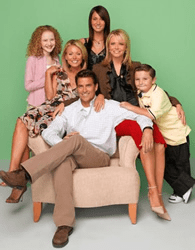
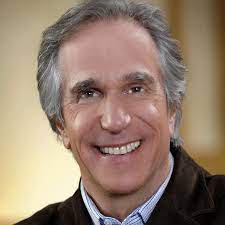
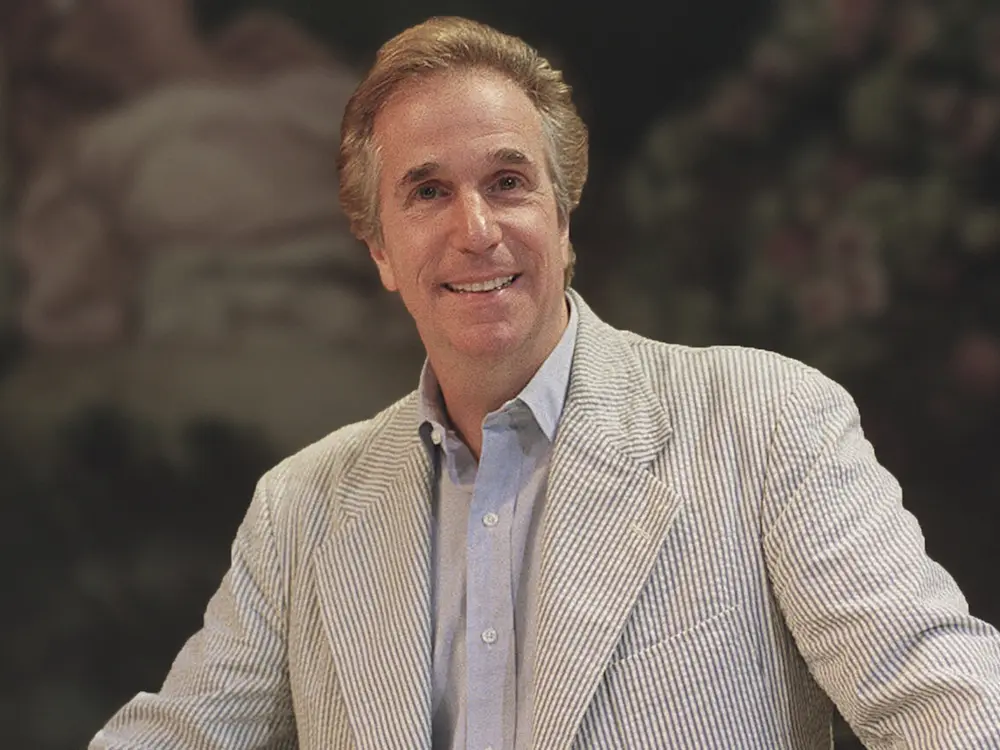
Love American Style: Love and the Celebrities

📷groovyhistory.com

This month we are starting a new blog series, Casting Celebrities. We’re going to take a look at four shows that featured a group of celebrities every week. We’ll learn more about Love, American Style; Fantasy Island; The Love Boat, and Supertrain. When we discuss Supertrain, we’ll also look at the small number of stars who appeared on all four shows.

Today we begin with Love, American Style. This show was an iconic 1970s show. Like Laugh In, the clothing, furnishings, and vocabulary do not make it timeless. But it was a lot of fun. This fast-paced anthology series featured two to four mini episodes each week, and between them were quick skits, often featuring a brass bed. Each smaller episode is titled “Love and the _______.”

📷gms.com The regular cast

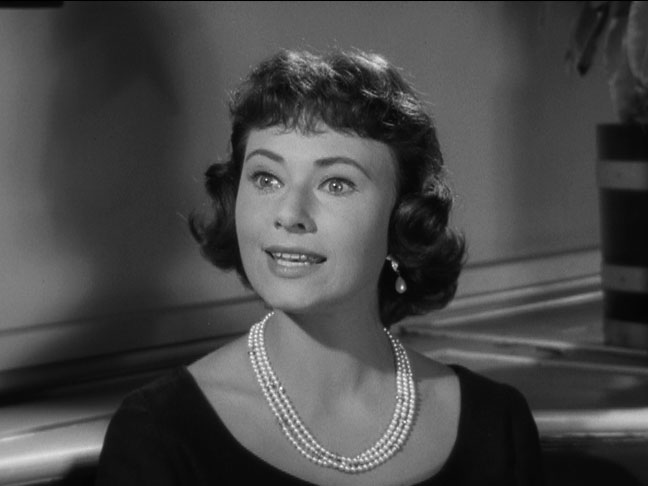
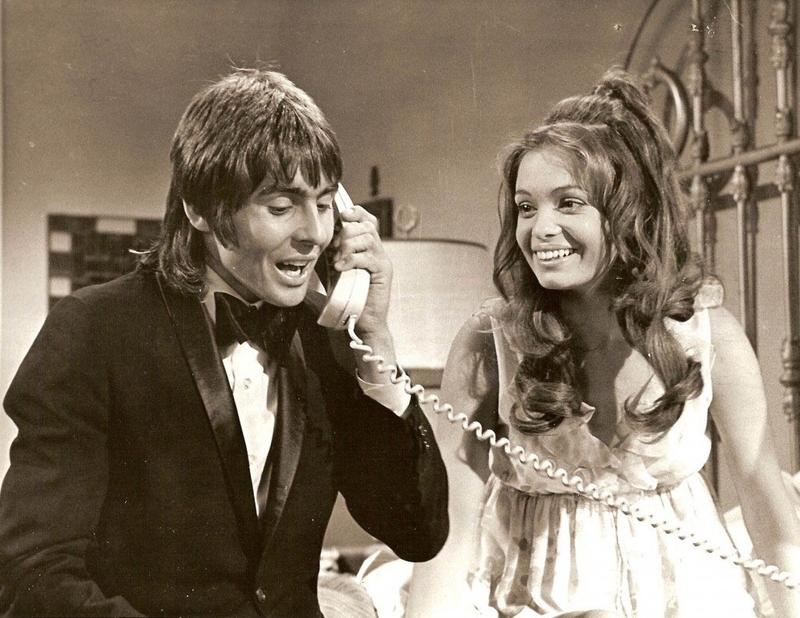
A troupe of players was featured on each show for the in-between skits. These regulars included William Callaway, Buzz Cooper, Phyllis Davis, Mary Grover, James Hampton, Stuart Margolin, Lynn Marta, Barbara Minkus, and Tracy Reed. Margolin went on to a regular role in The Rockford Files; Tracy Reed was featured in McCloud and Knot’s Landing; Phyllis Davis was part of the cast of Vega$ and Magnum PI, and James Hampton will be familiar if you watched The Doris Day Show or F-Troop.

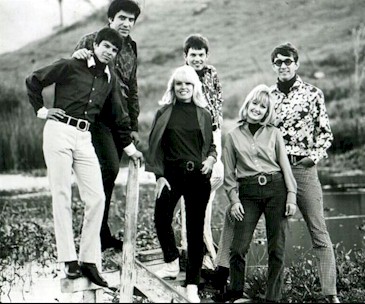
The show had a memorable and catchy theme song. Written by Arnold Margolin, the first year it was performed by The Cowsills. The snappy melody was set to the following words:

Love, Love, Love

Love, American Style,
Truer than the Red, White and Blue.
Love, American Style,
That’s me and you.

And on a star-spangled night my love,

My love come to me.
You can rest you head on my shoulder.
Out by the dawn’s early light, my love
I will defend your right to try.

Love, American Style,
That’s me and you.

📷imdb.com

During the second and subsequent years that Love, American Style was on the air, the theme song was performed by the Ron Hicklin Group. The Ron Hicklin Group could be heard in a variety of motion pictures and commercials, and they also appeared on recordings with stars such as Paul Revere and the Raiders and Cher. John and Tom Bahler, brothers who sang under The Charles Fox Singers were also part of this group. The band provided television theme song recordings including Batman, That Girl, Happy Days, and Laverne and Shirley. They also did the singing for The Partridge Family theme and songs performed on the show as well as the Brady Bunch Kids. Ron retired in the early 2000s, and Tom does a variety of things. He is also known for writing Bobby Sherman’s hit, “Julie Do You Love Me?”. John married Janet Lennon, one of the Lennon sisters who performed on The Lawrence Welk Show. He currently lives in Branson and conducts the “new” Lawrence Welk orchestra.

Paramount Television developed the show. The executive producer of the show was Arnold Margolin, Stuart’s brother. There were 53 different directors during the four-year run. The series received Emmy nominations for Outstanding Comedy Series in 1970 and 1971; Best Music Composition in 1971, 1972, and 1973, winning in 1973; and winning the Emmy in 1970 for Outstanding Original Music and Lyrics.

📷rewatchclassictv.com

Many people wrote for the show, but Garry Marshall and Jerry Belson received the most credits. One of the writers, Peggy Elliott, was interviewed by the Huffington Post in May of 2013, and she talked about her time writing for the show.

“But the show I loved writing the most, was Love, American Style. For every other show, I was writing for characters created out of someone else’s head. Sure, we could create the occasional guest-star role, and we had been told to make every role, no matter how small, a real person. ‘Think of the actor who’s playing that delivery boy,’ I can hear Billy Persky, the co-creator or That Girl, say: ‘This is a big break for him — it’s the biggest role he’s had so far. Give him something to work with.’

But with Love, American Style, every character was our very own; every situation came out of our heads. Each segment of the hour the show ran each week was a one-act play created entirely by us. Added to the attraction was the fact that we could say and do things that were taboo on every other TV show in the early ‘70s. Arnold Margolin, co-creator of the show with Jim Parker, told me recently that the creative side of the network wanted the show to be more daring, while the censors kept their red pencils ready. There was a full-time position on the show just to run interference.

We must have put both sides through the hoops with one episode we wrote: ‘Love and The Hand-Maiden.’ A young guy was dating a centerfold model. As their relationship developed, he discovered that she had no problem with shedding her clothes, but she always kept her hands covered — with artful poses in magazines, and with gloves in real life. He became obsessed with seeing her hands and came up with one ruse after another to get her to take off her gloves. We had a ball writing it, with one double-entendre after another.”

📷imdb.com

If you were a star of any kind in the early 1970s, you most likely were on Love, American Style.  The show produced 108 episodes, and those shows featured 1112 different actors. Some of the famous names showing up in the credits include Milton Berle, Sid Caesar, Phyllis Diller, Arte Johnson, Ozzie and Harriet Nelson, Regis Philbin, Burt Reynolds, Sonny and Cher, Flip Wilson, and Jo Anne Worley.

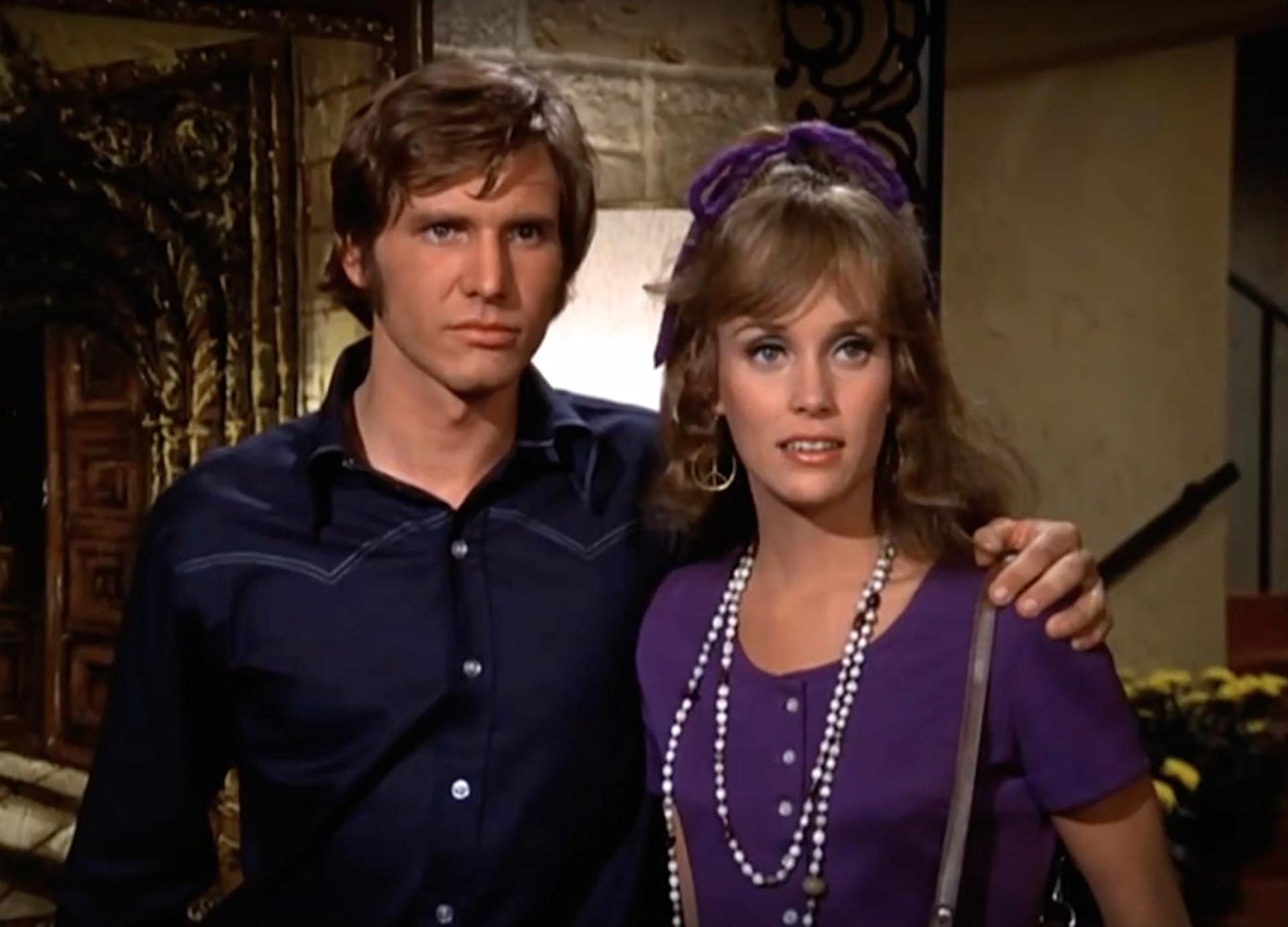
Brad Duke wrote a biography about Harrison Ford, and he said Ford had fond memories of appearing on Love, American Style. “He recalled that he had been given little time to prepare his wardrobe for the role of a philosophical hippie in the November 1969 episode, “Love and the Former Marriage.” He appeared on set with long hair and a beard thinking they were appropriate for the role. He was surprised when he was told he needed a haircut and trim and then was given a navy blue dress shirt and vinyl burgundy jeans with a large belt. They even had a scarf with a little ring to put around my neck. And I thought, someone has made a mistake here. So, rather than argue with the wardrobe people, I put on the clothes and went to find the producer. I walked on the set and he was pointed out.  I tapped his shoulder and when he turned around he had on the same clothes I did. He was a hippie producer I guess. At least the check went through, and I got paid.”

The best way to get a good understanding of what the show was like is to look at a couple of the episodes.

January 23, 1970: Love and the Big Night

📷facebook.com

Starring Ann Elder, Buddy Lester, Frank Maxwell, Julie Newmar, and Tony Randall, this episode is often listed as a favorite of viewers. Randall is a married businessman who escorts his voluptuous secretary (Newmar) to her apartment after a late night at the office. Eager to get home to his wife, Randall hurriedly tries to open a stubborn jar of mayonnaise and winds up covered with mayo. Newmar cleans his suit, but while it’s drying, it’s stolen. After a series of amusing mishaps, Randall finally gets back to his own apartment and creeps into bed with his wife–only to find out she’s not there.

February 25, 1972: Love and the Television Set

📷that’s entertainment.com

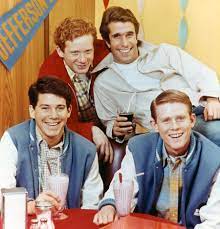
It starred Harold Gould, Marion Ross, Ron Howard, and Anson Williams. Reading this list of names might give you a hint about what happened to this episode after it aired. Garry Marshall had written a pilot about a 1950s family that did not sell.  He turned it into an episode for Love, American Style. George Lucas caught the episode and was impressed with Ron Howard and offered him a role in his new movie American Graffiti about 1950s teens. The movie was so popular that the network decided to put Marshall’s pilot in the fall line-up as Happy Days. Harold Gould’s role was given to Tom Bosley for the series. When Love, American Style went into syndication, this episode was retitled “Love and the Happy Days.”

October 22, 1970: Love and the Bashful Groom

📷listral.com

This is the episode I recall when I think of the series. When I watched it originally, I was staying overnight at my grandparents’ house and my grandmother was shocked at the “vulgarity.” It really seems quite tame today, but back then it probably was unexpected. She would approve of Tom Bahler marrying Janet Lennon though because I watched Lawrence Welk with her and my grandfather whenever I was at their house.

In this episode, Paul Petersen, Christopher Stone, Meredith MacRae, Jeff Donnell, and Dick Wilson are featured. Harold (Petersen) and Linda (MacRae) are getting married. He learns that she grew up in a nudist colony and is not comfortable being naked for his wedding.  After a soul-searching talk with his best friend, and realizing he loves Linda enough to be uncomfortable, he decides to go through with the ceremony.  He gets to the church a bit late and walks in, only to see that everyone else is dressed in their Sunday best. His bride informs him that they always dress up for weddings. One of the congregation members says something like “Let’s not make him uncomfortable,” and they all begin to undress.  Of course, you see nothing improper, no naked bodies, only clothes flying. This was probably not the best episode to “expose” my grandmother to as a first glimpse of the show.

The show lasted for four years and was cancelled in 1973. In 1985, a reboot was created, but it was on in the mornings and only lasted a few months.  The show was on at the same time as everyone’s favorite game show, The Price is Right. For the 1998 fall season, a pilot was created for prime time, but it was never ordered. While doing my research for this blog, I noticed that there was a Love, American Style project in production, so we may see it resurface again.  I’m not sure I would want to watch a contemporary version of the show though. It was such a product of its time, and I fear what a current version would be like after seeing the reboot of Match Game which has been airing the past few years.

Ted McGinley: A Model Actor

This month we are discussing Supportive Men, and I thought it was time to look at the career of Ted McGinley. He’s never been the star of a show, so he often sneaks under the radar, but he is someone we all recognize and appreciate.

📷decider.com

McGinley was born in Newport Beach, California in 1958. He could definitely pull off the California Surfer boy image, so it’s no surprise that he was into athletics, especially swimming, in high school. He worked as a lifeguard at the beach in the summer. USC gave him a scholarship for water polo, and he majored in urban planning and real estate.

Even though he was the MVP of his team, his scholarship was not renewed. He had been doing some modeling work on the side and with the lack of a scholarship, he decided to move to New York for more opportunities.

📷happydays.com

His modeling career spurred his acting career when he was spotted in GQ and cast as Roger Phillips, a Cunningham nephew from 1980-1984 on Happy Days. After winning the nationwide talent search, he had to face a steep learning curve with no acting experience at all. He doesn’t watch his early work on Happy Days because he hates to be reminded of his awkward performances. He said he “had to work on his lines at home and concentrate on the set before my cues. It was all so new. I’m bumbling away, and I hear stories of Ronny Howard, who forgot his lines just twice in seven-and-a-half- years.”

He studied his costars Henry Winkler, Marion Ross, and Tom Bosley. He also joined an improv class. He learned timing and great tips for developing acting skills.

He also spent four years on The Love Boat as Purser Ace Covington Evans from 1983-1987.

📷metv.com On The Love Boat

This was the decade his movie career began when he was cast in Revenge of the Nerds as Stanley Gable; McGinley reprised his role in the third and fourth Nerd movie franchise hits as well.

After The Love Boat ended, he made the rounds, appearing on shows that were popular including Dynasty, Hotel, and Perfect Strangers. He also took on several movie roles every year.

📷greginhollywood.com

In 1989, he joined the cast of Married  . . . with Children as Al Bundy’s best friend Jefferson D’Arcy, which he called a great, great gig.” It was during this time, Ted married Gigi Rice.

McGinley kept busy for the rest of the 1990s and early 2000s, never going long in between movies or television appearances; he had recurring roles on several shows including Sports Night, The West Wing, and Charlie Lawrence. Many people don’t recall the last show, because it was only around for a short time in 2003. It starred Nathan Lane as a freshman congressman from New Mexico who lives near Graydon Ford, played by McGinley, a neighbor from the opposing political party.

He got another break from 2003-2005 when he starred on Hope & Faith.

📷tvseriesfinale.com Hope & Faith

McGinley has continued his busy streak since 2005, although he has not been part of a cast during the past two decades.  He’s amassed 96 acting credits since 1982. In 2008, he took a stab at Dancing with the Stars, paired with pro dancer Inna Brayer. Unfortunately, he was the second contestant to be eliminated.

Considering McGinley got his first job without any acting experience and had to learn this skill thrown into the fire, he has developed a very successful career. His years on The Love Boat get lost because he is not part of the original crew. I have to admit, when I think of McGinley, I think of Jefferson D’Arcy. No surprise to those of you who have gotten to know me during these past eight years, Married . . . with Children was not a favorite of mine, but I appreciate the place it has in television history. I know a lot of people remember it fondly. I do remember McGinley fondly though for his supporting roles over the years.

Henry Winkler: Simply Amazing

Today we are learning about the career of Henry Winkler. Although he was typecast for many years following Happy Days, he managed to continue his career with a variety of roles.

Photo: wikifandom.com

His parents were German Jews who lived in Berlin during the occupation of Nazi Germany. His father knew they would not be safe there and left in 1939. Winkler described what happened in an interview with Terry Gross on NPR in 2019: “My father knew that it was time. He got a six-week visa from Germany to come and do work in New York but was expected to come right back. I have told this story–that he took his mother’s jewelry, bought a box of chocolate, melted the chocolate down, put the pieces of jewelry in the chocolate box, melted–poured the chocolate over the jewelry, put the box under his arm, so when he was stopped by the Nazis and they said, are you taking anything of value out of Germany, he said, no, you can open every bag; we’ve got nothing. And the jewelry that he encased in chocolate, he sold when he came out of Ellis Island into New York and was able to start a new life here, slowly but surely. I have the actual letters from the government each time my father requested to stay a little longer, and they would say yes. And I was born.”

Photo: goodhousekeeping.com

Although his family did not keep kosher, Henry and his sister Beatrice were raised with the traditions of Conservative Judaism.

Winkler struggled with his studies but he was popular and very funny. His parents were frustrated by his inability to learn. Apparently, his father spoke eleven languages and could easily do math in his head. Henry’s self-esteem began to suffer during these years. Because his grades weren’t better, he was banned from most theater productions, which was what he was most interested in. He was able to appear in “Billy Budd” in eighth grade and in “Of Thee I Sing” in high school.

Henry Winkler - IMDb
Photo: imdb.com

When Winkler gave a talk at the Yale Center for Dyslexia and Creativity, he tried to describe what it had been like for him in school: “You want so badly to be able to do it and you can’t. And no matter how hard you try, it’s not working . . . I would study my words.  I would know them cold. I would know them backwards and forwards. I would go to class. I would pray that I had retained them. Then I would get the test and spend a lot of time thinking about where the hell those words went. I knew them. They must have fallen out of my head. Did I lose them on the street? Did I lose them in the stairwell? Did I lose them walking through the classroom doorway? I didn’t have the slightest idea of how to spell the words that I knew a block and a half away in my apartment the night before.”

Henry Winkler Talks About His Dyslexia in CBS Interview | Understood - For  learning and thinking differences
Photo: understood.org

After high school, he attended Emerson College to study theater. He applied to 28 colleges but his grades kept him from being accepted at 26 of them. He majored in theater and minored in child psychology. During his time there he was a member of the Alph Pi Theta fraternity. He had a role in “Peer Gynt” as Peer Gynt. Although he also struggled with college courses, he stayed the course for four years and graduated in 1967. He was admitted to the Yale School of Drama in 1967. He appeared in a number of productions there. He received his MFA in 1970. Twenty-six years later he spoke at Graduation Day at Yale.

He began doing commercials in New York after graduation and starred in The Lords of Flatbush and Crazy Joe, two independent films. He appeared one day on Broadway; the show opened and closed on the same day. He also performed with an improv group, Off the Wall in New York.

Bomber Happy Days Fonzie Jacket - Jackets Creator
Photo: usajacket.com

In 1973 he moved to California. His first role there was on The Mary Tyler Moore Show. Although he paid his dues in New York, he was hired as Arthur Fonzarelli on Happy Days his second week in Hollywood. He would portray the Fonz for a decade. The part was originally written a minor role on the show. Winkler did not want to portray the character as a stereotyped role which is probably why he became so popular. He was allowed to wear a black leather jacket only on his motorcycle the first year. Winkler never drove the cycle because the first time he tried, he crashed. His motorcycle on the show was the same one Steve McQueen used in the last scene of The Great Escape in 1963.

During his time on the show, he was diagnosed with dyslexia, explaining his tough time at school.

During the middle of season two, his character became a regular cast member. Many fans attribute to his performance in the episode “Guess Who’s Coming to Christmas.” By season three, he was considered one of the leads in the show.

Both Ron Howard who played Richie and Winkler told writer Stephanie Nolasco of Fox News how they felt about each other and their time on Happy Days. Winkler had a hard time dealing with his sudden fame, and Howard was able to provide some grounding for him. Winkler described this time, “It’s unnatural—the human condition does not prepare you for stardom. That’s just the way it is. So, you have to hold on to yourself and then you’ve got friends like Ron who doesn’t take it all seriously. I learned from him; he was my teacher. And Garry Marshall never took bad behavior from anybody. He was a father figure. He was very funny and very idiosyncratic, and then he was very strict.”

With Ron Howard Photo: decider.com

Winkler also discussed his friendship with Howard. “I think people gravitate to the Fonzie/Richie relationship because Ron and I are ten years apart. He was 19 and I was 27. We had a connection that you cannot describe in real life, and it was similar off-camera. He gave me my first mitt; I’d never played baseball before. He’s my brother.”

Howard echoed the sentiments. “We were fast friends from the beginning. It continues all these years later. It was exciting for me to work with Henry because he was really a trained actor who attended Yale Drama School; just a trained New York actor. And, I’d grown up sort of through the Hollywood television system, so for me to work with this guy who was so thoughtful, so creative, and yet so hilarious, was really an opportunity for me to learn and grow and we just clicked, you know.”

Happy Days Photo: ew.com

The sudden fame for Fonzie might have damaged the friendship Winkler had with Ron Howard, but they were both professionals and never had their egos inflated. They honestly discussed what was happening and while Howard had a harder transition with the show, he understood that Fonz had become a national icon. Even now decades after the show ended, people recognize his “Ayyy” and “correctamundo” catch phrases and his thumb’s up gesture.

After the show was canceled, his leather jacket was acquired by the Smithsonian Institution for the National Museum of American History. A bronze statue of the Fonz was erected in Milwaukee in 2008 along the Milwaukee Riverwalk.

Photo: ew.com

Fonzie was adored by many kids, especially kids who needed some extra help or attention. Marshall was asked if the show could do something to help kids realize how important reading was. In one of the episodes, The Fonz went to the library and checked out a book, saying “Everybody is allowed to read.” That week, library card registrations increased by 500%. In another situation, one day a call came to Paramount Studios. It was from a teenage boy who was contemplating suicide. He wanted to talk to Fonzie. Winkler picked up the call and gave the boy hope, convincing him not to take his life.

Tom Bosley and Marion Ross Photo: ebay.com

He received 50,000 letters a week. He also received $50,000 an episode. Winkler described The Fonz as his alter ego; he said that Fonz was everything he had always wanted to be: in charge, confident, and adored by others. Winkler credits Marion Ross and Tom Bosley, Mr. and Mrs. Cunningham on Happy Days, with being his acting mentors. He loved them for what they taught him and for being great people. When Bosley died, Winkler said “Tom was a family member, both on and off the sound stage. We acted together, traveled together, and played charades together. He was a loving husband, a doting father, and a fantastic grandfather.”

During his years on Happy Days, Winkler was able to tackle several other roles in the off season. He was a Vietnam War vet with PTDS in Heroes for which he received a Golden Globe nomination. He was in Carl Reiner’s The One and Only and in Ron Howard’s Night Shift.

Stacey Weitzman + Henry Winkler: Inside the Fonz's Real Life Love Story
Henry and Stacey Photo: wideopencountry.com

He also tackled the role of husband, when he married Stacey in 1978. After two years of dating, they married in the same synagogue where Winkler had his bar mitzvah. Together they raised three children, and they have been involved with a variety of children’s charities including the Children’s Action Network, the Annual Cerebal Palsy Telethon, the Epilepsy Foundation of America, the Toys for Tots, the National Committee for Arts for the Handicapped, and Special Olympics.

Even with these roles and several other television appearances under his belt, when Happy Days ended, Winkler was typecast and could not get quality roles. Winkler went the route of producer and director. He was one of the developers of MacGyver and produced and directed Sabrina the Teenage Witch. He worked on two movies: Memories of Me with Billy Crystal and Cop and a Half with Burt Reynolds. He also had appearances in Scream in 1996 and The Waterboy in 1998 and on television in The Practice in 1997 and Arrested Development in 2003.

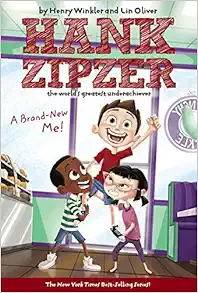
In 2003, he added writer to his resume, creating a new series of children’s books, Hank Zipzer about a dyslexic boy, with co-author Lin Oliver. The BBC televised the series, and Winkler appeared as Mr. Rock in the show. Winkler and Oliver went on to create Here’s Hank, the Ghost Buddy series and the Alien Superstar series. Queen Elizabeth appointed him Honorary Officer of the Order of the British Empire in 2011, and he was named one of the United Kingdom’s Top Ten Literary Heroes in 2013. In 2019, he was awarded the Bill Rosendahl Public Service Award for Contributions to the Public Good for his book series. In 2016, the award was renamed after Bill Rosendahl, a progressive political leader, Los Angeles’ first openly gay City Council member, an educator, a Vietnam veteran, an award-winning host of thousands of public affairs programs, and president of the Los Angeles Press Club.

In 2016 he joined the ranks of actors participating in reality shows on Better Late Than Never. During season two, Winkler traveled to Berlin and shared his family’s story. This was a quirky 12-episode reality show. NBC described it as: “This hilarious fish-out-of-water comedy/reality show follows cultural icons Henry Winkler, William Shatner, Terry Bradshaw and George Foreman on their greatest adventure yet. Deciding it’s Better Late Than Never, these four national treasures embark on the journey of a lifetime, traveling across Asia on their own with no schedule and no itinerary. The only “help” will come from Jeff Dye, a young, strong, tech-savvy comedian with an agenda of his own – who isn’t above leading the men off track. Each stop is packed with hilarious cultural experiences, heartwarming spectacles and unexpected twists as our legends take on this unforgettable adventure.”

Better Late Than Never art features Henry Winkler, William Shatner, Terry  Bradshaw, George Foreman | EW.com
Photo: entertainmentweekly.com
Photo: vanityfair.com

In 2018, Winkler starred in the show Barry and won his first Outstanding Supporting Actor in a Comedy Series Emmy. The plot features a hit man from the Midwest who moves to Los Angeles and becomes fascinated with the city’s theater life.

The show was on HBO for two seasons and Bill Hader, one of the creators and star of the show, wanted Henry for the part of acting teacher Gene Cousineau. Winkler mentioned he was 27 when he got the regular role on Happy Days and 72 when he got the role on Barry. Stage 19 of Paramount was where Barry was filmed; it was also the same sound stage used for Happy Days. Hader wrote Cousineau as a dark, cold character and while he could humiliate his students, Winkler brought some warmth to the character as well.

Winkler is a loyal Democrat and has campaigned for, and financially supported, Jimmy Carter, Bill Clinton, Al Gore, John Kerry, and Barack Obama.

Happy Days': Henry Winkler Revealed How He and John Ritter Met
With Friend John Ritter Photo: outsider.com

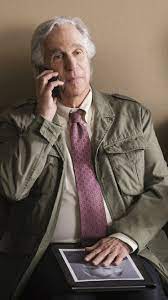
In addition to being lifelong friends with Ron Howard, Winkler was a close friend of John Ritter. They met at an ABC party in 1978 and became close friends. Winkler was actually on the set of John’s show when he collapsed and had to be taken to the hospital shortly before his death.

I do like to add some personal stories to my blogs when possible. I found a fun article in New York Magazine that looked at what famous people like to buy. One of the pieces was about Henry Winkler from October 2021. So, what did the famous Mr. Winkler purchase?:

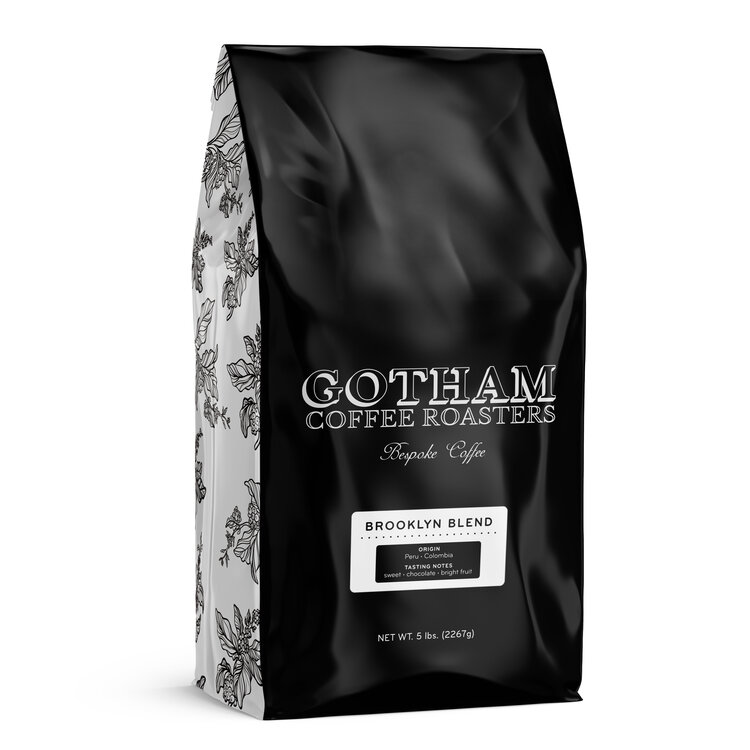
Gotham_5lb_bag_Brooklyn-Blend.jpg

Penn Ultra-Blue racquetballs to play with his dog Sadie. ($4); A Sony Alpha a6000 Mirrorless Camera ($650); Landmark Theatre Gift Cards ($5); Katz’s Pastrami and Rye food boxes ($155), a reminder of his youth; Munster Cheese from The Cheese Store of Beverly Hills ($15); Winston Boron fly fishing rod ($825); Knudsen’s heavy whipping cream ($4); Gotham Coffee Roasters Brooklyn Blend Coffee ($18) which needs the above cream, no half ‘n half for Henry; and Lavley I’d Rather Be Fly Fishing socks ($12), because no one likes the socks where the elastic stops working after two wash cycles. A bit of fun trivia about an icon’s shopping list.

Perhaps one of the best stories that displays the importance of Henry Winkler comes from journalist Anderson Cooper. Cooper is also dyslexic and said that one of the books that influenced his life was The Fonz: The Henry Winkler Story. He keeps it in his office at CNN. He also mentioned that in meeting Winkler in person as an adult, he realized what a kind and gracious person he is. That is something I read over and over; everyone described Winkler as kind, level-headed, grounded, unbelievably nice, and many other similar sentiments.

Henry Winkler Shares Insights at Vital Ayyy-ging Conference | News | San  Diego County News Center
Photo: sandiegocountynews.com

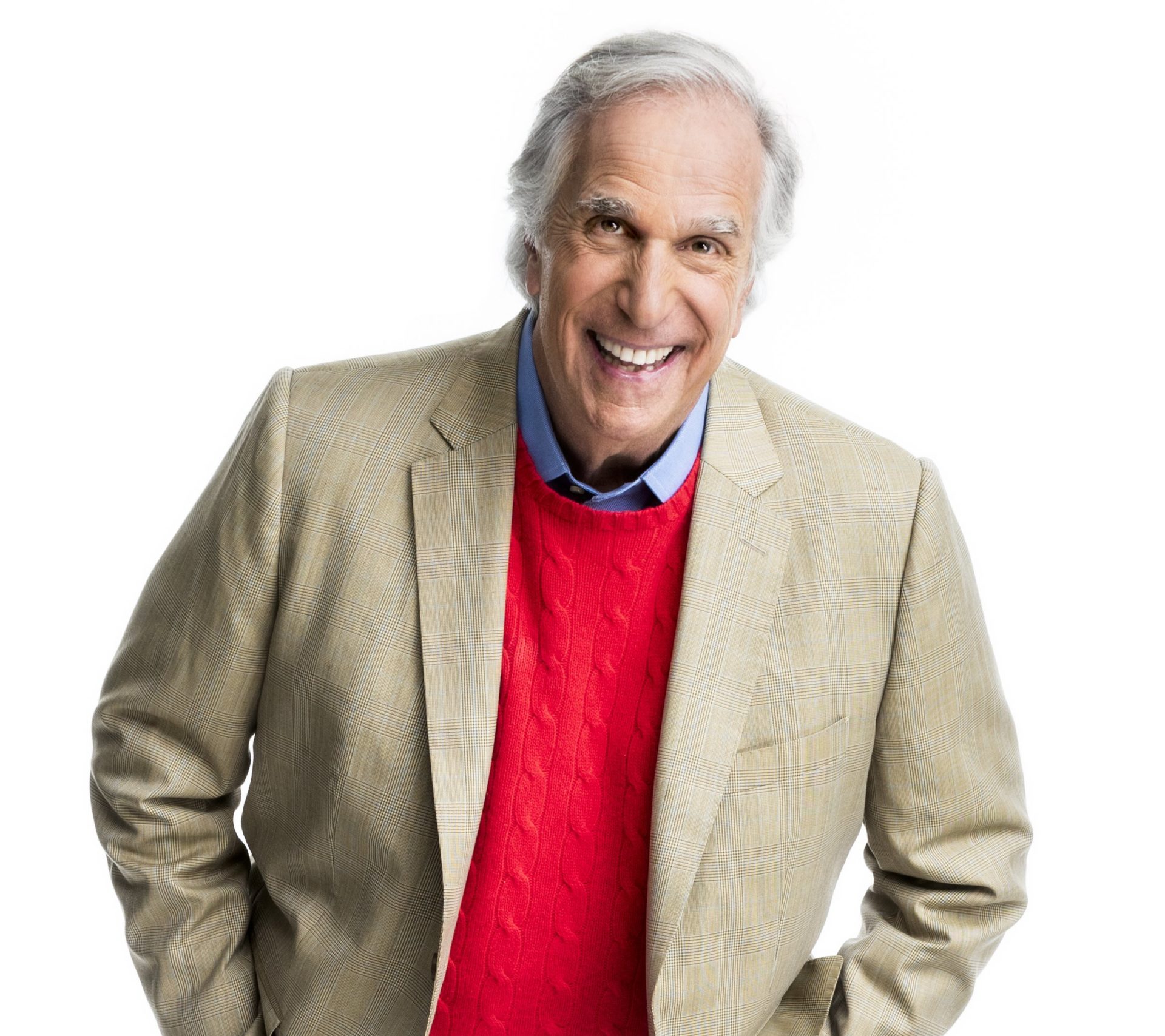
Henry Winkler would be amazing just based on what he did with the character of The Fonz. He would be amazing just based on what he has done for his children’s charity work. He would be amazing just based on how seriously he takes his roles as husband and father. He would be amazing just based on his directing and producing work. He would be amazing just based on his later roles on Arrested Development and Barry. He would be amazing just based on his friendships with coworkers including Ron Howard, Marion Ross, Tom Bosley, Adam Sandler, and John Ritter. He would be amazing just based on his book series as an author. And he would be amazing just based on the work he has done to help others understand dyslexia. Put them all together and add the fact that no one can talk about him without describing what a genuine and kind person he is, and he is well, just simply amazing. Thank you, Henry Winkler, for all the ways you have amazed us over the decades.

The Lone Ranger Rides Again . . . And Again . . . And Again

Like most of the westerns we are studying this month, The Lone Ranger first aired as a radio series. In 1933, the masked hero and his best friend Tonto, traveled throughout the Old West, capturing outlaws and putting them behind bars.

Fran Striker began reworking some old scripts about westerns in 1932. Those stories became The Lone Ranger. George Trendle brought Striker in to work on the radio scripts in 1933 when the show debuted. Striker continued to pen books about the hero with his first being The Lone Ranger in 1936 and his last The Lone Ranger on Red Butte Trail in 1961, 25 in all.

The Lone Ranger Rides by Fran Striker

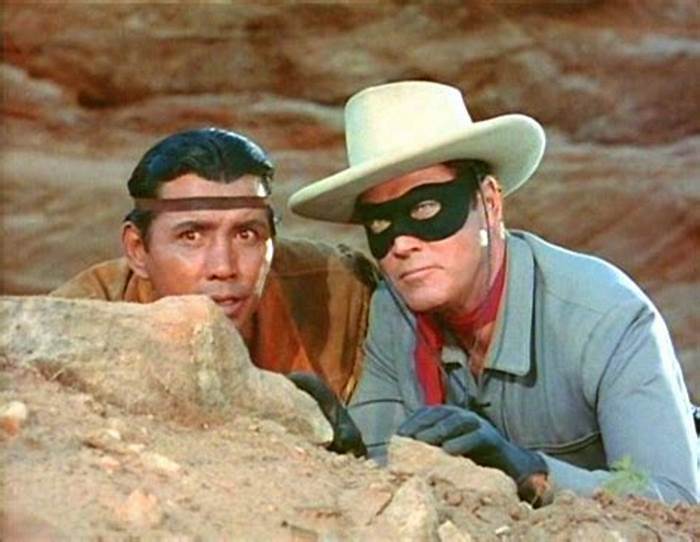
The television show began in 1949 and ran for eight years. Clayton Moore portrayed the ranger and Jay Silverheels portrayed Tonto. Silverheels was a full-blooded Mohawk Indian from the Six Nations Indian Reservation in Ontario, Canada. In season three, Moore was temporarily replaced by John Hart, but he returned for the final two years. The other recurring character we see during the series is the ranger’s nephew Dan Reid played by Chuck Courtney. This was ABC’s first big television hit.
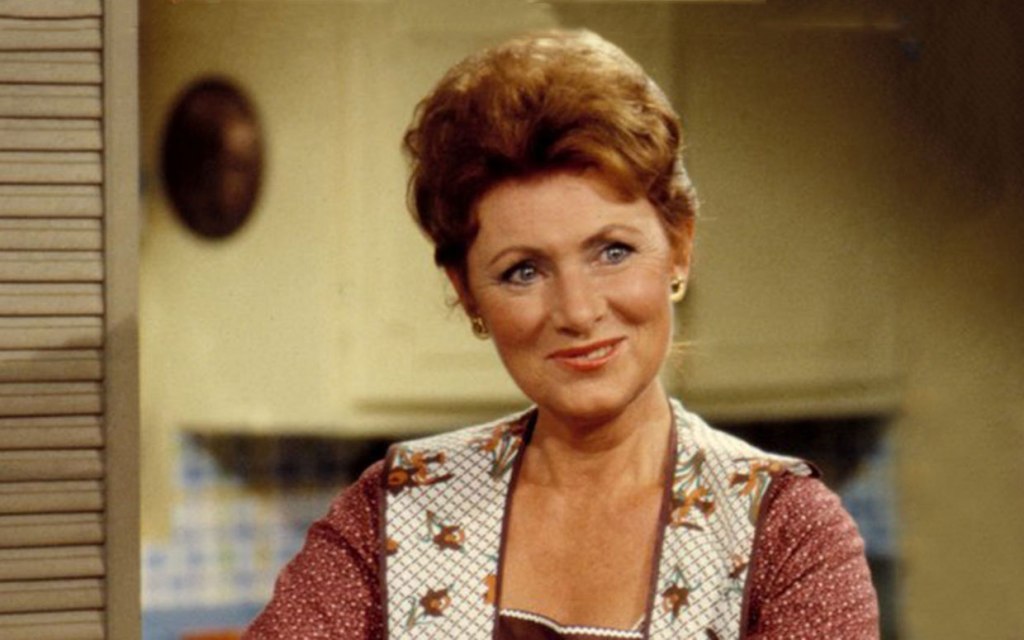
Photo: pinterest.com

The show began and ended the same way. As the show opened, the Lone Ranger’s horse would rear up on his back and the ranger shouted “Hi-Yo Silver.” At the end of the show, someone would as “Who was that masked man?” Another repeated phrase from the series was “Kemo sabe.” Tonto called the Ranger this which translates to “faithful friend.”

The backstory of the ranger is that a patrol of six Texas Rangers was massacred and only the Lone Ranger survived. He now wears a mask to protect his real identity and he and Tonto, who nursed him back to health, travel around bringing justice to the territories. The ranger owns a silver mine which is why he named his horse Silver and why he carries silver bullets.

Photo: pinterest.com

MGM film veteran producer Jack Chertok was brought in to produce the show. He would later produce Ann Sothern’s show Private Secretary and My Favorite Martian.

This show was produced and filmed differently than most shows in the classic age. Seventy-eight episodes were broadcast for consecutive weeks. Then they were all shown for a second time. After 156 weeks, they decided to film another 52 shows but there was a controversy and Moore left the show and was replaced by John Hart. Again the 52 filmed shows were consecutively shown and then rerun. For the next season, the original creator George Trendle sold the rights to Jack Wrather in 1954. Wrather hired Moore again and produced another 52 shows which were shown and then rerun. For the final year, only 39 episodes were produced with Sherman Harris taking over as producer. The final season was the only one shot in color. Because there were only new episodes in five of the eight years, only 221 shows were produced.

At this point, film stars were still avoiding television, seeing it as a temporary competition with films. Therefore, most of the guest stars we see on the show were actors who went on to have successful television careers. Some of those include Michael Ansara, James Arness, Frances Bavier, Hugh Beaumont, Dwayne Hickman, Stacy Keach Jr., Marjorie Lord, Martin Milner, Denver Pyle, and Marion Ross.

The Lone Ranger" Texas Draw (TV Episode 1954) - IMDb
Photo: imdb Marion Ross guest starred

This was one of the first series to be nominated for an Emmy; unfortunately, it lost to the first version of The Life of Riley starring Jackie Gleason. The nomination came in 1950 at the second Emmy ceremony. The early years had very limited categories for awards.

General Mills was the original sponsor for the show. They also sponsored the radio show from 1941-1961.

The Lone Ranger, first created and broadcast in Detroit, turns 86 this week  | Michigan Radio
Photo: michiganradio.com

The theme music was the classical piece, the William Tell overture. Rossini composed the piece in 1829.

Like Adam West and Batman, Clayton Moore really embodied the character of the Lone Ranger. After the show ended, he would make up to 200 appearances a year as the crime fighter. In 1979, Jack Wrather, who owned the rights to the character, sued him, but Moore won a countersuit allowing him to continue appearing as the masked hero.

The Lone Ranger was never permanently retired. Two animated series were released in 1966 and 1980. Also, both Silverheels and Moore starred in two big-screen features: The Lone Ranger (1956) and The Lone Ranger and the Lost City of Gold (1958).

In addition, Moore slipped into his costume again for a film in 1958 to promote the Lone Ranger Peace Patrol to convince kids to buy US Savings Bonds. A 2013 movie reboot came out with Armie Hammer in the starring role.

The Lone Ranger has had an iconic place in history for 87 years now. Almost every generation recognizes the hero, and his black mask is at the Smithsonian Museum. It’s pretty incredible for a show that really had five years’ worth of episodes made and has been off the air for 64 of those years. Although this era did not often portray African Americans or Native Americans very well, this show was about friendship, and I read very little about negative portrayals of anyone on the television series. You can easily find the episodes on DVD, Youtube, or a variety of network channels.

Photo: amazon.com

When my son who is now 29 was about 9, he was enthralled by westerns and watched The Lone Ranger and Daniel Boone.  Internet and email were newer forms of technology, but he was able to reach out to Fess Parker and Clayton Moore.  Both were very kind.  Moore sent him his autographed book with a written note. He still enjoyed discussing his time as the crime fighter. A classic man from a classic show.

Celebrating National Minnesota Day with Marion Ross

For those of you who are big fans of the “National Day of” calendars, you know that there are celebrations for National State Days. In my blog this month, we are learning about celebrities from those National State Days. We begin with National Minnesota Day and one of the stars born there is Marion Ross.

Marion was born in Watertown, MN in 1928. She moved from Waconia to Wilmar and then to Albert Lea. She must have always had stars in her eyes because at age 13 she changed the spelling of her name from Marian to Marion because she thought it would look better on a marquee. After her sophomore year in high school, she enrolled at the MacPhail Center for Music in Minneapolis. A year later, her family moved to California where she graduated from Point Loma High School.

Photo: ihearthollywood.com

Ross was named Most Outstanding Actress at San Diego State University; however, her major was archeology. After graduating in 1950, she did some summer theater in California and then began auditioning for films. The year she graduated, she eloped with Freeman Morse. They were married for 18 years.

Marion was successful in her movie career. Her first film was Forever Female with Ginger Rogers and William Holden in 1953. She would appear in 26 movies including The Glenn Miller Story and Sabrina. Ross recalled her time in Hollywood. She says it was a great time to be an actor. “All the stars ate in the studio’s dining room. Marlene Dietrich would come swooping into the room, and a hush would fall over the place. Those early days in Hollywood were just so thrilling, almost more than I could bear.”

Ironically, her first television role on Calvacade of America also took place in 1953. She would go on to have an amazing television career with more than 140 different roles on the small screen. While most of her appearances in the fifties were on the drama shows or westerns, she did show up on Life with Father as an Irish maid from 1953-55. She also was a teacher on The Donna Reed Show.

Photo: metv.com

Ross on Perry Mason

The sixties found her primarily on dramas such as Outer Limits, Dr. Kildare, and The Fugitive. However, she also received recurring roles on three series: The Gertrude Berg Show, Mr. Novak, and Paradise Bay. She was Mary Morgan on Paradise Bay, a soap opera set in California. Although the show was only on for a year, she appeared on 158 episodes before it ended.

See the source image
Photo: metv.com

Her last role of that decade landed her on The Brady Bunch. When the kids get sick, Mike calls the boys’ male doctor and Carol calls the girls’ female doctor.  Instead of choosing one, they decide to keep seeing their same patients.

The early seventies kept Ross busy on shows such as Hawaii Five-0, Love American Style, and Marcus Welby. In 1974 that Love American Style skit led to the show Happy Days where Marion reprised her role as Marion Cunningham. She continued her role as biological mother to Richie and Joanie (and poor Chuck occasionally) and as a surrogate mother to Fonzie for eleven years.

Photo: pinterest.com

In May of 2020, Ross did an interview on TVLine.com with Matt Webb Mitovich. He asked if she had a favorite episode from the show. She said there were two that were definitely favorites. One was when Marion gets mad at the family because they expect so much. She stood up for herself, told Howard he could have his food and took it out uncooked and put it in front of them, then storms out the door and went to work at Arnold’s. Her other favorite was the scene when she did the tango with Fonzie. She said Henry Winkler caught on right away but she had to work with a coach for a week to get it down right.

Photo: parademagazine.com

She also discussed the softball team Garry Marshall put together to keep everyone out of trouble in the off season. She said they played all over the US and continued, “And then at one point, we were invited to go to Europe. We went to Germany and played softball with the US infantry which was incredible. And then once our show was totally over, after we did our last show at Paramount, we all got on a plane at the crack of dawn and flew to Okinawa and played softball with the US infantry there.” She played rover but said she could hit. Her strategy was to hit the ball and then run with her arms raised up.  Everyone was so afraid of hitting “the old lady” she would make it on first base.

Photo: yahoo.com

After the demise of Happy Days, Marion wasn’t content to sit back and enjoy life. She continued her television appearances and from 1984-2018 you could catch her on a variety of shows including Night Court, MacGyver,Grey’s Anatomy, and Hot in Cleveland. She had recurring roles on another six series. She played several different women named Emily on The Love Boat, as the iron-willed Jewish matriarch on Brooklyn Bridge, mean Grandmother Forman on That Seventies Show, Drew’s mother on The Drew Carey Show, Marilyn Gilmore on The Gilmore Girls, and Ida Holden on Brothers and Sisters.

Marion was also able to get back on the stage. She took roles in “Arsenic and Old Lace”, “Steel Magnolias”, “Long Day’s Journey into Night”, “The Glass Menagerie”, “Pippin”, and “Barefoot in the Park.” She also toured the country in a one-woman show as poet Edna St. Vincent Millay in “A Lovely Light.”

Photo: albertleatribune.com

In 2008 the Albert Lea Civic Theater in Albert Lea, Minnesota changed the name of its venue to the Marion Ross Performing Arts Center. Marion retired in 2018. She could then concentrate on some of her hobbies which include gardening, reading, spending time with family, watching movies, listening to the radio, praying, and singing. Marion’s two children are also in the entertainment business, Jim as an actor and Ellen Kreamer as a writer/producer on many shows including Friends and one of my recent favorites, Trial & Error.

In 2018 Ross published her memoir, My Days, Happy & Otherwise. The book is described as “funny, poignant, and revealing.” It features Garry Marshall’s final interview, a foreword from Ron Howard, conversations with her own children, and her entire story.

Photo: parademagazine.com

With the Covid pandemic continuing, Ross is happy to be spending her time at her California home being in her garden and spending time with family. As she put it, “It is such a wonderful time to bond and connect with family even if we are not together. I also have been calling friends to see how they are and have a little chat.”  Some good motherly advice for all of us.

Operation Petticoat: The Submarine Was Pink, But the Cast Was Feeling Blue

As we continue our series, “We Salute You,” today we take a closer look at a show that might not be remembered by a lot of people, but it had a memorable cast.

Photo: tvtropes.com
The original

In 1959, Operation Petticoat hit the big screen. Directed by Blake Edwards, it starred Cary Grant and Tony Curtis. This WWII comedy centered around a US submarine, the USS Sea Tiger, that reluctantly must bring a group of female nurses aboard. The film also included Marion Ross, Dick Sargent, and Gavin MacLeod, who would go on to become part of McHale’s Navy and captain The Love Boat later in his career.

Photo: imdb.com
The original cast

Jump ahead a couple of decades and ABC airs a sitcom, Operation Petticoat, based on the movie. It would be on the air till 1979, producing 33 episodes. In the television series, John Astin takes on the Cary Grant role and Richard Gilliland has Curtis’s original role. In the new series, Jamie Lee Curtis, Tony’s daughter, played the role of Lieutenant Duran who was played by Dina Merrill in the movie.

Photo: fotogramas.com
The original group of women

For only 33 episodes, this show went through a lot of changes. It was supposed to be a one-hour series. A two-hour pilot was filmed, and several scripts were written. After viewing them, ABC decided it would be better as a thirty-minute show. The written scripts were revised to cover two shows each.

The show had a cast of 18 members, including five nurses. In addition to the nurses being aboard, the other continuing plot line was that the submarine was barely functional. It had been sunk earlier in the war and only somewhat restored, so it was a constant struggle to keep it working. Golf clubs operated the valves, a jeep wheel was used for a part, a girdle helped pump in the engine room, and what was most embarrassing to the men was its color of bubble gum pink, the only paint available when it needed to be painted. However, all this changed after the first 23 episodes.

Photo: simkl.com

When the show came back in season two, 15 of the 18 actors were gone, including the three main characters. The writers and producers from season one were also set adrift. For the second season, the entire plot line changed, making it a totally different show. Now the submarine was a lifeguard vessel helping pilots and sailors, and the nurses were part of the Navy and assigned to the ship.

Photo: cscottrollins.blogspot.com
Season 2 Nurses

During the 1977-78 season it was on Saturday nights. It was up against The Bionic Woman on NBC while CBS aired three different shows during the season in that time slot, We’ve Got Each Other, The Tony Randall Show, and The Ted Knight Show. For season two, it was moved to Friday nights where it went up against Different Strokes on NBC and The Incredible Hulk on CBS.

This show aired in an era where the networks struggled a lot with new shows. It’s amazing how many shows in the mid to late seventies lasted two to five episodes. There just seemed to be constant chaos, so this show lasted much longer than most of its competition. However, in this time of television turmoil, the fact that ABC would take a show that must have been somewhat successful and turn it upside down, replacing almost the entire cast, the writers and the producers amazes me.

You would not think a show set on a submarine would have many other actors in it, but during the year or so it was on, more than 80 additional actors appeared on the show, including JoAnn Pflug and Adam West.

While John Astin had a long television career, Jamie Lee Curtis undoubtedly has had the most successful career from this cast. In a recent interview in The New Yorker, “Jamie Lee Curtis Has Never Worked Hard a Day in Her Life” by Rachel Syme (December 1, 2019), Jamie discussed her time on Operation Petticoat. She said: “The show did not do well. And I was fired, along with eleven of the thirteen actors. (sic) I was devastated. I thought my life was over. I thought my career was over. I thought I would lose my contract. And two weeks later the audition for Halloween came up . . . It’s one of those good stories for people who’ve just been let go from their job.”

Photo: sitcomsonline.com

I think it’s important to look at some of those shows in television history that haven’t become classics; in this case, however, I think I’d skip the television show and buy the DVD from the original movie if you want to learn a bit more about life aboard the Sea Tiger.

Photo: tvguide.co.uk
Operation Petticoat – 1959

The Donna Reed Show: It’s All About the Mom

Merry Christmas Eve.  In honor of It’s a Wonderful Life which will be playing quite often today, this week’s blog is about Donna Reed, who played Mary in the Jimmy Stewart holiday favorite.

In 1958, most of the television shows were game shows, variety shows, or westerns. Almost all the sitcoms on the air were based on a star; we had The Danny Thomas Show, The Ann Sothern Show, The Bob Cummings Show, and The Adventures of Ozzie and Harriet. It was also the year The Donna Reed Show began. The show would last eight seasons, resulting in 275 episodes.

reed14

Photo: dallas.wikia.com

The series was created by William Roberts. Donna and her husband Tony Owen developed and produced the show, under the name “Todon.” We had shows about single adults in The Bob Cummings Show and The Ann Sothern Show. We had families, including The Danny Thomas Show, Father Knows Best, and The Adventures of Ozzie and Harriet. Roberts wanted to concentrate on the demanding roles a stay-at-home mom had to juggle. Reed agreed with him. As she noted, “We started breaking rules right and left. We had a female lead, for one thing, a strong, healthy woman. We had a story line told from a woman’s point of view that wasn’t soap opera.”

reed2

Photo: imdb.com

The Donna Reed Show is often evoked by critics who say television scripts are not realistic but center around unreal family expectations, but that is not the goal Reed and her husband had. Donna described the show as “realistic pictures of small-town life—with an often-humorous twist. Our plots revolve around the most important thing in America—a loving family.” The shows featured typical family problems families faced in the late 1950s: having to fire a clumsy housekeeper, quality time with your spouse, dealing with disciplinary issues, or Donna being swamped with requests to volunteer for charity drives or community theater shows. However, there were times the show delved into more controversial issues such as women’s rights or freedom of the press.

reed3

Photo: metv.com

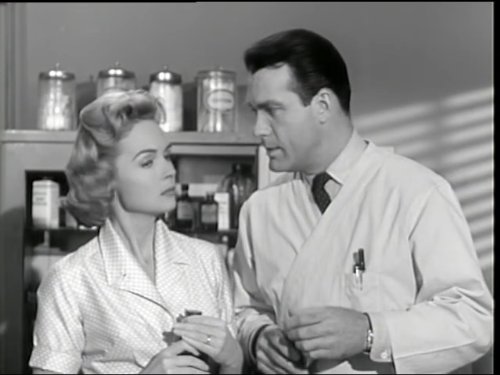
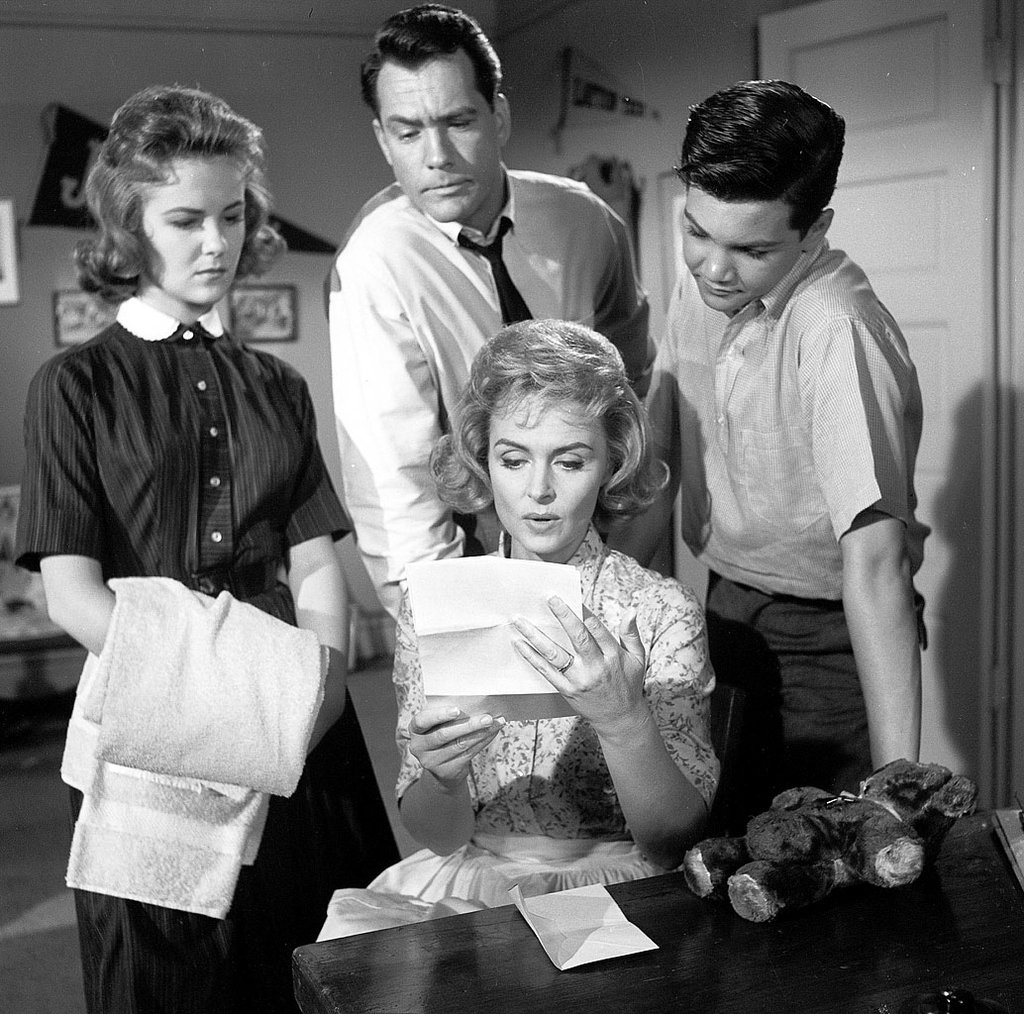
The Stone family includes Donna, Alex, Mary and Jeff. Donna (Donna Reed) is the iconic mother. She grew up on a farm (which Reed did). She became a nurse and occasionally helps Alex (Carl Betz), a pediatrician who has his office at the house. Mary (Shelly Fabares) is in her first year of high school. She studies ballet and plays the piano. During the series, she has several boyfriends. Mary left for college before the show ended, but Fabares made guest appearances. Jeff (Paul Petersen) is in grade school. He loves sports, likes to eat, and often teases his sister. In 1963 when Fabares leaves, Paul Petersen’s real sister, Patty was cast as a runaway orphan taken in by the Stone family. The Stones live in Hilldale, an All-American town.

reed9

Photo: pinterest.com

Several other characters appear often. Dave and Midge Kelsey (Bob Crane and Ann McCrea) are good friends of Donna and Alex’s.  Dave is also a doctor. Another of Alex’s colleagues who is a good friend is Dr. Boland (Jack Kelk), whom the kids call “Uncle Bo.” Smitty Smith (Darryl Richard) is Jeff’s best friend and Scotty (Jimmy Hawkins) is Mary’s boyfriend.

Photos: pinterest.com and metv.com

With Donna’s movie relationships, many guest stars appeared on the show during its run. Baseball players Don Drysdale, Leo Durocher, and Willie Mays played themselves. Musicians Harry James, Tony Martin, and Lesley Gore appeared. Buster Keaton was featured in two different shows. Esther Williams played a fashion designer. Other stars who showed up included Jack Albertson, John Astin, Dabney Coleman, Ellen Corby, Richard Deacon, Jamie Farr, Gale Gordon, Arte Johnson, Ted Knight, Harvey Korman, Cloris Leachman, Marion Ross, William Schallert, Hal Smith, Marlo Thomas, and William Windom.

In the opening credits, Reed comes down the stairs and answers the telephone which she gives to Alex. She then hands the kids their lunches and books and sends them off to school. When Alex leaves on a call, she closes the door and smiles. In 1964 when The Munsters debuted, their opening credits were a parody of Donna’s show as Lily performs the same actions.

reed12

Photo: metv.com

The Donna Reed Show faced the Milton Berle show, Texaco Star Theater Wednesday nights and ratings were not great. It was renewed and moved to Thursdays the next year. I was surprised to learn that during the eight years the show was on the air it was only in the top 20 in season six and only in the top 30 in season four.

reed5

Photo: cinemacats.com (Look closely and you’ll notice this was                                                                 the living room for I Dream of Jeannie as well).

Although the show never received very high ratings, Donna Reed was nominated for an Emmy every year from 1959 to 1962. (Jane Wyatt won in 1959 and 1960, Barbara Stanwyck won in 1961, and Shirley Booth won in 1962.) Donna Reed won the Golden Globe in 1963.

reed8

Photo: metv.com

In 1962 Donna felt that the writers had run out of creative ideas and were recycling plots. Both Mary and Jeff were allowed to perform in this season. Fabares debuted a single, “Johnny Angel” in February which went to number one on the charts, selling more than a million copies. In October, Petersen sang “My Dad” which made it to number six. Donna decided that would be the last season, but when ABC made her a very lucrative offer for three more seasons, she and her husband agreed.

reed1

Photo: nytimes.com

When this contract ended in 1966, Donna was ready to retire. Reed was considering a television movie reunion but when Betz passed away in 1978, she decided it was no longer an option.

Campbell Soup was the first sponsor, and later sponsors included Johnson & Johnson and The Singer Company. Whenever a scene takes place in a supermarket, Campbell’s Soup, V-8 Juice, Franco-American Spaghetti and Johnson & Johnson Baby Powder are likely to be in the shot.

reed13

Photo: metv.com

Reruns of the show were seen on Nick at Nite from 1985-1994 and on TV Land from 2002 until 2004. MeTV began airing the show in September of 2011.

The cast was a close-knit one and continued their relationships after the show ended. Paul Petersen credited Donna as being the nurturing adult he needed in his life to get him through the years of being a child star. She helped him understand how the industry worked and helped him during some tough times during his life. Shelly Fabares also said Donna and Carl were amazing. Realizing how tough the industry can be for young kids, they protected Paul and herself and loved them as second parents. Donna never forgot to send Shelly a birthday gift.  In 1986, before she passed away from pancreatic cancer, her final words were to make sure Shelly’s birthday gift was wrapped and delivered.

reed15

Photo: lapostexaminer.com

Despite the bad raps the show often received from the women’s lib organizations, Donna Reed did help advance the way women were perceived in the media. She endowed her character with strong emotions, definite opinions on issues, and independence. In her personal life, Reed expressed her views on the medical industry and the political arenas.

reed7

Photo: geocaching.com

Paul Petersen summed up the value of the show in an interview he did in 2008. In his words, The Donna Reed Show, “depicts a better time and place. It has a sort of level of intelligence and professionalism that is sadly lacking in current entertainment products. The messages it sent out were positive and uplifting. The folks you saw were likable, the family was fun, the situations were familiar to people. It provided 22-and-a-half-minutes of moral instructions and advice on how to deal with the little dilemmas of life. Jeff and Mary and their friends had all the same problems that real kids in high school did. That’s what the show was really about, the importance of family. That’s where life’s lessons are transmitted, generation to generation. There’s a certain way in which these are transmitted, with love and affection.”

I couldn’t say it better.

The Show That Never Really Ended


The past few weeks we have been exploring the shows that were part of the Friday night schedule from 1970-1972. We end this series by getting to know The Brady Bunch.

brady2


How It All Began

Sherwood Schwartz read a stat in LA Times that 31% of all marriages include children from a previous marriage. He put together a script for a show based on that statistic. All three networks liked it, but they all wanted significant changes, so he shelved it. In 1968, the films With Six You Get Eggroll and Yours, Mine, and Ours debuted. Schwartz’s script predated the two movies, but because the movies were so popular (Yours, Mine and Ours was the 11th top grossing movie that year), ABC decided to put Sherwood’s show on the air. At the time, the title of the show was either “Yours and Mine” or “The Bradley Brood.”

ABC gave Schwartz a 13-week commitment. John Rich was brought on to direct the pilot, the cast was hired, and sets were built at the Paramount TV Stage 5. The filming began Oct 4, 1968 and lasted 8 days.

The Brady Bunch

The show was supposed to reveal how a blended family overcomes daily problems, but by the second season, we forget that this was ever a blended family and the family deals with the same issues all siblings do.

brady7

Realizing how popular The Brady Bunch has been for decades, it’s surprising to learn that the show was never in the top 30 during its original run. When it had the number of episodes it needed for syndication, it was canceled by the network. The series found a new life in syndication becoming an American icon. When anyone says it was a “Brady Bunch” kitchen, dress, etc., everyone instinctively knows what that means.


Casting the Show

Shirley Jones was offered the role of Carol Brady first. Joyce Bulifant was then given the role. I’m not sure why she did not get the role; the only information I could find was that she was surprised because she had already signed the contract and had the wardrobe. But for some reason, they tested Florence after and thought she was the better choice for Carol.


Both Kathleen Freeman and Monty Margetts were auditioned for Alice. When Florence Henderson got the role, Ann B Davis was hired because they wanted a comedienne that seemed a better fit for Carol.

To find the 6 Brady kids, 464 were auditioned. Sherwood felt it would be more realistic if all the boys had dark hair like Reed and the girls were blonde like Henderson. Mike Lookinland, hired to play Bobby, was really a blonde and they had to dye his hair dark brown.

Allan Melvin played Sam Franklin, Alice’s boyfriend who owns the butcher shop. He was only in eight episodes but was mentioned often.

sam

Tiger the dog appeared in half the episodes from season 1 but only six in season 2 and then disappeared altogether.

tiger

During the middle of season 5, Robbie Rist was introduced as Oliver, Carol’s nephew who came to live with them while his parents traveled overseas.  It was an attempt to get the younger audience back since the youngest kids were now 11 and 12. The addition of Oliver felt forced and it wasn’t a popular change.

oliver

Schwartz’s daughter Hope was on the series four times:  Jenny at a slumber party in season 2, episode 3; Rachel, Greg’s girlfriend in season 3, episode 18 and in season 4, episode 15; and in the series’ finale as Gretchen, a graduate in Greg’s class. Many of the script ideas came from her real life.

hope

Many famous guest stars who played themselves met the Bradys: Davy Jones, Desi Arnaz Jr., Don Drysdale, Don Ho, Deacon Jones, NASA astronaut Brig. Gen James McDivitt, Joe Namath. Imogene Coca starred as Aunt Jenny. In an early episode Cindy and Bobby are ill; without discussing it, the parents each call their doctor to make a house call, so two doctors arrive at the same time played by Marion Ross from Happy Days and Herbert Anderson from Dennis the Menace. It worked out because the family decided to keep both doctors.

The Theme Song

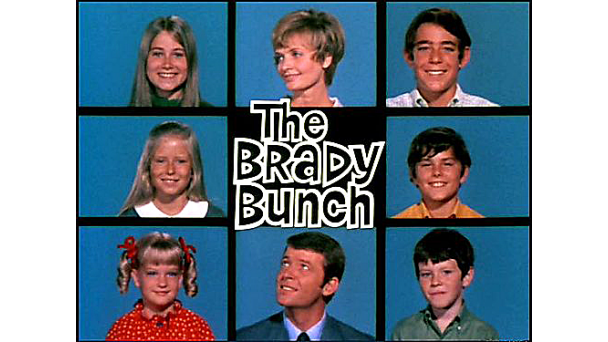
The well-known theme was written by Schwartz and Frank De Vol with the famous and often-parodied tic-tac-toe board featuring the family members.

brady1

The Peppermint Trolley Co. recorded the theme in season 1. The Peppermint Trolley Co. was a pop band that is known for performing on The Beverly Hillbillies and Mannix. They released one album in 1968. When Christopher Knight was heard singing it on set, the producer decided to have the Brady kids sing the theme, and a new arrangement was recorded each year.

If you need a reminder, the words are:

Here’s the story of a lovely lady Who was bringing up three very lovely girls. All of them had hair of gold, like their mother, The youngest one in curls.

Here’s the story, of a man named Brady, Who was busy with three boys of his own, They were four men, living all together, Yet they were all alone.

Till the one day when the lady met this fellow And they knew it was much more than a hunch, That this group would somehow form a family. That’s the way we all became the Brady Bunch.

The Brady Bunch, the Brady Bunch That’s the way we became the Brady Bunch.

The Brady House

house1

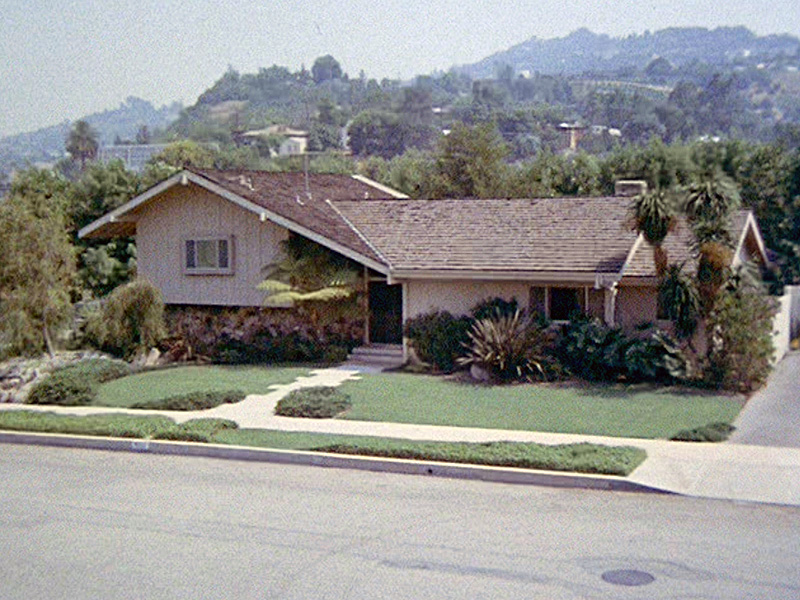
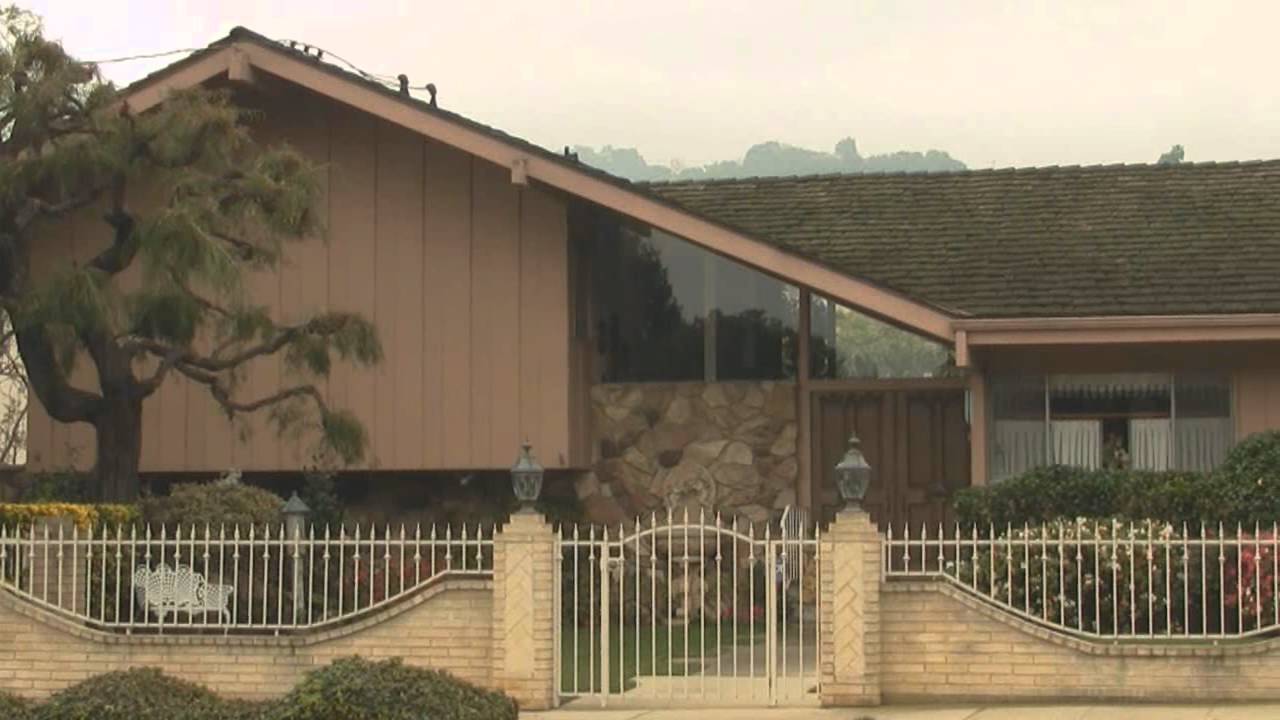
The house was a mid-century modern split-level home at 11222 Dilling St., Studio City, CA. Schwartz chose it because he thought it looked like a home an architect would live in. To make it look like there was a second story, a window was placed on the A-frame. The interior was used in two Mannix episodes and one Mission: Impossible episode. It was also re-created for an X Files episode “Sunshine Days.”  In that show, Scully and several agents investigate a bizarre murder case where the main suspect has an obsession with The Brady Bunch.  The Bradys’ address was given as 4222 Clinton Way. To help with privacy when the show ended, the owners put up a fence and tried to let some of the greenery grow to block the house from the street.

house2

Vehicles

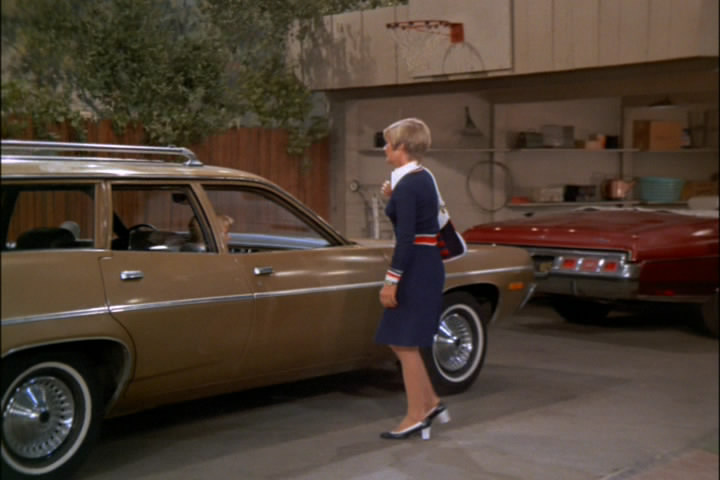
The vehicles were provided mainly by Chrysler. Throughout the series, Carol drove a brown Plymouth Satellite station wagon, using different models each year.

carol car

Mike primarily drove convertibles: Pilot – a blue 1968 Dodge Polara 500 convertible, Season 1 and 2 – a blue 1969 Plymouth Fury III convertible, Season 3 – a 1971 Plymouth Barracuda convertible, Season 4 – a blue 1972 Chevy Impala convertible, and for something different Season 5 – a red 1973 Chevy Caprice Classic convertible.

mike car

In one episode, “The Winner,” from season 2, Carol and Mike take Bobby to a local television station to compete in an ice-cream eating contest. They leave in their blue convertible but return in the brown station wagon. Whoops!

Spin Offs

This show spawned a variety of spin-offs and reunion shows including The Brady Bunch Hour (1976-77), The Brady Kids (1977), The Brady Girls Get Married (1981), The Brady Brides (1981), A Very Brady Christmas (1988), The Bradys (1990), and a big-screen movie, The Brady Bunch Movie (1995).

kelly's kids

Kelly’s Kids – a pilot for a spinoff was one of the episodes about the Bradys’ friend and neighbor Ken Kelly, played by Ken Berry. Ken and his wife Kathy adopt three boys, all of different racial backgrounds. One of the boys was played by Mike Lookinland’s younger brother. (Todd Lookinland went on to have a successful acting career.) The show was not picked up by the network.

The Brady Kids was a show from 1977 with 9 episodes. Eve Plumb declined the role, so Jan was played by Geri Reischl. It was scheduled sporadically and did not receive great ratings.

variety

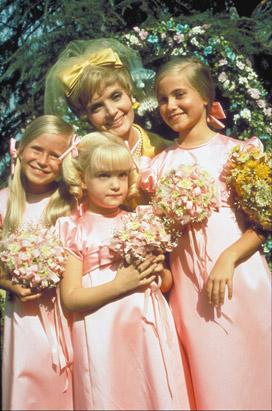
The Brady Girls Get Married was supposed to be a one-night tv movie. It ended up being split up into four half-hour weekly shows with the final one being the pilot for a show called The Brady Brides. In the movie, Jan and Marcia have a double wedding. It was the only time the entire cast worked together again after the original show. Mike is still an architect while Carol is a real estate agent. Marcia is a fashion designer, Jan is an architect, Greg is a doctor, Peter is in the Air Force and Bobby and Cindy are in college. Alice has married Sam. The concept of the series is that the two married couples buy a house and live together, but the guys are very different and don’t see eye to eye about much. After ten episodes, the show was cancelled.

THE BRADY BRIDES, Susan Olsen, Mike Lookinland, Eve Plumb, Christopher Knight, Maureen McCormick, Ba

When the show ended, the kids released a few albums; however only Barry Williams and Maureen McCormick stayed involved with the music business in their future careers.

In 1983, Robert Reed, Florence Henderson, Maureen McCormick, Christopher Knight, and Cindy Olsen competed on Family Feud in a celebrity edition of the show.

Life After the Brady Bunch

The cast was close and remained friends after the series ended. Robert Reed did not always agree with Sherwood Schwartz on the details of certain episodes, but he was close with the crew, especially Florence Henderson. At his own expense, he took all the kids to London on the QEII in 1971. When he was dying in 1992, Florence called each of the kids to tell them personally.


Maureen McCormick battled several demons before finding herself after the series ended. She performed in Peter Pan and Grease. Maureen has appeared in many television guest spots and feature films, including Dogtown in 1997, Baby Huey’s Great East Adventure in 1999, and The Million Dollar Kid in 2000.  She has released several albums and played country singer Barbara Mandrell in a tv movie. She wrote a memoir, Here’s the Story. She also recently competed on Dancing with the Stars.


Eve Plumb starred in Dawn: Portrait of a Teenage Runaway to combat getting locked into an image when the show was cancelled. She has done guest spots on a variety of television shows including One Day at a Time, Murder She Wrote, and The Love Boat. She played the mom on the Fudge series in the 1990s and was in the television special Grease: Live. She has become a well-known artist, primarily painting still lifes.


Susan Olsen sang on The Pat Boone Show and in the Elvis movie The Trouble with Girls before becoming Cindy Brady. She studied at the American Academy of Dramatic Arts, became a radio talk show host, an artist, an animal advocate, and co-wrote a book titled Love to Love You Bradys about the variety show.


Barry Williams starred in Pippin after the show ended. He has been a radio host and co-wrote a tell-all book Growing Up Brady: I was a Teenage Brady. He also guest starred in many shows including Murder She Wrote, Three’s Company, and Highway to Heaven. He tours with music theater and does speaking engagements.


Christopher Knight has been employed as a businessman for many years in the high-tech industry. During the 2000s, he appeared in several reality shows.


Mike Lookinland also had his share of issues to deal with after the show ended as he grew up. He attended the University of Utah and became a camera technician for two decades. Currently, he creates concrete countertops. (Photo on right courtesy of huffingtonpost.com)


Ann B Davis rarely acted after life on The Brady Bunch. She was very involved with her church. (See my blog “Oh Alice” dated February 5, 2018). She passed away in June of 2014.


Robert Reed was a trained Shakespearian actor, studying at Northwestern and at the University of London. He continued to guest star in a variety of television shows after The Brady Bunch ended. He passed away in 1992.


Florence Henderson continued to stay busy performing after the show. She and Shirley Jones traveled, performing together. She also wrote an autobiography titled Life is Not a Stage: From a Broadway Baby to a Lovely Lady and Beyond. She also spent much of her time raising money for charitable causes. She passed away in November of 2016. (see my blog “The Passing of a Pop-Culture Parent dated December 6, 2016.)


Allan Melvin continued to accumulate many acting credits after the show, primarily in animation. He passed away in 2008.


Conclusion

It’s amazing how popular the show has been for almost fifty years. Rarely does a show that aired for five seasons have so many spin-offs and show variations. It probably hurt the cast more than it helped because they could never overcome their strong identification as a Brady kid. The cast went on to do a variety of careers. Currently, The Brady Bunch can be seen on ME TV on Sundays for their “Brady Brunch” from 11 am to 1 pm central time.

brady13

In July of 2012, there was a lot of talk about a new version of The Brady Bunch. A reboot was approved by CBS to be produced by Vince Vaughn. The sequel apparently revolved around Bobby as an adult. I could not find any information about the status of the project.

brady5

While I enjoyed watching The Brady Bunch, I was a Partridge Family fan. I loved Alice though and always wanted to be Jan. I remember hoping I might have to get braces when she got them. I think it would be hard to find a show that had such an impact on so many different generations. Brady Bunch memorabilia is still being created and there are a ton of quizzes on the internet such as “Which Brady Kid Are You?”

brady4

I hope you enjoyed getting to know a little more about these Friday night shows from the early 1970s. I am looking forward to a Friday night when I can sit back and watch a few episodes of each show for my own dream line-up.


Love and the Funny Show

ABCFriday_1972

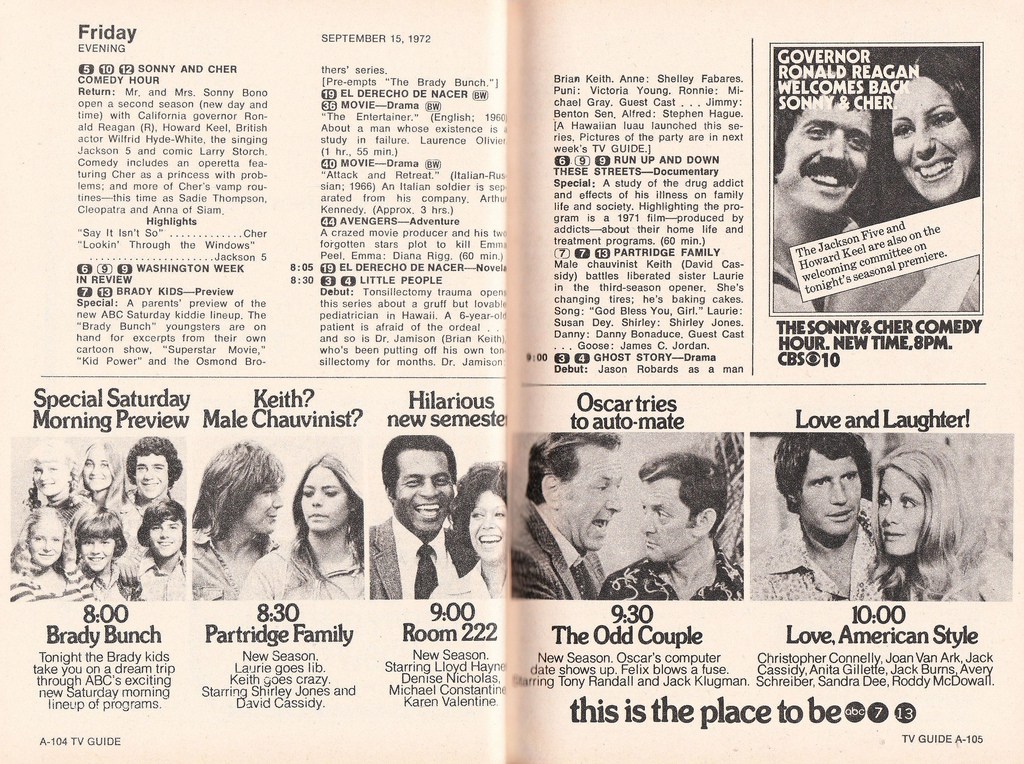
There was something magical about the Friday evening television schedule from 1971-1973.  Anyone who was born in the late 1950s or early 1960s can remember sitting down in front of the television at 7 pm (central time) for the Brady Bunch and staying put through The Partridge Family, Room 222, The Odd Couple, and Love, American Style.  Sitting through an entire evening of shows was almost unheard of back then, but we binge watched every Friday night. While the boys were divided between Marcia Brady and Laurie Partridge, every girl of that age had was in love with Keith Partridge.  Watching an episode of The Partridge Family today makes me feel 10 again. For the next five weeks, I’m taking a look at each of the shows that made this schedule so enjoyable.

las18

Today we begin with Love, American Style. This show was an iconic 1970s show. Like Laugh In, the clothing, furnishings, and vocabulary do not make it timeless. But it was a lot of fun. This fast-paced anthology show featured two to four mini episodes each week, and between them were quick skits, often featuring a brass bed. Each smaller episode is titled “Love and the _______.”

A troupe of players was featured on each show for the in-between skits. These regulars included William Callaway, Buzz Cooper, Phyllis Davis, Mary Grover, James Hampton, Stuart Margolin, Lynn Marta, Barbara Minkus, and Tracy Reed. Margolin went on to a regular role in The Rockford Files; Tracy Reed was featured in McCloud and Knot’s Landing; Phyllis Davis was part of the cast of Vega$ and Magnum PI, and James Hampton will be familiar if you watched The Doris Day Show or F-Troop. Both Reed and Davis were featured on Love Boat episodes which had a similar format to Love, American Style.

The show had a memorable and catchy theme song. Written by Arnold Margolin, the first year it was performed by The Cowsills.  You will see a lot of overlap between these five Friday night shows, and music is one of those cross-overs. The Partridge Family was based on the life of The Cowsills.

During the second and subsequent years that Love, American Style was on the air, the theme song was performed by the Ron Hicklin Group. The Ron Hicklin Group could be heard in a variety of motion pictures and commercials, and they also appeared on recordings with stars such as Paul Revere and the Raiders and Cher. John and Tom Bahler, brothers who sang under The Charles Fox Singers were also part of this group. The group provided television theme song recordings including Batman, That Girl, Happy Days, and Laverne and Shirley. They also did the singing for The Partridge Family theme and songs performed on the show as well as the Brady Bunch kids. Ron retired in the early 2000s, and Tom does a variety of things. He is also known for writing Bobby Sherman’s hit, “Julie Do You Love Me?”. John married Janet Lennon, one of the Lennon sisters who performed on The Lawrence Welk Show. He currently lives in Branson and conducts the “new” Lawrence Welk orchestra.

hicklin singers

The snappy melody was set to the following words:

Love, Love, Love

Love, American Style,
Truer than the Red, White and Blue.
Love, American Style,
That’s me and you.

And on a star-spangled night my love,

My love come to me.
You can rest you head on my shoulder.
Out by the dawn’s early light, my love
I will defend your right to try.

Love, American Style,
That’s me and you.

Paramount Television developed the show. The executive producer of the show was Arnold Margolin, Stuart’s brother. There were 53 different directors during the four-year run. The series received Emmy nominations for Outstanding Comedy Series in 1970 and 1971; Best Music Composition in 1971, 1972, and 1973, winning in 1973; and winning the Emmy in 1970 for Outstanding Original Music and Lyrics.

las8

Many people wrote for the show, but Garry Marshall and Jerry Belson received the most credits. One of the writers, Peggy Elliott, was interviewed by the Huffington Post in May of 2013, and she talked about her time writing for the show.

“But the show I loved writing the most, was Love, American Style. For every other show, I was writing for characters created out of someone else’s head. Sure, we could create the occasional guest-star role, and we had been told to make every role, no matter how small, a real person. ‘Think of the actor who’s playing that delivery boy,’ I can hear Billy Persky, the co-creator or That Girl, say: ‘This is a big break for him — it’s the biggest role he’s had so far. Give him something to work with.’

But with Love, American Style, every character was our very own; every situation came out of our heads. Each segment of the hour the show ran each week was a one-act play created entirely by us. Added to the attraction was the fact that we could say and do things that were taboo on every other TV show in the early ‘70s. Arnold Margolin, co-creator of the show with Jim Parker, told me recently that the creative side of the network wanted the show to be more daring, while the censors kept their red pencils ready. There was a full-time position on the show just to run interference.

We must have put both sides through the hoops with one episode we wrote: ‘Love and The Hand-Maiden.’ A young guy was dating a centerfold model. As their relationship developed, he discovered that she had no problem with shedding her clothes, but she always kept her hands covered — with artful poses in magazines, and with gloves in real life. He became obsessed with seeing her hands and came up with one ruse after another to get her to take off her gloves. We had a ball writing it, with one double-entendre after another.”

If you were a star of any kind in the early 1970s, you most likely were on Love, American Style.  The show produced 108 episodes, and those shows featured 1112 different actors. Some of the famous names showing up in the credits include Milton Berle, Sid Caesar, Phyllis Diller, Arte Johnson, Ozzie and Harriet Nelson, Regis Philbin, Burt Reynolds, Sonny and Cher, Flip Wilson, and Jo Anne Worley. Karen Valentine from Room 222, Ann B Davis and Robert Reed from The Brady Bunch, and both Jack Klugman and Tony Randall from The Odd Couple show up along the way.

Brad Duke wrote a biography about Harrison Ford and he said Ford had fond memories of appearing on Love, American Style. “He recalled that he had been given little time to prepare his wardrobe for the role of a philosophical hippie in the November 1969 episode, “Love and the Former Marriage.” He appeared on set with long hair and a beard thinking they were appropriate for the role. He was surprised when he was told he needed a haircut and trim than given a navy blue dress shirt and vinyl burgundy jeans with a large belt. They even had a scarf with a little ring to put around my neck. And I thought, someone has made a mistake here. So, rather than argue with the wardrobe people, I put on the clothes and went to find the producer. I walked on the set and he was pointed out.  I tapped his shoulder and when he turned around he had on the same clothes I did. He was a hippie producer I guess. At least the check went through, and I got paid.”

harrison1love and the former marriage

The best way to get a good understanding of what the show was like is to look at a couple of the episodes.

January 23, 1970: Love and the Big Night

Starring Ann Elder, Buddy Lester, Frank Maxwell, Julie Newmar, and Tony Randall, this episode was often listed as a favorite. Randall is a married businessman who escorts his voluptuous secretary (Newmar) to her apartment after a late night at the office. Eager to get home to his wife, Randall hurriedly tries to open a stubborn jar of mayonnaise and winds up covered with mayo. Newmar cleans his suit, but while it’s drying, it’s stolen. After a series of amusing mishaps, Randall finally gets back to his own apartment and creeps into bed with his wife–only to find out she’s not there.

February 25, 1972: Love and the Television Set

It starred Harold Gould, Marion Ross, Ron Howard, and Anson Williams. Reading this list of names might give you a hint about what happened to this episode after it aired. Garry Marshall had written a pilot about a 1950s family that did not sell.  He turned it into an episode for Love, American Style. George Lucas caught the episode and was impressed with Ron Howard and offered him a role in his new movie American Graffiti about 1950s teens. The movie was so popular, that the network decided to put Marshall’s pilot in the fall line-up as Happy Days. Harold Gould’s role was given to Tom Bosley for the series. When Love, American Style went into syndication, this episode was retitled “Love and the Happy Days.”

October 22, 1970: Love and the Bashful Groom

This is the episode I recall when I think of the series. When I watched it originally, I was staying overnight at my grandparents’ house and my grandmother was shocked at the “vulgarity.” It really seems quite tame today, but back then it probably was unexpected. She would approve of Tom Bahler marrying Janet Lennon though because I watched Lawrence Welk with her and my grandfather whenever I was at their house.

In this episode, Paul Petersen, Christopher Stone, Meredith MacRae, Jeff Donnell, and Dick Wilson are featured. Harold (Petersen) and Linda (MacRae) are getting married. He learns that she grew up in a nudist colony and is not comfortable being naked for his wedding.  After a soul-searching talk with his best friend, and realizing he loves Linda enough to be uncomfortable, he decides to go through with the ceremony.  He gets to the church a bit late and walks in, only to see that everyone else is dressed in their Sunday best. His bride informs him that they always dress up for weddings. One of the congregation members says something like “Let’s not make him uncomfortable,” and they all begin to undress.  Of course, you see nothing improper, only clothes flying. This was probably not the best episode to “expose” my grandmother to as a first glimpse of the show.

The show lasted for four years and was cancelled in 1973. In 1985, a reboot was created, but it was on in the mornings and only lasted a few months.  The show was on at the same time as everyone’s favorite game show, The Price is Right. For the 1998 fall season, a pilot was created for prime time, but it was never ordered. While doing my research for this blog, I noticed that there was a Love, American Style project in production, so we may see it resurface again.  I’m not sure I would want to watch a 2019 or 2020 version of the show though. It was such a product of its time, and I fear what a current version would be like after seeing the reboot of Match Game which has been airing the past year or so.

Let’s all write to Antenna TV and Me TV to see if they will make the original 1971 television schedule happen, and we can watch these original shows again, reliving the excitement we experienced the first time around.

Next week we get to know The Odd Couple.


1917 Was A Very Good Year

This week I was inspired by the blog “Once upon a screen . . .” to take a look at television pioneers who were born in 1917. (For some great articles on pop culture, movies, and television, check out her blog at aurorasginjoint.com.) Let’s get to know 17 of the stars who helped shape the direction of television during the golden age.

Herbert Anderson. Best known for his role as Henry Mitchell on Dennis the Menace, Anderson began his career making movies.  He transitioned to television in 1953, appearing on 61 shows over the years.  He appeared in episodes on such shows as Gunsmoke, Petticoat Junction, Batman, I Dream of Jeannie, Man from U.N.C.L.E., My Three Sons, Bewitched, and The Waltons.  One of my favorites is the first season of The Brady Bunch.  The kids are sick and both parents call a doctor.  The girls were used to a woman played by Marion Ross while the boys always had a man, Anderson.  After weighing factors to pick one of them, the family decides to keep both doctors. He died from a heart attack in 1994.

Carl Ballantine. Ballantine began his career as a magician and inspired many famous magicians since.  He began working in Las Vegas and on television as a magician.  Eventually he transferred to movie roles and after appearing in McHale’s Navy on the big screen, took on the same role of Lester Gruber on the television series. He went on to appear on 33 additional tv shows including That Girl, Laverne and Shirley, Trapper John MD, and Night Court. He passed away at his home in 2009.

bellamy1

Earl Bellamy. Earl Bellamy directed episodes for 101 different television shows.  He is best known for The Lone Ranger and The Tales of Wells Fargo.  He directed 82 episodes for Bachelor Father, one of my all-time favorite sitcoms.  In the 1960s he specialized in sitcoms including That Girl, The Brady Bunch, The Partridge Family, and My Three Sons while the 1970s saw him transition to dramas including Marcus Welby MD, The FBI, Medical Center, and Eight is Enough. In 2003 he passed away from a heart attack.

Ernest Borgnine.  Best known of his Oscar-winning role of Marty in 1955, Ernest enlisted in the Navy in 1935 until 1941.  In 1942 he re-enlisted and served until 1945.  After doing some factory work, he decided to go to school to study acting and began his career on Broadway.  He was also in the movie McHale’s Navy and went on to tackle the role in the television series.  He loved working with Tim Conway and in later years they did the voices for Mermaid Man and Barnacle Boy in SpongeBob SquarePants. He appeared in 47 different shows over the years, including the series Airwolf which he starred in. Borgnine appeared in the final episode of ER which he won an Emmy for. He was married five times, including a 32-day marriage to Ethel Merman.  His last marriage to Tova lasted 39 years. He died of kidney failure in 2012.

Raymond Burr. Best known as Perry Mason, Burr started his career on Broadway in the 1940s and then appeared in 50 films from 1946-1957. In 1956 he auditioned for the role of Hamilton Burger, the DA in Perry Mason.  He was told he could have the starring role if he lost about 60 pounds which he accomplished. He later starred in Ironside, another crime drama and appeared on a variety of other shows.  Burr had many interests including raising and cross-breeding orchids; collecting wine, art, stamps and sea shells; reading; and breeding dogs.  He was extremely generous, giving away much of his money over the years.  He passed away from cancer in 1993.

Phyllis Diller. Known for her wild hair and clothing, Diller was one of the pioneering stand-up female comedians.  She appeared in films in the 1940s, worked in radio in the 1950s, and began her stand-up career in 1955. Her first television appearance was in You Bet Your Life.  She appeared in 40 shows including Batman, CHIPs, Full House, and The Drew Carey Show.  She had her own show titled The Pruitts of Southampton, and in reruns The Phyllis Diller Show that ran from 1966-67.  She recorded comedy albums in the 1960s, wrote several books during her career, was an accomplished pianist, performing with symphony orchestras across the US and taught herself painting which she continued throughout the 1960s and 70s. Her husband Fang was not real, but she used him in her comedy routines.  She died of natural causes in 2012. My first memory of Diller was in the movie Boy Did I Dial a Wrong Number with Bob Hope which my parents took me to at the drive in.

Ross Elliott. A prolific actor on stage, film, and television, Elliott appeared in 184 different shows from sitcoms to westerns to medial dramas, all between 1951 and 1983. He passed away from cancer in 1999.

June Foray.  One of the greatest voice actors ever, Foray has been active in the industry since she had her own radio show.  She did off-air voices for many sitcoms including I Love Lucy, Father Knows Best, Jack Benny, Rawhide, Get Smart, Lost In Space, and Bewitched.  She also appeared in more than 76 animated series.  She is perhaps best known as Rocky in Rocky and Bullwinkle and as Cindy Lou Who in How the Grinch Stole Christmas and Karen and other voices in Frosty the Snowman. Foray is still alive today.

Zsa Zsa Gabor.  Unlike her sister Eva who became known as Lisa Douglas on Green Acres, Zsa Zsa seemed to make a career out of playing herself.  Of the 80 appearances she made in film and television, 20 of them were as herself. She was a true celebrity.  Crowned Miss Hungary in 1936, she came to the US in 1941 and began her career.  She was known for her extravagant lifestyle and many marriages: 9 with 7 divorces (including one to Conrad Hilton) and 1 annulment.

Sid Melton.  Known to most viewers today as handyman Alf Monroe on Green Acres, Melton began as a film star and went on to appear in 71 shows including Topper, Bachelor Father, Make Room for Daddy, That Girl, Petticoat Junction, I Dream of Jeannie, and Empty Nest. He died from pneumonia in 2011.

Alice Pearce. Although her career was cut short due to illness, I included Alice Pearce because her role as Gladys Kravitz in so memorable.  After spending her childhood in Europe, Pearce started on Broadway and after appearing in On the Town, she was brought to Hollywood to reprise her role in the movie version. She began specializing in comedy in the 1940s. In 1964 she turned down the role of Grandmama in The Addams Family and shortly after was offered the role of Gladys in Bewitched. She was already diagnosed with ovarian cancer when she began her role but didn’t tell anyone and was able to act for two seasons before she passed away from the disease. She received an Emmy for her work on Bewitched.

Gene Rayburn. One of the kings of game shows, Rayburn began his career as an actor, taking over for Dick Van Dyke in Bye Bye Birdie when Van Dyke began his television show. While he was on numerous game shows as a panelist or host over the years, Rayburn is best known for Match Game which first ran from 1962-69. It was revived again in 1973 and took several formats in the following years.  He died from heart failure in 1999.

Isabel Sanford. Best known as Louise Jefferson, she grew up in Harlem and performed in amateur nights at the Apollo Theatre. Her Broadway debut was in 1965.  After appearing as a maid in Guess Who’s Coming to Dinner, she was cast by Norman Lear in All in the Family which led to the series The Jeffersons.  When the show ended in 1985, she appeared in a variety of other shows until 2002.  She passed away from natural causes in 2004.

Sidney Sheldon.  A writer and producer, Sheldon created The Patty Duke Show, I Dream of Jeannie, and Hart to Hart, writing many of the scripts for all three series. After he turned 50, he began a career writing romantic suspense novels.  He died from pneumonia in 2007.

Robert Sterling. A clothing salesman before getting into acting, Sterling was best known for his role as George Kerby in Topper from 1953-55.  His wife, Anne Jeffreys played his wife in the show. From 1943-49 he was married to Ann Sothern. He appeared in 36 shows between 1951 and 1986. He passed away from natural causes in 2006.

Jesse White.  While White was a hard-working character actor, he is best known for his commercials as the Maytag repairman from 1967-88. After appearing in films for many years, he transitioned to television in the 1950s.  His daughter Carole Ita White also became an actress best known for Laverne and Shirley. White appeared in 113 shows, never receiving a regular series.

Jane Wyman. Wyman began working at Warner Brothers at age 16, claiming to be 19. Although she was a successful film star and began in television in 1955 with her own show, Jane Wyman Presents Fireside Theater, she is probably best known for her role on Falcon’s Crest from 1981-90 and her marriage to Ronald Reagan. She died in her sleep from natural causes in 2007.

These are just a handful of television mavericks that influenced television as we know it today.  I was amazed at the variety of different talents each of these stars displayed.  In comparing their television appearances, it’s surprising how many of them overlap and worked on the same shows.  What I found most surprising was that Ballantine, Diller, Melton, Sanford, Sterling, White and White’s daughter all appeared on Love American Style while Bellamy, Borgnine, Burr, Diller, Gabor, Rayburn, Sanford, White, and Wyman all guest starred on The Love Boat.  During my research, I ran across many shows that will become future blog topics.

Another fun fact about celebrating stars born in 1917 is that this week we are traveling to Pennsylvania to celebrate my grandmother’s 100th birthday who was also born in 1917.  Happy Birthday Mamie.