Having a “Bawl” with I Love Lucy

This month we are learning to love Lucy. We have looked at the career of Lucille Ball, and today we are taking a peek back at the well-loved sitcom, I Love Lucy.

đź“·pinpage.com

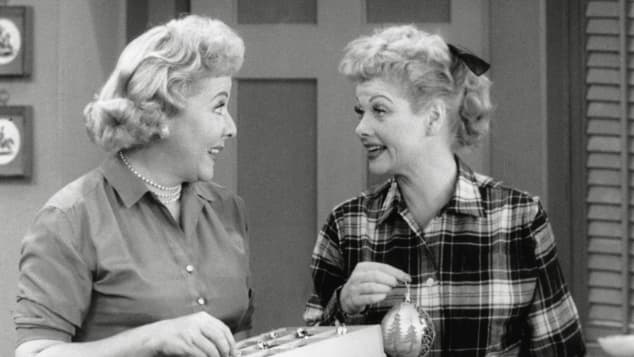
The show starred Lucille Ball, Desi Arnaz, Vivian Vance, and William Frawley. The series featured a young housewife, Lucy Ricardo, who lived with her husband Ricky, a nightclub bandleader. Their landlords, Fred and Ethel Mertz, were also their best friends. Lucy and Ethel get involved in a variety of schemes to get into show business. Lucy relies on Ethel and Fred who were in vaudeville earlier in their career. Eventually Lucy and Ricky have a son which coincided with the birth of their son Desi Jr. Lucy and Ethel try Desi’s patience often with their antics. When he gets upset, he starts speaking Spanish. Fred doesn’t have much time for the women’s plots either. After living through the Depression, he is considered cheap and doesn’t tolerate nonsense. In season six, the quartet move to Connecticut.

In 2012, ABC News and People did a joint survey, listing I Love Lucy as the Best TV Show of All Time.

The theme music was composed by Eliot Daniel with lyrics by Harold Adamson.

The show had three directors: Marc Daniels was director from 1951-53; William Asher, who would later produce Bewitched among other shows, was director from 1952-57, and James V. Kern directed 39 episodes from 1955-57.

Jess Oppenheimer was producer for the first 153 episodes; Desi Arnaz was executive producer for the first 124 episodes and producer for the final 26.

Oppenheimer was credited with writing for seasons 1-5, Madelyn Pugh Davis and Bob Carroll Jr. assisted him.

đź“·đź“·wikipedia.com Best Friends

Lucille Ball had been starring in “My Favorite Husband” on the radio and in 1950, CBS wanted her to transition to television. Richard Denning had been her costar on the radio, but now she wanted to do a series with her real-life husband, Desi Arnaz. CBS did not think visitors would buy in to Lucy, the all-American girl, married to a Cuban musician. To prove them wrong, Lucy and Desi created a vaudeville act written by Carroll and Pugh that they performed with Arnaz’s orchestra in New York. The act was a big hit, so Harry Ackerman approved the couple doing the show.

The pilot was ordered in 1951. Oppenheimer, Pugh, and Carroll also made the move from radio to television. Philip Morris decided to sponsor the show. Ball wanted to continue her film career along with television show which was set to air biweekly. Philip Morris wanted the show to air weekly, and they wanted it filmed in New York. Because Lucy and Desi were expecting their first child, they wanted to stay in Hollywood. The couple agreed to reduce their pay by a $1000 a week in order to stay in California and cover the additional expenses of filming. They asked for 80% ownership in the films, with the remaining 20% going to Oppenheimer who shared 5% with Pugh and 5% with Carroll. Desilu (combining Desi and Lucy) became their production company.

The couple hired Carl Freund, who had worked on many big-screen movies, to film the show. He uniformly lit the set so all three cameras would pick up the same quality of the image. He also pioneered “flat lighting,” which lit everything with bright lights to get rid of shadows. The three-camera method became the standard sitcom technique.

đź“·rottentomatoes.com

A live audience produced a more authentic laugh than the canned laughter some shows used. Both Desi and Lucy’s mothers’ laughter can be detected in these early episodes.

When Lucy needed some rest after having her baby, the company could not finish their 39-episode commitment, so Oppenheimer and Desi decided to rebroadcast some of their favorite episodes instead. This out-of-the-box thinking proved to be so popular that it eventually led to the syndicated market.

When Lucy decided to transition her show from radio to television, Gale Gordon and Bea Benaderet were offered the roles of Fred and Ethel. However, both of them were already transitioning from radio to other televisions series. Gordon had already committed to Our Miss Brooks and Benaderet had agreed to star in The George Burns and Grace Allen Show.

The role of Ethel was then offered to Barbara Pepper, who was a good friend of Lucy’s. However, she was known to have a drinking problem; Wiliam Frawley also was a heavy drinker, so the production staff did not feel comfortable having two cast members with alcoholic issues, so the offer to Pepper was rescinded. Pepper would appear quite often in I Love Lucy and eventually she settled in Hooterville, married to Fred Ziffel.

đź“·pinterest.com

Frawley never appeared drunk during filming or caused any problem on the show. I did think it was funny though that he had a clause in his contract that he did not have to film when and if the New York Yankees were in the World Series. They made it to the big show every year the series ran except for 1954.

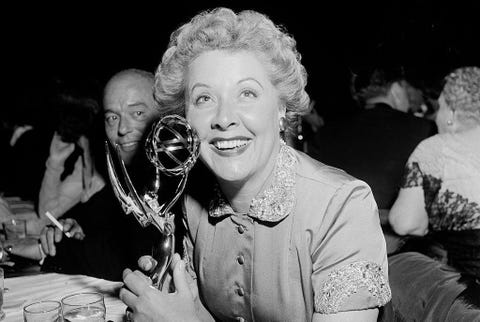
Mary Wickes was then offered the role, but she was afraid working with Lucy would harm their friendship. Director Marc Daniels suggested Vivian Vance who was performing in “The Voice of the Turtle.” Oppenheimer and Arnaz went to watch her performance and hired her on the spot. Lucy was not thrilled with the idea of Vance. She thought she was prettier than her vision of what Ethel would look like. Vance was only two years older than Ball, but the producers agreed to dress her in frumpier clothing. Eventually Ball and Vance became good friends. Vance was the first actress to win an Emmy for Outstanding Supporting Actress. When I Love Lucy ended, Ball asked Vance to star in her new series, The Lucy Show.

Unfortunately, Vance and Frawley never warmed to each other the way she and Lucy did. They barely tolerated each other, although they were both always professional on the set.

Lucy and Desi had several miscarriages and when they were able to sustain a pregnancy which resulted in daughter Lucie, they filmed Lucy without ever mentioning that she was pregnant. The sponsors thought it would be in poor tasted to talk about pregnancy. However, in the second season, they were pregnant once again, and the pregnancy was written into the show. They had to use the word “expecting” when talking about the baby. The episode “Lucy Goes to the Hospital” in 1953 was watched by almost 72% of families with televisions, the highest rating for quite some time. It was surpassed by Elvis Presley’s first appearance on The Ed Sullivan Show.

The show was on for from 1951-1957 on CBS, resulting in 180 episodes.

I Love Lucy aired on Mondays for its first run. In 1967 the network began offering the show in syndication and it has never been off the air.
đź“·pinterest.com

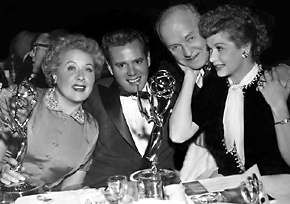
I Love Lucy was nominated for Best Comedy/Sitcom in 1952, 1953, 1954, and 1955, winning in 1953. Ball was nominated for Best Comedienne in 1953-1958, winning in 1953 and 1956. Vance was nominated for Best Supporting Actress in 1954, 1955, 1957 and 1958, winning in 1954. Frawley was also nominated for his role in 1954-1958. He never won but he lost to some great actors including Art Carney and Carl Reiner. Only Arnaz was denied a nomination for his comedy skills.

In 1957, Lucille Ball decided to end the show. She and Desi created a new show that wasn’t really new. It took the four main characters from I Love Lucy and moved them to Connecticut. Arnaz changed the format and length of the show, now an hour long, because he said he wanted to change it up before people got tired of the characters. He said this format kept the cast intact but also allowed for a celebrity guest star for Lucy to meet in every episode. In 1960 the show ended, the same year the couple’s real life marriage ended.

Unfortunately, the couple’s marriage dissolved in 1960, and in 1962, Lucy bought Desi’s shares of Desilu becoming the sole owner. She sold the company to Gulf+Western who owned Paramount Pictures.

We all remember the merchandising that accompanies shows in the sixties and seventies like dolls, board games, lunch boxes, etc, but I Love Lucy had more than its share of memorabilia. In 1952 a baby doll was released. Believe it or not, you could purchase an I Love Lucy bedroom set for $199 in the fifties, as well as I Love Lucy his and her pajamas.

The way it ended, I Love Lucy never had a proper finale. I wish I had the time to devote to how much this show changed the course of television, but a weekly blog just can’t contain as much history as there is to tell. I’m sure Lucy would be amazed if she knew that more than seventy years after the show began, we are still watching it and talking about it. Legacy doesn’t get any better than that.

Celebrating National Kansas Day with Vivian Vance

As we continue to celebrate National State Days, this week we are visiting Kansas. Our Sunflower star is Vivian Vance. Vivian was born in Cherryvale, Kansas in 1909. Her family moved to Independence when she was six. She knew she wanted to be an actress, but her mother’s strict religious beliefs prohibited her. She began sneaking out of her room at night to perform and eventually moved to Albuquerque, New Mexico where she changed her last name from Jones to Vance.Vivian married Joseph Shearer Danneck Jr. in 1928 at age 19 but they divorced in 1931.

Vivian Vance Hated One Thing About Being On 'I Love Lucy'
Photo: showbizcheatsheet.com

In 1930 she was hired for her first job at the Albuquerque Little Theatre. After appearing in many other plays for the group, the local theater community paid her way to New York so she could study with Eva Le Gallienne.

In 1932, Vance began working on Broadway and was often a chorus member. In 1937 she replaced Kay Thompson in “Hooray for What!” and then began receiving supporting roles. In 1941, she joined Danny Kaye and Eve Arden in Cole Porter’s musical “Let’s Face It” for 500 performances. She would appear in 25 plays with her last being “Harvey” in 1977.

See the source image
Photo: pinterest.com

In 1933 Vance tried marriage again, wedding George Koch, but that relationship also ended in divorce in 1940. Her third marriage to Philip Ober in 1941 would also last only 8 years.

Until 1950 she was offered some small roles in big screen in several films. In 1949, she appeared in her first television series, Philco TV Playhouse.

See the source image
Photo: famouspeople.com

In 1951, Lucille Ball and Desi Arnaz decided to launch their sitcom I Love Lucy. Ball was hoping to cast Barbara Pepper or Bea Benarderet in the role of Ethel Mertz. Bea had already taken the role of Blanche Morton on The George Burns and Gracie Allen Show. CBS declined to hire Pepper because they said she had an addiction to alcohol. After many roles as “The Dame” in the movies, Pepper later played Doris Ziffel on Green Acres. It’s interesting that CBS allowed William Frawley to be hired for the show because he had a well-known alcohol problem at that time, but Desi gave him strict rules.

Director Marc Daniels had seen Vance perform in the “Voice of the Turtle” and suggested her for the role. She would play Ethel for 179 episodes. She was nominated for her work in 1954, 1956, and 1957, winning in 1954.

See the source image
Photo: countryliving.com

Apparently, she was a very good actress because although she and William Frawley who played her husband Fred had great comedic timing, they could not stand each other. Vivian wasn’t happy that she had to wear frumpy clothing and that Frawley was supposed to be her husband because he was 22 years older than her. He overheard a derogatory comment she made about their age difference, and they never developed any type of cordial friendship after that. However, their coworkers claimed they were professionals and treated each other with respect on the set.

See the source image
Vance with Frawley, Arnaz, and Ball–Photo: hollywoodmemorabilia.com

When the sitcom ended, Vance continued to play Ethel on The Lucille Ball-Desi Arnaz Show. She and Frawley were offered a spin-off series, but Vance passed because she didn’t want to continue working with Frawley. Vance was interested in another show however, and Desilu, Ball and Arnaz’s production company, put together a show called Guestward Ho! for her, but the network rejected the pilot. Desilu made some changes to the show and hired Joanne Dru for the lead. ABC picked it up but cancelled it after one season.

In 1961, Vance married John Dodds, an agent, editor and publisher. They moved to Stamford, Connecticut, and Vance always felt pulled between her marriage and career. In 1974 the couple moved to California. Vivian had no children from her four marriages but was godmother to Lovin’ Spoonful band member John Sebastian.

See the source image
Candy Moore, Ball, Jimmy Garrett, Ralph Hart and Vance–Photo: hitstv.com

When Ball put together a new show, The Lucy Show in 1962, she invited Vance to costar on the show. The concept featured Ball as Lucy Carmichael, a widow, raising two children in Danfield New York. Vance played her best friend Vivian Bagley, a divorced mother of one son. After a few years, Vance wanted a bit more control and a bit of controversy developed between Lucy and Vivian. Vivian left the show, but they resolved their differences and she guest starred on the show and joined Lucy on reunion shows and on her third sitcom, Here’s Lucy which ran from 1968-1974.

See the source image
Photo: pinterest.com

Vance had very few television roles after leaving Ball’s sitcom, although she did make appearances on Off to See the Wizard, Love American Style, Rhoda, and Sam.

She was best known during those years as the Maxine, the Maxwell Coffee lady starring in numerous commercials for the coffee company. She was paid $250,000 for her three-year contract.

See the source image
Photo: pinterest.com

The last time Vivian and Lucy appeared together was Ball’s special Lucy Calls the President in 1977. Not long afterward, Vance suffered a stroke which left her partly paralyzed. She died in 1979 from bone cancer.

Both Ball and Arnaz commented on her death. Desi shared that “it’s bad enough to lose one of the great artists we had the honor and the pleasure to work with, but it’s even harder to reconcile the loss of one of your best friends.”

Ball commented on Vivian’s performance as Ethel: “I find that now I usually spend my time looking at Viv. Viv was sensational. And back then, there were things I had to do—I was in the projection room for some reason—and I just couldn’t concentrate on it. But now I can. And I enjoy every move that Viv made. She was something.”  Both Vance and Frawley were inducted into the Television Academy Hall of Fame in March of 2012.

When Lucille Ball and Vivian Vance Said Goodbye For The Last Time
Photo: allvipp.com

Some actors have the ability to adapt to a variety of television roles and we’re grateful for them. Other stars create one that is so memorable it becomes completely entwined with part of our life. Thank you Vivian Vance for being Lucy’s best friend. While we love Lucy’s antics, you are the one the majority of us identified with and for seventy years you have been influencing comedy and making new fans.

I Married Joan: Fans Said I Love Lucy

This month my blog theme is “Don’t Judge Me.” We’ll take a look at sitcoms featuring judges. The first show on the docket is I Married Joan. Debuting on NBC in 1952, the show starred Joan Davis and Jim Backus and was typically described as the marriage of a respected judge and his scatterbrained wife, Joan and Bradley Stevens. It ran for three seasons and produced 98 episodes.

Photo: dvdtalk.com

The early shows begin in the judge’s chambers where he recalls one of his wife’s wacky adventures followed by the episode and ending with the judge summing up his tale of his wife’s mishap and its similarity to a case he was working on. It was very similar to I Love Lucy; however, this show featured more slapstick comedy by Davis. Marc Daniels directed both shows. The shows also were both filmed in Los Angeles at General Service Studios and debuted October 15 (one year apart). Time hated the show—“It might have better been left on the shelf.” Variety, on the other hand, found it filled with “comic zest and vitality.”

I Married Joan was created and produced by Joan Davis Enterprises. She was a successful businesswoman and a workaholic. Joan earned $7500 a week; in today’s equivalent, that would be about $70,000 per episode. Joan was apparently not a very easy person to work for or with.  Sherwood Schwartz wrote about a third of the episodes. (He would later go on to create The Brady Bunch and Gilligan’s Island.) He did not care for Davis and said that Joan made one of the writers stick close to her when they ran through the show because she often wanted a better joke substituted. Jesse Goldstein also wrote a third of the shows. He had written for Burns and Allen and Red Skelton.

Photo: youtube.com

Other actors also complained about working with Joan. Apparently, Backus detested her because she was not kind to the crew and fellow actors. Sandra Gould (who would later appear as Gladys Kravitz on Bewitched), Hal Smith, and Hope Summers (who both showed up in Mayberry as Otis the drunk and Bee’s friend Clara) confirmed Backus’ stories. There are a couple of other stories floating around that Joan once slapped a child for asking for her autograph and threw a temper tantrum at a salon, knocking over a bottle of bleach. Backus had worked with her on radio before signing on for this role, so I’m surprised he had not been aware of her work abuses before. She was described as a bit quiet and shy in her non-work life and spent her spare time fishing, golfing, watching boxing, or reading her extensive gag files.

Rounding out the cast were Dan Tobin as their friend Kerwin, Geraldine Carr as Mabel, Sheila Bromley as Janet, Sandra Gould as Mildred and Hal Smith as Charlie.

Photo: pinterest.com

For seasons two and three, Joan’s daughter Beverly Wills played Joan’s sister on the show. I guess it was a family affair because Henny Backus, Jim’s wife, also had a role on one episode as Mrs. Bunker.

The plots were about what you would expect on a show from this time era. In one, Joan and her friend admire each other’s houses and decide to swap for a week which quickly cures them of their envy. When Joan finds a dress that her husband is hiding for a friend for his wife; she assumes it is for her and “alters” it–a lot. In one episode, Joan wonders what life would be like if she had never married. In another show, she realizes she doesn’t have enough chicken to serve when Brad brings unannounced guests home. Any of these plots could have come from Burns and Allen, The Ann Sothern Show, Our Miss Brooks, or The Life of Riley.

Photo: wikipedia.com

However, in one show, Joan crawls into an enormous commercial soup pot in order to spy on the kitchen crew to learn the recipe for a chef’s famous soup. As you would expect, all the ingredients suddenly begin to get thrown in all around her. Even reading this description, you can picture Lucille Ball in the predicament. Perhaps this is another reason the show didn’t succeed. It was just too similar to the top-rated show in the nation.

Photo: youtube.com

Many people remember the theme-song lyrics.

I married Joan
What a girl, what a whirl, what a life.
Oh I married Joan
What a find, love is blind, what a wife!
Giddy and gay, all day she keeps my heart laughin’
Never know where her brain has flown.
To each his own
Can’t deny that’s why I married Joan.
I married Joan!

Photo: youtube.com


For the entire three seasons it was on the air, it was up against Arthur Godfrey and His Friends on CBS and news shows on ABC for seasons one and two. The show did so-so in the ratings for the first season. The second season the ratings increased to the number 3 show. Part of it might have come about from the negative publicity Arthur Godfrey got when he fired Julius LaRosa. The third season Disneyland was on ABC, and the ratings declined again. The ratings were especially low in the New York market, so the show was cancelled. Howdy Doody had just gone off the air, so reruns of the show replaced the popular kids’ show in the mornings. Jim Backus had signed a three-year contract and declined to come back; I’m not sure if that contributed to the cancellation of the show or not.

Photo: wikimedia.com
With guest star Bing Crosby

Joan Davis tried to get a few other sitcoms on the air in later years; one interesting idea was for a woman astronaut who was training for a flight to the moon. She officially retired in 1959 and passed away in 1961 after suffering a heart attack.

Photo: wikipedia.com

Jim Backus would go on to have a very successful career. He would cross paths with Sherwood Schwartz again when he accepted the role of Thurston Howell III on Gilligan’s Island. A fun aside is that when the I Married Joan sets were later re-used, Backus’ lines were found written in various places.

Photo: youtube.com

As I noted earlier, the theme for my blog this month is “Don’t Judge Me.” In that spirit, I am trying not to judge Joan Davis too harshly without learning more about her as a person. One thing I have learned in writing television blogs for so long is that several of my favorite characters were not my favorite people; I decided long ago that I could adore the character and abhor the actor. Fortunately, most of the actors in classic television were wonderful people.

Photo: sitcomsonline.com

I do remember watching this show in reruns in the late seventies and early eighties. It was not really my cup of tea, but I am not a big lover of slapstick comedy. Most of the fans that bought the DVDs (91%) gave the series 5 stars and made comments like “extremely funny,” “I couldn’t stop laughing,” and “clever writing and great comic acting.” If you are an I Love Lucy fan, you should probably give I Married Joan a try. There are worse ways to spend an evening.