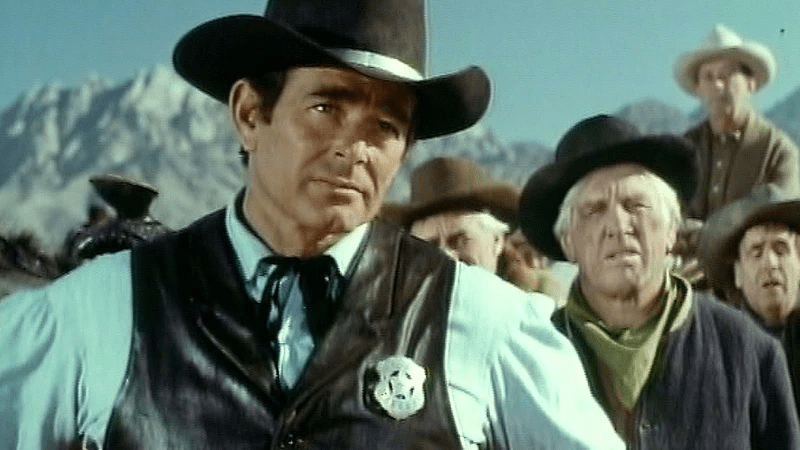
As we wind up our “Go West Young Man” blog series, we turn our attention to CimarronStrip for the last blog of the series. This show was only on the air for one season, from 1967-68. It was produced by the creators of Gunsmoke, America’s most beloved western. Like The Virginian, it was a 90-minute show.
📷mubi.com
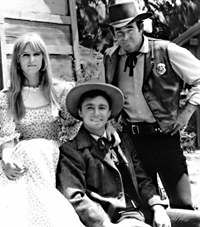
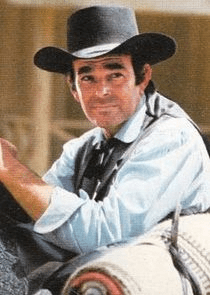
Set in the Oklahoma in 1890, the series occurred in a geographical region called No Man’s Land, an ungoverned area for several decades. Marshal Jim Crown (Stuart Whitman) tries to bring law and order there. Crown arrives only to learn that the sheriff has resigned, and it’s up to him to bring peace to the area with no Army support. We get to know Dulcey Coopersmith (Jill Townsend) who comes to live with her father, but upon her arrival, she discovers he is dead. Her father’s partner MacGregor (Percy Herbert) has let their Wayfarer’s Inn become a bit dilapidated, but Dulcey is determined to bring it back. Marshal Crown stayed there when he was in Cimarron City. Francis Wilde (Randy Boone) often served as Crown’s deputy.
📷pinterest.com
Rounding out the cast is the bartender at the Inn, Fabrizio (Jack Braddock); Major Covington at a nearby Army fort (Andrew Duggan); a Dr. Kihlgren (Karl Swenson); and Hardy Miller (Robert J. Wilke).
The show was on Thursday nights, up against Batman, The Flying Nun, and Bewitched on ABC. It faced Daniel Boone and Ironside on NBC. Definitely some tough competition.
The theme song was composed by Maurice Jarre, who was the scorer for the films Lawrence of Arabia and Doctor Zhivago for which he won two Oscars.
The show never attained the ratings numbers it needed to keep its place on the schedule. From what I have been able to find out, it was well written and well cast. Guest stars kept it interesting, and the scenery was beautifully filmed.
📷tvmaze.com
I’m guessing the main reason the show didn’t make it was just viewer fatigue with the western genre. There were already shows like Bonanza and Gunsmoke which were hugely popular. One more western might just have been one too many, no matter how good it was. In addition to the western series, some of the shows that were on the air when Cimarron Strip debuted included That Girl, Hogan’s Heroes, Mannix, Batman, Lost in Space, Get Smart, and Rowan and Martin’s Laugh In—very different choices than westerns. I do remember Arnold the pig on Green Acres always wanting to watch westerns on television. We still fall prey to this on the major three networks. After ER became popular, the next season featured ten new medical shows. And then most of them get cancelled, not necessarily because they’re bad but because it’s just an overload of medical shows.
Most people don’t want the same supper every night even if it’s steak or lasagna. That said, this seemed to be a steak kind of show, so just because it couldn’t survive the mass onslaught of westerns in the sixties doesn’t mean it’s not worth watching. If you check it out, let me know what you think.
As we get ready to “Go West Young Man,” today our blog series is getting to know the The Virginian (which is sometimes confusing because it was renamed The Men from Shiloh later for part of the series). This series debuted on NBC in 1962. It produced 249 episodes, running until 1971, making it the third longest-running western (Gunsmoke and Bonanza were the top two).
📷wikipedia.com
Lew Wasserman was involved with Universal, and they produced Wagon Train which was on NBC. Universal sold the series to ABC in 1962 after it had been on the air for three years, and NBC was not happy, but Wasserman told them that he had a new show for them, The Virginian.
It was also the first 90-minute western. Like Stagecoach West, it was set in the Wyoming Territory. While the pilot was black and white, the rest of the series was filmed in color.
The series was based on an Owen Wister novel, The Virginian: Horseman of the Plains which was published in 1902.
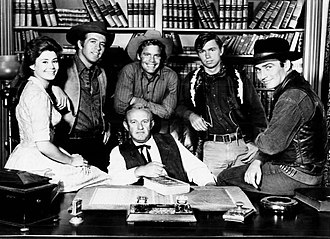
The series featured a foreman at the Shiloh Ranch near Medicine Bow played by James Drury. The foreman was never referred to by his name. Drury once said, “Nobody knows the name of my character, not even me.” His sidekick was Trampas (Doug McClure). Sheriff Abbott (Ross Elliott) also shows up on and off throughout the nine seasons. For the first four seasons, the ranch owner, Judge Henry Garth (Lee J. Cobb) and his daughter Betsy (Roberta Shore) also live there. The cast changed fairly often throughout the series, but Drury and McClure were along for the entire ride.
📷ebay.com
The plots of the show often revolve around themes of prejudice, injustice, being a responsible and hard worker, and standing up for the right thing.
During the final season, the show changed its title, and the series changed quite a bit. There was a new theme song, and it took on more of the character of the popular spaghetti westerns. Stewart Granger and Lee Majors joined the cast. While the ratings increased, the network was intent on cancelling the show, along with the rural purge that happened at that time.
Later when the show was no longer on the air, Drury discussed two of his castmates, one he admired and considered a friend and one he did not! About Grainger who joined the show for the last year, Drury said, “He was a disaster, and I couldn’t stand him. He wanted everything changed to make him the star of the show. . . . He also fired the whole camera crew and hired a new crew for his episodes.” However, on reflecting about his co-star Doug McClure, Drury recalled “off-screen Doug was quite like his character, and you couldn’t help but smile when he walked into a room because he was full of good humor and good spirits all the time. He could cheer anybody up. He became my best friend, and I still miss him terribly—you couldn’t ask for a better co-star.”
As you can imagine, being on the air for nine years meant a lot of guest stars showed up on the series, including Eddie Albert, Charles Bronson, Robert Culp, Joan Crawford, Bette Davis, Patty Duke, Robert Duvall, Harrison Ford, Jack Lord, Lee Marvin, Vera Miles, Leonard Nimoy, Ryan O’Neal, Robert Redford, George C. Scott, William Shatner and Franchot Tone.
📷facebook.com
The Virginian was on Wednesday nights for its entire run. When it began, it was up against Wagon Train on ABC while CBS ran CBS Reports and The Many Loves of Dobie Gillis. Both The Virginian and Wagon Train managed to hit the top thirty that year. The next year, its biggest competition was The Adventures of Ozzie and Harriet followed by The Patty Duke Show. The Nelsons hit the top thirty and The Virginian and The Patty Duke Show were in the top twenty. The show continued to be in the top twenty or top thirty for the rest of its run, hitting the top ten in 1966, despite being on at the same time as many popular sitcoms during those years, including Batman, The Beverly Hillbillies, The Courtship of Eddie’s Father, Gomer Pyle USMC, Lost in Space, MisterEd, and My Living Doll. It was still in the top twenty when it was canceled.
This show is fondly remembered by viewers who tuned it at the time. It’s been in syndication for decades, racking up new generations of fans. In one of his later interviews, Drury talked about the appeal of the show. He said, “People now tell me about their grandkids who discover the show on cable and start watching it. It’s a wonderful feeling to know the show is still viable after all these years.” That alone is reason to be proud of working on this show.
This month we are celebrating, “Go West Young Man” by taking a look at some of the westerns from the fifties and sixties. Up today is Wagon Train. This series debuted on NBC in 1957; in 1962 it moseyed over to ABC for its final three seasons. Lew Wasserman was involved with Universal which produced Wagon Train. When they sold the series to ABC, NBC was not happy, but Wasserman told them that he had a new show for them, The Virginian, which we’ll learn about in two weeks.
📷pinterest.com
The series was very popular, jumping to number one immediately. The plot is that a large wagon train is traveling through the west from Missouri to California. Ward Bond starred as the wagon master Seth Adams (when he died in 1960, John McIntire took over). Robert Horton played scout Flint McCullough; eventually he opted to leave and was replaced by Robert Fuller. Oddly, Horton and Fuller shared a birthday and were six years apart in age.
If I listed all the guest stars during the eight seasons, you would still be reading this next Monday. Just know, there were a lot.
The show was adapted from a 1950 John Ford film titled Wagon Master. In a 1960 episode, John Ford stepped in to direct an episode, “The Colter Craven Story.” One guest star I have to mention in this one was John Wayne. He speaks from the shadows as General Sherman (Wayne’s real name was Marion Michael Morrison, so for this credit, he went by Michael Morris) in this episode.
The original theme song was written by Henri Rene and Bob Russell and conducted by Stanley Wilson. A more contemporary theme accompanied season two, and it changed a few more times during the run of the show.
📷msn.com
The show had a huge budget for the time: $100,000 (about a million in today’s world of television). It was about 40% more expensive than most westerns at the time, and that is part of why it was able to feature so many guest stars.
When Gene Roddenberry pitched Star Trek to the networks, he described it as “a Wagon Train traveling across the universe.” He also hired writer Gene L. Coon who wrote 23 episodes of Wagon Train.
While wagon trains are considered an icon from our history, so was the product of the series’ first sponsor, the Edsel Division of the Ford Motor Co.
The show was an hour long and shot in black and white for the first six seasons. For season seven, the network filmed the show in color and increased the length to 90 minutes. The ratings were still high but didn’t increase, so the network could not justify the changes, and the television show went back to an hour in black and white.
📷dvdtalk.com
The show was placed on Wednesday nights up against Leave it to Beaver and Disneyland. Even with that competition, it was in the top thirty and by its second season, had jumped to the top ten where it stayed until it was sold to ABC. ABC kept the show on Wednesday nights, and it ran against The Virginian, both being in the top thirty in 1962.
So many people have fond memories of this show. It was on six seasons, but I think it was finally cancelled even though it was in the top thirty because of the western overload, ushering in the shows like Get Smart, The Man From UNCLE, Lost in Space, and The Smothers Brothers Show. Check out your favorite guest stars who were on the show and watch those episodes to see what it was like.
This month our blog series is “All About The Bill Dana Show,” and we are learning about the careers of some of the cast members. Last week we looked at the life of Maggie Peterson, and today we are getting to know Jonathan Harris.
📷LostinSpaceWikiFandom.com
Harris was born Jonathan Daniel Charasuchin in the Bronx in 1914. His father worked in Manhattan’s garment district. His family often took in borders to make ends meet, and when they did, the border got Jonathan’s room, and he slept on a couple of dining room chairs.
By age 12, Harris was working at a pharmacy as a stockboy. Although money might have been short, Harris’s family’s love of music and theater was not. As a family they listened to opera in the dining room. Whenever they had some extra cash, they would take in a Broadway play. Harris was interested in archeology, poetry, and Shakespeare. He disliked his Bronx accent and taught himself to develop a British one.
Harris was able to graduate at age 16 from James Monroe High School. His pharmacy job paid off when he graduated from Fordham University with a pharmacology degree in 1936. Before entering college, Jonathan took the name “Harris” in place of his birth name.
In 1938 Harris married his high school sweetheart, Gertrude Bregman. They were married until his death.
While working in several pharmacies, Harris also worked on his acting skills. He created a phony resume which he used to land a spot in a local acting company. In 1942 he played a Polish officer in the Broadway production, “The Heart of a City.” He was persistent. He said that he went to Mr. Miller’s office to audition for a part in the play for two weeks, and everyday Mr. Miller’s secretary sent him away. Finally, she let him in, and Mr. Miller gave him his first part. Then he lied and said he could do a Polish accent. He then went to the Polish Consulate to listen to how they talked. So, despite a fake resume, being turned away for weeks, and then lying about an accent, he was a success in the play.
📷amazon.com
In 1949, Harris made his television debut in The Chevrolet Tele-Theatre. Throughout the fifties he would continue to appear in dramatic playhouse series.
In 1959 he had a recurring role in Zorro as Don Carlos Fernandez as well as an appearance on Father Knows Best.
The sixties brought him roles in several well-known series including The Twilight Zone, Bonanza, and The Adventures of Ozzie and Harriet.
In 1963 he was offered the role of Mr. Phillips, the hotel manager on The Bill Dana Show. I won’t elaborate on this series, but if you missed the first blog in March, you can read about this show which was on the air for a season and a half.
Harris did an interview with the Television Academy. He said that when he read the script for The Bill Dana Show, he decided he had to come up with some other characteristics for Mr. Phillips. He made him devoid of humor. But he said he was a different man with his wife on the show, played by Amzie Strickland. Harris said Bill Dana was wonderful to work with. He also said that the writing was so good on that show that he never had to re-write anything. However, if something felt off, he would ask Sheldon Leonard about changing it, and Leonard was always open minded about revisions.
Harris continued to appear on dramatic shows while waiting for his next role.
📷thenewyorktimes.com
In 1965 Lost in Space was put on the fall schedule. Harris played Dr. Zachary Smith. Neither his role nor the Robot were in the pilot of the series, but they were both brought in before the show began.
The show was a big hit with viewers. Harris felt his character, who was not trusted by the family, needed a bit of comedy, so he began to adlib his dialogue. Irwin Allen, creator of the show, approved the changes and allowed him to be considered a writer. Harris said he was a good re-writer, but he was never a writer.
Bill Mumy, who played the son on the show and interacted with Smith quite a bit said that Harris “truly, truly singlehandedly created the character of Dr. Zachary Smith that we know—this man we love to hate, coward who would cower behind the little boy, ‘Oh the pain! Save me, William! That’s all him.”
The show was still high in the ratings during its third season, but the writers were running out of ideas, and the show was canceled after 83 episodes.
📷imdb.com
In the seventies, Harris joined the casts of two Saturday morning series, Space Academy and Uncle Croc’s Block. Uncle Croc’s Block was a very weird show in my memory. Even though it was on Saturday mornings, he parodied kids’ shows. Uncle Croc, played by Charles Nelson Reilly, butts heads with his program director Basil Bitterbottom, Harris’s role; Phyllis Diller played Witchy Goo to round out the cast. Uncle Croc has a sidekick Rabbit Ears and introduced the cartoons.
He also continued to appear on other series, and you can spot him in The Ghost and Mrs. Muir, Land of the Giants, Get Smart, Bewitched, McMillan and Wife, Love American Style, and Vega$.
After the mid-seventies, most of his work was in the animation field.
He also became a drama coach, and Chuck Norris was one of his students.
📷billmumy.com
In 1990, the cast of Lost in Space reunited for the 25th anniversary. More than 30,000 fans attended the event.
Harris also spent time on his hobbies, which were many. He loved gourmet cooking, watching movies, reading, traveling, painting, magic, playing piano, gardening, dancing, knitting, and spending time with this family. He also kept his interest in listening to opera that he cultivated as a child.
He passed away in 2007 from a blood clot that traveled to his heart.
Harris was a talented actor. I’m not sure why he was never offered another sitcom or a chance to play a different type of character. I’m glad he found a home in animation, but I wonder if he regretted leaving Broadway for television. It was fun to learn more about this man and his career.
This month our blog series is “Kinda Creepy.” Today we are moving forward a couple of years into the late sixties with Land of the Giants.
This science-fiction show was aired on ABC from fall of 1968 to spring of 1970. It was created and produced by Irwin Allen. Five novels were released during this time, three by well-known author Murray Leinster.
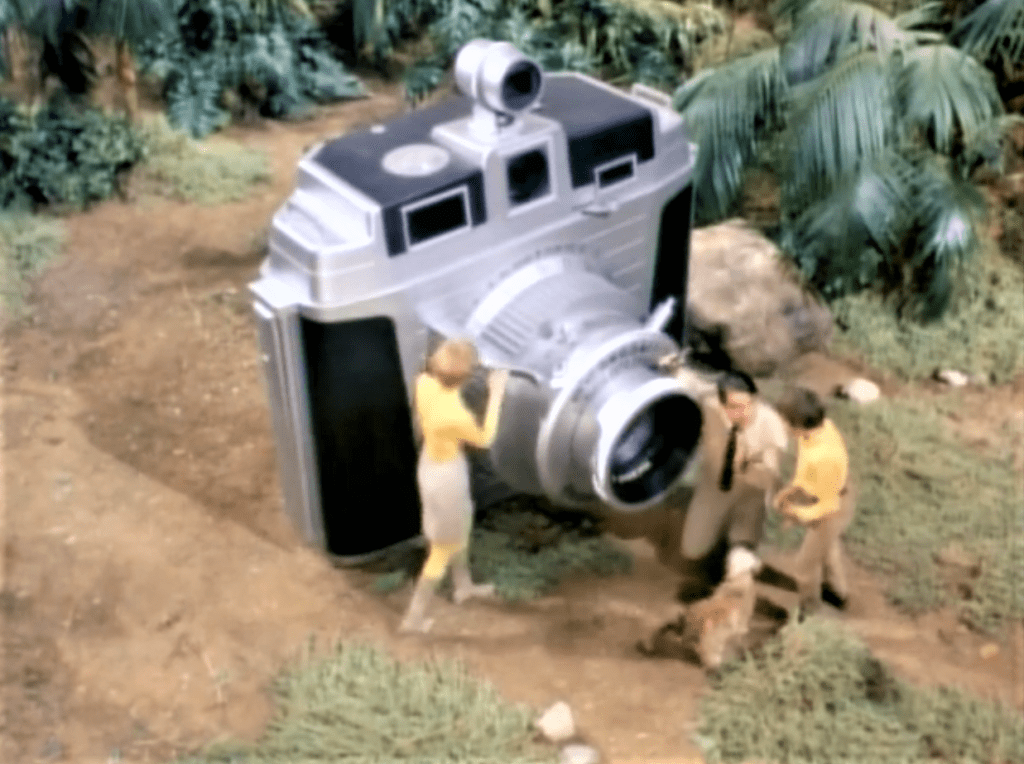
The show was set in 1983 and features the crew and passengers who were on a suborbital transport ship, the Spindrift. The Spindrift is en-route from Los Angeles to London when it encounters a magnetic space storm. It goes through a time warp to an unknown planet where everything is 12 times bigger than on Earth. When the Spindrift lands, it crashes and becomes inoperable.
The crew and passengers include Captain Steve Burton (Gary Conway), First Officer Dan Erickson (Don Marshall), Flight Attendant Betty Hamilton (Heather Young), Passenger Valerie Scott (Deanna Lund), Wealthy Passenger Mark Wilson (Don Matheson), Orphan Passenger Barry Lockridge (Stefan Arngrim), Passenger and Bank Robber Alexander Fitzhugh (Kurt Kasznar), and Inspector Kobick (Kevin Hagen). Fun fact, Matheson and Lund were married in 1970 but divorced before the decade was over.
Photo: deviantart.com
The Giant society resembles that of the United States in 1968. The survivors get around in drains leading from interior rooms to the pavement. The Giants realize they are there somewhere and have offered a reward for their capture. An authoritarian government seems to dominate part of the planet but other groups are at work to help the small Earth people survive. The Giants do have advanced technology including cybernetics, cloning, force fields, magnetic stunners, androids, and teleporters.
Not only do Earthlings have to survive being caught by the Giants, but they have to be wary of pets, especially cats and dogs. Occasionally someone is captured, and other members of the crew have to rescue them.
One article said that in 1969, “boys could be found sitting in front of the television captivated by the antics of red-haired, mini-skirted Valerie as she was menaced by cats, imprisoned in a dollhouse, cloned, prodded by scientists, carried off by an ape, and even used as a pawn on a giant chessboard.”
Photo: invisiblethemeparks.com
The show had a budget of $250,000 an episode. In 1968, it was the most expensive show produced on television. There were a lot of special effects. Gigantic mechanical props were built and used. For example, a slice of bread was made from a four-foot slab of rubber, and one episode had a nine-foot revolver. Some of the props were recycled from Lost in Space, Voyage to theBottom of the Sea, and Batman. Actors had to do a lot of their own stunts like climbing up curbs and phone cords. The one-hour episodes were filmed in color.
The show aired on Sunday nights against Lassie, so I was surprised it achieved decent ratings so quickly. It stayed on Sunday nights for season two but was up against World of Disney which probably created a bit of a ratings decline. The other show, To Rome with Love, moved around a lot and was probably not much competition. The network decided to cancel the show before the third season, but since the writers were not aware that it was going to happen, no finale was written, and we never learned if the characters made it back to Earth or not. The financial cost was the reason the network cited for the cancellation.
Photo: art.com
Composer extraordinaire John Williams composed the theme for the show; he also composed the theme for Lost in Space.
I don’t really remember the merchandise for this show, but it included comic books, View Master reels, model kits, and a lunch box.
I do remember watching this show and I remember being scared when a large dog was growling at one of the Earthlings. It definitely earned the kinda creepy description. I think I was a bigger fan of The Borrower books. I always wondered if this was one of the inspirations behind Honey I Shrunk the Kids. From what I recall, the concept of the show was better than the reality of the show.
We are finishing our series Life with Pets. Although the shows we have looked at so far this month have featured some unusual pets, I knew that we had to include man’s best friend at some point, and really, how could you have a blog series about pets without Lassie who was a very unusual dog?
Except for The Hathaways, the other shows we learned about this month were based on a movie, which was often based on a book. Lassie is no exception. English author Eric Knight wrote a book in 1940 called Lassie Come Home. Several films were produced between 1943 and 1951 about Lassie. Once the seventh and final film was completed, Lassie’s (or Pal as he is known in his real life), owner Rudd Weatherwax was given all rights to the Lassie trademark and name. Weatherwax began taking Pal to local fairs and rodeos.
Clayton, Rettig, Cleveland Photo: wikimedia.com
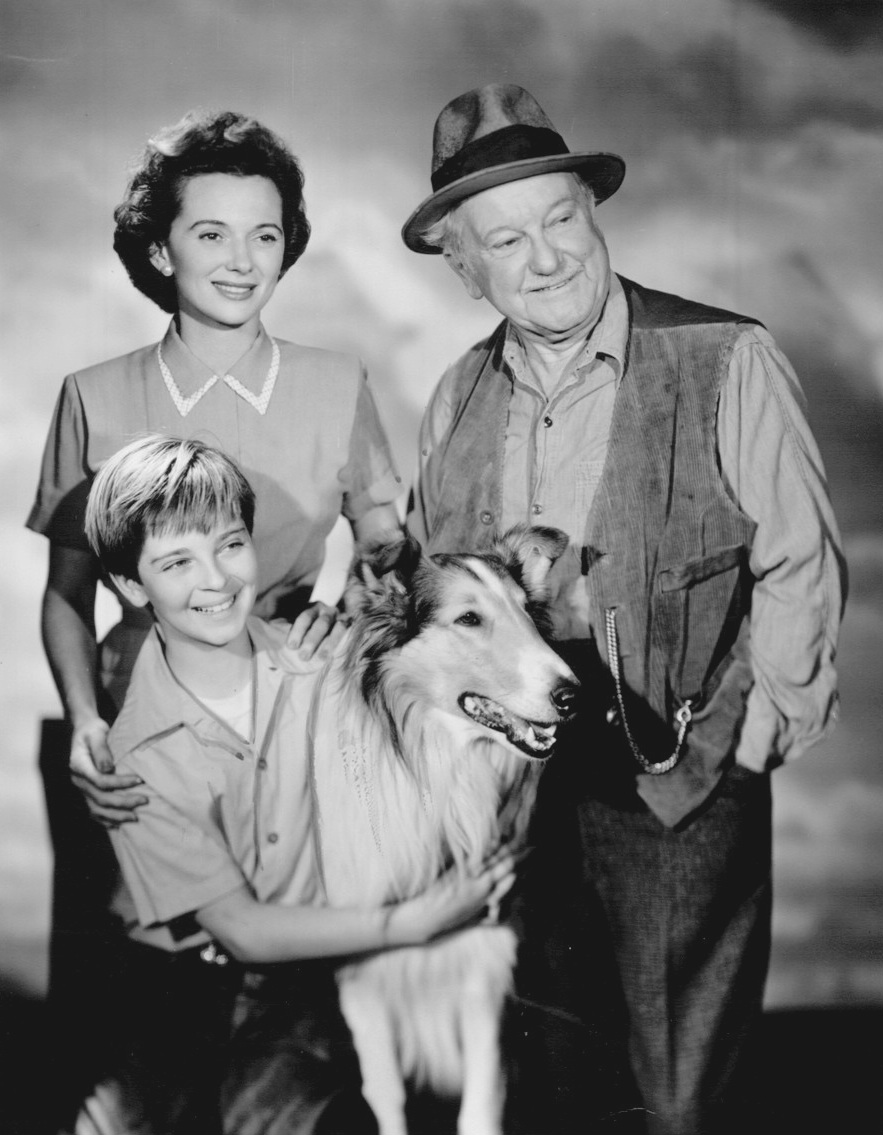
Robert Maxwell convinced him to feature Pal in a weekly television show. The men developed the story of Lassie who lived with a young boy named Jeff Miller (Tommy Rettig), age 11; his widowed mother Ellen (Jan Clayton); and her father-in-law (George Cleveland) who all lived on a farm. The show was approved, Campbell’s Soup agreed to sponsor the first year of shows, and the series debuted in 1954 on Sunday nights at 7 pm EST.
Campbell’s would continue its role as sponsor for 19 more years, which totaled 591 episodes. The company asked to have their products featured on the set, so you will see them in background shots. The soup company held a contest in 1956 to name Lassie’s puppies. Grand prizes included $2,000 and ownership of the pups which were hand-delivered by executives. In 1958, viewers could send in 25 cents and a label from a Swanson’s TV dinner to get a friendship ring; the company mailed 77,715 of them to fans. In 1959, fans could send in five labels from Campbell’s products and receive a wallet with a photo of Lassie. More than 1.3 million were mailed and Campbell’s profits rose 70% after its sponsorship began.
In 1957, Jack Wrather who owned The Lone Ranger and Sergeant Preston of the Yukon purchased the show for $3.25 million. In 1958 Lassie received new owners. Both Clayton and Rettig expressed an interest in wanting to leave the show. Cleveland had passed away the year before. Adoptee Timmy Martin (Jon Provost) becomes his master and they live with his parents, Ruth Martin (Cloris Leachman) and Paul Martin (Jon Shepodd).
Photo: imdb.com
In 1958 Wrather dropped Leachman and Shepodd, replacing them with June Lockhart and Hugh Reilly. A neighbor Cully Wilson (Andy Clyde) was also added.
Lassie received good ratings from 1954-1958. In 1959 it fell out of the top 30. By 1960 with the change in characters, the show shot back and made it to #13 in 1964.
However, just as things were looking up, Provost declined to renew his contract. So, ten years after its debut, the show changed its focus to conservation and environmentalism, teaming Lassie with a group of US Forest Service members. In 1965 the show transitioned to color, but the ratings decline had already begun.
Season 17 transitioned again and this time it was an anthology season with Lassie traveling on her own, finding adventures along the way. CBS cancelled the show after season 17, but it became a syndicated show for networks to pick up.
The final two seasons were spent with Garth Holden (Ron Hayes) on the Holden Ranch, a home for orphaned boys. After season 19, the show went off the air for good.
Five of Pal’s descendants also played the role of Lassie. They included Lassie Jr. (1954-59), Spook (1960), Baby (1960-1966), Mire (1966-1971), and Hey Hey (1971-73). Like the show, Pal lived to be 19.
The show was filmed at Stage One of KTTV in Los Angeles from 1954-57 and then moved to Desilu for a year. The Timmy seasons were filmed at the Grand Canyon and High Sierra and the Forest Service seasons were filmed in Alaska and Puerto Rico, among other sites.
Photo: ashroudofthoughts.com
Most of the plots involved the boys or other characters needing help and Lassie coming to the rescue. However, ironically the biggest spoof of the show is Timmy falling down a well and Lassie saving him, but no one ever fell down a well on the show except Lassie in season 17. It is such an iconic plot, that Provost wrote his autobiography in 2007 and called it Timmy’s in the Well: The Jon Provost Story. On his website, Provost says he kept in touch with Rettig. He says that he always ended their conversations with “Thanks for the dog, Jeff” which was his line in the series when he took over the show.
During the nineteen years that the show was on the air, several theme songs were used. For the first season, the theme was “Secret of the Silent Hills” composed by William Lava. The song was originally created for a 1940 radio show, “The Courageous Dr. Christian.” The song was tweaked a bit for the second and third seasons. An orchestral version of an aria from Faust, “Dio Possente” came in for the next year. Beginning with year five, the most famous version was aired: “Lassie Main & End Title” was created by Les Baxter and whistled by Muzzy Marcellino. After the Martin years, an orchestral version of “The Whistler” was used for a few years, and then Nathan Scott’s arrangement of “Greensleeves’ finished the run.
The series received two Emmy Awards for Best Children’s Program in 1955 and 1956 and a nomination in 1960. In addition, June Lockhart was nominated for Leading Actress in a Dramatic Series in 1959, Jan Clayton was nominated for the same award in 1957 and 1958, and the show was nominated for Best Dramatic Series in 1957.
The series was released on DVD during the years 2001-2007.
I do remember watching Lassie during the Provost years, but I actually was not aware of the other seasons. Like Flipper and Gentle Ben, it was a family show where everyone could sit around the television and watch together on a Sunday evening. With the show being on the air for 19 years, it is fondly remembered by several generations and made a ton of money marketing merchandise.
One of the things I love most about the show is that people are sure they remember Timmy falling into the well. It would be fun to do a blog about things that people are positive they remember but never happened. It’s similar to the Robot on Lost in Space saying “Danger Will Robinson” which he never actually did. It just proves that some shows live on in our imaginations for a long time.
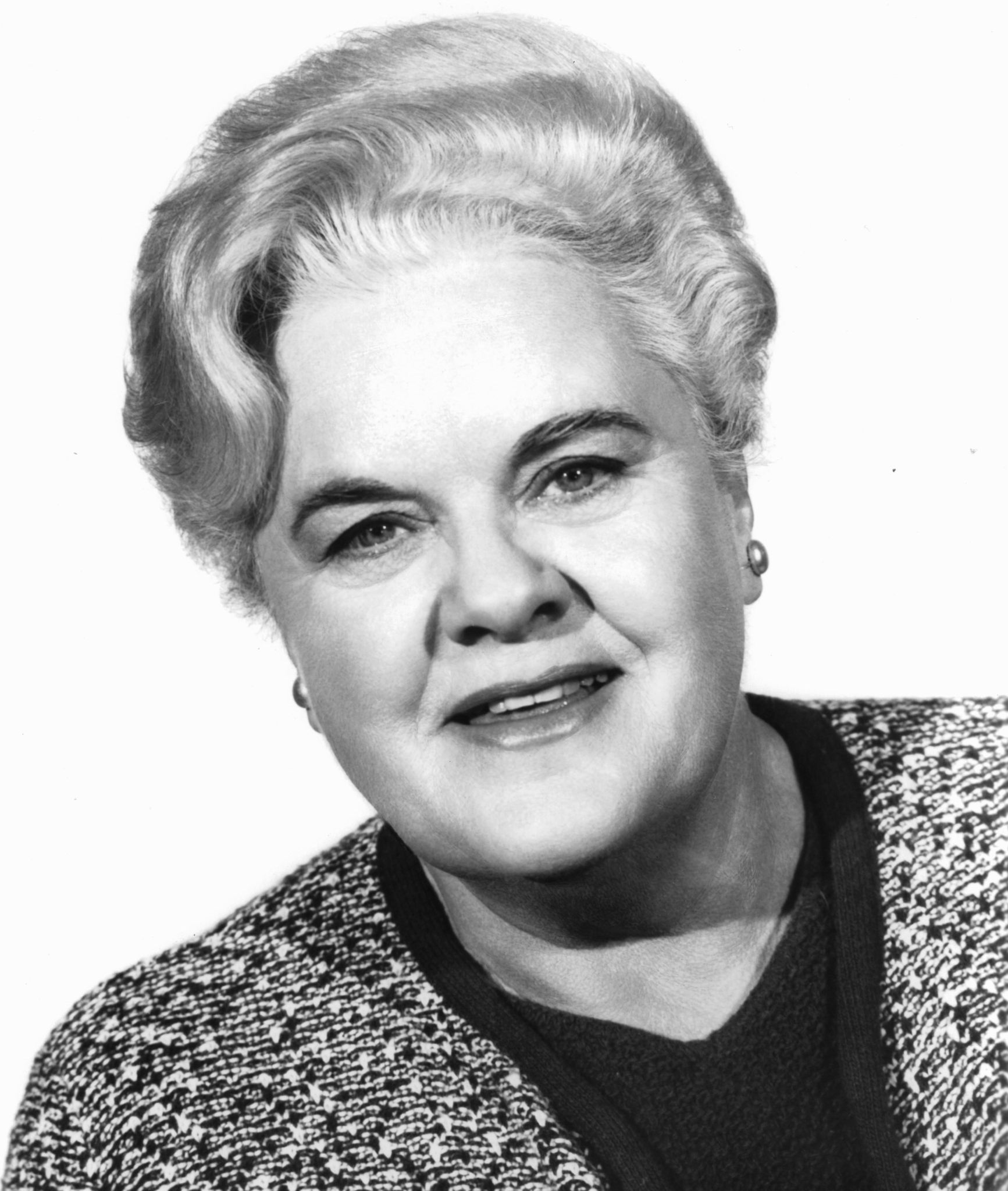
I devoted this month to some of our favorite actresses from the golden age of television. This list would not be complete without Reta Shaw who popped up in almost every popular program during the fifties and sixties.
Photo: imdb.com
Shaw was born in Maine in 1912. She was born into the entertainment business; her father was an orchestra leader and her younger sister Marguerite also became an actress (I could only find one credit for her; it was a 1959 movie titled The Ballad of Louie the Louse.) After graduation, Reta attended the Leland Powers School of the Theater in Boston.
She then headed for the bright lights of Broadway and in 1947 was cast in “It Takes Two.” In 1954 she was Mabel in “The Pajama Game” and later appeared in “Gentlemen Prefer Blondes”, “Picnic”, and “Annie Get Your Gun.”
Photo: jacksonupperco.com
Her motion picture career overlapped with her television career. She had feature roles in several big-screen successes including Picnic; The Pajama Game; Pollyanna; The Ghost and Mr. Chicken; Escape to Witch Mountain; one of my favorites as a kid, Bachelor in Paradise with Bob Hope; and most famously, the cook in Mary Poppins, as well as a maid in Meet Me in St. Louis.
In 1952 she married William Forester, another actor. William appeared in Mister Peepers and The Pajama Game movie with his wife. He was very busy with television appearances during the early sixties. They were married a decade but divorced in 1962; the couple had a daughter.
She appeared in many of the same shows as the other actresses we learned about this month. Her first television role was on Armstrong Circle Theater. Her second role was as a regular cast member of a little-remembered show, Johnny Jupiter in 1953. It was a quirky show about a store clerk named Ernest P. Duckweather who invented an interplanetary television set and developed a friendship with a puppet named Johnny Jupiter.
Photo: papermoon loves lucy
From 1953-1955 she would appear with Marion Lorne on Mister Peepers as Aunt Lil. She continued receiving both movie and television roles throughout the fifties. In 1958 she received another recurring role on The Ann Sothern Show as Flora Macauley.
She began the sixties with another permanent job on The Tab Hunter Show. This show as about comic strip author Paul Morgan. His comic strip was “Bachelor at Large” and he wrote about his own amorous adventures. Shaw, as Thelma his housekeeper, had a very different view of that life than Paul’s best friend Peter did. When that show went off the air, she was given another spot on Oh! Those Bells. The Wiere brothers, well-known comedians, portrayed the Bell Brothers who worked for Henry Slocum in a Hollywood prop shop. The brothers managed to create a disaster out of the most minor matters. The show only lasted two months.
Throughout the sixties she could be seen on a variety of series; although she certainly excelled at comedy she was just as accomplished in dramas such as Wagon Train, I Spy, The Man From UNCLE, and FBI. Reta also made more than a dozen movies during this time.
Photo: pinterest.com
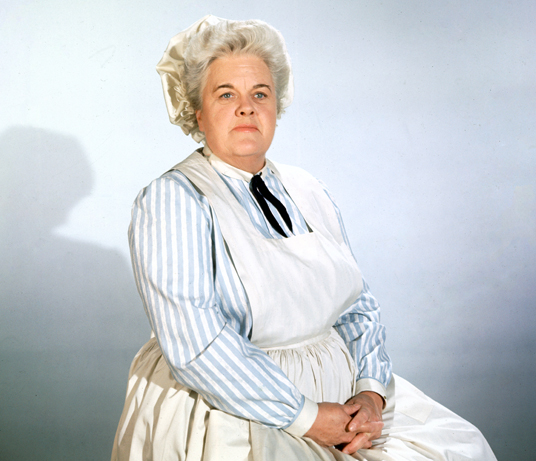
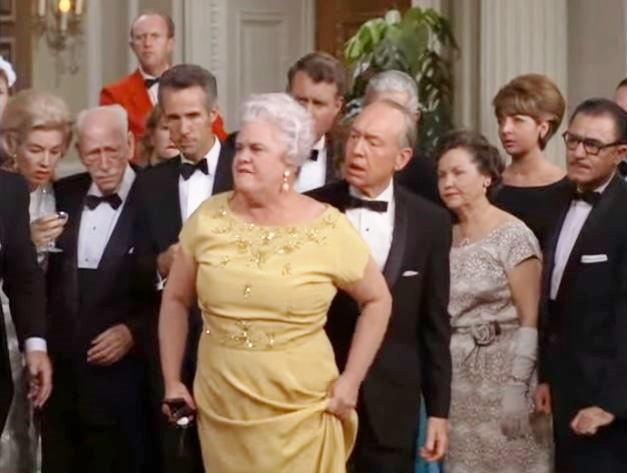
However, her sitcom career flourished, and she was kept very busy during the sixties with roles on The Many Loves of Dobie Gillis, Father of the Bride, Lost in Space, The Dick Van Dyke Show, The Cara Williams Show, My Three Sons, The Farmer’s Daughter, The Lucy Show, The Patty Duke Show, The Adventures of Ozzie and Harriet, The Monkees, That Girl, Please Don’t Eat the Daisies, and I Dream of Jeannie. She had a recurring role on Bewitched as Aunt Hagatha/Bertha. She was featured in The Andy Griffith Show twice, but one of them is one of my all-time favorite episodes, “Convicts at Large” when she plays Big Maud Tyler who enjoys dancing with Barney.
Photo: jacksonupperco.com
The end of the decade brought her another recurring role as housekeeper on The Ghost and Mrs. Muir. On May 1, 2014, Madman Entertainment interviewed Kellie Flanagan who played one of the kids on the show. It must have been a fun show to work on. When she recalled her time with the cast, she said “The set was a very happy set, with parties every Friday night, and I remember that all the ladies were swooning over Mulhare and always disappointed to find out the beard had to be applied every day. His real beard was red, was the reason I remember, and they needed that salt-and-pepper thing. Hope was extremely sweet and kind to us, though I do remember there was a period where we were not supposed to bother her – I think she may have been going through a divorce – I believe she had a daughter about my age. Hope was lovely and her voice is fabulous. Reta Shaw was a delight and Charles Nelson Reilly was hilarious. The dog annoyed me!”
Photo: scottrollinsfilmandtvtriviablog.com
Shaw continued to take on roles during the early seventies and could be seen on The New Dick Van Dyke Show, Here’s Lucy, The Odd Couple, Cannon, Happy Days, and The Brian Keith Show. Her career culminated with her role on Escape to Witch Mountain in 1975.
Shaw lived another seven years and died in 1982 from emphysema.
An interesting note is that Shaw grew up in a family who practiced spiritualism and said she had been “brought up on a Ouija board.” However, I’m not sure if she believed in it as well.
Shaw certainly had a very interesting and successful career as an actress. Although she often took on the housekeeper role, she was not stereotyped into just that slot. She appeared in both television and movies and she took on dramas as well as comedy. It would have been fun to see what she would have been able to do if she had been given a series of her own.
Whenever I see Reta Shaw in an old show, I know I am in for a treat.
We are winding down our blog series, “What A Character.” If you watched television between 1959 and 1989, you will definitely recognize this week’s character actor: Allan Melvin.
Photo: wikipedia.com
Melvin was born in 1923 in Kansas City, Missouri, but he always said he grew up in New York City where his parents moved to not long after his birth. After high school, he attended Columbia University, studying journalism before joining the US Navy in WWII.
He married Amalia Sestero in 1944 and they were together for his entire life and had two children. Amalia was also an actress and Melvin met her when he attended an actor’s group that she helped start.
Photo: people.com
After being discharged from the Navy, Allan worked in the sound effects department of NBC Radio. He also had a nightclub act. He was on Arthur Godfrey’s Talent Scouts radio show which he won. His first television role was that of Corporal Steve Henshaw on The Phil Silvers Show. Melvin’s wife remembered that time fondly: “I think the camaraderie of all those guys made it such a pleasant way to work. They were so relaxed.”
After the show ended, Melvin was often typecast as a military character or the abrasive, but happy-go-lucky guy. Even when he was not a recurring character, he often had multiple appearances on a series.
Allan and Amalia moved their family to California, hoping for more television roles in the early sixties.
Throughout the sixties, Melvin was kept busy with television work, appearing on The Danny Thomas Show, The Bill Dana Show, Perry Mason, Lost in Space, Love American Style, and The Andy Griffith Show. He had two recurring roles: Art Miller on The Joey Bishop Show and Sol Pomerantz on the Dick Van Dyke Show.
Photo: imayberry.com
He was often cast as the tough guy on The Andy Griffith Show, with eight appearances in all. Melvin discussed his time on the show and said “I always enjoyed doing the show. We had a lot of fun doing it, and they were a great bunch.”
From 1965-1969 you could find him on Gomer Pyle USMC as Sergeant Charlie Hacker.
As early as 1963, Melvin was doing voice work on The Flintstones. His animation work would continue throughout his career and after about 1974, cartoon voices were his only gigs. One of his best-known roles is Magilla Gorilla.
I’m not sure why, but Melvin only appeared in one movie, although it was a good one. He was the desk sergeant at the end of the Doris Day-Brian Keith film, With Six You Get Eggroll. A couple of Andy Griffith writers wrote the screenplay, and Howard Morris, known as Ernest T Bass, directed the film.
In the 1970s he was cast in his two most memorable roles.
Photo: pinterest.com
He was Sam Franklin, Alice’s boyfriend on The Brady Bunch. Sam owned a butcher shop and was an avid bowler. In a later movie, we learned that he finally made an honest woman of Alice. Ann B Davis said “Allan Melvin, neat guy, very tall. He was just a nice, open, big guy, and it was fun to play with him.”
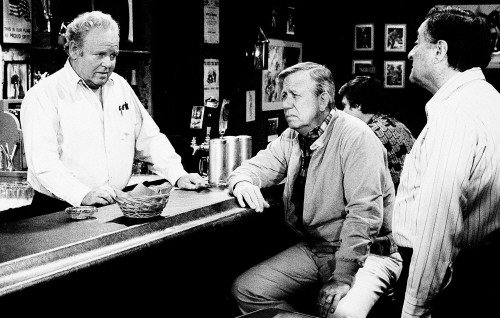
He was also neighbor and friend of Archie Bunker as Barney Hefner on All in the Family and Archie Bunker’s Place. Allan said it was a good experience and everyone’s input was welcome. Jason Wingreen, who played Harry the bartender on the show talked about Melvin in anther wordpress blog, classictvhistory (https://classictvhistory.wordpress.com/tag/allan-melvin/). When asked if he was the same in person as he was in character, Wingreen said, “He was more intelligent than that. Allan wrote little poems, little couplets of sorts, and they were very funny. Like limericks, but not quite limericks. Some of them were very intelligent and very, very funny. Never published. Allan and I became very close friends.”
With Carroll O’Connor on Archie’s Place Photo: record-eagle.coom
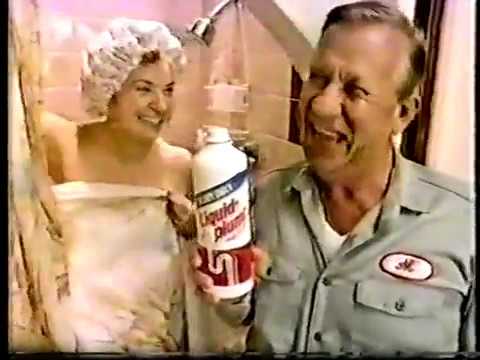
Melvin also did a lot of commercial work. You could see him pitching products from Sugar Frosted Flakes to Remington razors to Liquid Plumr. He was the plumber for Liquid Plumr for fifteen years.
In 2008, Melvin died from cancer.
Melvin certainly had a career to be proud of. One thing I never learned was when he decided that acting was the career he wanted. He became one of the most beloved and most-recognized character actors in the sixties and seventies–definitely a character worth celebrating.
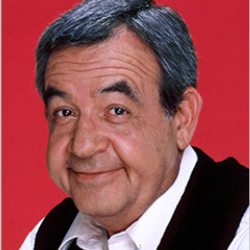
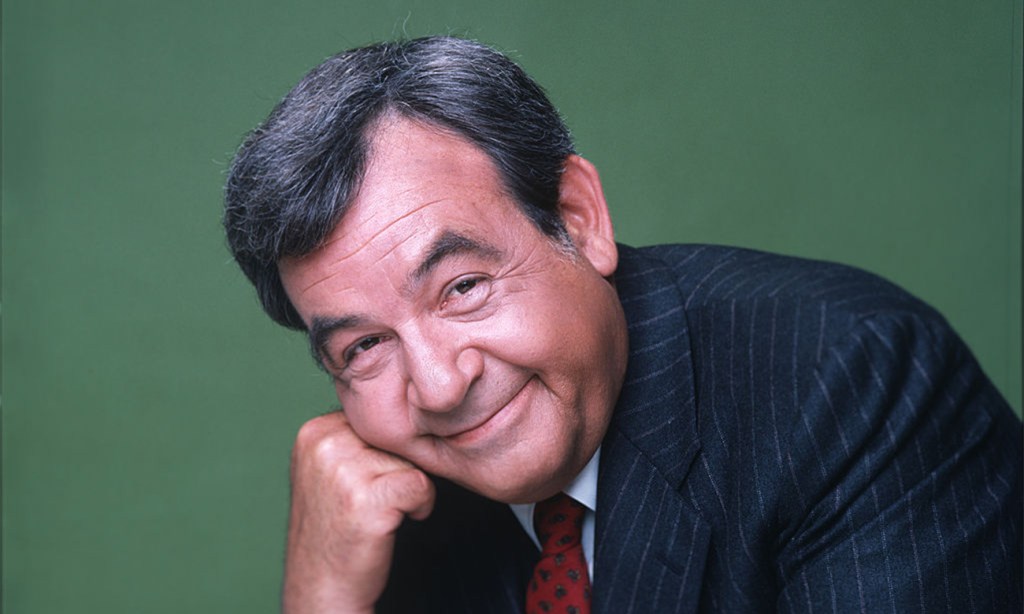
Since January was all about female sitcom actresses, this month we give the men their fair due. We begin this series, “The Men of August,” with Tom Bosley. Anyone who was a Happy Days fan knows why Bosley is part of this line-up.
Photo: quotetab.com
Bosley was born in Chicago in 1927. His father was in real estate and his mother was a concert pianist. After graduating from high school, he served in the Navy during WWII. His father was in WWI and then served again in WWII, building army bases on the coast.
Following the war, he attended DePaul University in Chicago, declaring his major as Pre-Law. He had to take night classes because the day classes were full, and after getting tired of teachers not showing up, he switched to a radio school, hoping to be an announcer because he loved baseball, but acting eventually tugged at his heart.” In 1949 and 1950 he performed at the Woodstock Opera House in Woodstock, Illinois with Paul Newman. He was in the first live television show ever done in Chicago which was a production of Macbeth, about 1948 (on WBKB).
In the early fifties, he moved to New York and held a variety of jobs, including coat checker at Lindy’s restaurant, doorman at Tavern on the Green, and Wall Street bookkeeper. He continued to audition for his big break. During the fifties while he was looking for work, he shared rent with another Chicago actor trying to make it in the entertainment business: Harvey Korman.
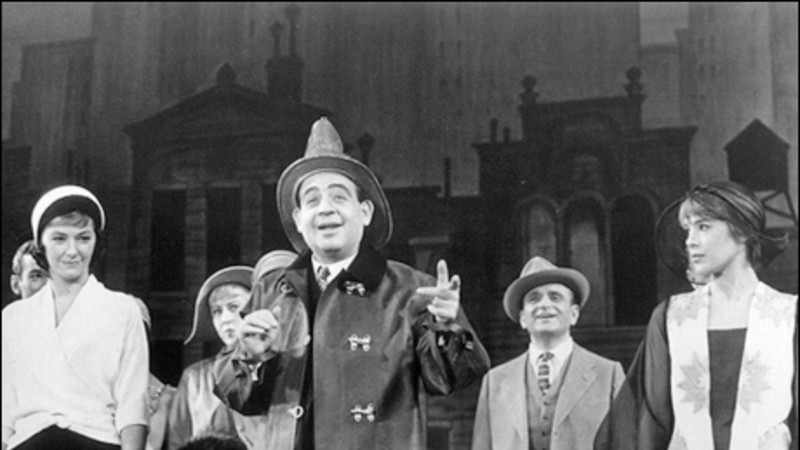
Bosley as Fiorello–Photo: markrobsinsonwrites.com
With one foot in Broadway and one in television, Bosley took on a variety of roles in his early career. In 1955 he appeared in a television production of “Alice in Wonderland” as the Knave of Hearts. In 1959, he won a lot of acclaim as New York mayor Fiorello H. La Guardia in the Broadway musical “Fiorello!” and won a Tony award. Bosley would later return to Broadway in the 1990s taking on the roles of Maurice in “Beauty and the Beast” and as Cap’n Andy in “Show Boat.”
In the 1960s he explored motion pictures and landed his first role as a suitor of Natalie Wood in Love with the Proper Stranger.
Although he continued to appear in the big screen, the little screen took up most of his time in the sixties and early seventies. In 1962 he played opposite Tony Randall and Boris Karloff in “Arsenic & Old Lace.” His face became a familiar one showing up in Car 54, Where Are You?, Bonanza, Get Smart, Route 66, Dr. Kildare, The Mod Squad, The Streets of San Francisco, Bewitched, McMillan and Wife, and Marcus Welby, among others.
It was also during this decade he married Jean Eliot. They were married until she passed away in 1978.
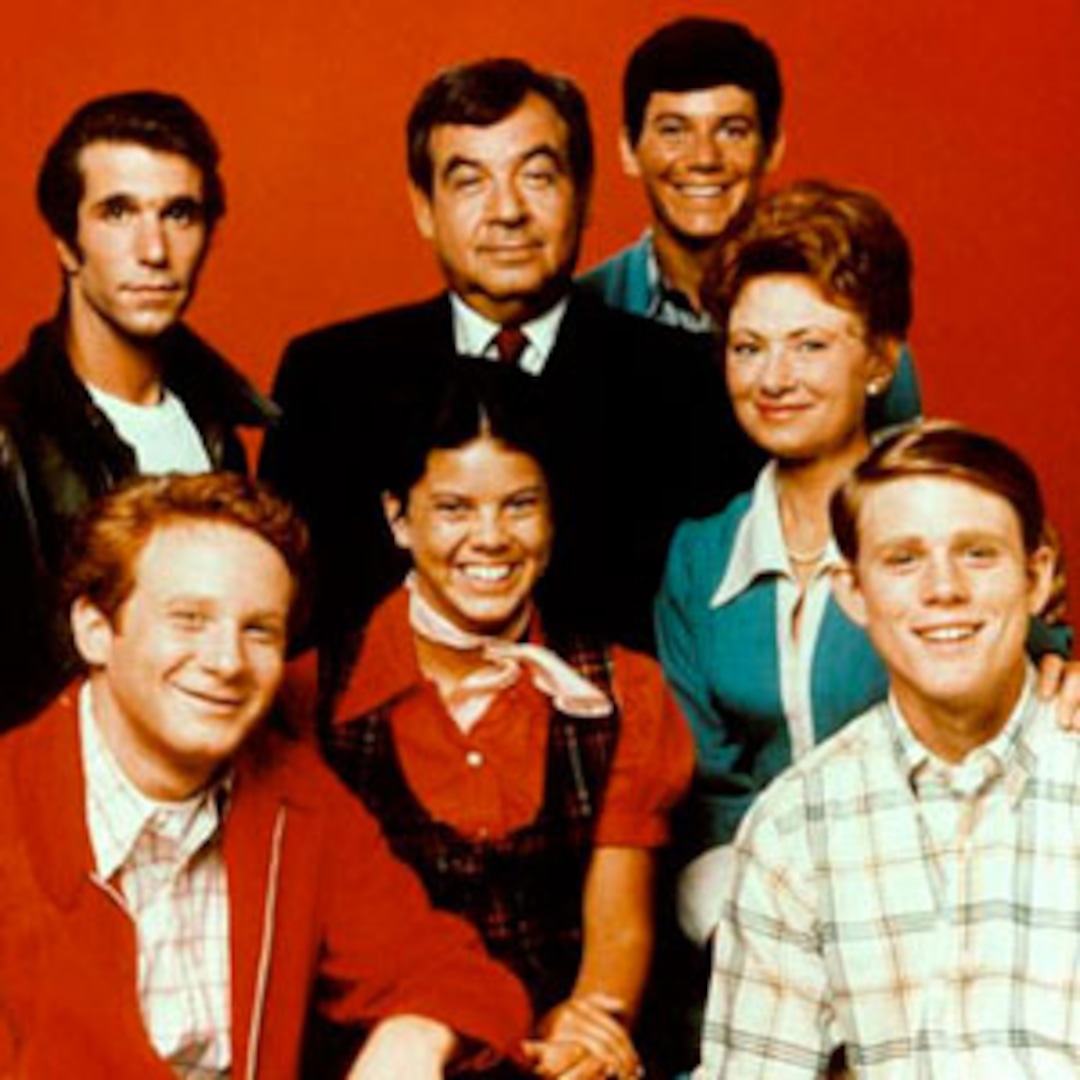
The Cast of Happy Days Photo: E!online.com
In 1974 he accepted the role that would make him a household name. “Love and the Television Set” was one of the four skits appearing on an episode of Love American Style, and I actually remember watching it. Garry Marshall developed it as a pilot, but the network wasn’t interested in turning the pilot into a show when it first came up. However, once George Lucas released American Graffiti in 1973, also starring Ron Howard, ABC took another look at the period show. The first two seasons, the show focused more on Richie Cunningham as he interacted with his friends and family. Jerry Paris (Jerry Helper on The Dick Van Dyke Show) directed 237 of the episodes. Happy Days was described as relentlessly ordinary. The plots revolved around the same types of problems most teens experienced in the fifties: dating, wanting to be popular, peer pressure, and similar issues.
Bosley originally turned down the role but reconsidered after reading the script more thoroughly; he was drawn to a scene between Howard and Richie that moved him. Bosley said he also was looking for some security. His wife was sick at the time, and they thought she might have epilepsy, which was later determined to be a brain tumor; he wanted an easier schedule in order to care for his wife and help raise his daughter.
With Henry Winkler Photo: brooklynvegan.com
He captured the sometimes cranky, but lovable, Howard Cunningham perfectly. He might not agree with his children, but he was always there for them, and he was apparently always there for his castmates who all remembered him as a kind, fatherly figure.
For a decade, Bosley developed the role of Howard into a much-loved sitcom father. Bosley said none of the characters were well defined in the early scripts. The cast developed their characters as relationships developed. He described the actors as a baseball team that never made errors; they just clicked and had a wonderful rapport.
During the run of the show, his wife passed away from her tumor, and in 1980 he married actress Patricia Carr whom he stayed married to until his death.
With Angela Lansbury Photo: etsy.com
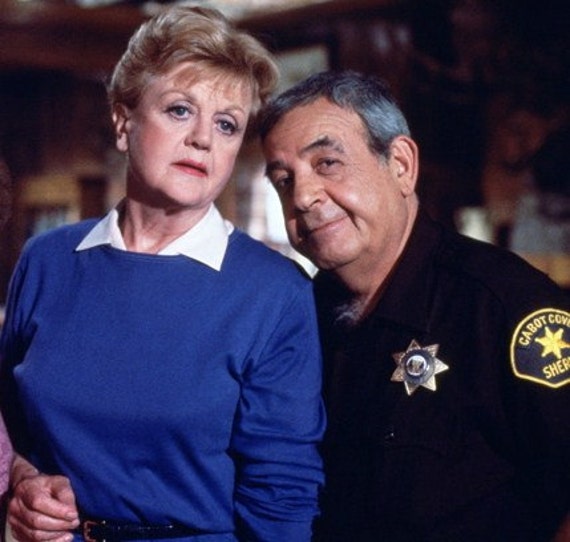
When the show ended, Bosley was immediately offered another role. Although he appeared in a variety of shows in the early eighties, including five episodes of Love Boat, he moved from Milwaukee to Maine to help Jessica Fletcher solve mysteries on Murder, She Wrote. Bosley said the role of Jessica was written for Jean Stapleton, but then she did not want to do it so it was offered to Angela Lansbury. He and Angela had worked together in the past, so he did the pilot. It was supposed to be a one-time role, but they brought him back nineteen times without a contract. As Sheriff Amos Tupper, he spent four years trying to figure out why so many murders took place in peaceful Cabot Cove. He then retired from the police force and moved to live with his sister.
James Stephens, Tracy Nelson, Bosley, Mary Wickes Photo: pinterest.com
He actually did work with a sister in his next role on Father Dowling Mysteries. As Father Frank Dowling by day, he moonlighted, solving mysteries with his assistant Sister Stephanie Oskowski (played by Tracy Nelson, Rick Nelson’s daughter and granddaughter of Ozzie and Harriet).
Bosley described Father Dowling as being a lot like himself: calm, quiet, and caring. While murders occurred on the show, there was no violence. When they were casting the part for the housekeeper, they described the character as a Mary Wickes type, and Bosley told them to just get Mary Wickes, and he loved working with her. He enjoyed that show more than any of the other shows he worked on. The cast was totally caught off guard when it was cancelled. The network wanted to do a show with James Earl Jones and Richard Crenna. They gave Crenna’s agent a short-time period to agree to the show and he agreed before the limit ended, so the network was forced to delete a show from the current schedule to make room for this new show and they chose Father Dowling; the James Earl Jones show, Pros and Cons, also about several private detectives, and was dropped after 12 episodes.
When the show ended in 1991, his career definitely did not. When asked if he was going to retire, he replied, “Don’t be silly—actors spend half of their careers in retirement.” He continued appearing in a variety of shows (39 in all) until his death in 2010 from a staph infection.
Photo: outsider.com
There are several actors I get confused by at times because of their similarities. One is Ray Walston from My Favorite Martian with Jonathan Harris from Lost in Space. The other is Tom Bosley with David Doyle from Charlie’s Angels. At least I felt better about my mental error after doing research on Bosley. Apparently, David Doyle was named “Bosley” on the show because people confused the two actors so often.
I’m sure Tom Bosley would have made an excellent attorney or announcer, but I’m happy that he followed his acting passion, and I’m thankful for the five decades he was willing to entertain us with his special gift.
We are in the midst of our western series, and today we turn our attention to a show that was on ABC for four years, from 1965-1969: The Big Valley. Created by A. I. Bezzerides and Louis F. Edelman and produced by Levy-Gardner-Laven (a trio of Jules V. Levy, Arthur Gardner, and Arnold Laven).
Photo: amazon.com
The series is set on the Barkley Ranch in the 1870s, home of the Barkleys, one of the wealthiest families in the area. The ranch is based on the 30-acre Hill Ranch which existed from 1855-1931. Lawson Hill was murdered in 1861 ad then his wife Euphemia ran it. They also had three sons and one daughter. Today the ranch is covered by Camanche Reservoir waters. The exterior shot of the house used in the show was also Tara in Gone with the Wind.
Photo: pinterest.com
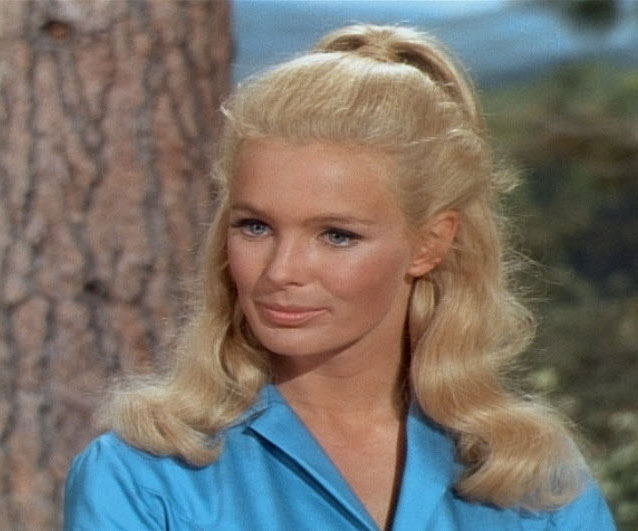
On Big Valley, Victoria Barkley (Barbara Stanwyck) runs the ranch with the help of her sons Jarrod (Richard Long), Heath (Lee Majors), and Nick (Peter Breck) and daughter Audra (Linda Evans).
Barbara Stanwyck Photo: pinterest.com
Heath was her husband’s illegitimate son, but she considered him her own child. He never met his father who had never been told of his existence; Heath learned it from his mother on her deathbed.
The boys of Big Valley Photo: tapatalk.com
Jarrod was an attorney and was refined and well educated. He was briefly married but his wife was killed shortly after by a bullet meant for him. Nick was the younger, hot-tempered son who helped his mother run the ranch. He was a soldier in the Union Army during the Civil War. He had a great sense of humor and was very loyal to his family.
Linda Evans Photo: insp.com
Audra was rather bold for the times. She was a tomboy but had a soft heart and tended to children at the local orphanage.
There was another younger Barkley, Eugene (Charles Briles), who was a medical student at Berkeley. He was seen off and on through season one, then drafted into the army and never really mentioned again.
Considering that the show was only on the air four years, a lot of stars appeared. A small sample includes Jack Albertson, Lew Ayres, Anne Baxter, Milton Berle, Charles Bronson, John Carradine, Yvonne Craig, Yvonne DeCarlo, Richard Dreyfuss, Robert Goulet, Julie Harris, Ron Howard, Cloris Leachman, Gavin MacLeod, Leslie Nielsen, Regis Philbin, Lou Rawls, Pernell Roberts, Wayne Rogers, Katharine Ross, William Shatner, and Adam West.
Lou Rawls guest star Photo: imdb.com
The Big Valley was a western but with a few twists and never predictable. It was the first time a woman would have the lead in a western. The Barkleys may have been wealthy, but they were raised right. They were hardworking and fought for the underdog, making sure justice prevailed. However, it was not a cliché; no one could be trusted and nothing was exactly as it looked. Characters who appeared angelic ended up being truly evil.
Photo: hulu.com
Unfortunately for the show, it was coming in at the end of the western’s popularity and was never in the top 30 during its time on the air. The other new shows that began when it did included Get Smart, I Dream of Jeannie, Hogan’s Heroes, Lost in Space, F Troop, and The Wild Wild West.
However, it received good reviews, and in 1966, Stanwyck was nominated and won the Emmy for drama series. She would also be nominated in 1967 and 1968, losing to Barbara Bain from Mission Impossible both years.
The theme was composed by George Duning. In 1966, a soundtrack from the show was released in mono and stereo versions. During his career Duning would work on more than 300 movie and television scores.
Like many television shows in the fifties and sixties, Dell Comics published six comic books based on the show. For some reason, I did not see much in the way of merchandising for this show compared to other westerns or shows from the sixties.
Photo: pinterest.com
The cast got along well. Evans and Stanwyck were exceptionally close and rehearsed at Barbara’s house every Saturday. When Arthur Gardner was interviewed on the Television Academy, he said that Stanwyck mentored the younger cast members. He said “he could not praise her enough” for the work she did.
Photo: pinterest.com
It’s too bad the show didn’t begin earlier in the decade; it might have been able to stay on the air a bit longer. It was a unique concept with a powerful woman as the star. You can currently see it on Me TV on Saturdays as well as a few other networks.


















 thewritelife61