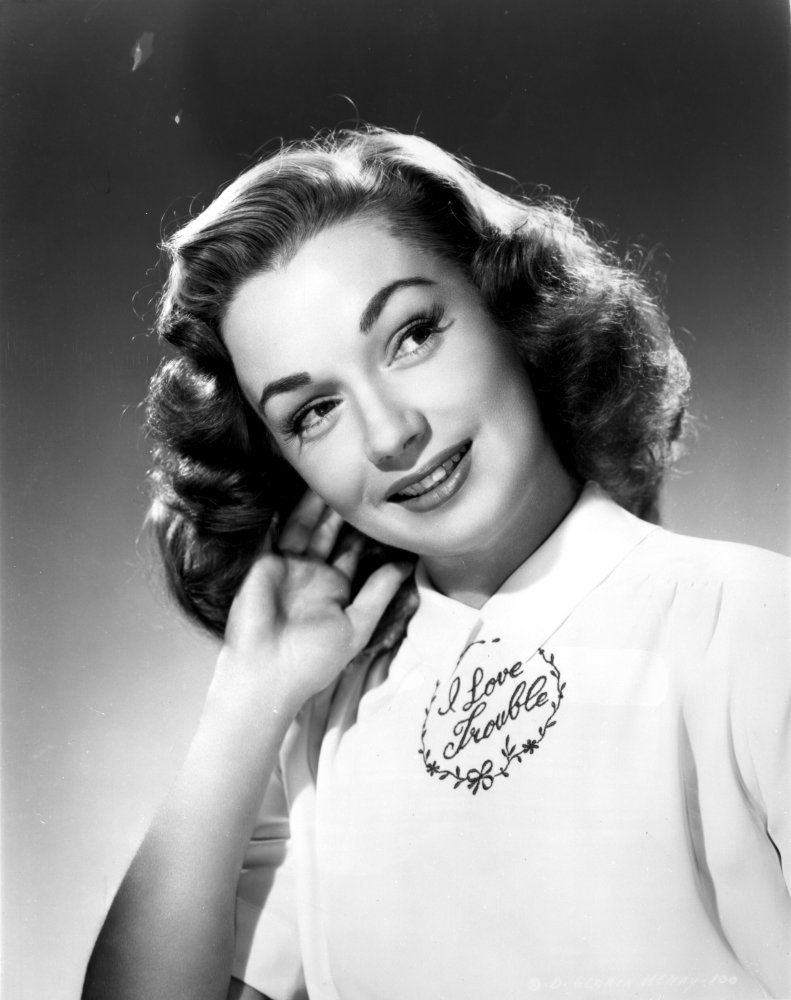
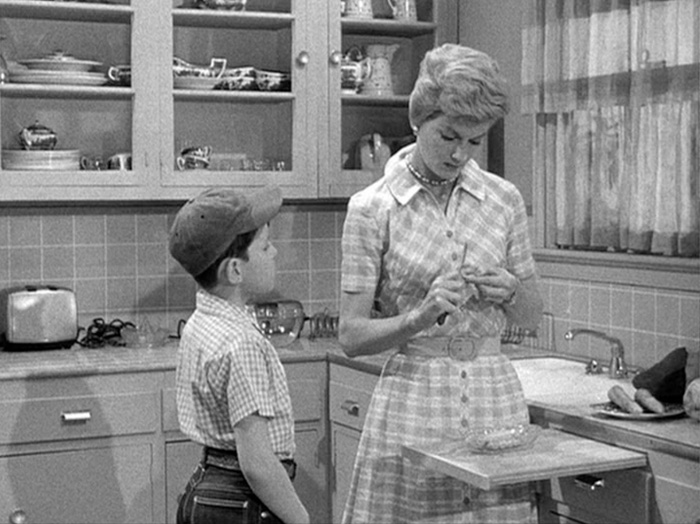
As we wind up our blog theme Model Parents, we concentrate on the career of Hugh Beaumont, the man many of us recall as Ward Cleaver on Leave It to Beaver.
Beaumont was born in Kansas in 1909. After high school, he enrolled in the University of Chattanooga where he played football. Later he studied at the University of Southern California, receiving his master of theology in 1946.
đˇfacebook.com With Kathryn Adams
In 1941, Beaumont married actress Kathryn Adams. They were divorced in 1974. Hugh was a lay minister in the Methodist church, and during WWII he was a medic.
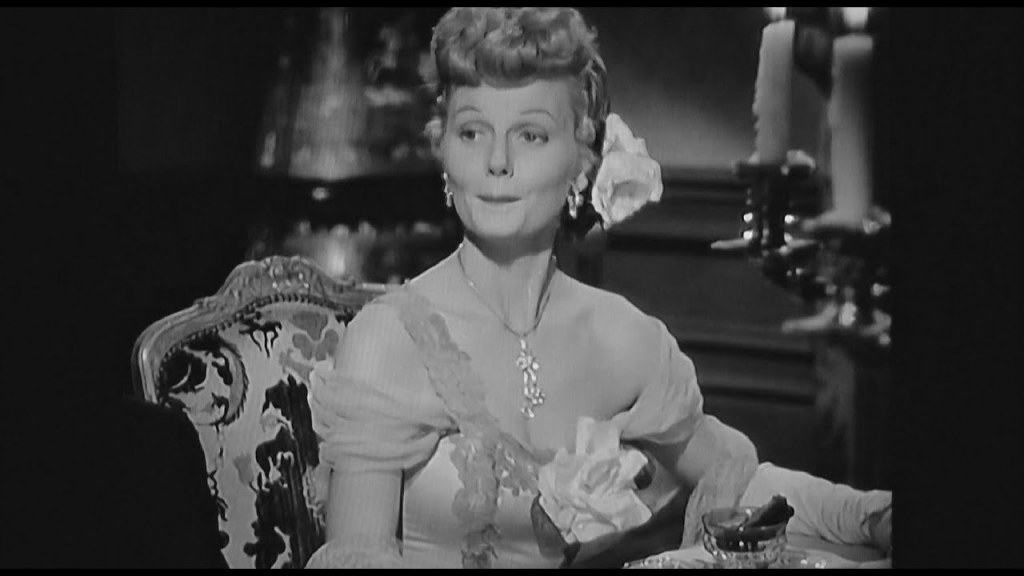
His passion for acting led him to appear in an impressive 99 films over his career. In the mid-1940s, Beaumont stepped into the shoes of private detective Michael Shayne in a string of five films â roles that showcased the quiet charisma and moral strength that would later define his most famous television character.
During the fifties, he transitioned to television where he had roles in many of the dramatic shows that were so popular then. In 1957 he got his big break with the role of Ward Cleaver on Leave It to Beaver. Beaumont also tried his hand at directing during the run of the show, directing 23 episodes.
đˇlaura’smiscellaneousmusings.com As Michael Shayne
The cast was a close one. Jerry Mathers shared his first memory of Beaumont which was not from Leave It to Beaver: âI actually worked with Hugh Beaumont even before we started shooting Leave It to Beaver. I was cast with him in a promotional film for Rose Hills Memorial Park. One thing I remember is that during a scene, I was supposed to cry on cue. Hugh asked me if I had ever done that before and I told him no. He said, âPut your face into your hands and laugh really hard.â Itâs an old actorâs trick because the sound of laughter and crying are very closely related. I tried and it worked.â
When Mathers came in for Hughâs audition, he remembered the actor and they had good chemistry right from the start. Mathers said that he and Hugh had a wonderful relationship for his entire life. He fondly remembered Hugh coming over to his house to play cards with Jerryâs father and some of his friends.
During the sixties and seventies, Hugh was involved with community theater taking roles on several television shows including Lassie, Petticoat Junction, Marcus Welby MD, Mannix, and Medical Center. He also wrote several television screenplays and radio scripts, as well as short stories. His last role was in 1971 when he retired from entertainment to start a Christmas tree farm in Grand Rapids, Minnesota.
đˇimdb.com
Beaumont died in 1982 while visiting his son in Germany.
Beaumont always kept his integrity. He once said that âsometimes my work as an actor presents a conflict with my ideals as a clergyman. I donât believe in the old saying that the end justifies the means and no money that I can earn as an actor can accomplish so much good that I would feel justified in violating my ideals to earn it. , . . If the question ever arises in a serious way, of course, I would have to give up my acting.â
Hugh Beaumont was kindly remembered by everyone he worked with. He had dual careers with one foot in Hollywood and one in the church which isn’t always easy. He then took on a third profession selling Christmas trees. He seemed to be a man who enjoyed what he did and chose the right path for himself at each stage of his journey.
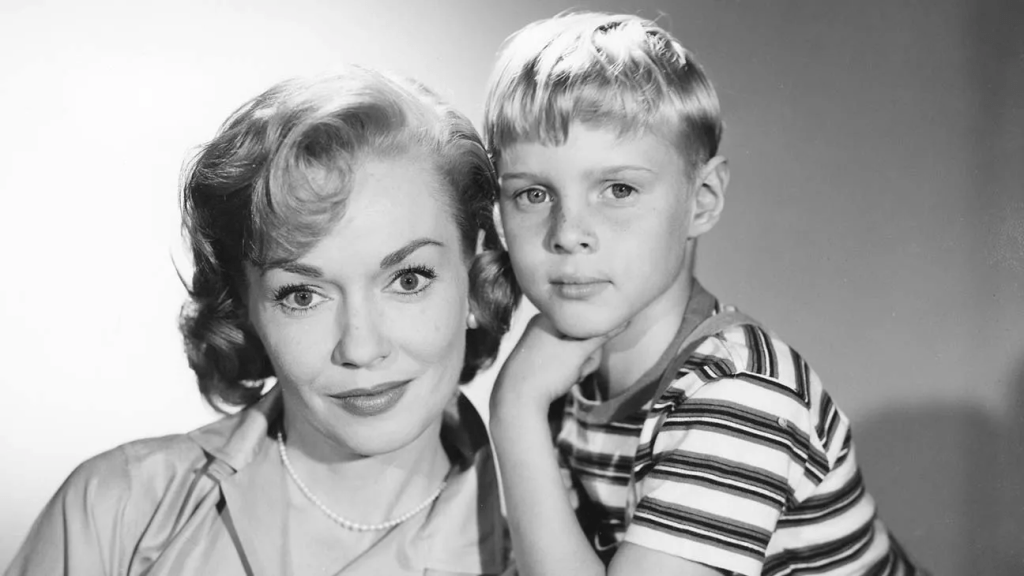
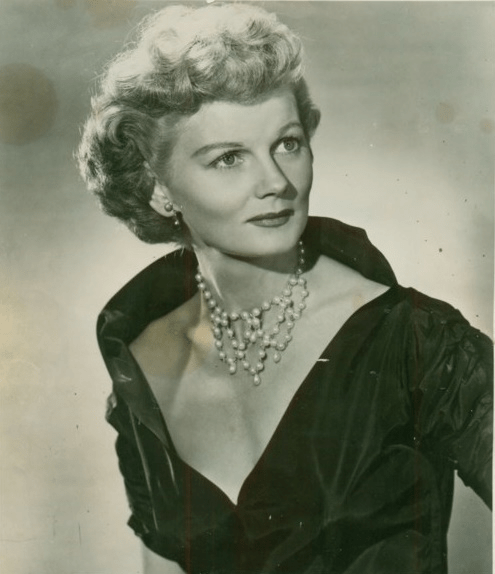
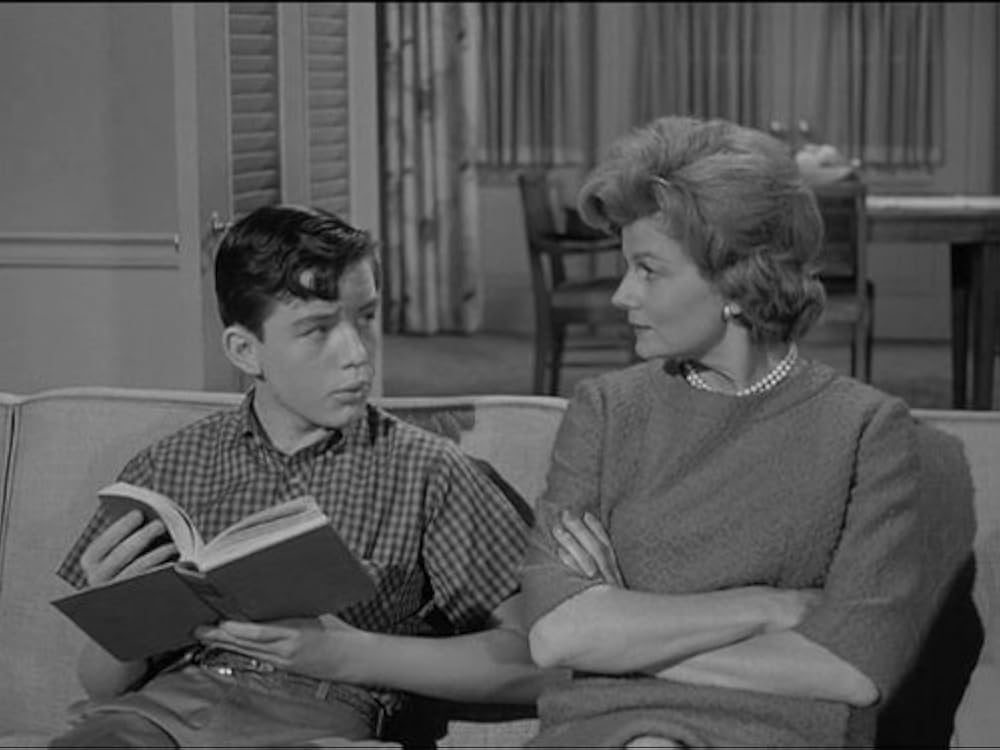
We are in the midst of our blog theme, Model Parents, and today we get to know June Cleaver, also known as Barbara Billingsley.
đˇvintagevenus wordpress.com
Billingsley was born in Los Angeles in 1915. Barbaraâs parents divorced when she was under five; her dad was a policeman, who was eventually appointed the assistant Chief of Police, and her mom worked at a knitting mill.
Her mother used to take her and her sister to the movies quite often, so she was exposed to all the top actors growing up. She also loved tennis and she said you could play at night. You put a quarter in this machine and it lit up the court so you got an hour to play.
Billingsley left college after a year to appear in a Broadway review. When the show closed after only five days, Barbara decided to stay and began working as a fashion model for Stephen Sondheimâs mother and later Hattie Carnegie. She didnât have an easy time there; she said she was so innocent and no one had talked to her about life, so she grew up quickly.
She married her husband Glenn in 1941 and four years later she was offered a contract with MGM Studios. The couple moved to Los Angeles where Glenn opened a steakhouse. Unfortunately, their marriage didnât last and they divorced in 1947, with two young sons.
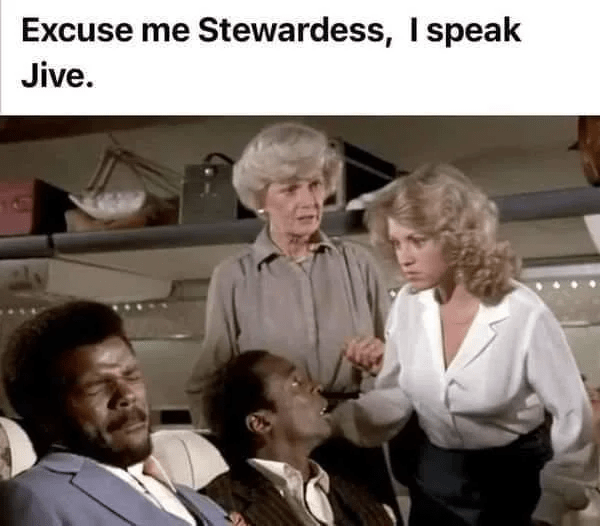
She would appear in 46 films, most of them in the forties. One of her last movie roles was probably her most famous when she appeared in Airplane!
đˇyoutube.com
After 1950 most of her roles were on television. Her first exposure to television was in 1939 in a friendâs New York apartment. Unlike Jane Wyatt and her friends, Billingsley thought it was fascinating.
During the fifties she appeared in a lot of the dramatic playhouse series that were so popular that decade. Her first recurring role was as Barbara on The Box Brothers. In this show, imdb.com states âthe two Box brothers were polar opposites who ran a photography studio in San Francisco. Gilly (Bob Sweeney) is the shy retiring sibling, while excitable Harvey (Gale Gordon) is domineering. Harvey dates self-assured Margaret while Gilly’s girl is quiet Marilee.â
In 1953 she married director Roy Kellino, and the marriage lasted for three years when he passed away. Her last marriage to Dr. William S. Mortenson began in 1959 and ended in 1981 when he passed away.
đˇthebluegrassspecial.com
Her next recurring role would make her a household name. In 1957 she accepted the offer to star in Leave It to Beaver. The series was created for Buddy Ebsen and thatâs who Billingsley tested with. She went for the audition even though she and her husband at the time were getting ready to leave for Spain where he was directing a movie. Her husband passed away before they left, so when she was asked about taking the part for the new sitcom, she said yes. In the pilot Ebsen was replaced by Max Showalter. It was an episode of Playhouse 57 called âItâs a Small World.â She said she was happy that Hugh Beaumont ended up with the part once the show was ready to begin taping, and she said that he was the best father on television.
The show became a big hit, airing for five seasons. She starred with Beaumont, who weâll talk about next week; Jerry Mathers; and Tony Dow.
Billingsley was often stereotyped as the typical suburban mother cleaning her house while wearing pearls. However, the real story behind the pearls is a much simpler one. Barbara had a hollow in her neck that she was self-conscious about, so she thought wearing a string of pearls would help hide it. She was also made fun of vacuuming in high heels. She said she wore flats the first year or two, but when the boys began getting taller, the producers wanted her to wear heels, so they didnât surpass her in height.
đˇimdb.com
Barbara defended June Cleaver when others complained about sitcom life not being realistic. Billingsley said June âwas the love in that family. She set a good example for what a wife could be. I had two boys at home when I did the show. I think the character became kind of like me and vice versa. Iâve never known where one started and where one stopped.â She said she thought most people would appreciate a mother like June. âWouldnât it be nice if you came home from school and there was Mom standing there with her little apron and cookies waiting?â Her âsonsâ on the show considered her a mentor and a second mother.
The one thing Billingsley regretted about the show was signing the typical contract that paid actors residuals for up to six reruns. Who knew Leave it To Beaver would still be on the air almost seventy years after it debuted.
She stayed close to the cast of Leave It to Beaver. She said, âNo father on television was better than Hugh.â After his death, she said she missed âhim very much because we were so close.â She was also close to Richard Deacon who she, like almost everyone else who knew him, described as incredibly funny.
Jerry Mathers talked about his friendship with Barbara after her death. âFor me she was like the favorite teacher that we all had in school. I was lucky enough to work with her for six years and have a life-long relationship with her. She was a very kind woman and a generous philanthropist who supported many charities, always ready to give anyone in need a helping hand.
đˇreddit.com
After the show ended, Barbara was typecast and couldnât find a role she wanted. She traveled abroad off and on for about seventeen years. With the exception of an appearance on The FBI, she would not be seen on tv again until the 1980s after her role on the satire Airplane! While she is only on camera a couple of minutes, her role in the movie is memorable. As a jab at her very white suburban mom role of June Cleaver, Barbara comes to the aid of a stewardess who can’t understand two passengers having an argument. The passengers were Al White and Norman Alexander Gibbs, and the sweet, grandmotherly Barbara tells the stewardess that she knows jive and she proceeds to talk to and berate the two for arguing. The script initially just said “speak jive,” so Billingsley went to lunch with Al White and Norman Alexander Gibbs (the “Jive Dudes”) and they improvised the dialogue together.While she doesn’t even have a name in the movie, this cameo sparked her career and she continued to get fan mail for years.
During the 1980s she appeared on several shows including Mork & Mindy, Silver Spoons, and The Love Boat. From 1985-1989 she reprised her role of June Cleaver on The New Leave It to Beaver show.
đˇmoviemarket The New Leave It to Beaver
She showed up in several shows in the nineties including Empty Nest and Murphy Brown. Her final credit was in a made-for-tv movie, Secret Santa, in 2003.
Billingsley passed away in her home in 2010.
When she wasnât acting, her interests included gardening, watching movies, playing tennis, sewing, traveling, and spending time with her family.
One thing Barbara said she regretted was not getting an education in drama before becoming an actress. She said she was able to take some classes later, but the people who came to Hollywood with education degrees had much more confidence. And later she learned that the two key skills for actors are relaxation and concentration. Without both, the job is too hard.
đˇfacebook Barbara and her real sons
When asked how she wanted to be remembered, she echoed Jane Wyatt, saying that she wanted to be known as a good mother and wife. She said sheâd like people to remember Leave it to Beaver, but if they think she raised a good family, thatâs important and she wants to be a good example.
I think itâs fascinating that our two moms in our âModel Parentsâ theme both focused on their family life rather than their professional life. They came from very different backgrounds with Wyatt growing up in a wealthy family where both parents chose to work and Billingsley growing up in a middle-class family where her mother had to work to help support her family. They proved by their actions that the mothers on Father Knows Best and Leave It to Beaver did live realistic lives, and these two moms chose to live this same life off the set as well.
Thanks for joining me this month in our blog series, âItâs Their Show.â As it became obvious that television wasnât going away and movie stars were only hurting themselves shunning the industry, several celebrities decided to make the jump and star in their own show on the small screen. Ray Milland was one of the first stars to tackle the task. Milland had been known for many great movies including The Lost Weekend, for which he won an Oscar, and Dial M for Murder.
đˇraredvds.com
His show was originally titled âMeet Mr. McNutley,â but it became The Ray Milland Show. This is one of those shows that fans remember fondly as very funny and well written.
The show debuted in 1953 and ran for two seasons, two very different seasons. In the first season, McNutley is an English professor at Lynn Haven College for Women. Although all the students find him attractive his wife (Phyllis Avery) understood that this was not affecting her marriage. Rounding out the cast were their neighbors Pete and Ruth Thompson (Gordon Jones and Jacqueline DeWit) and the college dean (Minerva Urecal) who was not swooning over McNutley.
đˇwikimediacommons.com
When the show returned for its second season, his name is now Mr. McNulty and he is a drama professor, moving from New England to Comstock University in California, a coed college. Dean Dodsworth (Lloyd Corrigan) and his wife (Madge Blake) take the place of their neighbors in this version.
The first season, CBS put the show on Thursday nights where it was up against Groucho Marxâs You Bet Your Life, a top ten program. Although many things changed from season one to season two, what stayed the same was that the show was still up against You Bet Your Life and Grouchoâs show was still in the top ten. Rayâs show was cancelled at the end of the second season.
The producers of the show were Joe Connolly and Bob Mosher. The partnership would have some minor success in the early sixties after this show went off the air (Bringing Up Buddy, Ichabod and Me, Calvin and the Colonel) before hitting it big as the writers and producers for Leave It to Beaver and The Munsters. They were also behind The New Leave It to Beaver Show in 1997.
đˇidahoseniorindependent.com “The Christmas Story”
I watched the Christmas episode from the second season for this blog. Peg gets involved with the local orphanage and agrees to host a child for Christmas. She is a difficult child and makes life and the holidays very unpleasant for the couple. However, as viewers, we are in on a scene where Susie (Beverly Washburn) reveals why she is so mean. She decides to become the perfect child so the couple will take her to the orphanage Christmas party, but her goal is to expose Santa as a fake to the other kids, and the show ends with an unexpected twist. It was a heart-warming story, and the humor was a bit subdued, but I enjoyed the episode. I was impressed by Washburnâs portrayal of a bad, good little girl. By the way, Washburn is still acting; sheâs probably best remembered for her role in Old Yeller.
Milland would attempt another television series in 1959, and that show also ran for two seasons. As Markham, he portrayed a former attorney turned private detective who solved crimes around the world.
Itâs too bad that the network never gave this show a chance to move to a spot in the schedule where it didnât have so much competition. I thought it was more sophisticated than some of the sitcoms during the fifties. Iâm guessing that it might have been a big hit.
This month we are taking a look at some of our favorite âCrime Solvers of the Past.â Today we wrap up the blog series with The Felony Squad which ran three seasons, debuting on ABC in 1966.
đˇblu-ray.com
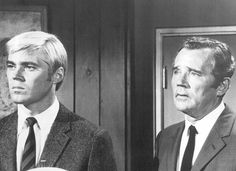
Originally titled âMen Against Evil,â the show was going to be more of a soap opera feel which was broadcast twice a week. However, by the time the show aired, most of the personal relationships had been taken out of the plot. The series focused on Sergeant Sam Stone (Howard Duff) and Rookie Detective Jim Briggs (Dennis Cole). Rounding out the cast was Desk Sergeant Dan Briggs (Ben Alexander), also known as Dad to Jim and District Attorney Adam Fisher (Len Wayland). The first seasons included Captain Frank Nye (Barney Phillips) while later seasons featured Captain Ed Franks (Robert DoQui).
The show was known for having some big names in directing, writing, and guest stars. Many of the directors racked up more than 75 credits each and included George McCowan who worked on The Mod Squad and Cannon, Allen Reisner known for Hawaii Five-0, Lee Katzin who directed Mission Impossible, Laslo Benedek known for work on Perry Mason, and Vincent McEveety who directed stars in Murder She Wrote,Heat of the Night, and Simon & Simon. Howard Duff jumped behind the camera in season two to direct âDeadly Abductorsâ after directing seven episodes of Camp Runamuck a couple of years earlier.
Crafting scripts for the show were writers such as Richard Murphy who was the creator of this show, Don Brinkley who worked on Trapper John and Medical Center, Jack Turley who wrote for Cannon and The Man from UNCLE, and John Kneubuhl who also wrote for the Wild Wild West.
đˇpinterest.com
A handful of the guest stars included Ed Asner, Richard Dreyfuss, Robert Duvall, Roddy McDowell, Ricardo Montalban, George Takei, Vic Tayback, and Cicely Tyson.
The Felony Squad theme was composed by Pete Rugolo. Rugolo had 83 credits in the business including writing music for a wide variety of television genres including Leave It to Beaver, The Fugitive, and Family. This theme was an instrumental and very reminiscent of a sixties action movie.
I couldnât find a lot of reviews, but the New York Timesâ Jack Gould described it as âa very old-fashioned and conventional yarn about tight-lipped detectives doing a dayâs work.â
The series was on Monday nights until 1968 when it was moved to Fridays. The first two seasons the show was up against The Andy Griffith Show which was in the top ten. For the final season, the show moved to the weekend where it was up against an Andy Griffith Show spinoff, Gomer Pyle USMC, which was also a top ten.
The show obviously did well to stay on the air three years when it faced such tough competition. I wonder if being a 30-minute show as opposed to an hour was part of its downfall. No matter how great the writers are, itâs tough to get sophisticated and detailed enough with a plot to wrap up in half an hour. The show certainly found talented directors, writers, cast members, and guest stars. The show was shot in color and had a different feel to it, more realistic. The action is right in your face like youâre on set instead of watching from far off. Considering it maintained decent ratings before it was moved, it would have been interesting to see what would have happened if this show had been the competition with a newer show to see how it fared. Fans loved it, so if you want to see something different, check out a few episodes. Iâm not sure why this series isnât seen more, but YouTube is your best bet to find the most available episodes. Also, as a fun aside, if you want to see Stone, check out Batmanâs second season episode, âThe Impractical Joker,â when Duff as Stone peers out the window while watching the Dynamic Duo climb the wall.
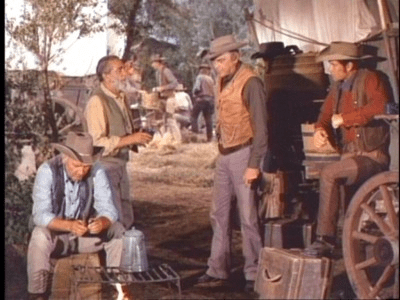
This month we are celebrating, âGo West Young Manâ by taking a look at some of the westerns from the fifties and sixties. Up today is Wagon Train. This series debuted on NBC in 1957; in 1962 it moseyed over to ABC for its final three seasons. Lew Wasserman was involved with Universal which produced Wagon Train. When they sold the series to ABC, NBC was not happy, but Wasserman told them that he had a new show for them, The Virginian, which weâll learn about in two weeks.
đˇpinterest.com
The series was very popular, jumping to number one immediately. The plot is that a large wagon train is traveling through the west from Missouri to California. Ward Bond starred as the wagon master Seth Adams (when he died in 1960, John McIntire took over). Robert Horton played scout Flint McCullough; eventually he opted to leave and was replaced by Robert Fuller. Oddly, Horton and Fuller shared a birthday and were six years apart in age.
If I listed all the guest stars during the eight seasons, you would still be reading this next Monday. Just know, there were a lot.
The show was adapted from a 1950 John Ford film titled Wagon Master. In a 1960 episode, John Ford stepped in to direct an episode, âThe Colter Craven Story.â One guest star I have to mention in this one was John Wayne. He speaks from the shadows as General Sherman (Wayneâs real name was Marion Michael Morrison, so for this credit, he went by Michael Morris) in this episode.
The original theme song was written by Henri Rene and Bob Russell and conducted by Stanley Wilson. A more contemporary theme accompanied season two, and it changed a few more times during the run of the show.
đˇmsn.com
The show had a huge budget for the time: $100,000 (about a million in todayâs world of television). It was about 40% more expensive than most westerns at the time, and that is part of why it was able to feature so many guest stars.
When Gene Roddenberry pitched Star Trek to the networks, he described it as “a Wagon Train traveling across the universe.” He also hired writer Gene L. Coon who wrote 23 episodes of Wagon Train.
While wagon trains are considered an icon from our history, so was the product of the seriesâ first sponsor, the Edsel Division of the Ford Motor Co.
The show was an hour long and shot in black and white for the first six seasons. For season seven, the network filmed the show in color and increased the length to 90 minutes. The ratings were still high but didnât increase, so the network could not justify the changes, and the television show went back to an hour in black and white.
đˇdvdtalk.com
The show was placed on Wednesday nights up against Leave it to Beaver and Disneyland. Even with that competition, it was in the top thirty and by its second season, had jumped to the top ten where it stayed until it was sold to ABC. ABC kept the show on Wednesday nights, and it ran against The Virginian, both being in the top thirty in 1962.
So many people have fond memories of this show. It was on six seasons, but I think it was finally cancelled even though it was in the top thirty because of the western overload, ushering in the shows like Get Smart, The Man From UNCLE, Lost in Space, and The Smothers Brothers Show. Check out your favorite guest stars who were on the show and watch those episodes to see what it was like.
This month we are taking a look at some classic sitcoms that many people donât remember anymore.
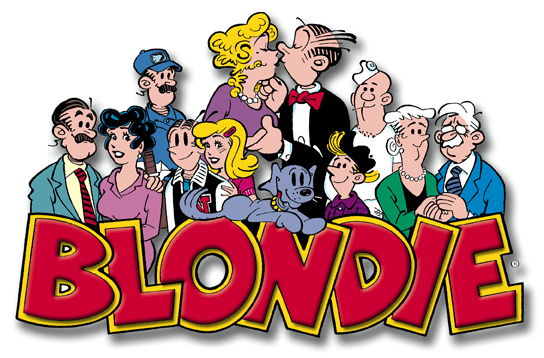
Blondie is one of those shows. It was based on the Chic Young comic strip and debuted on NBC in 1957, lasting one year. The series was resurrected in 1968 and the reboot also lasted a season.
đˇwikipedia.com The 1957 version
Blondie had become very popular with fans. Beginning in 1938, 28 movies were made starring Penny Singleton and Arthur Lake. Blondie also showed up on the radio from 1939 to 1950. Many products had been based on the characters including comic books, coloring books, lunch boxes, and board games.
The 1957 series starred half the movie duo. Lake took on his role of Dagwood Bumstead, but Pamela Britton was offered the role of Blondie Bumstead. Their kids, Cookie and Alexander, were played by Ann Barnes and Stuffy Singer. Florenz Ames was boss J.C. Dithers with Elvia Allmana as his wife Cora. Rounding out the cast was Harold Peary as neighbor Herb Woodley.
đˇimdb.com The 1968 version
A decade later Will Hutchins and Patricia Harty play Dagwood and Blondie, Jim and Henny Backus play the Dithers, and Pamelyn Ferdin and Peter Robbins are their kids. The only advantage this series had over the original was color.
The comic strip, movies, radio show and both sitcoms all encompassed the familiar Bumstead elements: Dagwood being physically and socially awkward; their dog Daisy, and Dagwoodâs love of napping and huge sandwiches.
The reboot was produced by Joe Connelly and Bob Mosher, the faces behind Leave It to Beaver and The Munsters. There was room in the schedule after the network cancelled He and She, a sitcom starring real life spouses Paula Prentiss and Richard Benjamin. The show is described on imdb.com as âDick and Paula Hollister are a couple living in New York. Dick is a comic-book artist who has become famous for creating a superhero called Jetman, which has been turned into a TV show starring egocentric actor Oscar North.â During its one season of 26 episodes, the show received seven Emmy nominations, including a win for writing. Itâs too bad that show was given the axe and Blondie moved in because the Prentiss-Benjamin show was much more creative and felt new, while Blondie felt extremely old.
No surprise, the ratings were not great. This is even worse when you see what the show was in competition with: The Ugliest Girl in Town, which would also be gone by 1969, and Daniel Boone. The one new 1968 show to return on CBS was Hawaii Five-0 which seems so much more sophisticated than Blondie; itâs hard to believe they both debuted the same year.
đˇyahoo.com Hawaii Five-0
Perhaps the fans didnât tune in because the critics panned the show before it aired. The Milwaukee Journalâs Wade Mosby said it was âa horrendously contrived piece of fluff that should have never been snatched from the comic pages.â Don Page of the Los Angeles Times called it âan unmitigated disaster,â and Cynthia Lowry of the Associated Press described it as âdismal.â
By November, rumors were that the show was already cancelled, and its last episode aired in January. The show probably relied too much on slapstick and unsophisticated humor; things that might have been fine in the 1930s but were passe by the 1960s. Sometimes a show is cancelled just because itâs a badly written and executed show. It seems Blondie fell into this category not once but twice.
Off the top of my head, I can only recall two comic strips becoming popular television shows: The Archies and The Addams Family. Because the Blondie characters were not very dimensional and got into the same situations over and over, they just never were able to translate into sustainable television characters. I think thereâs a good reason that many people donât remember this show and perhaps it’s better that way.
This month we are looking at some of our favorite character actors. As we wrap up the series, we are ending on a high note with the amazing Burt Mustin. Like Charles Lane, Mustin had a prolific career in Hollywood and television. However, unlike Lane, Mustin was offered his first acting job at age 67 after he had retired.
đˇWidener University Archives
Mustin was born in Pittsburgh in 1884. His father was a stockbroker. After high school, Mustin enrolled in the Pennsylvania Military College (now Widener University) with a degree in civil engineering. During his college career he played trombone in the band and played goalie for his hockey team.
After graduation, Mustin toured Europe, planning to work at his fatherâs brokerage firm. However, a financial panic destroyed the company.
One of Burtâs university classmates was Charles Spinney. According to Burt, Spinney displayed lots of photographs of young ladies from his hometown of Memphis, Tennessee. One day, he was showing them to Burt when he spotted the photo of what he referred to as âthe prettiest girl in the room.â Mustin traveled to Memphis to meet her and in 1915 he married Frances Robina Woods. The couple had no children and remained together for their entire lives, with Frances passing away in 1969.
đˇimdb.com
After working as an engineer for a few years, Mustin decided to try to sell automobiles. In an interview, Mustin admitted, âI was the worst engineer the school turned out.â He began selling Oakland Sensible Sixes and later Franklins, Lincolns, and Mercurys. WWII put an end to car sales for a few years, so Mustin began working for the Better Business Bureau and then the Chamber of Commerce. He stayed in Pittsburgh until he retired.
He did a bit of amateur acting and continued his passion for music. He was part of the oldest Gilbert and Sullivan troupe in the country, the Pittsburgh Savoyards; the Pittsburgh Opera; and an officer in the Society for the Preservation and Encouragement of Barbershop Quartet Singing in America.
He was a founding member of the Pittsburgh Lions Club in 1921 and a life member in the Fellows Club of Pittsburgh. Mustin served as an announcer for the first weekly variety show on radio station KDKA.
đˇthat’sentertainment.com
After retiring, Mustin and his wife moved to Tucson, Arizona for her health where he continued acting. William Wyler saw him in a stage production of âDetective Storyâ and told Mustin to let him know if he ever wanted to pursue a film career. When Wyler was casting for Detective Story in 1951, Mustin reached out to him. The couple later moved to Los Angeles. Mustin would appear in 67 films overall.
In 1968 Mustin was cast in Speedway with Elvis and Nancy Sinatra. In one scene the stars have a loverâs quarrel in a coffee shop. When they make up, Elvis sings a song for his girl. Mustin is in the background cleaning the cafĂŠ and working at the counter. The producers felt the scene needed something else. That something else ended up being Mustin singing and dancing with a mop. No one on the set realized that Burt could sing before that adlibbed scene.
1951 was also the year that Mustin appeared on television in The Adventures of Kit Carson. He would find a new career in television for the next two decades, appearing in more than 130 series (which would equal more than 400 actual episodes).
đˇimdb.com
During the fifties, he would be attracted to many westerns and dramas; however, he found his way onto a few comedies including The Great Gildersleeve, December Bride, and Our Miss Brooks.
If I listed half of the 1960s shows he appeared on, you would still be reading this blog next Monday when my new one is dropped. Take my word for it that he was on almost every popular sixtiesâ sitcom, including 14 episodes as Gus the fireman on Leave it to Beaver. Other sixties hits you can find him on include The Many Loves of Dobie Gillis, The Dick Van Dyke Show, The Joey Bishop Show, The Jack Benny Show, The Beverly Hillbillies, Get Smart, TheAndy Griffith Show, The Lucy Show, Bewitched, Gomer Pyle USMC, PetticoatJunction, and My Three Sons, not to mention many dramas and westerns including Bonanza and Gunsmoke. He was no less busy in the seventies where we could catch him in Marcus Welby, The Mary Tyler Moore Show, The Brady Bunch, Love American Style, Adam-12, All in the Family, and Phyllis.
đˇimdb.com
Johnny Carson loved having Mustin on The Tonight Show, where he was a fan favorite. He shared a lot of fun stories on the show. One of them was about him being at the first World Series for baseball in 1903 when the Pittsburgh Pirates played the Boston Red Sox. Unfortunately for Burt, Boston came back to win the series, but as a bonus he did get to see Honus Wagner play on the diamond.
Mustin passed away eight years after his wife at the age of 92. He left a gift to the college he was loyal to his entire life, enabling Widener University to renovate their theater. It is now named the Burton H. Mustin Theatre and Lecture Hall.
Itâs hard to wrap your head around what a busy film and television career Mustin had. He was an actor for the last 25 years of his life, and with 67 movies and more than 400 episodes, that means that he accumulated about 20 credits per year which is almost two a month from age 67 to 92. Talk about an amazing career. Mustin proved that itâs never too late to find your next passion. Thanks for so many great memories Burt Mustin.
This month we are Riding the Range, exploring some of the westerns from the fifties and sixties. One of those shows that was on the air from 1957-1962 was Tales of Wells Fargo.
The show was produced by Revue Productions and set in the 1870s and 1880s. Gene Reynolds was one of the creators of the show, along with Frank Gruber and James Brooks. Reynolds would go on to great success as a director, producer and writer, and my favorite of his was M*A*S*H. Although this show was set in the same time as Daniel Boone, it was better at getting history correct. The show featured special agent Jim Hardie (Dale Robertson) with his horse Jubilee. It was loosely based on the life of real detective Fred J. Dodge. Sometimes Hardie ran into characters from history including Jesse James and Belle Starr.
đˇpinterest.com Fred J. Dodge
Fred Dodge was born in California in 1854. He went to work as an undercover agent for Wells Fargo, working in California, Nevada, and Arizona. In 1979 he was in Tombstone and recommended hiring Wyatt Earp as guard for the stage line. He became great friends with Earp. Later Dodge became constable of Tombstone while working undercover. In 1890 he left his undercover work and became a known employee of Wells Fargo in Texas. He purchased a 2,000-acre ranch near Boerne, Texas and when he retired in 1917, he lived there with his family. Dodge was described as an intelligent and successful investigator. He wrote 27 journals during his career, noting his activities and travels in them. Some of these were used for Tales of West Fargo.
I had always assumed this show was about stagecoach travel, but it was not, although stage coaches played a part. In the mid-1800s, the Wells Fargo stage line was the primary connection between the East and West coasts. Wells Fargo did not operate a stage coach line, but they did use that form of transportation for money, gold and other valuables to be delivered. Trains are involved in many of the plots. One of the trains used in the show would eventually travel to Hooterville and be renamed the Cannonball.
đˇimdb.com
The first five seasons were black and white half-hour shows, while the final season switched to a color, hour-long show. During the last season, Hardie settles on a ranch near San Francisco and several recurring characters (Jack Ging, William Demarest, Virginia Christine, Lory Patrick, and Mary Jayne Saunders) were added to the series. Earle Lyon replaced Nat Holt as producer in 1960.
The theme song was written by Stanley Wilson and Mort Greene. Wilson was a prolific composer, amassing 147 credits for composing and 278 for music department credit on television and in movies. Mort Greene was best known as a writer for The Red Skelton Show and for his musical role for Leave it to Beaver.
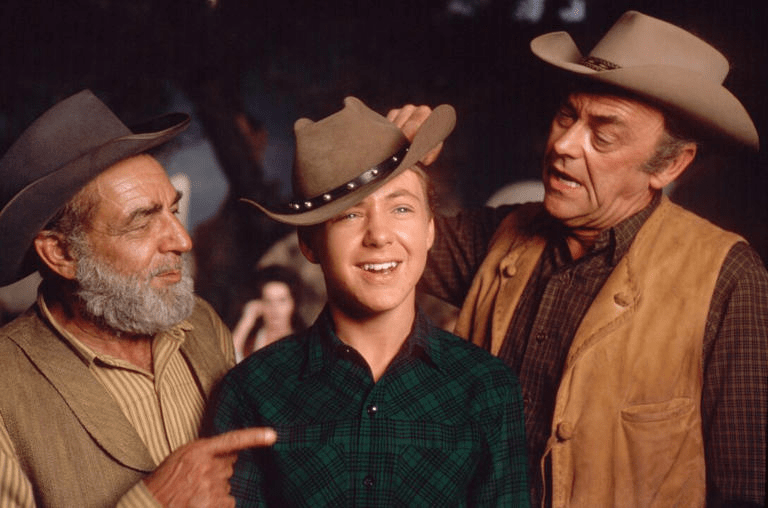
The number of well-known actors who appeared on the show was surprising. Here are just a few of the huge number: Claude Akins, Eddie Albert, Hugh Beaumont, Dan Blocker, Charles Bronson, Edgar Buchanan, Harry Carey Jr., Chuck Connors, Buddy Ebsen, Beverly Garland, George Kennedy, Tina Louise, Steve McQueen, Jack Nicholson, Leonard Nimoy, Denver Pyle, Jason Robards, Vito Scotti, Dawn Wells, and Adam West.
đˇmysteryfile.com
It was an NBC show. The pilot premiered on Schlitz Playhouse of Stars. Its biggest competition was Father Knows Best in seasons two and three. It was very popular with the viewers. The show was in the top ten during seasons one through four. For the sixth season, with an entire new cast, new theme song, and color, it was almost like a new show. NBC moved it to Saturday nights against Perry Mason and ratings declined drastically, costs went up significantly, and it was canceled.
Robertson thought the key to the popularity of the show was because it was not geared specifically to adults or kids. It was a family show. When Robertson first read the script, it was terrible, but he owed Nat Holt a favor, so he accepted the role, assuming that it would never make it. Robertson received a 50% ownership in the show, so he said of course it made him want the show to be better and he convinced them to replace most of the original script. He said that he enjoyed his time on the show a lot and that the crew was close and professional. They never went over schedule or over budget during the entire run.
đˇthehollywoodreporter.com
The first two seasons were released on DVD in 2011 if you want to check them out. It sounds like this was a solid show. The network supported them, the cast was close, the production team was on top of things, and they all enjoyed their time with the show. That is a rare thing to hear in the television business. They took a gamble in the last season, and it didnât work out, but perhaps it was for the best. It sounds like the actual show ended the season before because the last season things changed so much it was a completely new production. I would like to read more about Fred Dodge. His life sounds fascinating.
This month we are learning about Americaâs favorite families. Today we are spending some time with the Cleaver family. In the past we have talked quite a bit about The Brady Bunch, and in some ways, Leave It to Beaver is like that show. The Brady Bunch portrayed the 1970s and although they have been on the air since that first episode debuted, the show never cracked the top twenty. The Cleavers taught us about the 1950s. That show also never got into the top thirty during its six-season run but has been on the air most of the past 65 years.
đˇthetodayshow.com
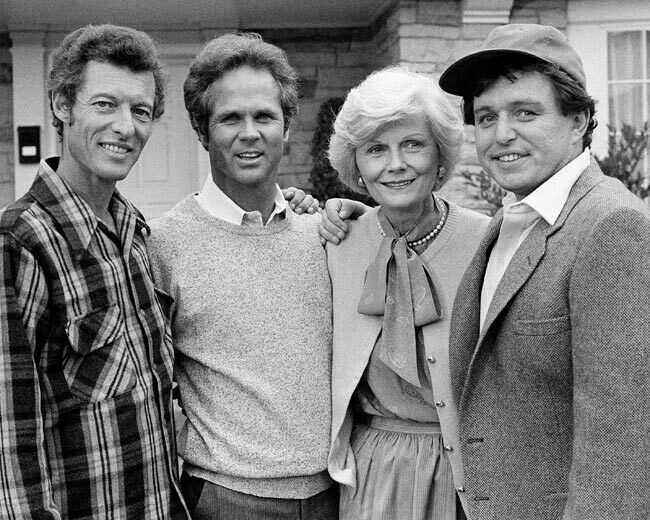
The show was originally written to feature Theodore or Beaver played by Jerry Mathers. Beaver gets into a lot of mischief, but he is a good kid and always means well. He has an older brother Wally, played by Tony Dow. His parents are Ward (Hugh Beaumont) and June (Barbara Billingsley). I thought it was interesting that all four of the stars appeared in every single episode of the show, 234 of them.
We also got to know some of the boysâ best friends as well. Beaver hangs out with Larry Mondello (Rusty Stevens) and Gilbert Bates (Stephen Talbot). He also spends time with Gus an old fireman played by Burt Mustin who seemed old even then. Wally is often with Clarence âLumpyâ Rutherford (Frank Bank) whose father is friends with Ward and Eddie Haskell (Ken Osmond). Eddie is overly polite to Ward and June who are never fooled by his manners; he often picks on Beaver.
Mathers said that when he went to the audition, he went in his Cub Scout uniform because he didnât want to be late for the den meeting. He was so honest and innocent about wanting to get to his Scout meeting that the producers hired him.
đˇimdb.com With Eddy Haskell
Tony Dow never planned on getting a part. He had been in one commercial but no television series. He was an athlete and a diving champion and great swimmer. He had been working out at the Hollywood athletic club and a lifeguard there asked Dowâs mom if Tony could go with him to the audition. Dow ended up getting the part. Mathers later corroborated the story in his blog, saying that the actor who was in the pilot grew five inches the following year and was as tall as Beaumont, so they decided to hire another kid for the role. They wanted someone who looked like an athlete, so they chose Dow.
Beaumont took some inspiration from his studies to be a wise and caring father. He held a Master of Theology degree from USC and was an ordained minister. In addition to acting, Beaumont wrote one entire episode, contributed to several others, and directed 23 episodes.
While Beaumont contributed to the scripts, the show was primarily created by Joe Connelly and Bob Mosher, and many of the plots were based on their children.
đˇmetacritic.com
CBS put Leave It to Beaver on the air Wednesday nights in 1957. I can see where the ratings might suffer because the show was on during the last half of both Wagon Train and Disneyland, so a lot of viewers were watching another show at the time.
The network decided to drop the show at the end of the year, but ABC picked it up and extended its run for five more years. The new network aired it Thursday nights up against repeats of I Love Lucy and a show I know nothing about called JeffersonDrum. The description is that a widowed father starts a newspaper in a western town. The next season the show appeared on Friday nights with another move the following year to Saturday nights. In its fifth season it stayed on Saturday nights but switched times and the sixth season found it on Thursday nights against PerryMason and Dr. Kildare. At that point, Jerry Mathers wanted to have a normal high school life, and the show ended.
The theme of the show is probably one of the best-known television themes. It was âThe Toy Paradeâ composed by David Kahn, Melvyn Leonard, and Mort Greene.
đˇdvnet.com Still the Beaver
In 1983, âStill the Beaverâ aired to catch us up on the Cleaver family. Beaumont had passed away, but the rest of the cast showed up for the reunion. It led to a reboot that ran for four years from 1985-89 called The New Leave It to Beaver. Beaver and Lumpy run Wardâs business. Beaver lives in their family home. June is still living there, taking care of Beaverâs two boys. Eddie Haskell is still in Mayfield with his son Freddie. Wally is now a lawyer living in town, married and expecting his first child.
Ward and June took a lot of heat for being stereotypical parents in the show. While there was definitely some unrealistic behavior, fans continued to flock to the show for decades and now, almost 70 years after the first airing, it is still on the air and gaining new generations of viewers. June gets made fun of for wearing pearls and high heels, but when she was asked about that, she admitted that she wore the pearls because she had an indentation on her neck that she thought did not look good on film and the pearls covered it up. She said she wore heels because she had to be taller than the boys.
đˇlatimes.com
Mathers is the only remaining primary cast member; the rest of the crew has passed away. He has admitted that the family on television was also close off the air. Mathers became good friends with Ken Osmond. When Dow passed away, Matters wrote, âIt is with the utmost sadness I learned this morning of my costar and lifelong friend Tony Dowâs passing. He was not only my brother on tv but in many ways in life as well. Tony leaves an empty place in my heart that wonât be filled. He was always the kindest, most generous, gentle, loving, sincere, and humble man, that it was my honor and privilege to know. Of Beaumont, he said, âwe had a good chemistry and . . . I was very glad that he was picked for the role and we had a wonderful friendship for his entire life until he passed away from a heart attack. Hugh and my dad had become friends and he occasionally came to our house to play cards with my father and his friends.â He also had fond words for Billingsley, that she was âa good friend and an even better mentor. . . I was lucky enough to work with her for six years and have a life-long relationship with her. She was a very kind woman and a generous philanthropist who supported many charities.â
Like some of the Brady kids, Mathers thought once he left the show, he left show business behind him. He attended Notre Dame High School in Sherman Oaks, California and had a typical teenage life. He enlisted in the US Air Force Reserves, attaining the rank of sergeant. He also was in a band called Beaver and the Trappers. After graduation, he worked as a loan officer at a bank and got involved in real estate. At the end of the 1970s, he decided to star with Dow in a stage production of âBoeing, Boeingâ in Kansas City and afterward, the two of them toured in âSo Long, Stanleyâ for 18 months. In 1981, Mathers began working as a DJ and, not long after, the reunion movie and reboot of the tv show was offered to him.
đˇheraldweekly.com
I will admit that I have never been a huge fan of Leave It to Beaver. I never thought of it as a bad show, but I was just interested in other shows more. It is pretty incredible that it has been on the air for so many decades and still finds new viewers. I think I gravitate more to The Brady Bunch because it reflects the decade that I grew up in. It must be very strange for a person to live a role for six years, walk away at age 15 or so and then come back to it two decades later. From everything I read, both Mathers and Dow came away from their acting careers unscathed from so much of what you read other child actors had to endure. Along with Ron Howard, they seem to have been able to have a fairly normal life off the set. I think itâs great that Hugh Beaumont became friends with Matherâs father. They seem to have experienced the same great relationships with their tv parents that Patty Duke, Shelley Fabares, and Paul Petersen did. Itâs always nice to hear that a show about a favorite American family in pop culture is also a great family away from the set.
As we take a look back at some Classic TV Shows this month, one of the shows I chose I hesitated about. As we all know, some shows included many stereotyped characters and oftentimes inappropriate portrayals. These shows include series like Amos n Andy, Beulah, and Lum and Abner which I just never write about.
đˇwikipedia.com
I also think it is important to remember some of the shows from the past that make us wince or just turn off the dial now because it reminds us that we have a lot to learn but that we have made improvements in the current series on television. Itâs a very complicated subject. If you read the differences of opinions Jimmie Walker had about his character JJ on Good Times compared to John Amos and Esther Rolleâs opinions of the character, you can see just how complex the issue is.
Life with Luigi could fall into this category for sure. However, it has a lot of fans and is still a big draw on Sirius Classic Radio. So, I decided to delve in and learn more about it. It was one of the earliest classic sitcoms transferred from the radio where it was aired from 1948-1953 to television. The show was created by Cy Howard who was the talent behind My Friend Irma. J. Carrol Naish voiced Luigi, and Alan Reed gave life to Pasquale in Life with Luigi.
Luigi Basco arrives in Chicago from Italy and has to make a new life for himself. He attends night school to learn English. His friend Pasquale is always trying to marry his daughter Rosa, played by Jody Gilbert, off to Luigi, who had no intention of being wed to her. Each episode began and ended with news in a letter to Luigiâs mom about his life in America.
đˇalchetron.com
In 1952 CBS decided to air the show on television with Naish and Reed continuing their roles on the small screen. The program was sponsored by Instant Maxwell House Coffee. Norman Tokar was the director along with Mac Benoff who also wrote for the series with Lou Derman. Tokar would go on to direct many of the episodes of Leave It to Beaver and The Donna Reed Show. Benoff became a writer for The Danny Thomas Show while Derman wrote most of the Mister Ed scripts as well as writing for Hereâs Lucy and All in the Family. The show followed I Love Lucy, so it had a great lead-in for a new show.
The series had good ratings, but the Italian American community was offended by the stereotyping of Italian immigrants even though (and perhaps more offensive) Naish was actually Irish. Because Luigi did not always understand English phrases, he took things too literally at times which Iâm guessing was the problem for fellow Italians. CBS replaced the leads with Vito Scotti as Luigi, Thomas Gomez as Pasquale, and Murial Landers as Rosa. The revisions did not make anyone happy, and the show was finally canceled. The show ran its final episode in December of 1952.
Joseph Patrick Carrol Naish was a very versatile character actor who was born in New York City in 1896. He attended Catholic schools until he ran away from school at age 14 to become a song plugger. At 15 he enlisted in the Navy and after being asked to leave due to his age, re-enlisted during the war and was with the Army-Signals Corps in France. He learned eight languages during this time. He also spent some time in Paris singing and dancing with a group of performers.
đˇradiospirits.com
While he was in California on the way to China, he was spotted by a Fox studio talent scout and landed a few roles. In 1929, he married another Irish actor, Gladys Heaney. With the dialects he had acquired in the Army, he easily portrayed Asians, Middle Easterners, Hispanics, Frenchmen, Germans, Native Americans, Italians, and East Indians. Time Magazine referred to him as âHollywoodâs one-man United Nations.â Ironically one of the parts he had a hard time obtaining was an Irishman because of his black hair and mustache.
In 1943, Batman was introduced in his first big-screen feature. The first evil villain he had to face was Naish as Prince Daka, a Japanese super spy. Daka had an atomic death ray, an alligator pit, and the ability to turn American scientists into zombies.
During his career, he would obtain almost 225 credits. In 1973, both Naish and his wife passed away. The couple had one child. When he was not acting, he spent time writing, singing, cooking, playing tennis, and playing golf.
Much of the late forties and early fifties were learning curves for television which led to the golden age. Life with Luigi was part of that learning curve. While many people felt the show was honest and well written, it offended a large part of the American population. It would not be the last show to do so. You might want to check out an episode or two for yourself and see how you feel about the show and its portrayals.