It’s 2026! And it’s January, so we are starting the year off with “Worth a Million.” This month we are learning about the careers of several of the cast members from How to Marry a Millionaire. This show debuted in 1957 and aired for two years.
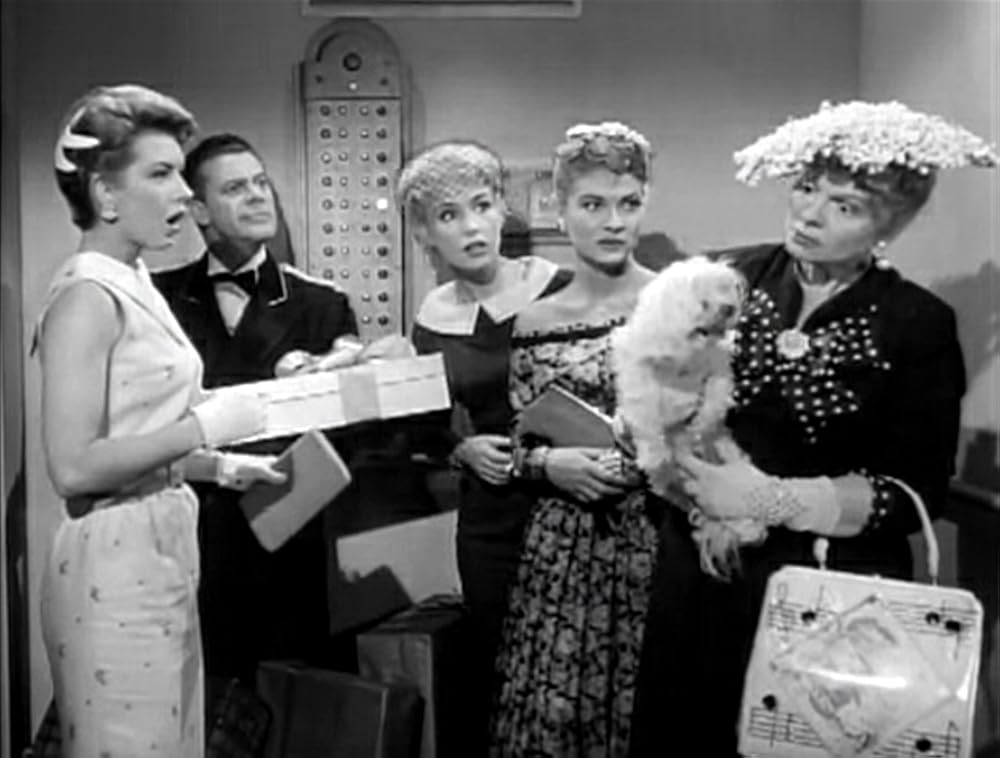
📷tmdb.com The first year cast of women
According to imdb.com, the plot is “Motherly Mike, ditzy but sexy Loco, and sensible Greta move to the big city to find themselves wealthy men to turn into husbands. After the first year Greta gets married with Gwen moving in as the new roommate in this syndicated series.”
The six members of the cast included Merry Anders (Mike), Lori Nelson (Greta), Barbara Eden (Loco), Jimmy Cross (Jesse), Lisa Gaye (Gwen), and Joseph Kearns (Mr. Tobey). During the past decade, we have learned a lot about Barbara Eden, best known as Jeannie in I Dream of Jeannie and Kearns who we remember as Mr. Wilson in Dennis the Menace. So, this month we are learning about the four remaining stars, and we begin today with Jimmy Cross.
📷imdb.com Cross as elevator attendant
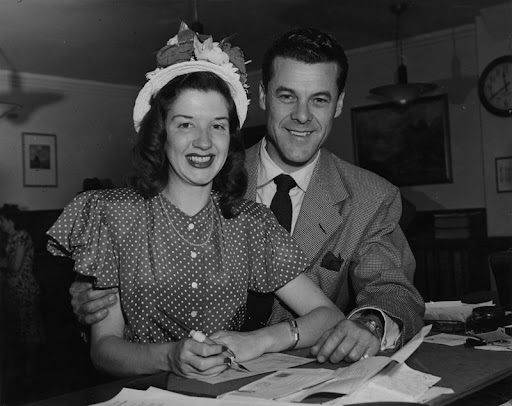
Cross was born in 1907 in New York. At age 40, he married actress Peggy Ryan, but they divorced after the seven-year itch. Ryan was a popular face for a while. She and Donald O’Connor were supposed to be the next Judy Garland/Mickey Rooney couple. Ryan’s parents were Vaudeville dancers, and she was on stage by age two. She was an amazing dancer and singer. After she and Cross divorced, she tried another short-term marriage to Ray McDonald before meeting Eddie Sherman whom she was with for almost fifty years. You might remember her as Jenny, Steve McGarrett’s secretary on the original Hawaii Five-0.
On How to Marry a Millionaire, Cross played the elevator man, at age 50, who worked in the apartment building where the girls lived. He sometimes helps and sometimes hinders the trio with their get-rich-husband schemes.
This was the only series he costarred in, but he did show up on The Red Skelton Show 46 times.
Cross typically played a background role, often a bartender, drunk, or photographer. However, he was busy and appeared on almost every popular show during the sixties and seventies, garnering almost 100 credits during those decades. His last role was in BJ and the Bear in 1979, two years before his death.
📷thevalleytimes.com With Wife Peggy Ryan
Cross also had a decent movie career. Again, he was not front and center but had some fun parts and if you look quickly, you will see him in several popular movies including North by Northwest, Bells Are Ringing, Hello Dolly, and The Poseidon Adventure.
I wish I knew more about Cross. There just isn’t much information out there considering how long he worked in the entertainment industry. This is one of those cases where his work might have to speak for itself. That said, this show got a lot of good reviews when it came out and Cross, while not being a star, added a fun element to the episodes he was in.
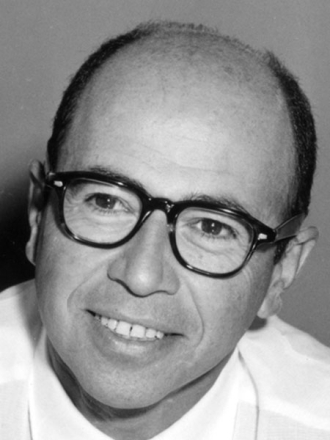
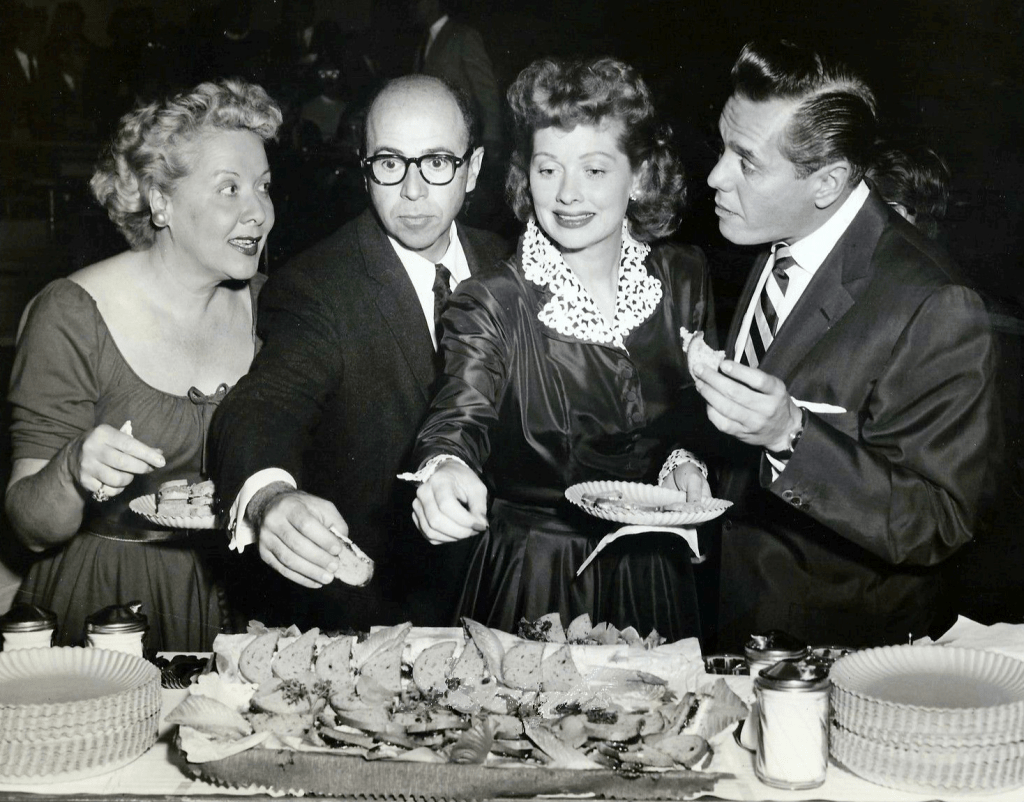
As we are learning all about Lucille Ball and her shows this first month of 2025, the month would not be complete without getting to know Jess Oppenheimer, the man Lucy called “the brains” behind I Love Lucy. He was also the producer and head writer of the show. Director William Asher said “he was the field general. Jess presided over all the meetings and ran the whole show. He was very sharp.”
📷televisionacademy.com
Oppenheimer was born in San Francisco in 1913. He took part in a study of gifted children in Stanford Professor Lewis Terman’s project. Ironically, one of Terman’s quotes about Jess was that he “could detect no signs of a sense of humor.” Jess’s father James owned the largest luggage store in San Francisco, but he died in an accident when Jess was 16.
Oppenheimer went on to attend Stanford in the 1930s. He started to spend a lot of his free time at radio station KFRC and performed in a comedy sketch he wrote for the show “Blue Monday Jamboree.”
In 1936 he moved to Hollywood and was hired as a writer on Fred Astaire’s radio show. He later went to work for Jack Benny as well as Edgar Bergen and Charlie McCarthy, George Burns and Gracie Allen, Bing Crosby, Marlene Dietrich, Judy Garland, Bob Hope, and Ginger Rogers.
When World War II began, Oppenheimer joined the US Coast Guard where he met Jack Dempsey and Cesar Romero. While he was there, he was diagnosed with double vision which had bothered him his entire life but had never been addressed.
Agent Ray Stark was Fanny Brice’s son-in-law and later Stark recruited him to write for her Baby Snooks Show based on his reputation in the Coast Guard.
In 1942, Oppenheimer met Estelle Weiss, an employee of Wallichs Music City. They married in 1947 and were together for the rest of his life.
📷wikipedia.com
In 1948, CBS hired Oppenheimer to write a script for a new radio show, “My Favorite Husband.” Several of the scripts portrayed the wife, played by Lucille Ball, as a sophisticated socialite. When Jess added slapstick comedy and transitioned her to a childlike, impulsive, naïve wife, the show was a big success.
In 1950, CBS moved the show to television to star Lucy and her real-life husband Desi Arnaz. Lucy demanded that Oppenheimer stay in charge. Jess suggested doing a show “about a middle-class working stiff who works very hard at his job as a bandleader and likes nothing better than to come home at night and relax with this wife who doesn’t like staying home and is dying to get into show business.” He suggested the title “I Love Lucy.”
For the first five seasons, Oppenheimer was the producer and head writer, with help from Madelyn Pugh and Bob Carroll Jr. as other writers. As part of his contract, Oppenheimer received 20% of the ownership in the show. He gave Pugh and Carroll each 5% of that amount.
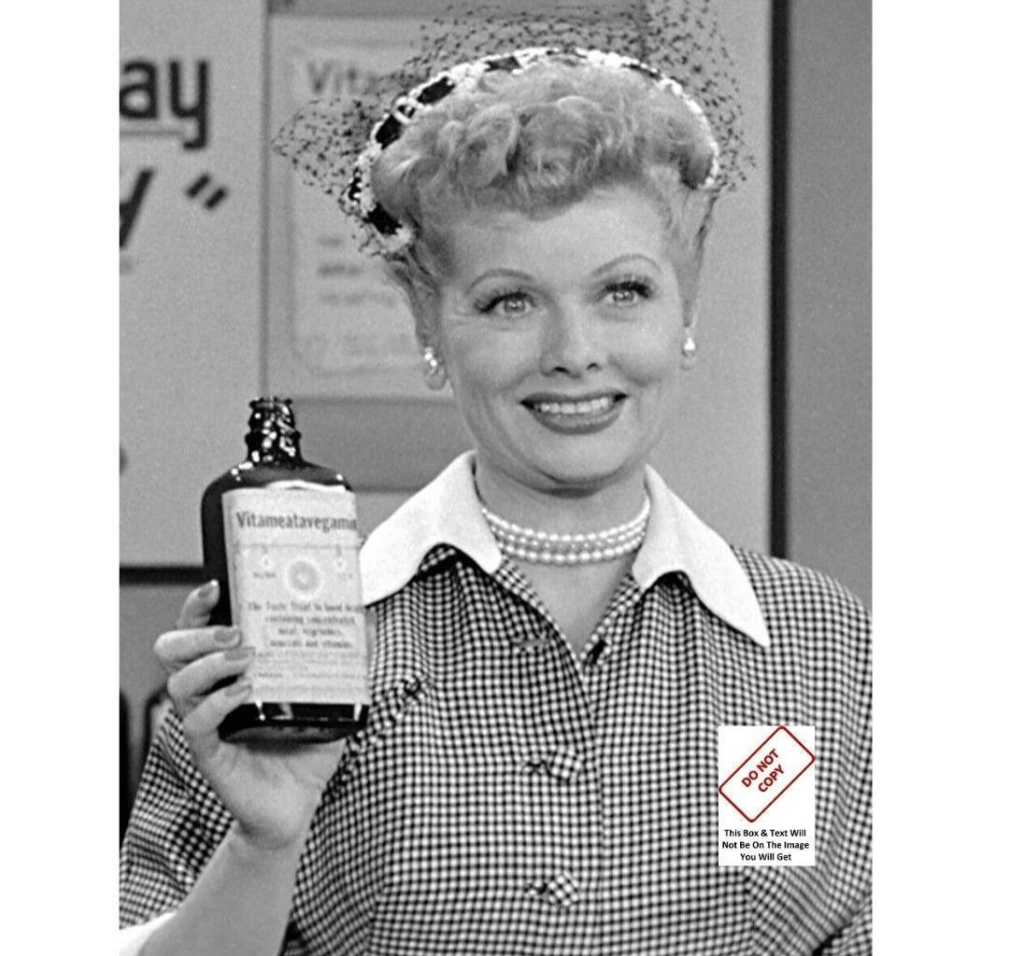
A wannabe actor, Oppenheimer appeared on I Love Lucy in two episodes. In #6, “The Audition,” he was one of three TV executives who audition Desi and in #127, “The Tour,” he walks in front of the bus before Ethel and Lucy board it. In one of the more famous episodes, #30, “Lucy Does a TV Commercial,” Jess is the voice that tells Lucy to go ahead and begin her commercial.
📷
In 1956, Oppenheimer moved to NBC where he became a producer of special shows.
During the sixties, Oppenheimer created and produced three other sitcoms. In 1960 he worked with Annie Farge and Marshall Thompson on Angel; in 1963 with Glynis Johns on Glynis, and with Debbie Reynolds on The Debbie Reynolds Show. He also was listed as writer, producer, and director for the 1967 season of Get Smart.
Oppenheimer received two Emmys and seven nominations. His Emmys were for Producer for Best Situation Comedy, I Love Lucy, in 1953 and 1954. He was also nominated for Producer for Best Situation Comedy, I Love Lucy, in 1952 and 1955; for Best Comedy Writer, I Love Lucy, in 1955 and 1956; for Best Single Program of the Year, General Motors 50th Anniversary Show in 1958; Program of the Year, The Danny Kaye Show with Lucille Ball in 1963; and Outstanding Program Achievement in Humor, The Danny Kaye Showwith Lucille Ball in 1963.
He was also an inventor with 18 patents. One of his inventions was an in-the-lens teleprompter.
In 1962, Lucille Ball brought a new sitcom to television; however, Oppenheimer sued the show, claiming that Lucy Carmichael was Lucy Ricardo, his character, He received a financial settlement, and the character was changed, but unfortunately, it ruined the friendship between Oppenheimer and Ball.
The Oppenheimer family lived on Burlingame Avenue in Los Angeles. In a funny twist, Jess bought the house from MGM hairstylist Sydney Guilaroff; he was the person who turned Ball into a redhead for the 1943 movie, DuBarry was a Lady.
📷instagram
Jess’s best friends were Mel Blanc, Hans Conried, and Jerry Hausner, who had played Ricky’s agent on I Love Lucy.
In 1988, Oppenheimer had an intestinal surgery; he died shortly after from heart failure. At his death, Lucille Ball said he was “a true genius” and said that “she owed so much to his creativity and his friendship.”
I love hearing stories about people like Jess Oppenheimer and Sheldon Leonard who are creative geniuses and are the influence and inspiration for so many of the classic television shows.
This month we are learning why We All Love Lucy. We’ll delve into her sitcoms and get to know Jess Oppenheimer and hear about his role in her television life. But today, we are starting with the woman herself, Lucille Ball.
📷facebook. A young Lucille Ball
Lucille Desiree Ball was born August 6, 1911, in Jamestown, New York. She was the only daughter of Henry Durrell Ball, a lineman for Bell Telephone, and Desiree Evelyn Hunt Ball. They lived at 60 Stewart Avenue. The family belonged to the Baptist Church there, and many of her relatives were among some of the first European settlers in Massachusetts.
The family moved frequently for her father’s career, but Jamestown always had a claim on Lucy, and they celebrate her in many ways there. The family lived in Montana, New Jersey, and Michigan before her father passed away from typhoid fever at age 27 in 1914.
Her mother returned to New York, living in Celoron, a summer resort on Chautauqua Lake. The road she grew up on is now named Lucy Lane. Celoron had an amusement park with a boardwalk, the Pier Ballroom, a roller coaster, a bandstand, and a stage.
📷Good Housekeeping
Lucy’s mother remarried four years later. It was her stepfather who encouraged Lucy to audition for his Shriner’s chorus line, which gave her the first taste of what it would be like to be in show business. When she was 16 the family returned to Jamestown.
When Lucy was only 14, she was dating a 21-year-old hoodlum. Her mother was devastated by the situation and finally enrolled Lucy in the John Murra Anderson School for Dramatic Arts in New York City to encourage her in her theater career. Ball did not love the school, and her instructors told her she would not be successful in the entertainment business. Luckily, Lucy did not take their comments to heart. She later said that “one of the things I learned the hard way was that it doesn’t pay to get discouraged. Keeping busy and making optimism a way of life can restore faith in yourself.”
In an attempt to prove the school wrong, Lucy began working as an in-house model for Hattie Carnegie. This was where she first changed her hair. Being a brunette, Carnegie taught Ball to bleach her hair blonde. Her modeling was interrupted for two years when she dealt with the effects of rheumatic fever.
At the ripe old age of 21, Ball returned to New York City to pursue an acting career. She went back to the Carnegie agency and became the Chesterfield Cigarette Girl.
📷Brittanica
In 1933 she was in Roman Scandals as a Goldwyn Girl; while playing a slave girl, she had to have her eyebrows entirely shaved off, and they never grew back. Some of the things an actor goes through for roles is crazy. After that movie she moved to Hollywood to try a film career. After becoming a contract player for RKO Radio Pictures, she received a decent amount of work. At this time, she met the Marx Brothers, appearing in Room Service. She also worked with Fred Astaire and Ginger Rogers in several musicals.
When she registered to vote in 1936, both she, her brother, and her mother registered as Communists. During that year she signed a document as a Communist supporting Emil Freed for assembly and was appointed delegate to the State Central Committee of the Communist Party of California.
Ball later claimed she never had a strong political affiliation. In 1944, Lucy can be seen in a newsreel fund raising for Franklin Roosevelt. She also mentioned that she voted for Eisenhower in 1952 when he was on the Republican docket. In 1953 Ball met with HUAC and gave a sealed testimony. She said that she voted Communist at her grandfather’s insistence and did not know she had been appointed a delegate. Before filming episode 68 of their show, her husband and co-star Desi addressed the audience and said Lucy was not a Communist; she was just influenced by her grandfather. He joked that “the only thing red about Lucy is her hair, and even that is not legitimate.”
📷pinterest
In the late thirties, she dabbled in radio to earn some additional money. She was a regular on “The Phil Baker Show” and on “The Wonder Show” where she met announcer Gale Gordon.
In 1940 Lucy met Desi Arnaz when they both appeared in the movie Too Many Girls. They fell in love immediately, and before the year was out, they eloped. Arnaz was drafted in 1942, but a knee injury kept him from active service, and he was placed in Hollywood organizing and performing USO shows for wounded GIs.
Lucy finally got her big break in 1943. Arthur Freed was making a movie based on the play “DuBarry Was a Lady”; he bought it for Ann Sothern, but when she turned it down, she recommended her best friend, Lucille Ball.
In 1944, Ball filed for divorce, but the couple reconciled before it went through. Lucy and Desi had Lucie in 1951 when Lucy was almost 40, and son Desi was born during the series and written into the scripts in 1953. Mom and son appeared on the first cover of TV Guide which came out in 1953.
📷HollywoodHistoricPhotos.com
Ball continued to make movies throughout the forties and kept a foot in radio. In 1948 she was cast as Liz Cooper on the radio show, “My Favorite Husband” on CBS.
When CBS wanted to transition the show to television, Lucy wanted Desi to be her television husband. CBS said no, so the couple went on the road with an act to prove the popularity of the them working together and CBS backed down.
The show was incredibly successful. (If you want to learn more details about the series and all the history that it produced, keep an eye out for my blog which will post January 13, 2025.) The couple created their own production company and had many “firsts” with technology producing their show. During filming breaks of the show, Lucy and Desi made two movies: The Long, Long Trailer in 1954 and Forever, Darling in 1956.
After years of turmoil and ups and downs in their marriage, the couple divorced. However, they continued to remain in each other’s lives through their children and their relationship. Later in life, Lucy said “Desi was the great love of my life. I will miss him until the day I die.”
📷closerweekly.com Ball and Vance
Lucy bought Desi’s share in the production company which produced a variety of shows including Mission: Impossible, Star Trek, and The Untouchables. In 1967 Lucy sold her shares to Gulf+Western, owned by Paramount, for $17 million, which would translate into $138 million today.
Lucy married Gary Morton in 1961. At the time, Morton was a comedian 13 years younger than Lucy. He said he had never seen an episode of I Love Lucy. Ball hired Morton for her production company, teaching him the television business.
For the next decade, Lucy worked on a number of television specials. She also tried sitcom life again. She starred in The Lucy Show from 1962-68 and in Here’s Lucy from 1968-1974. We’ll discuss these shows the last week of January. Many of Lucy’s friends appeared on these shows. Her close friends included Mary Jane Croft, Judy Garland, Ethel Merman, Barbara Pepper, Ginger Rogers, Ann Sothern, Vivian Vance, and Mary Wickes.
📷ebay.com
Ball kept busy acting during the early 1980s. Desi Arnaz passed away in 1986. In 1988 Lucy had a mild heart attack. She appeared at the 1989 Academy Awards show and she and co-presenter Bob Hope were given standing ovations. She died a month later. Lucy had been a heavy smoker, and her cause of death was abdominal aortic aneurysm which is seen more in smokers.
Lucy always sent flowers to Carol Burnett on her birthday. The day before she died, she ordered them, and they were delivered a few hours after Carol learned of her death.
Lucy was cremated and her ashes were interred in Forest Lawn Cemetery with her mother’s remains. In 2002, both women’s remains were moved to the Hunt family plot in Jamestown. In Jamestown you can find the Lucille Ball Desi Arnaz Museum & Center for Comedy and the Lucille Ball Little Theater.
In 2009 a statue of Lucy was erected in Celoron. Many people called it “scary,” and it became known as “Scary Lucy,” which I totally endorse. In 2016, a more lifelike statue was created to replace Scary, but the scary statue had become so popular, it was left on display with the new one as its neighbor.
📷youtube.com The different sides of Lucy
Those two statues symbolize my relationship with the show. I appreciate the show and everything it did to create the classic age of television. Whether it’s technical filming strategies, the writing, the way the business was run, everything was important in this show. However, I have to admit, it’s not a show I choose to watch. It changed the entire course of television in similar ways that All in the Family would do a few decades later, but I honestly don’t enjoy watching either of these series. That might be a fault in my genes, but I also have to be honest.
However, Lucy Ricardo, while we may think of her as naïve and sophisticated, traditional and unconventional, submissive and disobedient, was an important icon in the way that women thought about themselves in the fifties.
Women had been brought in to work and gain independence while so many men were overseas fighting, and then they were asked to give it all up and go back to a domestic and tranquil life. Leslie Feldman, a political scientist and author of The Political Theory of I Love Lucy, writes that Lucy was “a transitional figure—she’s on the cutting edge. . . Are [women] going to stay home and be wives and mothers? Are they going to go to work? Or are they going to do both? And what if they really do better and earn more money than their husbands? What about that? That’s an element of Lucy too.”
📷biography.com
Lucy was a force in show business. While she was not alone in taking control of her own career—Donna Reed, Betty White, and Ann Sothern were also powerhouses in establishing their own companies and running them—Lucy did it with the nation watching her. Even the choices she made about whether to divorce Desi or not were all done in the public eye and were sending messages whether people chose to receive them or not.
Lucille Ball was an amazing actress and an amazing business person. Apart from whether I enjoy watching the show or not, it changed the history of television and the way sitcoms were written, cast, and remembered. Thank you, Lucille Ball, for not listening when your instructors told you that you would never make it in show business. You not only made it in television, you truly made television what it is today.
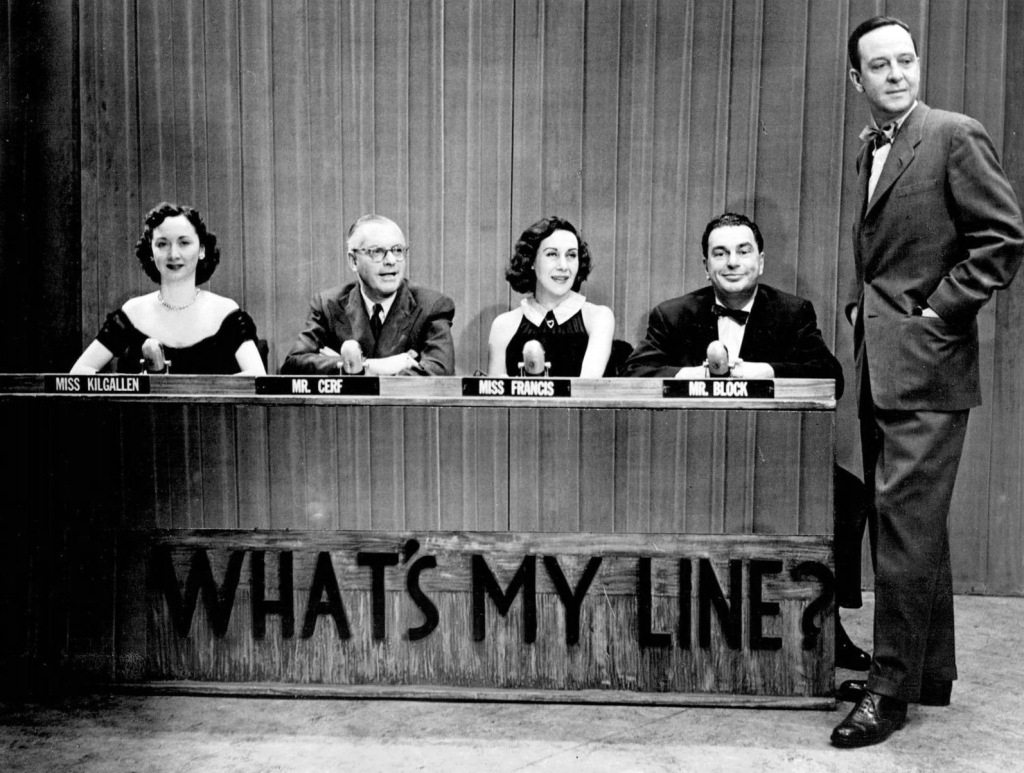
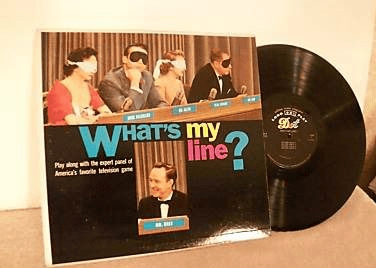
This month, we are looking at popular fifties stars and shows. While the show we are talking about today outlasted the fifties by almost another decade, it gained its popularity during the 1950s. Today we are learning about What’s My Line.
📷wikipedia.com
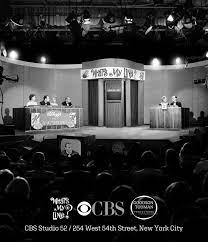
This panel game show was on CBS. It debuted in 1950 and ran until 1967. The show was produced by Mark Goodson and Bill Todman, and the working title was Occupation Unknown. Perhaps the title should have been What’s My Schedule. The show began on Thursday nights as a live show. Later in season one, it switched to every other Wednesday and then moved to every other Thursday. In October of 1950, it landed on Sunday nights where it would remain throughout the rest of its life.
The original series, which was usually broadcast live, debuted on Thursday, February 2, 1950, at 8:00 p.m. ET. After airing alternate Wednesdays, then alternate Thursdays, finally on October 1, 1950, it had settled into its weekly Sunday 10:30 p.m. ET slot where it would remain until the end of its network run on September 3, 1967.
📷imdb.com
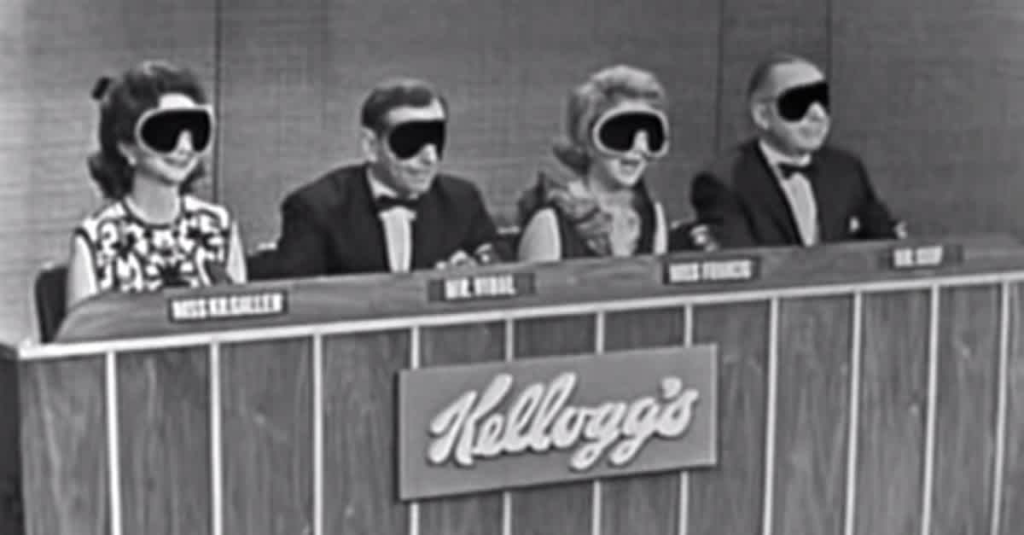
Celebrity panelists ask contestants questions to figure out their occupation. While most of the contestants were not famous, there was a “mystery guest” segment. The panelists were blindfolded for this segment and asked questions to determine the celebrity. People enjoyed watching the panelists banter with each other and the sophisticated humor they shared with us.
Each episode had four panelists. The most famous panelists were Dorothy Kilgallen, Arlene Francis, and Bennett Cerf. John Daly was the moderator. The first show in the series featured New Jersey governor Harold Hoffman, Kilgallen, poet Louis Untermeyer, and psychiatrist Richard Hoffman. Later in season one, Arlene Francis came on board with Kilgallen, Untermeyer and writer Hal Block. In season two, Cerf replaced Untermeyer and Steve Allen took over for Block in season three. When Steve Allen left to host The Tonight Show, comedian Fred Allen was part of the panel from 1954 until his death in 1956. Kilgallen was killed in 1965 and her replacement varied for two years. Her death is a mystery itself and well worth reading about. Many people think she was killed because of her investigation into JF Kennedy’s assassination.
📷facebook.com
The panelists started the series wearing business clothing, but by 1953 they shifted to formal attire with the men showing up in suits and ties and women in formal gowns and gloves. Unfortunately, we never got to see the beautiful colors of these clothes. Until 1966 everything was filmed in black and white. In the final season, the show was broadcast in color, but the kinescopes were saved in black and white.
Both critics and television viewers liked the show, and it won an Emmy for Best Quiz or Audience Participation Show in 1952, 1953, and 1958.
Because it was a game show, most of the 700 episodes were on kinescope, 16 mm filming. Because many original shows in that era were recorded via kinescope onto silver nitrate film, many networks destroyed recordings to recover the silver. After learning that the network was not keeping the recordings, Goodson and Todman offered to pay for the broadcast and retained the recordings from season three on, however many of those were also lost along the way. A variety of the episodes are stored at different archive centers around the country. My home state houses one from 1951 at the University of Wisconsin Center for Film and Theater Research in Madison.
📷facebook.com
The remaining kinescopes which have been digitized have been seen on television on the Game Show Network and 757 of them exist on YouTube.
Many of us remember the reruns and seeing the contestant come on stage and write their name on a chalkboard as Daily said “Will you enter and sign in please.” The very first contestant was Pat Finch who was a hat check girl at the Stork Club.
The first mystery guest was New York Yankees shortstop Phil Ruzzuto. Many of these guests used fake voices to answer questions. Some of the mystery guests who appeared on the show included Julie Andrews, Louis Armstrong, Lucille Ball, Jack Benny, James Cagney, Gary Cooper, Joan Crawford, Salvador Dali, Sammy Davis Jr., Doris Day, Aretha Franklin, Ava Gardner, Judy Garland, Jackie Gleason, Alfred Hitchcock, Bob Hope, Ginger Rogers, Roy Rogers, Eleanor Roosevelt, James Stewart, Elizabeth Taylor, and John Wayne.
📷littlethings.com Blindfolds come out for a mystery guest
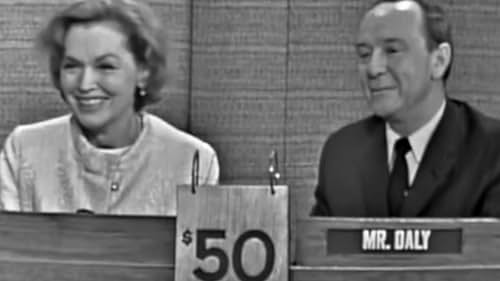
The emcee would choose a panelist who could ask yes or no questions. If the answer was yes, they could continue until they got a no response and then the next panelist would be able to pose questions. If the contestants answered no, Daily flipped a card; when the contestant had ten cards, they won $50.
If you have heard of or even used the term “Is it bigger than a breadbox?,” you might want to know that it came from the show. Steve Allen asked the question in 1953, and it became a standard question after that night. In fact, on one episode, the guest was a breadbox maker, and when Daly could not help laughing at the question, Allen figured it out.
In 1967 The New York Times broke a story that CBS was canceling many of their game shows. None of the panelists had been told that the show was not renewed. Despite the fact that the low costs of the game shows made them profitable, the low ratings led the network to conclude that game shows were no longer suitable for prime-time schedules.
After the show was canceled in 1967, it did go into syndication five days a week. Soupy Sales joined Francis and Cerf on the panel of the reboot. A variety of other panelists took the fourth seat including Joyce Brothers, Jack Cassidy, Bert Convy, Joel Grey, Meredith MacRae, Henry Morgan, Gene Rayburn, and Nipsey Russell. The show ended in 1974. Cerf died during the run of the syndicated series.
It’s hard to believe, but Colonel Harland Sanders was on the show as founder of Kentucky Fried Chicken, although he was not easily recognized at the time, so he was not a mystery guest. While no president ever appeared while in office, Ford, Carter, and Reagan all appeared on the show.
📷youtube.com We switched to a first-name basis in the 70s
It would be fun to see this show on television today, but I’m afraid it would not be the same. In the way that Dick Cavett had a manner of interacting with guests to ask amazing questions with his humor and intelligence, this game show had that same atmosphere. Today, I think the banter would border more on crudeness than wit. There is something charming about a panel of very intelligent people talking with each other, trying to determine the identities of the people they were interviewing while being dressed to the nines that was fun to sit in on and be a part of. I guess that’s why this show is in our series where we are saluting the fifties because that was the era where it could shine.
Dick Cavett made a career of being a talk show host. He began on ABC in March of 1968 and ended on TCM in 2007. In between, he showed up during the day, in prime time, late at night, on PBS, in syndication, and on CNBC. The Dick Cavett Show seems to refer to all the shows as a collected whole, so that’s how I will present it in my blog.
Photo: chicagotribune.com
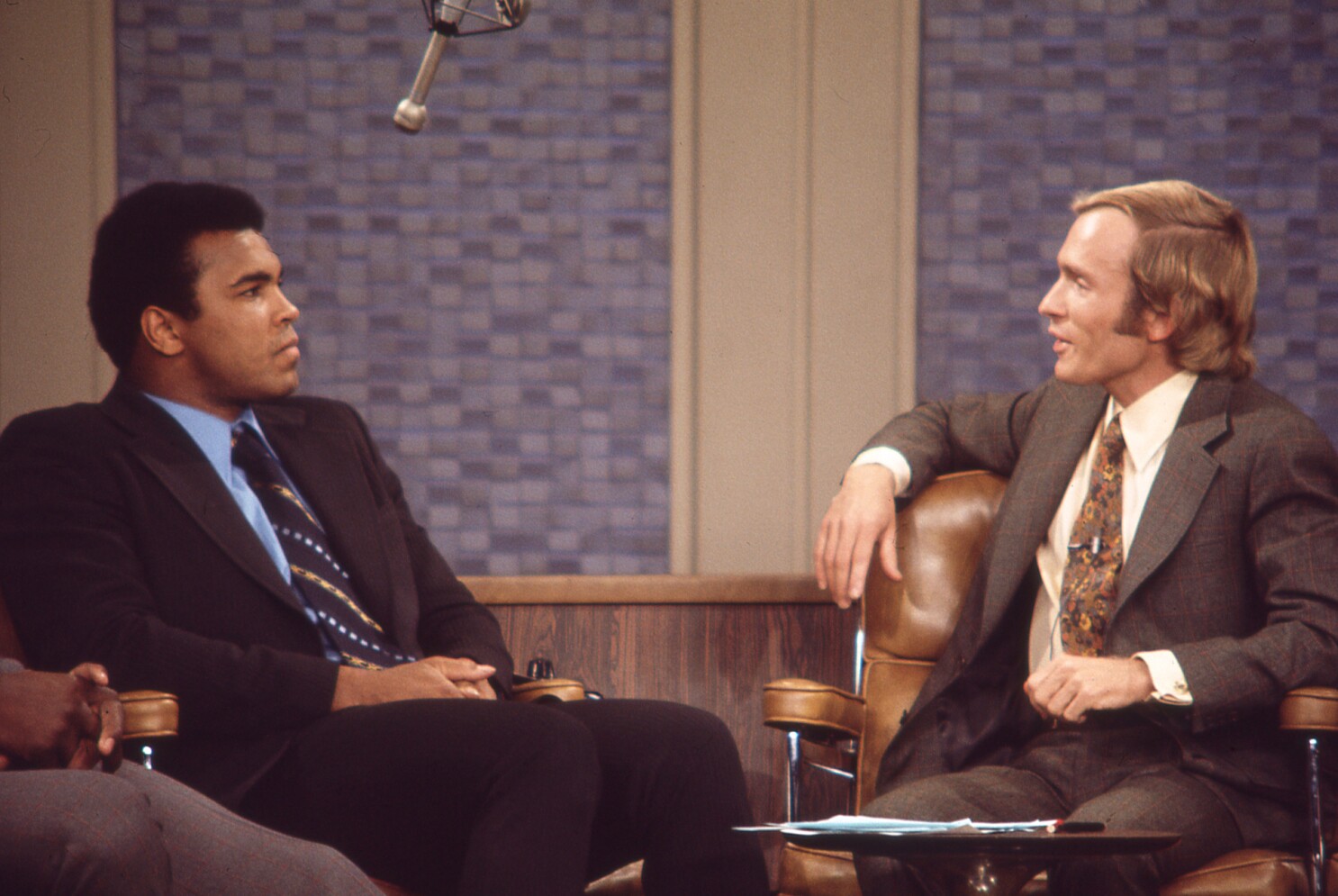
If you have ever seen Cavett in action, he has such a smooth, polite manner that sometimes you forget he may be asking an invasive question. Some of the most memorable shows were conversations with Christine Jorgenson (who walked off the show in 1968); Groucho Marx (1969); Jimi Hendrix (1969); The Woodstock Show (1969); Eric Clapton (1970); Alfred Lunt, Lynn Fontanne and Noel Coward (1970); Orson Welles (1970); Salvador Dali (1971); John Kerry debating on Vietnam (1971); Watergate and Beyond (1974); Angela Davis (1972); Jackie Robinson (1972); Marlon Brando (1973); Katharine Hepburn (1973); Carol Burnett (1974); and Mohammad Ali (several shows). As you can see, in addition to entertainers, Cavett interviewed influential authors, politicians, athletes, and newsmakers.
Talking to the Great One: Ali Photo: latimes.com
Cavett often had several guests on each show, but sometimes he devoted the entire night to one person such as Laurence Olivier, Judy Garland, Bette Davis, Janis Joplin, Alfred Hitchcock, Fred Astaire, Gloria Swanson, Lucille Ball, Bob Hope, and David Bowie.
Politics were often covered by Cavett, and over the years, he interviewed many including political guests including Carl Bernstein and Bob Woodward, Walter Cronkite, John Ehrlichman, John Dean, Gerald Ford, Barry Goldwater, Henry Kissinger, and G. Gordon Liddy.
In various interviews of his own, Cavett mentioned different shows that were memorable or brought in a lot of mail. Early in the show’s history, Cavett was interviewing Peter Falk, Ben Gazzara, and John Cassavetes about a movie they were in. Cassavetes was so drunk and incoherent, Cavett walked off the stage.
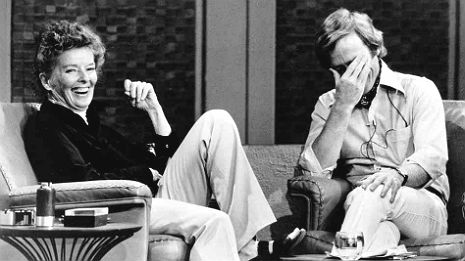
Laughing with Katharine Hepburn Photo: dangerousminds.com
Georgia governor Lester Maddox appeared in a panel with Truman Capote and Jim Brown about segregation. Cavett made a reference to “bigots” who supported Maddox. When Maddox demanded an apology, Cavett apologized to Georgians who supported him without being a bigot. Maddox left the studio. However, later Maddox relented and made another appearance, and Cavett walked off the set as a joke.
One memorable episode was something no host wants to encounter. Publisher J. I. Rodale was on the show. Cavett was talking to another guest when Rodale seemed to be snoring, but everyone soon realized something was wrong. He actually died there on the set. The audience didn’t even realize it until Cavett called for a doctor. The program was taped but not aired.
Director Ingmar Bergman did few television interviews and no US interviews, but he made an exception for Dick Cavett.
With David Bowie Photo: nostalgiacentral.com
So, what types of things might you have learned from Cavett’s show? Well, Hitchcock explained how some of his most ingenious special effects worked. Gale Sayers talked about the movie Brian’s Song (maybe he could have given me a hint how not to cry every single time I see the movie.). BB King revealed what his name stands for. Jack Benny demonstrated how to play the violin. Melba Moore told what it was like to open at the Apollo Theater. James Garner explained how he accidentally broke co-star Doris Day’s ribs, and Jacques Cousteau discussed the mystery of manatees.
And finally, I had to find out who was Cavett’s favorite interview, and who were the ones that got away? The two he never got to interview but always wished he had was an easier answer to find: Cary Grant and Frank Sinatra.
Photo: WBUR
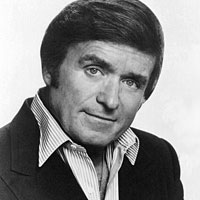
It was a lot harder to answer the first question. If you read the other three blogs in this series, you know the other talk show hosts (Mike Douglas, Phil Donahue, and Tom Snyder) began careers in Ohio. I was hoping to find an Ohio link for Dick, and that’s when I found the answer to my question of his favorite interviewee. Cavett landed in Cleveland at the end of his career, which seems fitting since he is ending this series.
He was talking about an upcoming show at The Nightclub in Cleveland and mentioned Jack Paar was his mentor. (Cavett wrote for The Tonight Show when Paar hosted it, and Paar began his career in Canton, Ohio; I know it’s one coincidence after another.) Jack told him he didn’t need humor, singing, or anything except a desire to have a conversation. Then Cavett said, “I watch clips from the shows when I’m invited to give a talk and they show them, and I’m always surprised by the number of little delightful moments I’ve forgotten. I watched a moment the other night when Groucho was on the show with [zoologist] Jim Fowler. And Fowler brought a sloth on the stage, and Groucho said, ‘That’s the lousiest-looking dog I’ve ever seen.’ I’d forgotten that. That was the same night Groucho proposed marriage to Truman Capote. . . .’I love to do Q&A with the audience, but there’s only one forbidden question, and it doesn’t have anything to do with sex or politics,’ he said. ‘The forbidden question is, Who has been your most interesting guest?’ . . . But then he went on to say that ‘If pushed to the wall, I have to admit that Groucho was the guest who meant the most to me.’ Cavett said that ‘In a letter from Miriam, Groucho’s daughter, she wrote, ‘My father thought the world of you.’ It gets me even now when I say that out loud.’”
The unique Groucho Marx Photo: pinterest.com
In 2005 several box sets were released of some of Cavett’s shows. They are collected by theme of the interviewee such as The Rock Icons, etc. The network Decades, which recently went off the air, broadcast these shows also. Before the network was disbanded, I was able to watch about ten of these episodes, and they were as good as I had hoped for.
I have really enjoyed reviewing these talk show hosts and their guest interviews this month. It makes me want to invite a bunch of friends over, one at a time, for coffee and conversation. Just be forewarned, if I invite you over, I may have a list of questions I’ll want to be asking you.
For the month of July we are taking a look at some of the innovative talk shows of the past. With only three channels to choose from in the sixties, almost everyone tuned into The Tonight Show Starring Johnny Carson. However, talk shows were also popular during the day.
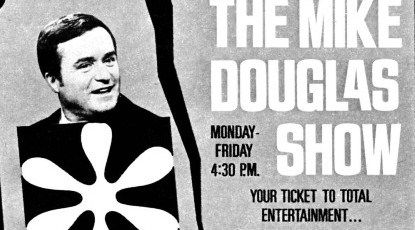
The Mike Douglas Show began in Cleveland, Ohio in 1961. It had light banter with guests and featured musical performers daily, although more serious interviews were also conducted from time to time. In 1963, the show was expanded to Pittsburgh, Boston, Baltimore, and San Francisco.
In 1965, the show moved to Philadelphia and went into national syndication that same year. One final move was made in 1978 when it relocated to Hollywood. For 1980, Douglas handed the show over to John Davidson to host. It went through some changes and replaced about one-third of the staff, but the ratings continued to plummet and it was officially cancelled in November of 1981 with more than 6000 shows and 30,000 guests.
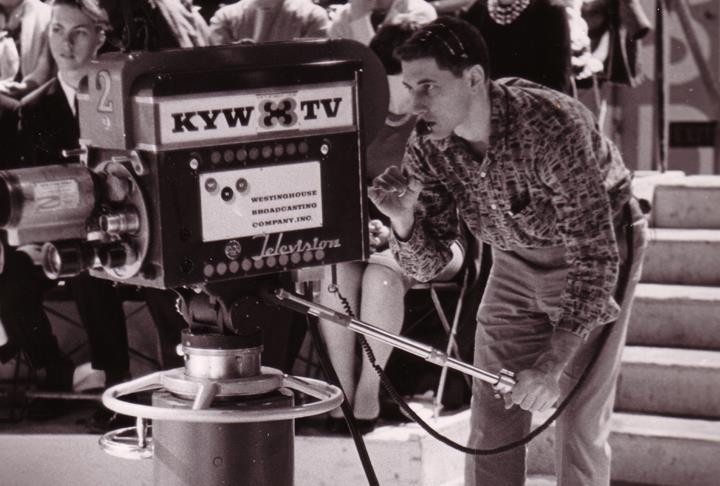
Douglas was born in Chicago in 1925 and became a teenage singer, entertaining on the radio and in supper clubs. He sang a lot of big band numbers and became the staff singer at WKY in Oklahoma City before joining the Navy in WWII. He had two hits in the fifties, “Old Lamplighter” and “Ole Buttermilk Sky,” but his career was not going anywhere, so he decided to turn to television.
Photo: eyesofageneration.com
Douglas had a different celebrity co-host every week, and they interviewed a variety of entertainers. The show was very popular and had high ratings. Douglas had a fun personality . In 1976, Match Game received higher ratings, so Douglas made an unscheduled appearance on the game show to congratulate Gene Rayburn on having the number 1 daytime show on the air.
Photo: muppetwikifandom.com
I could literally fill pages with the guest stars and musical performers who appeared on the show. Some of the more interesting ones included two-year-old Tiger Woods who showed off his golf swing for Bob Hope and James Stewart.
Jimmy Stewart, Bob Hope and a very young Tiger Woods Photo: pinterest.com
A Who’s Who listing of guests also included Fred Astaire, Lucille Ball, George Burns, Sid Caesar, Angela Davis, Bette Davis, Judy Garland, Alfred Hitchcock, Malcom X, Mother Teresa, the Muppets, Ralph Nader, Richard Nixon, Vincent Price, and John Wayne.
The “Supreme” music guests Photo: pinterest.com
A variety of musical genres were represented with performers including ABBA, The Beach Boys, The Bee Gees, James Brown, Ray Charles, Cher, Sam Cooke, Electric Light Orchestra, Marvin Gaye, Genesis, The Jacksons, Jefferson Airplane, Elton John, John Lennon with Yoko Ono, The Mills Brothers, The Rolling Stones, Sly and the Family Stone, The Supremes, and Frank Zappa.
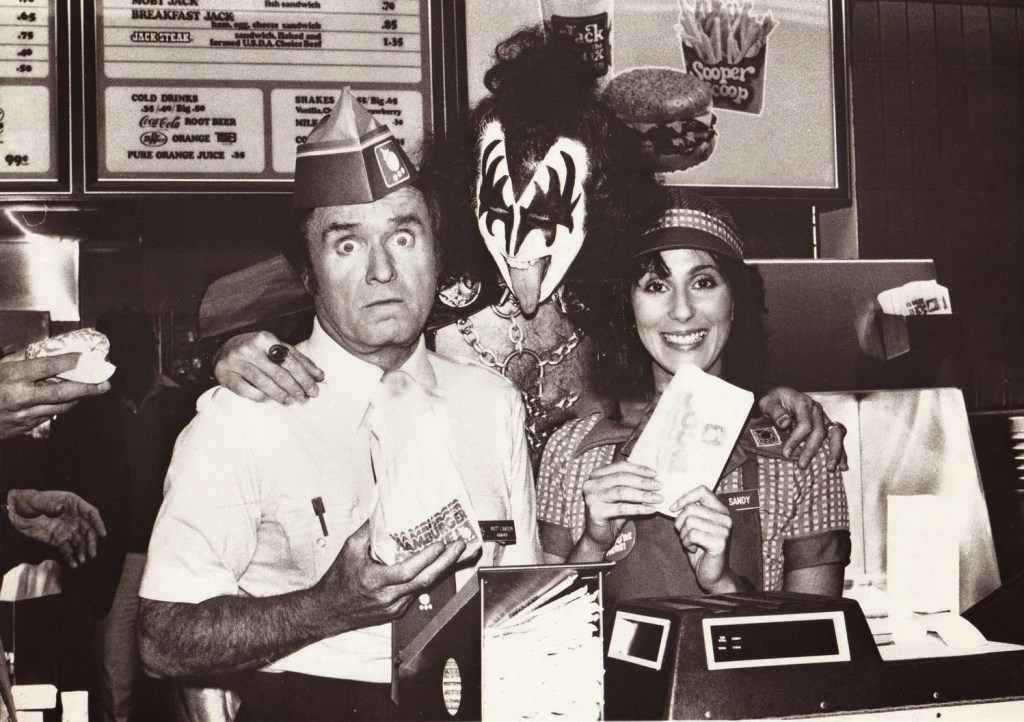
With Gene Simmons and Cher Photo: vintage.com
Critics also liked the show. It received its first Emmy in 1967 and would go on to win four more.
Tom Kelly, who co-authored with Douglas on his memoir, revealed why he thought Mike was so successful: “One big key to his great success was he had his ego in check. He always let the guest have the limelight. He was a fine performer. He could sing, he could do comedy, he did it all, but he always gave the guest the spotlight.”
Photo: wikipedia.com
I can remember my mother watching Mike Douglas most days while I played with my toys. Here we are sixty years later and afternoon talk shows like Ellen DeGeneres and Kelly Clarkson are still going strong thanks to pioneers like Mike Douglas who showed us the classy way to be a host.
There is a lot that happens behind the scenes to help make a show a hit. In previous blogs (see the December 2018 blogs about Earl Hagen and Jay Livingston), we learned about composers. This month we’ll take a look at the costumers and the set designers. The wardrobe department has the responsibility to make sure the characters are wearing the appropriate clothing for their character.
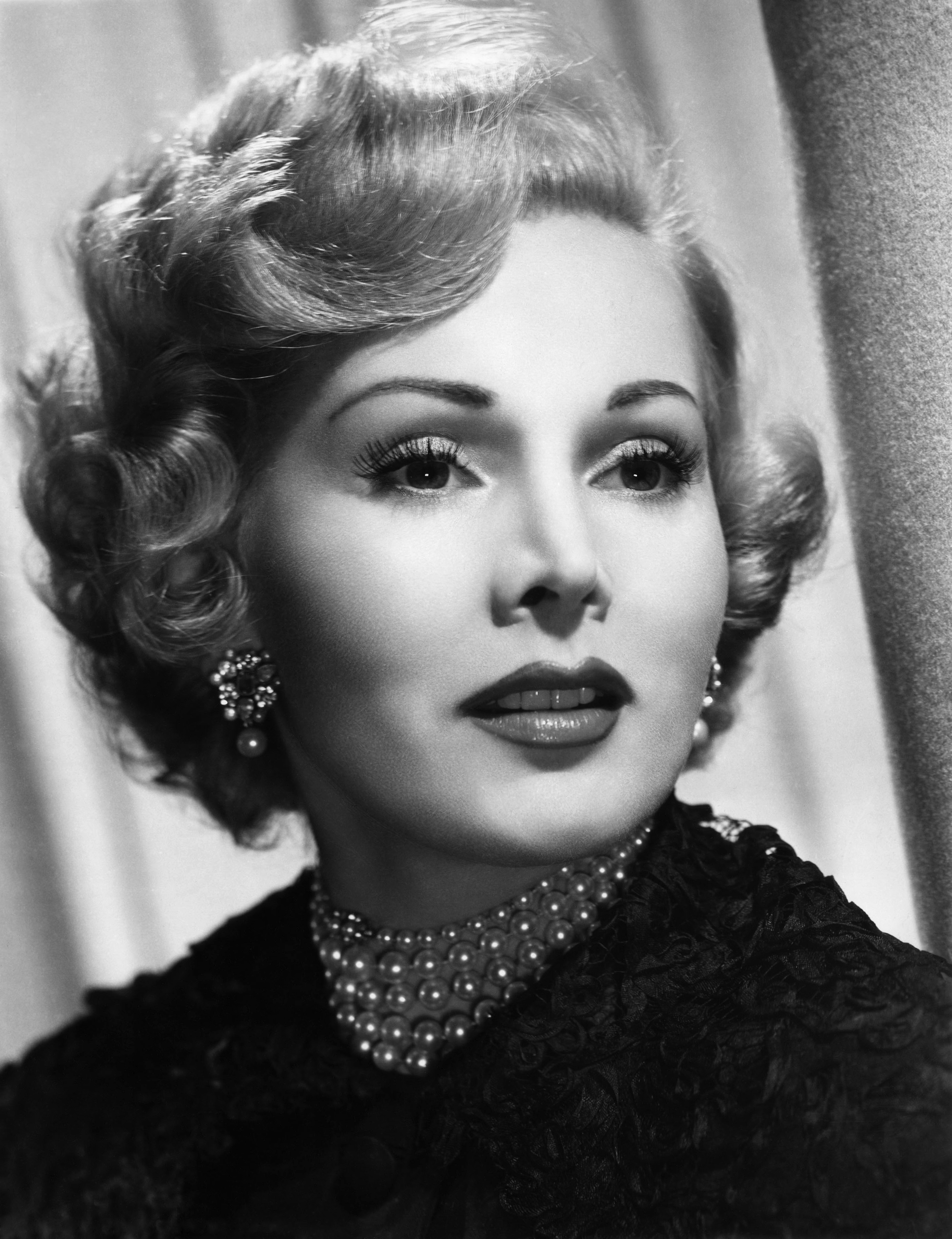
Zsa Zsa Gabor, ca. 1952 Photo: quotesgram.com
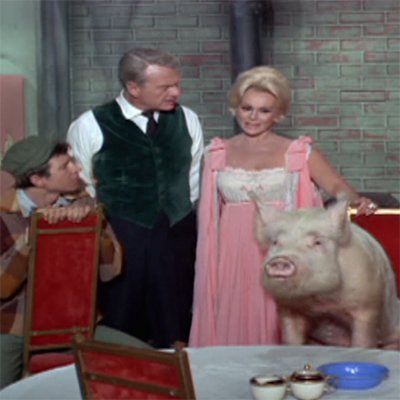
Green Acres presented a challenge for the wardrobe department. Most of the citizens were farmers, so overalls and house dresses fit the bill. Sam Drucker was the grocer, postman, and newspaperman for Hooterville, among other jobs. He always wore a blue shirt with a tie and had his postman vest or grocery apron on. Lisa and Oliver Douglas played an attorney and his wife who relocated from New York City and the social scene to rural Hooterville to run a farm. Oliver often wore suits on his tractor, looking somewhat silly and questioned by the locals. Lisa also continued to wear her glamorous outfits, but somehow, she was accepted by everyone and fit in wherever she went.
Photo: metv.com
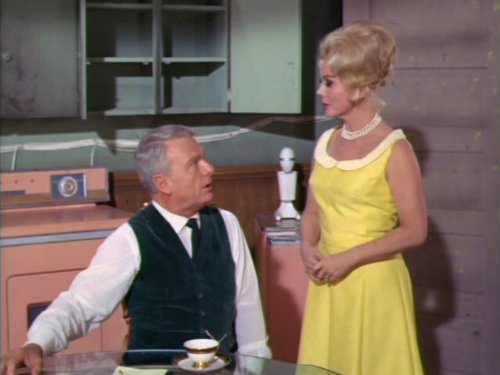
Lisa Douglas could wear anything and look good. She often wore her negligees around the house without being thought a hussy. She could show up in a sequined gown for a local band performance and was just one of the crowd. She wore gowns of boldly colored prints, but she was just as likely to show up in a single-colored sheath dress with a simple strand of pearls.
Photo: imdb.com
With
her lavish updo hairstyle and her extensive collection of jewelry, Lisa was fun
to outfit. Three designers were responsible for the majority of Lisa’s
wardrobe: Jean Louis, Lucie Ann Claire Sandra, and Nolan Miller.
Jean Louis
Born Jean Louis Berthault in 1907 in Paris, France, he was an Academy Award winner for The Solid Gold Cadillac in 1956 starring Judy Holliday. (Jean was nominated for 13 Academy awards.)
Photo: pinterest.com
He attended the School of Decorative Arts and then went to work for Agnes Drecoll, courtier. In 1935, he moved to New York city where he worked for Hattie Carnegie before going to Hollywood. While working there he began gathering a large clientele, including Wallis Simpson and Irene Dunne.
Photo: Black gown -1960s Jean Louis Silk Tiered Gown
From 1944-1958,
he was head designer for Columbia Pictures. Some of his most creative designs
included Rita Hayworth’s black satin dress from Gilda, the beaded gowns worn by
Marlene Dietrich, and the sheer, sparkling dress Marilyn Monroe displayed when
she sang “Happy Birthday” to John F. Kennedy. He also was the primary designer
for Kim Novack.
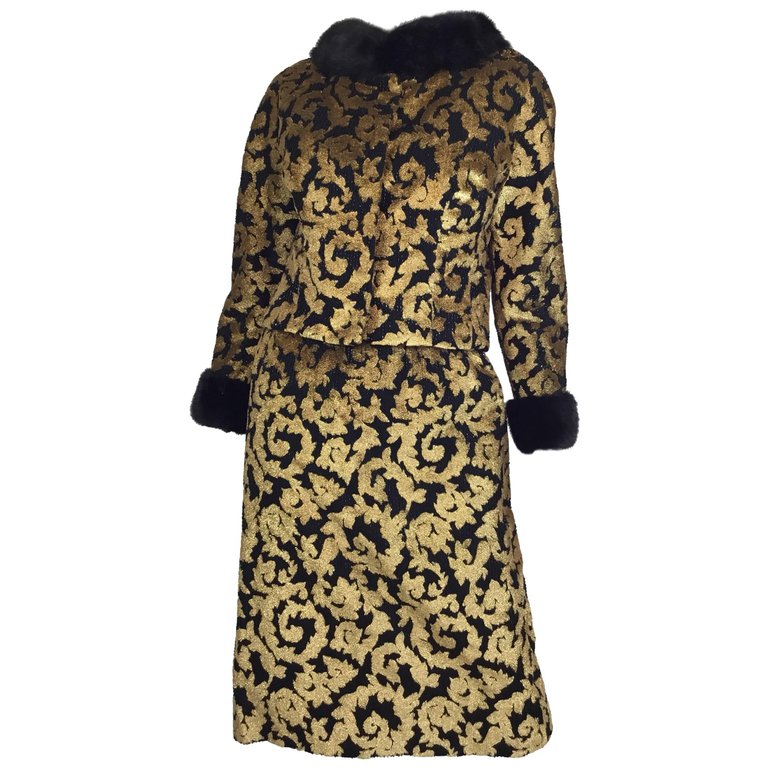
Photo: Gold and black lame dress
In 1958 he moved over to Universal. There he began a working relationship with Doris Day, with Pillow Talk, their first collaboration. Journalist Tom Vallance described his work:- “He created a sophisticated allure for Doris that launched a new phase of her career.” James Garner, who also starred with Doris in several films said she “exuded sex appeal while still maintaining her All-American Girl next door image.” Jean Louis also worked with Lana Turner during this era, putting together her colorful wardrobe in Imitation of Life. Jean’s daughter said her father “had the most amazing discerning eye for color. It was a sixth sense for him.”
Jean Louis had designed the clothing for The Loretta Young Show from 1953-1961. She was a close friend of Jean and his wife Maggie. After Maggie passed away, he and Young married in 1993. She was considered one of, if not the best, well-dressed stars. He also designed clothing for Ginger Rogers, Vivian Leigh, Julie Andrews, Katherine Hepburn, and Judy Garland.
Jean began to freelance in 1960. He opened a boutique in Beverly Hills and sold his label, “Jean Louis, Inc.” at better department stores all over the country. During this time, he also updated the United Airlines stewardess uniforms.
Photo: metv.com
From 1965-1967 he designed Lisa Douglas’s dresses on Green Acres. He was the perfect designer for her. Gifted with a great sense of humor, he could undoubtedly relate to the humor on the show.
Photo: thewritelife61.com
As he said during a Vogue interview, “You can use marvelous fabrics, have wonderful, impossible embroidery—in fact, be superluxe and superluxe is what the couture is all about.”
Photo: tumblr.com
In the 1970s,
he opened a boutique in France and launched his first fragrance. His career was
still flourishing with clients like Jacqueline Kennedy, Sophia Loren, and
Bianca Jagger.
Jean Louis
passed away in 1997. His influence continues to be felt among designers today.
Some of the fashion icons who admit being influenced by him include Michael
Kors, Vera Wang, Giorgio Armani, and Zac Posen.
Photo: imdb.com
Lucie Ann-Claire Sandra
Lucie Ann vintage nightgowns are among the most glamorous and desirable negligees ever made. Lucie Onderwyzer founded the fashion company in 1947 in Beverly Hills. Known for bold color and exuberant details like pompoms, bows, rosettes, and rhinestones, she designed for many stars including Elizabeth Taylor.
Photo: pinterest.com A few of Lisa’s gowns in the background
She designed all the peignoir sets worn by Eva Gabor in Green Acres. Her designs were also featured in other television shows and movies. In one episode of Bewitched, Darrin goes to the store to purchase a Lucie Ann for Samantha.
Photo: pinterest.com Darrin shopping for Samantha
Lucie passed away in 1988 and her company was bought by Deena Lingerie Co and later Lady Ester Lingerie Company which is still making them today.
Norman Miller
Norman Miller
was a wardrobe consultant for Eva on Green
Acres.
“I adored Eva. We worked together for many years. Later on, our working relationship became a friendship that I really valued. She wasn’t silly. She was a very smart lady. Not so smart with the men of her life. Her home was incredibly elegant. Anything that she needed I would do.” Miller shares about the time when Eva discovered a store called Loehmann’s; the store would buy designer samples and pack them up in huge boxes for stars to pick from. “Eva was a size 8 and the sample sizes were 2, and she’d simply ask me to do my magic and tailor them to her size. I smile at that as Eva could get anyone to change things around for her. I sometimes wonder whether she did understand fully well what was entailed in changing a size 2 into an 8 just like what was entailed in coming up with an animation idea tailor-made for her. She’d bat her eyelashes and sprinkle in a few ‘darlings’ and you find yourself doing what she wanted.”
Photo: pinterest.com A pink chiffon sleeveless floor-length Nolan Miller dress with accompanying chiffon and ostrich feather wrap worn by Eva Gabor on the television series Green Acres.
Miscellaneous
These three designers were the major forces behind Lisa Douglas’s beautiful fashion style on Green Acres. Gabor had an amazing fashion sense and was well known for her private wardrobe. She also was a successful business woman, owning a multi-million-dollar wig company.
Photo: newyorksocialdiary.com
Eddie Albert tells a great story about Gabor and her fashion. At her funeral, he said he probably saw more of Gabor than any of her five real-life husbands did. And, like any couple, married or not, they had their differences. She, for example, never quite understood his passion for wildlife conservation. “Every time you hear about a sick fish, you make a speech. Vy?,” Albert recalled his co-star saying. “And I would tell her, ‘I think we ought to preserve nature, save wild animals,’ and so on. Well, one day she showed up in a gown made of feathers, and I asked her not to wear it. ‘But so chic!’ she said. And I said, ‘Yes, and ladies will see it and want one, and thousands of birds will die.’ And she said, ‘But, Eddie, feathers don’t come from birds.’ ‘Well,’ I asked, ‘where do they come from?’ And she said, ‘Dahlink. Pillows! Feathers come from pee-lowz!’ ”
Perhaps there was more of Eva Gabor in Lisa Douglas than we realized.