Jonathan Harris: Oh the Pain

This month our blog series is “All About The Bill Dana Show,” and we are learning about the careers of some of the cast members. Last week we looked at the life of Maggie Peterson, and today we are getting to know Jonathan Harris.

📷LostinSpaceWikiFandom.com

Harris was born Jonathan Daniel Charasuchin in the Bronx in 1914. His father worked in Manhattan’s garment district. His family often took in borders to make ends meet, and when they did, the border got Jonathan’s room, and he slept on a couple of dining room chairs.

By age 12, Harris was working at a pharmacy as a stockboy. Although money might have been short, Harris’s family’s love of music and theater was not. As a family they listened to opera in the dining room. Whenever they had some extra cash, they would take in a Broadway play. Harris was interested in archeology, poetry, and Shakespeare. He disliked his Bronx accent and taught himself to develop a British one.

Harris was able to graduate at age 16 from James Monroe High School. His pharmacy job paid off when he graduated from Fordham University with a pharmacology degree in 1936. Before entering college, Jonathan took the name “Harris” in place of his birth name.

In 1938 Harris married his high school sweetheart, Gertrude Bregman. They were married until his death.

While working in several pharmacies, Harris also worked on his acting skills. He created a phony resume which he used to land a spot in a local acting company. In 1942 he played a Polish officer in the Broadway production, “The Heart of a City.” He was persistent. He said that he went to Mr. Miller’s office to audition for a part in the play for two weeks, and everyday Mr. Miller’s secretary sent him away. Finally, she let him in, and Mr. Miller gave him his first part. Then he lied and said he could do a Polish accent. He then went to the Polish Consulate to listen to how they talked. So, despite a fake resume, being turned away for weeks, and then lying about an accent, he was a success in the play.
📷amazon.com

In 1949, Harris made his television debut in The Chevrolet Tele-Theatre. Throughout the fifties he would continue to appear in dramatic playhouse series.

In 1959 he had a recurring role in Zorro as Don Carlos Fernandez as well as an appearance on Father Knows Best.

The sixties brought him roles in several well-known series including The Twilight Zone, Bonanza, and The Adventures of Ozzie and Harriet.

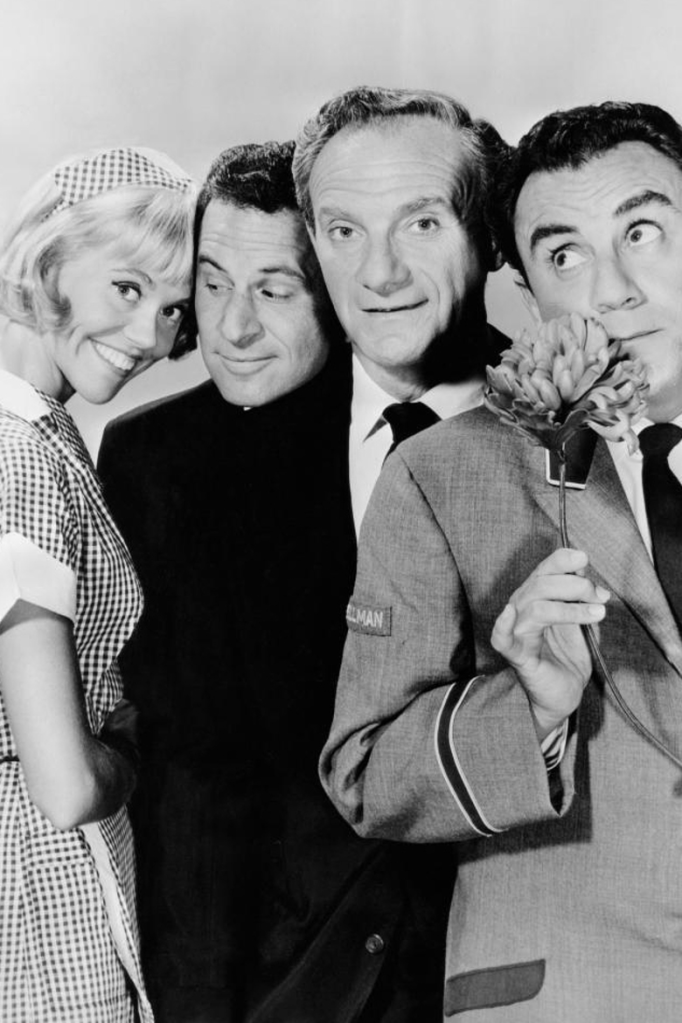
In 1963 he was offered the role of Mr. Phillips, the hotel manager on The Bill Dana Show. I won’t elaborate on this series, but if you missed the first blog in March, you can read about this show which was on the air for a season and a half.

Harris did an interview with the Television Academy. He said that when he read the script for The Bill Dana Show, he decided he had to come up with some other characteristics for Mr. Phillips. He made him devoid of humor. But he said he was a different man with his wife on the show, played by Amzie Strickland. Harris said Bill Dana was wonderful to work with. He also said that the writing was so good on that show that he never had to re-write anything. However, if something felt off, he would ask Sheldon Leonard about changing it, and Leonard was always open minded about revisions.

Harris continued to appear on dramatic shows while waiting for his next role.
📷thenewyorktimes.com

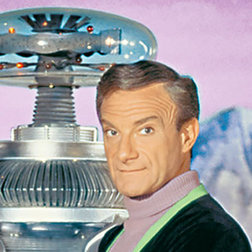
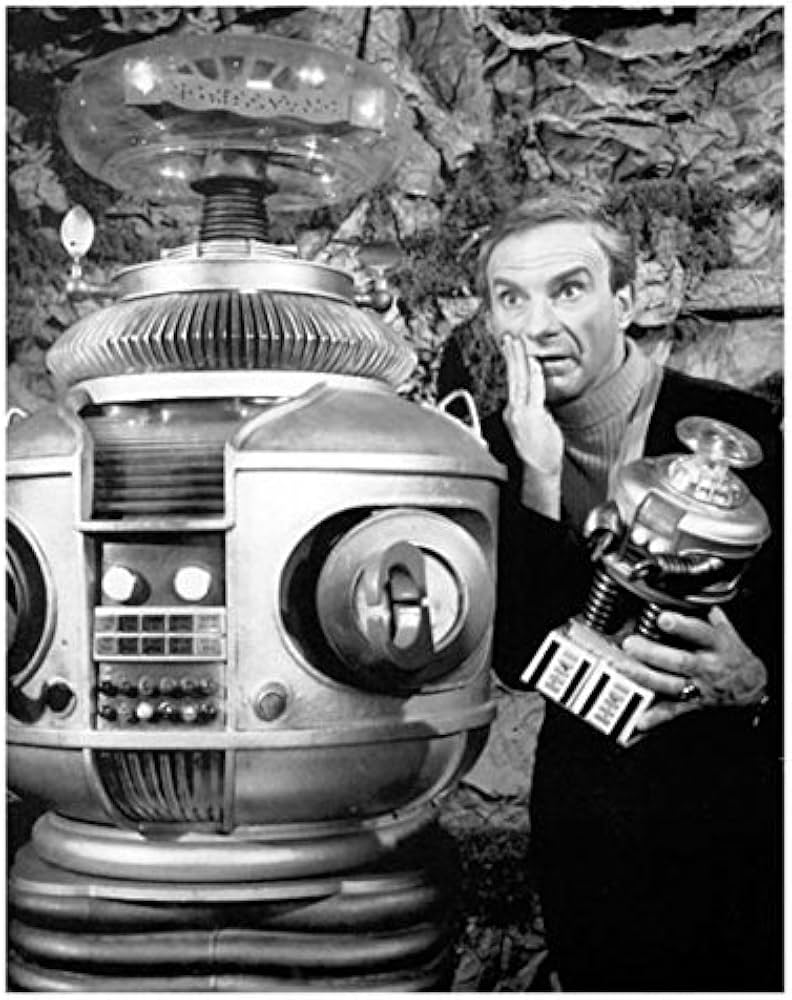
In 1965 Lost in Space was put on the fall schedule. Harris played Dr. Zachary Smith. Neither his role nor the Robot were in the pilot of the series, but they were both brought in before the show began.

The show was a big hit with viewers. Harris felt his character, who was not trusted by the family, needed a bit of comedy, so he began to adlib his dialogue. Irwin Allen, creator of the show, approved the changes and allowed him to be considered a writer. Harris said he was a good re-writer, but he was never a writer.

Bill Mumy, who played the son on the show and interacted with Smith quite a bit said that Harris “truly, truly singlehandedly created the character of Dr. Zachary Smith that we know—this man we love to hate, coward who would cower behind the little boy, ‘Oh the pain! Save me, William! That’s all him.”

The show was still high in the ratings during its third season, but the writers were running out of ideas, and the show was canceled after 83 episodes.

📷imdb.com

In the seventies, Harris joined the casts of two Saturday morning series, Space Academy and Uncle Croc’s Block. Uncle Croc’s Block was a very weird show in my memory. Even though it was on Saturday mornings, he parodied kids’ shows. Uncle Croc, played by Charles Nelson Reilly, butts heads with his program director Basil Bitterbottom, Harris’s role; Phyllis Diller played Witchy Goo to round out the cast. Uncle Croc has a sidekick Rabbit Ears and introduced the cartoons.

He also continued to appear on other series, and you can spot him in The Ghost and Mrs. Muir, Land of the Giants, Get Smart, Bewitched, McMillan and Wife, Love American Style, and Vega$.

After the mid-seventies, most of his work was in the animation field.

He also became a drama coach, and Chuck Norris was one of his students.

📷billmumy.com

In 1990, the cast of Lost in Space reunited for the 25th anniversary. More than 30,000 fans attended the event.

Harris also spent time on his hobbies, which were many. He loved gourmet cooking, watching movies, reading, traveling, painting, magic, playing piano, gardening, dancing, knitting, and spending time with this family. He also kept his interest in listening to opera that he cultivated as a child.

He passed away in 2007 from a blood clot that traveled to his heart.

Harris was a talented actor. I’m not sure why he was never offered another sitcom or a chance to play a different type of character. I’m glad he found a home in animation, but I wonder if he regretted leaving Broadway for television. It was fun to learn more about this man and his career.
Bill Dana: Actor? Script Writer? Author? Talent Agent? Yep

This month we are exploring The Bill Dana Show for our blog series. Last week we talked a bit about the show itself, and for the rest of the weeks, we are looking at some of the other cast members’ careers. Today we begin with Bill Dana himself.

📷findagrave.com

Dana was born William Szathmary in Quincy, Massachusetts in 1924. He was the youngest of six children. His older brother Arthur was fluent in several languages and inspired Bill to learn different accents.

Dana served with the US Army during WWII as a machine gunner and was awarded the Bronze Star Medal.

After the war, Bill enrolled at Emerson College. After graduation, he was hired as a page at NBC’s Studio 6B, or 30 Rock.  He was also trying to break into comedy performing around New York. During the fifties he appeared on The Imogene Coca Show. He also did some writing and producing for The Spike Jones Show.

He met Don Adams and began writing routines for him in the fifties. He and Don would be part of each other’s lives for a bit. Don would be one of the cast members on The Bill Dana Show. Dana would appear on Adams’ show Get Smart, and Dana’s older brother Irving was the composer of the Get Smart theme song. Bill would also cowrite the script for the Get Smart film The Nude Bomb.

📷thenewyorktimes.com

In the late fifties, Steve Allen hired Dana as a writer. Bill created a character, Jose Jimenez, for the “Man in the Street” segments of Allen’s show. Soon Jose became his alter ego. He made appearances as Jose on The Red Skelton Show, The Spike Jones Show, The Danny Thomas Show, and The Ed Sullivan Show. He even had a comedy album featuring the character.

Dana told a story on Ed Sullivan’s show that some people truly thought he was Jose Jimenez. One lady who met him out and about asked if his birth name was Jose Jimenez and he told her, “No, it’s Bill Szathmary.” She said “Wow, no wonder you changed it to Jimenez.”

In 1961, Dana began a recurring role on The Danny Thomas Show. He played Jimenez as an elevator operator. People responded so well that Danny Thomas and Leonard Sheldon spun off the character, now a bellhop at a luxury New York hotel, and The Bill Dana Show was created. In addition to Adams, Jonathan Harrison was part of the cast and Maggie Peterson joined them in season two. The show was on the air for one and a half seasons.

As we discussed last week, some people saw Jimenez as a hard-working immigrant who noticed some of the crazy things Americans did, and others saw him as a stereotyped Latino caricature. The pre-show Jimenez fit the second description better and the show Jimenez leaned more toward the first portrayal. However, as the character developed, viewers were not flocking to the show. It was also up against Lassie which at the time was a huge family show on Sunday nights.

📷wikipedia.com

The last time Jimenez was on the screen as a character was a 1966 episode of Batman in a cameo on the famous wall. Later Dana apologized for his caricature of Jimenez and became a bit of an activist for Latino causes. The National Hispanic Media Coalition endorsed the Jose Jimenez character and invited Dana to sit on their advisory board.

Dana jumped back and forth from actor to writer for a couple of decades. He wrote the script for All in the Family’s episode “Sammy’s Visit” starring Sammy Davis Jr. He also wrote for Bridget Loves Bernie, Chico and the Man, Donny and Marie, The Smothers Brothers Comedy Hour, and Matlock.

His acting landed him in The Courtship of Eddie’s Father, Love American Style, The Snoop Sisters, Police Woman, McMillan and Wife, Ellery Queen, Switch, Vega$, Fantasy Island, The Facts of Life, and Empty Nest among a few others.

He had recurring roles on two additional shows during his career. He was on St. Elsewhere as Howie Mandel’s character’s father for three episodes. He also was Angelo on six episodes of The Golden Girls.
One of his last projects was founding the American Comedy Archives at Emerson College. He and Jenni Matz interviewed more than 60 comedians for this archive, including Phyllis Diller, Norman Lear, Carl Reiner, Betty White, and Jonathan Winters.

Dana was a man of many talents. He also ran a talent management company and an advertising agency. He wrote a book, The Laughter Prescription, with Dr. Laurence J. Peter.

Dana passed away in June of 2017 at his home in Nashville.

Certainly, Dana had a full career. I think starting off with the Jose debacle probably kept him from getting different roles early in his career. He also didn’t seem to know what he wanted to be when he grew up. Was he a comedy writer? A dramatic writer? A variety show writer? Was he an actor? A talent agent? An author? Not that you can’t be more than one thing in life, but in the span of three decades he never seemed to settle on one or two careers. Hopefully he had fun and enjoyed all the different hats he wore.

The Bill Dana Show: Really It Was The Jose Jimenez Show

This month our blog is devoted to The Bill Dana Show which was on the air for two seasons in the early sixties.

📷dvdplanetstore.com

Bill Dana is not a name remembered much anymore but, in the sixties, he was a huge celebrity. There is some tough talk about why he was so famous. During the late fifties and early sixties, especially as so many radio shows transitioned to television, there were some politically incorrect shows. This one teetered on the edge of it, in the same ways the show Life with Luigi did.

Bill Dana’s alter ego, Jose Jimenez, debuted on The Steve Allen Show in the late fifties. Jimenez was a Mexican immigrant. He saw the United States through a different lens than people who grew up here. He often was amused by what he saw going on around him. However, he was not the lazy stereotype Mexican. Jimenez was hard working and wise in many ways. He was not offensive in the way Amos and Andy were. Dana was a Hungarian Jewish man playing a Hispanic man so that was not well received either.

While I still love so many programs from the fifties and sixties that hold up well today and have delightful characters, many programs from this time make us cringe and we are embarrassed for the television industry at that time.

There are also many performers that may have bordered on sexual and ethnic political incorrectness, many of their characterizations may not be offensive, but I sure don’t find any humor in them.

📷 Jose Jimenez televisoinacademyawards.com

Remember this was during the Civil Rights Movement era, so things were beginning to get examined more closely in pop culture. Even if Jose was a good guy, his exaggerated accent set him up more of a caricature than a character.

While there was some blowback from the Latino community, many fans adored Jimenez. Danny Thomas and Sheldon Leonard decided to give Jose his own show after he made a few appearances on The Danny Thomas Show. NBC put the show on its schedule without even seeing a pilot because he was so popular.

While the quick sketches with Jose were in your face humor, putting the character in his own television series gave the writers time to develop him more and make him more dimensional. Leonard made this a workplace sitcom which was different for him since so many of their shows—The Dick Van Dyke Show, The Danny Thomas Show, That Girl, Good Morning World—were all balancing personal and work life. Earl Hagen, who wrote so many great tunes for the Leonard group, wrote this one as well.

The show aired September 22, 1963, and ran for a season and a half, ending January of 1965.

Jimenez is a bellhop at a luxury New York hotel. He lives in a special staff apartment, eats in the hotel kitchen, and interacts with most of the guests. He is surrounded by a great cast which we’ll get to know in more detail this month. Don Adams was Byron Glick, house detective. Jonathan Harris took on the role of Mr. Phillips, the hotel manager. Fellow bellhop Eddie (Gary Crosby) is always trying to get Jose to lose his rose-colored view of life. For season 2. Maggie Peterson plays waitress Susie.

The ratings were not great. Perhaps viewers had a harder time connecting this Jose to the caricature Jose. Certainly, more criticism came from the Latino community as the show went on. In addition to Jose, there was feedback on other shows that used stereotypical Mexican characters and in commercials like the Frito Bandito.

📷washingtonpost.com

Jose had one cameo role in Batman when he meets the duo and introduces himself as “My name—Jose Jimenez” in 1966. That was the final appearance of the character and a few years afterward, Dana read an obituary that he wrote for Jose at a Latino civil rights meeting in Los Angeles, and he became an activist for the Latino community, so there was some good coming out of the situation.

The show was canceled partway through season two. Another factor in the show’s ratings was the fact that it was on Sunday nights up against Lassie, a family favorite. However, the show did somehow receive an Emmy nomination for outstanding sitcom. No surprise it didn’t win. Despite being a mediocre show with some nugget of greatness here and there, it was up against McHale’s Navy, The Farmer’s Daughter, and the show that won, The Dick Van Dyke Show.

If The Bill Dana Show had just been a show about “a guy” who arrives from Mexico to work in a posh hotel, and we saw life through his eyes, good and bad in America, the concept could have been fun and more accepted. It appears that the writing was pretty good and it had a great cast. Jose was just not the character to build the show around.

Tom Bosley Scores a Home Run on Any Team

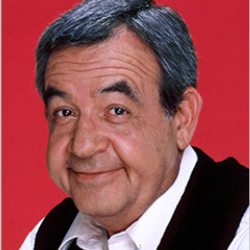
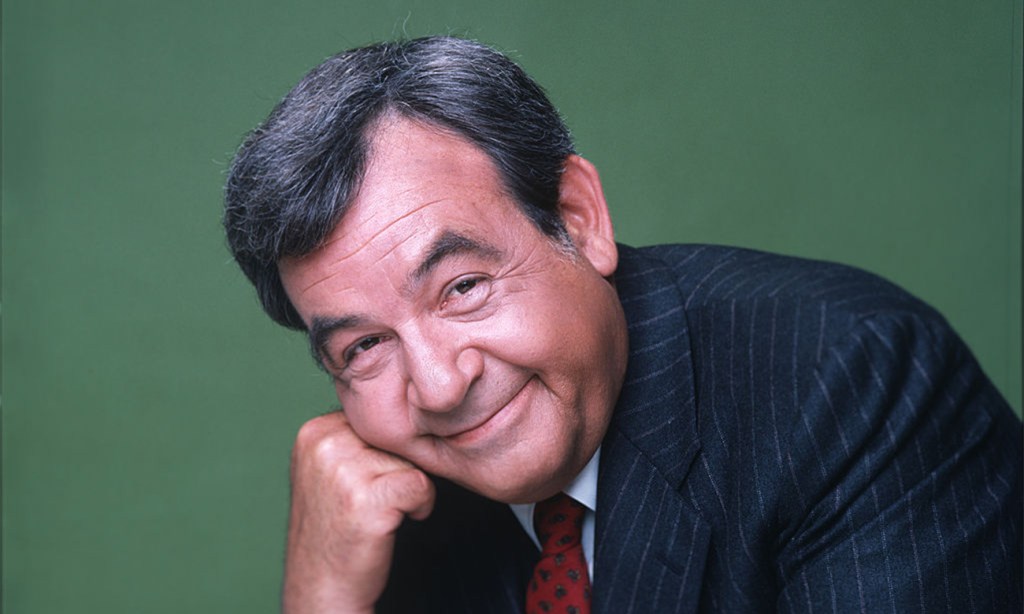
Since January was all about female sitcom actresses, this month we give the men their fair due.  We begin this series, “The Men of August,” with Tom Bosley.  Anyone who was a Happy Days fan knows why Bosley is part of this line-up.

Image result for images of tom bosley
Photo: quotetab.com

Bosley was born in Chicago in 1927. His father was in real estate and his mother was a concert pianist. After graduating from high school, he served in the Navy during WWII. His father was in WWI and then served again in WWII, building army bases on the coast.

Following the war, he attended DePaul University in Chicago, declaring his major as Pre-Law. He had to take night classes because the day classes were full, and after getting tired of teachers not showing up, he switched to a radio school, hoping to be an announcer because he loved baseball, but acting eventually tugged at his heart.” In 1949 and 1950 he performed at the Woodstock Opera House in Woodstock, Illinois with Paul Newman. He was in the first live television show ever done in Chicago which was a production of Macbeth, about 1948 (on WBKB).

In the early fifties, he moved to New York and held a variety of jobs, including coat checker at Lindy’s restaurant, doorman at Tavern on the Green, and Wall Street bookkeeper. He continued to audition for his big break. During the fifties while he was looking for work, he shared rent with another Chicago actor trying to make it in the entertainment business: Harvey Korman.

Image result for images of tom bosley
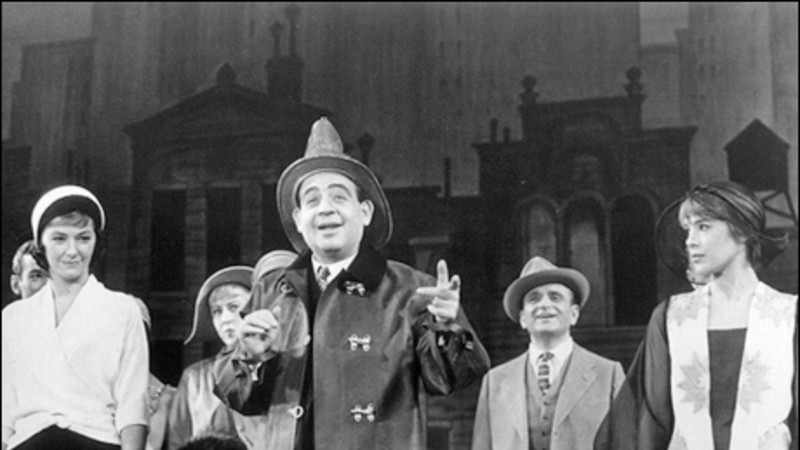
Bosley as Fiorello–Photo: markrobsinsonwrites.com

With one foot in Broadway and one in television, Bosley took on a variety of roles in his early career. In 1955 he appeared in a television production of “Alice in Wonderland” as the Knave of Hearts. In 1959, he won a lot of acclaim as New York mayor Fiorello H. La Guardia in the Broadway musical “Fiorello!” and won a Tony award. Bosley would later return to Broadway in the 1990s taking on the roles of Maurice in “Beauty and the Beast” and as Cap’n Andy in “Show Boat.”

In the 1960s he explored motion pictures and landed his first role as a suitor of Natalie Wood in Love with the Proper Stranger.

Although he continued to appear in the big screen, the little screen took up most of his time in the sixties and early seventies. In 1962 he played opposite Tony Randall and Boris Karloff in “Arsenic & Old Lace.” His face became a familiar one showing up in Car 54, Where Are You?, Bonanza, Get Smart, Route 66, Dr. Kildare, The Mod Squad, The Streets of San Francisco, Bewitched, McMillan and Wife, and Marcus Welby, among others.

It was also during this decade he married Jean Eliot. They were married until she passed away in 1978.

Image result for images of tom bosley
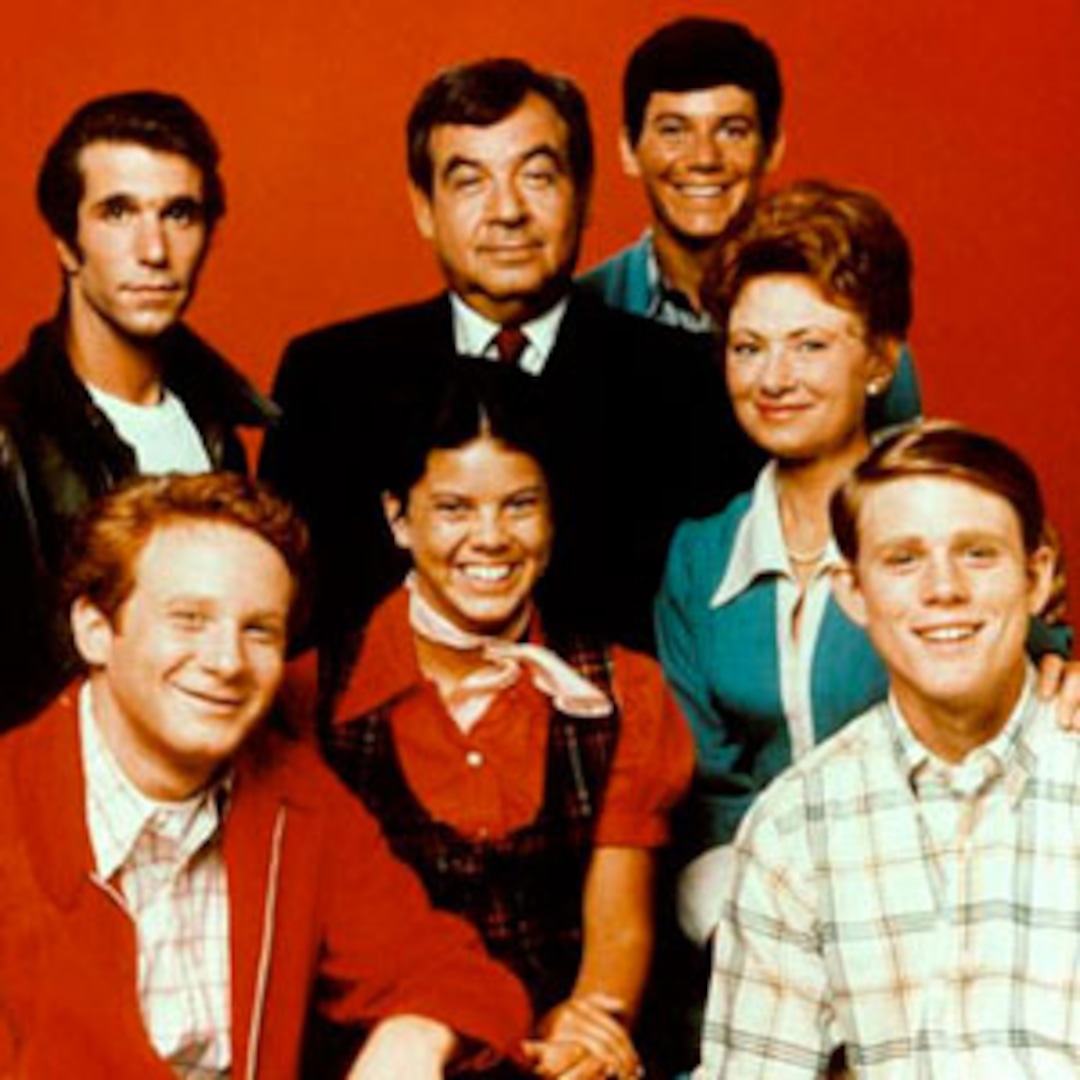
The Cast of Happy Days Photo: E!online.com

In 1974 he accepted the role that would make him a household name. “Love and the Television Set” was one of the four skits appearing on an episode of Love American Style, and I actually remember watching it. Garry Marshall developed it as a pilot, but the network wasn’t interested in turning the pilot into a show when it first came up. However, once George Lucas released American Graffiti in 1973, also starring Ron Howard, ABC took another look at the period show. The first two seasons, the show focused more on Richie Cunningham as he interacted with his friends and family. Jerry Paris (Jerry Helper on The Dick Van Dyke Show) directed 237 of the episodes. Happy Days was described as relentlessly ordinary. The plots revolved around the same types of problems most teens experienced in the fifties: dating, wanting to be popular, peer pressure, and similar issues.

Bosley originally turned down the role but reconsidered after reading the script more thoroughly; he was drawn to a scene between Howard and Richie that moved him. Bosley said he also was looking for some security. His wife was sick at the time, and they thought she might have epilepsy, which was later determined to be a brain tumor; he wanted an easier schedule in order to care for his wife and help raise his daughter.

Image result for images of tom bosley
With Henry Winkler Photo: brooklynvegan.com

He captured the sometimes cranky, but lovable, Howard Cunningham perfectly. He might not agree with his children, but he was always there for them, and he was apparently always there for his castmates who all remembered him as a kind, fatherly figure.

For a decade, Bosley developed the role of Howard into a much-loved sitcom father. Bosley said none of the characters were well defined in the early scripts. The cast developed their characters as relationships developed.  He described the actors as a baseball team that never made errors; they just clicked and had a wonderful rapport.

During the run of the show, his wife passed away from her tumor, and in 1980 he married actress Patricia Carr whom he stayed married to until his death.

Image result for images of tom bosley
With Angela Lansbury Photo: etsy.com

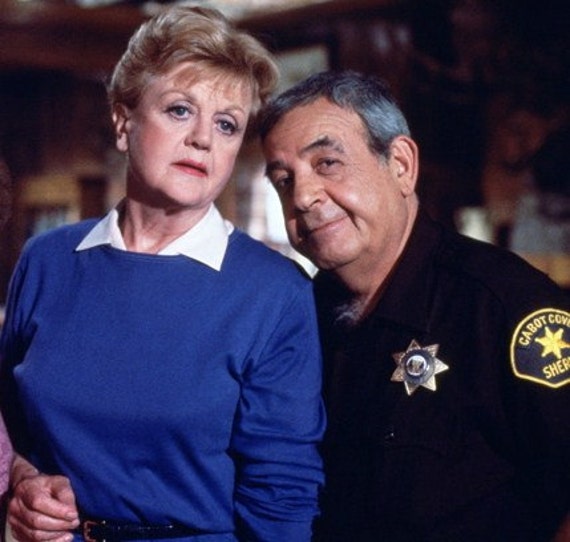
When the show ended, Bosley was immediately offered another role. Although he appeared in a variety of shows in the early eighties, including five episodes of Love Boat, he moved from Milwaukee to Maine to help Jessica Fletcher solve mysteries on Murder, She Wrote. Bosley said the role of Jessica was written for Jean Stapleton, but then she did not want to do it so it was offered to Angela Lansbury. He and Angela had worked together in the past, so he did the pilot. It was supposed to be a one-time role, but they brought him back nineteen times without a contract.  As Sheriff Amos Tupper, he spent four years trying to figure out why so many murders took place in peaceful Cabot Cove. He then retired from the police force and moved to live with his sister. 

Image result for images of tom bosley father dowling
James Stephens, Tracy Nelson, Bosley, Mary Wickes Photo: pinterest.com

He actually did work with a sister in his next role on Father Dowling Mysteries. As Father Frank Dowling by day, he moonlighted, solving mysteries with his assistant Sister Stephanie Oskowski (played by Tracy Nelson, Rick Nelson’s daughter and granddaughter of Ozzie and Harriet).

Bosley described Father Dowling as being a lot like himself: calm, quiet, and caring. While murders occurred on the show, there was no violence. When they were casting the part for the housekeeper, they described the character as a Mary Wickes type, and Bosley told them to just get Mary Wickes, and he loved working with her.  He enjoyed that show more than any of the other shows he worked on. The cast was totally caught off guard when it was cancelled.  The network wanted to do a show with James Earl Jones and Richard Crenna.  They gave Crenna’s agent a short-time period to agree to the show and he agreed before the limit ended, so the network was forced to delete a show from the current schedule to make room for this new show and they chose Father Dowling; the James Earl Jones show, Pros and Cons, also about several private detectives, and was dropped after 12 episodes.

When the show ended in 1991, his career definitely did not. When asked if he was going to retire, he replied, “Don’t be silly—actors spend half of their careers in retirement.” He continued appearing in a variety of shows (39 in all) until his death in 2010 from a staph infection.

Photo: outsider.com

There are several actors I get confused by at times because of their similarities. One is Ray Walston from My Favorite Martian with Jonathan Harris from Lost in Space. The other is Tom Bosley with David Doyle from Charlie’s Angels.  At least I felt better about my mental error after doing research on Bosley.  Apparently, David Doyle was named “Bosley” on the show because people confused the two actors so often. 

I’m sure Tom Bosley would have made an excellent attorney or announcer, but I’m happy that he followed his acting passion, and I’m thankful for the five decades he was willing to entertain us with his special gift.

Danger Will Robinson: Lost in Space Revisited

Airing in 1965, Lost in Space follows the travels of a family whose ship is off course, traveling through outer space. The show was on the air for three seasons, producing 84 episodes.

Photo: nytimes.com

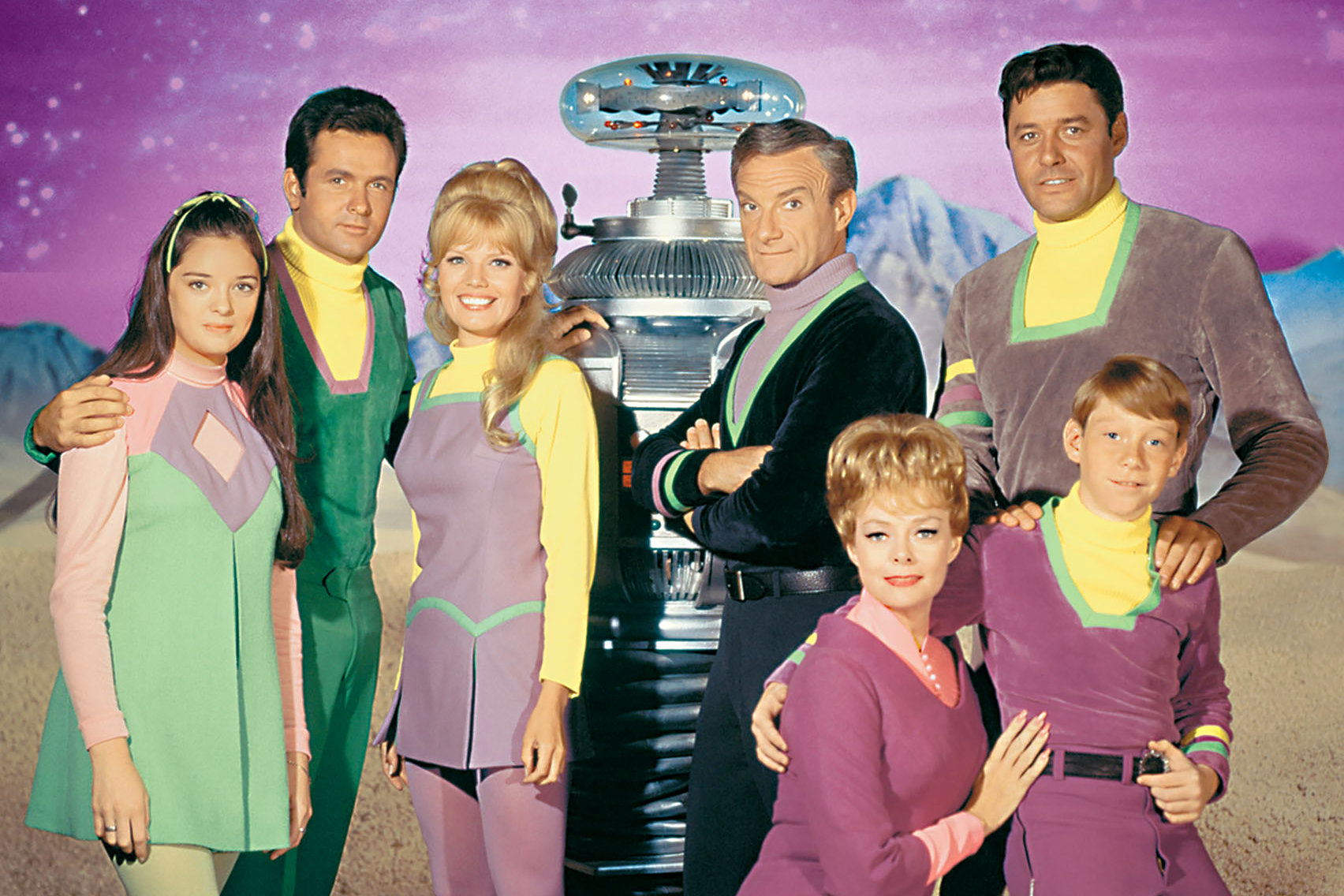
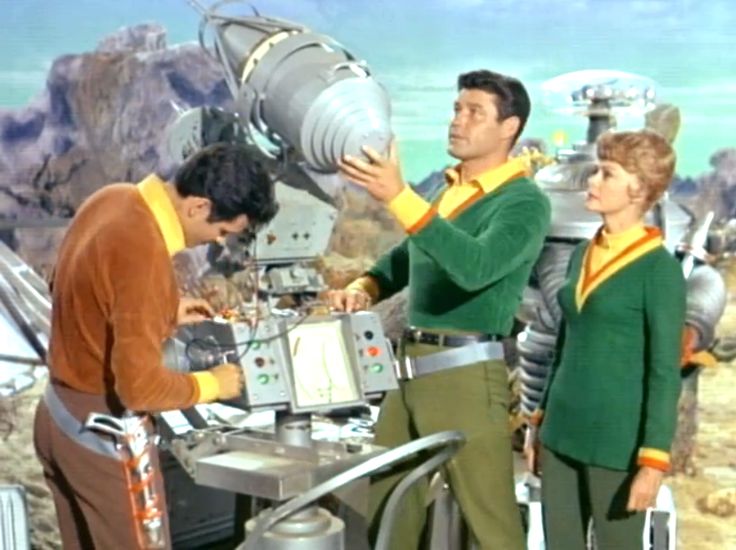
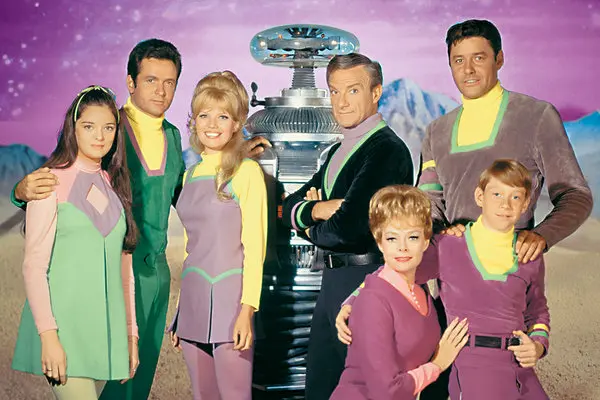
The premise of the show was that in 1997, earth becomes overpopulated. Professor John Robinson (Guy Williams); his wife Maureen (June Lockheart); and their kids, Judy (Marta Kristen), Penny (Angela Cartwright), and Will (Billy Mumy) are selected to go to the third planet in the Alpha Centauri star system to establish a new colony. Major Don West (Mark Goddard) is also accompanying them. Doctor Zachary Smith (Jonathan Harris) an enemy government agent is sent to sabotage the mission. He becomes trapped on the ship after he reprograms the robot (voiced by Dick Tufeld), altering the course for the spaceship, the Jupiter 2. The group is now lost and trying to find their way back home. During the course of the show, Smith becomes less sinister. It was no secret that the show was a science fiction version of Swiss Family Robinson.

The pilot, created by Irwin Allen, was titled “No Place to Hide.” A ship called the Gemini 12 was supposed to take a family on a 98-year journey to a new planet. When an asteroid knocks the shop off course, the family must try to find their way back. CBS bought the series, choosing Lost in Space over another new show, Star Trek. Dr. Smith and the Robinsons’ robot were added to the cast and the ship was renamed Jupiter 2.

Photo: fandom.com

Dr. Robinson was an astrophysicist who specialized in planetary geology. Williams who played the part was a well-known actor who had starred in the show Zorro. He thought his lead role would be a dramatic part, but the show became increasingly campy like Batman, and Williams’ role was more of a supporting character than a star. He was bitter about the turn of events and when the show was cancelled, he moved to Argentina where Zorro was popular and never acted again.

Photo: en.wikipedia.org

Maureen Robinson was also a doctor; she was a biochemist who also performed housewife duties such as preparing meals and tending the garden. Her chores were not too taxing though because the “auto-matic laundry” took seconds to clean, iron, fold, and package clothing in plastic bags. The dishwasher also did a load in seconds. In addition to the hydroponic garden maintained by Maureen, the crew had protein pills available that would substitute for food during emergencies. One fun fact I learned about Lockhart was that she had the largest parking spot on the 20th Century Fox lot because she often drove a 1923 Seagrave fire truck.

West was the pilot of the Jupiter 2 and the only crew member who could land the ship.

Photo: digitalvortex.info

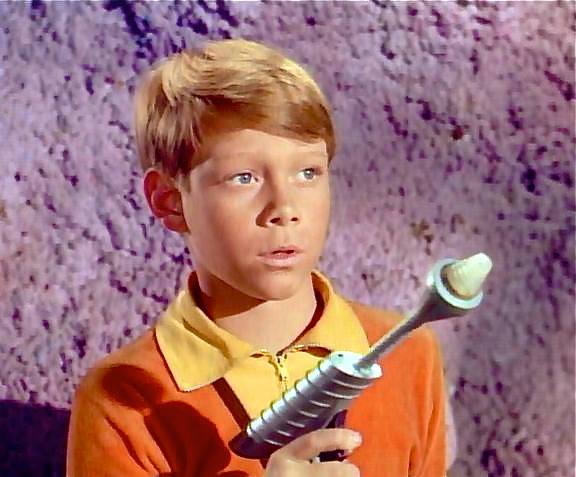
Judy is the oldest child. Being the oldest, she was allowed a more glamorous wardrobe and hairstyle. There was always the undercurrent that she and West would get together. Penny is eleven and loves animals and classical music. She finds a pet similar to a chimpanzee which she named “Bloop.” Will is nine and the youngest member of the family, but he is a genius when it comes to electronics and computer technology.

Photo: pinterest.ca
Photo: tvdatabase.wiki.com

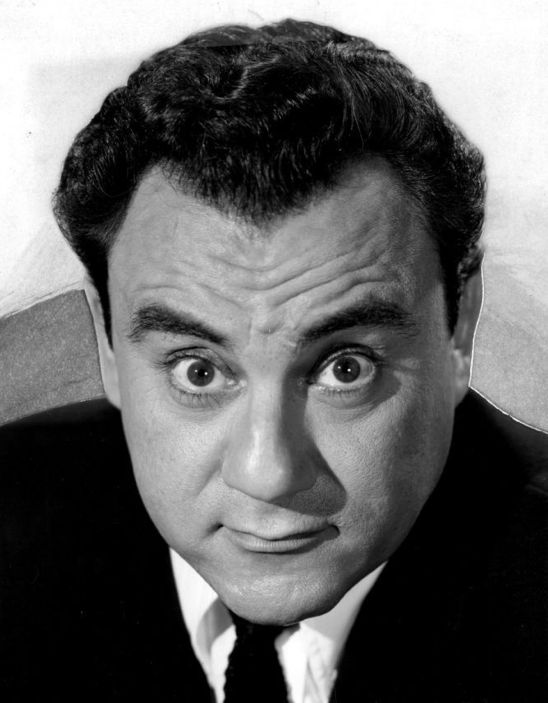
Dr. Smith is an expert in cybernetics. Carroll O’Connor, Jack Elam, and Victor Buono were all considered for the part of Dr. Smith. Smith was only supposed to be a guest star but became the best-loved character in the show. Harris rewrote many of his lines that he considered boring. He redefined his character as an attention-getting egoist with a flamboyant style and arrogant dialogue.

Photo: nytimes.com

The Robot is an M-3, Model B9, General Utility Non-Theorizing Environmental Robot which had no name. It did have superhuman strength and weaponry that was futuristic in nature. It can display human characteristics such as laughter, sadness, and mockery.

Photo: denofgeek.com

The robot was designed by Robert Kinoshita. It cost $75,000 to produce and weighed more than 200 pounds. Kinoshita also designed Robby the Robot for the Forbidden Planet in 1956. The Lost in Space robot was a Burroughs B-205. It had a flashing light and large reel-to-reel tape drives. It could be seen in a variety of movies and television shows, including Voyage to the Bottom of the Sea (1964), Batman (1966), The Land of the Giants (1968), and Austin Powers: The Spy Who Shagged Me (1999).

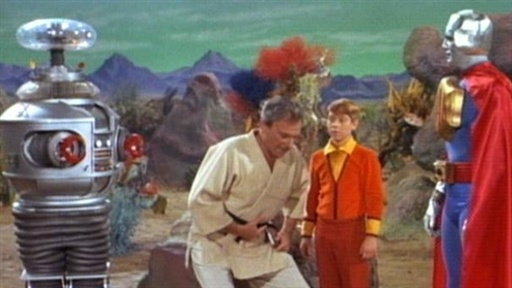
A number of stars chose to appear on the show including Werner Klemperer, Kurt Russell, Wally Cox, Lyle Waggoner, Arte Johnson, Hans Conried, and Daniel J. Travanti.

The pilot and many shows from season one used Bernard Herrmann’s score from The Day the Earth Stood Still, a 1951 film. John Williams wrote the opening and closing themes for the show. Season three used a faster tempo version and the opening featured live action shots of the cast. The theme music is unforgettable, and although I haven’t seen the show since its original airing until recently, I immediately remembered the entire score.

Photo: friends-club.info

In season one, the ship crashes on an alien world, later identified as Priplanus. The crew spends most of the season on the planet, surviving many adventures. Most of the episodes emphasize the daily life of the Robinsons adjusting to their new conditions. The show was on Wednesday nights against The Adventures of Ozzie and Harriet and The Patty Duke Show on ABC and The Virginian on NBC.

Photo: pinterest.ca

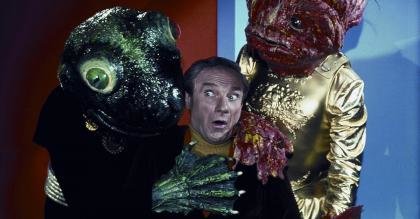
In season two, the ship is repaired and launched into space. Priplanus is destroyed after a series of earthquakes. Eventually, the spaceship lands on another planet and is delayed there. The show became campier during this time because it was scheduled against Batman for a second year. Costumes were brighter and the show was filmed in color. Most of the plots featured outlandish villains. More emphasis was placed on Will, Dr. Smith, and the robot and serious science fiction was sacrificed. Like season one, each episode ended with a cliff hanger.

Photo: pinterest.com

Season three shows the Jupiter 2 travelling through space visiting a new setting on each episode. A space pod allows transportation between the ship and the planets they explore. Humor was still a mainstay of the show and the crew encountered space hippies, pirates, intergalactic zoos, and ice princesses. The cliff hanger disappeared, and the robot would show highlights from the upcoming episode before the closing credits. The show continued its slot on Wednesdays and was still on opposite The Virginian on NBC but also The Avengers on ABC

Photo: mightymega.com

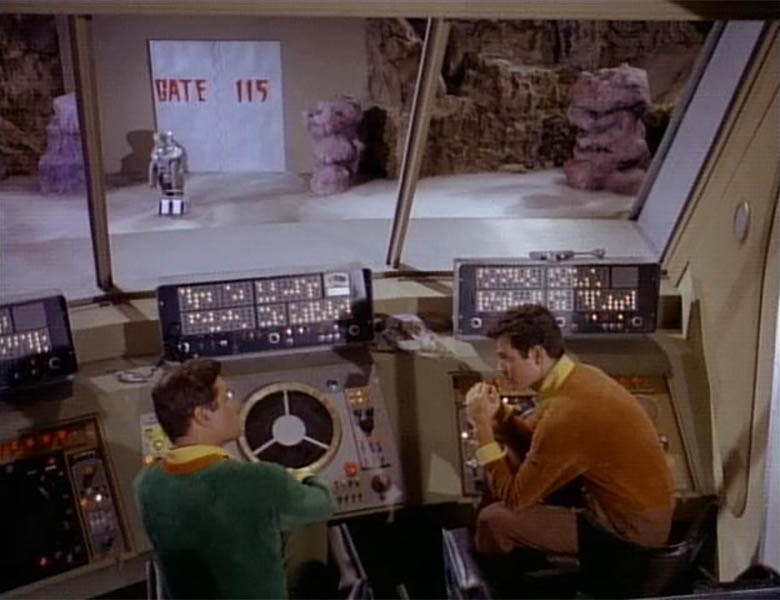
The show was probably best known for its technology and futuristic props. The Jupiter 2 was a two-deck spacecraft, nuclear powered. It used “deutronium” for fuel. The crew slept in Murphy beds. A laboratory was also designed as part of the spaceship. The characters could travel between two levels by an electronic glide tube elevator or a ladder. The ship could be entered or exited through an airlock on the upper deck or landing struts on the lower deck.

Photo: pinterest.com

The crew traveled on the Chariot. It had six bucket seats for passengers, a radio transceiver, a public address system, a rack holding laser rifles, and interior spotlights.

The crew members could use a jet pack, the Bell Rocket Belt. The robot ran air and soil tests. He could detect threats with his scanner and produce a smoke screen for protection. He could understand speech and speak to the crew. He claimed he could read minds by translating thought waves back into words.

Photo: view.yahoo.com

One of the things Lost In Space is best remembered for is the catchphrase, “Danger Will Robinson.” What is funny is that it was only used one time in the series. Smith also had several lines he is remembered for: “Oh, the pain, the pain” and “Never fear, Smith is here” are two of them. He also was famous for his alliterative phrases such as “Bubble-headed booby,” “Cackling Cacophony,” “Tin-Plated Traitor,” “Blithering Blatherskyte,” and “Traitorous Transistorized Toad” which he used to insult the robot.

Photo: en.wikipedia.org

Lost in Space ranked in the top 35 shows all three seasons it was on the air (32nd, 35th, and 33rd respectively). It was ranked number three in the top five favorite new shows of 1965-66, along with The Big Valley, Get Smart, I Dream of Jeannie, and F-Troop. The show was nominated for an Emmy for Cinematography Special Photographic Effects in 1966 and for Achievement in Visual Arts & Make-up in 1968 but did not win either award.

Despite its good ratings, CBS Chairman William Paley hated the show and didn’t understand why it was popular. He instructed his executives to cancel it the minute its ratings dipped. Unfortunately, it was never able to air a finale.

Photo: metv.com

In the 1970s, Mumy wrote a script for a reunion movie. He arranged for the casting and had approval from 20th Century Fox and CBS. However, Allen who was worried that Mumy might be entitled to a copyright claim on the original, refused to even review the script. Without his okay, the reunion was never able to be filmed.

Lost in Space was successful in reruns and syndication. All three seasons are available on DVD. Like many science-fiction shows and movies from the 1960s, it was eerily predictive of technology and glaringly wrong at the same time. The show is campy, but I don’t mind that. Along with The Monkees and Batman, it seems to fit the times it was produced in.

Photo: lrmonline.com

Perhaps it’s not that bad that Mumy was not able to film the reunion. The show was made into a movie in 1998 which received poor reviews. Legendary Television has brought a reboot of the show to Netflix in 2018.  It is currently getting ready for its second season. It has not received the greatest reviews either. Lost in Space can be seen on Antenna TV on Saturday nights, so you might want to catch an episode or two this winter. Sometimes the real thing just can’t be duplicated.

Photo: pinterest.com