Wagon Train: Heading West

This month we are celebrating, “Go West Young Man” by taking a look at some of the westerns from the fifties and sixties. Up today is Wagon Train. This series debuted on NBC in 1957; in 1962 it moseyed over to ABC for its final three seasons. Lew Wasserman was involved with Universal which produced Wagon Train. When they sold the series to ABC, NBC was not happy, but Wasserman told them that he had a new show for them, The Virginian, which we’ll learn about in two weeks.

📷pinterest.com

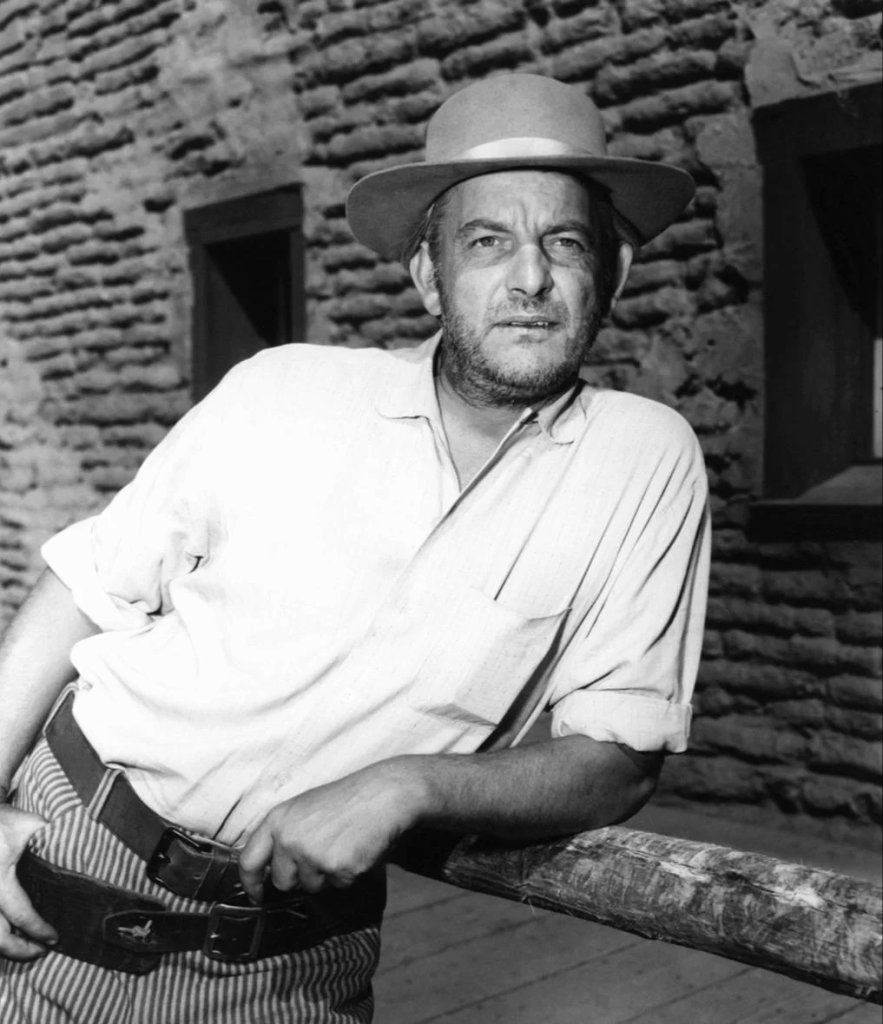
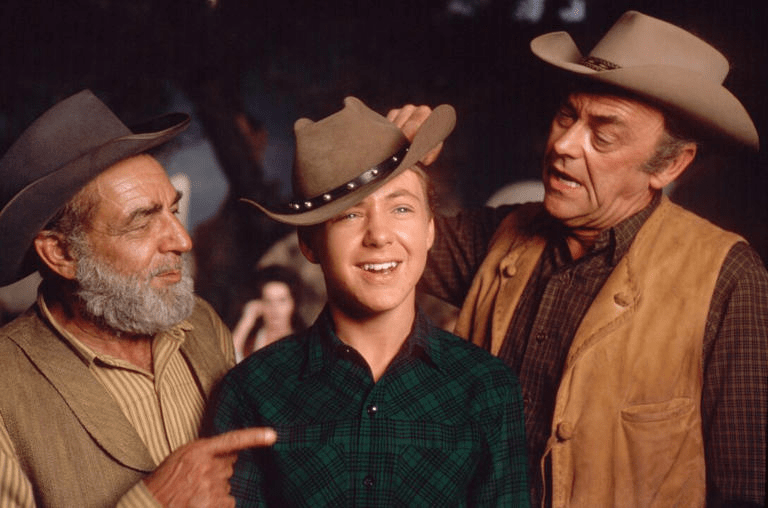
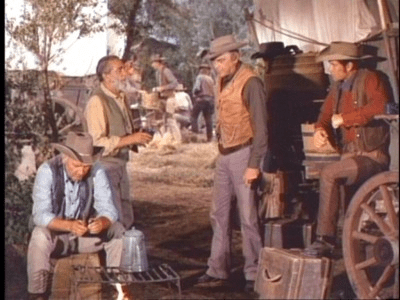
The series was very popular, jumping to number one immediately. The plot is that a large wagon train is traveling through the west from Missouri to California. Ward Bond starred as the wagon master Seth Adams (when he died in 1960, John McIntire took over). Robert Horton played scout Flint McCullough; eventually he opted to leave and was replaced by Robert Fuller. Oddly, Horton and Fuller shared a birthday and were six years apart in age.

If I listed all the guest stars during the eight seasons, you would still be reading this next Monday. Just know, there were a lot.

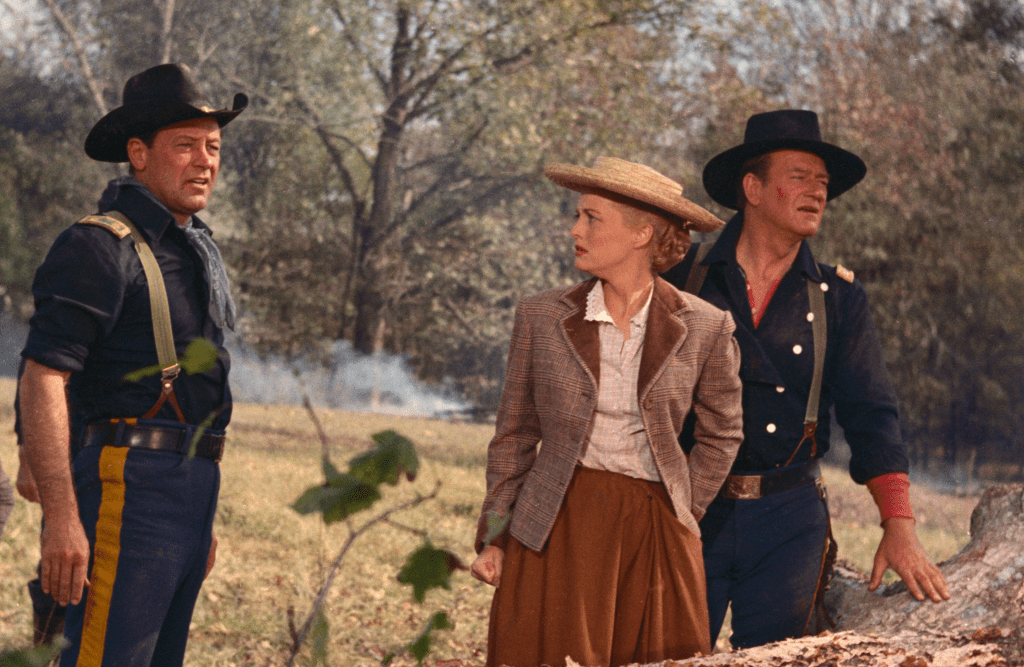
The show was adapted from a 1950 John Ford film titled Wagon Master. In a 1960 episode, John Ford stepped in to direct an episode, “The Colter Craven Story.” One guest star I have to mention in this one was John Wayne. He speaks from the shadows as General Sherman (Wayne’s real name was Marion Michael Morrison, so for this credit, he went by Michael Morris) in this episode.

The original theme song was written by Henri Rene and Bob Russell and conducted by Stanley Wilson. A more contemporary theme accompanied season two, and it changed a few more times during the run of the show.
📷msn.com

The show had a huge budget for the time: $100,000 (about a million in today’s world of television). It was about 40% more expensive than most westerns at the time, and that is part of why it was able to feature so many guest stars.

When Gene Roddenberry pitched Star Trek to the networks, he described it as “a Wagon Train traveling across the universe.” He also hired writer Gene L. Coon who wrote 23 episodes of Wagon Train.

While wagon trains are considered an icon from our history, so was the product of the series’ first sponsor, the Edsel Division of the Ford Motor Co.

The show was an hour long and shot in black and white for the first six seasons. For season seven, the network filmed the show in color and increased the length to 90 minutes. The ratings were still high but didn’t increase, so the network could not justify the changes, and the television show went back to an hour in black and white.
📷dvdtalk.com

The show was placed on Wednesday nights up against Leave it to Beaver and Disneyland. Even with that competition, it was in the top thirty and by its second season, had jumped to the top ten where it stayed until it was sold to ABC. ABC kept the show on Wednesday nights, and it ran against The Virginian, both being in the top thirty in 1962.

So many people have fond memories of this show. It was on six seasons, but I think it was finally cancelled even though it was in the top thirty because of the western overload, ushering in the shows like Get Smart, The Man From UNCLE, Lost in Space, and The Smothers Brothers Show. Check out your favorite guest stars who were on the show and watch those episodes to see what it was like.
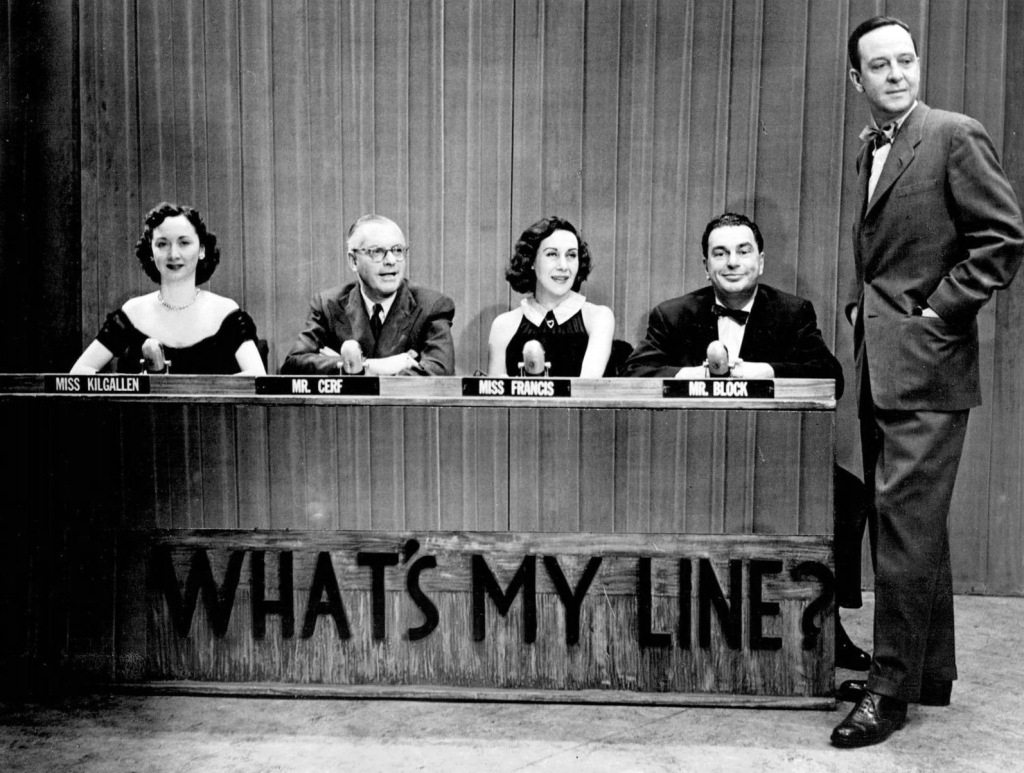
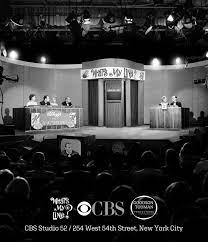
The Elegance of What’s My Line

This month, we are looking at popular fifties stars and shows. While the show we are talking about today outlasted the fifties by almost another decade, it gained its popularity during the 1950s. Today we are learning about What’s My Line.

📷wikipedia.com

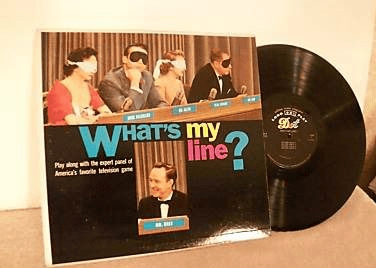
This panel game show was on CBS. It debuted in 1950 and ran until 1967. The show was produced by Mark Goodson and Bill Todman, and the working title was Occupation Unknown. Perhaps the title should have been What’s My Schedule. The show began on Thursday nights as a live show. Later in season one, it switched to every other Wednesday and then moved to every other Thursday. In October of 1950, it landed on Sunday nights where it would remain throughout the rest of its life.

The original series, which was usually broadcast live, debuted on Thursday, February 2, 1950, at 8:00 p.m. ET. After airing alternate Wednesdays, then alternate Thursdays, finally on October 1, 1950, it had settled into its weekly Sunday 10:30 p.m. ET slot where it would remain until the end of its network run on September 3, 1967.

📷imdb.com

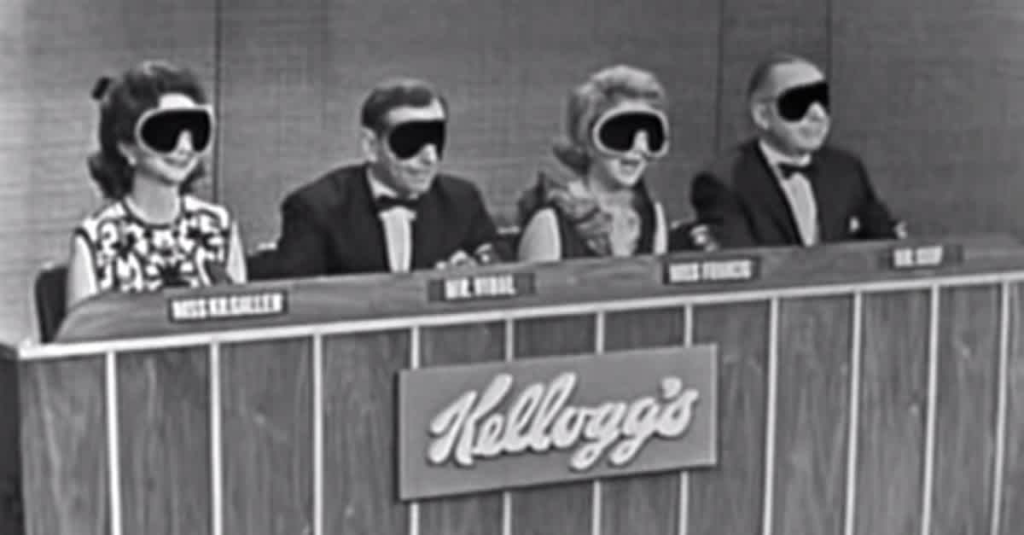
Celebrity panelists ask contestants questions to figure out their occupation. While most of the contestants were not famous, there was a “mystery guest” segment. The panelists were blindfolded for this segment and asked questions to determine the celebrity. People enjoyed watching the panelists banter with each other and the sophisticated humor they shared with us.

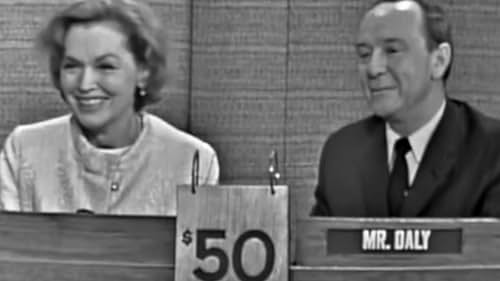
Each episode had four panelists. The most famous panelists were Dorothy Kilgallen, Arlene Francis, and Bennett Cerf. John Daly was the moderator. The first show in the series featured New Jersey governor Harold Hoffman, Kilgallen, poet Louis Untermeyer, and psychiatrist Richard Hoffman. Later in season one, Arlene Francis came  on board with Kilgallen, Untermeyer and writer Hal Block. In season two, Cerf replaced Untermeyer and Steve Allen took over for Block in season three. When Steve Allen left to host The Tonight Show, comedian Fred Allen was part of the panel from 1954 until his death in 1956. Kilgallen was killed in 1965 and her replacement varied for two years. Her death is a mystery itself and well worth reading about. Many people think she was killed because of her investigation into JF Kennedy’s assassination.

📷facebook.com

The panelists started the series wearing business clothing, but by 1953 they shifted to formal attire with the men showing up in suits and ties and women in formal gowns and gloves. Unfortunately, we never got to see the beautiful colors of these clothes. Until 1966 everything was filmed in black and white. In the final season, the show was broadcast in color, but the kinescopes were saved in black and white.

Both critics and television viewers liked the show, and it won an Emmy for Best Quiz or Audience Participation Show in 1952, 1953, and 1958.

Because it was a game show, most of the 700 episodes were on kinescope, 16 mm filming. Because many original shows in that era were recorded via kinescope onto silver nitrate film, many networks destroyed recordings to recover the silver. After learning that the network was not keeping the recordings, Goodson and Todman offered to pay for the broadcast and retained the recordings from season three on, however many of those were also lost along the way. A variety of the episodes are stored at different archive centers around the country. My home state houses one from 1951 at the University of Wisconsin Center for Film and Theater Research in Madison.

📷facebook.com

The remaining kinescopes which have been digitized have been seen on television on the Game Show Network and 757 of them exist on YouTube.

Many of us remember the reruns and seeing the contestant come on stage and write their name on a chalkboard as Daily said “Will you enter and sign in please.” The very first contestant was Pat Finch who was a hat check girl at the Stork Club.

The first mystery guest was New York Yankees shortstop Phil Ruzzuto. Many of these guests used fake voices to answer questions. Some of the mystery guests who appeared on the show included Julie Andrews, Louis Armstrong, Lucille Ball, Jack Benny, James Cagney, Gary Cooper, Joan Crawford, Salvador Dali, Sammy Davis Jr., Doris Day, Aretha Franklin, Ava Gardner, Judy Garland, Jackie Gleason, Alfred Hitchcock, Bob Hope, Ginger Rogers, Roy Rogers, Eleanor Roosevelt, James Stewart, Elizabeth Taylor, and John Wayne.

📷littlethings.com Blindfolds come out for a mystery guest

The emcee would choose a panelist who could ask yes or no questions. If the answer was yes, they could continue until they got a no response and then the next panelist would be able to pose questions. If the contestants answered no, Daily flipped a card; when the contestant had ten cards, they won $50.

If you have heard of or even used the term “Is it bigger than a breadbox?,” you might want to know that it came from the show. Steve Allen asked the question in 1953, and it became a standard question after that night. In fact, on one episode, the guest was a breadbox maker, and when Daly could not help laughing at the question, Allen figured it out.

In 1967 The New York Times broke a story that CBS was canceling many of their game shows. None of the panelists had been told that the show was not renewed. Despite the fact that the low costs of the game shows made them profitable, the low ratings led the network to conclude that game shows were no longer suitable for prime-time schedules.

After the show was canceled in 1967, it did go into syndication five days a week. Soupy Sales joined Francis and Cerf on the panel of the reboot. A variety of other panelists took the fourth seat including Joyce Brothers, Jack Cassidy, Bert Convy, Joel Grey, Meredith MacRae, Henry Morgan, Gene Rayburn, and Nipsey Russell. The show ended in 1974. Cerf died during the run of the syndicated series.

It’s hard to believe, but Colonel Harland Sanders was on the show as founder of Kentucky Fried Chicken, although he was not easily recognized at the time, so he was not a mystery guest. While no president ever appeared while in office, Ford, Carter, and Reagan all appeared on the show.

📷youtube.com We switched to a first-name basis in the 70s

It would be fun to see this show on television today, but I’m afraid it would not be the same. In the way that Dick Cavett had a manner of interacting with guests to ask amazing questions with his humor and intelligence, this game show had that same atmosphere. Today, I think the banter would border more on crudeness than wit. There is something charming about a panel of very intelligent people talking with each other, trying to determine the identities of the people they were interviewing while being dressed to the nines that was fun to sit in on and be a part of. I guess that’s why this show is in our series where we are saluting the fifties because that was the era where it could shine.

Stefanie Powers Has a Hart for Acting

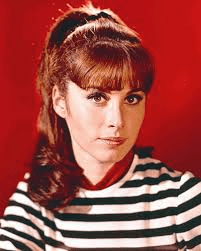
Today in our Supportive Women blog series, today we are delving into the career of Stefanie Powers.

Photo: themoviestore.com

Stefania Zofya Paul was born in 1942 in Hollywood, California, Her parents divorced when she was little, and she rarely saw her father again. At age fifteen, she began dancing for Jerome Robbins. During her career she has appeared on the stage many times, the first time in 1964 in “Under The Yum-Yum Tree.” She also appeared on the British stage in several productions including “The King and I.”

She graduated from Hollywood High, although she was given her first contract at age 16 with Columbia Pictures. She made 15 films in those early years with some of the great stars including James Caan, Bing Crosby, Sammy Davis, Ava Gardner, Maureen O’Hara, Roger Moore, Lana Turner, and John Wayne.

Her first role was in the made-for-tv movie Now is Tomorrow in 1958. Out of her 118 acting credits, 25 would be big-screen movies with 37 made-for-tv movies. The other half of her appearances were on television series.

The Girl From U.N.C.L.E. Photo: pinterest.com

In the 1960s she showed up in many shows including the sitcoms The Ann Sothern Show and Please Don’t Eat the Daisies and dramas including Bonanza and Route 66.

In the middle of the decade, she was cast in her first starring television role as April Dancer on The Girl From U.N.C.L.E. Although it would only last one season, she became well known for her spy missions on the series.

In 1966 Stefanie married Gary Lockwood, another actor; with 95 credits, he also had a long and successful career. They divorced in 1972. Shortly after her divorce, she met William Holden and they were together until his death in 1981; Powers described them as soul mates.

Powers was kept busy in the seventies, making appearances on a variety of shows including Love American Style; The FBI; Owen Marshall, Counselor at Law; The Mod Squad; Barnaby Jones; McCloud; Marcus Welby, MD; Medical Center; Cannon; The Rockford Files; and McMillan and Wife.

Although she made a few random appearances on small screen series, her last three major roles were as a regular cast member on three shows: The Feather and Father Gang, Hart to Hart, and The Doctors.

The Feather and the Father Gang is not a show I remember at all. She starred with Harold Gould as a con man and she was his daughter, a lawyer, who helped him solve crimes.

Hart to Hart Photo: thetelegraph.com

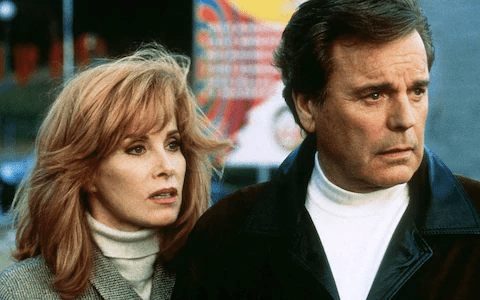
Jennifer Hart is the role that Powers was best known for. She starred with Robert Wagner as her husband Jonathan on Hart to Hart. They are a wealthy married couple similar to Nick and Nora Charles on The Thin Man who continued to get mixed up in murders wherever they go. The show was on the air for five years from 1979 to 1984. Stefanie received two Emmy nominations for her role of Jennifer Hart. In 1981 she was beat out by Barbara Babcock for Hill Street Blues and in 1982 she was beat out by Michael Learned for Nurse.

Wagner lobbied for Powers to be cast as his wife because she had worked with him in an earlier show of his in 1968, To Catch a Thief.

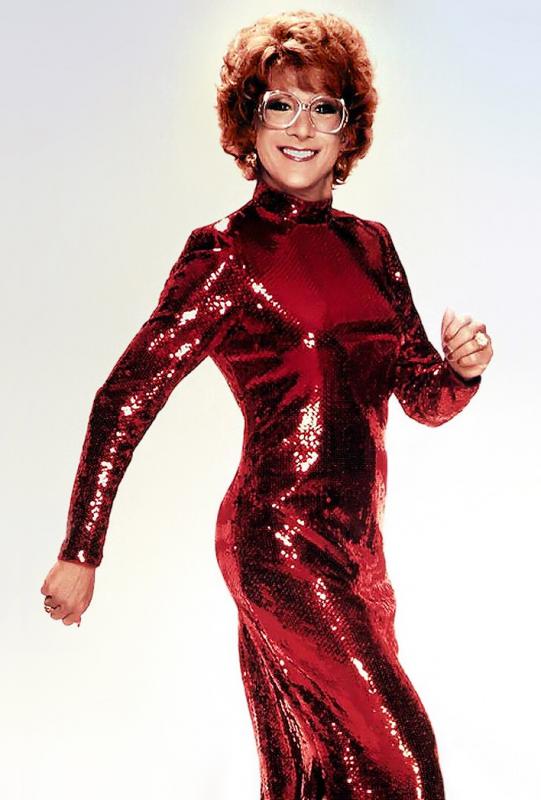
Several other actresses who were being considered for the role were Lindsay Wagner and Suzanne Pleshette. Fun fact, if you watch Tootsie with Dustin Hoffman, you will see him wearing a red, sequenced dress that was worn by Powers as Jennifer two years earlier in the episode “Color Jennifer Dead” in 1980.

After the show was canceled, they paired up again for eight made-for-tv movies about the Harts. The couple also starred in a stage production of “Love Letters” at the Chicago Theater in 1993.

Ironically, Powers was in the same ballet class with Natalie Wood and Jill St. John. While Powers played Robert Wagner’s wife on the show, Wood and St. John were married to him in real life.

In 1993 she tried marriage again with Patrick Houitte de La Chesnais. They were together for six years before divorcing.

Powers has kept busy in the last two decades. In 2003, she released a CD, “On the Same Page,” songs from the great composers. She is a polo player and was one of the first foreign members of the Royal County of Berkshire Polo Club; in 2005 she competed in the Joules United Kingdom National Women’s Championship which was held in Ascot.

In 1982, Stefanie founded the William Holden Wildlife Foundation and became a director of the Mount Kenya Game Ranch and Wildlife Conservancy in Kenya. She and Holden were passionate about wildlife conservation. She also works with the Cincinnati and Atlanta zoos.

Powers spends her time in residences in Los Angeles, London, and Kenya. She apparently speaks six different languages.

With Soulmate William Holden Photo:tumblr.com

After smoking for twenty years, Powers was diagnosed with alveolar carcinoma, a type of lung cancer. She underwent surgery to remove part of her lung in 2009.

She was cast in a movie, Prism, that is in pre-production currently. It was apparently inspired by true events—as imdb describes it, “the infiltration of the Sinaloa Cartel and the inner sanctum of Joaquin El-Chapo Guzman by a US task force detective who goes deep undercover to expose Chapo and his criminal empire.”

Powers has had an amazing career and an even more amazing life. She is able to live on three different continents, enjoys a variety of activities, has a purpose in her life, and found her soul mate. Her life could easily become a movie script but if she was not available, I’m not sure who they would get to play her.

Denver Pyle: Oil Was Just His Side Business

This month we are getting up close and personal with some of our favorite television stars. Today we are getting to know one of the most prolific actors to appear on classic television: Denver Pyle. Denver amassed acting credits for 263 different television series and movies during a fifty-year career.

Photo: Facebook.com

Denver was born Denver Dell Pyle in 1920 in Colorado, but not in Denver, in Bethune. His father was a farmer. His brother Willis became an animator who worked at the Walt Disney Animation Studios and UPA. Also, an interesting note is that Ernie Pyle, the famous journalist and war correspondent, was his cousin.

Photo: reddit.com

After his high school graduation, Pyle enrolled at Colorado State University but dropped out to pursue a show business career. He was a drummer for a band and then bounced around in different jobs including working in the oil fields, working shrimp boats in Texas, and as an NBC page. When WWII began, he joined the Merchant Marine. He was injured in the battle of Guadalcanal and received a medical discharge. Following his stint in the war, Pyle worked as a riveter at a Los Angeles aircraft plant. While there, he was spotted by a talent scout in an amateur theater production. Pyle decided he wanted a career in the entertainment business and trained under Maria Ouspenskaya and Michael Chekhov.

His first movie roles occurred in 1947 in The Guilt of Janet Ames and Devil Ship. He would continue polishing his film career for the next fifty years, with his last big-screen feature being Maverick in 1994.

When he was filming The Alamo with John Wayne in 1960, Wayne realized Pyle had an eye for photography. He made arrangements with the PR office to hire Pyle as the official set photographer for the film.

Photo: ladylavinia’s1932blog.wordpress.com

He received his first television role in 1951 in The Cisco Kid. He gravitated toward westerns and in the fifties would appear in many of them including Roy Rogers, Gunsmoke, The Range Rider, Hopalong Cassidy, Annie Oakley, The Gene Autry Show, The Adventures of Kit Carson, The Lone Ranger, The Adventures of Jim Bowie, and The Tales of West Fargo.

In 1955, Pyle married Marilee Carpenter. They had two children and divorced in 1970.

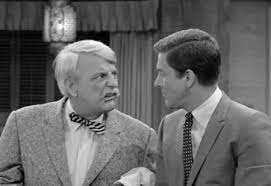
The sixties still provided many roles in westerns (The Life and Legend of Wyatt Earp, Have Gun Will Travel, Bonanza, The Rifleman, Gunsmoke, and Death Valley Days among others), but he also began appearing on dramas and sitcoms: to name a few, Route 66, The Dick Van Dyke Show, Dr. Kildare, The Twilight Zone, Perry Mason, and Gomer Pyle USMC.

On Dick Van Dyke Photo: sitcomsonline.com

In many of these shows, he returned nine or ten times to guest star in episodes. During the run of Perry Mason, Pyle would play a victim, a defendant, and a murderer on the show.

He received the first recurring roles of his career during this era on sitcoms. On Tammy, he played Grandpa Tarleton in 1965-66, and from 1963-66, he portrayed Briscoe Darling on The Andy Griffith Show. He only appeared in Mayberry six times but left a lasting impression on fans.

After playing Briscoe, Pyle invested in oil, buying oil wells thought to be near the end of their production. In the eighties, technology allowed the wells to produce more oil; Pyle made much more from oil than he did acting. However, he continued his career because he said, “I look at it this way, acting provides the cash flow I need for oil speculation, and besides that, I like acting. It’s fun.”

Doris Day Show Photo: thrillingdaysofyesteryear.com

His career did not slow down too much throughout the seventies and eighties. In the seventies, you could watch him in The Waltons, Streets of San Francisco, Cannon, and Barnaby Jones. The eighties featured him in The Love Boat, Murder She Wrote, Dallas, and LA Law.

During this time, he also received three other regular cast roles. From 1968-1970, he played Doris Day’s father in The Doris Day Show. From 1977-78. He was Mad Jack in The Life and Times of Grizzly Adams, and in 1979-85, he took on Uncle Jesse in The Dukes of Hazard. In fact, his last acting credit was for a made-for-tv movie where he once again portrayed Jesse in The Dukes of Hazzard Reunion! in 1997.

Dukes of Hazzard Photo: twitter.com

In 1991, Pyle married a second time. He wed Tippie Johnston and they remained married until his death. The couple did a lot of fundraising for charity including Special Olympics and Denver Pyle’s Children’s Charities. In addition, Pyle sponsored Uncle Jesse’s Fishing Tournament in Texas. For the ten years, he ran it, it raised more than $160,000 to support children’s needs.

In 1997, Pyle died on Christmas from lung cancer.

If you watch reruns from any decade of classic television, you will be very familiar with Denver Pyle. Although he was part of the cast in five very popular shows, it would have been fun to see him get the starring role in a show. It’s amazing to realize how many shows he was a part of. Considering he was in the television business for forty years and for almost fifteen of those years, he was busy being part of the cast of a weekly show, that left 25 years to amass 250 other series that he found time to appear on; that is almost one a month for 25 years—very impressive.

Gunsmoke Took 20 Years to Get Outta Dodge

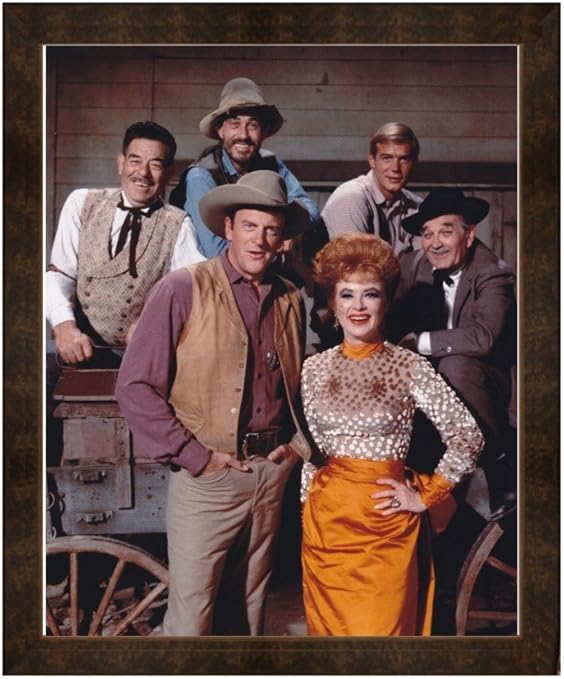
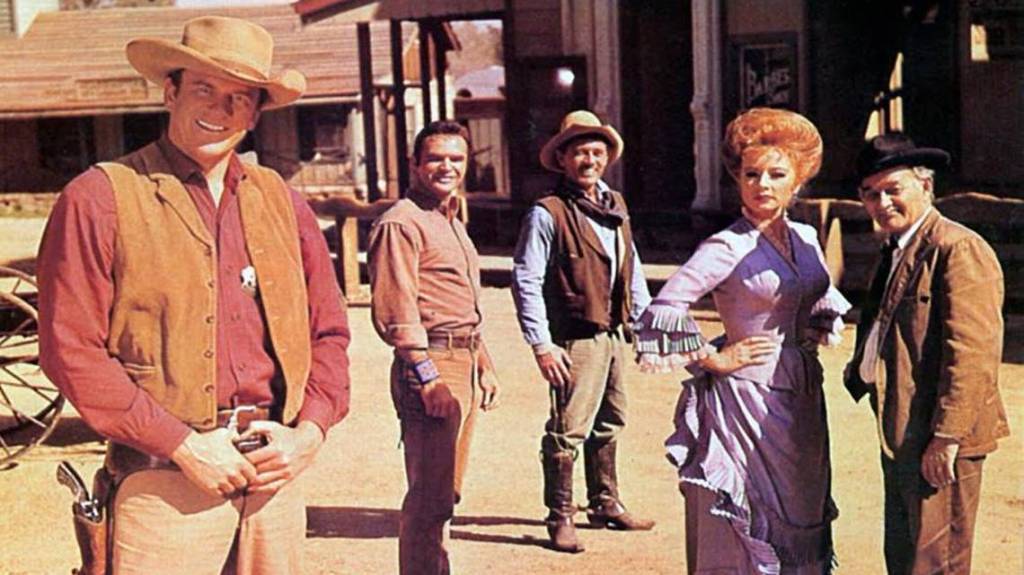
From 1952-1961, you could tune into Gunsmoke on your local radio to hear the adventures of the folks in Dodge City, Kansas created by Norman Macdonnell and John Meston. The primary characters were Marshal Matt Dillon (William Conrad), Doc Charles Adams (Howard McNear), Miss Kitty Russell (Georgia Ellis) and Chester Wesley Proudfoot (Parley Baer). Three years after its debut, the series shifted to television as well, running on CBS from 1955-1975, producing an incredible 635 episodes. For television, Macdonnell took over the reins as producer with Meston the head writer.

Amazon.com: Gatsbe Exchange Framed Print Gunsmoke Cast Marshal Dillon Kitty  Fester and Doc: Posters & Prints

James Arness was offered the role of Dillon on television. The network wanted John Wayne who turned it down. He did, however, introduce the first episode. Both Raymond Burr and Denver Pyle were also considered for the role. Matt Dillon spent his youth in foster care, knew the Bible well, and at some point was mentored by a caring lawman. He also talks about his time in the Army in some episodes.

Gunsmoke Cast Matt Dillon 8x10 Photograph – Vintage Poster Plaza
Photo: allposters.com

The role of Chester, with a new last name of Goode now, was played by Dennis Weaver. Chester was not only a loyal employee to Marshal Dillon, but he brewed a mean pot of coffee. He had a noticeable limp which apparently resulted from an injury in the Civil War. Weaver later said if he realized how hard it would be to film that long with a fake limp, he would have not used it. Other sidekicks to the Marshal included Ken Curtis as Festus Haggen, Burt Reynolds as Quint Asper (1962-65), Roger Ewing as Thad Greenwood (1966-68), and Buck Taylor as Newly O’Brien (1967-75).

Chester Good....Dennis Weaver Gunsmoke I've always loved that hat | Movie  stars, Actors, Tv westerns
Photo: pinterest.com

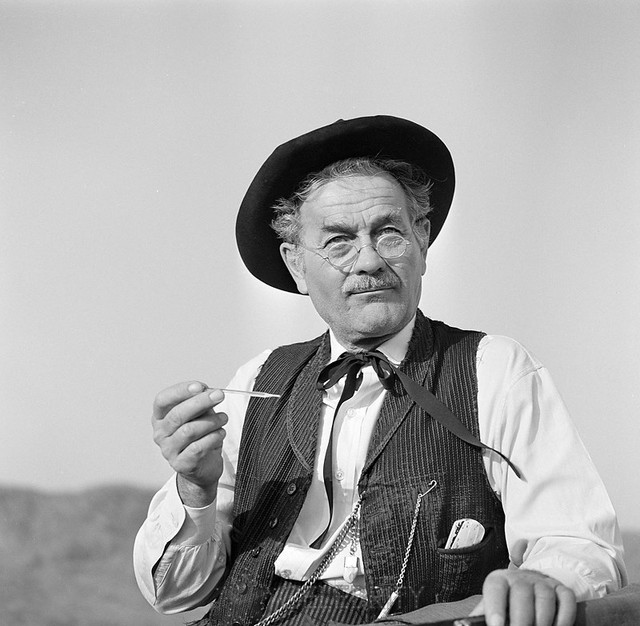
Doc was now Galen Adams and played by Milburn Stone. Doc was an interesting guy. He apparently was educated in Philadelphia and spent some time as a ship doctor on gambling boats on the Mississippi River where he met Mark Twain. His young wife died from typhus two months after their marriage. He finally settled in Dodge City after wandering a bit.

Gunsmoke photo 197 Milburn Stone
Photo: ebay.com

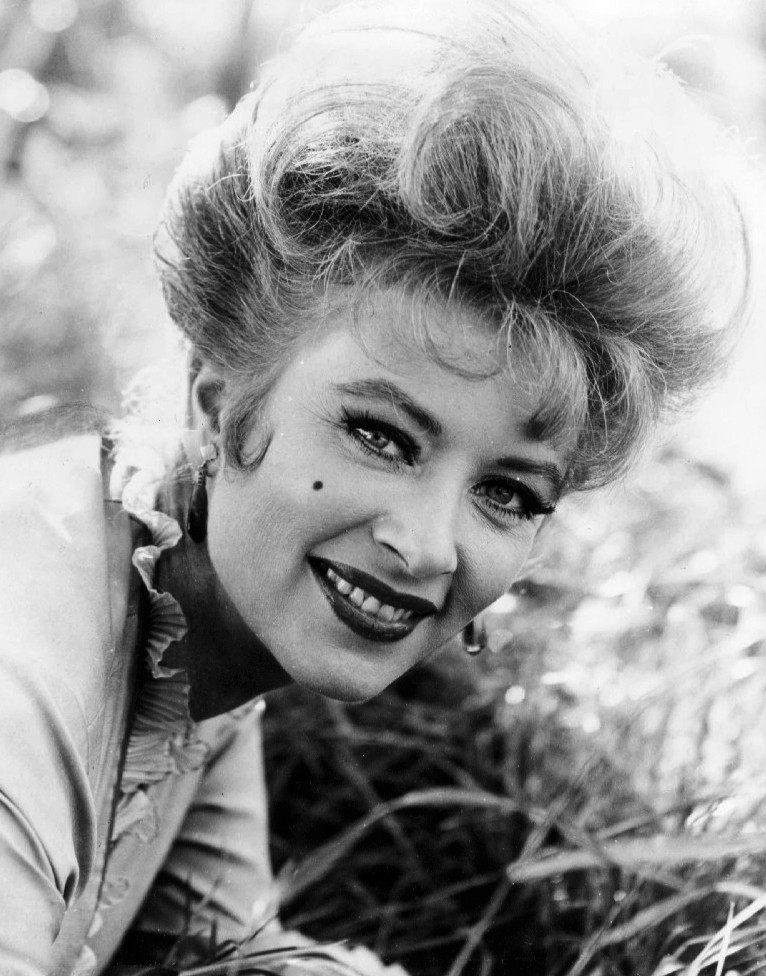
Miss Kitty was portrayed by Amanda Blake. Perhaps the closest bond she had with Dillon was that she also grew up in foster care in New Orleans. She was in more than 500 of the television episodes. In addition to her role as “entertaining men” in Dodge City, she is half owner of the Long Branch Saloon. Kitty and Matt obviously are attracted to each other and are very close. Kitty was a successful business owner and had a cold demeanor about professional matters but had a soft heart in other matters. Blake was ready to leave the show in 1974, and her storyline was that she finally returned to New Orleans.

Amanda Blake - Wikipedia
Photo: wikipedia.com

During its twenty-year stint, the show had some notable guest stars.  Just a few celebrities who graced the set include Jack Albertson, Ed Asner, James Backus, Beau Bridges, Charles Bronson, Bette Davis, Angie Dickinson, Richard Dreyfuss, Buddy Ebsen, Barbara Eden, Jodie Foster, Mariette Hartley, Ron Howard, June Lockhart, Jack Lord, Rose Marie, Howard McNear, Harry Morgan, Leonard Nimoy, Carroll O’Connor, Denver Pyle, Wayne Rogers, William Shatner, Cicely Tyson, and Adam West.

While the show portrayed the hard life in the West, it was also a warm and humorous celebration of a group of people making a new life together.

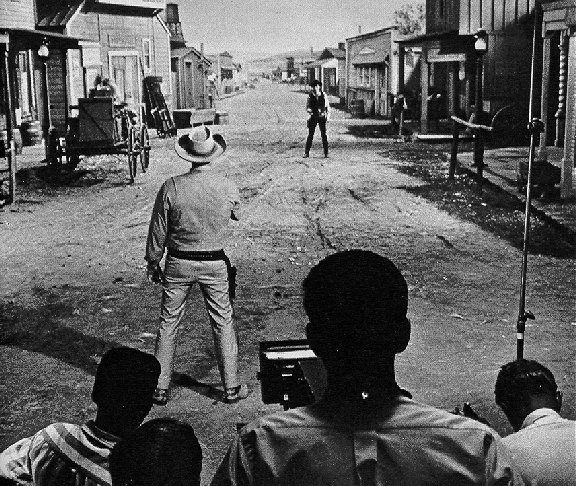
The opening of the show is a gunfight between Matt and a “bad guy.” It was shot on the same Main Street set used in High Noon, the Grace Kelly/Gary Cooper classic. The scene was dropped in the 1970s when a nonviolence emphasis was placed on television shows and the opening was Matt riding his horse.

Gunsmoke, The Great American Western
Photo: marksmannet.com

The show began its life on Saturday nights at 10 pm ET. In 1961 when the radio show left the air, the television show switched from half an hour to an hour. For season 13, it moved to Monday nights at 7:30 for four years, and then at 8 pm for four years. By season two it was a top ten hit, rising to number one where it remained until 1971.

The first seven seasons were sponsored by L&M cigarettes and Remington shavers.

The well-known theme from the show and radio was “Old Trails” composed by Rex Koury. Lyrics were later recorded by Tex Ritter in 1955 but not used in either radio or tv. Although I could not confirm it, I read several mentions that Koury was so busy, he actually penned the song while using the bathroom. William Lava composed original theme music for television; other composers who contributed music during the twenty years were Elmer Bernstein, Jerry Goldsmith, Bernard Herrmann, Jerome Moross, and Franz Waxman.

Photo: amazon.com

Surprisingly, the show was only nominated for fifteen Emmys during its reign. Of those, there were only three wins: one for best dramatic show in 1957, one for Dennis Weaver as supporting actor in 1958, and one for Milburn Stone in 1967.

After surviving the rural purge Paley conducted, the cast thought they were not in jeopardy and were all stunned by the cancellation in 1975. CBS had not prepared them that they were debating ending the show. They assumed the show was continuing till it had 700 episodes and many of the stars read about the cancellation in the trade magazines.

The show has appeared in syndication in three different versions. One package is half-hour episodes from 1955-1961, one package contains hour-long black and white episodes from 1961-1966, and the final package contains one-hour color episodes from 1966-1975. Me TV currently airs the one-hour color shows.

Photo: wichitaeagle.com

Arness would appear in five made-for-television movies after the show went off the air. In 1987, Gunsmoke: Return to Dodge featured Blake as Miss Kitty and Taylor as O’Brien. Stone had passed away in 1980, so his role was not part of the new film. Gunsmoke: The Last Apache premiered in 1990 without Blake who had died in 1989. In 1992-1994, Gunsmoke: To the Last Man, Gunsmoke: The Long Ride, and Gunsmoke: One Man’s Justice would appear before the series rode off into the sunset for good.

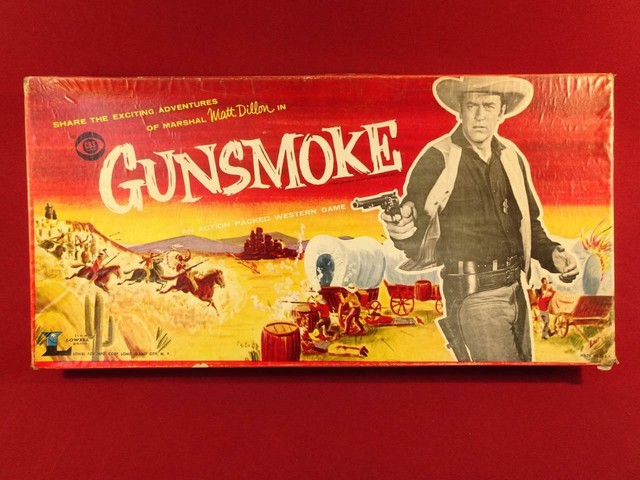
After being on television so long, it’s not surprising that there were a lot of merchandising opportunities for the show. In addition to typical items like lunch boxes, there was Gunsmoke cottage cheese. A Matt Dillon figurine was available with his Horse Buck.

Picture 2 of 8

There were also board games, puzzles and a variety of books including numerous paperbacks and comic books from Dell and Gold Key.

1950s Gunsmoke lunch box with thermos. Vintage Gunsmoke Matt Dillon U.S.  Marshall metal lunchbox with thermos. Lunchbox depicts James Arness as Matt  Dillon draw…

Fans had an affinity for the show. During its time on the air more than thirty westerns came and went, but Gunsmoke continued, in the top ten for most of its two decades. Few series have their own museum, but you can visit Boot Hill Museum in Dodge City to learn all about the show. Furniture from the series is included, as well as signed photos from the cast and other memorabilia including one of Miss Kitty’s dresses.

When you hear someone say “Get outta Dodge,” you can fondly remember Gunsmoke which is where this phrase began. Perhaps being cancelled was a blessing in disguise. After two decades, maybe it was time to get outta Dodge, maintaining the high standards and high ratings that made the show such a long-running success.

Laughing Every Day with Beverly Archer

As we continue looking at some of our favorite actresses, today we get to spend some time with Beverly Archer. Beverly was born in Oak Park, Illinois in 1948 but grew up in California.

See the source image
Photo: behindthevoiceactors.com

Beverly knew she wanted to enter the acting profession and studied at both San Francisco State University and UC Santa Barbara where she majored in drama. But once she graduated, she decided acting wasn’t for her. She worked for Wells Fargo for two weeks and then accepted a job with Abbey Rents in Los Angeles where she worked for three years. She says she was lonely and not having fun, so she started taking acting classes again and working with theater groups.

Unlike a lot of actors who have to spend decades before nabbing their first series, the first two television roles Beverly received were regulars. However, Beverly paid her dues working in commercials before appearing on a series. She said they gave her confidence that she could make a living acting, so she was able to quit her job.

See the source image
The Nancy Walker Show
Photo: memorabletv.com

In 1976, she appeared on The Nancy Walker Show. She played Nancy’s daughter,  Lorraine. In a recent interview with Sitcoms Online, Beverly said she ran into a guy she had done some theater with who had become an agent. He signed her and got her the audition for the show. Archer was reading the script with several other actresses but apparently, she was the only one who found the scene very funny. Nancy then read with her and the producers felt they could be family. She says she was in the right place at the right time.

See the source image
With Oliver Clark on We’ve Got Each Other
Photo: sitcomsonline.

Unfortunately, the show only lasted one season, but in 1977, Beverly was offered the role on We’ve Got Each Other. The plot for this show was that Stuart Hibbard (Oliver Clark) worked at home, cleaning and cooking while his wife Judy (Archer) worked in LA for photographer Damon Jerome (Tom Poston). Stuart had to deal with domestic situations and his next-door neighbor Ken (Martin Kove) while Judy dealt with work situations and secretary Donna (Renn Woods). Like her first show, this sitcom only lasted one season as sell.

In 1976 she accepted another permanent role as Mrs. Robert Bernard. She met her husband through an acting teacher. He was also an actor, doing a lot of voice-over work.

During the 1980s, she would receive offers to play recurring characters on four shows.

See the source image
Photo: tumblr.com

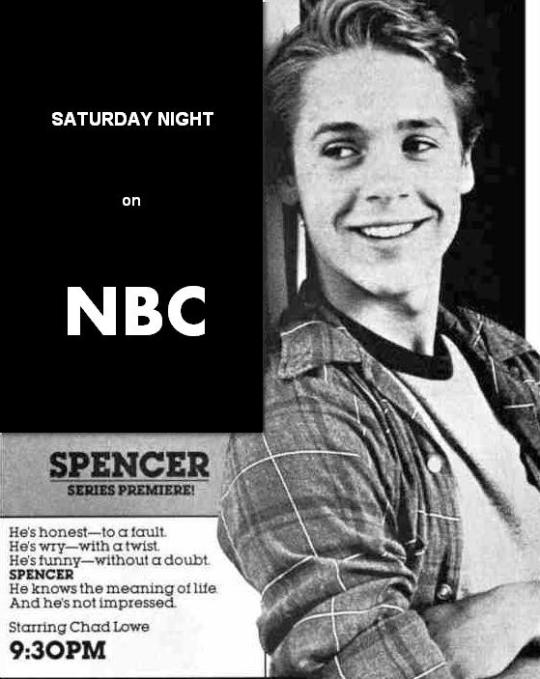
On Spencer, she played Miss Spier, a divorced friend of Spencer’s mother. Most episodes show Spencer, played by a very young Chad Lowe, humorously dealing with the drama of high school.

In 1985 she was on ten episodes of Washingtoon. This is a little-remembered show that aired on Showtime. The plots centered around a senator who wasn’t too bright and Archer was his secretary on the show.

In 1988, she appeared on ALF as neighbor Mrs. Byrd.

See the source image
Photo: sitcomsonline.com

One of her best-known roles occurred on Mama’s Family. Beverly portrayed Iola Boylen from 1986-1990. In the Sitcoms Online interview, Archer talked about being on Mama’s Family. She explained that the network version was cancelled, and Joe Hamilton decided to recreate it in syndication. At that time, no one really did syndication shows. Archer says he was a pioneer in the field. Betty White and Rue McClanahan moved over to Golden Girls, so there was a gap for a new character and Archer was hired for the syndicated show. She says some of her favorite moments on the show were working with Ken Berry. She described him as the funniest person on the planet.

See the source image
Photo: tumblr.com

Beverly tried her hand at writing and received credits for scripts for Mama’s Family, Working Girl and ALF.

In addition to these regular roles, she guest starred on a variety of shows, including It Takes Two, Family Ties, The Fall Guy, and My Sister Sam.

See the source image
Photo: allstarpics.famousfix.com

During the decade of the nineties, Beverly was again lucky enough to gain a recurring role on five additional shows: Married . . . with Children, Aahh Real Monsters, Jumanji, The Young and the Restless, and Major Dad. On Married . . . with Children, she was a sexually repressed librarian who falls in love with Bud.

On Major Dad, she played the role of Alva Bricker, gunnery sergeant. During an interview with Jerry Buck in 1992, Archer says she used John Wayne for her role model for Alva because he was the only Marine she could remember. Describing her character on the show, Archer says “She’s the best Marine on the base. I think the driving force behind the characters is that she’s the best. But the personal stuff is fun to play. She has a wild sex life, but the crux is that she’s incredibly efficient as administrative chief of the commanding general’s office.”

See the source image
Photo: ebay.com

After portraying so many school-marm types of characters, she was happy to have a different sort of character to work with. Beverly says Gunny has a macho-style to her femininity. She treated relationships the way men typically did. She didn’t want to be tied down to one man.

Beverly joined the cast in season two. Once again, she benefitted from the fact that several characters from the first season were let go. The show was produced by Rick Hawkins who also worked with her on Mama’s Family. Archer loved the fact that Gunny was so different from Iola on that show.

She also guest starred on nine shows, including Full House, Love and War, and Grace Under Fire throughout the 1990s.

See the source image
Photo: avelyman.com

In 1995 she was part of the fun, satire, The Brady Bunch Movie, playing a teacher who gets caught stealing.

Beverly accepted that she was typecast in many of her roles. As she described it, “Nobody’s going to let me play a normal human being, certainly not a lead. Certainly not a normal next-door neighbor. I’m there to add a character twist. That’s my living and with this mug, what do you expect?”

See the source image

Beverly retired in 2002. Beverly may have retired, but she was not sitting around the house twiddling her thumbs. She opened an antique shop in the Catskills in upper New York which she ran for about eight years, spending half the year in New York and half in California. She finally moved the shop to California to eliminate the bicoastal living.

Photo: Xiem Gallery

She also wanted to do a lot of traveling. Now she is sculpting with clay and getting to travel. She studied her craft in Italy. In 2008, Beverly had an exhibit at the Xiem Gallery in Pasadena, CA, entitled “2008: A Year of the Pig: A Beginner’s Journal.” The exhibit included some of her thoughts on her art:

“There was so much to learn.
Despite the fact that I began with 365 pigs I never thought back then that I would be able to count on two hands the number of pieces I have made that are not critters. I cannot seem to divorce myself from them. Nor do I want to.
Our relationship to other animals is quite a complex one, of course. We tend to imbue them with attributes and feelings we admire. We find our domestic companions delightful, amusing, courageous and intelligent…..all attributes we would like to see in ourselves. We even find the critters we eat to be companionable as well as useful.
Perhaps I will branch out eventually. Perhaps to wild animals. We think them fascinating, noble and mysterious. And yet, we threaten them, hunt them or ignore them and fail them constantly.
One can’t know for certain but I imagine that in years hence I will still be working on the animal form.
There is so just much to learn.”

While I’m sad, her retirement took her out of our living rooms, she seems to have found a wonderful new career. Since writing my blog, and writing in general, has become my almost-retirement career, I understand the passion and satisfaction she is experiencing in her new art life.

See the source image
Photo: famousbirthdays.com

When asked about the type of roles she wanted to play or would like to have if she had not retired, Beverly responded that “I loved doing comedy, and there is no greater gift than coming to work laughing every day.” I hope she is still laughing every day, and I thank her for the many days of laughter she provided for us.

Verrry Interrresting!

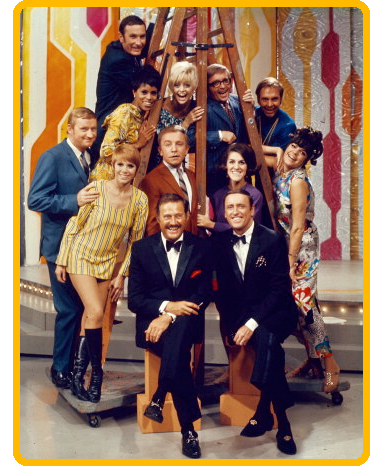
Occasionally, a show is so entrenched in the time and culture it debuts in, it becomes almost impossible to describe or understand away from its original setting. Dan Rowan and Dick Martin were nightclub comics who co-hosted a special called Laugh-In in 1967.  The name was a play on words based on the love-in’s and sit-in’s happening in the 1960s.  The special was so popular it was turned into a weekly series. I think of Laugh-In as Sesame Street for adults.  Both shows debuted in the late 60s and had a rapid-fire approach, continually moving on to the next segment so the viewer would not get bored. The show captured the counterculture movement and the lime green, turquoise, fuschia, deep orange, bright yellow, and paisley flowers kept our eyes moving as quickly as the jokes did. The show lasted six seasons.

laughin1

Regular cast members who went on to other careers included Ruth Buzzi, Gary Owens, Alan Sues, Arte Johnson, Henry Gibson, Lily Tomlin, Richard Dawson, Jo Anne Worley, Goldie Hawn, Judy Carne, Dave Madden, and Flip Wilson.

Numerous celebrities flocked to the show.  Movie stars that were reeled in included John Wayne, Jack Benny, Peter Lawford, Zsa Zsa Gabor, Charles Nelson Reilly, Debbie Reynolds, Rock Hudson, Jack Lemmon, Edward G. Robinson, Sally Field, Orson Welles, and Rita Hayworth.  Noted musicians included Sammy Davis Jr., Dinah Shore, Johnny Cash, Perry Como, Liberace, Bing Crosby, Cher, Rosemary Clooney, and Liza Minelli. Sports stars tackled the chore including Joe Namath, Wilt Chamberlin, Sugar Ray Robinson, and Howard Cosell.  Comedians who laughed their way on the show included Rich Little, Don Rickles, Bob Hope, Bob Newhart, Paul Lynde, and Carol Burnett. Classic tv stars who accepted starring roles were Tim Conway, Carl Reiner, Steve Allen, Jim Backus, Ernest Borgnine, Eve Arden, Andy Griffith, Desi Arnaz, and Wally Cox.

The format rarely changed from week to week.  Rowan and Martin opened each show with a dialogue; Rowan acted as the straight man, and Martin took on the gullible role. Then the regular cast, along with celebrities, danced against a psychedelic background, firing off one-liners and short gags. Comedy bits, taped segments, and sketches filled in the rest of the hour and always ended with Rowan telling Martin to “Say goodnight, Dick” and Dick replying, “Goodnight Dick.”

Some of the regular features were:

laughinn

The Cocktail Party where the cast stood around spouting politically and sexually suggestive jokes.

Letters to Laugh-In where the cast read letters.

ROWAN AND MARTIN'S LAUGH-IN,  Teresa Graves, Pamela Rodgers, 1969-1970.

It’s a Mod, Mod World where go-go dancers danced in bikinis with puns and word play phrases painted on their bodies.

farkel

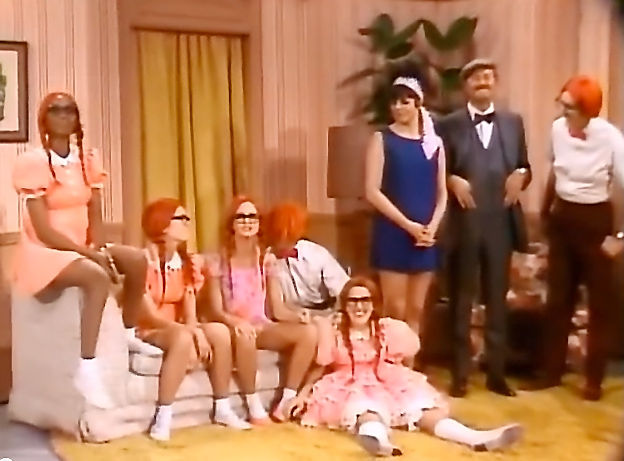
The Farkel Family about a group of red-headed, freckled family members.

fickle

The Flying Fickel Finger of Fate Award where dubious achievements were celebrated.

Laugh-In Looks as the News was comparable to the Saturday Night Live news sketches of today.

New Talent Time showing various weird skills.

Many of the regular cast members had their own skits that were repeated during the series’ run:

carne

Judy Carne was always tricked into saying “Sock it to Me” which then caused her to get doused with water, fall through a trap door, or endure some other indignity. Sometimes celebrities ended up being the ones to say “Sock it to me,” the most famous being Richard Nixon when he was campaigning for president.

buzzi

Arte Johnson played Tyrone, an inappropriate senior citizen who tries to seduce geriatric Ruth Buzzi as Gladys, forcing her to eventually hit him with her purse.

laughinc

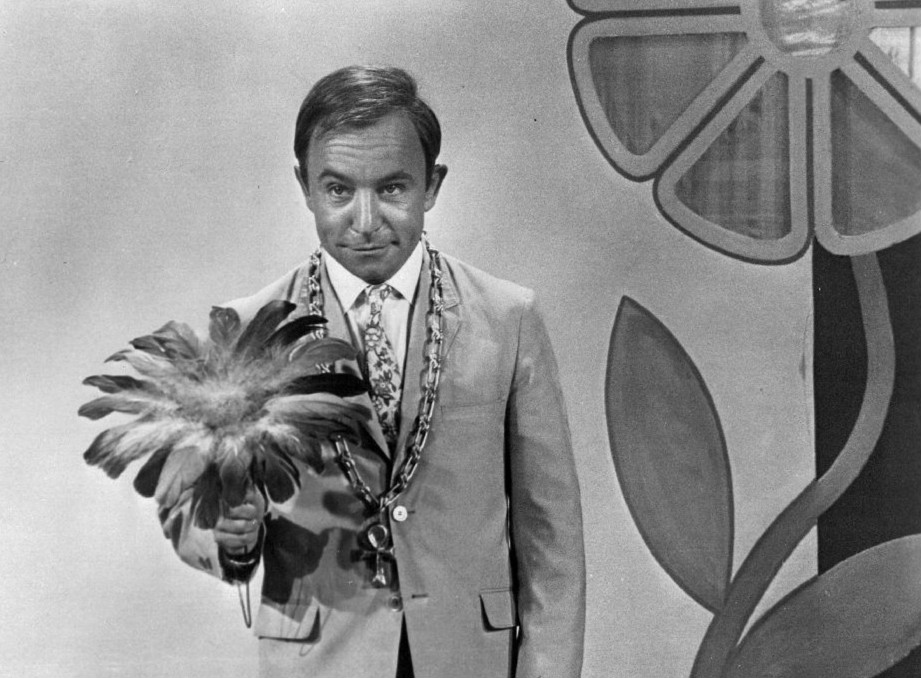
Henry Gibson came on stage holding an oversized paper flower, reciting poetry.

Lily Tomlin performed skits as Ernestine, a telephone operator or Edith Ann, a young girl sitting in a rocking chair. (Personal note:  When I was in 4th grade, I performed an Ernestine and an Edith Ann skit for our talent show.  Why a 9-year-old was watching Laugh-In and the school approved the skits, I can’t say, but I remember getting a lot of compliments.  And Lily Tomlin didn’t sue me for stealing her material!)

sues

Alan Sues portrayed Uncle Al, a children’s show host, who was short tempered and often in bad shape from his late partying nights.

laughinh

Flip Wilson was Geraldine.

laughin6

Jo Anne Worley would say “Bor-ing” in the midst of jokes.

laughing

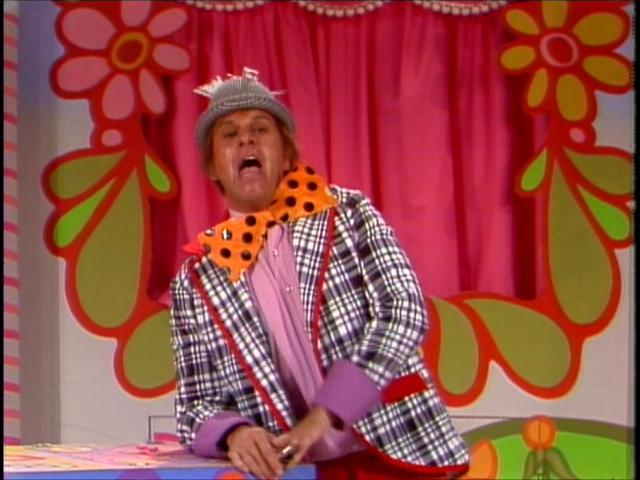
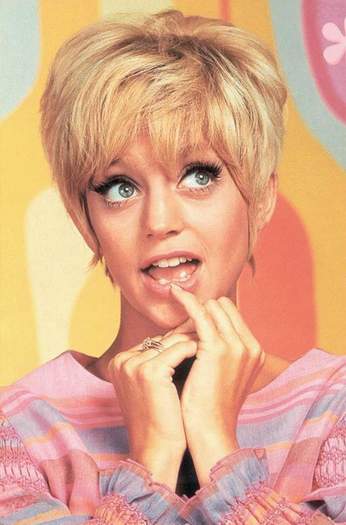
Goldie Hawn as the ditzy blonde.

The series also became known for some of its catch phrases including “Look that up in your Funk & Wagnalls,” “You bet your sweet bippie,” “Beautiful downtown Burbank,” “Is that a chicken joke?,” “Sock it to me,” “Here come de judge,” and “Verrrry Interesting.”

The show was one of the highest rated shows in the late 1960s. It was in the top 4 of the top 40 shows for its entire run. It won Emmy and Golden Globe awards. The Nielsen polling determined it was the most-watched show in seasons 1 and 2.

The show had its own magazine for a year.  Trading cards were sold with catch phrases and images from the show. Several records were produced capturing the humor of the time.  There was even a set of View-master reels made, as well as lunch boxes and other memorabilia.

laughinrev

Laugh-In debuted fifty years ago, but still feels new and edgy. Because the show has not been syndicated in re-runs, it is hard for the current generation to imagine how very different this show was from anything else that appeared on television before it.  The closest show to capturing any of its essence since then is Saturday Night Live.  This was a time when everything was changing: civil rights, Vietnam, women’s lib, the hippie lifestyle, psychoactive drugs, anti-authoritarianism, freedom of speech and assembly, and environmental concerns, especially littering and pollution.

The Generation Gap was a real concept in the 1960s but this show might have come as close as anything else to bridge that gap. Families sat down together to watch the show. Many of the phrases still have a life of their own decades later even thought decades of kids have never seen the show.  Plan your own little sit-in when you check out a couple of the you-tube videos to get a flavor of what the series was like.