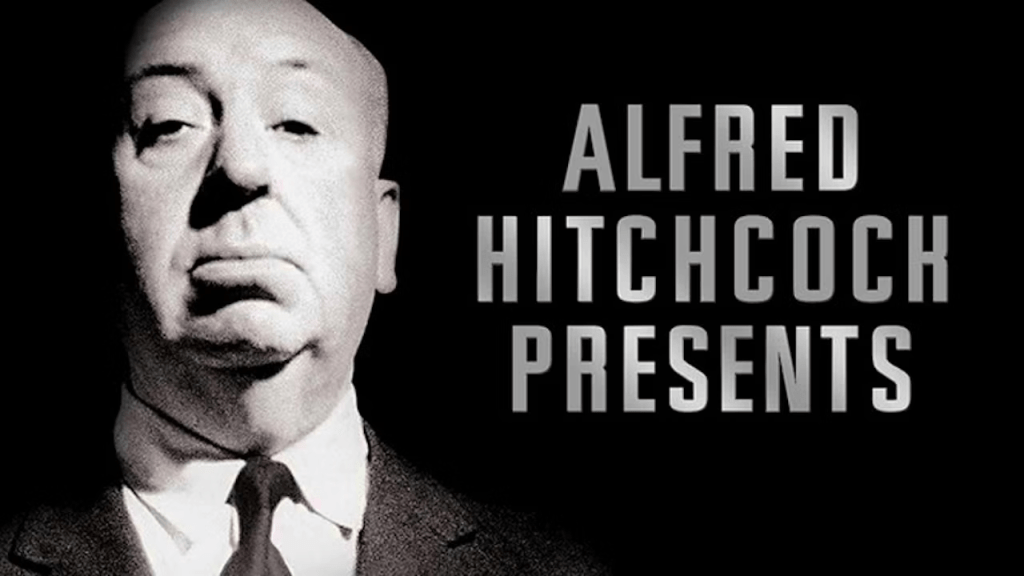
Good Evening Alfred Hitchcock

📷noizetv.com

In October, we are tackling a blog series on Eerie Shows. It would be almost impossible to not include Alfred Hitchcock Presents which was on television for a decade.

The show premiered in 1955. Hitchcock had been directing films for more than three decades at that time. The series experienced several changes. It began as Alfred Hitchcock Presents on CBS but would switch both nights and networks during its run. In 1962 it became an hour-long show and was called The Alfred Hitchcock Hour.

Many fans recall the opening. There is a line-drawing of Hitchcock’s profile with the “Funeral March of a Marionette” playing in the background. Hitchcock appears at the edge of the screen and walks to the center where he fades into the caricature line drawing. Then he said, “Good evening.” The silhouette was one that Alfred drew. He began his entertainment career illustrating title cards for silent movies.

📷peacock.com

Hitchcock himself directed 17 of the episodes of the series. Two of those were nominated for Emmy awards: “The Case of Mr. Pelham” in 1955 with Tom Ewell and “Lamb to the Slaughter” in 1958 with Barbara Bel Geddes.

Hitchcock’s job during this series was to introduce the story and then to wrap it up at the end. Both the openings and closings were written by James B. Allardice. Allardice wrote for 38 different shows, many of them very popular series in the fifties and sixties. Norman Lloyd, who produced the show and appeared in five episodes, said Hitchcock respected Allardice so much that he never even changed a comma that he wrote.

The network demanded that if a character got away with murder during the show, then Hitchcock would let them know during the closing that he was eventually brought to justice; in the TV Guide, Hitch described this as “a necessary gesture to morality.” Lloyd gave an example of this in a Television Academy interview. In one episode, a woman kills her husband with a frozen lamb’s leg and gets away with it. At the end of the show, Alfred explains that she later remarried and tried the same trick again but when she took out the leg and hit her husband with it, it was not frozen enough, so he caught her in the act and turned her in.

📷genresnaps.com

The episodes were not your average thriller shows. They included drama, suspense, and humor. Audiences never knew just “who done it” till the end.

The show debuted on CBS on Sunday nights for five years, up against drama anthologies for two years and then competing with The Dinah Shore Show for three years. For the next two seasons it moved to NBC on Tuesday nights. It aired against The Many Loves of Dobie Gillis on CBS those years and against Wyatt Earp on ABC. For three months it went back to CBS on Thursdays before moving to Fridays on CBS the next season with The Price is Right and 77 Sunset Strip. The ninth year found it on CBS on Fridays with little competition and the final year it showed up on NBC’s schedule on Mondays against Ben Casey. I could never find the reason for cancelling the show. I’m assuming ratings began to decline but if anyone knows, I’d love to hear it.

NBC chose not to air a 1962 episode called “The Sorcerer’s Apprentice” because the sponsor felt the ending was too gruesome. In the episode, a magician’s helper is supposed to help in a trick where he “sawed” a woman in half, but he doesn’t realize he truly saws her in half.
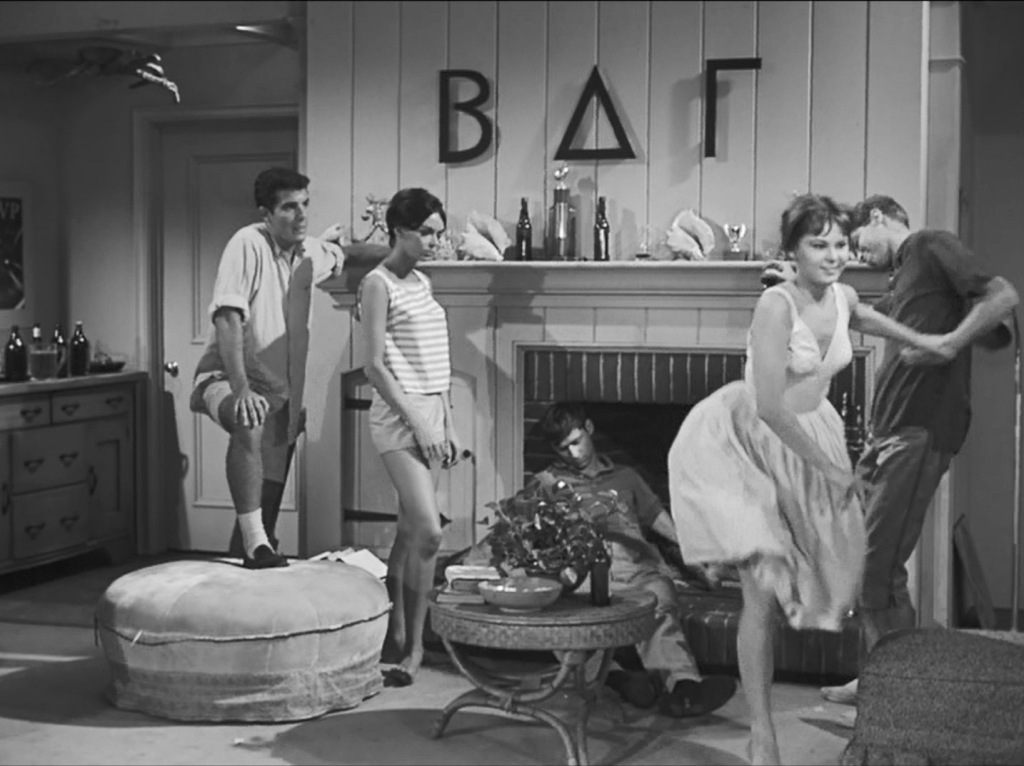
📷thecompletehitchcock.com

As you might guess, with a new story every week, many celebrities appeared on the show including Charles Bronson, Bette Davis, Bruce Dern, Robert Duvall, Clint Eastwood, Peter Falk, Joan Fontaine, Peter Lorre, Walter Matthau, Steve McQueen, Vera Miles, Claude Rains, Robert Redford, Burt Reynolds, Thelma Ritter, George Segal, and Jessica Tandy.

In addition to the Hitchcock-directed episodes, the show received Emmy nominations for Best Series four times. In 1956 it was up for Best Action or Adventure Series, but it lost to Disneyland. The following year found the show in the Best Series – Half Hour or Less category, but it lost to The Phil Silvers Show. 1958 found it in the category of Best Dramatic Anthology Series. You would think that would be a no-brainer win for this show, but it lost to Playhouse 90. It had its fourth category nomination in 1959 as Best Dramatic Series – Less Than One Hour and lost to Alcoa Theatre. I guess the Emmy committee had a hard time determining categories for a few years.

In a different twist, NBC tried to air the show again in 1985. Hitchcock had passed away five years earlier from renal failure. A made-for-TV-movie combined new stories with colorized segments from the original show. It lasted a year before NBC canceled it. USA picked it up for three more seasons.

📷screentunes.com

The original show can still be seen on a few different networks including MeTV.

With Hitchcock’s popularity in 1955, it’s no wonder that this show was a successful series for a decade. The episodes were well written, and they had a wonderful cast of actors. Many people probably tuned in just to see Hitchcock, and his personality was larger than life, even if his behavior was a bit despicable at times. One of Alfred’s quotes about the show was that “television has brought murder back into the home – where it belongs.”

The Love Boat: Overflowing with Celebrities

📷themeanderingtraveler.com

This month in Casting for Celebrities, we are looking at some of the shows that used television and movie stars in their casts every week. The Love Boat was on the water from 1977 until 1986. An extension of the show, The Love Boat: The Next Wave, was on from 1998-1999 with many of the original characters.  There were also four three-hour specials aired in 1986, 1987, and 1990.

If you are one of the five people in America that have never seen the show, it aired on ABC on Saturday nights. It was another Aaron Spelling production like Fantasy Island which we discussed last week.

A book, The Love Boats, by Jeraldine Saunders who was a cruise director for a passenger cruise line was used as the basis for the original made-for-tv movie in 1976.

The stars on this show played guests (and occasionally themselves) on the MS Pacific Princess run by Captain Merrill Stubing (Gavin MacLeod). His crew included Dr. Adam Bricker (Bernie Kopell), Purser Gopher Smith (Fred Grandy), bartender Isaac Washington (Ted Lange), and cruise director Julie McCoy (Lauren Tewes). In season three, Stubing’s daughter Vickie (Jill Whelan) came aboard. During the last three seasons, photographer Ace Covington Evans (Ted McGinley) joined the group and Judy McCoy (Patricia Klous) who was Julie’s sister took her place for the final two seasons.

📷julienslive.com

Lucky crew, this series was sometimes set on board the Pacific Princess or the Island Princess, depending on their schedules. A handful of other boats were used in several episodes and movies as well. Many of the shows were filmed in California. Unfortunately, both the Pacific Princess and the Island Princess were sold for scrap in 2013 and 2015 respectively.

Each episode contained several stories and all three titles are combined in one series title; for example “Captain & the Lady/Centerfold/One If by Land.”

Jack Jones sang The Love Boat theme. (Note: Dionne Warwick recorded the song for the final season, but I never learned why.) The lyrics were written by Paul Williams and the music was composed by Charles Fox. The words were:

Love, exciting and new
Come aboard, we’re expecting you
Love, life’s sweetest reward
Let it flow, it floats back to you

Love Boat soon will be making another run
The Love Boat promises something for everyone
Set a course for adventure
Your mind on a new romance

Love won’t hurt anymore
It’s an open smile on a friendly shore
Yes, love
It’s love

Love Boat soon will be making another run
The Love Boat promises something for everyone
Set a course for adventure
Your mind on a new romance

Love won’t hurt anymore
It’s an open smile on a friendly shore
It’s love, it’s love, it’s love
It’s the Love Boat, it’s the Love Boat

📷reddit.com

For its first seven seasons, the show was very successful. It usually ranked in the top twenty. However, after falling out of the top thirty and then the top fifty the next year, the show was canceled after nine years.

Spelling offered McLeod the role of Captain Stubing. Ted Lange did not have to audition. He was offered the role after being seen on a previous show, That’s My Mama. Spelling’s first choice for Dr. Bricker was Dick Van Patten but because he was involved with Eight is Enough, Kopell got the role. Lauren Tewes was chosen from a group of more than a hundred actresses auditioning for the role.

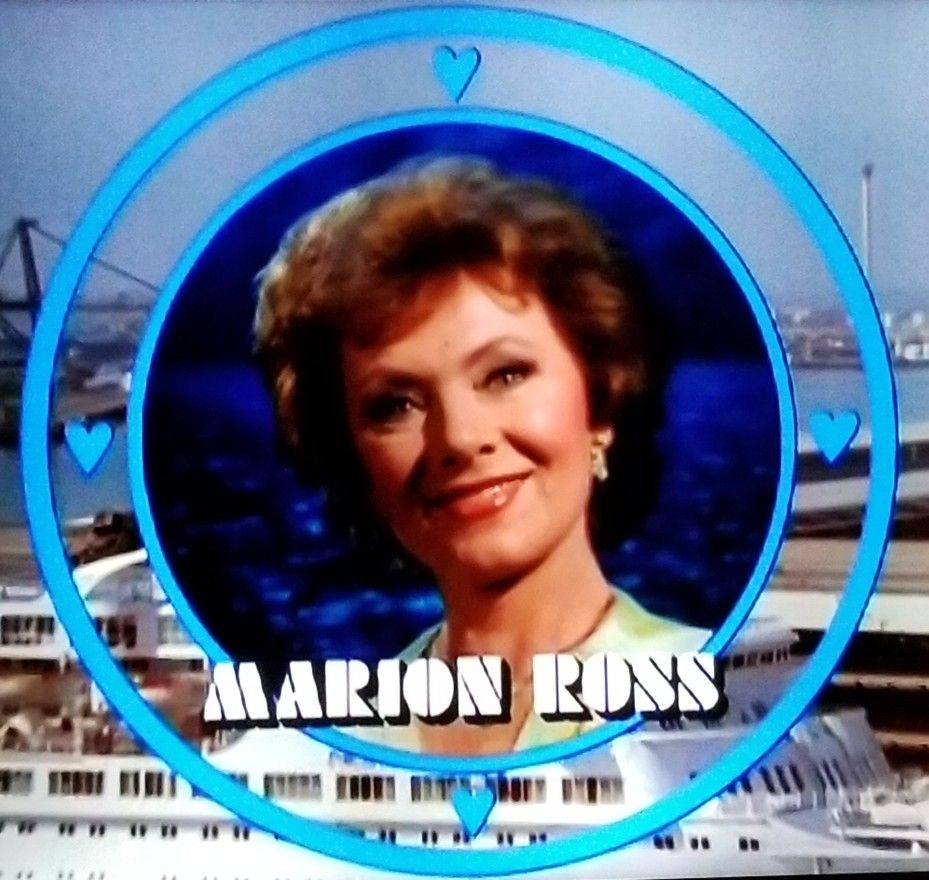
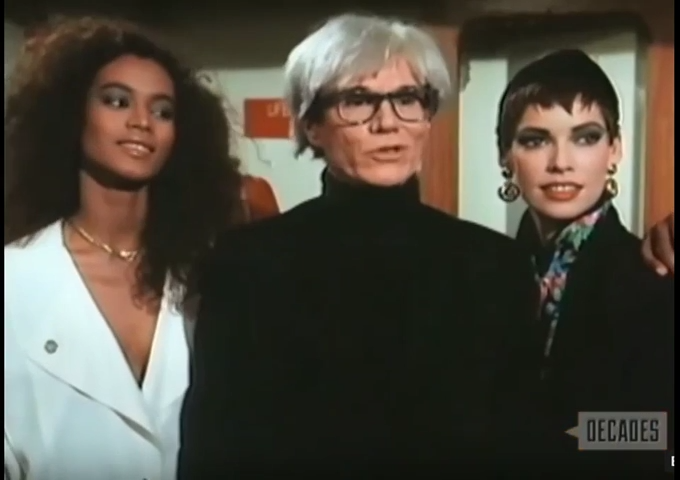
More than 550 guest stars appeared on the show during its run. There were movie stars like Gene Kelly, Ginger Rogers, and Joan Fontaine. There were Broadway stars including Ethel Merman and Robert Goulet. TV stars abounded like Don Adams, Lorne Greene, Florence Henderson, and Eve Arden. Music was represented by The Pointer Sisters, Cab Calloway, and Janet Jackson. Sports stars were on board including Dick Butkus and Joe Namath. And then there were the celebrities like Bob Mackie and Andy Warhol. Marion Ross holds the record with 14 appearances.

📷boingboing.com

For some reason, The Love Boat does not have the same “time warp” problems as Fantasy Island. It’s been translated into more than 29 different languages and appeared in more than 93 countries. It’s very popular in syndication.

Before the Hallmark Channel debuted, this is where you went to watch people fall in love every week. It’s hard to remember how many people just happened to run into an ex on the ship or meet the perfect soul mate after being mistreated.

Apparently, the cast is still close. In a recent interview, Lange said his experience on The Love Boat was life changing. He also said that the beauty of the show was that they are all still friends. “I just directed Fred in ‘Give ‘em Hell Harry’ in Indiana and I’m going to New York to stay with Bernie and his wife. . . . Bernie is more like my brother, and Fred is like my best friend.”

Whelan described McLeod as an “incredible, protective man. He was just like a dad.”

If you need a reminder that love is still alive and well, you can check out the show on DVD or on ME TV on Sundays.

Cannon: The Cultured Detective

This month we have a new series, “One-Name Detectives.” Today we are looking at a show that was on for five years in the early seventies: Cannon.

Cannon (TV series) - Alchetron, The Free Social Encyclopedia
Photo: alchetron.com

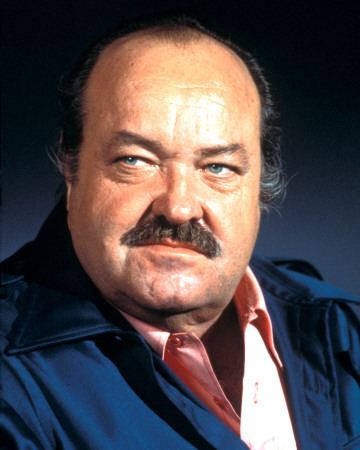
Cannon was produced by Quinn Martin and aired from 1971-1976 on CBS. Edward Hume developed the show and was also known for his creation of Barnaby Jones, The Streets of San Francisco, and Toma. Unlike most detective shows, Frank Cannon (William Conrad) was the only member of the cast. There were a few recurring characters including policeman Jerry Warton (Martin Sheen), Lt Paul Tarcher (Charles Bateman), and Officer Bill Murray (Arthur Adams).

Cannon is a detective in Los Angeles.  His backstory is that he was a veteran of the Korean War and a former policeman for the Los Angeles Police Department. He quit the force after his wife and young son were killed in a bomb attack meant for him. He was a man of many talents.  Not only was he street-smart, but he had at least one other college degree, knew several languages and studied science, art, and history. 

random thoughts for thursday november 10th, 2011 – COUNTRY LEGENDS JUKEBOX
Photo: wordpress.com

Cannon was overweight and often made jokes about his size, but when he couldn’t get out of a bad situation with his quick wit, he could hold his own fighting the bad guys. Cannon was also a gourmet cook and wine expert and often entertained friends.

Most of the plots involved Cannon solving crimes for private clients, insurance companies or former police colleagues. Cannon was known for his mobile phone in his Lincoln Continental. Car phones were not very common then, but I do remember an episode of That Girl from the early seventies that also featured a Motorola car phone. Cannon usually asked an operator to dial his call while he was driving.

The show debuted in a two-hour movie. The series was picked up and placed on the Tuesday night schedule, following Hawaii Five-0. Season two found the show on Wednesday nights at 10 ET and then at 9 ET for season three where it remained. The first three seasons the show was in the top 20 but in season five, it came in at 39 and was canceled.

Season one featured a short scene before the opening credits giving a preview of the show. For the remaining seasons, the preview was not included.

A lot of famous people stopped by Cannon’s office during this five-year people.  Guest stars included Willie Aames, Whitney Blake, Johnny Cash, Micky Dolenz, Shelley Duvall, Mike Farrell, Joan Fontaine, Dabbs Greer, Mark Hamill, Kim Hunter, David Janssen, Tina Louise, Robert Mandan, Vera Miles, Donna Mills, Leslie Nielsen, Nick Nolte, Stefanie Powers, Denver Pyle, Wayne Rogers, Roy Scheider, Peter Strauss, Vic Tayback, Jessica Walter, Cindy Williams, and William Windom.

The show received three Emmy nominations. The show was nominated in 1973 and Conrad was nominated in 1973 and 1974 (losing to Richard Thomas for The Waltons in 1973 and Telly Savala for Kojak in 1974).

William Conrad Cannon 24x36 Poster on Sailboat Smoking Pipe - Walmart.com -  Walmart.com
Photo: walmart.com

Nine novels were published based on the show in the 1970s, the first being Murder by Gemini by Richard Gallagher and the last one being Shoot-Out! by Douglas Enefe.

The show is out on DVD and very reasonable.  The entire five-season set can be bought for $32 on amazon. Definitely worth the time to watch a season or two on a week-end.

Stars Who Jump From the Big Screen to the Small Screen Don’t Always Land on Their Feet

While it is not uncommon for stars to transition from television to movies–think about Robin Williams, Sally Field, Melissa McCarthy, and Tom Hanks–it is less likely to see stars move from the big screen to the small screen.  Jane Fonda has transitioned to television in Frankie and Grace and Fred MacMurray did it with My Three Sons.  For most stars, the move has not worked out very well. Let’s look at a few stars who tried to make the conversion.

That Wonderful Guy – Jack Lemmon (1949)

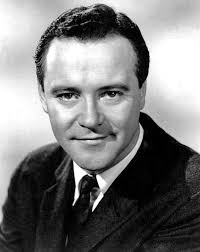
Neil Hamilton (best known as Commissioner Gordon on Batman) plays Franklin Westbrook, a conceited drama critic who dislikes almost everything. Jack Lemmon plays Harold, a Midwesterner who thinks working for Westbrook will help him become worldly and give a boost to his acting career. His girlfriend is played by his real wife Cynthia Stone. The episodes revolved around his romantic and business adventures in New York City.  Perhaps Westbrook panned the show because it was cancelled after three episodes.

movielemmon1


Heaven for Betsy – Jack Lemmon (1952)

Three years later, Lemmon gave it another try. In this show, Lemmon plays Peter Bell, a toy store buyer. His wife Cynthia again played his wife Betsy. The series was based on a sketch “The Couple Next Door” that Lemmon and his wife played regularly on the Frances Langford/Don Ameche Show. Each episode lasted 15 minutes, and it told about the newlyweds’ struggles in New York City. Instead of three episodes, this series lasted three months.

movieslemmon2


Honestly Celeste – Celeste Holm (1954)

After playing Ado Annie in Oklahoma, Holm tried her hand at television. She plays Celeste Anders, a Minnesota college professor living in Manhattan, who is getting journalism experience working for the NY Express. Celeste wrote stories ranging from modern art to underprivileged families. She also dated the publisher’s son Bob Wallace, played by Scott McKay. After three months, she was sent back to school in Minnesota. What was most surprising about this failure was that Norman Lear (who would go on to create dozens of shows) and Larry Gelbart (who later created M*A*S*H) were both part of the writing staff.


Going My Way – Gene Kelly (1962)

Bridging television and movies, Gene Kelly redid Bing Crosby’s movie from 1944 for the small screen. Kelly is Father Chuck O’Malley, a progressive priest assigned to the slums of New York. Father Fitzgibbon played by Leo G. Carroll is a cantankerous, old priest. Dick York was his boyhood pal Tom Colwell who ran the community center. Mrs. Featherstone (Nydia Westman) played the rectory housekeeper. The list of guest stars on the show was very impressive, but after a year, the network told Kelly to keep going and cancelled the show.


The Bing Crosby Show – Bing Crosby (1964)

I guess Bing decided if Gene Kelly could enter television with his old movie, he might also give it a try. He plays Bing Collins a former singer. He is now an electrical engineer married to Ellie (Beverly Garland) with two daughters Janice (Carol Faylen), 15, and boy crazy and Joyce (Diane Sherry), 10, who had a high IQ. It lasted one season. Not surprisingly, this series also attracted a lot of big-name guest stars including Frankie Avalon, Jack Benny, Dennis Day, Joan Fontaine, and George Gobel. Apparently, Garland had a thing for engineers because she would marry aeronautical engineer Steve Douglas on My Three Sons.


Mickey – Mickey Rooney (1964)

Mickey plays Mickey Grady who leaves the Coast Guard to manage a posh hotel, Newport Arms in California, with his wife Nora (Emmaline Henry) and two young boys. His real son plays one of his sons on the show. Sammee Tong plays the hotel’s manager. The former supervisor has left a lot of problems for Mickey. The show was cancelled in January airing only 17 episodes.


One of the Boys – Mickey Rooney (1982)

After vowing never to work on television again, Rooney tried it again 18 years later. Now he plays 66-year-old Oliver Nugent, rescued from a nursing home by his grandson Adam Shields (Dana Carvey). Adam is a college student who takes him in. Adam’s roommate, Jonathan Burns (Nathan Lane) is not so happy about the situation. Oliver looks for a job and lands one singing in a restaurant. Also appearing in the cast was Scatman Crothers who sang with Oliver and had also left the nursing home.  A young Meg Ryan played Adam’s girlfriend Jane. The show debuted at 18th place in the ratings but by within a month it had dropped to 68th. Even with this cast, the show was cancelled after an unlucky 13 episodes.

movies10


Jimmy Stewart Show – Jimmy Stewart (1971)

Jimmy Stewart jumped to the small screen with great anticipation and excitement by viewers. He  played anthropology professor Jim Howard. Howard teaches at Josiah Kessel College, started by his grandfather.  His house is full with his wife, his son Peter, Peter’s wife Wendy, and his grandson Jake. He also has a young son Teddy, who happens to be the same age as his grandson. His friend Luther Quince often stops by to eat and give advice. Jim talks to the audience during the show and wishes them love, peace, and laughter at the end of each episode. Even beloved Jimmy Stewart was unable to save this show which was cancelled after one season.


The Doris Day Show – Doris Day (1968)

Doris Day was the most successful actor moving from film to television. However, I think the reason she managed to keep her show on the air for five seasons was because she changed the format so often that CBS did not realize it was the same show.  In 1968, Day is Doris Martin, a widow with two kids. She moves from the city to Mill Valley, CA to live on her father’s ranch.

The second season she commutes to San Francisco after accepting a job as an executive secretary to Michael Nicholson (MacLean Stevenson), the editor of Today’s Magazine. Rose Marie was Myrna Gibbons and Denver Pyle again played her father Buck Webb.

In 1970, Doris and the kids move to an apartment over an Italian restaurant run by Kaye Ballard and Bernie Kopell. Billy De Wolfe was her neighbor. Now Doris is writing feature stories for the magazine.

When the show returned the next fall, Doris was single and a reporter for a magazine. Her new boss was Cy Bennett (John Dehner) and she had a boyfriend Peter Lawford but later her boyfriend turned into Patrick O’Neal. There was no restaurant.

By 1973, the network caught up with all the changes and cancelled the show.


It was interesting that so many actors failed in television when they were such celebrated movie stars. The radio stars seemed to have better luck making the transition. Jack Benny and Burns and Allen had long-lasting and popular shows. It’s hard to imagine actors like Ryan Gosling, Amy Adams, Julia Roberts, or Ben Affleck bombing on a television series today.

I think for now I will continue to choose to watch Pillow Talk, Move Over Darling, Harvey, The Philadelphia Story, Some Like It Hot, Singing in the Rain, and Hope and Crosby’s Road movies and set aside the television DVDs these stars appeared in.