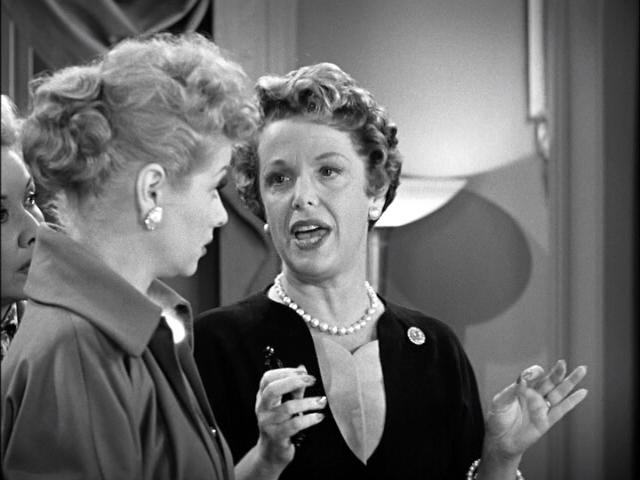
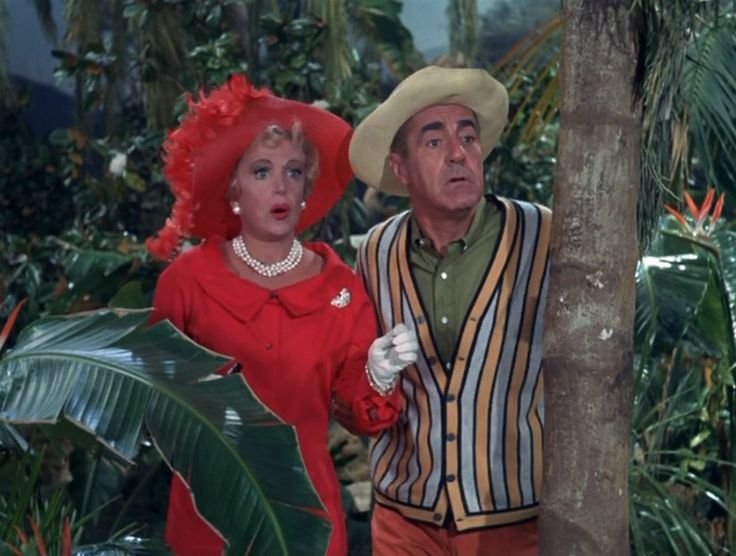
Sandra Gould: What a Character

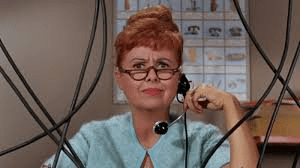
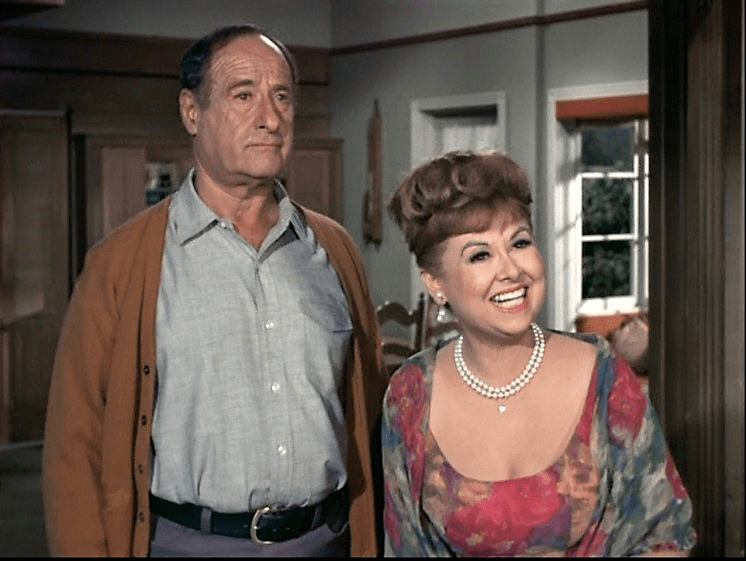
We are winding up our blog series “What a Character” with Sandra Gould. I have to be honest, I had an unfair bias against Sandra Gould.  I didn’t know a lot about her career, I just knew that she replaced Alice Pearce as Gladys Kravitz, and it was a bad replacement. It wasn’t Sandra’s fault—I blame the show’s producers.

📷pinterest.com

Some actors truly are irreplaceable. Eartha Kitt, while a great Cat Woman, just wasn’t Julie Newmar. Imagine trying to replace Henry Winkler as the Fonz halfway into the show. Can you picture tuning into MASH and finding Hawkeye was now played by someone other than Alan Alda?  Pearce was perfect in that role and, despite her being nosy and annoying, she was likable and that is hard to do. Gould’s Gladys was loud and brash, and I felt like I heard fingernails on a chalkboard whenever she was in a scene.

As long as I’m oversharing, I never cared for Dick Sargent either. While he was able to replace Dick York in some ways, York was just Darrin. Okay, I’m done and ready to talk about the good aspects of Sandra Gould and her long career.

Gould was born in Brooklyn in 1916. She entered the entertainment business early becoming a kid dancer in the Cat Skills by age 13.

📷threads.com

Gould found a lot of success on radio, appearing on “My Friend Irma” and “Duffy’s Tavern.” Her first radio job came along when she was only 9 on “The Danny Thomas Show.” Gould was with Jack Benny for almost fifteen years.

In 1938 she married Larry Berns, a broadcasting executive. They were married until his death in 1965. Berns joined CBS in 1942 writing and producing radio and TV series including Our Miss Brooks. He later worked on McHale’s Navy and Broadside.

Sandra’s first role was in the big screen T-Men in 1947. Most of her roles were inept or gabby women, typically a telephone operator, nurse, receptionist, landlady, or saleswoman. Gould once mentioned that she played an operator more than any other actress. I did notice 10-15% of her roles mentioned switchboard operators.

📷facebook.com

While she continued to appear in movies, most of her acting credits came on television. She appeared in Oboler Comedy Theater in 1949. In the early days of television, many of the series were drama or comedy reenactments of movies or plays. Sometimes, new stories were written for these episodes. Gould continued with these roles into the mid-fifties.

From 1952-55 she appeared as Mildred on I Married Joan. This series starred Joan Davis and Jim Backus. He was a judge, and she was another “Lucy Ricardo” always getting into mischief or causing hardships for her husband.

📷tumblr.com

Gould was kept very busy with offers during the end of the fifties and throughout the sixties. She could be seen doing comedy on Our Miss Brooks, I Love Lucy, The Jack Benny Program, My Three Sons, The Brady Bunch, and I Dream of Jeannie among others. She also tried western life on Wagon Train. Her drama performances included Hawaiian Eye and I Spy. She even dipped her toe into animation on The Flintstones.

At the end of the sixties, she was given the Glady Kravitz role. Pearce and Gould split the character’s appearances: Pearce had 27 episodes with Gould having 29.

Gould had stepped away from acting for a time. She published two books for girls: Always Say Maybe and Sexpots and Pans. They both seem quite dated today in their advice to girls to get the right type of husband. At the time she accepted the role of Gladys she said she had gone through a very rough year. Her husband died. Then her writing partner Peter Barry died. Then Alice Pearce, who was a good friend of hers. She had no desire to take over the role, but George Tobias who played Abner and was also a friend, called her to come in for an audition.

📷imdb.com

I could not find any information about she and Barry collaborating. One article specifically mentioned that they wrote scripts for Honey West, Tammy, and The John Forsythe Show, but I don’t see either of their names as writers for these shows. Barry is listed as a writer for 23 shows in the late fifties and early sixties, and he was a radio scriptwriter. Perhaps they had written some scripts that were never filmed.

I guess I am in the minority on the Bewitched issue because most sites I visited described her role similarly, usually something like Hollywood Spotlight’s description: “her over-the-top performance and shrill voice were popular with viewers, and she succeeded ultimately in making the character her own.” She also reprised her role as Gladys in the sitcom Tabitha in 1977 which was about Darrin and Samantha’s daughter as an adult.

Some time during her stint on Bewitched, she got married again to Hollingsworth Morse, and they were together until his death in 1988. Hollingsworth was a director and assistant director on almost 90 programs and movies including McHale’s Navy, Dukes of Hazzard, and Mork and Mindy.

The seventies and eighties found her primarily in drama roles, although she could be spotted in a handful of sitcoms. You can catch her on Columbo, Marcus Welby MD, Ironside, Crazy Like a Fox, and MacGyver. During the nineties, she took on roles that were described as “old lady” on Friends and on her last appearance which was Boy Meets World in 1999.

📷bewitched wiki.com

Not long after filming this episode, Gould passed away from a stroke following heart surgery.

Gould had a long and successful career and certainly made the nosy, gabby character her own. I’m glad the job on Bewitched helped her get through a very sad and difficult time in her life. However, I still am claiming she was not right for Gladys who should have been written off the show and just replaced with a new neighbor. But I respect Gould and the characters she made her own on the big and little screens.

Oh Magoo, You’ve Done It Again

Welcome to October, and welcome to our blog series for the month, “Get Animated.” Up first on the schedule is Mister Magoo.

📷imdb.com

This show was originally aired from 1960 to 1962. It was produced by United Productions of America, and each episode was made up of five four-minute cartoons. Jim Backus voiced Mr. Magoo and other famous voice actors on the show included Bea Benadaret, Mel Blanc, Dawes Butler, June Foray, Paul Frees, Jerry Hausner, Frank Nelson, Benny Rubin, and Jean Vander Pyl.

Mr. Magoo’s first appearance was in 1949 in “The Ragtime Bear.” Created by Milard Kaufman and John Hubley, Mr. Magoo was originally a parody of Joseph McCarthy, a mean-spirited, hateful man. It was meant to protest the Hollywood Blacklist. However, Kaufman found himself on one of these lists and passed the character of Mr. Magoo to Pete Burness. Burness depicted Magoo as a senile old man who was too stubborn to admit his eyesight was going. Backus was already voicing Mr. Quincy Magoo in 1949, so he lived with the character for decades.

In 1964, a similar series debuted called The Famous Adventures of Mr. Magoo which was on one season, and What’s New Mr. Magoo popped up in 1977. Backus continued to voice Magoo until the 1997 big-screen movie when Leslie Nielsen took on the role.

The show won two Oscars for Best Short Subject, but these were both in the mid-fifties before the television show debuted.

📷pinterest.com

I remember watching reruns of the shows when I was a kid, and while I thought some of the shows were funny, I wasn’t a huge fan. I was much more into Scooby Doo, Josie and the Pussycats, and The Archies.

Many kids identified Mr. Magoo with a grandparent: an elderly person who wasn’t ready to accept the fact that they were aging and had some limitations. Mr. Magoo got into a lot of complicated situations because he couldn’t see very well and refused to admit it. He would do things like think he was walking into a men’s clothing store when he was in an army recruitment office and try to purchase clothing.

When making the talk show rounds in the sixties, Backus told a story about how he prepared for the series. He put a fake rubber nose that pinched his own nose, giving it a nasal twang. After being Magoo for a bit, he was able to produce the voice without the fake nose. One of Magoo’s taglines was “Oh, Magoo, you’ve done it again.”

One of the tough things about this show was Magoo’s houseboy Cholly, whose real name was Charlie. Cholly was a stereotype of a Chinese man featuring huge buck teeth and fractured English diction. While several shows had Chinese or Black employees during this era, most of them were not so negative. Rochester often got the better of Jack Benny on his show. On Bachelor Father, one of my favorite sitcoms, Bentley lived with his niece and Peter, his houseboy. But Peter was more of a brother and felt free to speak his mind to Bentley; he was not a demeaning caricature.

📷pinterest.com

Backus seemed to vacillate on whether he liked or detested Magoo. In an article from 2023, Jim Korkis talked about Backus’ relationship with the animated character. Backus once admitted that “I’d like to bury the old creep and get some good dramatic roles in movies. He’s a pain in the posterior. Every time I start to be a serious actor I lose out because someone—usually a producer—says I’m Magoo.” However, Jim also drove around in a car with the license plate “Q MAGOO.”

He said Backus saw his father in the Magoo character who was isolated from most of the world. Another influence for determining the voice was a character Backus developed for his nightclub act. Backus described him as “the loud man in the train club car.

In an Ohio State University publication, Backus said his association with Magoo helped him out one night. He was trying to reserve a table at a restaurant with no luck. He called back as Mr. Magoo, and they gave him a table right away.

Blondie: Some Shows Are Better Being Forgotten

This month we are taking a look at some classic sitcoms that many people don’t remember anymore.

Blondie is one of those shows. It was based on the Chic Young comic strip and debuted on NBC in 1957, lasting one year. The series was resurrected in 1968 and the reboot also lasted a season.

📷wikipedia.com The 1957 version

Blondie had become very popular with fans. Beginning in 1938, 28 movies were made starring Penny Singleton and Arthur Lake. Blondie also showed up on the radio from 1939 to 1950.  Many products had been based on the characters including comic books, coloring books, lunch boxes, and board games.

The 1957 series starred half the movie duo. Lake took on his role of Dagwood Bumstead, but Pamela Britton was offered the role of Blondie Bumstead. Their kids, Cookie and Alexander, were played by Ann Barnes and Stuffy Singer. Florenz Ames was boss J.C. Dithers with Elvia Allmana as his wife Cora. Rounding out the cast was Harold Peary as neighbor Herb Woodley.

📷imdb.com The 1968 version

A decade later Will Hutchins and Patricia Harty play Dagwood and Blondie, Jim and Henny Backus play the Dithers, and Pamelyn Ferdin and Peter Robbins are their kids. The only advantage this series had over the original was color.

The comic strip, movies, radio show and both sitcoms all encompassed the familiar Bumstead elements: Dagwood being physically and socially awkward; their dog Daisy, and Dagwood’s love of napping and huge sandwiches.

The reboot was produced by Joe Connelly and Bob Mosher, the faces behind Leave It to Beaver and The Munsters. There was room in the schedule after the network cancelled He and She, a sitcom starring real life spouses Paula Prentiss and Richard Benjamin. The show is described on imdb.com as “Dick and Paula Hollister are a couple living in New York. Dick is a comic-book artist who has become famous for creating a superhero called Jetman, which has been turned into a TV show starring egocentric actor Oscar North.” During its one season of 26 episodes, the show received seven Emmy nominations, including a win for writing. It’s too bad that show was given the axe and Blondie moved in because the Prentiss-Benjamin show was much more creative and felt new, while Blondie felt extremely old.

No surprise, the ratings were not great. This is even worse when you see what the show was in competition with: The Ugliest Girl in Town, which would also be gone by 1969, and Daniel Boone. The one new 1968 show to return on CBS was Hawaii Five-0 which seems so much more sophisticated than Blondie; it’s hard to believe they both debuted the same year.

📷yahoo.com Hawaii Five-0

Perhaps the fans didn’t tune in because the critics panned the show before it aired. The Milwaukee Journal’s Wade Mosby said it was “a horrendously contrived piece of fluff that should have never been snatched from the comic pages.” Don Page of the Los Angeles Times called it “an unmitigated disaster,” and Cynthia Lowry of the Associated Press described it as “dismal.”

By November, rumors were that the show was already cancelled, and its last episode aired in January. The show probably relied too much on slapstick and unsophisticated humor; things that might have been fine in the 1930s but were passe by the 1960s. Sometimes a show is cancelled just because it’s a badly written and executed show. It seems Blondie fell into this category not once but twice.

Off the top of my head, I can only recall two comic strips becoming popular television shows: The Archies and The Addams Family. Because the Blondie characters were not very dimensional and got into the same situations over and over, they just never were able to translate into sustainable television characters. I think there’s a good reason that many people don’t remember this show and perhaps it’s better that way.

I Married Joan: Fans Said I Love Lucy

This month my blog theme is “Don’t Judge Me.” We’ll take a look at sitcoms featuring judges. The first show on the docket is I Married Joan. Debuting on NBC in 1952, the show starred Joan Davis and Jim Backus and was typically described as the marriage of a respected judge and his scatterbrained wife, Joan and Bradley Stevens. It ran for three seasons and produced 98 episodes.

Photo: dvdtalk.com

The early shows begin in the judge’s chambers where he recalls one of his wife’s wacky adventures followed by the episode and ending with the judge summing up his tale of his wife’s mishap and its similarity to a case he was working on. It was very similar to I Love Lucy; however, this show featured more slapstick comedy by Davis. Marc Daniels directed both shows. The shows also were both filmed in Los Angeles at General Service Studios and debuted October 15 (one year apart). Time hated the show—“It might have better been left on the shelf.” Variety, on the other hand, found it filled with “comic zest and vitality.”

I Married Joan was created and produced by Joan Davis Enterprises. She was a successful businesswoman and a workaholic. Joan earned $7500 a week; in today’s equivalent, that would be about $70,000 per episode. Joan was apparently not a very easy person to work for or with.  Sherwood Schwartz wrote about a third of the episodes. (He would later go on to create The Brady Bunch and Gilligan’s Island.) He did not care for Davis and said that Joan made one of the writers stick close to her when they ran through the show because she often wanted a better joke substituted. Jesse Goldstein also wrote a third of the shows. He had written for Burns and Allen and Red Skelton.

Photo: youtube.com

Other actors also complained about working with Joan. Apparently, Backus detested her because she was not kind to the crew and fellow actors. Sandra Gould (who would later appear as Gladys Kravitz on Bewitched), Hal Smith, and Hope Summers (who both showed up in Mayberry as Otis the drunk and Bee’s friend Clara) confirmed Backus’ stories. There are a couple of other stories floating around that Joan once slapped a child for asking for her autograph and threw a temper tantrum at a salon, knocking over a bottle of bleach. Backus had worked with her on radio before signing on for this role, so I’m surprised he had not been aware of her work abuses before. She was described as a bit quiet and shy in her non-work life and spent her spare time fishing, golfing, watching boxing, or reading her extensive gag files.

Rounding out the cast were Dan Tobin as their friend Kerwin, Geraldine Carr as Mabel, Sheila Bromley as Janet, Sandra Gould as Mildred and Hal Smith as Charlie.

Photo: pinterest.com

For seasons two and three, Joan’s daughter Beverly Wills played Joan’s sister on the show. I guess it was a family affair because Henny Backus, Jim’s wife, also had a role on one episode as Mrs. Bunker.

The plots were about what you would expect on a show from this time era. In one, Joan and her friend admire each other’s houses and decide to swap for a week which quickly cures them of their envy. When Joan finds a dress that her husband is hiding for a friend for his wife; she assumes it is for her and “alters” it–a lot. In one episode, Joan wonders what life would be like if she had never married. In another show, she realizes she doesn’t have enough chicken to serve when Brad brings unannounced guests home. Any of these plots could have come from Burns and Allen, The Ann Sothern Show, Our Miss Brooks, or The Life of Riley.

Photo: wikipedia.com

However, in one show, Joan crawls into an enormous commercial soup pot in order to spy on the kitchen crew to learn the recipe for a chef’s famous soup. As you would expect, all the ingredients suddenly begin to get thrown in all around her. Even reading this description, you can picture Lucille Ball in the predicament. Perhaps this is another reason the show didn’t succeed. It was just too similar to the top-rated show in the nation.

Photo: youtube.com

Many people remember the theme-song lyrics.

I married Joan
What a girl, what a whirl, what a life.
Oh I married Joan
What a find, love is blind, what a wife!
Giddy and gay, all day she keeps my heart laughin’
Never know where her brain has flown.
To each his own
Can’t deny that’s why I married Joan.
I married Joan!

Photo: youtube.com


For the entire three seasons it was on the air, it was up against Arthur Godfrey and His Friends on CBS and news shows on ABC for seasons one and two. The show did so-so in the ratings for the first season. The second season the ratings increased to the number 3 show. Part of it might have come about from the negative publicity Arthur Godfrey got when he fired Julius LaRosa. The third season Disneyland was on ABC, and the ratings declined again. The ratings were especially low in the New York market, so the show was cancelled. Howdy Doody had just gone off the air, so reruns of the show replaced the popular kids’ show in the mornings. Jim Backus had signed a three-year contract and declined to come back; I’m not sure if that contributed to the cancellation of the show or not.

Photo: wikimedia.com
With guest star Bing Crosby

Joan Davis tried to get a few other sitcoms on the air in later years; one interesting idea was for a woman astronaut who was training for a flight to the moon. She officially retired in 1959 and passed away in 1961 after suffering a heart attack.

Photo: wikipedia.com

Jim Backus would go on to have a very successful career. He would cross paths with Sherwood Schwartz again when he accepted the role of Thurston Howell III on Gilligan’s Island. A fun aside is that when the I Married Joan sets were later re-used, Backus’ lines were found written in various places.

Photo: youtube.com

As I noted earlier, the theme for my blog this month is “Don’t Judge Me.” In that spirit, I am trying not to judge Joan Davis too harshly without learning more about her as a person. One thing I have learned in writing television blogs for so long is that several of my favorite characters were not my favorite people; I decided long ago that I could adore the character and abhor the actor. Fortunately, most of the actors in classic television were wonderful people.

Photo: sitcomsonline.com

I do remember watching this show in reruns in the late seventies and early eighties. It was not really my cup of tea, but I am not a big lover of slapstick comedy. Most of the fans that bought the DVDs (91%) gave the series 5 stars and made comments like “extremely funny,” “I couldn’t stop laughing,” and “clever writing and great comic acting.” If you are an I Love Lucy fan, you should probably give I Married Joan a try. There are worse ways to spend an evening.  

The Mod Squad: The Show That Oozed Hip, Groovy, and Cool

As we continue our Murder, Mystery, and Mayhem series, we move from Maine where senior citizen Jessica Fletcher solved mysteries to the streets of Los Angeles, where a hip trio infiltrates the counterculture to solve crimes.

Photo: pinterest.com

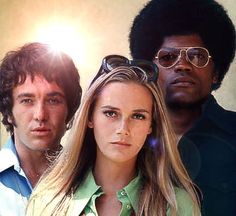
Airing from 1968 till 1973, The Mod Squad was a unique concept. Created by Buddy Ruskin, a Los Angeles police officer, the show took eight years to become a reality. Ruskin based the concept on his time as a squad leader for an undercover narcotic division in the 1950s.

Aaron Spelling was the executive producer. Spelling worked on a number of projects from 1960 onward, but his biggest hit shows were still in his future when he took the helm of The Mod Squad.

As soon as the jazzy theme song by Earl Hagen began, we knew this was a different type of show. The sixties hippie culture and counterculture drug scene had not been explored in depth on television before.

Photo: pinterest.com

In order to get the necessary evidence, three young team members were trained to go undercover to solve cases. Michael Cole was Pete Cochran, a wealthy kid who was arrested for stealing a car; Peggy Lipton was Julie Barnes, who had run away from a bad home situation; and Clarence Wlliams II was Linc Hayes, who was arrested during the Watts riots. Captain Adam Greer (Tige Andrews) supervised the trio. He mentored them and provided “parently” advice and wisdom. He hand-picked them for his team. (Similarly, Spelling’s Charlie’s Angel’s would also feature a father figure hand picking three non-traditional members for his crime-solving team.)

None of these kids were innocent, and their records were eliminated when they chose to work with the LA police. But they soon realized they had the ability most cops did not to inconspicuously fit in to help stop criminals from killing or hurting other young adults.

Photo: pinterest.com

Similar to Room 222, which aired almost the same time, The Mod Squad covered a lot of socially relevant topics: abortion, domestic violence, drug addiction, child abuse, police brutality, illegal immigration, and racism. Though the pilot was written sixty years ago, these issues are still on the front page today.

The writers, including Tony Barrett, Harve Bennett, Sammy Hess, and Buddy Ruskin, created realistic characters. These three outcasts were a bit rebellious; they lived in the gray instead of black or white. They understood good people sometimes did bad things, and racism and domestic violence were not to be tolerated. Their speech and clothing marked them as quintessentially 1960s. Linc often said “Solid” or “Keep the faith.” You would probably hear “groovy” at least once an episode.

Photo: tvinsider.com

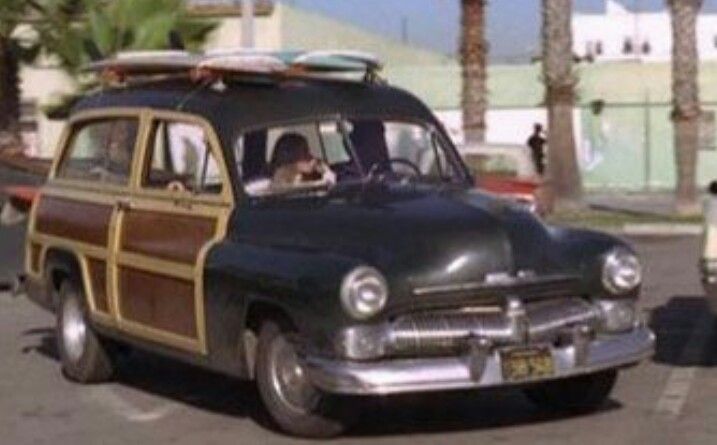
The team traveled in an old green 1950 Mercury wood-paneled station wagon that they affectionately referred to as “Woody.” Unfortunately, it was burned in an accident at the end of the second season.

Photo: pinterest.com

The show was definitely controversial. It aired at a time when westerns, rural sitcoms, and Lawrence Welk were popular. The episodes pushed the envelope a bit on topics that had been taboo on television in the past. The team was like a family and on one episode, Linc gave Julie a brotherly kiss on the cheek which had the network up in arms, but not one complaint came in. Their relationship with Captain Greer helped America see how the generation gap could be bridged.

Photo: davidcassidy.com
Stars David Cassidy and Marion Ross

Despite the controversy, the show attracted a lot of famous guest stars. Some of the actors who can be spotted during the show’s run include Ed Asner, Jim Backus, Tom Bosley, David Cassidy, Tyne Daley, Sammy Davis Jr., Tony Dow, Andy Griffith, Carolyn Jones, Leslie Nielsen, Stefanie Powers, Vincent Price, Robert Reed, Marian Ross, Sugar Ray Robinson, Martin Sheen, Bobby Sherman, Danny Thomas, Daniel Travanti, and Billy Dee Williams.

Each episode ended with the squad walking away from the camera.

Photo: gettyimages.ca

The show was extremely popular given its uniqueness. It was the 28th most popular show its first year and number 11 in its third season. The show received seven Emmy and four Golden Globe nominations. In 1970, it was nominated for Outstanding Series. During its final year, it only ranked 54 and the “hipness” of the show was starting to age a bit, so it was cancelled.

It did have an afterlife. In 1979, a tv movie, The Return of the Mod Squad, aired on ABC with the original cat. In 1999, a big-screen film was released starring Giovanni Ribisi, Omar Epps, Claire Danes, and Dennis Farina. Don’t feel bad if you don’t remember it; not many people do.

Photo: pinterest.com

The Mod Squad could be seen on MeTV in 2014 and 2015. Apart from that, it has not fared well in syndication. Like Room 222, the show can feel dated quickly due to its language and fashion.

Photo: eaumg.com

The show is still celebrated for its ground-breaking scripts, and in 1997, TV Guide included an episode, “Mother of Sorrow” as 95th of the greatest 100 episodes of all time.

Photo: nndb.com

While you probably won’t find it on television, it is available on DVD. Although the show may not be known by many people today, it was one of the first shows to break the barriers of going where television had not been before. In many ways, it paved the way for the creation of shows such as All in the Family, The Mary Tyler Moore Show, and Miami Vice. What more could you ask for: relevant topics, well-rounded characters, and exciting plots. Although its language and fashions date it, it captures a unique time in our history and is worth exploring.

I Spy: With My Little Eye A Very Sophisticated Show

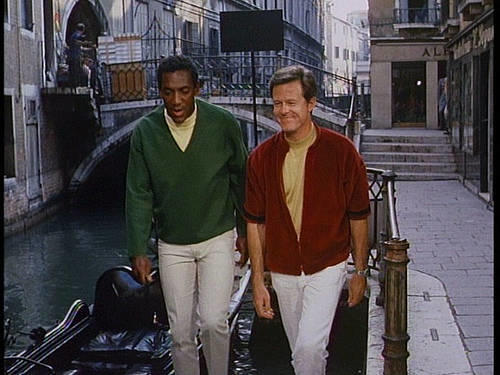
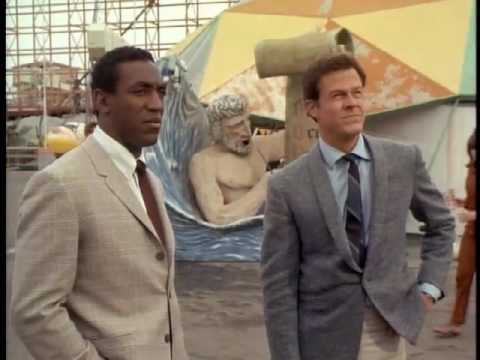
As we continue our crime-solving duos series, today we learn about I Spy featuring Robert Culp and Bill Cosby. They were a pair of spies who traveled the world posing as tennis pro, Kelly Robinson, and his coach, Alexander “Scotty” Scott. They work for the Special Services Agency which was part of the Pentagon. The show aired on NBC from 1965-1968.

Photo: pinterest.com

David Friedkin and Morton Fine, writers, and Fouad Said, cinematographer, formed Triple F Productions. The show was filmed at Desilu Productions. Fine and Friedkin took on co-producing the show. Friedkin also appeared as a guest actor in two of the episodes. Continuing the job-sharing duties was was Sheldon Leonard. Leonard was the executive producer. He also directed one of the episodes and guest starred on the show.

The theme music was written by Earle Hagen. (For more on Hagen and his composition of music from the series, see my blog dated)He also wrote specific music for each of the countries the team visited. He received Emmy nominations all three years, winning in 1968.

Photo: pinterest.com

Cosby’s character was written as an older mentor to Robinson, but Sheldon Leonard changed the role once he saw Cosby perform. Culp said Cosby was not very interested in the series and insulted the producers during his audition. Culp acted as a mediator and Cosby was hired.

Photo: youtube.com

Like future shows such as Miami Vice, The X-Files, or Castle, the partners had great chemistry. They had witty and clever dialogue and often improvised much of their banter. Friendship was the main theme of the show, not the crimes. The actors developed a close friendship that lasted long after the show did. The characters were also very different. Culp was the athlete who lived by his wits. Cosby was the intellectual who didn’t drink or smoke.

This was the first TV drama to feature a black actor in a lead role. Some of the NBC affiliates in the south refused to air the series. Truly a color-blind series, the two spies did not encounter racial issues. It also made history– being one of the first shows to be filmed in exotic locations around the world. The pair visited Acapulco, Athens, Florence, Hong Kong, Madrid, Morocco, Paris, Tokyo, and Venice.

Photo: desertnews.com

Like the western genre in the 1950s, spy shows were popular in the 1960s. Unlike Get Smart or the Man From UNCLE, I Spy was more realistic. The duo didn’t rely on unbelievable gadgets or campy villains.

Some of the episodes had more comedy than others. “Chrysanthemum” was inspired by The Pink Panther. The episode, “Mainly on the Plains” starring Boris Karloff, was about an eccentric scientist who thinks he’s Don Quixote. However, many shows took on more serious and contemporary themes. “The Tiger” was set in Vietnam.

Photo: imdb.com

During the three seasons the show aired, an incredible number of guest stars chose to work on the show. Some of these talented celebrities included Jim Backus, Victor Buono, Wally Cox, Delores Del Rio, Will Geer, Gene Hackman, Joey Heatherton, Ron Howard, Boris Karloff, Sally Kellerman, Eartha Kitt, Martin Landau, Peter Lawford, Julie London, Vera Miles, Carroll O’Connor, Don Rickles, George Takei, Cicely Tyson, Leslie Uggams, and Mary Wickes.

Photo: 007bondproxy.ml

Both Culp and Cosby were nominated all three years for Emmy for Outstanding Lead Actor in a Drama Series, with Cosby winning all three years.

While the series was extremely popular, it was always over budget due to the high costs of filming. During the third season, ratings began to decline. The show was moved from Wednesdays to Mondays. It was on against The Carol Burnett Show. Unfortunately, the network refused to move the show back to its original night. They offered Sheldon the choice of renewing the show in the current time slot or the chance at creating a new series. Leonard realized that Culp and Cosby were tired of the show and ready to move on. In all, 82 episodes were filmed. 

Photo: pinterest.com

The show holds up well today.  The dialogue is timeless, and scripts are sophisticated and well written. The plots are realistic, but they are secondary to the relationship of Robinson and Scott. The exotic locations add a romance and intrigue to the show as well. The complete series is available on DVD and well worth watching.

Photo: moviestore.com

Of course, it’s hard to talk about a Cosby show without acknowledging the effect his legal issues have had on his work.  While I don’t condone his behavior and am sad that someone so talented (and preachy about character) would resort to such offensive actions, what makes me even sadder is that both I Spy and The Cosby Show were wonderful shows that featured talented casts. That so many people have to suffer because one person’s actions were unethical and selfish seems unfair.

One thing I’ve had to learn doing my research on all these classic shows is sometimes you have to separate the character from the actor. It’s possible to love a character even when the actor or actress who portrays them is a crummy human being. Of course, there are more of the other scenarios. Fred MacMurray was every bit as nice as Steve Douglas and Howard McNear was even nicer than Floyd.

Hopefully these shows get their due and their reputation for their well-written scripts overcomes the stain Cosby saddled the shows with.

Is It A Western? A Spy Show? A Thriller? No, It’s The Wild Wild West

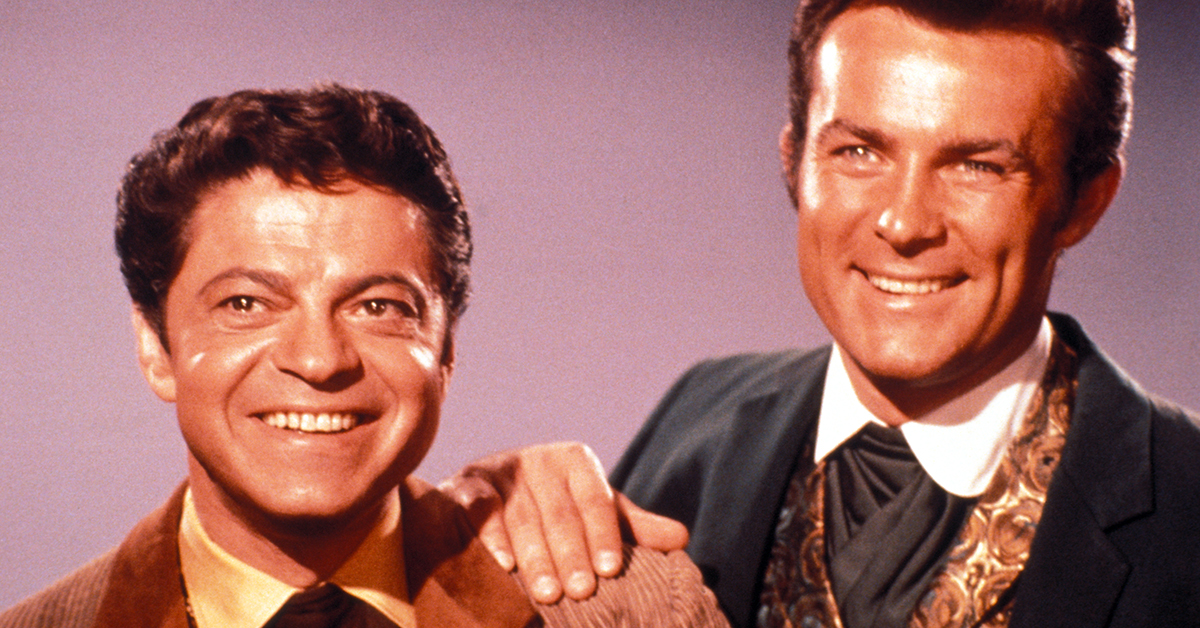
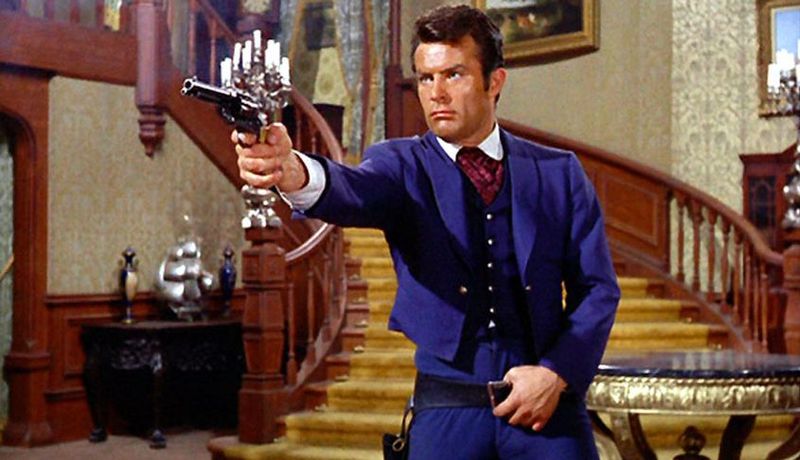
There was no specific category for the Wild Wild West when it first debuted in 1965.  Part western, part spy show, part thriller.  Now, it might be called steampunk. Westerns had been extremely popular through the 1950s and into the 1960s, but in the mid-1960s, the spy genre was gaining ground. Creator Michael Garrison combined the two. Secret Service agents Jim West (Robert Conrad) and Artemis Gordon (Ross Martin), work for President Ulysses Grant and travel the country by luxury train, the Wanderer.  Oh yeah, and they have a ton of technology to make the job more exciting. Artemis is a master of disguise.  Like James Bond, they had clever gadgets on hand, beautiful women in the wings, and delusional, but brilliant, enemies to fight against.

Photo: decades.com

The series debuted in 1965 and ran for four seasons, resulting in 104 episodes. Unfortunately, Garrison died a year into the show and didn’t live to see its completion. The show was filmed at CBS Studio Center. The 70-acre lot was used for Gunsmoke, Rawhide, and Gilligan’s Island as well.

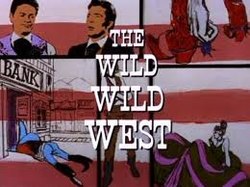
The theme song was written by Richard Markowitz. The intro had an animated sequence that continued to be filled in throughout the show. This was quite unique to this program.

Conrad claimed to be the 17th actor to audition for the role of James West. Originally, Rory Calhoun was announced as the co-star. Conrad wore three-inch heels to hide that he was only 5’8”. Due to his height, the casting office was barred from hiring women over 5’6” for the show. The first few episodes used stuntmen, but Conrad felt that it slowed production down too much, so he volunteered to do his own stunts. During season three, he fell from a chandelier and hit a concrete floor, leaving him with a concussion and weeks of hospitalization for dizziness.

Photo: artworkproduction.ca

Ross played over 100 different characters during the run of the series. He sketched out the ideas for the characters himself and then worked with the make-up artists to get the right look. During the fourth season, Martin broke a leg when he dropped a rifle, stepped on it, and rolled his foot over it. When the shell ejected, it burned his eye. Ross also suffered from a heart attack in 1968. Several other agents “filled” in for Martin while he recuperated.

Photo: writeups.org

Considering the show was only on for four years, it featured a number of guest stars including Ed Asner, John Astin, Jim Backus, Ed Begley, Victor Buono, Jackie Coogan, Yvonne Craig, Sammy Davis Jr., Jack Elam, Norman Fell, Bernard Fox, Mary Frann, Beverly Garland, Alan Hale Jr., Boris Karloff, Richard Kiel, Ted Knight, Harvey Korman, Martin Landau, Sue Ane Langdon, Peter Lawford, Ida Lupino, Burgess Meredith, Agnes Moorehead, Phyllis Newman, Leslie Nielsen, Carroll O’Connor, Pat Paulsen, Suzanne Pleshette, Richard Pryor, Don Rickles, Pernell Roberts, Katherine Ross, William Schallert, Vito Scotti, Ray Walston, Jesse White, and Keenan Wynn.

The train was also a co-star of the show. The spies had two different trains. The first was used for season one when the shows were filmed in black and white. It was a Sierra Railroad No. 3 which was not built until 1891, a mere technicality I guess. The Rogers Locomotive and Machine Works built it in New Jersey. Footage was shot in Jamestown, California. This same train was the Cannonball in Petticoat Junction.

Photo: metv.com

The shows filmed in color featured a train decorated with green and gold and it was full of fun gadgets. This one was built in 1875 by the Baldwin Locomotive Works in Philadelphia. It was used in many films over the years.

Photo: tripadvisor.co.uk

Both these trains are on display at the Nevada State Railroad Museum. They were only featured in exterior shots. The interiors of the trains were designed by art director Albert Heschong with set decorator Raymond Molyneaux. It reportedly cost $35,000 in 1965. To put this in perspective, the average house in 1965 cost less than $4,000! The train was as resourceful as West and Gordon. A remote control under the table could immediately lock the door. A statue turned upside down unlocked a wall safe. A telegraph set was hidden in a book on the desk. Pistols could be fired by activating a fireplace switch. The pool table had exploding balls while cue sticks could fire bullets.

Photo: tvoftheabsurd.com

Many of the guest stars were villains in the show. The most famous villain was Dr. Miguelito Loveless played by Michael Dunn. He had a recurring role, appearing on ten episodes. He always managed to escape at the end of the show. West and Artemis never did catch him, and a TV movie filmed later relays that he died in 1880 from ulcers brought on by the stress of his plans always being foiled by West and Gordon.

Like Batman, Jim West always seems to have the right gadget at his disposal when he needs it. Some of his more fun props included a sleeve gun as well as a gun concealed in his heel. He also occasionally carried a blowtorch in his heel. Passkeys were stored under his lapel. He kept a variety of fuses sewn into hems in his clothes. To descend into a pit or be hoisted up on a roof, he had a hand-held motor-driven winch. Glass cutters which often are useful were available. Wires placed in his hat had many uses. Battery-powered drills helped the boys escape metal cages. His kit bag held a large balloon. A miniature player made villains think shot guns were being fired. Of course, every smart secret service man wears a bulletproof vest and is always equipped with tear gas or smoke bombs. They even had a cigar that would produce smoke when thrown on the ground and a coin that exploded when exposed to heat.

Photo: thegoldencloset.com

There typically were two fights in each episode choreographed by Whitey Hughes. Following the 1968 assassinations of Dr. Martin Luther King and Robert Kennedy, a National Commission on the Causes and Prevention of Violence was formed. Violence on television was listed as one of the problems, and The Wild Wild West was cited as a violent show. So, despite high ratings, the series was cancelled near the end of its fourth season as a concession to Congress over television violence.

Photo: antiquatednotions.typepad.com

However, the show was then released into syndication and at one time was listed on 99 different local channels, so the violence on television was not curbed by its cancellation.

Several books and comic books were created based on the show. In 1979, the two stars returned to television with a movie, The Wild Wild West Revisited. In 1980, they showed up again in More Wild Wild West. Rumors existed that the duo would do a reboot of the series, but Ross died in 1981 so it never came to fruition.

A movie was made in 1999 based on the original show, but it was not received well. Will Smith later expressed regret for his role in the film. The Golden Raspberry (Razzie) is awarded to the worst films. When the 1999 film was awarded five Razzies, Conrad accepted them on behalf of the movie to show his displeasure with the remake.

Photo: stupendouslyamazinglycoololdtv.blogspot.com

The show’s success primarily stemmed from the fact that Artemus and West trusted each other completely, and their banter and technological gadgets made the show a pleasure to watch. And did I mention, the boys loved women on and found a romance on every show. We’ll let the characters have the last word:

Artemus Gordon: “Naomi. ’My sweetness’. That’s what Naomi means in Hebrew, did you know that ?”

Naomi Buckley: “Really ? And what does Artemus mean ?”

James West: “It means ’He who wastes little time‘.”

Photo: filmscoremonthly.com

Artemus Gordon: “I didn’t know you liked toys.”

James West: “Toys, no. Dolls, yes.”

Sherwood Schwartz: A Brand New Look

Sherwood Schwartz was born in November of 1916 in New Passic, New Jersey. The Pawnshop starring Charlie Chaplin was showing in theaters. These silent films would lead to radio and television developments that would change the course of Schwartz’s life.

shel9

Photo: charliechaplin.com

After getting his undergrad degree in New York, Sherwood moved to California to attend school and get his Masters in Biology. His goal was to have a career in endocrinology doing research. Unfortunately, he was put on a waiting list because the medical schools he applied to had a quota for the number of Jewish students they would accept. It was suggested that he change his name and religion. He refused and never did get into medical school.

shel7

Photo: tvparty.com

While waiting, he submitted jokes to Bob Hope for his radio show. He picked Hope’s show specifically because his brother Al worked for the show. (Al wanted to be a comedy writer, but his parents made him get a degree first. After passing the bar, he informed them he was off to California.) Bob Hope asked Sherwood to join his brother on staff and he accepted. He honed his comedy skills writing for four years with Bob Hope.

In 1941 he married Mildred Seidman and they had a family of four children. Sherwood also wrote for the Alan Young Show on radio.
shel10

Photo: tvseriesfinale.com

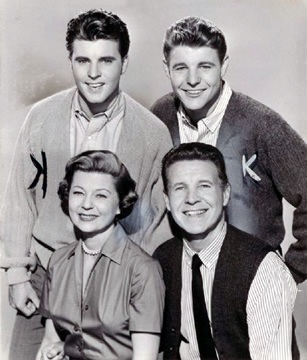
During World War II, he wrote for the Armed Forces Radio and when the war was over, he joined the staff of The Adventures of Ozzie and Harriet. Ozzie Nelson has a reputation for being a perfectionist. When Schwartz was asked about this, he gave the following example: “Oh absolutely. Absolutely true. That is the only man I know who, after his show was in reruns would take the reruns and re-edit them because he wasn’t happy with something. When it was too late to do anything with them, he still did it.”

shel11

Photo: wikipedia.org

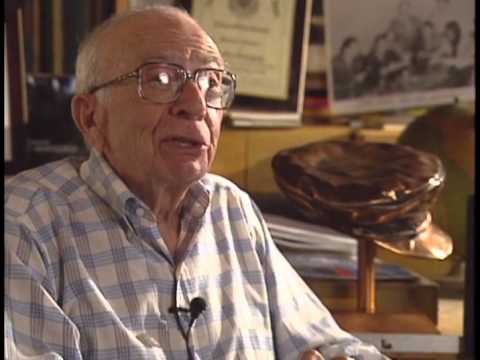
In the 1950s, Schwartz made the move to television. He took a position with the writers on I Married Joan starring Joan Davis and Jim Backus. He described the difficulty in writing for her show. “She refused to do the show unless a writer was on the set. She wanted to be able to say I need a better line and have that provided to her right then and there. Since there were only three writers for the show, one had to be on the set while the other two continued working on upcoming scripts.” As he put it, “The stage would be quiet for a moment, 75 production people were scattered around the stage and you had to get a better line or a better blackout. That’s enormous pressure for a writer. It was a rough week (when it was his turn to be on set).”

He became the head writer on The Red Skelton Show where he also worked with his brother. He did not enjoy working with Skelton. Skelton had a reputation for treating writers badly. Schwartz received an Emmy for his work on the show. The final straw was when Sherwood was listening to an interview with Skelton. He was asked why his show was so successful, and he replied, “Every week, when I get those lousy scripts from the writers I yawn. And the voice of God tells me how to fix things.” Sherwood decided the pay was not worth the grief of working for Skelton, so he left the series.
shel12

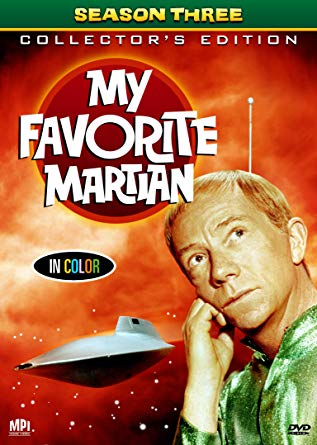
He was then hired to retool My Favorite Martian in 1963 co-starring Bill Bixby and Ray Walston. CBS asked him to do some “reconstruction” work for the series, and he worked on seven episodes. He said the pilot was a great blueprint, but the writers were not following it as well as they should have. They were concentrating on Tim and his problems when the show needed to feature the challenges the Martian was having adapting to life on earth.

During this time, he was thinking about his own series. When he and his brother worked in the radio industry, they came up with an idea for a show called Help, about seven servants who work for a rich family. He now began to take that idea and expand it. What if he took seven people from all different walks of life–but how to get them in one place was the stumbling block.
shel13

Photo:mgtow.com

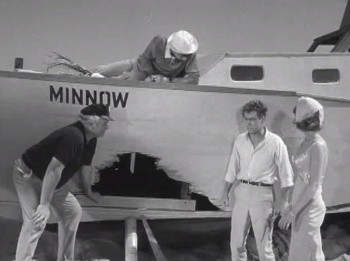
It began to come together when he placed them on a deserted island. Later that year the pilot was shot with a movie star, a professor, a millionaire and his wife, a farm girl, a skipper, and his first mate inhabiting an island while waiting to be rescued. It was not an elite or snobby show to be sure. FCC chairman Newton Minnow is the person who called television a “vast wasteland,” and in his honor, the Skipper’s boat was christened The SS Minnow.

Viewers always loved the show, but critics not so much. Schwartz said the critics never understood “the big picture” of what the characters represented. The San Francisco Chronicle’s Terrence O’Flaherty wrote that “It is difficult for me to believe that Gilligan’s Island was written, directed and filmed by adults.” UPI’s Rick DuBrow wrote “It is impossible that a more inept, moronic or humorless show has ever appeared on the home tube.” Ouch!

Schwartz said he was not “disheartened by the reviews . . . only a bit angry with the lack of understanding of what was being attempted.” As he continued, “these are the same men who are forever saying ‘For heaven’s sake, won’t somebody give us something other than the wife and the husband and the two children?’”

He once admitted “I honestly think I could sit down and write a show tonight that the critics would love, and I know it would be canceled within four weeks. I know what the critics love. We write and produce for people, not for critics.”

shel2

Photo: latimes.com

The show also gave him a new skill as a lyric writer. Along with George Wyle, he wrote the theme song for Gilligan’s Island.

Although the show was popular with viewers, executive William Paley never liked it. The show was being moved around the schedule, and in order to move Bonanza to a different time spot, he cancelled Gilligan’s Island. Gilligan’s Island was on the air for three years, but it established Schwartz’s reputation as a producer and writer.

Apparently, many people felt the show was realistic. A coast guard colonel called Sherwood and later showed him letters from people who were concerned about the castaways being stranded on the island and asking the coast guard to rescue them.

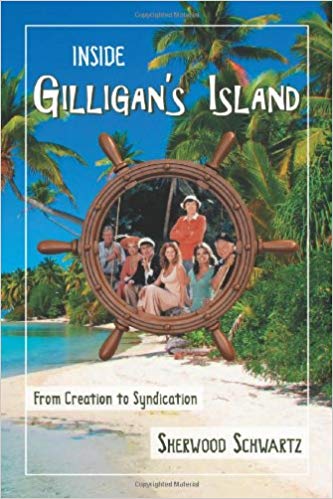
Although the show was cancelled, it never really went away. Two animated series and three TV movies would spin off the show. It has also been on air in reruns since 1967. In 1988, Sherwood wrote a book, Inside Gilligan’s Island.
shel19

With the cancellation of Gilligan’s Island, Sherwood began work on another new show. He had read an article that reported nearly one-third of American households included at least one child from a previous marriage. He decided to feature this sociological change and wrote a script about a woman with three daughters who marries a man with three sons. The networks all liked the idea but were asking for some major changes which he refused to make.

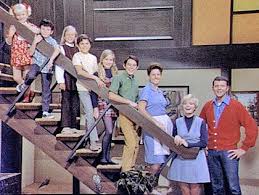
In 1968 the movie, Yours, Mine and Ours came out about a blended family and the networks now wanted the show. The series, starring Robert Reed and Florence Henderson as Mike and Carol Brady, aired on ABC from 1969 to 1974. The Brady kids were played by Maureen McCormick, Barry Williams, Eve Plumb, Susan Olsen, Christopher Knight, and Mike Lookinland. Ann B. Davis played Alice, the housekeeper.
shel3

Photo: boston.cbslocal.com

Again, the critics dismissed the show. What surprised me was that The Brady Bunch never did as well as Gilligan’s Island in the ratings. When it debuted, I was eight, and we all looked forward to Friday night when we would plant ourselves to watch The Brady Bunch and beginning in 1970, The Partridge Family, The Odd Couple, and Love American Style.

While the critics wrote the show off as unrealistic, many of the scripts were taken from the Schwartz family’s life. His daughter said she was not thrilled to watch the show and see a story about her life as part of the plot.

Similarly to Gilligan, once again, Schwartz wrote The Brady Bunch theme song, this time with Frank DeVol.
shel8

Photo: youtube.com

There are a lot of rumors that Robert Reed and Sherwood did not get along. After a lot of research, I’ve determined that Reed was never happy about what he saw as an inferior role. I think he wanted to do Shakespeare-quality shows in a time when there was not a need for that type of show. He seemed to nitpick the scripts too much and was too literal. Although I’ve read some memos where I totally agree with his interpretation, you can only spend so much time dissecting everything. On one show, he walks into the kitchen where the women are cooking strawberries and his line is, “This smells like strawberry heaven.” He wasted time writing a memo about the fact that he researched what strawberries smell like cooking and determined that they had no smell. He needed to learn to pick his battles, I guess.

In another similarity to Gilligan’s Island, not only did The Brady Bunch never leave the air after it was cancelled, but it too resulted in many other versions. An animated series, The Brady Kids, appeared on Saturday morning. Several TV movies, including The Brady Girls Get Married and A Very Brady Christmas were produced in the 1980s. That movie spawned a reboot of the original tv series which didn’t last long on the air. Finally, Sherwood also produced a movie for Paramount, A Very Brady Sequel, a satire of the original television show, in 1994.

shel20

Sherwood’s son Lloyd helped produce and write the tv movies and the Paramount film. In addition, they wrote a book together, Brady, Brady, Brady: The Complete Story of The Brady Bunch as Told by the Father/Son Team Who Really Knew. The reviews of Sherwood’s book about Gilligan’s Island are mostly positive. This book had very mixed reviews. Most fans seemed to enjoy the first part of the book told by Sherwood, but the majority of readers dismissed the second part, primarily written by Lloyd, as insensitive and egotistical. Few people had any positive comments about Lloyd’s involvement.

Although Schwartz would never repeat the success he had with The Brady Bunch or Gilligan’s Island, he did create several other series.
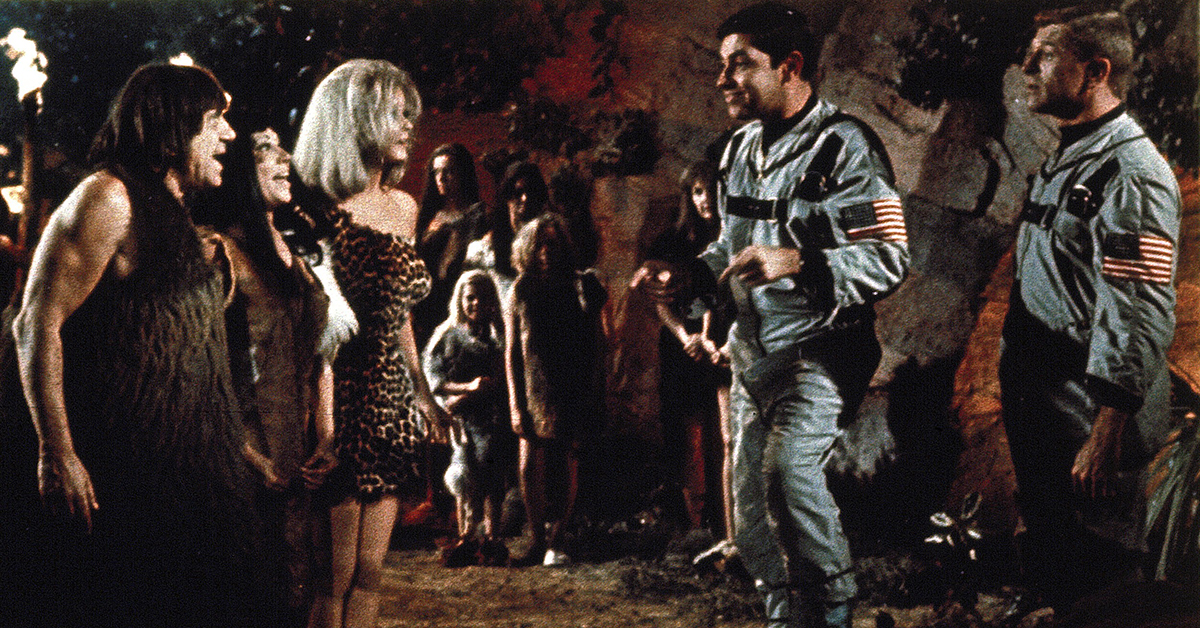
IT'S ABOUT TIME, Joe E. Ross, Imogene Coca, Mary Grace,  Jack Mullaney, Frank Aletter, 1966-67

Photo: metv.com

In 1966 after Gilligan ended, he produced It’s About Time where two astronauts end up in a prehistoric era and must learn to live with the natives. This show lasted one year, and 26 episodes were written.
shel6

Photo: metv.com

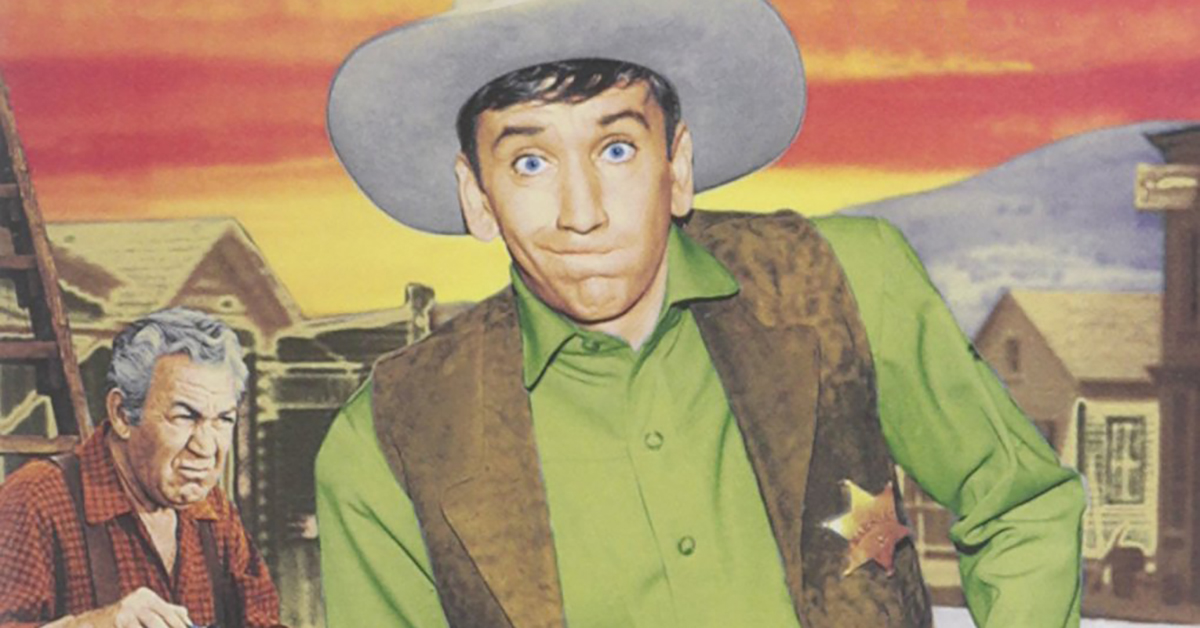
In 1973, Bob Denver again worked with Leonard in Dusty’s Trail. Seven travelers similar to the castaways get separated from their wagon team heading west and must work together to try to catch up to their group. Sounds rather familiar. Season one ended up with 27 episodes.
shel14

Photo: lockerdome.com

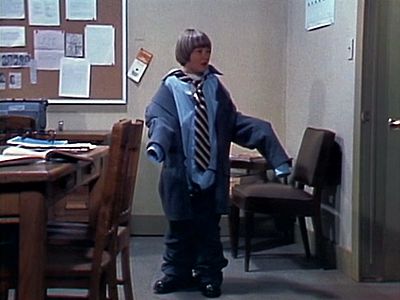
Big John, Little John aired in 1976 and was a situation comedy on Saturday mornings featuring a man who turns into a 12-year-old after drinking from the fountain of youth. Only 13 episodes were produced.

shel15

Photo: sitcomsonline.com

Finally, in 1981, Schwartz took the song “Harper Valley PTA” and turned it into a series with Barbara Eden and Fanny Flagg. Once again, Sherwood wrote the theme song. The show was on the air for two years and produced 30 episodes.
shel1

Photo: wikipedia.org

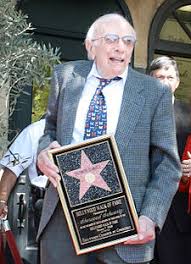
In 2008 he was awarded both a star on the Hollywood Walk of Fame and inducted into the Television Hall of Fame.

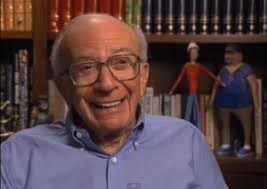
In 2011, Sherwood died peacefully in his sleep from natural causes. Although he and Reed may not have been close, the rest of his cast seem to have nothing but good things to say about him.
shel4

Photo: emmytvlegends.org

Florence Henderson quoted, “Sherwood was a wonderful writer and producer, but more importantly he was a wonderful husband, father, grandfather and friend. I don’t ever remember him losing his temper. Ultimately, he was a wonderful teacher in life and again, in death, he taught us how to leave with dignity and courage.”

Barry Williams who played Greg, the oldest Brady, said, “As much as Robert Reed was like a dad to me, Sherwood was like a grandpa.”

shel17

Photo: today.com

Oldest daughter Marcia played by Maureen McCormick, noted that “My mom, father and I would all go to Sherwood for advice because he always had a great answer.”

Tina Louise, Ginger from Gilligan’s Island, said he “brought laughter and comfort to millions of people. Gilligan’s Island was a family, He will be in our hearts forever.”

2nd Annual TV Land Awards - Show

Photo: tabletmag.com

Bob Denver who always had wonderful things to say about him, summed up working with him on a radio interview he did with Peter Anthony from Montreal radio station CJAD 800 AM on January 6, 1994. “Sherwood, as a producer, he was one of the best writer producers. It’s amazing. That man was just amazing. We never knew there were any problems when we were shooting. He kept all the network craziness away from us. He was writing scripts literally four months in advance, so that special effects and props always got them in plenty of time . . . you just memorized your words and went down there and had a great time. It wasn’t until afterwards when I left that I realized that not everybody was in the same situation. So, every time I had a chance to work with him, I did.”

Schwartz had two unbelievably successful television series. But more than that, he knew how to use their brand and marketing to keep them going. Here we are 50 years later, and kids today still understand references to both shows. They have both been on the air continuously since they were first cancelled. Generations have watched the shows. The two theme songs, co-written by him, are two of the best-known songs from television history.
shel16

Photo: npr.org

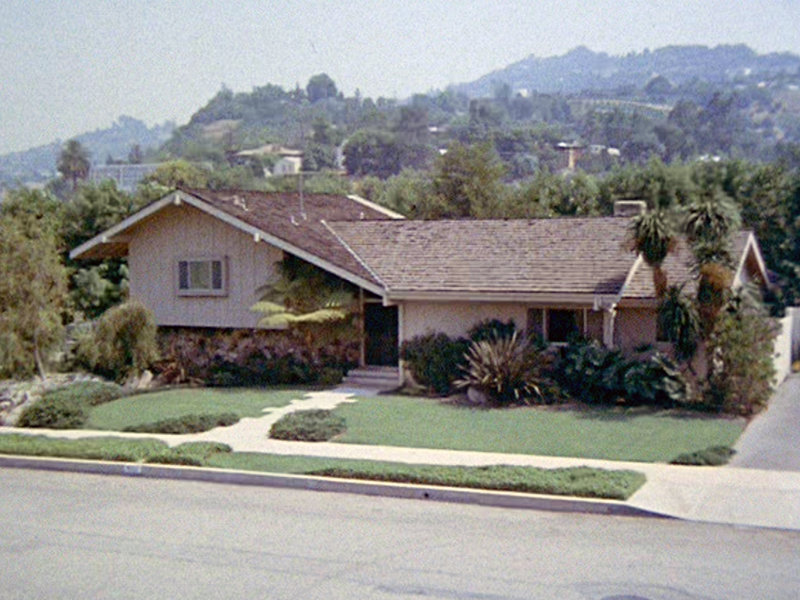
I thought Paul Lieberstein (producer of The Office) summed up Schwartz’s influence best. In an email to Vulture, he wrote, “There was no one who shaped my childhood more. I could easily draw you a map of Gilligan’s Island and a floor plan of the Brady Bunch house—and I’m not even sure if my own childhood home had two stories.” And speaking of that blueprint, in 2019, exactly 50 years since The Brady Bunch debuted, HGTV has bought the house used for exterior shots for The Brady Bunch and will be renovating it. Once again generations will be watching The Brady Bunch cast with HGTV and learning about the show as the brand continues.
The Skipper and His Little Buddy: Alan Hale Jr. and Bob Denver

We continue our month-long exploration of the actors who appeared on Gilligan’s Island. Today we look at the two biggest stars: Alan Hale Jr. and Bob Denver.

Alan Hale Jr.

hale1

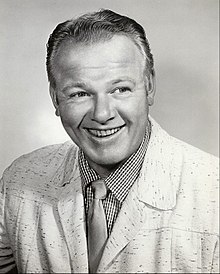
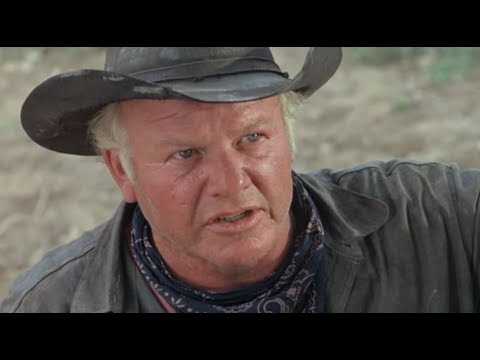
Alan Hale Jr. (Alan Hale Mackahan, Jr.) was born in 1921 in Los Angeles, California.  He looked exactly like his father, Alan Hale Sr. who was a well-known movie actor acting with legends like Douglas Fairbanks and Errol Flynn. His mother, Gretchen Hartman, was also a silent film star.

Hale’s first screen role was when he was 12 in Wild Boys of the Road.

hale3

He appeared in more movies and television series than any of the other Gilligan’s Island cast.  In all he would appear in 92 movies and 123 different tv shows.

In 1943 he married Bettina Reed Doerr. They would be married for twenty years and have four children. During World War II, Hale served in the US Coast Guard.

In the 1950s, he could be seen in many westerns as well as The Loretta Young Show and The Adventures of Ozzie and Harriet. He had regular roles on two sitcoms in that decade: Biff Baker USA and Casey Jones. Biff Baker is a businessman who becomes involved in espionage.  He and his wife travel around the world, working behind the scenes to solve problems. Although it was a serious show, there was some humor in the episodes also. As Casey Jones, Hale drove his train, The Cannonball Express, around the country.
hale4

The early 1960s was a prolific time for Alan Hale. The majority of his television credits came during this decade. You can see him in reruns of Jack Benny, The Lucy Show, Perry Mason, My Favorite Martian, and The Andy Griffith Show.

The year 1964 was a momentous one for Alan. He married Naomi and remained with her till his death. He also tackled the role he would become famous for.

hale5

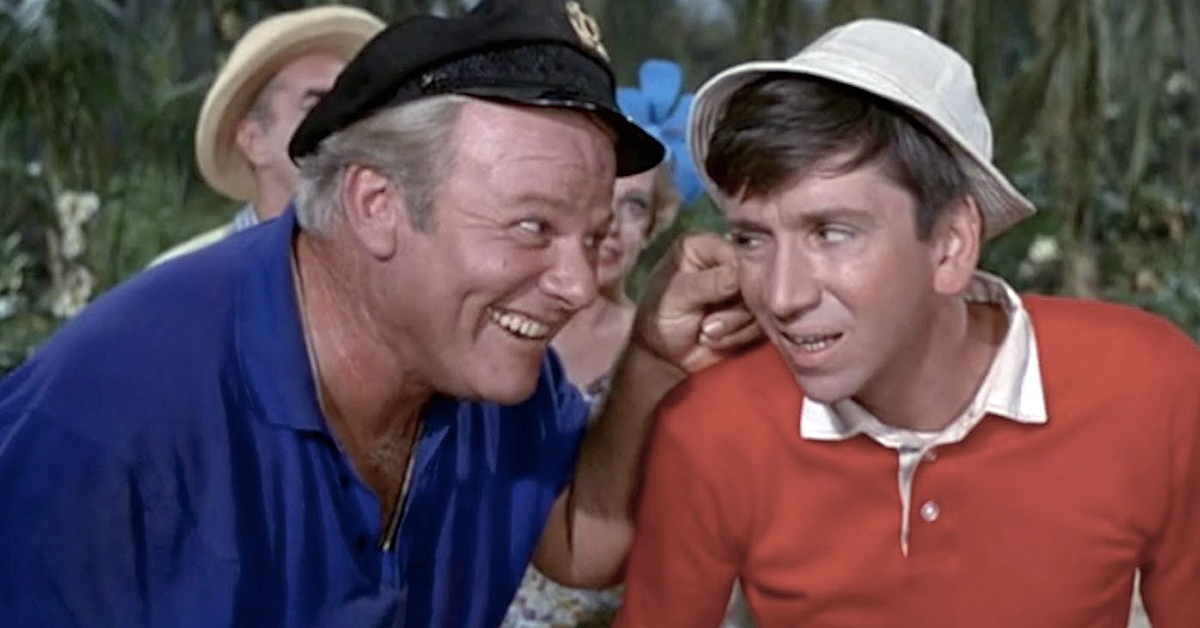
Sherwood Schwartz said he was having trouble finding the right person to play Jonas Grumby. He auditioned a lot of people, including Carroll O’Connor. One night while having dinner at a local restaurant he saw Hale dressed in a Civil War costume and decided he might be the one. Although the Skipper often became frustrated with Gilligan, they had a father and son relationship. Hale and Denver managed to pull that off. They were close friends in their personal lives as well.

hale3

Unlike some of the cast who felt typecast after they left the show, Hale embraced the role he had played. He would later own and manage a popular restaurant in Los Angeles called “Alan Hale’s Lobster Barrel” and could be seen greeting guests as the Skipper. Both he and Jim Backus appeared on Bob Denver’s sitcom Good Guys in 1968.

hale4

After Gilligan, Hale’s career did not slow down. Until his death he would continue to appear in a variety of series including Batman, Green Acres, The Flying Nun, The Wild, Wild West, Here’s Lucy, Marcus Welby, The Doris Day Show, Gunsmoke, McMillan and Wife, Simon and Simon, Growing Pains, The Love Boat, and Magnum PI.

In addition to acting and his restaurant business, Alan enjoyed fishing, golfing, cooking, traveling, storytelling, spending time with his family, and philanthropy. In 1990, Hale died after suffering from thymus cancer at the young age of 68.

Alan Hale had a long and prosperous career.  From all accounts, he liked acting and enjoyed life. Perhaps we should leave the last word to his costars who knew him best.

hale2

Bob Denver said, “He was a big, lovable man who made everyone feel good. He had a great time with his life.”

Dawn Wells described him: “What a dear man . . . what a dear, dear man . . I never saw him disgruntled, having a temper tantrum or depressed. He was so jovial and so sweet and so strong. . . He was a nice man.”


Bob Denver

denver7

Bob Denver was born in New York in 1935. He went to college at Loyola University in Los Angeles, majoring in political science. He worked as a mailman and a teacher before deciding to go into acting full time.  His first appearance was on Silent Service in 1957.

While Alan Hale was in more shows and movies than any of the other crew members, Bob Denver was easily in the fewest.  While he appeared in seven movies, he was only in 21 television shows, and on six of them he had regular roles.

denver5

His sister suggested him for the part of Maynard G. Krebs on The Many Loves of Dobie Gillis. His role as Dobie Gillis’s best friend propelled him into stardom. Dobie Gillis was on the air for four years, producing 144 shows.

denver8

In the 1960s he would appear on Dr. Kildare, The Farmer’s Daughter, The Andy Griffith Show, Make Room for Daddy, and I Dream of Jeannie. In the mid-1960s, Bob was offered the role of Gilligan on a new show, Gilligan’s Island.  In 1966 he married Maggie Ryan. They would have two children during the six years before they divorced.

Schwartz wanted to cast Jerry Van Dyke in the role who turned it down to play Dave Crabtree in My Mother the Car. Denver was perfect in the role of the inept Gilligan who caused many mishaps on the island but was the center of affection of the rest of the castaways, especially the Skipper.

The same year Gilligan was cancelled, Denver remarried. Like many sitcoms, the relationship with Jean Webber lasted three years before the couple cancelled it.

denver2

Although Denver was given a lead role in three more sitcoms, most of his work after 1967 cashed in on his character of Gilligan. In 1968, he starred in Good Guys. He played the role of Rufus Butterworth who opens a diner with his best friend from childhood.  The show only lasted for 42 episodes. Like Gilligan’s Island, Sherwood Schwartz produced this show. In an interview in 1994 with Peter Anthony Holder on Montreal radio station CJAD 800 AM, Denver discussed Schwartz. “Oh yeah, sure. Sherwood, as a producer, he was one of the best writer producers. It’s amazing. That man was just amazing. We never knew there were any problems when we were shooting. He kept all the network craziness away from us. He was writing scripts literally four months in advance, so that special effects and props always got them in plenty of time. . . you just memorized your words and went down there and had a great time. It wasn’t until afterwards when I left that I realized that not everybody was in the same situation. So every time I had a chance to work with him I did.”

At this time, Bob was also involved with Broadway and dinner theater plays after 1970.

denver3

In 1972 Denver tried marriage a third time. He and Carole Abrahams made it three years and produced one child before divorcing. In 1973, he took the lead on Dusty’s Trail. As Dusty, he manages to get a wagon and stage separated from the rest of the wagon train heading west, and the lost group of travelers try to catch up with the rest of their party.  This one only lasted 26 shows.

In 1975, Denver appeared in his weirdest sitcom yet, Far Out Space Nuts. Lasting only 12 episodes, Denver played a maintenance man in a space company who is accidentally launched into space with a co-worker. Apparently, television producers decided Denver looked like someone who was always lost.

denver4

In 1979, Bob tried the marriage ride one more time. This time he would stay married to Dreama Perry until his death.  The couple would have a child, making a total of four children for him.

denver6

Like many of the other castaways, Denver published a book of memoirs.  It was called Gilligan, Maynard, & Me.

In 2005, Denver passed away from complications following throat cancer surgery, leaving Dawn Wells and Tina Louise as the only surviving actors from the show.

denver1

While Denver is obviously the most-recognized character from Gilligan’s Island, he also had the most difficult situation to work with in being typecast. He was never able to shake the traits that were part of Gilligan to explore other roles.  He mentioned he would have liked to be in Northern Exposure. I wonder if he would have been happier being a teacher or if he enjoyed his career.

hale7

Next week we will discover more about our last regular member of the show, Russell Johnson.

The Millionaire and His Wife: Jim Backus and Natalie Schafer

backus9

Today we continue our month-long series about the characters on Gilligan’s Island and the stars who portrayed them. We begin with the millionaire, Thurston Howell III, and his wife, Lovey. On the island, their money is worthless, but it doesn’t stop Mr. Howell from bribing other captives when it’s in his best interest.  He must have been a boy scout who learned the motto, “Be prepared,” because he and his wife took clothes on a three-hour tour to last a few years. In real life, Natalie Schafer was the millionaire. Both Backus and Schafer had very interesting careers.


Jim Backus

backus2

Jim Backus was born in Cleveland in February of 1913. He was one of those stars who seemed to excel in everything:  radio, Broadway, animation, big-screen movies, and television series. In an interesting aside, Margaret Hamilton who would go on to have a full career including the Wicked Witch of the West at the Wizard of Oz, was one of his grade school teachers. Jim grew up in a wealthy area, attending Shaw High School in East Cleveland. His father was a mechanical engineer. I could not find exact proof of this but several articles mention he was expelled from the Kentucky Military Institute for riding a horse in the mess hall. He later attended the American Academy of Dramatic Art.

In 1939 he married Betty Kean; they divorced in 1942. One of his famous quotes was “Many a man owes his success to his first wife and his second wife to his success.”

backus5

In the 1940s, Backus began appearing on radio as the “rich man,” which he often portrayed afterward on radio and television. He played the role of aviator Dexter Hayes on Society Girl on CBS Radio Network. He also appeared on the Mel Blanc Show as Hartley Benson, an arrogant character, and as Hubert Updike on The Alan Young Show. He also showed up regularly on The Jack Benny Program.

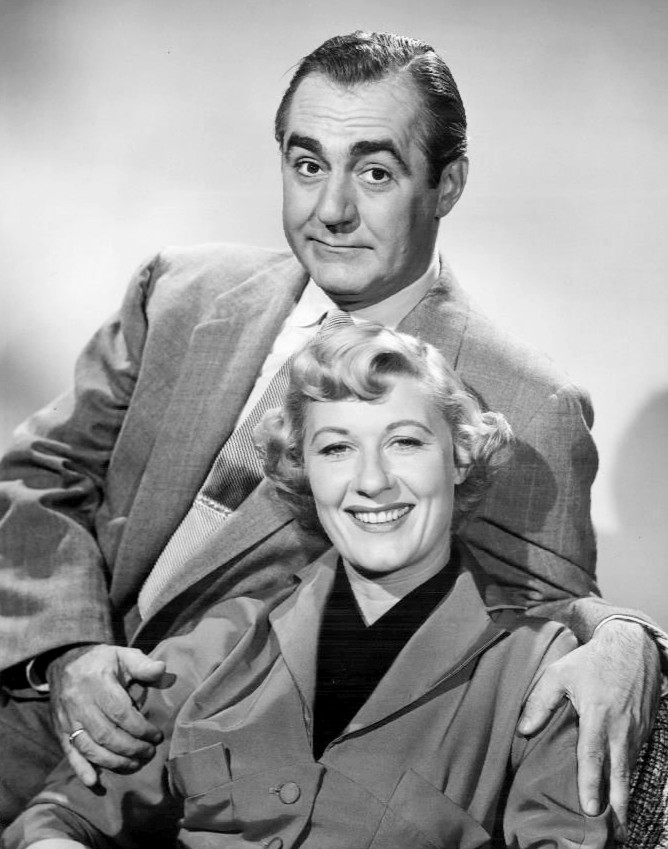
During his radio years, he married Henny Backus whom he was married to the rest of his life.

backus10

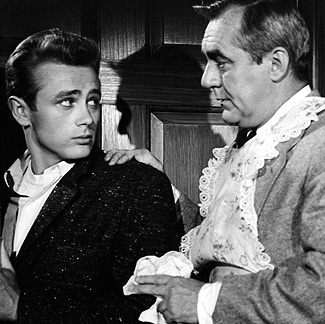
He began his big-screen cinema career in 1949 and would go on to appear in almost 100 movies, including Here Come the Nelsons, Pat and Mike, and Rebel Without a Cause (seen above). His most famous movie role was probably Tyler Fitzgerald in It’s a Mad Mad Mad Mad World. My favorite movie of his is Hello Down There with Tony Randall and Janet Leigh from 1969.

backus12

During the 1950s, he began auditioning for roles on television. He would go on to appear on 18 different series during that decade, including I Married Joan, on which he starred with Joan Davis. On the show, Backus played a respected judge and Davis was his scatterbrained wife. The show was very popular and lasted three seasons.

backus6

As if he wasn’t busy enough with acting in the 1950s, he also made a song recording with Phyllis Diller that hit the top 40 in 1958. It was called “Delicious,” and the two of them would take a sip of champagne throughout the song, saying “Delicious.” As the song continues, they get more drunk and a bit giddy, slurring their words and laughing hysterically.


His television career continued to be demanding in the 1960s. He appeared on 25 series, and four of them had regular starring sitcom roles. In 1960, The Jim Backus Show debuted. The program focuses on Backus in the role of Mike O’Toole, the editor/proprietor of a low rent wire service struggling to stay in business.

backus7


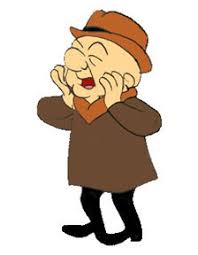
He had made movie shorts about Mr. Magoo in the 1950s and in 1960, he starred in 130 episodes of Mr. Magoo and would make 26 more episodes under the title The Famous Adventures of Mr. Magoo in 1964-1965. Mr. Magoo was an older nearsighted man who was very popular, appearing in ads and merchandise for years. The humor of the show was based on the difference between what Mr. Magoo thinks he sees and the reality of what was really there. Jim Backus liked to repeat a story about his famous character. He was in the movie, Don’t Bother to Knock, with Marilyn Monroe. She asked Jim to meet her in her dressing room later and his curiosity got the best of him, so he went, only to learn she wanted him to portray Mr. Magoo which he did.

backus11


This was also the decade he was offered the role of Thurston Howell III on Gilligan’s Island in 1964. That same year he was asked to play the role of Abner Kravitz on a new show, Bewitched but turned it down because he was committed to Gilligan’s Island. Gilligan’s Island would run from 1964-1967 and he would go on to appear in several Gilligan revivals including the far-fetched The Harlem Globetrotters on Gilligan’s Island.

backus3


During 1968-1969, Backus took the role of Mr. Dithers in a revival of Blondie.

During the 1960s, he also appeared on 77 Sunset Strip, The Beverly Hillbillies, Daniel Boone, The Wild, Wild West, and I Spy, among others.

backusb


Backus continued his television work into the 1970s where he appeared on 31 shows. He appeared in a variety of genres including I Dream of Jeannie, Young Dr. Kildare, Medical Center, The Brady Bunch, Gunsmoke, Ellery Queen, Charlie’s Angels, Fantasy Island, and The Love Boat.

backusa


Backus also continued his commercial work in the 1970s and 1980s. He was the spokesperson for La-Z-Boy furniture and General Electric. He and Natalie Schafer appeared in an ad for Redenbacher’s popcorn. They played their characters from Gilligan’s Island but apparently had been rescued and were in a luxurious home. In a sweet ending, it was the last television appearance for either of them.

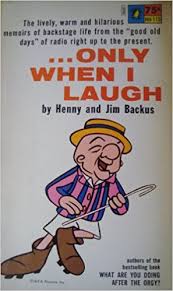
When Jim Backus had a little bit of free time between acting jobs, he loved to golf. He also tried his hand at writing a few books and film scripts, including his autobiography which he wrote with his wife, Only When I Laugh in 1965.

book


In July of 1989, Backus died from pneumonia, after suffering from Parkinson’s disease for many years.

He had a long and varied career and seemed to have many friends in the business.


Natalie Schafer

schafer5

A millionaire in real life, Natalie Schafer seemed like a very fun woman, a bit of a character. She was born in November of 1900 in New Jersey and raised in Manhattan. She was quite secretive about her age, often claiming she was born in 1912.

She began her career in Broadway, appearing in 17 plays. She married actor Louis Calhern in 1934 and they divorced in 1942. She moved to Los Angeles in 1941 to become a film actress and received parts in 34 movies. Incidentally, she and her ex remained friends and appeared together in the movie Forever Darling in 1956.

schafer2


Like Backus, Schafer typically played wealthy and sophisticated roles. She did not have the versatility her tv husband had but continued to stay busy acting on television.  While Gilligan’s Island was her only long-term role, she appeared on 21 shows in the 1950s (including I Love Lucy, Loretta Young, Phil Silvers, and Topper); 8 in the 1960s (including The Beverly Hillbillies, 77 Sunset Strip, and Route 66); 15 in the 1970s (including Mayberry RFD, The Brady Bunch, and McMillan and Wife); and an additional 8 shows in the 1980s before she passed away (including Three’s Company, The Love Boat, Trapper John, and Simon and Simon).

schafer3


Schafer made most of her money from investments, particularly in real estate.

Several sources revealed that much of her fortune was bequeathed to either her Gilligan’s Island co-star Dawn Wells or to care for her dogs; however, at least $1.5 million was donated to the Lillian Booth Actors’ Home to renovate their outpatient wing. I never saw any answers from Wells about inheriting money, but on Vicki Lawrence’s talk show, she did say that Schafer spent her last years living with her. Like many wealthy people, she was quite thrifty.  She often admitted that she accepted the role of Mrs. Howell because she got a free trip to Hawaii to film the pilot and didn’t expect it to get picked up.


schafer1


Everyone seemed to like her on the set. Dawn Wells said she especially adored Schafer and Backus. Schafer was a hard worker and liked to keep fit. In a Chicago Tribune article from October 25, 1965, she relayed her secrets for staying in shape. For one thing, she did her own stunts on the show. She also said she swam nude every morning and evening, doing 100 strong kicks at the side of the pool. She also invented an ice cream diet for herself. She claimed to eat a quart a day, saying she had a bowl of vanilla ice cream with her coffee, two bowls of varying flavors for both lunch and dinner, and another single bowl for an afternoon snack. She claimed that she would lose three pounds in five days.

In 1990, Schafer passed away from liver cancer. After her death, she wanted people to realize her true age, and many of her closest friends were quite surprised to learn she was 12 years older than she claimed.

backus

While Thurston Howell III and his wife Lovey were two interesting characters, I don’t think they can compete with the characters who were Jim Backus and Natalie Schafer. I had a lot of fun learning about them.