Richard Diamond, Private Detective: Living His Best Life

This month we are discovering some of our favorite “Crime Solvers of the Past.” Up today is a show I listen to on old-time radio quite often: Richard Diamond, Private Detective.

Dick Powell stared on the radio series which began in 1949, and the show ended its run four years later in 1953.

📷wikimedia.org

The television show went on the air in the summer of 1957. CBS aired the show through fall of 1959 when it moved to NBC for its final season. It was much more common in the fifties and sixties for shows to shift networks.

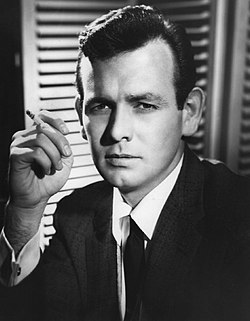
David Janssen starred as Diamond, a former cop in the New York Police Department. The television show kept the film noir atmosphere. It also kept the New York City location and showcased Diamond’s wit and charm with the ladies. Rounding out the cast was Diamond’s former superior Lt. Dennis McGough (Regis Toomey).

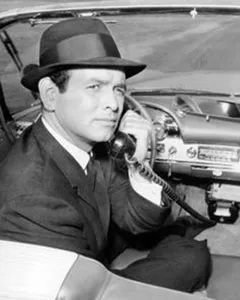
The third season moved Diamond to Los Angeles, and everything took on a new look. His life became more glamorous, and he lived in the Hollywood Hills and had a swimming pool. Apparently, private eyes earned a much bigger fee in Los Angeles. After taxis in New York, Diamond drove a new convertible which included a car phone, a high-tech feature for that time period. Lt. McGough remained in New York, and the LA police weren’t so fond of Diamond and his interference with their cases.

📷thrillingdetectives.com

Diamond’s phone calls are collected by Sam.  Often she passes the messages on to Diamond on his phone car. Car phones were pretty cool in this era. We don’t see her face, but we do see her legs on a regular basis. I’ll take their word for it that Sam was played by Mary Tyler Moore for part of season three and Roxane Brooks filled out the rest of year three and season four. No one knew who Sam was until Mary Tyler Moore modeled hosiery in the TV Guide and let the cat out of the bag. She was immediately fired and replaced with Brooks. I also read a version that Moore asked for a raise and was denied it and fired, which prompted her to talk about her identity as Sam on the show.

The theme also took on a contemporary jazz score that was now used for the theme song.

📷famousfixx.com

Apparently, NBC demoted Diamond because for the final season, he lost his ranch house with the fireplace and sunken living room. He lived in an apartment and worked from a typical, small office. The show lost a lot of its elegance, and fans probably missed Diamond’s former life after getting used to him in year three. Lt. Pete Kile (Russ Conway) has now found mutual respect with Diamond and the two of them work together on many of his cases. He also has an understanding with Karen (Barbara Bain), his new girlfriend.

Guest stars were plentiful on the show. Some of the appearances included Claude Akins, Ed Begley, Joey Bishop, Whitney Blake, Charles Bronson, Jack Cassidy, Jack Elam, Charles Lane, and Ruta Lee.

📷posterazzi.com

ABC aired the show on Thursday nights up against Zorro and You Bet Your Life, both shows in the top thirty. The next season it moved to Sunday nights and took on The Loretta Young Show. NBC moved the show to an earlier time slot on Mondays against The Kate Smith Show and the popular western Cheyenne. I’m guessing most families tuned in to one of its competitor’s series that early in the evening.

Maxwell House sponsored season one and Kent Cigarettes took over for season two. It seems that in the fifties coffee and cigarettes are what kept most detectives going.

From what I’ve concluded, the show didn’t age as well as the radio show. It lost some of its comedy and playful dialogue and became more somber and serious. The fact that Richard’s living conditions changed three times, along with the spot on the tv schedule where the show lived, probably didn’t help viewers stay tuned.

Let me qualify that I read many people’s views of the show who thought some of the seasons as high quality as you could get. However, I am just going to keep listening to the radio show and take a pass on watching Diamond’s more stressed-out, serious side on television.

The Elegance of What’s My Line

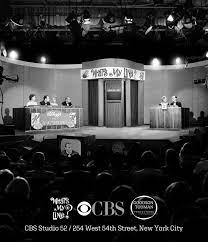
This month, we are looking at popular fifties stars and shows. While the show we are talking about today outlasted the fifties by almost another decade, it gained its popularity during the 1950s. Today we are learning about What’s My Line.

📷wikipedia.com

This panel game show was on CBS. It debuted in 1950 and ran until 1967. The show was produced by Mark Goodson and Bill Todman, and the working title was Occupation Unknown. Perhaps the title should have been What’s My Schedule. The show began on Thursday nights as a live show. Later in season one, it switched to every other Wednesday and then moved to every other Thursday. In October of 1950, it landed on Sunday nights where it would remain throughout the rest of its life.

The original series, which was usually broadcast live, debuted on Thursday, February 2, 1950, at 8:00 p.m. ET. After airing alternate Wednesdays, then alternate Thursdays, finally on October 1, 1950, it had settled into its weekly Sunday 10:30 p.m. ET slot where it would remain until the end of its network run on September 3, 1967.

📷imdb.com

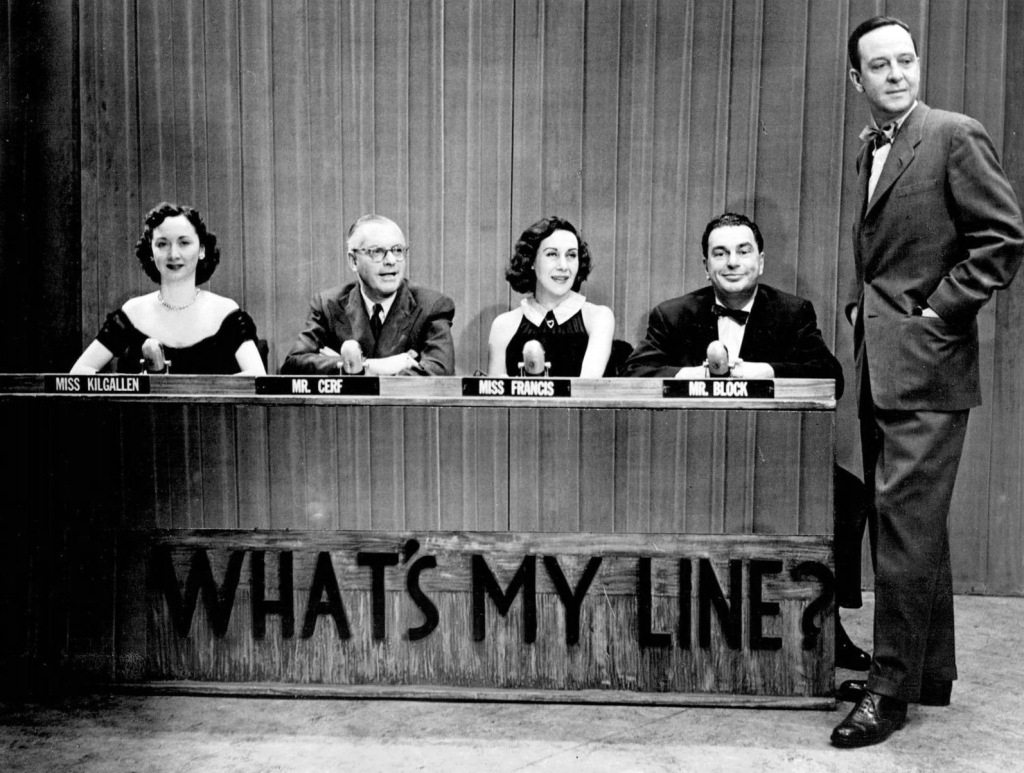
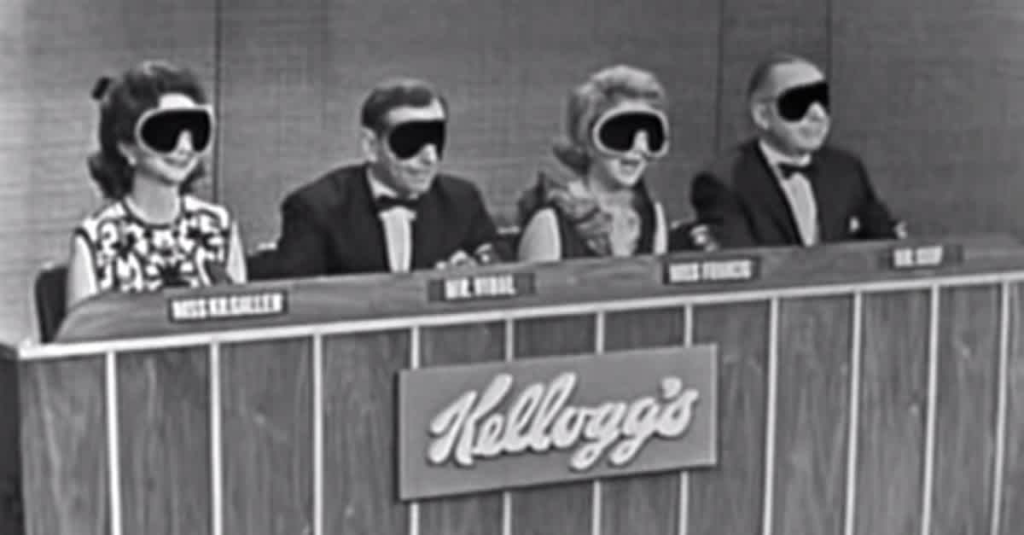
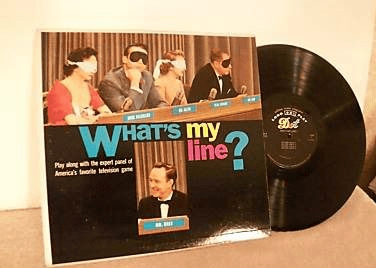
Celebrity panelists ask contestants questions to figure out their occupation. While most of the contestants were not famous, there was a “mystery guest” segment. The panelists were blindfolded for this segment and asked questions to determine the celebrity. People enjoyed watching the panelists banter with each other and the sophisticated humor they shared with us.

Each episode had four panelists. The most famous panelists were Dorothy Kilgallen, Arlene Francis, and Bennett Cerf. John Daly was the moderator. The first show in the series featured New Jersey governor Harold Hoffman, Kilgallen, poet Louis Untermeyer, and psychiatrist Richard Hoffman. Later in season one, Arlene Francis came  on board with Kilgallen, Untermeyer and writer Hal Block. In season two, Cerf replaced Untermeyer and Steve Allen took over for Block in season three. When Steve Allen left to host The Tonight Show, comedian Fred Allen was part of the panel from 1954 until his death in 1956. Kilgallen was killed in 1965 and her replacement varied for two years. Her death is a mystery itself and well worth reading about. Many people think she was killed because of her investigation into JF Kennedy’s assassination.

📷facebook.com

The panelists started the series wearing business clothing, but by 1953 they shifted to formal attire with the men showing up in suits and ties and women in formal gowns and gloves. Unfortunately, we never got to see the beautiful colors of these clothes. Until 1966 everything was filmed in black and white. In the final season, the show was broadcast in color, but the kinescopes were saved in black and white.

Both critics and television viewers liked the show, and it won an Emmy for Best Quiz or Audience Participation Show in 1952, 1953, and 1958.

Because it was a game show, most of the 700 episodes were on kinescope, 16 mm filming. Because many original shows in that era were recorded via kinescope onto silver nitrate film, many networks destroyed recordings to recover the silver. After learning that the network was not keeping the recordings, Goodson and Todman offered to pay for the broadcast and retained the recordings from season three on, however many of those were also lost along the way. A variety of the episodes are stored at different archive centers around the country. My home state houses one from 1951 at the University of Wisconsin Center for Film and Theater Research in Madison.

📷facebook.com

The remaining kinescopes which have been digitized have been seen on television on the Game Show Network and 757 of them exist on YouTube.

Many of us remember the reruns and seeing the contestant come on stage and write their name on a chalkboard as Daily said “Will you enter and sign in please.” The very first contestant was Pat Finch who was a hat check girl at the Stork Club.

The first mystery guest was New York Yankees shortstop Phil Ruzzuto. Many of these guests used fake voices to answer questions. Some of the mystery guests who appeared on the show included Julie Andrews, Louis Armstrong, Lucille Ball, Jack Benny, James Cagney, Gary Cooper, Joan Crawford, Salvador Dali, Sammy Davis Jr., Doris Day, Aretha Franklin, Ava Gardner, Judy Garland, Jackie Gleason, Alfred Hitchcock, Bob Hope, Ginger Rogers, Roy Rogers, Eleanor Roosevelt, James Stewart, Elizabeth Taylor, and John Wayne.

📷littlethings.com Blindfolds come out for a mystery guest

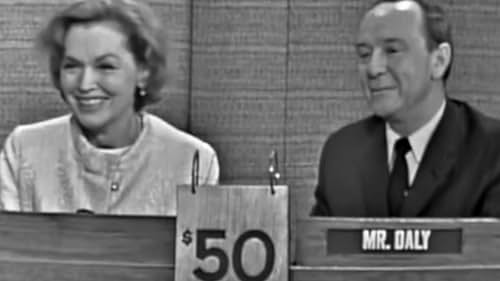
The emcee would choose a panelist who could ask yes or no questions. If the answer was yes, they could continue until they got a no response and then the next panelist would be able to pose questions. If the contestants answered no, Daily flipped a card; when the contestant had ten cards, they won $50.

If you have heard of or even used the term “Is it bigger than a breadbox?,” you might want to know that it came from the show. Steve Allen asked the question in 1953, and it became a standard question after that night. In fact, on one episode, the guest was a breadbox maker, and when Daly could not help laughing at the question, Allen figured it out.

In 1967 The New York Times broke a story that CBS was canceling many of their game shows. None of the panelists had been told that the show was not renewed. Despite the fact that the low costs of the game shows made them profitable, the low ratings led the network to conclude that game shows were no longer suitable for prime-time schedules.

After the show was canceled in 1967, it did go into syndication five days a week. Soupy Sales joined Francis and Cerf on the panel of the reboot. A variety of other panelists took the fourth seat including Joyce Brothers, Jack Cassidy, Bert Convy, Joel Grey, Meredith MacRae, Henry Morgan, Gene Rayburn, and Nipsey Russell. The show ended in 1974. Cerf died during the run of the syndicated series.

It’s hard to believe, but Colonel Harland Sanders was on the show as founder of Kentucky Fried Chicken, although he was not easily recognized at the time, so he was not a mystery guest. While no president ever appeared while in office, Ford, Carter, and Reagan all appeared on the show.

📷youtube.com We switched to a first-name basis in the 70s

It would be fun to see this show on television today, but I’m afraid it would not be the same. In the way that Dick Cavett had a manner of interacting with guests to ask amazing questions with his humor and intelligence, this game show had that same atmosphere. Today, I think the banter would border more on crudeness than wit. There is something charming about a panel of very intelligent people talking with each other, trying to determine the identities of the people they were interviewing while being dressed to the nines that was fun to sit in on and be a part of. I guess that’s why this show is in our series where we are saluting the fifties because that was the era where it could shine.

Columbo: The Disheveled Detective

We are winding up the blog series, “One-Named Detectives,” and I think we saved the most interesting private eye for today: Columbo.

How Peter Falk made detective TV show 'Columbo' work - Click Americana
Photo: americana.com

Columbo was on the air from 1971-2003, the longest of the five detectives we looked at in this series (Cannon, Kojak, Mannix, Matlock, and Columbo), but oddly had the fewest episodes with 68 (Cannon had 120, Kojak had 117, Matlock with 181, and Mannix had the most with 194).

Richard Levinson and William Link created Columbo (they also were the force behind Mannix). Levinson and Link met in junior high and they were a writing team until 1987 when Levinson passed away. This show was a bit different; it actually had two pilot episodes in 1968 and 1971. It originally aired from 1971-1978 in The NBC Mystery Movie series. It alternated with McMillan and Wife, McCloud and Hec Ramsey.  ABC revived the show from 1989-2003, but it was not a weekly show then either. Falk didn’t want a weekly show, so the series was scheduled for one Wednesday a month. For season two, the series was moved to Sunday nights where it continued until 1978.

Columbo Hassan Salah
Falk with Hector Elizondo–Photo: columbophile.com

In the original concept for the show, Columbo was described as smooth-talking and cultured. The first choice for an actor to play the role was Bing Crosby who declined. When Falk showed up for his audition, he came in wrinkled clothing, aimlessly chattered, and seemed a bit scatter brained so the producers changed the character.

The show had some interesting directors. One of the directors on the show was Steven Spielberg who directed “Murder by the Book.” Falk himself directed the final episode of season one, “Blueprint for Murder.” Nicholas Colasanto who played Coach on Cheers directed two of the shows, “Etude in Black” and “Swan Song.” Patrick McGoohan directed five episodes (including three he guest starred in), as well as producing and writing two others. Falk’s friend actor Ben Gazzara directed “A Friend in Deed” and “Troubled Waters.”

On Columbo, we see the crime being committed long before we meet Lt Columbo (Peter Falk), so we know who committed the crime from the beginning. The fun of the episode is in watching Columbo investigate the crime and how he solves it. Columbo never introduces himself with his first name and no other character in the show uses it either. In season four, Colonel Rumford asks Columbo if he has a first name, and his response is “I do, but usually only my wife uses it.” Apparently, in one episode, a badge is scanned and lists his name as Frank, but William Link stated that Columbo was written without a first name.

Columbo | Columbo, Peter falk, Columbo peter falk
Photo: pinterest.com

Columbo was a very disheveled detective who always showed up in a rumpled raincoat, smoking a cigar and appearing as if he was not quite all there. Falk used his own wardrobe for the character. The infamous raincoat was one he bought for $15 in 1967 when he got caught in a New York City rainstorm.

However, behind the façade of an inept policeman was a brilliant mind. He asked a lot of seemingly non-essential questions and paid attention to every detail. After interviewing a suspect, he always said, “Just one more thing.” Falk improvised during filming. He might ask for a pencil, search for something or throw in an unscripted line and did it to create a genuine confusion on the part of the other actor so it appeared more realistic.

This was definitely a one-man show, but there were a few characters who had recurring roles: Mike Lally played a bartender in 25 episodes, John Finnegan was Barney on 13 shows, and Bruce Kirby as Sgt George Kramer was seen nine times.

Car history: The Peugeot and the TYV show "Columbo."
Photo: recordonline.com

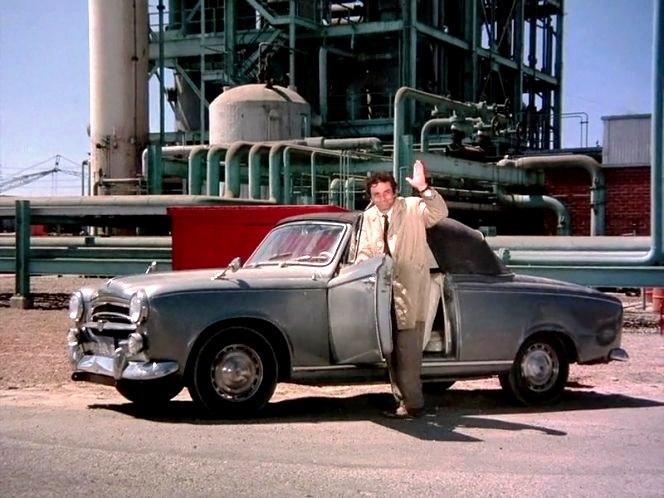
Columbo’s car is a 1959 Peugeot 403. Apparently, only 504 convertibles with two doors were made that year. When NBC cancelled the series, the car was sold. ABC had to locate a replacement when they picked the show up later. You can tell the difference because the license plate from NBC seasons was 044-APD and the plate from ABC shows was 448-DBZ.

Most of the suspects on the show were clever, wealthy people who think they have covered their tracks and have a solid alibi.

For only 68 episodes, there were a lot of famous guest stars on the show.  Some stars even portrayed two different criminals including Jack Cassidy, Robert Culp, George Hamilton, Patrick McGoohan, and William Shatner. Other guest stars showing up were Anne Baxter, Johnny Cash, Faye Dunaway, Jose Ferrer, Ruth Gordon, Lee Grant, Janet Leigh, Vera Miles, Ray Milland, Leonard Nimoy, Donald Pleasence, Dick Van Dyke, and Robert Vaughn.

Peter Falk Dick Van Dyke Color Poster Columbo Rare at Amazon's  Entertainment Collectibles Store
Falk with Dick Van Dyke–Photo: amazon.com

There was a variety of music written for each episode of the show. The Mystery Movie Theme was written by Henry Mancini and was used for the NBC shows. Both Quincy Jones and Mike Post also wrote versions of The Mystery Movie theme. One song uniquely belonging to Columbo was “This Old Man.” Falk can be heard humming or whistling it in various episodes after it was introduced in a 1973 show.

The show received thirteen Emmys during its run. Falk won the Emmy the first season and again in 1976. He was nominated in 1973, 1977 and 1978 but lost to Richard Thomas, James Garner and Ed Asner respectively. The series was nominated in 1972, 1973, 1976, 1977, and 1978 (winners were Elizabeth R Masterpiece Theater; The Waltons; Police Story; Upstairs, Downstairs; and The Rockford Files).

Columbo Wallpapers Wallpapers - All Superior Columbo Wallpapers Backgrounds  - WallpapersPlanet.net
Photo: wallpapersplanet.net

The show was very popular and was broadcast in 44 countries. There is a statue of Columbo in his coat in Budapest, Hungary on Falk Miksa Street. The story behind it is that according to then-mayor Antal Rogan, Falk is a relative of Falk Miksa who was a Hungarian writer and politician, but I could not verify if that was true or not.  What is true is that it was put up in 2014 at a cost of $63,000.

When he is questioning witnesses, Columbo often throws in random references to his wife and or something the couple liked to do, but we never see her in the series.  However, later a show was created, Mrs. Columbo starring Kate Mulgrew. Falk’s real-life wife Shera Danese was cast in six of the Columbo episodes, always appearing as a different character.

A group of novels was adapted from the Columbo tv series by MCA written by Alfred Lawrence, Henry Clements, and Lee Hays.

Columbo has been a popular show in syndication and can currently be seen on ME TV Sunday nights. The shows run from 70-98 minutes which probably makes syndication interesting. The entire set is available on DVD for about $50.

Unfortunately, Peter Falk was diagnosed with dementia in 2007, and by 2009 he could not recognize photos of himself and did not remember playing Columbo. He passed away in 2011.

Best 45+ Columbo Wallpaper on HipWallpaper | Columbo Wallpaper, Columbo TV  Wallpaper and Peter Falk Columbo Wallpaper
Columbo

It’s been fun looking at these five detectives for this series.  When I put this together, I chose five private eyes I thought would make good articles. What I didn’t realize, is that four of them were all from the same era.  In fact, in 1973, Columbo was on Sunday nights followed by Mannix and both were in the top twenty and on Wednesday nights Cannon was on followed by Kojak and both were in the top ten. The following year, Sunday nights featured Kojak before Mannix which was still in the top 20 and they were on at the same time as Columbo. Cannon eventually moved to Sunday night but also spent part of the year on Wednesdays where it was also in the top twenty. Matlock debuted in the late eighties, after the other shows except Columbo had all gone off the air.

Cannon, Kojak, Mannix, Matlock, and Columbo—five very different types of detectives who had one thing in common: good writing. Check them all out and I’d love to hear which one is your favorite.

C’mon Get Happy

We are in the midst of looking at the Friday night shows that aired in September 1970 through May 1972. Today we meet the cast of The Partridge Family.
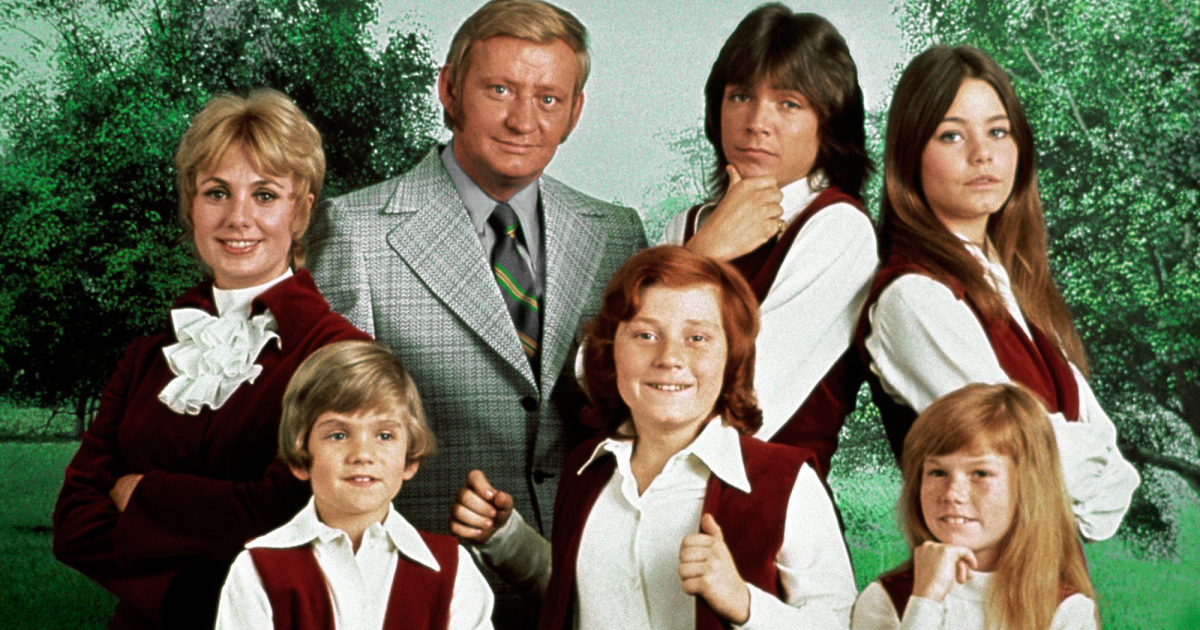
partridge1

The Partridge Family was created by Bernard Slade. Slade wrote for Bewitched, was a script supervisor for The Courtship of Eddie’s Father, and created several other shows including The Flying Nun, Bridget Loves Bernie, and Love on a Rooftop. Bob Claver served as executive producer.

The concept was loosely based on The Cowsills, a family band who grew up in Rhode Island and toured with their mother. Shirley Jones was signed to be the star of The Partridge Family. The Cowsill kids were offered the role of her children, but they refused to do the show without their mother. David Cassidy, Jones’ step son, was hired as lead singer Keith Partridge. Susan Dey, a model, age 17, was hired as Laurie Partridge, keyboards. Danny Bonaduce is the ten-year-old Danny who acts 45 and plays bass guitar; Jeremy Gelbwaks is Chris the drummer, while Suzanne Crough is the tambourine-playing Tracy, the youngest member of the family.

partridge3

The pilot was filmed in December of 1969, but when the first episode aired, a few things had changed. Shirley was originally named Connie, and she had a boyfriend played by Jack Cassidy. The family lived in Ohio, not California.

THE PARTRIDGE FAMILY

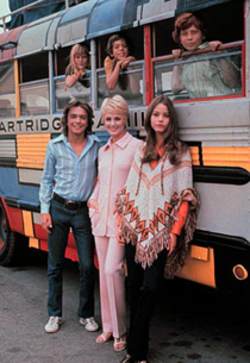
In the first episode, the Partridge kids convince their mom, a widow and a bank teller, to fill in to record a song with them in their studio/garage. Danny goes through a few shenanigans to get Reuben Kincaid to listen to the demo, eventually trapping in him the rest room. Rueben loves it, hires on as their manager, and the song hits the top 40, propelling the family to stardom. They buy an old school bus which they paint and go on the road, performing in Caesar’s Palace in Las Vegas.

partridgebus06

While many of the episodes take place on the road, most of the shows are set in San Pueblo, their home city, dealing with the typical issues siblings had then and still encounter today.

Ray Bolger and Rosemary DeCamp show up often as Shirley’s parents. We also get to know Reuben’s stewardess girlfriend Bonnie Kleinschmidt played by Elaine Giftos.
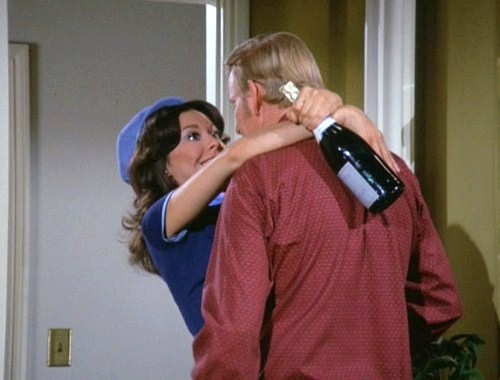
bonnie

For the second season, a few additional changes took place. Shirley started out narrating the episodes but stopped partway through season one. Jeremy Gelbwaks’ family moved to the east coast; and he was replaced with Brian Forster. David Cassidy mentioned that young Jeremy had a personality conflict with most of the cast members. When he got older, he must have been easier to get along with because as an adult, he has appeared with the rest of the cast on reunion shows. The theme song was also tweaked.  Titled “Singin’ Together” the first year, it was given a new arrangement, a new name in “C’mon Get Happy,” and new lyrics:

We had a dream, we’d go travelin’ together,
We’d spread a little lovin’ then we’d keep movin’ on.
Somethin’ always happens whenever we’re together
We get a happy feelin’ when we’re singing a song                                                          Travelin’ along there’s a song that we’re singing,                                                                C’mon get happy

Scattered throughout the 96 episodes are more than 50 celebrity guest stars, an astonishing number for a sitcom. We saw sitcom stars from classic shows including Morey Amsterdam, John Astin, Edgar Buchanan, Jackie Coogan, and Arte Johnson. We saw popular hosts like Dick Clark. Howard Cosell represented the sports industry. Movie stars showed up like Margaret Hamilton, Charlotte Rae, and Harry Morgan. Future stars made their mark: Jodie Foster, Mark Hamill, Meredith Baxter, and Bert Convy.  Three of the Charlie’s Angels first appeared on The Partridge Family: Farrah Fawcett, Jaclyn Smith, and Cheryl Ladd. Musicians Johnny Cash and Bobby Sherman appeared, as did comedian Richard Pryor.

Danny struggled with his lines. He was dyslexic, but he also had an eidetic memory, so he not only memorized his lines, but the rest of the cast’s lines as well, and they didn’t always appreciate him telling them what they could not remember. He was a bit of a wild child. Shirley Jones said once the cast ganged up on him and poured a pitcher of milk on his head to get him to behave. Once she forgot he was not her real son and sent him to his room for a time out. Danny had reason to misbehave though. He was verbally and physically abused at home. Dave Madden who played Reuben took him in to live with him for a while. On the show, the two of them pretended to have a love/hate relationship, but you knew Danny was Reuben’s favorite. Some of their dialogue was:

danny and reuben

Reuben Kincaid: …Tell me, did your mother ever tell you not to play in traffic?

Danny: Of course.

Reuben Kincaid: Too bad.


Danny: …You know, we think a lot alike.

Reuben Kincaid: I know. And sometimes it scares me.


Reuben Kincaid: Danny, if you’re ever thinking of running away from home, do it.


Reuben Kincaid: …Good day.

Danny: It was until now.


Reuben Kincaid: Danny, if you’d like to go to the beach with me, I’ll let you swim in the riptide.

Danny: Riptides are dangerous.

Reuben Kincaid: Aw, who told you that?

partridge22

The Partridge house is a popular house in television series. It was the home of the Kravitzes in Bewitched and was later Margaret’s house in Pleasantville and the home of the Thatcher family in Life Goes On.
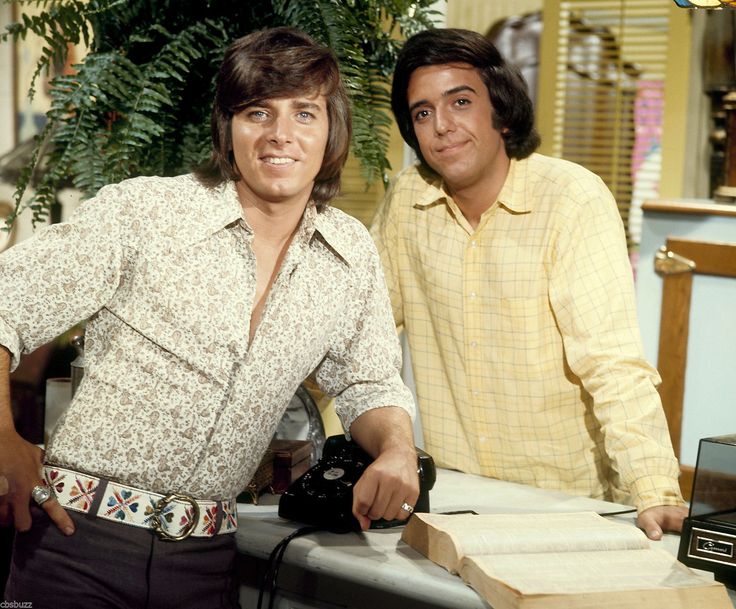
get together

Most people might not remember that The Partridge Family created a spin-off series.  On one episode, Bobby Sherman and Wes Stern are introduced by the family and become a successful song-writing duo. It became a show Getting Together during the 1971-72 year. Too bad it wasn’t titled Staying Together, because it only lasted 14 episodes. The concept was based on Boyce and Hart who wrote for several famous singers including The Monkees and Jay and the Americans.
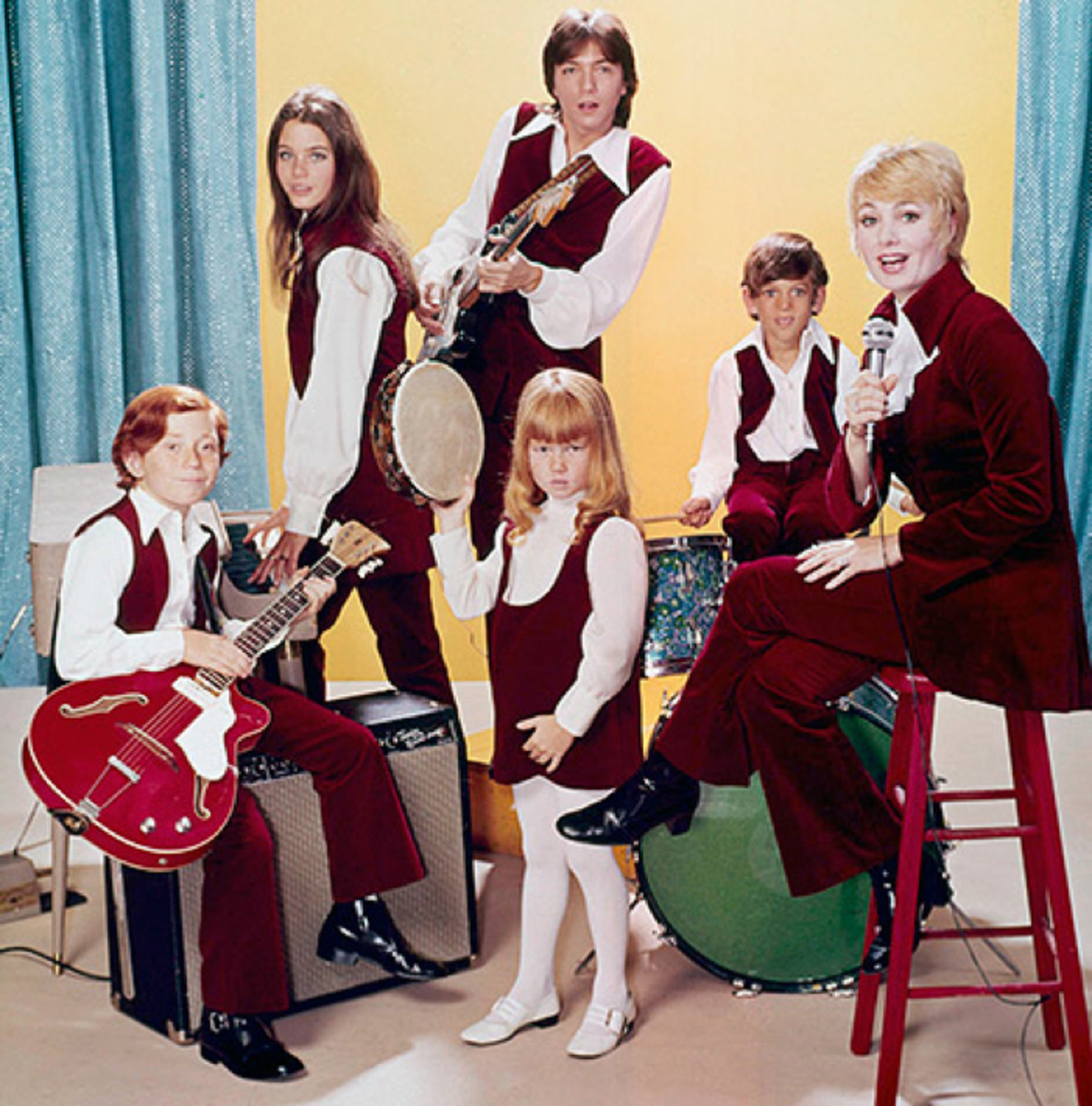
partridge2

Music was an important part of The Partridge Family. The early 1970s had a range of popular music. You could choose from Janis Joplin, Jimmy Hendrix,  Led Zeppelin or the Archies–ranging from hard rock to pure bubblegum.
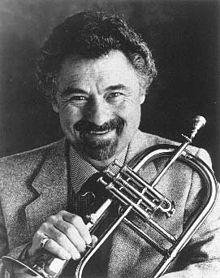
Shorty_Rogers

The music for the pilot was recorded by Shorty Rogers. Rogers had worked with Woody Herman and Stan Kenton. He was a trumpet player and music composer. He recorded music for several movies and later for Starsky and Hutch. Wes Farrell produced the songs for the rest of the series. Farrell has written or produced more than 500 songs, the most famous being “Hang on Sloopy.” He wrote 30 songs for the Partridge Family. The Wrecking Crew were Los Angeles session musicians, most of whom had classical or jazz backgrounds. They were the house band for Phil Spector and played behind many singers including Sonny and Cher, The Mamas and the Papas, Frank Sinatra, The Monkees, and The Beach Boys.
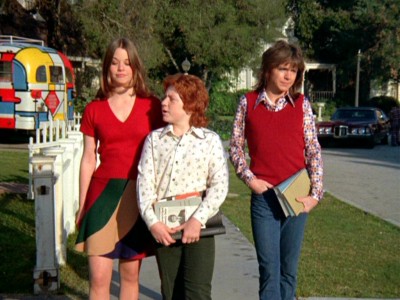
partridge8

The most famous Partridge Family song was “I Think I Love You,” written by Tony Romeo who wrote for The Cowsills.  The song went to number 1 on the Billboard charts. When the first album came out, it went to number 4. Romeo also wrote the music for the movie Rain Man as well as for other television shows and a variety of jingles. I have to say that my favorite Partridge song, hands down, is “Oh, No, Not My Baby.” By the end of the show, 8 albums had been released including a Christmas one.
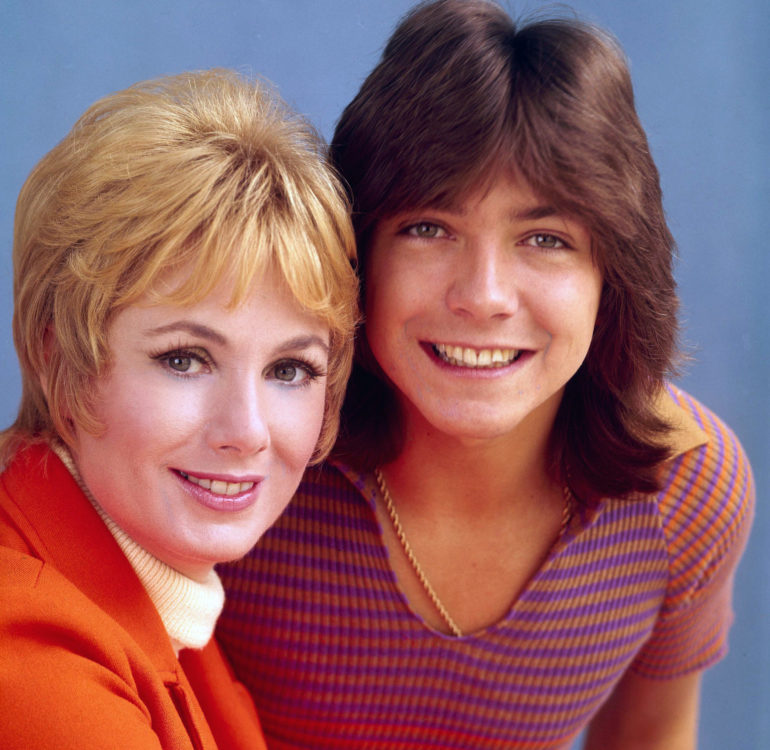
THE PARTRIDGE FAMILY

Shirley Jones sang on many of the songs while David Cassidy was the lead singer, but the rest of the cast lip-synched their songs. The show took a toll on David.  He was made a teen idol but was not playing the type of music he was passionate about.  He toured playing Partridge Family staples. Sony made a fortune off him. He wasn’t paid royalties, and they were allowed to use his image however they wanted to without his permission. Even the dues paid by his fan club members went to Sony. His manager realized that David had signed his contract at 19 when the legal age was 21, so his contract became null and void, allowing him to renegotiate it for better terms.  Until then, he was paid $600 per episode and that was it.

In 1974, The Partridge Family was moved to Saturday night opposite All in the Family and could not survive the ratings war.

cartoon

Oddly enough, later that year, a Saturday cartoon was aired called The Partridge Family 2200 AD. It was produced by Hanna-Barbera. Shirley Jones and David Cassidy were not involved at all and Dave Madden and Susan Dey had limited involvement.

reunion

The cast reunited November 25, 1977 for a reunion show with the cast of My Three Sons. They also got together on the Arsenio Hall Show, Danny Bonaduce’s radio show, and three different documentaries.

Perhaps the best measure of the show’s popularity is the incredible amount of items that were produced during the four short years the show was on the air. There is a Partridge Family game (which I have and still play), trading cards, mystery books and comic books starring the family, lunch boxes, blankets, Christmas ornaments, a Keith Partridge watch, dolls, song books and sheet music, a Johnny Lightning bus replica, Viewmaster reels, and many other items. Johnny Ray Miller wrote a book in titled When We’re Singin’: The Partridge Family and Their Music, chronicling the music of the show.

partridge21


Shirley Jones enjoyed her time on The Partridge Family. She has continued to keep busy performing and spending time with her real family.
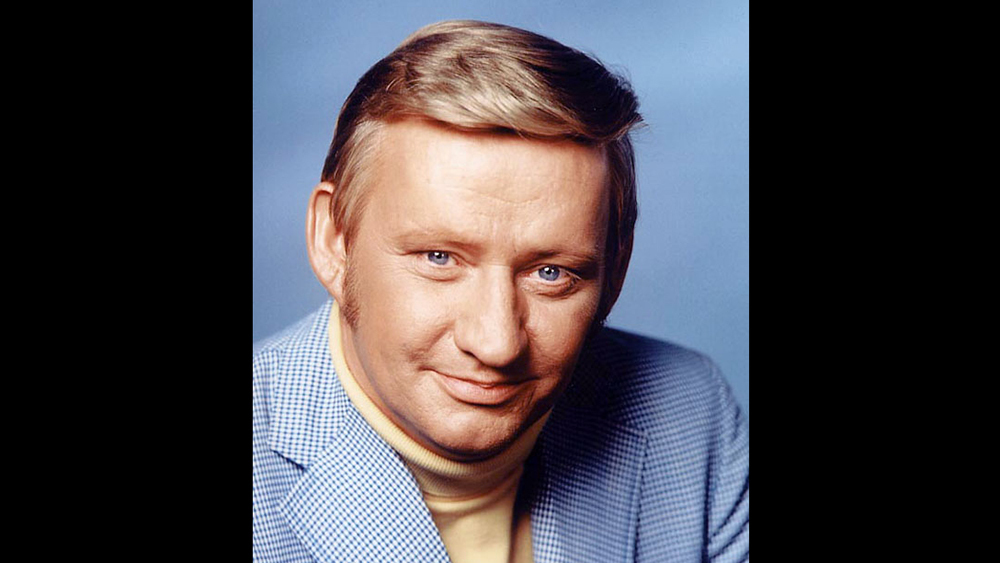
partridge11

Dave Madden also kept quite busy following the cancellation of the show. Being a smoker most of his life, he quit smoking after the episode “Every Dawn I Diet” when he and Danny have a bet that he can quit smoking and Danny can lose some weight. He passed away in 2014 at age 82 from complications of myelodyplastic syndrome, a disease where red blood cells don’t mature in the marrow.

jeremy

Jeremy Gelbwaks became a management consultant.
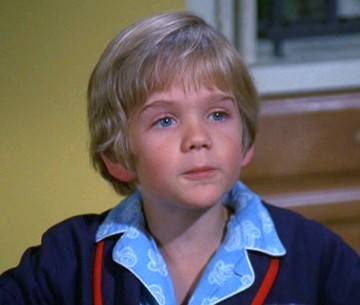
brian

Brian Forster is a race car driver, participating in community theater. In a side note, his mother was related to Charles Dickens, and his step-grandfather was Alan Napier, the butler Alfred on the Batman television show.
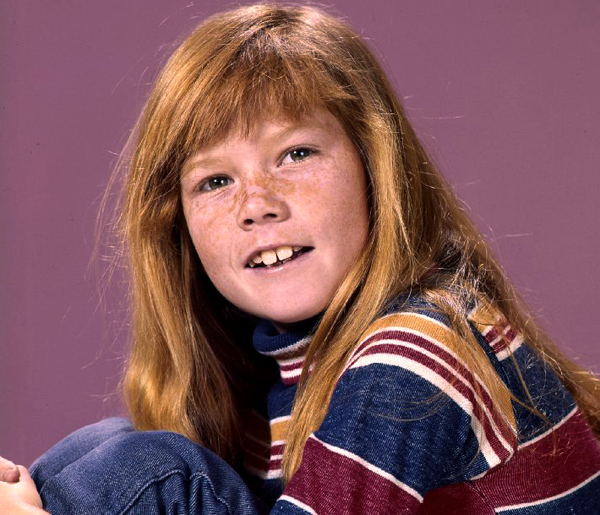
tracy

Suzanne Crough made a few appearances in shows and movies through 1980. She went to college, worked at a bookstore and managed an office supply store. She married and had two children. She passed away unexpectedly in 2015 from cardiomyopathy.

partridge13

Susan Dey had roles on several shows following her stint on The Partridge Family. She and David Cassidy tried dating after the show was off the air, but it did not end well. He revealed their relationship in his 1994 autobiography when she apparently severed ties with him altogether.
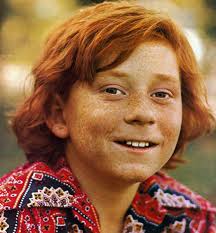
partridge16

Danny Bonaduce has had a rough ride but has been a busy and productive radio host for the past decade or so. David Cassidy also had some tough years with drug use and alcohol. He passed away in December. After Cassidy’s death, Bonaduce wrote: “I have known, loved, and admired David Cassidy for 48 out of my 58 years. He has been as kind to me as any real brother could ever be. We’ve been through a lot together and he was always there for me. This loss is huge. RIP my dear friend.”

susan and david

Brian Wilson, the lead singer of the Beach Boys, said he was “very sad” to hear about Cassidy’s death. “There were times in the mid-1970s when he would come over to my house and we even started writing a song together,” he tweeted. “He was a very talented and nice person.”
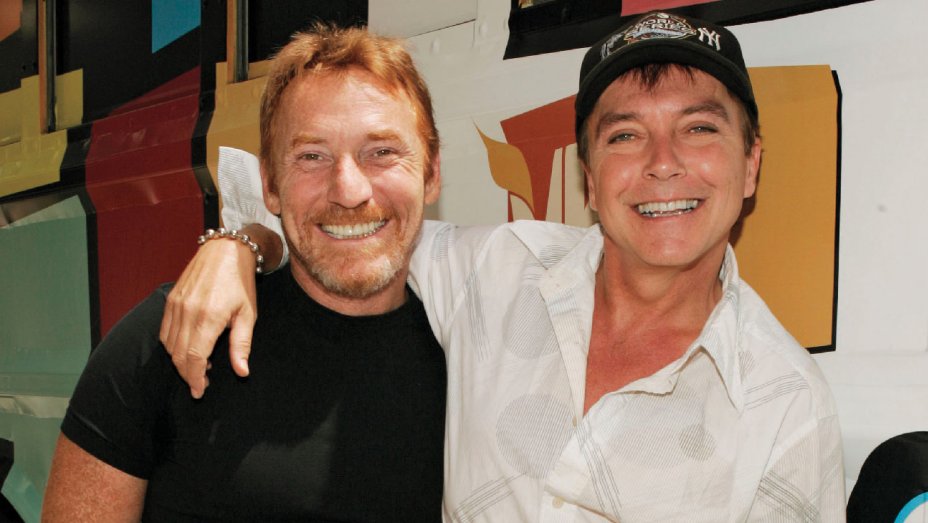
danny and keith

Bonaduce shared some of his remembrances about Cassidy:

David Cassidy was a god to me. We weren’t close when we did The Partridge Family — I was 10 years old; he was 20 — but to me he was like Elvis Presley, down to the jumpsuit and the arenas filled with fans. . .

We did become friends much later, in the 1990s. I was going through some trouble — I was on the cover of all the tabloids, “Ex-Child Star Gone Wrong” — and David was having problems of his own. He gave me some advice. He said, “You know, Danny, you should be in on the joke; you shouldn’t become the joke.” Then he invited me to go on tour with him. “It’s going to be fantastic,” he said. “We’re going to go on my tour bus, and at the end you’re going to get a job out of it. But here’s the deal: There’s going to be no drugs, no alcohol, no smoking and no women.” I said, “Then I’m not going.”

But I did go on tour, doing stand-up before David performed, and at every stop I did interviews with local radio stations. And around the fifth radio interview, they said: “Boy, you’re really good at this. You want to stay?” They offered me more money than I’d ever seen in my life: $75,000 a year. David told me the tour would give me a career, and it did.

When it came to his own career, though, David got robbed. When he decided he didn’t want to be Keith Partridge anymore, he quit The Partridge Family. He wanted to go on tour and be a real rock ‘n’ roll star. But the road he chose to go down after the show, it didn’t go as far. He became the Partridge Family theme song, he became the act of looking like David Cassidy, with the same thousand fans coming to every show. He never did get the life he wanted. It really was a tragedy. I was in Europe when he died, but I heard he was surrounded by his family — Shirley Jones, Shaun Cassidy, Patrick Cassidy. And I heard his last words were, “So much wasted time.”

partridge18

On the first episode, the Partridge clan goes to a car dealer to buy their bus. In reality, the studio purchased it from the Orange County School District. After the show was cancelled, the bus ended up behind Lucy’s Tacos near UCLA. When the restaurant did some repaving, the bus was moved to a local dump: the windows were broken, the tires were flat, and the paint had faded.
partridge7

In our memories, the bus will be forever colorful and bright, Keith will continue to make girls swoon, Laurie will give wise counsel to her siblings, Danny will make us laugh, Chris and Tracy will put in their occasional one-liners, and Shirley will take teach us important life lessons. There is something timeless about The Partridge Family, and I appreciate each of the 96 episodes.  On the next rainy day, watch a few of the DVDs from the four seasons and find something to appreciate in each one as well.