As we wind up our Riding the Range blog series, we end with another show set in the 1880s: The Rifleman.
📷boomermagazine.com
The series was set in the New Mexico Territory and starred Chuck Connors as Lucas McCain and Johnny Crawford as his son Mark. The show was on ABC from 1958 through April 1963. Lucas McCain was one of the first single parents on television.
The show was created by Arnold Laven and developed by Sam Peckinpah. Peckinpah would go on to direct many famous westerns. The pilot episode was written by Peckinpah and Dennis Hopper starred in it. It was aired on Dick Powell’s Zane Grey Theatre. Some famous people worked behind the scenes. Connors would write several of the episodes and Robert Culp, who would become the co-star of I Spy, wrote a two-part episode. Ida Lupino directed “The Assault” in 1961.
McCain was a Union soldier in the American Civil War. His wife died from smallpox when their son was six, and McCain and Mark move from Oklahoma to New Mexico where Lucas buys a ranch outside North Fork. McCain is not a perfect father; he is often stubborn and opinionated. Sometimes he seems overprotective of his son. He tries to teach Mark life lessons. In one episode, he tells him “A man doesn’t run from a fight, Mark, but that doesn’t mean you go looking to run to one.”
📷remmetsweeney.com
Chuck Connors was offered the role of McCain but turned it down because he thought the salary was too low. Several other actors were tested but no one had the same chemistry with the young boy that Connors did, so they made him another offer with a higher salary.
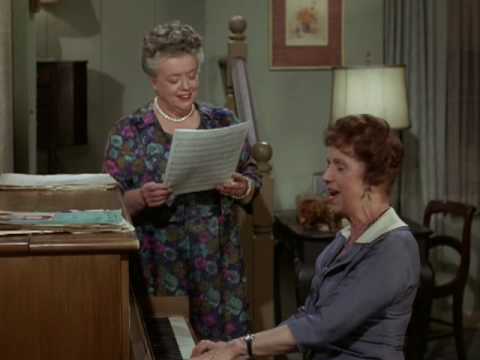
There are some North Fork folk who show up on many of the shows including bartender Marshal Micha Torrance (Paul Fix), Frank (Bill Quinn), hotel owner Lou (Patricia Blair), blacksmith Nels (Joe Higgins), banker John (Harlan Warde), general store owners Milly (Joan Taylor) and Hattie (Hope Summers), and hotel clerk Eddie (John Harmon). Bill Quinn was Bob Newhart’s father-in-law. Patricia Blair left in 1963 to star in Daniel Boone. Hope Summers moved to Mayberry after the show ended and became Aunt Bee’s best friend. Joan Taylor only did a few shows after The Rifleman, but she came into the show with quite a few television appearances. Higgins, Warde, and Harmon were prolific actors who had very successful careers.
📷amazon.com
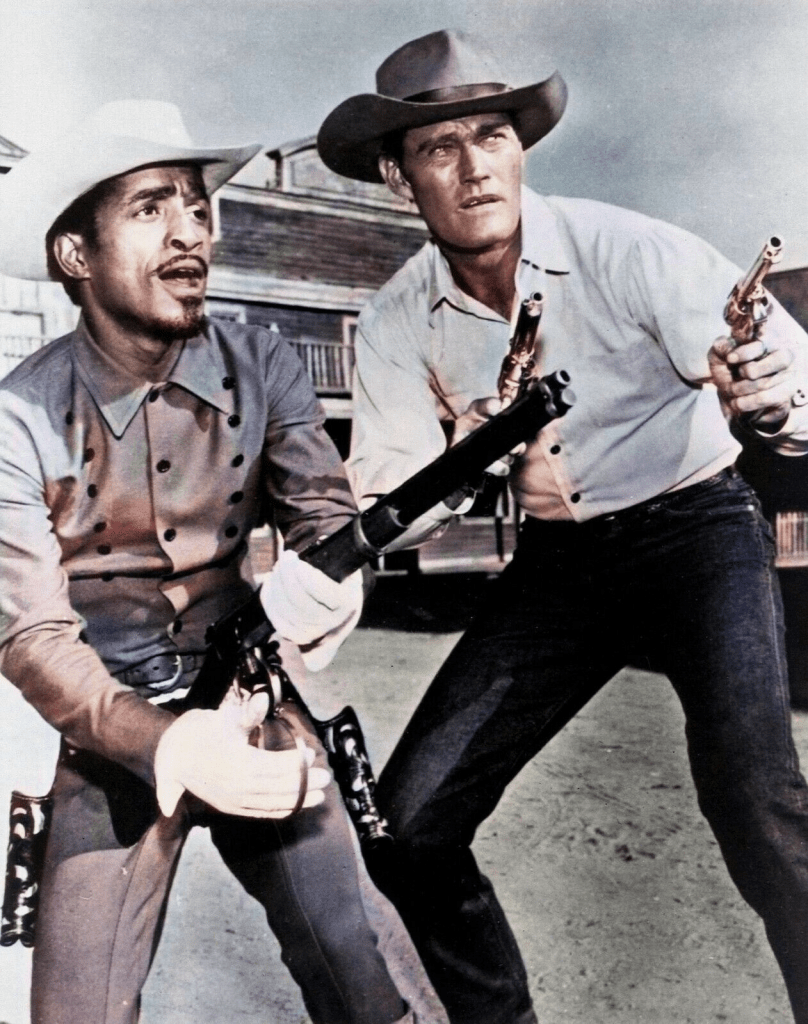
Quite a few well-known stars make their appearance during the run of the show. Some of them include Harry Carey Jr., John Carradine, Lon Chaney Jr., Ellen Corby, Robert Culp, Sammy Davis Jr., Jack Elam, Dabbs Greer, Buddy Hackett, Michael Landon, Agnes Moorehead, Denver Pyle, Pernell Roberts, Robert Vaughn, and Adam West.
There were so many westerns on the air during the fifties and sixties that most of them needed a hook to set them apart. McCain was called The Rifleman because he used a modified Winchester Model 1892 rifle with a large ring lever. The lever design allowed him to cock the rifle by spinning it in his hand and it was rigged to rapid fire which we saw demonstrated in the opening of every show. I guess no one was bothered by the fact that McCain used a rifle that would not be invented until ten years later than the time the show was set in.
The show was on Tuesday nights for the first three seasons. For season four, it moved to Mondays. After the fifth season, the show was canceled due to low ratings. However, Connors and Crawford remained life-long friends. Connors admired Crawford’s work on the set and said he always respected the cast and crew.
📷ebay.com
Crawford began his career as a Mouseketeer, one of the original 24. After the show ended, he became a pop singer with five hits. “Cindy’s Birthday” was his most famous and it was No. 8 on the Billboard 100 in 1962. Crawford came into the show with thirty acting credits, and he would go on to have thirty more after the show ended, but he never starred in another series.
Fun fact, The Rifleman was one of the few American shows that was allowed to be shown on Russian television. Apparently Breshnev loved the show. Later he met Chuck Connors when he came to the US. The actor made several trips to Russia.
I have seen this show on MeTV, and it is okay. I’m guessing that the reason it was on five seasons, and the reason it was canceled after five seasons, is because it was another western. Almost every western seemed to be successful in the fifties and sixties, but five years seems to be about the length of most of them with the exception of Gunsmoke, Bonanza and a handful of others. I have to admit that I am not drawn to McCain as a character, although I didn’t dislike him either. If you like westerns and have not seen it, it might be worth checking out.
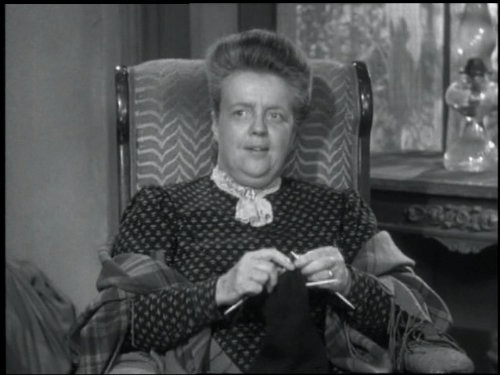
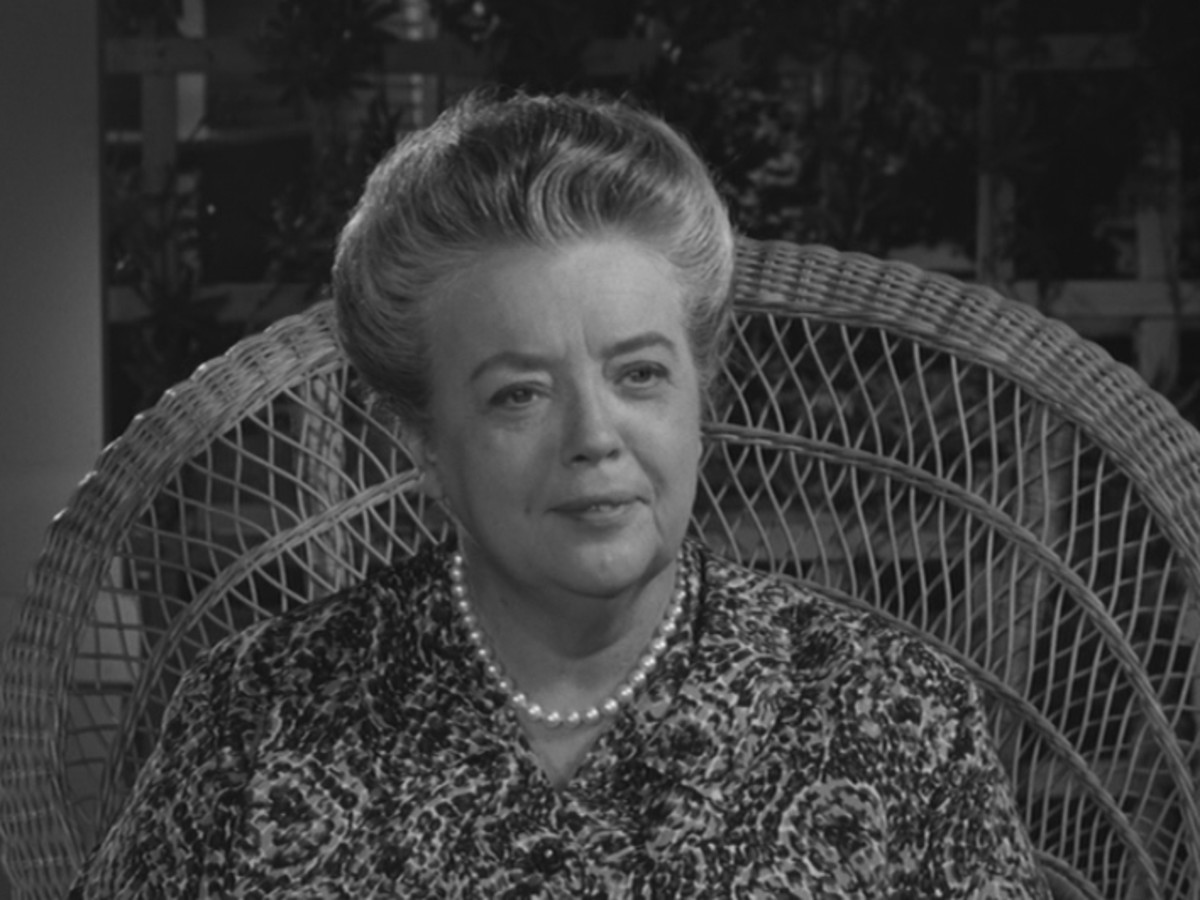
We are kicking off the new year learning about some of our favorite women from the golden age of television. Today we learn about an actress who was often described as difficult to work with personally but a consummate actress. Today let’s meet Frances Bavier, everyone’s favorite aunt.
Photo: mayberryfandom.com
Born in a traditional brownstone in New York City in 1902, Frances planned on becoming a teacher and attended Columbia University. However, she felt drawn to the stage and found herself enrolled at the American Academy of Dramatic Arts. Graduating in 1925, she received her first Broadway role the same year, appearing in “The Poor Nut.” Her big break came in the production of “On Borrowed Time.” Her last Broadway appearance was in 1951 with Henry Fonda in “Point of No Return.”
A young Frances image: Twitter
Bavier would be part of the Broadway scene for a few decades before moving into films. Perhaps her best-known silver screen role was Mrs. Barley in The Day the Earth Stood Still. Bavier would continue to appear in movies throughout her career including her last performance which was in Benji in 1974.
In 1928 Frances married Russell Carpenter, a military man, and they divorced in 1933. During WWII Frances toured with the USO to entertain the troops. Frances reflected on her marriage later in life and said that he was a very charming man but did not understand her need to be an actress. She said as much as she loved him, she loved acting more.
Her first television roles were in drama series such as Ford Television Theater, Chevron Theater, and Pepsi Cola Playhouse among others in the early fifties. The mid-fifties found her in a variety of series, including Duffy’s Tavern, The Lone Ranger, Dragnet, The Ann Sothern Show, Perry Mason, and Wagon Train.
On the Lone Ranger Photo: imdb.com
Frances would be offered two recurring roles in sitcoms during this time. From 1954-56, she was one of the cast members of It’s a Great Life as Amy Morgan who ran a boarding house. When that show ended, she was cast on The Eve Arden Show as Nora, Eve’s mother and housekeeper.
In 1960 she happened to be cast as Henrietta Perkins in an episode of Make Room for Daddy with Danny Thomas. That particular show featured a little town called Mayberry where Danny and his boys were pulled over for speeding and met Sheriff Andy Taylor. When that episode became its own show, Henrietta Perkins transitioned to Aunt Bee.
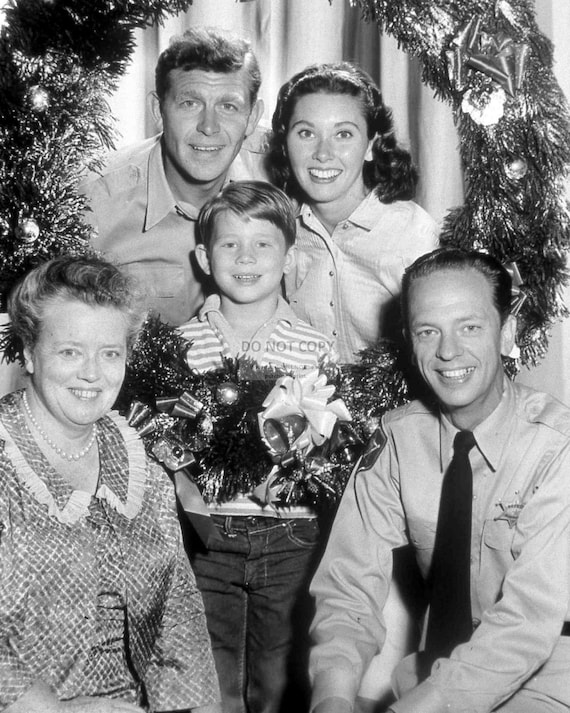
Aunt Bee was a major character in The Andy Griffith Show, and Bavier continued with the show when it became Mayberry R.F.D. with Ken Berry as the star. Bavier was nominated and won the Emmy for her role in 1967.
An early season with Ellie Walker Photo: etsy.com
Fans loved the relationship Andy and Aunt Bee had, although in real life Andy and Frances were not close. The entire staff was cautious in their approach when working with her because she was easily offended. Ron Howard, always tactful, was pressed on his relationship with her and just replied that “I just don’t think she enjoyed being around children that much.” Producer Sheldon Leonard commented, “[She] was a rather remote lady. Highly professional and a fine comedienne, fine actress with very individual character. She was rather self-contained and was not part of the general hi-jinks that centered upon Andy on the set.”
Producer Richard Linke commented that “She was very touchy and moody due to her age, and you had to be very careful how you treated her and what you said around her. I think Andy offended her a few times, but they became very close friends.”
“I think Frances thought I was a gentleman,” mused actor Jack Dodson, who played Howard Sprague on the show. “I’m not, really, not any more so than anybody else. Since I had fewer scenes to do with her, I had fewer opportunities to swear in front of her, which is why we never had any difficulties. Frances was temperamental and moody, but she kept 99 percent of that to herself. Once in a while, she would get mad at someone. She was the only person in the whole company whose feelings you had to be careful not to hurt.”
Pop culture historian Geoffrey Mark, wrote, “She was a very talented lady, but she was very difficult to work with, and nobody could really figure it out. Eve Arden had trouble with her on The Eve Arden Show. That’s the earliest I can point to where Frances was already getting to be persnickety. I can only repeat what I was told, but on The Andy Griffith Show, Howard Morris, who played Ernest T. Bass on the show and directed episodes of it, said that directing Frances was like stepping on a landmine. If you would ask her to move three inches to the right to get in the proper frame, or, ‘Could you stand up when you say that line?’, she’d blow a fuse and refuse. It was, like, ‘I’m an actress and I know what I’m doing. How dare you try to tell me when to walk and where?’ It’s like yes, you are an actress, but an actress takes direction from the director. Why in the world would you make what is already a stressful situation more stressful?”
Emmy with Don Knotts Photo: 99.9 kekb
However, Andy mentioned during a Larry King interview that Frances phoned him four months before her death and apologized to him for being difficult to work with. Perhaps being alone and reflecting on her past behavior gave her some perspective on the situation, because she told a reporter with the Times Record in Troy, NY that “I don’t have a lot of friends. I don’t see how anyone my age working as hard as I do can have a big social life. I get very annoyed with people and the older I get, the crankier I am. This work has had an effect on my personality. I’m impatient with people and oriented to action.”
In 1972, Bavier retired. She bought a home in Siler City, North Carolina. The stately house is a three-story brick home with stone accents and located at 503 West Elk St. The house was built in 1951 by a local doctor. When asked about her choice of retirement, she said that she “fell in love with North Carolina, all the pretty roads and trees.”
Photo: newsobserver.com
It must have been a bit of a lonely life though. She was pretty much a recluse and lived with 14 house cats. She had no children, and there was no family living nearby. She promoted both Easter Seals and Christmas Seals and often wrote letters to her fans. In an interview with the San Bernardino County Sun, she talked about one of her hobbies: launching imaginary expeditions to remote corners of the world via her collection of maps. During the production of TheAndy Griffith Show, Frances mentioned in an interview in the Charlotte News that when she felt lonely, she went to a supermarket and somebody would always look at her and smile and say “Why, hello, Aunt Bee.”
With Hope Summers in Mayberry Photo: youtube.com
Frances realized the 3700 residents of Siler City had a difficult job relating to her as well. As she put it during a local TV interview, she was “a 70-year-old lady that probably wants to be alone and they’re having a problem with trying to be friendly and show their friendliness, and at the same time not intrude. That makes it very difficult for them. Living here has been a difficult adjustment for me. I have a great deal to learn from Siler City and North Carolina. It’s an entirely different and new way of life.”
Photo: classicmoviehub.com
When she passed away in 1989, she left a trust fund of $100,000 to the police department in Siler City that would provide an annual bonus to all police personnel. Most of her $700,000 estate was left to the hospital foundation. She was buried in her adopted hometown, and her tombstone reads “Aunt Bee. To live in the hearts of those left behind is not to die.”
Frances mentioned in several interviews that she loved the character of Bee, but it was hard to be stereotyped in one role. She told The Charlotte News that “Once in a while I get a hankering to play a really bad woman. . . I was really vicious in a Lone Ranger episode, but so many people wrote in outraged at what I was doing, I guess it was a mistake. Sometimes it gets me down to think I’ve lost my own identity as an actress. But other times I get a lift when I realize that I’m really doing quite well.
I can’t imagine having to become another person for so much of my life and always having to be that person to so many people that you would feel like people didn’t really know you as you. The Andy Griffith Show is one of those shows that you read about where the cast truly had a special bond and formed close ties, and Frances must have felt bad that she was not part of that group even if it was her own choice to be excluded. She must have developed a love for Mayberry since she decided to find a small town similar to it where she could live out the rest of her life. Even though she says she never got over her homesickness for New York, she chose to be buried in Siler City as well. I’d like to think she finally found her own Mayberry where she could live and bond with the community as Frances instead of Bee, but it sounds like that continued to be a struggle for her. I hope she realizes how many people loved her character and the joy she has brought to so many fans in the past six decades.
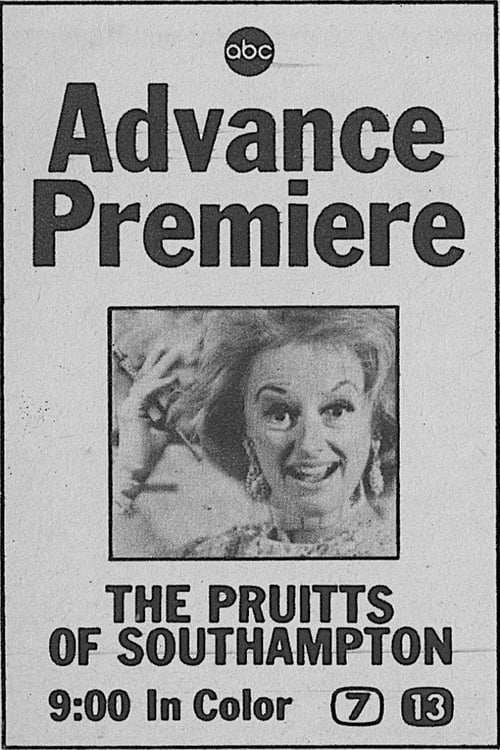
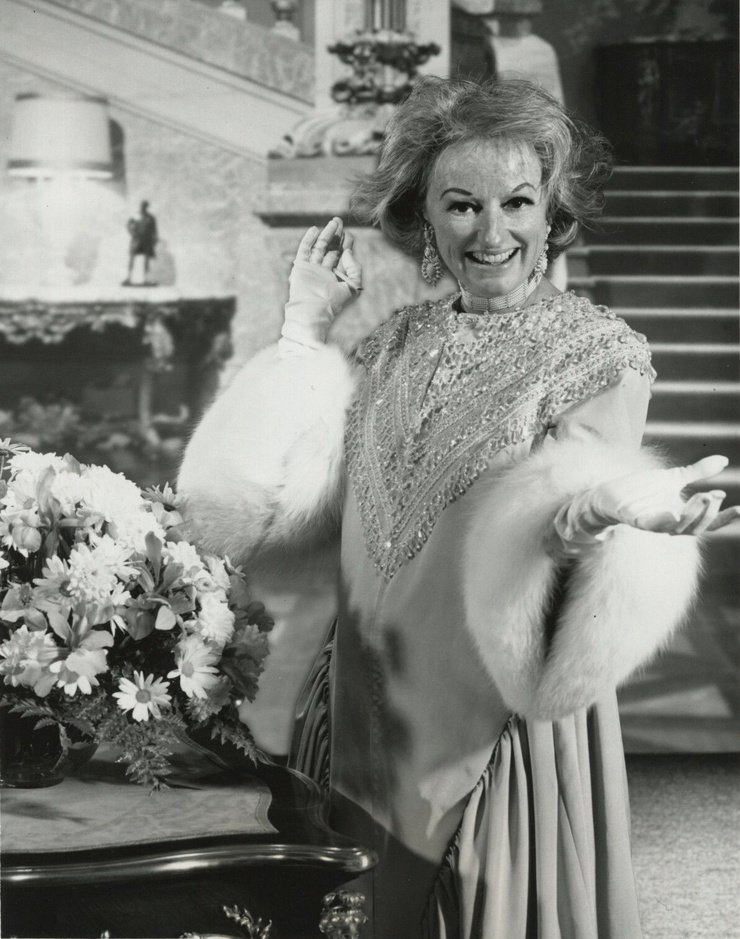
This month’s blog series is “It’s My Show.” Today we are beginning with a show I’ve discussed a few times over the years that had the perfect cast and concept, but it was cancelled after only one season: The Phyllis Diller Show which also went by The Pruitts of Southampton.
Photo: pinterest.com
The show was created by David Levy in 1967 and was loosely based on the book House Party by Patrick Dennis. Levy was also the creator/producer for The Addams Family which aired from 1964-1966. The shows also shared composer Vic Mizzy who wrote the themes for both series. Mizzy also wrote the catchy tune from Green Acres. The opening theme song had Phyllis Diller dancing, skipping, and singing through the mansion, and the lyrics were:
PD: Howcha do howcha do, howcha do my dear What a LOVELY surprise, nice to see you here.
RG: All the bills have been long overdue my dear.
PD: File them under I.O.U… Howcha do, howcha do, Well HELLO, it’s you! Like my beads, like my dress? Aren’t they marvy-poo? They belong to the internal revenue. And they got us eating stew.
CHORUS: The Pruitts of Southampton,
Live like the richest folk, But what the folk don’t know is that The Pruitts are flat broke!
PD: Howcha do, howcha do, howcha do, my dear
RG: We are out of champagne, and I’m stuck, my dear.
PD: Ask the butler to lend you a buck, my dear. Howcha do, howcha do, howcha do…
The Pruitts, an incredibly wealthy family, live in the Hamptons. After going through an IRS audit, the family realizes they owe so much in back taxes, $10,000,000 in fact, that they were now broke. The IRS agrees to let them continue living in their mansion because they think exposing such a wealthy family’s poverty would cause a lot of repercussions.
Photo: pinterest.com
Phyllis Diller starred as Phyllis Pruitt. Phyllis lives with her uncle Ned (Reginald Gardiner), her brother Harvey (Paul Lynde), her daughter Stephanie (Pam Freeman), brother-in-law (John Astin), and their butler (Grady Sutton). Midseason, the show was revamped and the family brings in boarders to raise money, including Norman Krump (Marty Ingels) and Vernon Bradley (Billy De Wolfe). They should have been able to raise a bit of money with 68 bedrooms in the house. Other characters included Regina Wentworth (Gypsy Rose Lee), their nosy neighbor and Baldwin (Richard Deacon), the IRS agent. The incredible Charles Lane plays Max.
In addition, there were a lot of guest stars during that single season including Ann B Davis, Bob Hope, Arte Johnson, John McGiver, Louie Nye, Hope Summers, and Mary Wickes.
The shots of the family home were filmed at the Vanderbilt mansion, Biltmore.
The show began on Tuesday nights. At the time, The Red Skelton Hour was one of the most popular shows on television and was tough competition. When the show was revamped, it moved to Friday nights where it was up against Friday Night at the Movies and T.H.E. Cat. If you don’t remember that show, don’t feel bad, you probably remembered very few of the new series that debuted that year.
Photo: nostalgiacentral.com
1967 was not a very profitable year for sitcoms specifically. Besides Phyllis Diller’s show, the season aired Run Buddy Run, Mr. Terrific, The Jean Arthur Show, Occasional Wife, and Pistols and Petticoats. That Girl was one of the few shows to return the following season.
Even though it was named as one of the worst sitcoms ever in several TV Guide listings, critics at the time praised the show. Phyllis Diller was nominated for a Golden Globe for Best Actress in 1967. Marlo Thomas won, but there was some great competition including Elizabeth Montgomery, Barbara Eden, and Barbara Stanwyck.
Photo: listal.com
One reviewer on imdb.com titled their review “The worst thing I have ever seen in my life” and followed up with a review that said, “Just kidding, this show is amazing and hilarious and that is why I gave it a 10/10.”
When Vic Mizzy discussed the show in a Televison Academy interview, he said the director was not any good, the scripts weren’t as funny as they could have been and sometimes Phyllis didn’t know her part. He thought those were the reasons the show failed. He thought it could have been unbelievabley funny.
One day Vic got a large check from England and it turns out the show was a hit there decades after it was aired in the United States.
I watched a couple of the episodes on youtube for this blog. Phyllis Diller was in rare form. Her hair is crazy like always and slapstick was part of her performance. The laugh track was annoying, but the show was funny at times. Pam Freeman was a breath of fresh air. In one of the episodes, Phyllis and her brother-in-law were trying to finance a pizza-making machine. They had to work around the fact that Baldwin from the IRS put a pay phone in the home to keep them from making so many long-distance calls. One of the funniest scenes was when Phyllis and her brother-in-law climb up one of the phone poles to tap into the line to talk to Baldwin pretending to be other people in order to get Baldwin to approve their financing. Phyllis had to come up with a variety of different voices during the calls. You could definitely hear a bit of Green Acres influence in the background music for this show. This was a show that only could have been produced in the sixties.
One of the best parts of watching the show was seeing the old commercials. I had forgotten the one about Joy dish soap when the dinner guests could see themselves in the plates. It just reminded me it was joyful to see these old shows in their entirety.
It was a fun show to learn about with an outstanding cast and should have been much more successful than it was. Whether the failure came from the director, the scripts, or some other behind-the-scenes issue, I’m not sure. It’s worth watching an episode or two just to see the wackiness that was associated with some sixties shows, but if I have to watch ten episodes of a show, I’ll take That Girl every time.
This month my blog theme is “Don’t Judge Me.” We’ll take a look at sitcoms featuring judges. The first show on the docket is I Married Joan. Debuting on NBC in 1952, the show starred Joan Davis and Jim Backus and was typically described as the marriage of a respected judge and his scatterbrained wife, Joan and Bradley Stevens. It ran for three seasons and produced 98 episodes.
Photo: dvdtalk.com
The early shows begin in the judge’s chambers where he recalls one of his wife’s wacky adventures followed by the episode and ending with the judge summing up his tale of his wife’s mishap and its similarity to a case he was working on. It was very similar to I Love Lucy; however, this show featured more slapstick comedy by Davis. Marc Daniels directed both shows. The shows also were both filmed in Los Angeles at General Service Studios and debuted October 15 (one year apart). Time hated the show—“It might have better been left on the shelf.” Variety, on the other hand, found it filled with “comic zest and vitality.”
I Married Joan was created and produced by Joan Davis Enterprises. She was a successful businesswoman and a workaholic. Joan earned $7500 a week; in today’s equivalent, that would be about $70,000 per episode. Joan was apparently not a very easy person to work for or with. Sherwood Schwartz wrote about a third of the episodes. (He would later go on to create The Brady Bunch and Gilligan’sIsland.) He did not care for Davis and said that Joan made one of the writers stick close to her when they ran through the show because she often wanted a better joke substituted. Jesse Goldstein also wrote a third of the shows. He had written for Burns and Allen and Red Skelton.
Photo: youtube.com
Other actors also complained about working with Joan. Apparently, Backus detested her because she was not kind to the crew and fellow actors. Sandra Gould (who would later appear as Gladys Kravitz on Bewitched), Hal Smith, and Hope Summers (who both showed up in Mayberry as Otis the drunk and Bee’s friend Clara) confirmed Backus’ stories. There are a couple of other stories floating around that Joan once slapped a child for asking for her autograph and threw a temper tantrum at a salon, knocking over a bottle of bleach. Backus had worked with her on radio before signing on for this role, so I’m surprised he had not been aware of her work abuses before. She was described as a bit quiet and shy in her non-work life and spent her spare time fishing, golfing, watching boxing, or reading her extensive gag files.
Rounding out the cast were Dan Tobin as their friend Kerwin, Geraldine Carr as Mabel, Sheila Bromley as Janet, Sandra Gould as Mildred and Hal Smith as Charlie.
Photo: pinterest.com
For seasons two and three, Joan’s daughter Beverly Wills played Joan’s sister on the show. I guess it was a family affair because Henny Backus, Jim’s wife, also had a role on one episode as Mrs. Bunker.
The plots were about what you would expect on a show from this time era. In one, Joan and her friend admire each other’s houses and decide to swap for a week which quickly cures them of their envy. When Joan finds a dress that her husband is hiding for a friend for his wife; she assumes it is for her and “alters” it–a lot. In one episode, Joan wonders what life would be like if she had never married. In another show, she realizes she doesn’t have enough chicken to serve when Brad brings unannounced guests home. Any of these plots could have come from Burns and Allen, The Ann Sothern Show, Our Miss Brooks, or The Life of Riley.
Photo: wikipedia.com
However, in one show, Joan crawls into an enormous commercial soup pot in order to spy on the kitchen crew to learn the recipe for a chef’s famous soup. As you would expect, all the ingredients suddenly begin to get thrown in all around her. Even reading this description, you can picture Lucille Ball in the predicament. Perhaps this is another reason the show didn’t succeed. It was just too similar to the top-rated show in the nation.
Photo: youtube.com
Many people remember the theme-song lyrics.
I married Joan What a girl, what a whirl, what a life. Oh I married Joan What a find, love is blind, what a wife! Giddy and gay, all day she keeps my heart laughin’ Never know where her brain has flown. To each his own Can’t deny that’s why I married Joan. I married Joan!
Photo: youtube.com
For the entire three seasons it was on the air, it was up against Arthur Godfrey and His Friends on CBS and news shows on ABC for seasons one and two. The show did so-so in the ratings for the first season. The second season the ratings increased to the number 3 show. Part of it might have come about from the negative publicity Arthur Godfrey got when he fired Julius LaRosa. The third season Disneyland was on ABC, and the ratings declined again. The ratings were especially low in the New York market, so the show was cancelled. HowdyDoody had just gone off the air, so reruns of the show replaced the popular kids’ show in the mornings. Jim Backus had signed a three-year contract and declined to come back; I’m not sure if that contributed to the cancellation of the show or not.
Photo: wikimedia.com With guest star Bing Crosby
Joan Davis tried to get a few other sitcoms on the air in later years; one interesting idea was for a woman astronaut who was training for a flight to the moon. She officially retired in 1959 and passed away in 1961 after suffering a heart attack.
Photo: wikipedia.com
Jim Backus would go on to have a very successful career. He would cross paths with Sherwood Schwartz again when he accepted the role of Thurston Howell III on Gilligan’s Island. A fun aside is that when the I Married Joan sets were later re-used, Backus’ lines were found written in various places.
Photo: youtube.com
As I noted earlier, the theme for my blog this month is “Don’t Judge Me.” In that spirit, I am trying not to judge Joan Davis too harshly without learning more about her as a person. One thing I have learned in writing television blogs for so long is that several of my favorite characters were not my favorite people; I decided long ago that I could adore the character and abhor the actor. Fortunately, most of the actors in classic television were wonderful people.
Photo: sitcomsonline.com
I do remember watching this show in reruns in the late seventies and early eighties. It was not really my cup of tea, but I am not a big lover of slapstick comedy. Most of the fans that bought the DVDs (91%) gave the series 5 stars and made comments like “extremely funny,” “I couldn’t stop laughing,” and “clever writing and great comic acting.” If you are an I Love Lucy fan, you should probably give I Married Joan a try. There are worse ways to spend an evening.
One thing I have learned doing blogs the past four years is how many shows don’t make it. Although every year has its share of flops, some years are just notorious for having weak programming. The late 1970s was a period of just truly awful shows. Bob Newhart who starred in The Bob Newhart Show decided to quit in 1978. When asked about ending the show, he said, “I could see what was coming in situation comedy, and I didn’t want to be a part of it. If we’d gone another year, they’d have had the guy and two girls living in the apartment above us, a Martian living on the same floor next door to three girl detectives. The floor below us would have been occupied by a fraternity and a sorority.” As bad as that sounds, the shows that the networks put on the air during this time were even worse. Let’s take a look at some of the programming that didn’t make it through a season in the late 1970s.
A Year at the Top
Photo: imdb.com Note the young Paul Shaffer
Believe it or not, in 1976 Norman Lear teamed up with Don Kirshner of Rock Concert fame for a sitcom about the music business. This show was supposed to begin in January of that year but was delayed until summer with an entirely different cast. Two young pop stars Greg and Paul (Greg Evigan and Paul Shaffer—yes the Paul Shaffer from David Letterman) move to LA for their big break. They meet a potential agent named Hanover (Gabriel Dell) who agrees to sign them if . . . and if you think the concept is weird so far, get this: Hanover is the devil’s son, and they need to sign over their souls to become famous. The pair never actually sign the contract. It might have taken a year to get on the air but it only lasted five weeks.
Quark
Photo: newyorktimes.com
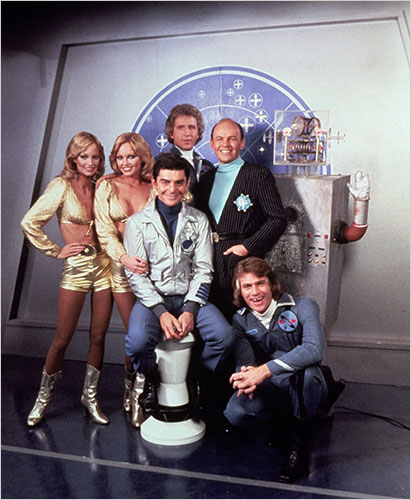
This show’s concept was also a bit of a reach. It took place on Perma 1, a space station in 2222. Adam Quark (Richard Benjamin) had a mission to clean up all the trash in outer space. Quark took orders from a giant disembodied head called, what else, The Head, along with Perma 1’s architect Otto Palindrome (Conrad Janis). If you think this sounds crazy, wait till you learn about Quark’s crew: a part fish/part fowl first officer, a humanoid vegetable named Ficus, clones Betty 1 and Betty 2, and Andy the Robot, a walking junk pile. I was surprised not that it was cancelled after two months, but that it lasted two months. I was also surprised to learn that Buck Henry was the creative force behind this series.
Sanford Arms
Photo: humormillmag.com
A year later in 1977 we have another interesting set-up. When Redd Foxx and Demond Wilson, the two stars, the only stars, left the show Sanford and Son, Norman Lear was left with a show title only. Aunt Esther (LaWanda Page) had been one of the cast members on Sanford and Son and suddenly she was at the hub of this new show. Phil Wheeler (Theodore Wilson) a widower with teenagers buys the house, the junkyard and Esther’s rooming house and tries to start a residential hotel. A month or so later, before he could even make his first payment, the show was done.
Another Day
Photo: wikipedia.com
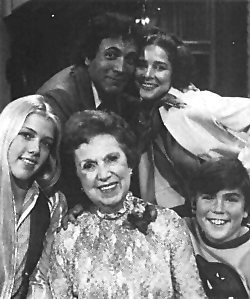
David Groh (who had played Rhoda’s husband) is Don Gardner, a struggling businessman who can’t make ends meet. His wife Ginny (Joan Hackett) has to get a job, and they both had to deal with their introverted son Mark (Al Eisenmann) and their extroverted daughter Kelly (Lisa Lindgren), as well as Don’s mom Olive (Hope Summers who had played Clara on The Andy Griffith Show) who is critical of all of them. Don struggled through a few episodes and was finished.
Apple Pie
Photo: wikipedia.com
A lonely hairdresser played by Rue McClanahan named Ginger-Nell Hollyhock placed ads in the newspaper for a family. The family that she “found” included a daughter (Caitlin O’Heaney) who tap-danced, a son (Derrel Maury) who wanted to fly like a bird, an elderly grandfather (Jack Gilford), and con-artist Fast Eddie (Dabney Coleman). The show was set in Kansas City in 1933. It took place during the Depression and depression is what anyone watching felt, although the pain was fleeting. After one episode the network decided no one wanted this family.
Hanging In
This one was so bad they didn’t want any evidence so there are no photos.
Another flop came along with a star who had been another star’s spouse. Bill Macy who played Maude’s long-suffering husband starred in this show as Louis Harper, a former football hero who did not have the right credentials to be a university president. He has a desire to help the underprivileged, but the rest of the faculty is more concerned about raising money. Other cast members included high-pressure dean Maggie Gallager (Barbara Rhoades), PR man Sam Dickey (Dennis Burkley), and housekeeper Pinky Nolan (Nedra Volz). No finals for this series; it was cancelled after a few weeks.
Hizzoner
Photo: imdb.com
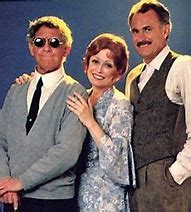
David Huddleston plays Mayor Cooper who runs a small Midwestern town. The cast included the mayor’s secretary Ginny (Diana Muldaur), the mayor’s daughter (Kathy Cronkite, yes Walter’s daughter) and several other quirky characters. While the mayor is quite conservative, his children are left-wing liberals. Apparently, the mayor broke out into song at least once an episode. I guess, he was singing the blues because the show was cancelled after 7 episodes.
In the Beginning
Photo: collectors.com
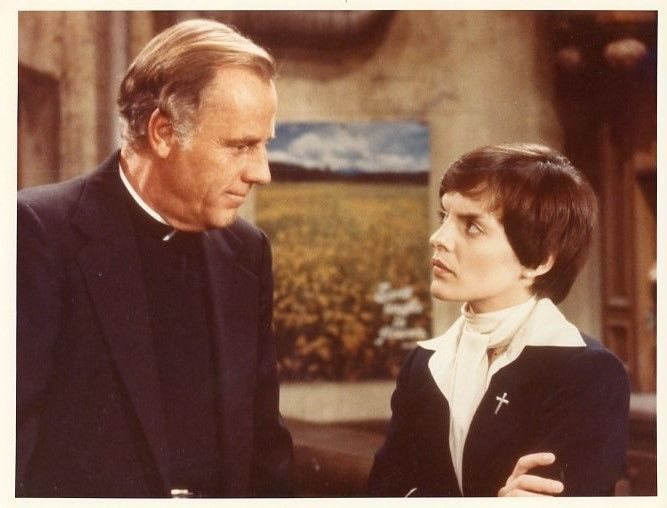
The year 1978 just keeps getting worse for television series. Father Daniel Cleary, played by McLean Stevenson, works in a community center in the heart of Baltimore. Sister Agnes (Priscilla Lopez) works with him. She loves her neighborhood; Father Cleary does not. She is fairly liberal and he is not. It ended almost before it began after seven episodes.
Miss Winslow & Son
Photo: sitcomsonline.com
In this one, an unmarried woman (Darleen Carr) who is an art designer, decides rather than marry a man whom she doesn’t love, she will become a single mother after getting pregnant. Her next-door neighbor Mr. Neistadter (Roscoe Lee Browne) hates kids. Her wealthy and snobby parents are divided about her situation; her father (Elliot Reed) is much more sympathetic than her mother (Sarah Marshall). Before the baby had its first check-up, the show was off the air.
13 Queen’s Boulevard
Photo: sitcomsonline.com
This show was about “a hilarious group of tenants in a garden complex in Queens, New York.” In the first episode, one of the tenants, Felicia Winters (Eileen Brennan) decides to host a class reunion and invites her best friend and spouse, her ex-husband, the class “sexpot,” Fat Hughie, and the class photographer. I don’t know what could possibly go wrong; however, not much went right since it was gone within two months.
Turnabout
Photo: bionicdisco.com
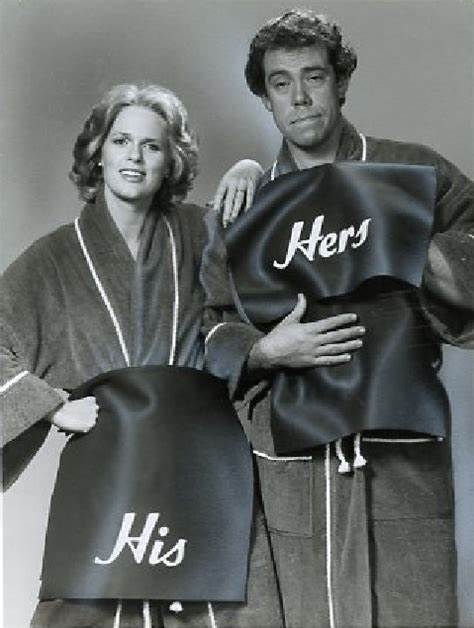
I get Freaky Friday, but in this series the husband and wife switch places. A magic statue allows them to inhabit each other’s bodies. Sam Alston (John Schuck) is a sportswriter and his wife Penny (Sharon Gless) is a cosmetics executive. The couple tries to live both their own life and their spouse’s life whenever they switch back and forth. They also must focus on keeping the switch a secret. We never know who is who, and all the audience knew is they didn’t like either one of them, and the show was cancelled after a few weeks.
Waverly Wonders
Photo: sitcomsonline.com
NBC decided Joe Namath would be a good person to build a sitcom around. However, he’s not a football player in this show; he’s a former pro basketball player, Joe Casey, who now teaches history at Waverly High in Wisconsin. Linda Harris (Gwynne Gilford) is the principal and Mr. Benton, who they call “Old Prune Face” (Ben Piazza) was the former coach. The only problem is Joe Casey is a bad history teacher and a bad coach. That apparently makes for a bad show because it was cancelled after three episodes aired, although nine were made.
Struck by Lightning
Photo: metershow.com
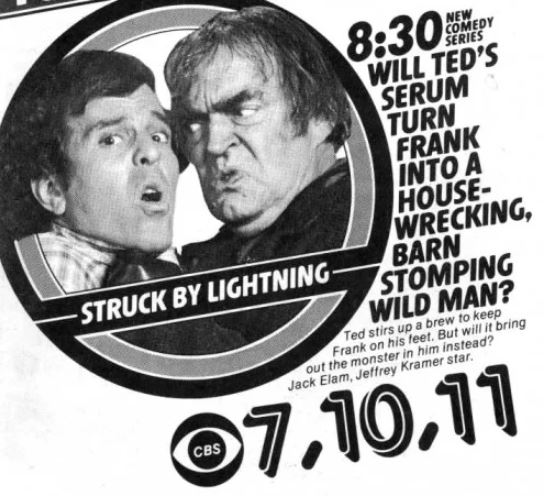
If you think the concept of some of these shows was weird, wait to you hear about this one. Frank (Jack Elam) is the caretaker of an old inn in Massachusetts. A science teacher, Ted Stein (Jeffrey Kramer) inherits the inn and decides to sell it. Then he realizes that Frank was really a 231-year-old Frankenstein monster. Ted just happens to be the great-great-grandson of the original Dr. Frankenstein. So, they decide to run the inn together. Rounding out the cast was Glenn (Bill Erwin) who had been living there forever, Nora (Millie Slavin) who managed the inn before Ted came, Nora’s son Brian (Jeff Cotler), and real estate agent Walt (Richard Stahl). Apparently, the only thing “great” about the show was Ted’s relationship to Frankenstein because the network canceled it after five episodes.
So, you might be wondering with all these awful shows, what made it on the air more than a couple of months during the late 1970s. In 1977 the only shows that made it to the next season were Three’s Company and Soap. In 1978 Mork and Mindy and Taxi were the “classics” followed by Diff’rent Strokes and WKRP in Cincinnati. Without Robin Williams, Mork and Mindy would probably have been another concept that would have lasted a couple of weeks. In 1979, out of 21 shows that debuted that fall, Facts of Life was the only one that returned for a second season. With the exception of Taxi and WKRP, I would not rate any of these shows true classics, although you could make a good case for Soap. Anyway, the bar was set pretty low for success during the late 1970s.
At least television viewers could go to the movies for a bit of entertainment. This was the era of Animal House, Annie Hall, Close Encounters of the Third Kind, Grease, Kramer vs Kramer, Rocky, Saturday Night Fever, and Smokey and the Bandit. Things stayed pretty glum on the small screen until 1982 when Cheers, Newhart, and FamilyTies saved us.

















 thewritelife61