Is It A Western? A Spy Show? A Thriller? No, It’s The Wild Wild West

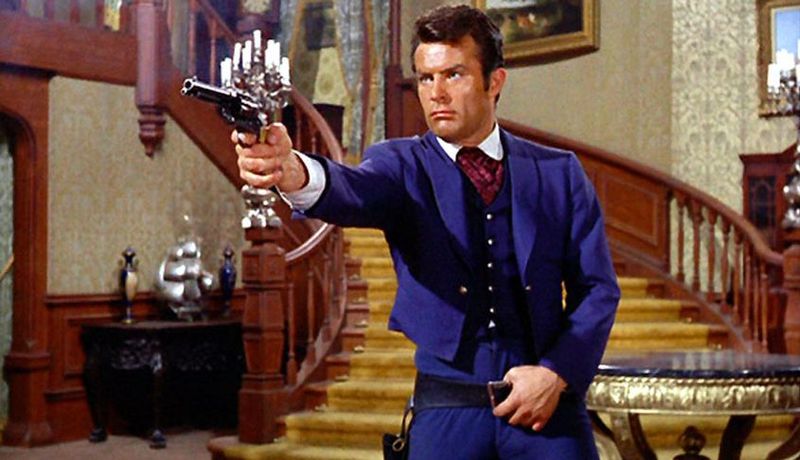
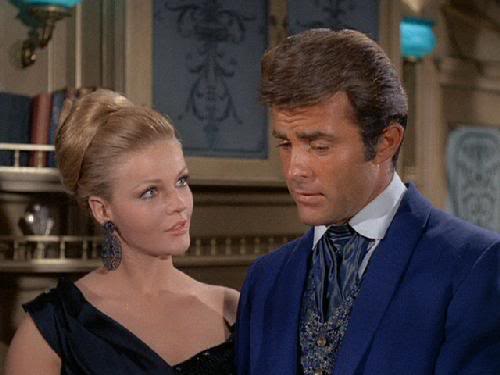
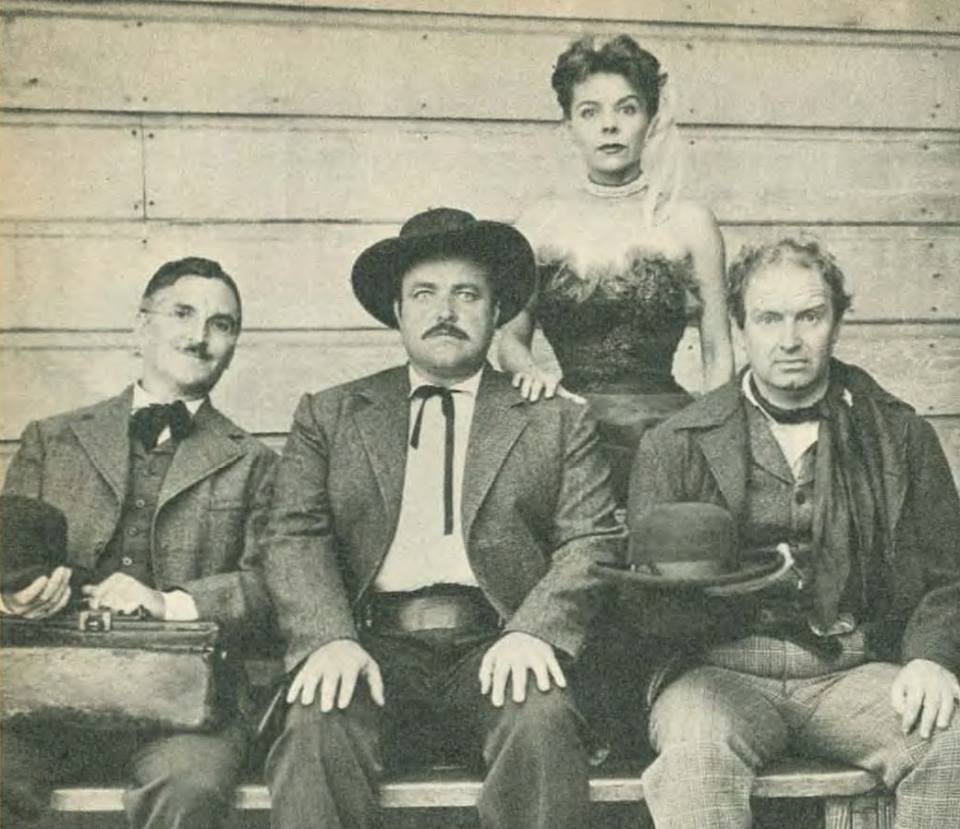
There was no specific category for the Wild Wild West when it first debuted in 1965.  Part western, part spy show, part thriller.  Now, it might be called steampunk. Westerns had been extremely popular through the 1950s and into the 1960s, but in the mid-1960s, the spy genre was gaining ground. Creator Michael Garrison combined the two. Secret Service agents Jim West (Robert Conrad) and Artemis Gordon (Ross Martin), work for President Ulysses Grant and travel the country by luxury train, the Wanderer.  Oh yeah, and they have a ton of technology to make the job more exciting. Artemis is a master of disguise.  Like James Bond, they had clever gadgets on hand, beautiful women in the wings, and delusional, but brilliant, enemies to fight against.

Photo: decades.com

The series debuted in 1965 and ran for four seasons, resulting in 104 episodes. Unfortunately, Garrison died a year into the show and didn’t live to see its completion. The show was filmed at CBS Studio Center. The 70-acre lot was used for Gunsmoke, Rawhide, and Gilligan’s Island as well.

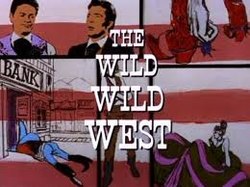
The theme song was written by Richard Markowitz. The intro had an animated sequence that continued to be filled in throughout the show. This was quite unique to this program.

Conrad claimed to be the 17th actor to audition for the role of James West. Originally, Rory Calhoun was announced as the co-star. Conrad wore three-inch heels to hide that he was only 5’8”. Due to his height, the casting office was barred from hiring women over 5’6” for the show. The first few episodes used stuntmen, but Conrad felt that it slowed production down too much, so he volunteered to do his own stunts. During season three, he fell from a chandelier and hit a concrete floor, leaving him with a concussion and weeks of hospitalization for dizziness.

Photo: artworkproduction.ca

Ross played over 100 different characters during the run of the series. He sketched out the ideas for the characters himself and then worked with the make-up artists to get the right look. During the fourth season, Martin broke a leg when he dropped a rifle, stepped on it, and rolled his foot over it. When the shell ejected, it burned his eye. Ross also suffered from a heart attack in 1968. Several other agents “filled” in for Martin while he recuperated.

Photo: writeups.org

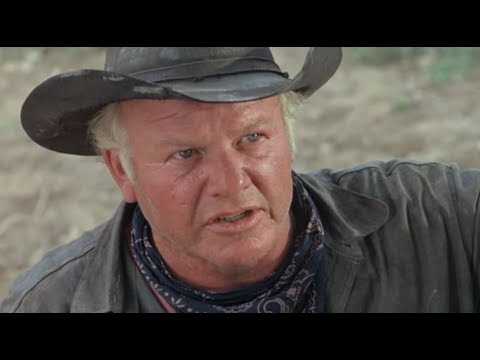
Considering the show was only on for four years, it featured a number of guest stars including Ed Asner, John Astin, Jim Backus, Ed Begley, Victor Buono, Jackie Coogan, Yvonne Craig, Sammy Davis Jr., Jack Elam, Norman Fell, Bernard Fox, Mary Frann, Beverly Garland, Alan Hale Jr., Boris Karloff, Richard Kiel, Ted Knight, Harvey Korman, Martin Landau, Sue Ane Langdon, Peter Lawford, Ida Lupino, Burgess Meredith, Agnes Moorehead, Phyllis Newman, Leslie Nielsen, Carroll O’Connor, Pat Paulsen, Suzanne Pleshette, Richard Pryor, Don Rickles, Pernell Roberts, Katherine Ross, William Schallert, Vito Scotti, Ray Walston, Jesse White, and Keenan Wynn.

The train was also a co-star of the show. The spies had two different trains. The first was used for season one when the shows were filmed in black and white. It was a Sierra Railroad No. 3 which was not built until 1891, a mere technicality I guess. The Rogers Locomotive and Machine Works built it in New Jersey. Footage was shot in Jamestown, California. This same train was the Cannonball in Petticoat Junction.

Photo: metv.com

The shows filmed in color featured a train decorated with green and gold and it was full of fun gadgets. This one was built in 1875 by the Baldwin Locomotive Works in Philadelphia. It was used in many films over the years.

Photo: tripadvisor.co.uk

Both these trains are on display at the Nevada State Railroad Museum. They were only featured in exterior shots. The interiors of the trains were designed by art director Albert Heschong with set decorator Raymond Molyneaux. It reportedly cost $35,000 in 1965. To put this in perspective, the average house in 1965 cost less than $4,000! The train was as resourceful as West and Gordon. A remote control under the table could immediately lock the door. A statue turned upside down unlocked a wall safe. A telegraph set was hidden in a book on the desk. Pistols could be fired by activating a fireplace switch. The pool table had exploding balls while cue sticks could fire bullets.

Photo: tvoftheabsurd.com

Many of the guest stars were villains in the show. The most famous villain was Dr. Miguelito Loveless played by Michael Dunn. He had a recurring role, appearing on ten episodes. He always managed to escape at the end of the show. West and Artemis never did catch him, and a TV movie filmed later relays that he died in 1880 from ulcers brought on by the stress of his plans always being foiled by West and Gordon.

Like Batman, Jim West always seems to have the right gadget at his disposal when he needs it. Some of his more fun props included a sleeve gun as well as a gun concealed in his heel. He also occasionally carried a blowtorch in his heel. Passkeys were stored under his lapel. He kept a variety of fuses sewn into hems in his clothes. To descend into a pit or be hoisted up on a roof, he had a hand-held motor-driven winch. Glass cutters which often are useful were available. Wires placed in his hat had many uses. Battery-powered drills helped the boys escape metal cages. His kit bag held a large balloon. A miniature player made villains think shot guns were being fired. Of course, every smart secret service man wears a bulletproof vest and is always equipped with tear gas or smoke bombs. They even had a cigar that would produce smoke when thrown on the ground and a coin that exploded when exposed to heat.

Photo: thegoldencloset.com

There typically were two fights in each episode choreographed by Whitey Hughes. Following the 1968 assassinations of Dr. Martin Luther King and Robert Kennedy, a National Commission on the Causes and Prevention of Violence was formed. Violence on television was listed as one of the problems, and The Wild Wild West was cited as a violent show. So, despite high ratings, the series was cancelled near the end of its fourth season as a concession to Congress over television violence.

Photo: antiquatednotions.typepad.com

However, the show was then released into syndication and at one time was listed on 99 different local channels, so the violence on television was not curbed by its cancellation.

Several books and comic books were created based on the show. In 1979, the two stars returned to television with a movie, The Wild Wild West Revisited. In 1980, they showed up again in More Wild Wild West. Rumors existed that the duo would do a reboot of the series, but Ross died in 1981 so it never came to fruition.

A movie was made in 1999 based on the original show, but it was not received well. Will Smith later expressed regret for his role in the film. The Golden Raspberry (Razzie) is awarded to the worst films. When the 1999 film was awarded five Razzies, Conrad accepted them on behalf of the movie to show his displeasure with the remake.

Photo: stupendouslyamazinglycoololdtv.blogspot.com

The show’s success primarily stemmed from the fact that Artemus and West trusted each other completely, and their banter and technological gadgets made the show a pleasure to watch. And did I mention, the boys loved women on and found a romance on every show. We’ll let the characters have the last word:

Artemus Gordon: “Naomi. ’My sweetness’. That’s what Naomi means in Hebrew, did you know that ?”

Naomi Buckley: “Really ? And what does Artemus mean ?”

James West: “It means ’He who wastes little time‘.”

Photo: filmscoremonthly.com

Artemus Gordon: “I didn’t know you liked toys.”

James West: “Toys, no. Dolls, yes.”

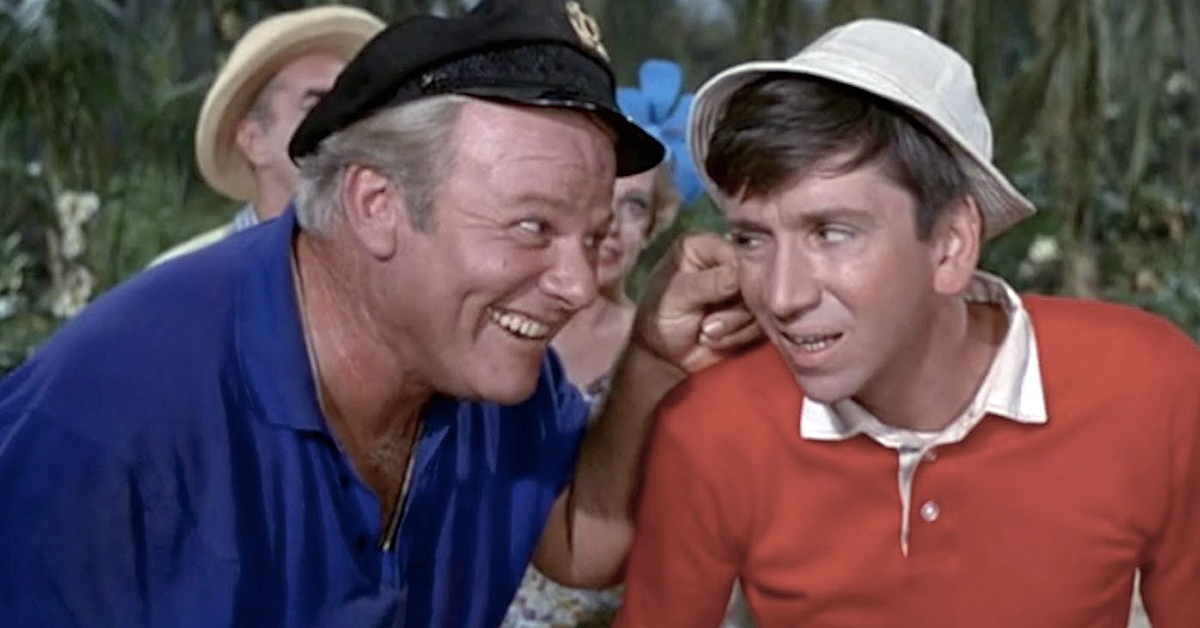
The Skipper and His Little Buddy: Alan Hale Jr. and Bob Denver

We continue our month-long exploration of the actors who appeared on Gilligan’s Island. Today we look at the two biggest stars: Alan Hale Jr. and Bob Denver.

Alan Hale Jr.

hale1

Alan Hale Jr. (Alan Hale Mackahan, Jr.) was born in 1921 in Los Angeles, California.  He looked exactly like his father, Alan Hale Sr. who was a well-known movie actor acting with legends like Douglas Fairbanks and Errol Flynn. His mother, Gretchen Hartman, was also a silent film star.

Hale’s first screen role was when he was 12 in Wild Boys of the Road.

hale3

He appeared in more movies and television series than any of the other Gilligan’s Island cast.  In all he would appear in 92 movies and 123 different tv shows.

In 1943 he married Bettina Reed Doerr. They would be married for twenty years and have four children. During World War II, Hale served in the US Coast Guard.

In the 1950s, he could be seen in many westerns as well as The Loretta Young Show and The Adventures of Ozzie and Harriet. He had regular roles on two sitcoms in that decade: Biff Baker USA and Casey Jones. Biff Baker is a businessman who becomes involved in espionage.  He and his wife travel around the world, working behind the scenes to solve problems. Although it was a serious show, there was some humor in the episodes also. As Casey Jones, Hale drove his train, The Cannonball Express, around the country.

hale4

The early 1960s was a prolific time for Alan Hale. The majority of his television credits came during this decade. You can see him in reruns of Jack Benny, The Lucy Show, Perry Mason, My Favorite Martian, and The Andy Griffith Show.

The year 1964 was a momentous one for Alan. He married Naomi and remained with her till his death. He also tackled the role he would become famous for.

hale5

Sherwood Schwartz said he was having trouble finding the right person to play Jonas Grumby. He auditioned a lot of people, including Carroll O’Connor. One night while having dinner at a local restaurant he saw Hale dressed in a Civil War costume and decided he might be the one. Although the Skipper often became frustrated with Gilligan, they had a father and son relationship. Hale and Denver managed to pull that off. They were close friends in their personal lives as well.

hale3

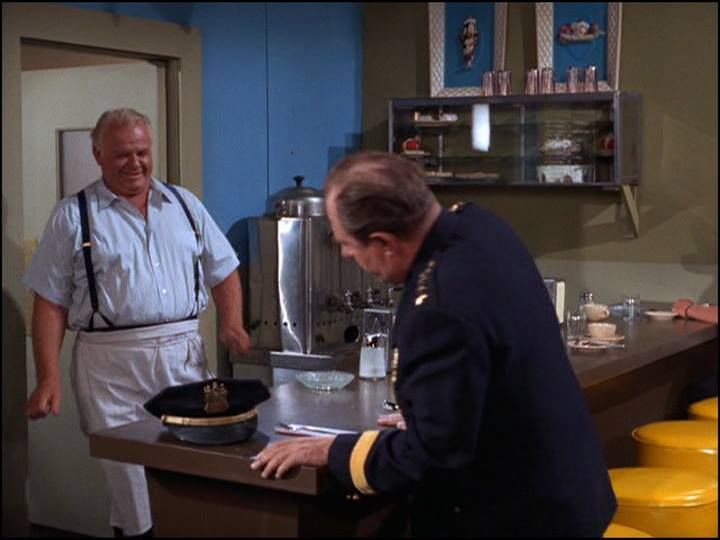
Unlike some of the cast who felt typecast after they left the show, Hale embraced the role he had played. He would later own and manage a popular restaurant in Los Angeles called “Alan Hale’s Lobster Barrel” and could be seen greeting guests as the Skipper. Both he and Jim Backus appeared on Bob Denver’s sitcom Good Guys in 1968.

hale4

After Gilligan, Hale’s career did not slow down. Until his death he would continue to appear in a variety of series including Batman, Green Acres, The Flying Nun, The Wild, Wild West, Here’s Lucy, Marcus Welby, The Doris Day Show, Gunsmoke, McMillan and Wife, Simon and Simon, Growing Pains, The Love Boat, and Magnum PI.

In addition to acting and his restaurant business, Alan enjoyed fishing, golfing, cooking, traveling, storytelling, spending time with his family, and philanthropy. In 1990, Hale died after suffering from thymus cancer at the young age of 68.

Alan Hale had a long and prosperous career.  From all accounts, he liked acting and enjoyed life. Perhaps we should leave the last word to his costars who knew him best.

hale2

Bob Denver said, “He was a big, lovable man who made everyone feel good. He had a great time with his life.”

Dawn Wells described him: “What a dear man . . . what a dear, dear man . . I never saw him disgruntled, having a temper tantrum or depressed. He was so jovial and so sweet and so strong. . . He was a nice man.”


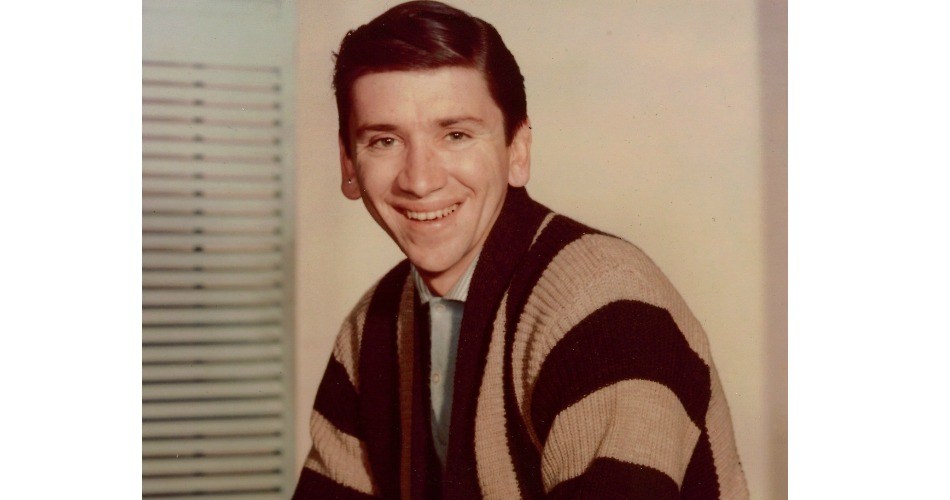
Bob Denver

denver7

Bob Denver was born in New York in 1935. He went to college at Loyola University in Los Angeles, majoring in political science. He worked as a mailman and a teacher before deciding to go into acting full time.  His first appearance was on Silent Service in 1957.

While Alan Hale was in more shows and movies than any of the other crew members, Bob Denver was easily in the fewest.  While he appeared in seven movies, he was only in 21 television shows, and on six of them he had regular roles.

denver5

His sister suggested him for the part of Maynard G. Krebs on The Many Loves of Dobie Gillis. His role as Dobie Gillis’s best friend propelled him into stardom. Dobie Gillis was on the air for four years, producing 144 shows.

denver8

In the 1960s he would appear on Dr. Kildare, The Farmer’s Daughter, The Andy Griffith Show, Make Room for Daddy, and I Dream of Jeannie. In the mid-1960s, Bob was offered the role of Gilligan on a new show, Gilligan’s Island.  In 1966 he married Maggie Ryan. They would have two children during the six years before they divorced.

Schwartz wanted to cast Jerry Van Dyke in the role who turned it down to play Dave Crabtree in My Mother the Car. Denver was perfect in the role of the inept Gilligan who caused many mishaps on the island but was the center of affection of the rest of the castaways, especially the Skipper.

The same year Gilligan was cancelled, Denver remarried. Like many sitcoms, the relationship with Jean Webber lasted three years before the couple cancelled it.

denver2

Although Denver was given a lead role in three more sitcoms, most of his work after 1967 cashed in on his character of Gilligan. In 1968, he starred in Good Guys. He played the role of Rufus Butterworth who opens a diner with his best friend from childhood.  The show only lasted for 42 episodes. Like Gilligan’s Island, Sherwood Schwartz produced this show. In an interview in 1994 with Peter Anthony Holder on Montreal radio station CJAD 800 AM, Denver discussed Schwartz. “Oh yeah, sure. Sherwood, as a producer, he was one of the best writer producers. It’s amazing. That man was just amazing. We never knew there were any problems when we were shooting. He kept all the network craziness away from us. He was writing scripts literally four months in advance, so that special effects and props always got them in plenty of time. . . you just memorized your words and went down there and had a great time. It wasn’t until afterwards when I left that I realized that not everybody was in the same situation. So every time I had a chance to work with him I did.”

At this time, Bob was also involved with Broadway and dinner theater plays after 1970.

denver3

In 1972 Denver tried marriage a third time. He and Carole Abrahams made it three years and produced one child before divorcing. In 1973, he took the lead on Dusty’s Trail. As Dusty, he manages to get a wagon and stage separated from the rest of the wagon train heading west, and the lost group of travelers try to catch up with the rest of their party.  This one only lasted 26 shows.

In 1975, Denver appeared in his weirdest sitcom yet, Far Out Space Nuts. Lasting only 12 episodes, Denver played a maintenance man in a space company who is accidentally launched into space with a co-worker. Apparently, television producers decided Denver looked like someone who was always lost.

denver4

In 1979, Bob tried the marriage ride one more time. This time he would stay married to Dreama Perry until his death.  The couple would have a child, making a total of four children for him.

denver6

Like many of the other castaways, Denver published a book of memoirs.  It was called Gilligan, Maynard, & Me.

In 2005, Denver passed away from complications following throat cancer surgery, leaving Dawn Wells and Tina Louise as the only surviving actors from the show.

denver1

While Denver is obviously the most-recognized character from Gilligan’s Island, he also had the most difficult situation to work with in being typecast. He was never able to shake the traits that were part of Gilligan to explore other roles.  He mentioned he would have liked to be in Northern Exposure. I wonder if he would have been happier being a teacher or if he enjoyed his career.

hale7

Next week we will discover more about our last regular member of the show, Russell Johnson.

The Millionaire and His Wife: Jim Backus and Natalie Schafer

backus9

Today we continue our month-long series about the characters on Gilligan’s Island and the stars who portrayed them. We begin with the millionaire, Thurston Howell III, and his wife, Lovey. On the island, their money is worthless, but it doesn’t stop Mr. Howell from bribing other captives when it’s in his best interest.  He must have been a boy scout who learned the motto, “Be prepared,” because he and his wife took clothes on a three-hour tour to last a few years. In real life, Natalie Schafer was the millionaire. Both Backus and Schafer had very interesting careers.


Jim Backus

backus2

Jim Backus was born in Cleveland in February of 1913. He was one of those stars who seemed to excel in everything:  radio, Broadway, animation, big-screen movies, and television series. In an interesting aside, Margaret Hamilton who would go on to have a full career including the Wicked Witch of the West at the Wizard of Oz, was one of his grade school teachers. Jim grew up in a wealthy area, attending Shaw High School in East Cleveland. His father was a mechanical engineer. I could not find exact proof of this but several articles mention he was expelled from the Kentucky Military Institute for riding a horse in the mess hall. He later attended the American Academy of Dramatic Art.

In 1939 he married Betty Kean; they divorced in 1942. One of his famous quotes was “Many a man owes his success to his first wife and his second wife to his success.”

backus5

In the 1940s, Backus began appearing on radio as the “rich man,” which he often portrayed afterward on radio and television. He played the role of aviator Dexter Hayes on Society Girl on CBS Radio Network. He also appeared on the Mel Blanc Show as Hartley Benson, an arrogant character, and as Hubert Updike on The Alan Young Show. He also showed up regularly on The Jack Benny Program.

During his radio years, he married Henny Backus whom he was married to the rest of his life.

backus10

He began his big-screen cinema career in 1949 and would go on to appear in almost 100 movies, including Here Come the Nelsons, Pat and Mike, and Rebel Without a Cause (seen above). His most famous movie role was probably Tyler Fitzgerald in It’s a Mad Mad Mad Mad World. My favorite movie of his is Hello Down There with Tony Randall and Janet Leigh from 1969.

backus12

During the 1950s, he began auditioning for roles on television. He would go on to appear on 18 different series during that decade, including I Married Joan, on which he starred with Joan Davis. On the show, Backus played a respected judge and Davis was his scatterbrained wife. The show was very popular and lasted three seasons.

backus6

As if he wasn’t busy enough with acting in the 1950s, he also made a song recording with Phyllis Diller that hit the top 40 in 1958. It was called “Delicious,” and the two of them would take a sip of champagne throughout the song, saying “Delicious.” As the song continues, they get more drunk and a bit giddy, slurring their words and laughing hysterically.


His television career continued to be demanding in the 1960s. He appeared on 25 series, and four of them had regular starring sitcom roles. In 1960, The Jim Backus Show debuted. The program focuses on Backus in the role of Mike O’Toole, the editor/proprietor of a low rent wire service struggling to stay in business.

backus7


He had made movie shorts about Mr. Magoo in the 1950s and in 1960, he starred in 130 episodes of Mr. Magoo and would make 26 more episodes under the title The Famous Adventures of Mr. Magoo in 1964-1965. Mr. Magoo was an older nearsighted man who was very popular, appearing in ads and merchandise for years. The humor of the show was based on the difference between what Mr. Magoo thinks he sees and the reality of what was really there. Jim Backus liked to repeat a story about his famous character. He was in the movie, Don’t Bother to Knock, with Marilyn Monroe. She asked Jim to meet her in her dressing room later and his curiosity got the best of him, so he went, only to learn she wanted him to portray Mr. Magoo which he did.

backus11


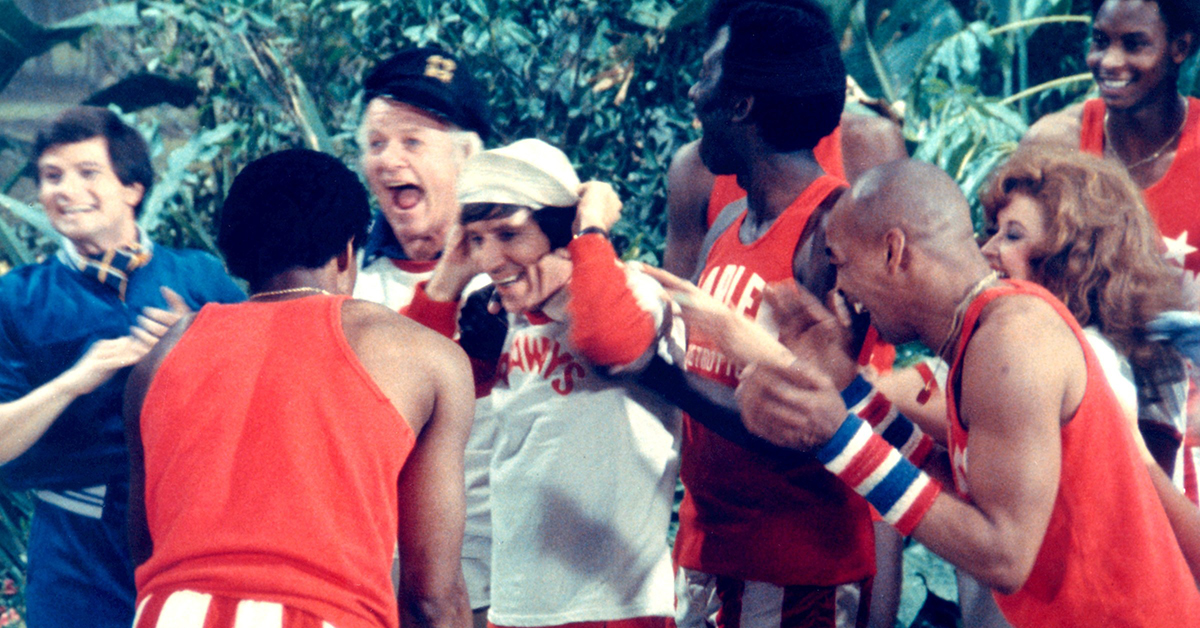
This was also the decade he was offered the role of Thurston Howell III on Gilligan’s Island in 1964. That same year he was asked to play the role of Abner Kravitz on a new show, Bewitched but turned it down because he was committed to Gilligan’s Island. Gilligan’s Island would run from 1964-1967 and he would go on to appear in several Gilligan revivals including the far-fetched The Harlem Globetrotters on Gilligan’s Island.

backus3


During 1968-1969, Backus took the role of Mr. Dithers in a revival of Blondie.

During the 1960s, he also appeared on 77 Sunset Strip, The Beverly Hillbillies, Daniel Boone, The Wild, Wild West, and I Spy, among others.

backusb


Backus continued his television work into the 1970s where he appeared on 31 shows. He appeared in a variety of genres including I Dream of Jeannie, Young Dr. Kildare, Medical Center, The Brady Bunch, Gunsmoke, Ellery Queen, Charlie’s Angels, Fantasy Island, and The Love Boat.

backusa


Backus also continued his commercial work in the 1970s and 1980s. He was the spokesperson for La-Z-Boy furniture and General Electric. He and Natalie Schafer appeared in an ad for Redenbacher’s popcorn. They played their characters from Gilligan’s Island but apparently had been rescued and were in a luxurious home. In a sweet ending, it was the last television appearance for either of them.

When Jim Backus had a little bit of free time between acting jobs, he loved to golf. He also tried his hand at writing a few books and film scripts, including his autobiography which he wrote with his wife, Only When I Laugh in 1965.

book


In July of 1989, Backus died from pneumonia, after suffering from Parkinson’s disease for many years.

He had a long and varied career and seemed to have many friends in the business.


Natalie Schafer

schafer5

A millionaire in real life, Natalie Schafer seemed like a very fun woman, a bit of a character. She was born in November of 1900 in New Jersey and raised in Manhattan. She was quite secretive about her age, often claiming she was born in 1912.

She began her career in Broadway, appearing in 17 plays. She married actor Louis Calhern in 1934 and they divorced in 1942. She moved to Los Angeles in 1941 to become a film actress and received parts in 34 movies. Incidentally, she and her ex remained friends and appeared together in the movie Forever Darling in 1956.

schafer2


Like Backus, Schafer typically played wealthy and sophisticated roles. She did not have the versatility her tv husband had but continued to stay busy acting on television.  While Gilligan’s Island was her only long-term role, she appeared on 21 shows in the 1950s (including I Love Lucy, Loretta Young, Phil Silvers, and Topper); 8 in the 1960s (including The Beverly Hillbillies, 77 Sunset Strip, and Route 66); 15 in the 1970s (including Mayberry RFD, The Brady Bunch, and McMillan and Wife); and an additional 8 shows in the 1980s before she passed away (including Three’s Company, The Love Boat, Trapper John, and Simon and Simon).

schafer3


Schafer made most of her money from investments, particularly in real estate.

Several sources revealed that much of her fortune was bequeathed to either her Gilligan’s Island co-star Dawn Wells or to care for her dogs; however, at least $1.5 million was donated to the Lillian Booth Actors’ Home to renovate their outpatient wing. I never saw any answers from Wells about inheriting money, but on Vicki Lawrence’s talk show, she did say that Schafer spent her last years living with her. Like many wealthy people, she was quite thrifty.  She often admitted that she accepted the role of Mrs. Howell because she got a free trip to Hawaii to film the pilot and didn’t expect it to get picked up.


schafer1


Everyone seemed to like her on the set. Dawn Wells said she especially adored Schafer and Backus. Schafer was a hard worker and liked to keep fit. In a Chicago Tribune article from October 25, 1965, she relayed her secrets for staying in shape. For one thing, she did her own stunts on the show. She also said she swam nude every morning and evening, doing 100 strong kicks at the side of the pool. She also invented an ice cream diet for herself. She claimed to eat a quart a day, saying she had a bowl of vanilla ice cream with her coffee, two bowls of varying flavors for both lunch and dinner, and another single bowl for an afternoon snack. She claimed that she would lose three pounds in five days.

In 1990, Schafer passed away from liver cancer. After her death, she wanted people to realize her true age, and many of her closest friends were quite surprised to learn she was 12 years older than she claimed.

backus

While Thurston Howell III and his wife Lovey were two interesting characters, I don’t think they can compete with the characters who were Jim Backus and Natalie Schafer. I had a lot of fun learning about them.

How Much Luggage Do You Need for a Three-Hour Trip? The Story of Gilligan’s Island

Today we begin a month-long look at Gilligan’s Island.  I admit I was never a big Gilligan fan, but there are so many dedicated viewers that I decided it was time to take a closer look.  Today we look at the series, and in the following weeks, we’ll look at the actors who appeared in the cast.

Gilligan's Island (US TV Series)

Gilligan’s Island was created by one of my favorite producers, Sherwood Schwartz. It aired from September 1964 till April of 1967, producing 98 episodes and a ton of other versions of the show which aired as new series or television movies, including the hard-to-believe Harlem Globetrotters on Gilligan’s Island.

THE HARLEM GLOBETROTTERS ON GILLIGAN'S ISLAND, Alan Hale, Jr., Bob Denver, Curly Neal, 1981. (c) Uni

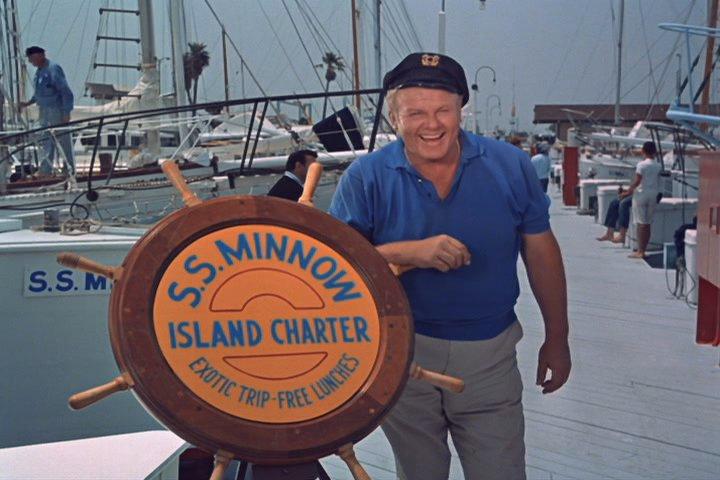
The premise of the show was that on a three-hour tour, the SS Minnow became shipwrecked on a deserted island after a typhoon. Seven castaways now must make the island their home as they wait to be rescued. We have the captain of the ship, the Skipper (Alan Hale), his first-mate Gilligan (Bob Denver), millionaire Thurston Howell III (Jim Backus) and his wife Lovie (Natalie Schafer), movie star Ginger Grant (Tina Louise), the girl next door Mary Ann (Dawn Wells), and the Professor (Russell Johnson). All they have is a transistor radio and whatever they had on the ship.

gilligan8

CBS gave the okay for Schwarz to film the pilot. Schwartz wanted Jerry Van Dyke for Gilligan, but Van Dyke said it was “the worst thing” he ever read. He turned down the script and accepted the role of Dave Crabtree on My Mother the Car.

gilligan1

The pilot was titled “Marooned.” Seven characters were in the pilot, but only the Skipper, Gilligan and the Howells were going to be in the ongoing series. These were the only castaways mentioned in the pilot theme song. The final day of filming for the pilot was November 22, 1963, the day of Kennedy’s assassination. The staff was crowded around a radio between scenes trying to get the updated news. In the opening of the episodes in the first season, as the Minnow leaves the harbor, you can see an American flag flying at half staff as a tribute to Kennedy.

After seeing the pilot, several changes were requested. The first change was to the theme song. Originally it was written by the talented John Williams and sung by Schwartz and was a Calypso-sounding song. The lyrics were quite different from the song we recognize today. The background music and laugh track were the same for both the pilot and the ensuing shows. The three characters who were not part of the series at first were the same characters that later appeared . . . sort of. The Professor was a high school teacher played by John Gabriel, Ginger was an actress but also a secretary played by Kit Smythe, and Mary Ann was Bunny, a dumb blonde stereotype played by Nancy McCarthy.

Because so many changes happened between the pilot and the first episode, the pilot was not aired until 1992 when it was broadcast on TBS.

The first season was filmed in black and white but later colorized for syndication The second and third seasons were filmed in color.

While the pilot had been filmed in Hawaii,  the show was taped at a lagoon built at the CBS Radford Studios in Studio City, Los Angeles. The film was supposed to be shot in Malibu, but it was too foggy. The Ventura Freeway was nearby and when traffic was too loud, production had to halt. The lagoon would become a parking lot in 1995.

There were four boats that “played” the part of the SS Minnow. One was used in the opening credits which had been rented in Honolulu for the filming of the pilot. One was used in the opening credits for the final two years. One was shown in beach scenes and the fourth was built at the studio.

giligan5

The eventual theme song was called “The Ballad of Gilligan’s Isle,” and was written by Schwartz and George Wyle. There were two versions, one for the first season which referred to Mary Ann and the Professor as “the rest,” and another version for the last two seasons which specified “The Professor and Mary Ann.” Dawn Wells credits Bob Denver for going to bat for her and Johnson threatening to take his name out of the song if they were not added.

For the opening credits, the song was:

Just sit right back

And you’ll hear a tale

A tale of a fateful trip

That started from this tropic port

Aboard this tiny ship

The mate was a mighty sailing man

The skipper brave and sure

Five passengers set sail that day

For a 3-hour tour, a 3-hour tour

The weather started getting rough

The tiny ship was tossed

If not for the courage of the fearless crew

The Minnow would be lost, the Minnow would be lost

The ship set ground on the shore of this

Uncharted desert isle

With Gilligaaan

The Skipper too

A millionaire, and his wife

A movie star

The Proffessor and Mary Ann

Here on Gilligan’s Isle


For closing credits, the lyrics were:

So, this is the tale of our castaways

They’re here for a long long time

They’ll have to make the best of things

It’s an uphill climb

The first mate and his skipper too

Will do their very best

To make the others comfortable

In the tropic island nest

No phone, no lights, no motor cars

Not a single luxury

Like Robinson Crusoe

It’s primitive as can be

So, join us here each week my friends

You’ll sure to get a smile

From 7 stranded castaways

Here on Gilligan’s Isle!

gilligan9

Most of the episodes can be categorized into five themes. (1) One of the castaways make some useful object from local material. These could be anything from their bamboo huts to hot water pipes to a stethoscope to a pedal-powered car. They just could not produce anything that could get them off the island! (2) Visitors would often appear on the island. We’ll learn about some of the guest stars on the show in our last monthly blog. None of these visitors ever help the characters get rescued. Unbelievably, Ginger, Gilligan, and Mr. Howell all had look-alikes end up on the island, causing trouble for them. (3) Dreams occur a lot. When we see them, all the characters are part of the dream.  Apparently, the hot weather made them sleepy. (4) News from the outside world, usually heard on the radio, caused trouble on the island. (5) Strange objects showed up on the island from time to time like a WWII mine or radioactive vegetable seeds.

Despite many corny scripts and imagination-stretching storylines, the show received solid ratings all three years. When it went into syndication, it grew in popularity. Many of the stars from Gilligan play their characters from the show in other series’ television episodes in the 1970s and 1980s.

gilligan6

The last episode was called “Gilligan the Goddess.” Unfortunately, the castaways were not rescued. A fourth season was expected or perhaps Schwartz would have saved them. In season three, the show was on Monday nights competing with The Monkees.  Schwartz was assured it would be back because it had higher ratings than The Monkees. Gunsmoke, which aired Saturday nights, was given the potential ax. However, CBS president William Paley pressured the executives who then moved Gunsmoke to Monday night and cancelled Gilligan’s Island.

One funny fact I read about was how often the US Coast Guard received telegrams from citizens who were pleading for them to make an effort to rescue the cast from Gilligan’s Island. The Coast Guard sent these telegrams to Schwartz.

gilligan13

I can’t say that after learning more about the show, it made my favorites list, but there are definitely worse shows on television than Gilligan’s Island. If it was one of your favorites, you’ll enjoy hearing about the stars who played the castaways. I certainly learned they were just as interesting a group of people in real life as they were on the isle they called home for three years.

“Oh, he was a nice, nice man.”

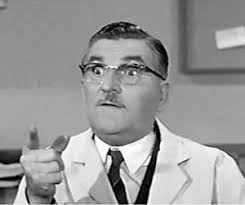
With all the research I have done, I have discovered a lot of nice folks in the entertainment industry (as well as a few not so nice people), but I have never read about anyone more liked than Howard McNear.  Everyone went out of their way to say what a kind and caring man he was.

mcnear5

McNear was born in Los Angeles in 1905. He studied at the Oatman School of Theater and then joined a stock company in San Diego. During World War II, he enlisted as a private in the US Army Air Corps. He went on to a career in radio, films, and television. In the mid-1960s, he had a stroke and died from complications of pneumonia in 1969. Parley Baer, a life-long friend, delivered his eulogy. He was buried in Los Angeles, completing his California life cycle.

mcnear3radio

Howard began working in the radio industry in the 1930s. He was featured in many radio shows, including The Adventures of Bill Lance – a detective drama starring John McIntire as Lance. McNear played the part of Ulysses Higgins, a friend and assistant to Lance. He also filled the role of Clint Barlow on Speed Gibson of the International Secret Police. Some of the other shows he often appeared on included Suspense, Lux Radio Theater, Escape, CBS Radio Workshop, Family Theater, Let George Do It, The Adventures of Masie, Fort Laramie, Wild Bill Hickock, and Richard Diamond, Private Eye. He and Parley Baer were part of the cast of The Count of Monte Cristo, a drama. He continued to work often Baer they both voiced characters frequently on Yours Truly Johnny Dollar. He played congressmen, hotel managers, French detectives, and occasionally the villain.

mcnear6gunsmoke radio

He was still working with Baer when they both created their most famous radio characters—Baer as Chester and McNear as Doc Charles Adams—in Gunsmoke which was on the air from 1952-1956. Baer would later show up in Mayberry as the mayor.

McNear made his film debut in the 1951 sci-fi film, The Day the Earth Stood Still. He followed that up with Escape from Fort Bravo. In 1959 he played Dr. Dompierre in Otto Preminger’s Anatomy of a Murder. Some of his most famous films were Voyage to the Bottom of the Sea and two Elvis flicks, Blue Hawaii and Follow That Dream. He was also featured in three Billy Wilder comedies: Irma La Douce, Kiss Me Stupid, and The Fortune Cookie.

mcnear7

Overall, he appeared in more than 100 films and television shows. He transitioned into television in the 1950s, appearing The Jack Benny Show and the Burns and Allen Show. He appeared in comedies such as I Love Lucy, Private Secretary, December Bride, The Donna Reed Show, Bachelor Father, and The Adventures of Ozzie and Harriet. He also showed up in dramas like The Thin Man, Playhouse 90, Richard Diamond, The Twilight ZoneThe Zane Grey Show, Maverick, and Alfred Hitchcock. Ironically, he had a role as a barber in Leave It to Beaver.

Although McNear had a long career on radio and in films, he will forever be remembered for his memorable and scene-stealing portrayal of chatty and naïve Floyd the Barber in the long-running The Andy Griffith Show (TAGS). Don Knotts once said that playing Floyd wasn’t much of a stretch for McNear, as his real personality was pretty much like Floyd to begin with.

baldwin

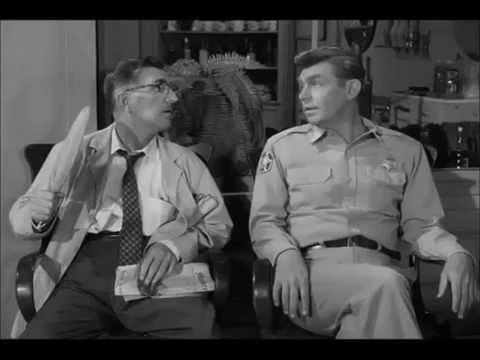
The first episode of TAGS to feature Floyd did not star McNear; Walter Baldwin was Floyd Lawson. After that episode, McNear took over and made the role his own. On his first appearance he was Floyd Colby, but the next time his name was mentioned it had become Floyd Lawson. Floyd’s shop was where the Mayberry men gathered to gossip and play checkers, and they occasionally got haircuts.

mcnear1

We usually see Floyd wearing his well-groomed mustache, thick glasses, and his white barber coat. We learned several things about Floyd during the course of the show. He is a widower. His wife was named Melva and they had two children, a son and a daughter. His son Norman plays the saxophone and baseball. When he retired he moved in with his daughter and her family. Floyd had a niece in town named Virginia Lee who entered the Miss Mayberry Pageant. He was also Warren Ferguson’s uncle; Ferguson would replace Barney as deputy when he moved from Mayberry to the big city.

Floyd often (incorrectly) attributed famous quotes to Calvin Coolidge. Floyd had a dog named Sam and raised pansies. He typically drank coffee but enjoyed a Nectarine Crush or a Huckleberry Smash soda now and then, and he thought Wally had the best pop in town.

mcnear8

Floyd liked to write. He wrote the song for the Miss Mayberry Pageant: “Hail to thee, Miss Mayberry; All hail to thee, all hail; Your loveliness, your majesty; Brings joy to every male; All hail, all hail, all hail; All hail, all hail, all hail.” He even tried to write a novel but had writer’s block after creating a brilliant first sentence: “The sun is dropping lazily down behind the purple hills in the western skies.”

floyd2

In the middle of the show’s run, McNear suffered a debilitating stroke, leaving half his body paralyzed. He took some time off to recover. Andy asked him to come back, and the production crew went to great lengths to make things comfortable for him. Although he could not walk or stand, he was seen sitting outside on a bench. There was a special platform built so he could cut hair looking like he was standing while sitting.  Often a he holds a prop with his left hand, using his right hand as he spoke his lines. In 1967, he left the series for good when he could not remember his lines.

floyd1

My two favorite Floyd episodes were “Floyd, the Gay Deceiver” and “Convicts At Large.”

In “Floyd, the Gay Deceiver,” Floyd has been corresponding with a wealthy pen pal, a widow. She wants to visit Mayberry which gets him frustrated. He wants to meet her, but he has painted himself as an equally wealthy man. Andy helps him maintain the ruse by using a mansion of a man who is out of town. Eventually, Floyd realizes that the widow was not the wealthy woman she made herself out to be either.

In “Convicts At Large,” the normally excitable Floyd displays a calm demeanor after he and Barney are taken hostage by three escapees from the women’s prison–Big Maude, Naomi, and Sally. When they go into town to buy food, Andy realizes that there is something fishy going on and recaptures the women.

floyd5

The cast members who worked with McNear can best describe the type of man he was. In Richard Kelly’s book, The Andy Griffith Show, Andy Griffith, Jack Dodson, and Richard Linke share their memories of Howard McNear. It seems fitting to let them have the last words of this blog.

Andy Griffith:

Howard, first of all, was a leading man in the San Diego theatre years ago. He never was in New York in his life. He developed this comic character, I believe, on The Jack Benny Show. Howard was a nervous man and he became that man, Floyd.

Then Howard had a stroke and was bad off for a long time. He was out of our show for about a year and three-quarters. We did a lot of soft shows, that is, those that were not hard on comedy — stories about the boy or the aunt. But we needed comedy scenes to break up things.

We were working on a script one day, and Aaron [Ruben] said, `Boy do I wish we had Howard.’ And one of us said, ‘Why don’t we see if we can get him.’ So right then we called up Howard’s house and we got his wife, Helen. ‘Oh,’ she said, `it would be a godsend.’

Well, we wrote him a little scene. He was paralyzed all down his left side and so we couldn’t show him walking. We had him sitting or we built a stand that supported him. He could then stand behind the barber chair and use one hand. Most of the time, however, we had him sitting. His mind was not affected at all. He was with us about two years after that before he died. Finally poor Howard died. I’m sorry because there was never anyone like him. Kind, kind man.

Jack Dodson:

Unfortunately, I didn’t know Howard before his stroke. Even after his stroke he was just a wonderful human being and a splendid actor. Sadly, it was during the playing of a scene with Howard that we realized he couldn’t go on anymore.

It was the segment where I wanted to raise the rent on the barbershop. The characters had a great falling out and then, at the end of the show, they were brought back together in the courthouse. Howard had a little difficulty with that segment. We had to change our shooting schedules a little so that his days were not quite so long as they had been. And then, finally, we had a very simple scene of reconciliation. He couldn’t remember it. He went over it and over it, frustrated with himself. Seeing his despair and anxiety was the most painful experience that I’ve ever had. And then he didn’t come back after that.

Richard Linke:

We went to the funeral, and I have to say that it was the only funeral I’ve ever been to where the laughs exceeded the tears. There were a couple of people who knew him well. They spoke in the form of a eulogy — I guess you could call it that. Oh, but it was funny. They related Howard McNear stories from the pulpit. It was something else. Really, it made a nice thing. I think Hal Smith, who played Otis, got up there. It was something else, those stories. And yet, it was all done with dignity. Oh, he was a nice man.


A Tribute to Rose Marie

rosemarie2

Rose Marie had one of the longest-running careers in the entertainment industry – more than 90 years in the business. During her career, she was in vaudeville, on the radio, in the movies, performed in live concerts around the country, did some Broadway, and became most famous for her television performances.


rosemarie6

Born in 1923 as Rose Marie Mazetta, she won a contest at 3 and began performing as Baby Rose Marie. On her official site, she mentions she was born the same day the Broadway show Rose Marie opened. In 1927 at the age of 4 she was featured in a Vitaphone short that opened with Al Jolson’s Jazz Singer.


rosemarie21

By age 5, she had her own national radio show. She worked in vaudeville with Edgar Bergen and Milton Berle. She made several records, and the first one released was with Fletcher Henderson’s orchestra. By 1933 at age 10, she was starring in her first film, International House. During these years, she performed at the White House three times—for Presidents Coolidge, Hoover, and Franklin Roosevelt.


Rose Marie

It was during her vaudeville stint that the doorman informed her and her father that a gentleman wanted to see them in the back alley.  The “gentleman” was Al Capone who called her father Happy Hank and told them that “the guys” wanted to meet Rose Marie. She was taken to Capone’s house the next day where she performed for about 24 guys.  Al gave her a ring with three diamonds which she still had when she passed away. He said they would always take care of her.  He was true to his word. Even after he was incarcerated, Rose Marie was met and protected by the mob for her entire career.  Decades after the most notorious gangsters were gone, men showed up at her shows checking on her just to make sure she was doing okay, getting work,  and not in need of anything. Later she learned that her father, who was an actor by trade, was Capone’s arsonist, the one who burned down buildings of men who disappointed the gangster. There is an article about her meeting with Capone on The Mob Museum’s website. (The Mob Museum is located in Las Vegas.)

rosemarie20


As a teenager, Rose Marie transitioned to clubs, touring the United States. In order to make her sets longer, she began to add comedy to her singing acts.


In 1946 she met Bobby Guy who as with the Kay Kyser Orchestra. They were engaged within a week, and he remained the love of her life until he passed away in 1964. They had one child, Georgianna. Guy would become the lead trumpeter on The Tonight Show.


It was also in 1946 that Rose Marie opened the Flamingo with Jimmy Durante. Jimmy Durante mentored her earlier in her career and she loved him. He was always mentioned as one of her favorite people.  At that time, the only other hotels in Vegas were the Last Frontier and El Rancho. Bugsy Siegel owned the Flamingo, and Rose Marie received work in clubs from her mob connections. She also had a 40-year friendship with Frank Sinatra that was also probably tied to some of their mob connections.


In 1951, Rose Marie tried her hand at Broadway, appearing in Top Banana with Phil Silvers. She knew Silvers from appearing on his radio show with Alice Faye. She played their daughter and Sheldon Leonard (who would hire her for The Dick Van Dyke Show) played their son.

rosemarie5

In 1954, Top Banana was made into a film. Once again Phil Silvers was in it. Rose Marie recorded her musical numbers. The producer tried to manipulate her to have sex with him. She said no in front of several people, and in retaliation he cut all her numbers from the film. In 2017 before her death, she shared the incident on Twitter to help support the women who have been exposing the sexual assault in Hollywood. She appeared in ten movies after that, most of them in the 1980s and 1990s, but she quickly became disillusioned with the film industry.

rosemarie14


Tired of the Hollywood politics, Rose Marie embraced the new television culture. She appeared in Gunsmoke in 1957 and would continue to receive roles in the new medium through 2011. During her career, she appeared on 48 different shows.

In the 1950s, she had a recurring role in The Bob Cummings Show as Martha Randolph and she appeared in The Many Loves of Dobie Gillis. The first sitcom she had a permanent role in was My Sister Eileen; she played the sisters’ friend Bertha. The show ran for 24 shows during 1960 and 1961.


rosemarie17

In 1961, Sheldon Leonard cast Rose Marie in the role of Sally Rogers on The Dick Van Dyke Show. She recommended Morey Amsterdam for the role of Buddy Sorrel whom she had known since age 9. The show was originally to star the office cast with the home life coming in second; however, as things changed, Mary Tyler Moore became the costar with the home life dominating the scripts and Sally and Buddy were featured less. The show produced 158 episodes and is undoubtedly one of the best written sitcoms ever produced. She and Morey received the same salary despite her being a woman. That sounds only fair today, but at the time it was not the normal practice. She loved working on The Dick Van Dyke Show. When asked about her time on the show, Rose Marie said, “We loved each other, we helped each other . . . We were really very close.”


After The Dick Van Dyke Show ended, Rose Marie took roles on several shows including The Monkees and My Three Sons. In 1969, she received a role as Myrna Gibbons on The Doris Day Show, playing Doris’s friend and coworker.


She showed up in many series during the 1980s and 1990s including The Love Boat, Mr. Belvedere, Suddenly Susan, Wings, and was a cast member in Hardball, about a struggling baseball team.


In the 1990s, Rose Marie would take on the role of Frank Fontana’s mother on Murphy Brown. Later she would appear in S.W.AT. as Hilda providing doughnuts and coffee, as well as comic relief, on the show.

rosemarie28

In the late 1990s and early 2000s, Rose Marie transitioned to voice overs for such shows as Hey Arnold and Garfield.

Rose Marie also liked game shows and was a regular on Hollywood Squares through all the different versions.


From 1977-1981, she performed across the country with Helen O’Connell, Rosemary Clooney, and Margaret Whiting. They called the show 4 Girls 4. Rosemary’s nephew, George drove their bus for them.  At some point they made enough money to afford airfare, and George Clooney went on to create a little career for himself.


Rose Marie received the 2184th star on the Hollywood Walk of Fame in 2000. Her baby shoes, along with 40 other items, have become artifacts in the Smithsonian’s American History Museum.

Her hobbies included cooking Italian meals, knitting, and reading; she especially loved Stephen King novels.


rosemariebook

When she first appeared as Baby Rose Marie, someone handed her a bouquet of roses, but she needed to take her bow, so she handed them off and said, “Hold the Roses.” That became the title of her autobiography that was published in 2002.


rosemarielaugh

She was the subject of a documentary Wait For Your Laugh in 2017. Dick Van Dyke said that was her catchphrase, and whenever they were anywhere something funny happened, even a waiter dropping a tray full of food, she always repeated the phrase.


rosemarie10

She accomplished so much in her career you wonder how she could have had any regrets, but she was denied two accomplishments.  She received three Emmy nominations for her role as Sally Rogers but never won an Emmy.  She also wanted to direct and never had an opportunity to do so.


rosemarie3

Sadly, Rose Marie passed away in December. Happily, she left an amazing legacy of performances in a variety of mediums for us to remember her by. While she was so much more than a television star, Sally Rogers will always be one of my favorite characters. Thank you Rose Marie for so many fond memories.

Do You Hear What I See?

As viewers transitioned from radio to television, there was a lot of conflict as advertisers volleyed between the two mediums. Many critics predicted an early death for radio which never came about.  Radio found its new niche, relying more on news and music. Now, you can actually watch radio on television shows like Mike & Mike on ESPN.

Television has also featured several shows about radio stations over the years.  Today we tune in to five of those.

Good Morning World (1967)

radio3

David Lewis (Joby Baker) and Larry Clarke (Ronnie Schell) are early morning DJs in LA with the Lewis and Clarke Show. Dave is happily married, while Larry considers himself a ladies’ man. Billy De Wolfe garnered a lot of attention as the best part of the show  portraying station manager Roland Hutton, a stuffy and humorless boss. Rounding out the cast are Dave’s wife Linda played by Julie Parrish and the debut of Goldie Hawn as their next-door-neighbor.

American actors Goldie Hawn (as Sandy Kramer) and Charlie Brill (as Milton Pervis) appear in an episode of the television show 'Good Morning Wold' called 'Knits To You, Sir,' June 20, 1967.

The show was created by an unbelievable group: Carl Reiner, Sheldon Leonard, Bill Persky, and Sam Denoff. They all were part of the creative force of the Dick Van Dyke Show.  Persky and Denoff were also the producers for That Girl. They based this show on their work as writers at WNEW-New York in the 1950s.

radio2

This photo made me laugh.  They could actually be stand-ins for Dick Van Dyke and Mary Tyler Moore. It might even be the same kitchen!

Filmed before a live audience at Desilu, the show was created to showcase Schell.  Ronnie had been a private on Gomer Pyle and this was to be his break-out show. Procter and Gamble sponsored the series which aired Tuesday nights. It should have done well during its slot, being up against NYPD and the Tuesday Night at the Movies.

The ratings were not great, and the network debated whether to cancel the show or bring it back for a second season.  The two deciding factors might have been that Baker had a lot of trouble memorizing his lines and Parrish was dealing with some health issues.  The network considered recasting both roles but ended up cancelling the series after 26 episodes.  Surprisingly, it was released on DVD.

Schell went back to Gomer Pyle, USMC where he was promoted to corporal.

radio1

The best episode is “No News Like Nude News.” The stars are invited to a Nude Ranch and go thinking they are on their way to a dude ranch.


WKRP in Cincinnati (1978)

radio23

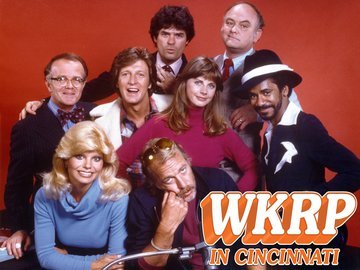
I consider WKRP the second-best radio sitcom. The premise for the show was that a new producer is brought in to help a struggling radio station in Cincinnati.  Changing the format from easy listening to rock brings new life to the station and a lot of chaos to the staff. Hugh Wilson created the format.  He can be seen as a police officer in the episode “Hold Up.”

Along with The Dick Van Dyke Show, The Mary Tyler Moore Show, Barney Miller, and The Office, this was one of the best ensemble casts in television. The characters included:

radio31

Andy Travis (Gary Sandy) is the producer who has a successful history of turning stations around.

Arthur Carlson (Gordon Jump) is the station manager whose mother owns the station. The Big Guy’s management style is a big part of why the station is not doing well.  Art is more interested in fishing than radio. Jump was a DJ in Dalton in his former life.

radio24

Jennifer Marlowe (Loni Anderson) is the smart receptionist who is the highest-paid staff member. Anderson refused to be cast as a dumb blonde.  Jennifer has a journalism degree and although she is only receptionist, she has the skills that keep Art Carlson out of the loop and everything running smoothly at the station. She is gorgeous and kind-hearted, but she refuses to type letters or make coffee.

Les Nessman (Richard Sanders) is the incompetent news reporter. He always wears bow ties and is best friends with Herb. Richard has a bandage on his head from a real-life injury in the pilot and he made that one of his trademarks.  He often shows up with bandages on various parts of his body and we later learn that he has a large dog.

Herb Tarlek (Frank Bonner) is a tasteless boor. He is married but is always coming on to Jennifer. Herb’s suits are even louder than he is.  In one episode, Venus says “Somewhere out there there’s a VW with no seats.” One of his suits actually was made from VW covers. Bonner grew up in Arkansas, and Herb always has a Razorback mug on his desk.

Bailey Quarters (Jan Smithers) originally took care of billing but is also a journalism major and shows she is a more competent on-air reporter than Les. She and Fever date off and on.

Venus Flytrap (Tim Reid) is the soulful, smooth-talking DJ.  Although he is on the air at night and Fever has the morning shift, they become best friends. His real name was Gordon Sims and he was a school teacher before his DJ career took off.

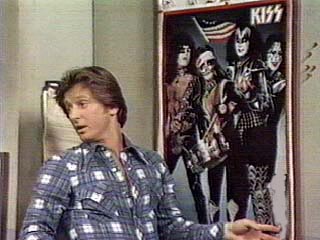
Dr. Johnny Fever (Howard Hesseman) is the burned-out DJ from LA.  He was fired for saying “booger” on the air at his last job.  He’s an insomniac and addicted to coffee.  His hippie lifestyle and cynicism do not mesh with Herb and Les. Originally Hesseman was asked to read for the part of Les Nessman but would only audition for Fever. David Cassidy turned down the role of Johnny Fever. The character of Fever was based on Atlanta’s Bobby Harper who was on the morning show on WQXL 790 AM.  The creator of the show, Hugh Wilson, had previously worked there.

In many of the scenes there were bulletin boards with bumper stickers plastered all over that had been sent in from radio DJs all over the country. As a tribute to John Lennon, his photo was displayed in the background after his assassination.

radio21

The show was videotaped because rock song rights were cheaper for taped shows than filmed shows. When the show went into syndication, almost all of the music had to be replaced.  When the DVD set was being created, the original music was put back in.  An agreement could not be reached until 2014.

Although it’s hard to believe, in 1980 Hugh Wilson collaborated with Hanna-Barbera to create an animated version of WKRP where all the characters are played by dogs.  The show never actually happened.

WKRP was on Monday nights against Welcome Back Kotter and Little House on the Prairie. After the first season, it was moved repeatedly. The show was cancelled after four seasons. It accumulated ten Emmy nominations including three for outstanding series. The show was much more successful in syndication.

radio12

The show was filmed in Los Angeles, but the opening and closing scenes as well as several episode scenes were filmed at the Enquirer Building in Cincinnati.  That building is currently a Hampton Inn/Homewood Suites at 615 Vine St. near Fountain Square.  The radio station said they were housed in the Osgood R. Flimm Building.

One of the most memorable parts of the show was the theme song:

“Baby, if you’ve ever wondered, wondered whatever became of me.  I’m living on the air in Cincinnati, Cincinnati WKRP. Got kind of tired of packin’ and unpackin’, town to town, up and down the dial. Maybe you and me were never meant to be, just maybe think of me once in a while. I’m at WKRP in Cincinnati.”

WKRP in Cincinnati

In 2015, a non-profit radio station in Raleigh, 101.9 was given the WKRP call letters. An independent television station, channel 25, in Cincinnati also received the WKRP designation in 1990.

The clever writing and memorable characters have gained this sitcom a great reputation in television history.

Hello Larry (1979)

radio6

McLean Stevenson was hoping to be the star of M*A*S*H.  Once he realized Alan Alda was firmly entrenched in that position, he opted out of his contract to star in his own show.

The result was Hello Larry about a man, Larry Alder, who is divorced and moves with his two teenage daughters to Portland to star in a call-in psychiatric radio show. Kim Richards played his daughter Ruthie and Krista Erickson played Diane. Lisa Whelchel auditioned for the role of Ruthie but lost out to Richards and ended up on Facts of Life which she was grateful for.

radio10

The other cast members included Joanna Gleason (Monty Hall’s daughter) as the radio producer, George Memmoli as Earl the engineer, and John Femia as Tommy Roscini. Larry also hung out with a familiar face – -Meadowlark Lemon, former Globetrotter, who owned a Portland sporting goods store.

The show was owned by the same company who created One Day at A Time and this was a mirror image of that show focusing on a single mom with two daughters.

radio8

The ratings were not good. The show was up against Charlie’s Angels and the Wednesday Night Movie. Several months into the season, to bolster ratings, the writers brought in the cast of Diff’rent Strokes which was a popular show that aired right before Hello Larry.  It was scripted that Larry and Phil Drummond had served together in Korea.  It did not help the ratings. The show went through a variety of scheduling changes all with the same result.  An issue that certainly didn’t help the show was the Iranian hostage crisis.  The show was often interrupted with special news breaks.

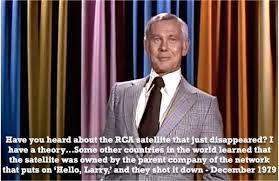
After 38 episodes, the show died a quiet death.  A TV Guide poll in 2002 listed Hello Larry as the 12th worse show of all time.  It was probably best remembered as the show that continually got made fun of by Johnny Carson for being so bad.

radio9

It’s hard to believe an actor would leave one of the most creative and popular shows of all time to move to one of the worst shows of all time.

Frasier (1993)

p183920_b_h9_ab

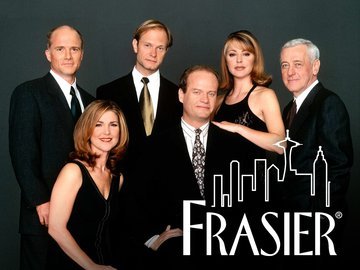
I think that Fraisier was the best radio show on television.  Frasier was on the air 12 years resulting in 263 episodes. The show averaged only 24 episodes a year. The hundredth episode was entirely filmed on the streets of Seattle. Leaving the cast of Cheers, Frasier Crane (Kelsey Grammer) moves back to Seattle to host a show as a radio psychiatrist.

radio32

After an injury, his father, a former policeman, moves in with Frasier. Fraiser provides advice on the airwaves while struggling in his personal relationships, especially with his cranky father and his pretentious brother. The producers did not want the show to resemble WKRP too much, so they came up with the concept of having Frasier live with his father, so family relationships became important.

radio43

John Mahoney plays Martin Crane, a grumpy, uncultured man who cannot understand his sons. Although Martin did not care about high-brow topics, John Mahoney taught Pierce a lot about wine and opera during the Frasier years.

radio35

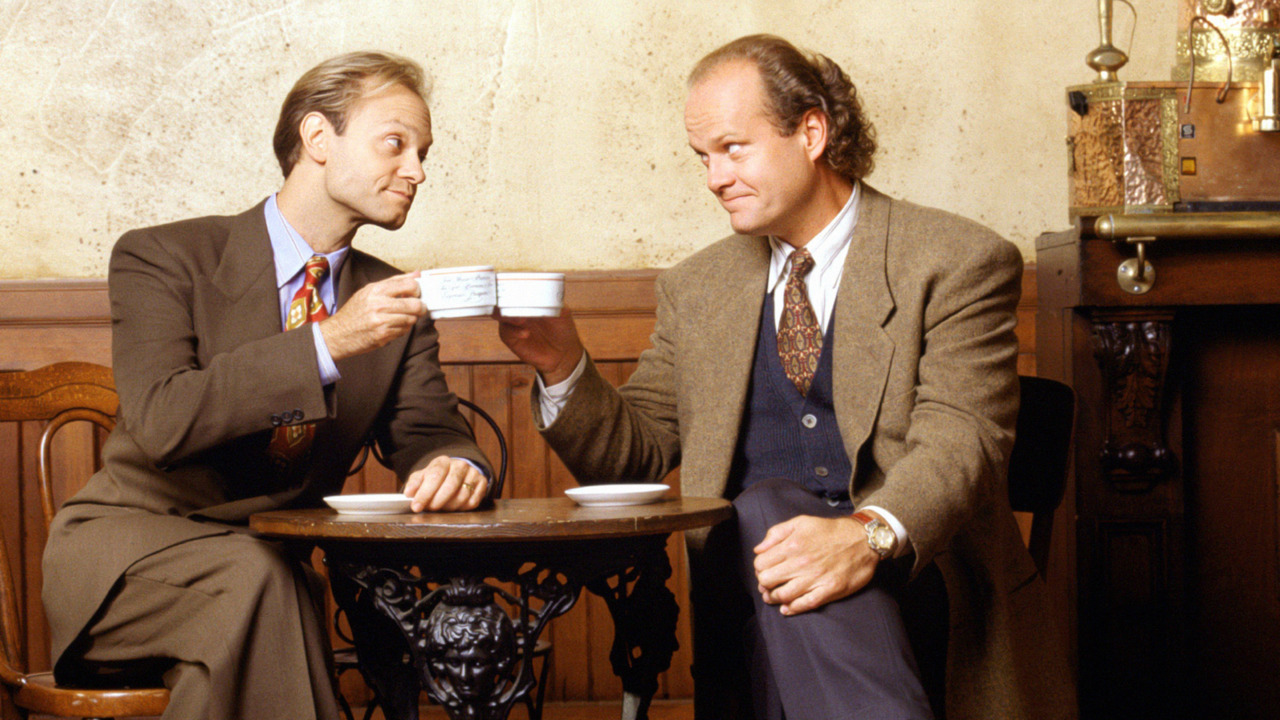
David Hyde Pierce was Frasier’s brother Niles.  The role of Niles was written just for Pierce.  The brothers were extremely competitive, although they could count on each other when it mattered. Frasier went to Harvard and Oxford while Niles went to Yale and Cambridge. Their mom was a scientist and the boys were named after lab rats she worked with. Both brothers had expensive tastes, intellectual interests, and high opinions of themselves. Niles was married to Maris, but we never see her. In later seasons, after getting a divorce, Niles marries Daphne. The brothers often meet at Café Nervosa.

radio33

On an episode of Cheers, Frasier explained that his father had died in an accident and he had no siblings.  When Sam (Ten Danson) comes to visit on Frasier, the error is explained by having Frasier tell Sam that he made the story up because he was mad at his family. All but two characters from Cheers starred on Frasier.  Coach had passed away and  Kirstie Alley (Rebecca) was a scientologist who did not accept psychology.

radio42

Jane Leeves plays Daphne Moon, who was hired to be Martin’s therapist and caretaker.

radio38

Peri Gilpin (Roz Doyle) is Frasier’s radio producer and becomes one of his best friends. The role of Roz had been narrowed down to Gilpin or Lisa Kudrow. Kudrow was funnier but lacked the forcefulness she needed in the workplace, so Gilpin got the job.

radio37

Another important character was Martin’s dog Eddie.  John Mahoney said Eddie got more fan mail than anyone else on the show. To get Eddie to lick Mahoney’s face, liver pate was placed strategically on his face.

bebe

Bebe Neuwirth was offered a regular role on the show as Frasier’s ex-wife, but she wanted to return to Broadway, so she guest-starred from time to time. She appeared in 12 shows.

Frasier

Frasier’s apartment was almost another character on the show.  He lived in an ultra-modern apartment. A Dale Chihuly sculpture is seen near the fireplace. Above the fireplace is another artwork by Laddie John Dill, an LA sculptor.  A Coco Chanel sofa was recovered at a cost of $15,000 to add realism. In contrast, Martin brings his old, tattered recliner which clashes with the rest of the apartment – a symbol of the way he and Frasier clash. On the first episode, a deliveryman played by Cleto Augusto brings the chair in. On the final episode, the same actor came and took the chair away.  Martin explains to Frasier that he spent many important life moments in the chair such as watching the moon landing and specific sports events.  When he came home from work, he often fell asleep in the chair, and his wife would kiss him and send him to bed.  Frasier’s mother had passed away a few years earlier. Frasier finally understands the significance of the chair. On the last episode, Martin is marrying again, and he moves out. Wendie Malick plays his second wife.

Guest stars played callers on the radio show.  Often, they phoned in their lines. Callers included David Duchovny, Phil Donahue, Marlo Thomas, Linda Hamilton, Olympia Dukakis, Daryl Hannah, Chris Reeve, and Estelle Parsons.

Grammer made life a bit anxious for his guest stars. He used an acting method called requisite disrespect where he did not rehearse and learned his lines right before each scene.

radio40

The theme song was “Tossed Salad and Scrambled Eggs” by Darryl Phinnessee and Bruce Miller. Miller wanted Mel Torme to sing the theme for the show, but the producers wanted Kelsey Grammer who ended up recording it.

Critics had great respect for the show. The series holds the record for most sitcom Emmys – 37.  It had the record for most Emmys of any genre till Game of Thrones won its 38th recently. The five best episodes include “The Ski Lodge,” “The Doctor is Out,” “Wheels of Fortune,” and “Ham Radio.”

Grammer and James Arness are currently tied for the character who was on television the longest – 20 years.  Arness played Marshall Dillon on Gunsmoke for 20 years while Grammer played Frasier on Cheers and Frasier for a total of 20 years. The Simpsons have actually passed both of them if animated characters count.

Not only was Fraiser a great radio sitcom, but it is one of the best sitcoms on my top 15 list.

News Radio (1995)

news1

News Radio explores the office politics and interpersonal relationships among the staff of WNYX, New York’s #2 news radio station.

news4

Dave Nelson (Dave Foley) is the boss who tries his best to manage a quirky staff. He was raised in Wisconsin and some of his interests include tap dancing, a cappella singing, knife-throwing, and ventriloquism. He is polite and always in control.  He talks to his mother frequently and keeps a photo of her on his desk. He loves coffee and classic sitcoms, especially Mr. Ed and Green Acres.

news5

Bill McNeal (Phil Hartman) is an egotistical co-anchor. He is arrogant and insubordinate.  There are many gaps in his knowledge, but he does show flashes of concern for others. Near the end of the show’s run, Hartman was killed; tragitically, Hartman was shot by his wife.

news3

Catherine Duke (Khandi Alexander) is the other co-anchor. She and McNeal previously had an affair and they are rivals. In the fourth season, she takes a job in London.

news10

Jimmy James (Stephen Root) is an eccentric owner. He is a billionaire and feels the need to micromanage the station. He is always searching for a wife and loves to air his rivalries with other entrepreneurs such as Ted Turner and Bill Gates. In the finale, he buys a radio station and newspaper in New Hampshire and takes most of the staff with him.

news8

Lisa Miller (Maura Tierney) is an ambitious producer who is Nelson’s on-and-off-again girlfriend. She’s an overachiever who can do complex math problems and has a detailed life plan. In season five, she marries Jimmy’s archenemy Johnny Johnson (Patrick Warburton).

news11

Matthew Brock (Andy Dick) is a hapless reporter who is clumsy and always tripping or falling down. He idolizes McNeal.  He has a dental degree, loves sci fi, and has a crush on Lisa.

rogan

Joe Garrelli (Joe Rogan) is a handyman and electrician.  He is infatuated with Catherine and believes conspiracy theories, especially about extraterrestrials. Ray Romano was originally hired for this job, but his verbal comedy did not mesh well with the rest of the cast.

news12

Beth (Vicki Lewis) is the quirky secretary.  She typically wears inappropriate clothing, chews gum all the time, and likes to complain about her low salary. She was named Beth based on the Kiss song.

lovitz

Max Lewis (Jon Lovitz) was McNeal’s replacement after Hartman’s death. He was inept, eccentric, insecure, unprofessional and a former colleague of Bill’s.

The show was on the brink of cancellation every season. It never placed higher than 26th and changed time slots 11 times. It was briefly cancelled in 1998, but the network reversed its decision and ordered 22 more episodes and then it was cancelled for good.

news2

The show was fast paced and witty.  Sarcasm ruled the dialogue. Physical humor and sight gags also had a place in the humor. The show differed from the casts in The Office or the Mary Tyler Moore Show because they were a dysfunctional family without the affection and empathy of those characters. The cast was banned from SAG awards for bad behavior at the first ceremony.

Shows featuring radio stations seem to be hit or miss.  Good Morning World and Hello Larry did not do well.  I think everyone can agree on WKRP in Cincinnati and Fraiser are well-written shows.  News Radio seems to fall somewhere in the middle.  Some people seem to love it while others thought it missed the mark.  I think the show is well written, but the characters are not endearing.  They don’t grow or change for the better.  We can grow to love a Herb Tarlek and a Ted Baxter, but there is nothing redeeming about the crew here.  I guess I would tune out.  There are too many good shows out there to watch a “maybe, maybe not” show.

Why I Love My Three Sons and My 3 Sons


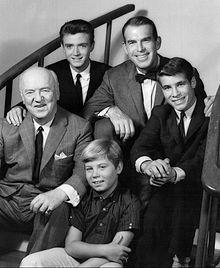
Happy Birthday to me! Since it is my birthday today, I decided my gift to myself was to write about my favorite television show, My Three Sons.  The show was on the air from 1960-1972, for a total of 382 episodes. It debuted on ABC, and in 1965 it moved to CBS. The show was based on a widower, Steve Douglas, who is an aeronautical engineer trying to raise three boys after his wife’s death.  Her father, Bub, moves in to take over the housekeeping duties.
mts1

Although Don Fedderson often gets credit for developing My Three Sons, the show was created by George Tibbles and produced by Don Fedderson Productions. When the series moved to CBS in 1965, the latter network assumed full production responsibilities (in association with Fedderson Productions) until the end of the series in 1972. CBS now holds the series’ copyright.

George Tibbles wrote for a variety of shows and penned the Woody Woodpecker Song, recorded by Kay Kyser. Some of the episodes he wrote for My Three Sons include “Chip Off the Old Block” (1960), “Bob in the Ointment” (1960), “Countdown” (1960), “Birds and Bees” (1961), “Tramp the Hero” (1961), “Mike in Charge” (1961), “Bud Gets a Job” (1962), “Stage Door Bub” (1964), “Charley and the Kid” (1965), “Brother Ernie” (1965), “Moving Day” (1967), “Robbie Loves Katie” (1967), “Inspection of the Groom” (1967), “The Great Pregnancy” (1968), and “Instant Co-Worker” (1969).
mts4

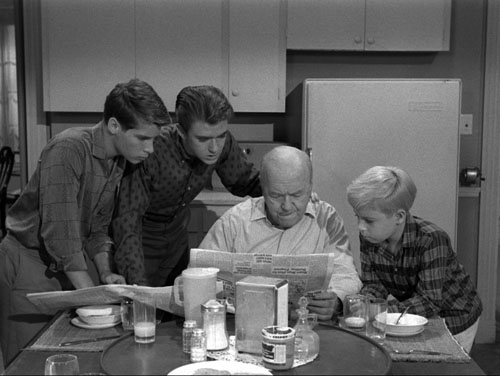
Peter Tewksbury directed the first season. These early episodes held to no specific generic type, so that any episode from one week to the next might be either comedic or dramatic. Tewksbury’s episodes are also unusual for their use of cross-talk (a way of having the voices of off-screen characters heard in the background of the soundtrack, just under the voices of the main characters). Using this clever directorial twist, Tewksbury realistically portrayed the chaotic, fast-paced, and ever-changing sequence of events that was the daily routine of living in the Douglas household.

An example of Tewksbury’s use of cross-talk is the fourth episode, “Countdown,” which chronicles the Douglas family’s attempts to wake up, prepare for the day, have breakfast, and get out of the house by a common, agreed-upon time, all carefully synchronized to a televised rocket launch countdown – to comical and often ironic effect. Once the entire family was ready, they realized it was not a week-day and they had been running around like crazy for nothing. Tewksbury returned to directing feature films after concluding the season because the producers could not handle his perfectionist attitude, which was costing thousands of dollars in lost time and reshoots.
mts8

The succeeding director, Richard Whorf, took over the reins for one season and was in turn followed by former actor-turned-director Gene Reynolds from 1962 to 1964. James V. Kern, an experienced Hollywood television director who had previously helmed the “Hollywood” and “Europe” episodes of I Love Lucy, continued in this role for two years until his untimely death in late 1966. Director James Sheldon was also contracted to finish episodes that had been partly completed by Kern to complete that season. Fred De Cordova was the show’s longest and most consistent director of the series (108 episodes) until he left in 1971 to produce The Tonight Show Starring Johnny Carson. Earl Bellamy rounded out the series as director of the show’s final year.

When the show was first created, potential writers were told to emphasize the following elements: originality, simplicity, honesty, legitimacy, natural comedy, seriousness of premise, scope and character development.

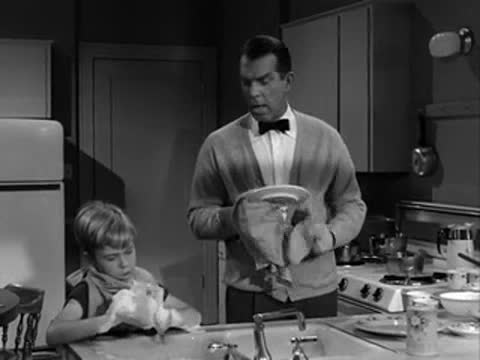
I love the first episode – it not only established the family relationships, but set the direction the comedy would take. This was a family who might tease each other unmercifully but also knew they could always count on each other no matter what the situation was. The family members were far from perfect but they were realistic.
mts13

One of the most memorable parts of the show was the theme song. Lawrence Welk’s version of the instrumental theme song, written by Frank De Vol, peaked at No. 55 on the Billboard Hot 100 in 1961.

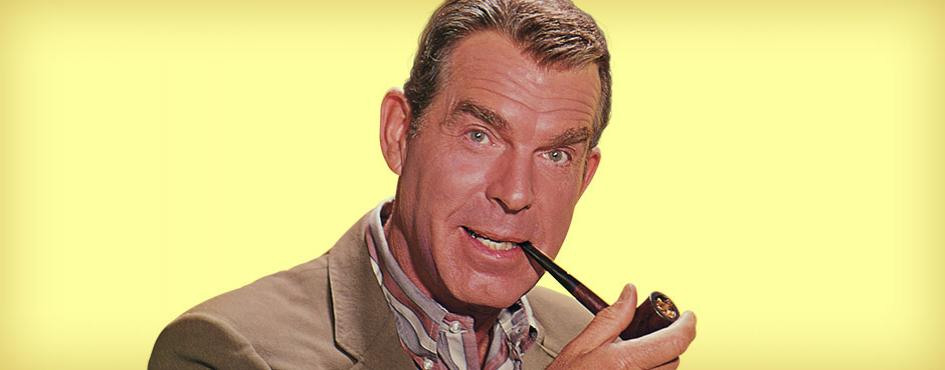
In 1960, Fred MacMurray was one of the most respected and highest-paid actors in Hollywood.  It was almost inconceivable that he would star in a television show. The role was originally offered to Eddie Albert who turned down not only this role, but Wilbur Post on Mr. Ed as well. MacMurray took on the role when he was guaranteed that he would only have to spend 65 days a year filming the show. What was referred to as the MacMurray Method was 65 days of consecutive taping with the rest of the cast having to film around these scenes later. He was also given a 50% ownership in Don Fedderson Productions.
mts14

MacMurray was a very down-to-earth guy.  His grandfather immigrated from Scotland.  He was born in Illinois in 1908 and grew up in Beaver Dam, Wisconsin. He worked in a canning factory and for an American Legion band, went to Carroll College, and earned money playing in a band there. After his first wife, Lillian Lamont died, he married June Haver, a former actress who left a convent to marry him.  They adopted twin daughters. They had a 200-acre ranch on the Russian River and his interests included his workshop, building picture frames, painting water colors, golfing, watching some television, and cooking. Hedda Hopper’s description of him was, “He’s as down to earth as applesauce or the boy next door.”

When Barry Livingston was asked about him, he said, “He was basically a guy from the Midwest, Midwest sensibilities, and even though he was super, super wealthy, just really had modest taste and just really wanted to be accepted as your average Joe.  I mean, he drove a Pontiac station wagon that happened to be our sponsor. . . his wife would pack a brown-paper-bag lunch.”

Steve Douglas was known for his cardigan sweaters. Steve was always ready with guidance, gentle words, and loving wisdom.
bub

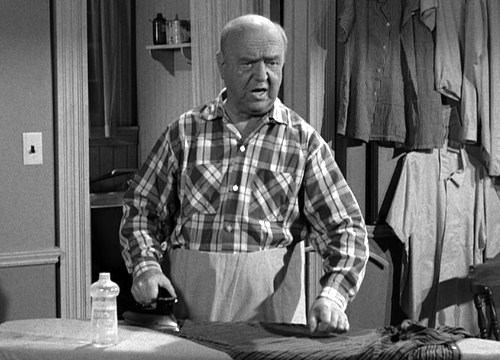
William Frawley, best known as Fred Mertz on I Love Lucy, accepted the role of Bub. He was an expert on barbershop quartets. In 1958, he made an album, “Bill Frawley Sings the Old Ones.” He was 68 in 1961 and had spent 28 years in Hollywood, 46 as a performer.  He grew up in Burlington, IA where his father sold real estate.  At 21 he landed a job in a musical chorus in Chicago. He married in 1916, divorcing Louise in 1927 and never married again. In 1933, he moved to Hollywood with a long-term Paramount contract. His old friends include Joe DiMaggio and Johnny Gallaudet.
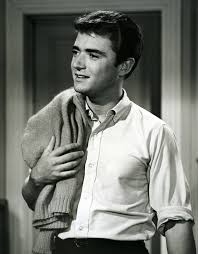
mike

Timothy Considine played Mike, the oldest son on the show. He was a former child actor and young adult actor of the late 1950s and early 1960s. He later became a writer, photographer, and automotive historian. Considine’s most noted acting roles were in the 1955–1957 Disney TV serials Spin and Marty (he played Spin) and The Hardy Boys (he played older brother Frank opposite Tommy Kirk as Joe), both of which appeared in 15-minute segments on the Mickey Mouse Club; and in the Disney motion picture The Shaggy Dog. Considine is an automobile historian, photographer, and writer who specializes in motor sports. He is the author of The Photographic Dictionary of Soccer, The Language of Sport, and American Grand Prix Racing: A Century of Drivers and Cars. He has also filled in for the late William Safire as writer of the “On Language” column in The New York Times Magazine.

Tim Considine quit the show after arguing with Don Fedderson.
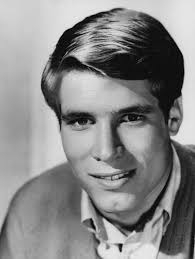
rob

Don Grady, who played middle son Robbie and was the brother of actress Lani O’Grady, got 8 times the fan-mail the other boys did, mostly from young girls. Grady was born Don Louis Agrati in San Diego, California, the son of Mary B. (née Castellino), a talent agent, and Lou Anthony Agrati, a sausage maker. He grew up in Lafayette, California before being signed by Walt Disney and leaving the area. He graduated from Burbank High School in 1962.

Grady appeared on 20 different tv series before 1972, including two episodes of Love American Style. During production of My Three Sons, Grady appeared with his own band The Greefs on the series, writing two original songs for the show.

After My Three Sons ended in 1972, Grady pursued a musical career. His works included music for the Blake Edwards comedy film Switch, the theme song for The Phil Donahue Show and for EFX, a Las Vegas multimedia stage show which starred Michael Crawford, David Cassidy, Tommy Tune, and Rick Springfield. As a stage performer, he starred in the national tour of Pippin and had roles in Godspell and Damn Yankees.

He passed away in 2012 from cancer.
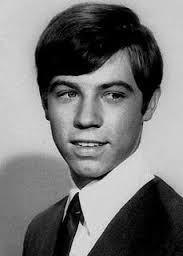
chip

Stanley Livingston took on the role of Chip (Richard), originally the youngest son. He was named for the scientist Stanley Livingston. His parents moved from Baltimore to LA to open a furniture store. He was one of the kids riding trikes and fire engines on “You Asked for It.” In 1957, he was recommended as a double for Jon Provost on Lassie by Mrs. Loven, who taught him to swim. Tina Hill was his first agent, and Lois Auer was his first drama coach. He and Barry were neighbor kids on Ozzie and Harriet.

By age 11, he earned $20,000 a year. He shared that, “The food on My Three Sons is lousy. The prop man cooks it. The eggs are sticky and the potatoes are lumpy.  It’s so bad we try to get eating scenes on the first take.”

John Stevens was a production/coordinator in 1961. In TV Guide in 1962, he was quoted, “Because of the way we shoot around MacMurray, filming My Three Sons is a jigsaw puzzle for an adult. We once shot all the scenes in the upstairs hall and bedroom from 21 scripts, one after the other. In one, Stanley would have to be happy over something in a comedy, and five minutes later, said in a melodrama. I never once saw him rattled, confused or upset.”

In 1965, the fourth season, Frawley retired due to poor health, dying a year later. Wm Demarest, Bub’s brother, the boys’ uncle and a former sailor took his place. To explain Considine’s absence, Mike married his long-time girlfriend and accepted a job as a college professor. Ernie entered the family and was officially adopted.
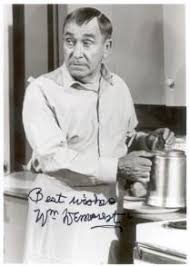
charley

William Demarest started in show business at age 9. He was involved with vaudeville, Broadway, movies (150) and television. In 1899, he and his brothers were musicians. He played the cello, wearing velvet suits, Rubinstein played the piano, and George the violin. He was born in St. Paul in February 1892 and then moved to New Jersey where his parents separated. Later in life he went to LA and entered the army during WWI, eventually becoming a sergeant. In 1927, he was a Warner’s New Comedy Find. In his first picture, Finger Prints, a silent, he was a gangster. He appeared in 24 movies in two years. He appeared in The Jazz Singer and was nominated for an Academy Award for his role in The Jolson Story. In 1930, he headlined a bill with an orchestra, the CA Collegians who had a sax player named Fred MacMurray. In 1933, he went back to Hollywood and stayed. He was a talent agent before appearing in Preston Sturges’ The Great McGinty and The Miracle of Morgan’s Creek. He can’t remember how many movies he did, but his 100th was Pardon My Past with MacMurray. They were also in Hands Across the Table. His retirement plans were to move to a home he and his wife Lucille had on the 12th fairway at Canyon Country Club in Palm Springs.
mts19

Barry Livingston debuted on the show as Chip’s friend Ernie, an orphan. Barry began his career as a child actor in the late 1950s. He considers his film debut a role he won as one of the sons of Paul Newman in the film Rally ‘Round the Flag, Boys! (1958) with his older brother Stanley who by this time was already working as a child actor. He was let go from the film when he was told that he needed to get glasses to successfully correct his astigmatism. His first professional onscreen appearance was in a small, uncredited role in the 1961 film The Errand Boy, followed by roles in The Adventures of Ozzie & Harriet, on The Dick Van Dyke Show and (as “Arnold Mooney,” son of banker Theodore J. Mooney portrayed by Gale Gordon) on The Lucy Show. In 1965, he joined the cast of the ABC sitcom My Three Sons as next door neighbor Ernie Thompson.

His older brother, Stanley Livingston, was already a series regular as Chip Douglas. Livingston joined the cast permanently (his character was adopted into the family, keeping the show’s title intact) and remained with the series until its end in 1972.

After the series run of My Three Sons ended in 1972, Livingston continued his acting career with 142 acting credits.  Most recently he appeared as a jury member in Trial and Error.

In October 2011, Barry Livingston released his anecdote-filled autobiography, The Importance of Being Ernie (Citadel Press) — detailing his career from My Three Sons to Mad Men and beyond.
mts23

To boost ratings, the family moved to Hollywood, CA in 1967. The family’s home in California was previously featured as the farm in Gene Autry’s 1940 musical Melody Ranch. Located on the Republic Pictures backlot, the barn was given a suburban facade in the 1950s. It wasn’t that far from Gilligan’s lagoon, which was also on the lot.
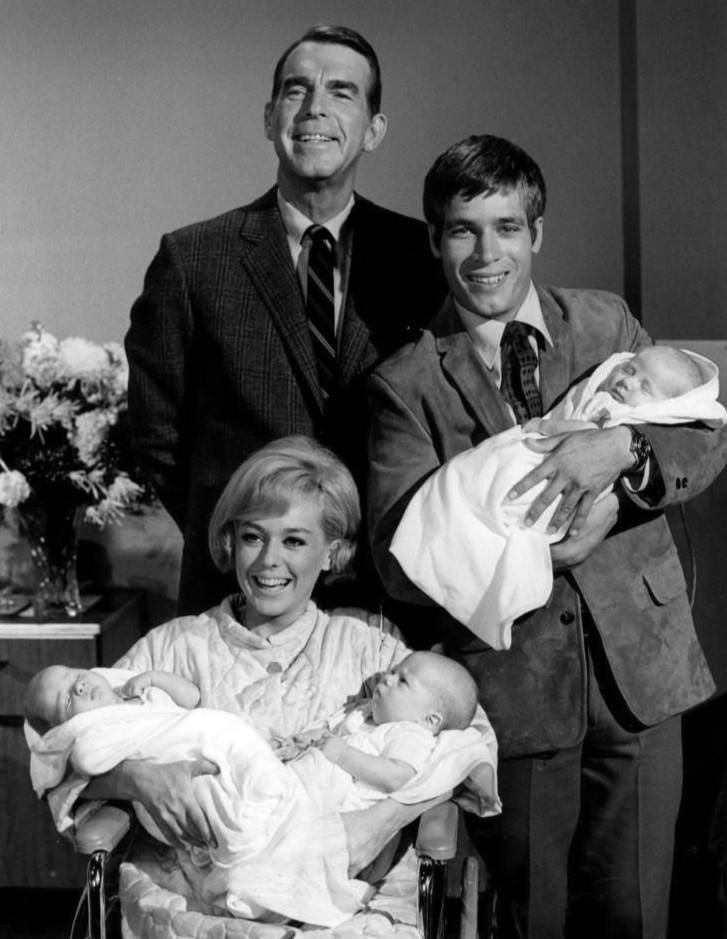
mts5

Robbie meets his future wife in California, and they eventually marry and have triplets. The triplets posed some issues.  They had to find two sets of twins so three could be on camera and one on reserve.  They had to be born between June 17 and 24, have light hair, blue eyes, and be California residents.  They could only be on the set for 2 hours a day, in front of the camera only 20 min and each exposure could not last more than 30 seconds due to the bright lights.
mts18

Tina Cole played Katie but she was not a rookie on the show. She previously appeared on three other episodes as three different characters before taking the role of Katie Miller Douglas. She was also a member of the Four King Cousins, a subgroup of the King Family Singers. In 1963 she played the minor (uncredited) role of Ruth Stewart in Palm Springs Weekend, a spring break party film set in Palm Springs, California. After leaving television, Cole was the director of the Sacramento Children’s Theatre. She was an acting coach at the John Robert Powers acting schools in Roseville and Elk Grove, California and in 2013 returned to on screen acting. She has several movies coming out in 2017.
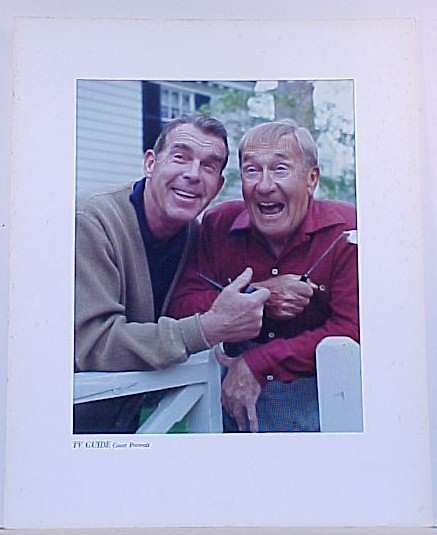
mts22

In 1970, another change occurred in the family. Steve goes to school to talk with the substitute teacher about Ernie.  After being gone hours, with Ernie extremely worried, Steve comes home only to realize they never even brought up Ernie’s behavior and they had another date scheduled. They ended up marrying, and Barbara’s daughter Dodie moves into the house.
mts20

Beverly Garland had a long acting resume when she accepted the part of Barbara. Her hobbies were flower beading and crewel work. She starred in her first show Decoy in 1958 in New York where she played a tough police woman. Born Beverly Fessenden in Santa Cruz, CA in 1930, she was an only child. She took violin lessons. At 18 she married Bob Campbell, 20 in Vegas. They divorced 4 months later. She worked odd jobs, summer stock, and commercials. She married Richard Garland but they divorced in 1953. In that same year, she won an Emmy for Medic. She appeared in a variety of shows – Gunsmoke, Rawhide, Dr. Kildare, and The Farmer’s Daughter. She married Fillmore Pajeau Crank, a widower with two kids in 1960, and the couple had two more children.
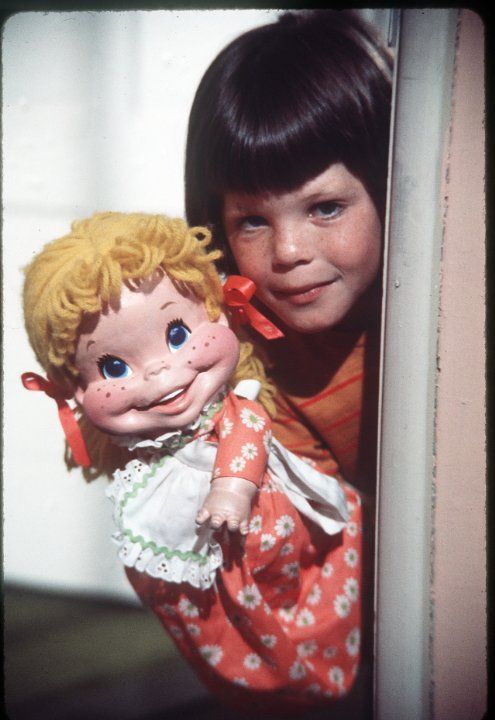
mts21

Dodie was played by Dawn Lyn, the real-life sister of 80s pop idol Leif Garrett. Dawn Lyn made her acting debut at the age of four. She was the original Prudence in the pilot for Nanny and the Professor. By the time the pilot sold, Dawn had been released from her contract and cast as Dodie in My Three Sons. The Nanny producers sued unsuccessfully to get her back. She worked steadily to financially support her family until her mid-teens. She says at that time her petite stature began to work against her.

Dawn decided to branch out of acting and has done many things over the years, including owning a boutique on Pier 39 in San Francisco. Though she has not actively pursued acting, she has not totally closed the door on the idea either.

Later in the season, Chip elopes with his girlfriend Polly Williams.
mts17

In 1964, Ronne Troup, who played Polly, was working as a television background extra appearing (uncredited) in some fourth season black-and-white episodes of My Three Sons in classroom scenes featuring co-star Don Grady. She also worked as an uncredited extra in classroom scenes on Gidget. She appeared, uncredited, as a teen party guest in the Bob Hope film I’ll Take Sweden in 1965. In 1966, she made her film debut as part of the all-girl ensemble in Columbia Films’ The Trouble with Angels, where she is prominent in the graduation scene. In December 1966 (at age 21), she was cast as Sister Bertrille and had begun filming the pilot for Columbia/Screen Gems’ The Flying Nun when she was dropped after the studio’s first choice Sally Field finally agreed to accept the role.

In 1968, she played the role of Leslie Hayden in Danger Island, the cliffhanger serial that was featured on the Banana Splits Adventure Hour children’s program on Saturday mornings.

She appeared on Family Affair in 1970 in the episode “Desert Isle: Manhattan Style.” She was subsequently offered the role of Polly Williams Douglas, wife of Chip Douglas on My Three Sons, a role she played for two years (1970–72). In the Season 4 episode of The Partridge Family entitled “Hate Thy Neighbor” (1973), she appeared as Donna Stevens, the daughter of the new family who move in next door to the Partridges.

She continued acting through the 1990s.
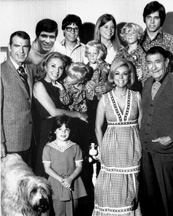
mts7

I have always felt that My Three Sons doesn’t get the respect it deserves. It consistently focused on character development. Problems do occur in the Douglas household – the boys fight and call each other names.  Real problems come up. The show ran for 12 seasons. The issues were the ones we all faced growing up – not often major but important to young people.

The show survived cast and location changes without sacrificing quality. Bub left and Charley came on board. Mike got married and moved away so Ernie took his place. The family moved from New York to California.  Robbie met Katie, went to college, and had a family of his own. Chip married and moved out of the house. Steve eventually remarried also, gaining a daughter.
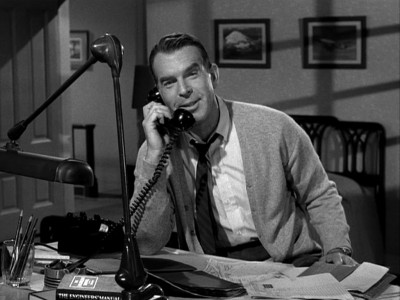
mts16

I grew up with the Douglas family and appreciated what I learned from the show.  Many critics of the show complain about it, along with many of the 1960s sitcoms, being too warm and fuzzy. I do understand that some kids in the 1960s and 1970s were exposed to awful home situations with abuse or addiction, but that was not reality for most kids.  I too experienced living with alcoholism and the strain it caused on my parents’ marriage, but most of the issues I had to deal with were the same ones as the kids on the show:  why the boy I liked didn’t know I existed, that I told a white lie to get out of doing something I didn’t want to do, or that a friend had said something to hurt my feelings.  That was reality for me and my siblings.

The characters were fully developed and became friends and people we chose to spend time with every week. This show was on when I was born and continued on the air until I was in 7th grade – that covers a lot of nurturing lessons during those needy years. The writers did a lot of fun quirks I don’t see on other shows.  On one show I remember, Charley playing Solitaire and almost every time someone walked in the room, they pointed out a move.  It was not addressed, but continued to happen just like in real life.  In one episode, Ernie was trying to do something in the background; I forget what the actual detail was, but he was struggling to accomplish it as the other characters interacted.  His issue was never referred to; it was just there. I also appreciate in this era of shows where it isn’t unusual to spend thousands and thousands of dollars each episode on costumes, My Three Sons was more realistic.  The cast got a wardrobe for the season.  You would see them wearing the same clothing over and over just like we did.
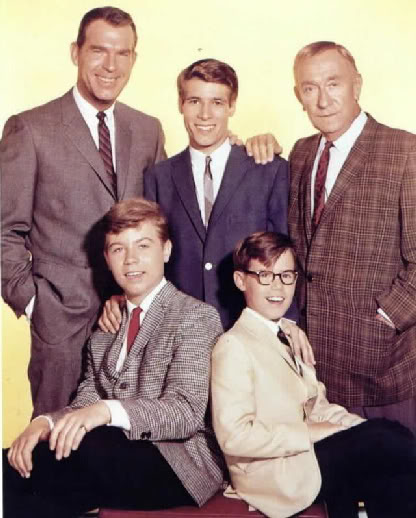
mts2

After I grew up, the show continued to resonate with me, although I later identified more with Katie and Robbie and later with Steve. Steve Douglas was always a father figure in my life. On our first date, Dan and I went back to my place and watched My Three Sons which TV Land aired later at night. When I became pregnant with our first child, I gave him a Steve Douglas cardigan to announce the event. I began to collect My Three Sons memorabilia, including a radio that sat in the Douglas kitchen, even though we only had two boys.  Nine years after our first son was born, we found out we were unexpectedly pregnant, and I did end up with three sons.  Our youngest was named Seth, for a variety of reasons:  Seth was the third son of Adam and Eve, but also because Seth Bryant was the founder of Bryant Park where the Douglas boys grew up. My Three Sons will always have a special place in my heart, and it’s one of the shows I can watch episodes over and over and find something new each time.
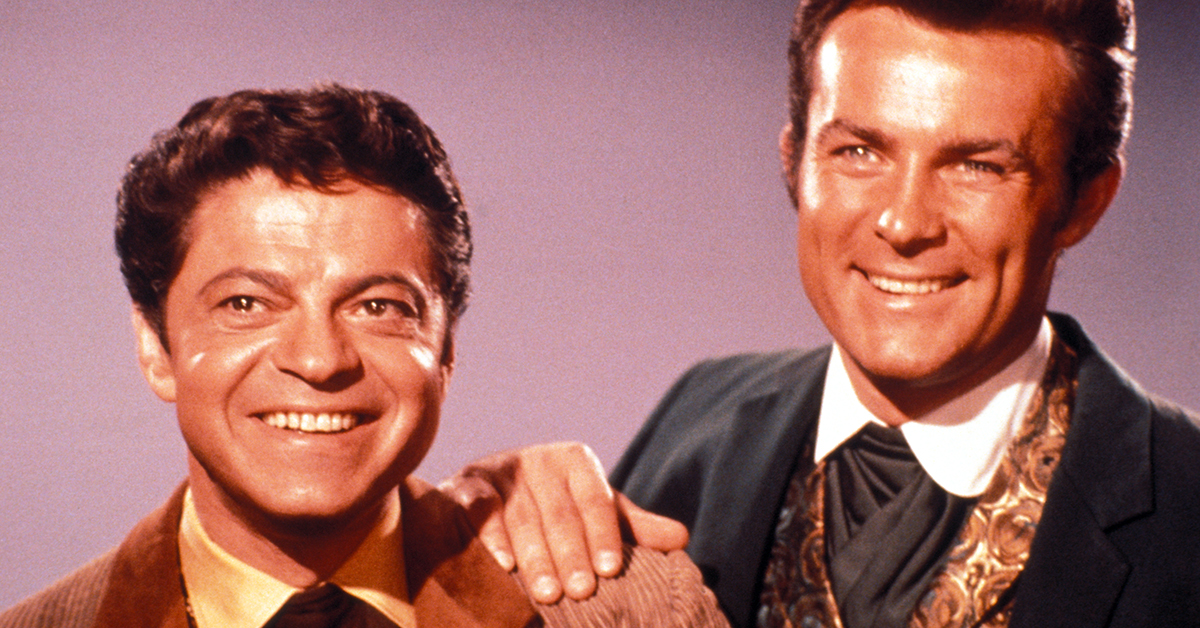
mts3


In Memory of Adam West

west1

Adam West was born William West Anderson on September 19, 1928 in Walla Walla, Washington.  He just passed away this summer on June 9. His father farmed and his mother gave up her career as an opera singer and concert pianist.  Like all kids, he had a collection of comic books including Batman. When his parents divorced, he moved to Seattle with his mother. He attended Whitman College in Washington and graduated with a BS in literature. He was drafted into the Army and became an announcer on the American Forces Network television.

After his service career, he became a milkman until he moved to Hawaii to pursue a career in television. In 1959, he took on his stage name of Adam West and moved to Hollywood with his wife and children. He quickly became an actor and appeared in 33 television shows, including 77 Sunset Strip, Maverick, Hawaiian Eye, Tales of West Fargo, Perry Mason, Gunsmoke, Petticoat Junction, and Bewitched.

west4

In 1966, William Dozier, producer for a new show about Batman decided to cast West over Lyle Waggoner after seeing him as a James Bond-type character in a Nestle Quik commercial. DC Comics described Batman as 6’2” and that was West’s height.

west2

When the series ended, he and Burt Ward found themselves typecast as Batman and Robin.  He did a series of appearances about the Batman character while pursuing a movie career. He ended his career with 49 movies to his credit.

He appeared in 78 television shows after Batman ended including The Big Valley, Emergency, Alice, Police Woman, Laverne and Shirley, The Love Boat, Hart to Hart, Murphy Brown, Diagnosis Murder, News Radio, Drew Carey, King of Queens, and 30 Rock.

After 1990, he apparently embraced his Batman character and appeared on numerous television shows as himself or Batman. When asked about this, he said, “I think it evolved. I learned a long time ago that because people love Batman, I should too. I learned that I shouldn’t resent it even though it prevented me from getting other roles. I really had to become fond of Batman in order to deal with it. I embraced it.”

In 1957, he and his first wife Billie divorced.  He married  dancer Frisbie Dawson in 1957 and divorced in 1962. In 1970, he married Marcelle, and they were together until his death.  He had two children with each of his wives and two stepchildren.

In 1994, he wrote an autobiography Back to the Batcave. In 2012, he received a star on the Hollywood Walk of Fame on Hollywood Boulevard.

west8

West loved outdoor activities and had a lot of hobbies including fishing, sailing, hiking, skiing, golfing, riding motorcycles, swimming, surfing, dancing, traveling, as well as spending time with his family, listening to classic rock, reading, and watching movies.

West died after a short battle with leukemia at age 88. The next week, LA shined the bat signal on city hall to honor him.

While West certainly had a full and varied career despite his typecasting from Batman, I would like to spend some time looking at the series that gave him his fame. Typically, I am not really into super heroes, but I loved this show when I was younger and still get a kick out of watching the campy comedy. I can still hear the narrator saying, “Same bat time, same bat channel.” The show was canceled not only because of low ratings but also because the special effects and lighting had tremendous costs.  When ABC dropped it, they tried to find another network to take it over.  They had no offers, so they dismantled the set. Two weeks later, NBC offered to pick up the show, but decided it was too expensive to start from scratch.

batman4

In the 1960s, Ed Graham Productions received the rights to the comic strip Batman and intended to produce an adventure show similar to Superman or The Lone Ranger. ABC was thinking about a prime time show so DC Comics bought back the rights and sold them to 20th Century Fox. 20th Century gave it to William Dozier to produce.  Dozier had never read comic books and felt that the show should take a campy, pop-art approach. The show was originally an hour-long series, but with only half-hour time slots available, it was changed to a bi-weekly half-hour show.

The concept of the show was that millionaire Bruce Wayne and his ward Dick Grayson lead a double life in Gotham City.  When they move a shelf in their library and slide down the bat pole to the bat cave, they become Batman and Robin.  Only their butler Alfred is aware of their real identity. Police Commissioner Gordon calls them on the batphone, often referring to them as the dynamic duo. They usually hop in their bat mobile and speed to city hall to learn what villain is up to no good in their city.

west5

Adam West took the role of Batman/Bruce Wayne and Burt Ward was Robin/Dick Grayson. Other cast members included Alan Napier as Alfred the Butler, Neil Hamilton as Commissioner Gordon, Stafford Repp as Chief O’Hara, Madge Blake as Aunt Harriet, and Yvonne Craig as Batgirl.

My favorite villians included Julie Newmar and Eartha Kitt as Cat Woman, in love with Batman but not willing to give up her criminal life; Burgess Meredith as Penguin always carrying an umbrella; Frank Gorshin as The Riddler leaving riddles for clues; Vincent Price as Egghead a bald-headed genius who loves eggs; Cesar Romero as the Joker who leaves jokes for clues; and Victor Buono as King Tut when evil and Professor William McElroy as his non-evil personality.

The show aired twice a week on back-to-back nights. The first episode would set up the situation and end with the dynamic duo in some dangerous situation. Batman and Robin would get their assignment from the Commissioner and then, using a series of clues, try to figure out who the villain is and then how to defeat them. At some point, there was always a fistfight with the villain’s entourage at which time the villain typically escaped. During the fight, words would pop up on the screen like POW, BAM, ZONK, BOOM. Then the crime fighters would go to look for them at which point the dangerous and perhaps deadly situation occurred and the next episode would summarize what happened on the previous episode before defeating the bad guys for good. They often used inventions like shark repellant bat spray to aid them in their search.

batman5

In Season 3, Bat Girl was added to the cast. The ratings were starting to fall so Dozier wanted to bring in a girl character to attract female viewers. Her real identity was Barbara Gordon, the Commissioner’s daughter.  The Commissioner never seemed to realize she was familiar to him. Because of low ratings, the show also became a once a week series in the third season.  Eartha Kitt took over the Catwoman role since Newmar was filming a movie at the time. Madge Blake’s health was failing, and her role was limited to two appearances during the last season.
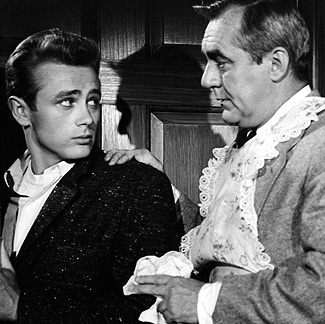
The show was cancelled before the next season but it has continued to be popular in reruns. In 1966, an album was released “Batman: The Exclusive Original Soundtrack Album.” It included music by Nelson Riddle, dialogue excerpts from several of the characters in the show, as well as the Batman theme song, Batusi A Go Go, and several other tunes.

A lot of collectibles were produced during the run of the show including trading cards, Batmobile kits, coloring books, lunch boxes, board games, and View-Master reels. In 2013, Mattel designed an action figure line based on the tv characters, and several Hot Wheels/Matchbox cars have been produced. The Batmobile from the show was auctioned in 2013, selling for $4.2 million.  The huge profits from the car as well as the line of action figures prove the continuing interest in and success of this show now 50 years old.

Here are some fun facts I found about the series:

A total of 352 “Holy” words were used by Robin from “Holy Agility” to “Holy Zorro”.

Cesar Romero’s Joker laugh was created almost by accident. Shortly after being cast, Romero met with producers to discuss his role on his series. While waiting to meet with them, Romero happened to see conceptual art of Joker’s costuming. Romero felt the pictures almost looked absurd, and as a result spontaneously broke out into a playfully loud and almost manic laughter. A producer overhearing it responded by telling Romero “That’s it, that’s your Joker’s laugh!”

Burgess Meredith had not smoked in 20 years when he was cast as the Penguin. He came up with the Penguin’s distinctive squawking sound because the cigarettes were irritating his throat. Like his trademark “quack”, the Penguin’s waddling was largely a result of improvisation by Burgess Meredith, as he found it difficult to stand and walk straight while wearing the rubber padded fat suit that was part of his costuming.

Before going on the air, this show received the worst audience test scores in the history of ABC. It only went on the air because so much money had already been invested in it.

This was one of the “in” shows to appear on if you were a big name in Hollywood during the 1960s, and many top names guested on the show, including many who didn’t do much TV otherwise. Those performers who weren’t cast as guest villains could frequently be seen popping their heads out of windows to exchange a few words with Batman and Robin when the latter would be climbing up a building wall. Frank Sinatra, Natalie Wood, and Cary Grant were all fans of the show, and wanted to be on it, but the producers were never able to come up with the right roles for any of them. During the run of the series, this show crossed over with The Green Hornet (1966).

The “Giant Lighted Lucite Map of Gotham City” is a reverse image of St. Louis, right down to Forest Park, Fairground Park, Tower Grove Park, Lafayette Park, and Horseshoe Lake on the Illinois side, as well as the other river and road networks.

Each main villain had their own theme music.

In the first season, Burt Ward (Robin) was paid $350 per week.

Yvonne Craig has stated that she briefly did have a stunt double, but did most of her stunts herself. She actually operated the Batgirl Cycle herself as well. She was an accomplished biker at the time, and actually owned a bike.

Adam West (Bruce Wayne / Batman), Burt Ward (Dick Grayson / Robin) and  Neil Hamilton (Commissioner Gordon) are the only actors to appear in all 120 episodes of the series.

Suzanne Pleshette was one of the original choices to play Catwoman before Julie Newmar landed the role.

The show aired from January 12, 1966 to March 14, 1968 on ABC for 120 episodes. It was one of few TV series to be seen on 2 different nights a week: 7:30 Wednesdays and Thursdays. It remained there for a season and a half (Jan. 1966-Aug. 1967) until it was moved back once a week (Thursdays 7:30) for its final season. The episodes were generally two-parters: Wednesday’s episode was a cliffhanger, resolved in Thursday’s episode. The 1966-1967 season had 2 3-parter episodes (“The Zodiac Crimes/The Joker’s Hard Times/The Penguin Declines”[ep. #2.37-9, 1/11-12 & 18/1967] and “Penguin is a Girl’s Best Friend/Penguin Sets a Trend/Penguin’s Disastrous End”[ep. #2.42-4, 1/26/, 2/1 & 2/1967]) which left cliffhangers that would be solved the following week. When the series was reduced to (mostly) one part episodes during season three, the cliffhanger death traps and threats were still used, but greatly scaled back and occurring at the middle commercial break.

The three primary cast members of The Addams Family each made appearances on Batman. Carolyn Jones played the villainess Marsha, Queen of Diamonds, and John Astin played the Riddler during the second season. Additionally, Ted Cassidy had a window cameo, appearing in his part as Lurch from The Addams Family. Interestingly, Cassidy’s cameo took place in a story involving the Penguin, with whom Jones’ character Marsha teamed up in one of the three-part stories.

In episode 7, Alfred refers to Robin as Mr. Ward, and not Mr. Grayson.

While Superheroes and the movies and television shows they appear in seem to cycle up and down throughout the decades, the popularity of the Batman television show has never wavered.  The fact that Mattel would create action figures based on the original stars almost 50 years after the show debuted says a lot about the fans and the place the show holds in their hearts.

Thank you Adam West for creating such a memorable and well-loved character.  Rest in peace.

batman2

Life Changes in the Blink of an Eye: The Career of Barbara Eden

Many baby boomers equate Barbara Eden with I Dream of Jeannie.  While she never escaped her iconic role as Jeannie, she has had a long and full career.

beden1

Barbara Jean Morehead was born in Tucson, Arizona in August of 1931. Her parents divorced when she was three, and she then took her stepfather’s last name of Huff. Moving to California, she went to high school in San Francisco and then studied at the San Francisco City College, the San Francisco Conservatory of Music, and the Elizabeth Holloway School of Theatre. In 1951, she was crowned Miss San Francisco.

She began working in television in 1956, and her career has been going strong ever since. In 1958, she married actor Michael Ansara.  They had a son in 1965 who passed away from a drug overdose.  Eden said of his struggle, “He won a lot of battles, but he lost his personal war.”  She and Ansara divorced in 1974. From 1977-1983 she was married to Charles Donald Fegert.  In 1991, she married her current husband, Jon Eicholtz, and they live in Beverly Hills.

In addition to her screen and television career, she performed in Lake Tahoe, Las Vegas, and Atlantic City. She had an album produced in 1967 and performed on many variety shows.  She traveled with Bob Hope and starred in many musicals and plays.

beden30

She received a Walk of Fame star in 1998.

In 2011, she wrote her autobiography, Jeanne Out of the Bottle.

beden2

She has used her celebrity status to help many nonprofits, raising money for The Trail of the Painted Ponies Breast Cancer Research, the American Cancer Society, the Wellness Community, Make-A-Wish Foundation, the March of Dimes, the American Heart Association, Save the Children, and Childhelp, USA.

Her television career can be divided into three phases, each including a major series.

She began her acting career making appearances in many shows from 1956-1958 including West Point, Highway Patrol, I Love Lucy, The Millionaire, Crossroads, Perry Mason, Gunsmoke, Bachelor Father, December Bride, Father Knows Best, and The Lineup.

In 1957, she received her first starring role in a sitcom, 52 episodes of How to Marry a Millionaire. Based on a movie (starring Marilyn Monroe, Lauren Bacall, and Betty Grable), she starred as Loco Jones, a model. Her friends were Michele Page (Merry Anders), a secretary, and Greta Lindquist (Lori Nelson), a quiz host.  The three women lived together in Manhattan, all sharing the goal of finding a wealthy husband.

beden14

In the 1960s, she made appearances in many more well-known shows including Adventures in Paradise, The Andy Griffith Show, Target: The Corruptors, Cain’s Hundred, Saints and Sinners, Dr. Kildare, Route 66, The Virginian, Rawhide, Burke’s Law, Slattery’s People, The Rogues, and Off to See the Wizard.

In 1965, she took on her role of Jeannie in I Dream of Jeannie.  The show lasted five years, filming 139 episodes. Captain Tony Nelson (Larry Hagman) finds a bottle when he crash lands on a deserted island in the South Pacific. When he opens it, Jeannie emerges.  He brings her home and tries to keep her a secret from NASA. His best friend Roger (Bill Daily) finds out, and he and Tony perform a lot of stunts to avoid anyone else figuring it out.  In the final year of the show, Jeannie and Tony get married, exposing her to the rest of the crew at NASA who know something is different but never figure out what it is. Personally, I like the Jeannie in the first year who is mischievous and intelligent. While the show was only on for five years, certainly not one of the longest-running shows, it defined Eden because since it debuted, it has been on television continually in reruns.

After I Dream of Jeannie, her television career continued as she appeared on NBC Special Treat, Condominium, A Brand New Life, Dallas, Team Supremo, Sabrina the Teenage Witch, George Lopez, and Army Wives.

beden8

Based on the song by Jeannie C. Riley and a movie also starring Eden, she took on the role of Stella Johnson in Harper Valley PTA from 1981-82 with costar Fannie Flagg. The show lasted for 30 episodes. Stella is a widow who moves to Harper Valley with her 13-year-old daughter which is a town filled with hypocrites.  The other women severely criticize her for wearing miniskirts, and not acting like they thought a mother should.  Meanwhile, the board members were always trying to find ways to discredit her.  Fannie Flagg was the beauty shop owner Cassie Bowman.  The show never really caught on with the public. Maybe Stella was too drastic of a role change from Jeannie.

Along with her range of television acting jobs, Eden also was in 26 movies, including Flaming Star in 1960 with Elvis Presley, Voyage to the Bottom of the Sea in 1961, The Brass Bottle in 1964 which led to the idea for the sitcom I Dream of Jeannie, and Harper Valley PTA in 1978 which led to her third series.

In The Brass Bottle, Tony Randall plays Harold Ventimore, an architect who buys an antique urn that houses a djinn played by Burl Ives.  Grateful for being released, the djinn tries to help Harold to show his gratitude.  However, being unfamiliar with contemporary times, he causes a lot of trouble for Harold, especially with his girlfriend Sylvia, played by Eden.

She also starred in 28 made-for-tv movies.  My favorite was The Feminist and the Fuzz which you never see aired on television anymore.

beden9

The Feminist and the Fuzz aired in 1971.  I remember watching this movie when it originally aired.  The story was about a scientist played by Eden and a cop played by David Hartman.  They both end up at an apartment at the same time and have lost so many apartments that they decide to share it until one of them can find somewhere else to live. She is a feminist, and he dates a playboy bunny played by Farrah Fawcett.  One night, the women’s libbers raid the bunny club, and while most of them are being arrested, Hartman carries Eden to a waiting police car and tells him to get her home.  Fawcett, watching this, realizes they have feelings for each other, even though they don’t acknowledge it themselves yet.  The movie had a great cast with Joann Worley, Herb Edelman, Julie Newmar, John McGiver, and Harry Morgan.

If her television show jobs and movie roles were not enough, Barbara appeared as herself on 177 different television variety and game shows from 1961-2016.

At 85, Eden continues her career with credit in Shimmer and Shine in 2016. She has also been to the Mayberry Conventions to meet her fans. She continued her friendship with Larry Hagman up to his death.

One might assume that Eden would want to distance herself from Jeannie and rely on her other body of work, but that is not the case.  Some actors develop a dislike for the character they are unable to shake off, but Eden’s advice to actors is:  “I would embrace the character, because it won’t do any good if you don’t. And another thing: Don’t whine or talk trash about it. I don’t think you ever demean to your public what you’ve done. You’re insulting them if you demean your work.”

beden6

While Jeannie certainly provided Barbara Eden with a lot of fame, future work opportunities, and money (although probably not so much from the tv show directly), taking a survey of her career proves just how versatile of an actress she was.  No one-hit wonder here.  She accumulated a wealth of roles both on television and in the movies. She traveled around the country appearing in musicals and plays. She sang and danced, performing at some of the top clubs in the country.  She appreciated her fans and never demeaned Jeannie in their eyes.  She used her celebrity to raise money for great causes. She had a full career any actress could be proud of.