Before we get into our topic of the week I’m celebrating today. This is my 475th post! Thank you to everyone who has joined me in my journey. We are in the final week of our blog series this month, “It’s Their Show.” We are winding down with The Debbie Reynolds Show. While most of the shows we learned about this month were on air in the late fifties and early sixties, The Debbie Reynolds Show appeared in 1969 on NBC.
The show was created by Jess Oppenheimer who Lucille Ball called “the brain” behind creating I Love Lucy. This month we learned a bit about Bob Carroll Jr. and Madelyn Pugh Davis who created and wrote for I Love Lucy and The Tom Ewell Show, and they are back to write for this sitcom as well.
The show didn’t get off to a great start because Reynolds was clear that she wanted no cigarette commercials on her show. However, NBC was courting American Tobacco as the sponsor and Debbie threw a fit. When the tobacco company learned Reynolds was threatening to quit, they pulled their funding. Reynolds assured NBC that she would agree to forego NBC’s promise of a second year of the series, and she gave up her ownership in an NBC film What’s the Matter with Helen?, although she was able to star in the film.
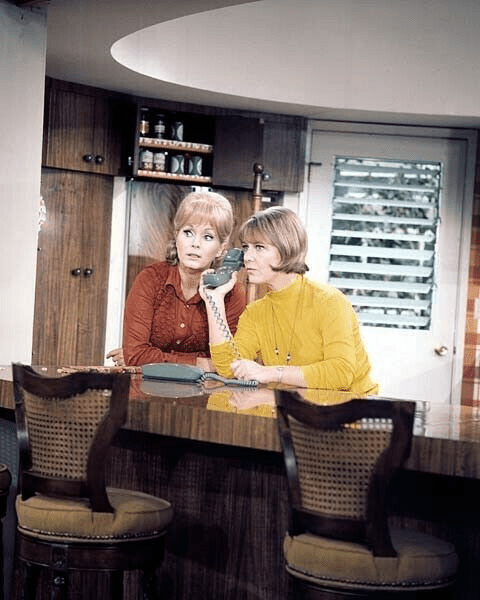
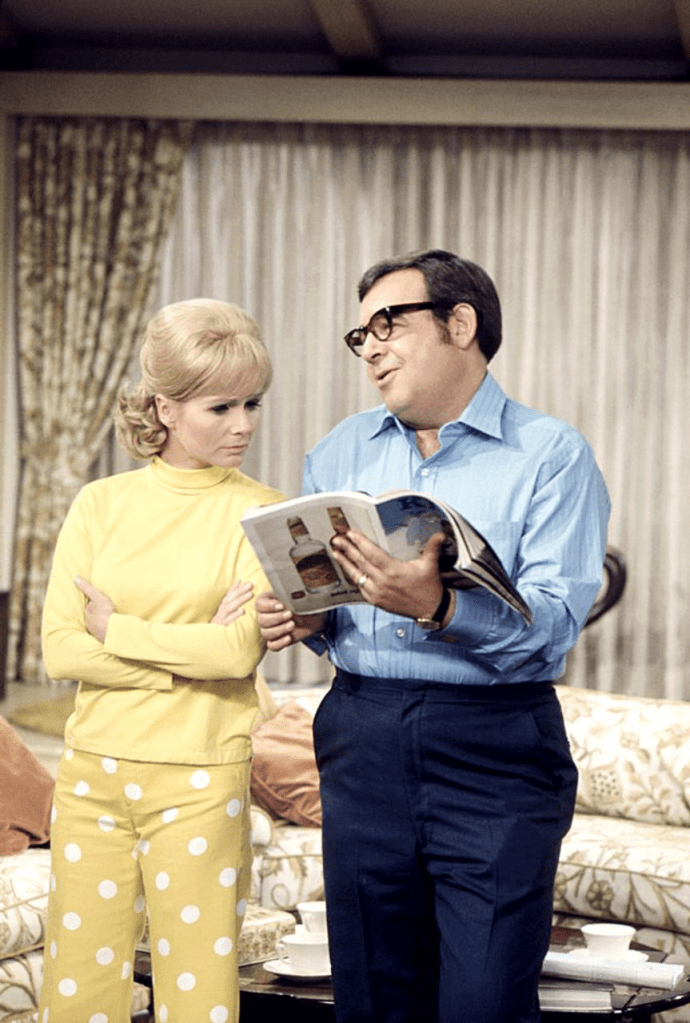
The plot of this show was that Reynolds was married to Jim (Don Chastain), a sportswriter for the Los Angeles Sun. Like Lucy always trying to get into show business, Debbie Thompson wants to be a reporter, and she comes up with various schemes to get her that job. Jim just wants her to be a stay-at-home wife.
📷📷pinterest.com
Rounding out the cast were Debbie’s sister Charlotte (Patricia Smith), Charlotte’s husband Bob (Tom Bosley) and Bruce (Bobby Riha), Debbie’s son. Like George Burns had done in his show, Debbie often addresses the audience directly.
Debbie Reynolds did double duty in this one, singing the theme for the show, “With a Little Love.”
Sadly, Reynolds was not in the same financial situation that many screen stars were when they agreed to try a television series. When the show was canceled after one season, she lived in her car for a while and her career never got back on track. For 35 years after this sitcom was canceled, Reynolds played bit parts, appeared as herself, or did animation. It must have been hard to tolerate after being a big star on the silver screen.
Tom Bosley talked about appearing in this sitcom in his interview with The Television Academy. He said the network allowed the cast to make seventeen episodes, but from the beginning they knew the show would be canceled because of the stunt Debbie and her PR rep pulled regarding the sponsorship.
📷moviemarket.com
Bosley thought Oppenheimer was a genius, but Bosley said even without the issue Reynolds had with the network, the show needed reworking for it to remain on the air. Bosley said Reynolds was very energetic, but she was bitter about her husband leaving her for Elizabeth Taylor, and her second husband was a gambler who left her with half a million dollars of debt to pay off.
To make ends meet, she went to Las Vegas to perform and started a costume museum to preserve the artifacts.
Unfortunately, this show was doomed from the start. While I admire Reynolds for standing up for what she believed in, the way she went about it was not helpful. It should have been written into her contract or handled in a nonpublic discussion. If Reynolds had let the network take care of sponsorships, things would have been okay. A few months after this show debuted, Congress took their anti-smoking initiative one step further and passed the Public Health Cigarette Smoking Act, banning the advertising of cigarettes on television and radio starting in 1971, so many shows walked away from tobacco companies in 1970. However, when Reynolds dug her heels in and threatened to quit, she not only lost her two-year minimum deal and her upcoming movie profits, but the studio was just biding its time because it had already decided to cancel the series because of her behavior.
📷posterazzi.com
Even though Oppenheimer was described by everyone as an amazing creator and producer, this show felt like another I Love Lucy with a different occupation, and I’m guessing viewers felt that way too. It was similar to Sherwood Schwartz who kept revising The Brady Bunch for decades and kept writing sitcoms with the main characters somehow “lost” that were all duplicates of his Gilligan’s Island.
By 1969, it was time to move away from the hard-to-restrain wife in the sixties concept. In addition to being a copycat of I Love Lucy, I have to be honest. While I found something fun and charming about the other series we learned about this month, the episodes I tried to watch for this blog were painful. The characters were not likable, the writing was not witty or even easy to listen to, and considering what a great cast they had, the show just fell flat. Sadly, I recommend avoiding this one unless you are trying to put yourself to sleep some night.
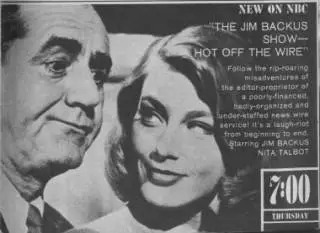
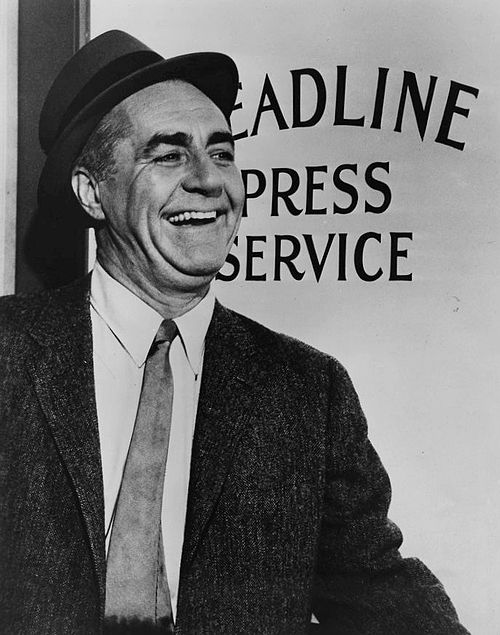
This month we are in a blog series, “It’s Their Show.” Today we are taking a closer look at The Jim Backus Show. Most people know Backus today as Mr. Howell on Gilligan’s Island. While he did show up on several television series, cartoons, and made-for-tv movies for Gilligan’s Island, Backus had a long and successful career without any Gilligan appearances. He started in the movies in 1948 and wound up his career with an amazing 253 credits.
📷thrillingdaysofyesteryear.com
In addition to being the voice of Mr. Magoo, Backus starred in several other series including I Married Joan and Blondie.
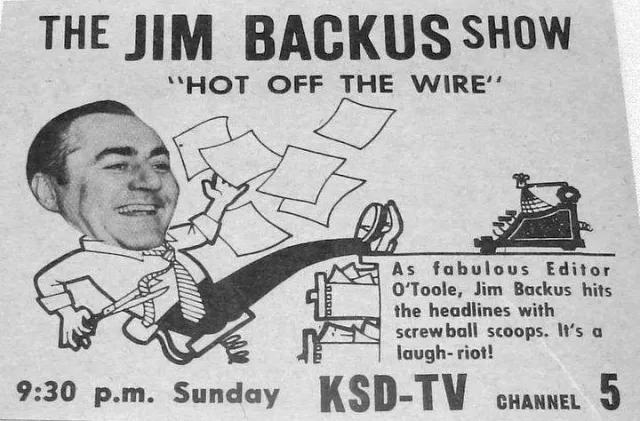
In 1960, The Jim Backus Show debuted. It was one of the first syndicated shows, so it’s hard to gauge how it did against its competition. However, I will say what I can tell you is that there were still 13 westerns on the air during the week, so while the influence of the Plains was waning, it was still very popular. It was also a year that lots of stars had made the plunge to dip their toe into the television industry. There were 11 stars with their own shows that year in addition to Backus, including Jack Benny, Ann Sothern, Danny Thomas, Andy Griffith, and Donna Reed.
The series had a great cast. They had several good directors, including Gene Reynolds who produced MASH and Lou Grant and a lot of good writers, including Jay Somers who would go on to create and write Green Acres. However, they had 14 directors and more than 40 writers to produce those 39 episodes. They also had a great line up of guest stars including Ken Berry, Charles Lane, Jayne Meadows, Zasu Pitts, Tom Poston, and Bill Quinn.
📷youtube.com
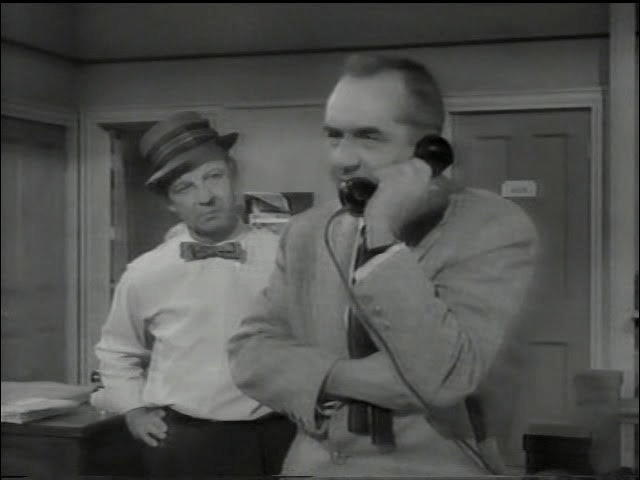
Backus is Mike O’Toole, the editor and owner of a news service struggling to make a go of it. He often doesn’t have the money to pay his rent or his staff’s salaries. Working with O’Toole are reporters Dora (Nita Talbot) and Dave (Bill McLean) as well as Sidney (Bobs Watson), their office boy. When they weren’t working, they spent some time at Heartless Harry’s, a bar downstairs that was popular with newspaper people. He truly was heartless, because he wouldn’t let anyone from Mike’s company in the bar unless they put down a $10 deposit.
One of the episodes I watched for this blog was #5, “No Help Wanted.” The opening pans the big city before moving down to the office of the wire service with Mike in the window joined by Dora.
The episode begins with Mike and Dora’s car breaking down in the middle of nowhere. There’s a large estate in the distance, but Mike won’t let Dora ask them for help until he’s tried to fix the problem himself.
Directed by Gene Reynolds and written by Dick Chevillat and Jay Sommers, the plot is that a retired stage actress, Catherine Lyden (Linda Watkins), has lots of money and loves living a normal life. Her former agent keeps trying to lure her back into show business. She decides to clean the maid’s house so she can hire someone, but when Dora and Mike meet her, they recognize her, and they think she is destitute and try to help her. After they get back to the office, they buy her some groceries and clothes. She tries to tell them that she has plenty of things and she doesn’t need their help. O’Toole writes a story about her having to work as a maid to make ends meet and puts a photo in the paper with her holding a pail and looking disheveled. When the article appears, several people contact her to try to help her out. When Mike and Dora get her contract from the playwright who is trying to hire her, they tell her that it’s a form to get a retraction from the paper.
After she signs it, they tell her the truth, that it’s a five-year contract and she begins to cry. Surprisingly they never do find out she wasn’t down and out. They think she is crying from gratitude, and they leave.
📷internetarchive.com
There were some fun bits of dialogue especially between Dora and Mike, and the filming was very different from most sitcoms, but I was drawn in by it. One of the things that I found most interesting about this episode is the soundtrack. There is some laughter in the background, but you hear birds, the office machinery running, and the sounds of the city. It’s like you’re right in the location with the cast and hear what they would hear.
This was a tough episode for me though. First of all, I kept waiting for Lyden to be touched by the fact that they were trying to help her and maybe that made her realize the public missed her. However, she never cared that they were spending their hard-earned money on her. She truly was upset when they tricked her, and I found it tough to watch because they never learn she was not destitute and truly was happy and they have now made her miserable for five years. It just didn’t have that feel-good ambiance we expect our sitcoms to feature.
📷wikipedia.com
The series produced 39 episodes before being canceled. I’m guessing the fact that it didn’t make it had something to do with the fact that it was on different nights and times across the country.
Sometimes these shows are hard to find. They all had two names. The Tom Ewell Show was known as The Trouble with Tom, The Phyllis Diller Show was known as The Pruitts of South Hampton, and The Jim Backus Show went by Hot Off the Wire. With so much competition from other stars trying to vie for their spot on the schedule and being a syndicated show, I’m guessing it was hard to lure enough fans to make it worthwhile to produce a second season of the show.
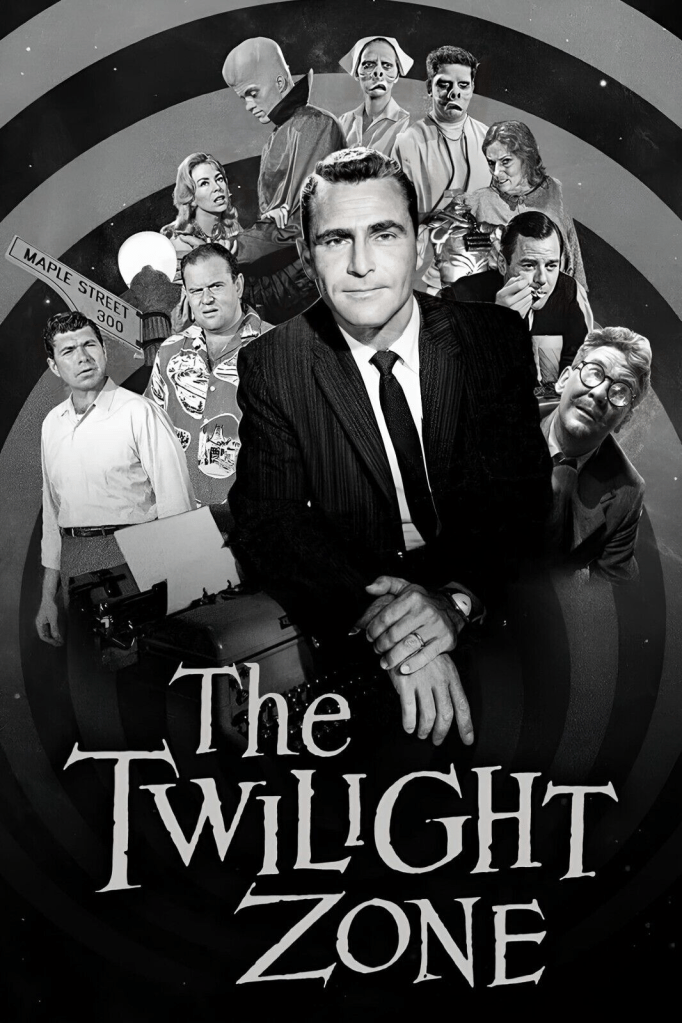
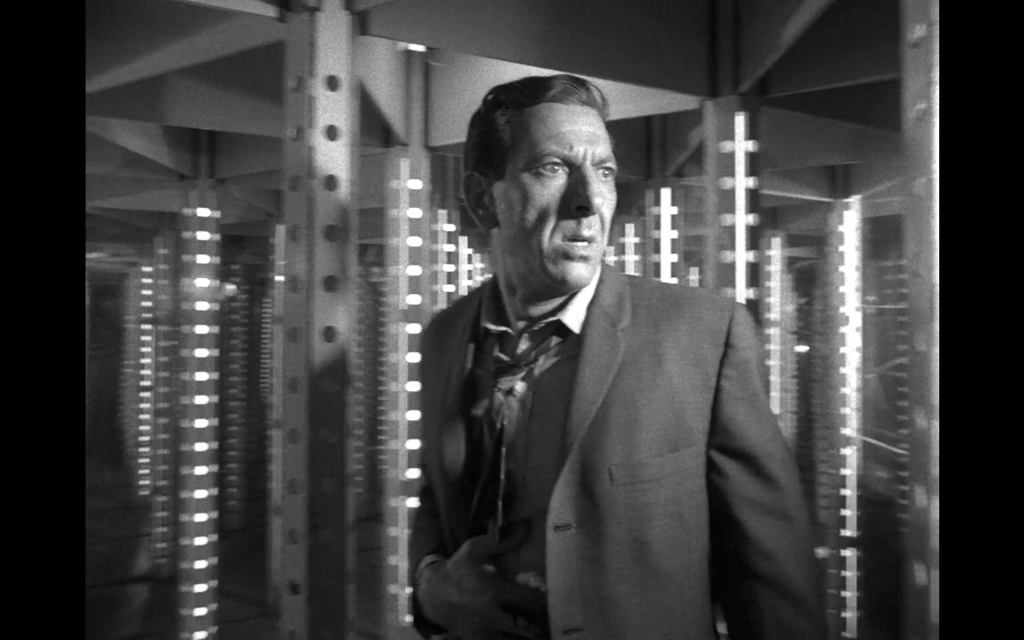
As we wind up our Eerie Shows blog series, we are ending with a show I remember being both fascinated by and totally creeped out by – The Twilight Zone. In 1958 CBS purchased a teleplay written by Rod Serling called “The Time Element.” It was introduced by Desi Arnaz. It became an anthology series called The Twilight Zone and was on the air from 1959-1964.
This show had more lives than The Brady Bunch. A second version debuted in 1985 and was on four years on CBS. From 2002-2003, it appeared again on UPN hosted by Forest Whitaker. But that still was not the end. In 2019, a fourth reboot was on for a season. In addition to the reboots, Steven Spielberg produced Twilight Zone: The Movie in 1983 starring Dan Aykroyd, Albert Brooks, and John Lithgow. Leonardo DeCaprio was rumored to be putting together a current film and Aron Eli Coleite was hired to write the screenplay. Four years later, Christine Lavaf was brought on to write a script. I could not find any information whether this movie was still in the works or not.
In this blog, I am focusing on the original series. While the show could be described as fantasy or science fiction, the episodes covered a lot of genres including absurdism, dystopian fiction, suspense, horror, and psychological thrillers.
📷reddit.com
The opening is one many of us remember: “There is a fifth dimension, beyond that which is known to man. It is a dimension as vast as space, and as timeless as infinity. It is the middle ground between light and shadow, between science and superstition, and it lies between the pit of man’s fears and the summit of his knowledge. This is the dimension of imagination. It is an area which we call The Twilight Zone.” The “Twilight Zone” was a term used by US Air Force pilots when crossing the day and night sides above the world.
📷wired.com
The series was produced by Cayuga Productions, Inc., owned by Serling. There were a lot of other famous writers who penned episodes on this show. Of the 156 episodes, Serling, Charles Beaumont, and Richard Matheson wrote 127 of them. Other famous writers included Ray Bradbury, Earl Hamner Jr., George Clayton Johnson, and Jerry Sohl. Many of the episodes were social commentaries about nuclear war, McCarthyism, racial inequality, and the greed of capitalism.
One of the earliest shows, “The Monsters Are Due on Maple Street,” is a great example of the Cold War and McCarthy subthemes. It aired in 1960, and the themes are still relevant today. The residents of Maple Street are alarmed when they hear rumors of monsters from outer space in their neighborhood. After a shadow passes by and a loud roar is heard, the citizens start accusing each other of being aliens. One man dies, another is physically attacked, and rioting occurs. We watch the residents destroy each other without seeing aliens involved. The twist is that there are aliens. They cut the power, but they let the humans destroy themselves. The message was if we think communists are in our midst, we’ll invent evidence to prove it and attack each other while Russia simply sits back and watches us destroy each other.
📷powerpop.com
All the shows were filmed in black and white. Seasons one, two, three and five were half-hour shows, while season four was an hour long. The Twilight Zone was never very high in the ratings, and the show struggled to find sponsors during its run. To save some money in season two, the network decided to shoot episodes on videotape instead of film. I’ve heard of this happening with several television shows in the sixties, but I wasn’t sure what the difference was. Apparently, videotape was very primitive at that time. Using videotape meant that the show was “camera-cut” which means using four cameras on a sound stage. Location shooting was not possible, and editing the tape was almost impossible. These disadvantages, along with the poor visual quality, made it hard to work with, and the technology was abandoned after a brief trial period.
The original theme for season one was composed by Bernard Herrmann. Season two switched to a theme by Marius Constant which is the most-remembered theme song. (The Grateful Dead performed the theme in 1985 for the reboot, Johnathan Davis of Korn composed the 2002 version, and Marco Beltrami was on board for the 2019 revival. The 1983 movie used composer Jerry Goldsmith.)
📷imdb.com
Several actors were in more than one episode and are noted for their appearances in the show: Jack Klugman, Burgess Meredith, Warren Oates, William Shatner, Jack Warden, Fritz Weaver, and William Windom.
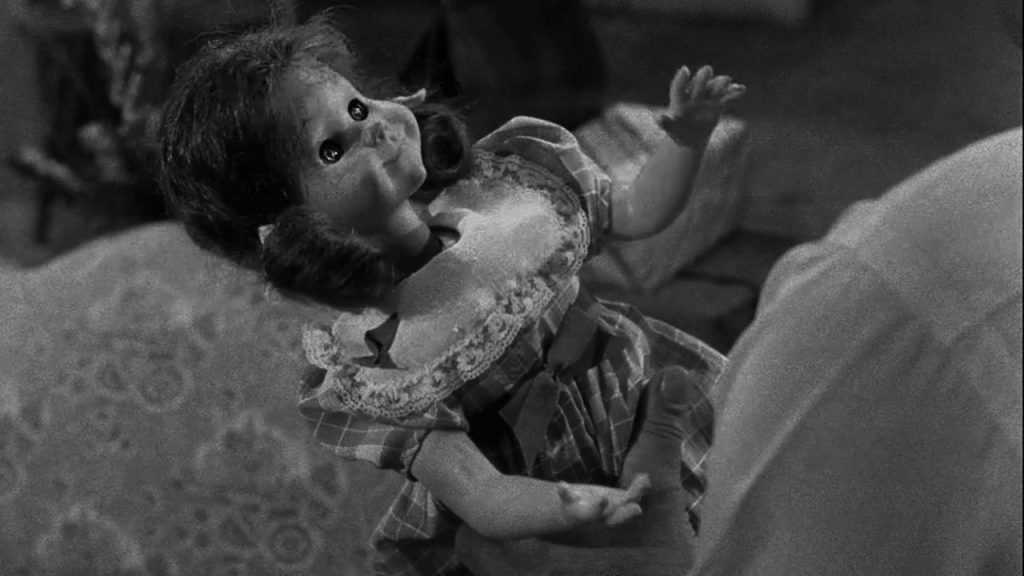
Everyone has their favorite scary episode. “The Dummy” from 1962 is about ventriloquist Jerry Etherson who thinks his dummy Willie is alive and evil. He locks Willie in a trunk, deciding to write a new act with another dummy, but Willie doesn’t like the plan.
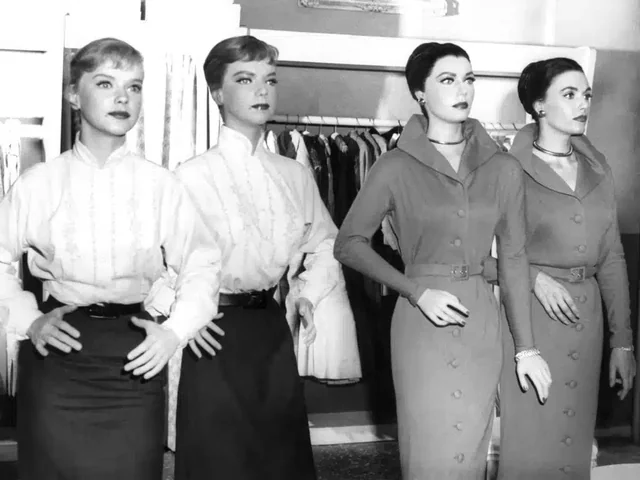
In “The After Hours,” a woman is locked in a department store after hours and it seems as though the mannequins have come to life. Even though no one is left in the store, she is treated badly by several “salespeople.”
📷imdb.com
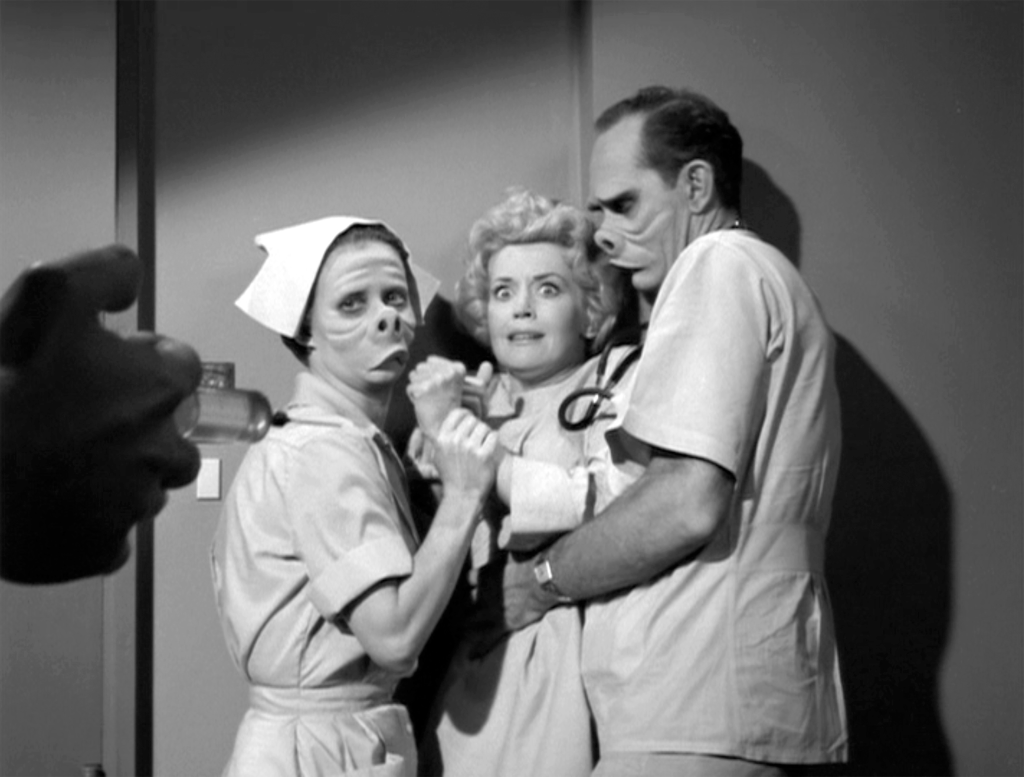
My most-remembered episode was “Eye of the Beholder.” Donna Douglas stars in this one about a young woman lying in a hospital bed with her head wrapped in bandages. She is waiting to see the outcome of a surgical procedure that was supposed to make her look “normal.” We see the bandages come off, we see the beautiful face of Donna Douglas, we see her look into a mirror, and then we hear her scream. When the scene pans out, everyone else has the face of a distorted pig and Douglas is devastated by her “ugliness.”
Also, like The Brady Bunch, the show has never been off the air since it debuted thanks to syndication. The episodes, despite being in black and white, have stood up to the test of time very well. Many things have changed in society since 1959, but people really have not changed much, and the stories are still applicable today. Newton Minnow who headed the FCC in 1961 is the person who called television a “vast wasteland.” The only series he praised was The Twilight Zone. (The US Minnow on Gilligan’s Island was named for Newton.)
📷paramountplus.com
There are some shows that are classics for their writing, some are classics for the quality of actors on the show, some are classics for their ability to transcend time and stay relevant for decades, and some are classics for the novelty they bring to the television schedule. The Twilight Zone is a classic because it does all these things and is as enjoyable to watch today as it was more than 60 years ago.
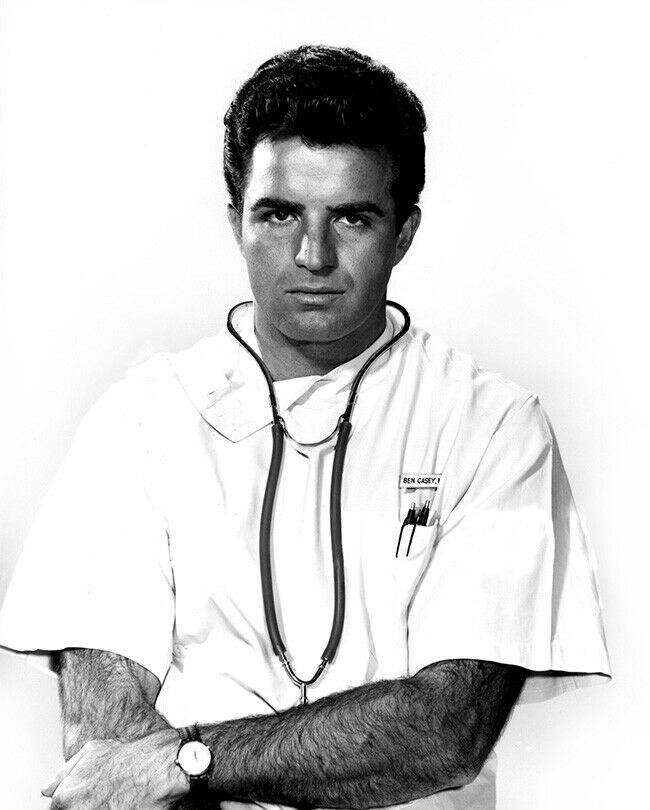
Medical series have been a staple since television started. This month we are checking out a few of the favorites in a blog series: “Examining Our Favorite Medical Shows.” First up is a show that was on in the sixties: Ben Casey.
Jaffe and Edwards Photo: ebay.com
Ben Casey was on the air from 1961-66 on ABC. Created by James E. Moser, the character of Ben Casey was based on Dr. Allan Max Warner who was a neurosurgeon. Warner worked closely with the actors to show them how to handle instruments and patients. It was not a cheap show to produce. More than $50,000 of medical equipment was purchased for the show and each 60-minute episode had a budget of $115,000. Warner later changed to psychiatry because he said his association with the show prevented him from becoming board-certified. Dr. Joseph Ransohoff, another neurosurgeon, became the medical consultant.
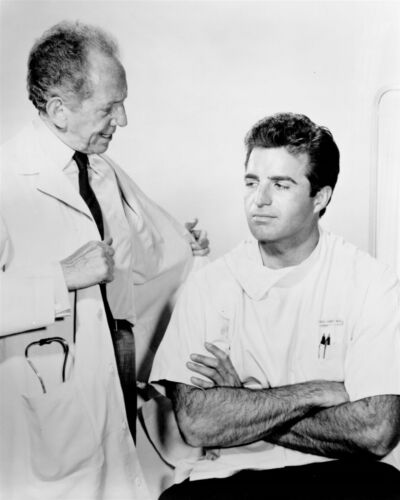
The series followed Ben Casey (Vince Edwards), an idealistic neurosurgeon at County General. Dr. David Zorba is his mentor (Sam Jaffe). In the final season, Jaffe left and the new chief of neurosurgery was Dr. Daniel Niles Freeland (Franchot Tone). Rounding out the cast were Dr. Ted Hoffman (Harry Landers), Dr. Maggie Graham (Bettye Ackerman), orderly Nick Kanavaras (Nick Dennis), and Nurse Willis (Jeanne Bates). The show had a gritty edge to it and featured the life of doctors working in a city hospital and the tough physical and ethical situations they had to deal with.
Several sources said that Cliff Robertson and Jack Lord turned down the role of Ben Casey. Also, Russell Johnson said he auditioned for the role, but was rejected and his next audition was for the role of the Professor on Gilligan’s Island. However, I read several other sources that mentioned that Bing Crosby discovered Edwards and planned a television show to feature his find. Bettye Ackerman’s character was cast as an anesthesiologist who was supposed to be Casey’s love interest but they never developed any chemistry. In real life, Ackerman was married to Jaffe.
Photo: nostalgiacentral.com
Filmed at Desilu Studios, the series was produced by Bing Crosby Productions. The show had 33 directors including Sydney Pollack; Vince Edwards directed seven of the episodes. However, its writing staff was even bigger with about 80 different people penning scripts. I never understood how that worked so well. As a writer, I would want to get to know the characters I was writing for and then continue to learn about them, but during the sixties, there were a lot of people who only contributed one or two scripts to any given series.
The theme music was written by David Raksin and pianist Valjean made it a top-40 hit.
The show was on Monday nights for its first three seasons. Season four, it moved to Wednesdays and returned to Mondays for the final two seasons. The first season it ranked in the top 20 and moved into the top 10 for its second year. Once the network moved the show to Wednesdays where it had to compete with The Beverly Hillbillies and The Dick Van Dyke Show, it fell out of the top thirty and never returned to its former popularity. During the last season, several changes were made. Casey fell in love with Jane Hancock, a woman who came out of a 13-year-long coma. The episodes also began to continue from one to another instead of being stand-alone stories, encouraging viewers to find out what happens the next week.
Photo: pinterest.com
During the run of the show, four novels were written based on the series (1962-3), as well as a daily (1962-1966) and Sunday (1964-1966) newspaper comic strip by Jerry Capp and ten Dell Comic books (1962-64). There was even a board game created called Ben Casey MD. And even more surprising was a doll called Dr. Ben Casey’s Patient. Surely children were not exposed to the show.
Photo: pinterest.com
Another medical show, Dr. Kildare, aired the same year as Ben Casey. The shows were often confused, but they were really quite different. Dr. Kildare was an intern who respected his mentors and the doctors he served under. He was the handsome guy next door, friendly and always striving to help his patients. Casey was brash and had already served his learning time, so he more often bucked the system and was not as respectful to the doctors working with him. He was handsome but in a more wild, bad boy, appearance. However, both shows tackled some very interesting and controversial subjects from the medical field.
Ben Casey might have gone off the air, but he did not disappear. The show has been parodied on a variety of shows including The Flintstones. “Ben Casey” was used by American troops in Vietnam War as slang for a medic. In 1988, a made-for-tv-movie The Return of Ben Casey brought Edwards back to the small screen. It was a syndicated show, and aired with the hope that it would be a pilot for a new series, but none of the networks picked it up.
Photo: collectors.com
The cast was not holding hands and singing Kumbaya, but it did function amidst a lot of dysfunction. Director Mark Rydell discussed Edwards’ gambling problem which became the show’s gambling problem. Landers who played Dr. Hoffman said Edwards was constantly asking the cast and crew for money to take to the race track, and he would be gone for hours at a time. He often came in with $20-30 thousand dollars in his pocket, demanding that he leave filming by 11; other stars had to stand in for him to tape the rest of the show. Despite his unprofessional behavior, several stars liked Edwards. Jaffe, who had many conflicts with Edwards, was not one of them which is why he eventually left the show. Director Jerry Lewis and guest star Sammy Davis Jr. also had problems with Edwards. Landers also mentioned that when Tone took over Jaffe’s role, he was constantly drunk on the set. When Landers directed the show, he kept Tone sitting down so viewers would not see that he was swaying.
Considering all the issues the show had, the number of writers contributing scripts, the unprofessional behavior of several of the actors, and the movement of the show from Monday to Wednesday where it had stiff competition, the show actually did well and was popular with viewers for five years. It set the tone for many of the shows that would follow including Marcus Welby, Medical Center, and ER. Next week we will learn more about Dr. Kildare.
This month we have been learning about some unique stories about television writing. I thought it would be fun to wind up the series learning a little bit more about what goes on inside the writers’ room and how you might get there.
Dick Van Dyke Show Photo: thiswastelevision.com
Since watching The Dick Van Dyke Show, I have always thought how much fun it would be to be part of a writers’ group for a successful comedy. Nothing I have ever read about the cons of the writing life—late nights, severe writers’ block, procrastination, writers’ arguments–has ever made me question whether this would be an amazing job or not.
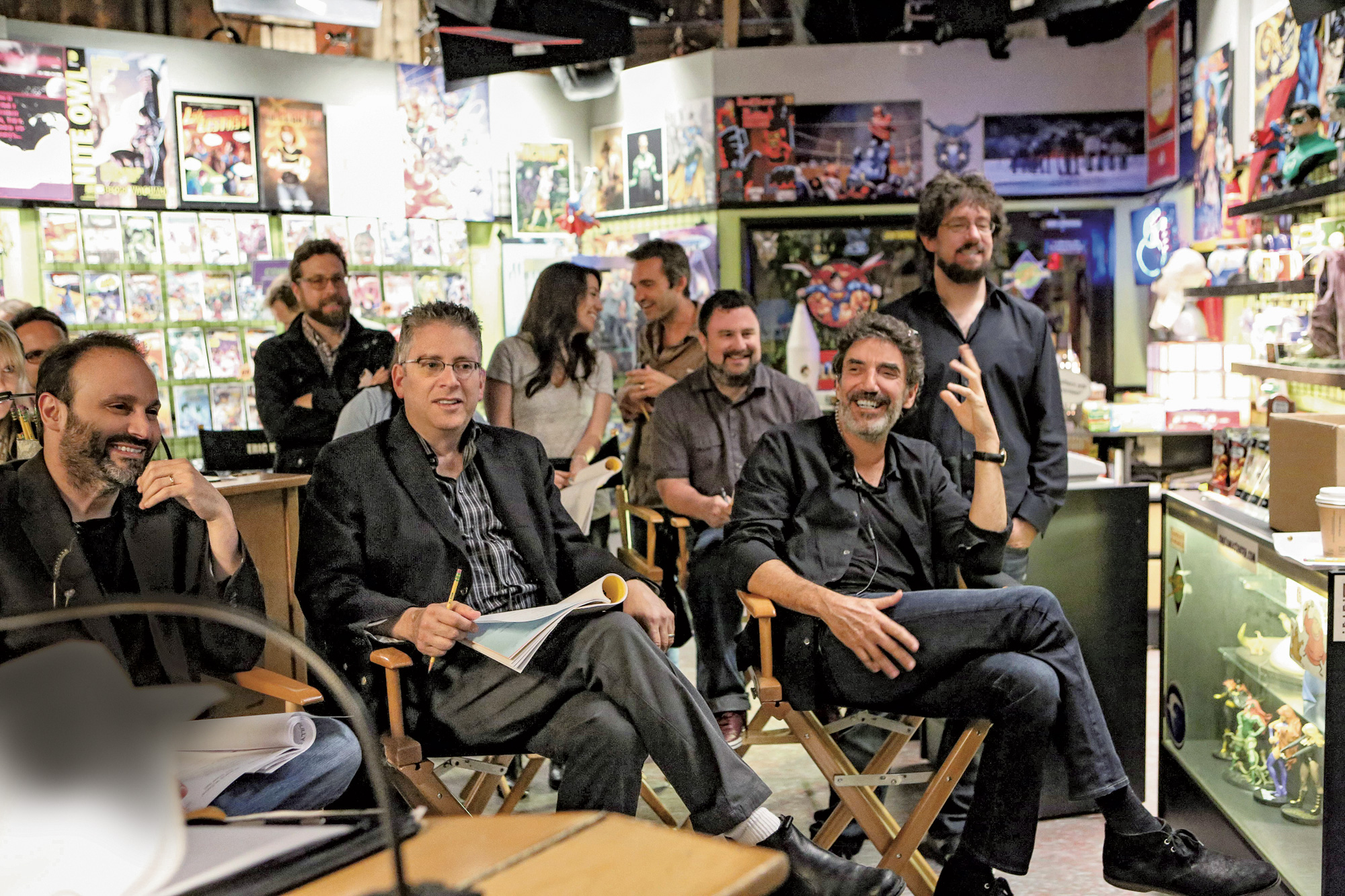
So, what exactly is a writers’ room? It’s an office where writers of a television show get together to brainstorm the stories that make it on the air. Depending on the show, you can have two to twenty people in the room. There are other people in addition to writers who pop in and out. A script coordinator, staff writer, story editor, executive story editor, producer, and supervising producer are all positions that might be sitting in on a writing session. Writers’ assistants can take notes, do research, and then there are runners who make copies, get lunch and coffee, and schedule calls.
Just like police officers, doctors, or funeral directors, writers have a lingo all their own. So, let’s take a look at a few of these expressions. A bottle episode takes place in one location and often depends more on dialogue. A Gilligan cut is just what you might guess. It goes back to the show Gilligan’s Island which often showed a contrast in action: one character says Gilligan says nothing in the world will get him to climb that tree and the next scene shows him in the tree. A face heel is where a good guy is now revealed to be a bad guy. A Frankenstein draft is one that is made up of a variety of parts—multiple writers work on the script and then it is unified. A gorilla is a joke or scene that the audience will remember long after the episode is over.
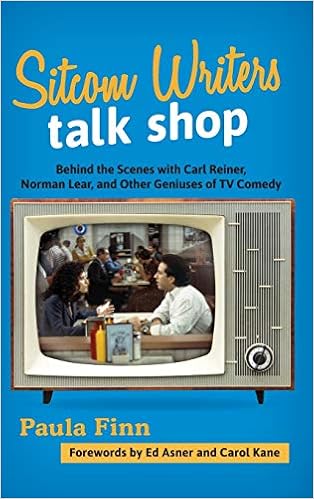
If you are interested in television writers, there is a great book by Paula Finn called Sitcom Writers Talk Shop. (It’s available on amazon.com and at most of your favorite book stores) Her dad, Herb Finn, was a television writer and, for all of you who think Ralph Kramden and Fred Flintstone seem similar, her dad Herb, wrote for both shows.
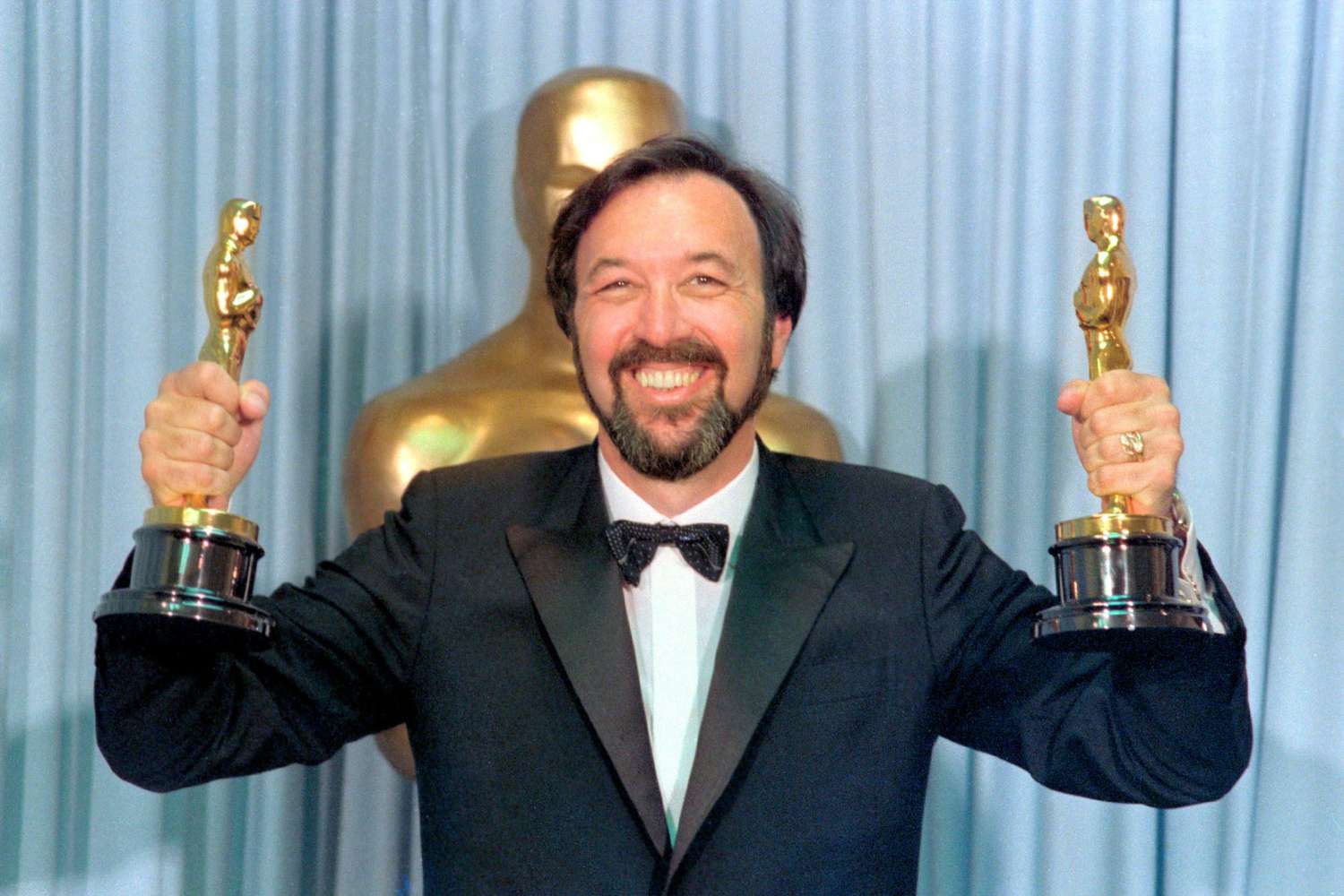
She has some great interviews in the book. If you read the book, you’ll learn a lot about the highs and lows of television writing. James L. Brooks–who wrote for Room 222, The Mary Tyler Moore Show, Taxi, and The Simpsons—had some great insights.
James L. Brooks Photo: ew.com
When asked about how you know you’re in the zone, he responded that “you hear your characters talking to you, and you’re taking dictation.” When asked about how it feels to work with a partner you get paired with, he said that you know you are a good team when “you don’t have an absolute sense of who does what.” When asked what was the best way to learn the craft of comedy, he said, “That’s obvious: It’s just doing it.” My favorite answer to a question of his was when he was asked if he could have found fulfillment doing a different job, he said, “I can’t imagine having done anything else. I never had the ambition to be a writer because it seemed impossible.” He went on to say that it’s a common feeling for writers that you do it for years and years and then suddenly, “somebody asks you what you do for a living, you can say ‘a writer’ without your voice catching or rising. Because it’s just an amazing thing.”
If you are a fan of MasterClass, you know they have a lot of great learning opportunities. One of their courses about writing for television is taught by Shonda Rimes. The MasterClass staff put together five tips for succeeding in a writers’ room. I would take it a step further and say they were five tips for succeeding in life. They are:
Be useful.
Be respectful.
Be brave.
Be collaborative.
Be flexible.
So, if after reading this blog, you too think it would be fun to be part of the writers’ room, what is the best way to do it? Often writers start as assistants. You’re able to make contacts and see how the job is done from the inside. Of course, writing scripts and more scripts and more scripts until someone decides one of them is just what they need is another option. Many aspiring writers find agents who can try to sell the work for them.
The Writers’ Room – The Big Bang Theory Photo: tvinsider.com
Sharing your work with as many people as possible is always a great way to get your name out there. Writer/Producer Lee Goldberg gave this advice in a post from November 2020: “The first thing you have to do is learn your craft. Take classes, preferably taught by people who have had some success as TV writers. There’s another reason to take a TV writing course besides learning the basics of the craft. If you’re the least bit likable, you’ll make a few friends among the other classmates. This is good, because you’ll have other people you can show your work to. This is also good because somebody in the class may sell his or her first script before you do, and suddenly, you’ll have a friend in the business.”
My best piece of advice if you want to be a comedy writer is to keep a journal. I cannot tell you how many times when I was researching television writers, they said some of their best shows came from real life. And during the years of researching for my blog, I have read quotes by many family members who said they often saw their private family life on the screen. There are some things you just can’t make up. Those situations can often become the basis of a television script. There are as many different paths to becoming a writer as there are writers in the industry.
Photo: medium.com
I wanted to end with a bit of inspiration that I received from James Brooks in Paula Finn’s book that he took from someone else, which is how writers work all the time. Anyway, I always struggle when trying to explain why pop culture is so important and why I choose to write about it. I often feel that I have to over-defend writing about television. His quote: “I forget who said it, but somebody terrific: The purpose of popular culture is to let people know they’re not alone.” Thanks to all of you for being not alone with me!
This month we are looking at some of our favorite sitcom stars. With roles in more than eight popular sitcoms, Jerry Van Dyke has to be in the mix.
Photo: amazon.com
Jerry was born in Danville, Illinois in 1931. Van Dyke started his comedy stand-up career in high school performing for local nightclubs. In 1954 he joined the US Air Force Tops in Blue, performing at military bases around the world. During this time, he also played the banjo in his shows. After his military time was up, he married Carol Jean Johnson; they would divorce in 1974.
Photo: gr8terdays.com
Dick Van Dyke was his brother, and Jerry’s first television appearance was on his brother’s show where he fittingly played Rob Petrie’s brother Stacey.
In 1963 he made his movie debut with two movies: The Courtship of Eddie’s Father and Palm Springs Weekend. He was also made a member of The Judy Garland Show which was cancelled after its first season. I’m not sure if there were behind-the-scenes issues with this show or not, but it seems like it would have been more successful at that time. What I was able to read was that it went through a lot of personnel changes; had to compete with Bonanza; and that while viewers loved Judy, they did not love the format or Van Dyke.
McClintock–Photo: tidefans.com
Jerry made a few more television appearances in the early sixties on Perry Mason, The Cara Williams Show, The Andy Griffith Show, and McClintock.
In 1965, Jerry was offered the role of Dave Crabtree on My Mother the Car. The premise of the show is that Dave buys an antique car only to realize his dead mother talks to him through the radio, and no one else knows it’s happening. This show is often cited as the worst sitcom of all times, but it certainly has some strong competition. Somehow viewers suffered through 30 episodes before the show was put out of its misery. I’m not sure if it was a blessing or a curse, but Jerry turned down the role of Gilligan on Gilligan’s Island for this show. Luckily, this show didn’t seem to have too much negativity on his career, while Bob Denver was typecast to the point that he never really had much of a career once the show ended.
Photo: youtube.com
When the show ended, Jerry made appearances on That Girl and Vacation Playhouse before being offered another leading role. He was cast as Jerry Webster in Accidental Family. He aptly plays a nightclub comedian who was a widower with a small son Sandy. After buying a farm to raise Sandy, he hires Sue Kramer (Lois Nettleton) as governess and, of course, there is some romantic tension. This show only lasted for sixteen episodes before ending.
Photo: imdb.com
After showing up on Good Morning World and Gomer Pyle, USMC, Jerry was offered another lead role as Jerry Brownell, a physical education teacher, on Headmaster. This was an Andy Griffith vehicle where Andy played the principal at an elite California private school. After fourteen episodes, Jerry was back to guest appearances which he made on Love American Style, The New Dick Van Dyke Show, and The Mary Tyler Moore Show.
In 1977 he married again, this time to Shirley Ann Jones, and they were together until his death.
1979 brought him another regular role on 13 Queens Boulevard. The show was set in a New York apartment complex and explores the relationships of the residents. It just never clicked with fans and was given the boot after 9 shows.
Photo: people.com
A decade later Jerry took on the role that he is best known for: Luther Van Dam on Coach. For eight years he was the assistant coach to Craig T. Nelson’s Hayden Fox–first as college coach and then for a time in the pros. Luther was the well-meaning but bumbling friend who often made life interesting for Hayden. However, he was a great coach. Van Dyke would receive four Emmy nominations for his character on the show from 1990-1993. His losses were to Alex Rocco on The Famous Teddy Z, Jonathan Winters on Davis Rules, Michael Jeter on Evening Shade, and Michael Richards on Seinfeld.
Photo: amazon.com
In the late nineties he had recurring roles on two shows that I do not remember anything about: Teen Angel and You Wish. Teen Angel was a weird concept where Marty DePolo eats a six-month old hamburger, dies, and then becomes his best friend’s guardian angel. Van Dyke played Grandpa Jerry. He played another grandpa on You Wish, which had an equally weird concept. Its premise is that a single mother finds a genie who was imprisoned in a magic carpet for 2000 years. Not surprisingly, they each had fewer than ten episodes before being canned.
Jerry Van Dyke was an avid poker player and fan, and from the late 1990s to the early 2000s, he hosted tournaments for ESPN. During that time, he also accepted guest roles on several television series and a few movies. However, his career was not over.
Photo: nytimes.com
He received two more recurring roles on popular sitcoms in the 2000s. From 2001-2005, he was Big Jimmy Hughes on Yes Dear and from 2010-2015, he was Tag Spence on The Middle.
He and his wife lived on a ranch in Hot Spring County in Arkansas where he seemed to be very happy. He passed away there from heart failure in 2018.
Most actors would have been very proud of a career mirroring Jerry Van Dyke’s, and I’m sure he was, but it would have been hard to be in your successful brother’s shadow so much of the time. Dick Van Dyke was five years older than Jerry and, with the success of The Dick Van Dyke Show, he had a career that was truly impressive. However, considering how few comedians make it in the business, Jerry had a stand-up career, a movie career, and a television career. His role of Luther Van Dam was a gem and gives us an example of what his career could have been if the luck of the dice had given him better roles.
From Fall of 1963 to Spring of 1966, you could watch My Favorite Martian on television every week; I’m sure he was your favorite Martian too.
Photo: uncleodie’s.com
John L. Greene created the plot and developed the characters for the show produced by Jack Chertok. The plot was that a 450-year-old extraterrestrial anthropologist, who was not small and green, collides with an air force plane. A young reporter, Tim O’Hara (Bill Bixby) is returning home after an interview at Edwards Air Force Base and sees the crash. Tim takes the Martian (Ray Walston) home and refers to him as Uncle Martin, although his real name is Exigius 12 1/2. Tim agrees to protect his identity while he repairs his spaceship.
Photo: neatorama.com
Besides being an anthropologist, Uncle Martin is an inventor, which sometimes causes headaches for Tim. A time machine sends him and Martin to other times and brings Leonard da Vinci and Jesse James back to the present. A molecular separator allows Martin to take apart the molecules of one object and rearrange them into something else like a squirrel to a human. Another product lets Martin save memories in a pill form to relearn later.
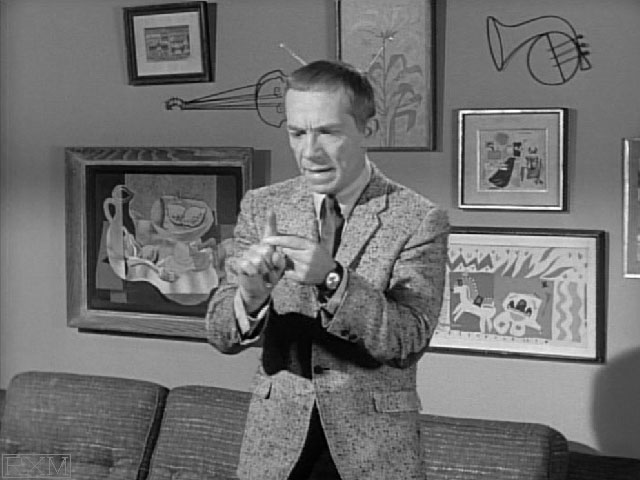
In addition to his inventions, Martin has some unusual powers. He is telepathic and can read and influence minds; he can levitate objects with his index finger, communicate with animals, both freeze or speed up objects or people, and can raise two antennae to become invisible. Raising the antennae was done with a transistor under his collar.
Luckily Tim’s landlady, Lorelei Brown (Pamela Britton), is a bit scatterbrained. She and Uncle Martin have a bit of a romance but it never gets serious since Martin knows he must leave the planet.
Photo: youtube.com
The network didn’t like Chertok’s scripts, so they hired Sherwood Schwartz (later known as the creator behind Gilligan’s Island and The Brady Bunch) to doctor the plots.
The theme music was composed by George Greeley and performed by Paul Tanner, a former member of Glenn Miller’s band. Tanner used an electro-theremin which could later be heard on The Beach Boys’ hit “Good Vibrations.”
The first two seasons were filmed in black and white with the third being shot in color.
Photo: uncleodies.com
Season one found My Favorite Martian ranked tenth overall. This was a surprise to me because it was up against The World of Disney. By the end of the second season, it was down to 24th but was renewed for a third year. Ratings declined significantly in the third season; often mentioned was the redundant storylines. If kids were still watching Disney, adults might have split their viewership. In it second season, this show was on at the same time as Wagon Train and in its last season it was up against Voyage to the Bottom of the Sea.
For only being on the air three years, the show had a lot of after lives. Saturday morning cartoons were all over the place during this decade. One of the cartoons to debut in 1973 was My Favorite Martians featuring Martin; his nephew Andromeda, or Andy; Tim; Mrs. Brown; and her boyfriend Detective Brennan. The animation series relied on scripts that had been written for a potential fourth season but never used.
In 1999, the show also came to the big screen starring Christopher Lloyd as Martin and Jeff Daniels as Tim. Walston has an appearance as another Martian trapped on Earth, although a lot of the ET characteristics had changed from the original concepts.
Gold Key Comics developed a comic book series around the show and published nine issues between 1963 and 1966.
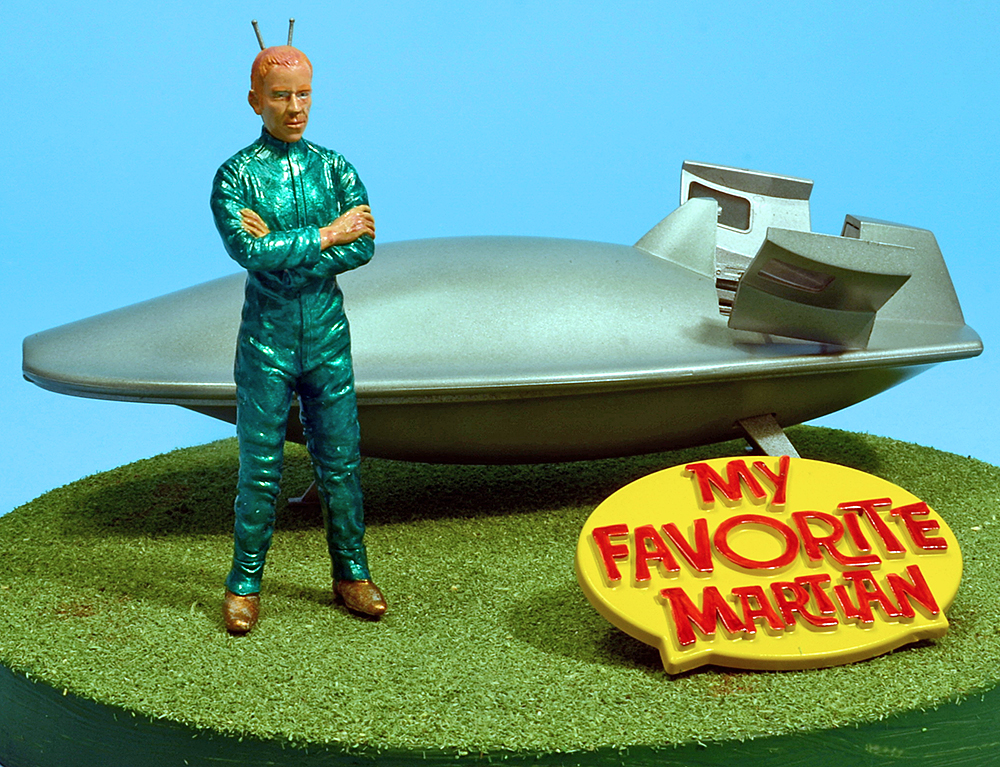
The series debuted during the time that merchandising was beginning to increase greatly. This show resulted in a board game, a magic set, a paint-by-numbers kit, a spaceship model kit, and a beanie hat.
One fun fact I learned was that the spaceship prop used in the series was bought by magician David Copperfield for $100,000 in 2018.
Although My Favorite Martian will not go down as one of the best sitcoms in the golden age of television, it was important as one of the first sci-fi television shows. Most fans cite their special effects as pretty impressive for the time.
Photo:
The first two seasons were filmed at Desilu and the great Sheldon Leonard directed the pilot. It would have been interesting to see the progression of the show if he had stayed on the payroll. He seemed to have an intuition for developing realistic and likable characters. Ray Walston later regretted taking the role of Uncle Martin. He said he did it for the money but felt it typecast him for many years. However, he did say that he enjoyed working with Bixby, and they became life-long friends.
Let’s end with one of their conversations that show how this series turned comedy upside down.
Tim: I thought you could give my article on ESP a special slant.
Martin causes Tim to stand at an angle through telepathy.
Photo: blogspot.com
If you want a special slant on early sci-fi, give this one a try, but save yourself some grief and leave season three in the box.
This month my blog theme is “Don’t Judge Me.” We’ll take a look at sitcoms featuring judges. The first show on the docket is I Married Joan. Debuting on NBC in 1952, the show starred Joan Davis and Jim Backus and was typically described as the marriage of a respected judge and his scatterbrained wife, Joan and Bradley Stevens. It ran for three seasons and produced 98 episodes.
Photo: dvdtalk.com
The early shows begin in the judge’s chambers where he recalls one of his wife’s wacky adventures followed by the episode and ending with the judge summing up his tale of his wife’s mishap and its similarity to a case he was working on. It was very similar to I Love Lucy; however, this show featured more slapstick comedy by Davis. Marc Daniels directed both shows. The shows also were both filmed in Los Angeles at General Service Studios and debuted October 15 (one year apart). Time hated the show—“It might have better been left on the shelf.” Variety, on the other hand, found it filled with “comic zest and vitality.”
I Married Joan was created and produced by Joan Davis Enterprises. She was a successful businesswoman and a workaholic. Joan earned $7500 a week; in today’s equivalent, that would be about $70,000 per episode. Joan was apparently not a very easy person to work for or with. Sherwood Schwartz wrote about a third of the episodes. (He would later go on to create The Brady Bunch and Gilligan’sIsland.) He did not care for Davis and said that Joan made one of the writers stick close to her when they ran through the show because she often wanted a better joke substituted. Jesse Goldstein also wrote a third of the shows. He had written for Burns and Allen and Red Skelton.
Photo: youtube.com
Other actors also complained about working with Joan. Apparently, Backus detested her because she was not kind to the crew and fellow actors. Sandra Gould (who would later appear as Gladys Kravitz on Bewitched), Hal Smith, and Hope Summers (who both showed up in Mayberry as Otis the drunk and Bee’s friend Clara) confirmed Backus’ stories. There are a couple of other stories floating around that Joan once slapped a child for asking for her autograph and threw a temper tantrum at a salon, knocking over a bottle of bleach. Backus had worked with her on radio before signing on for this role, so I’m surprised he had not been aware of her work abuses before. She was described as a bit quiet and shy in her non-work life and spent her spare time fishing, golfing, watching boxing, or reading her extensive gag files.
Rounding out the cast were Dan Tobin as their friend Kerwin, Geraldine Carr as Mabel, Sheila Bromley as Janet, Sandra Gould as Mildred and Hal Smith as Charlie.
Photo: pinterest.com
For seasons two and three, Joan’s daughter Beverly Wills played Joan’s sister on the show. I guess it was a family affair because Henny Backus, Jim’s wife, also had a role on one episode as Mrs. Bunker.
The plots were about what you would expect on a show from this time era. In one, Joan and her friend admire each other’s houses and decide to swap for a week which quickly cures them of their envy. When Joan finds a dress that her husband is hiding for a friend for his wife; she assumes it is for her and “alters” it–a lot. In one episode, Joan wonders what life would be like if she had never married. In another show, she realizes she doesn’t have enough chicken to serve when Brad brings unannounced guests home. Any of these plots could have come from Burns and Allen, The Ann Sothern Show, Our Miss Brooks, or The Life of Riley.
Photo: wikipedia.com
However, in one show, Joan crawls into an enormous commercial soup pot in order to spy on the kitchen crew to learn the recipe for a chef’s famous soup. As you would expect, all the ingredients suddenly begin to get thrown in all around her. Even reading this description, you can picture Lucille Ball in the predicament. Perhaps this is another reason the show didn’t succeed. It was just too similar to the top-rated show in the nation.
Photo: youtube.com
Many people remember the theme-song lyrics.
I married Joan What a girl, what a whirl, what a life. Oh I married Joan What a find, love is blind, what a wife! Giddy and gay, all day she keeps my heart laughin’ Never know where her brain has flown. To each his own Can’t deny that’s why I married Joan. I married Joan!
Photo: youtube.com
For the entire three seasons it was on the air, it was up against Arthur Godfrey and His Friends on CBS and news shows on ABC for seasons one and two. The show did so-so in the ratings for the first season. The second season the ratings increased to the number 3 show. Part of it might have come about from the negative publicity Arthur Godfrey got when he fired Julius LaRosa. The third season Disneyland was on ABC, and the ratings declined again. The ratings were especially low in the New York market, so the show was cancelled. HowdyDoody had just gone off the air, so reruns of the show replaced the popular kids’ show in the mornings. Jim Backus had signed a three-year contract and declined to come back; I’m not sure if that contributed to the cancellation of the show or not.
Photo: wikimedia.com With guest star Bing Crosby
Joan Davis tried to get a few other sitcoms on the air in later years; one interesting idea was for a woman astronaut who was training for a flight to the moon. She officially retired in 1959 and passed away in 1961 after suffering a heart attack.
Photo: wikipedia.com
Jim Backus would go on to have a very successful career. He would cross paths with Sherwood Schwartz again when he accepted the role of Thurston Howell III on Gilligan’s Island. A fun aside is that when the I Married Joan sets were later re-used, Backus’ lines were found written in various places.
Photo: youtube.com
As I noted earlier, the theme for my blog this month is “Don’t Judge Me.” In that spirit, I am trying not to judge Joan Davis too harshly without learning more about her as a person. One thing I have learned in writing television blogs for so long is that several of my favorite characters were not my favorite people; I decided long ago that I could adore the character and abhor the actor. Fortunately, most of the actors in classic television were wonderful people.
Photo: sitcomsonline.com
I do remember watching this show in reruns in the late seventies and early eighties. It was not really my cup of tea, but I am not a big lover of slapstick comedy. Most of the fans that bought the DVDs (91%) gave the series 5 stars and made comments like “extremely funny,” “I couldn’t stop laughing,” and “clever writing and great comic acting.” If you are an I Love Lucy fan, you should probably give I Married Joan a try. There are worse ways to spend an evening.
This month, we begin a new series, “We Salute You” and we will look at shows about the military. Our first series is The Phil Silvers Show a/k/a You’ll Never Get Rich.
Photo: nostalgiacentral.com
The sitcom debuted on CBS in 1955. The pilot was never aired, but the show was part of the television schedule until 1959, producing 143 episodes.
Nat Hiken created the series which ended up being nominated for Best Comedy Series every year it was on and winning that category in 1956, 1957, and 1958. In addition, Silvers won an Emmy for his performance, and Hiken won an Emmy for Best Director.
Photo: findagrave.com Nat Hiken in the bowtie with Phil Silvers
In 1955, television was transitioning from New York to California. However, Hiken insisted on filming the series in New York. The earlier seasons were filmed at Dumont and later seasons moved to CBS studios in Chelsea, Manhattan.
The show was filmed like a play in front of a live audience. The cast members had to memorize the entire script. When Mike Todd guest starred in season two, he insisted that the show be filmed more like a movie. Takes were filmed out of sequence and multiple takes were allowed because there was no audience. The crew realized that this process was faster, cheaper, and easier for the actors, so the change was put in place permanently. The show was screened for the military though, and servicemen made responses that were used to make the show more realistic.
Photo: thetimes.com
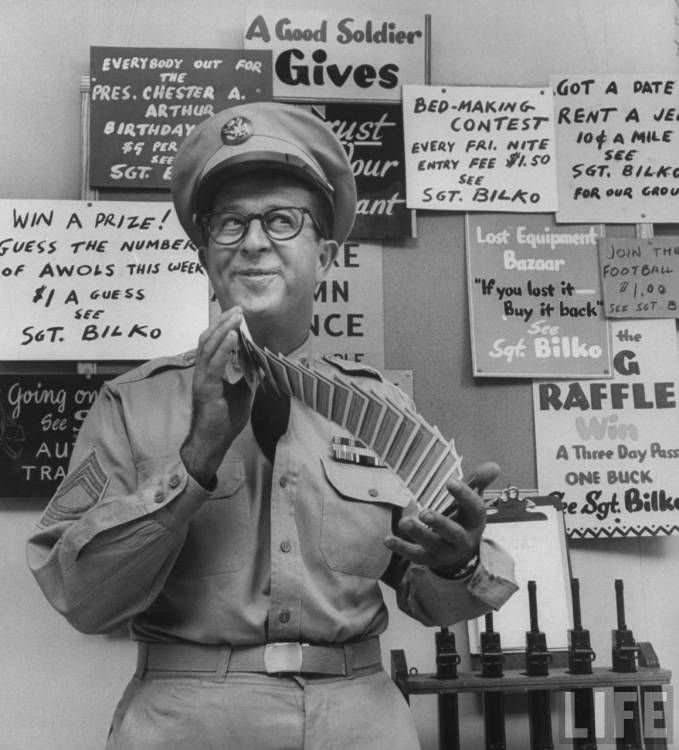
Sergeant Ernie Bilko (Phil Silvers) is a con man. He runs a motor pool at a small US Army Camp, Fort Baxter in Roseville, Kansas. Colonel Hall (Paul Ford), who doesn’t trust Bilko, tries to stay on top of his schemes. Bilko tries to make money any way he can and is not above using the landing craft for midnight cruises, “borrowing” tanks, setting up poker games, and conniving with a local service station for spare parts for Jeep tires for his get-rich quick scams. Bilko has pulled the wool over Col Hall’s wife’s (Hope Sansberry) eyes and flatters her every chance he gets. Silvers said Bilko was so successful because “inside everyone is a con man wiggling to sneak out.”
Photo: pinterest.com
Although his men knew he could not be truly trusted, they were usually loyal to him and while he occasionally used them in a scheme, he typically made sure they were taken care of. Some of the situations Bilko found himself in included starting a mink farm, entering his platoon in a singing contest, investing in an ailing race horse, stealing a French chef’s family recipe, buying swampland, thinking there was uranium beneath Hall’s living room, and getting a hot racing tip but not being able to get his bet in on time.
For the fourth season, the camp moved from Kansas to Camp Fremont in California. The move was explained that Bilko orchestrated the new location because he learned there was a gold deposit near the abandoned army post. The primary reason for the geographical change was so stars could guest on the show because the camp was now said to be close to Hollywood. Some of these celebrities included Dean Martin, Mickey Rooney, Bing Crosby, Dorothy McGuire, and Lucille Ball.
Photo: DVDtalk.com Bing Crosby visits the base
In addition to the stars who were said to come from Hollywood, guest stars on the show included Charlotte Rae, Fred Gwynne, Dick Van Dyke, Paul Lynde, Tom Poston, Dina Merrill, Alan Alda, Bea Arthur, and Tina Louise.
Photo: tvtropes.com
I was surprised by the large cast that was featured on this show as opposed to Gomer Pyle, Hogan’s Heroes, or McHale’s Navy. Bilko’s comrades were Corporal Barbella (Harvey Lembeck) and Corporal Henshaw (Allan Melvin).
Photo: brittanica.com Bilko with Barbella and Henshaw
The rest of the men included Corporal Sam Fender (Herbie Faye), Sergeant Grover (Jimmy Little), Privates Doberman (Maurice Gosfield), Zimmerman (Mickey Freeman), Kadowski (Karl Lukas), Gomez (Bernard Fein), Paparelli (Billy Sands), Mullen (Jack Healy), Fleischman (Maurice Brenner), Sugarman (Terry Carter) and Dillingham (Walter Cartier), as well as quartermaster Sergeant Pendelton (Ned Glass). Bilko even had a romantic interest in Sergeant Joan Hogan (Elisabeth Fraser).
Photo: losangelestimes.com
Because the series had so many secondary cast members, it became too expensive to maintain, and that was the primary reason it was canceled. I was surprised it did not affect the ratings because there were a lot of cast members to follow from week to week.
The show started out on Tuesday nights the first season. Its competition was The Legend of Wyatt Earp and Milton Berle. The ratings at first were not good and Camel Cigarettes, the sponsor, considering withdrawing. The network moved the show so it didn’t need to compete with Berle’s second-half hour. The ratings skyrocketed. The second and third seasons, it continued on Tuesday nights but was up against Cheyenne both years and against The Big Surprise on the second season and The Eddie Fisher Show the third season. The Phil Silvers Show continued to be in the top 30 for season two but fell below those rankings in season three. Season four found the show on Friday nights up against Man with a Camera and MSquad. I would have thought that season might have the weakest competition but the show never recovered its higher ratings. However, Friday nights many people were out, not home watching television.
Another downfall with such a large cast is the personality conflicts that might occur. Apparently, Phil Silvers did not get along with Maurice Gosfield. Gosfield had trouble remembering his lines which frustrated the other actors; however, he got the most fan mail which Silvers resented. In his memoir, Silvers discussed this issue and wrote that Gosfield “thought of himself as Cary Grant playing a short, plump man.”
Photo: pinterest.com Gosfield as Doberman
Phil Silvers would play the same type of con man on many sitcoms later including The Beverly Hillbillies, Gilligan’s Island, The Lucy Show, and the movie It’s a Mad, Mad, Mad, Mad World.
Photo: pinterest.com
After its cancellation, CBS sold the show to NBC which was a great move on NBC’s part. The network made a ton of money on the show’s syndication because reruns were run for decades.
Photo: ebay.com
DC Comics published comic books based on the show as well. From 1957-1960 there were 16 issues of a Sergeant Bilko comic book and 11 issues of a Private Doberman comic book.
Photo: ebay.com
In 2009, the US Postal Service issued a set of stamps honoring early television programs. This show was commemorated with an image of Sergeant Bilko.
I remember the show being on the air a lot while I was growing up, but I rarely see it now. I am going to rely on a fellow blogger to sum up the show. In a recent blog on neatorama.com from February 14, 2019, the show was described as follows:
“It is my opinion that THE PHIL SILVERS SHOW (aka YOU’LL NEVER GET RICH) remains the single most underrated sitcom in television history and that Phil Silvers remains the most underrated comedian in that medium. This is really saying something because the series has indeed received great acclaim over the years. Even so, Silvers is just not given his proper due for creating the Bilko character. But it is Phil Silvers, his facial expressions, his bugle-call barking of orders, his complete manipulation of everyone on the base, and his wild schemes to make money that never seem to get old no matter how much you watch the episodes on video. The show is a great testament to the talents of Phil Silvers. With its complex plotlines and quickfire dialogue it’s still a treat to watch Silvers’s monumental character. The most oft-said line in the series must be “but, Sarge!” as Bilko launches into another diabolical and, ultimately, flawed scheme to make money and dodge work.”
Photo: philsilversshow.com
Bilko isn’t a bad guy; he’s just not trustworthy. As he himself likes to say, “All I ever wanted was an honest week’s pay for an honest day’s work.” Maybe in this politically correct world we live in, making fun of the military is a taboo. It’s too bad because all the critics loved this show. If you want to check it out for yourself, the series is on DVD, so it is available for a week-end of binge watching; you can purchase individual seasons or the complete series.
In our quest to go behind the scenes during this month of blog posts, today we learn a bit about set decoration. There are several job positions available on the set of a television show. The set decorator is responsible for buying or renting the set items, the storage of items, placement and monitoring the budgets. The assistant set decorator reports to the set decorator. They often do research before planning for the various sets. The set buyer also reports to the set decorator. They take care of purchasing or renting the individual items needed for the set. Buyers create relationships with stores and antique vendors. The lead dresser carries out tasks assigned by the set decorator. The onset dresser takes care of props, cleans items, places items in relationship to the camera lens.
Beth
Kushnick, the set decorator for The Good
Wife shares some advice for set design: do your research, create a
decorating workbook, choose an item that sets the tone of the room, carry a
tape measure with you at all times, try out different furniture placement, and consider
using unusual paint colors.
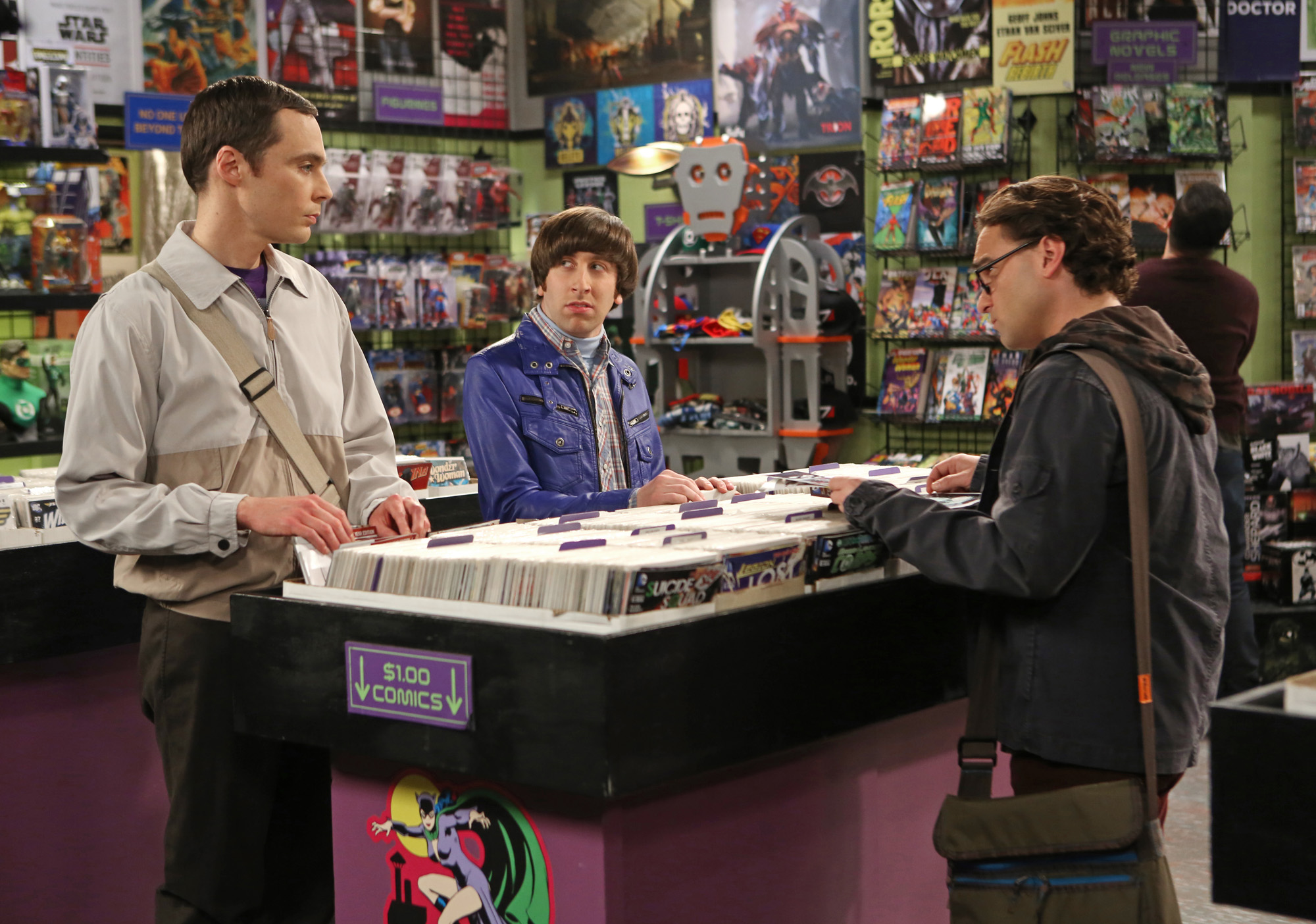
Maggie Masetti wrote an article in 2012 about chatting with Ann Shea, set decorator for The Big Bang Theory. Ann says “she is the set decorator, and so usually once I get the plans and the walls are built is when I start my work of providing the furniture and the plants and the artwork and all the cool objects, the floor coverings and the practical lights.” She has a variety of sources she uses to shop including prop houses, online shops, and retail stores. She said once the sets are developed, she continues to be busy. Sets are put up and taken down over and over and they have to be just right. Also, if a show is on for an extended time period, subtle changes are necessary just like our homes.
Ann said once she determined the set for the comic book store, she was happy, but then a producer said that it had to change every episode like a real store with inventory in and out—as viewers we don’t think about all the work that goes into sometimes more minor settings. I’m thinking about how much a set designer would have to learn to create an astrophysicist’s office/lab. A couple of her favorite items that show up on the show include the DNA sculpture, the WMAP beach ball, and the periodic table shower curtain.
Photo: spotern.com
One of the
things I hadn’t considered was that designers have to fill closets and drawers
in the main sets, so everything is realistic.
I thought it would be fun to consider some of the sets from shows that are a bit more unique and then look at shows that had to be more realistic. Let’s take a look at a few shows that had unusual sets: The Munsters, Gilligan’s Island, and Green Acres. Then we’ll compare some apartments of some of our favorite television characters including Mary Richards, Bob and Emily Hartley, and Frasier Crane.
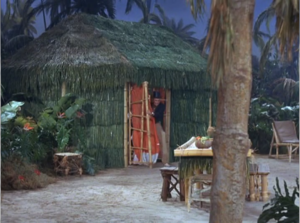
Photo: gilliganfandom.com The girls’ hut which you can tell by the flower box in the window.
Photo: gilliganfandom.com The Howells’ hut with its orange door
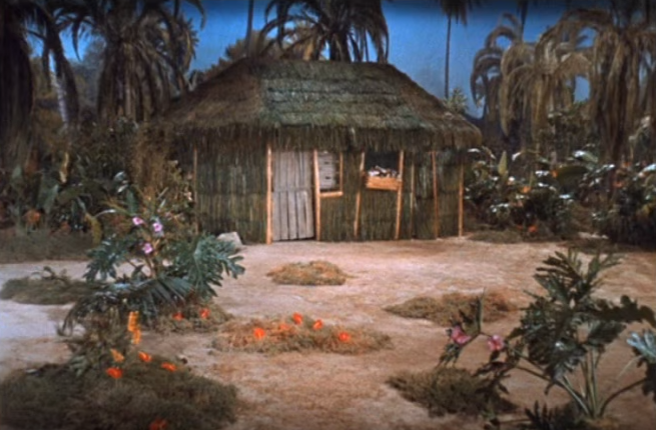
Gilligan’s Island sounds like an easy set to create. Just throw a few huts up on amid trees and jungle greenery, right? However, you have to personalize each hut with basic items to give each one its own personality. There is also that fine line that is often crossed on the show about how much stuff the castaways actually have with them. I am not surprised they had an accident and were wrecked; I don’t think the storm had anything to do with it, I think it was the thousands of pounds of luggage they apparently took on board.
Photo: gilligan’sisland.org
First, we have the Howell’s hut. Flowered red curtains frame the window. There are a number of knick-knacks setting about including Mr. Howell’s polo stick. There are twin beds with elaborate headboards, several wicker chairs, a writing desk, several tables, and a bamboo hutch. Of course, Mr. Howell installed a hidden safe for his valuables and money. A second room was built to store their luggage and clothing.
Photo: youtube.com
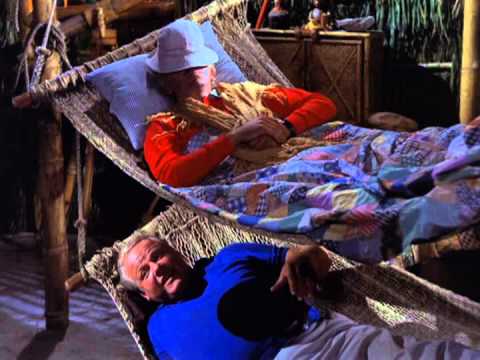
Gilligan and the Skipper share a hut with hammocks. There is a window for each of them at the front entrance. A bamboo telescope resides under one of the windows. Decorations are minimal but include a photo of the Skipper, several shells, a couple of candles, a small table and chair and a crate for Gilligan’s personal items. Gilligan and the Skipper don’t appear to have any other clothes than their uniforms.
Photo: youtube.com
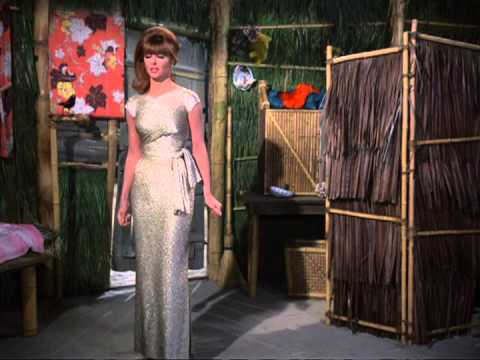
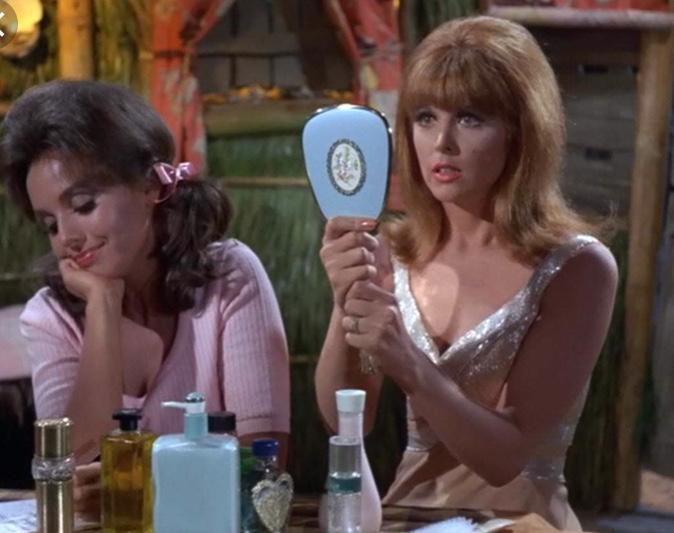
Mary Ann and Ginger also share a hut. A heavy wooden door and one window face the front. A flower box hangs on that. Flowery curtains make it look more “girly.” Each girl has her own cot and here are two tables, one for writing and one for make-up.
I’m assuming the Professor stays in the supply hut. This hut stores supplies, food, water, items salvaged from the SS Minnow and the Professor’s crudely designed laboratory. Like the girls’ hut, it has a heavy door and window out front and includes a smaller window as well. Boxes and crates are placed here and there as is the Professor’s equipment.
Photo: mentalfloss.com
The huts help define the characters who live there. In addition, we learn a lot about them by their clothing with the Howells appearing in designer clothing, Ginger in gowns, Mary Ann in informal rural outfits, the Professor in plain shirts and slacks, and Gilligan and the Skipper in their nautical attire.
Photo: pinterest.com
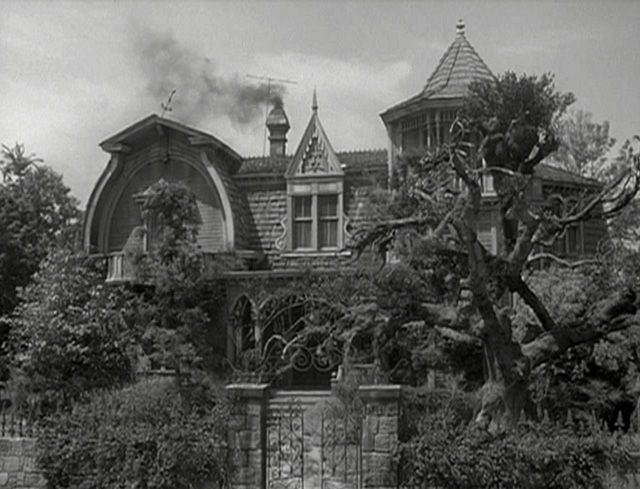
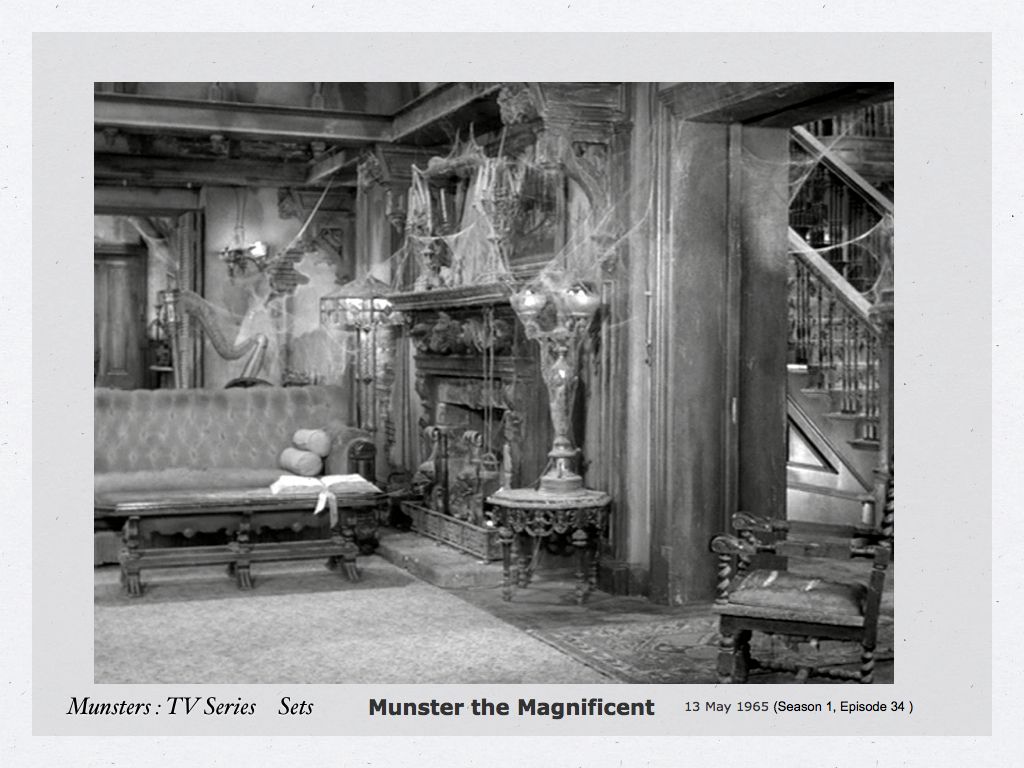
From the airy, tropical setting, let’s flip to the dark and dingy interior of The Munsters. The Munsters are said to live in an average neighborhood, but their home is anything but average. Located in Universal City, the house was rumored to cost a million dollars to outfit in 1963.
Although Herman works at the local undertakers and Eddie goes to school with the other kids, when friends come over, it is definitely not one of the cookie cutter homes in the neighborhood. There are cobwebs all over the house, and the windows are covered in curtains that let very little light in.
Photo: pinterest.com
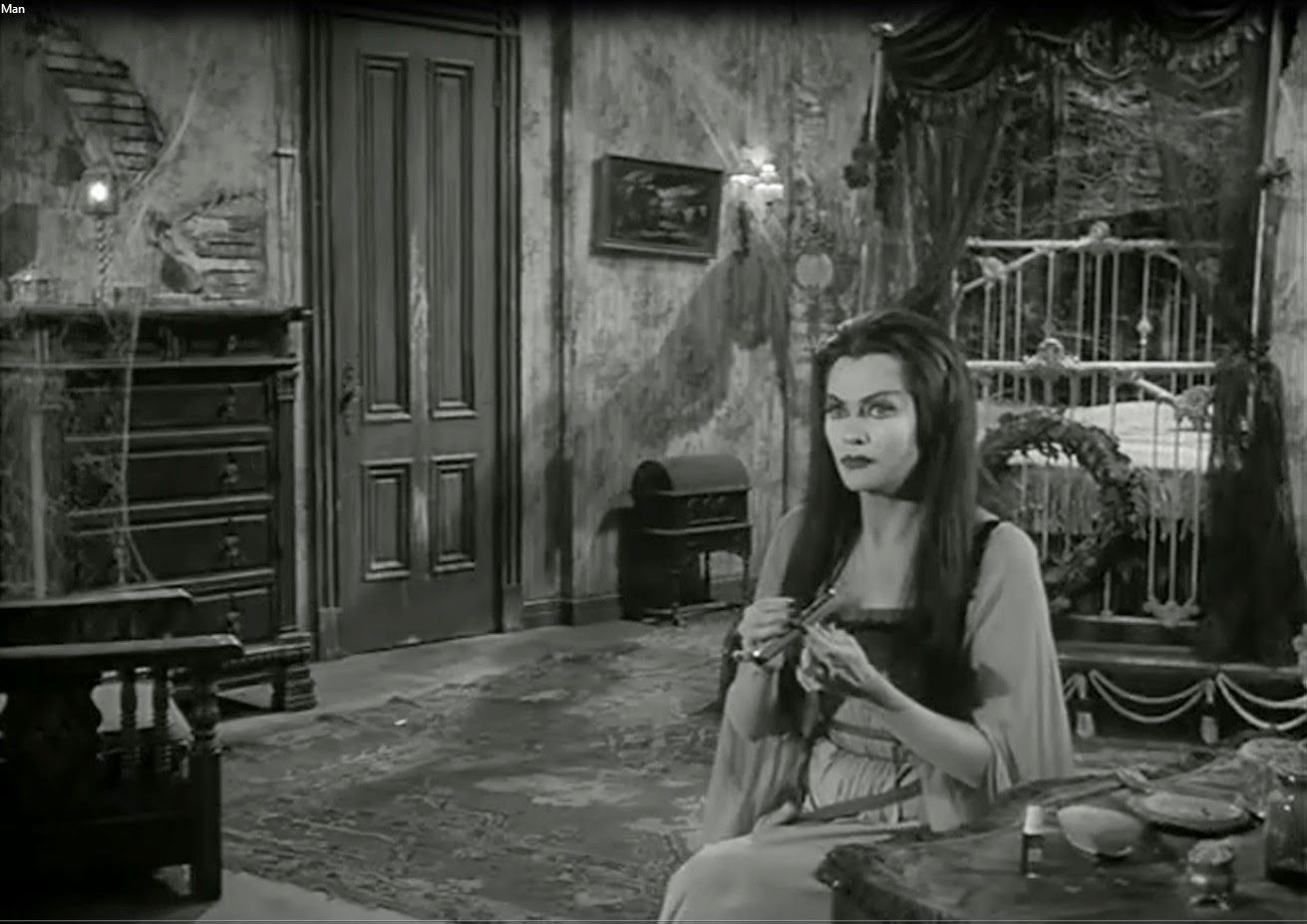
Lily’s bedroom looks more like a setting for a horror movie than a family sitcom, but she and Herman are quite comfortable in their master bedroom.
Photo: pinterest.com
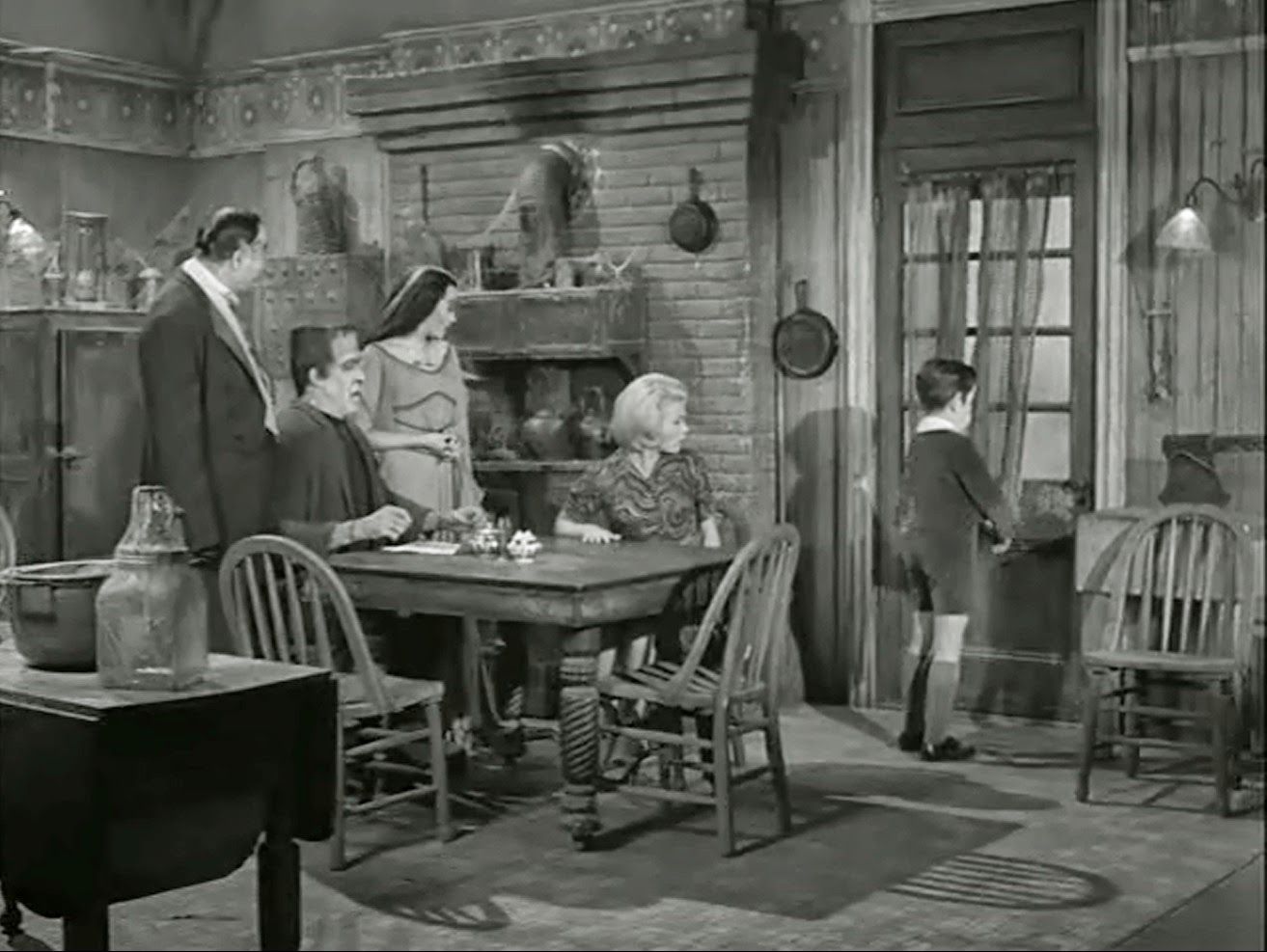
Although it appears to have been abandoned for quite some time, this is where the family gathers nightly. The furniture is heavy, dark and very Victorian. There is little in the way of knick-knacks.
Photo: pinterest.com
After open and sunny and then closed and dreary, let’s combine the two and look at the Douglas home on Green Acres. In New York City, Lisa and Oliver were wealthy and lived in a penthouse apartment with expensive furnishings. Their house in Hooterville is anything but exclusive.
Photo: hobbydo.com
The walls are falling down, the wallpaper is peeling off the walls, and one of their bedroom walls is open to the outside elements which makes it easy for them to climb the telephone pole when they need to make a phone call.
Photo: pinterest.com
Although they are in a rural setting, Lisa continues to wear her designer gowns and negligees and brought all her expensive items from her apartment.
Lisa and Oliver brought all their expensive artwork and furniture with them from their New York penthouse. Somehow it does not seem out of place for the Douglases. Lisa even uses her fine china and crystal daily.
While it’s fun to see some unique designs that set the stage for some of our favorite characters, now we switch gears to analyze three apartments that had more realistic designs. Often, we watch sitcoms and somehow in the middle of a city like New York, someone has a large apartment that we all realize they could not afford. In order to be more believable, set designers must rely on what a character could afford for their home and interior items on their salary.
Let’s take a look at three apartments and see how they change as we increase the salaries the characters have. The one thing all three have in common is a great terrace with a view.
Photo: chicagotribune.com
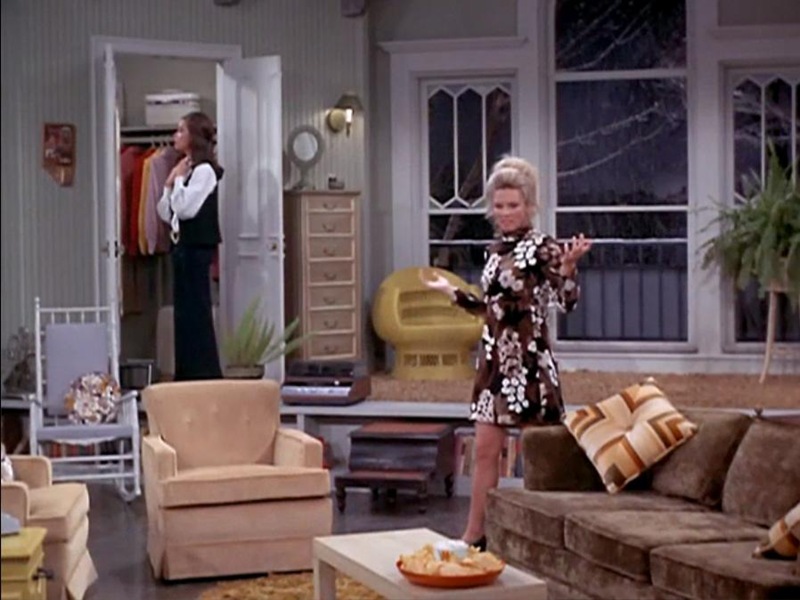
Mary Richards’ apartment on The Mary Tyler Moore Show is an iconic one. Growing up, most girls dream of having an apartment just like this one. Located in a classic Victorian home in Minneapolis, her home was affordable but cute and practical.
Photo: pinterest.com
Mary paid
$130 a month for her home. Mary often complains about having enough but not any
extra money, so she needs to be a bit frugal with her funds. This is a studio
apartment so her living room and bedroom share the same space. Usually this is
not an issue, but it’s tough to have company stay with her. One night after Mary
has settled down for the night, Rhoda and her date stop by and we see Mary
quickly trying to fold her bed back into the couch, so they don’t have to sit
on her bed and realize they woke her up.
Her rooms are outfitted with great storage options. In her sunken living room, there are shelves running around part of the room where she stores books and knick-knacks. A cozy little area with a chair and table is in front of her terrace window—a fun space where she can read or have coffee with a great view.
Photo: pinterest.com
A little
wood-burning fireplace sets off the kitchen, making the room cozy.
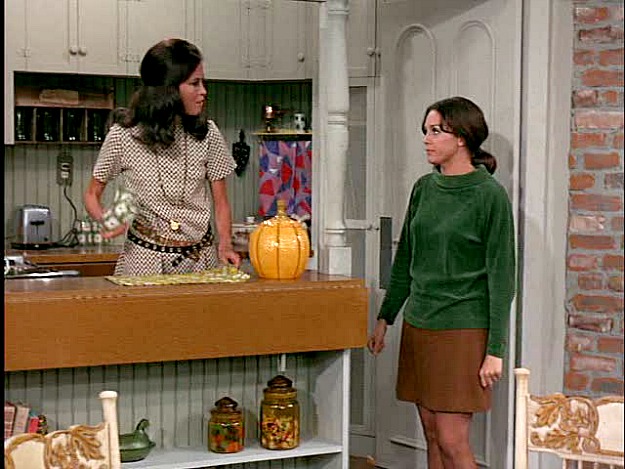
She has a functional but little kitchen. A decorative shade allows Mary to open up the area between the kitchen and living room or close it off if she doesn’t want people to see a mess in the sink.
Photo: imdb.com
To the left of the living room is a door. When it’s open, we see Mary’s closet and we know that if you keep going, you’ll find her bathroom. I don’t recall ever seeing the bathroom during the series, however.
Photo: hookedonhouses.com
While the
furniture is nice, it probably is not new, and Mary may have picked the items
up at used furniture stores or antique shops. Her larger pieces include her sofa
bed, a wicker coffee table, an armoire, and a table and chairs. Her personal
items strewn around the apartment tell us a bit about Mary. Most people
remember the large “M” that hangs on her wall. She has a Ben Shahn poster on
her wall in the first season and a Toulouse-Lautrec poster, Jane Avril, in
other years. A Laurel lamp is near the reading chair, a pop of sixties
modernism that Mary might have had in school in her room. We see her Samsonite
luggage that is good quality and probably was a present from her parents. The
pumpkin cookie jar adds a bit of color to the kitchen. These items tell us Mary
was sentimental, educated about art but could not afford the real thing, and was
an individual, learning her style now that she was living alone for the first
time.
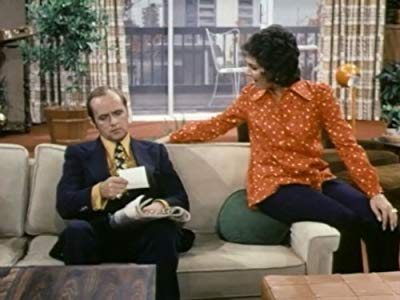
From Minneapolis, we travel down the interstate to Chicago where we find Bob and Emily Hartley’s apartment on The Bob Newhart Show. Bob and Emily are doing well, but we learn from their furnishings that they don’t care about things much. Bob is a psychologist but seems content to keep a small practice. Emily is a teacher and she and Bob debate about whether she should work or if she should work, so her salary is not necessary to their lifestyle.
Photo: xiguamovies.cf
They have a
beautiful apartment with a terrace and a view of Lake Michigan. It’s close to
the Thorndale station.
Like Mary, they have a sunken living room with the kitchen located off of it. The kitchen is bigger than Mary’s but still small. Much of the time they eat out or have something easy. Neither Bob nor Emily are gourmet cooks, but Bob grills on the terrace often.
Photo: dailymotion.com
A table between the two rooms is where they take their meals unless they are eating in front of the television. The television is on wheels and Bob can move it back and forth between the living room and the bedroom.
Photo: Ithinkthereforeireview.com
To the left of the living room is their large bedroom and bathroom. To the right is Bob’s den and another bathroom that does not have a tub or shower.
Photo: sitcomsonline.com
Like Mary, Bob and Emily enjoy art and have several pieces on their living room walls. They switch out their furniture a lot and we see three different sofas in their home: brown, white and royal blue.
Photo: dailymotion.com
My guess is
that they save a lot of their money and what they spend, they spend on travel,
books, and eating out.
Heading 32
hours west of Chicago, we arrive in Seattle, the home of Frasier Crane. Frasier
is also a psychologist like Bob. He is a well-known doctor and has his own
radio show, garnering him more money than Bob.
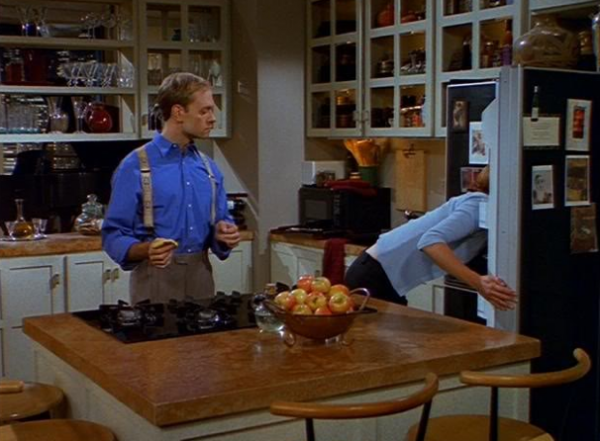
Frasier lives in Elliott Bay Towers and doesn’t have a view; he has “the” view. The backdrop for the terrace shows the Space Needle which cannot be seen in reality from these apartments. The cost for the backdrop was about $55,000 to construct. It seems very expensive for a prop, but it goes back to making sure everything about the apartment was the best Frasier could obtain.
Photo: thrillist.com
This was a very expensive set to design. According to the book, Frasier: A Cultural History, by siblings Kate and Joseph Darowki, the architecture and set building cost $250,000 and the total overall for the furnishings and other items came in at about a million dollars. A security guard was on site during shooting.
Photo: pinterest.com
According to Thrillist.com,
Frasier’s apartment today would cost about three million dollars. We realize
pretty quickly that Frasier is all about the good life and the image he wants
people to have of him as a successful, wealthy person.
Like the other two apartments, he has a small kitchen, but it is well equipped and stylish. Set designer Roy Christopher outdid himself by capturing Frasier’s personality in his home.
Photo: pinterest.com
There are quite a few bedrooms in the apartment. Frasier has a large one with an expansive master bath, that features a sauna and a whirlpool. His father and Daphne both have their own bedrooms and bathrooms as well.
Frasier’s apartment is ultra-modern and is filled with expensive, high-end furniture and collectibles. His furniture is a replica, although shorter version, of Coco Chanel’s sofa. He has Eames and Wassily chairs and often throws around the designer labels he enjoys. The rooms are filled with decorative architectural details and expensive finishes. Much was made of the artwork scattered around the apartment.
Photo: pinterest.com
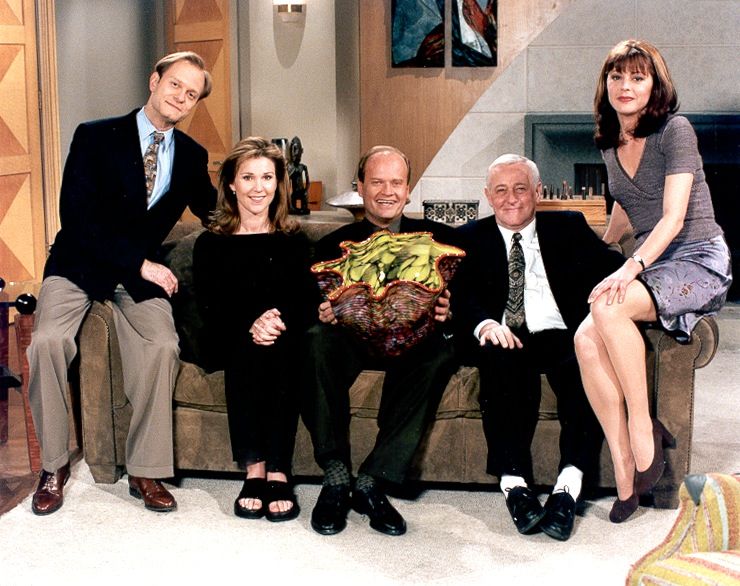
The Dale Chihuly glass bowl on a table near the fireplace was made specifically for the show and reproduced for an exhibit. A Mark Rothko painting was in Frasier’s master bath. Some of the other art included a Nick Berman floating ball, a Pastoe curved sideboard, Le Corbusier lamp, a Steinway grand piano, a Rauschenberg painting in the hall, and a variety of Pre-Columbian and African art.
Photo: pinterest.com
While Bob and
Emily didn’t care much about their furniture as long as it was comfortable; Frasier
cares dearly about every item in his apartment, except for his father’s Barcalounger
which is a reminder of the design element he does not want in his apartment. It
becomes the centerpiece of the apartment. The prop department did not think it
was “hideous” enough when they located it, so they added some dirt smudges and
duct tape to it. It’s a brilliant juxtaposition. We understand that despite the
expensive items surrounding him, Martin is quite comfortable in Frasier’s
house. His easy-going, but gruff, personality is not off-put by the sophisticated
design nor is he impressed by the expensive art. During the course of the show,
Frasier must learn to be as comfortable in his home as his father is.
It’s been fun
to view some of the spaces our television friends inhabited and take a closer
look at what helped reflect more about the characters as we take an in-depth analysis
of the items they chose to surround themselves with. Take a look around your own
space and see what it says about you to others and how it would help define you
as a sitcom character.
































 thewritelife61