Sylvia Field: What a Character

We are in the middle of our blog series for November, “What a Character!” Today we get to meet the delightful Sylvia Field.

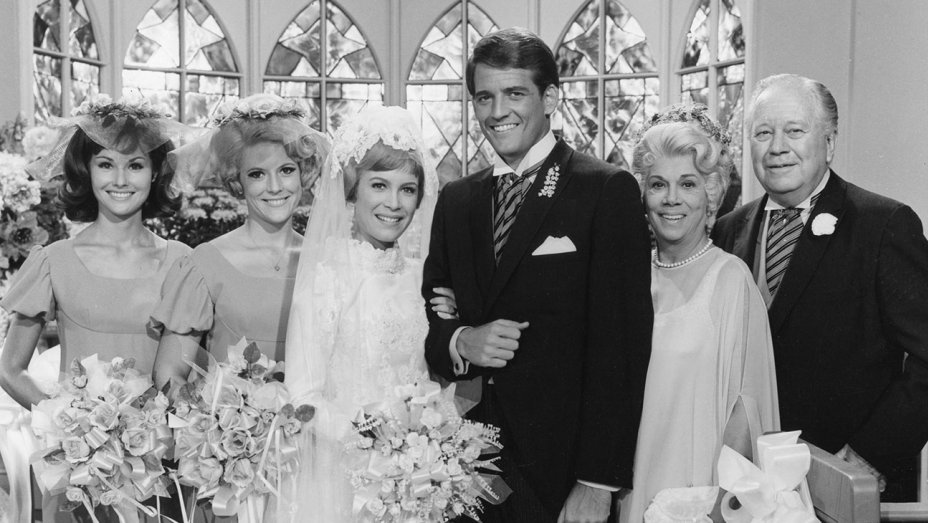
Born Harriet Louisa Johnson in 1901 in Allston, Massachusetts, Field always knew she wanted to act. When she was ten, she saw Maude Adams in “Peter Pan,” and she decided that would be her career as well. After being diagnosed with diphtheria, she was not allowed to attend school for a while. So, when she was feeling better, she ventured down the street to a motion picture company that was filming movies. She was allowed to join the cast and became the “leading lady of the extras.”  

📷facebook.com

Eventually she decided to move to New York. At only 17, she made her Broadway debut in “The Betrothal.” She never did go back to school.

📷wikipedia.com 1927 Broadway shot

A decade later she got her first shot at the big screen in The Home Girl. She was signed by Fox Studios in 1939. Her last acting credit was also for a film, The Cruz Brothers and Miss Malloy in 1980. While she fit a few movies in her career, most of her appearances were on television.

After she began her film career, she married Robert Frowhlich in 1924; they were only married five years. In 1930 she tried marriage again with Harold Moffat; he passed away eight years later. In 1941 she married Ernest Truex, and they remained together until his death in 1973.

Truex had an interesting background. He was born in Kansas where his father was a doctor. In exchange for medical services, one of his father’s patients gave Ernest acting lessons. Ernest performed Shakespeare as a five-year-old child, and was given the nickname, “The Youngest Hamlet.” As a nine-year-old, he and his mother toured the country while he performed. Before he was a decade old, he was in his first Broadway show with Lillian Russell.
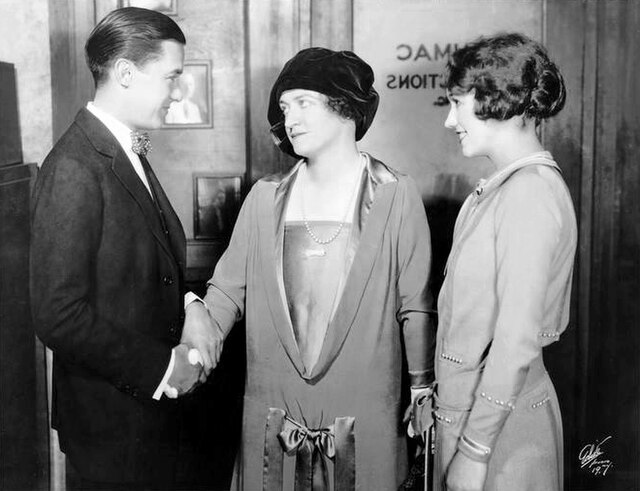
📷wikipedia. The Butter and Egg Man by George Kaufman

In the movies he played the quiet, ineffectual boss. Like Field, he was also a regular cast member in three shows. His were Jamie, Mister Peeper, and The Ann Sothern Show.

Field and Truex traveled around the country in plays together before starring in a local New York series featuring members of their family. The couple had a blended family with Field’s daughter Sally Moffat and Truex’s three sons. All four of the kids became actors. I’m guessing it was like The Adventures of Ozzie and Harriet. The show was on the air for three years before Truex and Field decided to move to California.

Sylvia’s first television appearance was on the Chevrolet Tele-Theater in 1948. She continued accepting roles on many of the drama shows through the mid-fifties. In 1952 she got her first cast role as Mrs. Remington on Mister Peepers. Ernest Truex was also part of the cast, playing Mr. Remington. They played the parents of Nancy, the school nurse, Mister Peepers’ fiancé. (Field and Truex would work together again on a 1966 episode of Petticoat Junction, “Young Love,” as well as in The Ann Sothern Show.)

📷who’sdatedwho.com Field and Truex

After Mister Peepers was canceled, she accepted a few spots on current shows including The Ann Sothern Show, Father Knows Best, Perry Mason, and The Thin Man.

In 1958 Sylvia received another cast offer to become Aunt Lila on both Annette and The Mickey Mouse Club. These shows shared cast members, so if you were cast on one of them, it was a buy one, get one deal.

Aunt Lila only lasted a year, which was a good thing, because Field was free to accept the role of Martha Wilson on Dennis the Menace, beginning in 1959. She defended Dennis to her husband George for almost four seasons.

Before the 1962 season, her tv husband Joseph Kearns passed away. For the season, Gale Gordon was brought in as George’s brother John, who was staying with Martha while George was away on personal business. However, the next year, Field was written out of the show, and John’s wife Eloise took her place, played by Sara Seegar. John and his wife bought the house from George and Martha, and no explanation was given to why they moved away. Sylvia and Jay North, who played Dennis, remained friends for the rest of her life.

📷WPRI.com Field, North, and Kearns

For the rest of her career, she would show up on television shows including Hazel, Occasional Wife, and Lassie. After Truex’s death, Sylvia accepted a couple of roles but spent much of her time fishing, golfing, watching baseball, and taking care of her avocado orchard. Eventually she had to move to a nursing home where she passed away in 1998.

I always enjoyed Martha Wilson. She and George took on the role of Dennis’s pseudo grandparents. While George was gruff, everyone knew he loved Dennis. Martha was more affectionate and always waiting with cookies, ready to hear about his latest exploits. Field seemed to have a great life. She had a prolific career and then was able to enjoy retirement which so many actors find impossible to do.

We Still Love Lucy

We have been learning a lot about Lucille Ball this month. We delved into I Love Lucy and why it was so important to American culture. We got to know Lucy as a person. And we discussed Jess Oppenheimer and the influence he had on her. Today we are finishing up the month by checking out three shows she starred in after I Love Lucy went off the air: they all debuted in the sixties.

The first show, the Lucy-Desi Comedy Hour, was an extension of I Love Lucy. It spun out thirteen one-hour specials that aired between 1957 and 1960. Five of them debuted during the 1957-58 season of I Love Lucy. The other eight were shown on the Westinghouse Desilu Playhouse and they featured the same cast as I Love Lucy.

Desi tried to talk the network into doing these specials the first year just to keep some freshness in the series, but he was denied the chance. By the last season, they agreed it might work.

During the final season of the series, both the Mertzes and the Ricardos move to the Connecticut suburbs. Apparently, the two couples were running an egg farm to make their living and Fred was Ricky’s manager.

Despite their move out of the City, many of these episodes feature Lucy’s meetings with famous guest stars. For example, in “Lucy Takes a Cruise to Havana,” Lucy meets Hedda Hopper. Production costs were estimated to be $350,000 but with the guest stars, these costs increased and rather than do ten episodes the first year, Arnaz was forced to spread them out over three years.

Ratings were good in the beginning but with the news of Lucy and Desi’s marriage in trouble, both this series and I Love Lucy started to lose viewership. By the time the last episode was filmed, the couple could not even talk without a fight erupting and they communicated by messages. The day after filming, Ball filed for divorce.

The theme song of the series was used with a bit of updating. That symbolizes all ten episodes. It was the same series, but it wasn’t. Had this type of programming happened throughout the original series it might have been more popular but coming on the heels of the ending of the show and the fans being aware that “Ethel and Fred” could barely tolerate each other in real life and then learning “Lucy and Ricky” were ready for divorce took a lot of the fun out of watching the show.

From 1962-68, Lucy attempted another sitcom. While Vivian Vance was no longer Ethel, she was a co-star for the first three seasons of the show. Gale Gordon who had been Lucy’s first choice for Fred Mertz in the early fifties was no longer under contract in 1962 and appeared in this series beginning in season two.

While Arnaz and Ball had divorced two years before this series debuted, they were still in business together. Their company, Desilu Productions, was struggling with the end of I Love Lucy. In 1961 four of their shows were canceled. By spring of 1962, only The Untouchables was still on the air.

Desi approached Lucy about returning to a weekly sitcom. She agreed if it could take the time slot on Mondays that I Love Lucy had, and if Vivian Vance was part of the cast, and the I Love Lucy writers were brought back. The new show, The Lucy Show, debuted Monday, October 1, 1962.

Lucy Carmichael lives with her two kids (Candy Moore and Jimmy Garrett) and Vivian Bagley (Vivian Vance), a divorced friend, and her son (Ralph Hart). Vivian was the first woman to be divorced on television. Her husband had left her a trust fund, so Lucy had to approach the bank often for funding for some of her harebrained projects and purchases. In season two, Gale Gordon took on the role of banker Mr. Mooney. The show had decent ratings and continued in its format until 1965. Lucy moves from New York to Los Angeles when her daughter goes to college in California. Vivian remarries and stays in New York. Lucy meets a new best friend, Mary Jane Lewis (Mary Jane Croft). When Lucy learns that Mr. Mooney is being transferred to the LA bank, their relationship continues, and eventually she works for him.

At the end of the second season, a dispute occurred between Lucy and the writers over a script Ball felt was not up to their standard, and the writers left. In 1964 Desi had resigned as head of Desilu, so Ball took over as president. Most specials, sports shows, and cartoons on CBS were now in color, but they refused to broadcast most of their series in color. Ann Sothern began appearing on the show as a countess to fill in the gaps of Vance being absent.

For the 1966 season, the show dropped all references to Lucy’s children, her trust fund and her life in New York. I don’t know why shows think viewers will just go along with these strange format revamps. Doris Day did the same on her show when her former life and children just disappeared one day and were never mentioned again. Because the show was set in California, a lot of guest stars were featured on the show, many of them bank customers.

During the last season of the show, Gary Morton, Ball’s second husband, was named executive producer of the show. He actually seemed to do well in this role. For this year, Ball was nominated and won an Emmy for the star of the show, the show was nominated for Emmys for best comedy show (but lost to Get Smart) and for the writing and for Gale Gordon as supporting comedy actor (who lost to Werner Klemperer of Hogan’s Heroes). The show was #2 in the ratings.

Surprisingly, this is when Lucy decided to end the show and put it into syndication. Even odder is the fact that she began a new show with a similar plotline that same year. Lucy and her real-life kids, Lucie and Desi Jr. joined the cast which included Croft, and Gordon with Vance making appearances during the run of the show. This show, like the other two, was on the air for six seasons.

Ball as Lucy Hinkley Carter is living in LA, a widow with two children Kim and Craig, played by her own two kids. She works for her brother-in-law Harry Carter, played by Gale Gordon but now they are at an unemployment agency. Vance made six guest appearances on the show.

Again in this show, a number of famous guest stars showed up including Ann-Margret, Milton Berle, Carol Burnett, George Burns, Liberace, Eva Gabor, Helen Hayes, Dean Martin, Vincent Price, Ginger Rogers, Dinah Shore, Danny Thomas, Lawrence Welk, and Flip Wilson.

In 1973 the show fell out of the top ten, the first Lucille Ball show to ever do so. Lucy did a sixth season and then ended the show.

Lucille Ball deserved a break after this show ended. She had been on the air for 23 years. Little Ricky, or little Desi, had been born early in I Love Lucy history and now he was off on his own acting career. After 1974 when this show went off the air until her death in 1989, most of her projects were connected with I Love Lucy, although she was listed as executive producer for several shows including Mission Impossible and Mannix.

None of these post-I Love Lucy shows were much different from each other, but it proved that America still wanted to watch Lucy on the air. Television looked very different in 1974 than it did in 1951, and Lucille Ball influenced and inspired much of that change. I wonder if Lucy would be surprised to learn that fifty years after her final show ended its production, she is just as popular as ever and Lucy merchandise is unending. It says a lot about just how true it was that everyone loves Lucy.

Having a “Bawl” with I Love Lucy

This month we are learning to love Lucy. We have looked at the career of Lucille Ball, and today we are taking a peek back at the well-loved sitcom, I Love Lucy.

📷pinpage.com

The show starred Lucille Ball, Desi Arnaz, Vivian Vance, and William Frawley. The series featured a young housewife, Lucy Ricardo, who lived with her husband Ricky, a nightclub bandleader. Their landlords, Fred and Ethel Mertz, were also their best friends. Lucy and Ethel get involved in a variety of schemes to get into show business. Lucy relies on Ethel and Fred who were in vaudeville earlier in their career. Eventually Lucy and Ricky have a son which coincided with the birth of their son Desi Jr. Lucy and Ethel try Desi’s patience often with their antics. When he gets upset, he starts speaking Spanish. Fred doesn’t have much time for the women’s plots either. After living through the Depression, he is considered cheap and doesn’t tolerate nonsense. In season six, the quartet move to Connecticut.

In 2012, ABC News and People did a joint survey, listing I Love Lucy as the Best TV Show of All Time.

The theme music was composed by Eliot Daniel with lyrics by Harold Adamson.

The show had three directors: Marc Daniels was director from 1951-53; William Asher, who would later produce Bewitched among other shows, was director from 1952-57, and James V. Kern directed 39 episodes from 1955-57.

Jess Oppenheimer was producer for the first 153 episodes; Desi Arnaz was executive producer for the first 124 episodes and producer for the final 26.

Oppenheimer was credited with writing for seasons 1-5, Madelyn Pugh Davis and Bob Carroll Jr. assisted him.

📷📷wikipedia.com Best Friends

Lucille Ball had been starring in “My Favorite Husband” on the radio and in 1950, CBS wanted her to transition to television. Richard Denning had been her costar on the radio, but now she wanted to do a series with her real-life husband, Desi Arnaz. CBS did not think visitors would buy in to Lucy, the all-American girl, married to a Cuban musician. To prove them wrong, Lucy and Desi created a vaudeville act written by Carroll and Pugh that they performed with Arnaz’s orchestra in New York. The act was a big hit, so Harry Ackerman approved the couple doing the show.

The pilot was ordered in 1951. Oppenheimer, Pugh, and Carroll also made the move from radio to television. Philip Morris decided to sponsor the show. Ball wanted to continue her film career along with television show which was set to air biweekly. Philip Morris wanted the show to air weekly, and they wanted it filmed in New York. Because Lucy and Desi were expecting their first child, they wanted to stay in Hollywood. The couple agreed to reduce their pay by a $1000 a week in order to stay in California and cover the additional expenses of filming. They asked for 80% ownership in the films, with the remaining 20% going to Oppenheimer who shared 5% with Pugh and 5% with Carroll. Desilu (combining Desi and Lucy) became their production company.

The couple hired Carl Freund, who had worked on many big-screen movies, to film the show. He uniformly lit the set so all three cameras would pick up the same quality of the image. He also pioneered “flat lighting,” which lit everything with bright lights to get rid of shadows. The three-camera method became the standard sitcom technique.

📷rottentomatoes.com

A live audience produced a more authentic laugh than the canned laughter some shows used. Both Desi and Lucy’s mothers’ laughter can be detected in these early episodes.

When Lucy needed some rest after having her baby, the company could not finish their 39-episode commitment, so Oppenheimer and Desi decided to rebroadcast some of their favorite episodes instead. This out-of-the-box thinking proved to be so popular that it eventually led to the syndicated market.

When Lucy decided to transition her show from radio to television, Gale Gordon and Bea Benaderet were offered the roles of Fred and Ethel. However, both of them were already transitioning from radio to other televisions series. Gordon had already committed to Our Miss Brooks and Benaderet had agreed to star in The George Burns and Grace Allen Show.

The role of Ethel was then offered to Barbara Pepper, who was a good friend of Lucy’s. However, she was known to have a drinking problem; Wiliam Frawley also was a heavy drinker, so the production staff did not feel comfortable having two cast members with alcoholic issues, so the offer to Pepper was rescinded. Pepper would appear quite often in I Love Lucy and eventually she settled in Hooterville, married to Fred Ziffel.

📷pinterest.com

Frawley never appeared drunk during filming or caused any problem on the show. I did think it was funny though that he had a clause in his contract that he did not have to film when and if the New York Yankees were in the World Series. They made it to the big show every year the series ran except for 1954.

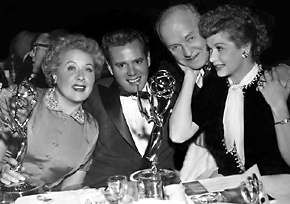
Mary Wickes was then offered the role, but she was afraid working with Lucy would harm their friendship. Director Marc Daniels suggested Vivian Vance who was performing in “The Voice of the Turtle.” Oppenheimer and Arnaz went to watch her performance and hired her on the spot. Lucy was not thrilled with the idea of Vance. She thought she was prettier than her vision of what Ethel would look like. Vance was only two years older than Ball, but the producers agreed to dress her in frumpier clothing. Eventually Ball and Vance became good friends. Vance was the first actress to win an Emmy for Outstanding Supporting Actress. When I Love Lucy ended, Ball asked Vance to star in her new series, The Lucy Show.

Unfortunately, Vance and Frawley never warmed to each other the way she and Lucy did. They barely tolerated each other, although they were both always professional on the set.

Lucy and Desi had several miscarriages and when they were able to sustain a pregnancy which resulted in daughter Lucie, they filmed Lucy without ever mentioning that she was pregnant. The sponsors thought it would be in poor tasted to talk about pregnancy. However, in the second season, they were pregnant once again, and the pregnancy was written into the show. They had to use the word “expecting” when talking about the baby. The episode “Lucy Goes to the Hospital” in 1953 was watched by almost 72% of families with televisions, the highest rating for quite some time. It was surpassed by Elvis Presley’s first appearance on The Ed Sullivan Show.

The show was on for from 1951-1957 on CBS, resulting in 180 episodes.

I Love Lucy aired on Mondays for its first run. In 1967 the network began offering the show in syndication and it has never been off the air.

📷pinterest.com

I Love Lucy was nominated for Best Comedy/Sitcom in 1952, 1953, 1954, and 1955, winning in 1953. Ball was nominated for Best Comedienne in 1953-1958, winning in 1953 and 1956. Vance was nominated for Best Supporting Actress in 1954, 1955, 1957 and 1958, winning in 1954. Frawley was also nominated for his role in 1954-1958. He never won but he lost to some great actors including Art Carney and Carl Reiner. Only Arnaz was denied a nomination for his comedy skills.

In 1957, Lucille Ball decided to end the show. She and Desi created a new show that wasn’t really new. It took the four main characters from I Love Lucy and moved them to Connecticut. Arnaz changed the format and length of the show, now an hour long, because he said he wanted to change it up before people got tired of the characters. He said this format kept the cast intact but also allowed for a celebrity guest star for Lucy to meet in every episode. In 1960 the show ended, the same year the couple’s real life marriage ended.

Unfortunately, the couple’s marriage dissolved in 1960, and in 1962, Lucy bought Desi’s shares of Desilu becoming the sole owner. She sold the company to Gulf+Western who owned Paramount Pictures.

We all remember the merchandising that accompanies shows in the sixties and seventies like dolls, board games, lunch boxes, etc, but I Love Lucy had more than its share of memorabilia. In 1952 a baby doll was released. Believe it or not, you could purchase an I Love Lucy bedroom set for $199 in the fifties, as well as I Love Lucy his and her pajamas.

The way it ended, I Love Lucy never had a proper finale. I wish I had the time to devote to how much this show changed the course of television, but a weekly blog just can’t contain as much history as there is to tell. I’m sure Lucy would be amazed if she knew that more than seventy years after the show began, we are still watching it and talking about it. Legacy doesn’t get any better than that.

Jay Sommers Figured Out the Formula for Good Writing

I thought it might be fun to look at some unique aspects of writing for sitcoms in this blog series. This month we’ll take a look at a variety of writing subjects.

To begin this series, I wanted to learn a bit about a classic sitcom writer, and Jay Sommers came to mind immediately. He wrote more than 400 scripts.

Sommers was born in 1917 in New York City. Before veering into comedy, he attended the City College of New York and studied the not-so-funny topic of chemistry. Apparently, he had good chemistry with his girlfriend’s father who thought he was pretty funny. The dad was an executive with Bristol Myers and the company sponsored many radio shows.

Photo: rusc.com

In 1940 his relationship with his then girlfriend’s dad led to Sommers receiving an offer to write for Milton Berle’s radio show. Jay did not keep the girl, but he kept the career. He would go on to write for a variety of radio shows including The Alan Young Show, Eddie Cantor, Spike Jones, Lum and Abner, and Red Skelton.

In 1950 he became the producer, director, and writer for a show called Granby’s Green Acres. It only ran for two months, but it would inspire him to create Green Acres for television a decade later. The show was based on a book by S.J. Perelman titled Acres and Pains. The premise of the show was that a wealthy banker wants to become a farmer, so he and his wife move to the country. The banker was played by Gale Gordon and his wife was Bea Benardaret.

Gordon and Benardaret Photo: wikiwand.com

Sommers’ first job as a writer on television was for The Peter Lind Hayes Show in 1950; the episode starred Gloria Swanson. In 1951 he wrote for the Colgate Comedy Hour, along with an episode of the Buster Keaton Show.

1953 brought him recognition for an episode of Our Miss Brooks (“Clay City Chaperone”). He became busier in 1954 writing for My Friend Irma, The Red Skelton Hour, and The Great Gildersleeve.

In the late fifties, he contributed to Blondie, Bachelor Father, and The Donna Reed Show.

Sommers really came into his own as a writer in the sixties. Along with a few screenplays, he wrote for The Adventures of Ozzie and Harriet, The Jim Backus Show, Dennis the Menace, The Beverly Hillbillies, and Grindl.

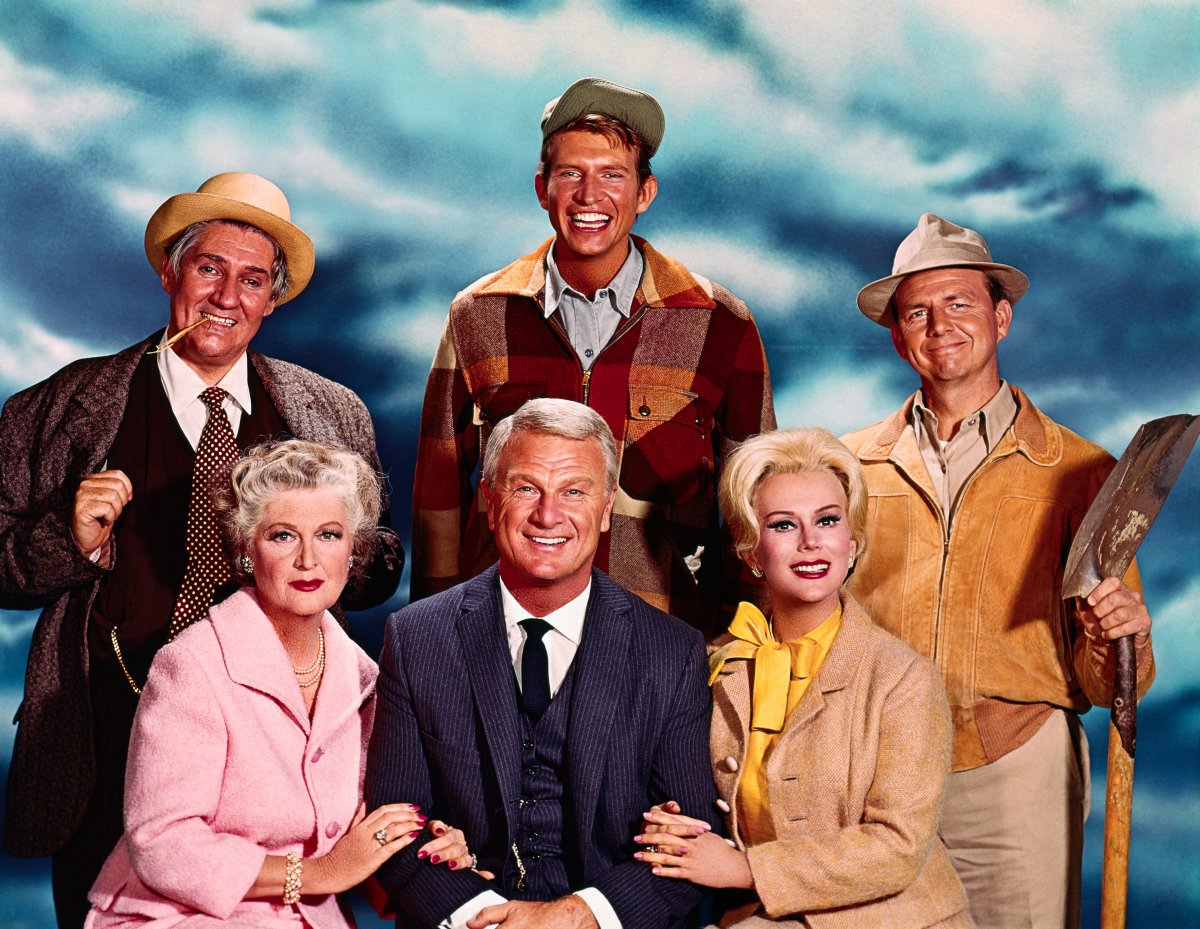
Sommers enjoyed the most lucrative part of his career from 1964 to 1970, working on Petticoat Junction and Green Acres. Paul Henning had created The Beverly Hillbillies and Petticoat Junction for CBS. In 1965, the network asked Henning to come up with a new sitcom and said he did not have to film a pilot or give a pitch; they trusted him to develop whatever he wanted. Sommers suggested a television version of his old radio show, Granby’s Green Acres. With Gale Gordon and Bea Benardaret already committed to other shows, the hunt began for two new stars for Green Acres.

Tom Lester, last-surviving 'Green Acres' cast member, dies at 81 - National  | Globalnews.ca
Photo: globalnews.com Cast of Green Acres

In the television show starring Eva Gabor and Eddie Albert, the banker is replaced by an attorney. Oliver Wendell Douglas and his wife Lisa leave glamorous Manhattan and move to a run-down farm in Hooterville. Lisa considers their handyman Eb their son and they bond with all the neighbors including Fred and Doris Ziffel and their pet pig Arnold, general store owner and postmaster Sam Drucker, and the folks from Petticoat Junction.

During an interview with the Television Academy, Paul Henning said his contribution was casting, and he let Jay do most of the writing and producing. The show resulted in 170 episodes and was canceled in 1971 when CBS decided to do a “rural purge” and get rid of any shows that fit that theme.

In another Television Academy interview with Richard L. Bare, who directed Green Acres, he said that he was the only director, Jay was the only producer, and that Jay and Dick Chevillat did all the writing. He said that the only other person on staff was a secretary. And, he said things worked out great. He said today there are way too many people on the set and it gets confusing. 

More Hooterville favorites Photo: sitcomsonline.com

Jay continued writing in the seventies, but he did not write a lot. His shows that decade included Hot L Baltimore, Good Times, Ball Four, Alice, and Hello Larry.

Jay passed away in 1985 in Los Angeles from a heart ailment. It was very hard to find much personal information about Jay and no photos. I do know that at some point he married Barbara and they had several children. So sad that we don’t know a lot about some of the people who contributed so much to the golden age of television.

Jay Sommers left us much too early. He came out of a chemistry background, proving you don’t have to teach someone to be funny. He wrote for some of my favorite shows including The Adventures of Ozzie and Harriet, The Donna Reed Show, and Bachelor Father.

Photo: findagrave.com

Sommers worked on three of the most iconic television sitcoms in the 1960s: The Beverly Hillbillies, Petticoat Junction, and Green Acres. If you have been with me for a while, you know I never really cared for The Beverly Hillbillies. I really enjoy Petticoat Junction and I think it’s well written, but I think Green Acres was one of the best-written sitcoms on television. It’s not easy to write about quirky characters without them seeming unbelievable, but Jay did it. He created characters we fell in love with and truly liked. He produced and wrote brilliant scripts week after week for more than five years. They were clever, witty, and sophisticated without being over the top. His grave marker sums it up, “WRITER.” Thank you, Jay Sommers for introducing us to the good folks in Hooterville.

Getting To Know Pete and Gladys

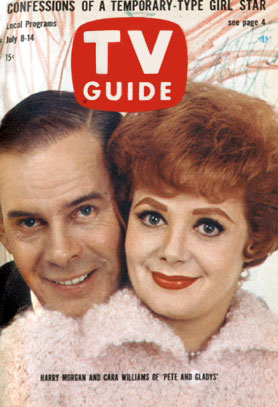
In the 1950s, one of the most popular sitcoms was December Bride starring Spring Byington. For five seasons, Henry Morgan, insurance salesman, played her next-door neighbor Pete Porter.

The show was cancelled in 1959, and in 1960 Pete showed up on the air again in a spin-off show titled “Pete and Gladys. He had often referred to his wife on December Bride, but we never got to meet her in person. Cara Williams took on the role of scatterbrained, but beautiful, Gladys. Like December Bride, this show was created by Parke Levy. Harry Morgan said Parke Levy was a very kind and knowledgeable man; he was one of the pioneers of sitcoms.

Cara Williams and Verna Felton–Photo: youtube.com

Verna Felton as Hilda Crocker also moved to the new show. Frances Rafferty who had played Ruth on December Bride also shows up on Pete and Gladys, but she is Nancy on the new show. For some reason, producers think we won’t notice missing characters but on December Bride, Pete had a baby daughter named Linda. However, she does not exist in the spinoff.   We also get to know Pete’s uncle played by Gale Gordon and Gladys’s best friend Alice (Barbara Stuart). Morgan said not only was Gordon a great actor, but he was a very funny man.

Gale Gordon and Williams–Photo: youtube.com

Pete who worked for Springer, Slocum, and Klever which sounded more like a shoddy law firm than an insurance company. He and Gladys Hooper had eloped nine years earlier. Pete told Gladys he had single-handedly capture a Japanese patrol, although it later came to light that he spent his military career as a clerk in the PX. Gladys was a housewife and kept busy as entertainment chair of the Junior Matron’s League of the Children’s Hospital and a member of the Westwood Bowling League.

Harry Morgan, Williams and Felton–Photo: dailymotion.com

While December Bride was in the top ten for four of its five years, Pete and Gladys never reached those numbers. Williams was nominated for an Emmy for Leading Actress in a Comedy although she lost to Shirley Booth from Hazel. The show only lasted two years. Whether a blessing or a curse, the show took over I Love Lucy’s spot on Monday nights and viewers probably could not help comparing the two shows. Director James V. Kern moved from Lucy to this show along with writers Bob Schiller and Bob Weiskopf.

Morgan, Williams, and Felton–Photo: sitcomsonline.com

However, for a two-year show, the number of guest stars was pretty impressive. Watching the show you can catch Jack Albertson, Morey Amsterdam, Bea Benaderet, Whitney Blake, Frank Cady, Richard Deacon, Donna Douglas, Sterling Holloway, Ron Howard, Ted Night, Nancy Kulp, Charles Lane, Howard McNear, Cesar Romero, and Reta Shaw. Morgan said that the guest stars got an exorbitant amount of money compared to the regular cast.

Morgan said Cara Williams was very talented, but she was not easy to work with. Often, they had different ideas about how a scene should go. She had a strong personality and was sometimes described as self-centered. Morgan said he admired her even though filming wasn’t always done smoothly. He recalled one time that she was demanding something and director Jack Arnold was tired of arguing, so he laid on the floor on his back, yelled, “Roll ‘em”, and when the scene sounded done, yelled “Cut.” Then he got up and left which was his way of answering her.

Morgan and Williams–Photo: nostalgiacentral.com

Not surprisingly, Morgan said he enjoyed his time on December Bride more than on Pete and Gladys, and he thought the former was the better show. However, if you take some time to watch December Bride, you might want to check out a few episodes of Pete and Gladys just to meet the woman Pete was always complaining about.  Unfortunately, both were listed on Amazon, but neither one was currently available.  I did see a December Bride DVD on etsy for a whopping $170. I do remember Pete and Gladys in syndication when I was younger, but I have never seen December Bride on a network schedule.   YouTube does have a number of episodes for both series, but be warned, some of the December Bride episodes have been colorized.

Here’s Lucy . . . and Gale Gordon

We are in the third blog of our series “The Men of November.” Born Charles Thomas Aldrich Jr. in 1906, Gale Gordon is remembered fondly for being Lucille Ball’s nemesis on several of her television sitcoms.

See the source image
Photo: oldtimeradio.com

Both his parents were entertainers, and they traveled to England to perform when he was only one. For eight years, he lived in England. After returning to the United States for a few years, Gordon returned to London to complete his education at the Woodbridge School in Suffolk.

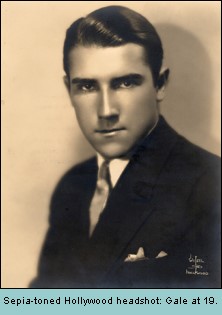
Gale at 19 Photo: lucyfan.com

Gale followed in his parents’ footsteps, and his first theatrical job was as an extra in “The Dancers” in 1923. Richard Bennett (father of Constance and Joan Bennett) starred in the stage production. Gordon worked as Bennett’s dresser, and Bennett taught him all about make-up, mentored him as an actor, and helped him to develop his voice.

By 1925, Gordon traveled to Hollywood, tackling roles in stage, film, and radio. Gordon talked about his first radio performance: “They asked me to come to a Hollywood studio in 1926 and try this new thing called ‘radio.’ They didn’t pay me, of course. They just wanted to fill up some time. So, I sang, ‘It Ain’t Gonna Rain No More, No More’ and accompanied myself on the ukulele. You might say I almost killed radio before it was born. I haven’t played an instrument on the air since.”

Photo: radiospirits.com

In seven short years, Gordon became the highest-paid actor in radio in Hollywood. He was the male lead for Mary Pickford in her serial. He was on almost every popular show on the air. It wasn’t unusual for him to appear on three or more programs in a week. Gordon was the first actor to play Flash Gordon in 1935.

His radio work also provided some other benefits. While appearing on an episode of Death Valley Days in New York, he met Virginia Curley. They married in 1937.

Gale and Virginia
Photo: lucyfan.com

In 1941, after playing primarily dramatic roles, Gordon became a regular on Fibber McGee and Molly. Playing Mayor LaTrivia, Gale was on the show for a dozen years. There was a brief interruption in 1942 when he left the show and enlisted in the US Coast Guard for three years. He rose to the rank of Petty Officer First Class, and his service took him around the world to many dangerous places.

One of the roles he is best known for was Principal Osgood Conklin on Our Miss Brooks. Gordon described Conklin in a TV Guide interview: “There was nothing subtle about Osgood. No nuances. Just a lot of very satisfying acid, bluster, and bellowing, with an occasional weak moment of cordiality thrown in for leavening.  It was practically impossible to overplay him. Even when he was being cordial, he was like an elephant trying to waltz.”

In 1950, he could be heard as John Granby on Granby’s Green Acres which later became the sitcom Green Acres.

With Bea Benederet
Photo: wikipedia.com

While trying to reign in the chaos at Madison High School as Osgood Conklin, Gale was also the refined banker, Rudolph Atterbury, on My Favorite Husband, Lucille Ball’s radio comedy. Atterbury’s wife was played by Bea Benederet.

As television gained popularity, it was inevitable that some of radio’s favorite shows would make the transition to the small screen. While it was entirely possible to play several different characters on the radio, television production didn’t offer the same flexibility. When My Favorite Husband was retooled for television as I Love Lucy, Ball planned on bringing Gordon and Benederet along with her. However, Gale was committed to Our Miss Brooks, and Bea was playing a major role on Burns and Allen on television.

Asked about those days, Gale described himself as “a quiet, reserved, pipe-smoking homebody.” He said he always had a good balance of professional and personal interests. In addition to acting, he wrote books (Nursery Rhymes for Hollywood Babies and Leaves from the Story Trees), painted, and maintained a ranch. He and Virginia bought a 150-acre property about three hours away from Hollywood. They grew carob trees. Gordon was not a rancher in name only; he raised the trees, built the house, installed the plumbing, completed carpentry and handiwork, put in a swimming pool, and built a two-story building that served as garage and studio.

Our Miss Brooks Photo: amazon.com

In 1952, Eve Arden decided to take Our Miss Brooks to television. While Gale continued his role as Conklin on the show, he also guest starred on a couple of I Love Lucy episodes. Our Miss Brooks had a successful run for four years.

When the show ended in 1956, CBS was quick to sign Gordon on for another show. They paired him with Bob Sweeney in The Box Brothers (sometimes called The Brothers). Unfortunately, the series only lasted for 26 weeks.

The Box Brothers Photo: imdb.com

In 1958, Gordon was a regular on Sally where he played department store owner Bascomb Bleacher. He also appeared with Walter Brennan on The Real McCoys.

In 1959, December Bride which aired from 1954-1959, went off the air, spinning off a new show Pete and Gladys starring Harry Morgan and Cara Williams. Morgan appeared as Pete Porter on December Bride. On the new show, Gale played Pete’s Uncle Paul.

Dennis the Menace Photo: pinterest.com

In 1962 he was cast as Mr. Wilson on Dennis the Menace. At the same time, Lucille Ball was creating a new show, The Lucy Show. She wanted Gordon to appear as Mr. Barnsdahl, a banker. When he was not available, Lucille turned to Charles Lane. She said she loved working with Lane, but always wanted to work with Gale again, so when Dennis the Menace was cancelled, she quickly signed Gordon; Lane moved over to Bea Benederet’s new sitcom, Petticoat Junction, as the despicable Homer Bedloe. And thus Theodore J. Mooney was born.

Photo: welovelucy.com

For the next eleven years, through several different series titles, Lucy and Gale worked together. They would both retire in 1974. When describing his time on Lucy’s shows, Gale related in a Good Morning America interview in 1982 that “I always had a wonderful feeling of anticipation going to work every week, which is very, very rare. I don’t care what business you are in. But to really look forward to getting into the nitty gritty and working hard for four days—which is all the time we had to do the show—is really unique. To look forward to it for eleven years, that’s doubly unique.” He went on to praise Lucy for her work ethic: “Her attitude has never changed. Every show she ever did was always the most important show of her life. And I think that is the secret of her success.”

See the source image
Photo: oldtimeradio.com

One surprising thing I learned was that Gordon was known for his ability to do cartwheels. He can be seen doing them on several episodes of Here’s Lucy. At the time, he was earning $25,000 an episode. Compare that to today when the stars of The Big Bang Theory received a million dollars an episode.

Gale and Virginia enjoyed twenty years of retirement. Virginia would pass away in 1995 at Red Terrace Health Center in Escondido, California. One month later, Gordon died from lung cancer at the same facility.

In 1999, Gale was inducted into the Radio Hall of Fame. Known for playing a variety of gruff, formal professionals, everyone knew that the bellow and bluster his characters spewed was great acting. In real life, Gale was one of the sweetest, kindest men around. He once said, “I am never nasty—unless I get paid for it.”

See the source image
Photo: wikipedia.com

It’s hard to describe the influence Gale Gordon has had on generations of actors and the number of hours of entertainment he has provided to generations of television and radio fans. It’s always fun to listen or watch Connie Brooks trying to pull a fast one over on Osgood Conklin or Lucy Carmichael trying Mr. Mooney’s patience with her latest scatter-brained plan. Thank you Gale Gordon!

Mr. Johnson Teaches Us About the “Art” of Television Acting

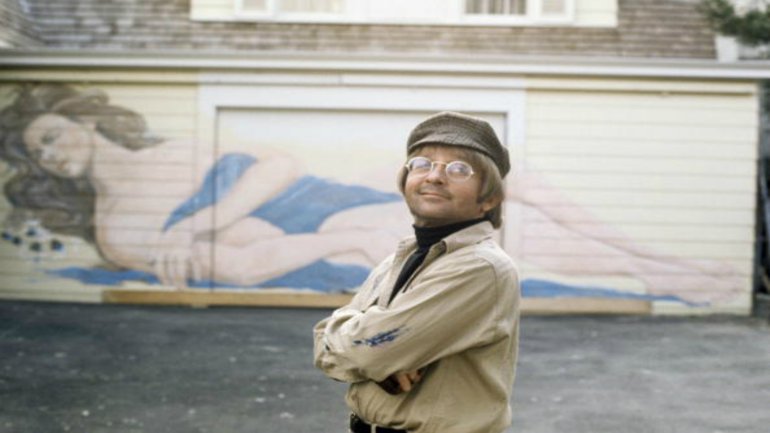
As we continue honoring revered television actors who passed away in 2019, Arte Johnson certainly is at the top of the list. Although he accepted roles in movies, most of his work was on the small screen.

Photo: blogspot.com

Arte was born in Benton Harbor, Michigan in 1929. Acting was not Arte’s first profession. He graduated with a radio journalism major from Illinois and decided to pursue a career in the advertising world. He left Chicago when he could find no ad agency jobs and moved to New York where he began at Viking Press. He loved books and collected them throughout his life.

Unlike the stories of people who hone their craft in hundreds of auditions in the Big Apple, Arte impulsively stepped into an audition line for Gentlemen Prefer Blondes and got the part. His real name was Arthur and he decided on Art E. Johnson for his stage name, but “Arte” was mistakenly printed on the playbill, and he decided he liked that better.

Although acting began easily for him, after he moved to LA, his career hit a rough spot and he did take a job as a men’s clothing salesman for a while at Carroll & Co. in Beverly Hills.

Photo: cvta.biz
It’s Always Jan

Arte began on television in the 1950s. In the mid-50s, he had a recurring role on It’s Always Jan starring Janis Paige and Merry Anders. A widowed nightclub singer, Janis Stewart, shares a small apartment with an aspiring actress, a secretary, and her daughter. Arte plays a deli employee, showing up in 4 of the 26 episodes.

He was cast as in his first ongoing role later that year. He played Bascomb Bleacher, Jr. on Sally. His father, a department store owner, was played by Gale Gordon. This show about a girl who worked in a department store who became a wealthy matron’s companion also lasted 26 episodes.

Photo: sharetv.com
Cousin Edgar on Bewitched

During the 1960s, Arte would appear in 32 different series, including The Twilight Zone, The Andy Griffith Show, McHale’s Navy, Bewitched, Lost in Space, The Donna Reed Show, and I Dream of Jeannie. Once again, he was cast as a regular on a show, Don’t Call Me Charlie. If you’re not familiar with the show, you are not alone. The show starred Josh Peine as a rural veterinarian who is drafted into the Army. He leaves Iowa and heads for Paris. Like Gomer Pyle he retains his simple view of life and his “Sargent Carter” is Colonel Barker. Johnson played the part of Col. Lefkowitz.

Photo: inquisitor.com
The Cast of Laugh In

In 1968, Arte was offered a job that would change his life. Along with a handful of other cast members, he appeared on the new edgy Laugh-In. This is a hard show to describe if you never watched it. (It does appear on the Decades channel quite often.) The show was comprised of fast-moving comedy bits featuring guest stars, skits, regulars performing specific characters, gags, and punchlines in rapid format. It was quite different from anything else that had ever appeared in television. Arte was on the show from 1967-1971.

Photo: pinterest.com
“Wolfgang”

He was a master of accents and is best known for the characters he created on this show. “Wolfgang” was a cigarette-smoking German soldier hiding out who refused to believe WWII had ended. One of Arte’s taglines was “Verrrrry Interrrrresting.” He would also be seen in a yellow raincoat riding a tricycle that he would fall off from.

Photo: blogspot.com
Tyrone and Gladys

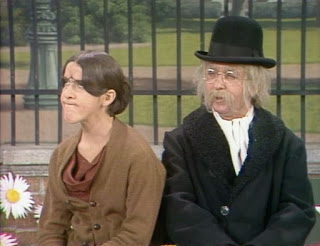
Another favorite was “Tyrone” who was an old man wearing a trench coat, always trying to seduce Ruth Buzzy’s “Gladys” on a park bench. She would hit him with her purse, and he often fell off the bench. Oddly, in a far-reaching concept, years later these two characters formed the nexus of a Saturday morning cartoon show, Baggy Pants and the Nitwits.

Photo: fox8.com
On The Partridge Family

During the 1970s, Johnson continued his television appearances with 17 different series, including two roles on The Partridge Family and several on Love American Style. He also could be seen on Match Game and Hollywood Squares.

Photo: sitcomsonline.com

His prolific career continued through the 1980s where he was seen on 25 different shows, including Murder She Wrote and The Love Boat. At the end of the ’80s, he began voicing characters for animation shows, but in the 1990s he accepted roles on 14 shows, including Night Court.

At the end of his career, his love of books provided him an opportunity to begin recording the narration for more than 80 audiobooks, including Dave Barry Is Not Making This Up in 2005.

Photo: vulture.com

Married to his wife Gisela since 1968, he survived a battle with non-Hodgkin lymphoma in 1997. In 2006 he retired from acting. He passed away mid-year in 2019 after suffering from bladder and prostate cancer. Ruth Buzzy, his comrade on Laugh-In, shared this message upon his death: “Thank you for a wonderful half-century of friendship. I could not have shared the spotlight with a nicer guy. Rest in peace. And yes, Arte Johnson, I believe in the hereafter.”

I like to think Arte is working on some skits, waiting for Ruth Buzzy, and some day when we get to heaven, we’ll be able to watch Gladys and Tyrone team up for us again.

The Donna Reed Show: It’s All About the Mom

Merry Christmas Eve.  In honor of It’s a Wonderful Life which will be playing quite often today, this week’s blog is about Donna Reed, who played Mary in the Jimmy Stewart holiday favorite.

In 1958, most of the television shows were game shows, variety shows, or westerns. Almost all the sitcoms on the air were based on a star; we had The Danny Thomas Show, The Ann Sothern Show, The Bob Cummings Show, and The Adventures of Ozzie and Harriet. It was also the year The Donna Reed Show began. The show would last eight seasons, resulting in 275 episodes.

reed14

Photo: dallas.wikia.com

The series was created by William Roberts. Donna and her husband Tony Owen developed and produced the show, under the name “Todon.” We had shows about single adults in The Bob Cummings Show and The Ann Sothern Show. We had families, including The Danny Thomas Show, Father Knows Best, and The Adventures of Ozzie and Harriet. Roberts wanted to concentrate on the demanding roles a stay-at-home mom had to juggle. Reed agreed with him. As she noted, “We started breaking rules right and left. We had a female lead, for one thing, a strong, healthy woman. We had a story line told from a woman’s point of view that wasn’t soap opera.”

reed2

Photo: imdb.com

The Donna Reed Show is often evoked by critics who say television scripts are not realistic but center around unreal family expectations, but that is not the goal Reed and her husband had. Donna described the show as “realistic pictures of small-town life—with an often-humorous twist. Our plots revolve around the most important thing in America—a loving family.” The shows featured typical family problems families faced in the late 1950s: having to fire a clumsy housekeeper, quality time with your spouse, dealing with disciplinary issues, or Donna being swamped with requests to volunteer for charity drives or community theater shows. However, there were times the show delved into more controversial issues such as women’s rights or freedom of the press.

reed3

Photo: metv.com

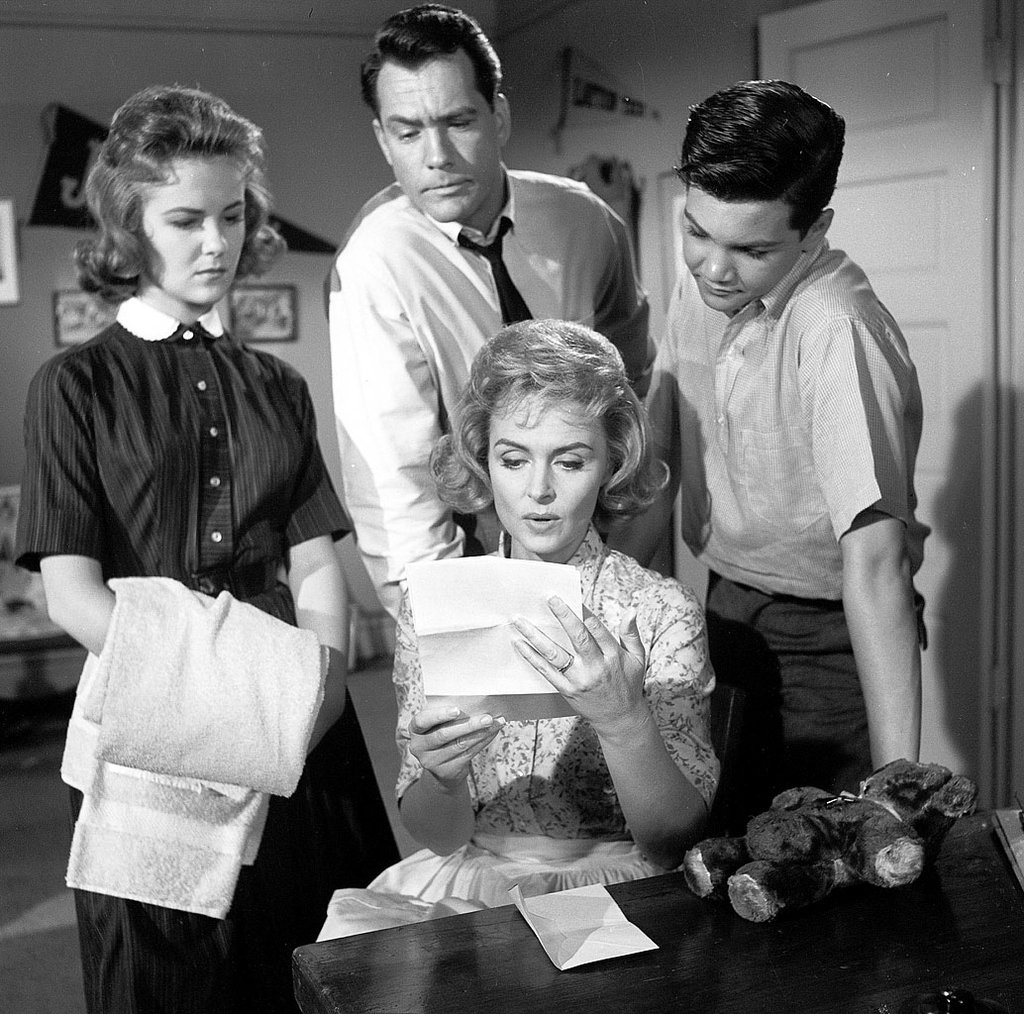
The Stone family includes Donna, Alex, Mary and Jeff. Donna (Donna Reed) is the iconic mother. She grew up on a farm (which Reed did). She became a nurse and occasionally helps Alex (Carl Betz), a pediatrician who has his office at the house. Mary (Shelly Fabares) is in her first year of high school. She studies ballet and plays the piano. During the series, she has several boyfriends. Mary left for college before the show ended, but Fabares made guest appearances. Jeff (Paul Petersen) is in grade school. He loves sports, likes to eat, and often teases his sister. In 1963 when Fabares leaves, Paul Petersen’s real sister, Patty was cast as a runaway orphan taken in by the Stone family. The Stones live in Hilldale, an All-American town.

reed9

Photo: pinterest.com

Several other characters appear often. Dave and Midge Kelsey (Bob Crane and Ann McCrea) are good friends of Donna and Alex’s.  Dave is also a doctor. Another of Alex’s colleagues who is a good friend is Dr. Boland (Jack Kelk), whom the kids call “Uncle Bo.” Smitty Smith (Darryl Richard) is Jeff’s best friend and Scotty (Jimmy Hawkins) is Mary’s boyfriend.

Photos: pinterest.com and metv.com

With Donna’s movie relationships, many guest stars appeared on the show during its run. Baseball players Don Drysdale, Leo Durocher, and Willie Mays played themselves. Musicians Harry James, Tony Martin, and Lesley Gore appeared. Buster Keaton was featured in two different shows. Esther Williams played a fashion designer. Other stars who showed up included Jack Albertson, John Astin, Dabney Coleman, Ellen Corby, Richard Deacon, Jamie Farr, Gale Gordon, Arte Johnson, Ted Knight, Harvey Korman, Cloris Leachman, Marion Ross, William Schallert, Hal Smith, Marlo Thomas, and William Windom.

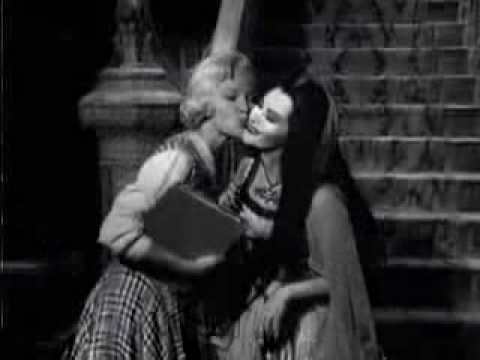
In the opening credits, Reed comes down the stairs and answers the telephone which she gives to Alex. She then hands the kids their lunches and books and sends them off to school. When Alex leaves on a call, she closes the door and smiles. In 1964 when The Munsters debuted, their opening credits were a parody of Donna’s show as Lily performs the same actions.

reed12

Photo: metv.com

The Donna Reed Show faced the Milton Berle show, Texaco Star Theater Wednesday nights and ratings were not great. It was renewed and moved to Thursdays the next year. I was surprised to learn that during the eight years the show was on the air it was only in the top 20 in season six and only in the top 30 in season four.

reed5

Photo: cinemacats.com (Look closely and you’ll notice this was                                                                 the living room for I Dream of Jeannie as well).

Although the show never received very high ratings, Donna Reed was nominated for an Emmy every year from 1959 to 1962. (Jane Wyatt won in 1959 and 1960, Barbara Stanwyck won in 1961, and Shirley Booth won in 1962.) Donna Reed won the Golden Globe in 1963.

reed8

Photo: metv.com

In 1962 Donna felt that the writers had run out of creative ideas and were recycling plots. Both Mary and Jeff were allowed to perform in this season. Fabares debuted a single, “Johnny Angel” in February which went to number one on the charts, selling more than a million copies. In October, Petersen sang “My Dad” which made it to number six. Donna decided that would be the last season, but when ABC made her a very lucrative offer for three more seasons, she and her husband agreed.

reed1

Photo: nytimes.com

When this contract ended in 1966, Donna was ready to retire. Reed was considering a television movie reunion but when Betz passed away in 1978, she decided it was no longer an option.

Campbell Soup was the first sponsor, and later sponsors included Johnson & Johnson and The Singer Company. Whenever a scene takes place in a supermarket, Campbell’s Soup, V-8 Juice, Franco-American Spaghetti and Johnson & Johnson Baby Powder are likely to be in the shot.

reed13

Photo: metv.com

Reruns of the show were seen on Nick at Nite from 1985-1994 and on TV Land from 2002 until 2004. MeTV began airing the show in September of 2011.

The cast was a close-knit one and continued their relationships after the show ended. Paul Petersen credited Donna as being the nurturing adult he needed in his life to get him through the years of being a child star. She helped him understand how the industry worked and helped him during some tough times during his life. Shelly Fabares also said Donna and Carl were amazing. Realizing how tough the industry can be for young kids, they protected Paul and herself and loved them as second parents. Donna never forgot to send Shelly a birthday gift.  In 1986, before she passed away from pancreatic cancer, her final words were to make sure Shelly’s birthday gift was wrapped and delivered.

reed15

Photo: lapostexaminer.com

Despite the bad raps the show often received from the women’s lib organizations, Donna Reed did help advance the way women were perceived in the media. She endowed her character with strong emotions, definite opinions on issues, and independence. In her personal life, Reed expressed her views on the medical industry and the political arenas.

reed7

Photo: geocaching.com

Paul Petersen summed up the value of the show in an interview he did in 2008. In his words, The Donna Reed Show, “depicts a better time and place. It has a sort of level of intelligence and professionalism that is sadly lacking in current entertainment products. The messages it sent out were positive and uplifting. The folks you saw were likable, the family was fun, the situations were familiar to people. It provided 22-and-a-half-minutes of moral instructions and advice on how to deal with the little dilemmas of life. Jeff and Mary and their friends had all the same problems that real kids in high school did. That’s what the show was really about, the importance of family. That’s where life’s lessons are transmitted, generation to generation. There’s a certain way in which these are transmitted, with love and affection.”

I couldn’t say it better.

The Teacher We All Wished We’d Had: Our Miss Brooks

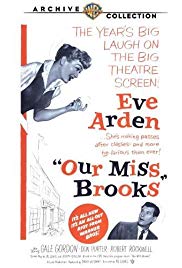
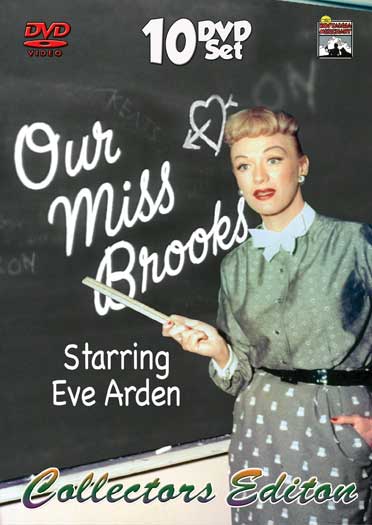
We kicked off the month looking at the successful transition of Burns and Allen from radio to television.  There were many shows that couldn’t make the leap to the small screen, and several that did very well like The Jack Benny Show and I Love Lucy. Our Miss Brooks not only had a successful radio show, but when their television show debuted, the radio show kept going. Many of the cast members starred in both mediums. In addition, they made it to the big screen with a movie and a comic book.

brooks6


So, what enabled Our Miss Brooks to do what many shows could not?  Let’s look a little closer at the series and the behind-the-scenes work that kept the show on the air for four seasons, producing 130 episodes.

brooks8

Connie Brooks (Eve Arden) is an English teacher at Madison High. She and her principal, Mr. Conklin (Gale Gordon), do not always see eye to eye, but she is close to his daughter Harriet and Harriet’s boyfriend Walter (Richard Crenna) who gives Miss Brooks a ride to school. She wants to be close to Mr. Boynton (Robert Rockwell), the science teacher, but he is oblivious to her charms. She rents a room from Mrs. Davis (Jane Morgan) where she lives with Mrs. Davis’s cat, Minerva.

brooks5


We also get to know Fabian “Stretch” Snodgrass (Leonard Smith), basically a “dumb jock” who is Walter’s best friend and Daisy Enright (Mary Jane Croft), another English teacher who is Connie’s love rival for Mr. Boynton.

The show debuted July 19, 1948 on the radio. The show program was sponsored by Colgate-Palmolive-Peet for its entire run which ended in 1957. The first choice for Miss Brooks was Shirley Booth, and the show was titled “Our Miss Booth.” In Gerald Nachman’s book Raised on Radio, he states Booth concentrated too much on the disadvantages of being a school teacher to be funny. There is an audition with her from April of 1948 and while she sounds pleasant, she doesn’t have the sarcastic wit of Arden. The television show began in 1953 and was sponsored by General Foods.


brooks12

Our Miss Brooks was a ground-breaking show featuring a single woman (teachers were usually single, and marriage might have ended her career). She was not a scatterbrained female like Lucy or Joan in I Married Joan, and she was not a housewife like June Cleaver or Donna Reed. She was a bright, attractive working woman. Eve remembered her third-grade teacher fondly and tried to give Miss Brooks some of her qualities. Eve was known for her sassy movie roles; one of the things she appreciated about the character of Connie Brooks was that it allowed her to be a warm, fun-loving person who had a self-deprecating side.

brooksa

The show was a Desilu Production, so they shared equipment and crews with I Love Lucy, as well as a director (William Asher) at times, to save money.

The show was funny because it is based on believable characters. Connie Brooks has a great sense of humor. Many of the plots involve misunderstandings or her trying to keep Walter out of trouble with Mr. Conklin. Here are a few episode summaries.

Miss Davis unknowingly uses school funds to buy Connie a new dress. Now Connie must sell the dress to return the money. Mr. Boynton even models the dress for the kids.

brooks7


Mr. Boynton asks Connie to play the role of Mrs. Boynton. She is thrilled,  imagining what it could lead to, until she realizes he meant his mother, not his wife.

Walter is listening to his home-made radio. Storm warnings come over the air for Bombay. Miss Brooks mistakenly thinks it is for their area and takes precautions to evacuate the school and prepare for a hurricane.

Mr. Conklin is furious when his bike is taken at the grocery store, and he wants the thief punished. Miss Brooks finds out that a poor boy borrowed it for his birthday and then returned it to the store. She goes to great lengths to protect the youngster.

brooks4


Radio Mirror magazine nominated Eve Arden as the top-ranking comedienne two years in a row for her characterization of Miss Brooks. The National Education Association recognized her for her sympathetic portrayal of teachers.

brooks3


Eve Arden was nominated for an Emmy for Best Actress Starring in a Regular Series in 1954, 1955, and 1956—winning in 1954. Gale Gordon was nominated for Best Supporting Actor in 1955, and the show was nominated Best Situation Comedy in 1954 and 1955.

Image result for images of our miss brooks


Eve Arden had to fight the same battle many celebrities do when they have a hit show. She handled her fame of being known as Miss Brooks with grace and practicality. As she explained it: “I originally loved the theater. I still do. And I had always wanted to have a hit on Broadway that was created by me. You know, kind of like Judy Holliday and Born Yesterday. I griped about it a little, and someone said to me, ‘Do you realize that if you had a hit on Broadway, probably 100 or 200,000 people might have seen you in it, if you’d stayed in it long enough. And this way, you’ve been in Miss Brooks, everybody loves you, and you’ve been seen by millions.’ So, I figured I’d better shut up while I was ahead.”


brooks13

While the TV series never resolved the Boynton-Brooks romance, the 1956 film did. It was directed by Al Lewis, who directed many of the television episodes. In the movie, Miss Brooks is unaware that Mr. Boynton is saving money, so he can ask her to marry him. He is hoping to get a promotion to head of the department. In a subplot, Connie is having issues with a student who is failing her class. He has no friends because he is very arrogant. When she meets his wealthy father, she understands why he has no friends and she tries to help him.  Also, Mr. Conklin is running for Coordinator of Education, primarily to stop the other nominee, Superintendent Stone, who has threatened to fire Conklin. Miss Brooks decides to be Conklin’s campaign manager despite her butting heads with him most of the time. If Conklin wins, Mr. Boynton might be promoted to principal. In the end, Boynton finally proposes, only to have a chimpanzee steal away the ring.


Our Miss Brooks comic. (1956)

The movie was a box-office failure. After the movie, Dell Comics released a comic book titled “Our Miss Brooks.” In past decades, it sold for hundreds of dollars in mint condition. Today it can be found on ebay for under $50.

A fun fact I learned was that Eve Arden was born Eunice Quedens. When she was encouraged to take a different stage name, she looked over her cosmetic jar labels. She picked “Eve” from “Evening in Paris” and “Arden” from “Elizabeth Arden.”

brooks1

While many of the plots for Our Miss Brooks are predictable and not overly creative, it was a innovative sitcom. The scripts were well written, and the humor still works today. I could not find any channels currently broadcasting Our Miss Brooks, but it does appear on Me TV from time to time. The radio shows can be heard on Sirius Radio, channel 148. Of course, there are a variety of DVDs featuring the show. Add it to your list to understand why Eve Arden was so popular with women in the 1950s.

brooks14

Today, I Get to Introduce You to One of My Very Favorite People, Blanche Morton, via Bea Benadaret

This week I’m excited to learn more about one of my favorite entertainers—Bea Benardaret. Bea had a long and successful career in radio and television, as well films. Nick-named Busy Bea, she would get credit for making more than 1000 radio and television appearances.

bea2

Born in 1906 in New York City, she was raised in San Francisco. Her first radio appearance occurred when she was 12 years old in Beggar’s Opera.  While still in high school, Bea went to work for radio station KFRC where she acted, sang, wrote, produced, and announced. She went on to the Reginald Travis School of Acting.
bea15

She married Jim Bannon in 1938. Their marriage would last until 1950 and produce two children, Maggie and Jack. She later married Gene Twombly in 1958 and remained married until her death.  Jack tells a story about when his mother was very pregnant with his sister. While exiting a cab, she fell and broke her pelvis.  It was so traumatic that her brunette locks turned white. At that time, she began dyeing her hair the blonde color we would all recognize once she transitioned to television.

Bea’s son Jack became an actor who has 91 credits for television and movie work. He appeared on Petticoat Junction 15 times, but was best known for his role of Art Donovan on Lou Grant. He was married to Ellen Travolta and passed away in the fall of 2017.

bea21

Bea could probably win the award of most-often misspelled name. You can find her name spelled Benardaret correctly or Benederet or Benadaret. On several episodes of Burns and Allen, you can even find credits spelling her first name “Bee.”

bea20

After graduation, she entered the radio business full time. She moved to Hollywood in 1936 and found work on The Jack Benny Show and shortly after with Orson Welles’ Mercury Theater in 1937. She was featured in 36 different radio shows with her most famous roles being Gertrude Gearshift on The Jack Benny Show, Eve Goodwin on The Great Gildersleeve, Millicent Carstairs on Fibber McGee and Molly, Gloria the maid on The Adventures of Ozzie and Harriet, and Iris Atterbury on My Favorite Husband. She received a starring role in Granby’s Green Acres, the forerunner of the Green Acres Show.

bea5

In 1943, she became one of the primary voices of Warner Brothers Merrie Melodies and Looney Toons cartoons. She met Mel Blanc during this time and they remained friends for life.

bea1

Bea also received roles in six films including a government clerk in Notorious (1946), one of two women Gene Kelley and Frank Sinatra encounter on the subway in On the Town (1949), and Tender is the Night (1962).

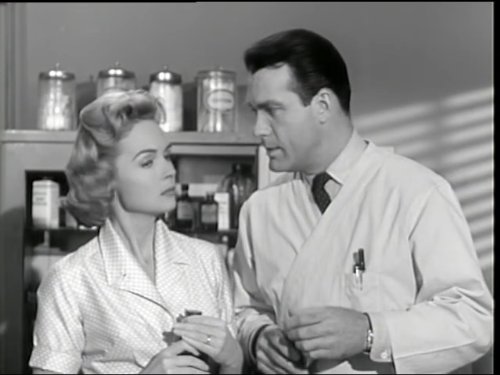
Bea’s first television role was my favorite character—Blanche Morton on the George Burns and Gracie Allen Show. Bea had appeared on their radio show and when the duo transitioned into television, she made the move with them. From 1950-1958 she was Gracie’s best friend and long-suffering wife of Harry Morton. Bea credited George Burns for teaching her about comedy. Bea was awarded two Emmy nominations for her portrayal of Blanche.

Not long after she was obligated to play Blanche, Lucille Ball offered her the role of Ethel Mertz on her new show I Love Lucy. Bea had to decline, but she did make an appearance on the show in 1952. Her “husband” on My Favorite Husband and Granby’s Green Acres was Gale Gordon.  He, too, was approached to play Fred Mertz; however, similarly to Bea’s situation, he had already agreed to transition from radio to television on Our Miss Brooks. He too would costar on the show and later he was able to work with Lucille Ball again on her other television shows.

bea3

In 1960 Bea accepted the role of the housekeeper on Peter Loves Mary. That same year she agreed to provide the voice for Betty Rubble when The Flintstones debuted on Friday nights. She would provide voices on The Flintstones for 112 episodes.

bea11

Paul Henning was one of the writers for Burns and Allen. He and Bea became friends in the 1940s, and in 1962 he created a show called The Beverly Hillbillies. He brought in Bea for the role of Granny, but when Bea saw Irene Ryan’s audition, she told Paul he had definitely found his Granny. He then created the role of Pearl Bodine for Bea. She would appear in 22 episodes. Donna Douglas, who played Elly May, said that “watching her timing is like watching a ballerina. She’s so effortless.”

When Henning created a spin-off in Petticoat Junction, the role of Kate Bradley was written specifically for Bea. She appeared in 179 of the episodes of the show that aired from 1963-1969. Henning’s wife’s family ran the Burris Hotel in Eldon, Missouri that catered to salesmen traveling by railroad, and those stories became the basis for Petticoat Junction. Kate, a widow, runs the hotel with help of her Uncle Joe who is often busier trying to avoid work than helping out. She has three daughters Billie Jo, Bobby Jo, and Betty Jo. (During the show’s run, there would be three Billie Jo’s, and two Bobby Jo’s but only one Betty Jo, who was portrayed by Linda Kay Henning, Paul’s daughter.)

bea13

Charley Pratt and Floyd Smoot run the Cannonball, a train that enables the Bradleys to travel to Pixley and Hooterville. Cut off from the main railroad twenty years earlier in a trestle demolition, the train caters to local residents, often stopping to move cows or let someone visit a neighbor between official stops. Sam Drucker runs the general store in Hooterville and is always the center of local society. Though it was never made too obvious, Kate and Sam had a special relationship, and we always assumed that once the girls were grown and gone, and Sam was ready for retirement, he and Bea would end up together. The old-fashioned hotel offers home cooking and a nostalgic feel. Other titles considered were Ozark Widow, Dern Tootin’, and Whistle Stop. When Steve Elliott, the crop duster, came to town, he dated Billie Jo. They made a glamorous couple, but a season or two later, he realized he truly loved Betty Jo, the youngest and the tomboy who helped in repair his plane. They married and had a daughter, Kathy Jo.

bea23

In 1967 Smiley Burnette (Charley) passed away. In 1968 Bea became ill and died that year from lung cancer and pneumonia. Bea’s second husband, Gene Twombly, passed away four days later from a heart attack. June Lockhart was brought on to the show as Dr. Janet Craig to help be a mother figure to the girls. Ratings declined in season 6 with the loss of Bea; however, the network renewed the show for another year so there would be five years of colored episodes for syndication. Ratings increased during the last year, but in 1969 when the new administration cancelled all the rural shows, Petticoat Junction received its walking papers too.

bea12

There were always rumors that there would be a reunion from the show, but that never happened, although the cast did take on both the Brady Bunch and Leave it to Beaver crews on Family Feud in 1983.

bea22

Bea was known for her laugh. By all accounts, she was a kind woman and extremely professional in all her roles. While I enjoy Petticoat Junction, I adore Gracie Allen, and am always happy to indulge myself watching Burns and Allen Show episodes. Bea holds her own on the show and makes a wonderful practical counterpart to Gracie’s illogical logic. If I had a time machine, one of the first visits I would make would be back to 1950 to enjoy a cup of coffee with Gracie and Blanche.

bea16