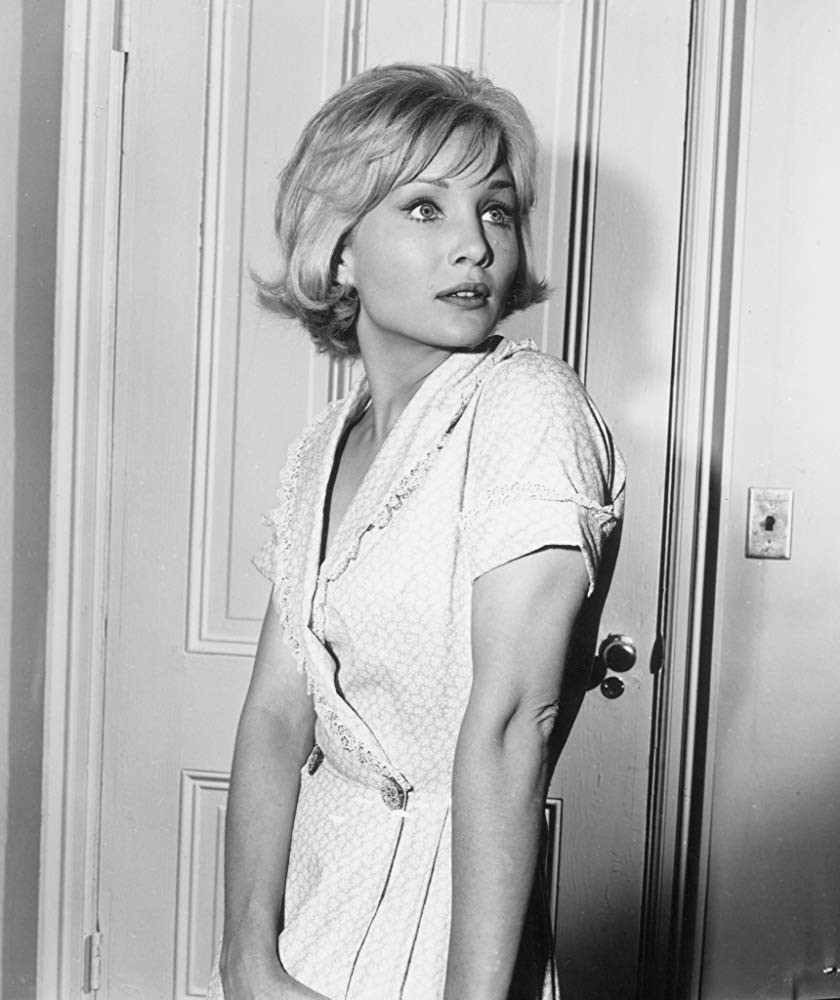
Jonathan Harris: Oh the Pain

This month our blog series is “All About The Bill Dana Show,” and we are learning about the careers of some of the cast members. Last week we looked at the life of Maggie Peterson, and today we are getting to know Jonathan Harris.

📷LostinSpaceWikiFandom.com

Harris was born Jonathan Daniel Charasuchin in the Bronx in 1914. His father worked in Manhattan’s garment district. His family often took in borders to make ends meet, and when they did, the border got Jonathan’s room, and he slept on a couple of dining room chairs.

By age 12, Harris was working at a pharmacy as a stockboy. Although money might have been short, Harris’s family’s love of music and theater was not. As a family they listened to opera in the dining room. Whenever they had some extra cash, they would take in a Broadway play. Harris was interested in archeology, poetry, and Shakespeare. He disliked his Bronx accent and taught himself to develop a British one.

Harris was able to graduate at age 16 from James Monroe High School. His pharmacy job paid off when he graduated from Fordham University with a pharmacology degree in 1936. Before entering college, Jonathan took the name “Harris” in place of his birth name.

In 1938 Harris married his high school sweetheart, Gertrude Bregman. They were married until his death.

While working in several pharmacies, Harris also worked on his acting skills. He created a phony resume which he used to land a spot in a local acting company. In 1942 he played a Polish officer in the Broadway production, “The Heart of a City.” He was persistent. He said that he went to Mr. Miller’s office to audition for a part in the play for two weeks, and everyday Mr. Miller’s secretary sent him away. Finally, she let him in, and Mr. Miller gave him his first part. Then he lied and said he could do a Polish accent. He then went to the Polish Consulate to listen to how they talked. So, despite a fake resume, being turned away for weeks, and then lying about an accent, he was a success in the play.
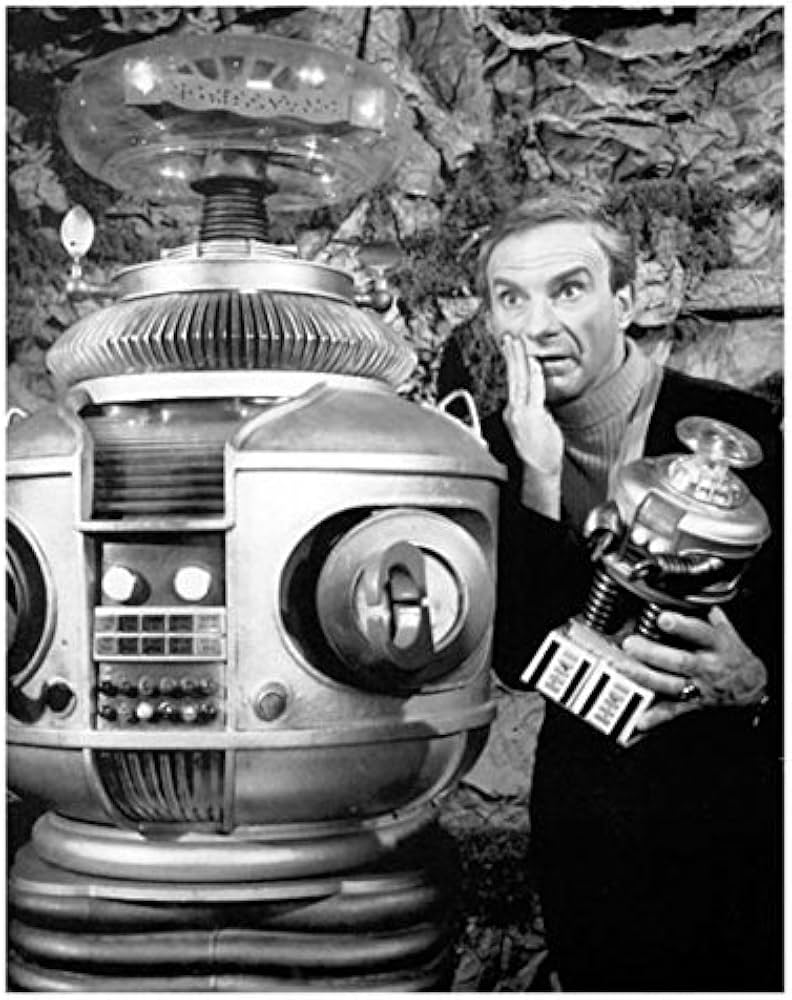
📷amazon.com

In 1949, Harris made his television debut in The Chevrolet Tele-Theatre. Throughout the fifties he would continue to appear in dramatic playhouse series.

In 1959 he had a recurring role in Zorro as Don Carlos Fernandez as well as an appearance on Father Knows Best.

The sixties brought him roles in several well-known series including The Twilight Zone, Bonanza, and The Adventures of Ozzie and Harriet.

In 1963 he was offered the role of Mr. Phillips, the hotel manager on The Bill Dana Show. I won’t elaborate on this series, but if you missed the first blog in March, you can read about this show which was on the air for a season and a half.

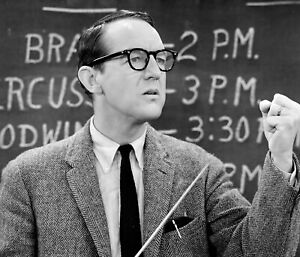
Harris did an interview with the Television Academy. He said that when he read the script for The Bill Dana Show, he decided he had to come up with some other characteristics for Mr. Phillips. He made him devoid of humor. But he said he was a different man with his wife on the show, played by Amzie Strickland. Harris said Bill Dana was wonderful to work with. He also said that the writing was so good on that show that he never had to re-write anything. However, if something felt off, he would ask Sheldon Leonard about changing it, and Leonard was always open minded about revisions.

Harris continued to appear on dramatic shows while waiting for his next role.
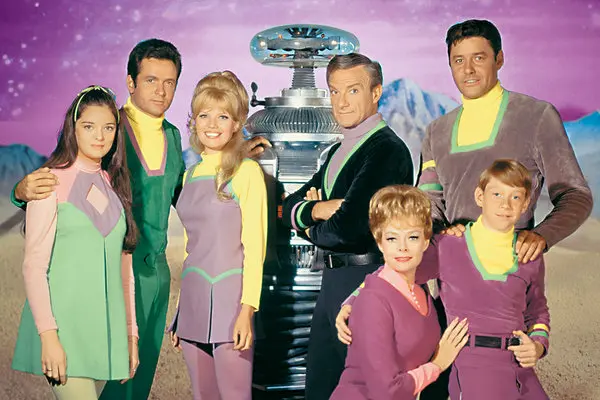
📷thenewyorktimes.com

In 1965 Lost in Space was put on the fall schedule. Harris played Dr. Zachary Smith. Neither his role nor the Robot were in the pilot of the series, but they were both brought in before the show began.

The show was a big hit with viewers. Harris felt his character, who was not trusted by the family, needed a bit of comedy, so he began to adlib his dialogue. Irwin Allen, creator of the show, approved the changes and allowed him to be considered a writer. Harris said he was a good re-writer, but he was never a writer.

Bill Mumy, who played the son on the show and interacted with Smith quite a bit said that Harris “truly, truly singlehandedly created the character of Dr. Zachary Smith that we know—this man we love to hate, coward who would cower behind the little boy, ‘Oh the pain! Save me, William! That’s all him.”

The show was still high in the ratings during its third season, but the writers were running out of ideas, and the show was canceled after 83 episodes.

📷imdb.com

In the seventies, Harris joined the casts of two Saturday morning series, Space Academy and Uncle Croc’s Block. Uncle Croc’s Block was a very weird show in my memory. Even though it was on Saturday mornings, he parodied kids’ shows. Uncle Croc, played by Charles Nelson Reilly, butts heads with his program director Basil Bitterbottom, Harris’s role; Phyllis Diller played Witchy Goo to round out the cast. Uncle Croc has a sidekick Rabbit Ears and introduced the cartoons.

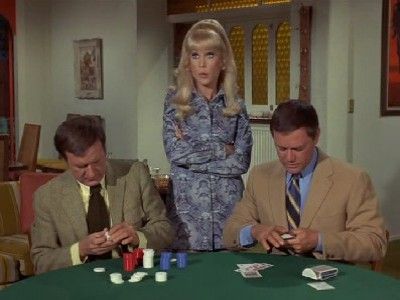
He also continued to appear on other series, and you can spot him in The Ghost and Mrs. Muir, Land of the Giants, Get Smart, Bewitched, McMillan and Wife, Love American Style, and Vega$.

After the mid-seventies, most of his work was in the animation field.

He also became a drama coach, and Chuck Norris was one of his students.

📷billmumy.com

In 1990, the cast of Lost in Space reunited for the 25th anniversary. More than 30,000 fans attended the event.

Harris also spent time on his hobbies, which were many. He loved gourmet cooking, watching movies, reading, traveling, painting, magic, playing piano, gardening, dancing, knitting, and spending time with this family. He also kept his interest in listening to opera that he cultivated as a child.

He passed away in 2007 from a blood clot that traveled to his heart.

Harris was a talented actor. I’m not sure why he was never offered another sitcom or a chance to play a different type of character. I’m glad he found a home in animation, but I wonder if he regretted leaving Broadway for television. It was fun to learn more about this man and his career.

Florida Friebus: What a Character

📷danahallschool.com

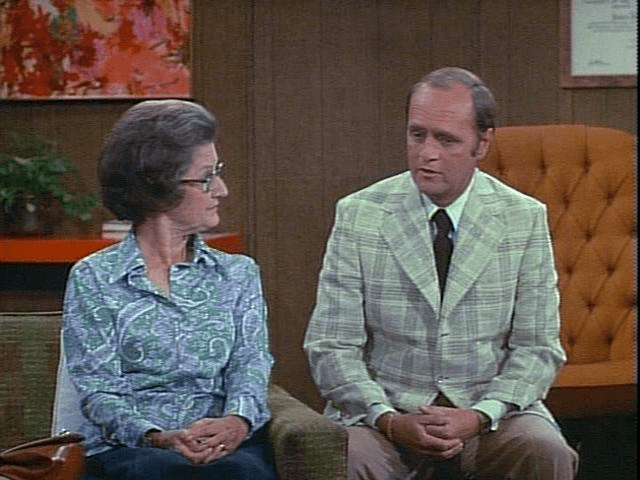
As we continue our What a Character blog series, today we get to talk about the woman behind one of my favorite characters, Lillian Bakerman from The Bob Newhart Show. That woman is Florida Friebus.

Friebus was born in Massachusetts in 1909. She was named for her mother’s favorite aunt, not the southern state. Weirdly, her paternal grandmother was also named Florida. Her family was involved in the theater. Her father Theodore was a leading stage actor with Boston’s Castle Square Players and a silent film star. Her mom’s mother, Georgine Flagg, was part of the Augustin Daly stock company in Manhattan.

When she was only eight years old, Florida’s father passed away. Her mother had studied at the Dana Hall Schools and applied for a position of housemother there. Florida was able to study at Tenacre during this time. She participated in the first Christmas pageant in 1921. Florida not only learned a lot about acting, but she also was presented with classes in political history, music, art, languages, and literature.

📷facebook.com with Richard Waring

Friebus moved to New York to study at the Theater Guild School. She began her acting career in 1929 in when she appeared with the Civic Repertory Theater in “The Cradle Song.” In 1932, she worked on an adaptation of “Alice in Wonderland” with Eva Le Gallienne, and she took on the role of the Cheshire Cat.

In 1934, Friebus married Richard Waring. They would divorce in 1952, and she never remarried.

Friebus was elected to the Council of the Actors’ Equity Association in 1949, and she spent 16 years on the board.

Florida read stories to children on her KNXT show, Look and Listen, in Los Angeles.

📷imdb.com

Her first television role was in 1948 on The Ford Theater Hour. Her television drama appearances continued into the 1950s and she also appeared on several sitcoms, including The Goldbergs, Father Knows Best, Bachelor Father, and The Donna Reed Show. In 1959 she accepted a role that made her a household name: Winnie Gillis on The Many Loves of Dobie Gillis. For four seasons she tried to defend Dobie and his crazy dilemmas when his father became exasperated with him.

The show was based on a 1951 book, The Many Loves of Dobie Gillis by Max Shulman about the romantic adventures of a student at the University of Minnesota. Shulman wrote for the series. He would also write The Tender Trap which became a movie in 1955 and House Calls which became a 1978 movie; Shulman became head writer for the television series based on House Calls.

The sixties and seventies found Florida in a variety of both dramas and sitcoms. A few of these series included Ben Casey, Peyton Place, The Doris Day Show, The Mary Tyler Moore Show, The Partridge Family, Gunsmoke, Room 222, and Barnaby Jones.

📷sitcomsonline.com

In 1972 she accepted the role of Lillian Bakerman on The Bob Newhart Show. During the show’s run, she made 19 appearances trying to encourage the other patients in her therapy group. She is often seen knitting while the group talks. One of her fears is flying, and her catchphrase is “Isn’t that nice.”

Her last appearance was in 1982 on The New Odd Couple as, who else but Mrs. Bakerman.

In 1988, Friebus passed away from cancer at 78 years old.

Gather Round: It’s Time for Tales of Wells Fargo

📷pinterest.com

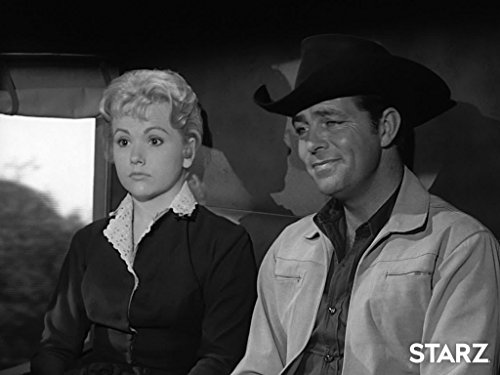
This month we are Riding the Range, exploring some of the westerns from the fifties and sixties. One of those shows that was on the air from 1957-1962 was Tales of Wells Fargo.

The show was produced by Revue Productions and set in the 1870s and 1880s. Gene Reynolds was one of the creators of the show, along with Frank Gruber and James Brooks. Reynolds would go on to great success as a director, producer and writer, and my favorite of his was M*A*S*H. Although this show was set in the same time as Daniel Boone, it was better at getting history correct. The show featured special agent Jim Hardie (Dale Robertson) with his horse Jubilee. It was loosely based on the life of real detective Fred J. Dodge. Sometimes Hardie ran into characters from history including Jesse James and Belle Starr.

📷pinterest.com Fred J. Dodge

Fred Dodge was born in California in 1854. He went to work as an undercover agent for Wells Fargo, working in California, Nevada, and Arizona. In 1979 he was in Tombstone and recommended hiring Wyatt Earp as guard for the stage line. He became great friends with Earp. Later Dodge became constable of Tombstone while working undercover. In 1890 he left his undercover work and became a known employee of Wells Fargo in Texas. He purchased a 2,000-acre ranch near Boerne, Texas and when he retired in 1917, he lived there with his family. Dodge was described as an intelligent and successful investigator. He wrote 27 journals during his career, noting his activities and travels in them. Some of these were used for Tales of West Fargo.

I had always assumed this show was about stagecoach travel, but it was not, although stage coaches played a part. In the mid-1800s, the Wells Fargo stage line was the primary connection between the East and West coasts. Wells Fargo did not operate a stage coach line, but they did use that form of transportation for money, gold and other valuables to be delivered. Trains are involved in many of the plots. One of the trains used in the show would eventually travel to Hooterville and be renamed the Cannonball.

📷imdb.com

The first five seasons were black and white half-hour shows, while the final season switched to a color, hour-long show. During the last season, Hardie settles on a ranch near San Francisco and several recurring characters (Jack Ging, William Demarest, Virginia Christine, Lory Patrick, and Mary Jayne Saunders) were added to the series. Earle Lyon replaced Nat Holt as producer in 1960.

The theme song was written by Stanley Wilson and Mort Greene. Wilson was a prolific composer, amassing 147 credits for composing and 278 for music department credit on television and in movies. Mort Greene was best known as a writer for The Red Skelton Show and for his musical role for Leave it to Beaver.

The number of well-known actors who appeared on the show was surprising. Here are just a few of the huge number: Claude Akins, Eddie Albert, Hugh Beaumont, Dan Blocker, Charles Bronson, Edgar Buchanan, Harry Carey Jr., Chuck Connors, Buddy Ebsen, Beverly Garland, George Kennedy, Tina Louise, Steve McQueen, Jack Nicholson, Leonard Nimoy, Denver Pyle, Jason Robards, Vito Scotti, Dawn Wells, and Adam West.

📷mysteryfile.com

It was an NBC show. The pilot premiered on Schlitz Playhouse of Stars. Its biggest competition was Father Knows Best in seasons two and three. It was very popular with the viewers. The show was in the top ten during seasons one through four. For the sixth season, with an entire new cast, new theme song, and color, it was almost like a new show. NBC moved it to Saturday nights against Perry Mason and ratings declined drastically, costs went up significantly, and it was canceled.

Robertson thought the key to the popularity of the show was because it was not geared specifically to adults or kids. It was a family show. When Robertson first read the script, it was terrible, but he owed Nat Holt a favor, so he accepted the role, assuming that it would never make it. Robertson received a 50% ownership in the show, so he said of course it made him want the show to be better and he convinced them to replace most of the original script. He said that he enjoyed his time on the show a lot and that the crew was close and professional. They never went over schedule or over budget during the entire run.

📷thehollywoodreporter.com

The first two seasons were released on DVD in 2011 if you want to check them out. It sounds like this was a solid show. The network supported them, the cast was close, the production team was on top of things, and they all enjoyed their time with the show. That is a rare thing to hear in the television business. They took a gamble in the last season, and it didn’t work out, but perhaps it was for the best. It sounds like the actual show ended the season before because the last season things changed so much it was a completely new production. I would like to read more about Fred Dodge. His life sounds fascinating.

Joan Tompkins: What a Character

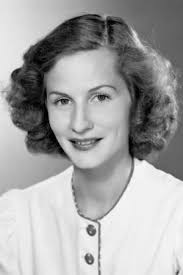
We are starting a blog about Supportive Women, great actresses who made classic television so much better. I’m beginning with Joan Tompkins.

📷tvtime.com

Tompkins was born in 1915 in Mount Vernon, NY. She began her career in stock theater companies in New York in the thirties before appearing on Broadway in several shows including “My Sister Eileen,” “Pride and Prejudice,” and “Fly Away Home.” Henry Fonda was in several the plays with Joan.

In 1936 she married actor Stephen Ker Appleby in New York, but five years later they divorced. Appleby was born in Wales and known best for his 1960s movies. He lived to be 100. From 1942-1951 she was married to Bruce MacFarlane before they divorced. McFarlane died in 1967 and had 28 acting credits in television and film. Joan would then marry a third actor in 1951, Karl Swenson, “the man of a thousand voices.” The two worked together on the radio. Many fans of Little House on the Prairie would recognize Karl as Lars Hanson. Swenson obtained an amazing 175 credits, primarily on television during the two decades before his death.

After WWII Joan became a foster parent for a crippled Polish boy, Tomasz Machcinski. He later became a photographer. In 1994, their story was made into a documentary, “Child from a Catalog.” Machcinski’s life story was very interesting. He was born in the Kampinos Forest in Gorki, Poland. He spent his childhood living in hospitals and orphanages. After developing a relationship with Joan, he graduated as a precision mechanic in 1963. In 1966, he took up photography and created thousands of self-portraits. Some were as historic characters. He chose the stories, make up, and costumes. He once said that he didn’t “use wigs, tricks, but I use everything that happens to my body, such as hair regrowth, tooth loss, diseases, aging, etc.” He has had exhibits in Copenhagen, Beverly Hills, Warsaw, New York, and Paris. Machcinski passed away in 2022.

📷wallofcelebrities.com

Tompkins had a long radio career. She was the voice of Nora Drake on “This is Nora Drake” which was on CBS radio until 1959.

She began her television career in 1954 on an episode of Ponds Theater. Almost all of her 93 acting credits were for television shows. She had a recurring role on a soap, Valiant Woman, appearing in 176 of the 1027 episodes of the show as Marion Walker. Throughout the fifties, she showed up in several dramas as well as The Donna Reed Show, Bachelor Father, and Father Knows Best.

During the sixties, she had two recurring roles. She played Mrs. Brahms on Occasional Wife in 1966-67. I remember her on My Three Sons; between 1967-1970, she appeared as Lorraine Miller, Katie’s mom, nine times.

You can catch glimpses of her on many of your favorite shows from the sixties and seventies, including Hazel; The Danny Thomas Show; Perry Mason; Gomer Pyle: USMC; Dr. Kildare; The Man From UNCLE; Bewitched; Bonanza; The Brady Bunch; Marcus Welby, MD; The Mary Tyler Moore Show; The Mod Squad; and The Bob Newhart Show.

📷imdb.com My Three Sons

Her last television appearances were in 1980. She played Grandma Gertie in an episode of Eight is Enough and a physician in a made-for-tv film, The Night the City Screamed.

Karl and Joan moved to Beverly Hills where they founded an acting company. Karl directed the plays Joan appeared in. After Karl’s death in 1978, Joan joined a writing group and wrote several books. She died at home in 89.

Joan Tompkins is another one of those actresses that made television better during the fifties, sixties, and seventies. I’m glad we could learn a bit more about her and her career.

Father Knows Best: We All Grew Up in Springfield

Our last two shows are both set in Springfield, and we might do a bit of comparison and contrast next week. This week we are checking out the Anderson family on Father Knows Best.

📷wikimedia.com

The show debuted on NBC radio in 1949. For five years it was sponsored primarily by General Foods. None of the television cast members were part of the radio show, but you would recognize the voice of Jean Vander Pyl from The Flintstones.

A couple of months before the show ended on radio, it made its move to television. This was not all that unusual in the early days of television, but the show began on CBS for a year, then it was picked up by NBC for three years, and then it returned to CBS for two years.

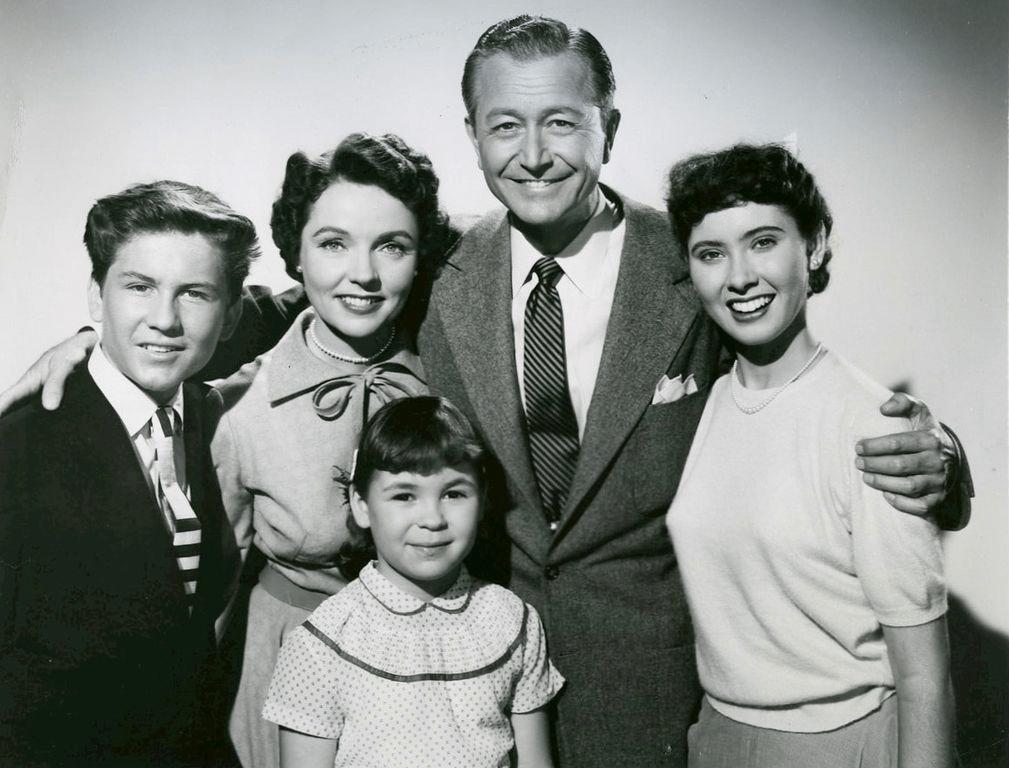
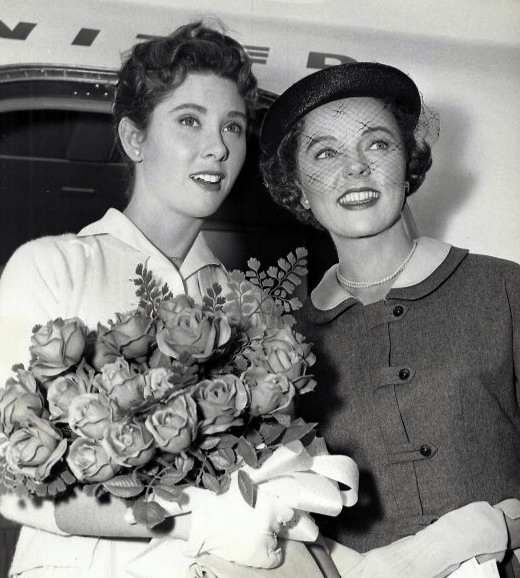
The pilot aired on an episode of The Ford Television Theatre and was called “Keep It in the Family.” While the show was picked up, only Robert Young was retained from the original cast. Joining him were Jane Wyatt as Margaret, Elinor Donahue as Betty, Bill Gray as Bud, and Lauren Chapin as Kathy.

📷evergreenarchives.com

I think we all have this stereotyped vision of the Anderson family in our memories. In fact, the US Department of the Treasury requested a 30-minute episode of the show that was never aired on television. It was distributed to schools, churches, and civic groups to promote the sale of savings bonds. However, when I watch the show today, I think it got some unfair criticism. There are several episodes when Margaret has just had it with cleaning and cooking for an ungrateful family. The kids are sometimes portrayed as thoughtless and self-absorbed. The three children often disappoint their parents and sometimes the parents are not good role models. I don’t say that in a negative way—it’s a realistic description of a lot of us as teenagers and parents at times.

📷imdb.com

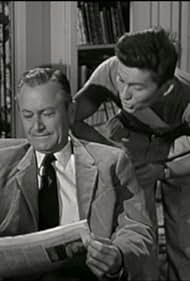
Robert Young and his business partner Eugene B. Rodney developed the show with Screen Gems. Casting was not an easy task. One of the things they were trying to avoid was stereotyping. They wanted Bud to be absorbed but not flip. Young and Rodney mentioned that it was not easy to do the gags in the right tone, but they knew they had their Bud in Gray in a scene where Jim is worried about Betty getting too serious. Rodney relayed the following story: “As an example”, said Mr. Rodney, “when Jim, worried about Betty’s going steady, reads aloud a newspaper story about a girl eloping and taking $200 with which her aunt was to buy a TV set, our Bud had to be able to look up and ask seriously, ‘What size screen, dad?’ Billy Gray was the only actor that could do it the way we wanted.”

Kathy was a bit harder to cast for; seventy-eight girls auditioned for the role. Chapin had no acting experience before the show, but she seemed more like a regular kid. They wanted Betty to be attractive but not sophisticated. Donahue talked about her auditions in a Television Academy interview. She auditioned once and had to hop out of the tub and run to the audition with her hair a bit of a mess, and they told her she was too young for the part. Her agent got her hair cut, dressed her in a suit with heels and got another tryout for her, but they said she was too old. Her agent kept pestering them to give her one more shot and they did not want to, but finally Rodney agreed if her agent would quit calling him, so they brought her in again. She was all nerves and very anxious and Young tried to calm her down and she auditioned again and felt that she had embarrassed herself and that she had made a terrible impression. However, they called a month later to say that she had been hired.

📷wikimediacommons.com

Jane Wyatt was offered the role of Margaret and rejected it. She wanted to do a show in New York, but when they sent her the script and she read it, she loved it and agreed to the part.

The show began on Sunday nights. It seems a bit odd today that this wholesome family show on Sunday nights was sponsored by Lorillard’s Kent cigarettes. The show became popular with America, but the ratings were not high enough for Kent Cigarettes, and they decided not to extend the 26-episode contract. Fans sent letters, and television columnists got in on the action, encouraging fans to write the president of the CBS network. Kent canceled and Scott Paper then picked it up. Scott moved the show to NBC. By the second season, more than 19 million households watched the show on Wednesday evenings. In 1958 NBC decided to cancel the show, but CBS took it up again for two more years. In 1960 there was a writers’ strike and it lasted long enough that Robert Young decided he was ready to move on in his career. Jane Wyatt was also ready to retire and enjoy her family. The sad thing was that they were never able to say goodbye to each other or wind up the show.
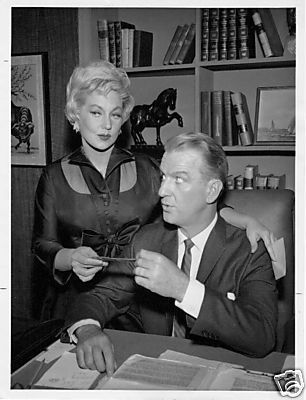
📷imdb.com

Good scripts were critical for both Rodney and Young. They wanted character motivation. Roswell Rogers and Paul West, the primary writers for the show, took a lot of their material from their own lives. The two writers had seven children between them and included moral lessons built in.

The two major directors were Peter Tewksbury and William D. Russell. As co-owner of the show, Rodney served as producer. He knew everything about the characters. Jane Wyatt related an incident when she asked Rodney what she could do to improve her characterization of Margaret. Rodney told her to love her children as much as her husband. Wyatt realized at that moment that she had been concentrating on the relationship between Jim and Margaret more than her motherly feelings.

📷pinterest.com

If you are a pop culture fan, you will recognize the house as the home of Mr. Wilson on Dennis the Menace and Major Nelson on I Dream of Jeannie. If you pay close attention, sometimes you can see the house in episodes of Bewitched, Hazel, The Monkees, and The Partridge Family. Gracie Allen would have approved of the show’s interior. She liked to do the activity that she was supposed to be doing on the show, and the Andersons had working appliances in their kitchen. While the bedrooms were interchangeable so they could film any of the characters’ rooms, the kitchen had red wallpaper, white cabinets, and blue countertops. Every morning, coffee and sweet rolls were served, and lunches were kept in the refrigerator.

The theme song was titled “Waiting.” It had lyrics but they were never used on the show. It was written by Don A. Ferris and Irving Friedman.

The show was nominated for an Emmy 20 times with 6 wins: Robert Young won for Best Actor in 1957 and 1958, Jane Wyatt won for Best Actress in 1958, 1959 and 1960, and the show received Best Direction for A Single Episode in 1959.

📷closerweekly.com

The Andersons had a special place in the heart of many kids growing up during the fifties and in 1977, two reunion movies were made: Father Knows Best Reunion in May and Father Knows Best: Home for Christmas in December. We learn that Betty is a widow with two daughters, Bud is married with one son, and Kathy is recently engaged to a doctor.

Despite the abrupt ending of the show, the cast kept in touch. Donahue said that she really loved Robert Young and considered him her father figure. She, Chapin, and Gray all were in families without a father, although Gray saw his occasionally, so Robert did become a father for them. She said he never had a cross word for any of them and if they were behaving unprofessionally or causing trouble, he would take off his glasses and look down and that was their cue to do better. Perhaps that is why the show rings true for so many people. On the set, their “father” truly did know best.

William Schallert, Man of Many Talents

As we finish up our “Men of August” series, I think I’ve saved the best for last. Today we look at the career of a man who had more than 400 acting credits during six decades: William Schallert.

Image result for image of william schallert
Photo: comforttvblogspot.com

Schallert was born in Los Angeles, California. His father, Edwin, was a drama critic for the Los Angeles Times and his mother, Elza, was a magazine writer and radio host. She interviewed some of the most famous people in the entertainment industry. Being in LA, he went to high school with Alan Hale Jr., Nanette Fabray, and Micky Rooney.

Schallert was also a composer, pianist, and singer. His first love had been music, and he studied composition with Arnold Schoenberg. Unfortunately, he realized that some of the other students were more adept at hearing the music in their heads than he could and that would inhibit his making a living from composing.

William decided to be an actor and registered at the University of Southern California. He left school temporarily to join the Army Air Corps as a fighter pilot during WWII. Following the war, he returned to school, graduating in 1946. That same year he was one of the cofounders of the Circle Theater. Sydney Chaplin was one of his friends at the theater, and in 1948, his brother Charlie directed Schallert in a production of W. Somerset’s Maugham’s “Rain.”

Image result for image of william schallert mighty joe young

From 1947-1951, William appeared in 14 big-screen films, including Mighty Joe Young in 1949. He would go on to accept roles in seventy more films during this career, but for this blog, I’m going to concentrate on his television career, or we could be writing and reading for days.

Schallert married Leah Waggner in 1949. They were together for their entire lives, dying a year apart from each other. Waggner was also an actress and appeared with him in several episodes including The Patty Duke Show and The Dick Van Dyke Show.

Image result for image of william schallert leah waggner
With wife Leah Waggner on The Dick Van Dyke Show–Photo: facebook.com

During his career, he appeared in a lot of crime shows and westerns, but he could also do comedy as seen by his appearances on Burns and Allen, Father Knows Best, The Jack Benny Show, The Andy Griffith Show, The Dick Van Dyke Show, Bewitched, That Girl, The Partridge Family, and Love American Style. Some of these were his favorite appearances.

Image result for image of william schallert the partridge family
Photo: pinterest.com

On the Partridge Family, he was able to use some of his music skills as Red Woodloe, a folk singer. The episode of The Dick Van Dyke Show, “A Word a Day,” got a huge laugh for Schallert. It was similar to the episode when Rob is convinced that he and Laura got the wrong baby and Ritchie belongs to another family who he invites over and opens the door only to find Greg Morris, an African American. In this one, Ritchie begins using profanity and they assume it’s one of his new friends and invite the parents over to see what type of uncouth people they are and Rob opens the door to find William Schallert, a reverend.

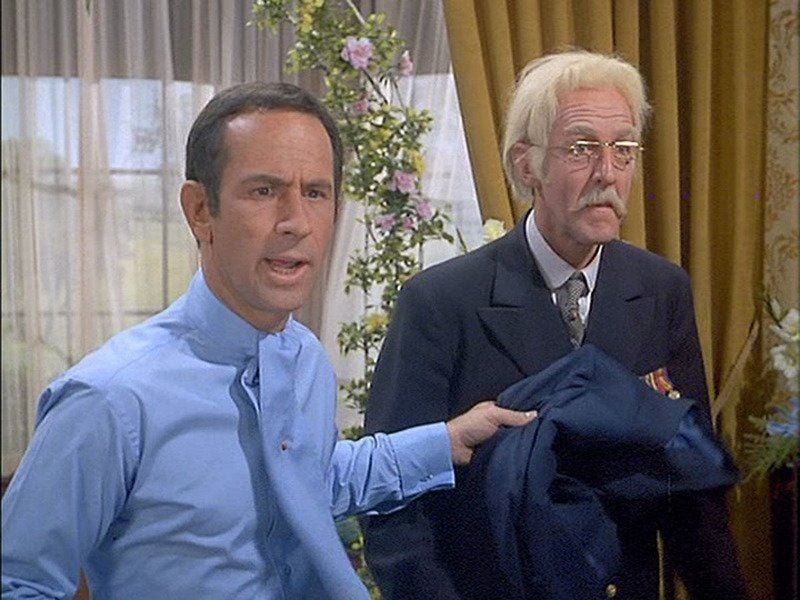
The admiral he played on Get Smart was one of his favorite all-time characters. William said, “The admiral was a charming character.”

Image result for image of william schallert get smart
Photo: greensburgdailynews.com

From 1979-1981, Schallert was the president of the Screen Actors Guild and was active in SAG issues and committees afterward.

During his six decades of acting, Schallert had recurring roles on eleven different series. The first was The Adventures of Jim Bowie in 1957. This show was set in the Louisiana Territory in 1830 and featured the people that Jim Bowie met there.

In 1958, William became part of the cast of Hey, Jeannie about Jeannie MacLennan, a Scottish woman, who has immigrated to New York and her adjustment to city life.

Image result for image of william schallert dobie gillis
Photo: ebay.com

1959 found him on Phillip Marlowe as Lt Manny Harris. The same year he also began portraying Leander Pomfrit, a teacher on The Many Lives of Dobie Gillis. That role lasted three years.

It was in 1963 that he received the role that made him a household name. As Martin Lane, Patty’s father and Kathy’s uncle, on The Patty Duke Show. The show was on the air for three seasons, producing 104 episodes. Martin was the patient, wise father who knew when to give advice and when to step back and watch a small failure for a learning experience.

Image result for image of william schallert patty duke show
Photo: washingtonpost.com

He and Patty became very close in real life. In an interview with the Closer Weekly, Schallert discussed their relationship. “When I think of her, she’s family as far as I’m concerned. We had a very close relationship. Whenever I saw her it was always like greeting one of my kids. She just had a wonderful quality and I got to know her over the years and she was admirable in a lot of ways. She really did her best to raise her own kids and she certainly had very little help in her own life to do that, but she was very mature and she did a lot of growing up very fast. People take that kind of thing for granted far too easily, and she doesn’t get the credit she deserves for that.”

When the Patty Duke Show ended, Schallert began doing voiceover work in commercials and with his warm and friendly manner, it was a lucrative career for him for two decades, including the voice of Milton the Toaster for Pop Tart commercials. He said it was wonderful, “All you had to do was go in there and do it, you didn’t’ have to put makeup on, you didn’t have to learn anything. I also had a knack for timing.”

Although he had a successful voiceover career, his acting career was far from over. He would show up as a regular cast member on five more series before his career ended: The Nancy Walker Show, The Hardy Boys/Nancy Drew Hour, The Waltons, The New Gidget Show, and The Torkelsons. I especially loved his casting in Nancy Drew.  When I read those books as a grade-school kid, he was exactly as I pictured Nancy’s dad Carson Drew in my mind.

Image result for image of william schallert nancy drew
Nancy Drew Hour–Photo: williamschallert.com

His last role was on Two Broke Girls in 2014. In that year, he announced he was suffering from peripheral neuropathy and had to wear leg braces some but also had to rely on a wheelchair most of the time. He passed away two years later from an undisclosed condition.

It sounds like Schallert had an amazing life.  Growing up in Los Angeles and learning from his parents about theater and radio must have been a lot of fun.  He said those connections led to a lot of opportunities like going to Shirley Temple’s birthday parties. Then he started a theater at a young age, worked in television from 1951-2014, appeared in more than eighty movies, had a successful voiceover career, raised four great kids and enjoyed a long-lasting marriage. What a legacy to leave behind.

Everyone Could Use A Private Secretary

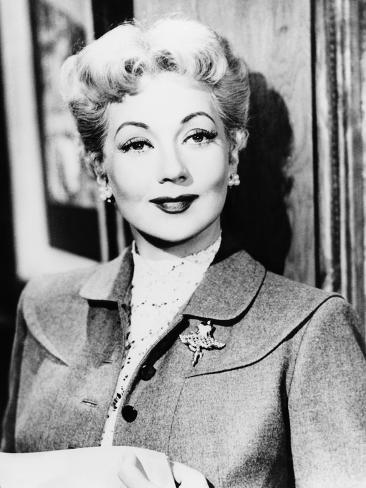
After learning a bit about the career of Ann Sothern last week, today we take a look at two of her shows: Private Secretary and The Ann Sothern Show. Although they were two different shows, the second almost seemed like a continuation of the first. To make things even more complicated, when the shows went into syndication, Private Secretary was renamed Susie and all the episodes of Susie would air, followed by The Ann Sothern Show and then back to Susie.

Photo: allposters.com

As we learned last week, Ann suffered from hepatitis for three years. With her medical bills mounting and less film work coming in, she needed to make a living, so she turned to television to revive her career.

After appearing in series of ten Maisie films earlier in her career, Ann had a solid fan base. Ann was a smart business woman and she had a 42% ownership in her new show, Private Secretary. The show debuted in 1953.

Sothern with Don Porter–Photo: pinterest.com

Ann portrays Susie MacNamara, a former actress and WAC WWII veteran; she is the secretary to Peter Sands (Don Porter), a talent agent. Susie often complicates life for her boss, although she means well.

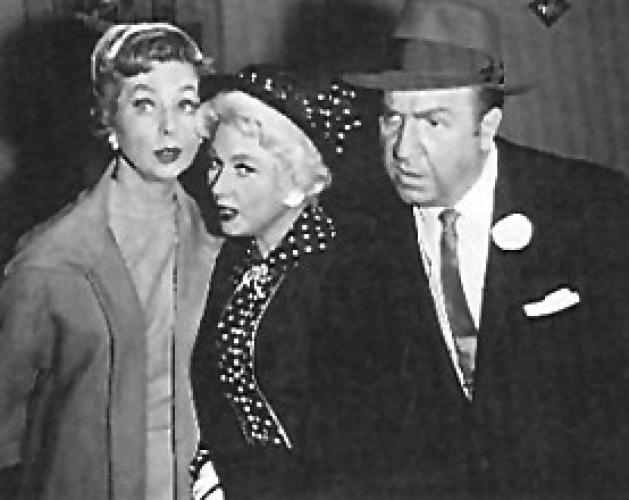
One of her best friends was Violet (Ann Tyrell), their receptionist. Cagey Calhoun (Jesse White) is always trying to cause trouble for Peter as a rival talent agent.

Sothern with Ann Tyrell and Jesse White–Photo: episodate.com

While the scripts weren’t ground-breaking, they were well written and witty. Some shows reference one of Mr. Sands’ clients, actress Harriet Lake, which was Ann’s real name.

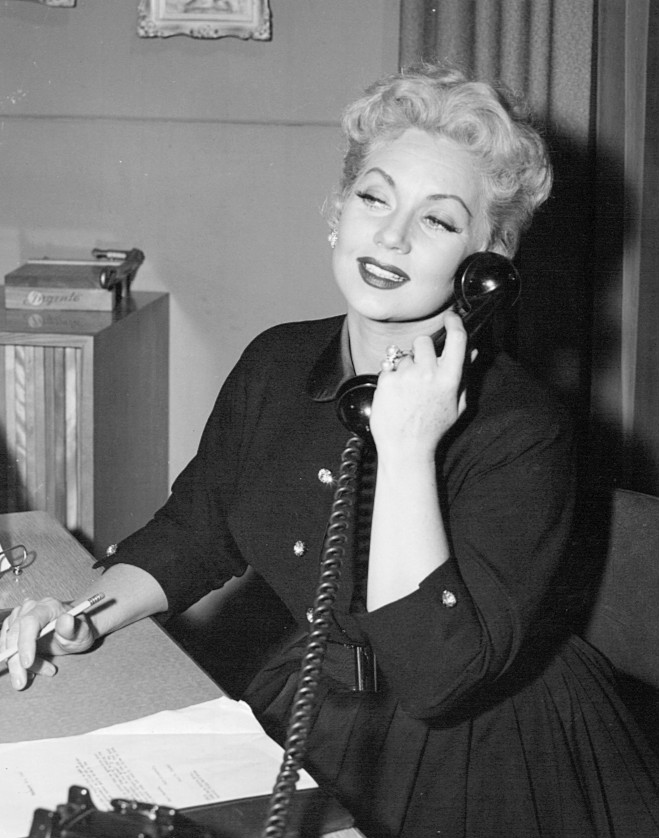
The show was noted for its state-of-the-art set decoration featuring IBM typewriters and Western Electric phone systems, as well as stylish furnishings.

Photo: wikimedia.com

The show was on Sunday nights on CBS and alternated weeks with highly rated Jack Benny Show.  I have never seen this with any other show but Lucky Strikes, the show’s sponsor also financed The Jack Benny Show on CBS and Your Hit Parade on NBC. So, when Your Hit Parade was on hiatus for summer, Private Secretary’s reruns were shown on that network and then new shows would begin in the fall back on CBS.

The show continued to have great ratings but in 1957, even though the show was renewed for the next year, Ann got into an argument with producer Jack Chertok and she left the series which ended. I could never find definitively why they argued, but it had to do with the show’s profits.  

Photo: wikipedia.com

Sothern was nominated for Best Actress Emmy for 1955, 1956 and 1957, losing to Loretta Young, Lucille Ball, and Nanette Fabray.

Instead of a sixth year of Private Secretary on CBS, The Ann Sothern Show debuted in 1958 as a weekly show. Chertok kept the rights to the title, hoping to get another actress to fill the MacNamara role. This show was created by Bob Schiller and Bob Weiskopf. Desi Arnaz would produce the show which worked out as Ann and Lucille Ball were very close friends. They appeared on each other’s shows.

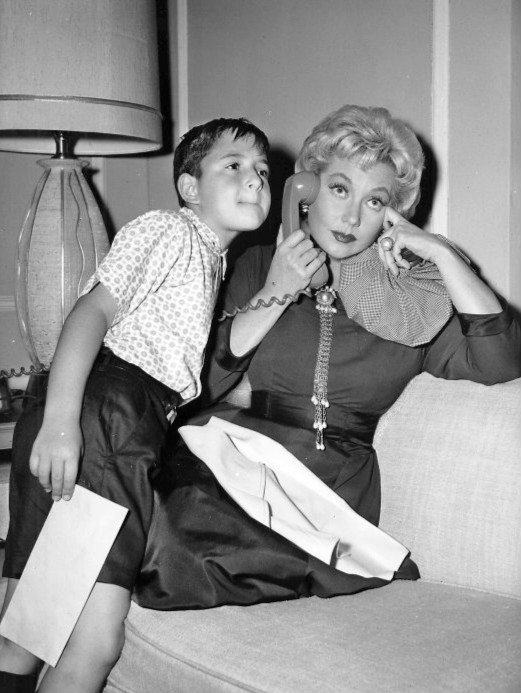
In The Ann Sothern Show, Ann now plays Katy O’Connor, the assistant manager of an upscale New York hotel, The Bartley House. Her secretary is Olive Smith (Ann Tyrrell), the front desk clerk is Paul Martine (Jacques Scott), and the bell boy is Johnny Wallace (Jack Mullaney). Later Ken Berry replaced Mullaney as Woody Hamilton.

Many of the cast members from the former show appear on the new series. Although Katy has a boss she answers to, she has a lot of authority running the hotel. Katy’s first boss is Jason Macauley (Ernest Truex), a man who is dominated by his nagging wife Florence (Reta Shaw). When ratings were not great, Truex was replaced by Don Porter as James Devery. As in Private Secretary, there are some romantic currents between Katy and James. Olive’s boyfriend, a dentist, Dr. Gray, is played by Louis Nye. In season two, Jesse White showed up as Oscar Pudney an unethical newsstand owner near the hotel.

Sothern with Jacques Scott–Photo: wikipedia.com

The storylines often revolved around the personal life of the staff and stories about guests staying at the hotel. The concept provided the opportunity to attract a variety of guest stars during its run. In addition to Lucille Ball, actors who appeared on the show included Jack Albertson, Frances Bavier, Constance Bennett, Eva Gabor, Joel Grey, Van Johnson, Jayne Meadows, Howard McNear, Janis Page, Cesar Romero, and Connie Stevens.

Once again Ann was nominated for an Emmy is 1959 but lost to Jane Wyatt for Father Knows Best.

Post Cereals and General Foods were sponsors for this show, and the cast would often appear in commercials at the end of the show. Ann would then sign off with “Well, goodnight everybody. Stay happy!”

Photo: pinterest.com

For the second year, the show’s ratings were decent but not great. The show was moved to Thursday nights up against The Untouchables, a top ten show. The ratings declined, so it was cancelled.

The final episode ended in a cliffhanger. Mr. Devery finally realizes that he is in love with Katy and proposes to her. They kiss but the show ends before Katy can answer yes or no.

I remember watching the shows in syndication and I thought they were good. Ann Sothern appeared to be a likable person and a hard-working actress. Both shows were often in the top 25% of the ratings. With all the reboots that have been done, I have never heard of either of these shows as possibilities and they seem to be good options for a contemporary show.

If you want to check out the shows, Private Secretary has several DVD options. The only place I could find The Ann Sothern Show was on etsy, and the site specifically mentions that it is “not a retail set nor is this a commercial studio release.” Maybe with all the classic television networks debuting, we will see Private Secretary back on the air again soon.

Celebrating Fifty Years of The Odd Couple

Photo: wondersinthedark.wordpress.com

The Odd Couple debuted in 1970. Today we are celebrating its fiftieth anniversary with fifty fun facts.

Fifty Fun Facts

  • 1. Although the show was based on The Odd Couple, a movie written by Neil Simon, Simon did not want his name associated with the television show. However, once he began watching it and realized the quality of the show, he changed his mind and made an appearance during the fifth season in “Two on the Aisle.”
  • 2. The Odd Couple was based on Simon’s brother and a friend of his who were living together and having some conflict. While watching their interactions, he decided it would be a great idea for a play.
  • 3. The Odd Couple had many lives: it began as a play, was made into a movie starring Walter Matthau and Jack Lemmon in 1968, a tv show in 1970, a revised play about women, another tv show starring Matthew Perry and Thomas Lennon in 2015 which was on the air three years.
  • 4. In 1982, an African American version of the show was created starring Ron Glass and Demond Wilson. Called The New Odd Couple, it wasn’t new because it used the original eight scripts from the Klugman-Randall series. It was canceled part way through the season.
  • 5. The show was developed by Garry Marshall and Jerry Belson.
  • 6. The Odd Couple first aired on Friday, the 13th (November 13, 1970).
  • 7. Garry Marshall appears in four different episodes: the one mentioned in fact #3 and as a drummer and as Man 1 and Man 2.
  • 8. Garry’s sister Penny Marshall played Oscar’s secretary Myrna Turner. On her last appearance, she marries a man named “Sheldn” (the “o” had been eliminated from his birth certificate. Sheldn was played by Rob Reiner, Penny’s husband at the time. Garry and his sister Ronnie played Myrna’s siblings Werner and Verna in the same episode.
  • 9. Oscar’s ex-wife Blanche was played by his real wife, Brett Somers. During the show Brett Somers and Jack Klugman got a divorce in real life.
  • 10. The Odd Couple ran on Broadway for 964 performances.
  • 11. In 1985, Simon rewrote the play with female leads, Olive and Florence. Rita Moreno and Sally Struthers were the leads.
  • 12. Originally Dean Martin and Art Carney were considered for the part of Felix.
  • 13. Both Mickey Rooney and Martin Balsam were considered for the role of Oscar.
  • 14. Actor Richard Stahl appears in nine different episodes as nine different characters.
  • 15. Jerry Paris, Jerry Helper from The Dick Van Dyke Show, directed 18 of The Odd Couple episodes.
Photo: pokerlistings.com
  • 16. Oscar plays poker regularly with a group of guys including Murray, Roy, Speed, and Vinnie. Sometimes Felix is allowed to play with them.
  • 17. Murray’s wife who is often talked about but seen in only one episode is Mimi.
  • 18. A cartoon was created for Saturday mornings called “The Oddball Couple.” Spiffy and Fleabag, a cat and dog, are based on Oscar and Felix.
  • 19. The first season was filmed in the same apartment as the 1968 move with one camera and a laugh track. Randall hated that set-up and the next year they began using three cameras and filmed in front of a live audience.
  • 20. Oscar and Felix were said to live at 1049 Park Avenue in New York which was a real address. The actual building was used during the opening credits and exterior shots. Usually a 1966 Ford four-door station wagon or a red VW Beatle are often seen outside the building. The actual tenants got mail for Oscar and Felix.
Photo: movieforum.com
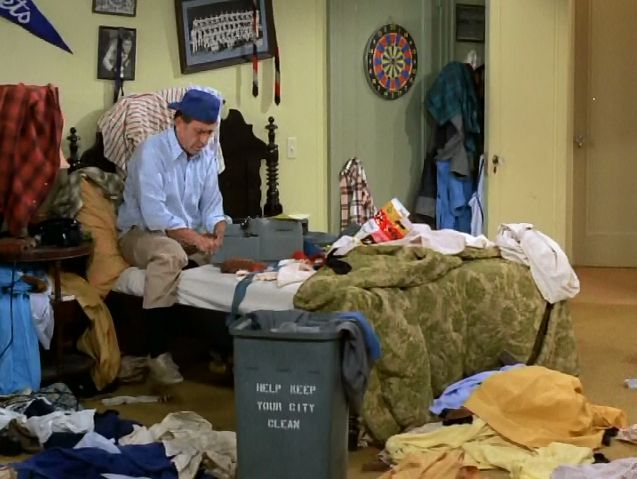
  • 21. One problem the producers had was how to show Oscar was a slob and Felix a neatnik. They couldn’t have the kitchen or living room messy because obviously Felix would keep it clean. Finally, they decided to create Oscar’s bedroom and it was always a mess.
  • 22. During the first season of the show, the guys date two English sisters, the Pigeon sisters, who live in the same apartment building.
  • 23. The Odd Couple was not a ratings success and every season, it was up for cancellation. The summer rerun ratings saved it each year.
  • 24. For some reason, there were inconsistent stories on the show about how Felix and Oscar met. One episode said they were childhood friends. Several references talk about how they met in the army. One episode told the story of how they met while serving on jury duty together.
Photo: youtube.com
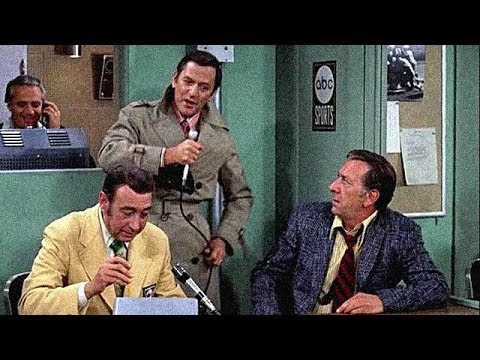
  • 25. Howard Cosell was brought onto the show to help boost ratings. That was a bit of a gamble since Cosell was voted most loved and most hated sportscaster.
  • 26. Tony’s middle name is Leonard and his sister’s name is Edna. Those were the names given to Felix’s two children on the show.
  • 27. Monty Hall showed up twice on the show. He and Oscar had been college roommates.
  • 28. Oscar’s favorite meal is lasagna with French fries and Boston cream pie is his favorite dessert.
  • 29. Don’t let Oscar order pizza. When he orders one with the works, it includes a fried egg on top.
  • 30. Felix and Murray played in a band that featured 1930s music called The Sophisticatos. In one episode they had to play country music and changed their name to Red River Unger and his Saddle Sores.
  • 31. Oscar’s middle name is Trevor.
  • 32. When Elinor Donahue was hired to play Miriam, Felix’s girlfriend, her last name was Welby. Donahue worked on Father Knows Best with Robert Young who later went on to star in Marcus Welby MD.
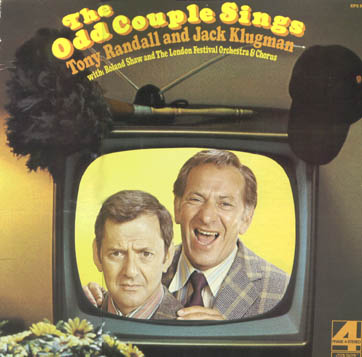
  • 33. Klugman and Randall recorded an album “The Odd Couple Sings” for London Records.
  • 34. ABC always wanted guest stars on the show to boost the ratings, so the writers started including guest stars that would not boost the ratings, opera singers and ballet dancers for instance, which drove the network crazy.
  • 35. In one episode, singer Richard Fredericks is injured playing in one of Oscar’s soft ball games so Oscar has to stand in for Fredericks in Rigoletto, an opera that Felix was producing.
  • 36. Like Harvey Korman and Tim Conway, Jack and Tony used to crack each other up. On one episode they dress as a horse to appear on Let’s Make a Deal. Klugman had to hide himself because he was laughing so hard.
Photo: pinterest.com
  • 37. Klugman’s favorite episode was when the two friends made an appearance on Password with Allen Ludden and Betty White. Felix, who had always wanted to be on the game show, caused a lot of problems on the show and eventually they threw him off the show. His adlib when that happened was “Oh, boy, what a gyp.” Klugman said that was how he felt when Tony died.
  • 38. You can always tell when Felix is really upset because he begins honking.
  • 39. In one episode, Dick Clark plays himself as a radio DJ. He calls Oscar to let him know he has won a new car.
  • 40. Both Willie Aames and Leif Garrett play Leonard, Felix’s son. They would both go on to successful careers and they would both act in the same show again when they appeared on Family.
  • 41. When Oscar tries a dating service, he uses the fake name of Andre La Plume and ends up on a date with Felix’s ex-wife.
  • 42. When Oscar saves Felix’s life, Felix attempts to play “Home on the Range” on his saxophone to thank him.
  • 43. On one episode, the train breaks down in a tunnel. Felix decides to entertain the passengers with an improvised hand puppet he calls Harvey Hankie.
  • 44. Jack Klugman and Tony Randall promoted several products together. They did commercials for the game Yahtzee and their photo was on the box for years. They also did a promotion for Eagle Snacks and Yoplait yogurt.
  • 45. Klugman believed in syndication of the show. He convinced Randall to give up part of his salary for the syndication rights. It was the right move, and they made a lot of money after the show was cancelled.
  • 46. Both Klugman and Randall were up for Emmys every year the show was on. Jack won in 1971 and 1973. When Randall won in 1975, the show had been cancelled and he mentioned during his acceptance speech that he wished he had a job.
  • 47. The final episode had two planned endings. Felix and his ex-wife are getting remarried and Oscar is getting his home back. If the series didn’t get picked up, the marriage took place. If the series did get picked up, the wedding was cancelled by Gloria because Felix was so picky about the wedding details.
  • 48. In 1993, Randall and Klugman worked together filming a television movie called The Odd Couple: Together Again. Klugman had gone through throat cancer treatments and this was written into the movie script. The plot of the movie is Felix helping Oscar recover and becoming overly involved in his daughter’s wedding.
  • 49. Although Klugman didn’t appreciate what the show meant to people when it first began, later in life, he said “he would have people come up and tell him, ‘I grew up with you. I sat on the couch with my mother or my father, and we laughed with you.’ And suddenly the people have faces, and names, and feelings. It’s been invigorating! You know, you don’t count on that; you don’t know that you’re really entertaining people or having an effect on people’s lives. I had a guy from Sports Illustrated who did an interview with me say he became a sportswriter because I was a sportswriter on The Odd Couple. Yeah, it’s like wow, you’re kidding. Now I’m getting this in person, and I really love it.”
  • 50. Randall and Klugman became life-long friends while working on the series. They developed a close bond. Because they both had a lot of character, they became close and helped take care of each other in old age.

Did You Know Shirley Partridge, Samantha Stephens, Jeannie, Donna Reed, and Hazel Lived in the Same Neighborhood?

As we proceed with our Behind the Scenes series this month, today we are thinking about set designers. Before the interior designs are done, the production team needs to find the perfect home for our television friends.

Did you ever daydream about places you might want to live in, even if you never would actually consider leaving your home?  Perhaps it’s a small rose-covered cottage in the English countryside, maybe a ski chalet in the Swiss alps, or a house on the Maine coast with green shutters and a widow’s walk. I’ve thought about all of these places, but now I have another one to consider. It’s an historic neighborhood where some of my favorite television friends lived. Today we learn a bit about the Columbia Ranch.

Photo: columbiaranch.net

Now called Warner Brothers Ranch, the former Columbia Ranch was in Burbank, CA. In addition to dozens of television shows, it was the setting for many movies as well such as Mr. Deeds Goes to Town, High Noon, and Lost Horizon. The neighborhood interiors were typically shot at other studio locations.

In 1934, Harry Cohn, head of Columbia Pictures, purchased 40 acres in Burbank. In 1948, Columbia got into the television business under Screen Gems.

Photo: pinterest.com

During the 1950s, Captain Midnight, Father Knows Best, The Donna Reed Show, and Dennis the Menace were filmed here. By the 1960s, the ranch was used continuously for television and movies. The set was about six blocks but looked much larger on camera shots. Shows during the 1960s included My Sister Eileen, Hazel, Our Man Higgins, The Farmer’s Daughter, Bewitched, Gidget, I Dream of Jeannie, The Monkees, and The Flying Nun.

In 1970, a fire destroyed a quarter of the neighborhood, including many buildings on Blondie Street. After rebuilding, taping continued on the set. During the next three decades, shows included The Partridge Family, Bridget Loves Bernie, Apples Way, The Scarecrow and Mrs. King, and Life Goes On.

In 1971, Columbia and Warner Brothers combined their companies and merged into The Burbank Studios. The Ranch then was relegated to a back backlot.

Photo: columbiaranch.net

When Columbia Pictures moved its production facilities to Culver City in 1990, Warner Brothers gained ownership of the Ranch.

Photo: pinterest

Photo: pinterest

It’s continued to be a busy spot for filming. The fountain in the park was the one shown in the opening credits in Friends.

Nearby is also a swimming pool used on a variety of shows, including The Partridge Family.

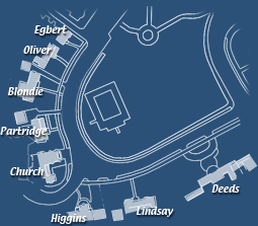
The most famous street in the Ranch was Blondie Street. Blondie Street was named for Blondie Bumstead because the Blondie movies of the 1940s were filmed here. Walking down Blondie Street reveals homes that we were all familiar with growing up in the sixties and seventies.

Photo: columbiaranch.net

It’s a curved residential street with twelve different houses, surrounding a large, central park. There is also a brick church and paved sidewalks. Three of the buildings—the Lindsay House, the Little Egbert House, and the Oliver House—were original to the 1935 set production.

The Blondie House

Photo: columbiaranch.net

This set, constructed in 1941, was the home for Major Nelson on I Dream of Jeannie, Mr. Wilson on Dennis the Menace, and the Andersons on Father Knows Best, in addition to the Blondie movies. Later it housed the operations office for the Warner Ranch. Of course, Jeannie’s house was not here, it was a Jim Beam decanter that was sold during Christmas of 1964.

The Corner Church

Photo: columbiaranch.net

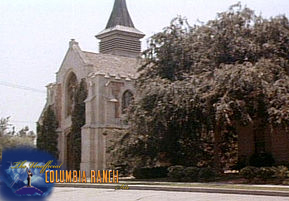
When thePartridge Family drives off for a show in their bus, you can often spot the church which is just down the road from their home, across from The Stephens’ home on Bewitched. It was moved here in 1953. When any of the series needed a church, this was the one. It can be seen on an episode of Hazel when the family attends church.

The Deeds Home

Photo: columbiaranch.net

Originally built for Frank Capra’s movie, Mr. Deeds Goes to Town in 1936, the house is only seen briefly in the movie. The Three Stooges filmed there in the thirties and forties. In the sixties it was seen in Batman. Both Gidget and The Partridge Family used the house as the high school and Bewitched used it as a civic building. In 1989, the original house was demolished. In its place, The Chester House and the Griswold House were built. The Griswold House was built for National Lampoon’s Christmas Vacation.

The Lindsay House

Photo: columbiaranch.net

Constructed in 1936, this house was best known as the Baxter home on Hazel. It also served as the Lawrence home on Gidget.

The Higgins House

Photo: columbiaranch.net

This structure was constructed for the show Our Man Higgins in 1962. It was later the home of Darrin and Samantha Stephens on Bewitched from 1964-1972. On I Dream of Jeannie, it was the home of Alfred and Amanda Bellows.

Photo: pinterest.com

For Bewitched, the interior and backyard scenes were filmed on a sound stage. The stairs ended in a hallway, but the doors only led to small closets, not the master bedroom.  A modular first floor served as a setting for all the rooms. The den doubled as the nursery. A fake wall was put up to hide the view to the kitchen. When the den was needed, brown paneling was put over the nursery walls and the window was covered with a wall near the fireplace.

Photo: darkershadows.com

If you look closely, you’ll notice the avocado and gold flowered sofa in the Stephens’ living room was the same one used by Alfred and Amanda Bellows in their living room. But the shows shared well.  On one episode of Bewitched, Louise and Larry Tate are seen at their kitchen table, but the kitchen looks identical to Major Nelsons’s. Roger Healey’s bedroom eerily resembled Darrin and Samantha’s.

Photo: youtube.com
Photo: pinterest.com

I guess I was too busy crying to notice that this house was also Brian Piccolo’s home in Brian’s Song.

The Partridge Family House

Photo: pinterest.com

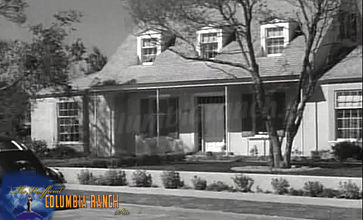
The house across the street from the Stephens’ house was home to Abner and Gladys Kravitz. During the filming of Dennis the Menace, it was Mrs. Elkins’ house. It was also the home of The Partridge Family. In 1989 it became the Thatcher home on Life Goes On.

The home was built in 1953, modeled after a Sears, Roebuck & Co. plan. The modest two-story home was a perfect fit for the Partridges with its white, picket fence. The interiors were filmed at the Ranch as well. Located next door to the Blondie House, there were shrubs between the homes that were featured several times on the Partridge Family. In an episode where Keith shoots a movie, Shirley is clipping the hedges and begins dancing for the film, not realizing her neighbor is watching her. We see the hedges again when Keith moves into the room above the garage next door and gets free rent in return for yard work.

Photo: flickr.com
Photo: flickr.com

Because they were filming the show when the infamous fire broke out, some of the structure had to be rebuilt for the remainder of the series. From season 1 to 2, Danny and Keith’s bedrooms switch back and forth a couple times, and I wonder if this is the reason.

The Oliver House

Photo: columbiaranch.net

Constructed in 1935 for a movie, the Oliver house was moved to Blondie Street for the home of the Stone family in The Donna Reed Show. It was also the Mitchell home where Dennis resided with his parents.

The Little Egbert House

Photo: columbiaranch.net

Technically, Little Egbert is not on Blondie Street but on its own, Little Egbert Street, basically an alley. Fortunately, the 1970 fire did not damage any of the original structure. The house was also used in Minding the Mint and as The Shaggy Dog, the hangout for Gidget and her friends.

Photo: retrospace.org

For sentimental reasons, I would choose the Partridge Family home to live in. However, I would have to remodel the kitchen. I could live with the red breakfast table set. The avocado and gold flowered wall paper may have been very chic in its day, but even I am not that sentimental!

Just a Couple of Characters, Part 4: Mary Wickes and Susan Oliver

We wrap up our series Just a Couple of Characters this week with Mary Wickes and Susan Oliver. Mary and Susan are very different character actors, but you will immediately recognize them. Let’s learn a bit more.

Mary Wickes

Photo: imdb.com

It’s not surprising that Mary shortened her last name to “Wickes” after being born Mary Wickenhauser in 1910 in St. Louis. Her father was a banker, and the family had plenty of money. After high school, Mary attended Washington University in St. Louis, majoring in political science, planning a career in law. One of her professors suggested she try theater, and she dipped her toe into it doing summer theater in Stockbridge, Massachusetts.

Photo: flickr.com

After deciding a career in acting was for her, she moved to New York. She quickly found a role in “The Farmer Takes a Wife” on Broadway in 1934. In this show, which starred Henry Fonda, Mary was Margaret Hamilton’s understudy. Mary had a chance to perform during the run and received excellent reviews.

Photo: tcm.com
The Man Who Came to Dinner

Mary understood that comedy was the field she needed to pursue. She was lucky enough to continue getting roles on Broadway, appearing in several shows throughout the 1930s, including “Stage Door” in 1936 and “Hitch Your Wagon” in 1937. She also was cast in “The Man Who Came to Dinner” as Nurse Preen with Monty Woolley. She continued to receive encouraging reviews. When Warner Brothers decide to turn the play into a movie, both Mary and Woolley were part of the cast. Mary became known for being a bit sarcastic and witty. She was given roles in the film, Now Voyager with Bette Davis, again playing a nurse.

Photo: viennasclassichollywood.com
By the Light of the Silvery Moon

Mary flip flopped from Broadway to Hollywood, taking roles that interested her. She would appear in both Moonlight Bay (1951) and By the Light of the Silvery Moon (1953) with Doris Day; White Christmas (1954), and The Music Man (1962).

Mary had cornered the market in roles of smart-alecky teachers, nurses, and housekeepers in film. When she transitioned to television, she often continued in these roles. Her first two recurring roles were housekeepers named Alice on Halls of Ivy from 1954-55 and Katie on Annette in 1958. From 1956-1958, she played Liz O’Neill, Danny Thomas’s press agent on Make Room for Daddy. Throughout the 1950s she also appeared on numerous shows including Zorro.

Photo: pinterest.com

One of my favorite episodes with Mary was the 1952 episode “The Ballet” on I Love Lucy where Wickes played Madame Lamond, a formidable ballet teacher who taught Lucy. Wickes and Lucy would remain life-long friends. After Mary’s death, Lucie Arnez talked about her relationship with their family: “For my brother and me, Mary was just like one of the family. If any of us were sick or even in bed with a cold, Mary would show up at the backdoor with a kettle of chicken soup. She could be loud and boisterous and as demanding as any of the characters she played, but she was also very loving and giving. What a lady.” Mary would appear on numerous episodes of Lucille Ball’s other shows in the 1960s and 1970s.

Photo: aurorasginjoint.com

In the 1960s, Mary continued to show up on a variety of shows. We see her on My Three Sons, Bonanza, F-Troop, The Doris Day Show, The Donna Reed Show, and I Spy. She also had recurring roles on three shows during the decade: The Gertrude Berg Show, Dennis the Menace, and Temple Houston. In the Gertrude Berg Show, Mary was landlady, Winona Maxfield. She was hilarious on Dennis the Menace, playing Miss Cathcart, an older neighbor looking for a man. On Temple Houston, she played Ida Goff. Temple was Sam Houston’s real son who was a circuit-riding lawyer.  

Photo: en.wikipedia.org
The cast of Doc

As Mary aged, she progressed to the cranky relative or nosy neighbor type of character. In the 1970s she was a regular on Julia, Doc, and The Jimmy Stewart Show. On Julia, she was Dr. Chegley’s wife, Melba. She went back to her role as a nurse on Doc. On the Jimmy Stewart Show, she is Mrs. Bullard. Two of my favorite episodes of her from the 1970s were her roles on Columbo and M*A*S*H. On Columbo, Mary plays a landlady of a victim who’s been murdered. She and Columbo have a priceless conversation during the show, “Suitable for Framing” in 1971. On M*A*S*H, Mary played Colonel Reese who is observing Margaret and the nurses.

Photo: aurorasginjoint.com

In the 1980s, Mary’s schedule slowed down a bit. She did revive her role as a maid on The Love Boat in 1981. From 1989-1991, she took another regular role as housekeeper Marie Murkin on Father Dowling Mysteries.

Photo: hometheaterforum.com

In the 1990s, Mary was doing more voice overs. She taped five episodes of Life with Louie which aired from 1995-1997 and was Laverne in The Hunchback of Notre Dame in 1996. Unfortunately, she would not live to see them on the big screen. In 1995, she passed away after having respiratory problems. While a patient in the hospital, she fell and broke her hip. She died of complications caused by the surgery.

Mary never married or had children and as part of her legacy, she left a $2 million donation in memory of her parents to the Television, Film and Theater Arts at Washington University.

Susan Oliver

Photo: amazon.com

More than twenty years younger than Wickes, Susan Oliver was born in 1932 in New York City. Her real name as Charlotte Gercke. Her father was a political reporter for the New York World. Her parents divorced when she was quite young, and she grew up in boarding schools. She traveled with her father to Japan when he took a post there. She studied at the Tokyo International College, studying American pop culture. While Wickes was the wise-cracking comedic foil, Oliver was often the leading lady character with blue eyes, blonde hair and heart-shaped face.

Photo: trekdivos79.blogspot.com
on The Wild Wild West

In 1949, she traveled to LA to see her mother who had found her niche as “astrologer to the stars.” Susan then enrolled at Swarthmore College. After graduation, she continued acting courses at New York City’s Neighborhood Playhouse.

Her first Broadway part came in 1957 as the daughter or a Revolutionary veteran, “Small War on Murray Hill.”

Photo: manfuncle2014.blogspot.com
The Man from U.N.C.L.E.

Returning to LA, she started a film career. Though she would appear in 15 big-screen movies, television is where she spent most of her time. She put in her due diligence in the 1950s and 1960s. Her first job was on The Goodyear Playhouse in 1955. She continued with a lot of drama and theater for the first few years of her career. She took roles in a variety of shows including: Father Knows Best, Suspicion, The David Niven Show, Bonanza, The Twilight Zone, The Adventures of Ozzie and Harriet, The Alfred Hitchcock Hour, Wagon Train, Route 66, The Fugitive, The Andy Griffith Show, Ben Casey, Mannix, Dr. Kildare, The Man from UNCLE, I Spy, Gomer Pyle, My Three Sons, and the Wild, Wild West.

Photo: imdb.com

I read several times that she turned down lead roles in series to retain her independence, but I never read any specific roles she turned down. In 1966 she accepted a recurring role of Ann Howard in Peyton Place. She had signed a contract for a year, but after five months, her character was killed on the show. She made a pilot for a show titled, “Apartment in Rome” that did not sell.

Photo: en.wikipedia.com
on Peyton Place

Oliver never did get another show of her own, but she continued to guest on shows throughout the 1970s and 1980s, including Love American Style, Gunsmoke, The FBI, Streets of San Francisco, The Love Boat, Magnum PI, Murder She Wrote, and Simon and Simon.

Photo: flickr.com
on Murder She Wrote

One of the reasons, she didn’t want to be tied down was her interest in flying. In 1959, a Boeing 707 she was a passenger on plummeted 30,000 feet for the Atlantic Ocean before leveling out. After that scare, she decided to learn to become a pilot. In 1964, she started flying single-engine planes. Bill Lear brought her on board to become the first woman to train on his new Lear Jet. She would star in a movie about Amelia Earhart. She also later wrote about her flying experiences in an autobiography, Odyssey: A Daring Transatlantic Journey in 1983.

Photo: imdb.com

In the mid-1970s, she stopped accepting most acting roles and quit flying. She enrolled at the 1974 AFI Directing Workshop for Women with peers Lily Tomlin, Margot Kidder, Kathleen Nolan, and Maya Angelou. During the final season of M*A*S*H she directed an episode of the show. She would later direct an episode of Trapper John, MD.

At age 58, Oliver was diagnosed with colorectal, and eventually lung, cancer. She died in 1990.
Oliver was an interesting actress. Apparently, she loved acting, but never wanted to be tied down. She not only was a aviator and director but a writer. She was a practicing Buddhist and a baseball expert as well.
Wickes and Oliver were very different women with very different interests and acting roles. They both remained single and devoted themselves to their careers. But they were both women who were always in demand for their acting ability.