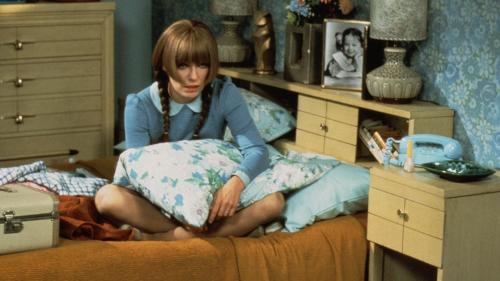
St. Elsewhere: Medicine Doesn’t Always Give Us The Ending We Wanted

Today we are winding up our blog series, “Examining Some of Our Favorite Medical Shows.” Six years seems to be the magic number of seasons for many medical shows and it was no different for our series today: St. Elsewhere.

Photo: starstills.com

St. Elsewhere was created by Joshua Rand and John Falsey. It aired on NBC from 1982-88. It was produced by MTM Enterprises, Mary Tyler Moore’s company that also produced Hill Street Blues; both shows had large casts, realistic plots, and continuing storylines.

The show was talked about a lot, but I was surprised to learn that it never ranked higher than 47th in the Nielsen ratings, and that was in the final season. The reason it stayed on the air so long despite lower ratings was that it did very well with the 18-49 year age group with the networks were trying to appeal to. It did win 13 Emmys for writing, acting, and directing. (Overall the show won 13 Emmys out of 62 nominations.)

St. Elsewhere was set in St. Eligius Hospital, a rundown Boston teaching hospital. Its elevators don’t work and they still use an ancient tube system to send messages from one floor to another. Apparently “St. Elsewhere” was a slang term that referred to not well-equipped hospitals that served patients who were turned away from more well-respected institutions. The building that served as the hospital façade was the Franklin House on East Newton Street in Boston, which was originally a hotel for women. Young working women lived there including Faye Dunaway after she graduated from Boston University.

The show intertwined the professional and private lives of the medical staff and patients. It dealt with many cutting-edge social issues including heart transplants, artificial hearts, AIDS, religious conflicts, suicide, and gender identities.
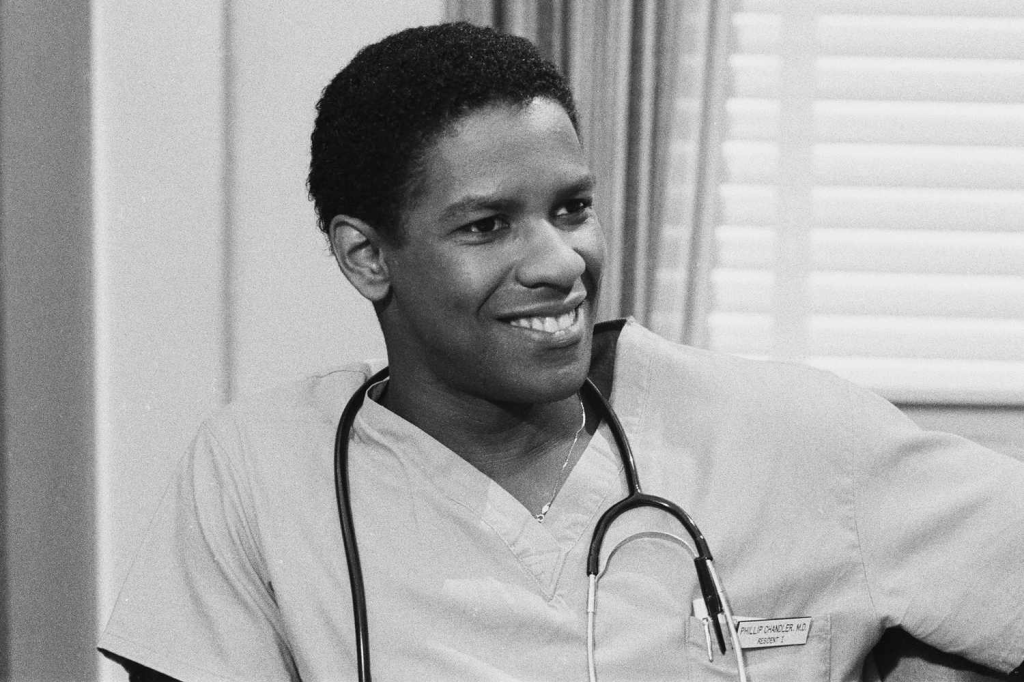
Photo: people.com

Surgeon Dr. Mark Craig (William Daniels) informs the staff that their hospital was considered a “dumping ground.” Craig helped train the interns along with Dr. Donald Westphall (Ed Flanders) and Dr. Auschlander (Norman Lloyd). Flanders was a popular character and the role was originally offered to Hal Linden who turned it down. Other members of the stellar cast included Ed Begley Jr. (playing Dr. Ehrlich), David Birney (playing Dr. Samuels), Mark Harmon (playing Dr. Caldwell), Ronnie Cox (playing Gideon), Helen Hunt (playing Clancy Williams), Howie Mandel (playing Dr. Fiscus), Christina Pickles (playing Nurse Rosenthal), and Denzel Washington (playing Dr. Chandler). This was a fitting role for Denzel who was a pre-med student in college.

Daniels was sent five scripts. He thought the writing was wonderful and having so many scripts displayed how the ensemble cast would be used. He might have a large part one week and then three weeks with small parts. He said Dr. Craig was like him in many ways. He ran the gamut from angry to nice in minutes. It fit his temperament and was wonderful to play him.

Daniels met a surgeon and followed him around the hospital, including in the operating room for an open-heart surgery procedure. He said he used some of the medical information, but he did not like the surgeon as a person and did not model Dr. Craig on him. He said using so much medical jargon was difficult and he had to learn about it before he went in to rehearse. He said that Dr. Craig had some funny lines in the show. He said he did not have any input with the writers on his character; in fact, they never really saw the writers.

Photo: ebay.com

Among the many guest stars were James Coco and Doris Roberts who both picked up Emmys as a mentally challenged boyfriend and a bag lady. It was an interesting storyline where two couples are followed through their medical care. One couple is upper middle class and the other has no money. Nothing is said; there are only observations of the action. The wealthier woman leaves the hospital with no cure but a high hospital bill for many tests. The bag lady, Cora, learns she needs to have both feet amputated because of gangrene, but she needs to take care of Arnie, her mentally challenged boyfriend, so she refused the surgery.

Roberts was asked about her role on the show in a Television Academy interview. She said Coco had received the script and called her to say she needed to audition for the role of his girlfriend. When Doris reached out, they declined, so she reached out to Bruce Paltrow, who was a producer and writer for the show, and she was hired. She did a lot of research watching homeless people. She realized that most people squatted because they did not want to lie down because they were worried about having things stolen. This is how her character got gangrene. When asked about what she thought happened to the character she said she thinks she died shortly after. Roberts got emotional discussing the role and said it still makes her cry. She said it was the best dramatic role she ever played.

Doris said one funny moment came at the Emmy Awards. When they called her name, she did not know what to do with her purse, so she handed it to Jimmy Coco. The next name called was his so he came on stage with the purse and mentioned he didn’t use one often but it came from Doris. Then a few nights later he was on the Tonight Show, and when he came on stage he had her purse and in it was a cigar, a half-eaten sandwich, and a few other items.

Photo: ebay.com

The show was classified as a drama, but it included comedy, as well as inspiring moments of interaction and care. One of these scenes is when Jack, a resident, has to deal with his wife’s death. She is an organ donor, and her heart is given to a female patient. Jack sneaks into the patient’s room when she is sleeping so he can listen to his wife’s heart.

Jazz musician Dave Grusin composed the theme. Grusin won twelve Grammys. He won an Academy Award for his score of The Milagro Beanfield War in 1988. He also scored some popular films including The Graduate, On Golden Pond, The Fabulous Baker Boys, and Tootsie. Before writing the theme for St. Elsewhere, he cowrote the themes for Good Times and Baretta.

One of the most interesting things about the writing on St. Elsewhere was the number of allusions to other television shows and movies and several cross-overs. There are many of these but some of the most fun ones for me included (1) the public loudspeakers often page characters from other television shows, (2) one of the characters on The White Shadow, Warren Coolidge, becomes an orderly and sometimes wears Carver high school shirts, (3) a psychiatric patient who watches The Mary Tyler Moore Show believes that he is Mary Richards and has an encounter with Betty White, and she says she is not Sue Anne Nivens, (4) Dr. Craig once mentions serving in Korea with B.J. Hunnicutt, and (5) the teaching doctors are seen at the bar at Cheers in one episode.

Photo: imdb.com

The hour-long show started on Tuesday nights. The show was canceled after the first year. Then Grant Tinker changed his mind and they were back on the air. For the second season, it was moved to Wednesdays where it remained until it was canceled.

The finale of this show gets talked about almost as much as Newhart. However, while fans loved the Newhart ending, there was a lot of controversy over the ending of St. Elsewhere.

Warning: This is a spoiler alert if you haven’t seen the show and want to watch it. After wrapping up several storylines, the final scene is a much younger Dr. Westphal and his son Tommy (Chad Allen) who has autism. Westphal is obviously a construction worker. Dr. Auschlander appears to be Westphal’s father. Tommy is playing with a snow globe and the two “doctors” discuss the fact that Tommy spends much of his day staring at the snow globe. They set the globe down and when the camera goes in close, we see St. Eligius inside.

We are left to assume that the entire series had been Tommy’s imagination. In other words, the show was fiction but the fiction was also fiction inside someone’s mind. Viewers understandably were confused and upset.

Photo: paleymatters.com

Later the cast did a special on Entertainment Weekly and was asked to share their thoughts about the finale. Here are a few of the comments. Chad Allen said, “From the mind of a young person whose fantasies were coming to life before him, it was neat.” William Daniels said he was “shocked, actually. I had no idea of their plans to do that. . . it was a provocative ending. A surprise to everybody.” Ed Begley Jr. felt that “it was quite fitting for what they had done the previous six years. They always tried to be out there, beyond the limits of what was being done before. They tried to think outside the box. . . . It was bold and shocking and upset some people.  . . . It was highly unpredictable, just like every episode.” Howie Mandel knew it would offend half the viewers and appeal to the other half, but he described it as “ahead of its time, pretty ingenious, and creative and not like anything else.” Mark Harmon had been killed off earlier in the series, but said, “It made me smile when I heard about what they did because it was so them. They made a choice. and the choice is interesting.” Noman Lloyd said he “never bought it. I said at the time we were shooting, ‘This is a cheat.’ For me, it was a cheat.”

I will admit this was not a show I regularly watched. I find the entire philosophy of the ending fascinating. Many felt they had been cheated by getting pulled into the lives of characters for six years that never existed. However, if they are on a television series, did they ever exist? It shows how real characters become to us when we invest in a show and invite these people into our homes every week.

If you didn’t watch the show in the eighties, you can find it on Hulu and make your own decision about the finale. I do admit that I never look at snow globes the same way anymore.

The Magic School Bus: Encouraging Us To “Take Chances, Make Mistakes, Get Messy”

Knowing the theme for this blog series is Valerie, if I asked you to think of “Valeries” from television history, it might take you a while to come up with our subject for today. We are learning about Valerie Frizzle, an eccentric teacher who takes her class on educational field trips on her magical school bus on The Magic School Bus.

Based on the books that are written by Joanna Cole and illustrated by Bruce Degen, the original television show ran from 1994-1997, producing 52 episodes. It was created by Joanna Cole, Bruce Degen, and Laskas Martin. (A reboot The Magic School Bus Rides Again began recently.)

Photo: io9.com

The premise of the show is that a class taught by Valerie Frizzle at Walkerville Elementary take field trips to learn about science. Mr. Ruhle is the principal, and he is not aware that the bus is anything other than a simple school bus. However, the “Friz’s” bus can change shape and form to explore anything: far into outer space, deep in the ocean, back to the days of dinosaurs, and even into the human body. The bus can transform itself into a plane, a jeep, or other form of transport. It can become a frog or another type of animal to get into a specific ecosystem.

The Friz has a pet lizard named Liz who accompanies the class on its trips. Liz eats insects, but when the bus shrinks, she is very frightened by bugs.

Photo: abcnews.com

Apparently Walkerville is in a small community, because there are only eight children in her third-grade class: Arnold, Carlos, Dorothy Ann, Keesha, Phoebe, Ralphie, Tim, and Wanda.

Photo: wikifandom.clom

The Bus

The bus itself is a 1970s Ward International R-183 manufactured by Ward International Trucks, Inc. The bus is painted the typical school bus yellow. The magic part comes in with the devices that are installed in the bus. There is the shrinker scope that can shrink and re-size the bus when Ms. Frizzle asks it to. There is also a portashrinker that doesn’t work if the bus is wet and if someone tries to use it then, the Dew Dinger alerts them. There is also a mesmerglober which can change the shape of the bus. A magic battery runs on solar power.

Photo: myabandonware.com

The bus seems pretty indestructible. In one episode it floated around in lava. The bus has eyes and a mouth and often shows emotions like fear, anger, and sadness.

Photo: buzzfeed.com

The Friz

Valerie Felicity Frizzle is a quite a character. She has fiery red hair that is usually seen in a bun. Static electricity makes her hair frizzy. So, what do we know about Ms. Frizzle? She was a Shakespearian actress at one point in her life. She also had a band called The Frizzlettes and toured with rock star Molly Cule. She then went back to school for education. She learned about “busanautics” from a mechanic she knows, R.U. Humerus.

Voiced by the funny Lily Tomlin, the Friz is always optimistic. She cares about her students and is passionate about science. She lives in a mansion that has a bridge on the property as well as a fountain with a statue of Liz. You can often spot the bus parked in her driveway. She keeps a framed photo of Mr. Seedplot, suggesting that they may be romantically involved. She loves to tell jokes. She is very protective of her students who love and respect her.

Miss Frizzle has an interesting wardrobe and most of her clothing is science themed.

Photo: twitter.com
Photo: pinterest.com

Some of her taglines are “To the bus!”; “Okay, bus, do your stuff!”; and “Take chances, make mistakes, get messy!”

During the four years the show was on the air, we got to know her students very well.

Photo: wikia.com

Arnold

Arnold was not a fan of field trips. Like The Friz, he is a redhead. Arnold wears glasses. He was the shyest kid in the class, but he was brave. He cares about the environment and is interested in rocks. His aunt, Arizona Joan, is a famous archaeologist. He also has an uncle who is a firefighter in a national park.

Arnold’s favorite color is orange and he is Jewish. Pollen and pepper both make him sneeze. He also loves cold weather because that means he can drink hot chocolate.

His most famous sayings are “I knew I should have stayed home today”; “We’re doomed” and “Carlos!”

In one of his interviews, illustrator Bruce Degen mentions that Arnold was based on his son.

Photo: wikia.com

Carlos

Carlos, a brunette, is the class clown. He tells a lot of jokes, some not so good which always gets the reactions, “Carlos!” from his classmates, especially Arnold. Carlos and Dorothy Ann often butt heads about learning because he is a hands-on learner while she is not.

Photo: wikia.com

Dorothy Ann

Dorothy Ann likes to learn by reading. Her favorite science area is astronomy and she has a telescope at home. She tends to argue with many of her friends and one of her favorite sentences starts, “According to my research . . .”

Photo: wikia.com

Keesha

Keesha can be a bit sarcastic. While Arnold and Dorothy Ann have different perspectives, Keesha and Ralphie are opposites. Keesha is a realist. Like Ms. Frizzle, she keeps her curly hair in a bun most of the time. Unlike most girls her age, she likes garter snakes.

Photo: wikia.com

Phoebe

Phoebe keeps her brown hair in a flip with a yellow hairband and bangs. She is kind-hearted, sweet, very bright, and patient. She’s left-handed and she cares a lot about animals. She often refers to her previous class, saying “At my old school . . .” When her father visits the school one day, he also refers to her old school.

Photo: wikia.com

Ralphie

Ralphie is a heavyset boy who often wears a baseball cap. He loves baseball, basketball, soccer, and hockey and is athletic. He daydreams a lot, learning through imagination. He is a fun-loving kid. He has a dog named Noodles. We learn he loves comic books and superheroes but dislikes anchovies and roller coasters. He worries about creatures like vampires which probably comes from overusing his imagination. His mother is a doctor and they seem to have a lot of fun together.

Photo: wikia.com

Tim

Tim is quiet and artistic; we often see him off drawing somewhere. Sometimes he tells jokes with Carlos. An interesting family fact is that his grandfather is a bee keeper and he delivers honey every winter.

Photo: wikia.com

Wanda

Wanda is a tomboy. She is the smallest member but may be the toughest. She dreams of being a pilot and loves it when the bus can fly. She hates cold weather. Her mother visits class now and then; she is a science journalist. It’s often mentioned that her mother keeps reptiles around the house; one time an alligator is found in the bathtub and a gila monster in the sandbox. Wanda is a gaming expert; she also likes to play the guitar.

We often hear her say, “What are we gonna do, what are we gonna do, what are we gonna do?”

Photo: wikia.com

Famous Guest Stars

For an animation show, this series featured an incredible number of famous guest stars. Tyne Daly was Ralph’s mother; Elliott Gould was Arnold’s father; Swoosie Kurtz was Dorothy Ann’s mom, and Eartha Kitt was Keesha’s mother. Ed Begley Jr. showed up as Logaway Larry; Carol Channing was Cornelia C. Contralto, Cindy Williams was Gerri Poveri; Dolly Parton was Katrina Murphy; Sherman Hemsley was Mr. Junkit; Rita Moreno was Dr. Carmina Skeledon; Dabney Coleman was Horace Scope; and Bebe Neuwirth was Flora Whiff. Tony Randall took the role of mechanic, R.U. Humerus while Wynonna Judd became rock star Molly Cule. Dom DeLuise was a baker; Ed Asner a general; Alex Trebek an announcer; and Tom Cruise played himself.

Photo: speed-new.com

Theme Song

The theme song is sung by Little Richard. The show begins with:

 (Bus honks, drives up, doors open)
 

Valerie Frizzle: Seatbelts, everyone!
 

Arnold: Please let this be a normal field trip.
 

Wanda: With the Frizz?
 

Kids except Arnold and Dorothy Ann: No way!
 

Arnold: Ohh!

Little Richard: Cruising on down main street. You’re relaxed and feeling good! (Yeah!)
 

Next thing that you know, you’re seeing…
 

Valerie Frizzle: (driving into ocean) Wa-ha-ha-hoo!
 

Little Richard: An octopus in the neighborhood?!

Surfing on a sound wave! Swinging through the stars!

Ralphie, Wanda and Carlos: Yee-ha!

Little Richard: Take a left at your intestine. Take your second right past Mars!

Kids: On The Magic School Bus!

Little Richard: Navigate a nostril!

(Ralphie sneezing)

(class gasping)

Kids and Little Richard: Climb on The Magic School Bus!

Little Richard: Spank a plankton, too!

Wanda: Take that!

Kids: On our Magic School Bus!

Little Richard: Raft a river of lava!

Kids: On The Magic School Bus!

Little Richard: Such a fine thing to do!

Kids: Whoa!

Little Richard: So, strap your bones right to the seat, come on in and don’t be shy….

Come on.

Just to make your day complete,

You might get baked into a pie!

Kids and Little Richard: On The Magic School Bus!
 

(Dorothy Ann, Keesha and Ralphie run up to Bus and enter before Bus shapeshifts)
 

Little Richard: Step inside, it’s a wilder ride!
 

Come on!
 

(Bus appears under big title that reads “The Magic School Bus…”)
 

Kids and Little Richard: Ride on The Magic School Bus!
 

(Bus disappears to reveal title of episode)
 

(Bus honking)

Photo: wordpress.com

I did not watch The Magic School Bus a lot. It went off the air about the time my older boys would have been the age to watch it. However, we read most of the books, and my kids learned a lot from them. Along with Arthur, this is probably one of my favorite cartoons for combining fun with learning.

Life in Fernwood: Mary Hartman, Mary Hartman and Fernwood 2-Night

As we wind up our series of “oddly wonderful” shows, we take a look at two shows that were set in the same community and may be two of the most unusual shows to ever air on television—Mary Hartman, Mary Hartman and Fernwood 2-Night.

If you read my blog often, you know I am not usually a fan of Norman Lear shows, and while these two series are very different from a typical Norman Lear show, unfortunately, I only enjoyed one of them. Lear’s shows were filmed at Metromedia Square in Hollywood. When he got ready to tackle these shows, there was no room left there. He arranged to rent space from KTLA which was across Fernwood Street. The staff started calling KTLA “Fernwood” which became the name of the town in Ohio where Mary lives.

Photo: next-episode.net

Lear said he created the show to deal with consumerism.

The original show was was a campy show but had likable and thoughtful characters. Like Soap, this show had a brilliant cast and satirized soap series. It was called Mary Hartman, Mary Hartman, because the writers said dialogue on a soap opera was often said twice. Lear filmed the pilot and offered it to the three major networks who all passed. The show began as a syndicated show (it began on 50 stations) and was only on from January 1976 till May 1977. Unlike Soap, this show produced a huge number of episodes, 325 to be exact. It aired daily on weekdays.

Like the Tates and Campbells, Mary suffered through bizarre plots and unbelievable story lines, including adultery, mass murder, disease, homosexuality, religious cults, UFO sightings, and a nervous breakdown.

Photo: imdb.com
Dodie Goodman as Martha

Louise Lasser (who had been married to Woody Allen) portrayed Mary. She was married to Tom (Greg Mullavey). Tom worked at an auto assembly plant. Dody Goodman played Mary’s mother Martha. Debralee Scott played her sister Lorraine. The cast was rounded out by amazing supporting characters including Mary Kay Place as Mary’s best friend Loretta; Graham Jarvis as Charlie, Loretta’s husband and Tom’s best friend; Claudia Lamb as Heather, Mary and Tom’s daughter; Martin Mull as Garth Gimble who killed his wife; Dabney Coleman, Fernwood’s mayor; Gloria DeHaven who had an affair with Tom; Orson Bean as Rev. Brim, Shelley Fabares as Eleanor Major, a woman Tom falls in love with after Mary leaves him; Ed Begley Jr. as Steve; and Doris Roberts as Dorelda Doremus, a faith healer.

Photo: tumblr.com
Mary Kay Place as Loretta

Mary wore her hair in braids like Pippi Longstocking. One article described her as a life-size Raggedy Ann. She was indecisive and switched her emotions quickly and without reason. Mary went through one crisis after another until she couldn’t function anymore. One of the things that led to Mary’s breakdown was that she believed everything she saw on television and it made her crazy that she could not see the waxy yellow build up the commercials claimed was on her floor. She was also dealing with marital problems and boredom.
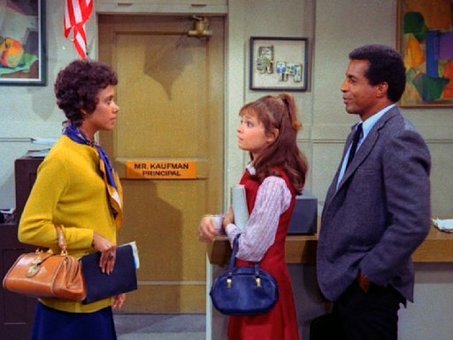
Photo: moviestillsdb.com

Right from the beginning, the show displayed its weird story lines. In the first episode, the Lombardi family of five is murdered and the neighborhood tries to catch the Fernwood Flasher, who later turned out to be Mary’s grandfather. There were a lot of strange deaths in this show. Jimmy Joe Jeeter was electrocuted in the tub, Coach Leroy drowned in chicken noodle soup, and Garth Gimble impaled his wife on a bottle brush Christmas tree.

In 1977, Lasser decided to leave the show. The rest of the cast continued on and accounted for her disappearance by announcing that she had run off with Sgt Dennis Foley. The show then became Forever Fernwood.

Photo: tumblr.com

Later that year, Fernwood 2-Night was spun off. Martin Mull was now Garth’s twin brother Barth and was the host of a late-night talk show with Jerry Hubbard (Fred Willard) as his “Ed McMahon”.

One of my favorite things about this show was Frank DeVol, the composer, who played Happy Kyne with his band the Mirth Makers (Eddie Robertson, Tommy Tedesco, Frank Marocco, and Colin Bailey) on the show. Happy never looked happy; he had a side business, a fast-food restaurant called Bun ‘n Run.

Photo: sonypicturesmuseum.com

Alan Thicke was the head writer on the show. Lear thought it should all be improvised, but Thicke said it needed a balance of scripting with ad-lib.

In the same way Mary Hartman satirized soap operas, this show satirized late-night talk shows. The guests were a mix of real and fictional people. For example, Tom Waits appeared on the show when his bus broke down in Fernwood. I don’t remember a lot about this show specifically, but I remember thinking it was very funny.

Photo: sonypicturesmuseum.com

After the first season, the show was moved to California where celebrities would be more likely to appear on the show.

Photo: nostalgiacentral.com

I have never seen either of these shows in reruns and like most of the shows we learned about this month, I think they are better left as a remnant of the era they debuted in. Although few people seem to remember Mary Hartman, Mary Hartman, it was listed #21 on TV Guide’s list of best one-hundred shows in 2003. When thinking about the classic shows that had been on the air by 2003, that says a lot about what TV Guide thought about the quality of this show.

Lear had to tow a fine line on this show. With the types of crises Mary encountered and the bleak life that was portrayed of a housewife in Fernwood, Ohio, it was close to tragic. The exaggerated number of catastrophes and despairing situations kept it slightly in the humor genre. The demise of the show is often blamed on Lasser’s leaving, but in my opinion, it could not have continued to sustain viewers much longer than it was on the air. How many crises can be cooked up that hadn’t happened, and when did the tragic overtake the comedy for most viewers? Again, it’s a show best viewed in its decade.
In my rating of odd, wonderful, or oddly wonderful, I give Fernwood 2-night wonderful, and I’m afraid I have to give Mary Hartman an odd rating. It was a hard show to watch. If you wanted drama, there was too much humor in it, but if you wanted comedy, it was way too dark. I’d love to hear from you on your ratings for these two little-remembered shows.

Please Report to Room 222

Last week we continued to paid homage to the Friday night schedule of shows airing in 1970 and 1971, learning about The Odd Couple. Today we continue that theme as we meet the cast of Room 222.

Debuting in 1969, Room 222 produced 113 episodes by 1974 when it was cancelled for low ratings. The show, one of the first dramedies, was a more serious counterpart to the later-seen Welcome Back Kotter.

room3

The series was created by James Brooks who wrote for That Girl and The Andy Griffith Show and would go on to create Taxi, The Mary Tyler Moore Show, Rhoda and Lou Grant. What all these shows have in common is a group of characters who have a depth and sophisticated writing that captures the realistic language and behavior of individuals in their settings.

kaufman and dixon

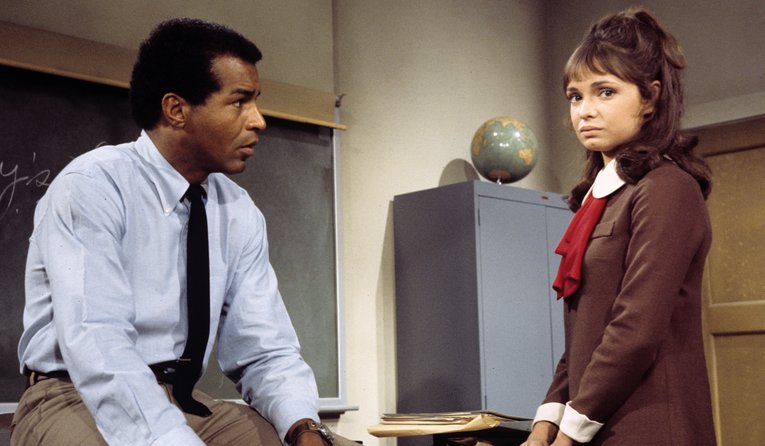
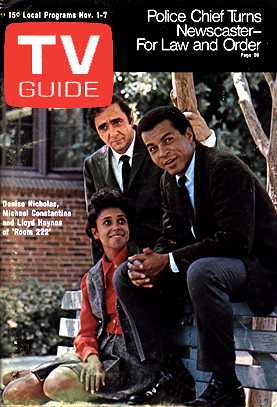
The show featured Seymour Kaufman (Michael Constantine), the principal of Walt Whitman High School, a racially mixed school in Los Angeles; American history teacher Pete Dixon (Lloyd Haines); the guidance counselor (and Pete’s girlfriend) Liz McIntyre (Denise Nicholas); and student teacher Alice Johnson (Karen Valentine). The four staff members were friends, but they did not always agree.  They debated issues and solutions but always with respect. Kaufman displayed a dry humor and could make Dixon laugh. Dixon was the easy-going, wise, and insightful thinker in the bunch. Liz was compassionate while Alice was enthusiastic and idealistic, but a bit naïve. The staff members invest in the students, acting as surrogate parents teaching them important life lessons. The other staff member we get to know is Miss Hogarth (Patsy Garrett), Mr. Kaufman’s secretary.

room10


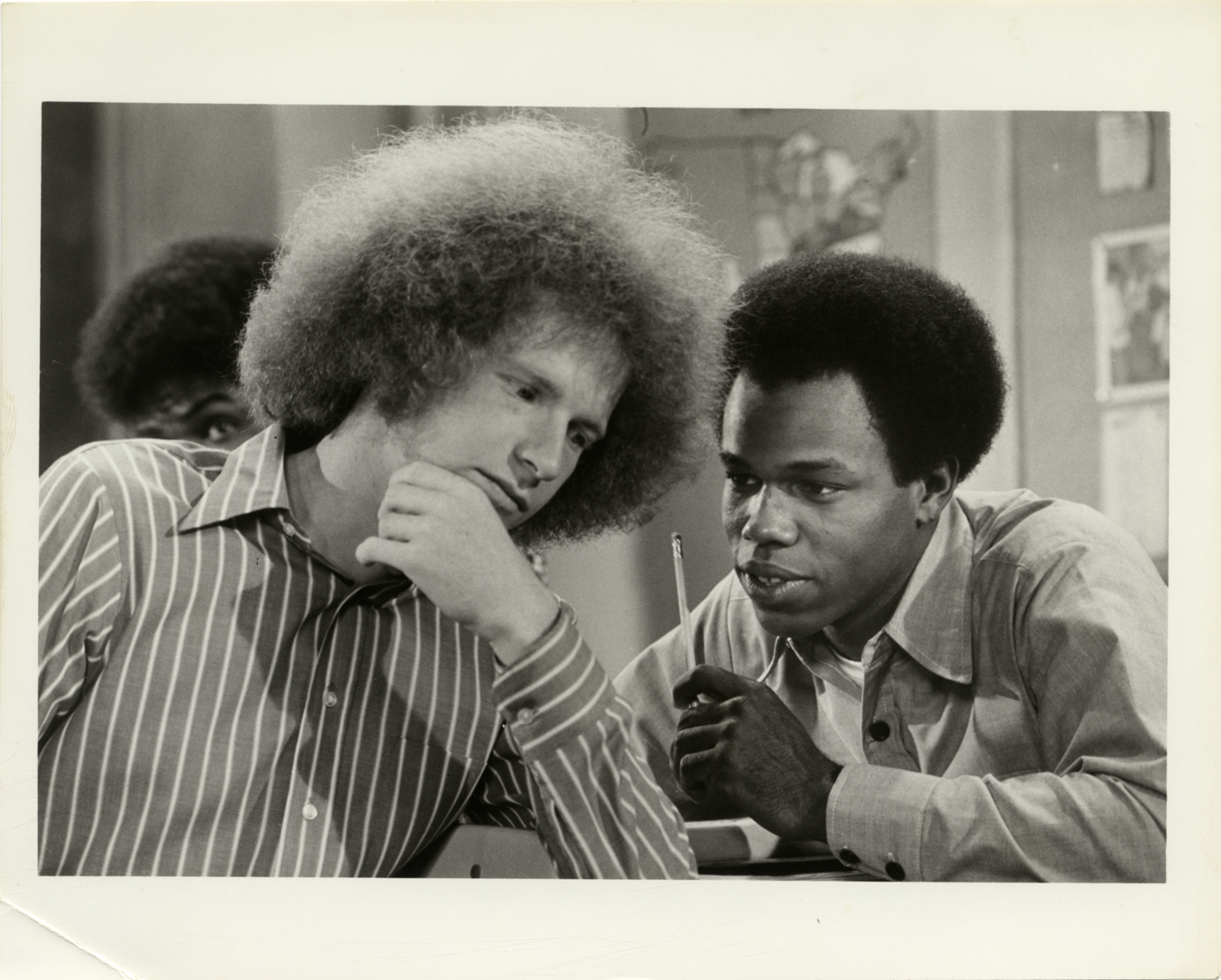
We also spend a lot of time with several students who interacted with staff members in the classroom and occasionally outside of school. There was Richie Lane the Brain (Howard Rice); Jason Allen, tough guy (Heshimu Cumbuka); Pamela, Miss Popular (Ta-Tanisha); Helen Loomis, shy but thoughtful (Judy Strangis); and Bernie, the sports jock and class clown (David Joliffe). Although students were a large part of the show, many episodes focused on the teachers and administrators.

students


Room 222 is Dixon’s classroom where the students are given free range to discuss topics from a variety of viewpoints.  Some of the issues were topical such as the Vietnam war, women’s lib, and Watergate; however, most of the debates could be pulled from today’s headlines:  race relations, shoplifting, drug use, illiteracy, police presence in schools, dress codes, guns in schools, and teen pregnancy. Dixon lets the students lead many discussions, but he preaches tolerance and the ability to see things from others’ shoes. He is respected and liked by his students.

room12

Imdb.com summarized the pilot episode as: Pete Dixon teaches history in Room 222 at Walt Whitman High School. Principal Seymour Kaufman introduces Pete to Alice Johnson, a perky but painfully insecure student teacher. Pete’s most enthusiastic student is Richie Lane, who goes so far as to dress a lot like Pete and even takes roll in his absence. But Guidance Counselor Liz McIntire has discovered some disturbing news about Richie — the home address he submitted is fake, suggesting that he may not live in the school district, and therefore might be ineligible to keep attending Whitman.

room11

Many guest stars showed up at Walt Whitman High including Ed Begley Jr., Richard Dreyfuss, Jamie Farr, Teri Garr, Mark Hamill, Bernie Kopell, Donny Most, Chuck Norris, Rob Reiner, Kurt Russell, and Cindy Williams.

The show was originally on Wednesday nights, and the ratings weren’t great. The network was planning on cancelling the series, but then the show won the Emmy for Outstanding New Series, Michael Constantine won for Outstanding Supporting Actor in a Comedy Series, and Karen Valentine won for Outstanding Supporting Actress in a Comedy Series. The show was moved to the Friday night line up between The Partridge Family and The Odd Couple where its ratings soared.

heshimu and joliffe

The first season used a laugh track which was not used for subsequent seasons, helping to add drama to the show.

The theme song was written by Jerry Goldsmith. He would go on to be nominated for seven Academy Awards for music, winning for The Omen. A series of novels was created based on the show by William Johnston in the early 1970s, and Dell Comics published four issues about Room 222 in 1970-1971.

karen

The show propelled Valentine to star status. Mark Voger interviewed her online for New Jersey Advance Media for NJ.com on October 25, 1970. Part of his article is quoted below:

“I had gone in to meet the casting person for ‘Room 222,'” the Santa Rosa, Calif., native told me during a telephone interview some years back.

He took down the color of my eyes and the color of my hair, and I was dismissed. Nothing happened for a number of months.

Then I was called in again to meet with (series producer) Gene Reynolds. When you talk about naivete — the character of Alice Johnson was a bit of a bumbler and very naive and just wet behind the ears.

When I read for Gene, everything imaginable went wrong. I mean, I went to put my purse down, and I had sunglasses on my head; they fell off. I went to pick those up, the pages went all over the floor. I had to pick those up.

I looked up at him and I said, ‘I don’t know what’s going on. I’m really rather chic, you know. This is so strange.’ And he said, ‘Don’t change a thing.'”

Valentine believes she’d hit upon the essence of the character that Reynolds sought.

She continued: “After I read, I was leaving the office. He said, ‘Don’t get hit by a car.’ And I thought, ‘Boy, this is a good sign. It’s the first time anyone cared whether I was dead or alive in this town.'” . . .

“It was a real forerunner for integrated shows,” Valentine said. “It was the first show, I think, that showed blacks and whites interacting so well together, and role models in teachers and counselors. It was so well accepted that in certain parts of the country, ‘Room 222’ was required viewing by some of the teachers and principals and administrative staffs around different schools.”

room13

While the hair-do’s and clothing tie the show to the early 1970s, the scripts could easily be part of current television shows. I’m not sure if that is positive because the show was so well written or if it’s negative because we are dealing with these issues almost 50 years later without much progress. Either way, taking some time to watch the show will be time well spent.

clothing