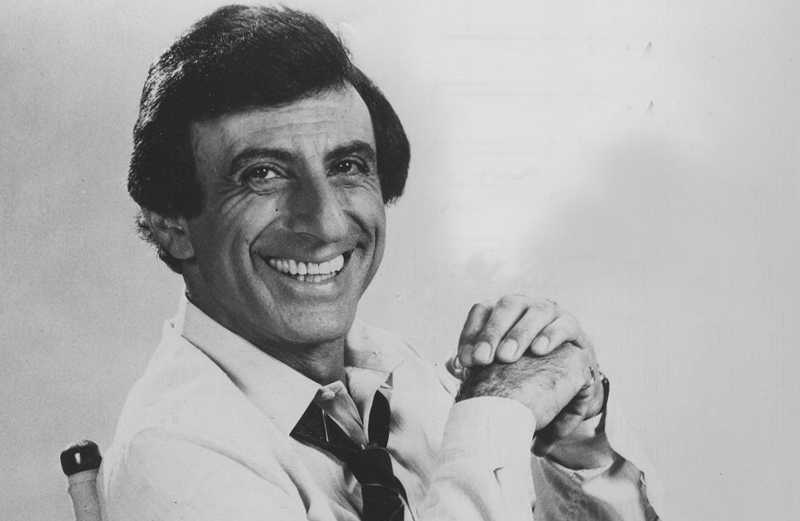
The Jim Backus Show: It Was Hot Off the Wire

This month we are in a blog series, “It’s Their Show.” Today we are taking a closer look at The Jim Backus Show. Most people know Backus today as Mr. Howell on Gilligan’s Island. While he did show up on several television series, cartoons, and made-for-tv movies for Gilligan’s Island, Backus had a long and successful career without any Gilligan appearances. He started in the movies in 1948 and wound up his career with an amazing 253 credits.
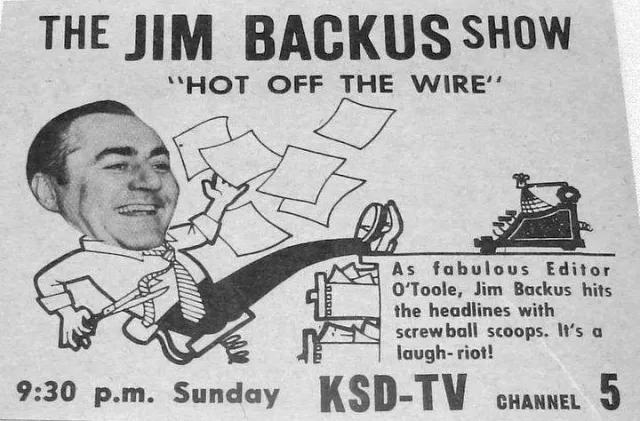
📷thrillingdaysofyesteryear.com

In addition to being the voice of Mr. Magoo, Backus starred in several other series including I Married Joan and Blondie.

In 1960, The Jim Backus Show debuted.  It was one of the first syndicated shows, so it’s hard to gauge how it did against its competition. However, I will say what I can tell you is that there were still 13 westerns on the air during the week, so while the influence of the Plains was waning, it was still very popular. It was also a year that lots of stars had made the plunge to dip their toe into the television industry. There were 11 stars with their own shows that year in addition to Backus, including Jack Benny, Ann Sothern, Danny Thomas, Andy Griffith, and Donna Reed. 

The series had a great cast. They had several good directors, including Gene Reynolds who produced MASH and Lou Grant and a lot of good writers, including Jay Somers who would go on to create and write Green Acres. However, they had 14 directors and more than 40 writers to produce those 39 episodes. They also had a great line up of guest stars including Ken Berry, Charles Lane, Jayne Meadows, Zasu Pitts, Tom Poston, and Bill Quinn.
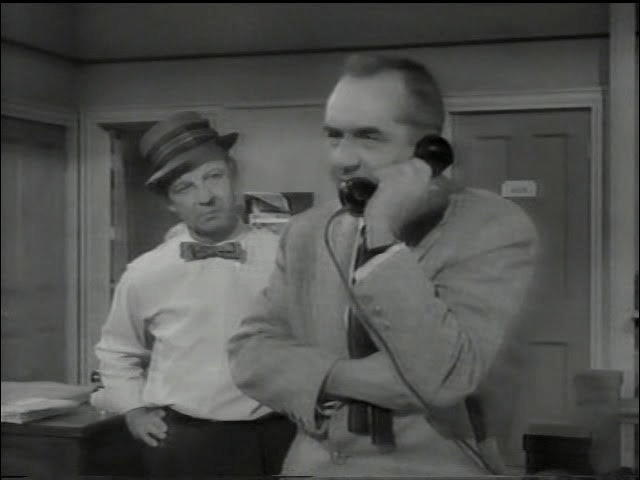
📷youtube.com

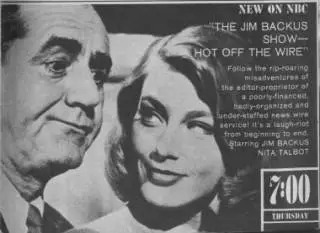
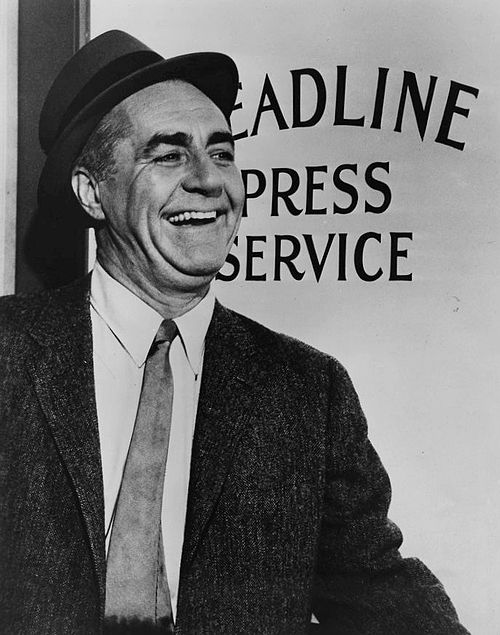
Backus is Mike O’Toole, the editor and owner of a news service struggling to make a go of it. He often doesn’t have the money to pay his rent or his staff’s salaries. Working with O’Toole are reporters Dora (Nita Talbot) and Dave (Bill McLean) as well as Sidney (Bobs Watson), their office boy. When they weren’t working, they spent some time at Heartless Harry’s, a bar downstairs that was popular with newspaper people. He truly was heartless, because he wouldn’t let anyone from Mike’s company in the bar unless they put down a $10 deposit.

One of the episodes I watched for this blog was #5, “No Help Wanted.” The opening pans the big city before moving down to the office of the wire service with Mike in the window joined by Dora.

The episode begins with Mike and Dora’s car breaking down in the middle of nowhere. There’s a large estate in the distance, but Mike won’t let Dora ask them for help until he’s tried to fix the problem himself.
Directed by Gene Reynolds and written by Dick Chevillat and Jay Sommers, the plot is that a retired stage actress, Catherine Lyden (Linda Watkins), has lots of money and loves living a normal life. Her former agent keeps trying to lure her back into show business. She decides to clean the maid’s house so she can hire someone, but when Dora and Mike meet her, they recognize her, and they think she is destitute and try to help her. After they get back to the office, they buy her some groceries and clothes. She tries to tell them that she has plenty of things and she doesn’t need their help. O’Toole writes a story about her having to work as a maid to make ends meet and puts a photo in the paper with her holding a pail and looking disheveled. When the article appears, several people contact her to try to help her out. When Mike and Dora get her contract from the playwright who is trying to hire her, they tell her that it’s a form to get a retraction from the paper.

After she signs it,  they tell her the truth, that it’s a five-year contract and she begins to cry. Surprisingly they never do find out she wasn’t down and out. They think she is crying from gratitude, and they leave.

📷internetarchive.com

There were some fun bits of dialogue especially between Dora and Mike, and the filming was very different from most sitcoms, but I was drawn in by it. One of the things that I found most interesting about this episode is the soundtrack. There is some laughter in the background, but you hear birds, the office machinery running, and the sounds of the city. It’s like you’re right in the location with the cast and hear what they would hear.

This was a tough episode for me though. First of all, I kept waiting for Lyden to be touched by the fact that they were trying to help her and maybe that made her realize the public missed her. However, she never cared that they were spending their hard-earned money on her. She truly was upset when they tricked her, and I found it tough to watch because they never learn she was not destitute and truly was happy and they have now made her miserable for five years. It just didn’t have that feel-good ambiance we expect our sitcoms to feature.
📷wikipedia.com

The series produced 39 episodes before being canceled. I’m guessing the fact that it didn’t make it had something to do with the fact that it was on different nights and times across the country.

Sometimes these shows are hard to find. They all had two names. The Tom Ewell Show was known as The Trouble with Tom, The Phyllis Diller Show was known as The Pruitts of South Hampton, and The Jim Backus Show went by Hot Off the Wire.  With so much competition from other stars trying to vie for their spot on the schedule and being a syndicated show, I’m guessing it was hard to lure enough fans to make it worthwhile to produce a second season of the show.
Lucille Ball: A Force To Be Reckoned With

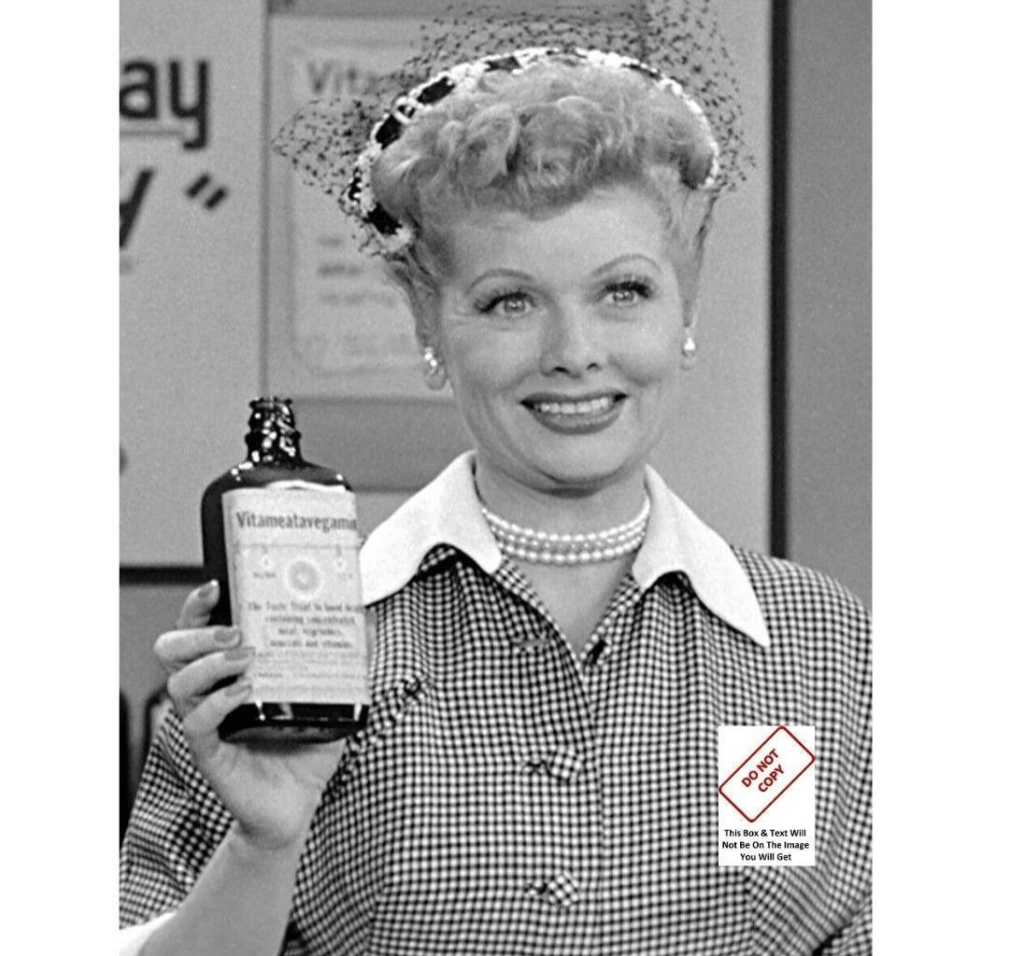
This month we are learning why We All Love Lucy. We’ll delve into her sitcoms and get to know Jess Oppenheimer and hear about his role in her television life. But today, we are starting with the woman herself, Lucille Ball.

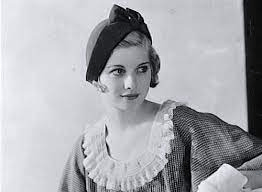
📷facebook. A young Lucille Ball

Lucille Desiree Ball was born August 6, 1911, in Jamestown, New York. She was the only daughter of Henry Durrell Ball, a lineman for Bell Telephone, and Desiree Evelyn Hunt Ball. They lived at 60 Stewart Avenue. The family belonged to the Baptist Church there, and many of her relatives were among some of the first European settlers in Massachusetts.

The family moved frequently for her father’s career, but Jamestown always had a claim on Lucy, and they celebrate her in many ways there. The family lived in Montana, New Jersey, and Michigan before her father passed away from typhoid fever at age 27 in 1914.

Her mother returned to New York, living in Celoron, a summer resort on Chautauqua Lake. The road she grew up on is now named Lucy Lane. Celoron had an amusement park with a boardwalk, the Pier Ballroom, a roller coaster, a bandstand, and a stage.

📷Good Housekeeping

Lucy’s mother remarried four years later. It was her stepfather who encouraged Lucy to audition for his Shriner’s chorus line, which gave her the first taste of what it would be like to be in show business. When she was 16 the family returned to Jamestown.

When Lucy was only 14, she was dating a 21-year-old hoodlum. Her mother was devastated by the situation and finally enrolled Lucy in the John Murra Anderson School for Dramatic Arts in New York City to encourage her in her theater career. Ball did not love the school, and her instructors told her she would not be successful in the entertainment business. Luckily, Lucy did not take their comments to heart. She later said that “one of the things I learned the hard way was that it doesn’t pay to get discouraged. Keeping busy and making optimism a way of life can restore faith in yourself.”

In an attempt to prove the school wrong, Lucy began working as an in-house model for Hattie Carnegie. This was where she first changed her hair. Being a brunette, Carnegie taught Ball to bleach her hair blonde. Her modeling was interrupted for two years when she dealt with the effects of rheumatic fever.

At the ripe old age of 21, Ball returned to New York City to pursue an acting career. She went back to the Carnegie agency and became the Chesterfield Cigarette Girl.

📷Brittanica

In 1933 she was in Roman Scandals as a Goldwyn Girl; while playing a slave girl, she had to have her eyebrows entirely shaved off, and they never grew back. Some of the things an actor goes through for roles is crazy. After that movie she moved to Hollywood to try a film career. After becoming a contract player for RKO Radio Pictures, she received a decent amount of work. At this time, she met the Marx Brothers, appearing in Room Service. She also worked with Fred Astaire and Ginger Rogers in several musicals.

When she registered to vote in 1936, both she, her brother, and her mother registered as Communists. During that year she signed a document as a Communist supporting Emil Freed for assembly and was appointed delegate to the State Central Committee of the Communist Party of California.

Ball later claimed she never had a strong political affiliation. In 1944, Lucy can be seen in a newsreel fund raising for Franklin Roosevelt. She also mentioned that she voted for Eisenhower in 1952 when he was on the Republican docket. In 1953 Ball met with HUAC and gave a sealed testimony. She said that she voted Communist at her grandfather’s insistence and did not know she had been appointed a delegate. Before filming episode 68 of their show, her husband and co-star Desi addressed the audience and said Lucy was not a Communist; she was just influenced by her grandfather. He joked that “the only thing red about Lucy is her hair, and even that is not legitimate.”

📷pinterest

In the late thirties, she dabbled in radio to earn some additional money. She was a regular on “The Phil Baker Show” and on “The Wonder Show” where she met announcer Gale Gordon.

In 1940 Lucy met Desi Arnaz when they both appeared in the movie Too Many Girls. They fell in love immediately, and before the year was out, they eloped. Arnaz was drafted in 1942, but a knee injury kept him from active service, and he was placed in Hollywood organizing and performing USO shows for wounded GIs.

Lucy finally got her big break in 1943. Arthur Freed was making a movie based on the play “DuBarry Was a Lady”; he bought it for Ann Sothern, but when she turned it down, she recommended her best friend, Lucille Ball.

In 1944, Ball filed for divorce, but the couple reconciled before it went through. Lucy and Desi had Lucie in 1951 when Lucy was almost 40, and son Desi was born during the series and written into the scripts in 1953. Mom and son appeared on the first cover of TV Guide which came out in 1953.

📷HollywoodHistoricPhotos.com

Ball continued to make movies throughout the forties and kept a foot in radio. In 1948 she was cast as Liz Cooper on the radio show, “My Favorite Husband” on CBS.

When CBS wanted to transition the show to television, Lucy wanted Desi to be her television husband. CBS said no, so the couple went on the road with an act to prove the popularity of the them working together and CBS backed down.

The show was incredibly successful. (If you want to learn more details about the series and all the history that it produced, keep an eye out for my blog which will post January 13, 2025.) The couple created their own production company and had many “firsts” with technology producing their show. During filming breaks of the show, Lucy and Desi made two movies: The Long, Long Trailer in 1954 and Forever, Darling in 1956.

After years of turmoil and ups and downs in their marriage, the couple divorced. However, they continued to remain in each other’s lives through their children and their relationship. Later in life, Lucy said “Desi was the great love of my life. I will miss him until the day I die.”

📷closerweekly.com Ball and Vance

Lucy bought Desi’s share in the production company which produced a variety of shows including Mission: Impossible, Star Trek, and The Untouchables. In 1967 Lucy sold her shares to Gulf+Western, owned by Paramount, for $17 million, which would translate into $138 million today.

Lucy married Gary Morton in 1961. At the time, Morton was a comedian 13 years younger than Lucy. He said he had never seen an episode of I Love Lucy. Ball hired Morton for her production company, teaching him the television business.

For the next decade, Lucy worked on a number of television specials. She also tried sitcom life again. She starred in The Lucy Show from 1962-68 and in Here’s Lucy from 1968-1974. We’ll discuss these shows the last week of January. Many of Lucy’s friends appeared on these shows. Her close friends included Mary Jane Croft, Judy Garland, Ethel Merman, Barbara Pepper, Ginger Rogers, Ann Sothern, Vivian Vance, and Mary Wickes.

📷ebay.com

Ball kept busy acting during the early 1980s. Desi Arnaz passed away in 1986. In 1988 Lucy had a mild heart attack. She appeared at the 1989 Academy Awards show and she and co-presenter Bob Hope were given standing ovations. She died a month later. Lucy had been a heavy smoker, and her cause of death was abdominal aortic aneurysm which is seen more in smokers.

Lucy always sent flowers to Carol Burnett on her birthday. The day before she died, she ordered them, and they were delivered a few hours after Carol learned of her death.

Lucy was cremated and her ashes were interred in Forest Lawn Cemetery with her mother’s remains. In 2002, both women’s remains were moved to the Hunt family plot in Jamestown. In Jamestown you can find the Lucille Ball Desi Arnaz Museum & Center for Comedy and the Lucille Ball Little Theater.

In 2009 a statue of Lucy was erected in Celoron. Many people called it “scary,” and it became known as “Scary Lucy,” which I totally endorse. In 2016, a more lifelike statue was created to replace Scary, but the scary statue had become so popular, it was left on display with the new one as its neighbor.

📷youtube.com The different sides of Lucy

Those two statues symbolize my relationship with the show. I appreciate the show and everything it did to create the classic age of television. Whether it’s technical filming strategies, the writing, the way the business was run, everything was important in this show. However, I have to admit, it’s not a show I choose to watch. It changed the entire course of television in similar ways that All in the Family would do a few decades later, but I honestly don’t enjoy watching either of these series. That might be a fault in my genes, but I also have to be honest.
However, Lucy Ricardo, while we may think of her as naïve and sophisticated, traditional and unconventional, submissive and disobedient, was an important icon in the way that women thought about themselves in the fifties.

Women had been brought in to work and gain independence while so many men were overseas fighting, and then they were asked to give it all up and go back to a domestic and tranquil life. Leslie Feldman, a political scientist and author of The Political Theory of I Love Lucy, writes that Lucy was “a transitional figure—she’s on the cutting edge.  . . Are [women] going to stay home and be wives and mothers? Are they going to go to work? Or are they going to do both? And what if they really do better and earn more money than their husbands? What about that? That’s an element of Lucy too.”

📷biography.com

Lucy was a force in show business. While she was not alone in taking control of her own career—Donna Reed, Betty White, and Ann Sothern were also powerhouses in establishing their own companies and running them—Lucy did it with the nation watching her. Even the choices she made about whether to divorce Desi or not were all done in the public eye and were sending messages whether people chose to receive them or not.

Lucille Ball was an amazing actress and an amazing business person. Apart from whether I enjoy watching the show or not, it changed the history of television and the way sitcoms were written, cast, and remembered. Thank you, Lucille Ball, for not listening when your instructors told you that you would never make it in show business. You not only made it in television, you truly made television what it is today.

Virginia Sale: What a Character

We are learning about some of our favorite female character actresses. Today we are learning more about the life of Virginia Sale.

📷champaigncounty
history museum.com

Virginia was born in 1899 in Illinois. Her father Frank was a dentist, and her mother Lillie Belle was a poet and truant officer for the Urbana Illinois School District. After graduation, she attended the University of Illinois for two years and then transferred to the American Academy of Dramatic Arts in New York where she graduated in the early twenties. Her brother Charles was a vaudeville comic, and he persuaded her to go to Hollywood to pursue a film career.

She began her career in Hollywood as an extra. In 1931, she did an interview for the Kansas City Star where she said “I had known an assistant director [named Ned] when I lived in New York. He introduced me to King Vidor, then casting for The Crowd. He gave me quite a good bit in the picture, although it lasted only five days. When asked how much salary I wanted, Ned told me to say $350 a week. ‘Well, I think you ought to work for us for $25 a day’ the casting director said. ‘That’s an awful comedown I protested,’ trembling in my boots. ‘All right then, let’s compromise on $35 a day,’ he said. I was awfully glad to get it.” That would be almost $600 a day currently.

📷x.com

During her first two years in Hollywood, Virginia lived at the Hollywood Studio Club. She appeared in 54 films between 1930 and 1935.

The Hollywood Studio Club was created as a safe place for starlets to live. Mary Pickford, along with several other women, was trying to raise money to construct a new building to house actresses. Will Hays gave $20,000 and soon after the studios contributed. Julia Morgan was hired as the architect. She designed an Italian Renaissance Revival style building that opened in 1926. The first floor had a spacious lobby, a library, writing rooms, a dining room, and a stage. The upper stories were single, double, and triple rooms. Men were only allowed to be on the first floor. You had to be between 18-35 years old, be seeking work as an actress, and could stay a maximum of three years. A hundred women lived there, paying $10-15 a week for room and board.

📷mayberrywikifandom.com

Barbara Hale, Donna Reed, Dorothy Malone, Ann B. Davis, Barbara Eden, Sharon Tate, and Sally Struthers were just a few of the women who lived there. The most famous resident was Marilyn Monroe. After the culture shift in the sixties and seventies, the residents decreased until the Club could no longer financially exist. In 1975 the doors were closed, and the contents were auctioned off.

In Hollywood Sale was often cast as an older woman, even though she was still in her twenties. She entered the movie entertainment business just as silent films were ending. Her first role was in Legionnaires in Paris in 1927. During her film work, she met actor and studio executive Sam Wren, and they married in 1935. In 1936 they had twins named Virginia and Christopher.

In the thirties, Virginia developed a one-woman show based on her life growing up in Illinois which she called “American Sketches.” She performed the piece more than 6000 times throughout the thirties, forties, and fifties, even touring Europe during WWII. This sounds like it would have been a fun show to see. Some of the different pieces of the performance included: “Traveling on the Illinois Central” where she portrays a mother trying to keep her son under control after a visit with relatives; “Life of the Party” where she is a giggling, talkative woman who annoys a young man she is trying to impress;
“Mealtime in Indiana” where she impersonates a housewife trying to get ready for the Ladies Guild while preparing supper for her family; “Three O’Clock in the Morning” as a weary hostess trying to get her guests to go home, and “I Remember Abraham Lincoln” where she is Grandma Willoughby reminiscing about her encounters with Lincoln.

📷rottentomatoes.com

She also received some radio work, including a serial, For Those We Love, playing Martha the maid every Sunday for eight years.

Her film career continued to develop during those decades and she appeared in Topper, When Tomorrow Comes, They Died with Their Boots On, and Night and Day.

Sam served in WWII as part of the Air Corps. When he returned home, he had a six-year position as executive secretary for the Actor’s Equity. He was an executive at both Warner Brothers and Columbia studios.

📷imdb.com Topper

In 1949 as television was developing, she and Sam created a sitcom, Wren’s Nest which featured the life of the Wrens starring Virginia, Sam, and the twins. The show aired three times a week. Virginia took over writing duties on the show. Many of her scripts were based on real events that happened to the family. The series contained 47 episodes.

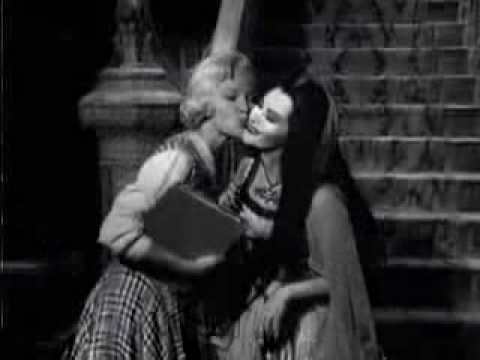
During the fifties, Sale took a break from the big screen, focusing on television shows and commercials. She appeared in several series in the fifties, but she hit her stride during the sixties. If you watch a lot of television from that decade, you can catch her in a variety of shows including The Many Lives of Dobie Gillis, Ben Casey, The Beverly Hillbillies, Wild Wild West, The Andy Griffith Show, Green Acres, and I Spy. She had a recurring role on Petticoat Junction where she played several characters. Her final television role was in Police Woman in 1975.

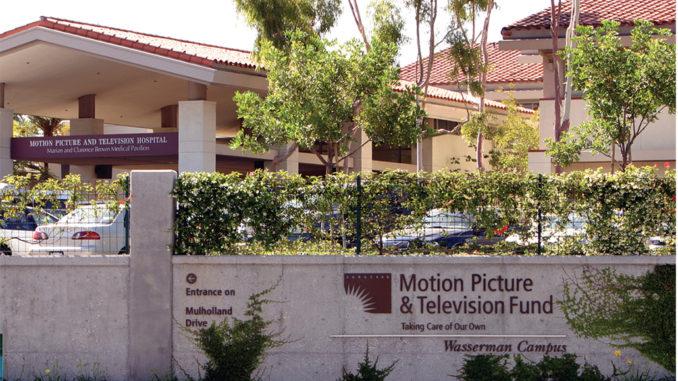
Sam passed away in 1962, and Virginia lived another thirty years, dying in 1992 from heart failure. Both Sam and Virginia are buried in Arlington National Cemetery. She spent her final years at the Motion Picture and Television Country Hospital in Woodland Hills, California.

📷

Sale could thank Mary Pickford for her home once again. Pickford was part of the Motion Picture Relief Fund which she founded with Joseph Schenck and Reverend Neal Dodd. When several former Hollywood stars died destitute in the thirties, 48 acres were purchased in the San Fernando Valley to build a Motion Picture Country House. In 1948, the Motion Picture Hospital was dedicated on the grounds. Later television actors were invited to live there as well. By that time, the site included a retirement community with individual cottages, administrative offices, and a hospital. Fees are based on the ability to pay. Actors, artists, backlot men, cameramen, directors, extras, producers and security guards are all eligible to live there. To live there, residents must be at least 70 and have worked in the entertainment industry for at least 20 years.

It was fun to learn not only about Virginia Sales but also the places she lived at the beginning and the end of her career.

The Donna Reed Show: It’s All About the Mom

Merry Christmas Eve.  In honor of It’s a Wonderful Life which will be playing quite often today, this week’s blog is about Donna Reed, who played Mary in the Jimmy Stewart holiday favorite.

In 1958, most of the television shows were game shows, variety shows, or westerns. Almost all the sitcoms on the air were based on a star; we had The Danny Thomas Show, The Ann Sothern Show, The Bob Cummings Show, and The Adventures of Ozzie and Harriet. It was also the year The Donna Reed Show began. The show would last eight seasons, resulting in 275 episodes.

reed14

Photo: dallas.wikia.com

The series was created by William Roberts. Donna and her husband Tony Owen developed and produced the show, under the name “Todon.” We had shows about single adults in The Bob Cummings Show and The Ann Sothern Show. We had families, including The Danny Thomas Show, Father Knows Best, and The Adventures of Ozzie and Harriet. Roberts wanted to concentrate on the demanding roles a stay-at-home mom had to juggle. Reed agreed with him. As she noted, “We started breaking rules right and left. We had a female lead, for one thing, a strong, healthy woman. We had a story line told from a woman’s point of view that wasn’t soap opera.”

reed2

Photo: imdb.com

The Donna Reed Show is often evoked by critics who say television scripts are not realistic but center around unreal family expectations, but that is not the goal Reed and her husband had. Donna described the show as “realistic pictures of small-town life—with an often-humorous twist. Our plots revolve around the most important thing in America—a loving family.” The shows featured typical family problems families faced in the late 1950s: having to fire a clumsy housekeeper, quality time with your spouse, dealing with disciplinary issues, or Donna being swamped with requests to volunteer for charity drives or community theater shows. However, there were times the show delved into more controversial issues such as women’s rights or freedom of the press.

reed3

Photo: metv.com

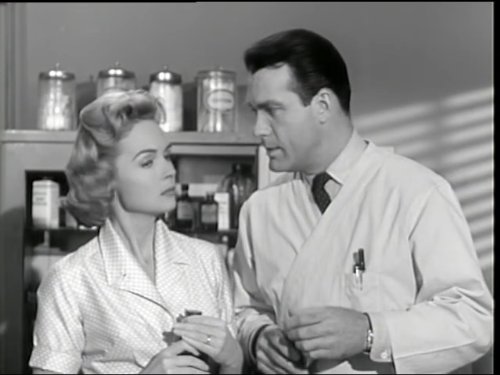
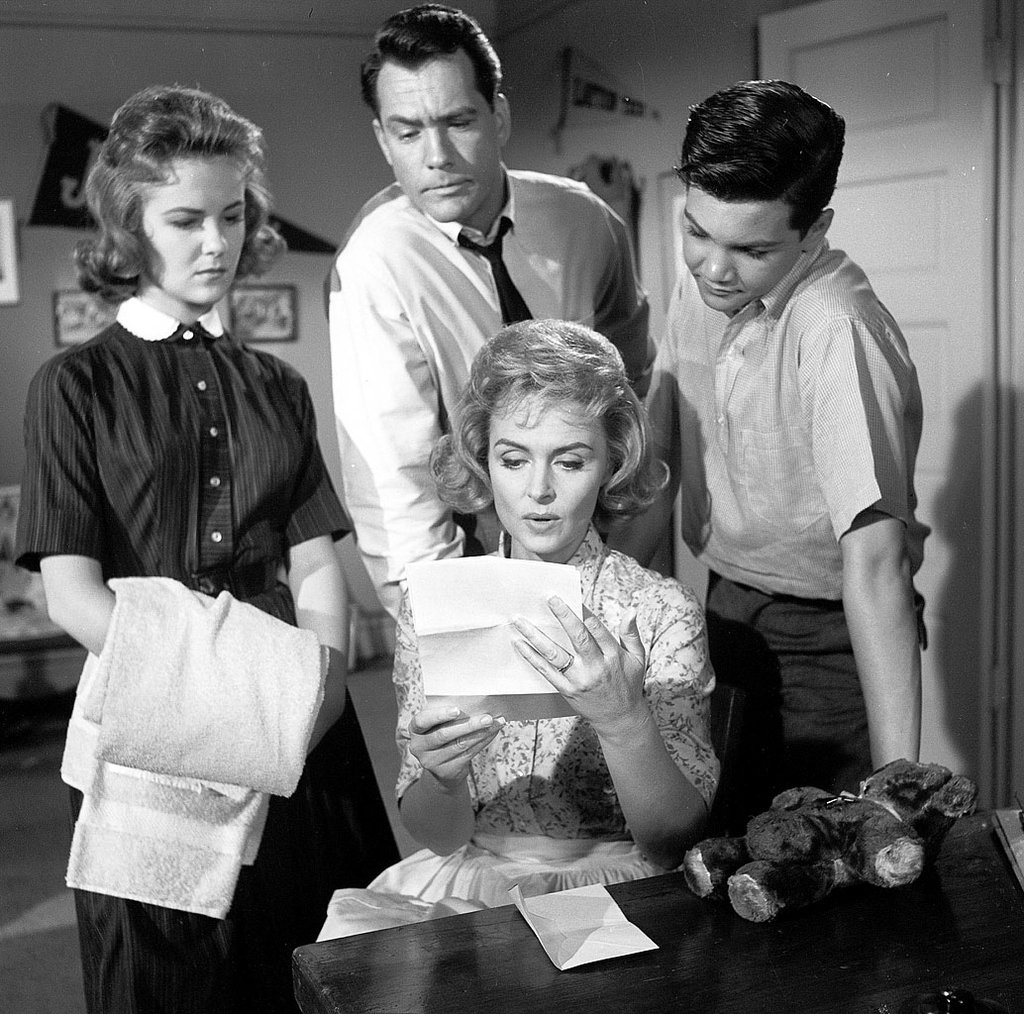
The Stone family includes Donna, Alex, Mary and Jeff. Donna (Donna Reed) is the iconic mother. She grew up on a farm (which Reed did). She became a nurse and occasionally helps Alex (Carl Betz), a pediatrician who has his office at the house. Mary (Shelly Fabares) is in her first year of high school. She studies ballet and plays the piano. During the series, she has several boyfriends. Mary left for college before the show ended, but Fabares made guest appearances. Jeff (Paul Petersen) is in grade school. He loves sports, likes to eat, and often teases his sister. In 1963 when Fabares leaves, Paul Petersen’s real sister, Patty was cast as a runaway orphan taken in by the Stone family. The Stones live in Hilldale, an All-American town.

reed9

Photo: pinterest.com

Several other characters appear often. Dave and Midge Kelsey (Bob Crane and Ann McCrea) are good friends of Donna and Alex’s.  Dave is also a doctor. Another of Alex’s colleagues who is a good friend is Dr. Boland (Jack Kelk), whom the kids call “Uncle Bo.” Smitty Smith (Darryl Richard) is Jeff’s best friend and Scotty (Jimmy Hawkins) is Mary’s boyfriend.

Photos: pinterest.com and metv.com

With Donna’s movie relationships, many guest stars appeared on the show during its run. Baseball players Don Drysdale, Leo Durocher, and Willie Mays played themselves. Musicians Harry James, Tony Martin, and Lesley Gore appeared. Buster Keaton was featured in two different shows. Esther Williams played a fashion designer. Other stars who showed up included Jack Albertson, John Astin, Dabney Coleman, Ellen Corby, Richard Deacon, Jamie Farr, Gale Gordon, Arte Johnson, Ted Knight, Harvey Korman, Cloris Leachman, Marion Ross, William Schallert, Hal Smith, Marlo Thomas, and William Windom.

In the opening credits, Reed comes down the stairs and answers the telephone which she gives to Alex. She then hands the kids their lunches and books and sends them off to school. When Alex leaves on a call, she closes the door and smiles. In 1964 when The Munsters debuted, their opening credits were a parody of Donna’s show as Lily performs the same actions.

reed12

Photo: metv.com

The Donna Reed Show faced the Milton Berle show, Texaco Star Theater Wednesday nights and ratings were not great. It was renewed and moved to Thursdays the next year. I was surprised to learn that during the eight years the show was on the air it was only in the top 20 in season six and only in the top 30 in season four.

reed5

Photo: cinemacats.com (Look closely and you’ll notice this was                                                                 the living room for I Dream of Jeannie as well).

Although the show never received very high ratings, Donna Reed was nominated for an Emmy every year from 1959 to 1962. (Jane Wyatt won in 1959 and 1960, Barbara Stanwyck won in 1961, and Shirley Booth won in 1962.) Donna Reed won the Golden Globe in 1963.

reed8

Photo: metv.com

In 1962 Donna felt that the writers had run out of creative ideas and were recycling plots. Both Mary and Jeff were allowed to perform in this season. Fabares debuted a single, “Johnny Angel” in February which went to number one on the charts, selling more than a million copies. In October, Petersen sang “My Dad” which made it to number six. Donna decided that would be the last season, but when ABC made her a very lucrative offer for three more seasons, she and her husband agreed.

reed1

Photo: nytimes.com

When this contract ended in 1966, Donna was ready to retire. Reed was considering a television movie reunion but when Betz passed away in 1978, she decided it was no longer an option.

Campbell Soup was the first sponsor, and later sponsors included Johnson & Johnson and The Singer Company. Whenever a scene takes place in a supermarket, Campbell’s Soup, V-8 Juice, Franco-American Spaghetti and Johnson & Johnson Baby Powder are likely to be in the shot.

reed13

Photo: metv.com

Reruns of the show were seen on Nick at Nite from 1985-1994 and on TV Land from 2002 until 2004. MeTV began airing the show in September of 2011.

The cast was a close-knit one and continued their relationships after the show ended. Paul Petersen credited Donna as being the nurturing adult he needed in his life to get him through the years of being a child star. She helped him understand how the industry worked and helped him during some tough times during his life. Shelly Fabares also said Donna and Carl were amazing. Realizing how tough the industry can be for young kids, they protected Paul and herself and loved them as second parents. Donna never forgot to send Shelly a birthday gift.  In 1986, before she passed away from pancreatic cancer, her final words were to make sure Shelly’s birthday gift was wrapped and delivered.

reed15

Photo: lapostexaminer.com

Despite the bad raps the show often received from the women’s lib organizations, Donna Reed did help advance the way women were perceived in the media. She endowed her character with strong emotions, definite opinions on issues, and independence. In her personal life, Reed expressed her views on the medical industry and the political arenas.

reed7

Photo: geocaching.com

Paul Petersen summed up the value of the show in an interview he did in 2008. In his words, The Donna Reed Show, “depicts a better time and place. It has a sort of level of intelligence and professionalism that is sadly lacking in current entertainment products. The messages it sent out were positive and uplifting. The folks you saw were likable, the family was fun, the situations were familiar to people. It provided 22-and-a-half-minutes of moral instructions and advice on how to deal with the little dilemmas of life. Jeff and Mary and their friends had all the same problems that real kids in high school did. That’s what the show was really about, the importance of family. That’s where life’s lessons are transmitted, generation to generation. There’s a certain way in which these are transmitted, with love and affection.”

I couldn’t say it better.

The Actor Who Always “Dressed” Up: Jamie Farr

farr3

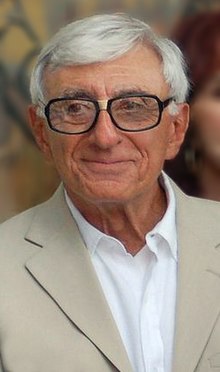
Jamie Farr was born Jameel Joseph Farah on July 1, 1934 in Toledo, Ohio. His mother was a seamstress and his father a grocer. They attended the St. George Antiochian Orthodox Church.

Farr’s first acting success occurred at age 11, when he won two dollars in a local acting contest.

He graduated from Woodward High School with honors and was named most outstanding student. In addition to writing and acting in two variety shows, he was a member of the Drama Society, class president for three years, feature editor of the school newspaper, president of the radio class, manager of the football and basketball teams and a member of the varsity tennis team.

Before becoming a successful actor, he worked for a lithograph company, a post office clerk, an army surplus store clerk, an airline reservations clerk, and at a chinchilla ranch.

farrblackboard

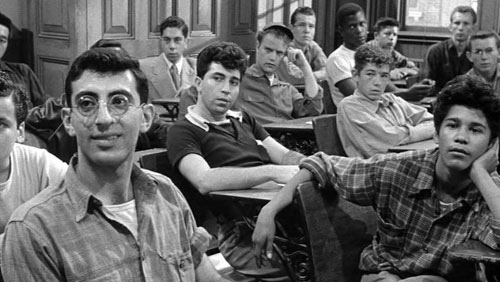
After graduation he attended the Pasadena Playhouse where a Metro-Goldwyn-Mayer talent scout discovered him, offering him a screen test for Blackboard Jungle. He won the role of the mentally challenged student, Santini. He was drafted by the United States Selective Service into the United States Army, undergoing his basic training with the 6th Infantry Division, Fort Ord, California, he served for two years, with service in Japan and Korea. The dog tags he wore on M*A*S*H were his own. (Alan Alda also served as a gunnery officer in Korea.)

In 1958, Warner Brothers cast him as the co-pilot of a TB-25 in the Andy Griffith military comedy No Time for Sergeants, which also brought the young TV comic Don Knotts to motion pictures. Farr appeared as Thaddaeus in the 1965 film The Greatest Story Ever Told, along with minor roles in Who’s Minding the Mint? and with future costar William Christopher in With Six You Get Eggroll. He would also appear in Cannonball Run and Cannonball Run II.


In the late 1960s, he became a regular on the Red Skelton Show. He appeared in a variety of shows in the 1960s including Hazel, My Three Sons, Donna Reed, The Dick Van Dyke ShowI Dream of Jeannie, My Favorite Martian, Get Smart, Gomer Pyle, The Flying Nun, and Family Affair. Farr received roles in several commercials as well, including an ad for Wonder Bread where he says, “If it isn’t fresh, I’m outta business.”


During this decade, he also married Joy Ann Richards. They are still married and have two children.

He continued his television acting career through the 1970s appearing on a variety of shows including Room 222, Love American Style, Toma, Emergency, Barnaby Jones, and The Love Boat.


Image: Loretta Swit And Alan Alda William Christopher In 'M*A*S*H'

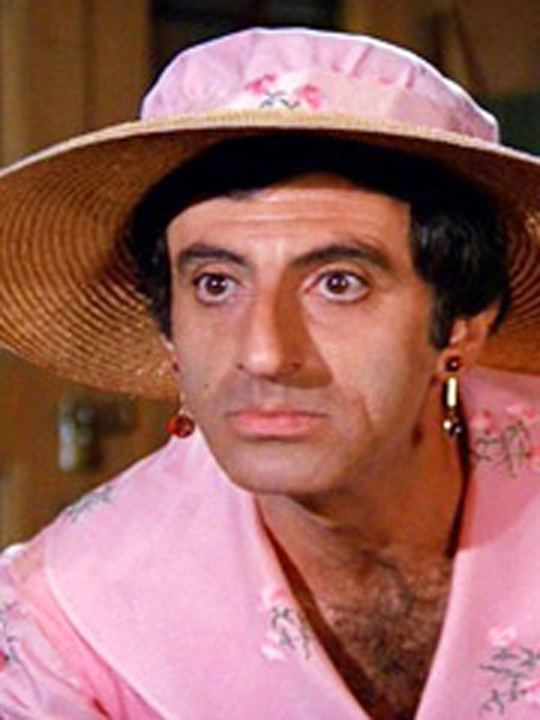
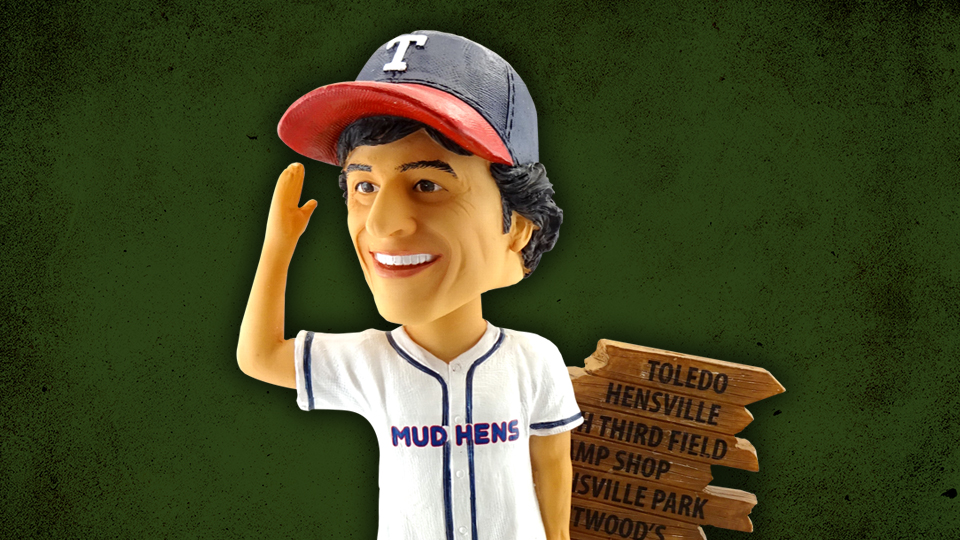
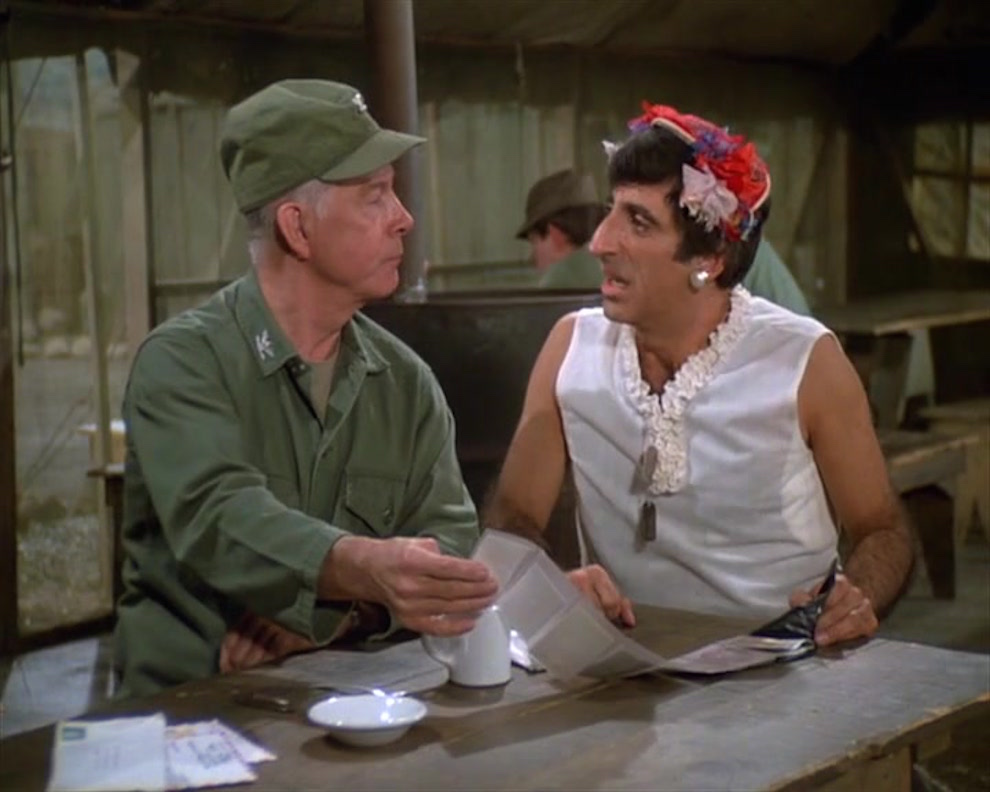
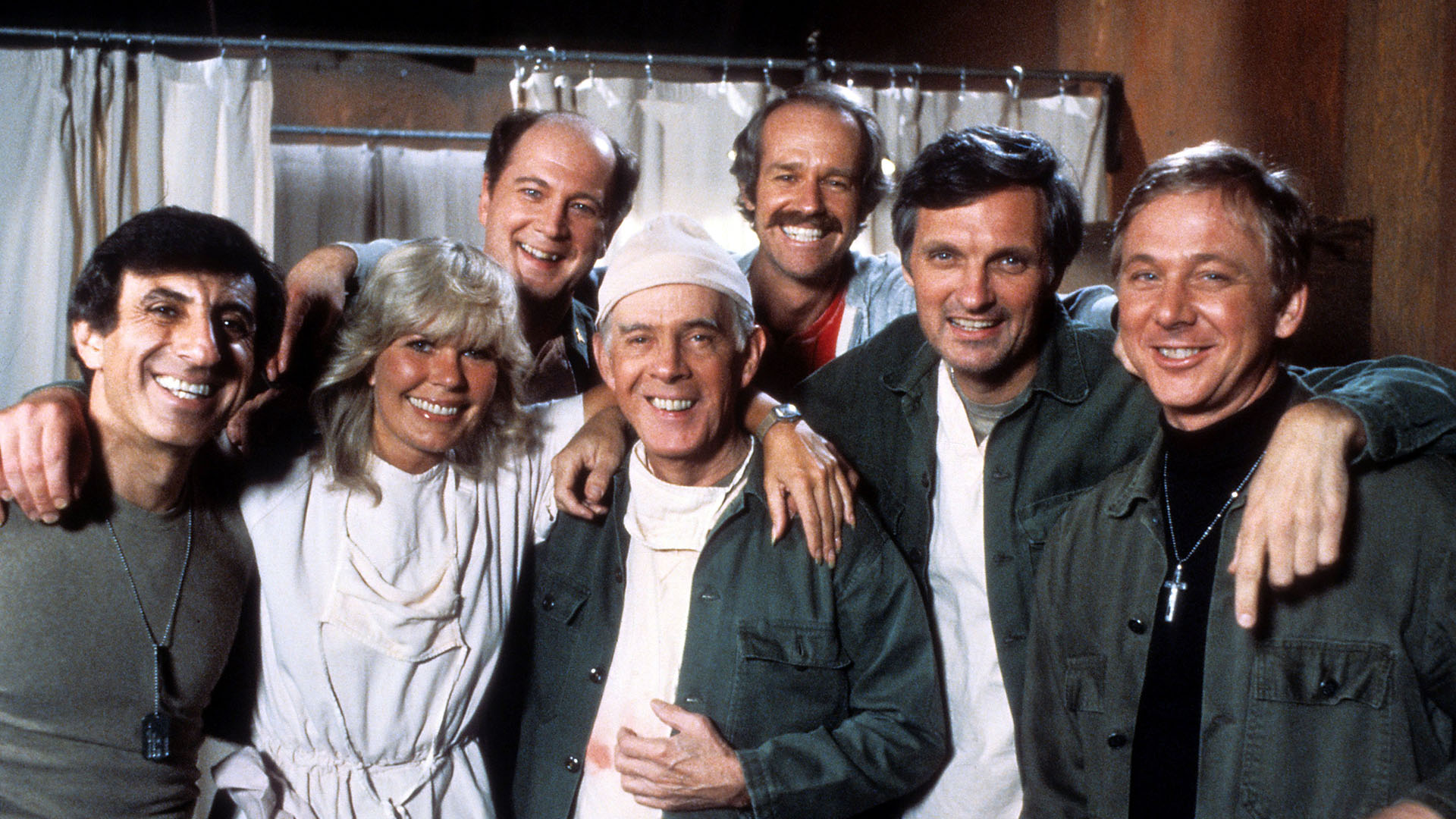
In October of 1972, he was hired to appear on one episode of M*A*S*H as Corporal Klinger. He wore women’s clothing, hoping to be discharged from the Army for a Section 8 discharge. He was asked back for the second season to appear in 12 episodes and became a regular cast member in the fourth season. When Radar left the show, and Klinger took over as Company Clerk, he stopped being fashionable and returned to uniforms. He said he did not want his kids to be made fun of because of his cross dressing. He was a resourceful and kind soldier. His character on the show was also from Toledo, and he often mentioned one of Farr’s favorite restaurants, Tony Packo’s Hot Dogs and talked about his love for the Toledo Mud Hens. (In 2017, he was inducted into the Mud Hens Hall of Fame.  A bobble head was given to the first 2000 fans to the game that night.) He continued with M*A*S*H until 1983 when it left the air.

farrbobble


Along with Harry Morgan and William Christopher, he appeared in After M*A*S*H for two years. The show never got the fan base the original show had and was cancelled after 30 episodes.


farr harry morgan

The cast of both M*A*S*H and After M*A*S*H were very close. On the death of Harry Morgan, Farr commented, “Harry was very special to all of us cast members. Not only was he a wonderful performer that made such a difference … he was a dear friend to every cast member. He was absolutely a pixie, a gremlin as mischievous as all get out. You couldn’t be around Harry for very long without wanting to embrace him and I think our Lord will feel the same way.”


farr wm christopher

He also commented on William Christopher’s passing: “We are all devastated by our beloved Bill’s passing. I have known him for over 50 years. During the 1960s we lived in the same neighborhood in Studio City. My Joy and I would see him and his wife Barbara going for walks as we were going for walks. Bill and I did the very last Doris Day movie together, With Six You Get Egg Roll. We were both cast in the tv series M*A*S*H at almost the same time. He was a gentle soul and, in my opinion, probably the most under rated actor of all of us on the show. He was wonderful. During between set ups for camera angles Bill would read his Homeric book in Homeric Greek. He was a real egg head. He and his Barbara traveled the world and he would try to learn the language of the countries they were going to visit. He went to Egypt one year and tried his Arabic on me. He was better than I was. We used to imitate Bill on the set using his high-pitched voice. One time he came down with hepatitis, and when he returned to the series we had his actor’s chair painted yellow. Bill and I did a National Tour of the play “The Odd Couple” with Bill portraying Felix and me doing Oscar, Bill was at one time on the Board of the Devereaux Foundation for Autistic Children. It was a real honor to have had him and Barbara as friends and a great honor to have shared the tv screen with this gracious, talented and charming soul. May his memory be eternal. Rest in Peace Father Mulcahy.”


farr11

Like many celebrities who were typecast in a specific role, Farr realized there were advantages and disadvantages to his fame. He said that “the benefits from stardom as Klinger outweigh any setbacks. It’s a double-edged sword. What makes you famous is what interferes with getting other roles. But there are things that never would have happened without M*A*S*H. There certainly would be no Jamie Farr Kroger Golf Classic.”

SOC end09p 02.JPG

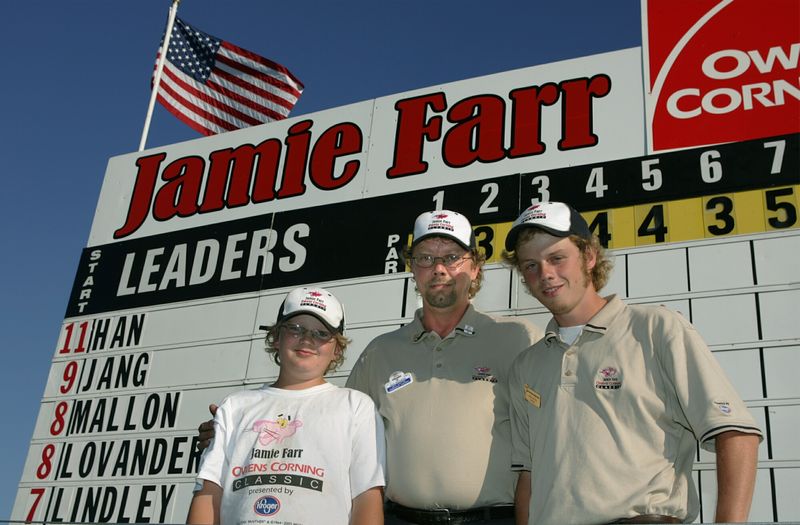
Farr has always been generous with his hometown. The golf classic he discussed above is now the Jamie Farr Owens Corning Classic. The tournament has raised more than $6 million dollars for local children’s charities.

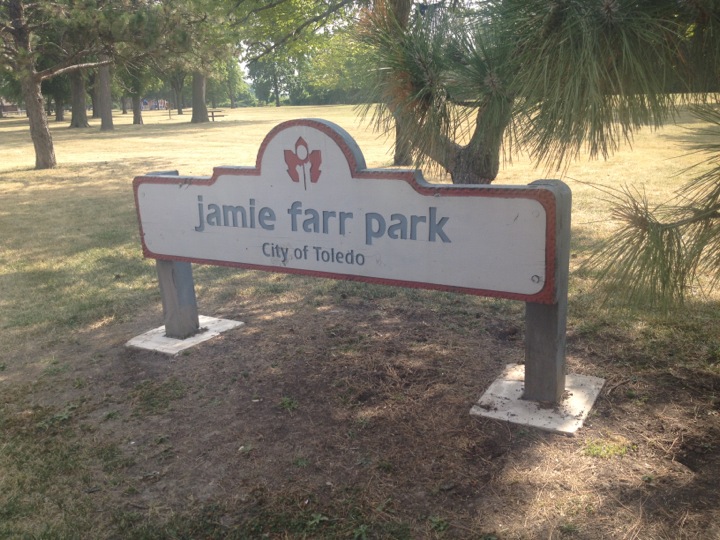
The city has shown its love for Farr as well. The park in Toledo where Farr used to hang out when he was younger was renamed “Jamie Farr Park” in his honor on July 5, 1998. About the park, he said, “I wanted to be an actor, a famous actor, and I wanted my hometown of Toledo, Ohio, to be proud of me.” Farr spoke to about four hundred admirers and was quoted in the New York Post: “Jamie Farr Park is certainly a highlight of my life and career.”

farrparksign

Farr also made a gift of his scripts to the University of Toledo. The scripts were from movies and television, including M*A*S*H, After M*A*S*H, The Blackboard Jungle, With Six You Get Eggroll, No Time for Sergeants, Who’s Minding the Mint, among others. He also donated call sheets with each script. Call sheets list the personnel and equipment needed for each day of productions, the scenes being filmed, shooting schedules, and the scenes to be filmed.

Farr has also appeared in plays during the second half of his career. In the 1990s, Farr  played the role of Nathan Detroit in a Broadway revival of “Guys and Dolls.” Farr is still active in regional theater and guest-stars occasionally on television.

farr1

In 1996–97 Farr went on a national tour with “The Odd Couple,” playing Oscar Madison, playing opposite his old friend William Christopher in the role of Felix Ungar.

Most recently he was in the national touring production of “Say Goodnight, Gracie,” a one-man show about longtime entertainer George Burns.

farrbook1


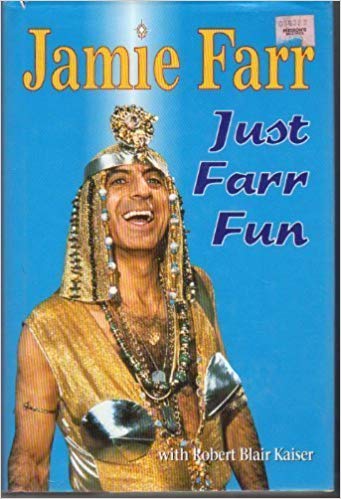
Farr has also tackled being an author. In 1994, he published his autobiography, Just Farr Fun. With his wife, he also wrote a children’s book, Hababy’s Christmas Eve, a Christmas book where the story is told from the view point of the animals.

farr4guideposts

Jamie Farr has had a successful and fun career. He has been a movie star, a television celebrity, an author, and a Broadway performer. He was not bitter about his role as Klinger but accepted the benefits that came with it and made the most of it. He has also been generous, raising money and publicizing Toledo. He truly sounds like a very nice man. It was fun to learn more about his life.

Shelly Fabares: A Life Spent in the Entertainment Industry

fabares2

Michele Ann Marie (Shelly) Fabares was born in 1944 in California.  She began acting at 3 and at age 10 she appeared in her first television show. Her aunt was the actress Nanette Fabray who also began acting as a child, and then went on to musical theater.

During the 1950s, Shelly appeared in several television shows including Annie Oakley, The Loretta Young Show, and the Twilight Zone, in addition to 8 others. She was part of the cast of Annette in 1958, playing Moselle Corey.  The star of the show was Annette Funicello.  She is an orphan who grew up in the country and now lives with her wealthy aunt and uncle, not fitting into the snobby community. The show was cancelled after 19 episodes. Annette was a life-long friend of Shelly’s. They met in seventh grade, and Shelly was at her bedside when she passed away from multiple sclerosis in 2013.

Later that year she was offered the part of Mary Stone on The Donna Reed Show. The show was on the air seven years. Shelly left the show in 1963 to pursue a film career but stayed close to the cast, especially Donna Reed who was a second mother to her. Paul Petersen and Fabares both described how amazing Donna Reed and Carl Betz were during their time on the show.  Realizing how tough the industry can be for young kids, they protected them and loved them as second parents. Both Shelly and Petersen pursued their music interests on the Donna Reed Show. In 1962, she recorded “Johnny Angel” which went to number 1 on the Billboard 100.
Shelly appeared in 13 films in the 1950s and 1960s, including three with Elvis Presley—Girl Happy in 1965, Spinout in 1966, and Clambake in 1967. She also appeared on television on The Ghost and Mrs. Muir, Daniel Boone, Lancer, and Bracken’s World. Shelly married Lou Adler in 1964.

fabares12

Her acting career continued to skyrocket in the 1970s.  She appeared as Joy Piccolo in Brian’s Song in 1971. She appeared in 26 television shows, three of them regular series. The Brian Keith Show was on the air from 1972-74. Keith was Dr. Sean Jamison and Shelly played his daughter, Dr. Ann Jamison.  The two of them ran a free pediatric clinic in Hawaii financed by a wealthy patron. Sticking with the medical theme, she joined the cast of The Practice in 1976-77 working with Danny Thomas. She played Jenny Bedford, the daughter of Dr. Jules Bedford. At the end of the decade she tried another sitcom, Highcliff Manor, which only lasted 6 episodes. I don’t remember this sitcom, but it seems an odd one: the manor, owned by Fabares’ character, Helen Blacke, was home to the Blacke Foundation, a research institute staffed by an eclectic group of eccentric characters. It sounds a bit like Scorpion, maybe just a couple decades’ too early.

She continued working on television in the 1980s, appearing on Fantasy Island, Mork and Mindy, Matt Houston, The Love Boat, Newhart, and Murder She Wrote.  She joined the cast of One Day at a Time, playing Francine Webster between 1978-1984. She also made the movie Hot Pursuit in 1987. The description of the movie is that young Danny is following his rich girlfriend’s family to the Caribbean. But suddenly he simply must take a chemistry test and cannot go with them. After they have left, he gets a leave from his professor and takes a plane to find them. But he is not quite sure where they are, and meets smugglers, crazy captains, and murderers. Fabares’ marriage to Lou Adler legally ended in 1980, although they had been separated since 1966. In 1984, she married M*A*S*H star Mike Farrell.

fabares8

Entering her 5th decade of acting, she made her last film, Love or Money in 1990. She continued her television work appearing in A Whole New Ballgame and the Justice League.  She also had a regular gig providing the voice for Martha Kent in Superman from 1996-99. In addition to the Donna Reed Show, the show that Fabares is best known for was Coach which ran throughout most of the 90s, from 1989-1997. As Christine Armstrong, she is the girlfriend, and later, wife of Coach Hayden Fox, played by Craig T. Nelson.  The show revolves around the football team that Fox coaches.  He lives for sports while Christine is not the least interested.  This causes a bit of friction and miscommunication in their relationship.

Fabares had a long and full career.  While her career kept her busy, she had to deal with several major life situations:

DONNA REED;SHELLEY FABARES

Donna Reed, her second mother, passed away in 1986 from pancreatic cancer.  Shelly adored Donna, and Donna’s final words were to make sure Shelly’s birthday gift was wrapped and delivered.

At the same time Reed was dying, Fabares’ mother was suffering from Alzheimers.

In 2000, Shelly needed a liver transplant because she had autoimmune hepatitis.

She had to deal with the death of her life-long friend Annette Funicello in 2013.

Few actors can begin acting as a child, transition into teen parts, transition into movie roles, and then continue acting as an adult in sitcom series, but she did that beautifully. Hopefully she and hubby Mike Farrell continue to enjoy a long and well-deserved retirement.

fabares1