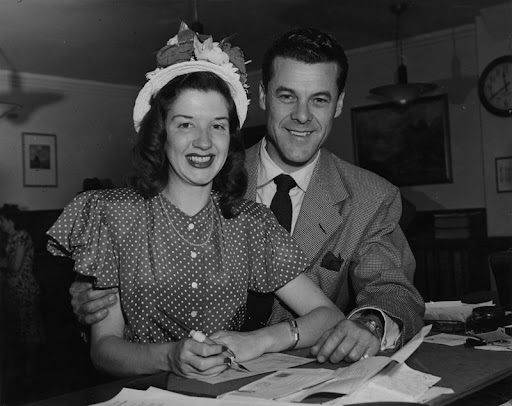
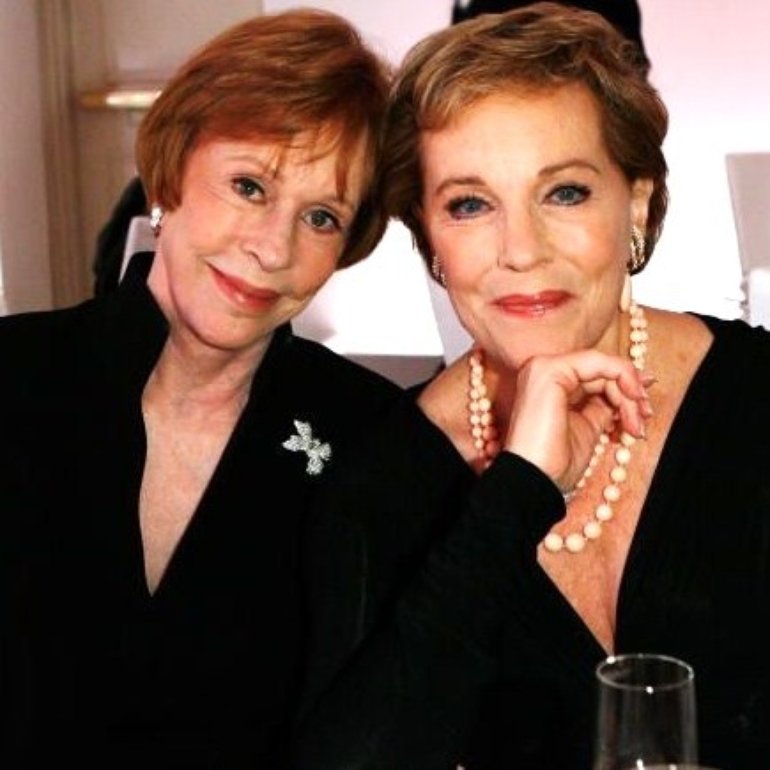
The Judy Garland Show: Too Much Turmoil

Our theme for March is “Variety is the Spice of Life.” We are looking at several variety shows that debuted in the sixties and seventies. Today we are learning about Judy Garland’s show. It’s hard to even know what to call this show. There was constant turmoil during the season it was on the air. It changed personnel, titles, formats, and all this after Garland and CBS had been at odds on past projects before this one even began.
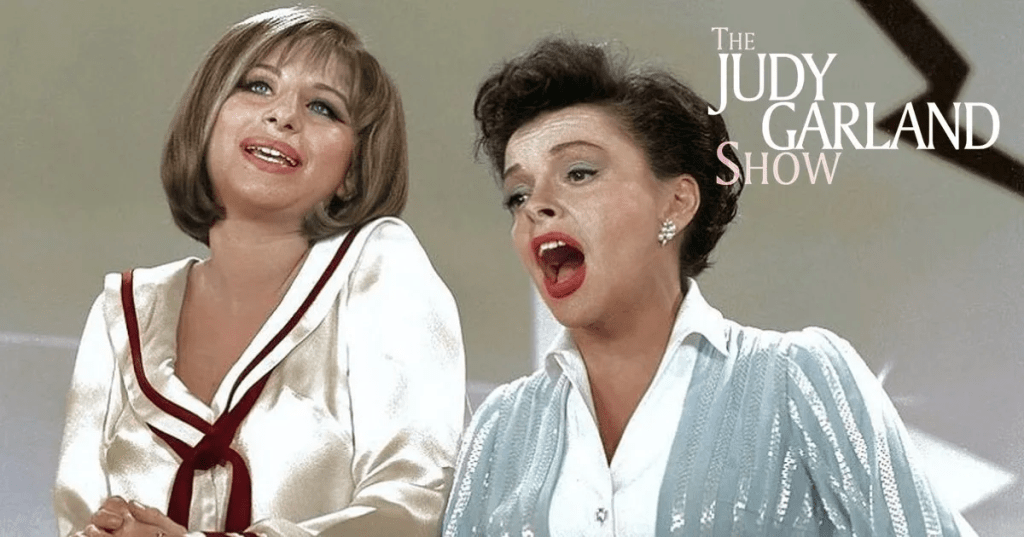
📷barbaraarchives.com

Garland had not been comfortable committing to a weekly series, but she ran into some financial difficulties that forced her to rethink her views on television. When this show was being planned, Garland and CBS had been feuding for five years. Garland had been given a $300,000 contract with CBS to produce three specials. The first special in 1956 had great ratings, but then things fell apart. Garland’s husband and manager Sid Luft could not find any common ground with the network on the format of the second special. Garland filed a lawsuit for libel and breach of contract.

In 1961, as a negotiation of sorts, Garland and CBS agreed to try the specials again. In 1962 her special with Dean Martin and Frank Sinatra aired and received four Emmy nominations. At that point, CBS and Garland began to talk about a weekly series beginning in 1963. The third special with Phil Silvers and Robert Goulet was a pilot for the new series. It also received an Emmy nomination.
📷leighwiener.com

The show was cancelled after 26 episodes. Those 26 episodes had three different producers.

George Schlatter produced the first five episodes of the series. The job was originally offered to Bob Banner, but he declined because he was producing a series for Garry Moore and he didn’t want to move from California to New York. When he said no, Bob Finkel was approached, and he declined for the same reason. To make it more complicated, the network offered the job to a local guy, Bill Hobin, who worked with Sing Along with Mitch and was already on the east coast. He accepted the offer, only to learn that people associated with the show had also offered the job to George Schlatter who was willing to move to New York, and he had also accepted the position. It was settled with Schlatter retaining the producer role and Hobin becoming director, an awkward way to begin.

Schlatter got busy hiring. He brought on Mort Lindsey as orchestra conductor, Gar Smith as art director, Edith Head as costume designer, Mel Torme as musical arranger, and Danny Daniels as choreographer.
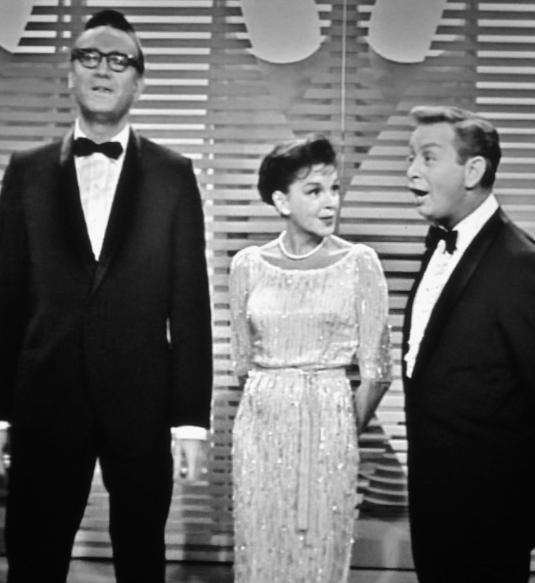
📷imdb.com

Schlatter hired Jerry Van Dyke as a series regular, and a few recurring pieces were created. In addition to performing, Garland had a segment “Born in a Trunk” where she told stories about her career. She also had a chat with a “surprise” guest every week. Van Dyke did some stand up and also showed up in sketches throughout the show with Judy. “Maybe I’ll Come Back” was chosen as the closing song over CBS objections, preferring her iconic “Over the Rainbow.”

I’m not sure why it changed after all the hoopla about trying to make producers move, but the show was taped at Studio 43 in Los Angeles. The studio underwent a $100,000 renovation for the show. Some of the changes were necessary and some were silly. A revolving stage was created and raised a bit which made sense. Judy’s dressing room was a replica of her Brentwood home which seems unnecessary and the hallway from her room to the stage was the yellow brick road.

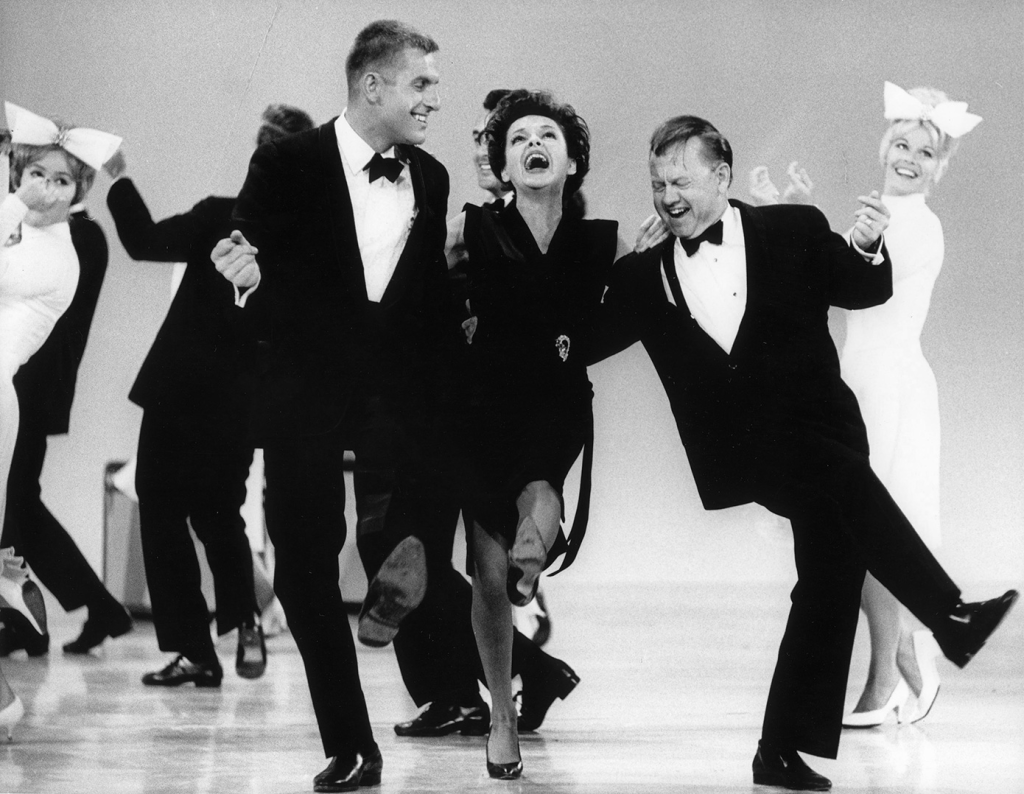
Judy did put her foot down about who her first guest would be; she wanted her old partner Mickey Rooney. It was filmed that way, but the way the episodes were aired made it look like the tenth episode. The seventh show taped with Donald O’Connor was the first episode that aired.
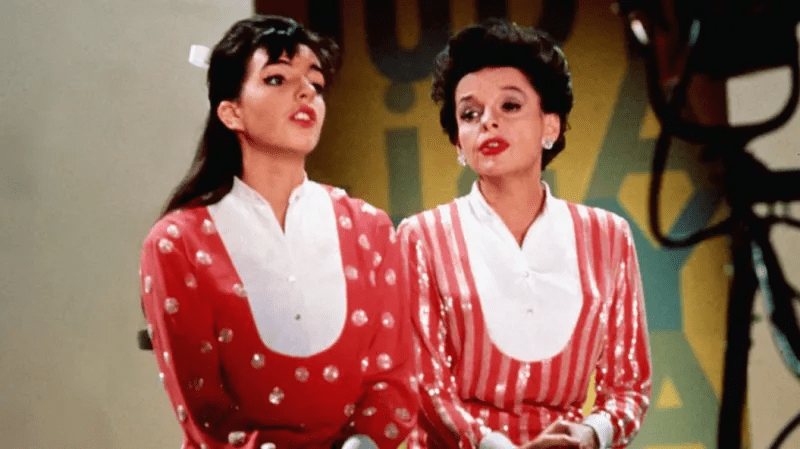
📷variety.com

The taping of the first show with Rooney included a star-studded audience including Lucille Ball, Jack Benny, Clint Eastwood, Agnes Moorehead, Dick Van Dyke, Natalie Wood and gossip columnists Hedda Hopper and Louella Parsons. For this opening, Judy wanted to have Cary Grant in the audience as well and introduce her with his iconic “Judy! Judy! Judy!.” Grant, however, passed because he had never actually said this line in any movie and he was tired of everyone associating it with him.

Schlatter was fired after a month and a half. Norman Jewison came in for the next eight shows which he indicated was all he was willing to do.

He had not liked Van Dyke’s jokes about Garland’s shortcomings, and he introduced a segment “Be My Guest” which Mel Torme wrote to allow Garland and her guest to perform together. Van Dyke was not popular with viewing audiences, so he was also gone as were many of the writers and the choreographer.

Bill Colleran jumped in as producer for episode 14 while the other episodes were still airing. He would remain with the show until it was canceled. Once again, the format was changed, focusing on Garland’s musical performances. Sometimes comedy was part of the show but only when the guest star was a comic like Bob Newhart or Shelley Berman.
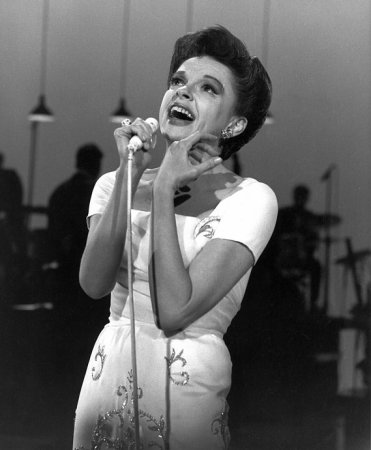
📷imdb.com

Ratings had not increased through all of these massive changes, and the show was canceled before the end of January. The final seven shows were taped after the crew knew the show was done. At this point, the show was basically just Judy or Judy and a guest singing for sixty minutes, and the title became Judy Garland in Concert.

Torme stuck with the show through the entire mess and then was fired after 22 episodes when everyone knew there were only four left, and he was replaced by Bobby Cole, someone Garland had just met. He filed for breach of contract and included the details in his memoir. Fans reported they loved Garland, they just didn’t like anything else about the show.

Critics were of differing opinions. The San Francisco Chronicle characterized the show as “tasteful, elegant and exciting.” while the New York Herald Tribune wrote that “Miss Garland is fine, just fine. The rest of the show, however, needs help.”

Fans of the show formed a “Save The Judy Garland Show committee” and organized an early letter-writing campaign on behalf of the series, but their efforts were not enough to prevent the show from being cancelled. The final Judy Garland Show, another concert episode, was broadcast on March 29, 1964.

Schlatter discussed his time on The Judy Garland Show. He was hired after working for the Dinah Shore Show. He said he encouraged the child in her to come out and the two of them had a lot of fun. He said the first five shows were filmed on time and under budget, but he got fired after they were done. CBS told him the shows were “too special.” They wanted Garland to show more warmth which Schlatter thought she already did. After he left, the show featured her sitting on stools and talking more rather than performing.
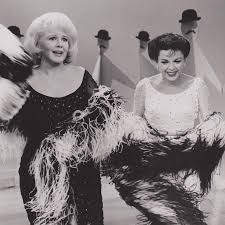
📷instagram.com

There seem to be a lot of reasons why the show only lasted one season. There was the revolving door with cast, writers, producers, and a lot of turmoil about the format of the show. CBS president James Aubrey was said to “intensely dislike” Judy for some reason and did not keep that a secret. The show was up against Bonanza on NBC which almost insured its demise. Bonanza was in the top ten, a very popular program. And, this was during a time when the family probably had one television and the family often gathered to watch it together Sunday nights. Most families are going to choose Bonanza over The Judy Garland Show.

While Judy needed the money, the pressures and stress filming this show did not help her mental health. As someone who had experienced addiction issues for a while, she had trouble dealing with the infighting and criticism of her show although most critics went out of their way to give her positive feedback. Sadly, within five years of the show being canceled, Garland was dead from an overdose of sleeping pills. It’s too bad that this show which might have brought her financial comfort and happiness just added to her stress in the entertainment business.

Jimmy Cross: Found His Career Going Up (And Down) in 1957

It’s 2026! And it’s January, so we are starting the year off with “Worth a Million.” This month we are learning about the careers of several of the cast members from How to Marry a Millionaire. This show debuted in 1957 and aired for two years.

📷tmdb.com The first year cast of women

According to imdb.com, the plot is “Motherly Mike, ditzy but sexy Loco, and sensible Greta move to the big city to find themselves wealthy men to turn into husbands. After the first year Greta gets married with Gwen moving in as the new roommate in this syndicated series.”

The six members of the cast included Merry Anders (Mike), Lori Nelson (Greta), Barbara Eden (Loco), Jimmy Cross (Jesse), Lisa Gaye (Gwen), and Joseph Kearns (Mr. Tobey). During the past decade, we have learned a lot about Barbara Eden, best known as Jeannie in I Dream of Jeannie and Kearns who we remember as Mr. Wilson in Dennis the Menace. So, this month we are learning about the four remaining stars, and we begin today with Jimmy Cross.

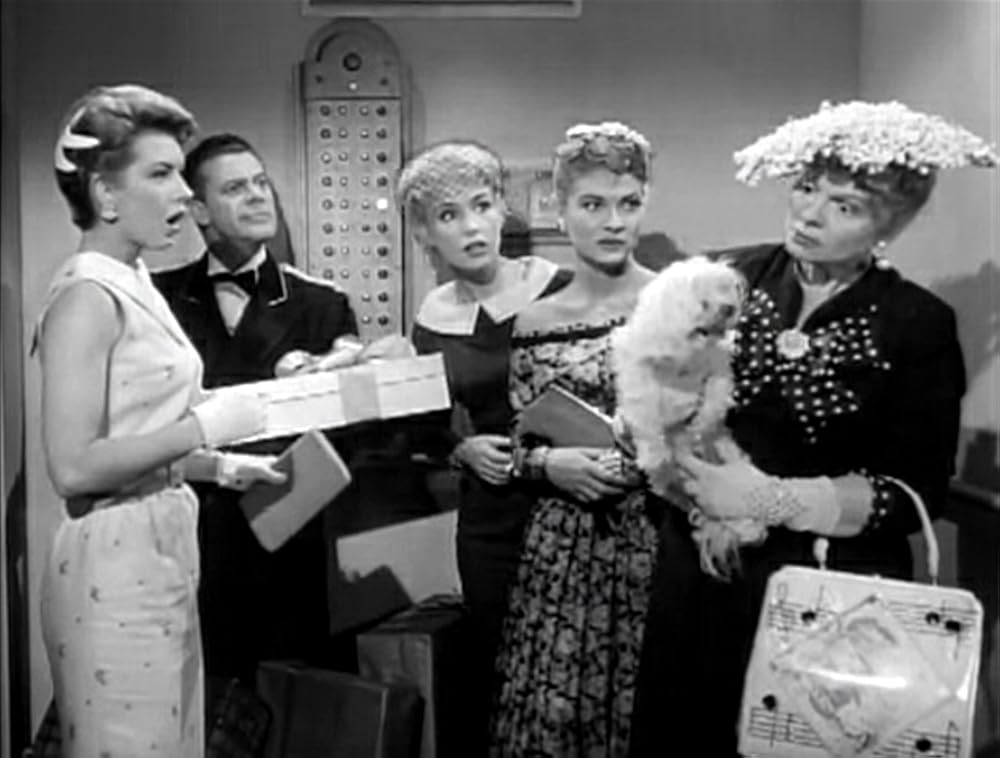
📷imdb.com Cross as elevator attendant

Cross was born in 1907 in New York. At age 40, he married actress Peggy Ryan, but they divorced after the seven-year itch. Ryan was a popular face for a while. She and Donald O’Connor were supposed to be the next Judy Garland/Mickey Rooney couple. Ryan’s parents were Vaudeville dancers, and she was on stage by age two. She was an amazing dancer and singer. After she and Cross divorced, she tried another short-term marriage to Ray McDonald before meeting Eddie Sherman whom she was with for almost fifty years. You might remember her as Jenny, Steve McGarrett’s secretary on the original Hawaii Five-0.

On How to Marry a Millionaire, Cross played the elevator man, at age 50, who worked in the apartment building where the girls lived. He sometimes helps and sometimes hinders the trio with their get-rich-husband schemes.

This was the only series he costarred in, but he did show up on The Red Skelton Show 46 times.

Cross typically played a background role, often a bartender, drunk, or photographer. However, he was busy and appeared on almost every popular show during the sixties and seventies, garnering almost 100 credits during those decades. His last role was in BJ and the Bear in 1979, two years before his death.

📷thevalleytimes.com With Wife Peggy Ryan

Cross also had a decent movie career. Again, he was not front and center but had some fun parts and if you look quickly, you will see him in several popular movies including North by Northwest, Bells Are Ringing, Hello Dolly, and The Poseidon Adventure.

I wish I knew more about Cross. There just isn’t much information out there considering how long he worked in the entertainment industry. This is one of those cases where his work might have to speak for itself. That said, this show got a lot of good reviews when it came out and Cross, while not being a star, added a fun element to the episodes he was in.

When She Tugged on Her Ear, She Tugged At Our Hearts

Today’s topic had me thinking about how much better things are in a group.  Roses are beautiful on their own but pair them with some complementary-colored blooms and everything comes alive.  Juicy watermelon is perfect on a hot, summer day, but combine it with berries, kiwi, and peaches, and all the tastes meld together. One book is a treasure on its own, but put ten together, and you have a library. There’s never a bad choice when deciding between vanilla, chocolate, or strawberry ice cream, but someone invented Neapolitan so you could get all three.

This works for our show this week as well.  Look at the work of Carol Burnett, Harvey Korman, Tim Conway, Vicki Lawrence, and Lyle Waggoner and you will find gems, but put them together and you have a sparkling jewelry box full of wonderful things.

cast

These performers came together between 1967 and 1978 working on The Carol Burnett Show. Let’s see how that came to be.

Carol Burnett – Carol is a truly versatile performer; she acts, sings, does comedy, dances, has been on the stage, and has appeared on the big screen as well as the small screen. America has always had a love affair with her.

carol1

She was born in Texas and moved to Hollywood with her grandmother. One of her first jobs was working as an usherette.  She received an anonymous gift of money that covered a year at UCLA where she majored in journalism. At one point she decided to switch her major to theater arts and English and planned to be a playwright. She gained some experience performing in several college productions. Her good luck continued when she received another gift – a $100 interest-free loan to move to New York City to try her hand at musical comedy.  She worked as a hat girl and began her acting career.  She married Don Saroyan in 1955. In 1959 she got her first big break, appearing in the Broadway show, Once Upon a Mattress for which she received a Tony nomination. Around this time, she became friends with Jim Nabors; he would be a life-long friend and her daughter’s godfather. When the Carol Burnett Show started, he became the first guest every season and was her good luck charm.

Soon after she began appearing on television and won her first Emmy in 1962 for her work on The Paul Winchell Show. This was also the year she and Don divorced. In 1963, she married Joe Hamilton, and they had three children. Lucille Ball had become a mentor to her, and they also remained friends for life.  Lucy sent her flowers every birthday.  On her birthday in 1989, Carol awoke to the news that Lucy had died.  She received her flowers later that day.

carol9

She did several specials with Julie Andrews, Dolly Parton, and Beverly Sills. Carol had a clause that she could decide to do a permanent variety show which would expire in 1967. Carol decided to take advantage of the clause and do the variety show.  The network tried to talk her out of it because they said variety shows tended to be men’s territory.  They offered her a sitcom of her own, but luckily for us, she stuck to her guns.

In 1974, she went back to the stage to star with Rock Hudson in I Do I Do. In 1984 she and Joe divorced.  She would win her second Emmy for her work on Mad About You.

In 1995, she returned to Broadway to appear in Moon Over Buffalo which gained her a second Tony nomination.

Carol was the Grand Marshal for the 109th Rose Bowl Parade. She has written five books. She has remained close friends with many of her costars including her show cast, Jim Nabors, Betty White, Beverly Sills, Julie Andrews.

Not only did she help a young Vicki Lawrence, but other stars looked to her for help as well. Jim Carrey sent her his resume at age 10.

In 2001, Carol married again. Her current husband Brian Miller is a drummer for the Hollywood Bowl Orchestra. Most recently she guest starred on several episodes of Hawaii Five-0.

Harvey Korman – Born in Chicago, Korman served in the US Navy during World War II. After the war, he studied at the Goodman School of Drama.  He attended classes at DePaul University and the Chicago Art Institute. During 1950, 1957, and 1958 he was part of the Peninsula Players in Fish Creek, Door County, Wisconsin.

carol19

His first television role was on the Donna Reed Show in 1960. He also married that year and they had two children. He continued to act on television on such shows as Dr. Kildare, Perry Mason, Route 66, Jack Benny, Hazel, Here’s Lucy, and Gidget – 30 shows in all; he also appeared in many movies. You might recognize his voice if you watch The Flintstones; he played the role of the Great Gazoo. His first big break was on The Danny Kaye Show in 1963. With his expressive voice, he played a wide assortment of characters. In was due to his work on Danny Kaye, that Carol recruited him for her show in 1967.

In 1977, he made the tough decision to leave The Carol Burnett Show and star in his own vehicle, The Harvey Korman Show.  The show was about an out-of-work actor Harvey Kavanaugh who lived with his daughter. The critics thought Korman was wonderful in the show, but the show got very low ratings and was cancelled after six episodes. Then he was an out-of-work actor in real life. Dick Van Dyke had taken his place on the Carol Burnett Show so he could not return.

carol20

After his show fizzled out, he went back to movies. In 1977 he divorced his first wife. In 1982 he remarried and had two more children.  Korman continued to make tv appearances on a variety of shows such as the Love Boat, Ellen, and ER. He also made movies. He is probably best known for two of his movies: Blazing Saddles and High Anxiety.  In 1983-84, he appeared in Mama’s Family with Carol Burnett and Vicki Lawrence. In 2008, he passed away from a ruptured abdominal aortic aneurysm that was diagnosed four months prior.

Tim Conway – Conway was born in Ohio and joined the Army, serving at a radio station. After the war, he studied at Bowling Green State University, majoring in tv and radio. He married in 1961 and they had 6 children.

tim

He was discovered by Rose Marie and became a regular on The Steve Allen Show. He earned even more fame when he joined the cast of McHale’s Navy in 1962. McHale’s Navy had two different formats.  I was surprised to learn that Joseph Heller (author of Catch-22) wrote one episode but removed himself from the credits when he had an argument with the producer. Conway became very close to Ernest Borgnine and considered him his mentor. Later the two of them would work together in SpongeBob Square Pants as old superheroes.

After McHale’s Navy, he was cast in Rango. A comedy/western, Conway played Rango. He was an inept Ranger, but his father was the head of the Texas Rangers, so he was moved to a very quiet post.  Unfortunately, a crime wave broke out after his arrival. The show lasted for 17 episodes.

Conway got his own show in 1970, but it never really worked and was cancelled after 12 episodes. He played an airline pilot who was not very good at flying. He and his partner owned a decrepit airplane and they were always fighting creditors, barely making a living.

He was on Carol Burnett throughout the years of her show, and in 1975 he became a regular. When the show ended, he kept busy with television shows, appearing in more than 50 shows including Newhart, Larry Sanders, Drew Carey, Ellen, Yes Dear, Hot in Cleveland, Laverne and Shirley, The Love Boat, Roseanne, and Ally McBeal. He also performed around the country with Harvey Korman and began making his Dorf videos. In 1984 he married his current wife.


Vicki Lawrence –  Vicki grew up in California. When Vicki Lawrence was 17, she wrote Carol a fan letter.  She was entered in a Miss Fireball contest, and someone told her she resembled Carol. She asked for some advice about her performance. Carol not only gave her advice – she drove all the way to watch the contest.  She told her they would talk about her career. A short time later, while Vicki was singing with the Young Americans, Carol offered the inexperienced girl a regular role on her show.

vicki

Vicki was mentored by both Harvey Korman and Carol Burnett, and her talent blossomed during her years on the variety show. In 1974, she recorded the hit song “The Night the Lights Went Out in Georgia.”

In 1983, she was offered her own show based on one of the Carol Burnett skits, Mama’s Family.

She hosted Win, Lose, or Draw and has appeared in stage performances. She spends most of her time now giving speeches for women’s groups and charities.

Lyle Waggoner – Born in Kansas City, Kansas, Waggoner was the heart throb of the show. He sold encyclopedias door to door. To jump start his career, he appeared in summer stock. He received roles in a lot of bad sci fi and beach party films. His career might have been different because he was in consideration for Batman, but the part went to Adam West. He was hired as the emcee of Carol’s show but progressed to being a part of the ensemble playing in a variety of skits. He left The Carol Burnett Show in 1973. He was offered a role in Wonder Woman in 1975. His career never picked up after that. He now runs a rental trailer company which is the largest one in Hollywood. He has been married more than fifty years, and he and his wife have two sons.

carol27

The Carol Burnett Show

The show was the best and the last variety show to be on television. Carol wanted to develop her own cast. She handpicked her costars. She hired The Ernie Flatt Dancers to do all the choreography. The head male dancer for the run was Don Crichton.

Artie Malvin was the musical writer. Carol used a live 28-piece orchestra conducted by Harry Zimmerman for the first three years and Peter Matz for the final eight years. She had a guest star on every week, often a singer.  Some of the performers included Ella Fitzgerald, Bing Crosby, Mel Torme, Perry Como, Lena Horne, The Carpenters, Sammy Davis Jr., and Ray Charles.  Steve Lawrence was on 25 times and Eydie Gorme performed 13. Unfortunately, when the show went into syndication, it became a half-hour show, and the musical numbers were cut.

Sonny and Cher taped next door and Carol often popped in on their taping and Sonny and Cher visited her show.

Some of Carol’s favorite guests included Bernadette Peters, Alan Alda, Roddy McDowell, Paul Lynde, Bob Newhart, Rita Hayworth, James Stewart, Gloria Swanson, Vincent Price, the Smothers Brothers, Donald O’Connor, Lucille Ball, Rock Hudson, Mickey Rooney, Betty White, and Nanette Fabray. The only guest star Carol was not able to book was Bette Davis.  She demanded too much money.

The Carol Burnett Show received 22 Emmy Awards during the 11 seasons it was on the air. Harvey Korman was nominated for six of those and won four. Lawrence also received five Emmy nominations and one win.

Bob Mackie was her favorite designer, and he designed all the costumes for The Carol Burnett Show. Typically, he had to design 60-70 outfits per week, adding up to 18,000 over the course of the show.

For the first 3-4 minutes of each show, Carol appeared in a Bob Mackie creation and took questions from the audience. Some of these are the funniest parts of the show.

The cast would rehearse every day, and they did two tapings on Friday.  If the first taping went fine and they got what they needed, they would let Tim Conway improvise on the second taping and many of his unrehearsed moments made it into the show.

The show aired on Monday nights up against Big Valley and I Spy. In Season 5, they were moved to Wednesday nights up against Adam-12 on one network and Bewitched and The Courtship of Eddie’s Father on the other. In 1972, they made their final move to Saturday nights. The final year they faced some stiff competition against The Love Boat.

Some of her favorite regular skits were Stella Toddler where Burnett played an older character who always seemed to get tripped, whacked by something, or knocked down; Mrs. Wiggins who was an inappropriately dressed and incompetent secretary to Mr. Tudball; a woman who watched commercials on tv —  a cast member showed an item each week that drove the woman crazy; Marion from Canoga Falls in “As the Stomach Turns”; Chiquita, Burnett’s imitation of Charo; Nora Desmond, a has-been silent film star and her butler Max; The Old Folks where Burnett and Korman talked on the porch reminiscing; and Shirley Dimple, based on Shirley Temple.

Carol loved the parodies they did of old movies.  Some of the original stars loved them, and some were quite unhappy with the comedies. Her favorite was “Went with the Wind” with Starlett O’Hara, Rat Butler, and Mr. Brashley. The curtain rod in the dress was conceived by Bob Mackie. Coming down the stairs, Starlett replies to Rat’s compliment on the dress, “Thank you.  I saw it in the window and couldn’t resist.” The dress is now at the Smithsonian Museum. She also liked “Pillow Squawk”, a Doris Day parody.

She was always complimentary about her entire cast. One of her quotes was “When you play tennis, it’s important to play with a better player because it makes your game better.  Well, Harvey made my game better. I miss him dreadfully. And Tim Conway, God bless him, is just genius when it comes to improvising, coming up with stuff that we never rehearsed.”

These compliments were returned by her costars. Harvey Korman was quoted as saying, “We were an ensemble, and Carol had the most incredible attitude. I’ve never worked with a star of that magnitude who was willing to give so much away.”

carol18

Of course, everyone watches to see how Tim Conway makes Harvey Korman laugh during their skits.  Apparently, Tim had a knack for improving the scripts and throwing in lines and action that Korman didn’t anticipate. Here’s Tim Conway on Harvey Korman: “He was one of the brightest people I’ve ever met, but the man could not tie his own shoes . . .  I would put him on constantly . . . We were on an airplane and we refueled in Arizona. Taxing on the next runway, I said, ‘Harvey, I don’t know if the guy put the gas cap back on. It was on the wing and now it’s not.’ Harvey got worried. So, he got up and went to the pilot and said, ‘Your gas cap’s not on.’ The pilot just looked at him.  There is no gas cap.”

One of the memorable parts of the show is the opening and closing theme song.  She always ended the show with “I’m so glad we had this time together, just to have a laugh or sing a song. Seems we just get started, and before you know it, comes the time we have to say so long.” Then she tugged her ear. She would tug on her left ear which was a message to her grandmother that things were going well, and she missed her.

No matter how many years go by, the show remains a timeless comedy.  It has a balance of silliness and savvy. It’s hard to believe that the generations growing up in the 1980s and 1990s have never seen a variety show.  I love to catch reruns of this show.  I laugh out loud through the show.  Thank you, Carol for spending time with us. The show currently can be shown on Me TV at 10:00 pm with Mama’s Family airing at 8:00 pm.