The Dean Martin Show: One Day of Work a Week

Our theme for March is “Variety is the Spice of Life.” We are looking at several variety shows that debuted in the sixties and seventies. After discussing three shows that weren’t super successful on television, today we look at a long-running show: The Dean Martin Show.
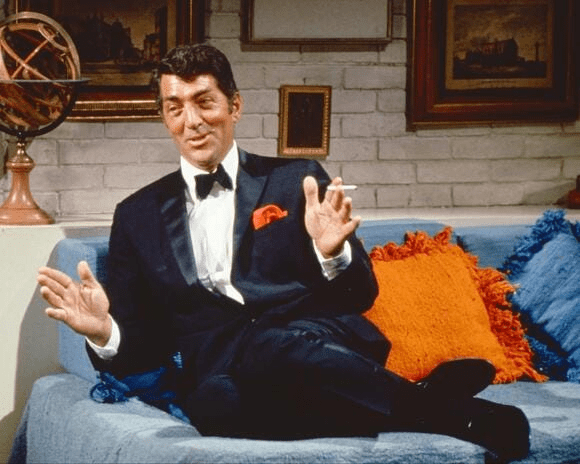
📷chrisnersinger.com

Debuting in 1965 and lasting nine seasons, The Dean Martin Show was on NBC. His theme song was the iconic “Everybody Loves Somebody.” For most of its life, it was on Thursday nights. Season nine brought a change of nights as well as a new format.

Like Judy Garland, whose show we learned about last week, Martin was not sure he wanted to commit to a television schedule, feeling as though he would not be able to take on his favorite movie roles and nightclub performances. So, he asked for a “list of musts” that he knew NBC would not agree to. He asked for a lot of money, a one-day-a-week work schedule of Sunday, and permission for him to only announce ads and sing when he felt like it. Imagine his surprise when they agreed to every demand.

Martin always presented as a shy, drunk playboy, and he continued with this image for the television show. He made it obvious that he was reading his lines from cue cards and if he goofed, it became part of the taped show.
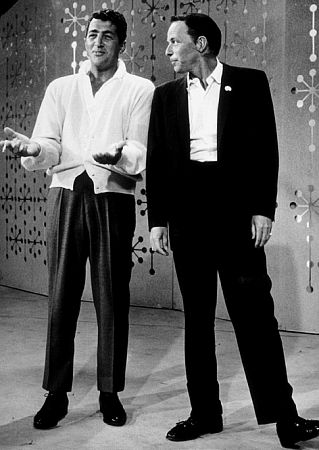
📷imdb.com

The show had a few recurring features every week. Martin typically sang two songs per show. Sometime during the show, a knock on the closet door led to Martin opening the door to reveal a celebrity guest and Martin himself didn’t know who would be on the other side of the door. The show usually ended with a production number featuring Martin and his guests.

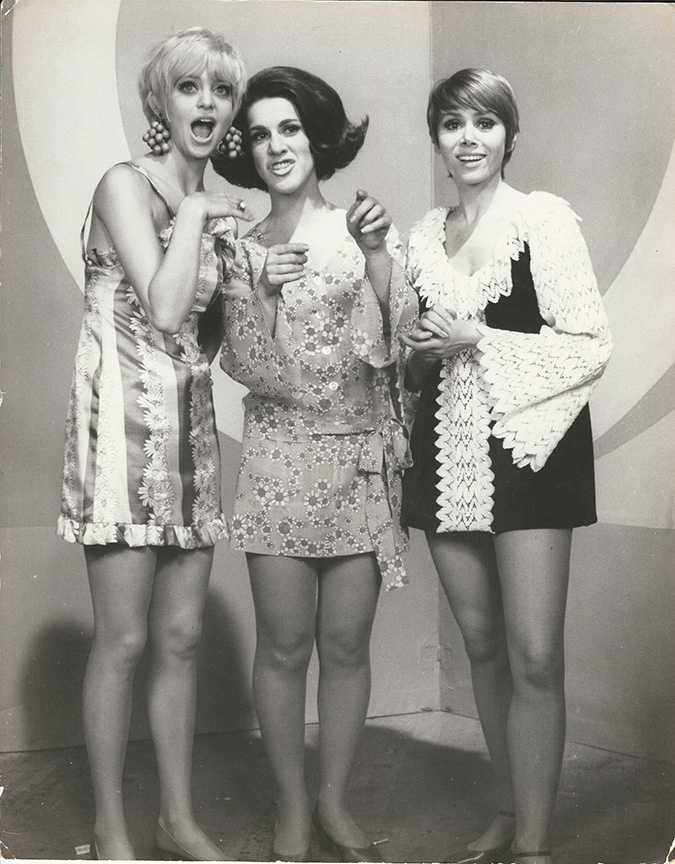
Cast members were hired who did sketches throughout the show. These stars included Tom Bosley, Rodney Dangerfield, Dom DeLuise, Kay Medford, Charles Nelson Reilly, and Nipsey Russell. In later seasons, The Golddiggers appeared. This was a group of chorus girls who first started on the summer replacement show. Not only were Martin’s goofs part of the show, but Charles Nelson Reilly once told a story that on the way to rehearsal, he was driving a convertible, and the script flew out of the car. He wasn’t too concerned though because he said the way the show was done, the script really didn’t matter much.

If you name a celebrity, they were probably on this show. Just a small sampling includes Eddie Albert, Steve Allen, Louis Armstrong, Lucille Ball, Tony Bennett, Rosemary Clooney, Sammy Davis Jr., Phyllis Diller, Duke Ellington, Ella Fitzgerald, Bob Hope, Ethel Merman, Bob Newhart, Dinah Shore, and Frank Sinatra.

The show was nominated for an Emmy 12 times including best variety, music or comedy series in 1968, 1969, and 1970.
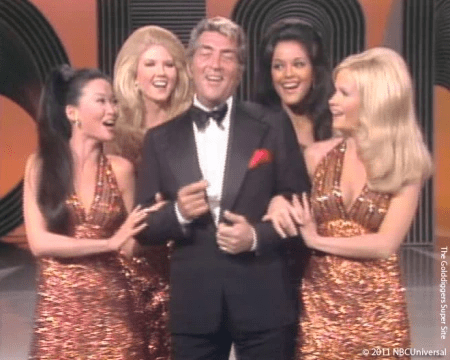
📷wordpress.com Golddiggers

The show had decent ratings for the first year but after that it was never great, never awful. It was up against The Thursday Night Movie on CBS and a variety of different shows on ABC which changed from year to year all eight seasons. For the final season, the show was moved to Friday nights, against the popular Love American Style. From 1973-1974 it was titled The Dean Martin Comedy Hour and episodes were celebrity roasts.

The Television Academy did an interview with Greg Garrison, producer and director for The Dean Martin Show. He said there was some turmoil in the first year trying to figure out what this show was. He said they had Bertha the Elephant on one episode, and no adults were interested in that at 10 pm.

Garrison said Martin was extremely generous. Every year he gave Garrison a ten percent ownership in the show until he had 50%. Garrison then told him to stop offering him more because 50% was the most he would agree to. He described Martin as the kindest, nicest, and most generous man he knew. Garrison said he was able to do whatever he wanted to on the show and Martin never second-guessed him. Garrison said one of the hardest decisions he made was cutting Zsa Zsa Gabor’s sketch. He said she gave him no end of trouble, so he finally said they were done, and the sketch was cut. She protested and he told her she would get her check, but the skit was done and it was.
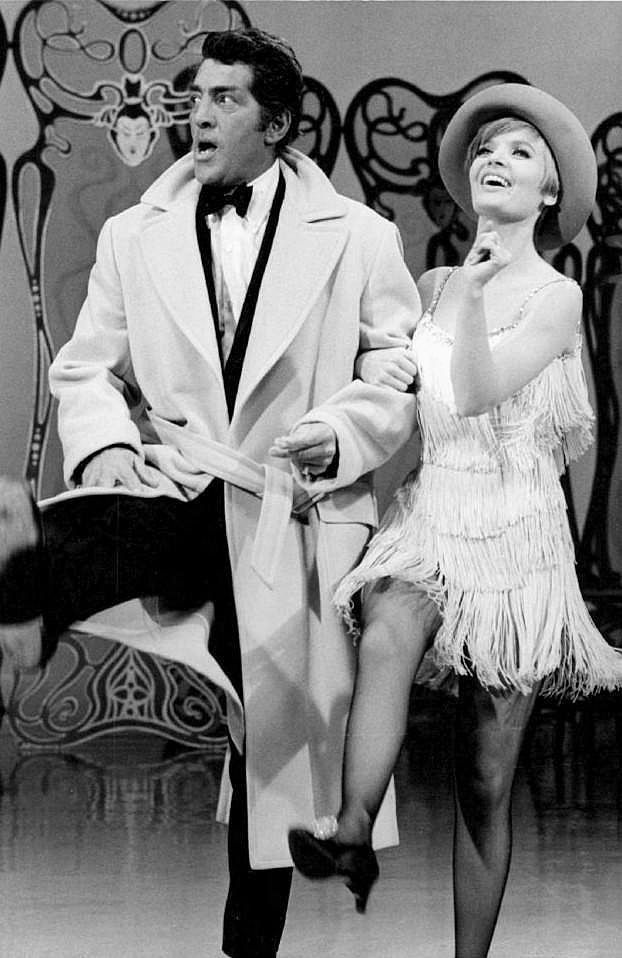
📷wikipedia.com

This was a successful show for almost a decade. It’s hard to find a lot of information about it though. Unlike The Carol Burnett Show where everyone was working together all the time, Martin only showed up on Sundays and most of the time it was the rest of the cast, so perhaps not as many stories were shared.

I watched an episode from 1970, and it was typical of a variety show for the time. Martin began by telling jokes like he put his contacts in backwards and looked at himself all night, so he got no sleep. He talked about going back to his neighborhood where the mayor had a car waiting for him, but luckily, he got out of the way just in time before getting hit. He also mentioned that he and his dog went to school together for years until they had to part because the dog graduated.

He then sang a song all the while holding onto his cigarette. In most of his appearances on the show he had a cigarette or a glass of apple juice purported to be alcohol. Ann Margaret and Bob Newhart were the guest stars in this one. He then went into a skit with Newhart. The show held up pretty well for being more than fifty years old. I admit I feel spoiled after watching The Carol Burnett Show, which I think is impossible to compete with for almost any other variety show, but Martin came across as likeable and the show was better than I anticipated. If you want to check out a few of them, you can get the “Best Of” his shows on Amazon.
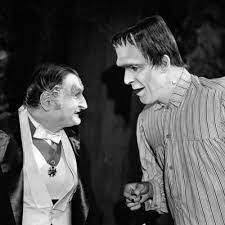
The Munsters: The All-American Family?

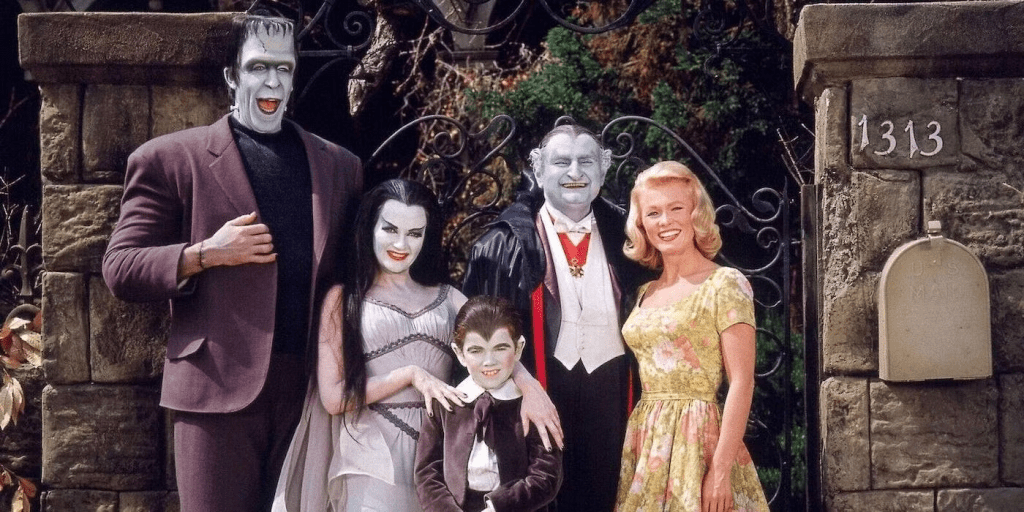
The Munsters Photo: collider.com

This month’s blog “theme is “Kinda Creepy.” These are not shows that will give you nightmares or have you sleeping with the nightlight on. But they did have a touch of ghoul or terror. First up is one of our All-American families, The Munsters.

The creators of Leave It to Beaver, developed this series to be a satire of suburban life. The opening credit shows Lily handing her family their lunches as they run out the door just like Donna Reed did in The Donna Reed Show in the fifties. The Munsters are a perfectly normal family except for a few eccentric and trivial things like Herman (Fred Gwynne) being a Frankenstein, Lily (Yvonne De Carlo) being a vampire, Grandpa (Al Lewis) who can turn into a bat, and werewolf son Eddie (Butch Patrick). In real life, Lewis was a year younger than De Carlo who played his daughter and Gwynne was four years younger than De Carlo.

Photo: ebay.com

Living with the family is Lily’s niece Marilyn (Beverly Owen/Pat Priest), who seems a little abnormal to the family but looks like any high school girl of the time, except a little bit prettier. Owen was engaged when she got the part and did not think the show would be picked up. When it became popular, the cast convinced the network to release her from her contract, and Priest, who looked very similar, took over. Gwynne and Lewis had previously been part of the cast of Car 54, Where Are You? and were good friends. (To learn more about their friendship and their individual careers, see my blog from July 10, 2017.)

This series aired on CBS, and ABC featured The Addams Family whom we’ll meet next week. Both shows debuted in 1965 and were off the air after two seasons.

There were a few recurring characters including Paul Lynde as Dr. Edward Dudley (Dom DeLuise also played Dr. Dudley in one episode), Herman’s boss Mr. Gateman (John Carradine), and Clyde (Chet Stratton), a colleague of Herman’s.

Paul Lynde Photo: pinterest.com

The family lives at 1313 Mockingbird Lane. Herman works for Gateman, Goodbury and Graves, a funeral parlor, as a grave digger. In an interview with Daily Variety, Al Lewis, explained that with the unusual family, “they could do a lot of satirical pointed things on society that you couldn’t do on an ordinary show.”

The show actually had four pilots which I don’t think I have ever seen before. The first one was filmed in 1964 with Gwynne, Lewis, and Owen. Joan Marshall was Phoebe, Herman’s wife and Nate Derman was Eddie. For the second pilot, De Carlo replaced Marshall and changed her name to Lily. In the third edition, Patrick was brought on board to replace Derman. The cast stayed intact for the fourth pilot, but Eddie’s character was changed a bit. He was a bit of a brat and they toned it down.

The family had a pet dragon named Spot that lived under the stairs. When the staircase opened up, you could see the fire he was breathing and sometimes you would see his tail only.

Photo: hagerty.com

Makeup for the show was credited to Bud Westmore who had worked for Universal during their monster movie phase. However, the actual work was done by several people. Perc Westmore worked with Grandpa. Abe Haberman applied Lily’s new face, while Michael Westmore worked with Patrick and Priest. Bill Mumy was the original choice for Eddie, but his parents said “No” when they learned about how much makeup would be used for each episode.

Patrick was asked about the cast and how they got along in an interview with Fox News. He said it was a good relationship. If he had to pick another actor whom he bonded with more than another it would probably be Lewis. He discussed the amazing comedic timing that Gwynne and Lewis shared. He said that the person he enjoyed working with the most was his makeup man, Westmore. He said he was the first person he saw every morning. He also mentioned Westmore was a very handsome guy who owned a Jaguar and was a bachelor, so he looked up to him as a role model also.

Photo: vintageeveryday.com

Karl Silvera did Herman’s makeup. Gwynne had the toughest time of all the characters. He had to spend two hours in the makeup chair first thing in the morning. He wore forty pounds of foam rubber padding and drank copious amounts of lemonade. Despite that, he lost a lot of weight doing the show. In one month, he lost ten pounds. They also put a piece of foam latex on his head to flatten the top. His shoes were asphalt paver’s boots with four-inch soles. The producers rented a compressed air tank and would poke the nozzle inside his collar to blow cool air on him.

The show aired on Thursday nights at 7:30. Many shows began filming in color in the mid-sixties, but the studio did not want to pay the extra $10,000 per episode, so it was shot in black and white. For its debut year, it was number 18, tied with Gilligan’s Island, but it took a drastic drop for season two and landed at number 61. The show competed with The Flintstones and Daniel Boone in year one In year two, Batman debuted in color and The Munsters’ viewers switched networks in droves. The show was canceled with 70 episodes for syndication. From the comments that I read, I’m not sure Lewis and Gwynne would have continued another season anyway. They wanted a different type of humor and, of course, Gwynne had to endure so much with his costume.

If you were looking at the merchandising that accompanied the show, you would never guess it was only on for two seasons. Between 1965-68, 16 Gold Key Comics were produced. The show rolled out Colorforms, car model kits, both a Herman Munster doll and a puppet, and View Masters. You could also purchase several different action figure sets, a board game, and a lunch box, among other items.

Although the show, not surprisingly, never received an Emmy nomination, it was up for Best Television Series for a Golden Globe in 1965 which did surprise me.

The theme song was an instrumental, simply titled “The Munsters’ Theme.” It was composed by Jack Marshall. It was nominated for a Grammy in 1965. There are lyrics for the song, written by Bob Mosher, but they were never used on the air.

For a show that was only on the air for two seasons, it has had a lot of staying power. I think that it was so different and the fact that The Addams Family was also on two seasons and very similar just provided it with that perfect fan base. I do remember watching the show and buying The Munsters coloring books and paper dolls, but I don’t remember it being a “must see” for me. Of course, I was only five when it was canceled, so I primarily saw it in reruns. Sadly, I would also choose Batman over The Munsters, so I understand why the viewers drifted. However, it is never a waste of time to watch Fred Gwynne and Al Lewis in action. If you never watched the show or want to binge watch it, seventy episodes is an easy one to get through.

Shows That Debuted in Fall of 1973: Don’t Get Too Attached

This month our blog series is “Potpourri,” and today specifically is “Showpourri.” I thought it would be fun to look at the shows that debuted in 1973, fifty years ago. There were a lot of them. More than 30 shows were new in the fall of 1973; however, only about ten of them were still around the next fall.

Quite a few of these shows were variety shows: Dick Clark, The Dean Martin Comedy Show, Bobby Gentry, The Hudson Brothers, Tony Orlando and Dawn, Mac Davis, and Music Country. We also had several Movies of the Week.

Let’s take a closer look at the other shows that debuted in 1973.

Adam’s Rib Photo: imdb.com

Adam’s Rib: In this half-hour sitcom, assistant district attorney Adam Bonner (Ken Howard) is married to Amanda (Blythe Danner) who is a partner in a law firm. They often face each other in the courtroom which sometimes extends to their personal life. Amanda is also an advocate for women’s rights.

Apple’s Way: Created by The Waltons writer Earl Hamner Jr., this show has a family relocating from Los Angeles to a small town in Iowa where dad grew up. It captures the issues faced from moving from the past-faced city to the rural place where their ancestors grew up.

Bob & Carol & Ted & Alice: Definitely a seventies sitcom. Bob (Robert Urich) and Carol (Anne Archer) are a young couple who are part of the swinging seventies; they are good friends with an older couple, Ted (David Spielberg) and Alice (Anita Gillette), who definitely are not.

Calucci’s Department: Joe Calucci (James Coco) is an office supervisor at the New York State Unemployment Department. He has to deal with red tape, unemployed people truly in need or trying to bilk the system and keep his girlfriend (Candice Azzara) happy.

Chopper One Photo: epguides.com

Chopper One: This one was a bit like CHiPs in the air. Two California policemen (Jim McMullan and Dirk Benedict) fight crime from their helicopter.

The Cowboys: An unusual concept for this decade. The series focuses on a group of seven boys who work on a cattle ranch in the Old West.

Diana: Diana Smythe (Diana Rigg), recently divorced, leaves London and moves to New York City to become a fashion coordinator at a Fifth Avenue Department Store. She learns about life in America from her new friends, copywriter Howard (Richard B. Schull), neighbor Holly (Carole Androsky), window decorator Marshall (Robert Moore), and friend Jeff (Richard Mulligan).

Dirty Sally: imdb’s description of this show was that “crotchety old lady Sally Fergus (Jeanette Nolan) roams the Old West with young companion Cyrus (Dack Rambo).” The major character looks more like she should be on The Addams Family than in the old west.

Doc Elliot Photo: ebay.com

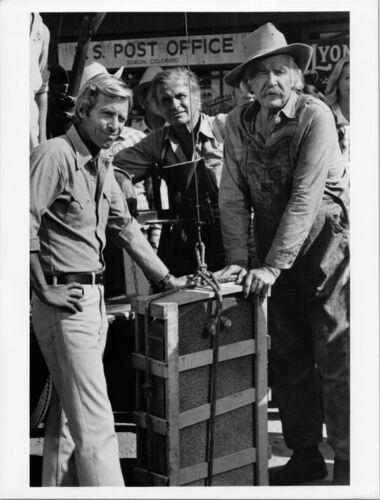
Doc Elliot: Dr. Benjamin Elliot (James Franciscus) leaves Bellevue Hospital in New York to retreat to Colorado. He made house calls by plane and truck and is the only doctor in the area so he deals with a variety of cases.

Faraday & Co: Frank Faraday has been jailed 25 years for murdering his partner, but he did not do it. When he gets to go home, he learns his secretary gave birth to his son Steve who is also a private eye and the two men go into business together and solve mysteries.

Good Times: In this spinoff from Maude, the focus is Florida Evans, Maude’s housekeeper and her family who live in the Chicago housing projects.

Happy Days: Almost everyone knows about this show and the Cunninghams. The focus of the show is on Richie and Joanie growing up in the fifties with the help of The Fonz.

Hawkins: After his first show was canceled, Jimmy Stewart takes on the role of West Virginia attorney Billy Jim Hawkins.

Kojak: Telly Savalas becomes Theo Kojak a bald, lollipop loving police detective who is tough on criminals but a bit of a teddy bear off I job.

Lotsa Luck Photo: tvtango.com

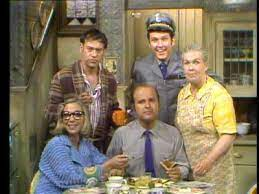
Lotsa Luck: Dom DeLuise stars as Stanley, the manager for a lost and found department at the bus company. He lives with his mother, his sister Olive and brother-in-law Arthur. His best friend is a bus driver he works with and they try to work out Stanley’s life problems. One issue they could not resolve was the fact that the viewers did not like the show.

NBC Follies: I’m not sure who came up with this concept. Vaudeville was dead, but this show resurrected it. It was based on vaudeville with a mixture of comedic skits and musical performances and no host. And no viewers.

Needles and Pins: This show had a great cast including Louis Nye, Norman Fell, and Bernie Kopell. Nye was Nathan Davidson, a women’s clothing manufacturer and this show centered on the employees who work there including new designer Wendy, who was a bit naïve, jumping from Nebraska to New York City.

Toma Photo: pinterest.com

Roll Out: This sitcom was based on the movie Red Ball Express; an African American staff at the Red Ball Express in WWII deal with being far from friends and family who bond with each other. The Red Ball Express was a real trucking convoy that supplied Allied forces in Europe after D-Day. The trucks were allowed to travel on routes closed to civilian traffic and had priority on other roads. It just never found the balance of humor and heartbreak of M*A*S*H or the wacky entanglements of Bilko. This show probably would have made a great drama if it had been done right.

Toma: Toma was a real New Jersey Detective David Toma (Tony Musante). He was a master of disguise and did undercover work. Like Alfred Hitchcock, you can glimpse the real David Toma in many episodes.

The Girl with Something Extra: John Davidson and Sally Field team up as newlyweds beginning their married life together with all the problems typical couples have and one extra, she had ESP and that causes no end of problems for them. Too bad she didn’t tell the network this show would not survive an entire season.

The New Perry Mason Show Photo: imdb.com

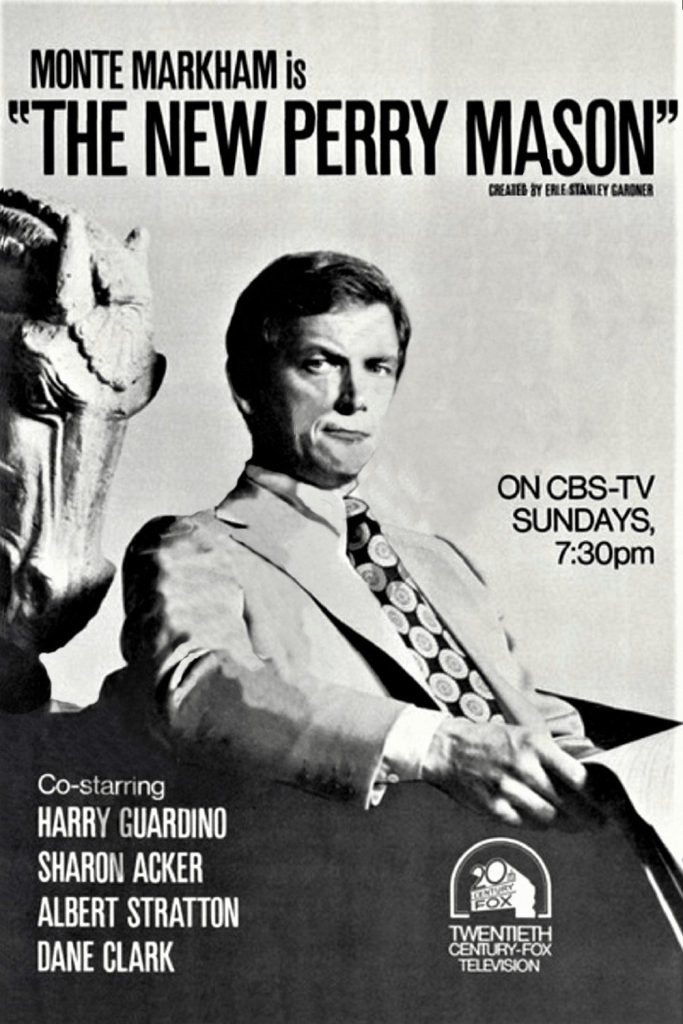
The New Perry Mason Show: Monte Markham and Sharon Acker became Perry Mason and Della Street. Impossible roles to fill with anyone but Raymond Burr and Barbara Hale.

When the fall schedule came out in 1975, the only shows remaining on the air were Good Times, Happy Days, and Kojak. Since I have already done extensive blogs on Happy Days and Kojak, next week, we’ll take a closer look at Good Times.

Ruth Buzzi: Born to Be a Comedienne

As we continue our look at actors and actresses who made great character roles their own, our last meeting is with Ruth Buzzi.  While she was primarily known for her characters on Laugh-In, she has had a long and full career.

ruth2

Ruth was born in July of 1936 in Rhode Island. Her father was a famous sculptor who was born in Switzerland. He carved the marble eagles at Penn Station in New York City, the Leif Erikson Memorial in Providence, and several animals at the American Museum of Natural History in New York. For his family business, he created thousands of tombstones. In one article I read that he was asked to work on the Mount Rushmore presidents, but declined because he had a fear of heights.  I was not able to confirm that story however. She was raised in Connecticut. Her brother took over the family business and sold it a couple of years ago.

Ruth was head cheerleader in high school. At 17, she enrolled at the Pasadena Playhouse for the Performing Arts where she studied voice, dance, and acting, graduating with honors. Her classmates there included Dustin Hoffman and Gene Hackman.

ruth8

Her first job was while she was still in school, traveling with Rudy Vallee in a musical and comedy act. After graduation, she moved to New York City and appeared in revues throughout New England. She teamed up with Dom DeLuise in a skit where he was an incompetent magician and she was his assistant. Buzzi decided to name her character, who never spoke, Shakuntala. They appeared to a national audience when they were booked on The Garry Moore Show in 1958. In the late 1960s Buzzi received a role on The Steve Allen Show.

Buzzi married Bill Keko in 1965. They would divorce a decade later.

ruth13

During this time, Ruth was hired by Bob Fosse to perform in a Broadway show, “Sweet Charity.” She also had an appearance on The Monkees. While she was in the play, she auditioned for a role on Rowan & Martin’s Laugh-In in 1967.

ruth7

She received the role, and it was on that show that many of her funniest characters were created. Along with Dick Martin and Dan Rowan, she was the only person to appear in every episode of the show. (Gary Owens also appeared every series episode, but he was not in the Laugh-In special.) Buzzi was a versatile performer; her quirky characters included Busy-Buzzi, a Hollywood gossip columnist; a prostitute, Kim Hither; Doris Swizzle (sometimes Sidebottom), who ends up drinking too much with her husband; and one of two inconsiderate flight attendants.

ruth5

Her most beloved character was Gladys Ormphby, a spinster dressed in a hair net and drab clothing. She always carried a purse and would use it to hit people when she was frustrated. Gladys was often paired with Arte Johnson as Tyrone, a dirty old man who was hit many times. (I have read about a lot of strange cartoons in the 1970s and one of them was The Nitwits, a cartoon about Gladys and Tyrone. Johnson and Buzzi voiced their characters.) Her performances on Laugh-In earned her a Golden Globe Award and five Emmy nominations.

ruth1

While I remember Buzzi from Laugh-In, the role I knew her best in was Pete Peterson, Ann Marie’s friend on That Girl which she appeared on during her Laugh-In tenure.

Buzzi was one of the many starts who frequently appeared on Sesame Street. She was nominated for an Emmy on that show for her role of Ruthie, a store owner. She later appeared at the dedication of Jim Henson’s star on Hollywood Boulevard after his death.

ruth4

In the early 1970s, Buzzi would continue to appear on television series, including Walt Disney, Night Gallery, Here’s Lucy, Love American Style, Lotsa Luck, and Medical Center.

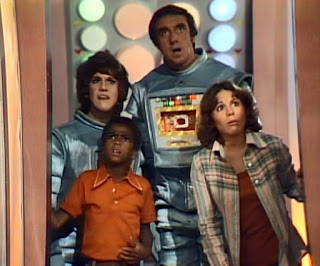
In 1975, she starred with Jim Nabors in The Lost Saucer. This was a Sid and Marty Krofft production, so you know it was a bit odd. The stars were time-traveling androids Fi and Fum. The show was cancelled after 16 episodes.

ruth6

During the 1970s, Ruth also was the spokesperson on a number of products, including Clorox 2, Clairol, Ban deodorant, the Santa Anita Raceway, and Sugar Crisp Cereal. In the Sugar Crisp ads, she was Granny Goodwitch, a role she created for a 1960s animation show, Linus! The Lion Hearted.

ruth11

In 1978, another important milestone occurred for Ruth when she married her husband, Kent Perkins.

Her television work continued into the 1980s when she appeared on CHiPs, Trapper John, and The Love Boat. She was Chloe, the never seen, but often mentioned wife of Henry Beesmeyer on Alice. She also made eight appearances on The Tonight Show with Johnny Carson. She was in 25 films during her career including The Apple Dumpling Gang Rides Again and Freaky Friday. She currently has two movies in post-production:  One Month Out with Barry Bostwick and John Schneider and Glen’s Gotta Go.

ruthfreakyfriday

Buzzi is also well known as a voice actress. Most of her roles since 1985 have been for animation series. She voiced characters in the series Pound Puppies, Mama Bear in The Berenstain Bears, Smurfs, Chip and Dale, Darkwing Duck, Rocket Power, and Angry Beavers.

She also had a nightclub act which toured the United States for a year. In addition, she was on most of the Dean Martin Roasts, typically playing Gladys.

Ruth currently lives with her husband in Texas on a 600-acre ranch. Her hobby is painting. The couple also collects antique automobiles, primarily post-war English cars. She also volunteers for a variety of charities.

ruthA

Like Fanny Flagg, Bill Daily, and Howard McNear, Buzzi can be described as delightful. I’m happy to celebrate such a full career for such a fun woman.