Empty Nest: These Birds Kept Flying Home

This month we are looking at sitcoms dealing with careers in our “Work It Out” series. Today I also am learning a lot about a show that I thought was okay but had a big following and was quite popular for seven seasons: Empty Nest.
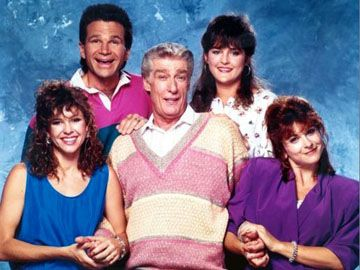
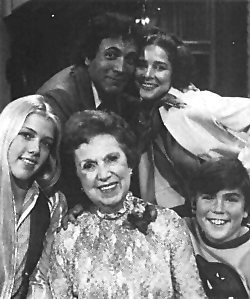
Cast Photo: omigods.com

This show was produced by Witt/Thomas/Harris Productions, the same team that produced Benson which we learned about last week. It was a spin-off of The Golden Girls which also was produced by the group. However, it is a stretch to connect the original episode and this series. In 1987 George (Paul Dooley) and Renee (Rita Moreno) were a couple who lived next to the Girls. They were suffering from Empty Nest Syndrome after their daughter (Jane Hamick) left for college and their son (Geoffrey Lewis) lived on his own. They had a neighbor Oliver (David Leisure).

Rita did not think the show was very well written. She said Susan Harris was ill at the time. The Corliss house and neighbor was about the only thing that was included in the new show.

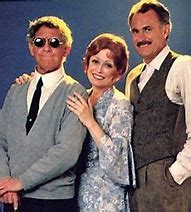
On Empty Nest, Dr. Harry Weston (Richard Mulligan) is a widowed pediatrician. His two adult daughters Barbara (Kristy McNichol) and Carol (Dinah Manoff) move back in with him. Rounding out the cast was neighbor Charley (David Leisure) and Weston’s nurse Laverne (Park Overall). Carol is the oldest and had gone through a bad divorce. Barbara was the middle child and was a tough, undercover cop. Their youngest sister Emily was off at college and never seen in the first three seasons. When McNichol left the show early in the fifth season, Emily (Lisa Rieffel) moved back home but she left after that year, and for the final two seasons, only Carol remained at home, although McNichol did return for the finale. Charley bonded with Harry and considered him a surrogate father figure. Their dog Dreyfuss (Bear) also lived with the crew.

Photo: sitcomsonline.com

Bear’s father was a Golden Retriever mix and his mother was a St. Bernard. Bear’s entire family was in show business. His father was in Father Murphy and Summer Rental with John Candy. His brother was in both Steel Magnolias and The Bodyguard. His children continued the tradition taking roles in several movies including Homeward Bound II. Mulligan and Bear were close. Richard would greet him every morning and give him a treat.

The cast was well aware of each other before working together. McNichol had worked with Manoff who played her friend on Family earlier in the 80s. Mulligan had played Manoff’s father on Soap. Mulligan and McNichol worked together on The Love Boat. And, McNichol and Leisure were in the movie You Can’t Hurry Love in 1988.

Photo: mattbrowningbooks.com

The reason this show is considered in this month’s blog is that a lot of the show revolved around Harry’s medical practice. He worked at a hospital for the first five seasons with his nurse Laverne. The two are good friends. For the final two seasons, Harry retires and then decides to help out an inner city clinic run by Dr. Maxine Douglas (Marsha Warfield). When Laverne is fired by Harry’s replacement, he hires her at the clinic.

Photo: imdb.com

Some notable guest stars who showed up along the way included Don Adams, Diana Muldaur, Loni Anderson, Mayim Bialik, Angie Dickinson, Zsa Zsa Gabor, Shirley Jones, Audrey Meadows, and Doris Roberts.

The theme song was “Life Goes On,” written by John Bettis and George Tipton; it was performed by Billy Vera.

Critics liked the show. In 1988, TV Guide said “it’s a simple premise, but it’s vintage Harris and like everything else she does, Empty Nest has been meticulously thought out and superbly cast. Each of the regulars is carefully drawn, consistently realized . . . as for Empty Nest, it’s warm and entertaining comedy . . if you like the humor in Golden Girls, you’ll enjoy Empty Nest. And even if you don’t like Golden Girls, sample Empty Nest anyway. Trust us.” In 1992, TV Guide still liked the show and said, “Harry Weston is delicious and Dreyfuss the dog is delightful. Empty Nest is home to an experienced ensemble that knows its way around a sitcom.”

Mulligan was nominated for an Emmy for Outstanding Actor in a Comedy in 1989, 1990, and 1991, winning in 1989. He was beat out by Ted Danson for Cheers in 1990 and Burt Reynolds for Evening Shade in 1991.
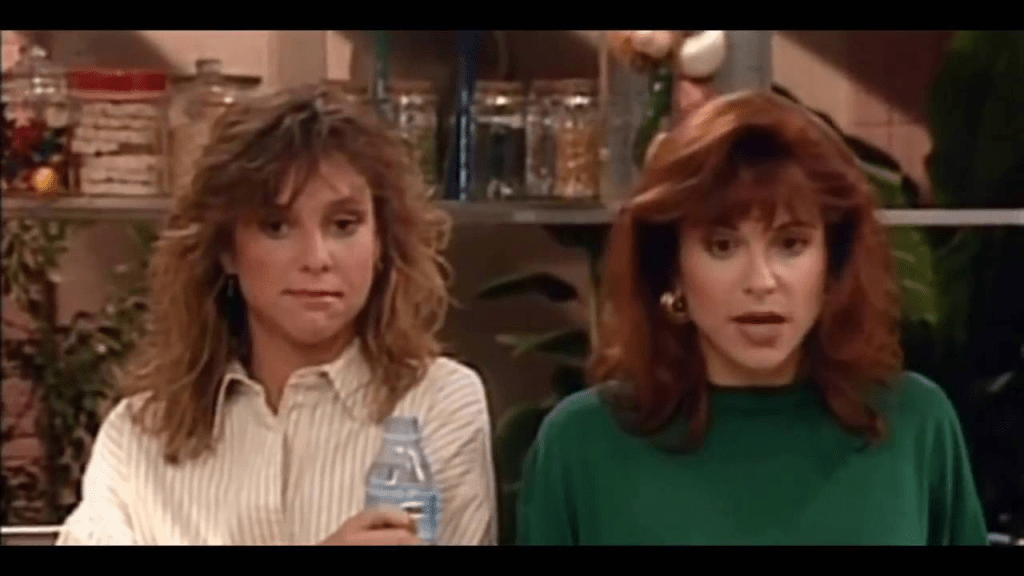
Photo: sunny107.9.com

Most viewers loved the show the first four seasons, but after McNichol left and Harry retired, the quality seemed to wane. The show was in the top for seasons one through three. However, after that, it slowly declined, coming in #23 for season four, #45 for season five, #62 for season six, and #118 for season seven, so there was no surprise when it was canceled.

Grace Zabriskie appeared in the very first and very last episode of the series. In episode one, she was a woman who dated Harry, and in the finale, she played Laverne’s mother.

One of the typical plots that a lot of people mentioned as one of their favorites was episode 22 from season 1 where we watch Dr. Weston visit five different patients during one episode. At the end of the show, we realize that we have been following Billy from a newborn to 18 years of age, and we understand how much influence a family doctor can have on one patient.

Rue McClanahan talked about how Park Overall would spend her breaks roller skating in the parking lot. However, during season five, she broke her leg doing so and had to miss several episodes and spend several more with crutches in a cast.

Mayim Bialik Photo: wordpress.com

I have read a few times in the past few years doing research that Bea Arthur could be very difficult to work with. She was not the favorite on The Golden Girls set and, apparently, she caused an issue on Empty Nest as well. She despised gum chewing and would make the crew spit out their gum. When she guest starred on Empty Nest, she saw Manoff chewing gum and told her to get rid of it. When Manoff declined, Arthur stormed off the set. Speaking of Manoff, she was able to direct seven episodes of the series during the last three seasons. She directed five other shows including an episode of Sabrina, the Teen-Aged Witch. She was also credited with writing two of the Empty Nest episodes.

I do remember watching the early seasons of this show and thinking it was a decent show. I did not remember that McNichol had to leave for mental health reasons, so I’m guessing I stopped watching it before she quit. However, being in the top ten for three years is, or at least was at the time, a good indication of quality and then you add in TV Guide liking the show and Mulligan’s nominations for Emmy awards, and it presents good evidence of a well-rounded show. I did read that Overall could be a bit difficult on the set, and one of those comments came directly from her.
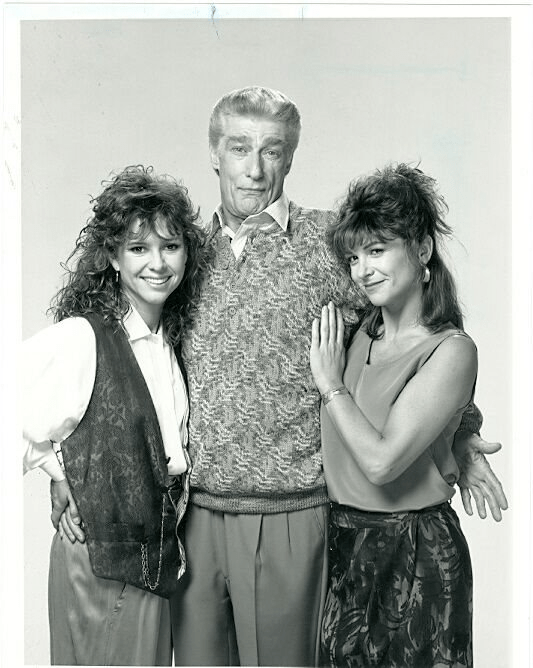
Photo: collectors.com

Marty Pollio, guest starred in season six when things weren’t so great and still had good things to say about the cast. He said that “it was an honor to be doing scenes with Richard Mulligan, he was talented beyond belief, and a great guy too. I never realized what a good actress Dinah Manoff was until I watched her work on this particular episode . . . nice person as well. The set was pretty relaxed and friendly. . . I had a really good time on this one.” It would probably have been better for the quality of the show to be a four-season show than a seven-season show.

I agree with TV Guide. If you were a fan of Golden Girls, you definitely should check out the first three seasons of Empty Nest. And even if you are in that small group of people who did not like Golden Girls, you should watch a few episodes and see what you think. However, that is easier said than done. There is no official DVD set; however, there are bootlegs on several places. I also could not find any streaming channels showing it. YouTube does have at least the first episode. Perhaps with all the classic tv channels out there, this show will make a comeback.


No One Can Get Too Much “Data” These Days

Today we are winding up our “I Robot” blog series. We began our journey with Buck Rogers in the 25th Century, an outer space drama that was not that successful. Today we are at the other end of the universe spectrum, discussing Star Trek: The Next Generation. You will be very familiar with this show if you were a teen or young adult in the late eighties and early nineties or if you were a devoted fan of The Big Bang Theory.

The Cast Photo startrek.com

Gene Roddenberry, the creator of Star Trek, brought Star Trek: The Next Generation to the small screen two decades later; this show would stay on the air for seven seasons, producing 178 episodes. The series is set in the 24th century; the original show was set in the 23rd. Earth belongs to the United Federation of Planets, and this show features a Starfleet ship, the USS Enterprise, as it explores the Milky Way.

Roddenberry served as executive producer, as did Maurice Hurley, Rick Berman, Michael Piller, and Jen Taylor. The show focuses on the mission and the personal lives of the crew members: Captain Jean-Luc Picard (Patrick Stewart), William Riker (Jonathan Frakes), Worf (Michael Dorn), Geordi La Forge (LeVar Burton), Deanna Troi (Marina Sirtis), Tasha Yar (Denise Crosby), Wesley Crusher (Wil Wheaton), Dr. Beverly Crusher (Gates McFadden), and our major concern today, Data (Brent Spiner).

Photo: startrek.com

The show was very popular, and by its fifth season, reached 12 million viewers. The show would go on to spur other Star Trek series and movies, as well as novels and comic books.

Critics also liked the show, and it received 19 Emmy Awards and a Peabody. In 1994 it became the first syndication show to be nominated for an Outstanding Drama Series Emmy.

The theme was also a nod to the original series, combining Alexander Courage’s original piece with Jerry Goldsmith’s theme for Star Trek: The Motion Picture released in 1979.

In an unusual deal, Paramount decided to broadcast the show in first-run syndication on independent networks. As a “barter syndication,” the show was offered to local stations for free. The station got five minutes of commercial time to sell to local businesses, and Paramount sold seven minutes to national advertisers. Stations had to agree to purchase reruns in the future, and only those stations that participated in this deal were able to purchase reruns of the original series which was still extremely popular.

Some sites stated that Paramount received $1 million for advertising for every episode; by 1992 the studio received $90 million a year and the episodes cost $2 million each to produce.

The show debuted in 1987. The first season did not start off so well. The show had a $1.3 million per episode budget. The staff had a lot of creative freedom, but many of the writers had disagreements with Roddenberry and left the show. They felt that Roddenberry was too strict with the themes and the characterizations. It’s hard to argue with his vision too much because it won several Emmys and was extremely popular.

Photo: treknews.com

Season two brought some critical changes to the series. Beverly Crusher was replaced by Chief Medical Officer Katherine Pulaski (Diana Muldaur). Whoopi Goldberg guest starred in her first episode. The plots were more sophisticated and there were some comic elements sprinkled throughout the drama.

Personnel changes were made for season three. Head writer Hurley was let go. Roddenberry suffered from some health issues which necessitated his stepping back and Berman took over more production chores. Season four had eight episodes nominated for Emmys. The episode “Family” was the only one that did not feature Data. Crusher left the show in season four as well.

Roddenberry passed away during season five. During season six, astronaut Mae Jemison came on board as Lt. Palmer, and Stephen Hawking appeared in the season six cliffhanger.

Photo: tor.com

The final season introduced themes that would carry into Star Trek: Deep Space Nine and Star Trek: Voyager. The finale of the show was filmed in Toronto where thousands of people watched in person.

The cast was surprised that the seventh season was the last one, because they had contracted for eight seasons. Paramount wanted to make several films and felt that the movies would be less successful if the television show was still airing. The cast must have been close because they claimed to be life-long friends, and in 1992 when Burton married, Spiner was best man and Stewart, Frakes, and Dorn were ushers.

Data was an android who served as lieutenant commander. Data’s perspective on humanity was similar to Spock’s in the original show. Spiner would also be cast as Data in 2020 in Picard. Data was found by Starfleet in 2338. He was the sole survivor on Omicron Theta in the rubble of a colony left after an attack from the Crystalline Entity.

Dr. Noonian Soong built Data on Omicron Theta. He had an evil twin, (who doesn’t have one on television?), named Lore. Eventually, Data dismantled Lore. One resource I read said that Data was destroyed during the Enterprise E’s battle with the Scimitar in 2378. I have to take their word for that because my Star Trek trivia is not advanced enough to confirm or deny it.

In 1974 Roddenberry created a project for television called The Questor Tapes. The show centered around an android who was studying humanity. When The Next Generation was proposed, Roddenberry reinvented this android and combined it with Xon, the curious Vulcan from Star Trek: Phase II and came up with Data. However, Spiner said he modeled Data after Disney’s Pinocchio.

Photo: aniandizzy.com

Fun fact, since we started with Buck Rogers in this month’s blog, Data has a positronic brain—in 1981, Buck Rogers used this same term in one of their episodes. They both were honoring Isaac Asimov who first used the term in his story “Runaround” in 1942.

According to Spiner, Data was pronounced “dat-uh” but Stewart, being British, said “day-tah.” On the show Data has a pet cat named Spot. Spiner was not fond of that idea because he was not a cat fan at all.

Data was supposed to be the Chief Science Officer, the same position Spock had on the original show. The uniform for that position was blue. Unfortunately, the blue clashed with his make-up. He was transferred to the Chief Operations Officer with a gold uniform. I never really understood why the Chief Science Officer could not wear a gold uniform. This was a new generation and I did not think that there were other shows from that century that made it impossible to portray that officer in gold? I mean, sports teams change their colors from time to time. However, if I am missing something, please feel free to enlighten me.

Obviously, comparing Buck Rogers to Star Trek: The Next Generation, it is easy to see why the Next Generation was on the air so much longer and attracted so many more fans.

Photo: startrek.com

Data was a fun character. While he can blink and age, we are reminded that he is not human. His duties with the crew included navigation and systems control. Because androids don’t sleep, he was able to take the night shift. Data was interested in literature and the humanities. He likes mysteries. Like Spock, with his lack of emotions, love is very hard, if not impossible, for him. He does make many friends though. He can’t get sick which is convenient if the rest of the crew is affected, but computer viruses can damage him. While he can process data in a millisecond, his inability to read human emotions is troubling for him. Although he does feel a bit arrogant; as he said “I am superior, sir, but I would gladly give it up to be human.” I can’t argue with his claim of superiority when I look around at some of the things humans have been doing the past three or four years.

If I had to go through life with a robot, based on the four we discussed this month, Data would definitely be my choice. I hope you had fun with this series.

Born Free: A Roaring Good Time

Before we get into this month’s series, I just wanted to say a big THANK YOU to all of you who read my blog. Today is my 300th blog post. I have absolutely thoroughly enjoyed getting to know so many classic television cast and crew members, and I have learned so much the past six years. This month we are looking at “Life with Pets” blog series by learning a bit more about some of the classic shows about families and their pets. So far, we have learned about some unusual pets: monkeys, dolphins, and bears. Today is no exception; we are looking at the series Born Free which featured a lion.

Photo: imdb.com

Like Flipper and Gentle Ben, Born Free was also based on a movie titled Born Free. which was released in 1966. In 1974, it became a television series. The film was based on a true story. Considering how many people fondly remember the show, I was surprised to learn that it only was on the air from September to December.

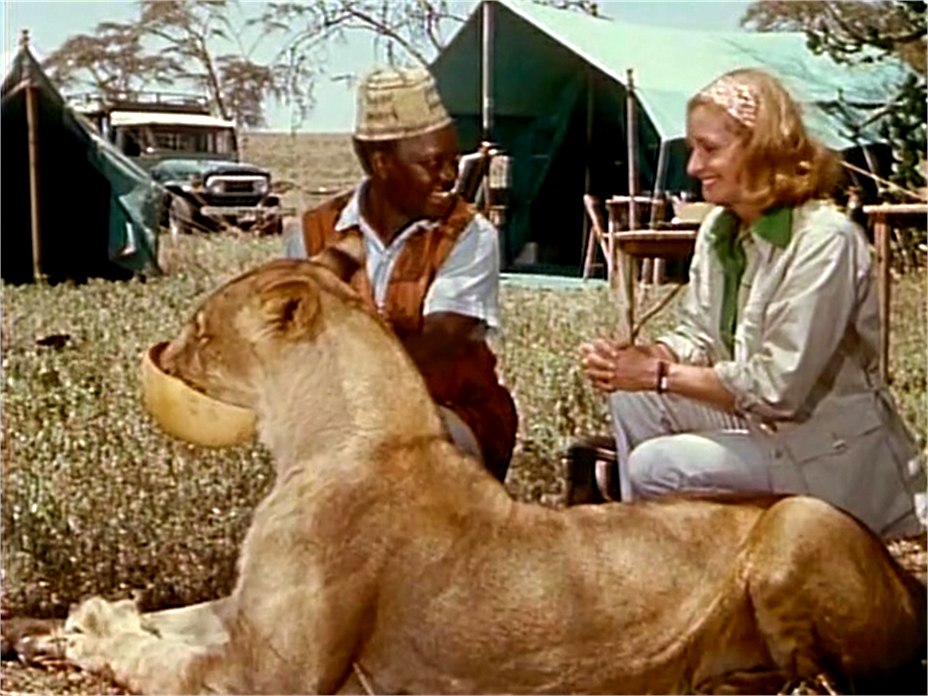
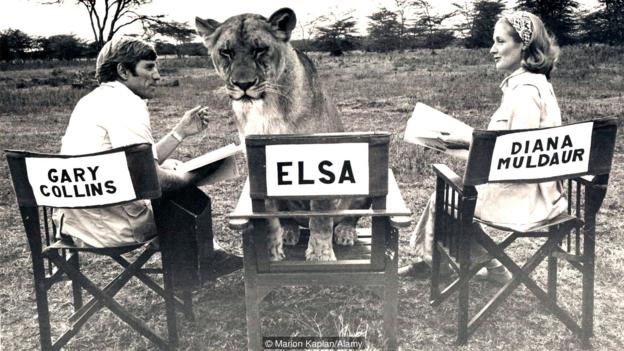
Muldaur and Collins Photo: imdb.com

The show tells the story of George (Gary Collins) and Joy Adamson (Diana Muldaur) who lived in Kenya with their lioness Elsa. George and Joy were game wardens who helped care for wildlife. They primarily protected them from weather disasters and poachers. Part of the show’s mission was to educate viewers about animal conservation. Other cast members included Hal Frederick as Makedde; Dawn Lyn, Dodie from My Three Sons, as Reagan one of their friend’s granddaughters who lives with them for a while; and Peter Lukoye as Nuru.

In the Adamsons’ true story, Elsa and her sisters who were orphaned were treated like pets by the couple. George was forced to kill their mother when she charged him, but he later said he understood she felt threatened. Joy fed the four-day-old cubs unsweetened milk mixed with cod liver oil, glucose, bone meal, and salt. After the first couple of weeks, they took their food from baby bottles. They were allowed to roam like house pets but at night they were put into a pen of rock and sand to protect them from hyenas, jackals, elephants, and other lions.

Eventually, Elsa’s two siblings were sent to a zoo in the Netherlands, but Elsa being a runt, could not make the trip. Joy then taught her how to behave like a wild lion so she could survive with the other animals.

On the show, the episodes were a bit different. In “Maneaters of Merti,” two lions have begun killing humans, so George leads a search with villagers and game wardens to find them.

In the middle of the season, “The Flying Doctor of Kenya” aired with Juliet Mills starring as Dr. Claire Hanley who is making her first village medical tour. She needs to learn the customs of the villagers as well as how to adapt to the tough living conditions. Joy helps her get acclimated to the new job.

The theme song was composed by John Barry which was the same song used in the movie. Barry won an Oscar for the film’s soundtrack. Lyrics were provided by Don Black. Most of us remember the words to the song from hearing it on the radio. They were:

Born free, as free as the wind blows
As free as the grass grows
Born free to follow your heart

Live free and beauty surrounds you
The world still astounds you
Each time you look at a star

Stay free, where no walls divide you
You’re free as the roaring tide
So there’s no need to hide

Born free, and life is worth living
But only worth living
’cause you’re born free

(Stay free, where no walls divide you)
You’re free as the roaring tide
So there’s no need to hide

Born free, and life is worth living
But only worth living
’cause you’re born free

To walk with others... | Kate on Conservation
George Adamson Photo: kateonconservation.com

I was also surprised to learn that the show was actually filmed in Kenya. NBC put the show on Monday night against The Rookies and Gunsmoke which were both in the top 20-30% of popular shows. After 13 episodes, the show was canceled due to low ratings.

62 George and Joy Adamson ideas | george, lions, out of africa
Joy Adamson and Elsa Photo: pinterest.com

Although Joy and George were divorced by the time the television series was created, she served as a consultant for the show and supervised the stories. Sadly, she was stabbed to death in 1980, and George was shot by poachers in 1989 while trying to help a tourist.

Elsa did acclimate to the wild but visited George and Joy from time to time. She brought her three cubs to show the couple. Elsa was five when she contracted a tick-borne blood disease similar to malaria. She passed away and was buried in the Meru National Park. When Joy died, she was buried next to Elsa. George was buried in the Kora National Park in northern Kenya where he was working. He was buried near his brother and Boy, another lion featured in the film version.

The legacy of the film and television show is that the Born Free Foundation has a mission to protect the lions of Meru National Park.

Photo: twitter.com

Although I was surprised by a few things in this show, one thing I was not surprised by was its quick cancellation. For some reason, so many shows in the sixties were adapted from movies and could not be sustained as a weekly show. M*A*S*H was one of the few shows to do this well. It seems though it would be a tough thing to sustain interesting shows when you are limited to natural disasters and poachers. Here again, you would assume the scenery would almost be a character you could develop. I’m also sure it was not cheap to film the show in Africa which would make it harder to keep if it was not producing decent ratings.

While none of the shows we have learned about in the series became long-running shows, next week we wind up our series with a look at one of the enduring pet shows.

Mannix: “The Old-Fashioned” Detective

We are three-quarters through our new blog series, “One-Named Detectives,” and today we are looking at a show that began in 1967 and aired until 1975, producing 194 episodes.

See the source image
Photo: blogspot.com

Created by Richard Levinson and William Link and produced by Bruce Geller, Mannix was one of the most violent television shows during the sixties. Private investigator Joe Mannix (Mike Connors) began working at Intertect which relied on computers and a large network of operatives to help them solve crimes.

CBS was planning on cancelling the show after its debut year, but somehow Lucille Ball convinced them to renew it for another season. (Desilu produced the show.) In season two, Mannix decides to leave and open his own agency. He prefers to solve crimes the old-fashioned way, with his own brain, or as he described it, “A private eye—in the classical tradition.” Peggy Fair (Gail Fisher), a widow whose policeman husband was killed in action, became his secretary. Joe was also a father figure for her son Toby. The role of Peggy was planned for Nichelle Nichols but she had to decline due to receiving her role on Star Trek.

See the source image
Photo: seasonsepisodes.watch–with Gail Fisher

The cast was rounded out by Lt Art Malcolm (Ward Wood), Sergeant Charley (Ron Nyman), and Lew Wickersham (Joseph Campanella), and police contact Tobias (Robert Reed). Every episode was filled with violent fistfights, car chases, and shoot-outs. During the course of the series, Mannix was knocked unconscious 55 times, drugged about 38 times, and shot 17 times. Connors actually broke his collar bone filming the pilot. The character of Mannix survived many of these situations because he was an expert fighter. He was said to have been a POW during the Korean war. Mannix was also a race car driver and a pilot. He sailed, skied, golfed and was an accomplished pool player. He was said to have grown up in Summer Grove where he excelled in football and basketball.

See the source image
Photo: metv.com with Robert Reed

Like Cannon, Joe Mannix relied on a car phone during his investigations. Many viewers felt the scripts were well written and the endings were not easy to predict. The plots relied more on crime-solving techniques but several tackled relevant social topics including compulsive gambling, racism, returning Vietnam War veterans issue, and professionals with physical disabilities such as deafness or blindness working to solve crimes.

The scripts were written by some of the best writers in the business. There were more than 85 writers credited with stories, one of them being Mel Tormé, yep that Mel Tormé.  Other writers were John Meredyth Lucas who wrote for fifty shows including Harry O, Kojak, Ben Casey, and Star Trek; Stephen Kandel who wrote for many shows including Hart to Hart, MacGyver, Hawaii Five-0, and Cannon; and Donn Mullally who also wrote for fifty shows including Ironside, The Virginian, Bonanza, and The Wild Wild West.

See the source image
Photo: pinterest.com

There were a lot of creative shows using visual effects in the sixties and Mannix was one of them. It employed many cutting-edge gimmicks to appeal to fans. Technical filming skills included zooms (moving in for a close-up or out to show something the viewer did not realize was in the scene), rack focuses (a rack focus is the filmmaking technique of changing the focus of the lens during a continuous shot. When a shot “racks,” it moves the focal plane from one object in the frame to another), lens flares (a lens flares adds a sense of drama and a touch of realism to a shot), Dutch angles (which produce a viewpoint of tilting one’s head to the side), both low and high angles, and cameras that could move 360 degrees during filming.

See the source image
Photo: rockauto.com

For you car afficiandos, Mannix had a lot of cool automobiles during the series. For season one, he primarily drove a 1967 Oldsmobile Toronado customized by George Barris who built the Batmobile. For season two, Barris worked on a 1968 Dodge Dart for him.

Season three found him driving another Barris car, a 1969 Dodge Dart. Seasons four through six he drove Plymouth Cudas (a 1970 for four, a 1971 for five, and a 1973 for six). For season seven, he was given a 1974 Dodge Challenger and for the final season, he drove a Chevrolet Camaro LT.

An interesting story about his season two car is that it was sold to a secretary at Paramount Studios and then disappeared for a few decades when it was located near a ranger station in California. It was restored to the Barris condition it had on the show. It was featured in Muscle Machines in December of 2009 and on the show Drive on Discovery HD Theater in 2010. The car is currently owned by C. Van Tune, former editor of Motor Trend magazine.

In addition to special cars in the shows, a lot of celebrities guest starred including Hugh Beaumont, Robert Conrad, Yvonne Craig, Sally Kellerman, Burgess Meredith, Lee Merriwether, Vera Miles, and Diana Muldaur. Some of the more unusual guest spots were filled by musicians Neil Diamond, Buffalo Springfield, and Lou Rawls; comedians Rich Little and Milton Berle; and journalists Art Buchwald, and Rona Barrett.

The theme song was composed by Lalo Schifrin.  Titled, “Mannix,” it was released as a single in 1969 with “End Game” on the B side.

See the source image
Photo: amazon.com

Connors was nominated for an Emmy four times, Fisher was nominated for four as well, and the series was nominated twice. In 1970, Connors was beat by Robert Young in Marcus Welby, in 1971 Hal Holbrook won for The Bold Ones, Peter Falk won for Columbo in 1972, and in 1973 Richard Thomas won for The Waltons. Fisher lost to Margaret Leighton for Hallmark Hall of Fame in 1971, Ellen Corby for The Waltons in 1973, and Jenny Agutter in The Snow Goose Hallmark Hall of Fame in 1972. The show lost out as best drama to Elizabeth R Masterpiece Theater in 1972 and The Waltons in 1973.

See the source image

I do remember watching and enjoying the show when I was in grade school.  I’m guessing I watched it because it was something my parents watched. I think the show has held up well and, considering it was in the midst of the sixties, is not too dated. It would definitely be fun to check out a season or two of the show to see if you can figure out just “who done it.”

The Tony Randall Show: It May Have Been Judged Too Quickly

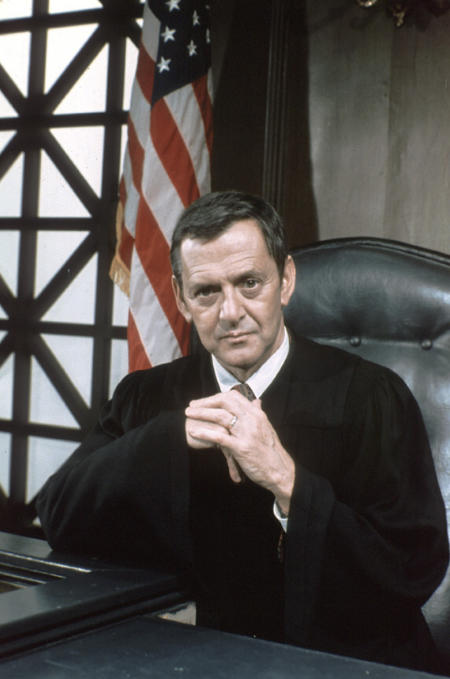
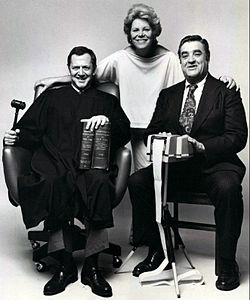
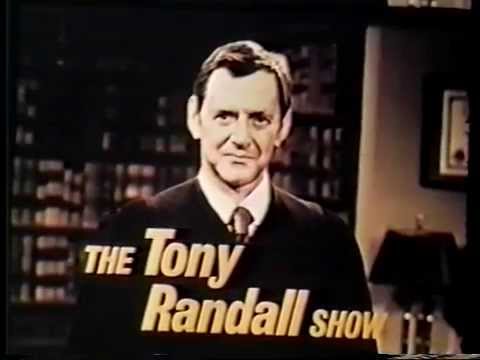
As we wind up our “Don’t Judge Me” blog series, today we’ve been sent to the bench to sit along side Judge Walter Franklin (Tony Randall) on The Tony Randall Show. Judge Franklin is a middle-aged, single-parent, widower living in Philadelphia. His extremely bright kids–teenage daughter Roberta (Devon Scott) and preteen son Oliver (Brad Savage) live with the judge, along with daffy housekeeper Bonnie (Rachel Roberts). At work we get to know his severe secretary “Miss” Janet Reubner (Allyn Ann McLerie), court reporter Jack Terwilliger (Barney Martin), and Mario Lanza (Zane Lasky), no not THAT Mario Lanza, but an overbearing assistant the judge does not care for. Judge Eleanor Cooper (Diana Muldaur) plays his co-worker and “lady friend.”

Photo: wikipedia.com

In the second season, Penny Peyser took over the role of Roberta, and Hans Conried joined the cast as Walter’s father. A lot of famous guest stars found themselves in front of the judge during the two years it was on the air. A handful of stars who appeared around Judge Franklin included Victor Buono, Beverly Garland, Michael Keaton, Hal Smith, David Ogden Stiers, and Dick Van Patten.

If this sounds a little bit like the concept of The Mary Tyler Moore Show where we see a professional at work and at home, that’s because The Tony Randall Show was produced by MTM Enterprises and created by Tom Patchett and Jay Tarses. This was the duo that produced The Bob Newhart Show a few years earlier.

Photo: tvdads.com

The Tony Randall Show debuted on ABC in 1976. When ABC cancelled the show, it was picked up by CBS for a second season. Surprisingly, the show was not cancelled by ABC for low ratings. The show was holding its own going up against Hawaii Five-0 and Best Sellers on Thursday nights. Apparently, Patchett and Tarses did not get along with Tony Randall.  Unfortunately, they did not get along with each other either, and on top of that, they refused to take calls from ABC president Fred Silverman. Tiring of the drama, Silverman ended the show. On CBS, the show moved to Saturday nights and was on at the same time as Operation Petticoat and The Bionic Woman. When CBS cancelled the show, it was done for good.

Photo: jacksonupperco.com

Reflecting on the show, Grant Tinker remembered “Tony was born to work in front of a live audience, and the writing was largely first rate. Ultimately, however, three strong egos could not live together. Since Tony was obviously essential, Tom and Jay retreated to their office and oversaw from a distance, giving two of MTM’s younger writers, Hugh Wilson and Gary David Goldberg their first chance to produce.” (Wilson would go on to create WKRP in Cincinnati and Goldberg would create Family Ties and Brooklyn Bridge.)

Photo: wikipedia.com

At least this turmoil produced some good results. Goldberg said from his time on The Tony Randall Show, he learned you need to hire good people and let them do their job, and that if you have to remind people you are the producer, you’re probably not a very good one.

Ken Levine discussed working with Randall in his blog from June of 2007 (kenlevine.blogspot.com/2007/06/working-with-tony-randall.html). According to Levine, Randall “was the consummate professional. Not only did he know all of his lines, he knew everyone else’s too. . . . I loved working with Tony Randall. Of course, it helped that he thought I was funny and that I didn’t smoke.”

Photo: imdb.com

Everyone seemed to enjoy working with Randall. In a Television Academy interview, Asaad Kelada, one of the directors for the show, described Randall as a “fascinating, erudite, funny man.” He talked about the way he warmed up an audience before the show with his stories. It must have been a fun set sometimes because Kelada said he used to wear a sweater over his shoulders, and it became his trademark. One day he said there was a bit of extra energy on the set, and he suddenly realized absolutely everyone on set from the cameramen to gophers to stars were wearing sweaters, blankets, or towels around their shoulders. The Television Academy also did interviews with Abby Singer, production manager for the show, and Hugh Wilson about his writing and producing. Singer said Randall was “a good guy.” When asked if the rumors that Randall was particular were true, he said “Yes, he was so particular it was unbelievable. You couldn’t even whisper when he was on the set, but he was a sweet guy.” Wilson backed their comments up, saying “It was super to work with Tony Randall. He was a vast library of show business information and very nice.”

Despite all the problems on the set, Randall was nominated for a Golden Globe for his role of Judge Franklin. He lost to Henry Winkler for Happy Days.

Photo: youtube.com

I could not find any official DVDs for The Tony Randall Show, but some of the episodes can be found online. It sounds like the show had all the right ingredients but either did not have enough time to find its true voice or appeared a bit too late in the 1970s at a time when things were changing in television programming. Anytime you can watch Tony Randall on the small screen (or the big screen for that matter) is a special opportunity.

Don’t Blink: Shows That Received Pink Slips by the Holidays

One thing I have learned doing blogs the past four years is how many shows don’t make it. Although every year has its share of flops, some years are just notorious for having weak programming. The late 1970s was a period of just truly awful shows. Bob Newhart who starred in The Bob Newhart Show decided to quit in 1978. When asked about ending the show, he said, “I could see what was coming in situation comedy, and I didn’t want to be a part of it. If we’d gone another year, they’d have had the guy and two girls living in the apartment above us, a Martian living on the same floor next door to three girl detectives. The floor below us would have been occupied by a fraternity and a sorority.” As bad as that sounds, the shows that the networks put on the air during this time were even worse. Let’s take a look at some of the programming that didn’t make it through a season in the late 1970s.

A Year at the Top

Photo: imdb.com
Note the young Paul Shaffer

Believe it or not, in 1976 Norman Lear teamed up with Don Kirshner of Rock Concert fame for a sitcom about the music business. This show was supposed to begin in January of that year but was delayed until summer with an entirely different cast. Two young pop stars Greg and Paul (Greg Evigan and Paul Shaffer—yes the Paul Shaffer from David Letterman) move to LA for their big break. They meet a potential agent named Hanover (Gabriel Dell) who agrees to sign them if . . . and if you think the concept is weird so far, get this: Hanover is the devil’s son, and they need to sign over their souls to become famous. The pair never actually sign the contract. It might have taken a year to get on the air but it only lasted five weeks.

Quark

Photo: newyorktimes.com

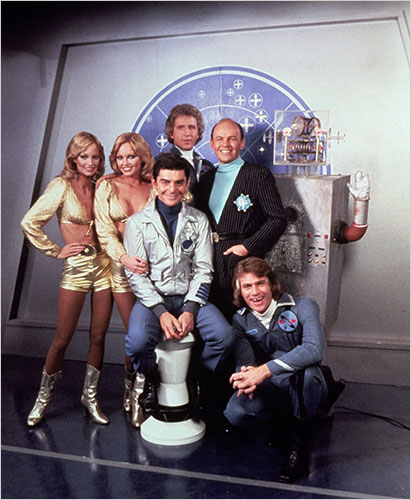
This show’s concept was also a bit of a reach. It took place on Perma 1, a space station in 2222. Adam Quark (Richard Benjamin) had a mission to clean up all the trash in outer space. Quark took orders from a giant disembodied head called, what else, The Head, along with Perma 1’s architect Otto Palindrome (Conrad Janis). If you think this sounds crazy, wait till you learn about Quark’s crew: a part fish/part fowl first officer, a humanoid vegetable named Ficus, clones Betty 1 and Betty 2, and Andy the Robot, a walking junk pile. I was surprised not that it was cancelled after two months, but that it lasted two months. I was also surprised to learn that Buck Henry was the creative force behind this series.

Sanford Arms

Photo: humormillmag.com

A year later in 1977 we have another interesting set-up. When Redd Foxx and Demond Wilson, the two stars, the only stars, left the show Sanford and Son, Norman Lear was left with a show title only. Aunt Esther (LaWanda Page) had been one of the cast members on Sanford and Son and suddenly she was at the hub of this new show. Phil Wheeler (Theodore Wilson) a widower with teenagers buys the house, the junkyard and Esther’s rooming house and tries to start a residential hotel. A month or so later, before he could even make his first payment, the show was done.

Another Day

Photo: wikipedia.com

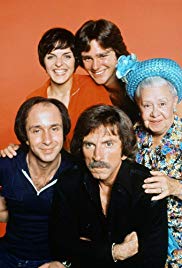
David Groh (who had played Rhoda’s husband) is Don Gardner, a struggling businessman who can’t make ends meet. His wife Ginny (Joan Hackett) has to get a job, and they both had to deal with their introverted son Mark (Al Eisenmann) and their extroverted daughter Kelly (Lisa Lindgren), as well as Don’s mom Olive (Hope Summers who had played Clara on The Andy Griffith Show) who is critical of all of them. Don struggled through a few episodes and was finished.

Apple Pie

Photo: wikipedia.com

A lonely hairdresser played by Rue McClanahan named Ginger-Nell Hollyhock placed ads in the newspaper for a family. The family that she “found” included a daughter (Caitlin O’Heaney) who tap-danced, a son (Derrel Maury) who wanted to fly like a bird, an elderly grandfather (Jack Gilford), and con-artist Fast Eddie (Dabney Coleman). The show was set in Kansas City in 1933. It took place during the Depression and depression is what anyone watching felt, although the pain was fleeting. After one episode the network decided no one wanted this family.

Hanging In

This one was so bad they didn’t want any evidence so there are no photos.

Another flop came along with a star who had been another star’s spouse. Bill Macy who played Maude’s long-suffering husband starred in this show as Louis Harper, a former football hero who did not have the right credentials to be a university president. He has a desire to help the underprivileged, but the rest of the faculty is more concerned about raising money. Other cast members included high-pressure dean Maggie Gallager (Barbara Rhoades), PR man Sam Dickey (Dennis Burkley), and housekeeper Pinky Nolan (Nedra Volz). No finals for this series; it was cancelled after a few weeks.

Hizzoner

Photo: imdb.com

David Huddleston plays Mayor Cooper who runs a small Midwestern town. The cast included the mayor’s secretary Ginny (Diana Muldaur), the mayor’s daughter (Kathy Cronkite, yes Walter’s daughter) and several other quirky characters. While the mayor is quite conservative, his children are left-wing liberals. Apparently, the mayor broke out into song at least once an episode. I guess, he was singing the blues because the show was cancelled after 7 episodes.

In the Beginning

Photo: collectors.com

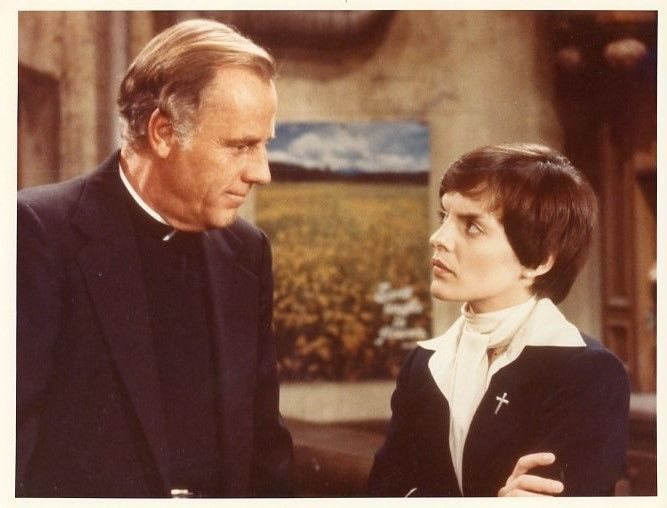
The year 1978 just keeps getting worse for television series. Father Daniel Cleary, played by McLean Stevenson, works in a community center in the heart of Baltimore. Sister Agnes (Priscilla Lopez) works with him. She loves her neighborhood; Father Cleary does not. She is fairly liberal and he is not. It ended almost before it began after seven episodes.

Miss Winslow & Son

Photo: sitcomsonline.com

In this one, an unmarried woman (Darleen Carr) who is an art designer, decides rather than marry a man whom she doesn’t love, she will become a single mother after getting pregnant. Her next-door neighbor Mr. Neistadter (Roscoe Lee Browne) hates kids. Her wealthy and snobby parents are divided about her situation; her father (Elliot Reed) is much more sympathetic than her mother (Sarah Marshall). Before the baby had its first check-up, the show was off the air.

13 Queen’s Boulevard

Photo: sitcomsonline.com

This show was about “a hilarious group of tenants in a garden complex in Queens, New York.” In the first episode, one of the tenants, Felicia Winters (Eileen Brennan) decides to host a class reunion and invites her best friend and spouse, her ex-husband, the class “sexpot,” Fat Hughie, and the class photographer. I don’t know what could possibly go wrong; however, not much went right since it was gone within two months.

Turnabout

Photo: bionicdisco.com

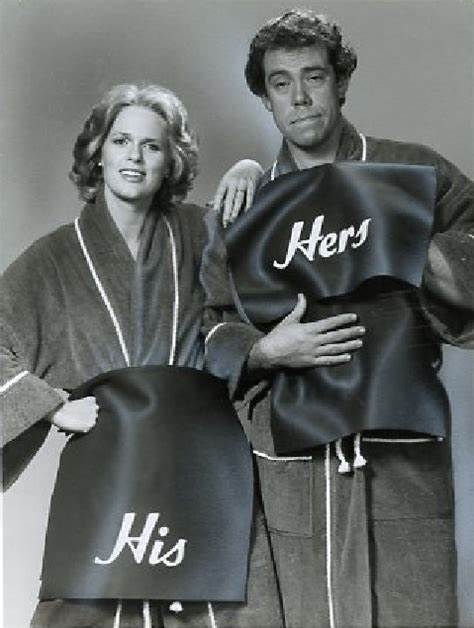
I get Freaky Friday, but in this series the husband and wife switch places. A magic statue allows them to inhabit each other’s bodies.  Sam Alston (John Schuck) is a sportswriter and his wife Penny (Sharon Gless) is a cosmetics executive. The couple tries to live both their own life and their spouse’s life whenever they switch back and forth. They also must focus on keeping the switch a secret. We never know who is who, and all the audience knew is they didn’t like either one of them, and the show was cancelled after a few weeks.

Waverly Wonders

Photo: sitcomsonline.com

NBC decided Joe Namath would be a good person to build a sitcom around. However, he’s not a football player in this show; he’s a former pro basketball player, Joe Casey, who now teaches history at Waverly High in Wisconsin. Linda Harris (Gwynne Gilford) is the principal and Mr. Benton, who they call “Old Prune Face” (Ben Piazza) was the former coach. The only problem is Joe Casey is a bad history teacher and a bad coach. That apparently makes for a bad show because it was cancelled after three episodes aired, although nine were made.

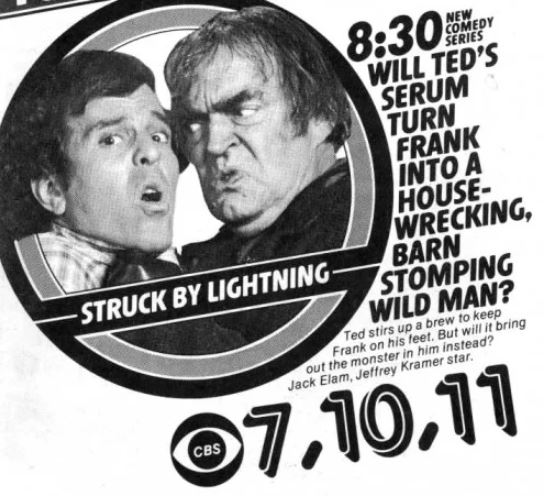
Struck by Lightning

Photo: metershow.com

If you think the concept of some of these shows was weird, wait to you hear about this one. Frank (Jack Elam) is the caretaker of an old inn in Massachusetts. A science teacher, Ted Stein (Jeffrey Kramer) inherits the inn and decides to sell it. Then he realizes that Frank was really a 231-year-old Frankenstein monster. Ted just happens to be the great-great-grandson of the original Dr. Frankenstein. So, they decide to run the inn together. Rounding out the cast was Glenn (Bill Erwin) who had been living there forever, Nora (Millie Slavin) who managed the inn before Ted came, Noras son Brian (Jeff Cotler), and real estate agent Walt (Richard Stahl). Apparently, the only thing “great” about the show was Ted’s relationship to Frankenstein because the network canceled it after five episodes.

So, you might be wondering with all these awful shows, what made it on the air more than a couple of months during the late 1970s. In 1977 the only shows that made it to the next season were Three’s Company and Soap. In 1978 Mork and Mindy and Taxi were the “classics” followed by Diff’rent Strokes and WKRP in Cincinnati. Without Robin Williams, Mork and Mindy would probably have been another concept that would have lasted a couple of weeks. In 1979, out of 21 shows that debuted that fall, Facts of Life was the only one that returned for a second season. With the exception of Taxi and WKRP, I would not rate any of these shows true classics, although you could make a good case for Soap. Anyway, the bar was set pretty low for success during the late 1970s.

At least television viewers could go to the movies for a bit of entertainment.  This was the era of Animal House, Annie Hall, Close Encounters of the Third Kind, Grease, Kramer vs Kramer, Rocky, Saturday Night Fever, and Smokey and the Bandit. Things stayed pretty glum on the small screen until 1982 when Cheers, Newhart, and Family Ties saved us.