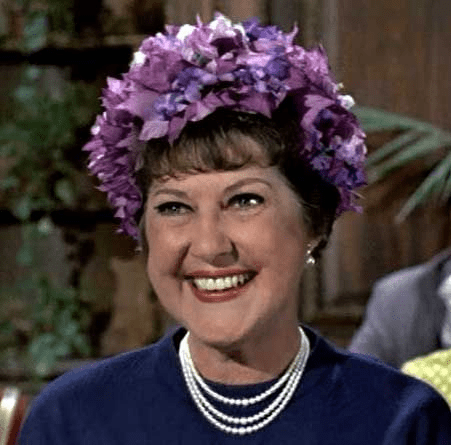
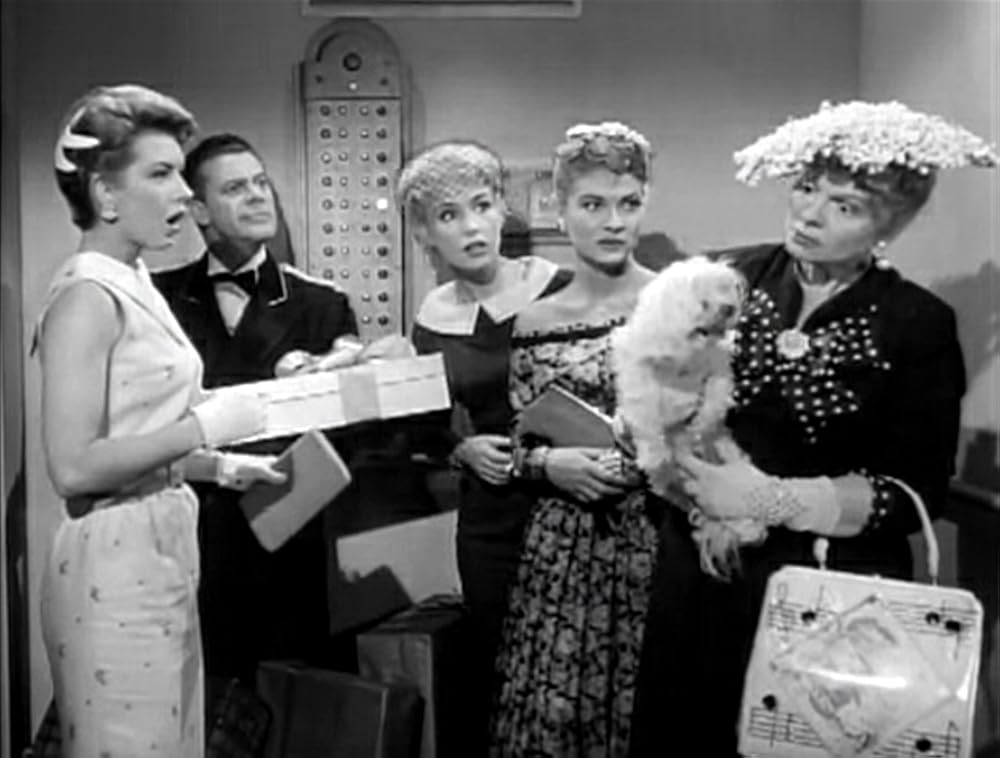
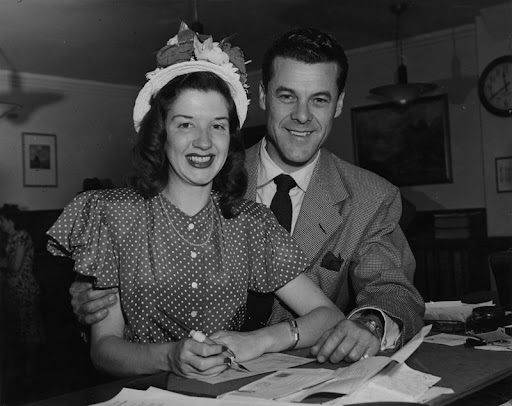
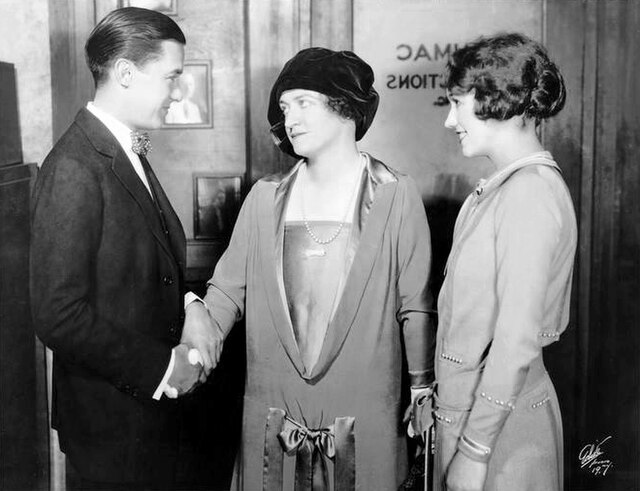
Gloria Henry: Her Job Was a Menace

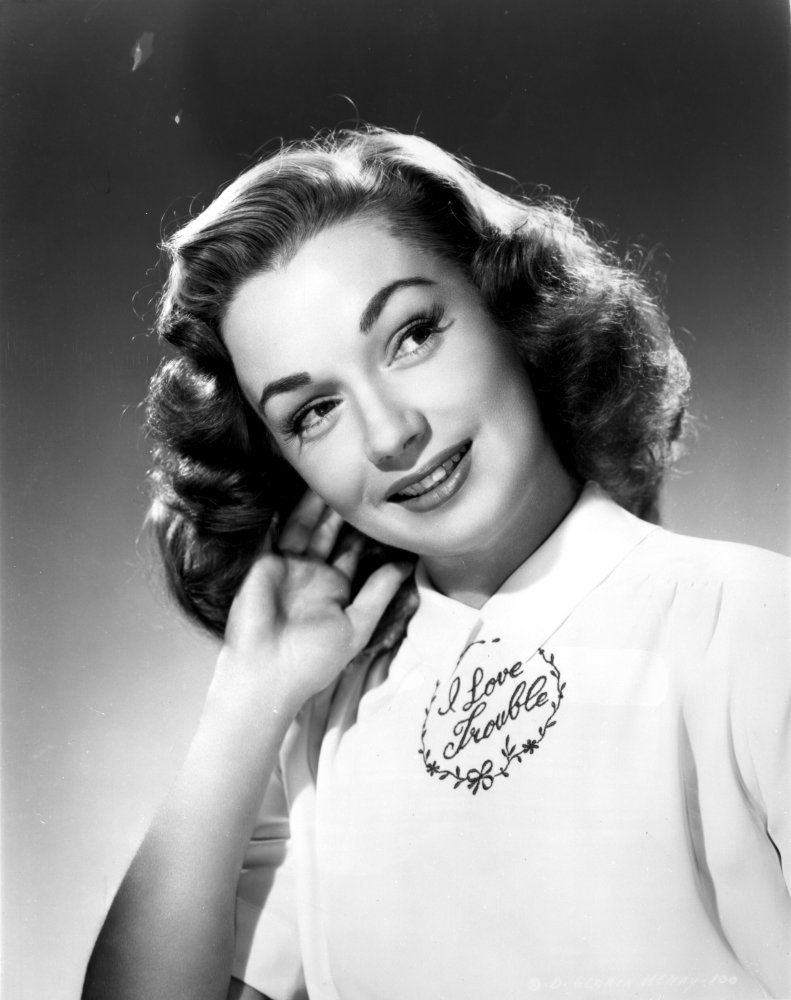
This month’s blog theme is “They Are a Menace” about the cast of Dennis the Menace. Today we are going to learn more about Dennis’s mom Alice, played by Gloria Henry.

📷amazon.com

Gloria was born in 1923 in New Orleans. She was sent to the Worcester Art Museum School in Massachusetts for her high school years. In her late teens she moved to Los Angeles, working on radio shows, appearing in theater productions, and taping commercials.

She married Robert Lamb in 1943, but they divorced in 1948.

In 1946, she was signed by Columbia Studios and made her big-screen debut in Sport of Kings in 1947.

She was in 23 films before 1950. During the fifties, she bounced back and forth between films and television series. Her first television role was on Fireside Theater in 1952.

The same year she received her first recurring role on 16 episodes of The Files of Jeffrey Jones. This little-remembered show was about a law school student working as a private investigator. He gets a lot of his life and professional advice from a local bartender named Joe. Henry played his girlfriend Michelle.

She tried marriage again in 1949 with Craig Ellwood. They were married for almost thirty years. During her time on the show, she became pregnant and was written out of the series.

She continued working after the birth of her son and accepted roles on television shows throughout the fifties including Mr. and Mrs. North, Father Knows Best, Perry Mason, The Life of Riley, and The Thin Man.

📷hollywoodreporter.com

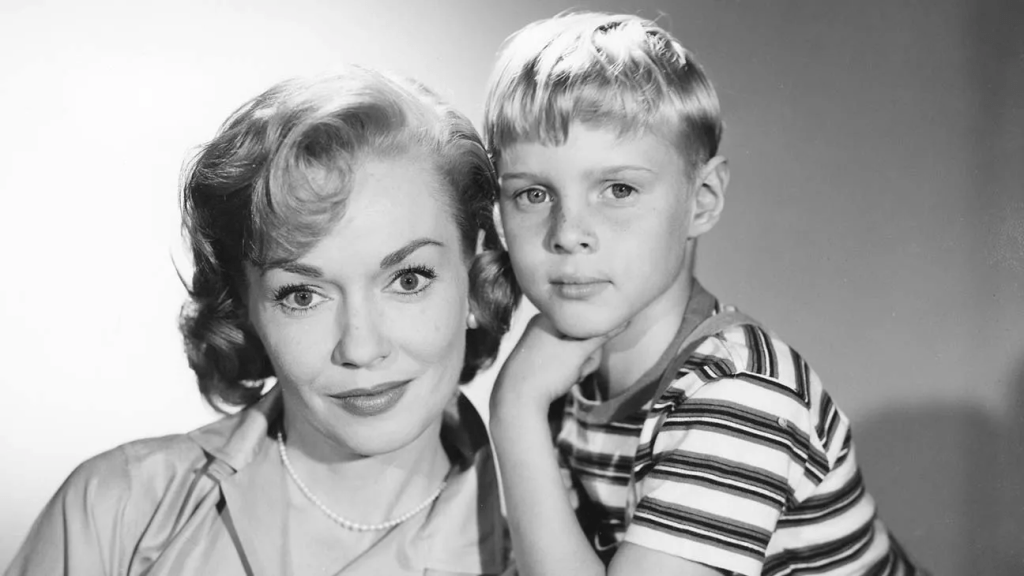
In 1959, she got her big break, earning the role of Alice Mitchell in Dennis the Menace. No one was more surprised than Henry that she got the role. During an interview in 2011 with KTLA-TV, Gloria said that she clashed with Harry Cohn who ran Columbia. Cohn once told Henry, “You may get somewhere at this studio, but it’ll be over my dead body.” He was absolutely right. Columbia Pictures produced Dennis the Menace, so even though Henry auditioned, she assumed Cohn would never approve her getting the part. However, in February, Cohn died from a heart attack, and two days later she was offered the role of Alice.

For four seasons, she guided Dennis through his mishaps. Henry brought the right amount of patience and frustration while raising Dennis. During season three, Joseph Kearns, who played George Wilson, passed away. The writers wrote his brother and wife who bought the Wilson house into the scripts, but it was too hard to overcome the loss of Kearns. Also, Jay North was now 12 and the antics of an eight-year-old are very different than a preteen boy, and he was ready to move on.

When the show was canceled in 1963, Gloria had a hard time finding roles she wanted to do. She felt she was being typecast as a mother. After appearing on Hazel and The Farmer’s Daughter in the sixties, she didn’t work again until the mid-eighties. While she never had another cast role, you can catch her in episodes of Simon and Simon, Newhart, Our House, Dallas, and Doogie Howser MD, among others. Her only roles after 1992 were a movie in 2005 and an episode of Parks and Recreation in 2012.

📷imdb.com

She retired and passed away at home in 2021.

I’m not sure how Henry felt about her acting career from the sixties to the nineties. Being typecast is never easy to work around in the entertainment business, but we have seen actresses like Jane Wyatt from Father Knows Best and Barbara Billingsley as June Cleaver on Leave it to Beaver go on to have longer careers, although not the careers they had hoped for. Alice Mitchell is a memorable character but probably not what Henry wanted her entire legacy to be. Jay North considered her a friend for life and always named her as his acting mentor. I wish I knew more about her life off the screen. Ninety percent of the articles I could find were obituaries.

I hope she appreciated her time as Alice Mitchell, was proud of her film work, and enjoyed her private life.

Jay North: No Longer a Menace

As we continue our theme of “They Are a Menace,” today we get to know Jay North, who played Dennis on Dennis the Menace.

📷facebook.com

North was born in 1951 in Hollywood. His father was an alcoholic, and when he was four, his parents divorced. His mother worked for the American Federation of Television and Radio Artists. She arranged for Dennis to appear on his favorite program, Cartoon Express. A talent agent noticed him and asked his mother if she could represent him. In  1958 and 1959, he appeared in eight television series and three movies, including The Donna Reed Show and 77 Sunset Strip.

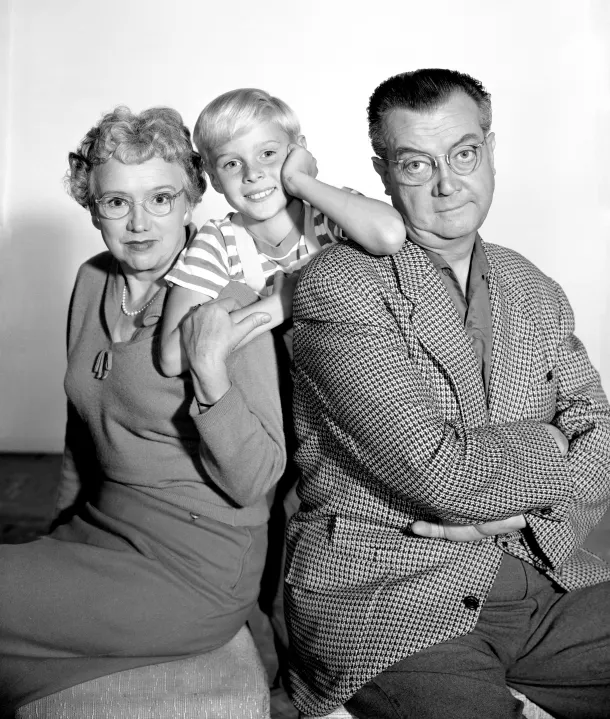
A nationwide search was being held in 1958 for the casting of Dennis the Menace for a new show. Hundreds of boys auditioned, and North was asked to come in to test with Herbert Anderson and Gloria Henry who would play his parents and Joseph Kearns, who would become George Wilson.

The show debuted in fall of 1959 on CBS on Sunday nights. North received about $500 an episode (equivalent today to about $4600). His aunt, who was his guardian on the set, often was abusive. North was not allowed to socialize with the other kids on the set and had to eat his lunch alone in his dressing room. By season three, North was earning $2500 per episode ($23,000 today). His aunt physically abused him when he messed up his lines. He kept this from his mother and coworkers.

Jay played Dennis for four seasons. During season three, Joseph Kearns passed away and he and his wife were written out of the show, with this brother and sister-in-law buying his house and moving next door to Dennis.

North was relieved when the series was cancelled. He was getting exhausted filming the show, doing commercials, and going to school on the set every day. He said in an interview with Filmfax that “between the pressures of the business and Joe’s dying, I became very serious, very morbid, and very withdrawn from the world. I was the antithesis of the little kid that I played on the television show.”

Jay was typecast as Dennis and had a hard time finding roles after the show was done. He took roles on several series, starring in another show, Maya which was canceled after a season. At that point he began providing voices for animation characters. He was married and divorced within a year in the mid-seventies.

Jay became disillusioned with the acting profession and joined the Navy. He was assigned to the USS Iwo Jima, stationed in Virginia in 1977. He received an honorable discharge in 1979.

He received a few roles when he returned, including some time on General Hospital. Luckily his mother had invested his money in real estate, so he was in a good financial situation. For several years he worked in the food industry.

When Paul Petersen, who had played Jeff Stone on The Donna Reed Show, phoned him to say a former childhood star, Rusty Hamer who was the son on The Danny Thomas Show, had committed suicide. North was given the name of a therapist Stan W. Ziegler who helped former childhood stars. Petersen started a new organization, A Minor Consideration, that North helped get running. This nonprofit, still around today, helps minors deal with the stress of show business.

📷extratv.com North with Jeannie Russell and Gloria Henry

North tried marriage again in 1991, but the couple separated after three months. In 1992, he met Cindy Hackney, a caterer. They were married a year later, and the couple moved to Cindy’s hometown of Lake Butler, Florida. He gained three daughters in the marriage. North made a break with Hollywood and worked as a correctional officer in Florida and helped troubled youth through the justice department.

He did keep a foot in the acting door appearing on talk shows, at memorabilia conventions, and he had a cameo on The Simpsons. In 1999, in an interview with E! he said that “I am so happy that I was able to have such a positive impact on people’s lives. I’m going to write my autobiography and then I’m just going to live a contented, happy life here in Lake Butler with the people I love, and kind of just vanish into the mists of time.”

North continued his friendship with Jeannie Russell who played Margaret on Dennis the Menace. She became a chiropractor, and he was one of her clients. He also was close to Gloria Henry after the show and always credited her as being his mentor.

📷briouxtv.com

Unfortunately, I could not find the book North wanted to write, but there is a book about his life and the inspiration he became to others. It’s by Richard Mayday and titled “Jay North: Beyond Dennis the Menace: The Life, Legacy, and Untold Struggles from Child Star to Advocate and Survivor of Hollywood’s Golden Age. Sadly, he passed away from colorectal cancer in 2025.The book was published the year North passed away, so I’m not sure if he contributed to the book or not.

North’s career started off out of his control, and once he was able to make his own decisions about his roles, he found himself typecast and unable to get the roles he wanted. However, he continued in the business, finding new ways to contribute with his talents. Luckily, his mother invested all his earnings. North said despite the large amounts of money he was making, she never lived off any of his proceeds. That enabled him to find happiness in Florida with a family he loved and a career that he found satisfaction in helping others. You can’t ask for a more rewarding life than that.

Dennis the Menace: A Well-Meaning Kid

This month our blog theme is “They Are a Menace,” and we are spending time with some of the cast of the Dennis the Menace show. But, today, we are going to learn a bit about the show itself.

📷wikipedia.com

Dennis the Menace debuted in the fall of 1959. It was based on the comic strip by Hank Ketcham that began in 1951. Produced by Dariell Productions and Screen Gems, it was about a young boy and the trouble he mistakenly causes for his family and neighbors. Dennis (Jay North) lives with his parents Henry (Herbert Anderson) and Alice (Gloria Henry). He often causes difficulties for his neighbor George Wilson (Joseph Kearns), but Martha Wilson (Sylvia Field) is much more sympathetic to Dennis’s heartfelt attempts to “help” them. Dennis often refers to his neighbor as “Good Old Mr. Wilson.” George, despite his agitation with the mischief Dennis causes, does care about him.

Also seen on the show were Dennis’s friend Tommy (Billy Booth) and Margaret (Jeannie Russell), who has a crush on Dennis. We also get to know a lot of the community residents Dennis encounters on a regular basis. In six of these episodes, Ron Howard plays Stewart, one of Dennis’s friends before he moved to Mayberry.

Howard discussed his time on the show during his Television Academy interview. He said the thing he remembered most about this show was that the agony North had to endure with his hair style. The producers were trying to force North’s hair into the tuft that the comic strip Dennis the Menace had. They put him in hair nets off to the side of the set when he wasn’t working and kept using gels and sprays to make it work. Howard said he looked miserable, and the second season, they just let his hair do its natural thing.

CBS placed the show on Sunday nights following Lassie. However, after reviewing the first three episodes, the network asked the “antics” to be toned down because they were afraid that children watching the show might try to imitate Dennis’s hijinks.

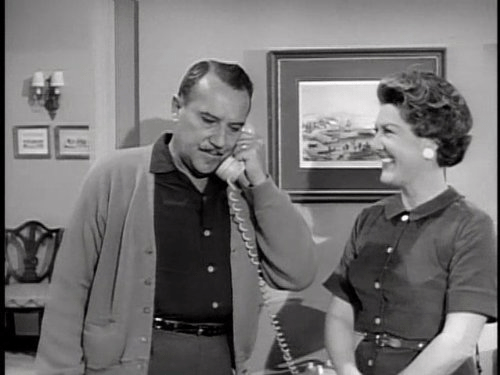
Sadly in 1962, Kearns passed away from a cerebral hemorrhage. After two episodes without the Wilsons, Gale Gordon moved in as George’s brother John. In the fourth season, John buys the house from George and Martha. Field was let go, and John’s wife Eloise (Sara Seegar) lives in the house and interacts with Dennis.

📷rewatchclassictv.com Ron Howard

The show was canceled after that year. The series was #16 in season one, moved up to #11 in season two, stayed in the top twenty in season three at #17 but then fell out of the top thirty shows during the final season. Part of the loss of viewers probably had to do with Kearns and Field leaving the show. However, North was now 12 years old and no longer “fit” the well-meaning boy who causes trouble for everyone.

After the show was cancelled, North got into voice acting, playing the teenage Bamm Bamm on The Flintstones. He also voiced Prince Turhan on The Banana Splits Hour. In 1960 North released his first album, “Look Who’s Singing!”

North left the acting profession about 1990. He teamed up with Paul Petersen (Jeff on The Donna Reed Show) to start A Minor Consideration, dedicated to helping kids in the entertainment industry. North revealed that because his mom worked full time, he needed a guardian on the set, and his Aunt Marie took on that role, but she was often physically and verbally abusive, and he never told his mother or any of his coworkers. A Minor Consideration is still doing good work today. Later North worked with troubled youths in Florida’s juvenile justice system and as a correctional officer.

The other two kids on the show also left the acting profession. Booth became an attorney and taught business law at Cuesta College and Cal Poly, while Russell became a chiropractor, although she did take on a handful of acting jobs now and then.

If you’ve read my blog about the Warners Ranch lot, this show was part of it. The Mitchell house was the same house the Stones resided in on The Donna Reed Show. The Wilson home was the previous home of the Andersons on Father Knows Best and would later be where Jeannie caused mischief for Tony on I Dream of Jeannie.

Not surprisingly, this family show was sponsored by Kellogg’s and Skippy Peanut Butter. The sponsors wanted Dennis to do commercials for them, so he was in ads for Kellogg’s cereals, Skippy, Best Foods mayonnaise, and Bosco chocolate milk. They even talked Kearns into doing some peanut butter commercials with North.

One of the sad things I learned about the show was the unhappy life of the real Dennis Mitchell. Ketcham based the show on his son Dennis. His mother died from a drug overdose when he was 12. His parents had just divorced and three weeks after her death, his dad remarried. Ketcham moved his son to Switzerland, but he had trouble adjusting, so his father sent him to a boarding school in the states. Ketcham stayed in Switzerland with his second family until a divorce in 1968. Hank later remarried and returned to the United States. Dennis joined the military and fought in Vietnam. However, when he returned home, he suffered from PTSD. Even though he turned his life around before he joined the military, he had no relationship with his father. A New York Times reporter who interviewed the cartoonist in 1994 asked about this, and Ketcham said, “He’s living in the East somewhere doing his own thing. That’s just a chapter that was a short one that closed, which unfortunately happens in some families.” Very sad.

Dennis the Menace was popular in the fifties and early sixties. I understand the show lost viewers with the loss of Kearns and Field, but because of Dennis’ age and the change that was taking place in sitcoms in the mid-to-late sixties, the show would not have lasted much longer. It’s hard to learn that both Dennis Ketchum and Jay North suffered mental health issues and abuse during their youth. I’m glad they both were able to go on to live happier lives as adults.

McKeever and the Colonel: I Tried To Like It

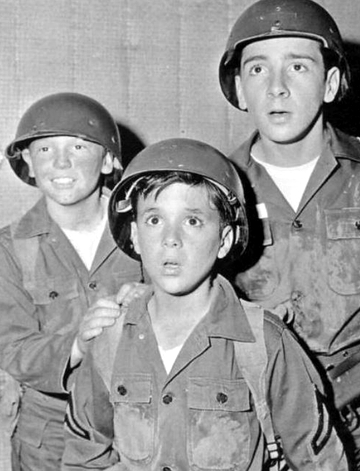
As we wind up our Military Upended posts, we take a look at a show that debuted in fall of 1962 and was canceled after one season. This was a different concept of a military show. McKeever and the Colonel is the kid version of McHale’s Navy. Instead of the crew causing problems for Captain Binghamton, this one is set in a school where cadet Gary McKeever causes headaches for Colonel Blackwell.

📷imdb.com

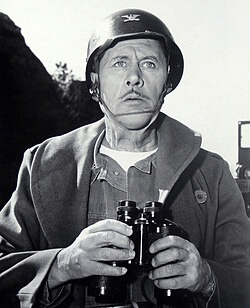
McKeever (Scott Lane), the son of an Air Force officer, is a mischievous kid, but we often root for him because Colonel Blackwell (Allyn Joslyn) is an arrogant guy. Other characters included Sergeant Barnes (Jackie Coogan) who sympathized with the cadet, Nurse Warner (Elisabeth Fraser), and fellow cadets Monk (John Eimen) and Tubby (Keith Taylor).

While they make life difficult for the Colonel, he is fond of the boys and most of their pranks are innocent enough.

The show was on ABC on Sunday nights, which tended to be a family viewing night. It was on at 6 pm before another new military sitcom, Ensign O’Toole. Ensign O’Toole was up against Lassie, which was in the top twenty that year.

I think there were two main issues working against this show. Harvey Bullock talked about his time working on this show during his Television Academy interview. He said that he was one of the creators who developed the show. When NBC picked it up, they said they didn’t need the original writers because they had their own. After ten episodes, they called Bullock and the other writers and asked them to please come back because the show was failing miserably. Bullock said they did return, but things had gone too far, and the ratings were too bad to come back from.

📷wikipedia.com

In combination with the writing problems, on Sunday nights most families tended to tune in to watch Lassie, Dennis the Menace, and The Ed Sullivan Show, another top twenty series. Considering that and the fact that this show was not in the prime-time lineup may have kept it from finding the viewership it needed. Ensign O’Toole was also canceled, but ABC replayed the episodes a year later to replace another canceled show. When the fall of 1963 schedule appeared, 49 shows had been canceled from the previous year, so McKeever had plenty of company.

I wanted to like this show, but it didn’t do much for me. The episode I watched was “The Celestial Bells.” The cadets weren’t happy because a new course was added, and it was ballroom dancing. They get the idea that they can go to the infirmary and try to catch a disease from an older boy but then learn that he has a sprained ankle. When that fails, they go to the malt shop to gorge themselves on ice cream treats until they get caught by the colonel. The jokes seemed a bit flat. For example, one guy asked another cadet if he knew anything about girls, and he replied he had three sisters and they were all girls. Sergeant Barnes comes in to give the guys a pep talk about girls just as they are thinking about going AWOL. The colonel then arrives with a asst colonel who is there to make sure they change and show up at class. Of course, McKeever tries to escape into the equipment locker at the dance, but when he opens it, all the equipment falls out. Just as he’s ready to be punished, Miss Dixon, the instructor, says he will stay and dance with her and after a few minutes of dancing, he falls in love. Like I said, I really tried to like it, but given the shows on the air in 1965, this is not one I would have watched a second episode of.

📷boardgamegeek.com

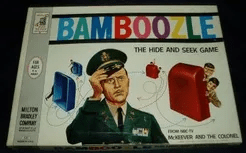
The show inspired merchandise during its short time on the air. Three Dell comic books were published; Milton Bradley introduced a board game, Bamboozle; and Halco Toys issued a set that consisted of a belt with a canteen, pistol, holster, and hand grenade.

It’s not a show you hear about often anymore. The series occasionally shows up a streaming service but is not part of Netflix or Hulu. Your best bet is to watch a few episodes on YouTube.


Sara Seegar: What a Character!

As we wind up our April blogs What a Character!, we end with Sara Seegar. Seegar was born in Indiana but grew up in London, Paris and Hollywood where she went to school. She then attended Los Angeles Junior College, majoring in drama.

📷bewitched-wikifandom.com

She moved to London to appear on the stage there but returned to the United States once WWII began. Seegar began performing on Broadway before appearing on film, radio, and television.

The year she came home from London she met Ezra Stone while performing in Horse Fever. They were married two years later.

The couple raised their children in Bucks County, Pennsylvania, performing at the Bucks County Playhouse.

Seegar would appear in eight films, the most famous of which was The Music Man.

She only had 37 televisions credits, but she made memorable appearances on many of the most popular shows. She began her television career on several of the fifties’ drama shows that were so popular early in television history.

📷imdb.com

She began the sixties on Perry Mason, then moving to sitcoms including The Donna Reed Show, The Andy Griffith Show, and The Patty Duke Show. Her most famous role was Eloise Wilson on Dennis the Menace. Sylvia Field and Joseph Kearns played Martha and George Wilson from 1959-1962. After Kearns passed away, Field left the show, and Gale Gordon and Seegar took over as George’s brother and sister-in-law. Sara discussed her role of Eloise, saying “One of the things I’ve enjoyed about the role as Mrs. Wilson is that she could be me. Of course, basically, she’s sweeter, but I’ve been pretty much myself.”

She continued her roles in both sitcoms and dramas in the seventies including Marcus Welby MD, The Brady Bunch, and Kojak. She was in ten episodes of Bewitched, often playing the wife of one of Darrin and Larry’s clients. Her last appearance was in 1979 on The White Shadow.

📷findagrave.com

From 1967-1990 Seegar was a workshop leader, lecturer, and guide for the American College Theater Festival and the Kennedy Center. Seegar passed away in 1990 in Pennsylvania.

I wish I knew more about the life of Sara Seegar. Viewers often mention how funny she was in the scenes she was in on Bewitched. It sounds like she had a lovely career.

Jimmy Cross: Found His Career Going Up (And Down) in 1957

It’s 2026! And it’s January, so we are starting the year off with “Worth a Million.” This month we are learning about the careers of several of the cast members from How to Marry a Millionaire. This show debuted in 1957 and aired for two years.

📷tmdb.com The first year cast of women

According to imdb.com, the plot is “Motherly Mike, ditzy but sexy Loco, and sensible Greta move to the big city to find themselves wealthy men to turn into husbands. After the first year Greta gets married with Gwen moving in as the new roommate in this syndicated series.”

The six members of the cast included Merry Anders (Mike), Lori Nelson (Greta), Barbara Eden (Loco), Jimmy Cross (Jesse), Lisa Gaye (Gwen), and Joseph Kearns (Mr. Tobey). During the past decade, we have learned a lot about Barbara Eden, best known as Jeannie in I Dream of Jeannie and Kearns who we remember as Mr. Wilson in Dennis the Menace. So, this month we are learning about the four remaining stars, and we begin today with Jimmy Cross.

📷imdb.com Cross as elevator attendant

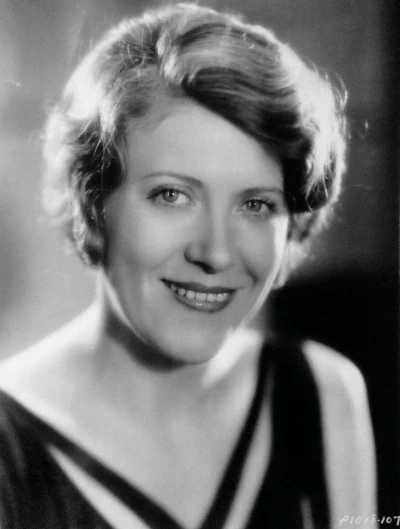
Cross was born in 1907 in New York. At age 40, he married actress Peggy Ryan, but they divorced after the seven-year itch. Ryan was a popular face for a while. She and Donald O’Connor were supposed to be the next Judy Garland/Mickey Rooney couple. Ryan’s parents were Vaudeville dancers, and she was on stage by age two. She was an amazing dancer and singer. After she and Cross divorced, she tried another short-term marriage to Ray McDonald before meeting Eddie Sherman whom she was with for almost fifty years. You might remember her as Jenny, Steve McGarrett’s secretary on the original Hawaii Five-0.

On How to Marry a Millionaire, Cross played the elevator man, at age 50, who worked in the apartment building where the girls lived. He sometimes helps and sometimes hinders the trio with their get-rich-husband schemes.

This was the only series he costarred in, but he did show up on The Red Skelton Show 46 times.

Cross typically played a background role, often a bartender, drunk, or photographer. However, he was busy and appeared on almost every popular show during the sixties and seventies, garnering almost 100 credits during those decades. His last role was in BJ and the Bear in 1979, two years before his death.

📷thevalleytimes.com With Wife Peggy Ryan

Cross also had a decent movie career. Again, he was not front and center but had some fun parts and if you look quickly, you will see him in several popular movies including North by Northwest, Bells Are Ringing, Hello Dolly, and The Poseidon Adventure.

I wish I knew more about Cross. There just isn’t much information out there considering how long he worked in the entertainment industry. This is one of those cases where his work might have to speak for itself. That said, this show got a lot of good reviews when it came out and Cross, while not being a star, added a fun element to the episodes he was in.

Sylvia Field: What a Character

We are in the middle of our blog series for November, “What a Character!” Today we get to meet the delightful Sylvia Field.

Born Harriet Louisa Johnson in 1901 in Allston, Massachusetts, Field always knew she wanted to act. When she was ten, she saw Maude Adams in “Peter Pan,” and she decided that would be her career as well. After being diagnosed with diphtheria, she was not allowed to attend school for a while. So, when she was feeling better, she ventured down the street to a motion picture company that was filming movies. She was allowed to join the cast and became the “leading lady of the extras.”  

📷facebook.com

Eventually she decided to move to New York. At only 17, she made her Broadway debut in “The Betrothal.” She never did go back to school.

📷wikipedia.com 1927 Broadway shot

A decade later she got her first shot at the big screen in The Home Girl. She was signed by Fox Studios in 1939. Her last acting credit was also for a film, The Cruz Brothers and Miss Malloy in 1980. While she fit a few movies in her career, most of her appearances were on television.

After she began her film career, she married Robert Frowhlich in 1924; they were only married five years. In 1930 she tried marriage again with Harold Moffat; he passed away eight years later. In 1941 she married Ernest Truex, and they remained together until his death in 1973.

Truex had an interesting background. He was born in Kansas where his father was a doctor. In exchange for medical services, one of his father’s patients gave Ernest acting lessons. Ernest performed Shakespeare as a five-year-old child, and was given the nickname, “The Youngest Hamlet.” As a nine-year-old, he and his mother toured the country while he performed. Before he was a decade old, he was in his first Broadway show with Lillian Russell.

📷wikipedia. The Butter and Egg Man by George Kaufman

In the movies he played the quiet, ineffectual boss. Like Field, he was also a regular cast member in three shows. His were Jamie, Mister Peeper, and The Ann Sothern Show.

Field and Truex traveled around the country in plays together before starring in a local New York series featuring members of their family. The couple had a blended family with Field’s daughter Sally Moffat and Truex’s three sons. All four of the kids became actors. I’m guessing it was like The Adventures of Ozzie and Harriet. The show was on the air for three years before Truex and Field decided to move to California.

Sylvia’s first television appearance was on the Chevrolet Tele-Theater in 1948. She continued accepting roles on many of the drama shows through the mid-fifties. In 1952 she got her first cast role as Mrs. Remington on Mister Peepers. Ernest Truex was also part of the cast, playing Mr. Remington. They played the parents of Nancy, the school nurse, Mister Peepers’ fiancé. (Field and Truex would work together again on a 1966 episode of Petticoat Junction, “Young Love,” as well as in The Ann Sothern Show.)

📷who’sdatedwho.com Field and Truex

After Mister Peepers was canceled, she accepted a few spots on current shows including The Ann Sothern Show, Father Knows Best, Perry Mason, and The Thin Man.

In 1958 Sylvia received another cast offer to become Aunt Lila on both Annette and The Mickey Mouse Club. These shows shared cast members, so if you were cast on one of them, it was a buy one, get one deal.

Aunt Lila only lasted a year, which was a good thing, because Field was free to accept the role of Martha Wilson on Dennis the Menace, beginning in 1959. She defended Dennis to her husband George for almost four seasons.

Before the 1962 season, her tv husband Joseph Kearns passed away. For the season, Gale Gordon was brought in as George’s brother John, who was staying with Martha while George was away on personal business. However, the next year, Field was written out of the show, and John’s wife Eloise took her place, played by Sara Seegar. John and his wife bought the house from George and Martha, and no explanation was given to why they moved away. Sylvia and Jay North, who played Dennis, remained friends for the rest of her life.

📷WPRI.com Field, North, and Kearns

For the rest of her career, she would show up on television shows including Hazel, Occasional Wife, and Lassie. After Truex’s death, Sylvia accepted a couple of roles but spent much of her time fishing, golfing, watching baseball, and taking care of her avocado orchard. Eventually she had to move to a nursing home where she passed away in 1998.

I always enjoyed Martha Wilson. She and George took on the role of Dennis’s pseudo grandparents. While George was gruff, everyone knew he loved Dennis. Martha was more affectionate and always waiting with cookies, ready to hear about his latest exploits. Field seemed to have a great life. She had a prolific career and then was able to enjoy retirement which so many actors find impossible to do.

Father Knows Best: We All Grew Up in Springfield

Our last two shows are both set in Springfield, and we might do a bit of comparison and contrast next week. This week we are checking out the Anderson family on Father Knows Best.

📷wikimedia.com

The show debuted on NBC radio in 1949. For five years it was sponsored primarily by General Foods. None of the television cast members were part of the radio show, but you would recognize the voice of Jean Vander Pyl from The Flintstones.

A couple of months before the show ended on radio, it made its move to television. This was not all that unusual in the early days of television, but the show began on CBS for a year, then it was picked up by NBC for three years, and then it returned to CBS for two years.

The pilot aired on an episode of The Ford Television Theatre and was called “Keep It in the Family.” While the show was picked up, only Robert Young was retained from the original cast. Joining him were Jane Wyatt as Margaret, Elinor Donahue as Betty, Bill Gray as Bud, and Lauren Chapin as Kathy.

📷evergreenarchives.com

I think we all have this stereotyped vision of the Anderson family in our memories. In fact, the US Department of the Treasury requested a 30-minute episode of the show that was never aired on television. It was distributed to schools, churches, and civic groups to promote the sale of savings bonds. However, when I watch the show today, I think it got some unfair criticism. There are several episodes when Margaret has just had it with cleaning and cooking for an ungrateful family. The kids are sometimes portrayed as thoughtless and self-absorbed. The three children often disappoint their parents and sometimes the parents are not good role models. I don’t say that in a negative way—it’s a realistic description of a lot of us as teenagers and parents at times.

📷imdb.com

Robert Young and his business partner Eugene B. Rodney developed the show with Screen Gems. Casting was not an easy task. One of the things they were trying to avoid was stereotyping. They wanted Bud to be absorbed but not flip. Young and Rodney mentioned that it was not easy to do the gags in the right tone, but they knew they had their Bud in Gray in a scene where Jim is worried about Betty getting too serious. Rodney relayed the following story: “As an example”, said Mr. Rodney, “when Jim, worried about Betty’s going steady, reads aloud a newspaper story about a girl eloping and taking $200 with which her aunt was to buy a TV set, our Bud had to be able to look up and ask seriously, ‘What size screen, dad?’ Billy Gray was the only actor that could do it the way we wanted.”

Kathy was a bit harder to cast for; seventy-eight girls auditioned for the role. Chapin had no acting experience before the show, but she seemed more like a regular kid. They wanted Betty to be attractive but not sophisticated. Donahue talked about her auditions in a Television Academy interview. She auditioned once and had to hop out of the tub and run to the audition with her hair a bit of a mess, and they told her she was too young for the part. Her agent got her hair cut, dressed her in a suit with heels and got another tryout for her, but they said she was too old. Her agent kept pestering them to give her one more shot and they did not want to, but finally Rodney agreed if her agent would quit calling him, so they brought her in again. She was all nerves and very anxious and Young tried to calm her down and she auditioned again and felt that she had embarrassed herself and that she had made a terrible impression. However, they called a month later to say that she had been hired.

📷wikimediacommons.com

Jane Wyatt was offered the role of Margaret and rejected it. She wanted to do a show in New York, but when they sent her the script and she read it, she loved it and agreed to the part.

The show began on Sunday nights. It seems a bit odd today that this wholesome family show on Sunday nights was sponsored by Lorillard’s Kent cigarettes. The show became popular with America, but the ratings were not high enough for Kent Cigarettes, and they decided not to extend the 26-episode contract. Fans sent letters, and television columnists got in on the action, encouraging fans to write the president of the CBS network. Kent canceled and Scott Paper then picked it up. Scott moved the show to NBC. By the second season, more than 19 million households watched the show on Wednesday evenings. In 1958 NBC decided to cancel the show, but CBS took it up again for two more years. In 1960 there was a writers’ strike and it lasted long enough that Robert Young decided he was ready to move on in his career. Jane Wyatt was also ready to retire and enjoy her family. The sad thing was that they were never able to say goodbye to each other or wind up the show.

📷imdb.com

Good scripts were critical for both Rodney and Young. They wanted character motivation. Roswell Rogers and Paul West, the primary writers for the show, took a lot of their material from their own lives. The two writers had seven children between them and included moral lessons built in.

The two major directors were Peter Tewksbury and William D. Russell. As co-owner of the show, Rodney served as producer. He knew everything about the characters. Jane Wyatt related an incident when she asked Rodney what she could do to improve her characterization of Margaret. Rodney told her to love her children as much as her husband. Wyatt realized at that moment that she had been concentrating on the relationship between Jim and Margaret more than her motherly feelings.

📷pinterest.com

If you are a pop culture fan, you will recognize the house as the home of Mr. Wilson on Dennis the Menace and Major Nelson on I Dream of Jeannie. If you pay close attention, sometimes you can see the house in episodes of Bewitched, Hazel, The Monkees, and The Partridge Family. Gracie Allen would have approved of the show’s interior. She liked to do the activity that she was supposed to be doing on the show, and the Andersons had working appliances in their kitchen. While the bedrooms were interchangeable so they could film any of the characters’ rooms, the kitchen had red wallpaper, white cabinets, and blue countertops. Every morning, coffee and sweet rolls were served, and lunches were kept in the refrigerator.

The theme song was titled “Waiting.” It had lyrics but they were never used on the show. It was written by Don A. Ferris and Irving Friedman.

The show was nominated for an Emmy 20 times with 6 wins: Robert Young won for Best Actor in 1957 and 1958, Jane Wyatt won for Best Actress in 1958, 1959 and 1960, and the show received Best Direction for A Single Episode in 1959.

📷closerweekly.com

The Andersons had a special place in the heart of many kids growing up during the fifties and in 1977, two reunion movies were made: Father Knows Best Reunion in May and Father Knows Best: Home for Christmas in December. We learn that Betty is a widow with two daughters, Bud is married with one son, and Kathy is recently engaged to a doctor.

Despite the abrupt ending of the show, the cast kept in touch. Donahue said that she really loved Robert Young and considered him her father figure. She, Chapin, and Gray all were in families without a father, although Gray saw his occasionally, so Robert did become a father for them. She said he never had a cross word for any of them and if they were behaving unprofessionally or causing trouble, he would take off his glasses and look down and that was their cue to do better. Perhaps that is why the show rings true for so many people. On the set, their “father” truly did know best.

Maudie Prickett: What a Character – Prim and Proper

As we look at some of our favorite character actors, today we learn more about Hazel’s friend Rosie: Maudie Prickett. Prickett had a prolific career with more than 300 credits between the stage, film, and television.

Photo: bewitchedwikifandom.com

Maudie was born in 1914 in Oregon. Her birth name was Maudie Marie Doyle; she married Charles Fillmore Prickett II in 1941 and used her married name for her career. Charles was the co-founder and manager of the Pasadena Playhouse and later became an orthopedic surgeon. They remained married until his death in 1954 and had two children.

Prickett would amass 64 movie credits, with her first being Gold Mine in the Sky in 1938. Her last three movies were made in 1969: The Maltese Bippy, Rascal, and Sweet Charity. She typically played maids, secretaries, spinsters, or nosy neighbors. One of her most recognized movie roles was as Elsie the Plaza Hotel maid in North by Northwest.

In 1952 she received her first television roles, appearing on This is the Life, Hopalong Cassidy, The Doctor, and The Adventures of Superman. While most people are familiar with Hopalong Cassidy and Superman, they may not recognize the other shows. This is the Life was a religious show that began in 1952 and ended in 1988; each episode was a mini-drama that ends with someone becoming a Christian. The Doctor was a medical show where Warner Anderson as the doctor presented a story and then provided comments after the episode. Most of the series dealt with some type of emotional problem.

The look we were used to with Maudie Photo: imdb.com

For the next two decades, Maudie was quite busy with her television career. She often made multiple appearances on a show as different characters. She had a nice blend of both dramas and comedies on her resume.

In 1961 she married Dr. Eakle Cartwright who died in 1962. In 1966 she would try marriage one more time when she wed the mayor of Pasadena, Cyril Cooper who lived five more years.

While watching your favorite classic television shows, you will see her on westerns including Wagon Train, Bonanza, and Gunsmoke. She made her mark on medical series including Ben Casey and Marcus Welby MD. She also appeared in quite a few dramas including The Millionaire, The Untouchables, Lassie, Daniel Boone, The Mod Squad, and McMillan and Wife.

However, it was the sitcom genre that kept her busiest. During the fifties, she could be seen on Topper, Father Knows Best, Leave It to Beaver, and The Donna Reed Show. The sixties found her on Dennis the Menace, Bachelor Father, The Danny Thomas Show, Mister Ed, My Three Sons, Petticoat Junction, The Andy Griffith Show, The Doris Day Show, Gomer Pyle USMC, and Get Smart. During the seventies, she took roles on Mayberry RFD, Bewitched, Love American Style, and Room 222.

Best Friends – with Shirley Booth on Hazel Photo: pinterest.com

All of her recurring roles were on sitcoms: Date with the Angels, The Jack Benny Show, and Hazel. Date with the Angels was Betty White’s second sitcom, and Maudie played Cassie Murphy, a neighbor of the newlyweds. On The Jack Benny Show, she played Mrs. Gordon, the secretary of the Jack Benny Fan Club. Many people remember Prickett from Hazel where she played Rosie. Hazel and Rosie were best friends and always came through for each other but were also very competitive, especially when an eligible bachelor was involved.

In 1976, Maudie passed away from uremic poisoning at the young age of 61. Uremia occurs when there is an increase of toxins in the blood and usually occurs when the kidneys no longer filter them out. It can be treated with medication, dialysis, and transplant surgery, but for some reason, hers must have been untreated which lead to her death.

On Bewitched Photo: sitcomsonline.com

Maudie was a very busy lady, accumulating 164 acting credits between 1938 and 1974. I’m not sure if she was okay with being typecast or if she would have liked some other types of roles, but she certainly made the roles her own. You have to wonder how much more she would have accomplished if she had lived another twenty or thirty years. Her personal life was sad, having three husbands die before her and then she herself dying as middle age was beginning.

I know you read this comment a lot if you follow my blog, but we have another one of those character actors I wish we knew more about. The Television Academy rarely interviews them, and it is tough to find much information beyond their professional resume. One day I will make good on my promise and write a book about these wonderful people who made classic television so fun and believable.

Jay Sommers Figured Out the Formula for Good Writing

I thought it might be fun to look at some unique aspects of writing for sitcoms in this blog series. This month we’ll take a look at a variety of writing subjects.

To begin this series, I wanted to learn a bit about a classic sitcom writer, and Jay Sommers came to mind immediately. He wrote more than 400 scripts.

Sommers was born in 1917 in New York City. Before veering into comedy, he attended the City College of New York and studied the not-so-funny topic of chemistry. Apparently, he had good chemistry with his girlfriend’s father who thought he was pretty funny. The dad was an executive with Bristol Myers and the company sponsored many radio shows.

Photo: rusc.com

In 1940 his relationship with his then girlfriend’s dad led to Sommers receiving an offer to write for Milton Berle’s radio show. Jay did not keep the girl, but he kept the career. He would go on to write for a variety of radio shows including The Alan Young Show, Eddie Cantor, Spike Jones, Lum and Abner, and Red Skelton.

In 1950 he became the producer, director, and writer for a show called Granby’s Green Acres. It only ran for two months, but it would inspire him to create Green Acres for television a decade later. The show was based on a book by S.J. Perelman titled Acres and Pains. The premise of the show was that a wealthy banker wants to become a farmer, so he and his wife move to the country. The banker was played by Gale Gordon and his wife was Bea Benardaret.

Gordon and Benardaret Photo: wikiwand.com

Sommers’ first job as a writer on television was for The Peter Lind Hayes Show in 1950; the episode starred Gloria Swanson. In 1951 he wrote for the Colgate Comedy Hour, along with an episode of the Buster Keaton Show.

1953 brought him recognition for an episode of Our Miss Brooks (“Clay City Chaperone”). He became busier in 1954 writing for My Friend Irma, The Red Skelton Hour, and The Great Gildersleeve.

In the late fifties, he contributed to Blondie, Bachelor Father, and The Donna Reed Show.

Sommers really came into his own as a writer in the sixties. Along with a few screenplays, he wrote for The Adventures of Ozzie and Harriet, The Jim Backus Show, Dennis the Menace, The Beverly Hillbillies, and Grindl.

Sommers enjoyed the most lucrative part of his career from 1964 to 1970, working on Petticoat Junction and Green Acres. Paul Henning had created The Beverly Hillbillies and Petticoat Junction for CBS. In 1965, the network asked Henning to come up with a new sitcom and said he did not have to film a pilot or give a pitch; they trusted him to develop whatever he wanted. Sommers suggested a television version of his old radio show, Granby’s Green Acres. With Gale Gordon and Bea Benardaret already committed to other shows, the hunt began for two new stars for Green Acres.

Tom Lester, last-surviving 'Green Acres' cast member, dies at 81 - National  | Globalnews.ca
Photo: globalnews.com Cast of Green Acres

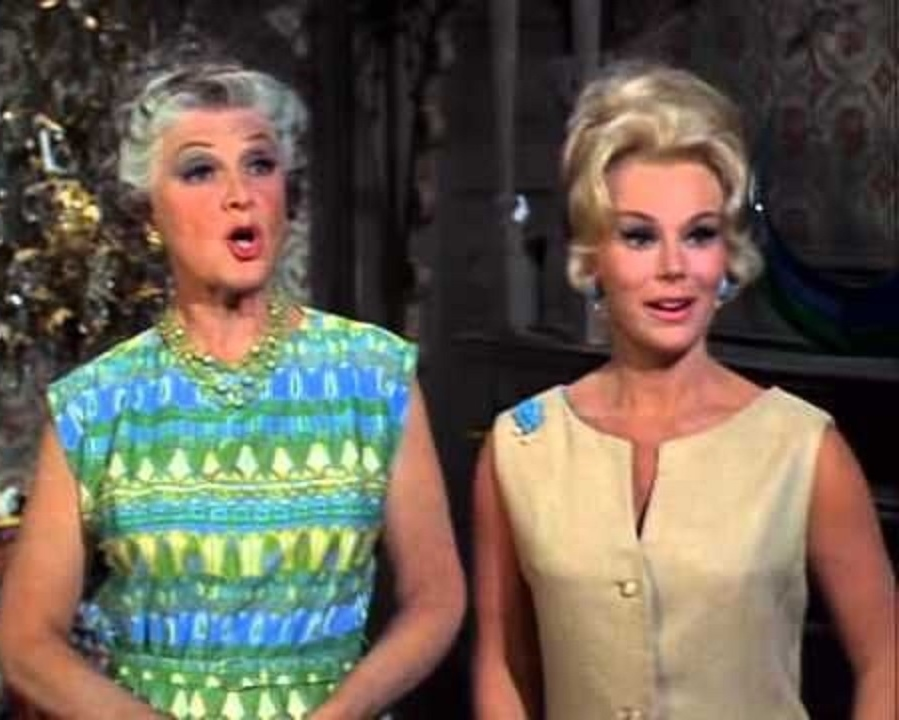
In the television show starring Eva Gabor and Eddie Albert, the banker is replaced by an attorney. Oliver Wendell Douglas and his wife Lisa leave glamorous Manhattan and move to a run-down farm in Hooterville. Lisa considers their handyman Eb their son and they bond with all the neighbors including Fred and Doris Ziffel and their pet pig Arnold, general store owner and postmaster Sam Drucker, and the folks from Petticoat Junction.

During an interview with the Television Academy, Paul Henning said his contribution was casting, and he let Jay do most of the writing and producing. The show resulted in 170 episodes and was canceled in 1971 when CBS decided to do a “rural purge” and get rid of any shows that fit that theme.

In another Television Academy interview with Richard L. Bare, who directed Green Acres, he said that he was the only director, Jay was the only producer, and that Jay and Dick Chevillat did all the writing. He said that the only other person on staff was a secretary. And, he said things worked out great. He said today there are way too many people on the set and it gets confusing. 

More Hooterville favorites Photo: sitcomsonline.com

Jay continued writing in the seventies, but he did not write a lot. His shows that decade included Hot L Baltimore, Good Times, Ball Four, Alice, and Hello Larry.

Jay passed away in 1985 in Los Angeles from a heart ailment. It was very hard to find much personal information about Jay and no photos. I do know that at some point he married Barbara and they had several children. So sad that we don’t know a lot about some of the people who contributed so much to the golden age of television.

Jay Sommers left us much too early. He came out of a chemistry background, proving you don’t have to teach someone to be funny. He wrote for some of my favorite shows including The Adventures of Ozzie and Harriet, The Donna Reed Show, and Bachelor Father.

Photo: findagrave.com

Sommers worked on three of the most iconic television sitcoms in the 1960s: The Beverly Hillbillies, Petticoat Junction, and Green Acres. If you have been with me for a while, you know I never really cared for The Beverly Hillbillies. I really enjoy Petticoat Junction and I think it’s well written, but I think Green Acres was one of the best-written sitcoms on television. It’s not easy to write about quirky characters without them seeming unbelievable, but Jay did it. He created characters we fell in love with and truly liked. He produced and wrote brilliant scripts week after week for more than five years. They were clever, witty, and sophisticated without being over the top. His grave marker sums it up, “WRITER.” Thank you, Jay Sommers for introducing us to the good folks in Hooterville.