This month we are discovering some of our favorite “Crime Solvers of the Past.” Up today is a show I listen to on old-time radio quite often: Richard Diamond, Private Detective.
Dick Powell stared on the radio series which began in 1949, and the show ended its run four years later in 1953.
📷wikimedia.org
The television show went on the air in the summer of 1957. CBS aired the show through fall of 1959 when it moved to NBC for its final season. It was much more common in the fifties and sixties for shows to shift networks.
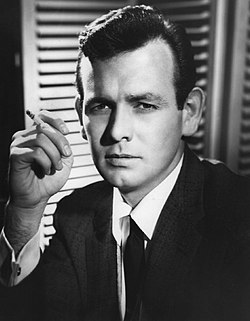
David Janssen starred as Diamond, a former cop in the New York Police Department. The television show kept the film noir atmosphere. It also kept the New York City location and showcased Diamond’s wit and charm with the ladies. Rounding out the cast was Diamond’s former superior Lt. Dennis McGough (Regis Toomey).
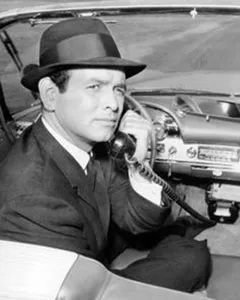
The third season moved Diamond to Los Angeles, and everything took on a new look. His life became more glamorous, and he lived in the Hollywood Hills and had a swimming pool. Apparently, private eyes earned a much bigger fee in Los Angeles. After taxis in New York, Diamond drove a new convertible which included a car phone, a high-tech feature for that time period. Lt. McGough remained in New York, and the LA police weren’t so fond of Diamond and his interference with their cases.
📷thrillingdetectives.com
Diamond’s phone calls are collected by Sam. Often she passes the messages on to Diamond on his phone car. Car phones were pretty cool in this era. We don’t see her face, but we do see her legs on a regular basis. I’ll take their word for it that Sam was played by Mary Tyler Moore for part of season three and Roxane Brooks filled out the rest of year three and season four. No one knew who Sam was until Mary Tyler Moore modeled hosiery in the TV Guide and let the cat out of the bag. She was immediately fired and replaced with Brooks. I also read a version that Moore asked for a raise and was denied it and fired, which prompted her to talk about her identity as Sam on the show.
The theme also took on a contemporary jazz score that was now used for the theme song.
📷famousfixx.com
Apparently, NBC demoted Diamond because for the final season, he lost his ranch house with the fireplace and sunken living room. He lived in an apartment and worked from a typical, small office. The show lost a lot of its elegance, and fans probably missed Diamond’s former life after getting used to him in year three. Lt. Pete Kile (Russ Conway) has now found mutual respect with Diamond and the two of them work together on many of his cases. He also has an understanding with Karen (Barbara Bain), his new girlfriend.
Guest stars were plentiful on the show. Some of the appearances included Claude Akins, Ed Begley, Joey Bishop, Whitney Blake, Charles Bronson, Jack Cassidy, Jack Elam, Charles Lane, and Ruta Lee.
📷posterazzi.com
ABC aired the show on Thursday nights up against Zorro and You Bet Your Life, both shows in the top thirty. The next season it moved to Sunday nights and took on The Loretta Young Show. NBC moved the show to an earlier time slot on Mondays against The Kate Smith Show and the popular western Cheyenne. I’m guessing most families tuned in to one of its competitor’s series that early in the evening.
Maxwell House sponsored season one and Kent Cigarettes took over for season two. It seems that in the fifties coffee and cigarettes are what kept most detectives going.
From what I’ve concluded, the show didn’t age as well as the radio show. It lost some of its comedy and playful dialogue and became more somber and serious. The fact that Richard’s living conditions changed three times, along with the spot on the tv schedule where the show lived, probably didn’t help viewers stay tuned.
Let me qualify that I read many people’s views of the show who thought some of the seasons as high quality as you could get. However, I am just going to keep listening to the radio show and take a pass on watching Diamond’s more stressed-out, serious side on television.
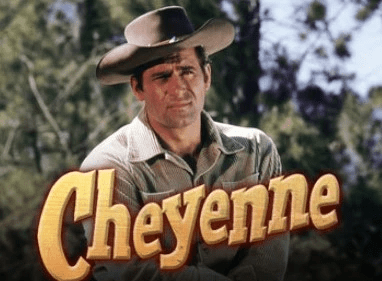
In June, we are advising “Go West Young Man” as we peek back at a few of our favorite westerns. First up is Cheyenne. Cheyenne debuted in 1955; it was the first hour-long Western. It would remain on the air for eight years, producing 108 episodes.
📷rewatchclassictv.com
Clint Walker starred as Cheyenne Bodie, a cowboy who explores the wild west after the Civil War. Early in the show, we learn that Bodie’s parents were killed by an unknown Native American tribe. A Cheyenne tribe found him and raised him till he was 12 when they sent him to live with a White family.
Because Cheyenne is traveling, guest stars change from week to week. The series was part of Warner Brothers Presents which alternated a weekly show with Cheyenne, Casablanca, and Kings Row.
For the first four seasons, the show was on Tuesday nights; then it moved to Mondays for the final four years. It was in the top thirty, and often the top twenty, for most of its television life, despite being up against The Phil Silvers Show; Richard Diamond, Private Detective; Dragnet; and the game shows To Tell the Truth and I’ve Got a Secret. Because Warner Brothers was used to making movies, the television show was produced with a movie feel to it.
In 1958, Walker went on strike. His contract stipulated that he had to give Warner Brothers 50% of his personal appearance fees, and he could only record music with the Warner Brothers label. He wanted 100% of his fees and to be able to record wherever he chose. I never learned what they settled on, but Walker returned to the show.
📷wikipedia.com
During his travels, Cheyenne often advocates for justice in the places he visits, sometimes working as a sheriff or deputy. Another theme of the show is the distrust of Native Americans. Cheyenne is sympathetic to their plight and is loyal to the Cheyenne tribe that raised him. Many of the plots were taken directly from Warner Brothers movies of the past and reworked a bit.
The theme song was composed by William Lava and Stanley Davis Jones. They both worked on The Mickey Mouse Club with Jones composing for the Spin and Marty shorts. Lava also provided music for Zorro, The Twilight Zone, and 77 Sunset Strip.
During Clint Walker’s interview with the Television Academy, he talked about his time on the show. He said he became aware of how many people liked the show when they sent him out to functions, and he started to realize how many fans he had in each town and then thinking of all the towns in the United States. He received a lot of fan mail from people who liked the values of the show. Some young men told him they no longer had fathers or uncles, and he was their role model.
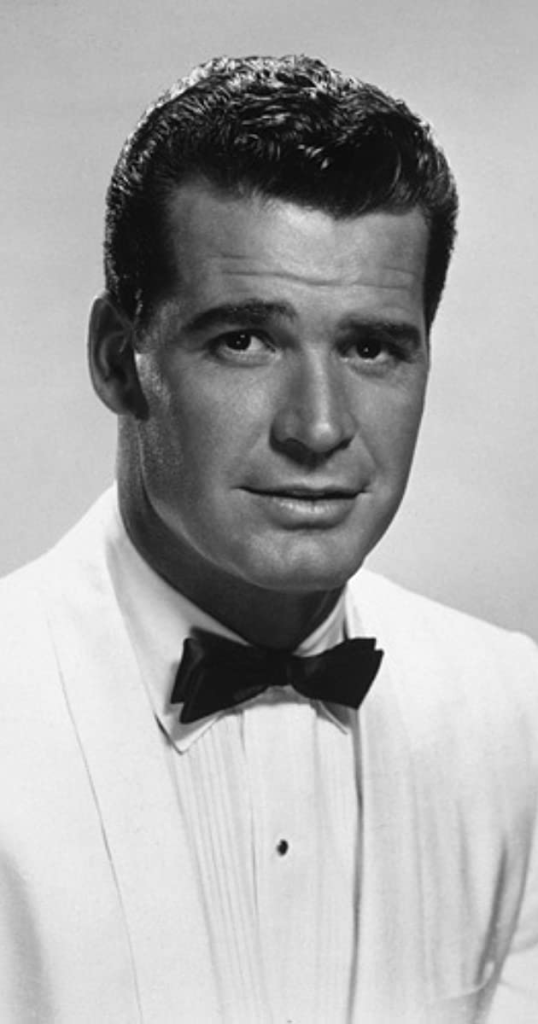
📷imdb.com James Garner
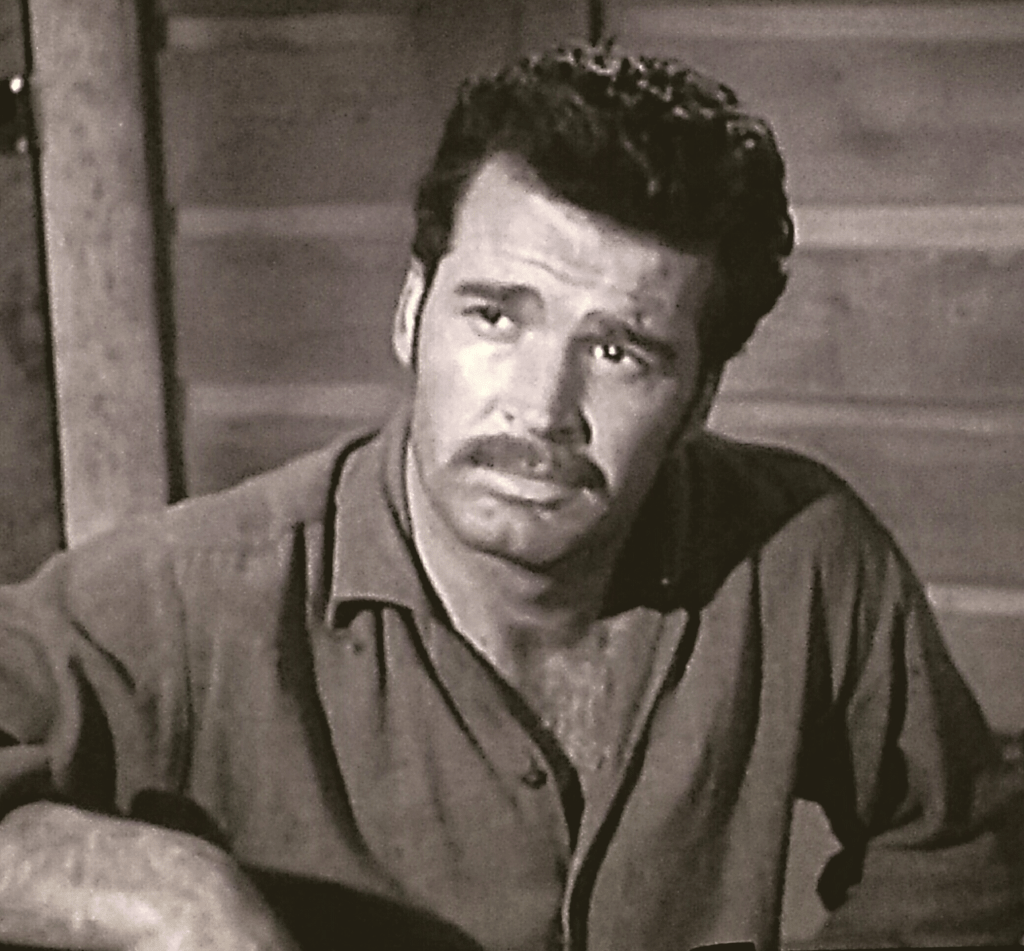
I also heard a fun story about casting during this show. Richard Bare explained during his interview that he was in a bar one night and a friend introduced him to an actor. The next day a meeting was called where Jack Warner informed them that he wanted some new faces introduced during the show. Bare remembered the young actor he met at the bar the night before but couldn’t remember his name. He called the bar and was told that the actor’s name was Jim Baumgartner, so he asked them to tell him to come to the studio when he showed up again. Finally, Baumgartner called Bare the day before they began shooting. He came in and did an audition. The crew was going on location the next day, so they had to decide immediately if he was part of the show. When Jack Warner saw the clips, he said to give that kid a seven-year contract, and that’s how James Garner started working in westerns.
There is no doubt Cheyenne was a popular show. It was interesting enough to keep viewers’ attention for an hour. The episodes seem to be well written. In an era when there were tons of westerns to watch, this one was in the top section of that list. The show still can be streamed on several places. If you want to live in the Old West for a bit, why not join Cheyenne and see what it was like.
Today we are winding up our blog series about some of our favorite actors. We finish today with one of my favorites who had a dual big-screen and small-screen career, James Garner.
Garner was born in Norman, Oklahoma as James Scott Bumgarner in 1928. His mother died when he was 4, and his father ran a small store and the family lived above it. When James was 7 the store burned down and his father left the boys and gave them to relatives to raise. Later he moved to Los Angeles and became a carpet layer. James’ first stepmom was very abusive, and they finally had a fight when he hit her and she took off. His second stepmother was a total opposite of the first. He called her Mama Grace and said she was a real mother to him.
At 16 James dropped out of high school to join the Merchant Marines. He liked his shipmates but could never get over his chronic seasickness. In 1945 Garner moved to Los Angeles and enrolled in high school. He was a popular student and played both football and basketball, but he was a terrible student. He moved back to Norman the next year to try high school there again. He dropped out before graduating.
He then joined the California Army National Guard where he served his first seven months in Los Angeles. Then he went to Korea for 14 months as a rifleman in the 5th Regimental Combat Team. He was wounded twice and received two Purple Hearts. He also received his diploma from high school.
After he left the military, he had a variety of odd jobs including laying carpet with his father, pumping gas, installing telephones, chauffeur, dishwasher, janitor, lifeguard, grocery clerk, salesman, oil field worker, and modeling men’s clothing. His entry into the entertainment business is a bit different than most people’s. He was supposed to read lines to lead actors for Broadway production, “The Caine Mutiny Court Martial” in 1954. He was also given a minor, non-speaking role. As he was on the stage, he began to learn about the art of acting.
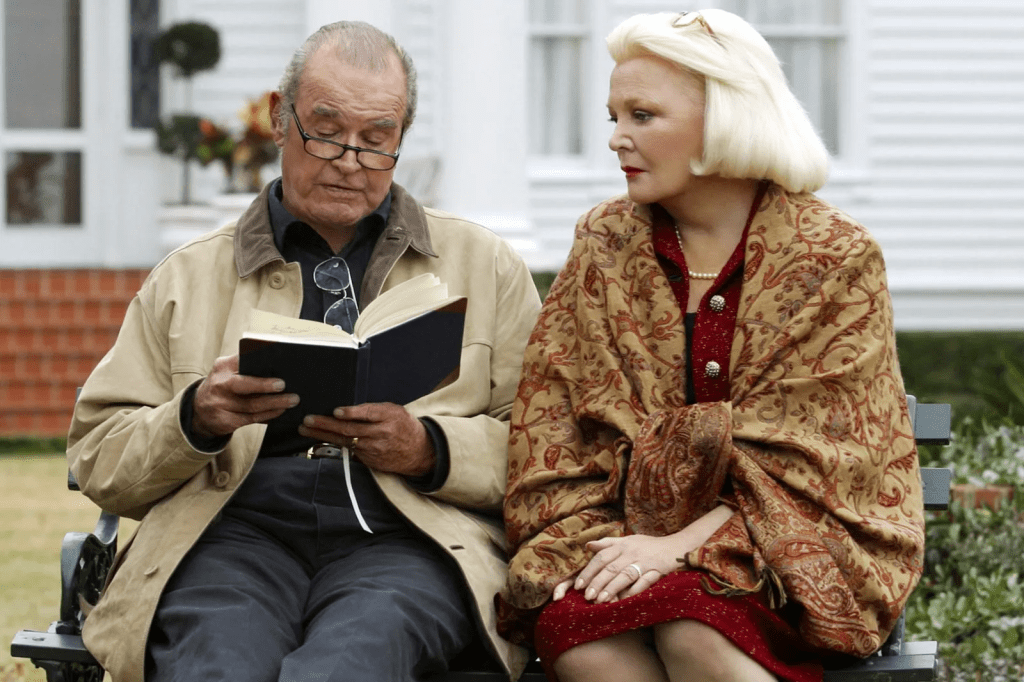
The Notebook Photo: GlamourUK.com
In 1955 he received a bit part on Cheyenne on television. He was also in Warner Brothers Presents. These small parts led to several offers to act in commercials and a larger offer from Warner Brothers to sign a contract for $200 a week. Garner began his big-screen career with Toward the Unknown in 1956. His film career included 46 additional movies with his last being The Notebook.
It was also 1956, when he married his wife Lois Fleishman Clarke; they would remain married until his death, and the couple had two daughters. They had a very short courtship. They met at the Beverly Hills Courthouse at a political rally for Adlai Stevenson and were a married couple two weeks later.
The couple bought a house in the Los Angeles neighborhood of Brentwood where their neighbors were Steve McQueen, O.J. Simpson, Arnold Schwarzenegger, Maria Shriver, and Mark Harmon. They were still living there when James passed away.
Maverick Photo: wikimediacommons.com
His successful movie career did not halt his television career. From 1957 to 1962, Garner starred as Bret Maverick on Maverick. Garner developed the type of role he would be known for as the calm, good-natured, likable, smart guy who gets out of trouble using his wit and street smarts. The show was not canceled by the network; unfortunately, Garner and the producers had a dispute over money, and he decided not to come back for the next season.
In August of 1963, Garner was one of several stars who accompanied Martin Luther King Jr. in his March on Washington. He later also recalled sitting in the third row while listening to King’s “I Have a Dream” speech.
In 1964 he made what he called his favorite film, The Americanization of Emily with Julie Andrews. He played the personal attendant of a Navy admiral and he said it contained the most impassioned speech of his career.
During the sixties and seventies, he continued making movies and showing up in a few places on television, shows like Rowan and Martin’s Laugh In, The Tonight Show, and several tv movies, one about Bret Maverick.
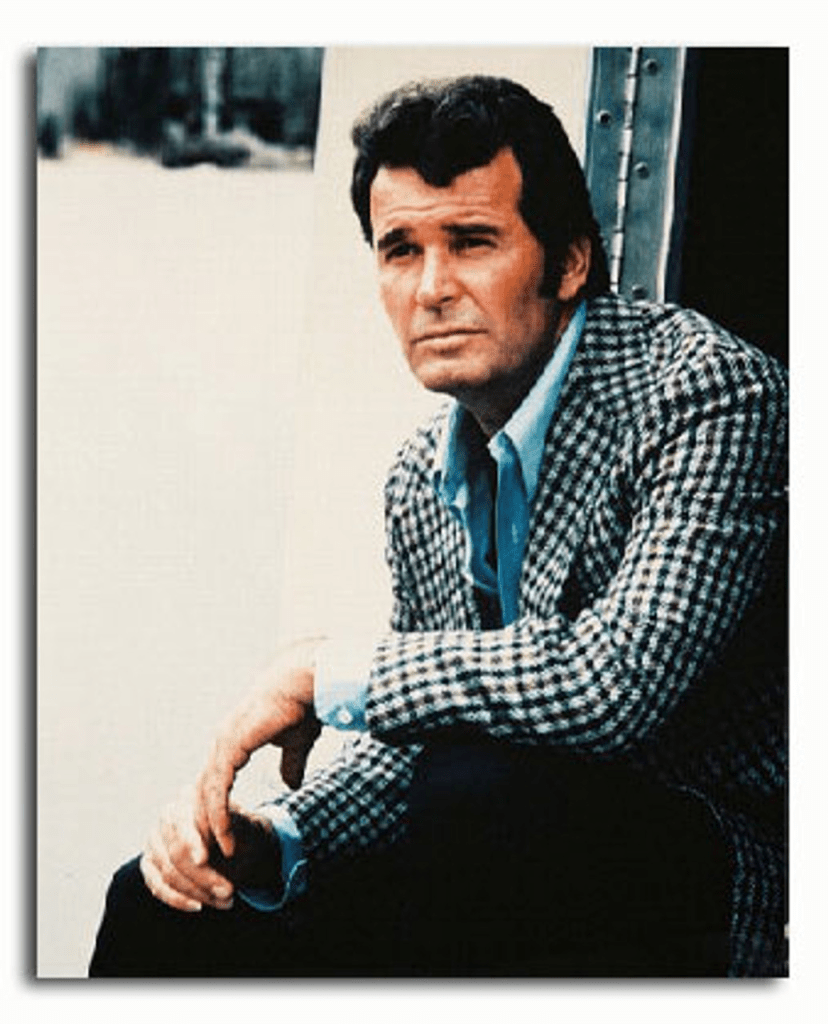
In 1974 he accepted his second role as star of a television series on The Rockford Files. He played Jim Rockford until 1980. Again, the network did not cancel the show which was still very popular but Garner had been having back pain and did not feel that he should continue the weekly series. He probably made the right choice because he was hospitalized with a bleeding ulcer during 1979; he would have quintuple heart bypass surgery in 1988; and both knees replaced in 2000.
Rockford Files Photo: starstills.com
In 1977 Garner began making commercials for Polaroid with Mariette Hartley. They were so convincing of being a married couple, that Hartley had a shirt made that said “I am not James Garner’s wife!” The couple filmed more than 300 commercials together.
After John Ritter passed away in 2003, Garner joined the cast of 8 Simple Rules as Cate’s father Joe and was on the show for the final three seasons.
Garner worked with several charities and foundations during his career. In 2003, he gave $500,000 to the James Garner Chair in the School of Drama for the University of Oklahoma to fund the first-endowed position at that school. He also volunteered with Save the Children.
In 2011, Garner wrote an autobiography called The Garner Files: A Memoir, cowritten with Jon Winokur.
Some of Garner’s hobbies included spending time with his family and political activism. However, his biggest passion was sports. He was a big fan of the Oakland Raiders and could often be seen on the sidelines with the team. He loved golfing. He was inducted into the Off Road Motorsports Hall of Fame in 1978. He owned the American International Racing team in the late sixties and he drove the pace cars for the Indianapolis 500 in 1975, 1977, and 1986.
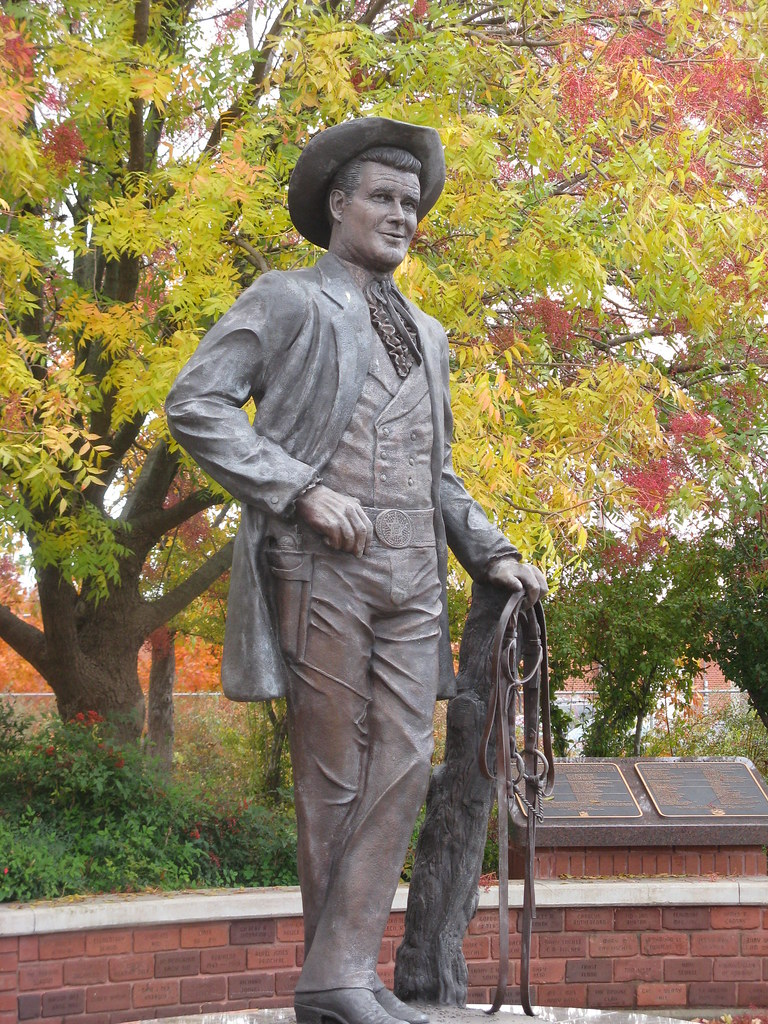
Photo: flickr.com
He was also honored by his hometown of Norman, Oklahoma. He has a street named after him there and in 2006, a ten-foot bronze statue as Bret Maverick was erected there.
He was also loved by his coworkers. In 1973, John Wayne named Garner the best American actor in an interview. He was also close friends with Tom Selleck, Sally Field, and Clint Eastwood. When he passed away in 2014 from a heart attack, Sally Field said “My heart just broke. There are few people on this planet I have adored as much as Jimmy Garner. I cherish every moment I spent with him and relive them over and over in my head. He was a diamond.” He was nominated for 15 Emmy awards during his television career, winning in 1977 as Outstanding Lead Actor in a Drama Series for The Rockford Files.
He didn’t do a lot of comedy but I think he was a funny guy. When he was asked if he would ever consider a nude scene, he said “No, I don’t do horror films.”
James always said he was not concerned with fame; he just wanted to make a good living at something he enjoyed. That comes across as something he truly believed in, not just talking the talk. He lived in the same house and was married to the same woman for most of his life. He did work he was proud of and was very successful in both film and television. He loved sports and his career allowed him to participate in more of those activities that he loved. He was also a generous man, giving to causes that he thought were important.
Move Over Darling Photo: moviescene.com
Although not the most important films in his portfolio, I always think of him acting with Doris Day in The Thrill of it All and Move Over Darling. I enjoyed learning about his life and respect him as a person. He never complained about the terrible childhood he had or used it to make excuses when he did make a poor choice; he said you have to just keep moving forward and he moved forward in an honorable way. Thanks for sharing your life with us and letting us travel forward with you, James Garner.
Since this month is a Potpourri Month, I thought it might be fun to look at the career of stuntmen on television. I’m calling this one “Propourri” because you have to be well trained to do these types of stunts.
Left to right: stuntmen Bob Miles, Bob Herron, Whitey Hughes, actor Michael Dunn, stuntman John Hudkins, Bill Shannon, and actor Quintin Sondergaard. Photo: famousfix.com
A stuntman or stuntwoman is a person who performs dangerous action sequences in a movie or television show. They have usually had extensive training to do these perilous moves safely. Sometimes they are hired as a team with a stunt crew, rigging coordinator, and special effects coordinator.
Stuntmen like Evel Knievel are daredevils who perform for a live audience. If someone fills in for a specific actor all the time, they are stunt doubles. So, what type of stunts do these professionals perform? Sometimes it’s car crashes, explosions, fights, or falls.
The first stuntmen to entertain audiences were performers who traveled around, often in circuses. Later these types of performers worked with Buffalo Bill and in shows that celebrated the Old West.
Today we are going to concentrate on television performers. Currently, stunt professionals must be certified to obtain the insurance producers need to obtain.
The Academy of Television Arts and Sciences now awards Emmys for stunt coordinators but there is no Oscar for this work.
Life-threatening injuries are not uncommon in this work and sadly, deaths do still occur. While most of my research found stuntmen killed in movies, I only found one relating to television. In 1985, Reid Rondell was killed in a helicopter explosion filming Airwolf.
I thought it would be fun to look at the careers of a few stuntmen from the golden age of television. Most of these men made their money in films, but all three of them had successful careers working on television shows as well.
Whitey Hughes
Photo: findagrave.com
Whitey Hughes was born in 1920 in Arkoma, Oklahoma. He grew up on a farm, so in addition to working with plows and horse teams, he learned to break horses with his father. When he was sixteen, the family moved to Los Angeles. After graduating from high school, Whitey became a Screen Actors Guild member in 1947.
Whitey began his movie career in 1946. During the fifties, he worked on a lot of western films. Hughes said that in the early part of his career, he often had to be a double for the leading lady. (We’ll come back to this subject later in the blog.) He did stunt work for a variety of actresses including Anne Baxter, Rita Hayworth, Barbara Hershey, Virginia Mayo, Stephanie Powers, and Lana Turner.
Photo: westernclippings.com
Speaking of women, one of the roles, Whitey loved best was being the husband of Dotti; they were married for seventy years.
During the fifties, Whitey worked on a lot of westerns including Cheyenne. In the sixties, you would see him on Rawhide or as Kurt Russell’s double on The Magical World of Disney. If you want to see him in action, the best show to watch would be The Wild Wild West; his crew did some amazing things on that show and Whitey coordinated the stunt work for 1965-1968.
The eighties found him in Fantasy Island, Wonder Woman, and BJ and the Bear while in the nineties he was part of Little House on the Prairie and The Fall Guy. His last work was in a movie in 1998. In 2009, Whitey died in his sleep. It is good he died peacefully; I can’t imagine the toll that this type of work took on his body for fifty years.
Hal Needham
Photo: themoviedatabase.com
Hal Needham was born in 1931 in Memphis, Tennessee. He served as a paratrooper in the US Army during the Korean War. After the war, he worked as an arborist doing tree-topping services. He was also the billboard model for Viceroy Cigarettes while he was trying to establish his career in Hollywood.
Hal’s first big job was the stunt double for Richard Boone on Have Gun, Will Travel. From 1957-63 he was in 225 episodes. During the sixties, he would show up in many television series including Laramie, Wagon Train, Laredo, The Wild, Wild West, Star Trek, Gunsmoke, Big Valley, and Mannix.
Hal was the highest-paid stuntman in the world. That seems fitting because during his career he broke 56 bones, broke his back twice, punctured a lung, and lost a few teeth.
Needham was responsible for wrecking hundreds of cars, fell from many buildings, was dragged by horses, perfected boat stunts and was the first human to test the car airbag.
He revolutionized the work of stuntmen and worked to get his craft recognized and appreciated. He mentored up-and-coming professionals.
With Burt Reynolds Photo: youtube.com
His career transitioned from a stuntman to a stunt coordinator to a second unit director to a director. In all, he would work on 4500 television episodes and in 310 films, according to imdb.com. He made his directing debut on a movie he wrote called Smokey and the Bandit with Burt Reynolds and would go on to direct Hooper and The Cannonball Run for Reynolds among other series and films.
In 1977 Gabriel Toys debuted the Hal Needham Western Movie Stunt Set with a cardboard saloon movie set, lights, props, a movie camera, and an action figure that could break through a balcony railing, break a table and crash through the window. They have become highly collectible.
Photo: pinterest.com
Needham owned a NASCAR race team. He also set a Guinness World Record as the financier and owner of the Budweiser Rocket Car which is now on display at the Smithsonian’s National Air and Space Museum.
He also managed to win both an Emmy and an Oscar. Reynolds and Needham were close friends; Needham lived in Reynold’s guest house for 12 years and their relationship was used as the basis for the plot in Once Upon a Time in Hollywood.
Bob Herron
Bob Herron was born in 1924 in California. When his parents divorced, he moved to Hawaii with his father. The swimming and high diving he did there was a boost to his stunt career. His mother married Ace Hudkins who was a supplier of horses to the movie industry. Herron helped his stepfather in this business before enlisting in the Navy.
Photo: imdb.com
In 1950 he began doing stunt work. His first job was on Rocky Mountain with Errol Flynn and he was shot off horses. This would be a piece of cake compared to his role in Oklahoma Crude where he fell 55 feet from the top of an oil derrick into a stack of boxes.
In the sixties, he began his stunt work on television. He was in Gunsmoke, I Spy, I Dream of Jeannie, The Man from UNCLE, The Girl from UNCLE, Star Trek, Mission Impossible, Get Smart, and Bonanza. He doubled for Ross Martin in The Wild, Wild West. During the seventies, he appeared on Petrocelli, Little House on the Prairie, Marcus Welby, The Mary Tyler MooreShow, The Rockford Files, Kojak, and Charlie’s Angels among other shows. He was still going in the eighties doing his stunts on Hart to Hart, Magnum PI, Remington Steele, the Dukes of Hazzard, Matt Houston, Airwolf, The A-Team, and MacGyver. Despite being almost seventy, he continued in the nineties on shows like Father Dowling’s Murder Mysteries, The Wonder Years, and Murder She Wrote.
I did smile a bit to see shows like I Dream of Jeannie and The Mary Tyler Moore Show on this list. The Jeannie episode is one where she brings her great-grandfather to Cocoa Beach to show Tony how to desalinate water and the Mary episode is one where Sue Anne falls in love with someone who doesn’t return the feelings. I guess it proves you never know where a stunt person will show up.
I don’t know how he managed to survive sixty years performing dangerous stunts but he must have been in amazing physical shape.
I did promise to come back to men having to double for women in the forties and fifties. Thankfully, that is no longer the case, and women’s numbers are increasing among the 3400 stunt performers in SAG.
Former gymnast Shauna Duggins did the hard fighting work in Jennifer Garner’s show Alias. Because pay is determined by union contracts, stuntwomen do not suffer from the pay discrimination that sometimes shows up in the industry. Stunt performers are paid a minimum of $1005 for one day of work and they can negotiate higher pay based on their experience.
Shauna Duggins and Jennifer Garner Photo: broadwayworld.com
Duggins was at the University of California Davis when she first thought about being a stuntwoman. She learned more about martial arts and spent hours working out in gyms after graduation. In 2000 she auditioned for stunt work in The X Files as Krista Allen’s double and got the job. Then she was in Charlie’s Angels for Kelly Lynch and Cameron Diaz.
It was after that movie that she got the role on Alias where she worked for five years. To protect these women, SAG has a 24/7 hotline for performers to phone if they feel they have been the victim of sexual abuse.
In 2018 Duggins won an Emmy after twenty years in the business. Her advice to young women who decide to make this their career: “train as much as you can in various skills. Go to different gyms with stunt performers, train with all of them and just learn from each other.”
I’m glad we took some time to learn about the tough and dangerous job these performers do. It was so interesting to learn a little bit about some of these industry stars.
This month, we begin a new series, “We Salute You” and we will look at shows about the military. Our first series is The Phil Silvers Show a/k/a You’ll Never Get Rich.
Photo: nostalgiacentral.com
The sitcom debuted on CBS in 1955. The pilot was never aired, but the show was part of the television schedule until 1959, producing 143 episodes.
Nat Hiken created the series which ended up being nominated for Best Comedy Series every year it was on and winning that category in 1956, 1957, and 1958. In addition, Silvers won an Emmy for his performance, and Hiken won an Emmy for Best Director.
Photo: findagrave.com Nat Hiken in the bowtie with Phil Silvers
In 1955, television was transitioning from New York to California. However, Hiken insisted on filming the series in New York. The earlier seasons were filmed at Dumont and later seasons moved to CBS studios in Chelsea, Manhattan.
The show was filmed like a play in front of a live audience. The cast members had to memorize the entire script. When Mike Todd guest starred in season two, he insisted that the show be filmed more like a movie. Takes were filmed out of sequence and multiple takes were allowed because there was no audience. The crew realized that this process was faster, cheaper, and easier for the actors, so the change was put in place permanently. The show was screened for the military though, and servicemen made responses that were used to make the show more realistic.
Photo: thetimes.com
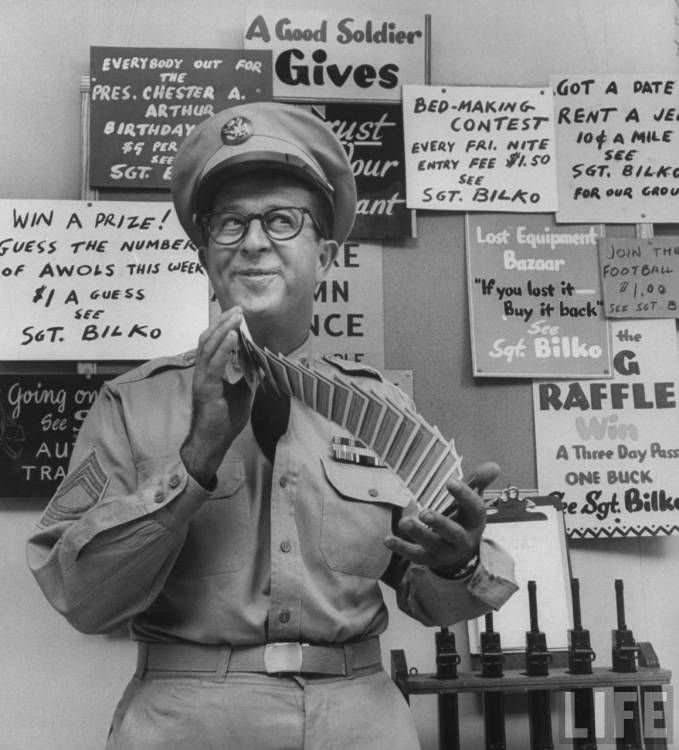
Sergeant Ernie Bilko (Phil Silvers) is a con man. He runs a motor pool at a small US Army Camp, Fort Baxter in Roseville, Kansas. Colonel Hall (Paul Ford), who doesn’t trust Bilko, tries to stay on top of his schemes. Bilko tries to make money any way he can and is not above using the landing craft for midnight cruises, “borrowing” tanks, setting up poker games, and conniving with a local service station for spare parts for Jeep tires for his get-rich quick scams. Bilko has pulled the wool over Col Hall’s wife’s (Hope Sansberry) eyes and flatters her every chance he gets. Silvers said Bilko was so successful because “inside everyone is a con man wiggling to sneak out.”
Photo: pinterest.com
Although his men knew he could not be truly trusted, they were usually loyal to him and while he occasionally used them in a scheme, he typically made sure they were taken care of. Some of the situations Bilko found himself in included starting a mink farm, entering his platoon in a singing contest, investing in an ailing race horse, stealing a French chef’s family recipe, buying swampland, thinking there was uranium beneath Hall’s living room, and getting a hot racing tip but not being able to get his bet in on time.
For the fourth season, the camp moved from Kansas to Camp Fremont in California. The move was explained that Bilko orchestrated the new location because he learned there was a gold deposit near the abandoned army post. The primary reason for the geographical change was so stars could guest on the show because the camp was now said to be close to Hollywood. Some of these celebrities included Dean Martin, Mickey Rooney, Bing Crosby, Dorothy McGuire, and Lucille Ball.
Photo: DVDtalk.com Bing Crosby visits the base
In addition to the stars who were said to come from Hollywood, guest stars on the show included Charlotte Rae, Fred Gwynne, Dick Van Dyke, Paul Lynde, Tom Poston, Dina Merrill, Alan Alda, Bea Arthur, and Tina Louise.
Photo: tvtropes.com
I was surprised by the large cast that was featured on this show as opposed to Gomer Pyle, Hogan’s Heroes, or McHale’s Navy. Bilko’s comrades were Corporal Barbella (Harvey Lembeck) and Corporal Henshaw (Allan Melvin).
Photo: brittanica.com Bilko with Barbella and Henshaw
The rest of the men included Corporal Sam Fender (Herbie Faye), Sergeant Grover (Jimmy Little), Privates Doberman (Maurice Gosfield), Zimmerman (Mickey Freeman), Kadowski (Karl Lukas), Gomez (Bernard Fein), Paparelli (Billy Sands), Mullen (Jack Healy), Fleischman (Maurice Brenner), Sugarman (Terry Carter) and Dillingham (Walter Cartier), as well as quartermaster Sergeant Pendelton (Ned Glass). Bilko even had a romantic interest in Sergeant Joan Hogan (Elisabeth Fraser).
Photo: losangelestimes.com
Because the series had so many secondary cast members, it became too expensive to maintain, and that was the primary reason it was canceled. I was surprised it did not affect the ratings because there were a lot of cast members to follow from week to week.
The show started out on Tuesday nights the first season. Its competition was The Legend of Wyatt Earp and Milton Berle. The ratings at first were not good and Camel Cigarettes, the sponsor, considering withdrawing. The network moved the show so it didn’t need to compete with Berle’s second-half hour. The ratings skyrocketed. The second and third seasons, it continued on Tuesday nights but was up against Cheyenne both years and against The Big Surprise on the second season and The Eddie Fisher Show the third season. The Phil Silvers Show continued to be in the top 30 for season two but fell below those rankings in season three. Season four found the show on Friday nights up against Man with a Camera and MSquad. I would have thought that season might have the weakest competition but the show never recovered its higher ratings. However, Friday nights many people were out, not home watching television.
Another downfall with such a large cast is the personality conflicts that might occur. Apparently, Phil Silvers did not get along with Maurice Gosfield. Gosfield had trouble remembering his lines which frustrated the other actors; however, he got the most fan mail which Silvers resented. In his memoir, Silvers discussed this issue and wrote that Gosfield “thought of himself as Cary Grant playing a short, plump man.”
Photo: pinterest.com Gosfield as Doberman
Phil Silvers would play the same type of con man on many sitcoms later including The Beverly Hillbillies, Gilligan’s Island, The Lucy Show, and the movie It’s a Mad, Mad, Mad, Mad World.
Photo: pinterest.com
After its cancellation, CBS sold the show to NBC which was a great move on NBC’s part. The network made a ton of money on the show’s syndication because reruns were run for decades.
Photo: ebay.com
DC Comics published comic books based on the show as well. From 1957-1960 there were 16 issues of a Sergeant Bilko comic book and 11 issues of a Private Doberman comic book.
Photo: ebay.com
In 2009, the US Postal Service issued a set of stamps honoring early television programs. This show was commemorated with an image of Sergeant Bilko.
I remember the show being on the air a lot while I was growing up, but I rarely see it now. I am going to rely on a fellow blogger to sum up the show. In a recent blog on neatorama.com from February 14, 2019, the show was described as follows:
“It is my opinion that THE PHIL SILVERS SHOW (aka YOU’LL NEVER GET RICH) remains the single most underrated sitcom in television history and that Phil Silvers remains the most underrated comedian in that medium. This is really saying something because the series has indeed received great acclaim over the years. Even so, Silvers is just not given his proper due for creating the Bilko character. But it is Phil Silvers, his facial expressions, his bugle-call barking of orders, his complete manipulation of everyone on the base, and his wild schemes to make money that never seem to get old no matter how much you watch the episodes on video. The show is a great testament to the talents of Phil Silvers. With its complex plotlines and quickfire dialogue it’s still a treat to watch Silvers’s monumental character. The most oft-said line in the series must be “but, Sarge!” as Bilko launches into another diabolical and, ultimately, flawed scheme to make money and dodge work.”
Photo: philsilversshow.com
Bilko isn’t a bad guy; he’s just not trustworthy. As he himself likes to say, “All I ever wanted was an honest week’s pay for an honest day’s work.” Maybe in this politically correct world we live in, making fun of the military is a taboo. It’s too bad because all the critics loved this show. If you want to check it out for yourself, the series is on DVD, so it is available for a week-end of binge watching; you can purchase individual seasons or the complete series.








 thewritelife61