The Jim Backus Show: It Was Hot Off the Wire

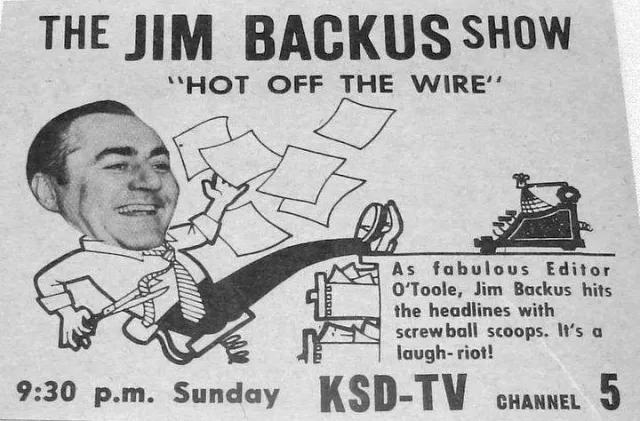
This month we are in a blog series, “It’s Their Show.” Today we are taking a closer look at The Jim Backus Show. Most people know Backus today as Mr. Howell on Gilligan’s Island. While he did show up on several television series, cartoons, and made-for-tv movies for Gilligan’s Island, Backus had a long and successful career without any Gilligan appearances. He started in the movies in 1948 and wound up his career with an amazing 253 credits.
📷thrillingdaysofyesteryear.com

In addition to being the voice of Mr. Magoo, Backus starred in several other series including I Married Joan and Blondie.

In 1960, The Jim Backus Show debuted.  It was one of the first syndicated shows, so it’s hard to gauge how it did against its competition. However, I will say what I can tell you is that there were still 13 westerns on the air during the week, so while the influence of the Plains was waning, it was still very popular. It was also a year that lots of stars had made the plunge to dip their toe into the television industry. There were 11 stars with their own shows that year in addition to Backus, including Jack Benny, Ann Sothern, Danny Thomas, Andy Griffith, and Donna Reed. 

The series had a great cast. They had several good directors, including Gene Reynolds who produced MASH and Lou Grant and a lot of good writers, including Jay Somers who would go on to create and write Green Acres. However, they had 14 directors and more than 40 writers to produce those 39 episodes. They also had a great line up of guest stars including Ken Berry, Charles Lane, Jayne Meadows, Zasu Pitts, Tom Poston, and Bill Quinn.
📷youtube.com

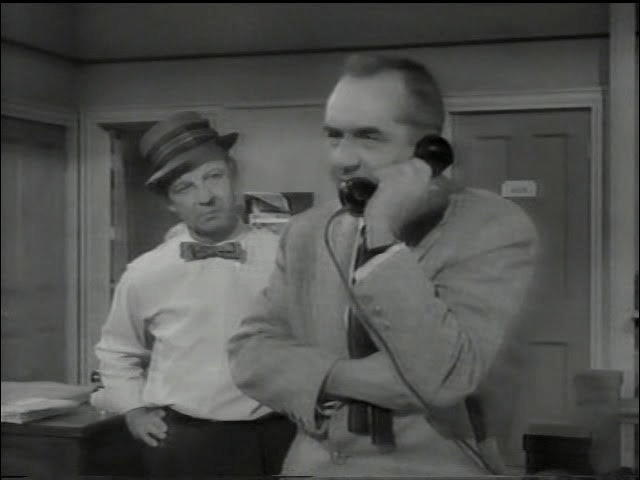
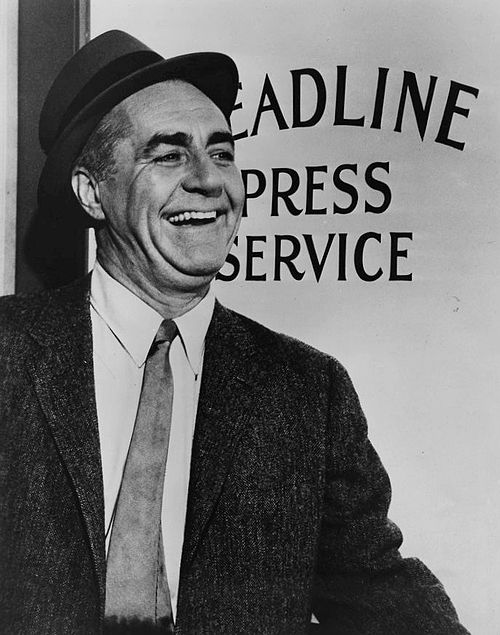
Backus is Mike O’Toole, the editor and owner of a news service struggling to make a go of it. He often doesn’t have the money to pay his rent or his staff’s salaries. Working with O’Toole are reporters Dora (Nita Talbot) and Dave (Bill McLean) as well as Sidney (Bobs Watson), their office boy. When they weren’t working, they spent some time at Heartless Harry’s, a bar downstairs that was popular with newspaper people. He truly was heartless, because he wouldn’t let anyone from Mike’s company in the bar unless they put down a $10 deposit.

One of the episodes I watched for this blog was #5, “No Help Wanted.” The opening pans the big city before moving down to the office of the wire service with Mike in the window joined by Dora.

The episode begins with Mike and Dora’s car breaking down in the middle of nowhere. There’s a large estate in the distance, but Mike won’t let Dora ask them for help until he’s tried to fix the problem himself.
Directed by Gene Reynolds and written by Dick Chevillat and Jay Sommers, the plot is that a retired stage actress, Catherine Lyden (Linda Watkins), has lots of money and loves living a normal life. Her former agent keeps trying to lure her back into show business. She decides to clean the maid’s house so she can hire someone, but when Dora and Mike meet her, they recognize her, and they think she is destitute and try to help her. After they get back to the office, they buy her some groceries and clothes. She tries to tell them that she has plenty of things and she doesn’t need their help. O’Toole writes a story about her having to work as a maid to make ends meet and puts a photo in the paper with her holding a pail and looking disheveled. When the article appears, several people contact her to try to help her out. When Mike and Dora get her contract from the playwright who is trying to hire her, they tell her that it’s a form to get a retraction from the paper.

After she signs it,  they tell her the truth, that it’s a five-year contract and she begins to cry. Surprisingly they never do find out she wasn’t down and out. They think she is crying from gratitude, and they leave.

📷internetarchive.com

There were some fun bits of dialogue especially between Dora and Mike, and the filming was very different from most sitcoms, but I was drawn in by it. One of the things that I found most interesting about this episode is the soundtrack. There is some laughter in the background, but you hear birds, the office machinery running, and the sounds of the city. It’s like you’re right in the location with the cast and hear what they would hear.

This was a tough episode for me though. First of all, I kept waiting for Lyden to be touched by the fact that they were trying to help her and maybe that made her realize the public missed her. However, she never cared that they were spending their hard-earned money on her. She truly was upset when they tricked her, and I found it tough to watch because they never learn she was not destitute and truly was happy and they have now made her miserable for five years. It just didn’t have that feel-good ambiance we expect our sitcoms to feature.
📷wikipedia.com

The series produced 39 episodes before being canceled. I’m guessing the fact that it didn’t make it had something to do with the fact that it was on different nights and times across the country.

Sometimes these shows are hard to find. They all had two names. The Tom Ewell Show was known as The Trouble with Tom, The Phyllis Diller Show was known as The Pruitts of South Hampton, and The Jim Backus Show went by Hot Off the Wire.  With so much competition from other stars trying to vie for their spot on the schedule and being a syndicated show, I’m guessing it was hard to lure enough fans to make it worthwhile to produce a second season of the show.
Richard Diamond, Private Detective: Living His Best Life

This month we are discovering some of our favorite “Crime Solvers of the Past.” Up today is a show I listen to on old-time radio quite often: Richard Diamond, Private Detective.

Dick Powell stared on the radio series which began in 1949, and the show ended its run four years later in 1953.

📷wikimedia.org

The television show went on the air in the summer of 1957. CBS aired the show through fall of 1959 when it moved to NBC for its final season. It was much more common in the fifties and sixties for shows to shift networks.

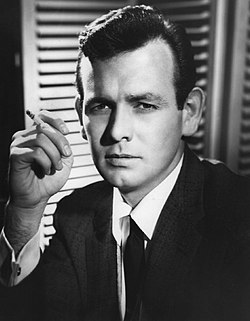
David Janssen starred as Diamond, a former cop in the New York Police Department. The television show kept the film noir atmosphere. It also kept the New York City location and showcased Diamond’s wit and charm with the ladies. Rounding out the cast was Diamond’s former superior Lt. Dennis McGough (Regis Toomey).

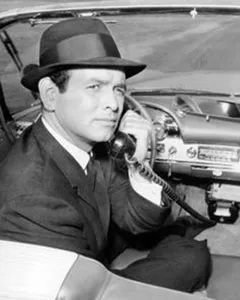
The third season moved Diamond to Los Angeles, and everything took on a new look. His life became more glamorous, and he lived in the Hollywood Hills and had a swimming pool. Apparently, private eyes earned a much bigger fee in Los Angeles. After taxis in New York, Diamond drove a new convertible which included a car phone, a high-tech feature for that time period. Lt. McGough remained in New York, and the LA police weren’t so fond of Diamond and his interference with their cases.

📷thrillingdetectives.com

Diamond’s phone calls are collected by Sam.  Often she passes the messages on to Diamond on his phone car. Car phones were pretty cool in this era. We don’t see her face, but we do see her legs on a regular basis. I’ll take their word for it that Sam was played by Mary Tyler Moore for part of season three and Roxane Brooks filled out the rest of year three and season four. No one knew who Sam was until Mary Tyler Moore modeled hosiery in the TV Guide and let the cat out of the bag. She was immediately fired and replaced with Brooks. I also read a version that Moore asked for a raise and was denied it and fired, which prompted her to talk about her identity as Sam on the show.

The theme also took on a contemporary jazz score that was now used for the theme song.

📷famousfixx.com

Apparently, NBC demoted Diamond because for the final season, he lost his ranch house with the fireplace and sunken living room. He lived in an apartment and worked from a typical, small office. The show lost a lot of its elegance, and fans probably missed Diamond’s former life after getting used to him in year three. Lt. Pete Kile (Russ Conway) has now found mutual respect with Diamond and the two of them work together on many of his cases. He also has an understanding with Karen (Barbara Bain), his new girlfriend.

Guest stars were plentiful on the show. Some of the appearances included Claude Akins, Ed Begley, Joey Bishop, Whitney Blake, Charles Bronson, Jack Cassidy, Jack Elam, Charles Lane, and Ruta Lee.

📷posterazzi.com

ABC aired the show on Thursday nights up against Zorro and You Bet Your Life, both shows in the top thirty. The next season it moved to Sunday nights and took on The Loretta Young Show. NBC moved the show to an earlier time slot on Mondays against The Kate Smith Show and the popular western Cheyenne. I’m guessing most families tuned in to one of its competitor’s series that early in the evening.

Maxwell House sponsored season one and Kent Cigarettes took over for season two. It seems that in the fifties coffee and cigarettes are what kept most detectives going.

From what I’ve concluded, the show didn’t age as well as the radio show. It lost some of its comedy and playful dialogue and became more somber and serious. The fact that Richard’s living conditions changed three times, along with the spot on the tv schedule where the show lived, probably didn’t help viewers stay tuned.

Let me qualify that I read many people’s views of the show who thought some of the seasons as high quality as you could get. However, I am just going to keep listening to the radio show and take a pass on watching Diamond’s more stressed-out, serious side on television.

Burt Mustin: What a Character

This month we are looking at some of our favorite character actors. As we wrap up the series, we are ending on a high note with the amazing Burt Mustin. Like Charles Lane, Mustin had a prolific career in Hollywood and television. However, unlike Lane, Mustin was offered his first acting job at age 67 after he had retired.

📷Widener University Archives

Mustin was born in Pittsburgh in 1884. His father was a stockbroker. After high school, Mustin enrolled in the Pennsylvania Military College (now Widener University) with a degree in civil engineering. During his college career he played trombone in the band and played goalie for his hockey team.

After graduation, Mustin toured Europe, planning to work at his father’s brokerage firm. However, a financial panic destroyed the company.

One of Burt’s university classmates was Charles Spinney. According to Burt, Spinney displayed lots of photographs of young ladies from his hometown of Memphis, Tennessee. One day, he was showing them to Burt when he spotted the photo of what he referred to as “the prettiest girl in the room.” Mustin traveled to Memphis to meet her and in 1915 he married Frances Robina Woods. The couple had no children and remained together for their entire lives, with Frances passing away in 1969.

📷imdb.com

After working as an engineer for a few years, Mustin decided to try to sell automobiles. In an interview, Mustin admitted, “I was the worst engineer the school turned out.” He began selling Oakland Sensible Sixes and later Franklins, Lincolns, and Mercurys. WWII put an end to car sales for a few years, so Mustin began working for the Better Business Bureau and then the Chamber of Commerce. He stayed in Pittsburgh until he retired.

He did a bit of amateur acting and continued his passion for music. He was part of the oldest Gilbert and Sullivan troupe in the country, the Pittsburgh Savoyards; the Pittsburgh Opera; and an officer in the Society for the Preservation and Encouragement of Barbershop Quartet Singing in America. 

He was a founding member of the Pittsburgh Lions Club in 1921 and a life member in the Fellows Club of Pittsburgh. Mustin served as an announcer for the first weekly variety show on radio station KDKA.

📷that’sentertainment.com

After retiring, Mustin and his wife moved to Tucson, Arizona for her health where he continued acting. William Wyler saw him in a stage production of “Detective Story” and told Mustin to let him know if he ever wanted to pursue a film career. When Wyler was casting for Detective Story in 1951, Mustin reached out to him. The couple later moved to Los Angeles. Mustin would appear in 67 films overall.

In 1968 Mustin was cast in Speedway with Elvis and Nancy Sinatra. In one scene the stars have a lover’s quarrel in a coffee shop. When they make up, Elvis sings a song for his girl. Mustin is in the background cleaning the café and working at the counter. The producers felt the scene needed something else. That something else ended up being Mustin singing and dancing with a mop. No one on the set realized that Burt could sing before that adlibbed scene.

1951 was also the year that Mustin appeared on television in The Adventures of Kit Carson. He would find a new career in television for the next two decades, appearing in more than 130 series (which would equal more than 400 actual episodes).

📷imdb.com

During the fifties, he would be attracted to many westerns and dramas; however, he found his way onto a few comedies including The Great Gildersleeve, December Bride, and Our Miss Brooks.

If I listed half of the 1960s shows he appeared on, you would still be reading this blog next Monday when my new one is dropped. Take my word for it that he was on almost every popular sixties’ sitcom, including 14 episodes as Gus the fireman on Leave it to Beaver. Other sixties hits you can find him on include The Many Loves of Dobie Gillis, The Dick Van Dyke Show, The Joey Bishop Show, The Jack Benny Show, The Beverly Hillbillies, Get Smart, The Andy Griffith Show, The Lucy Show, Bewitched, Gomer Pyle USMC, Petticoat Junction, and My Three Sons, not to mention many dramas and westerns including Bonanza and Gunsmoke. He was no less busy in the seventies where we could catch him in Marcus Welby, The Mary Tyler Moore Show, The Brady Bunch, Love American Style, Adam-12, All in the Family, and Phyllis.

📷imdb.com

Johnny Carson loved having Mustin on The Tonight Show, where he was a fan favorite. He shared a lot of fun stories on the show. One of them was about him being at the first World Series for baseball in 1903 when the Pittsburgh Pirates played the Boston Red Sox. Unfortunately for Burt, Boston came back to win the series, but as a bonus he did get to see Honus Wagner play on the diamond.

Mustin passed away eight years after his wife at the age of 92. He left a gift to the college he was loyal to his entire life, enabling Widener University to renovate their theater. It is now named the Burton H. Mustin Theatre and Lecture Hall.

It’s hard to wrap your head around what a busy film and television career Mustin had. He was an actor for the last 25 years of his life, and with 67 movies and more than 400 episodes, that means that he accumulated about 20 credits per year which is almost two a month from age 67 to 92. Talk about an amazing career. Mustin proved that it’s never too late to find your next passion. Thanks for so many great memories Burt Mustin.

Little House on the Prairie: Drama On and Off the Set

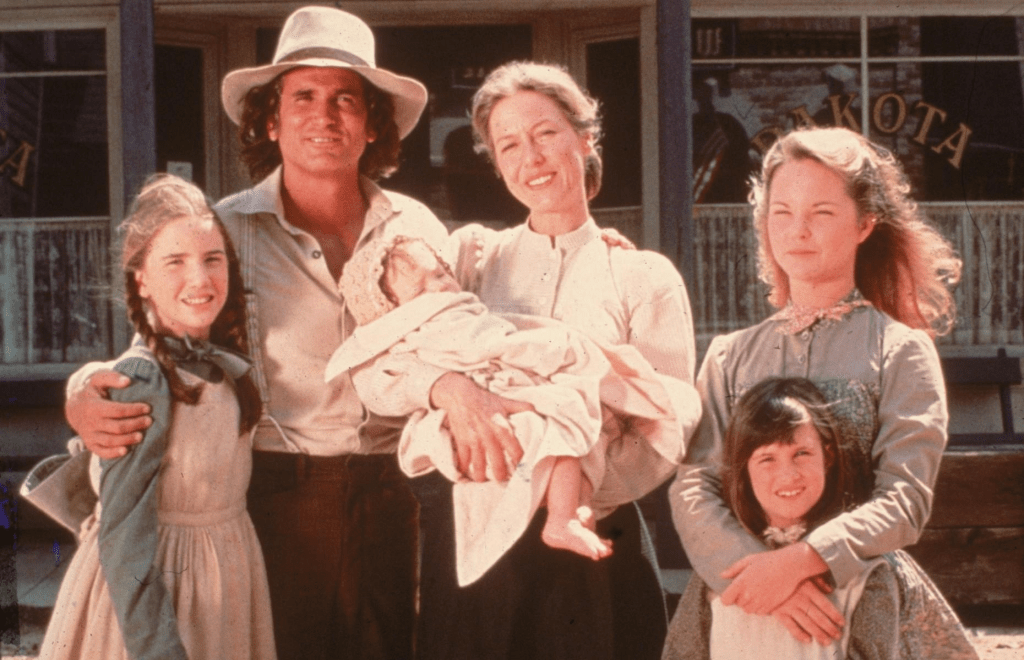
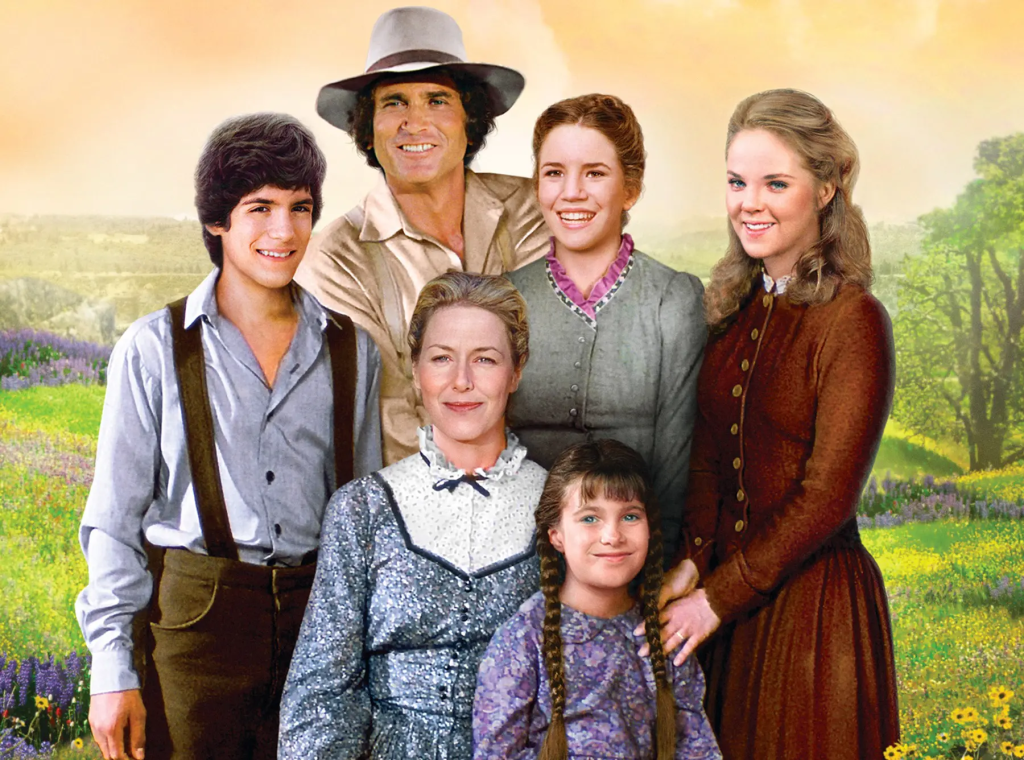
This month we are visiting with some of our favorite families. I absolutely would have included The Waltons this month if we had not covered the show recently. However, another historic family, the Ingalls, is on the schedule. Little House on the Prairie was on the air for nine seasons. Many of us got to know the family through Laura Ingalls Wilder’s books.

📷lovemoney.com

Television producer Ed Friendly acquired the film and television rights from the books. Oddly enough, the other show Friendly is known for as producer is Rowan and Martin’s Laugh In. He decided to make Little House a two-hour pilot and asked Michael Landon to direct it. Landon agreed to do so if he could also play Pa, Charles Ingalls. The pilot aired in March of 1974, and in September the series began.

Along with starring in the show, Landon continued to direct as well; he directed 87 of the 204 episodes. The other directors included William F. Claxton, Victor French, Maury Dexter, and Leo Penn.

Landon also got in on the writing of several episodes. He had written several scripts for Bonanza when he appeared on that show, and several of them were recycled for Little House.

📷showbizcheatsheet.com

Like The Waltons, while this series was often happy with comedic notes, it dealt with many serious issues as well, including alcoholism, drug addiction, poverty, racism, child abuse, and rape. The show focused on the struggles and joys of a pioneer family living in the late 1800s.

Along with Landon, Karen Grassle played Ma, Melissa Gilbert played Laura, Melissa Sue Anderson was Mary, with Lindsay and Sidney Greenbush alternating as Carrie. In addition to the Ingalls family, other town folk on the show included Nellie Oleson (Alison Arngrim), Nels Oleson (Richard Bull), Harriet Oleson (Katherine “Scottie” MacGregor, and Miss Beadle (Charlotte Stewart).

Some of the guest stars included Willie Aames, Anne Archer, Lew Ayres, Hermione Baddeley, Ken Berry, Ray Bolger, Ernest Borgnine, Johnny and June Carter Cash, Burl Ives, Charles Lane, Vera Miles, Sean Penn, and Ray Walston.

📷wikifandom.com

The theme song, “The Little House,” was written and conducted by David Rose. Rose won two Emmys for his work on the show.Although the pilot ranked #3 for the 1974 ratings, the first two seasons were much lower. Season 3 found the show on Monday nights where it remained one of the highest-ranking series through season 7. Season 8 had a significant decline and season 9, with the loss of most of the family members, never really caught on with viewers. However, season two is the only year the show was not in the top 30. The schedule was a bit crazy when you analyze it. Although, this show did have to compete with The Jeffersons and WKRP in Cincinnati, because they were half-hour shows and this was an hour show, many people probably continued watching the second half. For many of these years, there were up to six different shows in this time spot on CBS and many of them changed from year to year, so there were rarely shows in this spot against Little House for more than a month or two.

After eight seasons, both Michael Landon and Karen Grassle were ready to move on; however, Landon did stay on as a director and writer. The show focused on Laura Almanzo and the younger generation for the ninth and final season.

The show was loved by critics as well as viewers and received sixteen Emmy nominations. The series won four of them, all for music and cinematography. The only cast member nominated was Melissa Sue Anderson; she lost to Sada Thompson for Family.

📷littlehouseontheprairie.com

Viewers were not ready to leave the Ingalls for good. Three made-for-tv movies were written: Little House: Look Back to Yesterday in 1983, Little House: The Last Farewell and Little House: Bless All the Dear Children, both in 1984. In 2008 the Ingalls’ lives also became a musical at the Guthrie Theater.

One fun story is when the show moved from Paramount to MGM Studios in the late seventies, they were uncovering sets so they could build new ones and found the yellow brick road from the Wizard of Oz which delighted the kids in the cast; I’m guessing it delighted many of the adults as well.

Another fun story was learning what the cast ate on the show. Since beef stew was a popular meal in the 1800s, the family often had that for its meal and when they did, they were actually eating Dinty Moore Beef Stew. When they had chicken, it was KFC that appeared on their plates.

The kids must have been troopers because each episode took about seven days to shoot. They were on location at Big Sky Ranch for four days and in the studio for interior shots about three days. In addition, they were probably witnesses to off-air scenes that were not the best. Grassle and Landon were not close, probably because his role seemed much bigger than hers and he was directing as well. Unfortunately, both Grassle and Landon were alcoholics, and alcohol was part of their life on set. During season four, Grassle quit when she realized the seriousness of her problem. Landon was never able to kick his dependence and died from pancreatitis.

📷pinterest.com

Gilbert said that Michael Landon had interesting ways to inspire his kids to get emotional on the set. He worked himself up to become very emotional and with eyes full of tears would ask her “Do you know how much I love you?” which would bring tears to her eyes as well.

It might have been a way to get her to cry, but it was not a lie. Gilbert lost her own father when she was eleven, and Landon became a second father to her. He often had Gilbert at his house on the weekends. She said it was a huge house and the kids ran through the house at will. Often Landon would hide behind doorways and jump out and scare them. Gilbert said Landon provided her with a lot of great advice. The most memorable for her was that nothing is more of a priority than home and family, and no success is as important as loving your people and contributing to a community. And to have fun above all in your career.

That is sage fatherly advice for us all to remember.

The Phyllis Diller Show: So Much Potential

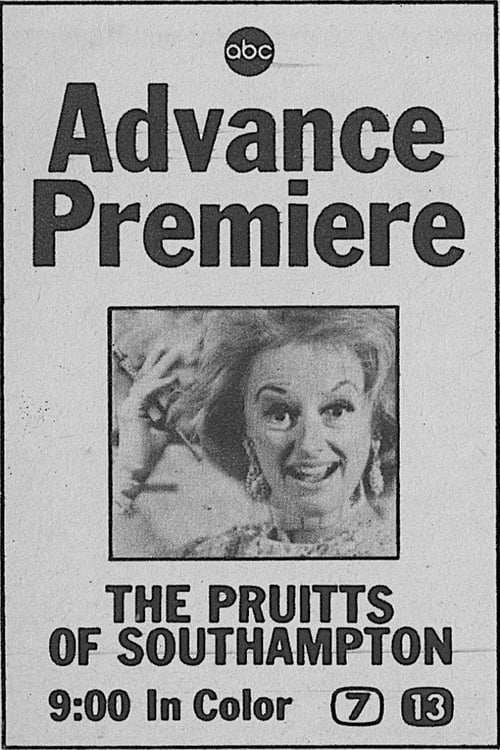
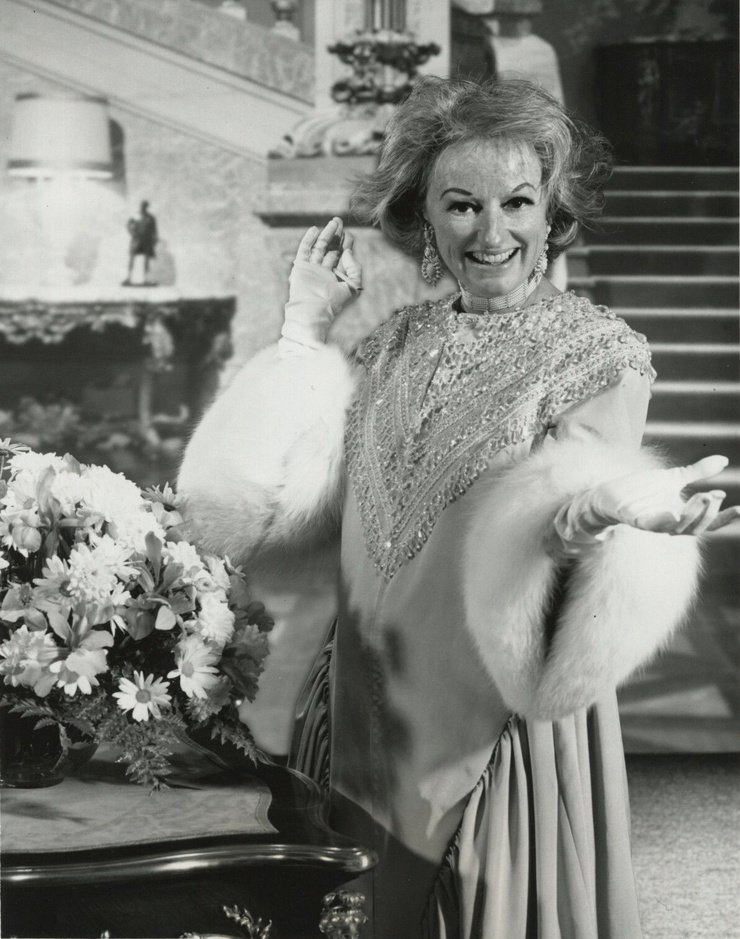
This month’s blog series is “It’s My Show.” Today we are beginning with a show I’ve discussed a few times over the years that had the perfect cast and concept, but it was cancelled after only one season: The Phyllis Diller Show which also went by The Pruitts of Southampton.

Image result for images of the pruitts of southampton
Photo: pinterest.com

The show was created by David Levy in 1967 and was loosely based on the book House Party by Patrick Dennis.  Levy was also the creator/producer for The Addams Family which aired from 1964-1966. The shows also shared composer Vic Mizzy who wrote the themes for both series. Mizzy also wrote the catchy tune from Green Acres. The opening theme song had Phyllis Diller dancing, skipping, and singing through the mansion, and the lyrics were:

PD: Howcha do howcha do, howcha do my dear
What a LOVELY surprise, nice to see you here.

RG: All the bills have been long overdue my dear.

PD: File them under I.O.U…
Howcha do, howcha do, Well HELLO, it’s you!
Like my beads, like my dress?
Aren’t they marvy-poo?
They belong to the internal revenue.
And they got us eating stew.

CHORUS: The Pruitts of Southampton,

Image result for images of the pruitts of southampton


Live like the richest folk,
But what the folk don’t know is that
The Pruitts are flat broke!

PD: Howcha do, howcha do, howcha do, my dear

RG: We are out of champagne, and I’m stuck, my dear.

PD: Ask the butler to lend you a buck, my dear.
Howcha do, howcha do, howcha do…

The Pruitts, an incredibly wealthy family, live in the Hamptons. After going through an IRS audit, the family realizes they owe so much in back taxes, $10,000,000 in fact, that they were now broke. The IRS agrees to let them continue living in their mansion because they think exposing such a wealthy family’s poverty would cause a lot of repercussions.

Image result for images of the phyllis diller show
Photo: pinterest.com

Phyllis Diller starred as Phyllis Pruitt. Phyllis lives with her uncle Ned (Reginald Gardiner), her brother Harvey (Paul Lynde), her daughter Stephanie (Pam Freeman), brother-in-law (John Astin), and their butler (Grady Sutton). Midseason, the show was revamped and the family brings in boarders to raise money, including Norman Krump (Marty Ingels) and Vernon Bradley (Billy De Wolfe). They should have been able to raise a bit of money with 68 bedrooms in the house. Other characters included Regina Wentworth (Gypsy Rose Lee), their nosy neighbor and Baldwin (Richard Deacon), the IRS agent. The incredible Charles Lane plays Max.

In addition, there were a lot of guest stars during that single season including Ann B Davis, Bob Hope, Arte Johnson, John McGiver, Louie Nye, Hope Summers, and Mary Wickes.

The shots of the family home were filmed at the Vanderbilt mansion, Biltmore.

The show began on Tuesday nights. At the time, The Red Skelton Hour was one of the most popular shows on television and was tough competition. When the show was revamped, it moved to Friday nights where it was up against Friday Night at the Movies and T.H.E. Cat.  If you don’t remember that show, don’t feel bad, you probably remembered very few of the new series that debuted that year.

Image result for images of the pruitts of southampton
Photo: nostalgiacentral.com

1967 was not a very profitable year for sitcoms specifically. Besides Phyllis Diller’s show, the season aired Run Buddy Run, Mr. Terrific, The Jean Arthur Show, Occasional Wife, and Pistols and Petticoats. That Girl was one of the few shows to return the following season.

Even though it was named as one of the worst sitcoms ever in several TV Guide listings, critics at the time praised the show. Phyllis Diller was nominated for a Golden Globe for Best Actress in 1967. Marlo Thomas won, but there was some great competition including Elizabeth Montgomery, Barbara Eden, and Barbara Stanwyck.

Image result for images of the pruitts of southampton
Photo: listal.com

One reviewer on imdb.com titled their review “The worst thing I have ever seen in my life” and followed up with a review that said, “Just kidding, this show is amazing and hilarious and that is why I gave it a 10/10.”

When Vic Mizzy discussed the show in a Televison Academy interview, he said the director was not any good, the scripts weren’t as funny as they could have been and sometimes Phyllis didn’t know her part. He thought those were the reasons the show failed. He thought it could have been unbelievabley funny.

One day Vic got a large check from England and it turns out the show was a hit there decades after it was aired in the United States.

I watched a couple of the episodes on youtube for this blog. Phyllis Diller was in rare form. Her hair is crazy like always and slapstick was part of her performance. The laugh track was annoying, but the show was funny at times. Pam Freeman was a breath of fresh air. In one of the episodes, Phyllis and her brother-in-law were trying to finance a pizza-making machine. They had to work around the fact that Baldwin from the IRS put a pay phone in the home to keep them from making so many long-distance calls.  One of the funniest scenes was when Phyllis and her brother-in-law climb up one of the phone poles to tap into the line to talk to Baldwin pretending to be other people in order to get Baldwin to approve their financing. Phyllis had to come up with a variety of different voices during the calls. You could definitely hear a bit of Green Acres influence in the background music for this show. This was a show that only could have been produced in the sixties.

One of the best parts of watching the show was seeing the old commercials.  I had forgotten the one about Joy dish soap when the dinner guests could see themselves in the plates. It just reminded me it was joyful to see these old shows in their entirety.

It was a fun show to learn about with an outstanding cast and should have been much more successful than it was. Whether the failure came from the director, the scripts, or some other behind-the-scenes issue, I’m not sure. It’s worth watching an episode or two just to see the wackiness that was associated with some sixties shows, but if I have to watch ten episodes of a show, I’ll take That Girl every time.


Getting To Know Pete and Gladys

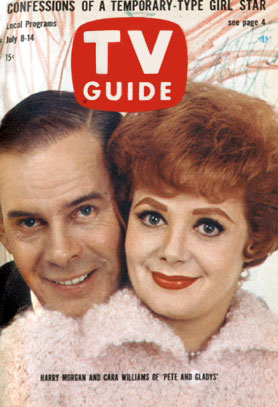
In the 1950s, one of the most popular sitcoms was December Bride starring Spring Byington. For five seasons, Henry Morgan, insurance salesman, played her next-door neighbor Pete Porter.

The show was cancelled in 1959, and in 1960 Pete showed up on the air again in a spin-off show titled “Pete and Gladys. He had often referred to his wife on December Bride, but we never got to meet her in person. Cara Williams took on the role of scatterbrained, but beautiful, Gladys. Like December Bride, this show was created by Parke Levy. Harry Morgan said Parke Levy was a very kind and knowledgeable man; he was one of the pioneers of sitcoms.

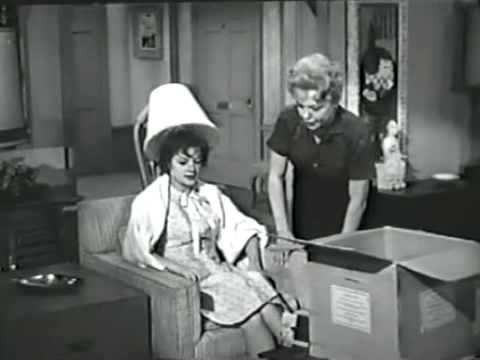
Cara Williams and Verna Felton–Photo: youtube.com

Verna Felton as Hilda Crocker also moved to the new show. Frances Rafferty who had played Ruth on December Bride also shows up on Pete and Gladys, but she is Nancy on the new show. For some reason, producers think we won’t notice missing characters but on December Bride, Pete had a baby daughter named Linda. However, she does not exist in the spinoff.   We also get to know Pete’s uncle played by Gale Gordon and Gladys’s best friend Alice (Barbara Stuart). Morgan said not only was Gordon a great actor, but he was a very funny man.

Gale Gordon and Williams–Photo: youtube.com

Pete who worked for Springer, Slocum, and Klever which sounded more like a shoddy law firm than an insurance company. He and Gladys Hooper had eloped nine years earlier. Pete told Gladys he had single-handedly capture a Japanese patrol, although it later came to light that he spent his military career as a clerk in the PX. Gladys was a housewife and kept busy as entertainment chair of the Junior Matron’s League of the Children’s Hospital and a member of the Westwood Bowling League.

Harry Morgan, Williams and Felton–Photo: dailymotion.com

While December Bride was in the top ten for four of its five years, Pete and Gladys never reached those numbers. Williams was nominated for an Emmy for Leading Actress in a Comedy although she lost to Shirley Booth from Hazel. The show only lasted two years. Whether a blessing or a curse, the show took over I Love Lucy’s spot on Monday nights and viewers probably could not help comparing the two shows. Director James V. Kern moved from Lucy to this show along with writers Bob Schiller and Bob Weiskopf.

Morgan, Williams, and Felton–Photo: sitcomsonline.com

However, for a two-year show, the number of guest stars was pretty impressive. Watching the show you can catch Jack Albertson, Morey Amsterdam, Bea Benaderet, Whitney Blake, Frank Cady, Richard Deacon, Donna Douglas, Sterling Holloway, Ron Howard, Ted Night, Nancy Kulp, Charles Lane, Howard McNear, Cesar Romero, and Reta Shaw. Morgan said that the guest stars got an exorbitant amount of money compared to the regular cast.

Morgan said Cara Williams was very talented, but she was not easy to work with. Often, they had different ideas about how a scene should go. She had a strong personality and was sometimes described as self-centered. Morgan said he admired her even though filming wasn’t always done smoothly. He recalled one time that she was demanding something and director Jack Arnold was tired of arguing, so he laid on the floor on his back, yelled, “Roll ‘em”, and when the scene sounded done, yelled “Cut.” Then he got up and left which was his way of answering her.

Morgan and Williams–Photo: nostalgiacentral.com

Not surprisingly, Morgan said he enjoyed his time on December Bride more than on Pete and Gladys, and he thought the former was the better show. However, if you take some time to watch December Bride, you might want to check out a few episodes of Pete and Gladys just to meet the woman Pete was always complaining about.  Unfortunately, both were listed on Amazon, but neither one was currently available.  I did see a December Bride DVD on etsy for a whopping $170. I do remember Pete and Gladys in syndication when I was younger, but I have never seen December Bride on a network schedule.   YouTube does have a number of episodes for both series, but be warned, some of the December Bride episodes have been colorized.

Here’s Lucy . . . and Gale Gordon

We are in the third blog of our series “The Men of November.” Born Charles Thomas Aldrich Jr. in 1906, Gale Gordon is remembered fondly for being Lucille Ball’s nemesis on several of her television sitcoms.

See the source image
Photo: oldtimeradio.com

Both his parents were entertainers, and they traveled to England to perform when he was only one. For eight years, he lived in England. After returning to the United States for a few years, Gordon returned to London to complete his education at the Woodbridge School in Suffolk.

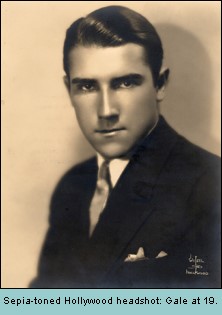
Gale at 19 Photo: lucyfan.com

Gale followed in his parents’ footsteps, and his first theatrical job was as an extra in “The Dancers” in 1923. Richard Bennett (father of Constance and Joan Bennett) starred in the stage production. Gordon worked as Bennett’s dresser, and Bennett taught him all about make-up, mentored him as an actor, and helped him to develop his voice.

By 1925, Gordon traveled to Hollywood, tackling roles in stage, film, and radio. Gordon talked about his first radio performance: “They asked me to come to a Hollywood studio in 1926 and try this new thing called ‘radio.’ They didn’t pay me, of course. They just wanted to fill up some time. So, I sang, ‘It Ain’t Gonna Rain No More, No More’ and accompanied myself on the ukulele. You might say I almost killed radio before it was born. I haven’t played an instrument on the air since.”

Photo: radiospirits.com

In seven short years, Gordon became the highest-paid actor in radio in Hollywood. He was the male lead for Mary Pickford in her serial. He was on almost every popular show on the air. It wasn’t unusual for him to appear on three or more programs in a week. Gordon was the first actor to play Flash Gordon in 1935.

His radio work also provided some other benefits. While appearing on an episode of Death Valley Days in New York, he met Virginia Curley. They married in 1937.

Gale and Virginia
Photo: lucyfan.com

In 1941, after playing primarily dramatic roles, Gordon became a regular on Fibber McGee and Molly. Playing Mayor LaTrivia, Gale was on the show for a dozen years. There was a brief interruption in 1942 when he left the show and enlisted in the US Coast Guard for three years. He rose to the rank of Petty Officer First Class, and his service took him around the world to many dangerous places.

One of the roles he is best known for was Principal Osgood Conklin on Our Miss Brooks. Gordon described Conklin in a TV Guide interview: “There was nothing subtle about Osgood. No nuances. Just a lot of very satisfying acid, bluster, and bellowing, with an occasional weak moment of cordiality thrown in for leavening.  It was practically impossible to overplay him. Even when he was being cordial, he was like an elephant trying to waltz.”

In 1950, he could be heard as John Granby on Granby’s Green Acres which later became the sitcom Green Acres.

With Bea Benederet
Photo: wikipedia.com

While trying to reign in the chaos at Madison High School as Osgood Conklin, Gale was also the refined banker, Rudolph Atterbury, on My Favorite Husband, Lucille Ball’s radio comedy. Atterbury’s wife was played by Bea Benederet.

As television gained popularity, it was inevitable that some of radio’s favorite shows would make the transition to the small screen. While it was entirely possible to play several different characters on the radio, television production didn’t offer the same flexibility. When My Favorite Husband was retooled for television as I Love Lucy, Ball planned on bringing Gordon and Benederet along with her. However, Gale was committed to Our Miss Brooks, and Bea was playing a major role on Burns and Allen on television.

Asked about those days, Gale described himself as “a quiet, reserved, pipe-smoking homebody.” He said he always had a good balance of professional and personal interests. In addition to acting, he wrote books (Nursery Rhymes for Hollywood Babies and Leaves from the Story Trees), painted, and maintained a ranch. He and Virginia bought a 150-acre property about three hours away from Hollywood. They grew carob trees. Gordon was not a rancher in name only; he raised the trees, built the house, installed the plumbing, completed carpentry and handiwork, put in a swimming pool, and built a two-story building that served as garage and studio.

Our Miss Brooks Photo: amazon.com

In 1952, Eve Arden decided to take Our Miss Brooks to television. While Gale continued his role as Conklin on the show, he also guest starred on a couple of I Love Lucy episodes. Our Miss Brooks had a successful run for four years.

When the show ended in 1956, CBS was quick to sign Gordon on for another show. They paired him with Bob Sweeney in The Box Brothers (sometimes called The Brothers). Unfortunately, the series only lasted for 26 weeks.

The Box Brothers Photo: imdb.com

In 1958, Gordon was a regular on Sally where he played department store owner Bascomb Bleacher. He also appeared with Walter Brennan on The Real McCoys.

In 1959, December Bride which aired from 1954-1959, went off the air, spinning off a new show Pete and Gladys starring Harry Morgan and Cara Williams. Morgan appeared as Pete Porter on December Bride. On the new show, Gale played Pete’s Uncle Paul.

Dennis the Menace Photo: pinterest.com

In 1962 he was cast as Mr. Wilson on Dennis the Menace. At the same time, Lucille Ball was creating a new show, The Lucy Show. She wanted Gordon to appear as Mr. Barnsdahl, a banker. When he was not available, Lucille turned to Charles Lane. She said she loved working with Lane, but always wanted to work with Gale again, so when Dennis the Menace was cancelled, she quickly signed Gordon; Lane moved over to Bea Benederet’s new sitcom, Petticoat Junction, as the despicable Homer Bedloe. And thus Theodore J. Mooney was born.

Photo: welovelucy.com

For the next eleven years, through several different series titles, Lucy and Gale worked together. They would both retire in 1974. When describing his time on Lucy’s shows, Gale related in a Good Morning America interview in 1982 that “I always had a wonderful feeling of anticipation going to work every week, which is very, very rare. I don’t care what business you are in. But to really look forward to getting into the nitty gritty and working hard for four days—which is all the time we had to do the show—is really unique. To look forward to it for eleven years, that’s doubly unique.” He went on to praise Lucy for her work ethic: “Her attitude has never changed. Every show she ever did was always the most important show of her life. And I think that is the secret of her success.”

See the source image
Photo: oldtimeradio.com

One surprising thing I learned was that Gordon was known for his ability to do cartwheels. He can be seen doing them on several episodes of Here’s Lucy. At the time, he was earning $25,000 an episode. Compare that to today when the stars of The Big Bang Theory received a million dollars an episode.

Gale and Virginia enjoyed twenty years of retirement. Virginia would pass away in 1995 at Red Terrace Health Center in Escondido, California. One month later, Gordon died from lung cancer at the same facility.

In 1999, Gale was inducted into the Radio Hall of Fame. Known for playing a variety of gruff, formal professionals, everyone knew that the bellow and bluster his characters spewed was great acting. In real life, Gale was one of the sweetest, kindest men around. He once said, “I am never nasty—unless I get paid for it.”

See the source image
Photo: wikipedia.com

It’s hard to describe the influence Gale Gordon has had on generations of actors and the number of hours of entertainment he has provided to generations of television and radio fans. It’s always fun to listen or watch Connie Brooks trying to pull a fast one over on Osgood Conklin or Lucy Carmichael trying Mr. Mooney’s patience with her latest scatter-brained plan. Thank you Gale Gordon!

Charles Lane: What a Character!

My blog theme for this month is “What a Character!” I am looking at the careers of four successful and hard-working actors. With 372 acting credits, perhaps there was no more prolific character actor than the beloved Charles Lane. He perfected the grumpy sourpuss always ready and gleeful to make life more complicated for others. His bio on imdb.com captures his type perfectly as the “scrawny, scowling, beady-eyed, beak-nosed killjoy who usually could be found peering disdainfully over a pair of specs, brought out many a comic moment simply by dampening the spirit of his nemesis.”

Photo: pinterest.com

However, despite that, we always knew there was more to him, and that his real persona was being covered up by his crotchety outward characteristics. His character Herman Bedloe on Petticoat Junction portrayed this dual-personality perfectly. Bedloe was always trying to shut down the train, but we knew he actually liked the Bradley family, and occasionally you would get a glimpse of the lonely and soft-hearted side of him.

He was born Charles Gerstle Levison in San Francisco in 1905. His family survived the 1906 earthquake. His father was an insurance executive, and Charles would follow in his footsteps for his first career.

Photo: newsfromme.com
The Music Man

A friend, actor Irving Pichel, convinced Lane to try his hand at acting, and Lane joined the Pasadena Playhouse in the late 1920s. His first movie was City Girl in 1930, and his last was Acting on Impulse in 1993. During those six decades he had a successful career in both television and Hollywood. In 1933, Lane became one of the founding members of the Screen Actors Guild (SAG). In that year alone he made 23 films. There was an anecdote told about Lane that it was not uncommon for him to go to a movie, see himself on screen, and be surprised because he completely forgot he had been in the film. Starting out at $35 a day, by 1947 he was earning $750 a week.

His longest-running role was husband. In 1931 he married Ruth Covell; the couple had two children and were married until her death in 2002.

Photo: pinterest.com
It’s a Wonderful Life

Perhaps most people recognize Lane from his role of rent collector for Henry Potter in It’s a Wonderful Life. Capra signed Lane to roles in ten of his movies. Lane was a corrupt attorney in Mr. Deeds Goes to Town (1936), an IRS agent in You Can’t Take It with You (1938), a newsman in Mr. Smith Goes to Washington (1939), a reporter in Arsenic and Old Lace (1944), and Blink Moran in State of the Union (1948). Among his most-cherished possessions was a letter from Capra where he wrote “Well, Charlie, you’ve been my No. 1 crutch.” Other popular films he was in include The Ghost and Mr. Chicken; It’s a Mad, Mad, Mad, Mad World; and The Music Man.

Photo: blogspot.com
You Can’t Take It with You

During World War II, Lane joined the Coast Guard. When he returned to civilian life, his television career took off. His first role was on Burns and Allen in 1951. During the 1950s, he appeared in more than 30 shows including Topper, The Thin Man, Perry Mason, and The Ann Sothern Show. He was often seen on Lucille Ball shows. He and Lucy had become friends when they both worked for RKO, and he had a great respect for Desi Arnaz’s acting ability.

Photo: imdb2freeforums.net
I Love Lucy

During this decade he was cast on the show Dear Phoebe in 1954. Peter Lawford starred in the show as a former college professor who writes an advice column under the name Miss Phoebe Goodheart. Meanwhile, his romantic interest is Mickey Riley portrayed by Marcia Henderson, the paper’s sports writer. Lane took on the role of Mr. Fosdick, their boss.

Photo: blogspot.com
The Andy Griffith Show

The 1960s found him on almost every popular show of that decade. Tuning in to your favorite series, you would spy Lane on Bachelor Father, Pete and Gladys, Mister Ed, The Andy Griffith Show, The Joey Bishop Show, Get Smart, The Bing Crosby Show, The Man from UNCLE, The Donna Reed Show, Green Acres, Bewitched, and The Wild, Wild West, among many others.

Photo: sitcomsonline.com
Gomer Pyle USMC

Lane had recurring roles on five shows during the 1960s. On Dennis the Menace, he was the pharmacist Mr. Finch. He also could be seen on his friend’s series, The Lucy Show as Mr. Barnsdahl, a local banker. The Phyllis Diller Show had a cast that should have made it a hit and from 1966-67, Lane played Maxwell. Although many characters appeared on both The Beverly Hillbillies and Petticoat Junction, Lane had two different roles on the two series. He appeared in 24 episodes of Petticoat Junction between 1963-1968 as Homer Bedloe, a railroad executive who is always trying to find a reason to shut down the Cannonball. On the Beverly Hillbillies, he portrayed Foster Phinney.

Photo: filmstarfacts.com
Petticoat Junction

Lane continued with both his movie and television appearances throughout the 1970s, taking roles on The Doris Day Show, The Odd Couple, Family, Rhoda, Chico and the Man, and he continued his television appearances into the 1980s and 1990s with shows that included Mork and Mindy, St. Elsewhere, LA Law, and Dark Shadows.

Photo: pinterest.com
Bewitched

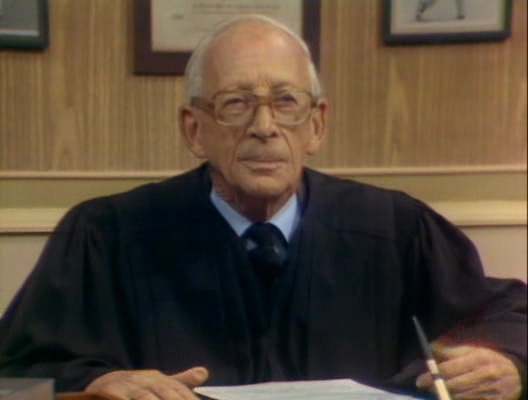
The decade of the seventies would find him cast in two additional series, Karen and Soap. Karen debuted in 1975, starring Karen Valentine as Karen Angelo. Karen works for an advocate group for the common American citizen, Open America, founded by Dale Busch, who was played by Lane. On Soap, Charles took on the role of Judge Petrillo who presided over Jessica Tate’s murder trial; however, because of Jessica’s husband, the judge lost $40,000 in a bad investment.

Photo: sitcomsonline.com
Soap

Charles Lane was honored in 2005 when he turned 100. SAG proclaimed January 30 “Charles Lane Day,” and TV Land honored him in March for his long career. After receiving his award, he let it be known “in case anyone’s interested, I’m still available!”

Photo: allmovie.com
TV Lands Award March 2005

Despite his being typecast in cranky roles, friends and family described him as funny, kind, and warm-hearted. Lane’s one vice was smoking. In 1990 he was rushed to the hospital when he was having problems breathing. When the doctor asked if he smoked, Lane informed him he had kicked the habit . . . 45 minutes earlier. He never smoked again and he lived another 12 years, dying peacefully in 2007.

Photo: blogspot.com
Homer Bedloe

Although it’s tough on actors to be typecast so early in their career, it’s a double-edged sword, because it also provides a lot of opportunities for roles. Lane was an enigma; while he always convinced us that he was just as mean as could be, we also knew if someone would give him a chance, he could be reformed like Scrooge; he just needed the opportunity. It always makes me smile to come across Charles Lane in a move or television episode. It’s like seeing an old friend, or perhaps the neighbor who yelled at you to get off his yard. However, if you looked closely, you would see him watching and wanting to be part of the action. As you watch your favorite older classic shows, keep an eye open for him.

Do We Have Reservations? Yes We Do.

February has finally arrived.   Some of us are getting a bit tired of winter, so this is a popular month for travel to a warmer destination.  If you aren’t able to physically get away, stay home and watch the February Sweeps, the only time you’re guaranteed new episodes of your favorite show for a month straight.  This week I decided to look at sitcoms set in hotels or resorts.  I did not discuss Fantasy Island or The Love Boat because I thought we could talk about them another time.

resort

Based on the length of many of these shows, the hotel business is a tough one to be successful in. Let’s look at a bunch of shows that didn’t last too long.

buddyfeb6

Stanley was a show starring Buddy Hackett and his girlfriend played by Carol Burnett that aired in 1956. Stanley ran a newsstand in the lobby of a New York City hotel. The hotel owner was played by Paul Lynde.  The show was cancelled in March of 1957, supporting the philosophy that no news is good news.

happyfeb62

Happy starred George and Gracie’s son, Ronnie Burns. Ronnie was married to a woman played by Yvonne Lime and they were co-owners and managers of the Desert Palm, a ritzy resort. Included in the cast was their Uncle Charlie and the co-owner played by Doris Packer.  Happy was their son who commented on what was going on, sort of like Family Guy’s Stewie.  It was a summer entry in 1960, but 9 months later it gave birth to a cancellation which made the cast not Happy.  I don’t know why, but apparently viewers could accept a talking horse or a talking car, but not a talking baby.

Another show that began as a summer replacement was Holiday Lodge in 1961. Johnny Wayne and Frank Shuster, two comedians from Canada, played social directors at a New York state hotel. They tried to provide entertainment but always ran into trouble, including being taken off the air after a few episodes.

The Bill Dana Show was interestingly based on the character Jose Jiminez developed by Dana for the Steve Allen Show and later brought to the Danny Thomas Show.  In 1963 The Bill Dana Show portrayed Jiminez as a bellhop at the New York City Park Central Hotel and the show centered on him trying to get used to life outside Mexico. Often his dream sequences took him into bizarre situations.  The most interesting fact about this show might be that the house detective was played by Don Adams who went on to star in Get Smart. Jimeniz’s dream became a nightmare when the show was cancelled after 42 episodes.

hotlbaltimorefeb6

One of the most controversial shows to air on television in the 1970s was Hot L Baltimore debuting in the fall of 1975.  Many stations refused to air the show because it was lewd and racy.  Norman Lear, the producer behind All in the Family, Maude, and The Jeffersons developed the concept based on a play. The cast was made up of a desk clerk, his girlfriend, the manager, a hooker, an unemployed waitress, a dying man, a gay couple, and an eccentric woman. After four months, the waitress was not the only one unemployed because the show was done.

The Last Resort was developed by MTM in 1979, the company that created The Mary Tyler Moore Show, Rhoda, and Phyllis. The resort, set in the Catskills in upper New York, included a bunch of college students working their way through school. It featured a stereotyped crew including the brilliant premed student, a bookworm, a snob, an overweight clumsy guy, the pastry chef who left her wealthy husband to pursue her career, a Japanese chef, and a maitre’d who ran the place like a drill sergeant. It was cancelled after three episodes. Retooled, it came back in December only to be finished for good in March when the last resort of The Last Resort was no more.

Checking In must be in the running for the shortest show to appear on television. In 1980, Marla Gibbs, playing Florence the maid on The Jeffersons, got her own show, transferring to a hotel in New York City where she was the head housekeeper. She answered to a snobby manager played by Larry Linville who would later become Frank Burns on M*A*S*H. The rest of the cast included an assistant, a house detective, a maintenance supervisor, and a bellboy. After several weeks, the hotel was shut down and Florence went back to working for The Jeffersons.

goldenpalacefeb6

The Golden Girls was one of the most beloved shows in television, but I’m guessing few people remember The Golden Palace which debuted in 1992.  After Dorothy got married, the other three characters decide to invest in a hotel in Miami. Only two employees are left at the hotel:  a manager and a chef. After 24 shows, no one was left at the hotel.

In 1999 Payne, a remake of the British show Fawlty Towers hit the air.  Set in a California inn, Whispering Pines, the hotel was owned by Royal Payne and his wife Constance.  It went on the air in March.  At the end of April, the network ended its Payne by taking two aspirins and cancelling the show.

whoopifeb62

Compared to some of the shows, Whoopi! might have seemed successful, lasting an entire season.  Set in the Lamont Hotel in New York City, a one-hit wonder musician played by Whoopi Goldberg decides to put her money into a hotel and run it the way she sees fit.  She has an assistant from Iran, a brother who is a conservative Republican, and his girlfriend who is white but acts more African American than the black members of the hotel. Of course, these three characters give her much controversy to deal with.  The network, acting as referee, blew the whistle and cancelled the entire thing after one year.

In 2008 Do Not Disturb debuted.  If you missed it, don’t feel bad.  It debuted on Fox and featured The Inn, a hip Manhattan hotel.  The staff is not as competent as they appear to their guests. The manger is arrogant, the head of human resources is loud and tactless, the front desk clerk is an aging model who does not want to be a desk clerk or older, the reservations clerk is a famous musician wannbe, and the head of housekeeping has problems at home. The network, not wanting to disturb the viewing public, pulled the plug after three shows. Larry, played by Jesse Tyler Ferguson, would go on to star in Modern Family in 2009.

Before you begin to think shows about hotels are doomed, let’s check in with four successful shows that knew how to make a profit.

From 1996-2001 The Jamie Foxx Show on WB featured Jamie Foxx as a musician who moves to California to work at his aunt and uncle’s (played by Ellia English and Garett Morris) hotel, King’s Tower.  He has two co-workers played by Christopher B. Duncan and “Fancy” played by Garcelle Beauvais. He is interested in Fancy, but she doesn’t feel the same until the final two seasons when they become engaged. The show aired 100 episodes before the network finally got reservations.

Disney’s Suite Life of Zach and Cody set in the Tipton Hotel ran from 2005-2008. The twins lived in the hotel because their mother was the lounge singer.  Somewhat like Eloise at the Plaza, the boys got into mischief and interacted with other employees including the wealthy heiress London Tipton, the candy counter salesgirl Maddie Fitzpatrick, and the manger Marion Moseby.  In 2008 the show sailed off, literally, and became Suite Life on Deck running until 2011.

With 184 episodes, Newhart debuted in 1982. With its quirky cast of characters, it became a big hit. Set in Vermont, Dick Loudon (Bob Newhart) is a writer who buys the hotel and runs it with his wife Joanna (Mary Frann). Their handyman George Utley (Tom Poston) and their maid Stephanie Vanderkellen (Julia Duffy) make life both easier and more difficult at the inn. Later Dick becomes a local television celebrity working with Michael Harris (Peter Scolari) who marries Stephanie.  Larry, (William Sanderson) his brother Darryl (Tony Papenfuss) and his other brother Darryl (John Voldstad) are memorable characters.  Darryl and Darryl never speak until the final episode.  That finale has the best ending ever in a television series when Bob Newhart wakes up in bed, tells his wife he had a really weird dream, and we see the wife is Suzanne Pleshette, his wife Emily from The Bob Newhart Show in which he played a psychiatrist from 1972-78. This series delightfully captured the life in a small New England town until 1990.

While Newhart is hard to top, my favorite hotel sitcom is Petticoat Junction which featured the Bradley Girls from 1963-1970. Kate (Bea Benaderet) ran the hotel with her three daughters Billie Jo, (Jeannine Riley till 1965, Gunilla Hutton until 1966, and Meredith MacRae until 1970), Bobby Jo (Pat Woodell until 1965 and Lori Saunders through 1970, and Betty Jo (Linda Henning), along with her Uncle Joe (Edgar Buchanan). The Shady Rest is near Hooterville, so we get to know a variety of town folk including Sam Drucker who runs the general store; Floyd and Charley, who run the Cannonball train; and Steve Elliott, crop duster, who is Billie Jo’s boyfriend first but later marries Betty Jo; and we run into the Ziffels and the Douglases from the show Green Acres. It’s a charming and heart-warming show loaded with loveable but zany characters. It ran for 222 episodes, even surviving the death of Bea Benaderet, who was replaced by Janet Craig (June Lockhart), a woman doctor who moves into the hotel. The amazing Charles Lane shows up throughout the series as Homer Bedloe, a railroad employee whose sole mission is shutting down the Cannonball.

If you can’t physically travel this month, take some time and watch a season or two of Newhart or Petticoat Junction, and you can still get away and experience life in a small-town hotel.