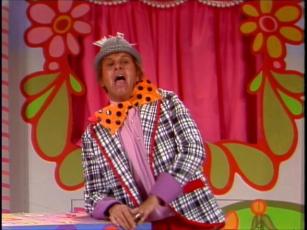
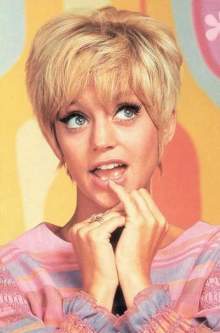
“Don’t give up before the miracle happens.” ― Fannie Flagg, I Still Dream About You

Fannie Flagg is one of those performers who I have seen all my life but know little about. I thought it would be fun to learn about her show business career. Like me, she started writing later in life as her second career.  I wanted to know how that whole dream fulfillment came about. Let’s get to know Fannie Flagg.

fannie5

She was born Patricia Neal in Alabama in 1944. Flagg, of Finnish ancestry, spent most of her childhood in the Birmingham area. It sounds like she had a “normal” childhood. Although she liked writing, she had problems because she was dyslexic which she did not realize until she was an adult. She was an archery champion at age 12. By age fifteen, she thought about entering a convent. Luckily for us she didn’t. In high school she was a cheerleader and a saxophone player in the band.

As a teen, she entered the Miss Alabama pageant, where she won a scholarship to the Pittsburgh Playhouse Theater Acting School. Acting might have been in her blood because both her father and her grandfather were motion picture machine operators. The summer she returned home, the woman who cohosted the Morning Show in Birmingham was leaving, so Fannie was able to replace her.

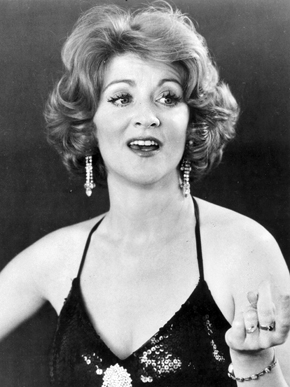
Who knows what direction Flagg’s career would have taken if the head of WBRC-TV were not so tight-fisted. Flagg asked for a raise and they denied it, so she quit her job and moved to New York City. She had to take on a new name since there was already a quite famous Patricia Neal in show business. Her grandfather suggested “Fannie” because so many comediennes used the name and a friend came up with “Flagg.”
fannie18

Her first television job was on CBS Repertoire Workshop in 1964. During this time, Fannie recorded two comedy albums with various skits that included parodies of famous women. She appeared on a variety of talk shows including The Joey Bishop Show, The Dick Cavett Show, The Merv Griffin Show, The Johnny Cash Show, Dinah!, and The Rosie O’Donnell Show.

fannie17

Flagg got her first film role in 1970 in Five Easy Pieces with Jack Nicholson. The next year she appeared in Some of My Best Friends Are.

five easy pieces

It was also in 1971 that she received an offer for her first series. Fannie says she stumbled into the role.  She had been doing concerts and performing with stock companies. She was on the west coast and stopped in at her agent’s California office to meet the staff.  A man came in and looked her up and down and then left. The next day she learned she was given the part of Dick Van Dyke’s sister on The New Dick Van Dyke Show. The man in the office the day before had been looking for someone who could pass for Dick’s sister in real life.

fannie2

The New Dick Van Dyke Show was on the air from 1971 till 1973. Carl Reiner created the series for Van Dyke. Van Dyke was Dick Preston, a local talk show host. Van Dyke was signed to a three-year contract and given permission to film in Arizona where he lived. Hope Lange was his wife Jenny, Angela Powell their daughter Annie, Flagg his sister Mike, David Doyle was his boss Ted, and Marty Brill and Nancy Dussault were their best friends Bernie and Carol Davis.

The show began its life on Saturday night with All in the Family, Funny Face, and The Mary Tyler Moore Show.  The series didn’t garner very high ratings, so the second season found the show on Sunday nights when ratings decreased drastically. Flagg was mentioned by several critics as being very funny in her role. Fannie credited Dick Van Dyke as her acting mentor, as well as one of her best friends.

Because Dick had a three-year contract, rather than cancel the show, CBS changed the structure. Dick gets a role on a soap opera, so he and his family move to Hollywood. They changed out most of the cast members so Flagg moved on. The show followed Here’s Lucy. The ratings improved significantly, but after the third year, Dick quit to go back to Arizona.
fannie12

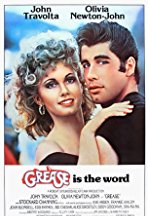
Throughout the 1970s, Fannie continued to get both television and film offers. She appeared on Love American Style, The New Candid Camera, Wonder Woman, and Fernwood Tonight. She was also in several films including both Rabbit Test and Grease in 1978.

During the 1970s, Flagg was a fixture on game shows. She is best known for Match Game where she usually sat next to Richard Dawson.  With all the different versions of Match Game, she appeared in 529 episodes of the show. She is famous for wearing unusual tops on Match Game. It was while on the game show that Fannie received a note from a teacher who noticed a particular pattern in her misspellings on the show. She mentioned she might have dyslexia which is when Flagg first began to investigate and learn she did indeed suffer from the disease. When asked about two her costars on Match Game, namely Charles Nelson Reilly and Brett Somers, Flagg said, “Besides being hilarious, Brett and Charles were two of the smartest people I have ever known. On “Match Game,” they got such a big kick out of each other! They razzed one another and everybody else on the panel mercilessly, and they were particularly relentless on the people they really liked. It was never mean or hurtful, and they loved it when you razzed them back.”

She continued, One of the happiest times in my life was in 1980 when I was doing “The Best Little Whorehouse in Texas” on Broadway, and Charles, Brett and I were staying at the Wyndham Hotel at the same time. Every day at around 4 o’clock in the afternoon they would come to my room for cocktails. Many is the time I would come home from after the show and they would still be sitting there having a good time. The only thing that changed was the position of Charles’ toupee.”

In addition to “Best Little Whorehouse in Texas,” Flagg toured with Come Back to the Five and Dime, Jimmy Dean, Jimmy Dean.”

Fannie continued her acting career into the 1980s. From 1981-1982 she took a role as Cassie Bowman on Harper Valley PTA starring Barbara Eden. The show was based on the hit song, “Harper Valley PTA” by Jeannie Riley. Sherwood Schwartz produced the first eleven episodes.  The show moved around a bit from Thursdays at 8 to Saturdays at 8 to Saturdays at 8:30. Barbara played Stella, a mom who ignores Southern small-town standards by wearing mini skirts and speaking her mind. She reveals the hypocrisy of the other PTA members, making her a target of their comments. The show did not last long enough to accumulate enough episodes for syndication, but it occasionally shows up on independent networks.

Flagg was on The George Burns Comedy Week series and on The Love Boat three times. Her final films were done at the beginning and end of the 1990s. Her last movie was Crazy in Alabama in 1999 written by her friend Mark Childress.
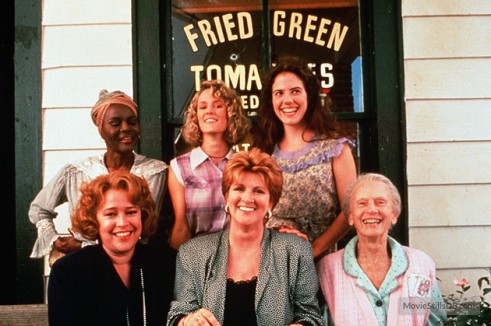
fried-green-tomatoes with cafe -- horizontal

She also had a cameo in 1991 in Fried Green Tomatoes, a movie based on her novel, Fried Green Tomatoes at the Whistle Stop Café. She co-wrote the screenplay and received an Oscar nomination. The book is told in the past and the present by Ninnie Threadgoode and Evelyn Crouch who talk about the town of Whistle Stop, Alabama and the bonds the women forged in the 1920s and 1930s. The novel, published in 1987, was on the New York Times bestseller list for 36 weeks. This was her most famous novel, but it was not her first.

Flagg felt a pull toward writing as a child. She had written a play when she attended Catholic school. Because her father worked at the cinema, she had seen a lot of movies. She wrote a play about two career girls who lived in an apartment over the Copacabana nightclub in New York City. A man named Mr. Truman called and asked to come for tea. The girls assume it’s President Truman and go all out getting ready and inviting their friends. It turns out to be an insurance salesman. Her teacher phoned her mother to say the nuns were concerned because she used the word “martini” 16 times. Her mother had to explain that Fannie watched a lot of movies and the family was not sitting around drinking martinis every night.

She won first prize at the county fair for an essay titled, “Why I Want to Be Bald Headed.” She wrote it because she hated her mother braiding her hair so tightly every morning.

In the 1960s, Flagg wrote skits for a night club in New York—Upstairs at the Downstairs. She filled in for a sick actress one night when Allen Funt was in the audience. He invited her to become a staff writer on Candid Camera where she acted as well.
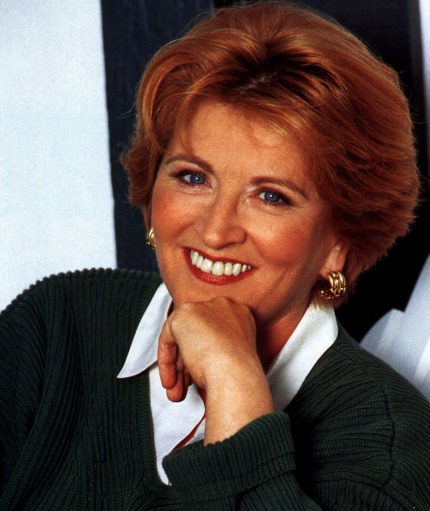
fannie9

Flagg decided to attend a conference in 1978 to see Eudora Welty. She had to write a short story for a contest based on the word “childhood.” As Flagg tells it,

“I went to the grocery store, and I bought one of those spiral notebooks. I wrote a story called Daisy Fay and the Miracle Man about something that had actually happened to me in childhood,” says Flagg. “I wrote it as an 11-year-old child, and I thought that if they saw any mistakes, they would think I did it on purpose.”

Flagg won the contest. “I couldn’t believe it. I was thrilled, but at the same time I felt like such a cheat and a liar,” says Flagg. An editor there said that he wanted to talk with her about her writing a fleshed-out novel based on her short story. Flagg burst into tears and said, “I’m so sorry, but I can’t write a book.” When he asked her why, she replied, “Because I can’t spell.” Flagg says the editor looked at her like she was crazy and said, “What do you think we have editors for?”

She’s been writing ever since.

Fannie Flagg has found her niche.  Since that first novel, she has continued to write, publishing ten books in all. Her most recent release was The Whole Town is Talking in 2016. In 2012 she won the Harper Lee Distinguished Alabama Author award and presented it to Fannie in person.

As an adult, Fannie collects lamps from the 1940s and 1950s. She loves going on cruise ships, which might explain her three appearances on The Love Boat.  If you were a Match Game fan, it will not surprise you to learn that she loves wearing stripes with polka dots.

Fannie just seems like a delightful and fun person to be around.  She is on my list of people to have dinner with. I have recently began reading her books and I love them.  She writes about quirky, not strange, characters who seem true to life. It’s been fun getting to know a bit more about her life and career.

fannie1


Do You Hear What I See?

As viewers transitioned from radio to television, there was a lot of conflict as advertisers volleyed between the two mediums. Many critics predicted an early death for radio which never came about.  Radio found its new niche, relying more on news and music. Now, you can actually watch radio on television shows like Mike & Mike on ESPN.

Television has also featured several shows about radio stations over the years.  Today we tune in to five of those.

Good Morning World (1967)

radio3

David Lewis (Joby Baker) and Larry Clarke (Ronnie Schell) are early morning DJs in LA with the Lewis and Clarke Show. Dave is happily married, while Larry considers himself a ladies’ man. Billy De Wolfe garnered a lot of attention as the best part of the show  portraying station manager Roland Hutton, a stuffy and humorless boss. Rounding out the cast are Dave’s wife Linda played by Julie Parrish and the debut of Goldie Hawn as their next-door-neighbor.

American actors Goldie Hawn (as Sandy Kramer) and Charlie Brill (as Milton Pervis) appear in an episode of the television show 'Good Morning Wold' called 'Knits To You, Sir,' June 20, 1967.

The show was created by an unbelievable group: Carl Reiner, Sheldon Leonard, Bill Persky, and Sam Denoff. They all were part of the creative force of the Dick Van Dyke Show.  Persky and Denoff were also the producers for That Girl. They based this show on their work as writers at WNEW-New York in the 1950s.

radio2

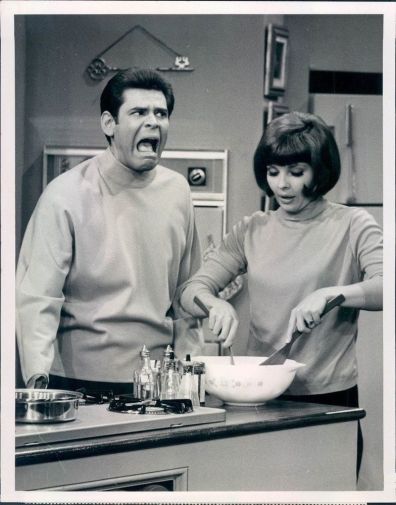
This photo made me laugh.  They could actually be stand-ins for Dick Van Dyke and Mary Tyler Moore. It might even be the same kitchen!

Filmed before a live audience at Desilu, the show was created to showcase Schell.  Ronnie had been a private on Gomer Pyle and this was to be his break-out show. Procter and Gamble sponsored the series which aired Tuesday nights. It should have done well during its slot, being up against NYPD and the Tuesday Night at the Movies.

The ratings were not great, and the network debated whether to cancel the show or bring it back for a second season.  The two deciding factors might have been that Baker had a lot of trouble memorizing his lines and Parrish was dealing with some health issues.  The network considered recasting both roles but ended up cancelling the series after 26 episodes.  Surprisingly, it was released on DVD.

Schell went back to Gomer Pyle, USMC where he was promoted to corporal.

radio1

The best episode is “No News Like Nude News.” The stars are invited to a Nude Ranch and go thinking they are on their way to a dude ranch.


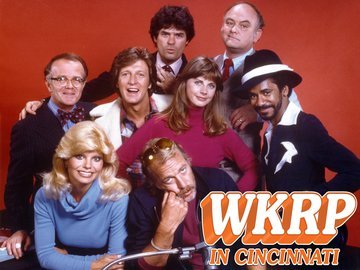
WKRP in Cincinnati (1978)

radio23

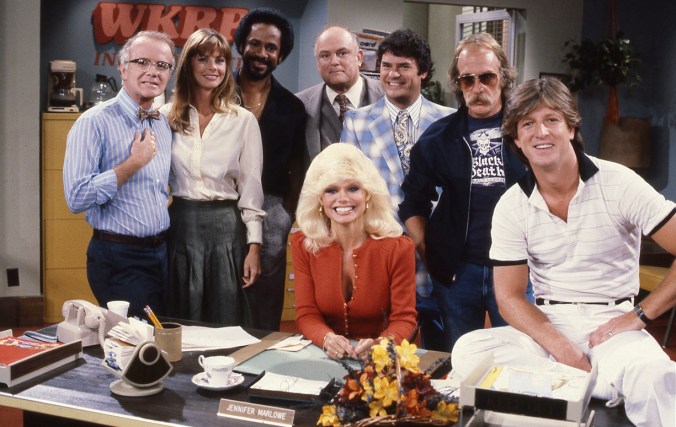
I consider WKRP the second-best radio sitcom. The premise for the show was that a new producer is brought in to help a struggling radio station in Cincinnati.  Changing the format from easy listening to rock brings new life to the station and a lot of chaos to the staff. Hugh Wilson created the format.  He can be seen as a police officer in the episode “Hold Up.”

Along with The Dick Van Dyke Show, The Mary Tyler Moore Show, Barney Miller, and The Office, this was one of the best ensemble casts in television. The characters included:

radio31

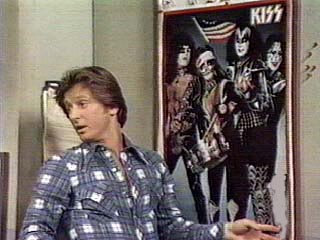
Andy Travis (Gary Sandy) is the producer who has a successful history of turning stations around.

Arthur Carlson (Gordon Jump) is the station manager whose mother owns the station. The Big Guy’s management style is a big part of why the station is not doing well.  Art is more interested in fishing than radio. Jump was a DJ in Dalton in his former life.

radio24

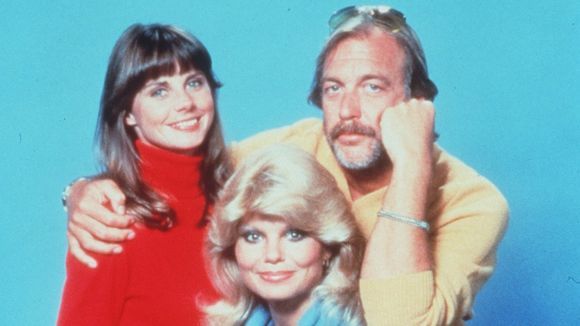
Jennifer Marlowe (Loni Anderson) is the smart receptionist who is the highest-paid staff member. Anderson refused to be cast as a dumb blonde.  Jennifer has a journalism degree and although she is only receptionist, she has the skills that keep Art Carlson out of the loop and everything running smoothly at the station. She is gorgeous and kind-hearted, but she refuses to type letters or make coffee.

Les Nessman (Richard Sanders) is the incompetent news reporter. He always wears bow ties and is best friends with Herb. Richard has a bandage on his head from a real-life injury in the pilot and he made that one of his trademarks.  He often shows up with bandages on various parts of his body and we later learn that he has a large dog.

Herb Tarlek (Frank Bonner) is a tasteless boor. He is married but is always coming on to Jennifer. Herb’s suits are even louder than he is.  In one episode, Venus says “Somewhere out there there’s a VW with no seats.” One of his suits actually was made from VW covers. Bonner grew up in Arkansas, and Herb always has a Razorback mug on his desk.

Bailey Quarters (Jan Smithers) originally took care of billing but is also a journalism major and shows she is a more competent on-air reporter than Les. She and Fever date off and on.

Venus Flytrap (Tim Reid) is the soulful, smooth-talking DJ.  Although he is on the air at night and Fever has the morning shift, they become best friends. His real name was Gordon Sims and he was a school teacher before his DJ career took off.

Dr. Johnny Fever (Howard Hesseman) is the burned-out DJ from LA.  He was fired for saying “booger” on the air at his last job.  He’s an insomniac and addicted to coffee.  His hippie lifestyle and cynicism do not mesh with Herb and Les. Originally Hesseman was asked to read for the part of Les Nessman but would only audition for Fever. David Cassidy turned down the role of Johnny Fever. The character of Fever was based on Atlanta’s Bobby Harper who was on the morning show on WQXL 790 AM.  The creator of the show, Hugh Wilson, had previously worked there.

In many of the scenes there were bulletin boards with bumper stickers plastered all over that had been sent in from radio DJs all over the country. As a tribute to John Lennon, his photo was displayed in the background after his assassination.

radio21

The show was videotaped because rock song rights were cheaper for taped shows than filmed shows. When the show went into syndication, almost all of the music had to be replaced.  When the DVD set was being created, the original music was put back in.  An agreement could not be reached until 2014.

Although it’s hard to believe, in 1980 Hugh Wilson collaborated with Hanna-Barbera to create an animated version of WKRP where all the characters are played by dogs.  The show never actually happened.

WKRP was on Monday nights against Welcome Back Kotter and Little House on the Prairie. After the first season, it was moved repeatedly. The show was cancelled after four seasons. It accumulated ten Emmy nominations including three for outstanding series. The show was much more successful in syndication.

radio12

The show was filmed in Los Angeles, but the opening and closing scenes as well as several episode scenes were filmed at the Enquirer Building in Cincinnati.  That building is currently a Hampton Inn/Homewood Suites at 615 Vine St. near Fountain Square.  The radio station said they were housed in the Osgood R. Flimm Building.

One of the most memorable parts of the show was the theme song:

“Baby, if you’ve ever wondered, wondered whatever became of me.  I’m living on the air in Cincinnati, Cincinnati WKRP. Got kind of tired of packin’ and unpackin’, town to town, up and down the dial. Maybe you and me were never meant to be, just maybe think of me once in a while. I’m at WKRP in Cincinnati.”

WKRP in Cincinnati

In 2015, a non-profit radio station in Raleigh, 101.9 was given the WKRP call letters. An independent television station, channel 25, in Cincinnati also received the WKRP designation in 1990.

The clever writing and memorable characters have gained this sitcom a great reputation in television history.

Hello Larry (1979)

radio6

McLean Stevenson was hoping to be the star of M*A*S*H.  Once he realized Alan Alda was firmly entrenched in that position, he opted out of his contract to star in his own show.

The result was Hello Larry about a man, Larry Alder, who is divorced and moves with his two teenage daughters to Portland to star in a call-in psychiatric radio show. Kim Richards played his daughter Ruthie and Krista Erickson played Diane. Lisa Whelchel auditioned for the role of Ruthie but lost out to Richards and ended up on Facts of Life which she was grateful for.

radio10

The other cast members included Joanna Gleason (Monty Hall’s daughter) as the radio producer, George Memmoli as Earl the engineer, and John Femia as Tommy Roscini. Larry also hung out with a familiar face – -Meadowlark Lemon, former Globetrotter, who owned a Portland sporting goods store.

The show was owned by the same company who created One Day at A Time and this was a mirror image of that show focusing on a single mom with two daughters.

radio8

The ratings were not good. The show was up against Charlie’s Angels and the Wednesday Night Movie. Several months into the season, to bolster ratings, the writers brought in the cast of Diff’rent Strokes which was a popular show that aired right before Hello Larry.  It was scripted that Larry and Phil Drummond had served together in Korea.  It did not help the ratings. The show went through a variety of scheduling changes all with the same result.  An issue that certainly didn’t help the show was the Iranian hostage crisis.  The show was often interrupted with special news breaks.

After 38 episodes, the show died a quiet death.  A TV Guide poll in 2002 listed Hello Larry as the 12th worse show of all time.  It was probably best remembered as the show that continually got made fun of by Johnny Carson for being so bad.

radio9

It’s hard to believe an actor would leave one of the most creative and popular shows of all time to move to one of the worst shows of all time.

Frasier (1993)

p183920_b_h9_ab

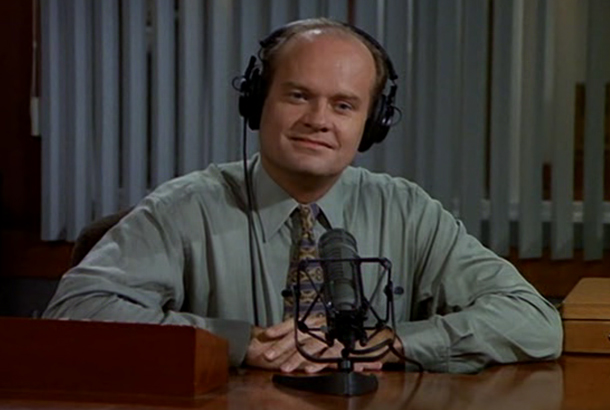
I think that Fraisier was the best radio show on television.  Frasier was on the air 12 years resulting in 263 episodes. The show averaged only 24 episodes a year. The hundredth episode was entirely filmed on the streets of Seattle. Leaving the cast of Cheers, Frasier Crane (Kelsey Grammer) moves back to Seattle to host a show as a radio psychiatrist.

radio32

After an injury, his father, a former policeman, moves in with Frasier. Fraiser provides advice on the airwaves while struggling in his personal relationships, especially with his cranky father and his pretentious brother. The producers did not want the show to resemble WKRP too much, so they came up with the concept of having Frasier live with his father, so family relationships became important.

radio43

John Mahoney plays Martin Crane, a grumpy, uncultured man who cannot understand his sons. Although Martin did not care about high-brow topics, John Mahoney taught Pierce a lot about wine and opera during the Frasier years.

radio35

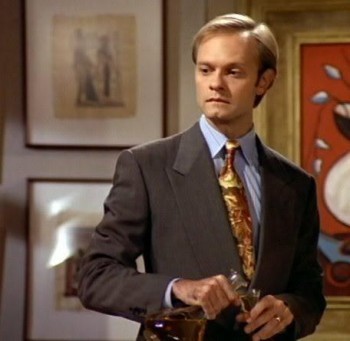
David Hyde Pierce was Frasier’s brother Niles.  The role of Niles was written just for Pierce.  The brothers were extremely competitive, although they could count on each other when it mattered. Frasier went to Harvard and Oxford while Niles went to Yale and Cambridge. Their mom was a scientist and the boys were named after lab rats she worked with. Both brothers had expensive tastes, intellectual interests, and high opinions of themselves. Niles was married to Maris, but we never see her. In later seasons, after getting a divorce, Niles marries Daphne. The brothers often meet at Café Nervosa.

radio33

On an episode of Cheers, Frasier explained that his father had died in an accident and he had no siblings.  When Sam (Ten Danson) comes to visit on Frasier, the error is explained by having Frasier tell Sam that he made the story up because he was mad at his family. All but two characters from Cheers starred on Frasier.  Coach had passed away and  Kirstie Alley (Rebecca) was a scientologist who did not accept psychology.

radio42

Jane Leeves plays Daphne Moon, who was hired to be Martin’s therapist and caretaker.

radio38

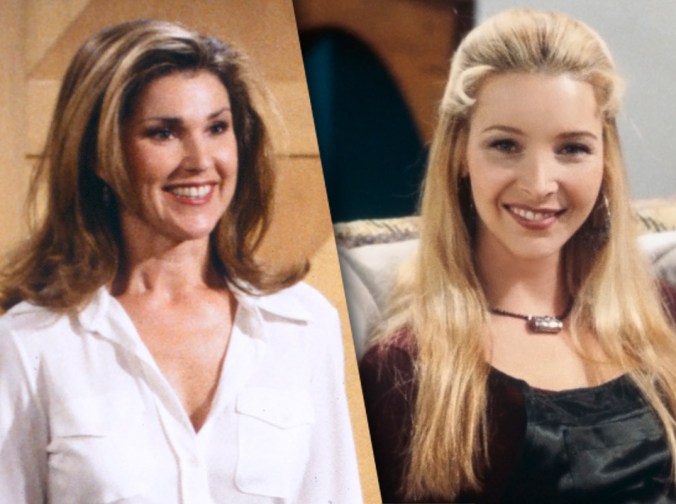
Peri Gilpin (Roz Doyle) is Frasier’s radio producer and becomes one of his best friends. The role of Roz had been narrowed down to Gilpin or Lisa Kudrow. Kudrow was funnier but lacked the forcefulness she needed in the workplace, so Gilpin got the job.

radio37

Another important character was Martin’s dog Eddie.  John Mahoney said Eddie got more fan mail than anyone else on the show. To get Eddie to lick Mahoney’s face, liver pate was placed strategically on his face.

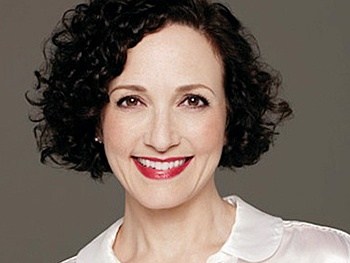
bebe

Bebe Neuwirth was offered a regular role on the show as Frasier’s ex-wife, but she wanted to return to Broadway, so she guest-starred from time to time. She appeared in 12 shows.

Frasier

Frasier’s apartment was almost another character on the show.  He lived in an ultra-modern apartment. A Dale Chihuly sculpture is seen near the fireplace. Above the fireplace is another artwork by Laddie John Dill, an LA sculptor.  A Coco Chanel sofa was recovered at a cost of $15,000 to add realism. In contrast, Martin brings his old, tattered recliner which clashes with the rest of the apartment – a symbol of the way he and Frasier clash. On the first episode, a deliveryman played by Cleto Augusto brings the chair in. On the final episode, the same actor came and took the chair away.  Martin explains to Frasier that he spent many important life moments in the chair such as watching the moon landing and specific sports events.  When he came home from work, he often fell asleep in the chair, and his wife would kiss him and send him to bed.  Frasier’s mother had passed away a few years earlier. Frasier finally understands the significance of the chair. On the last episode, Martin is marrying again, and he moves out. Wendie Malick plays his second wife.

Guest stars played callers on the radio show.  Often, they phoned in their lines. Callers included David Duchovny, Phil Donahue, Marlo Thomas, Linda Hamilton, Olympia Dukakis, Daryl Hannah, Chris Reeve, and Estelle Parsons.

Grammer made life a bit anxious for his guest stars. He used an acting method called requisite disrespect where he did not rehearse and learned his lines right before each scene.

radio40

The theme song was “Tossed Salad and Scrambled Eggs” by Darryl Phinnessee and Bruce Miller. Miller wanted Mel Torme to sing the theme for the show, but the producers wanted Kelsey Grammer who ended up recording it.

Critics had great respect for the show. The series holds the record for most sitcom Emmys – 37.  It had the record for most Emmys of any genre till Game of Thrones won its 38th recently. The five best episodes include “The Ski Lodge,” “The Doctor is Out,” “Wheels of Fortune,” and “Ham Radio.”

Grammer and James Arness are currently tied for the character who was on television the longest – 20 years.  Arness played Marshall Dillon on Gunsmoke for 20 years while Grammer played Frasier on Cheers and Frasier for a total of 20 years. The Simpsons have actually passed both of them if animated characters count.

Not only was Fraiser a great radio sitcom, but it is one of the best sitcoms on my top 15 list.

News Radio (1995)

news1

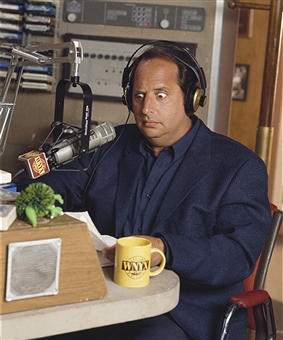
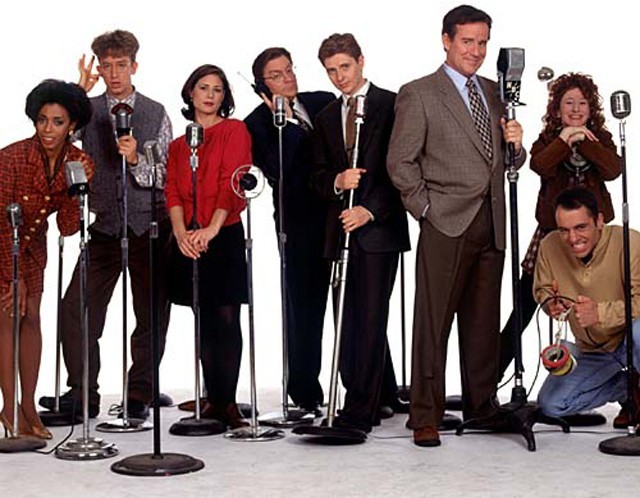
News Radio explores the office politics and interpersonal relationships among the staff of WNYX, New York’s #2 news radio station.

news4

Dave Nelson (Dave Foley) is the boss who tries his best to manage a quirky staff. He was raised in Wisconsin and some of his interests include tap dancing, a cappella singing, knife-throwing, and ventriloquism. He is polite and always in control.  He talks to his mother frequently and keeps a photo of her on his desk. He loves coffee and classic sitcoms, especially Mr. Ed and Green Acres.

news5

Bill McNeal (Phil Hartman) is an egotistical co-anchor. He is arrogant and insubordinate.  There are many gaps in his knowledge, but he does show flashes of concern for others. Near the end of the show’s run, Hartman was killed; tragitically, Hartman was shot by his wife.

news3

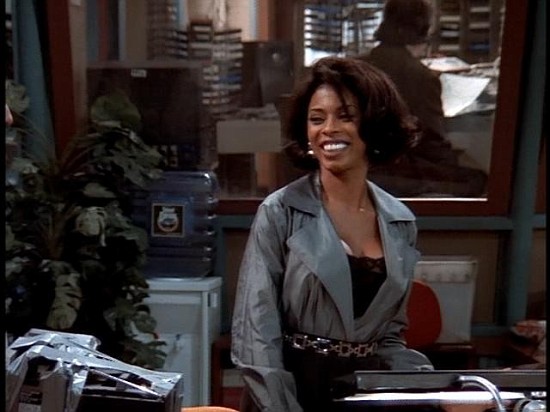
Catherine Duke (Khandi Alexander) is the other co-anchor. She and McNeal previously had an affair and they are rivals. In the fourth season, she takes a job in London.

news10

Jimmy James (Stephen Root) is an eccentric owner. He is a billionaire and feels the need to micromanage the station. He is always searching for a wife and loves to air his rivalries with other entrepreneurs such as Ted Turner and Bill Gates. In the finale, he buys a radio station and newspaper in New Hampshire and takes most of the staff with him.

news8

Lisa Miller (Maura Tierney) is an ambitious producer who is Nelson’s on-and-off-again girlfriend. She’s an overachiever who can do complex math problems and has a detailed life plan. In season five, she marries Jimmy’s archenemy Johnny Johnson (Patrick Warburton).

news11

Matthew Brock (Andy Dick) is a hapless reporter who is clumsy and always tripping or falling down. He idolizes McNeal.  He has a dental degree, loves sci fi, and has a crush on Lisa.

rogan

Joe Garrelli (Joe Rogan) is a handyman and electrician.  He is infatuated with Catherine and believes conspiracy theories, especially about extraterrestrials. Ray Romano was originally hired for this job, but his verbal comedy did not mesh well with the rest of the cast.

news12

Beth (Vicki Lewis) is the quirky secretary.  She typically wears inappropriate clothing, chews gum all the time, and likes to complain about her low salary. She was named Beth based on the Kiss song.

lovitz

Max Lewis (Jon Lovitz) was McNeal’s replacement after Hartman’s death. He was inept, eccentric, insecure, unprofessional and a former colleague of Bill’s.

The show was on the brink of cancellation every season. It never placed higher than 26th and changed time slots 11 times. It was briefly cancelled in 1998, but the network reversed its decision and ordered 22 more episodes and then it was cancelled for good.

news2

The show was fast paced and witty.  Sarcasm ruled the dialogue. Physical humor and sight gags also had a place in the humor. The show differed from the casts in The Office or the Mary Tyler Moore Show because they were a dysfunctional family without the affection and empathy of those characters. The cast was banned from SAG awards for bad behavior at the first ceremony.

Shows featuring radio stations seem to be hit or miss.  Good Morning World and Hello Larry did not do well.  I think everyone can agree on WKRP in Cincinnati and Fraiser are well-written shows.  News Radio seems to fall somewhere in the middle.  Some people seem to love it while others thought it missed the mark.  I think the show is well written, but the characters are not endearing.  They don’t grow or change for the better.  We can grow to love a Herb Tarlek and a Ted Baxter, but there is nothing redeeming about the crew here.  I guess I would tune out.  There are too many good shows out there to watch a “maybe, maybe not” show.

Garry Marshall: A Tribute To The Man Who Created So Many Happy Days For All Of Us

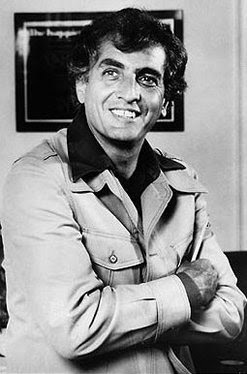
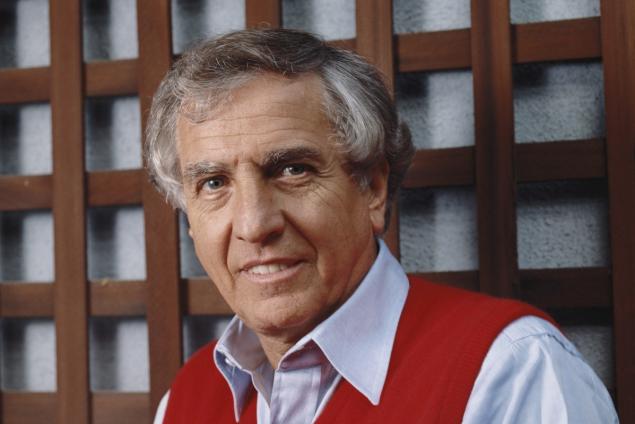
Today we get to honor one of my all-time favorites in the celebrity world – Garry Marshall.  By all accounts, whatever you read, he was hilarious, humble, and hard-working.  He was known as a family man, always putting them first. Let’s learn a little bit about his life.

garry1

His Early Life

Garry Kent Marshall was born in The Bronx, New York on November 13, 1934, the son of Anthony Wallace Marshall, a director and producer of industrial films, and Marjorie Irene, a  teacher who ran a tap dance school. His father changed his last name from Masciarelli to Marshall before Garry was born.

Marshall had a typical childhood which included “the usual bruised knees, runny nose, dead frogs and stolen bases.” But he said his formative years were primarily devoted to discovering girls, making people laugh, and learning to play drums. “When I was growing up, there were three drummers I admired: Gene Krupa, Max Roach, and this little girl drummer in my school who used to blow in my ear after practice.”

His brother is Ronny Marshall Hallin, a television producer; his sister is Penny Marshall, actress and director; and his brother-in-law for ten years was Rob Reiner, actor and director.

garry14

Garry decided to attend Northwestern University to major in journalism.  After graduation, he was drafted into the Army and sent to Korea as part of the Special Services.  He was able to write and produce shows which set him on a new career path once he returned to the United States. Discussing his service, he said, “The lowest musical experience of my life came when I was in the Army. I was a solo marching snare drummer and kept cadence for my battalion. One day while my battalion was marching, I was playing so badly that the Captain shot a hole through my drum with a .45 revolver.”

Garry moved to New York after the Army and met Fred Freeman.  The two of them began writing together.  To support himself while his writing career got underway, Garry supplemented his income playing drums and writing for the Daily News sports department.

His TV Production Career

Marshall began his career as a joke writer for comedians and became a writer for The Tonight Show with Jack Paar. He eventually secured a staff writing position on The Joey Bishop Show. There he met Jerry Belson in 1961, with whom he would go on to write two feature films, a Broadway play, and episodes for a variety of TV series including The Dick Van Dyke Show, The Lucy Show, and I Spy.

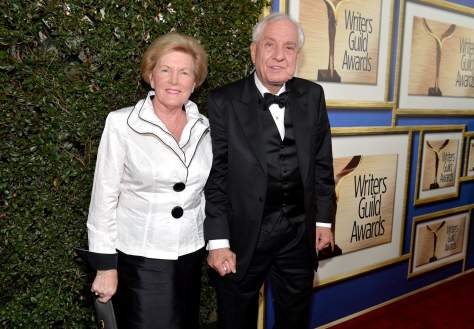
In 1963, he married Barbara; they would have three children.

garry16

Marshall and Belson’s first television series as creator-producers was Hey, Landlord, which lasted one season (1966–67).

Their next series was more successful. They adapted Neil Simon’s play The Odd Couple for television. Felix Unger and Oscar Madison are total opposites but best friends.  Garry’s sister Penny would play Myrna in the show.

T4DODCO EC002

Marshall continued to borrow from The Odd Couple throughout his career. Over and over again he employed the comic device of coupling two distinctly different characters: the hip and the square on Happy Days, the earthling and the Orkan on Mork and Mindy, the rich and the poor on Angie, and, later, the businessman and the prostitute in the movie Pretty Woman.

Most of his hit television series were created and executive produced by him. Rather than forming his own independent production company, which had become standard procedure for producers at the time, Marshall remained at Paramount to make a succession of hit situation comedies for ABC. By the end of the 1978-79 season, four of the five highest-rated shows of the year were Marshall’s.

garry13

In the Norman Lear era, when series like All in the Family tackled social issues, Marshall focused on younger viewers with lighter, more escapist fare, most of it set in the supposedly simpler past. In an interview reprinted in American Television Genres (1985), Marshall recalled that, after producing the adult-oriented Odd Couple, he had been anxious to make shows “that both kids and their parents could watch.”

His philosophy to get younger viewers: “You have to do something silly to get their attention. Then I like to knock them off their chairs with laughter. I go for the gut. I want them to laugh hard.  I don’t want them quietly staring at a bright, witty show.”

Happy Days debuted as a series in January of 1974, and by the 1976-77 season it was the most popular show on TV. Most people don’t realize this, but the show began as a skit on Love American Style, and I remember watching it when it aired the first time. The show was set in Milwaukee in the 1950s, focusing on a group of high school friends; the Cunningham family; and Fonzie, the cool guy in town.

garry5

Regarding Fonzie, Marshall said, “I knew that if I could get him over the garage, I could get him into the kitchen; he could become a member of the family.”

He worked with a variety of his family members throughout his career. His mother appeared in the Happy Days episode, Happy Days: Beauty Contest as “Mrs. Weiss,” the piano player.

Laverne and Shirley was a spin-off of Happy Days.  Two friends, Brewery workers, get involved in various kinds of trouble.  Marshall explained his idea for the show: “No one else on TV is doing early Lucy.  The other ladies on sitcoms are classy – they’re well off, smart, and they dress well. Laverne and Shirley are definitely not classy. They’re blue collar workers who went to work right after high school.  They’re decent people.”

garry6

Happy Days would produce two more shows in Joanie Loves Chachi that explored the life of Joannie Cunningham and Fonz’s nephew Chachi after high school as they tried to figure out their relationship and Mork and Mindy, a show starring Robin Williams and Pam Dawber about an alien living in Colorado.

His Acting Career

A la Hitchcock, Marshall turns up as an uncredited actor in the background, occasionally appearing in cameos on his own hit TV shows.

garrya

On Dick Van Dyke, he appeared as referee in a 1965 episode and a bartender in a 1966 episode. If you look closely, you will see him as a random man in three Odd Couple episodes. He showed up as a drummer in two Laverne and Shirley shows and on a Happy Days episode.

He had a small re-occurring part on Murphy Brown and provided the voice for two Simpsons shows (“Eight Misbehavin’” and “Homer the Father”).

In 2014, Marshall appeared in a guest star role in a Two and a Half Men.

He continued to show up in comedies until his death, the last one being Brooklyn Nine-Nine.

When he made the switch to movies, he continued to find small roles for himself. He plays a first baseman in  Runaway Bride, an audition director in Beaches, and a bum in Pretty Woman. It seems there was no part too small. He also played his real-life sister’s husband in Hocus Pocus in 1993.

His Directing Career

His career as a film director was just as impressive, yielding several gems and cult classics, from Pretty Woman to Runaway Bride to The Princess Diaries.

In the early 1980s, he met Héctor Elizondo while playing basketball and they became great friends. Marshall was known for his obsession with basketball: his contract often obligated studios to provide a basketball court on his film locations.

garry3

Elizondo appeared in every film that Marshall directed, beginning with his first feature film Young Doctors in Love. Elizondo once noted that he is written into all of Marshall’s contracts whether he wanted to do the film or not.

In the opening credits of Exit to Eden (their eighth film together), Elizondo is credited “As Usual … Hector Elizondo.” In 1984, Marshall had a film hit as the writer and director of The Flamingo Kid. He later produced Nothing in Common with Tom Hanks and Jackie Gleason and Overboard with Goldie Hawn and Kurt Russell.

In 1988, he directed the legendary weepie Beaches, starring Barbara Hershey and Bette Midler.

Although he was original choice to direct Sleepless in Seattle, Nora Ephron ended up with the job. His most famous movie as director also won him an Oscar nomination for Pretty Woman in 1990.

garry10

Pretty Woman star Richard Gere said of Marshall in Variety: “He was a mentor and a cheerleader and one of the funniest men who ever lived. He had a heart of the purest gold and a soul full of mischief.”

Some people might be surprised to find out that Garry was the director for The Princess Diaries and The Princess Diaries 2 starring Anne Hathaway and Julie Andrews.  Garry considers Julie Andrews one of his favorite actresses because “she could act, she can sing, she’s a lady who can curse with perfect diction.”

garry17

He seemed to be surrounded by family whether at home or work.  In his last movie, Mother’s Day, he re-united with Julia Roberts, Kate Hudson, and, of course, Hector Elizondo. His sister Penny provided narration; his son Scott helped direct; and his wife, Barbara, a nurse, played a nurse in the film. (“She has her own costume,” Marshall joked.) There were also a few grandchildren  included in certain scenes.

garry11

Awards

When he gave a speech upon accepting the Lifetime Achievement Prize given at the American Comedy Awards in 1990, Marshall said, “If television is the education of the American people, then I am recess.”

In addition, he received the Valentine Davies Award (1995), the Women in Film Lucy Award in recognition of excellence and innovation in creative works that have enhanced the perception of women through the medium of television, the Television Hall of Fame for his contributions to the field of television in 1997, the National Association of Broadcasters’ Broadcasting Hall of Fame in 2012, the Laurel Award for TV Writing Achievement in 2014, as well as a star on the Hollywood Walk of Fame.

garry12

Conclusion

On the morning of July 19, 2016, Marshall died at a hospital in Burbank, California at the age of 81 due to complications of pneumonia after suffering a stroke.

Robin Williams’s daughter Zelda wrote, “RIP Garry. You forever changed my father’s life, and thus, mine. Thank you for capturing so much joy on film, over and over.”

Henry Winkler tweeted, “Larger than life, funnier than most, wise and the definition of a friend.”

“How could one individual work parts of seven decades in the entertainment industry and make zero enemies?” Ron Howard asked, “Garry achieved that, and it was the result of his absolute integrity as a man and as an artist.”

Garry Marshall was an amazing and talented man.  He was a family man above all else.  He was an actor with 84 credits, a writer with 40 credits, a producer with 31 credits, and a director with 30 credits.  He was a drummer and a journalist.  His career covered more than six decades and his star was shining bright when he left show business.

He will be remembered for creating television shows that touched viewers and drew them into the world their characters inhabited.  We rooted for all of them and looked forward to spending time with them each week.  He created some of the most memorable characters on television. He also provided many lovable movies for our DVD collections with Pretty Woman at the top of the list.

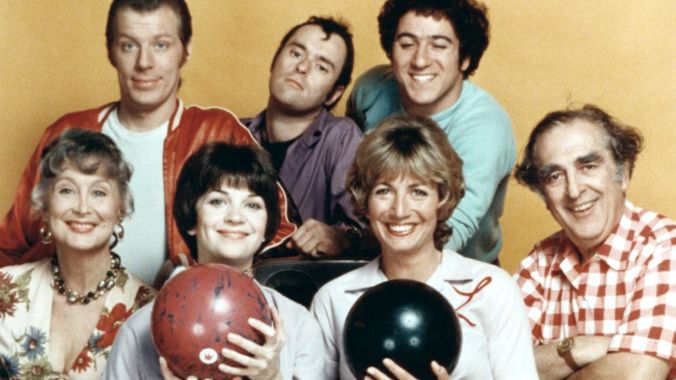
HAPPY DAYS, from left: Penny Marshall, Robin Williams, Henry Winkler, 1974-84.

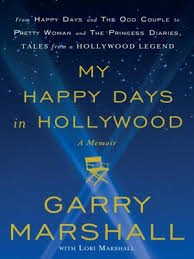
He wrote My Happy Days in Hollywood in 2012.  This is one of my all-time favorite classic television era autobiographies.  He not only discusses his successes but admits to all his screw ups and mistakes as well.  It’s a refreshingly honest account by a down-to-earth and humble man.  It’s one of the best ways to get to know this fascinating guy and is a wonderful tribute to a man who quietly influenced generations of actors and actresses. Let’s end by hearing how his book was perceived by some of those people who knew him best.

book
“Garry Marshall is walking entertainment. He is smart, insightful, funny…and so is his book.” ―Henry Winkler

“Even though he speaks slowly with a distinctive New Yorkese Bronx accent, he has managed to quickly create, write, and produce a raft of beloved television series that speak ‘American’. I am happy that he gifted us with a witty memoir (about his Happy Days in Hollywood).” ―Carl Reiner

“Thanks to my brother I have a life.  I’m sorry I almost ruined his during Laverne & Shirley.” ―Penny Marshall

“I never thought my fairy godmother would look―or sound―like Garry. He is a gift of a human being, and this book is wicked sweet.” ―Anne Hathaway
 
“Garry Marshall is one of the most beloved and talented people I know…and maybe the most normal guy in the business. This wonderful biography will allow readers to discover for themselves the decent and kind man who writes and directs with such a huge heart—all grounded from humble beginnings in The Bronx. This is a must-read book.” —Julie Andrews
 
“Garry Marshall is quite simply one of my favorite people. He is loving, loyal, and hilarious! Having made movies with Garry when I was 20, 30, and 40…I guess you could say Garry and Barbara have raised me! In a time where people have lost touch with things to laugh about, this book is sure to be a cure.” —Julia Roberts

The Amazing, But Much Too Short, Career of Richard Deacon

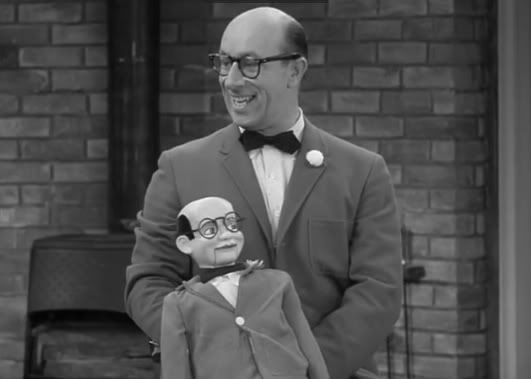
Richard Deacon, 1960s

Richard Deacon was born in Philadelphia, Pennsylvania in 1921, but most of his adolescence was spent in Binghamton, New York. When he was only 11, he contracted polio. He took up dancing to build up his leg muscles.

Deacon’s first career choice was to become a doctor.  He was working as an orderly at the Binghamton Hospital when World War II began. He tried to join the Navy; they suggested he try the Army.  He did and joined the medical corps.

After the war, he studied medicine at Ithaca College but soon switched to acting. He studied drama for a couple of years and was the actor in residence at Bennington College.  After spending some time in New York, he headed to California to look for work.  After paying his dues as a bartender, he finally got a break and was offered a role in a film, Invaders From Mars.

When he first began his career, Helen Hayes advised him to become a character actor as opposed to a leading man.  It was great advice, and he was one of the most beloved and prolific actors during the golden age of television. During his career, he appeared in 66 movies on the big screen, guest starred on 92 different television shows, and starred in six series.

In the 1950s, he appeared in 48 television shows including Burns and Allen, The Life of Riley, Bachelor Father, and the Gale Storm Show.  He had regular roles in two sitcoms.

The Charles Farrell Show debuted in 1956. Farrell played himself as the manager of the Palm Springs Racquet Club, a resort he actually owned and operated. It was a summer replacement for I Love Lucy and only lasted 12 episodes. Richard played Sherman Hall.

deacon8

In 1957, he got another chance at being a regular in a sitcom, Date with the Angels starring Betty White. Deacon played Roger Finley.  This show lasted one year.

Richard continued his productive acting career, appearing in 43 shows in the 1960s.  He could be seen in a wide range of shows including Bonanza, The Rifleman, My Three Sons, Make Room for Daddy, Perry Mason, The Donna Reed Show, The Twilight Zone, Mr. Ed, I Dream of Jeannie, Get Smart, The Munsters, and The Addams Family. He was also appearing in a number of films during this decade. He appeared in four sitcoms on a regular basis during the ’60s.

Leave It to Beaver aired from 1957-1963. Deacon played Fred Rutherford, father of Clarence, or Lumpy, Rutherford, Wally’s friend. During the 6 seasons it was on the air, Fred was in 63 episodes.

Part way through the series, he was offered another regular role, that of Mel Cooley on The Dick Van Dyke Show.  From 1961-1966, he brightened the screen in 82 shows, putting up with his brother-in-law’s bullying and Buddy Sorrel’s belittling. Deacon had high praise for everyone connected with The Dick Van Dyke Show.

One day Morey Amsterdam was goofing around with Richard and said he didn’t think his hair had fallen out, he thought it had imploded and fallen into his brain, clouding his thinking.  Carl Reiner came running on the set and said to add that dialogue to the show.  From then on, there was an insult fest between Buddy Sorrell and Mel Cooley. When the writers were trying to come up with a comeback from Mel to Buddy, Reiner asked Deacon how he would respond to someone who continued to torment him.  Deacon replied, “Yeecchh!” and his trademark phrase was invented.

deacon9

Bud Molin, Dick Van Dyke Show film editor described Deacon as “the funniest human being on the face of the earth.” Carl Reiner said it was a joy to have him around and everyone on the show loved him.

Deacon, Leonard, Reiner, Paris

The Dick Van Dyke Show was one of the best shows ever written. It won the Outstanding Comedy Emmy in 1963, 1964, and 1966. After the cast of the Dick Van Dyke Show decided to end the show on its own terms, leaving the air with its quality reputation intact, Deacon was offered another sixties role.

Phyllis Diller had a fantastic cast on her show, The Pruitts of South Hampton, or The Phyllis Diller Show as it became known in syndication. This was about a formerly wealthy family who found out they owed $10,000,000 in back taxes.  They try to appear that they still have their wealth, while living in very reduced circumstances.  The cast included Louis Nye, John Astin, Reginald Gardiner, Paul Lynde, Gypsy Rose Lee, Billy De Wolfe, John McGiver, and Marty Ingels in addition to Diller and Deacon.  I don’t know how this show did not succeed, but it was taken off the air after only one year. Diller and Deacon continued to work together both on an episode of Love, American Style and in the production of Hello Dolly in the 1969-1970 season.

deacon14

Once the Diller show was canceled, Deacon was offered a role on The Mothers-In-Law starring Kaye Ballard and Eve Arden. Deacon took over the role of Roger Buell mid-way through the series. The concept was two families who didn’t necessarily get along were neighbors whose children  married so they had to find ways to get along and keep the peace.

deacon4

After the show was cancelled, he continued to stay busy with his acting career.  He also appeared in 17 episodes of Match Game and several Family Feud episodes.
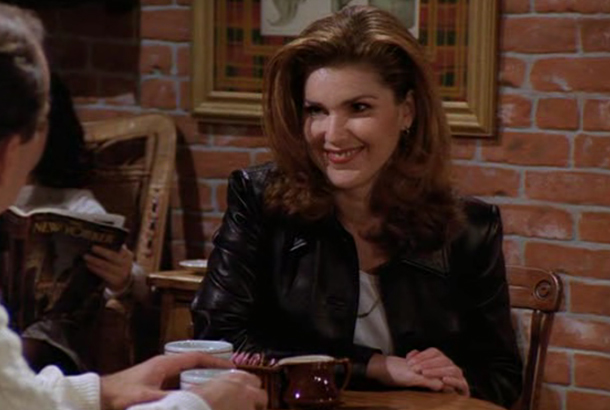
deacon7

Deacon was a life-long bachelor.  He was a closeted gay man who had to keep his sexual orientation secret to keep his options open to work for companies like Disney. He was also a gourmet chef.  In the 1980s, he hosted a Canadian cooking show about microwave cooking, writing a book that sold almost two million copies. He spent a lot of his spare time working with SYNANON, an agency that helped teenage drug addicts.

On the night of August 8, 1984, he was suffered a heart attack in his Beverly Hills home. He was rushed to Cedars Sinai Hospital, where he died later that night. He was 63 years old.

deacon15 - Copy

Everything I read about Richard Deacon painted him as a gracious, friendly, very funny man who was caring and kind.  He had an amazing career, with 180 acting credits within a 30-year period.  The legacy he left was a rich and full acting life. Pretty good for a guy who chose to be a character actor and was humble enough to turn down two offers to star in his own show.

Verrry Interrresting!

Occasionally, a show is so entrenched in the time and culture it debuts in, it becomes almost impossible to describe or understand away from its original setting. Dan Rowan and Dick Martin were nightclub comics who co-hosted a special called Laugh-In in 1967.  The name was a play on words based on the love-in’s and sit-in’s happening in the 1960s.  The special was so popular it was turned into a weekly series. I think of Laugh-In as Sesame Street for adults.  Both shows debuted in the late 60s and had a rapid-fire approach, continually moving on to the next segment so the viewer would not get bored. The show captured the counterculture movement and the lime green, turquoise, fuschia, deep orange, bright yellow, and paisley flowers kept our eyes moving as quickly as the jokes did. The show lasted six seasons.

laughin1

Regular cast members who went on to other careers included Ruth Buzzi, Gary Owens, Alan Sues, Arte Johnson, Henry Gibson, Lily Tomlin, Richard Dawson, Jo Anne Worley, Goldie Hawn, Judy Carne, Dave Madden, and Flip Wilson.

Numerous celebrities flocked to the show.  Movie stars that were reeled in included John Wayne, Jack Benny, Peter Lawford, Zsa Zsa Gabor, Charles Nelson Reilly, Debbie Reynolds, Rock Hudson, Jack Lemmon, Edward G. Robinson, Sally Field, Orson Welles, and Rita Hayworth.  Noted musicians included Sammy Davis Jr., Dinah Shore, Johnny Cash, Perry Como, Liberace, Bing Crosby, Cher, Rosemary Clooney, and Liza Minelli. Sports stars tackled the chore including Joe Namath, Wilt Chamberlin, Sugar Ray Robinson, and Howard Cosell.  Comedians who laughed their way on the show included Rich Little, Don Rickles, Bob Hope, Bob Newhart, Paul Lynde, and Carol Burnett. Classic tv stars who accepted starring roles were Tim Conway, Carl Reiner, Steve Allen, Jim Backus, Ernest Borgnine, Eve Arden, Andy Griffith, Desi Arnaz, and Wally Cox.

The format rarely changed from week to week.  Rowan and Martin opened each show with a dialogue; Rowan acted as the straight man, and Martin took on the gullible role. Then the regular cast, along with celebrities, danced against a psychedelic background, firing off one-liners and short gags. Comedy bits, taped segments, and sketches filled in the rest of the hour and always ended with Rowan telling Martin to “Say goodnight, Dick” and Dick replying, “Goodnight Dick.”

Some of the regular features were:

laughinn

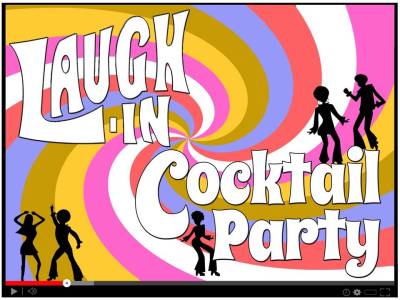
The Cocktail Party where the cast stood around spouting politically and sexually suggestive jokes.

Letters to Laugh-In where the cast read letters.

ROWAN AND MARTIN'S LAUGH-IN,  Teresa Graves, Pamela Rodgers, 1969-1970.

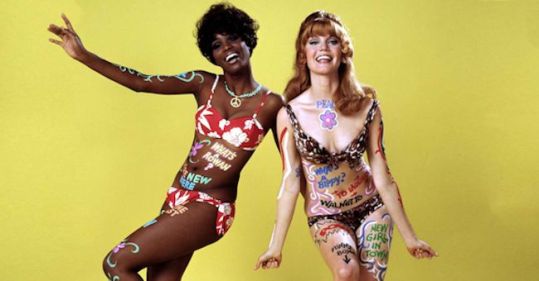
It’s a Mod, Mod World where go-go dancers danced in bikinis with puns and word play phrases painted on their bodies.

farkel

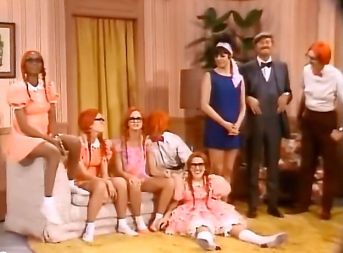
The Farkel Family about a group of red-headed, freckled family members.

fickle

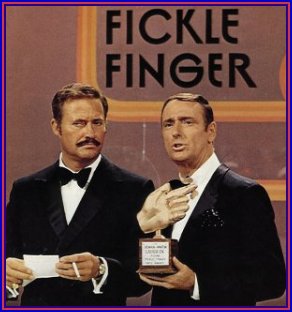
The Flying Fickel Finger of Fate Award where dubious achievements were celebrated.

Laugh-In Looks as the News was comparable to the Saturday Night Live news sketches of today.

New Talent Time showing various weird skills.

Many of the regular cast members had their own skits that were repeated during the series’ run:

carne

Judy Carne was always tricked into saying “Sock it to Me” which then caused her to get doused with water, fall through a trap door, or endure some other indignity. Sometimes celebrities ended up being the ones to say “Sock it to me,” the most famous being Richard Nixon when he was campaigning for president.

buzzi

Arte Johnson played Tyrone, an inappropriate senior citizen who tries to seduce geriatric Ruth Buzzi as Gladys, forcing her to eventually hit him with her purse.

laughinc

Henry Gibson came on stage holding an oversized paper flower, reciting poetry.

Lily Tomlin performed skits as Ernestine, a telephone operator or Edith Ann, a young girl sitting in a rocking chair. (Personal note:  When I was in 4th grade, I performed an Ernestine and an Edith Ann skit for our talent show.  Why a 9-year-old was watching Laugh-In and the school approved the skits, I can’t say, but I remember getting a lot of compliments.  And Lily Tomlin didn’t sue me for stealing her material!)

sues

Alan Sues portrayed Uncle Al, a children’s show host, who was short tempered and often in bad shape from his late partying nights.

laughinh

Flip Wilson was Geraldine.

laughin6

Jo Anne Worley would say “Bor-ing” in the midst of jokes.

laughing

Goldie Hawn as the ditzy blonde.

The series also became known for some of its catch phrases including “Look that up in your Funk & Wagnalls,” “You bet your sweet bippie,” “Beautiful downtown Burbank,” “Is that a chicken joke?,” “Sock it to me,” “Here come de judge,” and “Verrrry Interesting.”

The show was one of the highest rated shows in the late 1960s. It was in the top 4 of the top 40 shows for its entire run. It won Emmy and Golden Globe awards. The Nielsen polling determined it was the most-watched show in seasons 1 and 2.

The show had its own magazine for a year.  Trading cards were sold with catch phrases and images from the show. Several records were produced capturing the humor of the time.  There was even a set of View-master reels made, as well as lunch boxes and other memorabilia.

laughinrev

Laugh-In debuted fifty years ago, but still feels new and edgy. Because the show has not been syndicated in re-runs, it is hard for the current generation to imagine how very different this show was from anything else that appeared on television before it.  The closest show to capturing any of its essence since then is Saturday Night Live.  This was a time when everything was changing: civil rights, Vietnam, women’s lib, the hippie lifestyle, psychoactive drugs, anti-authoritarianism, freedom of speech and assembly, and environmental concerns, especially littering and pollution.

The Generation Gap was a real concept in the 1960s but this show might have come as close as anything else to bridge that gap. Families sat down together to watch the show. Many of the phrases still have a life of their own decades later even thought decades of kids have never seen the show.  Plan your own little sit-in when you check out a couple of the you-tube videos to get a flavor of what the series was like.

I Don’t Have a Free Toothbrush For You, But . . .

Are you feeling comfortable?  You might want to lean back, put on a pair of plastic glasses, and say Ahhh.  Sorry, I guess I’m getting carried away by our topic today.  March 6 is National Dentists Day.  I thought it might be fun to delve into some shows that featured dentists.  Apparently, the average viewer finds nothing funny about dentists.  They are hard to spot on the small screen.  Perhaps it brings back too many pain-filled memories of the sound of drills and mouths so numb you bite your lip without realizing it. Finding dentists on television was like pulling teeth – sorry I’m getting carried away again. Let’s look at a few of them.

When we think of television dentists, most of us probably conjure up pictures of Jerry Helper (played by Jerry Paris) on The Dick Van Dyke Show or Jerry Robinson (played by Peter Bonerz) on The Bob Newhart Show. These two shows can make anything funny, even dentists.

Jerry and Millie Helper are the Petries’ next-door neighbors and best friends on The Dick Van Dyke Show.  Jerry is a dentist, and Millie is a stay-at-home mom with a son the same age as Richie, Rob and Laura’s son.  Jerry is a kidder and his comments often get him in trouble.

One episode, “Punch Thy Neighbor” from the first season, shows Jerry taking his teasing too far.  Jerry and Millie are watching the Alan Brady Show with Rob and Laura, and Jerry makes comments about how bad it is. Rob isn’t happy, but the next day he gets mad when several people, including the Helpers’ son Freddie and the milkman, tell Rob Jerry mentioned how bad the show was. Rob goes to talk to Jerry and ends up punching him accidentally. When he attempts to show Laura how it happened, he hit her as well. Richie tells Millie his dad hit his mom, and she sends Jerry over to get Rob under control.  Jerry walks in seeing Rob yelling, not knowing it’s because he tripped over a toy.  Trying to calm him down, Jerry wrestles him to the floor. Jerry realizes he was out of line with his joking.  You would think he learned his lesson, but at the end of the episode, Jerry starts again, and Rob hits him in the face with a pie. Like all the Dick Van Dyke episodes, this one is true to life, well written, and funny.

I’m sure it was also well directed, although not by Jerry Paris.  However, Paris kept nagging Reiner to let him direct.  Once he did a couple of shows, Reiner realized that “he understood our show more than any of the other directors.” In 1963-64, Paris won an Emmy for directing the show.  He directed 84 of the 158 episodes. After The Dick Van Dyke Show ended, he went on to direct many shows including 2 episodes of The Partridge Family, 3 episodes of Love American Style, 3 episodes of The Mary Tyler Moore Show, 7 episodes of The New Dick Van Dyke Show, 18 episodes of The Odd Couple, and 237 of the 255 episodes of Happy Days.

From 1972-1978, Jerry Robinson was Bob Hartley’s best friend on The Bob Newhart Show.  Bob realizes his friends and family are not any more emotionally stable than his patients; they just get his advice for free. Jerry is an orthodontist, and he shares a receptionist with Bob. When interviewed about his character, Bonerz said “Jerry Robinson was written by 25 guys. It was my job to make those 25 different versions of Jerry the dentist credible.” Robinson was a swinging single, slow to trust others, and easily angered. Yet, his character was likeable, and he credited that to a well-balanced cast who all made each other better.  They were like a close family; you don’t always approve of your family members, but you love them.  Bonerz’s theory was that Bob Newhart was the psychologist/listener of the family, and that role made everything else fall into place. If you needed a root canal, Dr. Helper might be more proficient, but you would enjoy the conversation during the procedure more with Dr. Robinson.
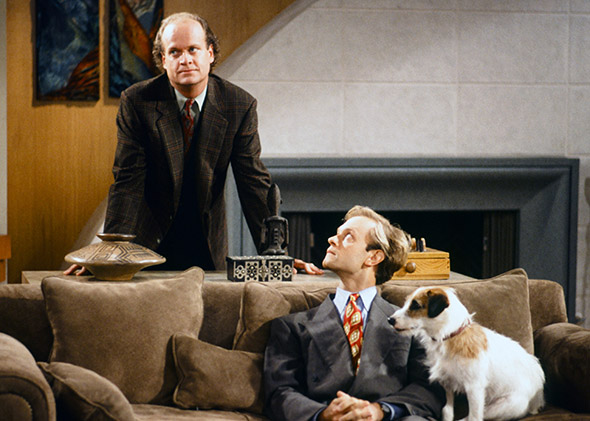
36blog

One dentist who was a critical component of a show, although most people don’t remember him, was Dr. Barry Farber.  Dr. Farber is the man Rachel Green was supposed to marry on Friends, but she left him at the altar, ending up living with Monica and meeting a new group of friends.

Several other shows, not as well-known as these three, also featured a dentist in their cast.

img0102A

Doc Corkle was on the air in 1952.  Doc, played by Eddie Mayehoff, was a neighborhood dentist.  He lived with his father (Chester Conklin) and his daughter (Connie Marshall). Poor Doc has some money problems.  The biggest financial setback was the fact that the network cancelled the show after only three episodes.

TSDIMAB EC001

I’m a Big Girl Now featured Diana Canova who played a divorced woman, Diana Cassidy, who goes home to live with her father Benjamin Douglass, a dentist (Danny Thomas).  His partner and his wife have run off to Spain.  Diana also has a daughter Rebecca and a neurotic brother named Walter. The show was cancelled mid-season.

36blog7

Charley Shanowski, played by Ted McGinley, is a dentist on Hope & Faith.  His wife Hope (Faith Ford) is a stay-at-home mom with three children.  Her sister Faith (Kelly Ripa) was a soap opera star whose character was killed off on the show.  She moves in with her sister but expects to be treated like the star she used to be.  Charlie does not like Faith and spends a lot of his time trying to get her to leave.  We can understand why.  It seems like every time a dentist has a show where a family member moves in, the network cancels the show.  At least this show made it three seasons instead of three episodes before it got pulled.

Probably my favorite show with a dentist was an episode of The Carol Burnett Show. Like so many of the funniest episodes, this one featured Tim Conway (the dentist) and Harvey Korman (the patient). When interviewed about the skit, Conway said that memorable sketches often create themselves.  “The novocaine portion of the dentist sketch wasn’t planned—it just happened. That’s the magic of comedy; you never know when it is going to sneak up on you and make you laugh.” The dentist skit was based on Conway’s real-life dentist who stuck the needle of novocaine into his own thumb while working on a patient. Korman didn’t know Conway was going to put that in the sketch.

Last, but not least, I wanted to mention Edgar Buchanan, Uncle Joe in Petticoat Junction.  Buchanan earned a DDS degree from North Pacific College of Dentistry in Oregon. His father was also a dentist. During the time he was a pre-med student, Edgar took acting classes at the University of Oregon and eventually left dental school to take a position in their drama department. His father convinced him to finish his dental degree first.  When he returned to North Pacific he met Mildred Spence, another dental student.  They graduated in 1928. After marrying, the couple moved back to Eugene, Oregon where they opened a private practice. From 1930-1937, Edgar was chief of oral surgery at the Eugene Hospital Clinic but also worked as an assistant director in the University of Oregon drama department. In 1939, the couple moved to Pasadena. When Edgar appeared in a production at the Pasadena Playhouse, he received his first film offer.  So, at the age of 36, he turned over the practice to his wife and became an actor.  He appeared in more than 100 films between 1941 and 1974. He was the only cast member of Petticoat Junction to appear in all 222 episodes.

Apparently dentists are not too popular.  There are a handful of shows about them while there are tons of shows about attorneys.  But dentists are our friends, so to celebrate their day today, take a moment and watch the following:

www.liftable.com/edwardtofil/tim-conway-made-harvey-korman-wet.

Tim Conway talks about The Dentist episode to Conan O’Brien and they play a clip from it. If you watch it enough times, you might not actually look forward to going to the dentist, but you might not dread it as much. And if you’re a hopeful television creator, write a show about dentists.  They’re due for a big hit.