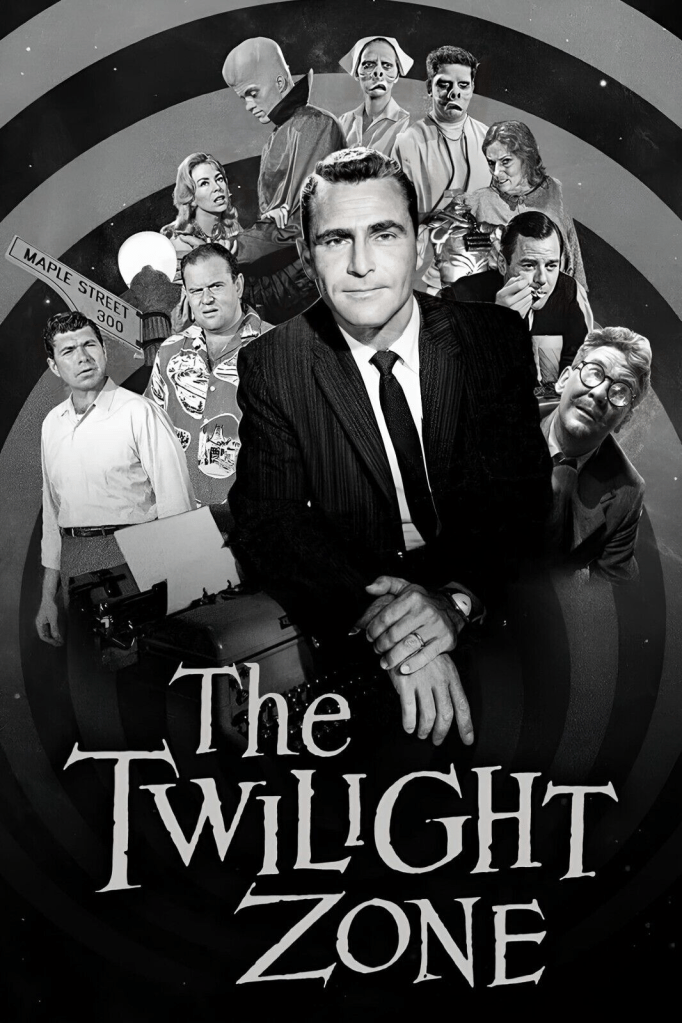
Welcome To the Twilight Zone

As we wind up our Eerie Shows blog series, we are ending with a show I remember being both fascinated by and totally creeped out by – The Twilight Zone. In 1958 CBS purchased a teleplay written by Rod Serling called “The Time Element.” It was introduced by Desi Arnaz. It became an anthology series called The Twilight Zone and was on the air from 1959-1964.

This show had more lives than The Brady Bunch. A second version debuted in 1985 and was on four years on CBS. From 2002-2003, it appeared again on UPN hosted by Forest Whitaker. But that still was not the end. In 2019, a fourth reboot was on for a season. In addition to the reboots, Steven Spielberg produced Twilight Zone: The Movie in 1983 starring Dan Aykroyd, Albert Brooks, and John Lithgow. Leonardo DeCaprio was rumored to be putting together a current film and Aron Eli Coleite was hired to write the screenplay. Four years later, Christine Lavaf was brought on to write a script. I could not find any information whether this movie was still in the works or not.

In this blog, I am focusing on the original series. While the show could be described as fantasy or science fiction, the episodes covered a lot of genres including absurdism, dystopian fiction, suspense, horror, and psychological thrillers.
📷reddit.com

The opening is one many of us remember: “There is a fifth dimension, beyond that which is known to man. It is a dimension as vast as space, and as timeless as infinity. It is the middle ground between light and shadow, between science and superstition, and it lies between the pit of man’s fears and the summit of his knowledge. This is the dimension of imagination. It is an area which we call The Twilight Zone.” The “Twilight Zone” was a term used by US Air Force pilots when crossing the day and night sides above the world.

📷wired.com

The series was produced by Cayuga Productions, Inc., owned by Serling. There were a lot of other famous writers who penned episodes on this show. Of the 156 episodes, Serling, Charles Beaumont, and Richard Matheson wrote 127 of them. Other famous writers included Ray Bradbury, Earl Hamner Jr., George Clayton Johnson, and Jerry Sohl. Many of the episodes were social commentaries about nuclear war, McCarthyism, racial inequality, and the greed of capitalism.

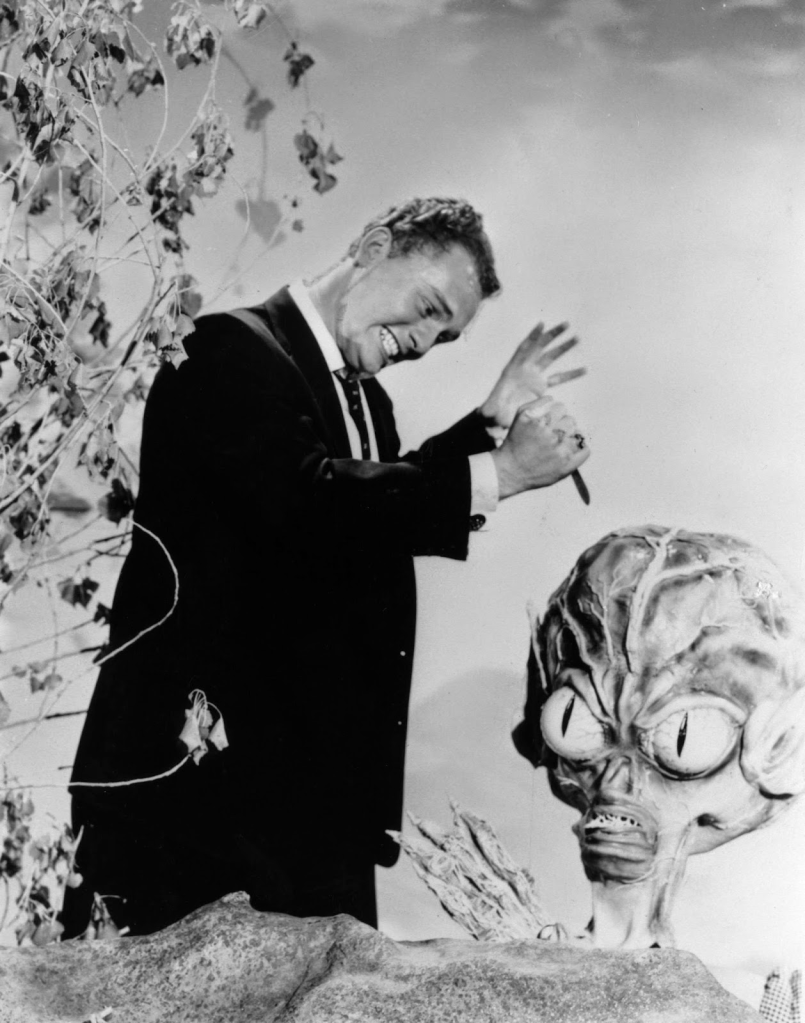
One of the earliest shows, “The Monsters Are Due on Maple Street,” is a great example of the Cold War and McCarthy subthemes. It aired in 1960, and the themes are still relevant today. The residents of Maple Street are alarmed when they hear rumors of monsters from outer space in their neighborhood. After a shadow passes by and a loud roar is heard, the citizens start accusing each other of being aliens. One man dies, another is physically attacked, and rioting occurs. We watch the residents destroy each other without seeing aliens involved. The twist is that there are aliens. They cut the power, but they let the humans destroy themselves. The message was if we think communists are in our midst, we’ll invent evidence to prove it and attack each other while Russia simply sits back and watches us destroy each other.

📷powerpop.com

All the shows were filmed in black and white. Seasons one, two, three and five were half-hour shows, while season four was an hour long. The Twilight Zone was never very high in the ratings, and the show struggled to find sponsors during its run. To save some money in season two, the network decided to shoot episodes on videotape instead of film. I’ve heard of this happening with several television shows in the sixties, but I wasn’t sure what the difference was. Apparently, videotape was very primitive at that time. Using videotape meant that the show was “camera-cut” which means using four cameras on a sound stage. Location shooting was not possible, and editing the tape was almost impossible. These disadvantages, along with the poor visual quality, made it hard to work with, and the technology was abandoned after a brief trial period.

The original theme for season one was composed by Bernard Herrmann. Season two switched to a theme by Marius Constant which is the most-remembered theme song. (The Grateful Dead performed the theme in 1985 for the reboot, Johnathan Davis of Korn composed the 2002 version, and Marco Beltrami was on board for the 2019 revival. The 1983 movie used composer Jerry Goldsmith.)
📷imdb.com

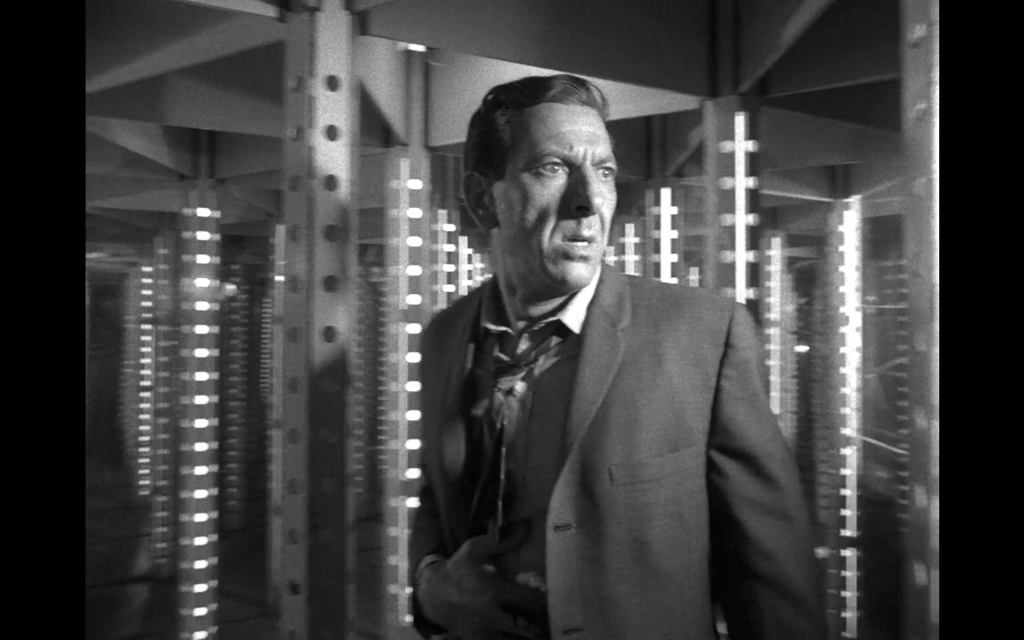
Several actors were in more than one episode and are noted for their appearances in the show: Jack Klugman, Burgess Meredith, Warren Oates, William Shatner, Jack Warden, Fritz Weaver, and William Windom.

Everyone has their favorite scary episode. “The Dummy” from 1962 is about ventriloquist Jerry Etherson who thinks his dummy Willie is alive and evil. He locks Willie in a trunk, deciding to write a new act with another dummy, but Willie doesn’t like the plan.

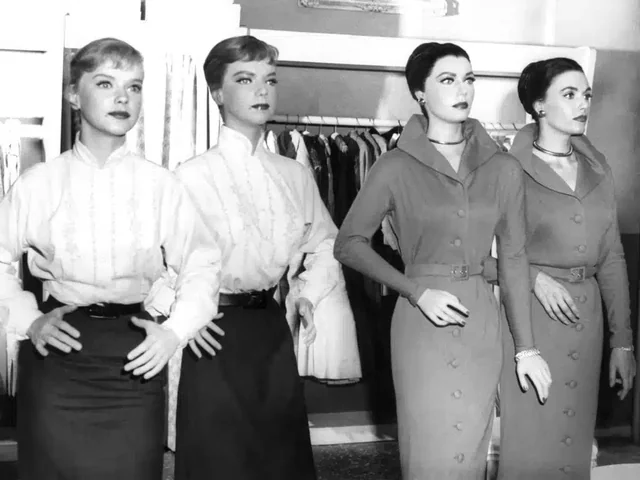
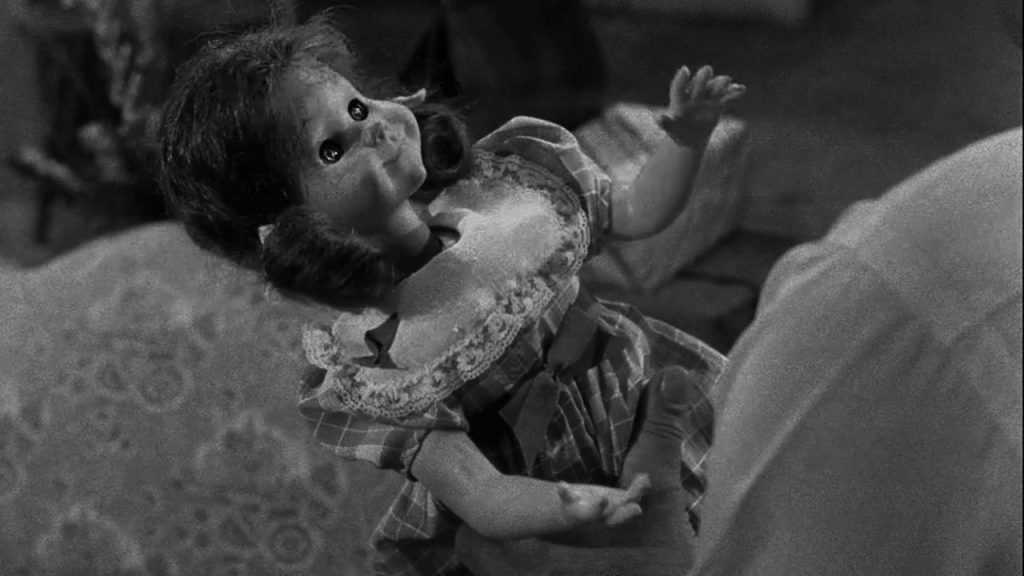
In “The After Hours,” a woman is locked in a department store after hours and it seems as though the mannequins have come to life. Even though no one is left in the store, she is treated badly by several “salespeople.”
📷imdb.com

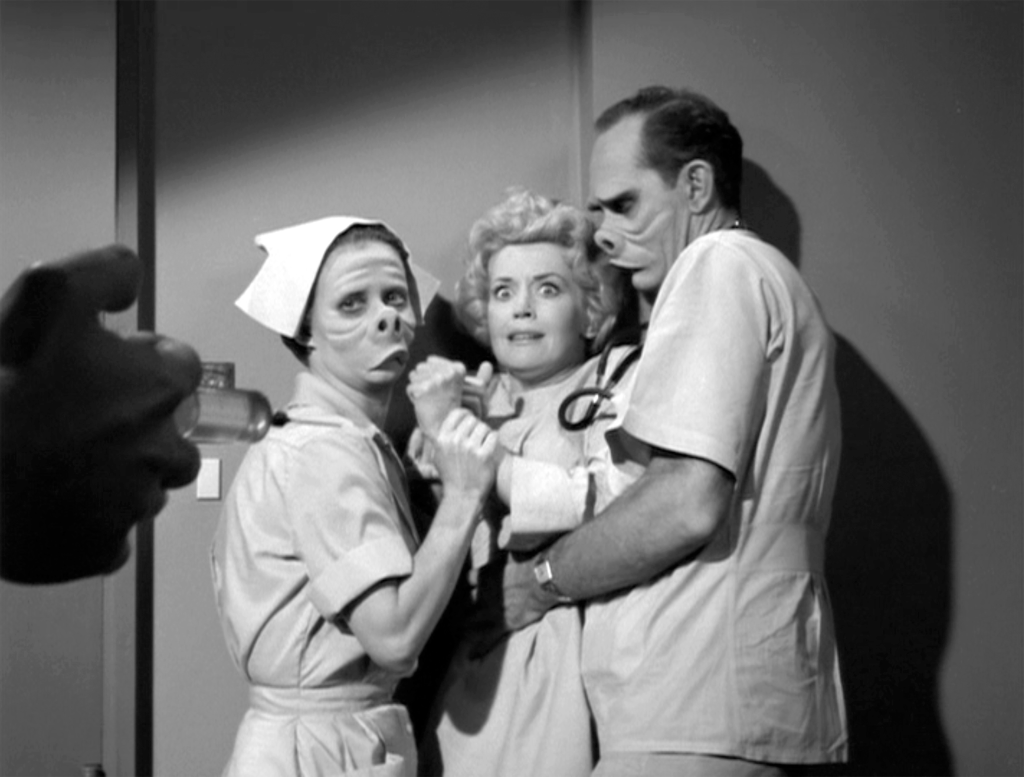
My most-remembered episode was “Eye of the Beholder.” Donna Douglas stars in this one about a young woman lying in a hospital bed with her head wrapped in bandages. She is waiting to see the outcome of a surgical procedure that was supposed to make her look “normal.” We see the bandages come off, we see the beautiful face of Donna Douglas, we see her look into a mirror, and then we hear her scream. When the scene pans out, everyone else has the face of a distorted pig and Douglas is devastated by her “ugliness.”

Also, like The Brady Bunch, the show has never been off the air since it debuted thanks to syndication. The episodes, despite being in black and white, have stood up to the test of time very well. Many things have changed in society since 1959, but people really have not changed much, and the stories are still applicable today. Newton Minnow who headed the FCC in 1961 is the person who called television a “vast wasteland.” The only series he praised was The Twilight Zone. (The US Minnow on Gilligan’s Island was named for Newton.)
📷paramountplus.com

There are some shows that are classics for their writing, some are classics for the quality of actors on the show, some are classics for their ability to transcend time and stay relevant for decades, and some are classics for the novelty they bring to the television schedule. The Twilight Zone is a classic because it does all these things and is as enjoyable to watch today as it was more than 60 years ago.

Frank Gorshin: Batman’s Most Puzzling Villain

This month, our theme is Bam! Pow! Batman Villains. We have learned a bit about the careers of the Joker and Cat Woman, and today we are spending some time with the Riddler, portrayed by Frank Gorshin.

📷imdb.com

Gorshin started out as an impressionist and comedian before transitioning into acting.

Frank was born in Pittsburgh in 1933 into a blue-collar, middle-class family. His mom was a seamstress, and his father was a railroad worker. His paternal grandparents arrived in the US from Slovenia and his mother was born in Slovenia, coming to the Pittsburgh area as a young girl; his parents were very involved in the Slovenian community, both singing with the Preseren, a Slovenian singing society.

When he was 15, Gorshin got a part-time job as an usher at the Sheridan Square Theatre. He studied the mannerisms of the actors he watched in those movies and developed an impressionist act. Some of his favorite actors to mimic included James Cagney, Cary Grant, Al Jolson, and Edward Robinson. After entering a talent contest in 1951, he won a week-long engagement at the Carousel nightclub in New York.

Sadly, Gorshin’s older brother was hit by a car two days before and died. His parents convinced him to keep his performance schedule and sent him to New York.

After high school, Gorshin enrolled at the Carnegie Tech School of Drama (now Carnegie Mellon University).

📷imdb.com

At age 20, Frank was drafted into the US Army and sent to Germany. He was an entertainer in Special Services for a year and a half. When Gorshin left the Army, he began his acting career, appearing in four movies and on television in Alfred Hitchcock Presents.

I can’t imagine the horror Gorshin’s parents felt when getting a call in 1957 that their son had fallen asleep while driving from Pittsburgh to Hollywood, a 39-hour trip for a screen test. With their other son passing away from a car crash six years earlier, now they had to deal with the fact that their other son was in a coma with a fractured skull. Luckily, he made a full recovery.

Another big event occurring in 1957 was his marriage to Christina Randazzo. They had a son and separated later in life, but they never did divorce as far as I could tell.
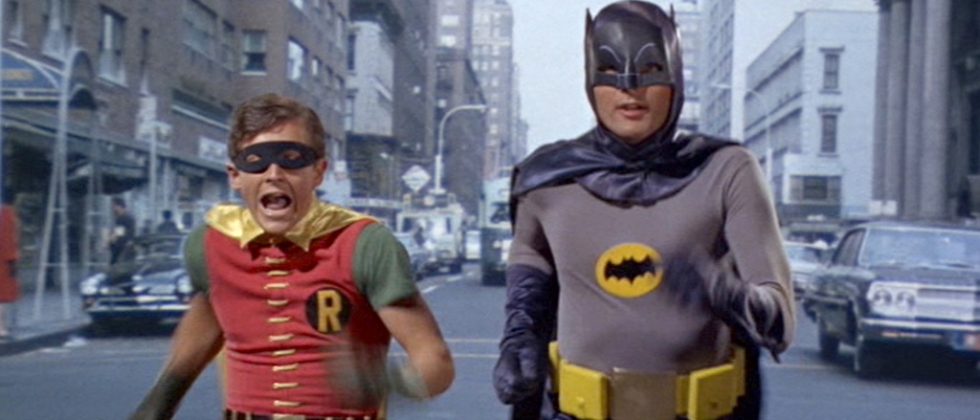
Until his death, Gorshin would appear in more than sixty big-screen films. During the fifties, he only appeared in a handful of television series, but that would change in the 1960s. Some of the most memorable shows included The Defenders, The Munsters, Star Trek, and The High Chapparal. With his comedy act, he visited The Ed Sullivan Show four times. The first time he did his impressionist act on the series, he would be scheduled with this new band called The Beatles.

📷metv.com

The sixties also found him on Batman, his reason for being in this month’s blog series. He said that he developed a fiendish laugh at Hollywood parties. “I listened to myself laugh and discovered that the funniest jokes brought out the high-pitched giggle that I use on the show. With further study, I came to realize that it wasn’t so much how I laughed as what I laughed at that created the sense of the menace.”

He did not love the unitards that many of the comic book villains wore, so he asked for a green business suit and bowler hat, covered with question marks since he always left riddles for Batman and Robin to solve. He often said “Riddle me this, Batman” which became a catchphrase of the mid-sixties.

Gorshin said “When I was first approached to play the Riddler, I thought it was a joke. Then I discovered the show had a good script and agreed to do the role. Now I am in love with the character.”

📷imdb.com

Gorshin was the only villain to be nominated for an Emmy. He got the nod in 1966 for the episode “Hi Diddle Riddle.” He had some tough competition, going against Werner Klemperer as Colonel Klink on Hogan’s Heroes, Morey Amsterdam on The Dick Van Dyke Show, and winner Don Knotts on The Andy Griffith Show.

Gorshin was in ten episodes of the show, but after appearing numerous times, he was unavailable, and the producers replaced him with John Astin. I realized hindsight is 20/20 as they say, so the producers were never considering the effect the show would have on pop culture and the decades it would be a fan favorite, but that switch seems extreme. However, they did it with Julie Newmar and Eartha Kitt as well, so maybe they figured if you have to replace a villain, let’s replace them with someone very different from the original. Gorshin, however, was not a fan of being replaced but did get over it enough to accept his tenth episode role in season three and appeared as Riddler in the 1979 made-for-television movie Legends of the Superheroes.

Frank made his Broadway debut in 1969 in the musical biography, “Jimmy” which was about the controversial life of New York mayor Jimmy Walker.

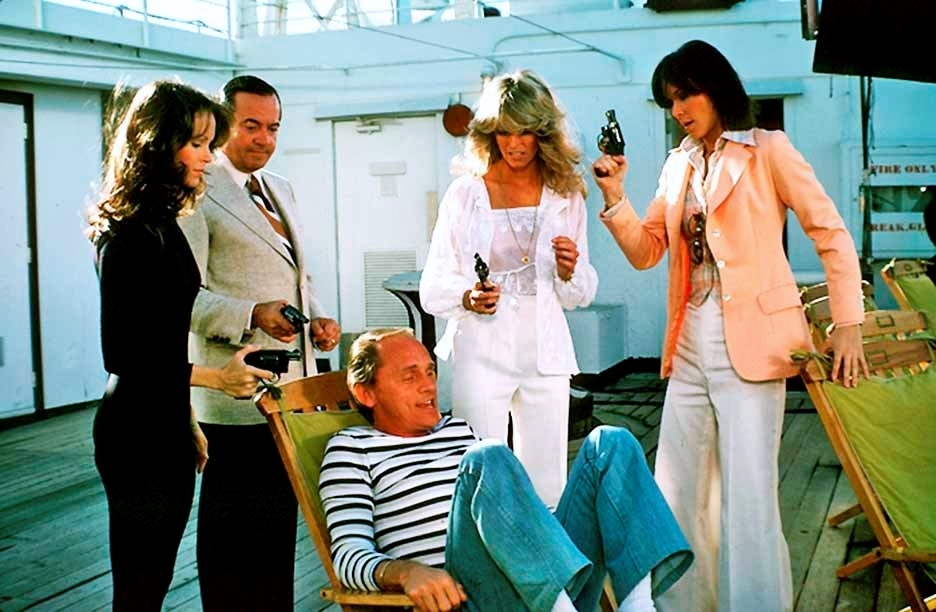
Gorshin was very busy in the seventies and eighties. Among the twenty plus shows he appeared on were The Virginian, Martin and Rowan’s Laugh In, Ironside, Hawaii Five-0, Charlie’s Angels, and Murder She Wrote.

In the last three decades of his life, he spent more time making big-screen films. One thing I found surprising is that Gorshin appeared in three soap operas, all at different times in his career: General Hospital in 1963, The Edge of Night in 1982, and The Bold and the Beautiful in 1999.

In the early 2000s, Gorshin did a one-man Broadway show, portraying George Burns. He was reunited with his Batman cast in a made-for-tv movie, Return to the Batcave: The Misadventures of Adam and Burt. His last appearance was on CSI: Crime Scene Investigation on “Grave Danger” on which he played himself. The episode was directed by Quentin Tarantino and was dedicated to Gorshin.

📷discogs.com

Unfortunately, Gorshin was a heavy smoker throughout his life. Adam West once said that “Frank could reduce a cigarette to ash with one draw” and his nightclub performances warned patrons they would be exposed to a lot of second-hand smoke if they attended. Not surprisingly, he died from lung cancer, complicated by emphysema and pneumonia.

I enjoyed getting to know Frank Gorshin in this blog. While I was much more familiar with the careers of Burgess Meredith and Julie Newmar, Gorshin and Cesar Romero are actors I knew very little about. I hope you are also enjoying getting to know these fun “villains.”

Burgess Meredith: America’s Favorite Villain

Bam! Pow! It’s Batman Villain Month. We will be looking at the career of an actor who played a Batman baddie every week this month. We are beginning with my favorite, The Penguin, played by Burgess Meredith.

📷pinterest.com

Oliver Burgess Meredith was born in Cleveland, Ohio in 1907. His father was a physician, and his mother was born into a family of Methodist revivalists. Burgess followed his Methodist faith for his entire life. After high school, he enrolled at Amherst College, until 1932 when he became a reporter for the Stamford Advocate. He worked in a variety of jobs while getting started in acting including retail, an editor, a merchant marine, and a runner on Wall Street.

He joined Eva Le Gallienne’s Civic Repertory Theatre in New York City. His Broadway debut was in this company’s “Romeo and Juliet” in 1930. His film debut came in 1935 in Winterset. Later in his career, he would return to Broadway as a director. He shared a Tony Award with James Thurber for their collaboration on “A Thurber Carnival” in 1960, and he earned a Tony nomination for his staging of “Ulysses in Nighttown” in 1974. In the late seventies, he directed Fionnula Flanagan’s one-woman play, “James Joyce’s Women” which toured for several years.

Meredith had more success in acting than marriage. Helen Derby Merrien Burgess was his wife from 1932-1935. His marriage to actress Margaret Perry only lasted two years, ending in 1938.

In 1942, Burgess enlisted in the US Army Air Forces for WWII, reaching the rank of captain. He was discharged in 1945. Meredith married another actress, Paulette Goddard, and they were together from 1944-1949. However, in 1951 he married Kaja Sundsten and they were together until his death.

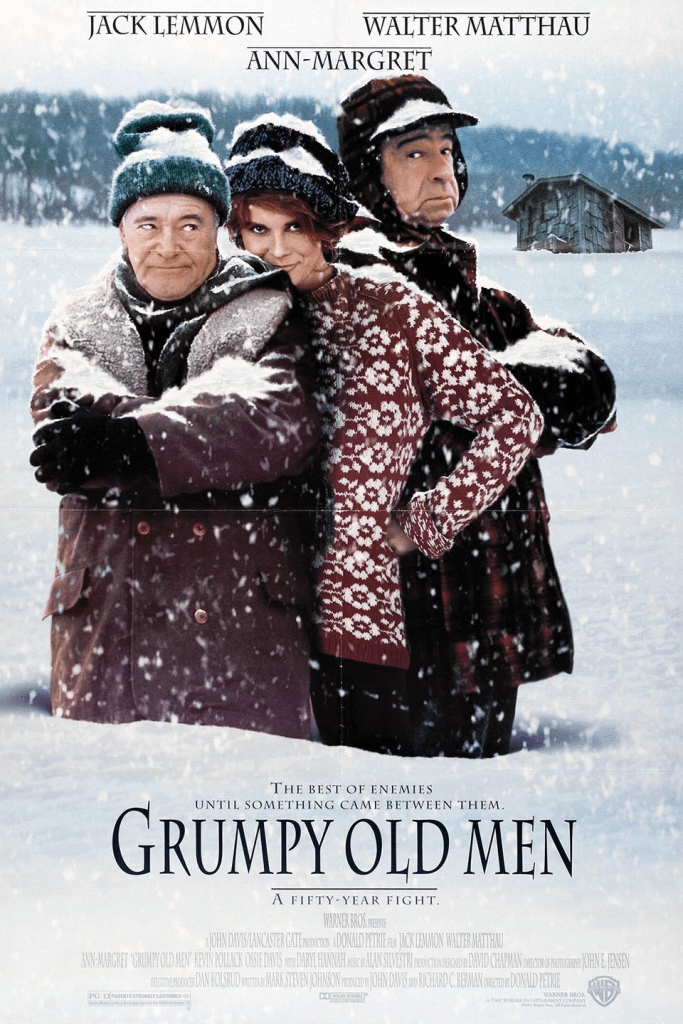
Meredith would appear in 80 movies during his career, as well as a number of made-for-television movies. He might be best known in the past few decades for Grumpy Old Men and Grumpier Old Men in the 1990s.

However, it was television where he found the most acclaim. His first appearances came in 1949 on the Ford Theater Hour and The Silver Theater. Throughout the fifties he continued receiving offers for theatric roles on these types of programs. During the early sixties, he was everywhere. You could catch his appearances on dramas such as The Naked City, Ben Casey, The Twilight Zone, The Bold Ones, Room 222, Ironside, and Mannix. He rode onto many western sets including Wagon Train, Rawhide, The Wild, Wild West, Bonanza, Daniel Boone, and The Virginian. He found his way onto several comedies such as Please Don’t Eat the Daisies and The Monkees.

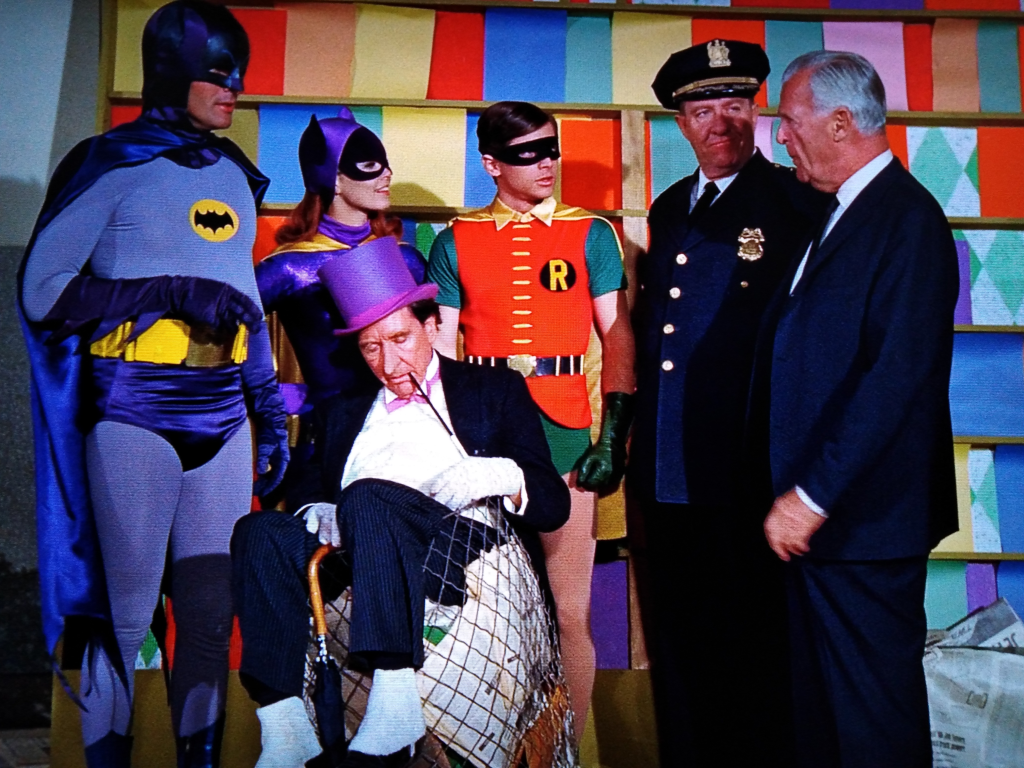
Given the astounding number of drama shows that he chose roles on, it is a bit surprising that one of his best-known roles was the campy, humorous 1960s series Batman. From 1966-1968, he made 21 appearances as the Penguin. When he appeared on The Monkees, it was also as the Penguin. Originally the producers wanted Spencer Tracy for the role of Penguin. Tracy said he would not accept the offer unless his character was allowed to kill Batman. So, Meredith got the role. The cast loved him, and the producers made sure there was always a Penguin script waiting so whenever Burgess was free, it could be filmed.

📷dcdatabase.com

He was perfect for the role with his raspy voice and that iconic Penguin laugh. The laugh came about because Burgess had given up smoking but had to smoke for his role on Batman. When he coughed, he covered it up with his trademark laugh. When asked why he did Batman, he replied that he did it “for two reasons, one of which was the salary. The other was that, after the first few episodes, Batman became the in-thing to do. Everybody would either play a villain or appear as himself in that cameo showcase where a celebrity would poke his head through the window of a building that Batman and Robin were climbing. Actually, we didn’t get as much money from the show as you might think, although we were paid decent money for the feature film version. The main impetus to continue appearing on Batman—beyond the desire to get some TV work—was that it was fashionable.”

Later in his career, Burgess continued appearing on the big screen and provided voice-over work and a bit of animation. Unfortunately, he was named as an unfriendly witness by the House Un-American Activities Commission which ended his studio work for several decades. Burgess also did commercial work and was known for his roles for Skippy Peanut Butter and United Air Lines.

📷imdb.com

Meredith was a life-long Democrat and was generous to the Democratic party. He was an environmentalist and tried to end pollution. He was also fascinated by intelligent animals, especially dolphins. One night he said he felt a dolphin needed help while staying at a friend’s beach house. He ran out to the beach and found a dolphin caught in a net under a dock and was able to save its life. He was nominated for two Academy Awards, both for Supporting Actor in Rocky and The Day of the Locust. A 21-acre park in Pomona, New York was named for him; he provided the funding to incorporate the village.

In 1997, Meredith died from complications of Alzheimer’s. His former Batman costar, Adam West, spoke at his memorial service.

While almost all of the bad guys on Batman were memorable, the Penguin and Cat Woman were by far my favorites. We will look at the career of Julie Newmar next week.

Mannix: “The Old-Fashioned” Detective

We are three-quarters through our new blog series, “One-Named Detectives,” and today we are looking at a show that began in 1967 and aired until 1975, producing 194 episodes.

See the source image
Photo: blogspot.com

Created by Richard Levinson and William Link and produced by Bruce Geller, Mannix was one of the most violent television shows during the sixties. Private investigator Joe Mannix (Mike Connors) began working at Intertect which relied on computers and a large network of operatives to help them solve crimes.

CBS was planning on cancelling the show after its debut year, but somehow Lucille Ball convinced them to renew it for another season. (Desilu produced the show.) In season two, Mannix decides to leave and open his own agency. He prefers to solve crimes the old-fashioned way, with his own brain, or as he described it, “A private eye—in the classical tradition.” Peggy Fair (Gail Fisher), a widow whose policeman husband was killed in action, became his secretary. Joe was also a father figure for her son Toby. The role of Peggy was planned for Nichelle Nichols but she had to decline due to receiving her role on Star Trek.

See the source image
Photo: seasonsepisodes.watch–with Gail Fisher

The cast was rounded out by Lt Art Malcolm (Ward Wood), Sergeant Charley (Ron Nyman), and Lew Wickersham (Joseph Campanella), and police contact Tobias (Robert Reed). Every episode was filled with violent fistfights, car chases, and shoot-outs. During the course of the series, Mannix was knocked unconscious 55 times, drugged about 38 times, and shot 17 times. Connors actually broke his collar bone filming the pilot. The character of Mannix survived many of these situations because he was an expert fighter. He was said to have been a POW during the Korean war. Mannix was also a race car driver and a pilot. He sailed, skied, golfed and was an accomplished pool player. He was said to have grown up in Summer Grove where he excelled in football and basketball.

See the source image
Photo: metv.com with Robert Reed

Like Cannon, Joe Mannix relied on a car phone during his investigations. Many viewers felt the scripts were well written and the endings were not easy to predict. The plots relied more on crime-solving techniques but several tackled relevant social topics including compulsive gambling, racism, returning Vietnam War veterans issue, and professionals with physical disabilities such as deafness or blindness working to solve crimes.

The scripts were written by some of the best writers in the business. There were more than 85 writers credited with stories, one of them being Mel Tormé, yep that Mel Tormé.  Other writers were John Meredyth Lucas who wrote for fifty shows including Harry O, Kojak, Ben Casey, and Star Trek; Stephen Kandel who wrote for many shows including Hart to Hart, MacGyver, Hawaii Five-0, and Cannon; and Donn Mullally who also wrote for fifty shows including Ironside, The Virginian, Bonanza, and The Wild Wild West.

See the source image
Photo: pinterest.com

There were a lot of creative shows using visual effects in the sixties and Mannix was one of them. It employed many cutting-edge gimmicks to appeal to fans. Technical filming skills included zooms (moving in for a close-up or out to show something the viewer did not realize was in the scene), rack focuses (a rack focus is the filmmaking technique of changing the focus of the lens during a continuous shot. When a shot “racks,” it moves the focal plane from one object in the frame to another), lens flares (a lens flares adds a sense of drama and a touch of realism to a shot), Dutch angles (which produce a viewpoint of tilting one’s head to the side), both low and high angles, and cameras that could move 360 degrees during filming.

See the source image
Photo: rockauto.com

For you car afficiandos, Mannix had a lot of cool automobiles during the series. For season one, he primarily drove a 1967 Oldsmobile Toronado customized by George Barris who built the Batmobile. For season two, Barris worked on a 1968 Dodge Dart for him.

Season three found him driving another Barris car, a 1969 Dodge Dart. Seasons four through six he drove Plymouth Cudas (a 1970 for four, a 1971 for five, and a 1973 for six). For season seven, he was given a 1974 Dodge Challenger and for the final season, he drove a Chevrolet Camaro LT.

An interesting story about his season two car is that it was sold to a secretary at Paramount Studios and then disappeared for a few decades when it was located near a ranger station in California. It was restored to the Barris condition it had on the show. It was featured in Muscle Machines in December of 2009 and on the show Drive on Discovery HD Theater in 2010. The car is currently owned by C. Van Tune, former editor of Motor Trend magazine.

In addition to special cars in the shows, a lot of celebrities guest starred including Hugh Beaumont, Robert Conrad, Yvonne Craig, Sally Kellerman, Burgess Meredith, Lee Merriwether, Vera Miles, and Diana Muldaur. Some of the more unusual guest spots were filled by musicians Neil Diamond, Buffalo Springfield, and Lou Rawls; comedians Rich Little and Milton Berle; and journalists Art Buchwald, and Rona Barrett.

The theme song was composed by Lalo Schifrin.  Titled, “Mannix,” it was released as a single in 1969 with “End Game” on the B side.

See the source image
Photo: amazon.com

Connors was nominated for an Emmy four times, Fisher was nominated for four as well, and the series was nominated twice. In 1970, Connors was beat by Robert Young in Marcus Welby, in 1971 Hal Holbrook won for The Bold Ones, Peter Falk won for Columbo in 1972, and in 1973 Richard Thomas won for The Waltons. Fisher lost to Margaret Leighton for Hallmark Hall of Fame in 1971, Ellen Corby for The Waltons in 1973, and Jenny Agutter in The Snow Goose Hallmark Hall of Fame in 1972. The show lost out as best drama to Elizabeth R Masterpiece Theater in 1972 and The Waltons in 1973.

See the source image

I do remember watching and enjoying the show when I was in grade school.  I’m guessing I watched it because it was something my parents watched. I think the show has held up well and, considering it was in the midst of the sixties, is not too dated. It would definitely be fun to check out a season or two of the show to see if you can figure out just “who done it.”

Is It A Western? A Spy Show? A Thriller? No, It’s The Wild Wild West

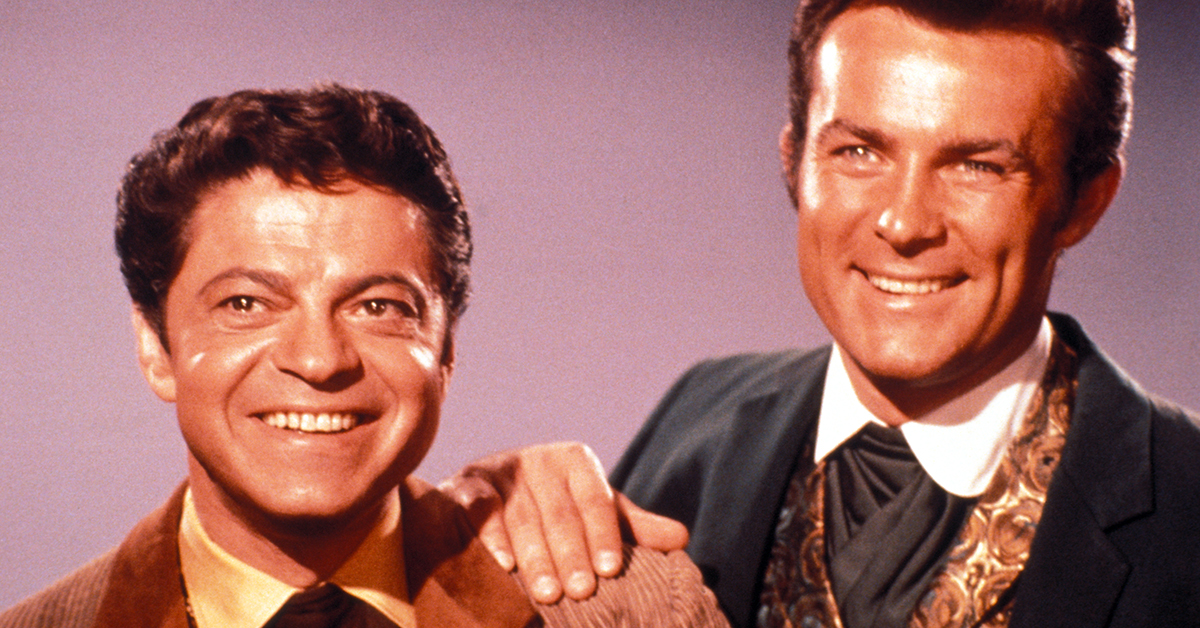
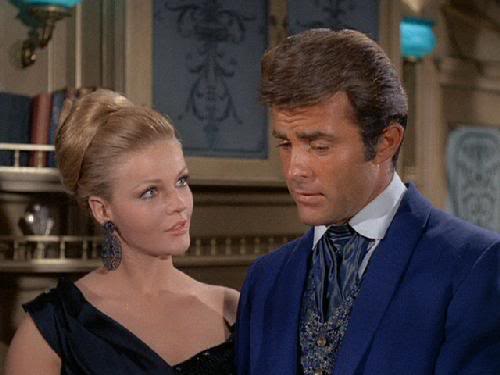
There was no specific category for the Wild Wild West when it first debuted in 1965.  Part western, part spy show, part thriller.  Now, it might be called steampunk. Westerns had been extremely popular through the 1950s and into the 1960s, but in the mid-1960s, the spy genre was gaining ground. Creator Michael Garrison combined the two. Secret Service agents Jim West (Robert Conrad) and Artemis Gordon (Ross Martin), work for President Ulysses Grant and travel the country by luxury train, the Wanderer.  Oh yeah, and they have a ton of technology to make the job more exciting. Artemis is a master of disguise.  Like James Bond, they had clever gadgets on hand, beautiful women in the wings, and delusional, but brilliant, enemies to fight against.

Photo: decades.com

The series debuted in 1965 and ran for four seasons, resulting in 104 episodes. Unfortunately, Garrison died a year into the show and didn’t live to see its completion. The show was filmed at CBS Studio Center. The 70-acre lot was used for Gunsmoke, Rawhide, and Gilligan’s Island as well.

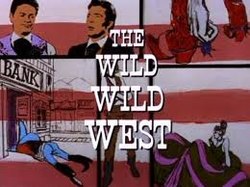
The theme song was written by Richard Markowitz. The intro had an animated sequence that continued to be filled in throughout the show. This was quite unique to this program.

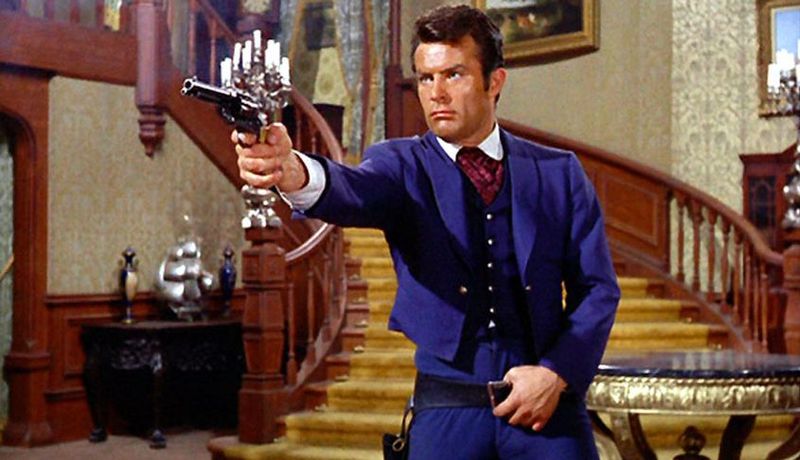
Conrad claimed to be the 17th actor to audition for the role of James West. Originally, Rory Calhoun was announced as the co-star. Conrad wore three-inch heels to hide that he was only 5’8”. Due to his height, the casting office was barred from hiring women over 5’6” for the show. The first few episodes used stuntmen, but Conrad felt that it slowed production down too much, so he volunteered to do his own stunts. During season three, he fell from a chandelier and hit a concrete floor, leaving him with a concussion and weeks of hospitalization for dizziness.

Photo: artworkproduction.ca

Ross played over 100 different characters during the run of the series. He sketched out the ideas for the characters himself and then worked with the make-up artists to get the right look. During the fourth season, Martin broke a leg when he dropped a rifle, stepped on it, and rolled his foot over it. When the shell ejected, it burned his eye. Ross also suffered from a heart attack in 1968. Several other agents “filled” in for Martin while he recuperated.

Photo: writeups.org

Considering the show was only on for four years, it featured a number of guest stars including Ed Asner, John Astin, Jim Backus, Ed Begley, Victor Buono, Jackie Coogan, Yvonne Craig, Sammy Davis Jr., Jack Elam, Norman Fell, Bernard Fox, Mary Frann, Beverly Garland, Alan Hale Jr., Boris Karloff, Richard Kiel, Ted Knight, Harvey Korman, Martin Landau, Sue Ane Langdon, Peter Lawford, Ida Lupino, Burgess Meredith, Agnes Moorehead, Phyllis Newman, Leslie Nielsen, Carroll O’Connor, Pat Paulsen, Suzanne Pleshette, Richard Pryor, Don Rickles, Pernell Roberts, Katherine Ross, William Schallert, Vito Scotti, Ray Walston, Jesse White, and Keenan Wynn.

The train was also a co-star of the show. The spies had two different trains. The first was used for season one when the shows were filmed in black and white. It was a Sierra Railroad No. 3 which was not built until 1891, a mere technicality I guess. The Rogers Locomotive and Machine Works built it in New Jersey. Footage was shot in Jamestown, California. This same train was the Cannonball in Petticoat Junction.

Photo: metv.com

The shows filmed in color featured a train decorated with green and gold and it was full of fun gadgets. This one was built in 1875 by the Baldwin Locomotive Works in Philadelphia. It was used in many films over the years.

Photo: tripadvisor.co.uk

Both these trains are on display at the Nevada State Railroad Museum. They were only featured in exterior shots. The interiors of the trains were designed by art director Albert Heschong with set decorator Raymond Molyneaux. It reportedly cost $35,000 in 1965. To put this in perspective, the average house in 1965 cost less than $4,000! The train was as resourceful as West and Gordon. A remote control under the table could immediately lock the door. A statue turned upside down unlocked a wall safe. A telegraph set was hidden in a book on the desk. Pistols could be fired by activating a fireplace switch. The pool table had exploding balls while cue sticks could fire bullets.

Photo: tvoftheabsurd.com

Many of the guest stars were villains in the show. The most famous villain was Dr. Miguelito Loveless played by Michael Dunn. He had a recurring role, appearing on ten episodes. He always managed to escape at the end of the show. West and Artemis never did catch him, and a TV movie filmed later relays that he died in 1880 from ulcers brought on by the stress of his plans always being foiled by West and Gordon.

Like Batman, Jim West always seems to have the right gadget at his disposal when he needs it. Some of his more fun props included a sleeve gun as well as a gun concealed in his heel. He also occasionally carried a blowtorch in his heel. Passkeys were stored under his lapel. He kept a variety of fuses sewn into hems in his clothes. To descend into a pit or be hoisted up on a roof, he had a hand-held motor-driven winch. Glass cutters which often are useful were available. Wires placed in his hat had many uses. Battery-powered drills helped the boys escape metal cages. His kit bag held a large balloon. A miniature player made villains think shot guns were being fired. Of course, every smart secret service man wears a bulletproof vest and is always equipped with tear gas or smoke bombs. They even had a cigar that would produce smoke when thrown on the ground and a coin that exploded when exposed to heat.

Photo: thegoldencloset.com

There typically were two fights in each episode choreographed by Whitey Hughes. Following the 1968 assassinations of Dr. Martin Luther King and Robert Kennedy, a National Commission on the Causes and Prevention of Violence was formed. Violence on television was listed as one of the problems, and The Wild Wild West was cited as a violent show. So, despite high ratings, the series was cancelled near the end of its fourth season as a concession to Congress over television violence.

Photo: antiquatednotions.typepad.com

However, the show was then released into syndication and at one time was listed on 99 different local channels, so the violence on television was not curbed by its cancellation.

Several books and comic books were created based on the show. In 1979, the two stars returned to television with a movie, The Wild Wild West Revisited. In 1980, they showed up again in More Wild Wild West. Rumors existed that the duo would do a reboot of the series, but Ross died in 1981 so it never came to fruition.

A movie was made in 1999 based on the original show, but it was not received well. Will Smith later expressed regret for his role in the film. The Golden Raspberry (Razzie) is awarded to the worst films. When the 1999 film was awarded five Razzies, Conrad accepted them on behalf of the movie to show his displeasure with the remake.

Photo: stupendouslyamazinglycoololdtv.blogspot.com

The show’s success primarily stemmed from the fact that Artemus and West trusted each other completely, and their banter and technological gadgets made the show a pleasure to watch. And did I mention, the boys loved women on and found a romance on every show. We’ll let the characters have the last word:

Artemus Gordon: “Naomi. ’My sweetness’. That’s what Naomi means in Hebrew, did you know that ?”

Naomi Buckley: “Really ? And what does Artemus mean ?”

James West: “It means ’He who wastes little time‘.”

Photo: filmscoremonthly.com

Artemus Gordon: “I didn’t know you liked toys.”

James West: “Toys, no. Dolls, yes.”

In Memory of Adam West

west1

Adam West was born William West Anderson on September 19, 1928 in Walla Walla, Washington.  He just passed away this summer on June 9. His father farmed and his mother gave up her career as an opera singer and concert pianist.  Like all kids, he had a collection of comic books including Batman. When his parents divorced, he moved to Seattle with his mother. He attended Whitman College in Washington and graduated with a BS in literature. He was drafted into the Army and became an announcer on the American Forces Network television.

After his service career, he became a milkman until he moved to Hawaii to pursue a career in television. In 1959, he took on his stage name of Adam West and moved to Hollywood with his wife and children. He quickly became an actor and appeared in 33 television shows, including 77 Sunset Strip, Maverick, Hawaiian Eye, Tales of West Fargo, Perry Mason, Gunsmoke, Petticoat Junction, and Bewitched.

west4

In 1966, William Dozier, producer for a new show about Batman decided to cast West over Lyle Waggoner after seeing him as a James Bond-type character in a Nestle Quik commercial. DC Comics described Batman as 6’2” and that was West’s height.

west2

When the series ended, he and Burt Ward found themselves typecast as Batman and Robin.  He did a series of appearances about the Batman character while pursuing a movie career. He ended his career with 49 movies to his credit.

He appeared in 78 television shows after Batman ended including The Big Valley, Emergency, Alice, Police Woman, Laverne and Shirley, The Love Boat, Hart to Hart, Murphy Brown, Diagnosis Murder, News Radio, Drew Carey, King of Queens, and 30 Rock.

After 1990, he apparently embraced his Batman character and appeared on numerous television shows as himself or Batman. When asked about this, he said, “I think it evolved. I learned a long time ago that because people love Batman, I should too. I learned that I shouldn’t resent it even though it prevented me from getting other roles. I really had to become fond of Batman in order to deal with it. I embraced it.”

In 1957, he and his first wife Billie divorced.  He married  dancer Frisbie Dawson in 1957 and divorced in 1962. In 1970, he married Marcelle, and they were together until his death.  He had two children with each of his wives and two stepchildren.

In 1994, he wrote an autobiography Back to the Batcave. In 2012, he received a star on the Hollywood Walk of Fame on Hollywood Boulevard.

west8

West loved outdoor activities and had a lot of hobbies including fishing, sailing, hiking, skiing, golfing, riding motorcycles, swimming, surfing, dancing, traveling, as well as spending time with his family, listening to classic rock, reading, and watching movies.

West died after a short battle with leukemia at age 88. The next week, LA shined the bat signal on city hall to honor him.

While West certainly had a full and varied career despite his typecasting from Batman, I would like to spend some time looking at the series that gave him his fame. Typically, I am not really into super heroes, but I loved this show when I was younger and still get a kick out of watching the campy comedy. I can still hear the narrator saying, “Same bat time, same bat channel.” The show was canceled not only because of low ratings but also because the special effects and lighting had tremendous costs.  When ABC dropped it, they tried to find another network to take it over.  They had no offers, so they dismantled the set. Two weeks later, NBC offered to pick up the show, but decided it was too expensive to start from scratch.

batman4

In the 1960s, Ed Graham Productions received the rights to the comic strip Batman and intended to produce an adventure show similar to Superman or The Lone Ranger. ABC was thinking about a prime time show so DC Comics bought back the rights and sold them to 20th Century Fox. 20th Century gave it to William Dozier to produce.  Dozier had never read comic books and felt that the show should take a campy, pop-art approach. The show was originally an hour-long series, but with only half-hour time slots available, it was changed to a bi-weekly half-hour show.

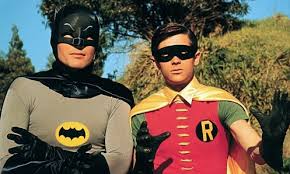
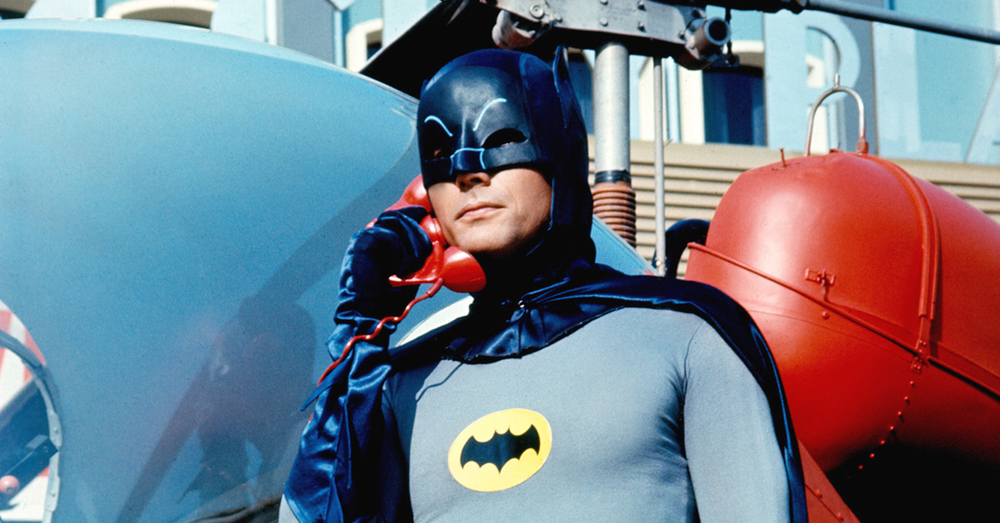
The concept of the show was that millionaire Bruce Wayne and his ward Dick Grayson lead a double life in Gotham City.  When they move a shelf in their library and slide down the bat pole to the bat cave, they become Batman and Robin.  Only their butler Alfred is aware of their real identity. Police Commissioner Gordon calls them on the batphone, often referring to them as the dynamic duo. They usually hop in their bat mobile and speed to city hall to learn what villain is up to no good in their city.

west5

Adam West took the role of Batman/Bruce Wayne and Burt Ward was Robin/Dick Grayson. Other cast members included Alan Napier as Alfred the Butler, Neil Hamilton as Commissioner Gordon, Stafford Repp as Chief O’Hara, Madge Blake as Aunt Harriet, and Yvonne Craig as Batgirl.

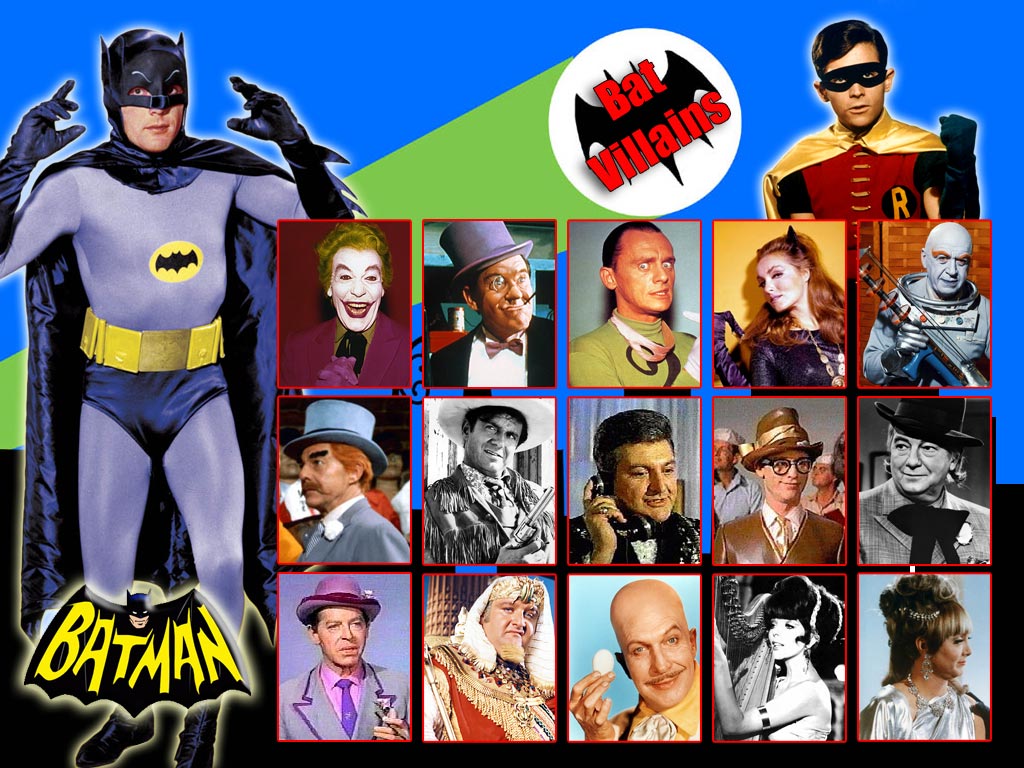
My favorite villians included Julie Newmar and Eartha Kitt as Cat Woman, in love with Batman but not willing to give up her criminal life; Burgess Meredith as Penguin always carrying an umbrella; Frank Gorshin as The Riddler leaving riddles for clues; Vincent Price as Egghead a bald-headed genius who loves eggs; Cesar Romero as the Joker who leaves jokes for clues; and Victor Buono as King Tut when evil and Professor William McElroy as his non-evil personality.

The show aired twice a week on back-to-back nights. The first episode would set up the situation and end with the dynamic duo in some dangerous situation. Batman and Robin would get their assignment from the Commissioner and then, using a series of clues, try to figure out who the villain is and then how to defeat them. At some point, there was always a fistfight with the villain’s entourage at which time the villain typically escaped. During the fight, words would pop up on the screen like POW, BAM, ZONK, BOOM. Then the crime fighters would go to look for them at which point the dangerous and perhaps deadly situation occurred and the next episode would summarize what happened on the previous episode before defeating the bad guys for good. They often used inventions like shark repellant bat spray to aid them in their search.

batman5

In Season 3, Bat Girl was added to the cast. The ratings were starting to fall so Dozier wanted to bring in a girl character to attract female viewers. Her real identity was Barbara Gordon, the Commissioner’s daughter.  The Commissioner never seemed to realize she was familiar to him. Because of low ratings, the show also became a once a week series in the third season.  Eartha Kitt took over the Catwoman role since Newmar was filming a movie at the time. Madge Blake’s health was failing, and her role was limited to two appearances during the last season.

The show was cancelled before the next season but it has continued to be popular in reruns. In 1966, an album was released “Batman: The Exclusive Original Soundtrack Album.” It included music by Nelson Riddle, dialogue excerpts from several of the characters in the show, as well as the Batman theme song, Batusi A Go Go, and several other tunes.

A lot of collectibles were produced during the run of the show including trading cards, Batmobile kits, coloring books, lunch boxes, board games, and View-Master reels. In 2013, Mattel designed an action figure line based on the tv characters, and several Hot Wheels/Matchbox cars have been produced. The Batmobile from the show was auctioned in 2013, selling for $4.2 million.  The huge profits from the car as well as the line of action figures prove the continuing interest in and success of this show now 50 years old.

Here are some fun facts I found about the series:

A total of 352 “Holy” words were used by Robin from “Holy Agility” to “Holy Zorro”.

Cesar Romero’s Joker laugh was created almost by accident. Shortly after being cast, Romero met with producers to discuss his role on his series. While waiting to meet with them, Romero happened to see conceptual art of Joker’s costuming. Romero felt the pictures almost looked absurd, and as a result spontaneously broke out into a playfully loud and almost manic laughter. A producer overhearing it responded by telling Romero “That’s it, that’s your Joker’s laugh!”

Burgess Meredith had not smoked in 20 years when he was cast as the Penguin. He came up with the Penguin’s distinctive squawking sound because the cigarettes were irritating his throat. Like his trademark “quack”, the Penguin’s waddling was largely a result of improvisation by Burgess Meredith, as he found it difficult to stand and walk straight while wearing the rubber padded fat suit that was part of his costuming.

Before going on the air, this show received the worst audience test scores in the history of ABC. It only went on the air because so much money had already been invested in it.

This was one of the “in” shows to appear on if you were a big name in Hollywood during the 1960s, and many top names guested on the show, including many who didn’t do much TV otherwise. Those performers who weren’t cast as guest villains could frequently be seen popping their heads out of windows to exchange a few words with Batman and Robin when the latter would be climbing up a building wall. Frank Sinatra, Natalie Wood, and Cary Grant were all fans of the show, and wanted to be on it, but the producers were never able to come up with the right roles for any of them. During the run of the series, this show crossed over with The Green Hornet (1966).

The “Giant Lighted Lucite Map of Gotham City” is a reverse image of St. Louis, right down to Forest Park, Fairground Park, Tower Grove Park, Lafayette Park, and Horseshoe Lake on the Illinois side, as well as the other river and road networks.

Each main villain had their own theme music.

In the first season, Burt Ward (Robin) was paid $350 per week.

Yvonne Craig has stated that she briefly did have a stunt double, but did most of her stunts herself. She actually operated the Batgirl Cycle herself as well. She was an accomplished biker at the time, and actually owned a bike.

Adam West (Bruce Wayne / Batman), Burt Ward (Dick Grayson / Robin) and  Neil Hamilton (Commissioner Gordon) are the only actors to appear in all 120 episodes of the series.

Suzanne Pleshette was one of the original choices to play Catwoman before Julie Newmar landed the role.

The show aired from January 12, 1966 to March 14, 1968 on ABC for 120 episodes. It was one of few TV series to be seen on 2 different nights a week: 7:30 Wednesdays and Thursdays. It remained there for a season and a half (Jan. 1966-Aug. 1967) until it was moved back once a week (Thursdays 7:30) for its final season. The episodes were generally two-parters: Wednesday’s episode was a cliffhanger, resolved in Thursday’s episode. The 1966-1967 season had 2 3-parter episodes (“The Zodiac Crimes/The Joker’s Hard Times/The Penguin Declines”[ep. #2.37-9, 1/11-12 & 18/1967] and “Penguin is a Girl’s Best Friend/Penguin Sets a Trend/Penguin’s Disastrous End”[ep. #2.42-4, 1/26/, 2/1 & 2/1967]) which left cliffhangers that would be solved the following week. When the series was reduced to (mostly) one part episodes during season three, the cliffhanger death traps and threats were still used, but greatly scaled back and occurring at the middle commercial break.

The three primary cast members of The Addams Family each made appearances on Batman. Carolyn Jones played the villainess Marsha, Queen of Diamonds, and John Astin played the Riddler during the second season. Additionally, Ted Cassidy had a window cameo, appearing in his part as Lurch from The Addams Family. Interestingly, Cassidy’s cameo took place in a story involving the Penguin, with whom Jones’ character Marsha teamed up in one of the three-part stories.

In episode 7, Alfred refers to Robin as Mr. Ward, and not Mr. Grayson.

While Superheroes and the movies and television shows they appear in seem to cycle up and down throughout the decades, the popularity of the Batman television show has never wavered.  The fact that Mattel would create action figures based on the original stars almost 50 years after the show debuted says a lot about the fans and the place the show holds in their hearts.

Thank you Adam West for creating such a memorable and well-loved character.  Rest in peace.

batman2