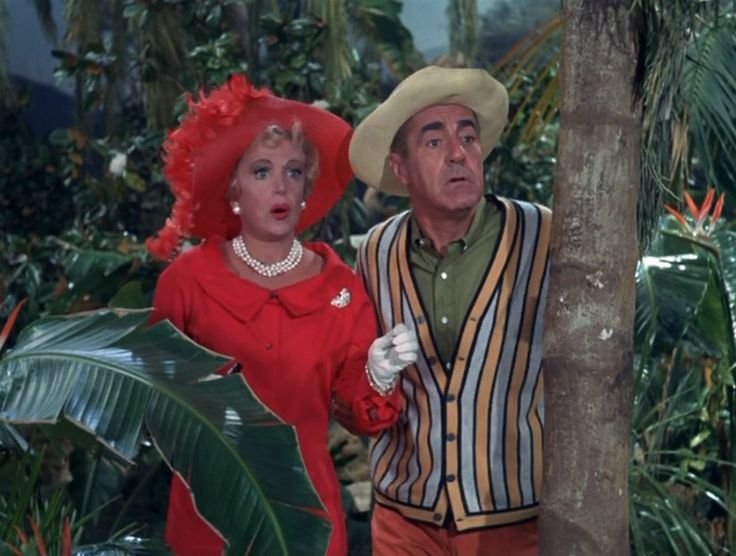
The Jim Backus Show: It Was Hot Off the Wire

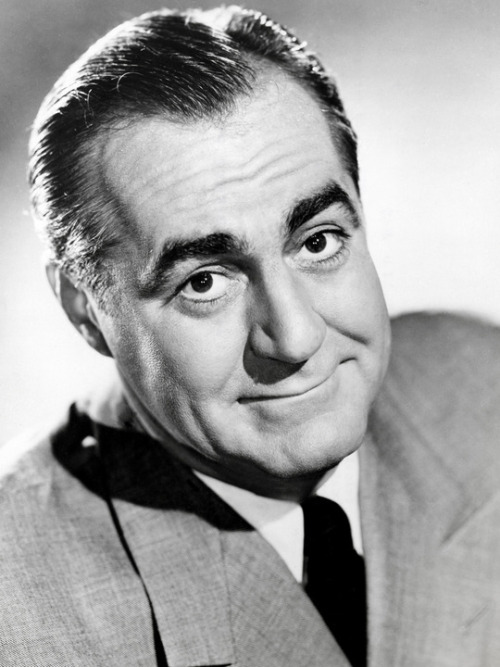
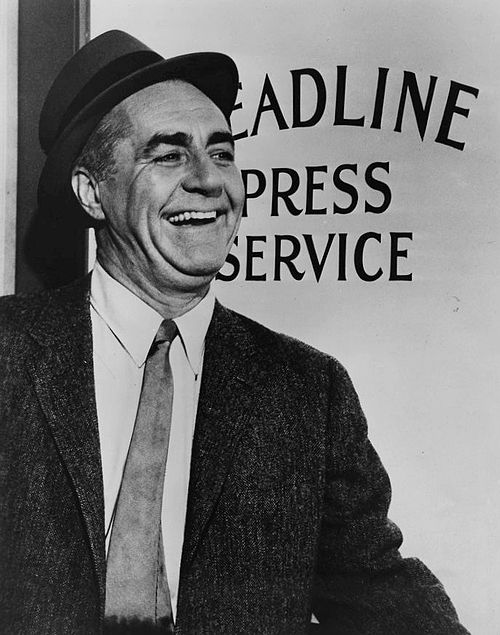
This month we are in a blog series, “It’s Their Show.” Today we are taking a closer look at The Jim Backus Show. Most people know Backus today as Mr. Howell on Gilligan’s Island. While he did show up on several television series, cartoons, and made-for-tv movies for Gilligan’s Island, Backus had a long and successful career without any Gilligan appearances. He started in the movies in 1948 and wound up his career with an amazing 253 credits.
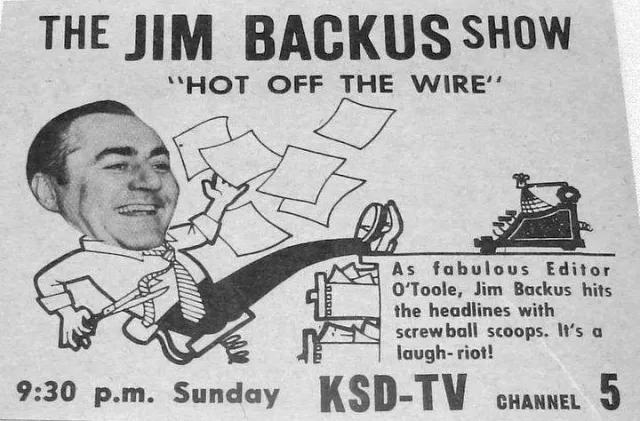
📷thrillingdaysofyesteryear.com

In addition to being the voice of Mr. Magoo, Backus starred in several other series including I Married Joan and Blondie.

In 1960, The Jim Backus Show debuted.  It was one of the first syndicated shows, so it’s hard to gauge how it did against its competition. However, I will say what I can tell you is that there were still 13 westerns on the air during the week, so while the influence of the Plains was waning, it was still very popular. It was also a year that lots of stars had made the plunge to dip their toe into the television industry. There were 11 stars with their own shows that year in addition to Backus, including Jack Benny, Ann Sothern, Danny Thomas, Andy Griffith, and Donna Reed. 

The series had a great cast. They had several good directors, including Gene Reynolds who produced MASH and Lou Grant and a lot of good writers, including Jay Somers who would go on to create and write Green Acres. However, they had 14 directors and more than 40 writers to produce those 39 episodes. They also had a great line up of guest stars including Ken Berry, Charles Lane, Jayne Meadows, Zasu Pitts, Tom Poston, and Bill Quinn.
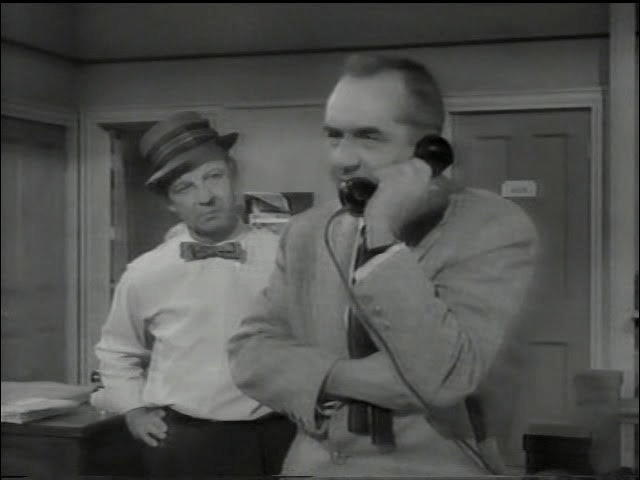
📷youtube.com

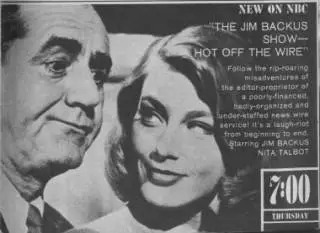
Backus is Mike O’Toole, the editor and owner of a news service struggling to make a go of it. He often doesn’t have the money to pay his rent or his staff’s salaries. Working with O’Toole are reporters Dora (Nita Talbot) and Dave (Bill McLean) as well as Sidney (Bobs Watson), their office boy. When they weren’t working, they spent some time at Heartless Harry’s, a bar downstairs that was popular with newspaper people. He truly was heartless, because he wouldn’t let anyone from Mike’s company in the bar unless they put down a $10 deposit.

One of the episodes I watched for this blog was #5, “No Help Wanted.” The opening pans the big city before moving down to the office of the wire service with Mike in the window joined by Dora.

The episode begins with Mike and Dora’s car breaking down in the middle of nowhere. There’s a large estate in the distance, but Mike won’t let Dora ask them for help until he’s tried to fix the problem himself.
Directed by Gene Reynolds and written by Dick Chevillat and Jay Sommers, the plot is that a retired stage actress, Catherine Lyden (Linda Watkins), has lots of money and loves living a normal life. Her former agent keeps trying to lure her back into show business. She decides to clean the maid’s house so she can hire someone, but when Dora and Mike meet her, they recognize her, and they think she is destitute and try to help her. After they get back to the office, they buy her some groceries and clothes. She tries to tell them that she has plenty of things and she doesn’t need their help. O’Toole writes a story about her having to work as a maid to make ends meet and puts a photo in the paper with her holding a pail and looking disheveled. When the article appears, several people contact her to try to help her out. When Mike and Dora get her contract from the playwright who is trying to hire her, they tell her that it’s a form to get a retraction from the paper.

After she signs it,  they tell her the truth, that it’s a five-year contract and she begins to cry. Surprisingly they never do find out she wasn’t down and out. They think she is crying from gratitude, and they leave.

📷internetarchive.com

There were some fun bits of dialogue especially between Dora and Mike, and the filming was very different from most sitcoms, but I was drawn in by it. One of the things that I found most interesting about this episode is the soundtrack. There is some laughter in the background, but you hear birds, the office machinery running, and the sounds of the city. It’s like you’re right in the location with the cast and hear what they would hear.

This was a tough episode for me though. First of all, I kept waiting for Lyden to be touched by the fact that they were trying to help her and maybe that made her realize the public missed her. However, she never cared that they were spending their hard-earned money on her. She truly was upset when they tricked her, and I found it tough to watch because they never learn she was not destitute and truly was happy and they have now made her miserable for five years. It just didn’t have that feel-good ambiance we expect our sitcoms to feature.
📷wikipedia.com

The series produced 39 episodes before being canceled. I’m guessing the fact that it didn’t make it had something to do with the fact that it was on different nights and times across the country.

Sometimes these shows are hard to find. They all had two names. The Tom Ewell Show was known as The Trouble with Tom, The Phyllis Diller Show was known as The Pruitts of South Hampton, and The Jim Backus Show went by Hot Off the Wire.  With so much competition from other stars trying to vie for their spot on the schedule and being a syndicated show, I’m guessing it was hard to lure enough fans to make it worthwhile to produce a second season of the show.

Occasional Wife: Occasionally Watched by Viewers

We are in the midst of a month of blogs that feature sitcoms we don’t hear much about anymore. Today’s series is Occasional Wife.

In September 1966, the show debuted on Tuesday nights on NBC.

📷wikipedia.com

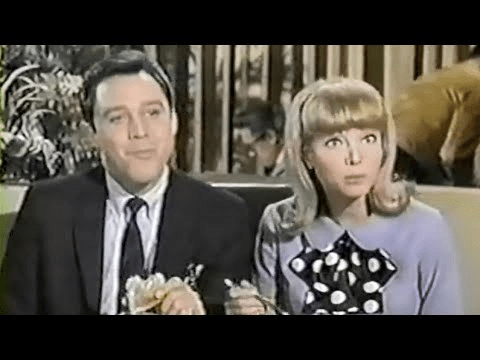
The show was about Peter, a junior New York business executive (Michael Callahan). When he realized married men are more likely to be promoted at his company, Brahms Baby Food, he asks hat check girl Greta (Patricia Harty) to pose as his wife for company functions. When he offers to pay for her rent and art lessons, she agrees, thinking it will be an occasional performance, but every time someone from the office drops by, Peter runs upstairs to bring her down to his apartment until they leave. One of the funniest parts of the show was the tenant played by Bryan O’Byrne who watches Peter and Greta running up and down the fire escape.

If you wondered if the name Patricia Harty sounds familiar, yes it does. She was Blondie and we talked about her in the first blog of this series.

📷imdb.com

The opening is reminiscent of Dragnet with its introduction “There are eight million stories in the Naked City. Some are violent, some sad, but one of them is just plain cuckoo. This is a modern fable about two young people who make a bargain only to find out they were going to get a lot more than they bargained for. We call our fable Occasional Wife and it stars Michael Callan and Patricia Harty.”

The series was created by Lawrence J. Cohen and Fred Freeman. Vin Scully, legendary sportscaster, provided the narration for the show. It started off ranked 18th but by the end of the season, it had dropped to 64th and was cancelled.

The show was up against The Red Skelton Hour and The Rounders. If you have been reading my blog any amount of time, you probably have heard me complaining about Red Skelton. I honestly could not stand watching the show and did not find it at all funny, but I also have read way too many accounts of what a jerk he was to his writers, cast members, and anyone else who he worked with. However, at this time, his show was in the top ten. The Rounders on the other hand, probably didn’t take many viewers away from this sitcom. The premise of the show, according to imdb.com, was that Howdy Lewis and Ben Jones are in debt to Jim Ed Love, second richest man in the state. They find some happiness with girlfriends Ada and Sally at the Longhorn Cafe.

📷popculturereferences.com

It sounds like Peter and Greta were flat characters and the comedy only relied on the situation of the fake marriage. Viewers would probably have liked to see some chemistry between the two and allow them to struggle with getting closer instead of both being happily single. There must have been some chemistry there because the actors married after the show ended. Just like their sitcom, their marriage failed to last two years.

This sitcom was one of the first series to eliminate the use of a laugh track. Now canned laughter is an industry standard, but they decided to can the canned laughter and not invite a live audience. I wonder if this might have affected viewers whether they knew it or not.

📷youtube.com

Bob Claver discussed his time producing this show in a Television Academy interview. Claver thought the show was funny and peppy, but he said they couldn’t make it a hit, even with Harry Ackerman as executive producer.

As with the other two series we discussed this month, Blondie and My Sister Eileen, you might be better off to run up or down your own fire escape and skip watching the show to get in a few extra steps.

Blondie: Some Shows Are Better Being Forgotten

This month we are taking a look at some classic sitcoms that many people don’t remember anymore.

Blondie is one of those shows. It was based on the Chic Young comic strip and debuted on NBC in 1957, lasting one year. The series was resurrected in 1968 and the reboot also lasted a season.

📷wikipedia.com The 1957 version

Blondie had become very popular with fans. Beginning in 1938, 28 movies were made starring Penny Singleton and Arthur Lake. Blondie also showed up on the radio from 1939 to 1950.  Many products had been based on the characters including comic books, coloring books, lunch boxes, and board games.

The 1957 series starred half the movie duo. Lake took on his role of Dagwood Bumstead, but Pamela Britton was offered the role of Blondie Bumstead. Their kids, Cookie and Alexander, were played by Ann Barnes and Stuffy Singer. Florenz Ames was boss J.C. Dithers with Elvia Allmana as his wife Cora. Rounding out the cast was Harold Peary as neighbor Herb Woodley.

📷imdb.com The 1968 version

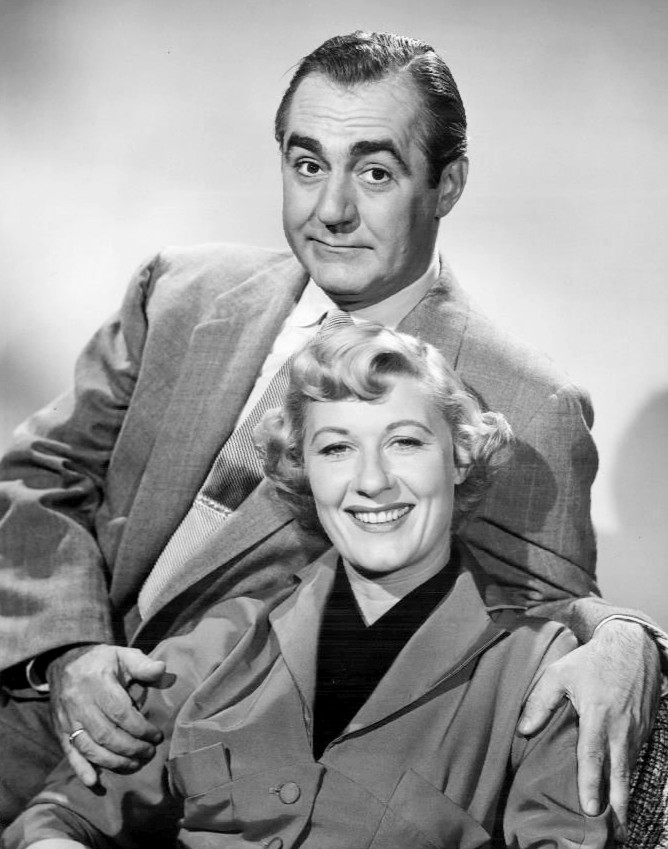
A decade later Will Hutchins and Patricia Harty play Dagwood and Blondie, Jim and Henny Backus play the Dithers, and Pamelyn Ferdin and Peter Robbins are their kids. The only advantage this series had over the original was color.

The comic strip, movies, radio show and both sitcoms all encompassed the familiar Bumstead elements: Dagwood being physically and socially awkward; their dog Daisy, and Dagwood’s love of napping and huge sandwiches.

The reboot was produced by Joe Connelly and Bob Mosher, the faces behind Leave It to Beaver and The Munsters. There was room in the schedule after the network cancelled He and She, a sitcom starring real life spouses Paula Prentiss and Richard Benjamin. The show is described on imdb.com as “Dick and Paula Hollister are a couple living in New York. Dick is a comic-book artist who has become famous for creating a superhero called Jetman, which has been turned into a TV show starring egocentric actor Oscar North.” During its one season of 26 episodes, the show received seven Emmy nominations, including a win for writing. It’s too bad that show was given the axe and Blondie moved in because the Prentiss-Benjamin show was much more creative and felt new, while Blondie felt extremely old.

No surprise, the ratings were not great. This is even worse when you see what the show was in competition with: The Ugliest Girl in Town, which would also be gone by 1969, and Daniel Boone. The one new 1968 show to return on CBS was Hawaii Five-0 which seems so much more sophisticated than Blondie; it’s hard to believe they both debuted the same year.

📷yahoo.com Hawaii Five-0

Perhaps the fans didn’t tune in because the critics panned the show before it aired. The Milwaukee Journal’s Wade Mosby said it was “a horrendously contrived piece of fluff that should have never been snatched from the comic pages.” Don Page of the Los Angeles Times called it “an unmitigated disaster,” and Cynthia Lowry of the Associated Press described it as “dismal.”

By November, rumors were that the show was already cancelled, and its last episode aired in January. The show probably relied too much on slapstick and unsophisticated humor; things that might have been fine in the 1930s but were passe by the 1960s. Sometimes a show is cancelled just because it’s a badly written and executed show. It seems Blondie fell into this category not once but twice.

Off the top of my head, I can only recall two comic strips becoming popular television shows: The Archies and The Addams Family. Because the Blondie characters were not very dimensional and got into the same situations over and over, they just never were able to translate into sustainable television characters. I think there’s a good reason that many people don’t remember this show and perhaps it’s better that way.

Jay Sommers Figured Out the Formula for Good Writing

I thought it might be fun to look at some unique aspects of writing for sitcoms in this blog series. This month we’ll take a look at a variety of writing subjects.

To begin this series, I wanted to learn a bit about a classic sitcom writer, and Jay Sommers came to mind immediately. He wrote more than 400 scripts.

Sommers was born in 1917 in New York City. Before veering into comedy, he attended the City College of New York and studied the not-so-funny topic of chemistry. Apparently, he had good chemistry with his girlfriend’s father who thought he was pretty funny. The dad was an executive with Bristol Myers and the company sponsored many radio shows.

Photo: rusc.com

In 1940 his relationship with his then girlfriend’s dad led to Sommers receiving an offer to write for Milton Berle’s radio show. Jay did not keep the girl, but he kept the career. He would go on to write for a variety of radio shows including The Alan Young Show, Eddie Cantor, Spike Jones, Lum and Abner, and Red Skelton.

In 1950 he became the producer, director, and writer for a show called Granby’s Green Acres. It only ran for two months, but it would inspire him to create Green Acres for television a decade later. The show was based on a book by S.J. Perelman titled Acres and Pains. The premise of the show was that a wealthy banker wants to become a farmer, so he and his wife move to the country. The banker was played by Gale Gordon and his wife was Bea Benardaret.

Gordon and Benardaret Photo: wikiwand.com

Sommers’ first job as a writer on television was for The Peter Lind Hayes Show in 1950; the episode starred Gloria Swanson. In 1951 he wrote for the Colgate Comedy Hour, along with an episode of the Buster Keaton Show.

1953 brought him recognition for an episode of Our Miss Brooks (“Clay City Chaperone”). He became busier in 1954 writing for My Friend Irma, The Red Skelton Hour, and The Great Gildersleeve.

In the late fifties, he contributed to Blondie, Bachelor Father, and The Donna Reed Show.

Sommers really came into his own as a writer in the sixties. Along with a few screenplays, he wrote for The Adventures of Ozzie and Harriet, The Jim Backus Show, Dennis the Menace, The Beverly Hillbillies, and Grindl.

Sommers enjoyed the most lucrative part of his career from 1964 to 1970, working on Petticoat Junction and Green Acres. Paul Henning had created The Beverly Hillbillies and Petticoat Junction for CBS. In 1965, the network asked Henning to come up with a new sitcom and said he did not have to film a pilot or give a pitch; they trusted him to develop whatever he wanted. Sommers suggested a television version of his old radio show, Granby’s Green Acres. With Gale Gordon and Bea Benardaret already committed to other shows, the hunt began for two new stars for Green Acres.

Tom Lester, last-surviving 'Green Acres' cast member, dies at 81 - National  | Globalnews.ca
Photo: globalnews.com Cast of Green Acres

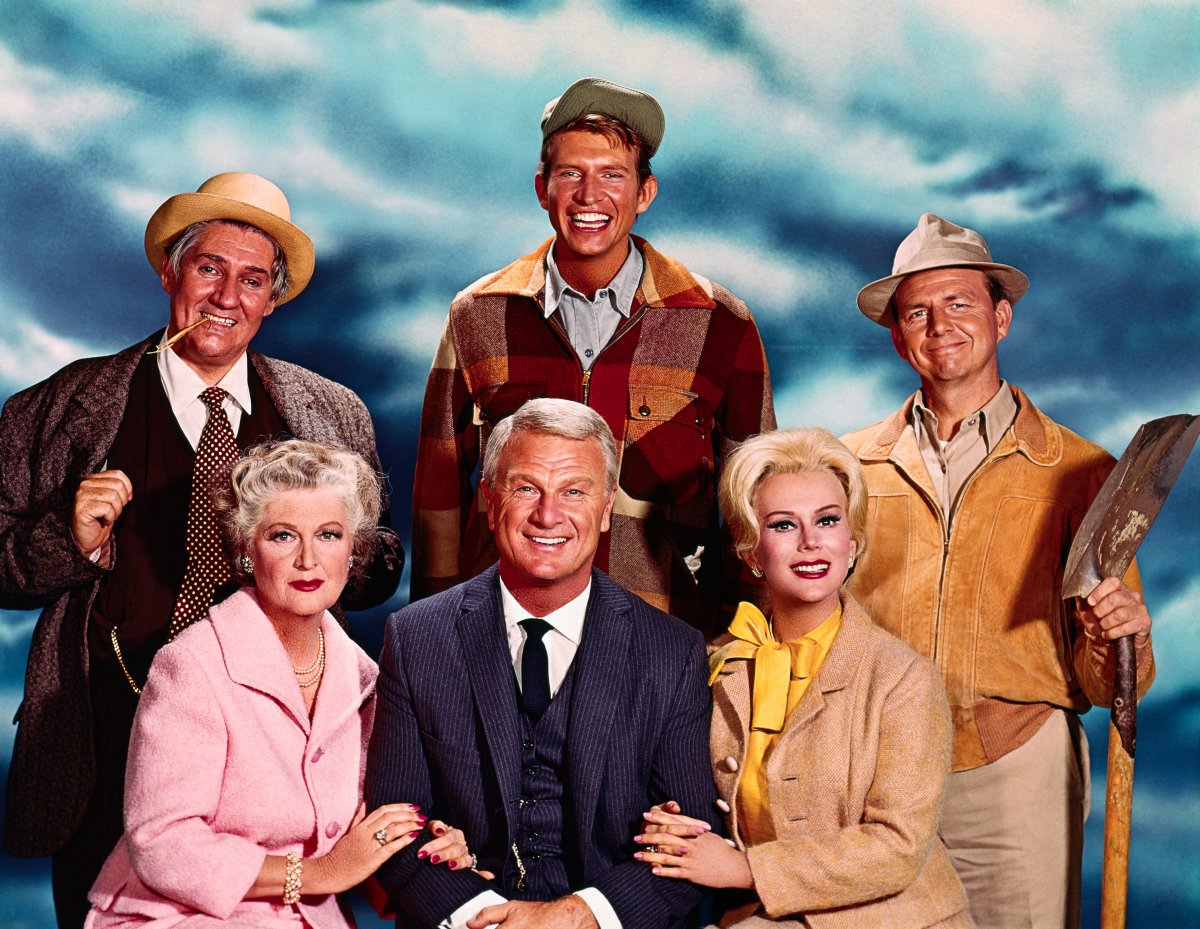
In the television show starring Eva Gabor and Eddie Albert, the banker is replaced by an attorney. Oliver Wendell Douglas and his wife Lisa leave glamorous Manhattan and move to a run-down farm in Hooterville. Lisa considers their handyman Eb their son and they bond with all the neighbors including Fred and Doris Ziffel and their pet pig Arnold, general store owner and postmaster Sam Drucker, and the folks from Petticoat Junction.

During an interview with the Television Academy, Paul Henning said his contribution was casting, and he let Jay do most of the writing and producing. The show resulted in 170 episodes and was canceled in 1971 when CBS decided to do a “rural purge” and get rid of any shows that fit that theme.

In another Television Academy interview with Richard L. Bare, who directed Green Acres, he said that he was the only director, Jay was the only producer, and that Jay and Dick Chevillat did all the writing. He said that the only other person on staff was a secretary. And, he said things worked out great. He said today there are way too many people on the set and it gets confusing. 

More Hooterville favorites Photo: sitcomsonline.com

Jay continued writing in the seventies, but he did not write a lot. His shows that decade included Hot L Baltimore, Good Times, Ball Four, Alice, and Hello Larry.

Jay passed away in 1985 in Los Angeles from a heart ailment. It was very hard to find much personal information about Jay and no photos. I do know that at some point he married Barbara and they had several children. So sad that we don’t know a lot about some of the people who contributed so much to the golden age of television.

Jay Sommers left us much too early. He came out of a chemistry background, proving you don’t have to teach someone to be funny. He wrote for some of my favorite shows including The Adventures of Ozzie and Harriet, The Donna Reed Show, and Bachelor Father.

Photo: findagrave.com

Sommers worked on three of the most iconic television sitcoms in the 1960s: The Beverly Hillbillies, Petticoat Junction, and Green Acres. If you have been with me for a while, you know I never really cared for The Beverly Hillbillies. I really enjoy Petticoat Junction and I think it’s well written, but I think Green Acres was one of the best-written sitcoms on television. It’s not easy to write about quirky characters without them seeming unbelievable, but Jay did it. He created characters we fell in love with and truly liked. He produced and wrote brilliant scripts week after week for more than five years. They were clever, witty, and sophisticated without being over the top. His grave marker sums it up, “WRITER.” Thank you, Jay Sommers for introducing us to the good folks in Hooterville.

The Millionaire and His Wife: Jim Backus and Natalie Schafer

backus9

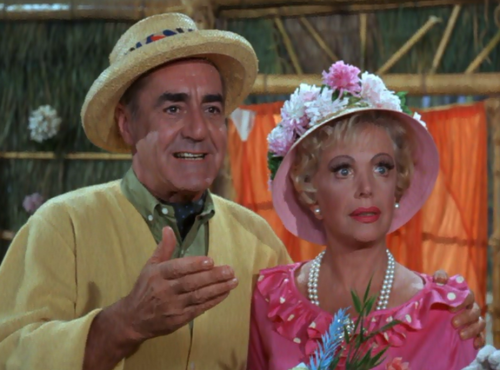
Today we continue our month-long series about the characters on Gilligan’s Island and the stars who portrayed them. We begin with the millionaire, Thurston Howell III, and his wife, Lovey. On the island, their money is worthless, but it doesn’t stop Mr. Howell from bribing other captives when it’s in his best interest.  He must have been a boy scout who learned the motto, “Be prepared,” because he and his wife took clothes on a three-hour tour to last a few years. In real life, Natalie Schafer was the millionaire. Both Backus and Schafer had very interesting careers.


Jim Backus

backus2

Jim Backus was born in Cleveland in February of 1913. He was one of those stars who seemed to excel in everything:  radio, Broadway, animation, big-screen movies, and television series. In an interesting aside, Margaret Hamilton who would go on to have a full career including the Wicked Witch of the West at the Wizard of Oz, was one of his grade school teachers. Jim grew up in a wealthy area, attending Shaw High School in East Cleveland. His father was a mechanical engineer. I could not find exact proof of this but several articles mention he was expelled from the Kentucky Military Institute for riding a horse in the mess hall. He later attended the American Academy of Dramatic Art.

In 1939 he married Betty Kean; they divorced in 1942. One of his famous quotes was “Many a man owes his success to his first wife and his second wife to his success.”

backus5

In the 1940s, Backus began appearing on radio as the “rich man,” which he often portrayed afterward on radio and television. He played the role of aviator Dexter Hayes on Society Girl on CBS Radio Network. He also appeared on the Mel Blanc Show as Hartley Benson, an arrogant character, and as Hubert Updike on The Alan Young Show. He also showed up regularly on The Jack Benny Program.

During his radio years, he married Henny Backus whom he was married to the rest of his life.

backus10

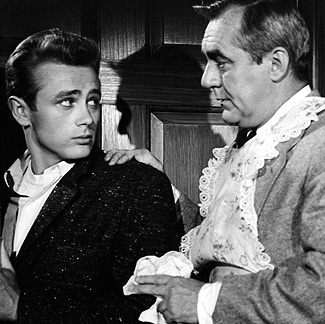
He began his big-screen cinema career in 1949 and would go on to appear in almost 100 movies, including Here Come the Nelsons, Pat and Mike, and Rebel Without a Cause (seen above). His most famous movie role was probably Tyler Fitzgerald in It’s a Mad Mad Mad Mad World. My favorite movie of his is Hello Down There with Tony Randall and Janet Leigh from 1969.

backus12

During the 1950s, he began auditioning for roles on television. He would go on to appear on 18 different series during that decade, including I Married Joan, on which he starred with Joan Davis. On the show, Backus played a respected judge and Davis was his scatterbrained wife. The show was very popular and lasted three seasons.

backus6

As if he wasn’t busy enough with acting in the 1950s, he also made a song recording with Phyllis Diller that hit the top 40 in 1958. It was called “Delicious,” and the two of them would take a sip of champagne throughout the song, saying “Delicious.” As the song continues, they get more drunk and a bit giddy, slurring their words and laughing hysterically.


His television career continued to be demanding in the 1960s. He appeared on 25 series, and four of them had regular starring sitcom roles. In 1960, The Jim Backus Show debuted. The program focuses on Backus in the role of Mike O’Toole, the editor/proprietor of a low rent wire service struggling to stay in business.

backus7


He had made movie shorts about Mr. Magoo in the 1950s and in 1960, he starred in 130 episodes of Mr. Magoo and would make 26 more episodes under the title The Famous Adventures of Mr. Magoo in 1964-1965. Mr. Magoo was an older nearsighted man who was very popular, appearing in ads and merchandise for years. The humor of the show was based on the difference between what Mr. Magoo thinks he sees and the reality of what was really there. Jim Backus liked to repeat a story about his famous character. He was in the movie, Don’t Bother to Knock, with Marilyn Monroe. She asked Jim to meet her in her dressing room later and his curiosity got the best of him, so he went, only to learn she wanted him to portray Mr. Magoo which he did.

backus11


This was also the decade he was offered the role of Thurston Howell III on Gilligan’s Island in 1964. That same year he was asked to play the role of Abner Kravitz on a new show, Bewitched but turned it down because he was committed to Gilligan’s Island. Gilligan’s Island would run from 1964-1967 and he would go on to appear in several Gilligan revivals including the far-fetched The Harlem Globetrotters on Gilligan’s Island.

backus3


During 1968-1969, Backus took the role of Mr. Dithers in a revival of Blondie.

During the 1960s, he also appeared on 77 Sunset Strip, The Beverly Hillbillies, Daniel Boone, The Wild, Wild West, and I Spy, among others.

backusb


Backus continued his television work into the 1970s where he appeared on 31 shows. He appeared in a variety of genres including I Dream of Jeannie, Young Dr. Kildare, Medical Center, The Brady Bunch, Gunsmoke, Ellery Queen, Charlie’s Angels, Fantasy Island, and The Love Boat.

backusa


Backus also continued his commercial work in the 1970s and 1980s. He was the spokesperson for La-Z-Boy furniture and General Electric. He and Natalie Schafer appeared in an ad for Redenbacher’s popcorn. They played their characters from Gilligan’s Island but apparently had been rescued and were in a luxurious home. In a sweet ending, it was the last television appearance for either of them.

When Jim Backus had a little bit of free time between acting jobs, he loved to golf. He also tried his hand at writing a few books and film scripts, including his autobiography which he wrote with his wife, Only When I Laugh in 1965.

book


In July of 1989, Backus died from pneumonia, after suffering from Parkinson’s disease for many years.

He had a long and varied career and seemed to have many friends in the business.


Natalie Schafer

schafer5

A millionaire in real life, Natalie Schafer seemed like a very fun woman, a bit of a character. She was born in November of 1900 in New Jersey and raised in Manhattan. She was quite secretive about her age, often claiming she was born in 1912.

She began her career in Broadway, appearing in 17 plays. She married actor Louis Calhern in 1934 and they divorced in 1942. She moved to Los Angeles in 1941 to become a film actress and received parts in 34 movies. Incidentally, she and her ex remained friends and appeared together in the movie Forever Darling in 1956.

schafer2


Like Backus, Schafer typically played wealthy and sophisticated roles. She did not have the versatility her tv husband had but continued to stay busy acting on television.  While Gilligan’s Island was her only long-term role, she appeared on 21 shows in the 1950s (including I Love Lucy, Loretta Young, Phil Silvers, and Topper); 8 in the 1960s (including The Beverly Hillbillies, 77 Sunset Strip, and Route 66); 15 in the 1970s (including Mayberry RFD, The Brady Bunch, and McMillan and Wife); and an additional 8 shows in the 1980s before she passed away (including Three’s Company, The Love Boat, Trapper John, and Simon and Simon).

schafer3


Schafer made most of her money from investments, particularly in real estate.

Several sources revealed that much of her fortune was bequeathed to either her Gilligan’s Island co-star Dawn Wells or to care for her dogs; however, at least $1.5 million was donated to the Lillian Booth Actors’ Home to renovate their outpatient wing. I never saw any answers from Wells about inheriting money, but on Vicki Lawrence’s talk show, she did say that Schafer spent her last years living with her. Like many wealthy people, she was quite thrifty.  She often admitted that she accepted the role of Mrs. Howell because she got a free trip to Hawaii to film the pilot and didn’t expect it to get picked up.


schafer1


Everyone seemed to like her on the set. Dawn Wells said she especially adored Schafer and Backus. Schafer was a hard worker and liked to keep fit. In a Chicago Tribune article from October 25, 1965, she relayed her secrets for staying in shape. For one thing, she did her own stunts on the show. She also said she swam nude every morning and evening, doing 100 strong kicks at the side of the pool. She also invented an ice cream diet for herself. She claimed to eat a quart a day, saying she had a bowl of vanilla ice cream with her coffee, two bowls of varying flavors for both lunch and dinner, and another single bowl for an afternoon snack. She claimed that she would lose three pounds in five days.
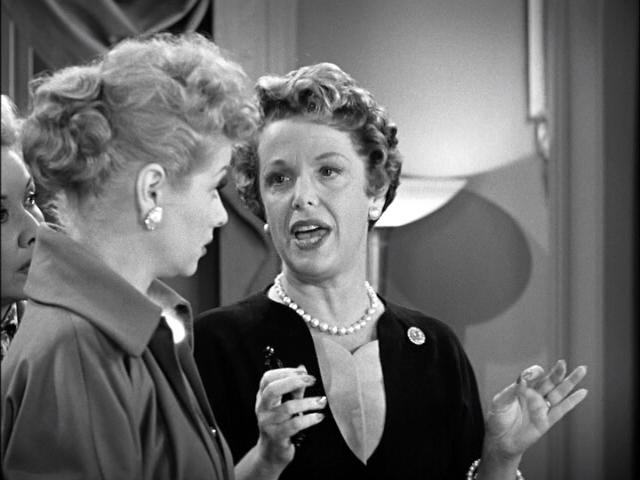
In 1990, Schafer passed away from liver cancer. After her death, she wanted people to realize her true age, and many of her closest friends were quite surprised to learn she was 12 years older than she claimed.

backus

While Thurston Howell III and his wife Lovey were two interesting characters, I don’t think they can compete with the characters who were Jim Backus and Natalie Schafer. I had a lot of fun learning about them.