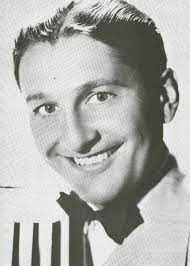
When I started thinking about icons from the 1950s, Lawrence Welk was the first person who came to mind. I was very lucky in having grandmothers that were about 11 years apart in age, and I received different knowledge and experiences from each of them. I always remember one weekend when I was at my maternal grandmother’s house and we watched Ike and Tina Turner in Central Park. Later at my paternal grandmother’s house, we watched The Lawrence Welk Show.
Let’s learn a bit about Lawrence and then take a closer look at his television show. Welk was born in 1903 in North Dakota. His parents settled there after leaving Odessa, part of the Russian Empire, now Ukraine.
The house where Welk grew up is now a tourist attraction. Their life there was not easy. Their first winter was spent living in an upturned wagon covered in sod. Welk quit school in the fourth grade to work on the family farm. The community spoke Russian, and Welk did not learn English very well until he was 21.
Somehow, when he was 17, Lawrence convinced his father to buy him an accordion for $400 (about $5500 today). He later said that he “wanted a good accordion because the reeds kept breaking on those cheap accordions all the time. And I told my father if he would buy me the real good accordion, the best accordion that’s available, I would stay on the farm until I was 21 years of age.”

After turning 21, Welk performed with a variety of bands in North and South Dakota. In 1927, Welk graduated from the MacPhail School of Music in Minneapolis. He formed an orchestra which became the band for WNAX in Yankton, South Dakota. From 1927-1936, they were on a daily radio show which led to a lot of engagements throughout the Midwest. During the thirties, Welk had a big band that specialized in dance music playing “sweet” music, unlike Benny Goodman who played more rhythmic big bands.
When the band was playing at the William Penn Hotel in Pittsburgh, a dancer referred to their music as “light and bubbly as champagne.” Welk took on the phrase to describe his music for the rest of his career.
In 1931 Welk married Fern Renner; they would remain married until his death.
In the forties, Welk’s band began a ten-year commitment at the Trianon Ballroom in Chicago. It was not unusual to have thousands of people come to watch them play.
In 1941, Decca Records signed Welk. He would later record for Mercury Records and Coral Records before moving to Dot Records in 1959. In 1967, Welk bought back all his masters from Dot and Coral and joined Randy Wood in a new venture, Ranwood Records. In 1979, Welk bought out Wood.

Welk moved to Los Angeles in 1951, so his family could have a stable home life. He produced a show called “The Lawrence Welk Show” on KTLA there which was broadcast from the Aragon Ballroom in Venice Beach. Four years later, ABC moved it to television. For the television show, the crew created a bubble machine to produce large bubbles that floated across the stage. It went through several variations until the soapy film did not land on instruments. Eventually, the machine was just used in the opening and closing of the show.
To appeal to a wider audience, Welk featured current songs as well as big band standards. Welk had a cast of performers who were on the show every week. Myron Floren played the accordion, Dick Kesner played the violin, Buddy Merrill was on guitar, and Pete Fountain took up the clarinet.
Some of those performers talked about their show in a 2021 article, https://www.kxnet.com/news/lawrence-welk-70-years-on-television/
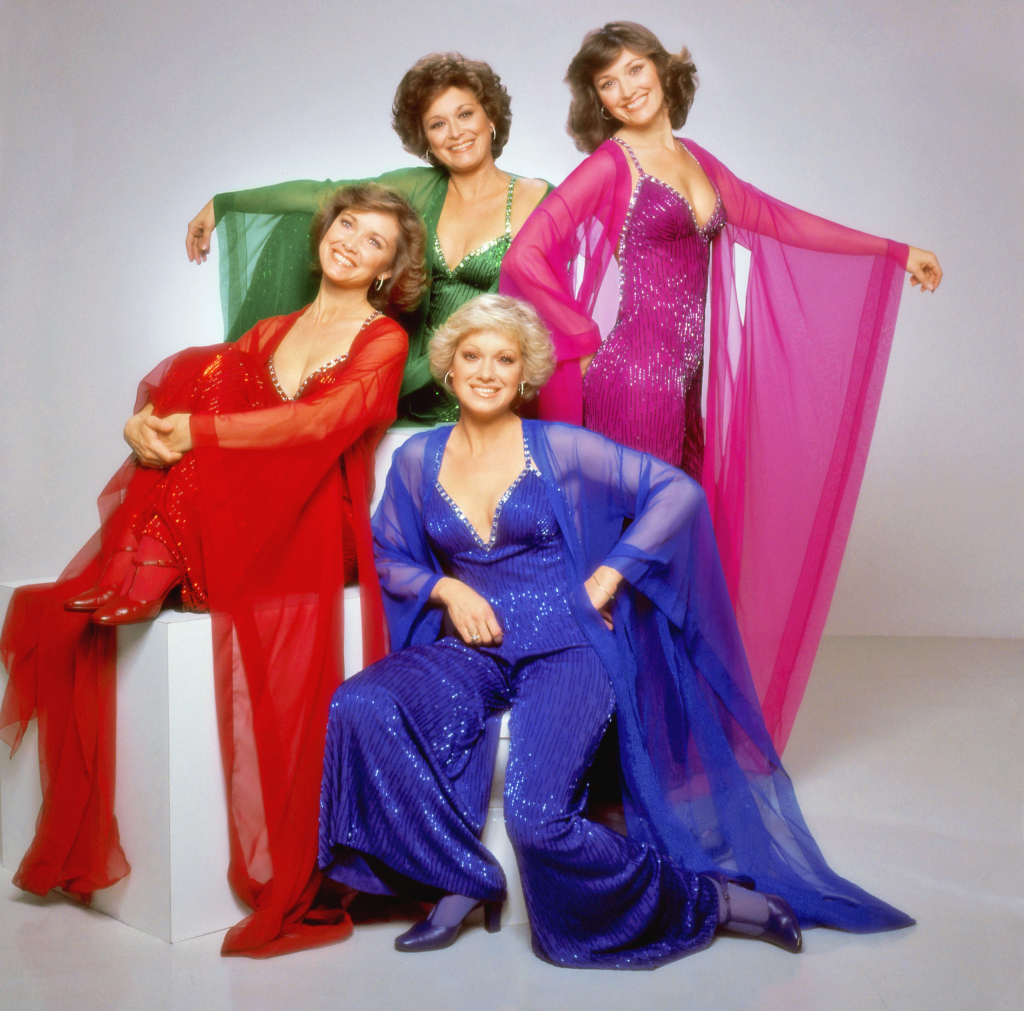
There were a lot of regulars on the show. The Lennon Sisters auditioned at Welk’s home. Kathy Lennon remembered that “Mrs. Welk was there . . . Mr. Welk came out and he indeed was sick. He had on a maroon, satin smoking jacket and velvet slippers. I mean it was like out of a movie somewhere. And he came, sat down on the couch, looked at us, and said, ‘Sing,’ just like that. So, we went over and hit the key on the piano and we sang . . . And he said, ‘Wow. Would you be on my Christmas show?’ And we were on every Saturday night after that for thirteen years.”
Bobby Burgess was one of the original Mouseketeers. He joined the troupe as a dancer in 1961. His dance partners included Barbara Boylan, Elaine Balden, and the one I remember, Cissy King. Burgess said that now he can enjoy watching the show. “I just love to watch the show now, because I was so focused on my dance routines that I never really got to sit down and enjoy it. Now I can turn on the reruns and enjoy Norma Zimmer or [husband and wife] Guy [Hovis] and Ralna [English].”
Ralna English said that “it was all beautiful music, beautiful sets, beautiful costumes and if you didn’t like something, wait a second.”

Other well-known performers included Jo Ann Castle, Gail Farrell, Joe Feeney, Larry Hooper, Sandy Griffiths, Mary Lou Metzger, Jimmy Roberts, and Tanya Falan Welk, Lawrence’s daughter-in-law. Norma Zimmer, mentioned above, was the Champagne Lady.
From 1955-1982, the show aired on Saturday nights. Until 1971 it was on ABC, and then the network canceled the show in the famous “rural purge” that got rid of Green Acres and Petticoat Junction, as well as a handful of other shows. Welk put his show into syndication for the next eleven years until his retirement. The show increased in viewership during that decade.
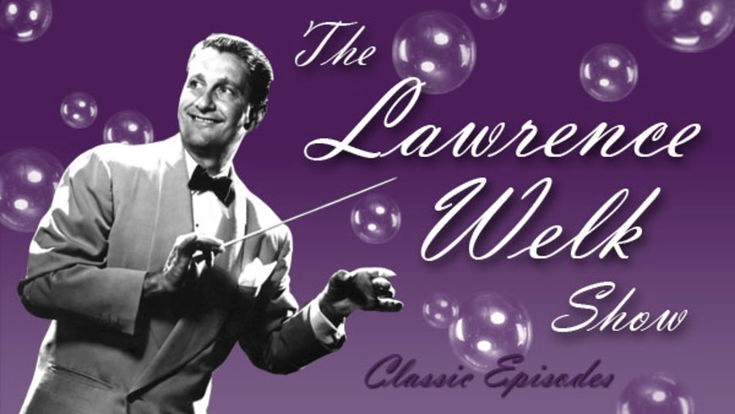
Welk took care of his money and expanded his business career. His company, Teleklew, Inc. invested in music publishing, recordings, and real estate. After the show ended, the corporation was renamed The Welk Group and included the Welk Music Group and the Welk Resort Group.
Lawrence also received four patents, including a musically themed restaurant menu, an accordion tray for serving food, and an accordion ashtray.
In 1992, Welk passed away from pneumonia.
As I mentioned, on Saturday nights, you can still tune in to PBS to catch a glimpse of what this show was all about, and maybe it will bring back some memories of your grandparents.








 thewritelife61