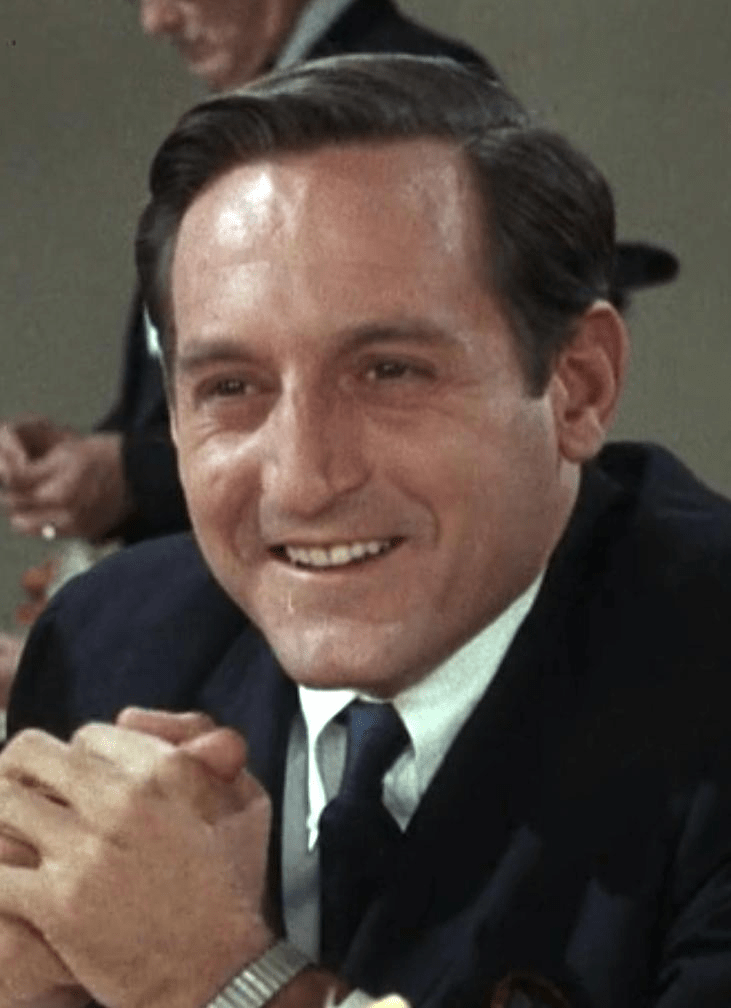
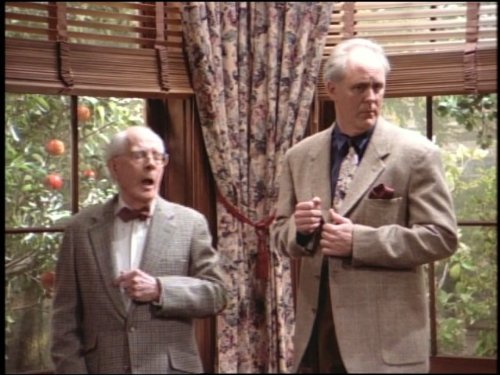
Sandra Gould: What a Character

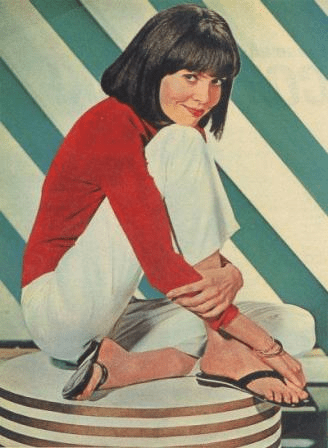
We are winding up our blog series “What a Character” with Sandra Gould. I have to be honest, I had an unfair bias against Sandra Gould.  I didn’t know a lot about her career, I just knew that she replaced Alice Pearce as Gladys Kravitz, and it was a bad replacement. It wasn’t Sandra’s fault—I blame the show’s producers.
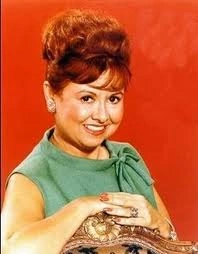
📷pinterest.com

Some actors truly are irreplaceable. Eartha Kitt, while a great Cat Woman, just wasn’t Julie Newmar. Imagine trying to replace Henry Winkler as the Fonz halfway into the show. Can you picture tuning into MASH and finding Hawkeye was now played by someone other than Alan Alda?  Pearce was perfect in that role and, despite her being nosy and annoying, she was likable and that is hard to do. Gould’s Gladys was loud and brash, and I felt like I heard fingernails on a chalkboard whenever she was in a scene.

As long as I’m oversharing, I never cared for Dick Sargent either. While he was able to replace Dick York in some ways, York was just Darrin. Okay, I’m done and ready to talk about the good aspects of Sandra Gould and her long career.

Gould was born in Brooklyn in 1916. She entered the entertainment business early becoming a kid dancer in the Cat Skills by age 13.

📷threads.com

Gould found a lot of success on radio, appearing on “My Friend Irma” and “Duffy’s Tavern.” Her first radio job came along when she was only 9 on “The Danny Thomas Show.” Gould was with Jack Benny for almost fifteen years.

In 1938 she married Larry Berns, a broadcasting executive. They were married until his death in 1965. Berns joined CBS in 1942 writing and producing radio and TV series including Our Miss Brooks. He later worked on McHale’s Navy and Broadside.

Sandra’s first role was in the big screen T-Men in 1947. Most of her roles were inept or gabby women, typically a telephone operator, nurse, receptionist, landlady, or saleswoman. Gould once mentioned that she played an operator more than any other actress. I did notice 10-15% of her roles mentioned switchboard operators.
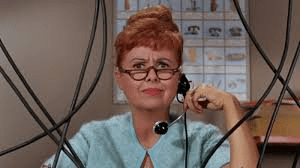
📷facebook.com

While she continued to appear in movies, most of her acting credits came on television. She appeared in Oboler Comedy Theater in 1949. In the early days of television, many of the series were drama or comedy reenactments of movies or plays. Sometimes, new stories were written for these episodes. Gould continued with these roles into the mid-fifties.

From 1952-55 she appeared as Mildred on I Married Joan. This series starred Joan Davis and Jim Backus. He was a judge, and she was another “Lucy Ricardo” always getting into mischief or causing hardships for her husband.

📷tumblr.com

Gould was kept very busy with offers during the end of the fifties and throughout the sixties. She could be seen doing comedy on Our Miss Brooks, I Love Lucy, The Jack Benny Program, My Three Sons, The Brady Bunch, and I Dream of Jeannie among others. She also tried western life on Wagon Train. Her drama performances included Hawaiian Eye and I Spy. She even dipped her toe into animation on The Flintstones.

At the end of the sixties, she was given the Glady Kravitz role. Pearce and Gould split the character’s appearances: Pearce had 27 episodes with Gould having 29.

Gould had stepped away from acting for a time. She published two books for girls: Always Say Maybe and Sexpots and Pans. They both seem quite dated today in their advice to girls to get the right type of husband. At the time she accepted the role of Gladys she said she had gone through a very rough year. Her husband died. Then her writing partner Peter Barry died. Then Alice Pearce, who was a good friend of hers. She had no desire to take over the role, but George Tobias who played Abner and was also a friend, called her to come in for an audition.
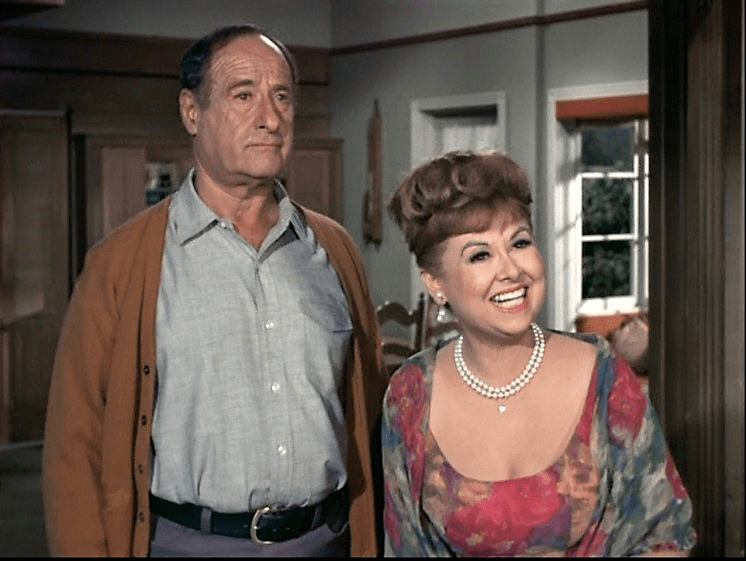
📷imdb.com

I could not find any information about she and Barry collaborating. One article specifically mentioned that they wrote scripts for Honey West, Tammy, and The John Forsythe Show, but I don’t see either of their names as writers for these shows. Barry is listed as a writer for 23 shows in the late fifties and early sixties, and he was a radio scriptwriter. Perhaps they had written some scripts that were never filmed.

I guess I am in the minority on the Bewitched issue because most sites I visited described her role similarly, usually something like Hollywood Spotlight’s description: “her over-the-top performance and shrill voice were popular with viewers, and she succeeded ultimately in making the character her own.” She also reprised her role as Gladys in the sitcom Tabitha in 1977 which was about Darrin and Samantha’s daughter as an adult.

Some time during her stint on Bewitched, she got married again to Hollingsworth Morse, and they were together until his death in 1988. Hollingsworth was a director and assistant director on almost 90 programs and movies including McHale’s Navy, Dukes of Hazzard, and Mork and Mindy.

The seventies and eighties found her primarily in drama roles, although she could be spotted in a handful of sitcoms. You can catch her on Columbo, Marcus Welby MD, Ironside, Crazy Like a Fox, and MacGyver. During the nineties, she took on roles that were described as “old lady” on Friends and on her last appearance which was Boy Meets World in 1999.

📷bewitched wiki.com

Not long after filming this episode, Gould passed away from a stroke following heart surgery.

Gould had a long and successful career and certainly made the nosy, gabby character her own. I’m glad the job on Bewitched helped her get through a very sad and difficult time in her life. However, I still am claiming she was not right for Gladys who should have been written off the show and just replaced with a new neighbor. But I respect Gould and the characters she made her own on the big and little screens.

Stagecoach West: Experiencing Life in Outpost

As we celebrate westerns this month in our blog series “Go West Young Man,” we are tuning in to Stagecoach West which traveled across the air waves from 1960-1961. The show debuted in October of 1960 with the final episode airing in June of 1961. For the summer, reruns of the show continued. The thirty-eight episodes were on Tuesday nights.

📷wikipedia.com

The show features two Civil War veterans, Luke Perry (Wayne Rogers) and Simon Kane (Robert Bray), who own a stagecoach line and share driving duties in the Wyoming territory. It was fun to see a young Rogers decades before he showed up in Korea bantering with Alan Alda. During their trips they run into murders, robberies, range wars, renegade soldiers, and passengers who have their own drama. Simon’s son Davey (Richard Eyer) often travels with the men.

They are based in Outpost, a small frontier town. We get to know several townspeople including Dan Murchison (John Litel) who runs the general store and bank; Zeke Bonner (James Burke) who rents rooms at The Halfway House; Hugh Strickland (Robert J. Stevenson), the Marshal in Timberline; and Doc Apperson (played by J. Pat O’Malley and Sydney Smith).

📷rottentomatoes.com

Vincent M. Fennelly was the producer and there were several directors, with Thomas Carr taking the helm most often. There was also a long list of writers, but D.D. Beauchamp and Mary Beauchamp penned many of the scripts. From what I could learn about the Beauchamps, they didn’t work together but wrote their own episodes. Mary was known for her work on Bat Masterson and Tales of West Fargo in addition to this show. D.D. (Daniel Deronda) is best remembered as a writer for Daniel Boone. His third wife was Mary Mitchell, so I am guessing that Mary Mitchell and Mary Beauchamp are the same person. Sounds like she and her husband were cremated, so there is no findagrave site for her.

The theme song was composed by Skip Martin and Terry Gilkyson. This was the only time I could find where this duo worked together. They had very different careers. Gilkyson was part of The Weavers and The Easy Riders. In 1960 he went to work for Walt Disney and was nominated for an Oscar for “The Bare Necessities” in Jungle Book. Martin worked with jazz and swing bands in the 1930s and 40s including Count Basie and Glenn Miller. With Les Brown, he was given credit for writing “I’ve Got My Love to Keep Me Warm.” In the 1950s he moved to Hollywood where he worked on Singin’ in the Rain and A Star is Born.

📷westernserieswiki.com

Richard Eyer in an interview said the show “kept me busy and was usually fun. It was a very positive experience. When they hired me, it was sort of a transitional point . . when we did the pilot I was 13 and quite young . . . we started production eight months [later] . . . I was into puberty and adolescence.”

Tuesday nights’ competition in 1960 was Thriller on NBC and The Tom Ewell Show and The Red Skelton Show on CBS. Thriller was an interesting show hosted by Boris Karloff. It began as an anthology focusing on crime but later transitioned to gothic horror stories. The Tom Ewell Show also began and ended in 1960. Ewell plays a real estate agent who lives with a lot of women, namely his wife, daughters, and mother-in-law. ABC aired The Rifleman and The Legend of Wyatt Earp before Stagecoach West.

The show never gained viewers, so it was cancelled in June. If you follow me, you know I don’t have the most positive feelings about Red Skelton and how he treated the people who worked for him, but it was a very popular show and some of the episodes were in color, so a lot of people were tuning into to watch him. I wonder if because two westerns were on earlier in the evening, people were ready to watch another genre. In addition to this night of programming, there were another 15 westerns on during the evenings on the other days of the week. The other factor that comes into play is that both The Rifleman and The Many Loves of Dobie Gillis on CBS were in the top thirty. I wonder how many viewers watched The Rifleman on ABC and then switched networks to Dobie Gillis on NBC and then never returned to ABC for the rest of the evening.

It would be a fun and easy binge watch if you want to tune in even to see the guest stars and learn some of the issues that were dealt with during this era of travel.

Noam Pitlik: What a Character

📷imdb.com

This month we are right in the middle of one of my favorite blog series, What a Character. This week we are delving into the career of Noam Pitlik; in addition to his acting, he won an Emmy for his work as a director. Which show? Let’s find out.

Pitlik was born in Philadelphia in 1932. After graduating from high school, he enrolled at Gratz College and later was a theater major at Temple University in 1954. Pitlik had a two-year stunt in the Army and earned a master’s degree in theater at New York University.

He began his acting career on WCAU in a western. In 1951, he was hired for the set design and construction crew for the Philadelphia Experimental Theater. He carried a bit of his hometown with him when he was part of the Summer Theater Guild in Indiana, Pennsylvania in the “Philadelphia Story.” He was hired for his Broadway debut in an off-Broadway production of The Threepenny Opera.”

📷imdb.com

In 1961 he moved to Los Angeles and received his first television roles, appearing on Cain’s Hundred and Dr. Kildare. Cain’s Hundred was not a show I remembered hearing much about. It was about a former underworld lawyer who works with the federal government to bring the top 100 criminals to justice. The show lasted one season. Pitlik had a variety of offers for shows throughout the sixties. Most of them were dramas and westerns, but we also see him on My Favorite Martian, The Munsters, Gidget, The Flying Nun, The Monkees, The Andy Griffith Show, The Doris Day Show, Get Smart, That Girl, and I Dream of Jeannie.

During the sixties, he married for the first time. His marriage with Jesse Blostein in 1967 would only last three years.

Pitlik also appeared in fourteen films and eight made-for-tv movies. The most memorable films are The Graduate, Fitzwilly, and The Fortune Cookie.

📷famousfix.com

The seventies were his most prolific decade of acting. He appeared in 26 different series, often in 2-5 different episodes. You’ll see Pitlik in reruns in a variety of genres including Hogan’s Heroes, Room 222, Bewitched, Love American Style, All in the Family, The FBI, Cannon, Mannix, The Partridge Family, The Bob Newhart Show, The Odd Couple, and Barney Miller. His last acting appearance was in Becker in 1998.

The seventies were also when he tried the role of husband again, marrying Linda Hirsch in 1974; this marriage also lasted three years.

He began directing in the seventies and obtained 39 directing credits throughout the next two decades.

📷imdb.com

In an interview with Temple University for the Alumni Review in 1979, Pitlik said that the switch in his career was not “a case of my needing to change functions for economic reasons.  I used to figure out what I made a day as an actor, and it was obscene. I changed for emotional reasons. I had become very frustrated by the kinds of things I was doing in acting, and I was looking for a change in my life that would be more challenging. I enjoyed acting, but I never seemed to get enough to do.” His first episode as director was on The New Dick Van Dyke Show. He directed 12 episodes for The Practice and 11 for Taxi.

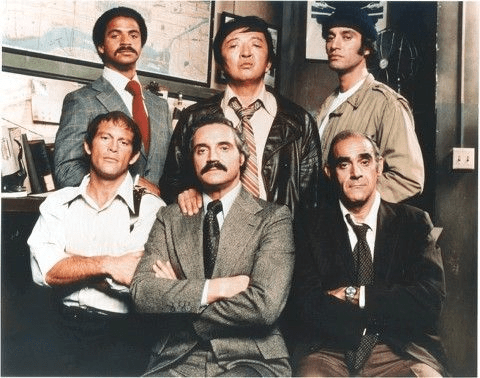
However, Barney Miller was where he perfected his skill as director for 102 of its 171 episodes. In 1979, he won an Emmy as Director for the show. He beat out Paul Bogart for All in the Family, Alan Alda and Charles Dubin for M*A*S*H, and Jay Sandrich for Soap. He also received a Peabody Award and a Directors Guild of America Award for his work on Barney Miller. He lost the Emmy in 1981 to James Burrows for Taxi. His co-nominees included Jerry Paris for Happy Days, Linda Day for Archie Bunker’s Place, Burt Metcalfe and Alan Alda for M*A*S*H, and Rod Daniel for WKRP in Cincinnati.

📷tumblr.com Cast of Barney Miller

In the Temple interview, Pitlik said that his “main responsibility is to create an atmosphere in which each of the people involved in the production can conform to their best work. Although a director oversees all aspects of the production, there are many people involved, and he’s dependent on all of them. There’s no more collaborative business than the television business. Each person contributes to the success or failure of a show whether he or she is a writer, actor, cameraman, or whatever.”

In 1995 he began directing episodes of The Home Court and did so for 14 of the 20 episodes. I must admit I do not remember this show at all. The synopsis was Sydney Solomon was a family court judge who had to deal with the toughest prosecuting attorneys and repeat offenders. However, her biggest challenges came when dealing with her kids, four boys aged 11-19.

📷pinterest.com

Pitlik had better luck with his third marriage to Susan Whittaker which lasted from 1986 until his death in 1999. Whittaker was a television producer. Noam passed away from lung cancer at age 66.

Like Jerry Paris, Pitlik had a very successful acting career before finding his passion behind the camera. If you are responsible for directing a series, Barney Miller is a great accomplishment. It was fun to learn more about his career both in front of and behind the camera.

Marcia Wallace: What a Character

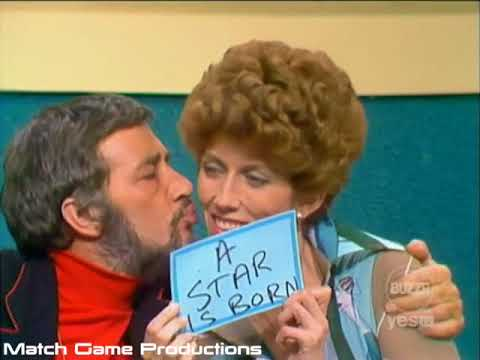
📷matchgamewikifandom.com

When trying to decide who to include in our Supportive Women blog series this month, Marcia Wallace was a no-brainer. Carol was one of my favorite characters on television on The Bob Newhart Show, and I love the fact that her role carried over into an episode of Murphy Brown.

Marcia Wallace was born in 1942 in Iowa. Her father owned a general store where she and her siblings often worked. After performing in a school play, one of her teachers encouraged her to pursue an acting career. After graduation, Marcia enrolled in Parsons College in Fairfield, Iowa where she received a full scholarship. She majored in English and Theater.

Upon her college graduation, Marcia decided to move to New York. The country gal had $148 in her savings. When she arrived in the Big Apple, she took on a variety of part-time jobs including typing scripts and substitute teaching. She joined a summer stock company and did a few commercials. She worked in a Greenwich Village nightclub for a year before creating an improv group, The Fourth Wall, with several friends. While she kept the friends, she lost 100 pounds.

Eventually, Wallace was offered a job with The Merv Griffin Show. When Merv decided to move to LA, he asked Wallace to move with them. She was able to obtain a few roles in series after moving to California. During the sixties and early seventies, she was on Bewitched, The Brady Bunch, Columbo, and Love American Style.

📷tvinsider.com

After Bill Paley had seen her on Merv Griffin, Grant Tinker (producer) called her to offer her a role on a new sitcom, The Bob Newhart Show. The role of Carol was written specifically for her.

Marcia loved her time on the sitcom. She said Bob was the Fred Astaire of comedy, making it look so easy. She also praised Bob for being a treasure. Because of the way the scripts were written, the show doesn’t date itself. It was about human relationships and people struggling to make them work and make life better.

When The Bob Newhart Show went off the air six years later, Marcia jumped on the game show circuit. Shecould be seen on Password Plus; Super Password; Hollywood Squares; Crosswits; Hot Potato; The $25,000 Pyramid; Win, Lose, or Draw; Tattletales; To Tell the Truth; Family Feud; Card Sharks; and my favorite, Match Game.

📷youtube.com

Like so many actresses and actors who perform their role so well, Marcia was typecast after the show ended. In an interview, she said that “I have heard ‘You’re too recognizable for this part.’ I remember once, I desperately wanted to be on the series Nine to Five and they just weren’t going to see me because of that. Every once in a while, something would break my heart.”

Wallace also made appearances on The Love Boat and Fantasy Island in the seventies. During the eighties she would show up on CHiPs, Magnum PI, Taxi, Murder She Wrote, Night Court, and ALF, among other shows.

One of my favorite appearances of Wallace’s occurred in the mid-nineties on Murphy Brown. If you were a fan of that show, you know Murphy could not keep a secretary. There was even a support group that started of her former secretaries. However, when Carol Kester came to work for her, she was overjoyed. Carol was the role Wallace played on The Bob Newhart Show. Unfortunately for Murphy, at one point during the show, Bob Newhart shows up and convinces Carol to return to work for him and Jerry and Murphy lost her perfect assistant.

Most of Wallace’s work after 2000 was for voice work with one exception. In 2009, she had a recurring role on The Young and the Restless as Annie Wilkes for 14 episodes.

In 1985 Marcia was diagnosed with breast cancer. She survived it and became an activist and lecturer on the topic. In 2007, she won the Gilda Radner Courage Award for her work in this area.

In 1986 Marcia married Dennis Hawley in a Buddhist ceremony. Dennis renovated and managed hotels. The couple adopted a little boy, but Dennis passed away three years later.

📷imdb.com

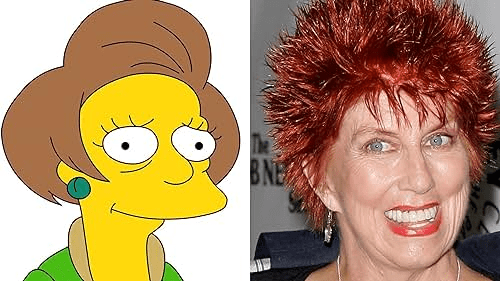
In 1989, a new type of show debuted called The Simpsons. Marcia was asked to provide the voice of Edna Krabappel, school teacher. She probably did not realize she would be associated with that role for another 24 years. Her role as Edna did not end until her passing.

In addition to her television work, Wallace performed on stage. She produced and starred in “An Almost Perfect Person,” a female version of “The Odd Couple,” “Same Time, Next Year” and many others.

In 2004, Wallace published an autobiography, Don’t Look Back, We’re Not Going That Way. She honestly discussed her breast cancer, the loss of her husband, her nervous breakdown, being a single mother, and the ups and downs of her career.

Marcia died from pneumonia and sepsis in 2013. Her coworkers commented on her passing. Yeardley Smith, who voices Lisa on The Simpsons, said “Heaven is now a much funnier place because of you, Marcia.” Bob Newhart said that “Marcia’s death came as quite a shock, she left us too early. She was a talented actress and dear friend.”

📷onceuponascreen.com

I’m so sad that Marcia was typecast and unable to get the roles that she wanted. The networks were very shortsighted during those decades. They didn’t give television fans enough credit for being resilient enough to love the character of Carol while being able to love another character played by Wallace. You saw the same things happen to Adam West, Alan Alda, and Henry Winkler. If that perspective had continued, we never would have had Mary Richards on The Mary Tyler Moore Show or Jay Pritchett from Modern Family. If someone could be a hit as Al Bundy and then go on to star in another show, anyone can get beyond being stereotyped. Marcia Wallace proved that anyone could survive life’s disappointments with determination and a sense of humor, and perhaps that was her greatest role for us.

Dick Van Patten: He Was Enough

We are discussing some of our favorite actors who were typically supporting actors. In the case of today’s subject, he did star in a television show, but he was so great in other assisting roles, we are including him here as well. Today we get to know Dick Van Patten.

📷nypldigitalcollections.com Off Broadway

Van Patten was born in 1928 in Queens, New York. His father was an interior decorator, and his mother worked in advertising. Joyce Van Patten is his sister. Van Patten began working as a model and actor while he was still a child. He was only four when he joined John Robert Powers, a modeling agency, where made $5 an hour.

His first Broadway appearance was in “Tapestry in Gray” when he was seven, and he appeared in many plays by the time he graduated from the Professional Children’s School in New York City.

At that time, he moved to Hollywood. In 1949 he accepted the role of Nels Hansen on the early sitcom, Mama, about a Norwegian family living in San Francisco. The show was on the air until 1957, for a total of 327 episodes.

In 1954 Van Patten married Patricia Poole. She was a professional dancer, part of the June Taylor Dancers on The Jackie Gleason Show. Their son Vincent was on Apple’s Way in the mid-seventies, with 65 credits to his name. He is married to Eileen Davidson, who is Ashley Abbot in The Young and the Restless.

📷wikipedia.com On the set with friend Dick Van Dyke

Van Patten’s sister Joyce also began her career as a child. With 160 acting credits, she also has been very busy for decades, starring in The Good Guys. She was married to Martin Balsam from 1957-1962, another prolific actor. Van Patten’s niece Talia, who has also amassed more than 100 acting credits, was married to George Clooney and then John Slattery, star of several shows including Mad Men. So, this is a well-known family in entertainment.

In the fifties and sixties, most of Van Patten’s roles on television were in dramas and a few westerns. In the seventies, he took on his first comedy roles, appearing on I Dream of Jeannie, The Governor and JJ, Arnie, That Girl, Sanford and Son, The Doris Day Show, The Paul Lynde Show, Love American Style, The New Dick Van Dyke Show, Maude, Phyllis, Happy Days, and One Day at a Time, among others. He also accepted a few drama roles on shows such as Cannon, Adam-12, The Streets of San Francisco, Medical Center, and Barnaby Jones. After appearing on The New Dick Van Dyke Show in 1971, Van Patten and Van Dyke became life-long friends.

He appeared in 36 movies, his first being Violent Midnight in 1963. Spaceballs, Robin Hood: Men in Tights, and High Anxiety, all with Mel Brooks, were probably his best-known films. In 2014, Van Patten said working with Brooks was “great. It’s like a game. It’s not like work. He keeps you laughing the full day on the set. He’s just a funny man.” Van Patten also accepted 28 made-for-tv movie roles.

In 1977, he took on the role that would make him a household name: that of Tom Bradford on Eight is Enough. He played a newspaper publisher with eight kids. His wife dies early in the series, and Tom remarries.

Van Patten auditioned for the role of Tom Bradford but was not given the part. When the producers watched the first day of shooting, they scrapped the entire production. Fred Silverman then hired Van Patten.

📷showbizcheatsheet.com Cast of Eight is Enough

It’s interesting to wonder what his career would have been like if he had declined Eight is Enough and accepted the role he was offered of Dr. Adam Brinker on The Love Boat. Since he had already agreed to appear on Eight is Enough, the role went to Bernie Kopell.

In an interview with the St. Petersburg Times in 1989, Van Patten discussed his character on Eight is Enough: “Tom Bradford is a lot like the real me. He’s a man who always put his career second to his family. As long as everything was OK at home, he was OK too.”

Sadly, the cast did not learn of the cancellation of Eight is Enough from the network. Van Patten said “nobody called me to tell me it was canceled. I read it in the paper.”

Van Patten never received a starring role again, but he did keep very busy in the eighties and nineties appearing in many popular shows, including Love Boat, Murder She Wrote, The Facts of Life, Growing Pains, and Diagnosis: Murder.

He was in a handful of shows in the 2000s with Hot in Cleveland in 2011 being his last appearance on television.

He published a book in 2009 titled Eighty is Not Enough!, his memoir. He had also written Launching Your Child in Show Biz: A Compete Step-By-Step Guide and Totally Terrific TV Trivia. In 2001, he was honorary mayor of Sherman Oaks, California.

Van Patten was an animal advocate, and he created Natural Balance Pet Foods and the National Guide Dog Month to raise awareness and money for nonprofit guide dog schools.

Van Patten also participated in a variety of hobbies. Like Tom Bradford, he loved spending time with this family. He also owned thoroughbreds and attended horse racing events. He enjoyed playing poker, golf, swimming and reading. Most Sundays he headed to the tennis courts to meet Alan Alda, Mel Brooks, and Gene Wilder.

📷latimes.com

In 2006, Van Patten suffered a diabetic stroke. He made a full recovery and lived another nine years, passing away in 2015 from diabetes complications. He was still married to Patricia.

His son Tommy on Eight is Enough, Willie Aames, said Van Patten “was truly a gem who will be missed.” His second wife, Abby, on the show played by Betty Buckley, recalled that “every day on the set he was a happy, jovial person, always generous and ready to play, tease, and always keep us laughing. He was the consummate professional, a wonderful actor, master of comedy, and a kind and generous human being.”

📷imdb.com

Van Patten had an extremely successful career. For more than seven decades he was part of the entertainment community. In addition to his stage productions, films, and television work, he appeared in more than 600 radio show episodes and was in Weird Al Yankovic’s music video “Smells Like Nirvana.” He said that he had “fun doing this and going through my life. I’ve had a great life. It was exciting. I worked with the most interesting people, and I traveled all over the country.”

His reflection on his work is great advice for all of us. Van Patten said that he wanted to express the “single idea that has governed my entire life, that every moment of life is precious, that every step we take is an adventure, that every day on earth is a gift from God.” Thanks, Dick Van Patten, for leaving us with this inspiration and for taking your gifts and presenting them to us in the form of many wonderful memories.

Barbara Feldon Did Not Have to Get Smart: She Was Born That Way

This month’s blog is taking a look at some Supportive Women. First up is Barbara Feldon, costar with Don Adams in Get Smart.

Photo: getsmartwikifandom.com

Feldon was born Barbara Anne Hall in 1933 in Pennsylvania, near Pittsburgh. During an interview with Emerson College, Barbara talked about the ecstasy of performing in a little band in first grade. When things stopped, she got to play her triangle, and the thought that everyone was watching her, and her mother’s pride in seeing her made her want to perform more. In sixth grade she went into the gym to watch her friend doing her ballet lessons. The teacher invited Barbara to join them and played Tchaikovsky’s Nutcracker music; that combination of music and movement took her away to another place. She was hooked at that point, and she knew that she wanted to dance.

She trained at the Pittsburgh Playhouse and then graduated from Carnegie Mellon University with a BA in drama in 1955. They didn’t have a dance program, and her mother thought Bennington, where she wanted to go for dance, was too expensive and too liberal. While she enjoyed acting, it never had the enchantment for her that dance did.

Feldon made her way to New York and studied at the HB Studio. She briefly had a career as a showgirl at the Copacabana. She said “that was my first professional job in New York and it was probably the highlight of my whole career. We got to dance with Jimmy Durante. Oh, my God, it was a thrill.” They replaced the girls every three months so, then she went on to appear in The Ziegfield Follies. She landed one job that never made it to Broadway. A friend of hers who was a model talked her into exploring a modeling career.

Photo: punkglobe.com

She worked as a model and was in a Revlon commercial about a hair pomade for men, Top Brass. Feldon said commercials were excellent training to get experience in acting. You do the same scene over and over, maybe more than forty times, but you have to keep that spontaneity. “You must remember to stress each word properly and come in on a split-second when that camera rolls.”

Like several actresses that we have discussed in this blog, before Feldon got her first big break, she appeared on a game show. In this instance, she was on The $64,000 Question in 1955, and she won the grand prize of $64,000 in the category of Shakespeare.

She didn’t use her winnings to buy a mansion or live the typical party life. She opened an art gallery with a man who was a photographer and ad man who was no longer interested in advertising named Lucien Verdoux Feldon. Barbara would be the subject of a Warhol pop art painting in 1965.

In 1958 Barbara married Lucien Feldon. They divorced nine years later. She had a longer relationship with one of the Get Smart producers, Burt Nodella and when that ended, she moved back to New York City.

After her commercial debut, she received offers for several television roles in the early sixties including The Man From U.N.C.L.E. and Flipper. She was also offered a chance to appear on East Side/West Side with George C. Scott. Colleen Dewhurst was her mentor and Scott’s wife. He asked her to play his girlfriend in the next episode. Talent Associates which produced the show was working with Mel Brooks and Buck Henry on a potential spy spoof called Get Smart. Her second television role was as a spy. So, when Talent Associates was casting for a spy on Get Smart, she was an obvious choice.

Photo: facebook.com

She turned down the role at first because she didn’t want to move from New York to California, but she did love the script. They agreed to offer her a two-year contract instead of a five-year contract, and she accepted. Her first review was in TV Guide which compared her to the dog and concluded that the dog came off better. She was devastated and humiliated. In later years, the reviewer rated her performance much better.

From 1965 till 1970, Feldon was known as Agent 99 working with Maxwell Smart for CONTROL. In both 1968 and 1969, she was nominated for an Emmy for Outstanding Lead Actress in a Comedy Series. Lucille Ball won for The Lucy Show in 1968 and Hope Lange won for The Ghost and Mrs. Muir in 1969.

Women at the time looked at Feldon as an example of a powerful woman; Feldon commented that young women said “she was a role model for them because she was smart and always got the right answer.” If you look closely in the early seasons, you will typically see Feldon sitting and Adams standing because she was taller than he was. Once she even had to bury her feet in the sand. While Adams was the blundering, awkward Smart, it was Agent 99 who was really the “smart” one, getting him out of trouble during their spy missions.

Feldon said that she is not a comedienne; she is an actress who can play comedy. She said that she is the worst person to tell a joke to because she doesn’t always get it. She never enjoyed drama much because the actual acting on camera was wonderful but the long, boring hours waiting were very tedious, and if you have a tearful scene, you have to be able to keep the momentum.

During the run of Get Smart, Feldon also appeared on Rowan & Martin’s Laugh In and The Dean Martin Show.

Photo: imdb.com

After the show ended, she would appear on 20 additional television series including Cheers and Mad About You. She made fifteen made-for-tv movies, one of which was a 1989 movie, Get Smart, Again. She also could be found in six big-screen films including The Last Request, her last acting role, in 2006.

During my research, I read an article where pop culture historian Geoffre Mark commented on one of her movies, Fitzwilly, which I admit I have never seen. He said that it was a gem of a movie and that “Dick Van Dyke is brilliant in it and Barbara plays his love interest and she’s brilliant in it. She was playing a version of herself: a beautiful, sensual, highly intelligent woman with a strong moral compass and a loving heart. That’s what the character is and that’s who Barbara is.” According to imdb.com, the plot of the 1967 movie is that a butler and the staff of an eccentric aged philanthropist whose family wealth is exhausted engage in larceny and crimes to maintain her lifestyle and provide funds for her charitable activities.

Feldon was offered a cameo in the Get Smart movie with Anne Hathaway and Steve Carrell in 2008, but she declined. She said that “times have changed too much. The psychology of the writers and the audience has changed radically. Get Smart belongs in the 1960s, or it’s not going to be Get Smart.”

Despite her comment of Get Smart staying in the sixties, in 1995 Feldon took on the role of Agent 99 again in a brief reboot of Get Smart. Feldon discussed that series with The (Westchester County NY) Journal News reporter Karen Croke in 2017. She said that she and Adams never became friends after the original Get Smart. She said he was a lovely man and very funny, but they had their jobs to do and did their acting and then parted ways for the day. After they worked together on this series, they became very close friends in a way they could not have in their original show. She said once Don Adams died, Max also died and she can’t do any work as 99 without Max now. That might be the real reason she turned down the cameo in the Carrell-Hathaway film.

Photo: imdb.com

Barbara said it’s hard to make friendships on a set because it’s more like a factory and when you’re not acting, you might be resting or talking to your agent. The only person she said she was able to maintain a good relationship with after acting with him, was Alan Alda.

Apparently, she still enjoyed games shows and she appeared regularly in several of them including Hollywood Squares and The $20,000 Pyramid.

Feldon lost interest in acting, but she did numerous television and radio commercials and documentaries. In 1977, Barbara hosted a news show called Special Edition. In the 1990s she had a one-woman show she took around the country. She has also taken up writing and had two of her pieces published in Metropolitan Magazine. She wrote a book about living as a single person in 2003 called Living Alone and Loving It. She also enjoys writing poetry. In talking about her book, Barbara said, “I had been in relationships my whole life. I’d been married, then had lived with someone for several years. After those, I just assumed I would find another relationship. But it didn’t happen. As time went on with some good guidance, I learned how to live alone really happily. I’ve met a number of people—men and women—who feel living by themselves is a second-rate life. I thought that was sad, and since I had this technique of living alone, I decided to write a book. And I’m really glad I did.”

Photo: pixels.com

Feldon said that she has nothing but gratitude for Get Smart. She said acting is not a kind career and you only have a few years to be able to find your place, and she is grateful for being in the right place at the right time. I think after learning about Barbara Feldon, she manages to put herself in the right place at the right time often.

Now, her life sounds almost perfect. She lives where she wants to, is open to meeting a lot of people, attends concerts, advocates for the arts, and travels and writes whenever she wants to. During her life, she has managed to learn from so many experiences and during her life journey she definitely “got smart.”

Sirota’s Court: It Never Got a Fair Trial

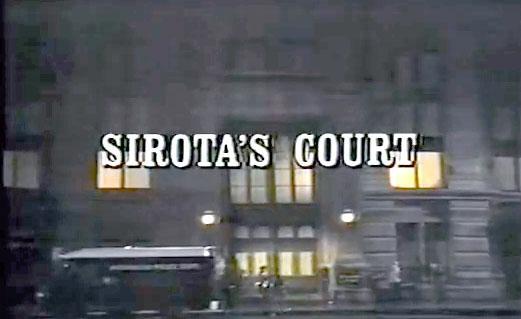
We are in the middle of my “Don’t Judge Me” blogs. Today I am picking up my gavel to make a ruling on Sirota’s Court.

Photo: filmaffinity.com

This sitcom made its debut December of 1976. By April of 1977, it had disappeared from the airwaves. It was produced by Peter Engel Productions and Universal Television.

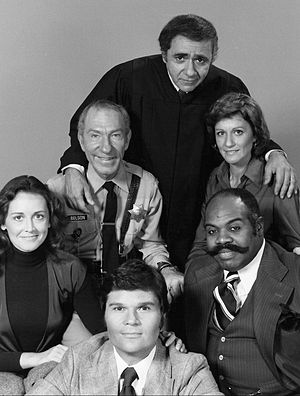
The show followed Judge Matthew Sirota (Michael Constantine) who sits on the bench for the night court. He works with, and has an off-again, on-again romantic relationship with, court clerk Maureen O’Conner (Cynthia Harris). The liberal public defender is Gail Goodman (Kathleen Miller) who battles with private attorney Sawyer Dabney (Ted Ross) and assistant district attorney Bud Nugent (Fred Willard). Bailiff John Belson (Owen Bush) has the judge’s back. Like the Mary Tyler Moore Show, the series devotes time to Judge Sirota’s professional and private lives.

Photo: ptwikipedia.com

If that concept sounds eerily familiar, it should. Seven years after Sirota’s Court left the air, Night Court appeared. Maybe Sirota’s Court was ahead of its time or could not survive the scheduled competition, but it’s hard not to see Night Court as an almost identical clone of this show. The newer judicial comedy featuring Harry Anderson would last nine seasons and produce 193 episodes.

In the original version, the Honorable Sirota incorporates a sense of humor and a boatload of common sense into his courtroom. Being in a large metropolitan city, Sirota is a surprisingly compassionate judge, considering the bizarre cases, the odd clients, and the eccentric court comrades he has to deal with. He often had to take on the role of referee between public defender Goodman who was trying to make the world a better place however she could, attorney Dabney who only cared about making a buck, and totally inept assistant district attorney Nugent.

The show employed a lot of different writers for only thirteen episodes. Twelve different writers were credited on the series. Some of the plots included Judge Sirota trying to prevent being named one of the ten worst judges in America, dealing with dentists who were using laughing gas on election night, or the night a full moon brings in an even more ridiculous roster of bizarre situations to rule on.

Photo: sitcomsonline.com

The show was on Wednesday nights. There was no way this series was going to obtain satisfactory ratings going up against All in the Family and Baretta. All in the Family was in the seventh year of its nine-year reign and still was in the top twenty. Baretta, which was in its third year, had a solid following and was in the top ten. In addition, the show took a lot of heat for one of its episodes, “Court Fear,” when the judge performed a same-sex wedding. It’s creator, Peter Engel, mentioned several times that the show “never got cancelled, it just sort of faded away.” Another factor may have been too many writers. Considering Jack Winter wrote 4 of the 13 episodes, that left 11 writers covering the other 9 shows. Perhaps there was not enough time to fully develop the characters with so many different perspectives.

Photo: tvtango.com

Considering there were only 13 episodes, it’s impressive that Sirota’s Court was nominated for an Emmy for Outstanding Art Direction or Scenic Design for a Comedy Series and for a Golden Globe for Constantine for Best Performance by an Actor in a Television Series, Musical or Comedy. Constantine was up against Tony Randall for The Tony Randall Show, Freddie Prinze for Chico and the Man, Alan Alda for MASH, and winner Henry Winkler for Happy Days.

Photo: pinterest.com

Unfortunately, I could not find DVDs for this show anywhere, even the rare and hard-to-find DVD sites. It would be interesting to compare it with Night Court and see how similar the two shows actually were. My ruling is that the show was competent to stand trial, but the powers that be were too quick to negotiate a settlement.

Bob Newhart: Laughing Through Life

This month I wanted to honor one of our most beloved television comedians: Bob Newhart. Next week we’ll spend some time learning more about The Bob Newhart Show.

Photo: spotify.com

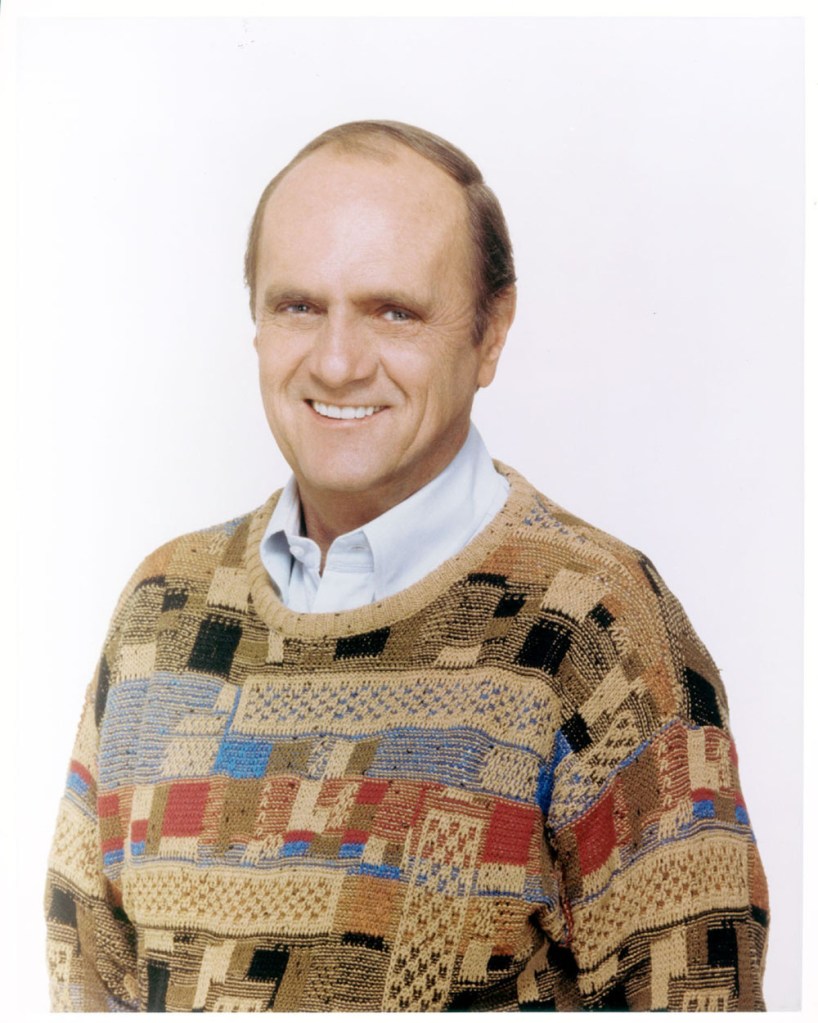
Newhart was born George Robert Newhart in 1929 in Oak Park, IL. He grew up in a typical midwestern family where his father was part owner of a plumbing and heating supply company, and his mom was a housewife. As a young boy, he always wanted to be called Bob. He had a Catholic education and went on to Loyola University of Chicago in 1947. Graduating in 1952 with a business degree, he was soon drafted into the US Army in the Korean war where he stayed until 1954. He considered getting a law degree and went back to Loyola. He decided not to pursue that; some sources site that he was asked to behave unethically during an internship which led him down a different career path.

He worked as an accountant and as an unemployment office clerk. In 1958 he was hired as a copywriter for Fred Niles who was a television producer in Chicago. It was while working here that Newhart and a colleague began entertaining each other by making telephone calls about absurd scenarios. They sent these to radio stations as audition tapes. A radio station disc jockey Dan Sorkin introduced Newhart to a Warner Brothers Records executive who signed him in 1959 based on those recordings. Bob then began creating stand-up routines which he performed at nightclubs.

Photo: discogs.com

He released an album in 1960 which changed his life. Titled, The Button-Down Mind of Bob Newhart, the comedy album made number one on the Billboard charts, and he won a Grammy for best new artist. A follow-up album, The Button-Down Mind Strikes Back was released soon thereafter. He would continue releasing comedy albums in 1961, 1962, 1964, 1965, 1967, 1971, and 1973.

During a 2005 interview for American Masters on public television, Bob stated that his favorite routine was Abe Lincoln vs Madison Avenue which was on his first album. A promoter for Abraham Lincoln has to deal with his reluctance to boost his image. A tv director named Bill Daily suggested the routine to him. Daily would be known later as Howard Borden on The Bob Newhart Show (as well as Roger Healey on I Dream of Jeannie).

The success of that first album led to a variety show titled The Bob Newhart Show. It only lasted a year, but it did receive both an Emmy nomination and a Peabody award. Apparently, he didn’t enjoy his time during the show so much. Halfway through the season he wanted to quit, but his agent explained that being under contract meant that was not possible. At a later date, he referred to his first show, saying “It won an Emmy, a Peabody Award, and a pink slip from NBC. All in the same year.”

He began making the rounds on television shows, appearing on The Dean Martin Show 24 times and The Ed Sullivan Show 8 times. He guest hosted The Tonight Show Starring Johnny Carson 87 times. When discussing his appearances on Johnny’s show, he stated “I remember once when I emceed The Tonight Show in New York, I arrived with my manager’s son. After a while, they asked, ‘When are the rest of your people coming?’ I had to say, ‘This is it.’”

Photo: huffingtonpost.com

In 1962 Newhart accepted his first movie role, Hell is for Heroes, starring Steve McQueen. He would continue to do movie roles throughout his career including the Christmas classic Elf, but the small screen would make him famous.

In 1963 Buddy Hackett introduced Bob to Virginia Quinn, whose father was character actor Bill Quinn. They wed in January of 1963 and 57 years later are still happily married.

Photo: zimbio.com

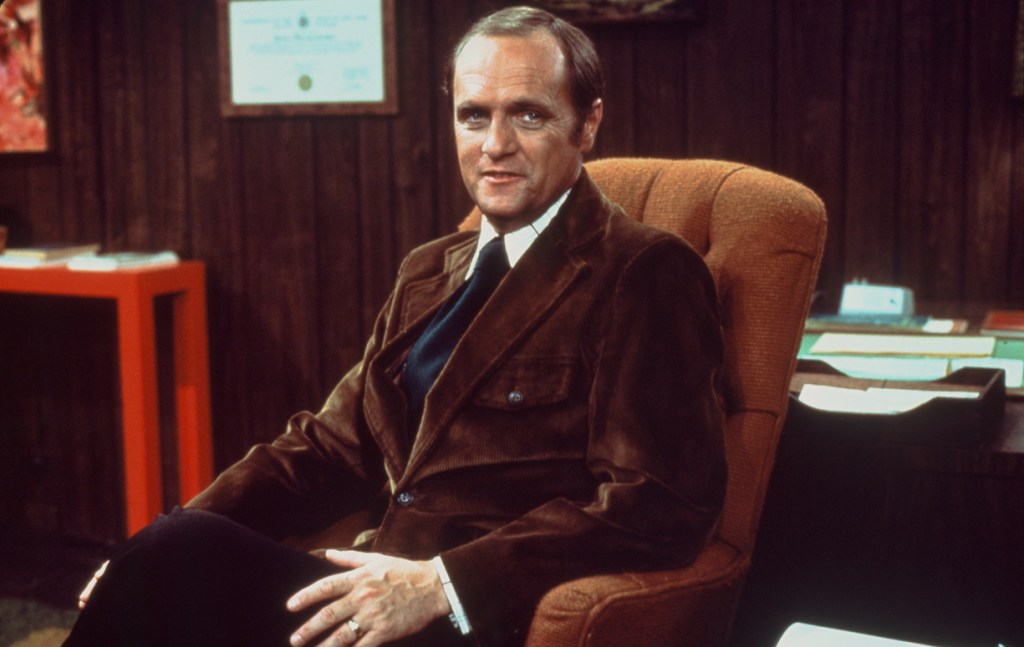
For the next decade, he continued to accept movie and television roles. In 1972, television history was made when The Bob Newhart Show debuted. Until 1978, Newhart played Bob Hartley, psychologist, and we got to know his unusual patients, quirky co-workers, and eccentric friends, including neighbor Howard Borden. Bob chose a psychologist based partly on his old telephone routines. As he said, “Much of my humor comes out of reaction to what other people are saying. A psychologist is a man who listens, who is sympathetic.”

Photo:epiguides.com

In 1982, Bob gave television another go for another eight years. Simply titled Newhart, the show featured Bob as Dick Loudon, an innkeeper and author from Vermont. He still had quirky co-workers and eccentric friends.

Photo: austenauthors.net

On cue a decade later in 1992, Bob showed up in a new show even more simply titled, Bob as Bob McKay a comic book writer and artist who had retired long ago and was trying to get back into the workplace. Unfortunately, after 33 episodes the show was canceled due to low ratings.

Photo: imdb.com

In 1997, Newhart starred in his last sitcom, George and Leo. As George Stoody, a bookstore owner, Newhart offers a temporary home to a full-time magician and part-time criminal who recently robbed a Mafia-owned casino. The series failed to catch on with viewers, and it was canceled after a season as well.

Photo: listosaur.com

Though he never took on another sitcom, Newhart has made appearances with recurring characters in several shows. In 2003, he showed up on ER as Ben Hollander. In 2005, he was Morty on Desperate Housewives. As Judson, he guest starred on The Librarians.

Photo: thewrap.com

Perhaps, younger audiences know him best as Arthur Jeffries or Professor Proton on The Big Bang Theory. He had been Sheldon’s boyhood hero who played the professor on television. Sheldon idolized the professor while the professor tolerated Sheldon.

Photo: upi.com

It’s hard to believe with all of his years being a successful television comedian, but Newhart won his first Emmy in 2013 for his role of Professor Proton. I can’t argue with the nominees for most of the 1970s during the airing of The Bob Newhart Show–names like Tony Randall, Jack Klugman, Alan Alda, and Hal Linden. Even with my bias of Norman Lear shows, I get nominating Carroll O’Connor every single one of those years. I understand the tough competition. What I don’t understand is the fact that he was never nominated during that eight-year period. When Jack Albertson wins, and Bob Newhart is not even nominated that is wrong. During the Newhart years, he was at least nominated three times. But I don’t understand it when John Ritter wins for Three’s Company or Richard Mulligan for Soap and no nomination for Bob Newhart. What especially appalls me is the fact that The Bob Newhart Show was only nominated one year; I can accept the fact that it got beat out by The Mary Tyler Moore Show. I cannot accept is that during this same time, Three’s Company, Mork and Mindy, and Welcome Back Kotter received nominations, and The Bob Newhart Show did not. Anyway, this blog is not about the television academy and its procedures, so let’s move on.

Photo: flickr.com

Even though he was never awarded with an Emmy for his time as Bob Hartley, TV Land placed a life-sized statue of Newhart in front of Navy Pier, complete with an empty couch. He was best friends with Suzanne Pleshette, his wife from the show, and spoke at her funeral. He remembered their time together, “Her laugh. Her laugh. We just laughed. We just had a great time. We all loved each other and respected each other and we got paid for it.” Bob also remains close friends with Marcia Wallace who played his receptionist Carol on the show.

Photo: sitcomsonline.com

While Bob has appeared as different characters throughout his career, he has also remained the same character. With his deadpan delivery and slight stammer, he perfected the straight-man role, surrounding himself with wacky castmates. He has often cited George Gobel and Bob and Ray as influences in his comedy career. When discussing his career choice, he explained “I like the humor to come out of character. When you’re going for a joke, you’re stuck out there if it doesn’t work. There’s nowhere to go. You’ve done the drum role and the cymbal clash and you’re out on the end of the plank.”

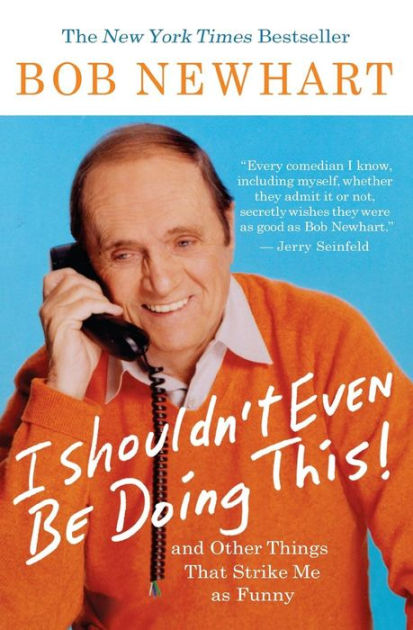
Photo: barnesandnoble.com

In 2006, he released a book I Shouldn’t Even Be Doing This. It’s a memoir with some of his classic comedy routines. Actor David Hyde Pierce reported that “the only difference between Bob Newhart on stage and Bob Newhart offstage is that there is no stage.”

Photo: parade.com

I am so appreciative of those stars who agree to entertain us for our entire life, such as Betty White, Carol Burnett, and Bob Newhart. They are classic comedians who can make us laugh no matter what. Bob’s view on comedy was that “laughter gives us distance. It allows us to step back from an event, deal with it and then move on.” What an amazing career and what an amazing man. With all its negatives and sometimes destructive tendencies, television can be a harmful place, but a comedian like Bob Newhart demonstrates what a positive and uplifting experience television can be when done right. Thanks for doing it right for sixty years.

The Phil Silvers Show: You May Never Get Rich, but You’ll Receive a Wealth of Humor

This month, we begin a new series, “We Salute You” and we will look at shows about the military. Our first series is The Phil Silvers Show a/k/a You’ll Never Get Rich.

Photo: nostalgiacentral.com

The sitcom debuted on CBS in 1955. The pilot was never aired, but the show was part of the television schedule until 1959, producing 143 episodes.

Nat Hiken created the series which ended up being nominated for Best Comedy Series every year it was on and winning that category in 1956, 1957, and 1958. In addition, Silvers won an Emmy for his performance, and Hiken won an Emmy for Best Director.

Photo: findagrave.com
Nat Hiken in the bowtie with Phil Silvers

In 1955, television was transitioning from New York to California. However, Hiken insisted on filming the series in New York. The earlier seasons were filmed at Dumont and later seasons moved to CBS studios in Chelsea, Manhattan.

The show was filmed like a play in front of a live audience. The cast members had to memorize the entire script. When Mike Todd guest starred in season two, he insisted that the show be filmed more like a movie. Takes were filmed out of sequence and multiple takes were allowed because there was no audience. The crew realized that this process was faster, cheaper, and easier for the actors, so the change was put in place permanently. The show was screened for the military though, and servicemen made responses that were used to make the show more realistic.

Photo: thetimes.com

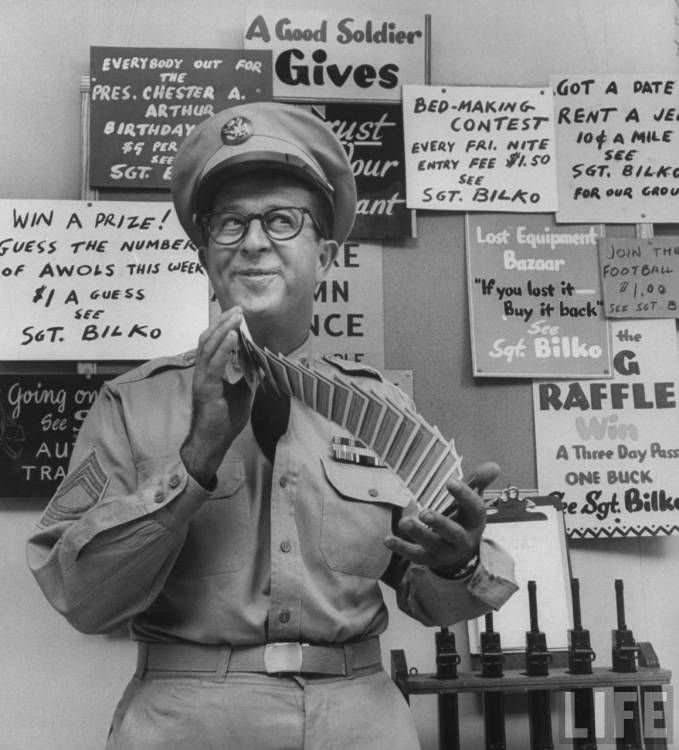
Sergeant Ernie Bilko (Phil Silvers) is a con man. He runs a motor pool at a small US Army Camp, Fort Baxter in Roseville, Kansas. Colonel Hall (Paul Ford), who doesn’t trust Bilko, tries to stay on top of his schemes. Bilko tries to make money any way he can and is not above using the landing craft for midnight cruises, “borrowing” tanks, setting up poker games, and conniving with a local service station for spare parts for Jeep tires for his get-rich quick scams. Bilko has pulled the wool over Col Hall’s wife’s (Hope Sansberry) eyes and flatters her every chance he gets. Silvers said Bilko was so successful because “inside everyone is a con man wiggling to sneak out.”

Photo: pinterest.com

Although his men knew he could not be truly trusted, they were usually loyal to him and while he occasionally used them in a scheme, he typically made sure they were taken care of. Some of the situations Bilko found himself in included starting a mink farm, entering his platoon in a singing contest, investing in an ailing race horse, stealing a French chef’s family recipe, buying swampland, thinking there was uranium beneath Hall’s living room, and getting a hot racing tip but not being able to get his bet in on time.

For the fourth season, the camp moved from Kansas to Camp Fremont in California. The move was explained that Bilko orchestrated the new location because he learned there was a gold deposit near the abandoned army post. The primary reason for the geographical change was so stars could guest on the show because the camp was now said to be close to Hollywood. Some of these celebrities included Dean Martin, Mickey Rooney, Bing Crosby, Dorothy McGuire, and Lucille Ball.

Photo: DVDtalk.com
Bing Crosby visits the base

In addition to the stars who were said to come from Hollywood, guest stars on the show included Charlotte Rae, Fred Gwynne, Dick Van Dyke, Paul Lynde, Tom Poston, Dina Merrill, Alan Alda, Bea Arthur, and Tina Louise.

Photo: tvtropes.com

I was surprised by the large cast that was featured on this show as opposed to Gomer Pyle, Hogan’s Heroes, or McHale’s Navy. Bilko’s comrades were Corporal Barbella (Harvey Lembeck) and Corporal Henshaw (Allan Melvin).

Photo: brittanica.com
Bilko with Barbella and Henshaw

The rest of the men included Corporal Sam Fender (Herbie Faye), Sergeant Grover (Jimmy Little), Privates Doberman (Maurice Gosfield), Zimmerman (Mickey Freeman), Kadowski (Karl Lukas), Gomez (Bernard Fein), Paparelli (Billy Sands), Mullen (Jack Healy), Fleischman (Maurice Brenner), Sugarman (Terry Carter) and Dillingham (Walter Cartier), as well as quartermaster Sergeant Pendelton (Ned Glass). Bilko even had a romantic interest in Sergeant Joan Hogan (Elisabeth Fraser).

Photo: losangelestimes.com

Because the series had so many secondary cast members, it became too expensive to maintain, and that was the primary reason it was canceled. I was surprised it did not affect the ratings because there were a lot of cast members to follow from week to week.

The show started out on Tuesday nights the first season. Its competition was The Legend of Wyatt Earp and Milton Berle.  The ratings at first were not good and Camel Cigarettes, the sponsor, considering withdrawing. The network moved the show so it didn’t need to compete with Berle’s second-half hour. The ratings skyrocketed. The second and third seasons, it continued on Tuesday nights but was up against Cheyenne both years and against The Big Surprise on the second season and The Eddie Fisher Show the third season. The Phil Silvers Show continued to be in the top 30 for season two but fell below those rankings in season three. Season four found the show on Friday nights up against Man with a Camera and M Squad.  I would have thought that season might have the weakest competition but the show never recovered its higher ratings. However, Friday nights many people were out, not home watching television.

Another downfall with such a large cast is the personality conflicts that might occur. Apparently, Phil Silvers did not get along with Maurice Gosfield. Gosfield had trouble remembering his lines which frustrated the other actors; however, he got the most fan mail which Silvers resented. In his memoir, Silvers discussed this issue and wrote that Gosfield “thought of himself as Cary Grant playing a short, plump man.”

Photo: pinterest.com
Gosfield as Doberman

Phil Silvers would play the same type of con man on many sitcoms later including The Beverly Hillbillies, Gilligan’s Island, The Lucy Show, and the movie It’s a Mad, Mad, Mad, Mad World.

Photo: pinterest.com

After its cancellation, CBS sold the show to NBC which was a great move on NBC’s part. The network made a ton of money on the show’s syndication because reruns were run for decades.

Photo: ebay.com

DC Comics published comic books based on the show as well. From 1957-1960 there were 16 issues of a Sergeant Bilko comic book and 11 issues of a Private Doberman comic book.

Photo: ebay.com

In 2009, the US Postal Service issued a set of stamps honoring early television programs. This show was commemorated with an image of Sergeant Bilko.

I remember the show being on the air a lot while I was growing up, but I rarely see it now. I am going to rely on a fellow blogger to sum up the show. In a recent blog on neatorama.com from February 14, 2019, the show was described as follows:

It is my opinion that THE PHIL SILVERS SHOW (aka YOU’LL NEVER GET RICH) remains the single most underrated sitcom in television history and that Phil Silvers remains the most underrated comedian in that medium. This is really saying something because the series has indeed received great acclaim over the years. Even so, Silvers is just not given his proper due for creating the Bilko character. But it is Phil Silvers, his facial expressions, his bugle-call barking of orders, his complete manipulation of everyone on the base, and his wild schemes to make money that never seem to get old no matter how much you watch the episodes on video. The show is a great testament to the talents of Phil Silvers. With its complex plotlines and quickfire dialogue it’s still a treat to watch Silvers’s monumental character. The most oft-said line in the series must be “but, Sarge! as Bilko launches into another diabolical and, ultimately, flawed scheme to make money and dodge work.”

Photo: philsilversshow.com

Bilko isn’t a bad guy; he’s just not trustworthy. As he himself likes to say, “All I ever wanted was an honest week’s pay for an honest day’s work.” Maybe in this politically correct world we live in, making fun of the military is a taboo. It’s too bad because all the critics loved this show. If you want to check it out for yourself, the series is on DVD, so it is available for a week-end of binge watching; you can purchase individual seasons or the complete series.

The Alliterative Harry Morgan (Famous for saying Horse Hockey and Beaver Biscuits as Colonel Potter)

morgan1


When it comes to prolific actors in television and film, few people can equal Harry Morgan’s career. Known for his deadpan delivery, he was in more than 100 films. He also starred in 11 television series and appeared on 6 TV Guide covers.


Born Harry Bratsberg in 1915, he grew up in Muskegon, Michigan. His parents came from Norway and Sweden.  Harry went to the University of Chicago, planning on becoming an attorney but got interested in acting instead. In 1937, he began appearing with stock companies, followed by Broadway roles.

Harry Morgan From 'December Bride'


His first wife was Eileen Detchon who he was married to from 1940 until her death in 1985. Her photo appears on Colonel Potter’s desk on M*A*S*H. They had four sons: Christopher, Charley, Paul and Daniel. Morgan remarried in 1986 and was married to Barbara Bushman until his death.

morgan8


He was signed by Twentieth Century Fox in 1942. His screen debut was The Shores of Tripoli under the name Henry Morgan. Later that year he appeared in Orchestra Wives and a few years later was in The Glenn Miller Story with Jimmy Stewart. In 1943, he starred with Henry Fonda in the highly acclaimed The Ox-Bow Incident.


In 1954, he was offered the role of Pete Porter in December Bride which ran until 1959. In the show, he complained about his wife Gladys a lot, but we never meet her. When the show ended, he starred in a spin-off Pete and Gladys from 1960-1962. Pete Porter is an insurance salesman. His scatter-brained, but beautiful, wife is played by Cara Williams.


The next year he was cast in The Richard Boone Show from 1963-1964. This was an anthology series which Richard Boone hosted.  A cast of 15 actors appeared in different roles each episode. Morgan appeared in all 25 episodes. The show never captured viewers, probably because it was on against Petticoat Junction.

richard boone


Almost immediately upon its ending, he was again cast in a television show with a role on Kentucky Jones during 1964 and 1965. Kentucky Jones is a veterinarian and former horse trainer.  He and his wife adopted a Chinese boy named Dwight Eisenhower “Ike” Wong. After his wife’s death, the local Asian community and handyman Seldom played by Morgan helps him raise Ike.

ky jones


Morgan had a couple of years of guest starring in shows such as The Wackiest Ship in the Army and Dr. Kildare, and then he was cast in Dragnet from 1967-1970. He and Jack Webb were friends before the show and continued to be best friends throughout Harry’s life. Webb had directed the previous Dragnet show in the 1950s and revived the show in 1967, convincing his friend to play the role of Officer Joe Gannon who helped Sergeant Joe Friday (Webb) solve crimes in Los Angeles.

morgan4


Between 1970 and 1972 he would show up in The Partridge Family in two different roles and Love American Style among other shows. 1972 would find him starring in another show, Hec Ramsey, until 1974. This show reunited Morgan with Richard Boone who starred in it and Jack Webb who produced it. Ramsey was a western detective who preferred to solve crimes with his brain rather than his gun. The show only lasted for ten episodes.

morgan23


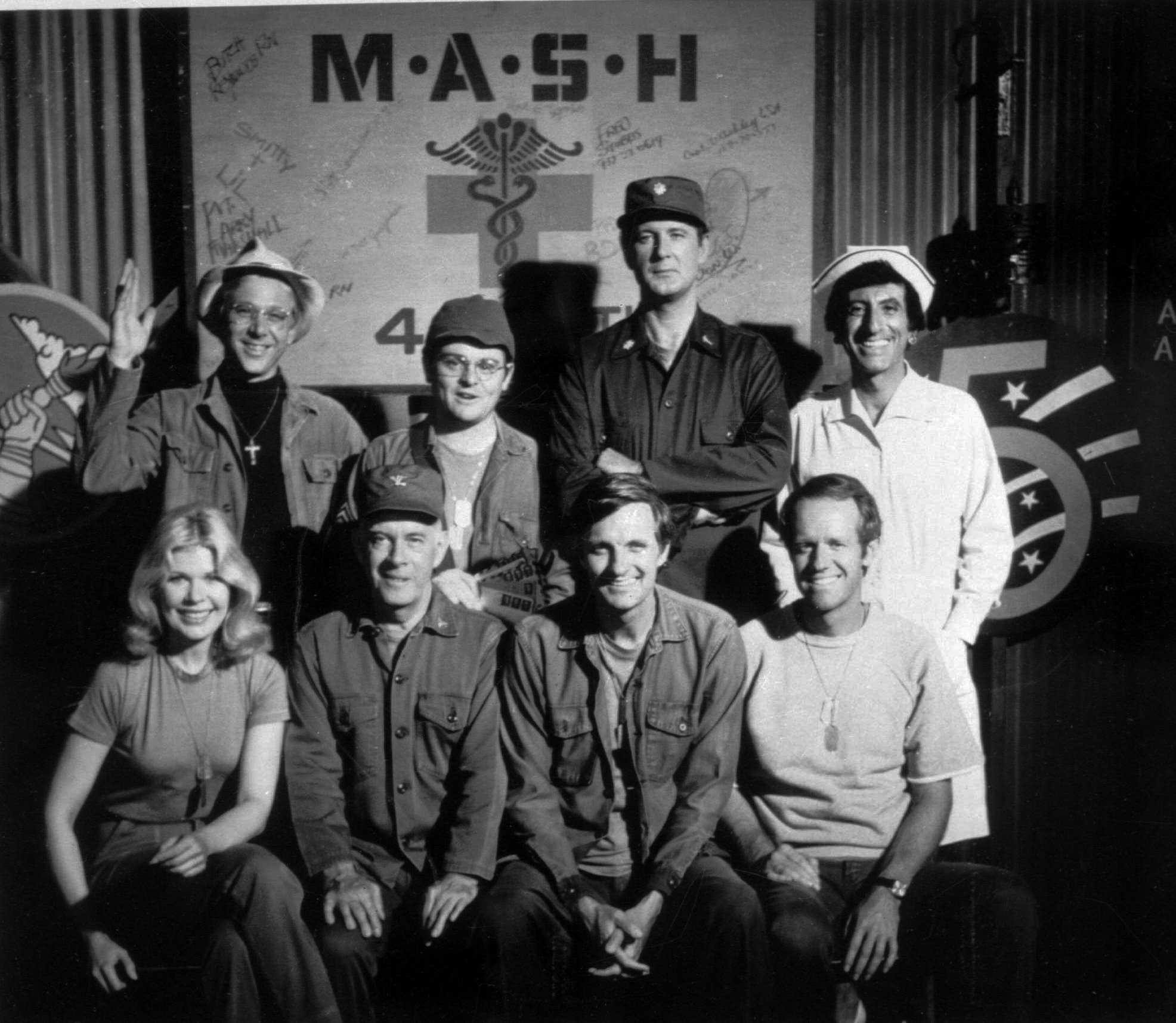
From 1974-1983, he was cast in his most famous role, that of Colonel Potter on M*A*S*H. A military hospital staff treating soldiers during the Korean war rely on laughter to get through the gruesome work. The show combined heartache and joy to tell the story of the 4077th. When the show was cancelled, Harry continued the role in the spin-off, After M*A*S*H from 1983-1985.

morgan14

On M*A*S*H Morgan painted the portraits attributed to Colonel Potter. He won the Emmy for Outstanding Supporting Actor in 1980, receiving 11 nominations overall during the run of the show.

morgan13

His description of Colonel Potter was: He was firm. He was a good officer, and he had a good sense of humor. I think it’s the best part I ever had. I loved playing Colonel Potter.”

morgan11

When asked if he was a better actor after working with the show’s talented cast, Morgan responded, “I don’t know about that, but it’s made me a better human being.


MBDCHAN EC021

Morgan also appeared in several Disney movies during the 1970s, including The Barefoot Executive, Snowball Express, Charley and the Angel, The Apple Dumpling Gang, The Cat from Outer Space, and The Apple Dumpling Gang Rides Again.

In 1986 he was cast in Blacke’s Magic. The show featured a magician and his father, a con man, who solve crimes. Unfortunately, like many of the shows he was a part of, this one only lasted 15 episodes. When it ended in 1987, Harry was immediately given a role in You Can’t Take It with You where he appeared on three episodes during 1987 and 1988. Morgan starred as Martin; the show was based on the original play, but the television series was set in the 1980s.  Although Morgan was only in three episodes, he was in the majority of them, because the entire show consisted of four episodes.

morgan22blackes


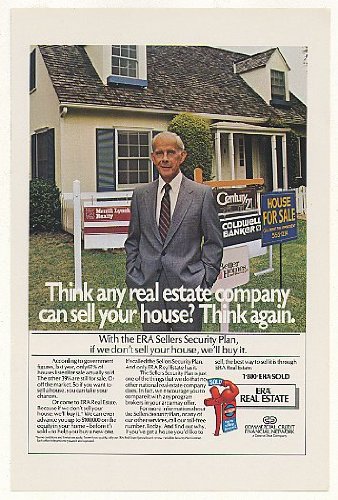
In the 1980s, he appeared in commercials for ERA realty and Toyota.

era


During the late 1980s and early 1990s, he appeared in six different shows, with recurring roles on The Simpsons and Third Rock from the Sun. In 1996 he retired.

morgan25thirdrock


In 2006, Morgan was inducted into the Hall of Great Western Performers at the National Cowboy & Western Heritage Museum.


Many of his western films were done with James Stewart. They did five films together, and Morgan says Stewart was one of the nicest men he ever met and extremely professional.


In addition to Jack Webb, he was good friends with Tim Conway and Don Knotts.

A very interesting man, in his spare time, he enjoyed golfing, fishing, travel, spending time with his family, reading, raising horses, horse riding, painting, and poetry.

morgan5

He died in 2011 from pneumonia.

Following Morgan’s death, Mike Farrell, who played B.J. Hunnicutt, starring with Morgan in M*A*S*H, released the following statement:

“He was a wonderful man, a fabulous actor and a dear and close friend since the first day we worked together. As Alan [Alda] said, he did not have an unadorable bone in his body . . . He was a treasure as a person, an imp at times, and always a true professional. He had worked with the greats and never saw himself as one of them. But he was . . . He was the rock everyone depended on and yet he could cut up like a kid when the situation warranted it. He was the apotheosis, the finest example of what people call a ‘character actor’. What he brought to the work made everyone better. He made those who are thought of as ‘stars’ shine even more brightly . . . The love and admiration we all felt for him were returned tenfold in many, many ways. And the greatest and most selfless tribute to the experience we enjoyed was paid by Harry at the press conference when our show ended. He remarked that someone had asked him if working on M*A*S*H had made him a better actor. He responded by saying, ‘I don’t know about that, but it made me a better human being.’ It’s hard to imagine a better one.”

morgan6