We are in the midst of our blog series, “Examining Some of Our Favorite Medical Shows.” When I picked these shows, I did not look at how long they were on the air or when they debuted. It seems ironic that both Ben Casey and Dr. Kildare were on from 1961-66. Last week we learned Marcus Welby, MD was on the air from 1969-1976 and oddly enough that is the exact same time frame as our show for today: Medical Center.
Medical Center aired on CBS, produced by MGM Television. The pilot was televised in April of 1969 with two very different faces: Edward G. Robinson was Dr. Forestman and the role of Gannon was played by Richard Bradford.
Dr. Paul Lochner (James Daly), chief of staff, and Dr. Joe Gannon (Chad Everett) are surgeons at a large university hospital in Los Angeles. We learned about both their professional and personal lives. Gannon was the younger of the two and their age difference is what caused several of their disagreements. Nurse Wilcox (Audrey Totter) was a regular as were Nurses Chambers (Jayne Meadows) and Murphy (Jane Dulo). Several other cast members would show up in different episodes.
What was amazing about this show was the way you were able to journey through the entire process of treating a patient from the first examination to the recovery after surgery.
“Los Angeles, California, 1969 B.O.C. (Before ObamaCare). At the state-of-the-art Medical Center, strapping, square-jawed, 100% insured-against-malpractice Dr. Joe Gannon (Chad Everett) strides through the pea green soup-colored halls like an Olympic god, dispensing pity bromides and lightning-fast scalpel incisions with eerie aplomb. In Room 447, there’s a racist who doesn’t like his black doctor. In Room 443, there’s a blind girl whose hippie boyfriend cracked up his motorcycle. In Room 441, there’s a U.N. Ambassador whose heart is about to vapor lock. And calmly, calmly, Dr. Joe moves from one room to the other, working slowly and carefully through his diagnosis before whipping out a number 10 Dermatome and striking like a cat, much to the consternation of flibbertigibbet parents, joy-boy scalpel jockeys, and administrators who don’t know their catheters from their elbows.
Usually offering backup to Dr. Groovy is Chief of Staff Dr. Paul Lochner (James Daly), who knows Dr. Joe is the best surgeon around, who knows Dr. Joe is almost always right…and who knows Dr. Joe is certainly the best-dressed cat on his staff. That doesn’t mean they don’t scrap and spark a little over procedure, or over diagnoses; however, their relationship is basically sound: Dr. Joe gets the sighs from adoring female patients, and Dr. Paul has board meetings and drinks a lot of coffee. Into these halls come the sick, the broken, and the dying, and they leave…healed.”
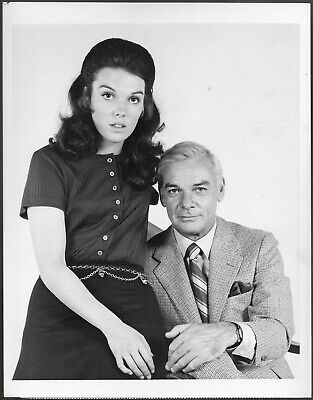
Promo photo for Tyne Daly’s appearance on Medical Center with her father
The theme song was “Medical Center,” composed by Lalo Schifrin. Schrifin is a five-time Grammy winner who was also nominated for six Academy awards and four Emmy awards. His best-known work is the theme from Mission: Impossible.
Tyne Daly talked about working on Medical Center with her father James. She was on four shows as four different characters. She said it was hard because her father’s name opened doors, but she had to prove herself. She was not willing to change her name but got tired of people assuming all her parts were because of her father’s connection.
The show aired on Wednesday nights with no real competition. Even so, it only ranked in the top ten during one season but was in the top twenty or thirty. In 1973, CBS moved the show to Monday nights where it had to compete with Monday Night Football and it fell out of the top thirty. In 1974 it crept back into the top thirty but fell again the next year. When the show was canceled in 1976, it was tied with Marcus Welby, MD as the longest-running medical drama. The cast would be surprised to see how long ER and Grey’s Anatomy were able to stay on the air.
I do remember watching the show but not regularly like Marcus Welby MD. I’m sure once it went up against Monday Night Football, it’s fall ratings were not good. This was a time with no ESPN or Thursday Night Football. It is pretty amazing that medical shows have continued to be a television staple through the decades even when westerns, variety shows, and nightly soap operas have come and gone.
This month we are “Examining Our Favorite Medical Series.” Beginning in 1969 and staying on the air for seven seasons, this show was a show that the entire family could agree to watch. In fact, on The Partridge Family, there is at least one episode where the Partridges are watching Marcus Welby, MD.
Marcus Welby (Robert Young) is a family doctor who truly likes and knows his patients. Sometimes he even made house calls. Dr. Steven Kiley (James Brolin) is his business partner and they both rely on Nurse/Office Manager Consuelo Lopez (Elena Verdugo).
Produced by David Victor and David J. O’Connell, the show aired on Thursday nights. Victor also produced episodes of Dr. Kildare as well as The Man from U.N.C.L.E., Owen Marshall, Counselor at Law, and Lucas Tanner, among others. O’Connell produced episodes from several series but he was kept busy in the Editorial Department for a slew of shows, including Tales of West Fargo, Bachelor Father, Leave It to Beaver, The Jack Benny Show, Wagon Train, McHale’s Navy, and The Munsters. (In the future, I will definitely look into a show about editors for a blog.)
Welby and Kiley were very different. Kiley rode a motorcycle to work while Welby drove a sedan. Welby was a widower; he started his career as a doctor in the US Navy during the war. He enjoyed sailing on the ocean. Welby often wanted to use more radical treatments than his younger partner who was more conservative in his patient care. A lot of ailments were tackled on the series including impotence, depression, brain damage, breast cancer, epilepsy, Alzheimer’s, rape, and abortion.
Photo: WorthPoint.com
The two doctors had a private practice with operating privileges at Lang Memorial Hospital. Both doctors had girlfriends, Myra (Anne Baxter) and Janet (Pamela Hensley). Welby’s daughter (Christine Belford) and grandson (Gavin Brendan) were often on the set as was Kathleen Faverty (Sharon Gless), an assistant program director.
In season two the show made it to number one for ABC. Both Young and Brolin won Emmys and the show won an Emmy for Outstanding Dramatic Series.
After seven seasons of medical storylines, the show’s viewership began to wane. Many of the medical series were running out of steam at that time. Once ratings continued on the decline, the show was canceled.
Photo: decider.com
However, eight years later, The Return of Marcus Welby, MD aired. Young and Verdugo continued their roles although Brolin was no longer available. It must have done well, because a second movie was filmed in 1988–Marcus Welby, MD – A Holiday Affair. This would be the last acting role Young would accept.
I have many fond memories of watching this show when I was young with my family. Marcus Welby reminded me of our family doctors; he was kind, gentle, smart, and had a great bedside manner. And he made house calls! Don’t get me wrong, there are still many doctors with his characteristics and they kind of make house calls now over the computer but it’s not the same. Thanks, Dr. Welby, for caring for all of us for seven years.
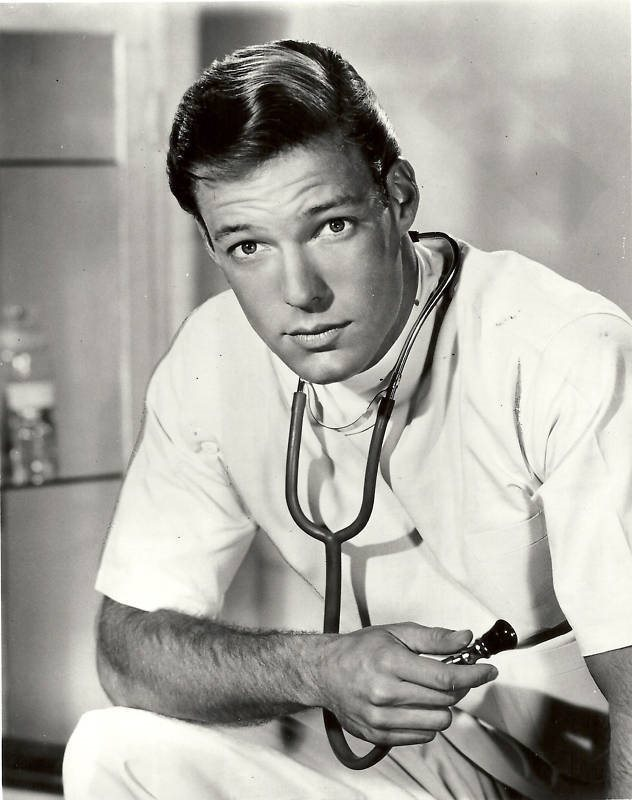
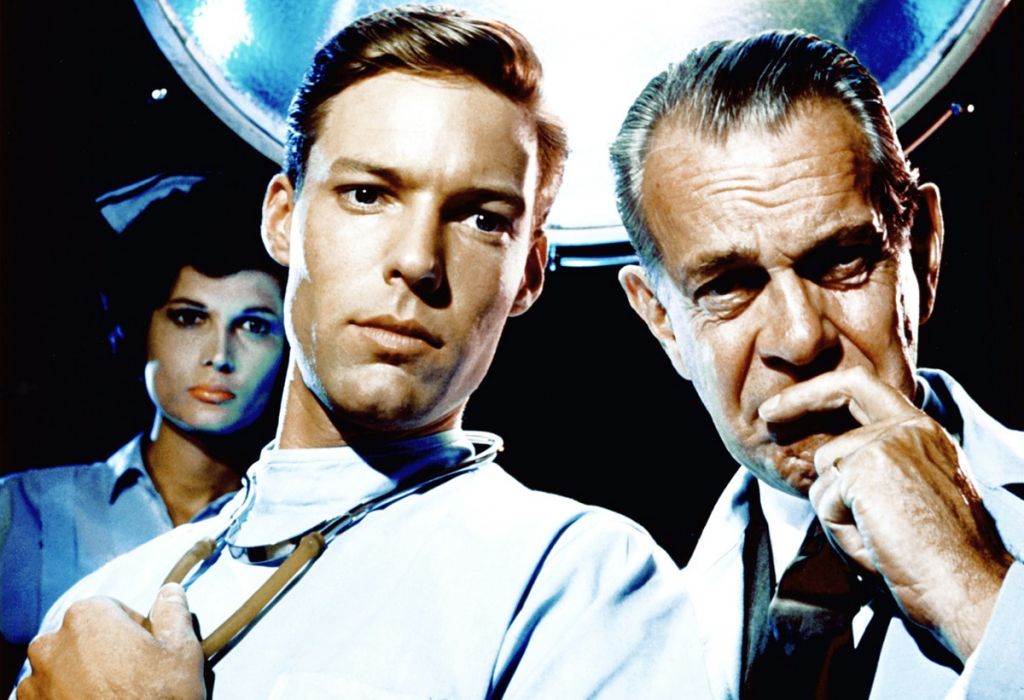
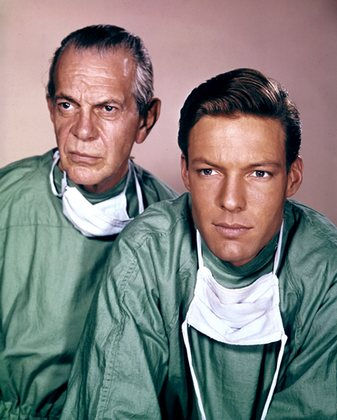
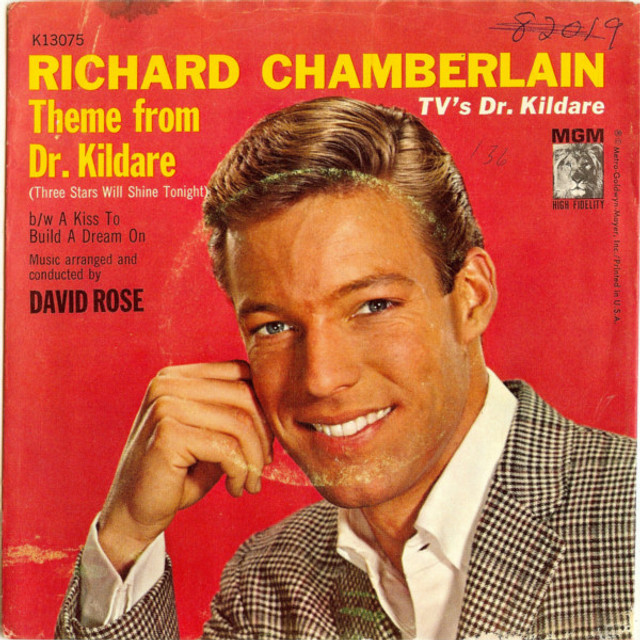
This month we are checking out a few favorites in a blog series: “Examining Our Favorite Medical Shows.” Last week we learned a bit about Ben Casey. Today we are looking at a similar show to Ben Casey, although in many ways it was very different: Dr. Kildare.Dr. Kildare was also on the air from 1961-66. MGM produced this show created by Max Brand in the 1930s. The show had previously been a movie and a radio series. Unlike Ben Casey who seemed to argue with everyone, Dr. Kildare (Richard Chamberlain) was a respectful intern at Blair General Hospital. He wants to help his patients and listens to his mentor, Dr. Leonard Gillespie (Raymond Massey). In season three, Kildare became a resident, and the episodes focused more on the stories about the patients.
In 1960 a pilot was filmed with Joseph Cronin in the Kildare role and Lew Ayres as Gillespie which did not sell. The role of Kildare was offered to William Shatner and James Franciscus who both turned it down. In 1961, a new pilot was produced with Chamberlin and Massey. One of the reasons Massey accepted the role is because he was certain the show would only last one season, and he wanted to continue with his movie career. The popularity of the show put his film career on hold for five years.
Photo: medium.com
Other cast members who appeared on the show included Dr. John Kapish (Ken Berry), Nurse Fain (Jean Inness), Dr. Agurski (Eddie Ryder), Dr. Gerson (Jud Taylor), Dr. Lowry (Steve Bell) Nurse Conant (Jo Helton), and Nurse Lawton (Lee Kurty).
The guest stars on this show were amazing. I feel like this should be read in auctioneer mode but here goes: Eddie Albert, Jack Albertson, Fred Astaire, Ed Asner, Lauren Bacall, Ed Begley, Joan Blondell, Tom Bosley, Beau Bridges, Charles Bronson, James Caan, Robert Culp, Ossie Davis, Ruby Dee, Angie Dickinson, Olympia Dukakis, Barbara Eden, Linda Evans, Douglas Fairbanks Jr., Peter Falk, Beverly Garland, Ron Howard, Kim Hunter, Celeste Holm, Carolyn Jones, James Earl Jones, Brian Keith, Ted Knight, Harvey Korman, Cloris Leachman, Jack Lord, Walter Matthau, Gavin McLeod, Ricardo Montalban, Harry Morgan, Jack Nicholson, Leonard Nimoy, Carroll O’Connor, Suzanne Pleshette, Basil Rathbone, Robert Redford, Robert Reed, Cesar Romero, Gena Rowlands, William Shatner, Jean Stapleton, Gloria Swanson, Rip Torn, Sam Waterston, Dennis Weaver, and Robert Young. For a show that was only on five years, it was an impressive guest cast.
Photo: imdb.com
To add more realism to the show, writer E. Jack Neuman spent several months working with interns in a large hospital. Technical advice was provided by the American Medical Association.
The show was realistic in portraying all the drama that is truly found in a city hospital. The plots involved a lot of medical and social issues including smallpox, physician competency, drug addiction, malpractice, and euthanasia. Neuman definitely captured what life in a large, city hospital was like. Kildare makes about $60 a month, or $500 in today’s terms, works long hours, rotates through the various medical departments and has senior physicians overrule his diagnoses.
Just like Ben Casey, the first seasons produced stand-alone episodes and after the success of Peyton Place, storylines carried over from one show to another to entice the audience to tune in again the next week.
The theme music for the series was composed by Jerry Goldsmith. A CD set was released in 2009 which included the theme, the original music from the 1960 pilot, Richard Chamberlain’s recording of “Three Stars Will Shine Tonight,” and musical scores from the five seasons by Hurr Sukman, Richard Markowitz, Morton Stevens, Lalo Schifrin, John Green, and Burt Bacharach.
Airing on Thursday nights, the show was in the top ten during season one and the top twenty for seasons two and three. The show received about 12000 fan letters weekly, and, in addition, Chamberlain received letters personally asking for medical advice.
The network moved the show to Tuesday nights against Red Skelton and McHale’s Navy for season five and the viewers did not follow. The ratings declined, and the show was canceled.
This show really changed Chamberlain’s career. He had always been a small-role guy before this show, but he suddenly became a teen idol. He received more than 35,000 fan letters a month. Onscreen the idealistic Kildare and the wise, sometimes cantankerous, Gillespie don’t always agree but they had great chemistry on the set and apparently off the set as well. Unlike BenCasey, the cast on this show did get along and Chamberlain mentioned that he always enjoyed working with Massey.
Richard said he grew up in a family where they all pretended to be perfect. So, he went through life trying to be perfect too. He said that philosophy did not work well for his life, but it did work well for Dr. Kildare.
Following the show he would take a turn on Broadway, in big-screen movies, and back on television where he specialized in mini-series like Shogun and The Thorn Birds, both in the 1980s.
One fact I found interesting was that the DVD release of the show included a never-aired pilot from a different medical show, The Eleventh Hour in 1962. The episode originally was written for Dr. Kildare. Drs. Kildare and Gillespie assist Dr. Bassett (Wendell Corey), a psychiatrist diagnosing one of his patients Ann (Vera Miles). Instead of airing on Dr. Kildare, Chamberlain and Massey were cut out of the film and it was submitted as a pilot for the show, with the title “Ann Costigan: a Duel on a Field of White.”
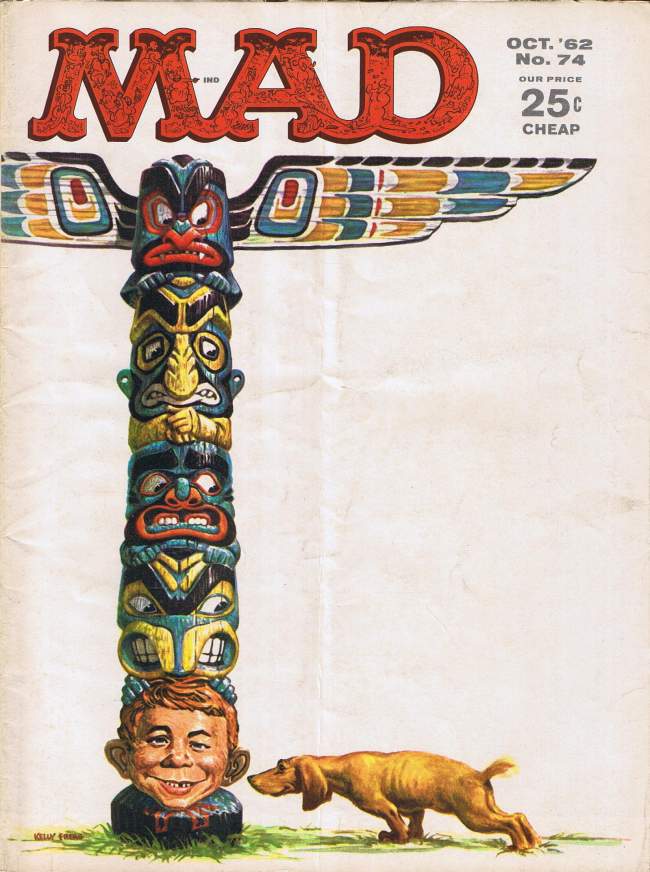
Even Mad Magazine got on the Kildare bandwagon. The 1962, #74 issue, featured “Dr. Killjoy,” a parody of the show.
Everyone seemed to like this show. Then again, what is not to like? You have a handsome doctor, exhilarating drama, a fun guest star every week, and realistic stories. The show would go on to inspire the talents behind a variety of medical series including Marcus Welby MD, ER, House, and Grey’sAnatomy.
Medical series have been a staple since television started. This month we are checking out a few of the favorites in a blog series: “Examining Our Favorite Medical Shows.” First up is a show that was on in the sixties: Ben Casey.
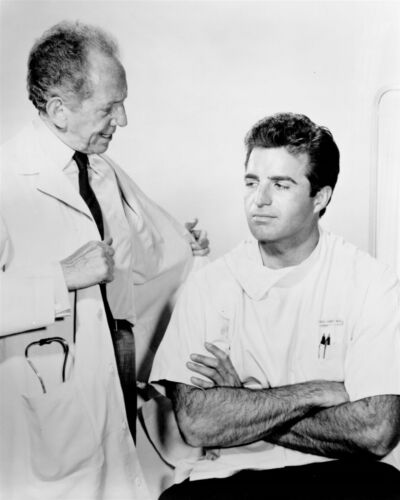
Jaffe and Edwards Photo: ebay.com
Ben Casey was on the air from 1961-66 on ABC. Created by James E. Moser, the character of Ben Casey was based on Dr. Allan Max Warner who was a neurosurgeon. Warner worked closely with the actors to show them how to handle instruments and patients. It was not a cheap show to produce. More than $50,000 of medical equipment was purchased for the show and each 60-minute episode had a budget of $115,000. Warner later changed to psychiatry because he said his association with the show prevented him from becoming board-certified. Dr. Joseph Ransohoff, another neurosurgeon, became the medical consultant.
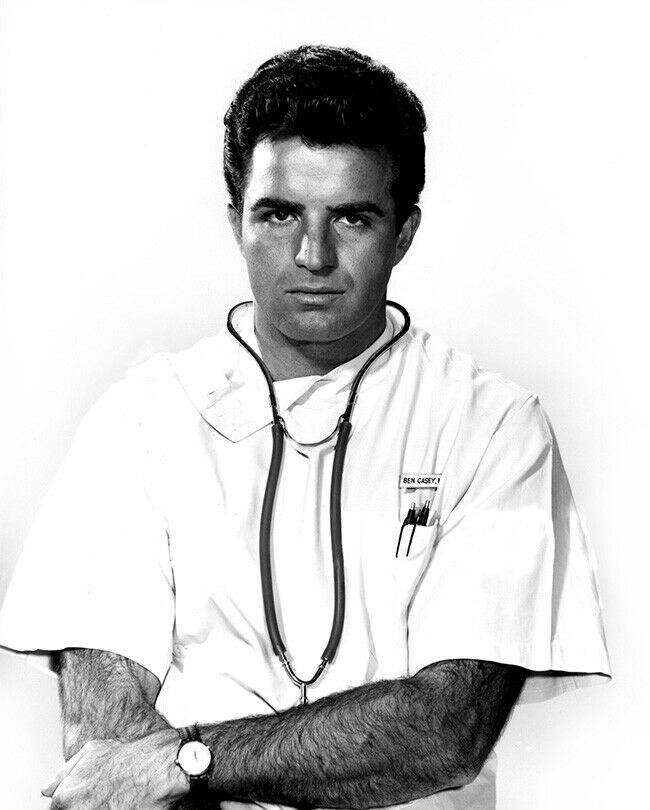
The series followed Ben Casey (Vince Edwards), an idealistic neurosurgeon at County General. Dr. David Zorba is his mentor (Sam Jaffe). In the final season, Jaffe left and the new chief of neurosurgery was Dr. Daniel Niles Freeland (Franchot Tone). Rounding out the cast were Dr. Ted Hoffman (Harry Landers), Dr. Maggie Graham (Bettye Ackerman), orderly Nick Kanavaras (Nick Dennis), and Nurse Willis (Jeanne Bates). The show had a gritty edge to it and featured the life of doctors working in a city hospital and the tough physical and ethical situations they had to deal with.
Several sources said that Cliff Robertson and Jack Lord turned down the role of Ben Casey. Also, Russell Johnson said he auditioned for the role, but was rejected and his next audition was for the role of the Professor on Gilligan’s Island. However, I read several other sources that mentioned that Bing Crosby discovered Edwards and planned a television show to feature his find. Bettye Ackerman’s character was cast as an anesthesiologist who was supposed to be Casey’s love interest but they never developed any chemistry. In real life, Ackerman was married to Jaffe.
Photo: nostalgiacentral.com
Filmed at Desilu Studios, the series was produced by Bing Crosby Productions. The show had 33 directors including Sydney Pollack; Vince Edwards directed seven of the episodes. However, its writing staff was even bigger with about 80 different people penning scripts. I never understood how that worked so well. As a writer, I would want to get to know the characters I was writing for and then continue to learn about them, but during the sixties, there were a lot of people who only contributed one or two scripts to any given series.
The theme music was written by David Raksin and pianist Valjean made it a top-40 hit.
The show was on Monday nights for its first three seasons. Season four, it moved to Wednesdays and returned to Mondays for the final two seasons. The first season it ranked in the top 20 and moved into the top 10 for its second year. Once the network moved the show to Wednesdays where it had to compete with The Beverly Hillbillies and The Dick Van Dyke Show, it fell out of the top thirty and never returned to its former popularity. During the last season, several changes were made. Casey fell in love with Jane Hancock, a woman who came out of a 13-year-long coma. The episodes also began to continue from one to another instead of being stand-alone stories, encouraging viewers to find out what happens the next week.
Photo: pinterest.com
During the run of the show, four novels were written based on the series (1962-3), as well as a daily (1962-1966) and Sunday (1964-1966) newspaper comic strip by Jerry Capp and ten Dell Comic books (1962-64). There was even a board game created called Ben Casey MD. And even more surprising was a doll called Dr. Ben Casey’s Patient. Surely children were not exposed to the show.
Photo: pinterest.com
Another medical show, Dr. Kildare, aired the same year as Ben Casey. The shows were often confused, but they were really quite different. Dr. Kildare was an intern who respected his mentors and the doctors he served under. He was the handsome guy next door, friendly and always striving to help his patients. Casey was brash and had already served his learning time, so he more often bucked the system and was not as respectful to the doctors working with him. He was handsome but in a more wild, bad boy, appearance. However, both shows tackled some very interesting and controversial subjects from the medical field.
Ben Casey might have gone off the air, but he did not disappear. The show has been parodied on a variety of shows including The Flintstones. “Ben Casey” was used by American troops in Vietnam War as slang for a medic. In 1988, a made-for-tv-movie The Return of Ben Casey brought Edwards back to the small screen. It was a syndicated show, and aired with the hope that it would be a pilot for a new series, but none of the networks picked it up.
Photo: collectors.com
The cast was not holding hands and singing Kumbaya, but it did function amidst a lot of dysfunction. Director Mark Rydell discussed Edwards’ gambling problem which became the show’s gambling problem. Landers who played Dr. Hoffman said Edwards was constantly asking the cast and crew for money to take to the race track, and he would be gone for hours at a time. He often came in with $20-30 thousand dollars in his pocket, demanding that he leave filming by 11; other stars had to stand in for him to tape the rest of the show. Despite his unprofessional behavior, several stars liked Edwards. Jaffe, who had many conflicts with Edwards, was not one of them which is why he eventually left the show. Director Jerry Lewis and guest star Sammy Davis Jr. also had problems with Edwards. Landers also mentioned that when Tone took over Jaffe’s role, he was constantly drunk on the set. When Landers directed the show, he kept Tone sitting down so viewers would not see that he was swaying.
Considering all the issues the show had, the number of writers contributing scripts, the unprofessional behavior of several of the actors, and the movement of the show from Monday to Wednesday where it had stiff competition, the show actually did well and was popular with viewers for five years. It set the tone for many of the shows that would follow including Marcus Welby, Medical Center, and ER. Next week we will learn more about Dr. Kildare.
Today we are winding up our soap opera blog series titled “I Met My Twin When I Married My Mother’s Neighbor’s Uncle’s Grocer’s Best Friend’s Attorney Who is Also My Fourth Cousin Once Removed.” We are ending with a soap that I knew a bit about before researching this series. When I was twelve, getting ready to enter the junior high years of my life, my best friend Bonnie and I heard about a new soap opera beginning that summer. We checked it out and were fans for the first couple of years. I quit watching when I was busy with high school activities, but I would tune in on and off just to see if I knew anyone anymore. I’m not sure how long Bonnie watched it or maybe still does. This soap seemed much more realistic to me than the crazy antics on Days of Our Lives, although I admit some of the plot twists are a stretch.
First Cast: Fosters, Brooks, Chancellors Photo: dailysoapdish.com
The Young and The Restless was set in Genoa City, Wisconsin; little did I know when I watched that first episode in Clearfield, Pennsylvania, that I would be living in Wisconsin by September. Genoa City really does exist, and the creators of the show drove through the town when they traveled from Chicago to their lake home in Lake Geneva, Wisconsin.
This soap features the wealthy Katherine Chancellor (Jeanne Cooper); her companion is Jill Foster (Brenda Dickson/Jess Walton) who then becomes involved with her husband; we also meet Jill’s brothers David (David Hasselhoff) and Greg (Wings Hauser). The Brook four girls (Leslie-Janice Lynde; Lorie-Jamie Lyn Bauer; Chris-Trish Stewart; Peggy-Pamela Peters Solow) intertwine with all the other families in one way or another. Later two wealthy families who both happen to be in the cosmetic business were added to the cast: the Newmans and the Abbots. Victor Newman (Eric Braeden) is a billionaire and heads Newman Enterprises and has been married to Nikki (Melody Thomas Scott) most of the history; Jack (Peter Bergman) and Ashley Abbot (Eileen Davidson) oversee Jabot Cosmetics with advice from their father John (Jerry Douglas).
Nikki and Victor Photo: celebsdirtylaundry.com
CBS created this soap opera to appeal to younger viewers. The network hired married couple William J. and Lee Phillip Bell to create the show in 1972 titled “The Innocent Years.” Most soap operas of the sixties and seventies focused on dialogue and story. The Young and The Restless used unique lighting techniques and camera angles; they filmed in more of a Hollywood movie style than current television shows. The lighting effects could create dark, shadowy, moody sets or brightly lit close-ups. This soap was also the first one to be broadcast in high definition.
Bell and executive producer John Conboy auditioned 540 actors for the 13 major characters in the first season. The cast was the youngest ever assembled. They looked for glamorous model types instead of known actors. Up until this point, love stories were part of the plots but not sexuality. Some of the plots dealt with premarital intercourse, incest, rape, and impotence. Social issues also were featured including alcoholism, bulimia, and controversial cancer treatments.
Kristoff St. John Photo: dailybeast.com
Two decades into the show, the first major black characters were introduced in the Winters and Barber families; Neil was a CEO for Jabot. Neil was played by Kristoff St. John. St. John died from hypertrophic heart disease last February at age 52. The cast was devastated. The crew has been together a long time and considers themselves a family.
The theme song originally was titled “Cotton’s Dream” from the film Bless the Beasts & Children, but became “Nadia’s Theme” after Nadia Comaneci’s gymnastic routines from the 1976 Olympics were set to the song by the Wide World of Sports. Perry Botkin Jr. who had composed the piece for the theatrical film arranged a version specifically for the show. A few years a jazzier remix of the song was used, but the original theme has never changed much.
The show has won an amazing eleven Daytime Emmy Awards for Outstanding Drama Series. Directors picked up 15 wins and writers garnered 18. Another 42 awards were given out to actors and actresses with 3 Lifetime Achievements delivered.
Photo: soapsindepth.com
At the end of 2019, The Young and The Restless had held the number one rating for 32 years; however, as of March 2020, The Bold and the Beautiful has taken over the number one spot. The Young and The Restless has been renewed through 2024.
Like many of the shows on television, Covid took a toll on the show. By April 23, 2020, the show was out of new episodes. Production shut down in March of 2020 and resumed in July of that year, with new episodes airing in August.
Fun Facts: (1) Eric Braeden who plays Victor Newman was in The Rat Patrol. (2) When Jeanne Cooper decided to get a facelift, instead of taking a leave of absence from the show, her procedure was written into the plot in 1984. (3) One of the show’s biggest fans is Cal Ripken Jr. (4) Jeanne Cooper as Katherine Chancellor was on the show from the beginning in 1973. When she passed away in 2013, her real son, Corbin Bernson, was brought in to play the priest who officiated at her funeral.
Jaime Lyn Bauer Photo: wikifandom.com
It’s funny how you remember certain things. When I think back to the debut of The Young and the Restless, I remember the Brooks sisters and how beautiful I thought Lorie Brooks was, played by Jamie Lyn Bauer. I remember romantic and colorful episodes. However, recently I watched that first episode. Two of the Brooks sisters were on the show, Leslie and Chris. It was very dark and had more of the atmosphere of Dark Shadows; there was very little for any of the characters to be happy about. I guess it appealed to us enough that we kept watching that summer. And almost fifty years later, people are still watching.
Regardless of what I think about the average soap opera, you have to give the cast and crew a lot of credit. I cannot imagine how much hard work they have accomplished. To be in a show twenty to fifty years is incredible on its own; then to realize that this is a show that is on every weekday and requires a huge amount of dialogue that must be memorized very quickly with long hours of filming. It truly is amazing that so many of these series retain their favorite characters for decades. Many of these actors have to spend more time with their television family than their actual family. It’s not an easy way to make a living but it must be very fulfilling since so many actors and actresses continue to develop these careers. I hope you enjoyed getting to know a bit more about some of these shows. Please feel free to share your favorites and what made them your favorites.
We are halfway through our soap opera blog series, “I Met My Twin When I Married My Mother’s Neighbor’s Uncle’s Grocer’s Best Friend’s Attorney Who is Also My Fourth Cousin Once Removed.” Today we are turning to a show that is still going strong: Days of Our Lives.
Early Cast Photo Photo: wikipedia.com
Days of Our Lives has been on the air every weekday since November of 1965. Ted and Betty Corday created the show and produced it along with Sony Pictures Television. (The current producer is Ken Corday, their son.) The show profited from two pioneers in the field: Irna Phillips came on board as story editor and William J. Bell wrote most of the early stories. He would leave the show in 1973 to develop The Young and the Restless which we will discuss next week.
As the World Turns and Days of Our Lives have a lot in common. Like As the World Turns, this series was set in Illinois in Salem and also focuses on two families: the Bradys and the Hortons. Like Helen Wagner who played Nancy Hughes on World from the beginning till her death, Frances Reid began playing Alice Horton in 1965 and continued until she passed away in 2010, the same year as Wagner. Also, just like World, Days began a sixty-minute format in 1975, so did Days.
The Cordays and Bell agreed that this would be a hospital soap opera, featuring the lives of a family of doctors while following their personal lives through marriages, divorces, affairs and the medical situations that came up. Additional families and characters were added over the years. Many subplots over the years have dealt with characters who learn their birth parents were not who they thought.
The show was known in the seventies as a show that felt free to go beyond the typical soap opera boundaries; themes like artificial insemination, homosexuality, interracial romance, serial killers were part of the plots. However, the show is equally known for its somewhat ridiculous plots of constantly bringing people back from the dead, evil twins, continuous love triangles, amnesia, kidnappings, secret islands, and demonic possession.
Hope and Bo Photo: pinterest.com
The show won the best Daytime Drama Emmy in 1978 and 2013; individual cast members also took home Emmys many times.
Days is one of the few soap operas left on the air, but viewership has been declining since the 1990s. In the first few seasons, the show was at the bottom of the Nielsen ratings. By 1973, it tied for
John and Marlena Photo: thelist.com
first place with Another World and As the World Turns. In 1977 ratings began declining again; the popularity of daytime game shows was part of the reason. By 1980 it was number one again. In order to increase ratings, several popular actresses and actors who were let go to cut costs were brought back to the show during the 1990s. In 2020 the show aired its 14,000th episode, and, currently, the show has been renewed through September 2023.
One thing that has not changed much since 1965 is the opening of the show. An hourglass appeared on the screen with sand trickling and a voice says, “Like sands through the hourglass, so are the Days of Our Lives.” It has only been slightly modified the past five decades. The theme song in the opening was composed by Charles Albertine, Tommy Boyce, and Bobby Hart and was the first soap to use an orchestra ensemble. After the first season, one of the stars, MacDonald Carey, voiced the opening and that was kept in the show after he passed away as a tribute to him.
Current Cast Photo: rottentomatoes.com
My husband admitted to me that because several of the girls he hung out with in college watched the show, he began to get interested in it. I guess he is not alone. Supreme Court Justice Thurgood Marshall instituted a recess about 1 pm so he could watch the show. Julia Roberts said she was a big fan and asked to be seated near the cast at the People’s Choice Awards in 2002. Monica Lewinsky has revealed that she was so passionate about the show that she wrote a poem for her high school yearbook about the show. Novelist Brian Keene said he watched the show from 1983 on and took a break from writing to watch it daily.
The Hayes Then Photo: tvinsider.com
A few fun facts about the show are (1) Deidre Hall and Andrea Hall were the first real twins to play twins on a soap opera. (2) Betty White appeared on the show in 1980. (3) In 2001, NBC became the first network to broadcast daytime shows with Spanish-closed captioning. (4) Drake Hogestyn has played seven different roles on the show. (5) Bill Hayes and Susan Seaforth played Doug and Julie Williams and their onscreen romance turned into an offscreen romance. They married in 1974 in real life and their characters married in 1976. They are still happily together.
The Hayes Now Photo:seniornewsandliving.com
I know that there are a lot of fans for this show, but I do have to admit I don’t get this one. I understand the housewives of the sixties turning to soaps, but this one has had so many incredible and hard-to-fathom plot twists that I cannot take it seriously. I am waiting to learn that one of the characters is actually their own stepmother because they married so many of the citizens who married so many other of the citizens, not to mention the behind-the-doors affairs that are carried on as normal procedures. However, if you are one of the millions of viewers who love the show, I am open to persuasion.
As I mentioned last week, this month our blog series is about soap operas, and I titled it “I Met My Twin When I Married My Mother’s Neighbor’s Uncle’s Grocer’s Best Friend’s Attorney Who is Also My Fourth Cousin Once Removed.” After looking at Peyton Place which seemed to set the standard for television soap operas, I had three more weeks to fill. I had quite a few options to write about. I decided to choose the two that my mother watched the most and the one that I got to start watching from the first episode: As the World Turns, Days of Our Lives, and The Young and the Restless.
The early cast. Photo: tvinsider.com
However, I did want to mention The Guiding Light. This soap started on the radio in 1937. It continued on the radio until 1956 but also aired on television from 1952-2009. With its 57-year-long-run, it is currently the longest-running soap opera.
Now, back to our topic today which is As the World Turns. This soap came close to taking the record for the longest-running soap, it began in 1956; it was canceled in 2010, giving it 54 years on television. If you were going to binge watch this one, it might take a bit. You would have to sit through 13,763 hours.
The show was set in Oakdale, Illinois. Before this soap opera aired, “serials” were always fifteen minutes long. However, this show, along with The Edge of Night, both began the same day as thirty-minute-long episodes. The first decade or so was filmed in black and white before switching to color in 1967. In 1975, the show switched to an hour-long format.
Believe it or not, from 1958-1978, the show had ten million viewers checking in daily. In 1995, the series celebrated its 10,000th episode.
The show was created by Irna Phillips, one of the first soap opera writers on the radio. She preferred realistic plots and interesting characters more than the unbelievable drama that was at the center of many serials. Irna was a pioneer in the field of soap operas. She passed away in 1973, so she never realized the longevity of the show.
Before she married on Sleepless in Seattle Photo: imdb.com
She often featured professionals, and the legal and medical fields were represented on this show as we learned about their private lives and careers. We slowly get to know the family members and their inner thoughts. In this series, we are introduced to the upper-class Hughes and Stewart families. Eventually, the rural Snyder family and wealthy Lucinda Walsh become entwined in the weekly plots. In 1960 Lisa Miller came to Oakdale played by Eileen Fulton. She was a southern “vixen” and was the person I remember best from the show when my mom watched.
Three of the characters to be on a soap opera the longest were part of the crew: Helen Wagner as Nancy was on 54 years, Don Hastings as Bob Hughes was on 50 years and Fulton, the vixen, appeared on the show for 47 years. A couple of characters on Days of Our Lives come close to this record; Susan Seaforth Hayes has actually tied Wagner; she began on Days in 1965 and was still seen in 2022.
Plots developed gradually over time with conversations and character reflections. You could miss a day or two during the week and still know what was happening on the show.
In 1958 it became the number-one drama show in the US. The soap would win the Daytime Emmy for Outstanding Daytime Drama Series in 1987, 1991, 2001, and 2003. The writers won in 2001, 2002, 2004, and 2005. Directors picked up the award in 1993 and 2007. There were many other Emmys awarded to the show including for Supporting Actor and Actress, Lead Actor and Actress, Outstanding Ingenue, and Lifetime Achievement Award.
Nancy over the years Photo: innertoobs.com
The show was remembered for the character of Hank Elliot who was the first gay male character out of the closet on daytime television in 1988 and the first kiss between two men, Luke Snyder and Noah Mayer.
The first words spoken on the show were by Nancy Hughes (Helen Wagner) when she said “Good morning, dear.” Nancy would appear on the show for almost the entire run. She was dropped from the series during the first season after developing a conflict with Phillips. She returned after six months and stayed until 1981 when she left because she did not think that the writers were including the veteran cast members enough, but she returned in 1985 and stayed until August of 2010 when she passed away. The writers had been hoping Wagner would have the last word in the show with the final lines, but she died two weeks before.
In December of 2009, CBS announced it would not be renewing the soap opera and the last episode was taped June 23, 2010, airing in September of that year. The final words were spoken by Bob Hughes, Nancy’s son, when he said “Good night.”
Photo: welovesoaps.com
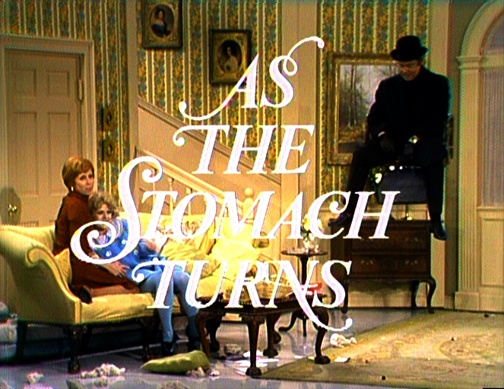
I think because of the title, this show was used as a parody often. For example, on the cartoon Tom & Jerry, Tom is watching “Nine Lives to Live” when Jerry changes the channel to “As the Cheese Turns”; Carol Burnett had a recurring sketch where she played one of the matriarchs on “As the Stomach Turns”; and on Mister Rogers’ Neighborhood, a soap opera is written starring Lady Elaine Fairchild in the “As the Museum Turns.” Being a museum curator by profession, I admit I am a bit intrigued by the last one. Maybe I should start taking more notes at work.
I’m guessing for stay-at-home moms, watching a soap like As the World Turns, was a bit of a respite from the constant cleaning and caring for younger children. They could get involved in other peoples’ lives that seemed more complex and romantic. Fifty-four years is a long time; many of these characters must have seemed like part of the family after that many days spent together. Today reality is so depressing, I guess I prefer to watch sitcoms.
I admit that this month I may be a bit out of my element. We are going to learn about the soap opera genre in a series called “I Met My Twin When I Married My Mother’s Neighbor’s Uncle’s Grocer’s Best Friend’s Attorney Who is Also My Fourth Cousin Once Removed.” While my best friend Bonnie and I eagerly tuned in to The Young and the Restless when it began in seventh grade, and I popped in and out for a decade or so afterward, most of my soap opera memories involve my mother. I remember her ironing in the living room while watching As the World Turns. She also kept up with the events on Days of Our Lives and may have watched a few others off and on.
Photo: mubi.com
First in our series is one of the earliest television operas: we are traveling to Peyton Place.
This soap began on ABC in September of 1964 and was on the air for five years.
It was based on the novel Peyton Place by Grace Metalious. The first couple of years were in black and white and the second half of the shows were in full color.
A lot of the cast went on to be very active in television: Mia Farrow, Ryan O’Neal, Barbara Parkins, Christopher Connelly, David Canary, Mariette Hartley, and Lana Wood.
The show had a rocky beginning. Producer Paul Monash wanted to bring the show to prime time based on the success that the show Coronation Street had in England. He refused to call it a soap opera, preferring the term “high-class anthology drama.” A pilot was shot in 1962; after several changes, the pilot finally aired in 1964. The early episodes were taken from the novel and the 1957 film that was also based on the book. However, eventually, new stories had to be created. The setting was changed from an unknown location in the 1940s to present-day Massachusetts.
Peyton Place Archives, Camden ME Photo: camdenpubliclibrary.com
The opening credit included a photo of a church steeple and the words “Peyton Place” on screen while the bells rang. Announcer Dick Tufeld said, “This is the continuing story of Peyton Place.” Suddenly we see the town square, a rolling stream, and cast members while a summary of the previous episode is related.
Peyton Place was an immediate hit. It began life airing twice a week but then increased to three episodes in June of 1965. Dorothy Malone, one of the stars, had emergency surgery, so she was replaced with Lola Albright until she fully recovered.
In the first season, Dr. Michael Rossi (Ed Nelson) arrives in town from New York City to open his medical practice. Newspaper editor Matthew Swain (Warner Anderson) is a new friend. Matthew’s cousin Allison MacKenzie (Mia Farrow) is in love with his older brother Rodney (Ryan O’Neal). We understand that her mother Constance (Dorothy Malone) highly disapproves of the relationship. The town was named for Martin Peyton, the Peyton Mill owner, who was Rodney’s grandfather.
Rodney disapproves of his father Leslie’s (Paul Langton) relationship when he catches him with his secretary Julie (Kasey Rogers). Rodney has been dating her daughter Betty (Barbara Parkins). He breaks up with Betty and begins seeing Allison. Betty discovers that she is pregnant and then miscarries. Rodney marries her not knowing about the miscarriage. We also learn that Elizabeth Carson was murdered in a beachfront home.
The movie version 1957 Photo: dailymotion.com
Dr. Rossi becomes closer to Constance although he butts heads with Dr. Morton (Kent Smith). Dr. Morton threatens to destroy Rossi’s career when Catherine, Rodney’s mother, dies; then he learns that the pathologist made a huge error which actually caused the death. Betty decides to become a nurse and is hired as an aide at the hospital. Her father George (Henry Beckman) has a nervous breakdown and is admitted to a local sanitarium. Barbara Parkins told a reporter that when she met Bette Davis, the famous actress asked her, “When are you going to let go of Rodney Harrington?”
Elliot Carson (Tim O’Connor), Alison’s birth father who had been in prison for 18 years, returns to Peyton Place. He had been accused of murdering his wife Elizabeth, but we know that Catherine had been responsible. Once Elliott’s name is cleared he marries Constance and they explain to Allison that he is her father. Norman falls in love with a local girl Rita (Patricia Morrow) whose mother owns a local tavern.
Photo: pinterest.com
Steven Cord (James Douglas) is an attorney who moves to town. Dr. Morton’s daughter Claire (Mariette Hartley) gets divorced and returns to Peyton Place to practice medicine. She becomes interested in Dr. Rossi. When Matt decides to retire, he sells the local paper to Elliot.
If you are confused after reading these plots, don’t despair. I read through numerous times and still feel like I’m reading War and Peace. There are other subplots as well; these were just the major ones. Whew! I guess we know when someone says their life is like a soap opera, we know now what that means.
I won’t get into all the plot twists that happen during the rest of the series, but rest assured that there are murders, accidents, affairs, betrayals, addictions, and financial shenanigans.
When Mia Farrow became more popular, Dorothy Malone was written off the show after complaining about Farrow getting a bigger role, She sued 20th Century Fox for breach of contract; the case was settled out of court.
They didn’t have the only feud however. Ruth Warwick did not care for working with Ryan O’Neal. She said he was someone “who was so in love with himself it was pitiable.”
Mia Farrow left in 1966 and ratings began to decrease. In her memoir, Farrow said that she never expected this show to succeed. Once it became popular, she tried to get out of her contract. Her husband, Frank Sinatra, used his clout to get her out of it two years later, so she could travel with him.
The writers’ script had Allison run away from the town; two years later a new character showed up with a baby she claimed was Allison’s.
The Miles Family Photo: pinterest.com
The show went back to two episodes a week. By 1968 most of the original characters had left the show. Today it is not unusual for soap opera characters to come and go, but that was not the original plan.
In the same year, the show developed several non-white characters played by Ruby Dee, Percy Rodriguez, and Glynn Turman. The series brought several black writers aboard as well as Ruby’s husband Ossie Davis as a consultant.
In an effort to increase ratings, new characters were brought on board and new subjects were added to scripts like the war, the draft, riots, music, and belief in God. The ratings never recovered, and the show was canceled in June of 1969.
The series was revived as a daytime serial in 1972 but after less than a year, Return to Peyton Place was also canceled.
In 1977 NBC aired Murder in Peyton Place. It was advertised as a reunion movie and it focused on the deaths of Rodney and Allison. In 1985, Peyton Place: The Next Generation was produced to stir up interest for a new series, but that never happened.
I’m not sure why people were so enthralled with Peyton Place. I guess it’s the same reasons we have Fifty Shades of Gray decades later. Metalious, the author of the original novel, explained the genesis of her book: “To a tourist, these towns look as peaceful as a postcard picture. But if you go beneath that picture, it’s like turning over a rock with your foot-all kinds of strange things crawl out.”
During the five years it was on the air, Peyton Place had more than 100 actors on the show and 20 writers. The set expanded from a few homes around a town square to a more vibrant town with shops, a factory, a hospital, a fire station, and a wharf. Plots got more complex.
The show was eventually sold to fifty different countries with eight million viewers in Great Britain. Apparently, many Europeans based their idea of what an American town was like on this show.
Soap operas certainly had a spot in America’s hearts for decades. Just this past year, the last daytime soap opera moved to a streaming service and people were up in arms. I don’t know about you, but when I want to walk in nature it is to see the trees, listen to the birds, and smell the flowers. I tend to leave rocks alone. Maybe I am focusing on a fake façade, but I’m content not to see what is crawling around beneath the surface.
Last week we looked at shows that debuted in 1973, fifty years ago in our “Potpourri” blog series. Today we are concentrating on one of the successful shows of that 1973 class (and there were not a lot of them): Good Times and I’m am considering this blog “Flopourri” for Florida Evans.
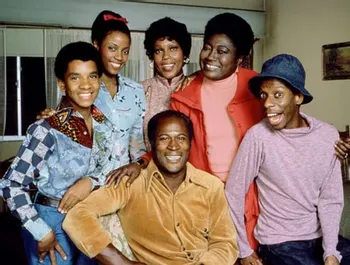
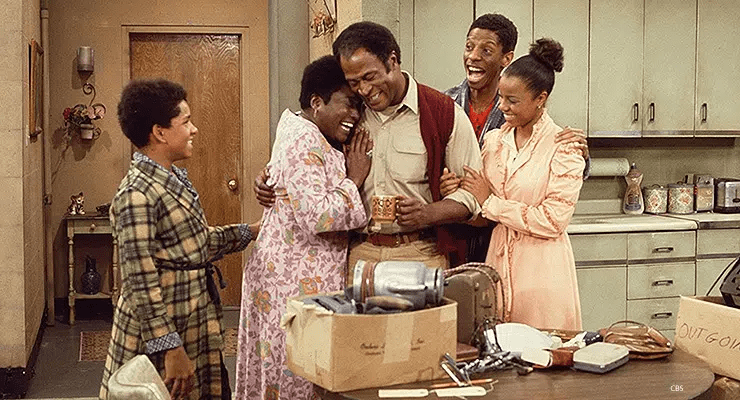
Cast of Good Times Photo: tvtropes.com
For those of you who have been with me for the past six and a half years. You may be surprised to find me featuring a Norman Lear show. I readily admit that I have a Norman Lear bias. It’s nothing personal with Norman, but I just did not enjoy most of his shows: All in the Family, The Jeffersons, Maude, Diff’rent Strokes, Sanford and Son, and Carter Country, among others. I did think that Mary Hartman, Mary Hartman was an interesting concept, just too hard to sustain, and I admit that I liked Fernwood Tonight. I still bypass these shows on MeTV and Antenna TV when they are on the schedule. However, I will be the first to say that they were important historical shows in the evolution of television. They were relevant shows that changed the way sitcoms were written and presented a lot of important topics for people to debate.
So, whether I enjoyed watching Good Times or not, and it was not, it was an important show that gained a devoted following and was on for six seasons, producing 133 episodes. The show was produced by Lear and created by Eric Monte and Mike Evans. Evans played Lionel Jefferson on The Jeffersons. He left the show to work on this series and when Good Times was canceled, he returned to The Jeffersons.
Florida Evans (Esther Rolle) was Maude’s maid. Maude was a spinoff from All in the Family and Good Times was a spinoff from Maude, so this was the first show to be created from a spinoff.
Photo: showbizzcheatsheets.com
The Evans family lives in the Chicago projects. The area is not named but the opening and closing credits show photos of Cabrini-Green. The family consisted of Florida, her husband James (John Amos), their kids JJ, 17 (Jimmie Walker), Thelma, 16 (BerNadette Stanis), and Michael, 13 (Ralph Carter). The show also featured Florida’s best friend Willona (Ja’Net DuBois) and Nathan Bookman (Johnny Brown), the building superintendent. The family never has enough money. James is often out of work, but he also works two jobs when he gets a chance to bring in money for their family. He is a proud man and does not believe in handouts.
Many of the shows deal with gang warfare, financial issues, muggings, unemployment, rent parties, racism, and evictions. It was one of the first shows to have an almost all-black cast. Florida and James are good parents who try to teach their children values and ethical behavior. Michael was an especially interesting character who was intelligent, an advocate who loved African American history, and tried his best to make the world a better and more fair place to live.
Photo: JacksonUpperco.com
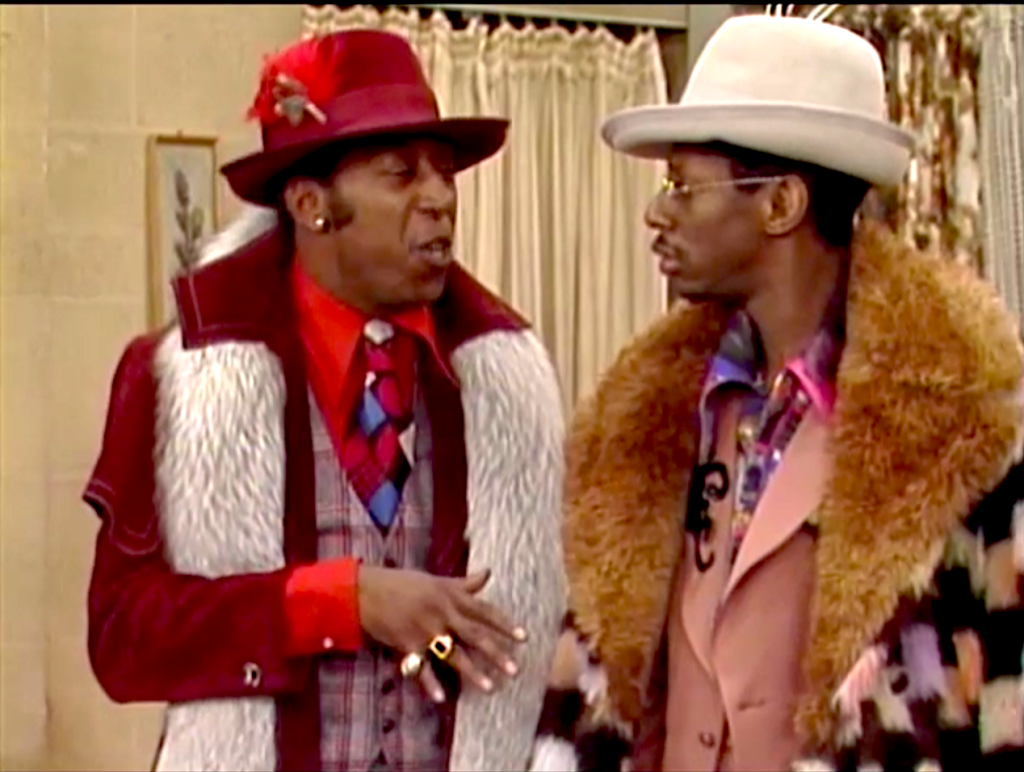
Other recurring characters include Ned the Wino (Raymond Allen), who often can be seen in their building. In one episode, JJ, an artist, paints Ned as Jesus and, in another, well-meaning Michael tries to reform him by letting him stay at their house but it does not work out. Carl Dixon (Moses Gunn) is a shop owner in the area. After James’ death, Florida begins dating him and eventually they marry and move to Arizona. Esther tells Willona in a later season that Carl died from lung cancer. Pimp Marion Williams (Theodore Wilson) is a neighbor who is known for his flashy clothing and jewelry. Lenny (Dap Sugar Willie) is the neighborhood hustler who sells stolen items. Wanda (Helen Martin) runs a women’s support group in their building. Alderman Fred C. Davis (Albert Reed Jr.) is a politician with a shady past.
A lot of celebrities appeared on the show during its run including Debbie Allen, Sorrell Booke, Rosalind Cash, William Christopher, Gary Coleman, Alice Ghostley, Ron Glass, Robert Guillaume, Gordon Jump, Jay Leno, Charlotte Rae, Philip Michael Thomas, and Carl Weathers.
The theme, a gospel-sounding song with a choir in the background, was composed by Dave Grusin and the lyrics were written by Alan and Marilyn Bergman. It talked about the hard living conditions the family had to endure which was not thought of as “Good Times.” Performed by Jim Gilstrap and Blinky Williams, the lyrics were:
Good Times. Any time you meet a payment. – Good Times. Any time you need a friend. – Good Times. Any time you’re out from under. Not getting hassled, not getting hustled. Keepin’ your head above water, Making a wave when you can.
Temporary lay offs. – Good Times. Easy credit rip offs. – Good Times. Scratchin’ and surviving. – Good Times. Hangin in a chow line – Good Times. Ain’t we lucky we got ’em – Good Times.
Photo: thatsentertainment.com
One of my favorite things about the show was the use of nicknames, maybe because my family is fond of nicknames as well. James called Thelma “Baby Girl” and referred to Michael as the “Militant Midget” for his activism. Willona’s name for Michael was “Gramps,” while JJ called him “Miguel.” The other residents also got their own monikers including Willona as “The Rona Barrett of the Projects” and Wanda as “Weeping Wanda.”
Good Times was created as a show that focused on Rolle and Amos. Both stars expected the show to deal with serious topics even though it was a comedy. They also wanted the characters to be positive role models.
JJ began to be featured in more of the episodes. “Dynomite” became his catchphrase and he said it at least once in every episode. As the writers focused more on his character and the way he behaved, important topics were put on the back burner sometimes.
Both Rolle and Amos felt that the character of JJ and the way he was being developed as more of a foolish and unintelligent person was creating a negative role model. Both stars became disillusioned with the direction of the show and voiced their criticism, Amos more often. They thought the uneducated, slacker type of behavior that JJ expressed was harmful to young viewers. Lear finally fired Amos at the end of the third season because of his negative opinions. The cast had no idea that he had been fired until they read the script where he passed away. Rolle quit at the end of season four.
Walker didn’t see it the same way. He said in an interview that he does not remember saying one word to Amos or Rolle that was not part of the script. He defended his character saying that he didn’t commit overly criminal acts on the show and compared his character to the Fonz on Happy Days. He does have a point. He was deeply hurt that Amos and Rolle, along with many black community members, considered his character a “perpetuation of negative stereotypes.”
Photo: showbizcheatsheet.com
Perhaps part of the controversy came from Walker’s own personality. He considered himself a comedian, not an actor. He said he was never comfortable with the dramatic storylines. Lear wanted Jimmie to take acting classes but he refused. Rolle, Amos, and Carter were dramatic actors and took their roles more seriously. When Rolle died in 1998, Walker was the only cast member who did not attend her funeral.
In season five, Janet Jackson joined the cast as Penny, an abused girl abandoned by her mother, adopted by Willona. Ratings began to decline. With Rolle’s absence, the essence of the show was gone.
Producers asked Rolle to come back even as a guest role. Rolle rejoined the cast for season six after she was promised higher-quality scripts. She also wanted the character of Carl Dixon written out of the show. She felt Florida would not have remarried so quickly, but that was how writers depicted her absence from the show when she left.
However, it was too late and the show continued to decline in ratings. The continual moving of the show on the schedule also didn’t help things. The show began on Friday nights for season one; moved to Tuesdays for seasons two and three; had two different time slots on Wednesdays for seasons four and five; and ended up moving three different times for season six: Saturday at 8 for episode one, Saturday at 8:30 for episodes 2-10, and Wednesdays at 8:30 for episodes 11-22.
Photo: pinterest.com
The series finale in 1979 gave each character a happy-ever-after. JJ becomes a comic book artist. Michael begins college and moves into the dorms. Thelma and her husband move to the Gold Coast when he gets an offer from the Chicago Bears. Thelma is pregnant and they ask Florida to move with them to help care for the baby. Coincidentally, Willona becomes head buyer for her boutique and moves into the same luxury apartments with Penny.
Unfortunately, the show is remembered now more for its controversy than anything else. Amos talked about his “early departure from the show, I felt that with two younger children—one of whom aspired to become a Supreme Court Justice . . . and the other a surgeon . . . there was too much emphasis being put on J.J. and his chicken hat saying ‘Dynomite!” every third page when just as much emphasis and mileage could have been gotten out of my other two children and the concomitant jokes and humor that could have come out of that.” He later said in an interview with VladTV that the scripts on the show led to “an inaccurate portrayal of African-Americans. Their perception or their idea of what a Black family would be and what a Black father would be was totally different from mine, and mine was steeped in reality.”
He did have good things to say about Rolle and her character: “Florida was the glue that kept the family together. It showed a Black family that had the same trials and tribulations as the rest of America, especially those who were financially challenged . . . it told the story of who we were on a comedic basis. And I’ve always contended, as some of my mentors taught me, the best way to get a message across to people is through humor.”
Photo: urbanhollywood411.com
Rolle concurred as she told Ebony in 1975 about JJ: “He’s eighteen and he doesn’t work. . . He can’t read or write. He doesn’t think. The show didn’t start out to be that. Michael’s role of a bright, thinking child has been reduced.”
Walker was interviewed at age 70 by Rebeka Knott and still disagrees with his costars. In that interview, he said that his co-stars, “killed the goose that laid the golden egg. These people, anytime you said anything, they get crazy, they get upset. They don’t get it man.”
So, what are we to make of the show and its success or failure? It still remains an important program in television history. It featured a black cast and focused on a family that struggles with many issues both white and black low-income families could identify with. If Michael had appeared in a reality show as an adult, perhaps it would have been The Cosby Show. A lot of families, black and white, could identify with the issues of that show as well. And, hopefully, they understood where the success of that second generation came from–parents who worked hard and taught their children important values and emphasized hard work and goals that allowed the next generation to have more success than the previous one.
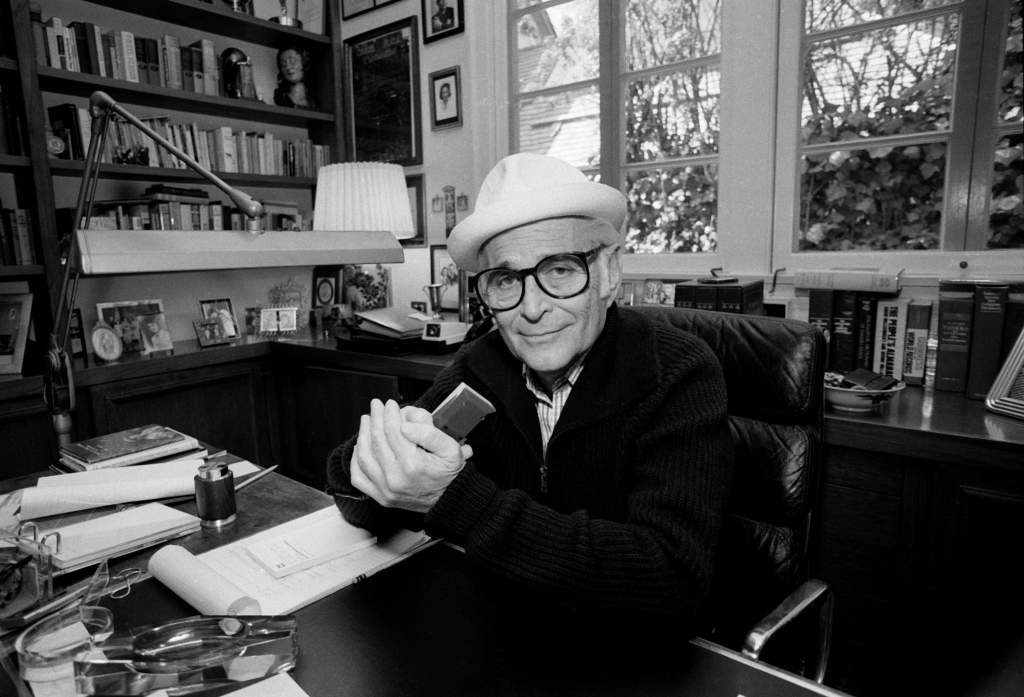
Norman Lear Photo: vibe.com
It’s actually what any good television show does. Regardless of the setting and the characters, it teaches us about how other people live and provides plots many of us can identify with or teaches us about other characters whom we can appreciate and learn more about their individual struggles and journeys whether they follow the same path we do or take a different fork in the road.
It would be interesting to talk with Rolle and Amos today to get their perspective. They were right to ask for better scripts and to showcase their other children who had bigger dreams and hopes. But perhaps Walker is also not that far off. He did portray a different type of character– one that obviously many people identified with or enjoyed spending time with. Don’t most families have a combination of good and not-so-good role models? Hopefully, we learn as much from the characters in our lives who make poorer decisions as we do from those who choose wisely. I’ll leave it up to you whether you think the tv show is worth watching today or not.
This month our blog series is “Potpourri,” and today specifically is “Showpourri.” I thought it would be fun to look at the shows that debuted in 1973, fifty years ago. There were a lot of them. More than 30 shows were new in the fall of 1973; however, only about ten of them were still around the next fall.
Quite a few of these shows were variety shows: Dick Clark, The Dean Martin Comedy Show, Bobby Gentry, The Hudson Brothers, Tony Orlando and Dawn, Mac Davis, and Music Country. We also had several Movies of the Week.
Let’s take a closer look at the other shows that debuted in 1973.
Adam’s Rib Photo: imdb.com
Adam’s Rib: In this half-hour sitcom, assistant district attorney Adam Bonner (Ken Howard) is married to Amanda (Blythe Danner) who is a partner in a law firm. They often face each other in the courtroom which sometimes extends to their personal life. Amanda is also an advocate for women’s rights.
Apple’s Way: Created by The Waltons writer Earl Hamner Jr., this show has a family relocating from Los Angeles to a small town in Iowa where dad grew up. It captures the issues faced from moving from the past-faced city to the rural place where their ancestors grew up.
Bob & Carol & Ted & Alice: Definitely a seventies sitcom. Bob (Robert Urich) and Carol (Anne Archer) are a young couple who are part of the swinging seventies; they are good friends with an older couple, Ted (David Spielberg) and Alice (Anita Gillette), who definitely are not.
Calucci’s Department: Joe Calucci (James Coco) is an office supervisor at the New York State Unemployment Department. He has to deal with red tape, unemployed people truly in need or trying to bilk the system and keep his girlfriend (Candice Azzara) happy.
Chopper One Photo: epguides.com
Chopper One: This one was a bit like CHiPs in the air. Two California policemen (Jim McMullan and Dirk Benedict) fight crime from their helicopter.
The Cowboys: An unusual concept for this decade. The series focuses on a group of seven boys who work on a cattle ranch in the Old West.
Diana: Diana Smythe (Diana Rigg), recently divorced, leaves London and moves to New York City to become a fashion coordinator at a Fifth Avenue Department Store. She learns about life in America from her new friends, copywriter Howard (Richard B. Schull), neighbor Holly (Carole Androsky), window decorator Marshall (Robert Moore), and friend Jeff (Richard Mulligan).
Dirty Sally: imdb’s description of this show was that “crotchety old lady Sally Fergus (Jeanette Nolan) roams the Old West with young companion Cyrus (Dack Rambo).” The major character looks more like she should be on The Addams Family than in the old west.
Doc Elliot Photo: ebay.com
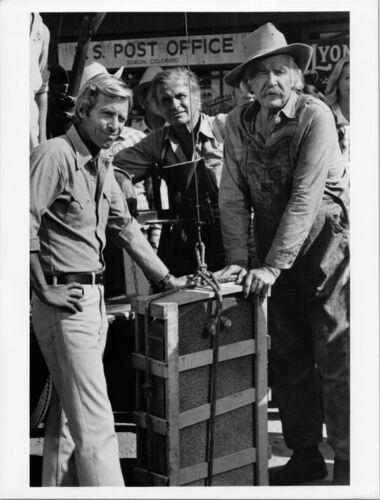
Doc Elliot: Dr. Benjamin Elliot (James Franciscus) leaves Bellevue Hospital in New York to retreat to Colorado. He made house calls by plane and truck and is the only doctor in the area so he deals with a variety of cases.
Faraday & Co: Frank Faraday has been jailed 25 years for murdering his partner, but he did not do it. When he gets to go home, he learns his secretary gave birth to his son Steve who is also a private eye and the two men go into business together and solve mysteries.
Good Times: In this spinoff from Maude, the focus is Florida Evans, Maude’s housekeeper and her family who live in the Chicago housing projects.
Happy Days: Almost everyone knows about this show and the Cunninghams. The focus of the show is on Richie and Joanie growing up in the fifties with the help of The Fonz.
Hawkins: After his first show was canceled, Jimmy Stewart takes on the role of West Virginia attorney Billy Jim Hawkins.
Kojak: Telly Savalas becomes Theo Kojak a bald, lollipop loving police detective who is tough on criminals but a bit of a teddy bear off I job.
Lotsa Luck Photo: tvtango.com
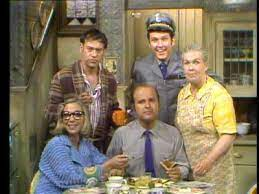
Lotsa Luck: Dom DeLuise stars as Stanley, the manager for a lost and found department at the bus company. He lives with his mother, his sister Olive and brother-in-law Arthur. His best friend is a bus driver he works with and they try to work out Stanley’s life problems. One issue they could not resolve was the fact that the viewers did not like the show.
NBC Follies: I’m not sure who came up with this concept. Vaudeville was dead, but this show resurrected it. It was based on vaudeville with a mixture of comedic skits and musical performances and no host. And no viewers.
Needles and Pins: This show had a great cast including Louis Nye, Norman Fell, and Bernie Kopell. Nye was Nathan Davidson, a women’s clothing manufacturer and this show centered on the employees who work there including new designer Wendy, who was a bit naïve, jumping from Nebraska to New York City.
Toma Photo: pinterest.com
Roll Out: This sitcom was based on the movie Red Ball Express; an African American staff at the Red Ball Express in WWII deal with being far from friends and family who bond with each other. The Red Ball Express was a real trucking convoy that supplied Allied forces in Europe after D-Day. The trucks were allowed to travel on routes closed to civilian traffic and had priority on other roads. It just never found the balance of humor and heartbreak of M*A*S*H or the wacky entanglements of Bilko. This show probably would have made a great drama if it had been done right.
Toma: Toma was a real New Jersey Detective David Toma (Tony Musante). He was a master of disguise and did undercover work. Like Alfred Hitchcock, you can glimpse the real David Toma in many episodes.
The Girl with Something Extra: John Davidson and Sally Field team up as newlyweds beginning their married life together with all the problems typical couples have and one extra, she had ESP and that causes no end of problems for them. Too bad she didn’t tell the network this show would not survive an entire season.
The New Perry Mason Show Photo: imdb.com
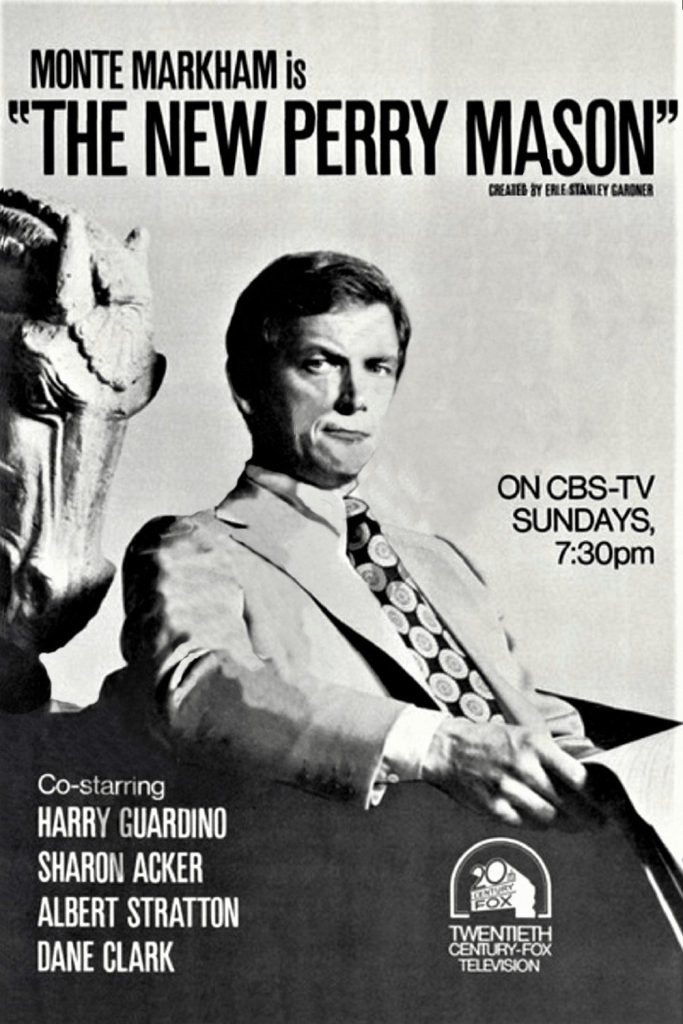
The New Perry Mason Show: Monte Markham and Sharon Acker became Perry Mason and Della Street. Impossible roles to fill with anyone but Raymond Burr and Barbara Hale.
When the fall schedule came out in 1975, the only shows remaining on the air were Good Times, Happy Days, and Kojak. Since I have already done extensive blogs on Happy Days and Kojak, next week, we’ll take a closer look at Good Times.






















 thewritelife61