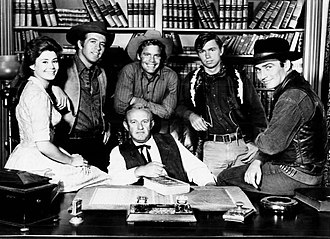
My Sister Eileen: Version Five

As we look at a few little-remembered shows from the past, today we are learning about My Sister Eileen. The series was adapted from short stories by Ruth McKenney published in The New Yorker. The stories became a book in 1938, a play in 1940 and two movies in 1942 and 1955.

📷wikipedia.com

In the 1955 Hollywood movie, two small-town sisters — an aspiring writer, Ruth (Betty Garrett), and a would-be actress, Eileen (Janet Leigh) — move to New York City. They find lodging in a shabby apartment and struggle to locate promising gigs. Ruth eventually meets magazine editor Bob Baker (Jack Lemmon), who tells her to write about her life experiences rather than fiction. As it turns out, Eileen’s life, with her various romantic encounters, is far more interesting, so Ruth steals the stories for herself.

This show joined the television schedule in 1960 and featured Elaine Stritch and Shirley Bonne (Ruth and Eileen Sherwood), who move to New York City. Like the movie, one is a writer and one is an actress. Living in a Greenwich brownstone, they become friends with a reporter Chick Adams (Jack Weston) and Ruth’s coworker Bertha (Rose Marie). Rounding out the cast is Eileen’s agent Marty Scott  (Stubby Kaye), their landlord Mr. Appopoplous (Leon Belasco), Ruth’s boss D.X. Beaumont (Raymond Bailey), and their Aunt Harriet (Agnes Moorehead). The sisters are stereotyped with Ruth being the smart, plain one and Eileen being the beautiful and naïve one.

The pilot was seen on the Alcoa-Goodyear Theater with Anne Helm portraying Eileen.

Earl Hagen who composed “The Fishing Hole” for The Andy Griffith Show composed this theme as well.

📷imdb.com Rose Marie on the show

Rose Marie talked about being on this sitcom for the Television Academy. She said she was friends with the producer Dick Wesson. She said her character Bertha was a wise-cracking one similar to Sally on The Dick Van Dyke Show. Rose Marie didn’t like working with Elaine Stritch. She felt she was not very professional on this show; she said she came to work late and goofed off a lot.

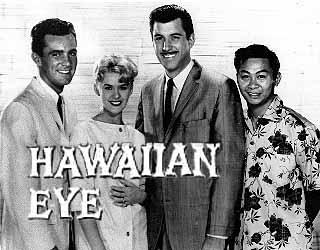
In 1960 it appeared on the schedule on CBS opposite Hawaiian Eye and Perry Como’s Kraft Music Hall. Hawaiian Eye was on the air four years, and this was it’s second season. With Connie Stevens, Robert Conrad and Poncie Ponce, it was about two private investigators in Hawaii, a Korean war vet and a former police detective.

I don’t think the writing helped the show stay on the air too long. During the first season some of the plots included: Ruth’s boss ignores her pleas for a pay increase until he encounters her working as a waitress in a German restaurant — and in a skimpy costume and the Sherwood sisters decide to break their lease with a wild party to which they invite a one-man band, a junior Tarzan, and a fireman with his siren.

📷moviesanywhere.com 1955 film version

I’m guessing part of the problem was that it had appeared in so many versions already. Many people read the book. Lots of people saw one, if not two, of the movies. And the play was being featured around the country. I can see that having a television series which has to expand the hour-and-a-half play and film might not have enough material to draw out the same old plot and keep it interesting for more than a few episodes.

This one is another one that you’re probably better off watching the 1955 silver screen adaptation and skipping the television series.

Blondie: Some Shows Are Better Being Forgotten

This month we are taking a look at some classic sitcoms that many people don’t remember anymore.

Blondie is one of those shows. It was based on the Chic Young comic strip and debuted on NBC in 1957, lasting one year. The series was resurrected in 1968 and the reboot also lasted a season.

📷wikipedia.com The 1957 version

Blondie had become very popular with fans. Beginning in 1938, 28 movies were made starring Penny Singleton and Arthur Lake. Blondie also showed up on the radio from 1939 to 1950.  Many products had been based on the characters including comic books, coloring books, lunch boxes, and board games.

The 1957 series starred half the movie duo. Lake took on his role of Dagwood Bumstead, but Pamela Britton was offered the role of Blondie Bumstead. Their kids, Cookie and Alexander, were played by Ann Barnes and Stuffy Singer. Florenz Ames was boss J.C. Dithers with Elvia Allmana as his wife Cora. Rounding out the cast was Harold Peary as neighbor Herb Woodley.

📷imdb.com The 1968 version

A decade later Will Hutchins and Patricia Harty play Dagwood and Blondie, Jim and Henny Backus play the Dithers, and Pamelyn Ferdin and Peter Robbins are their kids. The only advantage this series had over the original was color.

The comic strip, movies, radio show and both sitcoms all encompassed the familiar Bumstead elements: Dagwood being physically and socially awkward; their dog Daisy, and Dagwood’s love of napping and huge sandwiches.

The reboot was produced by Joe Connelly and Bob Mosher, the faces behind Leave It to Beaver and The Munsters. There was room in the schedule after the network cancelled He and She, a sitcom starring real life spouses Paula Prentiss and Richard Benjamin. The show is described on imdb.com as “Dick and Paula Hollister are a couple living in New York. Dick is a comic-book artist who has become famous for creating a superhero called Jetman, which has been turned into a TV show starring egocentric actor Oscar North.” During its one season of 26 episodes, the show received seven Emmy nominations, including a win for writing. It’s too bad that show was given the axe and Blondie moved in because the Prentiss-Benjamin show was much more creative and felt new, while Blondie felt extremely old.

No surprise, the ratings were not great. This is even worse when you see what the show was in competition with: The Ugliest Girl in Town, which would also be gone by 1969, and Daniel Boone. The one new 1968 show to return on CBS was Hawaii Five-0 which seems so much more sophisticated than Blondie; it’s hard to believe they both debuted the same year.

📷yahoo.com Hawaii Five-0

Perhaps the fans didn’t tune in because the critics panned the show before it aired. The Milwaukee Journal’s Wade Mosby said it was “a horrendously contrived piece of fluff that should have never been snatched from the comic pages.” Don Page of the Los Angeles Times called it “an unmitigated disaster,” and Cynthia Lowry of the Associated Press described it as “dismal.”

By November, rumors were that the show was already cancelled, and its last episode aired in January. The show probably relied too much on slapstick and unsophisticated humor; things that might have been fine in the 1930s but were passe by the 1960s. Sometimes a show is cancelled just because it’s a badly written and executed show. It seems Blondie fell into this category not once but twice.

Off the top of my head, I can only recall two comic strips becoming popular television shows: The Archies and The Addams Family. Because the Blondie characters were not very dimensional and got into the same situations over and over, they just never were able to translate into sustainable television characters. I think there’s a good reason that many people don’t remember this show and perhaps it’s better that way.

Walter Cronkite was the Best, And “that’s the way it is.”

This month we are learning about our favorite news anchors from the past in What’s News? Today we are learning about the man everyone respected: Walter Cronkite.

📷televisionacademy.com

Cronkite was born in 1916 in St. Joseph, Missouri, an only child. His father was a dentist there. During the sixties and seventies, he was described as “the most trusted man in America.” Let’s learn why.

He lived in Kansas City, Missouri until he was ten. The family moved to Houston, Texas when his father took a position at the University of Texas Dental School. No surprise he was a boy scout, always prepared, and worked on the newspaper in high school. He went to the University of Texas, Austin beginning in 1933 and majored in political science. He remembered reading adventures of reporters in American Boy magazine and said they inspired him to be a journalist.

📷warfarehistory.com

Walter left college during his junior year in 1935, perhaps because of the Depression. He took on a number of newspaper reporting jobs, and became an announcer for WKY in Oklahoma City, Oklahoma. In 1936 he met Mary Maxwell, whom he married. After their marriage, he became a sports broadcaster with the name Walter Wilcox. He also joined United Press International in 1937.

Edward R. Murrow had gained a bit of fame covering WWII, and he invited Cronkite to join the Murrow Boys, war correspondents. Cronkite became one of the top reporters during the war, covering action in North Africa and Europe. He was one of eight journalists selected by the US Army Air Forces to join bombing raids over Germany. After the war, he covered the Nuremberg trials and worked for the United Press from Moscow until 1948.

📷Biograhy.com

In 1950, Cronkite joined CBS News in its television division, recruited by Murrow once again. He went to WTOP in Washington, DC, serving as the anchor of Up to the Minute after What’s My Line from 1951-62. 

In addition, from 1953-1957 Cronkite hosted You Are There, an enactment of historical vents on CBS. He also popped up on The Morning Show in 1954. He interviewed guests and chatted with Charlemagne, a lion puppet.

1960 found him covering the summer Olympics in Rome. By 1962, he was anchorman of CBS nightly newscast for a feature called “Walter Cronkite with the News” and by 1963 he became the anchor of the first thirty-minute nightly news program.

📷facebook.com

Cronkite reported on the arrival of The Beatles to the US on the CBS Morning News, but another event took precedence that day and the story aired on December 10. That story was John F. Kennedy’s assassination in 1963. Walter had been standing near the wire machine when the news about Kennedy broke, so he rushed to the studio, so CBS would be the first network to air the news. Cronkite continued to read breaking-news bulletins through the afternoon. Eventually he read “President Kennedy died at 1 p.m. Central Standard Time.” He then paused, put on his glasses, swallowed to maintain his composure and with emotion in his voice told the nation that VP Johnson would be taking the oath of office shortly. In 2006, Cronkite was doing an interview with Nick Clooney when he admitted, “I choked up, I really had a little trouble . . . my eyes got a little wet . . . Fortunately, I grabbed hold before I was actually crying.”

His reporting began to gain more viewers than the former number one Huntley-Brinkley Report. By 1968 Cronkite traveled to Vietnam after the Tet Offensive with Ernest Leiser, executive producer. He would report on location during that time. The night Cronkite mentioned on air that we were never going to win the war, Lyndon B. Johnson was said to have replied, “If I’ve lost Cronkite, I’ve lost Middle America.” Cronkite also covered the Democratic National Convention. Johnson didn’t run again, and in 1973 Cronkite reported about Johnson’s death. In 1972 he covered Richard Nixon’s visit to China.

📷posterazzi.com

Cronkite was known for his coverage of space travel. He reported on almost every manned spaceflight for two decades (1961-81). He was willing to put in the time to learn everything he could about astronauts and the work of NASA. When watching Apollo 11 take off, his excitement overcame him as he yelled, “Go, Baby, Go.”

One of Cronkite’s trademarks was ending the news with “And that’s the way it is” with the date. In 1980, during the Iran hostage crisis, he began to add the number of days they had been held hostage to the end of his news.

In February of 1980, Cronkite decided to retire; his last day was March 6, 1981, and he was succeeded by Dan Rather. His farewell statement was: “This is my last broadcast as the anchorman of The CBS Evening News; for me, it’s a moment for which I long have planned, but which, nevertheless, comes with some sadness. For almost two decades, after all, we’ve been meeting like this in the evenings, and I’ll miss that. But those who have made anything of this departure, I’m afraid have made too much. This is but a transition, a passing of the baton. A great broadcaster and gentleman, Doug Edwards, preceded me in this job, and another, Dan Rather, will follow.”

A few years later, Arizona State University named their journalism school after him. He interacted with the faculty and students and annually traveled there to present the Walter Cronkite Award for Excellence in Journalism.

📷messingaboutinsailboats.com

Cronkite also became a pop culture icon. He made an appearance in 1974 on The Mary Tyler Moore Show. He also appeared as himself on Murphy Brown. From 1981-2002, he hosted the Kennedy Center Honors.

In his free time, Cronkite liked to sail.  He received the rank of commodore in the United States Coast Guard Auxiliary. Earlier in his career, he aspired to be a race car driver. He also loved music and had taken up drumming.

Cronkite passed away at his home in July of 2009 from cerebrovascular disease. Many journalists paid respect to him at the funeral including Tom Brokaw, Connie Chung, Katie Couric, Charles Gibson, Matt Lauer, Dan Rather, Andy Rooney, Morely Safer, Diane Sawyer, Meredith Vieira, and Barbara Walters.

Walter Cronkite had a career he could be proud of. He took his work seriously and was always prepared, taking the time to learn everything he could. Being the most-trusted man in America was no small feat, especially given the topics he broadcast about: politicians, the space race, and the Vietnam war. I can’t think of a news icon who has replaced his reputation. Wish we had a few Walter Cronkites today.

Dan Rather: Didn’t “Love” Tennis in 1987

This month we are learning about some of our favorite newscasters from the past. It’s hard to compare today’s news atmosphere with 24/7 coverage of everything, but the three network newscasts held a different importance in the fifties, sixties, and seventies. Nightly newscasters were highly respected and listened to. Dan Rather is one of the news correspondents who straddled these two eras. He would cover President Kennedy’s assassination, Watergate, the fall of the Berlin Wall, the Gulf War, 9/11, and the Iraq War.

📷facebook.com A young Dan Rather

He was born in 1931 in Texas where his father was an oil pipe lineman. The family moved to Houston where he attended grade school, middle school, and high school, graduating in 1950. As a youngster, Dan was bedridden with rheumatic fever. During that time, he was fascinated by radio broadcasts by Edward R. Murrow and Eric Sevareid.

He enrolled at Sam Houston State Teachers College, graduating in 1953 with a degree in journalism. During those years, he was the editor of the school newspaper and worked at KSM-FM radio as a play-by-play announcer for high school and university football games.

He briefly attended South Texas College of Law before enlisting in the Marine Corps. When the Marines found out about his rheumatic fever, he was honorably discharged.

In 1957 Rather married Jean Goebel and they had two children. Their daughter became an activist and environmentalist, and their son was ADA in the District Attorney’s office in Manhattan.

📷nationalportraitgallery

Rather began his career in his home state. In September 1961, Rather was reporting during Hurricane Carla, and he saved thousands of lives, initiating an evacuation of 350,000 residents, becoming a household name overnight. He created the first radar weather report by overlaying a transparent map over a radar image of the hurricane.

His reporting on the assassination of Kennedy in Dallas got him promoted to White House correspondent at CBS News.

Later he would serve as a foreign correspondent in both London and Vietnam before returning to the White House. He was at the White House during Nixon’s presidency, covering his trip to China, the Watergate scandal, and Nixon’s resignation. During this time, Peter Jennings was at ABC, and Tom Brokaw was at NBC.

He joined the 60 Minutes cast in 1975.

After Walter Cronkite’s retirement, Rather became the anchor for the CBS Evening News from 1981-2005. For most of those years, he signed off with “That’s part of our world tonight.” Rather was often criticized for being outspoken and brash on things he didn’t agree with. In 1987, he was upset that his broadcast that night was being cut short for a tennis match; he walked off the set early, causing CBS to transmit a blank signal for six minutes.

In 1994, Sam Houston State University renamed its mass communications building after Rather.

Rather had a 2004 report on 60 Minutes II about President Bush’s military record with the Texas Air National Guard. His report was based on documents that were questioned for their authenticity. Rather admitted that the authenticity could not be proven. Rather later stated that “If I knew then what I know now, I would not have gone ahead with the story as it was aired, and I certainly would not have used the documents in question.”

📷vanityfair.com

When his contract ended the next year, he was let go. At his final CBS news broadcast, Rather ended his report with the following: “We’ve shared a lot in the 24 years we’ve been meeting here each evening, and before I say ‘Good night’ this night, I need to say thank you. Thank you to thousands of wonderful professionals at CBS News, past and present, with whom it’s been my honor to work over these years. And a deeply felt thanks to all of you, who have let us into your homes night after night; it has been a privilege, and one never taken lightly.”

He then hosted Dan Rather Reports, an investigative news program on AXS TV (known then as HDNet) from 2006-2013. During this time, he released an autobiography, Rather Outspoken: My Life in the News.

After 2013, Rather produced several series and documentaries. He also was a frequent guest on news shows, including The Rachel Maddow Show and The Last Word with Lawrence O’Donnell. He also wrote for “The Huffington Post” and “Mashable.”

📷tvtropes.com

In 2016, he joined SiriusXM Radio with “Dan Rather’s America.”

Dan Rather had an interesting career. He received high praise and loud criticism. He was quickly promoted and quickly fired. He covered many of the top stories from 1960 – 2015. He conducted interviews with some of the world’s leaders including Fidel Castro and Nelson Mandela. He was part of network news, documentaries, independent stations, and Sirius Radio. However, no matter what was happening around him, he stuck to his principles and covered the news the way he thought was best for the American public. You have to admire that.

Good Night David: The Career of Chet Huntley

This month we are learning about some of our favorite newscasters from the past. Last week, we explored the career of David Brinkley who partnered with Chet Huntley, so it seems fitting to talk about Huntley this week.

📷historicimages.com

Huntley was born in Cardwell, Montana in 1911. His father was a telegraph operator for the Northern Pacific Railway, and the family moved often for his career. He continued his pattern of moving around during college. After graduating from Whitehall High School in Montana, he attended Montana College in Bozeman, the Cornish College of the Arts in Seattle, and the University of Washington, which he graduated from in 1934 with a degree in speech and drama.

After graduation, he was hired by Seattle’s KIRO AM radio station. After working in Spokane and Portland, he moved to Los Angeles in 1937 working at KFI before moving to CBS Radio from 1939-1951, ABC Radio from 1951-1955, and NBC Radio beginning in 1955 where he would remain for the rest of his career. During his time in California, he covered the Pacific War and the Civil Rights movement.

As we learned last week, national party conventions were being covered and John Cameron Swayze had stepped down, leaving an opening. Huntley and Brinkley were the leading candidates, and they became a team.

📷ebay.com

Their partnership transitioned to the national nightly news with Brinkley in Washington DC and Huntley in New York. Chet was the straight man with David the witty commentator.

In 1959 the Huntley marriage ended in divorce and later that year, Chet married Tippy Stringer.

One of Huntley’s most memorable newscasts occurred November 22, 1963, when he reported on President John F. Kennedy’s assassination. Along with Bill Ryan and Frank McGee, they provided live coverage and analysis of the ongoing story.

I was disappointed to learn that in the late sixties, Huntley joined a New York advertising agency. In exchange for him attending a few meetings and adding his name to the agency now known as Levine, Huntley, Schmidt Plapler & Beaver, he got a ten percent share in the business. I just felt his integrity and reputation as an objective newscaster was compromised a bit with this collaboration.

Huntley’s last broadcast was July 31, 1970. He then returned to Montana where he built Big Sky, a ski resort south of Bozeman.

📷visitbigsky.com

Before retiring, he also wrote a memoir of his Montana upbringing titled The Generous Years. Chet captured the ups and downs of his life in Montana. He fondly recalls his idyllic boyhood growing up hills and grasslands with friends and family and attending a one-room schoolhouse. He also discussed the tragedies of crop failures, severe drought, hailstorms, locust hordes, and a lightning hit that burned down their barn.

Four years later, Huntley passed away from lung cancer at 62.

Huntley had a successful news career. In 1970 he was named the International Radio and Television Society’s 1970 “Broadcaster of the Year” and in 1988 he was posthumously inducted into the Television Hall of Fame.  He and David Brinkley won eight Emmy awards for their joint news coverage.

They were an amazing team, keeping America in the know.

“Good night Chet”: The Career of David Brinkley

This month we are learning about some of our favorite newscasters from the past. We start with David Brinkley who was a newscaster for more than fifty-five years.

📷rollingstone.com

Brinkley was born in 1920 in North Carolina. He began writing for the Wilmington Morning Star in high school. One of his memoirs discussed his story about the nonappearance of a bloom on a century plant which was reprinted by the Associated Press in newspapers around the country. After graduation, he enrolled in the University of North Carolina, Chapel Hill; Emory University; and Vanderbilt University before joining the US Army in 1940.

After being medically discharged due to kidney problems, he worked for United Press International (UPI) in Atlanta before being sent to other cities, including Nashville as a bureau manager. In 1943, he moved to Washington DC because he mistakenly thought he had been offered a job in the radio industry and ended up at NBC News as the White House correspondent.

Brinkley’s first marriage occurred in 1946 to Flora Ann Fischer; they divorced in 1972. That same year he married Susan Melanie Benfer; they would remain married until his death.

In 1952, Brinkley made the transition to television, reporting the evening news on John Cameron Swayze’s program. When John J. O’Connor reviewed Brinkley’s television career, he said he was “one of the more articulate and persuasive practitioners” of television news reporting. Despite NBC executives’ lack of confidence in the decision, Brinkley was paired with Chet Huntley in 1956 to cover the Democratic and Republican political conventions. In reflecting on Brinkley’s career later in life, Jeff Greenfield, CNN news analyst, said “David Brinkley created a whole generation of political junkies.” At the time, Roger Mudd said “Brinkley, above all the TV guys here, probably has the best sense of the city—best understands its moods and mentality. He knows Washington and he knows the people.”

📷wikimediacommons. Brinkley and Huntley

The Huntley-Brinkley Report was the most popular television newscast until the end of the sixties when Walter Cronkite appeared on the CBS Evening News. Huntley reported from New York and Brinkley from Washington DC. The pair continued working together until 1970 when Huntley retired. The team won an Emmy every year from 1959-1964. (Brinkley would receive ten Emmys overall during his career.) Each broadcast ended with Brinkley saying, “Good night Chet,” and Huntley replying “Good night David.”

During the seventies he appeared on NBC Nightly News as co-anchor or commentator. He switched gears in the eighties and nineties, hosting This Week with David Brinkley. This show established the Sunday morning news program format, featuring correspondents, interviews, and a roundtable discussion.

Brinkley added Author to his resume, penning three books including his 1988 bestseller, Washington Goes to War about World War II. He also got into documentaries with “The Battle of the Bulge: 50 Years On” featuring interviews with survivors of the battles which aired in 1994.

📷entertainmentweekly.com

Literally days before his retirement, Brinkley made a major slip on the air. During what he thought was a commercial break, he was asked about Clinton’s re-election chances, and his response mentioned Clinton being a bore and a derogatory description of what his time in the white house would be like. Unfortunately, the mic was still on, and America immediately began calling to agree or disagree with his opinion.

Brinkley was inducted into the Television Hall of Fame in 1988. In 1992, President George H.W. Bush awarded him the Presidential Medal of Freedom.

Brinkley passed away in 2003 from complications after a fall in Wyoming. Many of the newscasters of the fifties, sixties, and seventies were seen as celebrities. We relied on them to provide us with what was happening around the world before 24/7 news and the internet became real things. They helped us get through Korea, Vietnam, Kennedy’s assassination, Watergate, and other national and international events. The cover of Brinkley’s 1995 memoir noted that during his career he had covered “11 Presidents, 4 Wars, 22 Political Conventions, 1 Moon Landing, 3 Assassinations, 2000 Weeks of News and Other Stuff on Television and 18 Years of Growing Up in North Carolina.” That is pretty amazing to think about not only what he lived through but what Americans trusted him to help them to live through as well.

Don Adams: Always Smart

This month our blog series is titled “All About The Bill Dana Show.” The first week in March we learned about the show and now we have been spending time with some of the cast. We end our series with Don Adams.

Adams was born Donald James Yarmy in Manhattan in 1923. Don was a blend of cultures, Hungarian Jewish on his dad’s side and Irish-American on his mom’s. Don was raised Catholic while his brother Dick was raised Jewish. I could not find out what their sister decided to do. She later became a writer under the name Gloria Burton and wrote a script for Get Smart. His brother was also an actor. Dick has about 50 acting credits and appeared in many of the most popular sitcoms during the sixties and seventies, including three appearances on Get Smart.

Adams dropped out of high school and went to work as a theater usher. In 1941 he joined the US Marine Corp. At one point he was injured during a Japanese assault on Tulagi. He was the only survivor from his platoon. While recovering, he came down with blackwater fever, a side effect from malaria and was evacuated to New Zealand. He was not expected to recover, but when he did, he was sent back to the US as a Marine drill instructor.

After his discharge, he moved to Florida to work as a comedian. He refused to do material he considered “blue” and was fired.

In 1947 he married Adelaide Efantis, and her stage name was Adelaide Adams. Don decided to take the name Adams as well for his stage name. He worked as a commercial artist and cashier to support their family.

In 1954, Don was the winner of Arthur Godfrey’s Talent Scouts with a comedy act written by Bill Dana. He began making appearances on The Steve Allen Show, where Dana was a writer. In 1961 he became a regular on the Perry Como Show.

About this time, Don and Adelaide divorced, and Adams married Dorothy Bracken, another actress. They split up in 1977 when he married Judy Luciano, also an actress but that marriage also ended in divorce. (I could only find one credit for his last two wives; Bracken was on Get Smart, while Luciano appeared on The Love Boat.)

While discussing his marriages, Don said “I’m no longer independently wealthy. I guess it’s the result of too many wives, too many kids and too much alimony. I’ve been paying alimony since I was 14 and child support since 15. That’s a joke, but not by much. . . I like getting married, but I don’t like being married.”

In 1963 Adams was offered the role of Byron Glick, hotel detective on The Bill Dana Show. As we’ve discussed this month, the show was on the air for a season and a half. While working on the show, Don was also the voice of cartoon Tennessee Tuxedo which he continued doing until 1973.

During those years he also made an appearance on The Danny Thomas Show and on Pat Paulsen’s Comedy Hour.

In 1965 he was offered the role of Maxwell Smart in a new spy satire, Get Smart.

The sixties saw westerns being overtaken by spy shows such as The Man From U.N.C.L.E., I Spy, The Pink Panther, and The Avengers. Mel Brooks and Buck Henry decided to try their hand at writing a campy sitcom and Get Smart was born.

The role of Smart was created for Tom Poston, but ABC turned it down, and NBC said yes. They had Adams under contract, so he got the part. Rounding out the cast was Edward Platt as the Chief and Barbara Feldon as Agent 99.

Smart and 99 had great chemistry and married in a later season. Feldon and Adams remained life-long friends.

One of the most memorable parts of the show was all the catch phrases Adams created on the show including “Sorry about that Chief,” “Would you believe,” and “Missed it by that much.”

In addition to acting, Adams worked as a producer and director on the show. He was nominated for an Emmy from 1966-1969. He won three of those, losing to William Windom for the little-remembered one-season show, My World and Welcome to It. Lloyd Haynes from Room 222 and Bill Cosby for The Bill Cosby Show were also nominated that year.

The show moved to CBS for the final season, but the ratings never recovered, and the show was canceled after that year.

Like so many of our successful actors with unusual characters, Adams suffered from typecasting after the show ended. He did become part of two additional sitcom casts during his career.

In 1971 he was on The Partners. According to imdb.com, the plot is that “Lennie Crooke and George Robinson are inept detectives teamed up to solve crimes. Captain Andrews is their exasperated boss, Sgt. Higgenbottom is a smarmy co-worker, and Freddy confesses to most of the neighborhood crimes.” Adams played Crooke, but the show only produced 20 episodes.

In 1985, Adams tried a sitcom again on Check it Out. This one was about a grocery store and its employees. Adams played Howard Bannister. The show lasted three seasons, ending in 1988. The show was not very popular in the US but was a hit in Canada.

In between those two shows, Adams appeared in a handful of series including Fantasy Island, The Fall Guy, The Love Boat, Empty Nest, and Nick Freno: Licensed Teacher. He made most of his salary appearing in nightclubs. He also had his Smart character resurrected in several big screen films and television series.

Because of the typecasting, he returned to animation and found a lot of success, especially with Inspector Gadget which he voiced from 1983-1999.

He also tried his hand at a game show. Called Don Adams’ Screen Test, it had an interesting concept. The show was filmed in two 15-minute parts; Adams would randomly select an audience member to recreate a scene from a Hollywood movie such as From Here to Eternity with Adams as director. It ended after 26 episodes.

In his spare time, it sounds like he visited the racetracks, betting on horses. He also spent a night a week at the Playboy Mansion playing cards with Caan and Rickles. He loved history and studied Abraham Lincoln and Adolf Hitler in depth. He also wrote poetry and painted.

Don passed away in 2005 from a lung infection and lymphoma. The eulogists at his funeral included James Caan, Bill Dana, Barbara Feldon, and Don Rickles.

It’s hard to know what to make of Adams’ career. Obviously, he was hard working, an excellent Marine, and a man of many interests. He was fired for not performing blue material but then put horse racing and gambling above the needs of his family, according to several of his friends. He created the amazing role of Maxwell Smart, one of the best characters in television history, but that feat kept him from achieving other great roles in the following decades due to typecasting. It sounds like Check It Out was very popular in Canada, so maybe if he had been given a few chances to create characters different from Smart in a couple other sitcoms, it would have helped.

I feel bad for those actors who are so successful in the characters they help create that they are barred from future jobs, but then again, those characters are some of the best actors in television: George Reeves as Superman, Ray Walston as My Favorite Martian, Henry Winkler from Happy Days, Frank Cady from Green Acres, and Jack Klugman from The Odd Couple. I guess you trade being warmly remembered for fewer quality roles.

Apart from Get Smart, I knew little about Adams before writing this blog, so it was fun to get to know him a bit.

Jonathan Harris: Oh the Pain

This month our blog series is “All About The Bill Dana Show,” and we are learning about the careers of some of the cast members. Last week we looked at the life of Maggie Peterson, and today we are getting to know Jonathan Harris.

📷LostinSpaceWikiFandom.com

Harris was born Jonathan Daniel Charasuchin in the Bronx in 1914. His father worked in Manhattan’s garment district. His family often took in borders to make ends meet, and when they did, the border got Jonathan’s room, and he slept on a couple of dining room chairs.

By age 12, Harris was working at a pharmacy as a stockboy. Although money might have been short, Harris’s family’s love of music and theater was not. As a family they listened to opera in the dining room. Whenever they had some extra cash, they would take in a Broadway play. Harris was interested in archeology, poetry, and Shakespeare. He disliked his Bronx accent and taught himself to develop a British one.

Harris was able to graduate at age 16 from James Monroe High School. His pharmacy job paid off when he graduated from Fordham University with a pharmacology degree in 1936. Before entering college, Jonathan took the name “Harris” in place of his birth name.

In 1938 Harris married his high school sweetheart, Gertrude Bregman. They were married until his death.

While working in several pharmacies, Harris also worked on his acting skills. He created a phony resume which he used to land a spot in a local acting company. In 1942 he played a Polish officer in the Broadway production, “The Heart of a City.” He was persistent. He said that he went to Mr. Miller’s office to audition for a part in the play for two weeks, and everyday Mr. Miller’s secretary sent him away. Finally, she let him in, and Mr. Miller gave him his first part. Then he lied and said he could do a Polish accent. He then went to the Polish Consulate to listen to how they talked. So, despite a fake resume, being turned away for weeks, and then lying about an accent, he was a success in the play.

📷amazon.com

In 1949, Harris made his television debut in The Chevrolet Tele-Theatre. Throughout the fifties he would continue to appear in dramatic playhouse series.

In 1959 he had a recurring role in Zorro as Don Carlos Fernandez as well as an appearance on Father Knows Best.

The sixties brought him roles in several well-known series including The Twilight Zone, Bonanza, and The Adventures of Ozzie and Harriet.

In 1963 he was offered the role of Mr. Phillips, the hotel manager on The Bill Dana Show. I won’t elaborate on this series, but if you missed the first blog in March, you can read about this show which was on the air for a season and a half.

Harris did an interview with the Television Academy. He said that when he read the script for The Bill Dana Show, he decided he had to come up with some other characteristics for Mr. Phillips. He made him devoid of humor. But he said he was a different man with his wife on the show, played by Amzie Strickland. Harris said Bill Dana was wonderful to work with. He also said that the writing was so good on that show that he never had to re-write anything. However, if something felt off, he would ask Sheldon Leonard about changing it, and Leonard was always open minded about revisions.

Harris continued to appear on dramatic shows while waiting for his next role.

📷thenewyorktimes.com

In 1965 Lost in Space was put on the fall schedule. Harris played Dr. Zachary Smith. Neither his role nor the Robot were in the pilot of the series, but they were both brought in before the show began.

The show was a big hit with viewers. Harris felt his character, who was not trusted by the family, needed a bit of comedy, so he began to adlib his dialogue. Irwin Allen, creator of the show, approved the changes and allowed him to be considered a writer. Harris said he was a good re-writer, but he was never a writer.

Bill Mumy, who played the son on the show and interacted with Smith quite a bit said that Harris “truly, truly singlehandedly created the character of Dr. Zachary Smith that we know—this man we love to hate, coward who would cower behind the little boy, ‘Oh the pain! Save me, William! That’s all him.”

The show was still high in the ratings during its third season, but the writers were running out of ideas, and the show was canceled after 83 episodes.

📷imdb.com

In the seventies, Harris joined the casts of two Saturday morning series, Space Academy and Uncle Croc’s Block. Uncle Croc’s Block was a very weird show in my memory. Even though it was on Saturday mornings, he parodied kids’ shows. Uncle Croc, played by Charles Nelson Reilly, butts heads with his program director Basil Bitterbottom, Harris’s role; Phyllis Diller played Witchy Goo to round out the cast. Uncle Croc has a sidekick Rabbit Ears and introduced the cartoons.

He also continued to appear on other series, and you can spot him in The Ghost and Mrs. Muir, Land of the Giants, Get Smart, Bewitched, McMillan and Wife, Love American Style, and Vega$.

After the mid-seventies, most of his work was in the animation field.

He also became a drama coach, and Chuck Norris was one of his students.

📷billmumy.com

In 1990, the cast of Lost in Space reunited for the 25th anniversary. More than 30,000 fans attended the event.

Harris also spent time on his hobbies, which were many. He loved gourmet cooking, watching movies, reading, traveling, painting, magic, playing piano, gardening, dancing, knitting, and spending time with this family. He also kept his interest in listening to opera that he cultivated as a child.

He passed away in 2007 from a blood clot that traveled to his heart.

Harris was a talented actor. I’m not sure why he was never offered another sitcom or a chance to play a different type of character. I’m glad he found a home in animation, but I wonder if he regretted leaving Broadway for television. It was fun to learn more about this man and his career.

Maggie Peterson: A Musical Darling

This month it’s all about The Bill Dana Show. After learning more about the show, we are taking a look at some of the cast members who were part of the series. Today we meet Maggie Peterson.

📷tvinsider.com

Maggie Peterson was born in Greeley, Colorado in 1941. Her father was a doctor, and her mom was a stay-at-home mom. She grew up in a musical family and always claimed some of her earliest memories included music. Peterson joined her brother Jim and two friends in the Ja-Da Quartet, and they would ride around in the back of a pickup truck singing.

When Dick Linke heard Peterson singing at a Capital Records convention in 1954, he encouraged her to come to New York after graduating, so in 1958 she did, and she brought the quartet with her. They were on the Perry Como and Pat Boone shows. In 1959 they released their only album, “It’s the Most Happy Sound.” Not longer after it came out, the band broke up.

For several years after that, Peterson joined The Ernie Mariani Trio (later known as Margaret Ann and Ernie Mariani Trio). They played in Las Vega, Lake Tahoe, and Reno. Bob Sweeny and Aaron Ruben, the director and producer for The Andy Griffith Show, spotted here there.

📷tagsrwc.com Charlene Darling

Originally, Peterson was brought in to read for the role of Ellie Walker, a love interest for Andy, but Elinor Donahue received that role. Then Maggie was offered the role of Charlene Darling.

Like her birth family, The Darlings were a musical group; however, Roscoe Darling and Maggie’s father were nothing alike. Because she had recurring roles on Andy Griffith, she also was cast on The Bill Dana Show and Gomer Pyle USMC during the same years.

Maggie kept busy in 1969, appearing in an episode of The Queen and I and in three big-screen movies. In 1970, she showed up on Love American Style, Green Acres, and Mayberry RFD. The seventies found her on an episode of Karen and The Odd Couple. During the eighties, she only did a few made-for-tv movies, including Return to Mayberry. Her last acting credit was in The Magical World of Disney in 1987.

In 1968, Peterson opened for Griffith at Lake Tahoe. While there, she met jazz musician Ronald Bernard Mancuso (Gus), and he and Maggie married ten years later. Gus was a well-known musician. He won Playboy Jazz Poll New Artist of the Year in the late fifties. He toured the world with Sarah Vaughn and Billie Eckstine. He also backed a lot of performers in Las Vegas.

📷facebook

The couple lived in Los Angeles for a bit before moving to Las Vegas where Maggie became a film and television location scout. At that time, Gus was working with Quincy Jones. Eventually the couple landed back in Las Vegas and Gus taught at the University of Nevada there.

Gus passed away from Alzheimers in 2021, and Maggie died in her sleep a year after her husband.

I wonder why Maggie switched from acting to location scout. I could not find that out. It seems like music was her real love and she got into acting to help pay bills. I’m glad music came back as a big part of her life with Gus. She seemed to have a fun career. It was interesting to learn a bit more about her since I only knew her as Charlene Darling before this blog.

Bill Dana: Actor? Script Writer? Author? Talent Agent? Yep

This month we are exploring The Bill Dana Show for our blog series. Last week we talked a bit about the show itself, and for the rest of the weeks, we are looking at some of the other cast members’ careers. Today we begin with Bill Dana himself.

📷findagrave.com

Dana was born William Szathmary in Quincy, Massachusetts in 1924. He was the youngest of six children. His older brother Arthur was fluent in several languages and inspired Bill to learn different accents.

Dana served with the US Army during WWII as a machine gunner and was awarded the Bronze Star Medal.

After the war, Bill enrolled at Emerson College. After graduation, he was hired as a page at NBC’s Studio 6B, or 30 Rock.  He was also trying to break into comedy performing around New York. During the fifties he appeared on The Imogene Coca Show. He also did some writing and producing for The Spike Jones Show.

He met Don Adams and began writing routines for him in the fifties. He and Don would be part of each other’s lives for a bit. Don would be one of the cast members on The Bill Dana Show. Dana would appear on Adams’ show Get Smart, and Dana’s older brother Irving was the composer of the Get Smart theme song. Bill would also cowrite the script for the Get Smart film The Nude Bomb.

📷thenewyorktimes.com

In the late fifties, Steve Allen hired Dana as a writer. Bill created a character, Jose Jimenez, for the “Man in the Street” segments of Allen’s show. Soon Jose became his alter ego. He made appearances as Jose on The Red Skelton Show, The Spike Jones Show, The Danny Thomas Show, and The Ed Sullivan Show. He even had a comedy album featuring the character.

Dana told a story on Ed Sullivan’s show that some people truly thought he was Jose Jimenez. One lady who met him out and about asked if his birth name was Jose Jimenez and he told her, “No, it’s Bill Szathmary.” She said “Wow, no wonder you changed it to Jimenez.”

In 1961, Dana began a recurring role on The Danny Thomas Show. He played Jimenez as an elevator operator. People responded so well that Danny Thomas and Leonard Sheldon spun off the character, now a bellhop at a luxury New York hotel, and The Bill Dana Show was created. In addition to Adams, Jonathan Harrison was part of the cast and Maggie Peterson joined them in season two. The show was on the air for one and a half seasons.

As we discussed last week, some people saw Jimenez as a hard-working immigrant who noticed some of the crazy things Americans did, and others saw him as a stereotyped Latino caricature. The pre-show Jimenez fit the second description better and the show Jimenez leaned more toward the first portrayal. However, as the character developed, viewers were not flocking to the show. It was also up against Lassie which at the time was a huge family show on Sunday nights.

📷wikipedia.com

The last time Jimenez was on the screen as a character was a 1966 episode of Batman in a cameo on the famous wall. Later Dana apologized for his caricature of Jimenez and became a bit of an activist for Latino causes. The National Hispanic Media Coalition endorsed the Jose Jimenez character and invited Dana to sit on their advisory board.

Dana jumped back and forth from actor to writer for a couple of decades. He wrote the script for All in the Family’s episode “Sammy’s Visit” starring Sammy Davis Jr. He also wrote for Bridget Loves Bernie, Chico and the Man, Donny and Marie, The Smothers Brothers Comedy Hour, and Matlock.

His acting landed him in The Courtship of Eddie’s Father, Love American Style, The Snoop Sisters, Police Woman, McMillan and Wife, Ellery Queen, Switch, Vega$, Fantasy Island, The Facts of Life, and Empty Nest among a few others.

He had recurring roles on two additional shows during his career. He was on St. Elsewhere as Howie Mandel’s character’s father for three episodes. He also was Angelo on six episodes of The Golden Girls.

One of his last projects was founding the American Comedy Archives at Emerson College. He and Jenni Matz interviewed more than 60 comedians for this archive, including Phyllis Diller, Norman Lear, Carl Reiner, Betty White, and Jonathan Winters.

Dana was a man of many talents. He also ran a talent management company and an advertising agency. He wrote a book, The Laughter Prescription, with Dr. Laurence J. Peter.

Dana passed away in June of 2017 at his home in Nashville.

Certainly, Dana had a full career. I think starting off with the Jose debacle probably kept him from getting different roles early in his career. He also didn’t seem to know what he wanted to be when he grew up. Was he a comedy writer? A dramatic writer? A variety show writer? Was he an actor? A talent agent? An author? Not that you can’t be more than one thing in life, but in the span of three decades he never seemed to settle on one or two careers. Hopefully he had fun and enjoyed all the different hats he wore.