Learning How to Marry a Millionaire Can Be Fun

Today starts a fun, new blog series, “The Movie Came First.” For the month of December, we’ll be learning about shows that began life as a big-screen movie. Our first sitcom is How to Marry a Millionaire.

In 1953, Betty Grable, Marilyn Monroe, and Lauren Bacall starred in a comedy romance about three women who make a pact to help each other find millionaires to marry but end up finding love instead. Their love interests are played by Cameron Mitchell, David Wayne, and Rory Calhoun.

An interesting fact about this movie is that it was the first one filmed in Cinemascope. In order to highlight the incredible sound, the movie begins with an orchestra performance. It was a bit awkward because it has nothing whatsoever to do with the movie, but is an interesting intro. It was also the first movie to air on television when it appeared on NBC Saturday Night at the Movies in September of 1961.

Another fun fact about the movie is that Merry Anders who would appear in the television show had a bit part as a model in the film.

Photo: filmaffinity.com

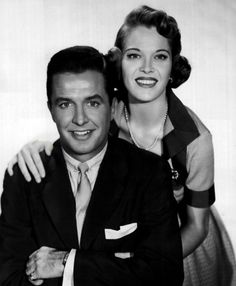
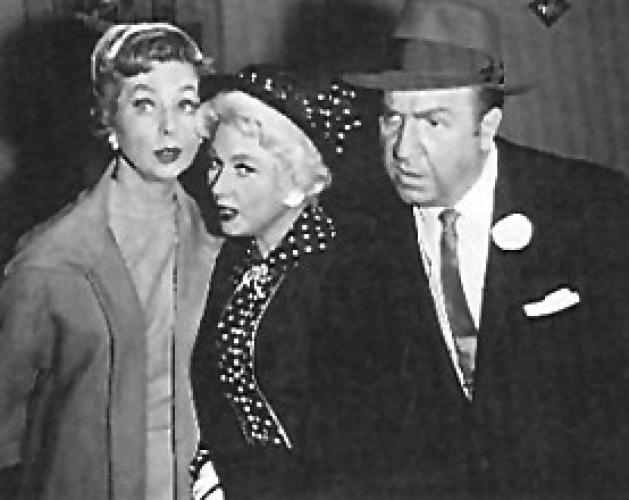
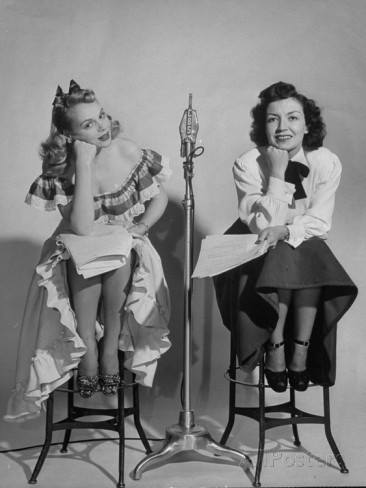
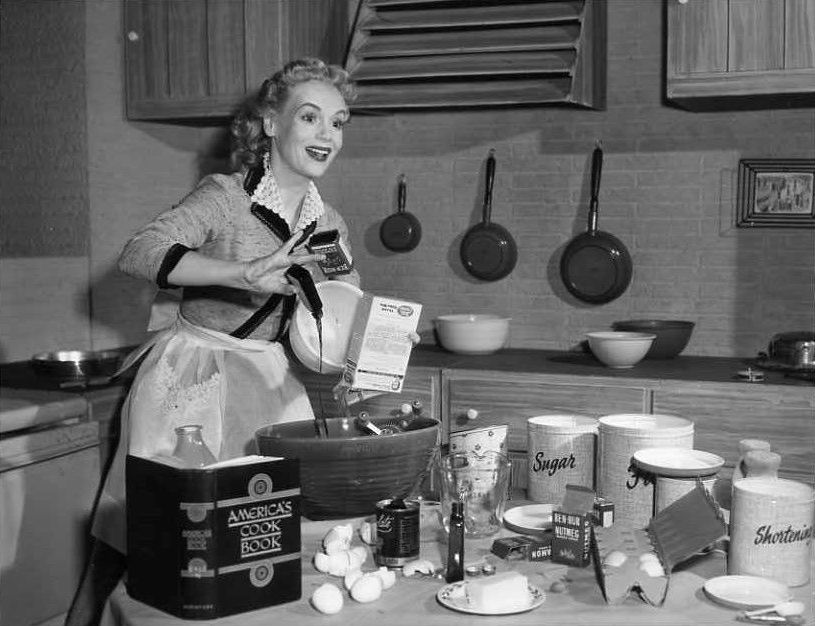
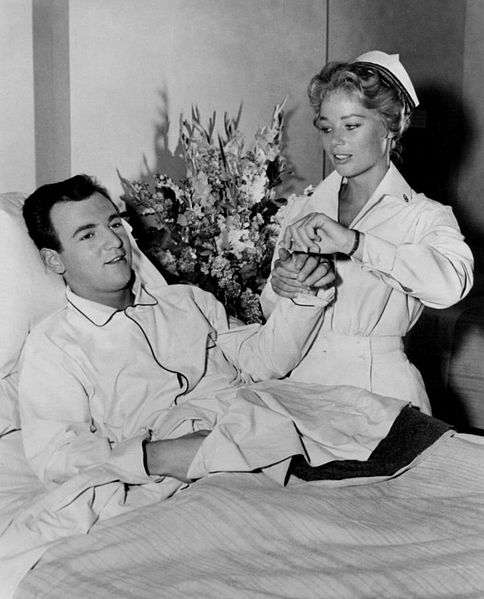
In 1958, the movie came to the small screen with Merry Anders (Mike) filling Lauren Bacall’s role, Barbara Eden (Loco) is the sexy bombshell Monroe played, and Lori Nelson (Greta) is the neutral one in between played by Grable. Greta is the co-host of a quiz show, Go for Broke. Mike, whose real name is Michelle, works as a secretary on Wall Street, and Loco is a fashion model. One of the weekly gags is that Loco has terrible eyesight, but thinks men don’t like girls in glasses, so she often has mishaps not seeing correctly.

In order to find a wealthy husband, they found a chic penthouse apartment while wearing designer clothing even if they could not afford to eat. I guess that’s why they went on a lot of dinner dates.

Photo: imdb.com

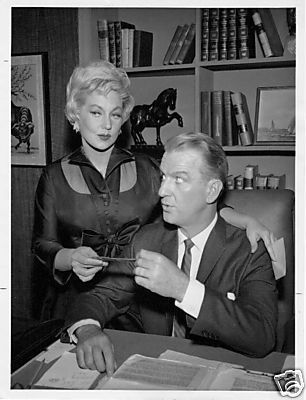
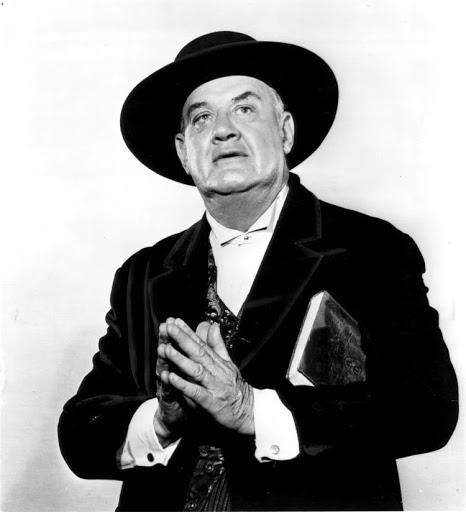
The girls are often short of money and have trouble paying the rent on time. Mr. Blandish (Dabbs Greer), their landlord, is always threatening to evict them. The elevator operator Jesse (Jimmy Cross) sometimes helps and sometimes hinders the trio with their get-rich-husbands schemes.

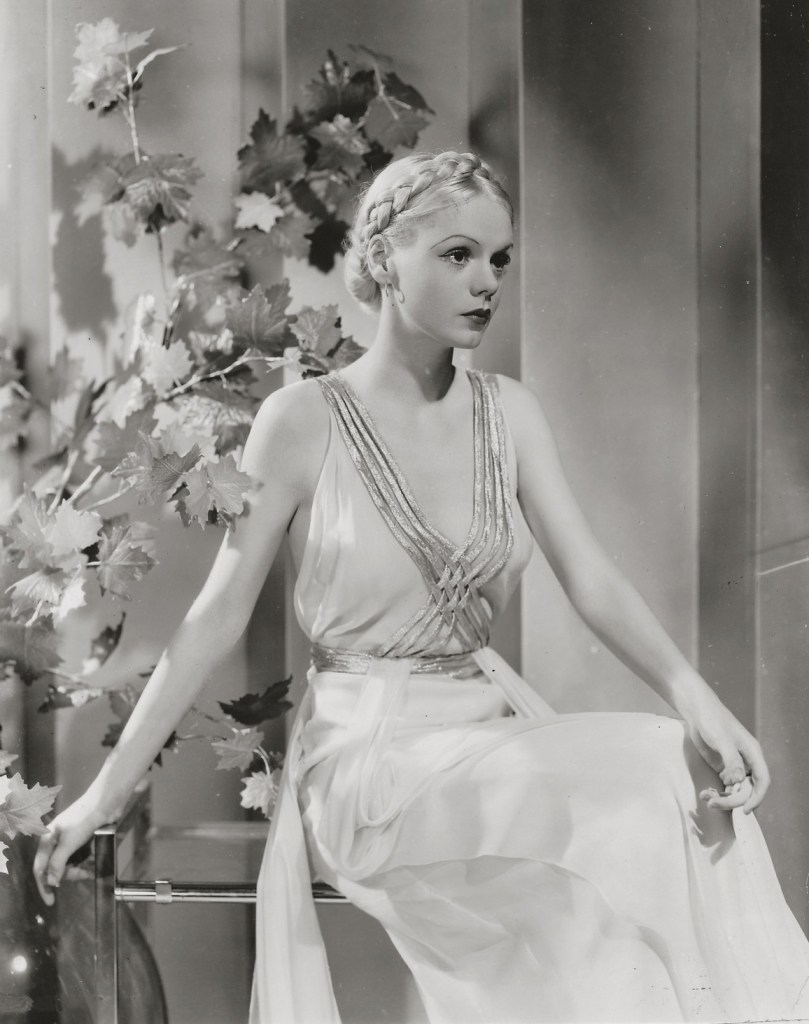
The pilot was filmed in 1957 with Lori Nelson as Greta but her roommates at the time were played by Charlotte Austin (Loco) and Doe Avedon (Mike, who had been married to photographer Richard Avedon). By the time the show was sold in 1958, the roles had been recast and after looking at more than seventy auditions, the producers picked Eden and Anders.

Photo: sitcomsonline.com

Anders discussed the camaraderie of the three stars. She said they were amazingly similar. She said they all wore size 8, all drove Thunderbirds, and all had French poodles and this was before they met. Anders had tested for the role of Mike and Loco because she had been playing a lot of ditzy blonde roles. When she was given the role of Mike, Eden was brought on board as Loco. Anders said the cast worked hard. After filming all week, they did late night interviews and early morning shows. One weekend they were sent to New York for a personal appearance. They got back late Sunday night and still had to be at work early Monday morning.

Photo: wundaba.ne

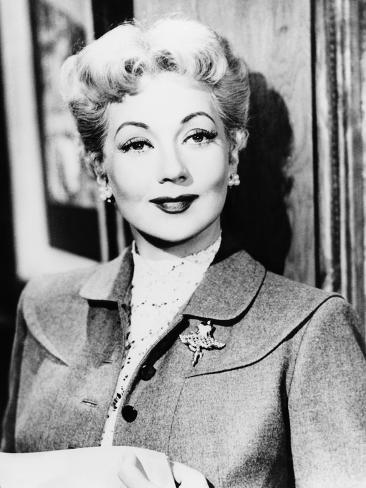
The second season found Nelson out with Lisa Gaye as Gwen in. Nelson claims she was the best actress and that she decided to move on, disliking her character’s development. Other sources say she was fired because she gave an interview criticizing her role. Nelson said her role wasn’t defined well with Anders getting the “Eve Arden wisecracks” and Eden being the sexy, bubbly personality. Greta supposedly married a gas station owner and then moved to California. Only thirteen episodes were aired for season two and then the show was cancelled.

Photo: imdb.com

Barbara Eden was interviewed for the Television Academy and discussed her time on the show. She said she was doing a play in LA when director Mark Robson saw her. He offered her a role in his new movie Peyton Place. However, the studio gave the part to another actress who was under contract at the time; but because of Robeson’s interest, they brought Eden in for a test at Fox. One of the television executives called her and said he had seen the test and read her notices for the LA play and was wondering if she was interested in doing a television series.  He asked her to go to the Fox Western studios for some still shots. When she got there, she thought the part was still in the process of being cast, but realized the stills were being taken because she had the part and the other girls were her costars.

Photo: amazon.com

Eden said she was a huge fan of Marilyn Monroe and had seen the original movie. She felt trying to take on the part by imitating Marilyn would have ended badly because she could never compete with Marilyn’s version, so she took the part and made it her own. Like Anders, she also said the three costars were close and became good friends.

Eden said the time on the show was her “finishing school.” She learned so much about filming before the cameras, lighting details, and building stamina. The stars sometimes filmed up to thirteen hours a day in three-inch heels which she said was painful. After long days, they would be given new dialogue to learn for the next day’s shooting. It was a very tough job but prepared her for film work.

Photo: etsy.com

If you like cultural history, the show is fun to watch just to see the wardrobes and settings. The clothing was provided by Mr. Mort. Mortimer Goldman owned his design business in 1952, producing mid-priced stylish dresses. During the run of the show, Stan Herman came on board as a designer. Throughout the sixties, Herman’s designs were the height of fashion. Stan Herman later opened his own design studio, producing items under his label as well as for other companies. In the 1990s he began appearing on QVC with his design line of comfortable clothing and sleep ware.

The show was pitched to the three major networks, but they all passed on the series. So, in 1958, NTA Film Network sold the show into syndication to 115 stations. It packaged a three-series deal including Man Without a Gun and This is Alice.

Photo: imdb.com

Both critics and fans liked the show, but it had some tough competition. The show aired Friday nights against The Adventures of Ellery Queen, The Wide World of Disney, and Rawhide. Eden said she never knew exactly why the show was cancelled. She assumes that because Fox was trying to be the fourth network and it didn’t work out at the time, all the Fox shows were just dropped.

So, what happened to the NTA network? The company that referred to itself as the fourth network launched in 1956 with 100 affiliate stations. Twentieth Century Fox bought half of the company with the intention of producing original programming. The shows were filmed and then mailed to each station. By 1961, the network was losing money and the flagship station was sold to the Educational Broadcasting Corporation which later became National Educational Television and eventually PBS. One of their largest stations, KTTV in Los Angeles became part of the Fox television network, co-owned by Twentieth Century Fox, part of 21st Century Fox.

Photo: boomtownamerica.com

I was able to watch a few of these shows online. I’m not sure how the fourth network’s ownership affected syndication. Youtube has four episodes available. For this blog, I watched the first episode again. The jokes were a bit overdone and the laugh track was annoying, but I’ve seen worse. There were some charming moments in the show, and Barbara Eden’s comic ability was obvious with some funny scenes about her failure to wear glasses. Take some time to check out one of these four episodes to see what tv looked like in the mid fifties.

Heigh-Ho Louis Nye!

Finishing off our “Men of November” series is Louis Nye.  If you watched television in the sixties, you will recognize Louis, but you might not know why.

Photo:

Born Louis Neistat in Connecticut in 1917, he was the son of parents who emigrated to the US from the Russian Empire and became naturalized citizens in 1911. Louis wanted to get involved in acting but his grades weren’t good enough for him to participate in the drama club.  He opted for work on WTIC Radio instead. He also joined the Hartford Players.

The work on local radio led to his decision to move to New York City to work on the radio, often on soap operas. Nye married songwriter Anita Leonard in 1940. Unlike many Hollywood couples, they remained married until Nye’s death.

**FILE** Steve Allen, third from left, and some of the original cast members of the popular 1950’s television show, “Steve Allen Show,” gathered in Beverly Hills, Calif. in this Oct. 4, 1990 file photo to honor Allen and to celebrate the re-broadcast of 100 episodes of his show on HA! TV Comedy Channel. They are, from left: Tom Poston, Don Knotts, Allen, Louis Nye, Pat Harrington Jr., and Bill Dana. Nye died Sunday at his home in Los Angeles after a long battle with lung cancer, his son, Peter Nye, told The Associated Press on Monday. He was 92. (AP Photo/Kevork Djansezian, FILE)

World War II interrupted his career. He was assigned to run the recreation hall in Missouri. He would entertain troops and was able to meet Carl Reiner, who had a similar sense of humor, and who was also part of Special Services performing in shows across the Pacific.

With Steve Allen and Jayne Meadows Photo: nytimes.com

After the war ended, he returned to New York, getting jobs on television and appearing on Broadway. His first tv role was on The Admiral Broadway Revue in 1949. He appeared on several shows during the fifties but was best known for his work on The Steve Allen Plymouth Show and the New Steve Allen Show. He became close to the entire cast which included Don Knotts, Tom Poston, Pat Harrington Jr., Dayton Allen, Gabriel Dell, and Bill Dana. Nye often portrayed wealthy citizens during the “Man on the Street” sketches. When he took on the role of Gordon Hathaway, the egotistical Country Club snob, saying “Hi-ho Steverino,” Allen often cracked up. When the show moved to Los Angeles, Nye went with it.

Photo: youtube.com

His first recurring role was that of dentist Delbert Gray on The Ann Sothern Show in 1960 and 1961. He was very busy during the sixties, appearing on a variety of shows including The Bob Hope Show, The Jack Benny Show, Mike Douglas, The Munsters, Jackie Gleason, and Phyllis Diller. From 1962-66, he would pop in on The Beverly Hillbillies as Sonny Drysdale, the spoiled stepson of banker Milburn Drysdale.

Photo: imdb.com

In the seventies, he could be seen on shows such as Laugh-In, Love American Style, Laverne and Shirley, Starsky and Hutch, and Fantasy Island. He was offered a permanent role on Needles and Pins in 1973. The show only lasted for 14 episodes. The series was about the garment industry. Women’s clothing manufacture Nathan Davidson (Norman Fell) works with a group of employees including characters played by Nye and Bernie Kopell.  It didn’t receive great reviews and many of the writers said it talked about the garment industry but showed very little and was set in one small spot, inhibiting what plots were even available.

During those decades Nye would also get offers on the big screen from time to time but most of the roles were smaller cameo parts. However, he appeared with a lot of celebrities in these epics including Bob Hope, Jack Lemmon, Lucille Ball, Dean Martin, Walter Matthau, and Jack Webb.

He also recorded several comedy albums using several of his characterizations. One of his most successful LPs was “Heigh-Ho Madison Avenue.” It parodied market research, advertising agencies and post-WWII society.  Some of the pieces on the album include “The Gray Flannel Blues,” “The Ten Commandments of Madison Avenue (Plus Big Bonus Commandments),” and “The Conspicuous Consumption Cantata.”

Asea on the Love Boat
Photo: drunk tv.com

He continued to keep busy in the eighties on a variety of shows including Here’s Boomer, Aloha Paradise, The Love Boat, The Cosby Show, and St. Elsewhere.

Curb Your Enthusiasm Photo: youtube.com

His last role was another recurring one where he played Jeff Garlin’s father on Curb Your Enthusiasm from 2000-2005. Nye passed away from lung cancer in 2005.

I’m not sure what to think about Nye’s career.  I think in the right role, he would have excelled in a television comedy or a big screen epic which he never had the opportunity to do. He was multi-talented and appeared on Broadway, in clubs, and on the radio, and he created comedy albums as well as appearing in movies and television. However, I often read quotes of his where he said he only wanted to be funny at parties and always considered himself a serious actor. He was so brilliant and funny with his 15 accents and wide range of characterizations that he seemed pigeon-holed as a comedy character actor early in his career. I wondered if he was sad that he never had the chance to appear in a classic drama, or if he accepted his successful career for what it was, just being thankful he was in the entertainment industry for his entire working life.

Photo: wikifandom.com

Since we cannot ask him directly, all we can do is tip our hats to him in appreciation for the decades of laughter and entertainment he provided for us. Thank you, Mr. Nye.

The Many Roles of Brian Keith

We are right in the middle of our “Men of November” blog series, and today we spend some time getting to know a prolific television and film star, Brian Keith.

Photo: wikipedia.com

Brian Keith (Robert Alba Keith) was born in 1921 in New Jersey. His parents were both actors. They divorced shortly after his birth and at age 2, he moved to Hollywood and made his acting debut in a silent film, Pied Piper Malone, at the age of three.

While his mother was relocating for stage and radio work, his grandmother raised him on Long Island, New York.

His father remarried in 1927, but his second wife, Peg Entwistle, was involved in a tragic incident which is one of the Hollywood legends. She committed suicide by jumping of the H of the iconic Hollywood sign.

See the source image
Photo: pinterest.com

After high school graduation, Keith joined the US Marine Corps from 1942-5. He served as a machine gunner and received an Air Medal.

In an interview with the Press and Sun-Bulletin in 1966, Keith related that he had no intention of becoming an actor. He had a passion for a career at sea and wanted to go to school at the Merchant Marine Academy. He said unfortunately, “You can’t be a ship’s officer without passing a few math courses and I came up with a big fat zero in algebra. In fact, no matter how many times I repeated the course, it still came up zero. So, it was goodbye Navy career.”

After the war, Brian decided to follow in his parents’ footsteps and made his Broadway debut in 1948 in Mister Roberts. His father played Doc in the same production.

While working on television, Keith also began appearing on the big screen. During his career, he would he would make 65 movies. In the fifties he was in Storm Center with Bette Davis and The Young Philadelphians with Paul Newman.

Crusader Photo: sitcomsonline.com

While continuing to appear on the stage, television was starting to pull him in that direction. He was given his first television role in 1951 in Hands of Mystery. He did a variety of television work in the 1950s, starting off in more dramas and ending the decade in westerns. Last week we learned a bit about Gale Gordon. If you remember, Gale starred in a short-lived series called The Box Brothers, and Brian happened to be in one of those episodes in 1957. From 1955-56, he received a regular role on Crusader, making 52 episodes. He starred as Matt Anders, a journalist who, in the aftermath of his mother’s death in a Nazi concentration camp during World War II, travels the world to battle injustice.

The Westerner Photo: nostalgiacentral.com

Moving into the sixties, Keith continued his western appearances and was given the lead in Sam Peckinpah’s television series, The Westerner. Unfortunately, it only lasted for 13 episodes. Keith said that “only four or five of those were any good, but those four or five were as good as anything anybody has ever done.” He played Dave Blassingame, a cowboy drifter who sometimes does questionable things trying to earn enough money to buy a ranch, but in the end, always does the right thing.

The Parent Trap Photo: pinterest.com

It was also in the sixties that he began his connection with Disney, starring in The Parent Trap in 1961.

During this decade, he was offered a show of his own that he is probably best known for—Family Affair. From 1966-1971, he appeared as Bill Davis, an engineer, who takes in his two nieces and nephew when their parents are killed. Kathy Garver, Anissa Jones, and Johnny Whitaker played the kids and Sebastian Cabot was Mr. French, who helped raise the children. Keith received three Emmy nominations for Best Actor in a Comedy Series, but lost to Don Adams for Get Smart from all three years, 1967-1969, (In 1968 Sebastian Cabot was also nominated for Best Actor and the show was nominated for Best Comedy in 1968 and 1969, losing to Get Smart.)

Photo: dailytimes.com

Brian received the same type of contract as Fred MacMurray did in My Three Sons. It allowed him to tape his work in two-three months, leaving three-quarters of the year for traveling, relaxation, and film work.

With Six You Get Eggroll Photo: pinterest.com

During the series’ run, he continued to make films including With Six You Get Eggroll with Doris Day.

The Brian Keith Show Photo: pinterest.com

When Family Affair ended, it set off a rapid production of shows starring Keith, most of them with short runs. The Brian Keith Show was on air from 1972-74; Keith was pediatrician Dr. Sean Jamison and worked with his daughter played by Shelly Fabares. Keith said he accepted the role because the show was produced by Garry Marshall and it was shot in Hawaii.

Photo: amazon.com

In 1974 he accepted the lead in a six-part miniseries, The Zoo Gang about a group of underground French resistance fighters. In 1975 we saw him in Archer, a television series about a detective which also ran only six episodes. Keith described Archer as “an underdog. He gets beaten. He’s no superhuman. He drives a broken-down Mustang. He’s not particularly fond of the finer things in life. Music is noise to him, painting is decoration, sculpture is ‘that stuff’ and he doesn’t read books.”

Hardcastle and McCormick
Photo: pinterest.com

In 1983, Keith co-starred with Daniel Hugh Kelly in Hardcastle and McCormick. Keith portrayed a retired judge Milton Hardcastle while Kelly was ex-con Mark McCormick. The duo team up because the ex-judge was tired of people getting off on technicalities. The show was on the air for three years.

Photo: sitcomsonline.com

The following year, he began a stint on The Pursuit of Happiness which only lasted for ten episodes. In a different role for him, he played Professor Roland Duncan who taught at a small college in Philadelphia.

Photo: sitcomsonline.com

1989 found him on Heartland which was also cancelled after ten episodes. On this show, Keith played BL McCutcheon, an older farmer who loses his farm and moves in with this daughter and her family, a bit of a rural Archie Bunker.

During the 1990s, Keith showed up on a variety of shows including Young Riders, Evening Shade, Major Dad, Cybill, Pacific Blue, and Walker Texas Ranger. He tried his hand at one more sitcom, starring in Walter and Emily. After 13 episodes, the show was finished. Keith is Walter Collins. He and his wife Emily (Cloris Leachman) help raise their grandson while their son Matt travels for his sports writing career.

Keith lived on a 200-acre ranch in Redlands, California. Brian had a lot of hobbies including golfing, swimming, cooking, sailing, horseback riding, spending time with his family, painting, and reading. When asked about whether he wanted to live a long life, he said, “If I live to be a hundred—and I hope I do—I won’t have time to read all the books I want to read or talk to the people I want to know. Not party talk. That’s a waste of time. Real talk.”

While Keith had a successful career, his personal life was not as sunny. He was married three times to Frances Helm from 1948 to 1954, to Judy Landon, an actress who made an appearance on Family Affair from 1954 till 1969, and to Victoria Young, another actress who showed up on The Brian Keith Show as a nurse, from 1970 till his death.

See the source image
Photo: pinterest.com

He also suffered from several physical problems. He had been a long-time smoker, and suffered from both emphysema and lung cancer. He had been a spokesperson for Camel Cigarettes in the 1950s but quit smoking in the late 80s.

Brian’s son, Michael died from pneumonia when he was eight. In 1997, his daughter Daisy committed suicide when she was 27. Daisy had also entered the acting profession and worked with her dad on Heartland. Daisy’s death and financial problems pulled Keith into a depression and he committed suicide in June of 1997.

Early in his career, Keith established a stereotype as the handsome, burly guy with the gruff voice, but he transitioned into that character who also had moments of warmth and humor.

See the source image
Photo: amazon.com

I love his performance in The Parent Trap, and I like to picture Keith as being Mitch in real life, a guy who loves his kids and his ranch and takes pleasure in a variety of outdoor activities but also savors reading on the porch.

Keith remained close to Maureen O’Hara, his costar in the Parent Trap as well as with Kathy Garver and Johnny Whitaker. (Anissa Jones died from a fatal overdose in 1976 at age 18.)

See the source image
Photo: pinterest.com

With more than 166 acting credits, Keith had a full and successful career and brought a lot of enjoyment to generations of fans during his six decades as an actor. He had to endure a lot of heartache off the camera. Both Family Affair and Hardcastle and McCormick are worth watching if you have a free weekend. You can also see a lot of amazing performances of his on the large screen.

Here’s Lucy . . . and Gale Gordon

We are in the third blog of our series “The Men of November.” Born Charles Thomas Aldrich Jr. in 1906, Gale Gordon is remembered fondly for being Lucille Ball’s nemesis on several of her television sitcoms.

See the source image
Photo: oldtimeradio.com

Both his parents were entertainers, and they traveled to England to perform when he was only one. For eight years, he lived in England. After returning to the United States for a few years, Gordon returned to London to complete his education at the Woodbridge School in Suffolk.

Gale at 19 Photo: lucyfan.com

Gale followed in his parents’ footsteps, and his first theatrical job was as an extra in “The Dancers” in 1923. Richard Bennett (father of Constance and Joan Bennett) starred in the stage production. Gordon worked as Bennett’s dresser, and Bennett taught him all about make-up, mentored him as an actor, and helped him to develop his voice.

By 1925, Gordon traveled to Hollywood, tackling roles in stage, film, and radio. Gordon talked about his first radio performance: “They asked me to come to a Hollywood studio in 1926 and try this new thing called ‘radio.’ They didn’t pay me, of course. They just wanted to fill up some time. So, I sang, ‘It Ain’t Gonna Rain No More, No More’ and accompanied myself on the ukulele. You might say I almost killed radio before it was born. I haven’t played an instrument on the air since.”

Photo: radiospirits.com

In seven short years, Gordon became the highest-paid actor in radio in Hollywood. He was the male lead for Mary Pickford in her serial. He was on almost every popular show on the air. It wasn’t unusual for him to appear on three or more programs in a week. Gordon was the first actor to play Flash Gordon in 1935.

His radio work also provided some other benefits. While appearing on an episode of Death Valley Days in New York, he met Virginia Curley. They married in 1937.

Gale and Virginia
Photo: lucyfan.com

In 1941, after playing primarily dramatic roles, Gordon became a regular on Fibber McGee and Molly. Playing Mayor LaTrivia, Gale was on the show for a dozen years. There was a brief interruption in 1942 when he left the show and enlisted in the US Coast Guard for three years. He rose to the rank of Petty Officer First Class, and his service took him around the world to many dangerous places.

One of the roles he is best known for was Principal Osgood Conklin on Our Miss Brooks. Gordon described Conklin in a TV Guide interview: “There was nothing subtle about Osgood. No nuances. Just a lot of very satisfying acid, bluster, and bellowing, with an occasional weak moment of cordiality thrown in for leavening.  It was practically impossible to overplay him. Even when he was being cordial, he was like an elephant trying to waltz.”

In 1950, he could be heard as John Granby on Granby’s Green Acres which later became the sitcom Green Acres.

With Bea Benederet
Photo: wikipedia.com

While trying to reign in the chaos at Madison High School as Osgood Conklin, Gale was also the refined banker, Rudolph Atterbury, on My Favorite Husband, Lucille Ball’s radio comedy. Atterbury’s wife was played by Bea Benederet.

As television gained popularity, it was inevitable that some of radio’s favorite shows would make the transition to the small screen. While it was entirely possible to play several different characters on the radio, television production didn’t offer the same flexibility. When My Favorite Husband was retooled for television as I Love Lucy, Ball planned on bringing Gordon and Benederet along with her. However, Gale was committed to Our Miss Brooks, and Bea was playing a major role on Burns and Allen on television.

Asked about those days, Gale described himself as “a quiet, reserved, pipe-smoking homebody.” He said he always had a good balance of professional and personal interests. In addition to acting, he wrote books (Nursery Rhymes for Hollywood Babies and Leaves from the Story Trees), painted, and maintained a ranch. He and Virginia bought a 150-acre property about three hours away from Hollywood. They grew carob trees. Gordon was not a rancher in name only; he raised the trees, built the house, installed the plumbing, completed carpentry and handiwork, put in a swimming pool, and built a two-story building that served as garage and studio.

Our Miss Brooks Photo: amazon.com

In 1952, Eve Arden decided to take Our Miss Brooks to television. While Gale continued his role as Conklin on the show, he also guest starred on a couple of I Love Lucy episodes. Our Miss Brooks had a successful run for four years.

When the show ended in 1956, CBS was quick to sign Gordon on for another show. They paired him with Bob Sweeney in The Box Brothers (sometimes called The Brothers). Unfortunately, the series only lasted for 26 weeks.

The Box Brothers Photo: imdb.com

In 1958, Gordon was a regular on Sally where he played department store owner Bascomb Bleacher. He also appeared with Walter Brennan on The Real McCoys.

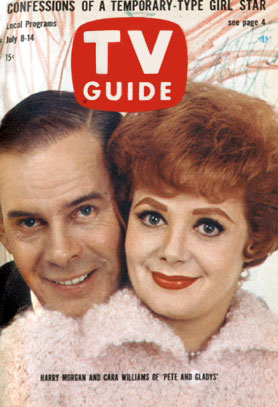
In 1959, December Bride which aired from 1954-1959, went off the air, spinning off a new show Pete and Gladys starring Harry Morgan and Cara Williams. Morgan appeared as Pete Porter on December Bride. On the new show, Gale played Pete’s Uncle Paul.

Dennis the Menace Photo: pinterest.com

In 1962 he was cast as Mr. Wilson on Dennis the Menace. At the same time, Lucille Ball was creating a new show, The Lucy Show. She wanted Gordon to appear as Mr. Barnsdahl, a banker. When he was not available, Lucille turned to Charles Lane. She said she loved working with Lane, but always wanted to work with Gale again, so when Dennis the Menace was cancelled, she quickly signed Gordon; Lane moved over to Bea Benederet’s new sitcom, Petticoat Junction, as the despicable Homer Bedloe. And thus Theodore J. Mooney was born.

Photo: welovelucy.com

For the next eleven years, through several different series titles, Lucy and Gale worked together. They would both retire in 1974. When describing his time on Lucy’s shows, Gale related in a Good Morning America interview in 1982 that “I always had a wonderful feeling of anticipation going to work every week, which is very, very rare. I don’t care what business you are in. But to really look forward to getting into the nitty gritty and working hard for four days—which is all the time we had to do the show—is really unique. To look forward to it for eleven years, that’s doubly unique.” He went on to praise Lucy for her work ethic: “Her attitude has never changed. Every show she ever did was always the most important show of her life. And I think that is the secret of her success.”

See the source image
Photo: oldtimeradio.com

One surprising thing I learned was that Gordon was known for his ability to do cartwheels. He can be seen doing them on several episodes of Here’s Lucy. At the time, he was earning $25,000 an episode. Compare that to today when the stars of The Big Bang Theory received a million dollars an episode.

Gale and Virginia enjoyed twenty years of retirement. Virginia would pass away in 1995 at Red Terrace Health Center in Escondido, California. One month later, Gordon died from lung cancer at the same facility.

In 1999, Gale was inducted into the Radio Hall of Fame. Known for playing a variety of gruff, formal professionals, everyone knew that the bellow and bluster his characters spewed was great acting. In real life, Gale was one of the sweetest, kindest men around. He once said, “I am never nasty—unless I get paid for it.”

See the source image
Photo: wikipedia.com

It’s hard to describe the influence Gale Gordon has had on generations of actors and the number of hours of entertainment he has provided to generations of television and radio fans. It’s always fun to listen or watch Connie Brooks trying to pull a fast one over on Osgood Conklin or Lucy Carmichael trying Mr. Mooney’s patience with her latest scatter-brained plan. Thank you Gale Gordon!

Dave Madden: A Magical Career

We are right in the middle of “The Men of November” series where we learn about some of our favorite actors from the classic age of television. Today we focus on a comedian who is best known for his role of a family band manager—Dave Madden.

Photo: discogs.com

Madden was an American born in Ontario, Canada in 1931. He spent his early childhood in Port Huron, Michigan and then was sent to live with his aunt and uncle in Terre Haute. His father had died and his mother had a job where she had to travel. When he was 13, he had a very bad bike accident which left him immobilized. He had a head-on collision with a car going about 45 mph. He broke his leg and fractured his skull. They pumped him with penicillin which saved his life. He was in the hospital for about three months because they had to keep breaking his leg. During the months he spent recuperating, he learned about magic from a book his aunt brought him called 101 Tricks You Can Do, and he later developed a comedy act that featured magic.

Appropriately enough, he served as the joke editor for his high school paper, writing his own material. He attended Indiana State Teachers College for a semester and then dropped out to enlist in the Air Force. He was assigned to Special Forces and sent to Libya where he entertained the troops. He even performed a magic show for the King of Libya.

When his time in the Air Force was over, he attended the University of Miami, majoring in communications and graduating in 1959.

Madden took his comedy act on the road. His manager booked him in Palm Springs during the Palm Springs Golf Classic, and the Rat Pack came in one night. After the show, Frank Sinatra went backstage and asked if Madden would be his opening act in Lake Tahoe in July.

Tralfaz: The Unhappy Man With the Confetti
Photo: trafaz.com

He and Sinatra hung out and one night in his bungalow he said Madden should be on The Ed Sullivan Show and picked up the phone and called Ed in New York. That call resulted in Sullivan booking him for three episodes.

His manager had a club in Beverly Hills, The Ye Little Club, and he called Madden who was in town because his regular singer was sick. Madden helped him out, and a Screen Gems writer, Jerry Davis, was in the audience with Nat King Cole’s manager. Nat was Madden’s favorite singer and his manager asked if he would do an eight-week tour with him. Unfortunately, Cole died soon after and Madden never even got to meet him.

Photo: ebay.com

Jerry Davis called Madden and asked him if he was interested in filming a pilot which led to an offer for a regular role on Camp Runamuck which debuted in 1965. The show lasted a season with 26 episodes. Madden had never acted before, and he said it was a great experience. The show was primarily about the camp counselors. Madden met Dave Ketchum on the show and they became friends. Later, the role of Reuben Kincaid was narrowed down to Dave Ketchum and Madden.

Photo: dailymail.com

A year later, Madden was offered a spot on Laugh-In. Rowan and Martin had seen his act in Reno and invited him on the show. Madden said that filming the show was not much fun. He said apart from the opening and closing jokes and cocktail party, most of the segments were individual ones. He described a day where he might go in at 10 am, and there would be 2 cameramen, a director and a light man. He would film a dozen skits which would be shown over the course of the season. None of the rest of the cast would be there.  So, it was long and boring work.

Photo: washingtonpost.com

After two years with the wacky cast, he accepted the role that would make him a household name. As Reuben Kincaid, he managed the Partridge family on a new series based on the life of The Cowsills. The show aired Friday nights following The Brady Bunch and was on the air from 1970 till 1974.

Some of the scenes I loved the most on the show was when Reuben would lay on the couch to watch tv with the family or hold Shirley’s yarn while she knitted—just everyday family activities. Unfortunately, he and Shirley were not as close as they could have been because Madden and Shirley’s husband Marty Ingels did not hit it off.

Photo: jafosnews.com

Filming The Partridge Family was not always fun either. He said it could be very boring.  The cast might have three to four pages of scripts that take place in the dining room.  The whole family would sit around the table and they would have to change the lighting every time someone else spoke. He said you could arrive at 7 am and leave at 3 pm and never leave the dining room.

Photo:

While one of the running gags on the show was that Reuben and Danny had a battle of wits ongoing, in their personal lives, Reuben took Bonaduce into his home when his house was not a safe place. He said Danny’s mother was worried about Danny being home on the weekends when his father was home, so she asked Madden if Danny could stay with him at his bachelor pad on weekends. Madden said he didn’t drink and had small groups of people over, so it was not a problem to have Danny staying there.

Photo: starcasm.com

Madden said that he learned that The Partridge Family was cancelled because someone in his apartment building read it in the newspaper—a crummy way to learn you no longer had a job.

During this time period, Madden was on two episodes of Love American Style which was also part of the Friday night schedule and two episodes of Bewitched. When Madden recalled his time on Bewitched, he said he was with the same secondary actor for both episodes, Herb Ellis. He said that Elizabeth Montgomery was very gracious.

After the end of The Partridge Family, Madden appeared on an episode of Happy Days. In 1976, he would have a part in Eat My Dust!, a movie developed by Ron Howard who played Richie Cunningham on Happy Days. It was one of only two big screen features Madden was in. The other movie Madden had a role in was the family favorite, Charlotte’s Web in 1973. Madden was the voice of the ram.

In the late seventies, Madden could be seen on a variety of shows including Starsky and Hutch, Barney Miller, The Love Boat, and Fantasy Island.

In 1975, Madden took a break from his acting schedule to marry Nena Arnold. They had two children and divorced ten years later.
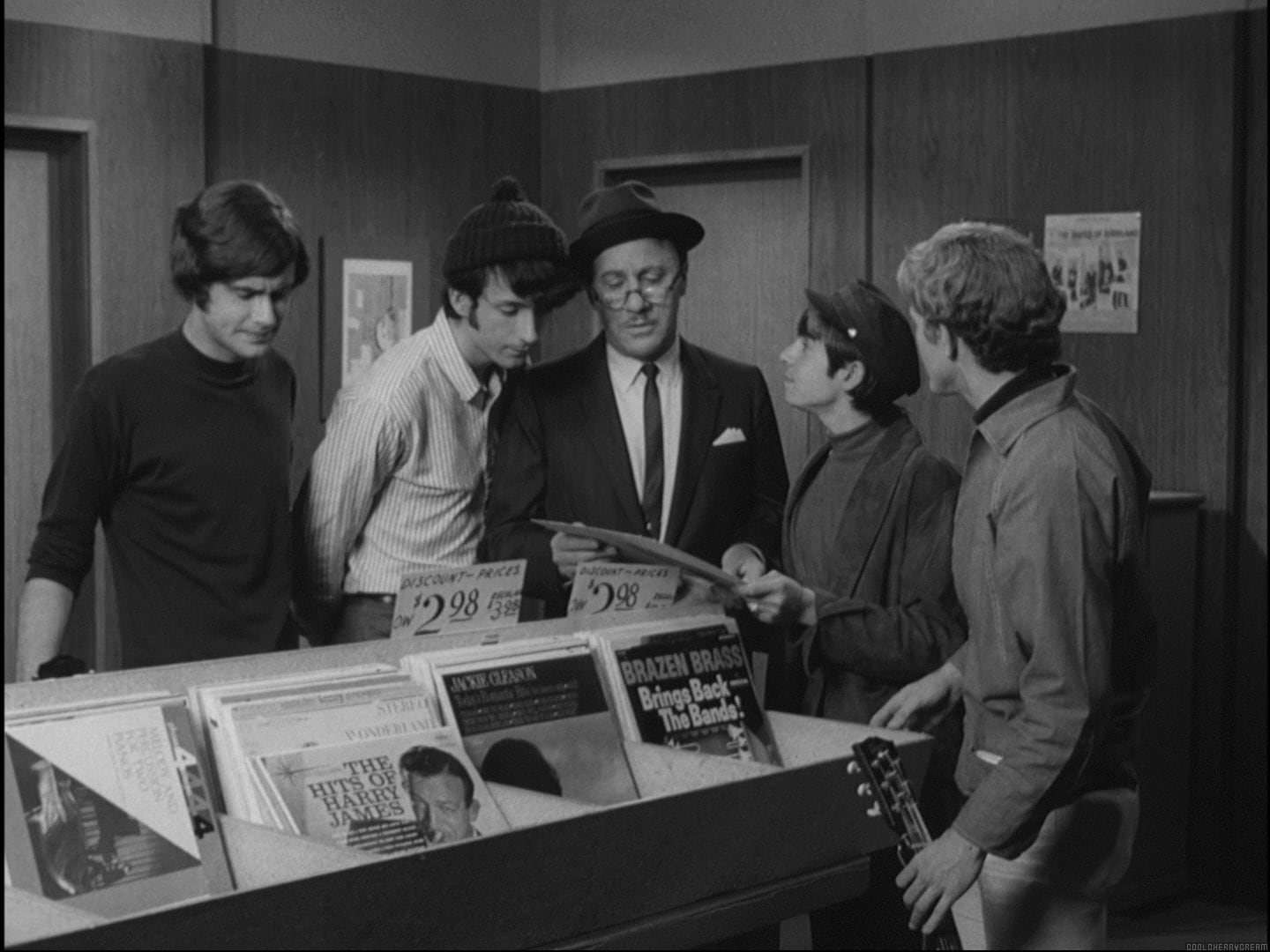
Playing Carrie Sharples on CBS-TV's... - Martha Raye Scrapbook ...
Photo: facebook.com

In the late seventies, he would be offered another recurring role. He began eating at Mel’s Diner on Alice from 1978-1985, as Earl Hicks. He was also Alice’s son’s basketball coach. The Hicks character was meant to be a guest shot, but the producers liked his interaction so much that he ended up doing 35 episodes. He really enjoyed working on the show because it was done before a live audience. He said it was like doing a one-act play every week. The cast rehearsed for a few days and then shot the show at one time.

In the late eighties, Madden also joined the cast of Focus on the Family’s Adventures in Odyssey. In 1990 he created his own character, curmudgeonly window washer Bernard Walton, which he would voice until 2008.

From 1970 or so on, Madden did a lot of voice-over work. When he had more time for it, it was very profitable. He said he made more money between 1985-1990 doing that then all four television series combined; he was making more than $250,000 a year just in voice work.

He stayed busy throughout the 1990s, showing up on The New Leave it to Beaver, Life with Lucy, Ben Stiller, Married . . . with Children, and Boy Meets World. His last credited role was on Sabrina the Teen-age Witch in 1998, where he appeared with other Laugh-In cast members.

He had another memorable event in 1998 when he married his former college girlfriend Sandy Martin.

🎼THE PARTRIDGE FAMILY - gallery - Season Two - 5/22/72, Susan Dey ...
Photo: pinterest.com

If you watched The Partridge Family, you might remember the episode where Danny and Reuben have a bet to see if Danny can lose weight and if Reuben can quit smoking. Madden was a long-time smoker in real life and that episode inspired him to quit, although he had been thinking about quitting for a while.

Madden had always been interested in cameras, buying his first one in the service.  He began to experiment with photography on the set of The Partridge Family. He said it was illegal to bring a camera to the set, so he began taking photos of the crew when they were filming away from the regular set. He then made gifts for the crew and then began filming the director. By that time, people were so used to him having a camera around, no one called him out on photographing the cast. He would bring his camera to work with him, taking photos of the cast and crew. It turned into a life-long hobby.

The Partridge Family 4x05 Reuben Kincaid Lives - ShareTV
Margaret Hamilton
Photo: sharetv.com

One of the benefits of working in the industry was meeting so many beloved actors like Lucille Ball. On The Partridge Family, Madden enjoyed working with Ray Bolger who played Shirley’s dad and Margaret Hamilton who played Reuben’s mother. He said he would chat with Ray between takes and hear stories from Hamilton about The Wizard of Oz. He said Hamilton was a real pro and they were both very nice people.
Tumblr
With Gale Gordon on Life with Lucy
Photo: tumblr.com

During retirement in 2007, he wrote his memoirs, Reuben on Wry: The Memoirs of Dave Madden.

Reuben on Wry: The Memoirs of Dave Madden: Madden, Dave ...

In January of 2014, he passed away in hospice care, suffering from complications of myelodysplastic syndrome, a disorder that results from poorly formed or dysfunctional blood cells.

For someone who began his first magic performance because of a serious injury and was hired for a sitcom without ever having acted, Dave Madden had a very fun and successful career. I must admit, I have many great memories of him as Reuben Kincaid. He seemed to be a very nice and easy-going individual who worked hard and enjoyed his life. You can’t ask for more than that. Thanks for the memories Dave Madden.

Bert Convy: A Multi-Talented Star

I’m calling this series “The Men of November.”  We are taking a look at five actors who contributed to television during the classic decades of the 1940s-1980s. I’ve decided to take them in alphabetical order so we are starting with Bert Convy.

Photo: findagrave.com

Born in St. Louis in 1933, Convy’s family moved to Los Angeles when he was seven.  His focus was athletics, not acting, in school. When he was 17, the Philadelphia Phillies gave him a contract to play in their minor league system which he did from 1951-1952. In 1951 he played for the Klamath Falls Gems (Oregon), and in 1952 he split his time with the Salina Blue Jays (Kansas) and the Miami Eagles (Oklahoma).

Once he realized baseball was not going to be his career, he joined The Cheers, who released a top ten hit called “Black Denim Trousers and Motorcycle Boots” in 1955. Convy opted to enroll at the UCLA School of Theater, Film and Television, earning a BA.

Photo: amazon.com

Like Ken Berry, he was a performer in the Billy Barnes Revues which was popular in the fifties and sixties. In 1956, he was an usher on Art Linkletter’s popular show House Party. He appeared in several early television series throughout the late fifties, including Those Whiting Girls.

In 1959 he married Anne Anderson. They had three children and were divorced in 1991.

Perry Mason
Photo: imdb.com

He showed up on the small screen a lot during the sixties, primarily in detective shows including Perry Mason in 1960. His first feature role was in the big screen drama Susan Slade starring Troy Donahue and Connie Stevens in 1961. He also spent a part of this decade on Broadway in ten different productions.

Photo: imdb.com

The decade of the seventies found him balancing roles in both detective (Mission Impossible, McMillan and Wife, Police Story and Charlie’s Angels among many others) and comedy shows (including Bewitched, Love American Style, and Karen). He appeared on The Partridge Family as a politician who dates Shirley. You get the distinct impression that they ended up together once the kids were out on their own. He also portrayed one of Mary’s boyfriends on The Mary Tyler Moore Show.

As Paul Revere on Bewitched
Photo: fanpop.com

He received his first recurring role in 1974, playing Lt. Steve Ostrowski on The Snoop Sisters. The show starred Helen Hayes and Mildred Natwick as two sisters, one widowed and one never married, who are mystery writers that also get involved in real murders.

Silver Scenes - A Blog for Classic Film Lovers: The Snoop Sisters ...
Photo: silverscenes.com

Two years later he starred in a short-lived variety show with the convoluted title of The Late Summer Early Fall Bert Convy Show. The title alone probably doubled the advertising budget. When I say short-lived, I mean I could only find one episode of the show which featured Don Knots.

He was offered another permanent role in 1983 on It’s Not Easy. Originally Larry Breeding was given the role and made the pilot, but he passed away after a car accident. This show only lasted for 11 episodes. The plot is that Jack and Sharon have divorced. Sharon has remarried and she and her husband Neal (Convy) have decided to live across the street from Jack so it’s easier for the kids. Jack and Neal do not like each other.

Photo: sitcomsonline.com

He appeared in a few series during the eighties including Aloha Paradise, Fantasy Island, Murder She Wrote, Hotel, The Love Boat and The People Next Door.  

Cannonball Run Poster
Photo: moviemarket.com

While he would make ten big screen and fifteen made-for-television movies, two of them involved his buddy Burt Reynolds. Convy appeared in Semi-Tough in 1977 and Cannonball Run in 1981. The two friends developed a production company, Burt and Bert Productions.

Convy was probably best known for his game show work. He was a panelist during the sixties and seventies on a variety of shows including What’s My Line, To Tell the Truth, Match Game, and Password. He hosted Tattletales, Super Password and Win, Lose or Draw. His emceeing of Tattletales resulted in an Emmy for Best Game Show Host in 1977.

Photo: youtube.com

In April of 1990, Convy collapsed and was diagnosed with cancer. The brain tumor was inoperable, forcing his retirement. His last credit was as himself on It’s Garry Shandling’s Show in 1990. He married his second wife Catherine Hills during the winter of 1991, and he passed away in July of 1991.

Sadly, Convy was never offered that perfect role that made him an icon, but he certainly had a full career. He had a lot of talents: acting, singing, and the personality to host game shows. I think it was his smile that always made him a favorite with me.

The True Crime of Trial and Error Was Cancelling It Too Early

Those of you who have been with me for a while know I have a bit of a different definition for “classic tv.” My view of “classic” is a show that was a great show and is no longer on the air. Typically, I am writing and researching shows from 40-70 years ago, but every once in a while, I sneak in a more recent series.

Photo: imdb.com

That’s the case today. In 2017 a very different type of show aired called Trial & Error. For those of you who didn’t watch it, it was a spoof of documentaries and reality legal shows. Its humor is hard to describe. Created by Jeff Astrof (he was producer for a variety of shows including The New Adventures of Old Christine and Veronica’s Closet) and Matt Miller (supervising producer for Las Vegas) for NBC, the show was produced by Warner Brothers Television.

Astrof discussed how he got the idea for Trial & Error. He was watching The Staircase, a show documenting the trial of Michael Peterson, accused of murdering his wife. He thought he could turn it into a comedy/mockumentary. Peterson is a novelist who lives in North Carolina and was accused of pushing both his wife and a family friend down staircases.

Photo: imdb.com

I know that doesn’t sound like an idea for a funny show, but that’s what happened. I’m not one for the Dumb and Dumber type movies, so this is not that. It was based on character and the little town where the action takes place.

Trial & Error followed New York attorney Josh Segal (Nicholas D’Agosto) when his firm sends him to the small town of East Peck in South Carolina to represent Larry Henderson (John Lithgow) who is accused of murdering his wife. Henderson is a poet who lives in South Carolina and was accused of pushing both his wives through windows.

Photo: imdb.com

The first season introduced us to Josh’s “legal” team of Anne Flatch (Sherri Shepherd) and Dwayne Reed (Steven Boyer).

Reed is a fumbling former police officer and the lead investigator. Flatch is the researcher and assistant. She is very smart and often solves many mysteries, but she is plagued with dozens of syndromes which affect her health, sometimes at the worst times for trials. Some of her disorders include prosoapamnesia, dyslexia, involuntary emotional expression disorder, Stendhal syndrome (this causes her to faint when witnessing great beauty), foreign accent syndrome, nocturnal lagophthalmos, backwards cheerleader syndrome, and a strange condition where her left hand operates independently of her wishes. She also suffers from face blindness and she can’t see who the person is talking to her and when she is upset, she laughs hysterically.

Photo: imdb.com

The eccentric poetry professor Henderson is portrayed by the amazing John Lithgow and his daughter Summer by Krysta Rodriguez. Josh and Assistant District Attorney Carol Ann Keane (Jayma Mays) butt heads and eventually succumb to the attraction that surrounds them when they get together.

Photo: imdb.com

No matter had hard Josh works, Larry always does or says something to make himself look guilty. Every time Josh figures out one mystery, it leads to another problem for his client. There is also a lot of subtle humor such as when Larry walks out of a room, we realize he is wearing an OJ Simpson jersey.

Photo: commonsensemedia.com

Not only does Josh have a pair of eccentric coworkers, but his office is part of the local taxidermy shop.

Spoiler Alert: If you haven’t watched the show and plan to, ignore this paragraph. Both the original Peterson case and the fictional Henderson case involved birds as a defense to murder. In Peterson’s case, his legal team was not willing to put their client’s life on the line with that defense. In Henderson’s case, Josh tells Dwayne and Anne to say the first thing that pops into their heads, and Dwayne says, “Bird. Birds fly into windows all the time.” The finale reveals that Margaret was killed by an owl.

Photo: wikipedia.com

Season two finds Josh let go by his firm and living in East Peck. He is hired by Lavinia Peck-Foster (Kristin Chenoweth) when she is also accused of murder. Lavinia, one of the town’s most beloved citizens, finds her husband’s body stuffed into a suitcase in her car. If you haven’t seen the series, the following description might give you a better indication of Lavinia; Chenoweth says she based the character on Lisa Vanderpump, Carol Burnett, Madeline Kahn, Julie Andrews, Dolly Parton, and Hannibal Lecter.

TRIAL & ERROR — “A Wrench in the Case” Episode 102 — Pictured: (l-r) Jayma Mays as Carol Anne, Nicholas D’Agosto as Josh — (Photo by: Evans Vestal Ward/NBC)

In season two, we see Carol Ann obviously pregnant. We assume Josh is the father, but you can’t assume anything in East Peck, because just when you think you have things figured out, a new twist appears. We also are introduced to Nina Rudolph (Amanda Payton) in season 2. She is a podcast host who also relocates from New York to East Peck to follow Lavinia’s trial. She ends up in a romantic triangle with Josh and Carol, with Josh is uncertain where his heart is being pulled.

A variety of other characters show up in seasons one and two who live in East Peck and have definite opinions on the guilt or innocence of the accused. In Larry’s case, it’s revealed the newspaper thinks Henderson is the fourth leading cause of death in East Peck; the third is cannonballs which are fired off at 5 am and 5 pm daily. The town itself has a lot of funny traditions and laws. For example, waterskiing with a cat is only a misdemeanor. Sometimes the coroner lists the cause of death as “just because.” Astrof described East Peck as a town of 600 residents where 400 of them are not quite right. One of the things that hit me as funny and should not be is that the town has a law that any woman driver must be preceded by a man on foot waving flags, yelling “Woman driver!”

Photo: youtube.com

Spoiler Alert 2: Unlike Larry, Josh realizes that Lavinia is actually the killer. However, we have an understanding of her and realize she is a victim too. She was molded into the golden debutante of East Peck and brought up to do whatever she wanted, and it was always fixed and okay. She is a sympathetic murderer.  Her last speech is “At the end of the day, life is just a journey. If you’re lucky, you don’t have to take that journey alone. If you’re one of the blessed few, you take that journey with someone you love and you hold them forever. And we can take comfort in knowing all our journeys end in the same place: a hold in the ground.” It’s not the speech or series ending you anticipate, and much of the show is not what you anticipate. We also learn in the last episode that Josh is not the father of Carol’s baby but he still is with her when she is giving birth because he’s Josh.

Although the show received a lot of praise from critics, NBC declined to renew it for a third season, and there were no other networks willing to take it on. Rotten Tomatoes gave the first season an 86% rating based on 35 reviews. The second season jumped to 91% with 11 reviews.

TRIAL & ERROR — “A Hostile Jury” Episode 110 — Pictured: (l-r) Jayma Mays as Carol Anne, Nicholas D’Agosto as Josh, John Lithgow as Larry — (Photo by: Greg Gayne/NBC)

I was on the fence when I heard that this show was on the fall schedule, but it was truly funny. It was created with great attention to detail and consistency. Like I mentioned last week about Night Court, you have to have the perfect cast for a show like this. It could so easily be over the top and stereotypical. Even Anne with all her syndromes is believable and likable. That’s one of the great things about the show. Josh is able to put aside his New York judgments of the people and the town. Their craziness becomes normal for him, and you can tell he truly likes his coworkers and his clients.

TRIAL & ERROR — “Secrets & Lies” Episode 106 — Pictured: (l-r) Steven Boyer as Dwayne, John Lithgow as Larry, Sherri Shepherd as Anne, Nicholas D’Agosto as Josh — (Photo by: Trae Patton/Warner Bros/NBC)

Astrof was interviewed for undertheradarmag.com by Steve King on January 29, 2019. In that article, Astrof discussed the actors in the cast.  Astrof said “Nick was the glue that holds the show together.” He said Nick was able to project a goofiness without putting his legal ability in jeopardy. He continued saying, “Without him, everything would fall apart, because you need someone who can not only do the slow burn, but generate comedy and likeability and sexiness but in a goofy way. I have nothing but positive things to say about Nick.”

Astrof revealed his appreciation of the entire cast: “I’m so blessed to work with this group. You’ve never seen anything like it. You’ve never seen a nicer cast.” Of Lithgow, he said, “Nobody could have played Larry with the same pathos that John has, and the comedy.” He said of Boyer, “Well Steven is just a genius and when he auditioned, we had never even heard of him.” About Shepherd, “We just fell in love with her. Anne was written to be a bit of a hangdog, and when Sherri came in, we were like, ‘You can give this character any affliction and she’s going to be upbeat.’”

Photo: tvguide.com

There are so many rapid-fire puns and great lines that it’s hard to catch them all. While most viewers found season two their favorite, there is something charming about Lithgow’s performance as Larry that makes season one my favorite, but not by a huge margin.  This show was so unlike anything else on television. Its writing was so great, and its characters so likable and quirky. It made my brain think differently while watching. 

Just so you don’t have to take my word on the show, I’ll end with a review from labman-40649 that was written on imdb March 26, 2017: The title was “Hilarious” and the review states: “This is the funniest television show I have seen in the last 25 years. My family and I laugh the entire length of the show until we are crying!!! Keep up the awesome work. You are the true Kings and Queens of Comedy!!!! The entire cast is beyond brilliant!!!! I truly hope this show will be on as long as Gunsmoke was.”

Unfortunately, in an era of so many shows that are underwhelming and unbearable with bad writing, this creative, unbelievably funny and well-written show couldn’t get the green light for a third season. Thankfully, the first two seasons are available on DVD, so you can check it out for yourself. They are definitely on my “must-buy to watch and re-watch” list.

Let the Record Show That Night Court Was a Hit

In July we learned about Sirota’s Court which Night Court seemed to be a clone of. Debuting on NBC in January of 1984, Night Court ran for nine seasons until May of 1992. The series was supposed to begin in fall of 1983, but the executives at NBC were concerned about Harry Anderson’s lack of experience as an actor. They delayed the show; every show that debuted in fall of 1983 was cancelled, so Night Court was put on the schedule mid-season.

Photo: tvseriesfinale.com

Thursday nights on NBC were part of “Must See Thursday.” The schedule featured The Cosby Show, Family Ties, and Cheers followed by Night Court.

An unconventional judge, Harry Stone (Harry Anderson) presided over a Manhattan night court overseeing petty crime and dealing with a lot of wacky clients, odd coworkers, and bizarre situations. The role of Judge Stone was originally offered to Robert Klein, but he could not come to an agreement on the salary with NBC.

The main characters include Judge Stone, a public defender, a prosecutor, a couple bailiffs, and a clerk of court.

No Merchandising. Editorial Use Only. No Book Cover Usage. Mandatory Credit: Photo by NBC-TV/Kobal/REX/Shutterstock (5882810g) Harry Anderson Night Court – 1984-1992 NBC-TV TV Portrait

Harry Stone is a humorous judge (and magician). Although he was young, he was appointed because when the outgoing mayor called prospective judges, Harry was the only one who answered the phone. Stone likes old movies, Jean Harlow and adores Mel Tormè. The show’s creator Reinhold Weege discusses Stone’s admiration for Tormè on the DVD commentary. He said Tormè said he began to notice a younger audience at his concerts which he attributed to the Night Court references and happily appeared on an episode of the show.

Photo: wikia.com

The public defender role went through several changes during the course of the show. Gail Strickland was Sheila Gardner in the pilot. Paula Kelly was Liz Williams during the first season. Ellen Foley was brought on board for season 2 as a possible romantic interest for Judge Stone. Markie Post showed up for season 3 as Christine Sullivan and stuck around for the next seven seasons. Post was the first choice for the role in 1984 but was committed to The Fall Guy. When that show was cancelled, she was hired. Christine  was a bit naïve and committed to helping others. She was a fan of the royal family and collected Princess Diana memorabilia as well as porcelain thimbles.

Photo: pinterest.com

The prosecutor was Dan Fielding (John Larroquette). He was a sex-obsessed, somewhat witty, egotistical and greedy man. However, at times he could display compassion for others but not for long. He was always trying to get Christine to go out with him, but there was always a romantic tension between her and Stone.

Photo: pinterest.com

Nostradamus “Bull” Shannon (Richard Moll) was on the show for its entire run.  He came off as a bit dim-witted but was patient, kind, and devoted to Judge Stone.

Photo: amazon.com

For the first two seasons, he worked with Selma Hacker (Selma Diamond), a chain-smoking older bailiff who had been married six times. Diamond was diagnosed with cancer after season 2 and passed away shortly after. Florence Kleiner (Florence Halop) came on for season 3. Older like Selma, they had similar personalities. “Flo” loved motorcycles and heavy metal music. Halop also was diagnosed with and died from cancer after season 3. Rosalind Russell (Marsha Warfield) began in season four and stayed for the duration of the show. She was a practical, no-nonsense woman.

Roz Russell Photo: ebay.com

Clerk Lana Wagner (Karen Austin), was asked to leave the show after only ten episodes. I could not substantiate it, but she claims it was her diagnosis of Bell’s palsy that ended in her being asked to resign. Macintosh “Mac” Robinson (Charles Robinson) would take over in season two for the rest of the series. A Vietnam veteran, he was easy going and funny and always wore a cardigan, plaid shirt and knit tie.

Photo: lastagetimes.com

Weege also mentioned in a DVD commentary that he named a lot of the pimps and hookers on the show after friends of his.

Although there were a lot of great crooks on the show, one of the most interesting episodes featured Seinfeld’s Kramer, Michael Richards. He appeared as a burglar who thought he was invisible and showed up naked in court. He was one of the funniest criminals on the show.

Photo: screenrant.com

Like many of the 1980s shows, Night Court had a jazz instrumental theme song. This one was written by Jack Elliott and featured Ernie Watts on saxophone.

Critics loved the show. It was nominated for Outstanding Comedy Series in the Emmy awards in 1985, 1987, and 1989. In 1985, the show was up against Kate and Allie and the rest of the shows that was part of the Must-See Thursday with The Cosby Show winning. In 1987 it was up against the same slate except Kate and Allie was replaced with The Golden Girls which won. In 1989 it lost to The Wonder Years. Larroquette, who was the most popular character in the show, won the Emmy for Best Supporting Actor four years in a row and then asked that his name be taken out of consideration. Overall, the show was nominated for 31 Emmys and won 7 of those. In an aside, Larroquette was offered his own spin-off show, but he turned down the offer.

Photo: pinterest.com

Anderson received credit for writing five of the episodes and Anderson, as well as Larroquette and Robinson directed several episodes of the series.

After season seven, the show began losing its audience. The cast members were getting tired of their characters, and the writers had a hard time coming up with new plots. Season eight was supposed to be the last one. Among other character wrap-ups, Harry and Christine would get married and Dan would become a priest. However, at the last minute, NBC renewed the show for another season, so the marriage did not take place and Dan ended up with Christine in the finale. The cast was offered more money to return for a tenth season, but they declined.

Mel Torme on Night Court Photo: wikia.com

In doing a bit of research, I learned that New York’s real night court operates from 5 pm to 1 am. Because of the crazy goings on that happen there, it has become a tourist attraction. It’s the only place where courts operate during these hours. One reporter wrote that “At 12:30 am on a freezing Wednesday morning, it’s not just New York City’s famously 24/7 bar and club scene that’s a hive of activity. Deep in the heart of Manhattan, a man in handcuffs is standing in front of a judge, listening to a string of firearm and assault charges as a crowd of lawyers hum around him and solemn family members watch from the benches. This is night court, an operation that has become a strange kind of tourist attraction for visitors in New York looking for something a little out of the ordinary.”

This show was based on characters rather than plots, and the wrong actors would have made the show a disaster. This cast was able to pull it off. They were quirky but still allowed the audience to get to know them and like them. The fact that the show was set in the same setting for most of the nine seasons and did not seem to be repeating plots over and over again is pretty impressive. I don’t think they should have done a season 9 but hindsight is always 20/20 as they say. The show holds up well after almost four decades. It’s worth watching just to see how the main characters interact and grow during the run of the show.

Strength in Numbers: Barney Miller

Currently, we are in the series, “Crime Isn’t Funny . . . or Is It?” Today we get to learn a bit more about a show which, along with MASH and The Mary Tyler Moore Show, had one of the best roster of characters ever written. I like to describe Barney Miller as a sitcom with a flair for drama. It debuted in January of 1975 and left the airwaves in May of 1982.

Photo: pinterest.com

It was set primarily in a New York Police Department station, supposedly the 12th precinct. NYPD has not had a 12th precinct since 1910. If you were a fan of Castle, you’ll notice that the set was refurbished for that show in 2009.

Most of the action took place in the squad room and Captain Miller’s office. Typically, there were two to three subplots surrounding the suspects that were brought into the station or something one of the detectives were dealing with personally.

Photo: pinterest.com

Captain Barney Miller (Hal Linden) is the practical and calm one in the precinct. His sense of humor allows him to deal with his staff and the city. He gets frustrated by all the red tape the city requires but is able to maintain peace and discipline in his precinct.

Photo: imdb.com

Sergeant Philip Fish (Abe Vigoda) is the oldest member and is getting close to retirement at the beginning of the show. Fish leaves the show and gets his own spinoff for a few years before returning to the show in season 7.

Photo: pinterest.com

Detective “Wojo” Wojciehowicz (Max Gail) is a bit naïve but has a heart of gold. He sticks to the rules which sometimes causes conflict with his coworkers.

UNITED STATES – OCTOBER 19: BARNEY MILLER – “Non-Involvement” 11/18/76 Ron Glass (Photo by ABC Photo Archives/ABC via Getty Images)

Detective Ron Harris (Ron Glass) is the intellectual of the office. He often seems more concerned with his private life and his appearance than his job. He is also a writer. Later in the series he produces a best seller, Blood on the Badge.

Photo: unclemikesmusings.com

Sergeant Nick Yemana (Jack Soo) is philosophical and sarcastic. During the run of the show, he often makes wry observations about life and the station as other things are going on. Soo passed away during the run of the show and was not on the last three seasons.

Photo: pinterest.com

During seasons 1 and 2, Sergeant Miguel Amanguale (Gregory Sierra) was part of the cast. He gets worked up easily when things don’t go well and then rants in rapid Spanish.

Photo: aboatagainstthecurrent.blogspot

Appearing first in season 2, Sergeant Arthur Dietrich (Steve Landesberg) loves to share his knowledge of pretty much everything. However, he can’t seem to decide on the perfect career.  He comes to police work after leaving both the law and medical fields.

Pinterest.com

Inspector Frank Luger (James Gregory) is the thorn in everyone’s side. He is often rambling and old-fashioned, if not worse, in his views.

Photo: imdb.com

Officer Carl Levitt (Ron Carey) is a hard-working employee who aspires to being promoted. Levitt is brought on board in season three.

Photo: sitcomsonline.com

Originally Barney’s wife Elizabeth (Barbara Barrie) was a regular character, but after season two she is seen in infrequently, even though Barney refers to her a lot. Once Barrie realized the show was focusing on the precinct, she asked to be released from her contract.

The show was created by Danny Arnold and Theodore J. Flicker. Noam Pitlik directed the majority of the episodes. The pilot originally was unsold. It appeared in a summer anthology series, Just for Laughs, as “The Life and Times of Captain Barney Miller” and only Linden and Vigoda carried into the series. While the pilot was never shown in syndication, it is part of the Shout Factory’s DVD set and was rewritten as the episode, “Ramon.”

The theme song which had several versions during the run of the show was an instrumental jazz piece written by Jack Elliott and Allyn Ferguson.

The cast of “Barney Miller” in September 1976: Ron Glass, Max Gail, Hal Linden, Abe Vigoda, Jack Soo.

Because most scenes were shot in the precinct, the show was filmed like a play. Only about a dozen of the episodes (out of 171 total) were shot outside that set. The way the show was filmed was compared to a marathon session. Seasons one and two were taped in front of an audience and a laugh track was used for additional scenes. Arnold would often rewrite or restage scenes after the audience left to allow for quiet moments. It was not uncommon for a taping to begin in the afternoon and continue late into the night or into the early morning hours.

Emmy-winner writer Ken Levine talked with Tom Reeder, one of the writers on Barney Miller in his blog (http://kenlevine.blogspot.com/2011/10barney-miller-inside-look). Reeder described his time working on the show:

“The day a show was taped, the actors would hang around on the stage waiting for pages to be sent down. Then—sometimes at 2 a.m.—they would have to learn new scenes. Ron Carey (Officer Levitt) would get his fairly quickly: ‘Here’s your mail, Captain.’ On the other hand, poor Steve Landesberg (Dietrich) might have to memorize long speeches explaining how nuclear fission works. Employing a live audience became impractical as lengthy reshoots became commonplace.” By Season 4, only a quiet laugh track was used when necessary.

Barney Miller received praise from police officers, who appreciated the realistic dialogue and quirky characters. In 2005, The New York Times published an op-ed by New York detective Lucas Miller about his view of the show:

“Real cops are not usually fans of cop shows. […] Many police officers maintain that the most realistic police show in the history of television was the sitcom Barney Miller, […] The action was mostly off screen, the squad room the only set, and the guys were a motley bunch of character actors who were in no danger of being picked for the N.Y.P.D. pin-up calendar. But they worked hard, made jokes, got hurt and answered to their straight-man commander. For real detectives, most of the action does happen off screen, and we spend a lot of time back in the squad room writing reports about it. Like Barney Miller’s squad, we crack jokes at one another, at the cases that come in, and at the crazy suspect locked in the holding cell six feet from the new guy’s desk. Life really is more like Barney Miller than NYPD Blue, but our jokes aren’t nearly as funny.”

The show took a while to become a hit. During an interview in November of 2018 with Hal Linden on CloserWeekly.com’s Classic TV & Film Podcast, Linden discussed why there was a lag time till the show found its audience. “ ‘It took a long time for people to catch onto it and become fans,’ Hal tells us during our exclusive conversation. ‘The reason? It wasn’t in your face. It was very subtle, basically. It was relationship, not punchlines. And everybody played it relatively realistically. All the comedy came from outside, in our reaction to the people coming in from outside, and that was not something that was expected in that time. Everything else was more straight line/punchlines. It was more sketchy than realistic. Happy Days, that’s what was expected. And there’s a lot of shows today that are quite sketchy. But [series creator] Danny Arnold envisioned it very differently, and he put the limitations on our doing shtick. His limitation was, ‘Would you go to a police officer for help who behaved like that?’ There was a lid on everything. You could never go too far just to get a laugh. You had to be a police officer, a real police officer that could do his job. Actually, that lesson stood me in good stead for the rest of my television career in terms of what works, how far you can go, or how far not to go.’ ”

It also probably did not help that in its first four and a half seasons it was up against fan favorite Hawaii Five-0.

Photo: criticsatlarge.com

The show garnered a lot of awards. It was nominated for an Emmy for Outstanding Comedy Series every year from 1976 to 1981 and won in 1982. It also won for writing in 1980 and directing in 1979 in addition to other nominations. It also won a Peabody in 1978.

The show was not cancelled by the network. Arnold ended production because he was worried about repeating storylines after eight seasons.

The blackboard is to the right. Photo: nostalgiacentral.com

After the show ended, the chalkboard which listed whether the policemen were on or off-duty, and the cell door were given to the Smithsonian Television Museum. In addition to the cast of actors in the show, the duty board listed the names of the technicians who worked on the show. The museum also has the police badges used by the actors and Yemana’s coffee mug.

In an article by Ed Gross from February 26, 2018, Hal Linden reflects on his time with the hit series:

“I have nothing but fond memories of Barney. It was certainly the best television experience I ever had, and I mean that from a creative standpoint, because it was like being in a stage company. Like a repertory company that would work together; we knew each other, and we were able to contribute to each other. I have never had as creative an experience in television since.”

Photo: criticsatlarge.com

The character-driven scripts are what makes the show memorable today.  There have been technological advances in procedures and detective work, but the fact that people are still the same make the show fun to watch almost fifty years later.  In an article in Today.com by Gael Fashingbauer Cooper from October of 2011, several scenes from the show were discussed that capture the characters’ personalities.

Jack Soo’s Nick Yemana was known for his bad coffee, but in one episode he reveals to Barney that he is using rain water that’s leaking through the ceiling to make a fresh pot. ‘It’s coming through the ceiling, that moldy, termite-infested ceiling!’ protests Barney. ‘It filters out the impurities,’ Yemana insists.  Abe Vigoda, played Phil Fish. But even in the 1970s, Fish was the oldster of the precinct. In a touching scene, Barney tells him he doesn’t think of him as old, but as experienced. ‘In an emergency, you’d be the first one I’d call,’ the captain says loyally. ‘You should call me first, I need time to put my teeth in,’ Fish responds.  Steve Landesberg’s brainy Arthur Dietrich always had a little too much information. When a young black teenager called him “honky,” he’s not offended, instead he explains the word’s etymology. (Who knew it derived from the nasal tone African-Americans believed Caucasians speak with?) His explanation unnerves the kid more than a deluge of profanity ever could have. Hal Linden’s calm and cool Captain Barney Miller held the entire station together, but when he erupted, stand back. He once threatened to stuff a towel in the mouth of a loud-mouthed guy in the jail cell. When the guy blasted back that he wasn’t scared, Miller’s response was ‘You haven’t seen our towel!’ Max Gail’s Stan Wojciehowicz’s was a gentle soul, one who often seemed too kind for a police job. In one episode, Miller tries to explain racism to Harris by using a Polish joke. The gag is funny, but the scene itself is less humorous than it is sweet. ‘Well I thought (racial) differences weren’t important,’ Wojo says. ‘They’re not, but they are.’ Miller responds, only confusing the matter further.  In a classic episode, Wojo’s girlfriend made brownies for the squad, but this being the 1970s, they were hash brownies. When Miller finds out, he orders Ron Glass’ always cool and classy Nathan Harris to have them analyzed. Which he does, by tossing another one in his mouth. ‘NOT THAT WAY!’ howls Miller. He later tells Harris to ‘stay home till you feel better.’ ‘OK, Barn, I’ll stay, but I ain’t never gonna feel no better,’ a herbally happy Harris announces.”

Photo: nostalgiacentral.com

I love the pictures that each of the above snippets portrays of the cast.  I’ll end with a quote by Yemana, who may have been my favorite character on the show. In the episode “Copy Cat” from season 4, Yemana is asked if he likes cop shows:

Det. Sgt. Yemana: No, I don’t watch shows like that. I can’t enjoy them because, being a cop myself, I spot the mistakes and inaccuracies and the fantastic things that in real life never happen.
Victim: On the show they caught him!
Yemana: Good example!

Car 54, Where Are You: Muldoon and Toody: The Bert and Ernie of the NYPD

Car 54, Where Are You? aired on NBC beginning September of 1961. I was surprised to learn that there are only 60 episodes in this series. The show revolves around officers Gunther Toody, Badge 1432 (Joe E. Ross) and Francis Muldoon, Badge 723 (Fred Gwynne). Their patrol car is Car 54, and they are with the 53rd precinct in New York. Toody and Muldoon are complete opposites which is why they get along so well. Toody is short, extremely talkative and not overly bright.  He’s married to Lucille (Beatrice Pons), a bit of a loud, overbearing woman. Muldoon is tall, quiet and very smart. He’s a bachelor who lives with his mother (Ruth Masters) and two younger sisters.

Photo: imdb.com

Rounding out the large cast are officers Dave Anderson (Nipsey Russell), Omar Anderson (Ossie Davis), Kissel (Bruce Kirby), Nelson (Jim Gormley), Nicholson (Hank Garrett, O’Hara (Albert Henderson), Schnauser (Al Lewis), Steinmetz (Joe Warren), and Wallace (Frederick O’Neal), as well as Captain Block (Paul Reed), Sergeant Abrams ( Nathaniel Frey), Sylvia Schnauser (Charlotte Rae), and Claire Block (Patricia Bright).

A young Nipsey Russell Photo: yahoo.com

Nat Hiken (the creative force behind The Phil Silvers Show) created the series. He wrote many of the scripts and also directed several episodes, one of which he won an Emmy for. The show was nominated for three other Emmys. It was up for Outstanding Program Achievement in the Field of Humor in 1961 which went to The Bob Newhart Show (not that Bob Newhart show, this was a variety show hosted by Newhart) and for Outstanding Writing Achievement in Comedy in both 1961 and 1962 but got beat out both years by Carl Reiner for The Dick Van Dyke Show.

As recounted in Martin Grams, Jr.’s book Car 54, Where Are You?, after visiting a New York police precinct house and noticing what a communal feel it had, unlike any of the depictions of police on television, Hiken came up with the idea for a police-themed situation comedy. He continued to do research by spending weeks in a precinct squad room during late 1960, getting a feel for how the officers talked and interacted amongst each other, members of the community, and even repeat offenders, who were often treated more like family than threats. Hiken enlisted the support of Eupolis Productions and then pitched the idea to Proctor & Gamble, who agreed to finance a pilot.

Fred Gwynne and Al Lewis were coworkers before they were relatives Photo: shoutfactorytv.com

According to Kliph Nesteroff in the definitive account of Joe E. Ross’ tawdry life off-screen, “King of Slobs: The Life of Joe E. Ross,” Hiken originally wanted to cast Jack Weston in the role of Gunther Toody (televisionheaven.co.uk says it was Jack Warden) and Mickey Shaughnessy as Francis Muldoon, but contract negotiations broke down with both, so he turned to Ross and Fred Gwynne as suitable replacements, though in Ross’ case he later regretted it.

John Strauss who had collaborated with Hiken on the theme song for The Phil Silvers Show, teamed up with Hiken once again for this theme. Strauss was married to Charlotte Rae, who appeared on the show. Strass was the composer, and Hiken wrote the lyrics. The familiar theme song is:

There’s a hold-up in the Bronx,

Brooklyn’s broken out in fights;

There’s a traffic jam in Harlem

That’s backed up to Jackson Heights.

There’s a scout troop short a child,

Khrushchev’s due at Idlewild,

Car 54, where are you?

The show was originally titled “The Snow Whites.” (Maybe because the sponsor made Chlorox bleach.) The show was given a great time slot on Sunday nights between Walt Disney’s Wonderful World of Color and Bonanza. The producers thought the working title would confuse viewers since the show followed Disney. Since the theme song was already written, the last line of the song became the show’s title.

Critics were split on the show. While many people praised the series, some reviewers considered it disrespectful. The Chicago Sun Times deemed it “a preposterous (and sometimes cruel) depiction of the policeman.” The Dallas Times Herald stated, “The humor might be there, all right, but not much of it was showing.” The Alabama Journal complained, “It is insulting to the law enforcement and to the general public.” However, many policemen liked the show and found it funny.

The show was filmed at Biograph Studios in the Bronx and on location. The cars were painted bright red and white which photographed perfectly. There is some controversy about the patrol cars. Some articles listed them as Savoys, some as Dodges. According to Martin Grams blog from May 4, 2012,  “On June 29, 1961, Arthur Hershkowitz signed the contract and during the first week of July, the following four automobiles were delivered to Eupolis Productions”: two 1961 Plymouth Belvederes, one Dodge Dart, and one Plymouth, all four-door sedans. Grams said “the cars were returned to the dealership and when the show was renewed for season two, the following cars were delivered”: two 1962 Plymouth Belvederes, three 1962 Plymouth Furys, one 1962 Dart 330, and a 1962 Chrysler New Yorker.  One article I read said that the large circular object on the dashboard between the officers was an auxiliary fan used before air conditioning was available.

Despite the success of Car 54, which placed 20th in the ratings for 1961-62, Hiken soon began to feel overwhelmed with his responsibilities.  Apparently, NBC wanted part ownership in the show in exchange for renewing it for season three, and Hiken would not agree to the deal. The show’s sponsor Proctor and Gamble tried to talk CBS into taking the show over, but there was no room on their schedule. Hiken was a bit burnt out with writing, directing, and overseeing the show and was exasperated with Ross who caused a lot of issues not remembering his lines, so Hiken ended the show and never worked on another series again.

Considering the short time that the show was on the air, there was a full slate of guest stars including Carl Ballantine, Tom Bosley, Wally Cox, Hugh Downs, Margaret Hamilton, Katherine Helmond, Hal Linden, Mitch Miller, Charles Nelson Reilly, Sugar Ray Robinson and Jean Stapleton.

The episodes are well written and similar to other sitcoms at the time.

Photo: shoutfactory.com

In one, Toody is feeling henpecked by Lucille, but musters the courage to become king of his castle after seeing a stirring performance of Shakespeare’s “The Taming of the Shrew.”

In another, Muldoon shares a childhood experience when the kids at school called him “Horse Face.” Toody, trying to console him, says “Don’t worry Francis, kids just repeat what other people say” and later added “After all, Francis, everybody liked Black Beauty.”

One script has Toody working an undercover detail in Brooklyn with a female cop posing as his wife and a small boy as his child. When his wife’s sister spots him, the rumors begin.

Even though there were only 60 episodes, the show went into syndication in 1964. It was one of the staples on Nick at Nite in the 1980s, aired on Comedy Central in the 1990s, and a few years ago it could be seen on both MeTV and Decades. The show came out on DVD in 2011 and 2012.

Like any show that was even somewhat successful, the show had a film made based on the series in 1994. The big screen version starred John C. McGinley as Muldoon, David Johansen as Toody, Rosie O’Donnell as Toody’s wife Lucille and Fran Drescher as Velma Velor. Not surprisingly, it was a dud. One reviewer said it “was one of the worst movies to ever come out of Hollywood.”

One fun fact I learned doing research for this blog was that this show was William Faulkner’s favorite tv show. He hated television but visited a friend’s house weekly to watch the show.

Photo: amazon.com

This show debuted during the decade when merchandising was a big part of every show. There were at least six comic books based on the show. There was a board game, puppets of Toody and Muldoon, and a car model.

The show was funny in its prime, but I’m not sure it holds up as well today as other shows from the sixties. However, two seasons of DVDs is not a large investment, so check out an episode on youtube and see what you think.