Before I get into my blog for the day, I just wanted to thank those of you who follow my blog and have been with me on this journey. Today is my 500th blog. I remember writing my first one and wondering if I would be able to come up with enough topics to last a year. Here we are almost ten years later!
Our theme for March is “Variety is the Spice of Life.” We are taking a look at several variety shows that debuted in the sixties and seventies. We’re ending the month with The Jim Nabors Hour.
📷imdb.com
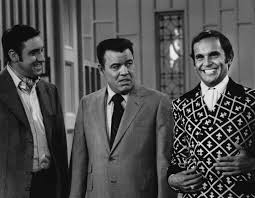
If people only knew Jim Nabors as Gomer Pyle, they were in for a treat once they tuned into this show. This show debuted on CBS in 1969 and ran until 1971. However, Nabors didn’t leave all of his Gomer Pyle life behind. Ronnie Schell and Frank Sutton, who played Duke and Sgt. Carter, joined this one as regulars along with Karen Morrow. In addition, the Tony Mordente Dancers and the Nabors Kids were available to help performances.
Nabors was tired of playing Gomer after five years and decided to end the show. He was often a guest on The Carol Burnett Show, and she was one of his best friends, so he opted for a variety show of his own.
His first guest star was Andy Williams, and Don Knotts also made an appearance.
📷facebook.com
As a fun feature, each episode had a guest announcer who read the introduction to the show and shared the guests for the day. Mavis Nabors, Jim’s mom, was the first.
Nabors acquired an impressive guest list including Carol Burnett, Glen Campbell, Johnny and June Cash, Tennessee Ernie Ford, Rock Hudson, Shirley Jones, Ricky Nelson, Don Rickles, Kate Smith, and Jane Wyman.
The show started out strong and was #12 at the end of season one. It continued to rein in good ratings while it was on the air. Even though it was in the top thirty, it was canceled along with all of the other shows that were part of the 1971 rural purge.
📷imdb.com
According to YouTube channel’s “Classic Rural Comedies Facts and Trivia,” NBC wasn’t happy Nabors wanted to end his Gomer Pyle show when the ratings were still so good. However, they also didn’t want ABC or CBS to sign their star, so they reluctantly gave in to a variety show. Partway through season one, the network put pressure on Nabors to limit Sutton’s appearances and eventually demanded he get fired. Nabors refused, and many people assume that’s why it got thrown in with the rural sitcoms in the purge.
Sadly, there isn’t a lot of information about this show. A handful of shows are available on YouTube, but most of them are no longer available to watch. No one talked about this show during their television academy interviews, so stories are hard to come by about this variety series. Many people have fond memories of the show, and I guess that has to be enough for us to appreciate this show which ended before its time.
Our theme for March is “Variety is the Spice of Life.” We are looking at several variety shows that debuted in the sixties and seventies. After discussing three shows that weren’t super successful on television, today we look at a long-running show: The Dean Martin Show.
📷chrisnersinger.com
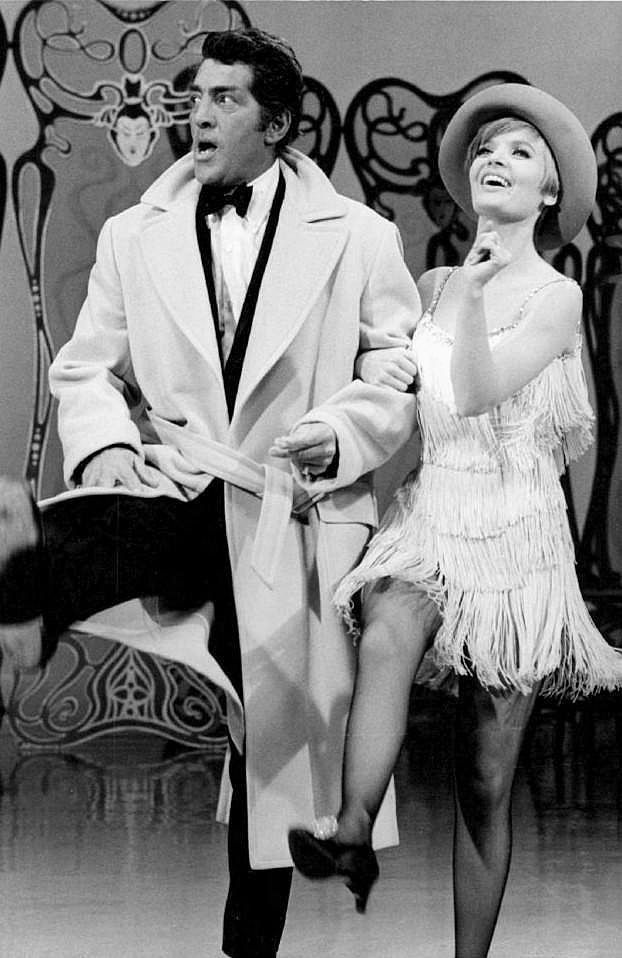
Debuting in 1965 and lasting nine seasons, The Dean Martin Show was on NBC. His theme song was the iconic “Everybody Loves Somebody.” For most of its life, it was on Thursday nights. Season nine brought a change of nights as well as a new format.
Like Judy Garland, whose show we learned about last week, Martin was not sure he wanted to commit to a television schedule, feeling as though he would not be able to take on his favorite movie roles and nightclub performances. So, he asked for a “list of musts” that he knew NBC would not agree to. He asked for a lot of money, a one-day-a-week work schedule of Sunday, and permission for him to only announce ads and sing when he felt like it. Imagine his surprise when they agreed to every demand.
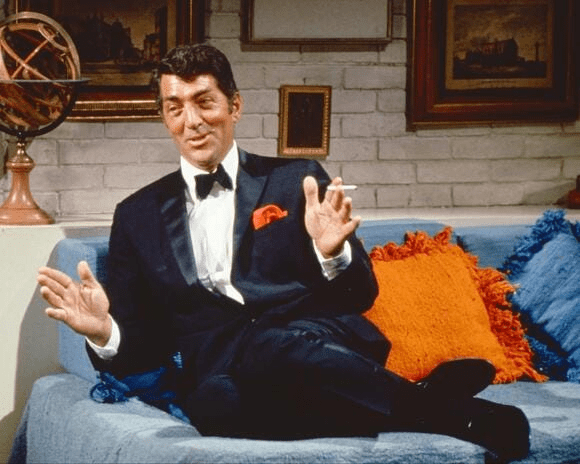
Martin always presented as a shy, drunk playboy, and he continued with this image for the television show. He made it obvious that he was reading his lines from cue cards and if he goofed, it became part of the taped show.
📷imdb.com
The show had a few recurring features every week. Martin typically sang two songs per show. Sometime during the show, a knock on the closet door led to Martin opening the door to reveal a celebrity guest and Martin himself didn’t know who would be on the other side of the door. The show usually ended with a production number featuring Martin and his guests.
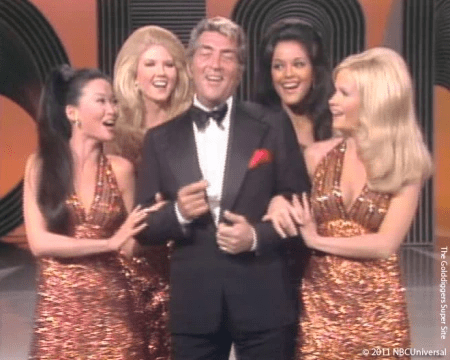
Cast members were hired who did sketches throughout the show. These stars included Tom Bosley, Rodney Dangerfield, Dom DeLuise, Kay Medford, Charles Nelson Reilly, and Nipsey Russell. In later seasons, The Golddiggers appeared. This was a group of chorus girls who first started on the summer replacement show. Not only were Martin’s goofs part of the show, but Charles Nelson Reilly once told a story that on the way to rehearsal, he was driving a convertible, and the script flew out of the car. He wasn’t too concerned though because he said the way the show was done, the script really didn’t matter much.
If you name a celebrity, they were probably on this show. Just a small sampling includes Eddie Albert, Steve Allen, Louis Armstrong, Lucille Ball, Tony Bennett, Rosemary Clooney, Sammy Davis Jr., Phyllis Diller, Duke Ellington, Ella Fitzgerald, Bob Hope, Ethel Merman, Bob Newhart, Dinah Shore, and Frank Sinatra.
The show was nominated for an Emmy 12 times including best variety, music or comedy series in 1968, 1969, and 1970.
📷wordpress.com Golddiggers
The show had decent ratings for the first year but after that it was never great, never awful. It was up against The Thursday Night Movie on CBS and a variety of different shows on ABC which changed from year to year all eight seasons. For the final season, the show was moved to Friday nights, against the popular Love American Style. From 1973-1974 it was titled The Dean Martin Comedy Hour and episodes were celebrity roasts.
The Television Academy did an interview with Greg Garrison, producer and director for The Dean Martin Show. He said there was some turmoil in the first year trying to figure out what this show was. He said they had Bertha the Elephant on one episode, and no adults were interested in that at 10 pm.
Garrison said Martin was extremely generous. Every year he gave Garrison a ten percent ownership in the show until he had 50%. Garrison then told him to stop offering him more because 50% was the most he would agree to. He described Martin as the kindest, nicest, and most generous man he knew. Garrison said he was able to do whatever he wanted to on the show and Martin never second-guessed him. Garrison said one of the hardest decisions he made was cutting Zsa Zsa Gabor’s sketch. He said she gave him no end of trouble, so he finally said they were done, and the sketch was cut. She protested and he told her she would get her check, but the skit was done and it was.
📷wikipedia.com
This was a successful show for almost a decade. It’s hard to find a lot of information about it though. Unlike The Carol Burnett Show where everyone was working together all the time, Martin only showed up on Sundays and most of the time it was the rest of the cast, so perhaps not as many stories were shared.
I watched an episode from 1970, and it was typical of a variety show for the time. Martin began by telling jokes like he put his contacts in backwards and looked at himself all night, so he got no sleep. He talked about going back to his neighborhood where the mayor had a car waiting for him, but luckily, he got out of the way just in time before getting hit. He also mentioned that he and his dog went to school together for years until they had to part because the dog graduated.
He then sang a song all the while holding onto his cigarette. In most of his appearances on the show he had a cigarette or a glass of apple juice purported to be alcohol. Ann Margaret and Bob Newhart were the guest stars in this one. He then went into a skit with Newhart. The show held up pretty well for being more than fifty years old. I admit I feel spoiled after watching The Carol Burnett Show, which I think is impossible to compete with for almost any other variety show, but Martin came across as likeable and the show was better than I anticipated. If you want to check out a few of them, you can get the “Best Of” his shows on Amazon.
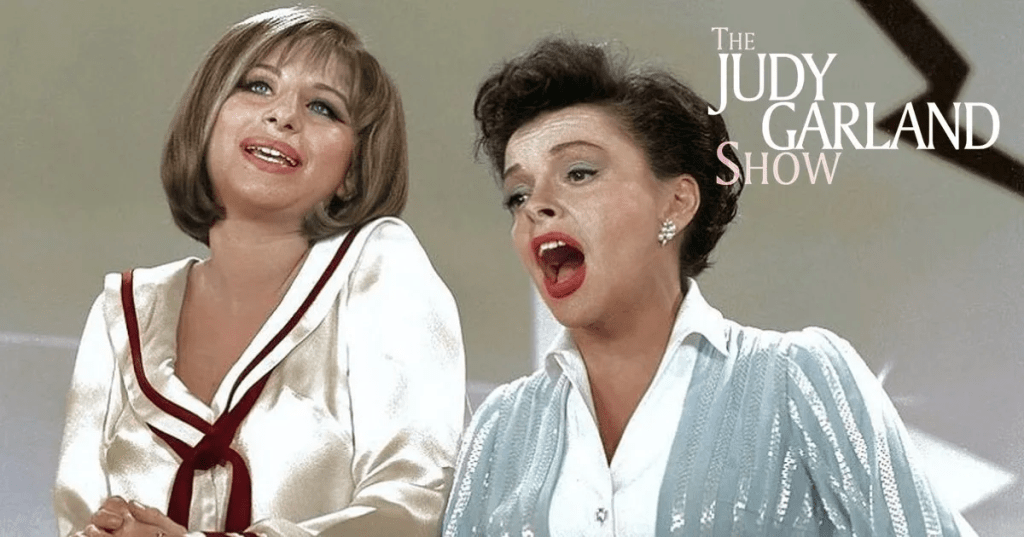
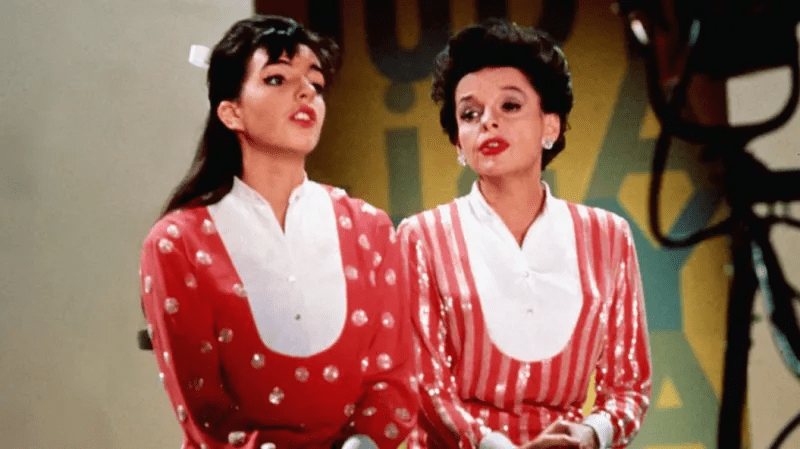
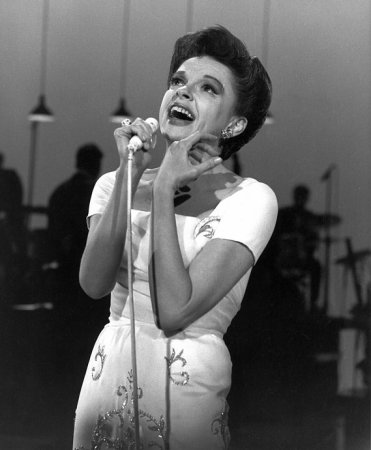
Our theme for March is “Variety is the Spice of Life.” We are looking at several variety shows that debuted in the sixties and seventies. Today we are learning about Judy Garland’s show. It’s hard to even know what to call this show. There was constant turmoil during the season it was on the air. It changed personnel, titles, formats, and all this after Garland and CBS had been at odds on past projects before this one even began.
📷barbaraarchives.com
Garland had not been comfortable committing to a weekly series, but she ran into some financial difficulties that forced her to rethink her views on television. When this show was being planned, Garland and CBS had been feuding for five years. Garland had been given a $300,000 contract with CBS to produce three specials. The first special in 1956 had great ratings, but then things fell apart. Garland’s husband and manager Sid Luft could not find any common ground with the network on the format of the second special. Garland filed a lawsuit for libel and breach of contract.
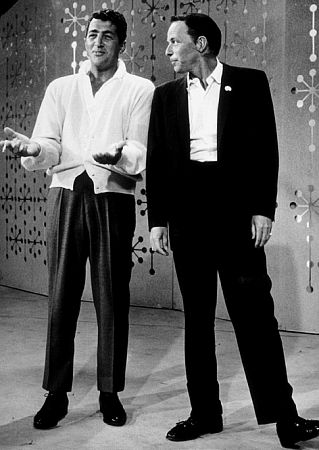
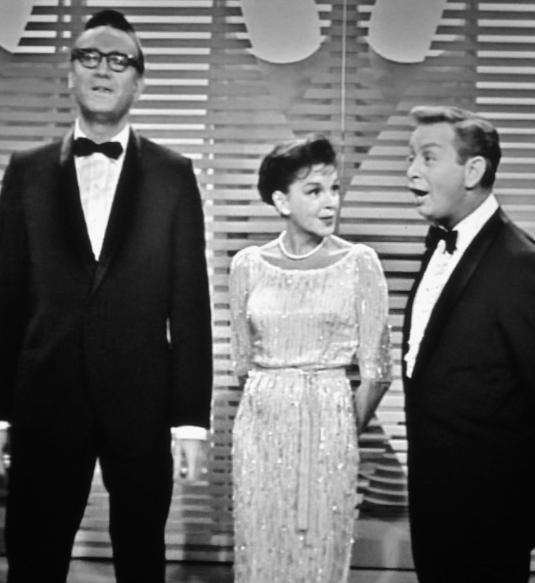
In 1961, as a negotiation of sorts, Garland and CBS agreed to try the specials again. In 1962 her special with Dean Martin and Frank Sinatra aired and received four Emmy nominations. At that point, CBS and Garland began to talk about a weekly series beginning in 1963. The third special with Phil Silvers and Robert Goulet was a pilot for the new series. It also received an Emmy nomination.
📷leighwiener.com
The show was cancelled after 26 episodes. Those 26 episodes had three different producers.
George Schlatter produced the first five episodes of the series. The job was originally offered to Bob Banner, but he declined because he was producing a series for Garry Moore and he didn’t want to move from California to New York. When he said no, Bob Finkel was approached, and he declined for the same reason. To make it more complicated, the network offered the job to a local guy, Bill Hobin, who worked with Sing Along with Mitch and was already on the east coast. He accepted the offer, only to learn that people associated with the show had also offered the job to George Schlatter who was willing to move to New York, and he had also accepted the position. It was settled with Schlatter retaining the producer role and Hobin becoming director, an awkward way to begin.
Schlatter got busy hiring. He brought on Mort Lindsey as orchestra conductor, Gar Smith as art director, Edith Head as costume designer, Mel Torme as musical arranger, and Danny Daniels as choreographer.
📷imdb.com
Schlatter hired Jerry Van Dyke as a series regular, and a few recurring pieces were created. In addition to performing, Garland had a segment “Born in a Trunk” where she told stories about her career. She also had a chat with a “surprise” guest every week. Van Dyke did some stand up and also showed up in sketches throughout the show with Judy. “Maybe I’ll Come Back” was chosen as the closing song over CBS objections, preferring her iconic “Over the Rainbow.”
I’m not sure why it changed after all the hoopla about trying to make producers move, but the show was taped at Studio 43 in Los Angeles. The studio underwent a $100,000 renovation for the show. Some of the changes were necessary and some were silly. A revolving stage was created and raised a bit which made sense. Judy’s dressing room was a replica of her Brentwood home which seems unnecessary and the hallway from her room to the stage was the yellow brick road.
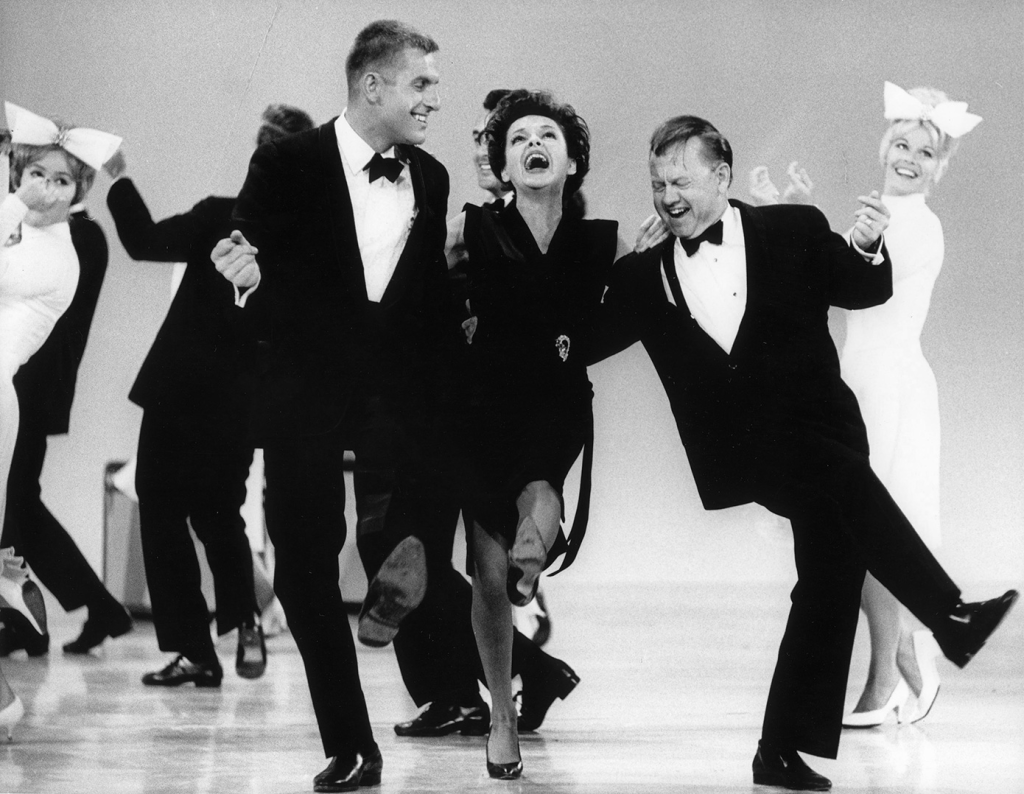
Judy did put her foot down about who her first guest would be; she wanted her old partner Mickey Rooney. It was filmed that way, but the way the episodes were aired made it look like the tenth episode. The seventh show taped with Donald O’Connor was the first episode that aired.
📷variety.com
The taping of the first show with Rooney included a star-studded audience including Lucille Ball, Jack Benny, Clint Eastwood, Agnes Moorehead, Dick Van Dyke, Natalie Wood and gossip columnists Hedda Hopper and Louella Parsons. For this opening, Judy wanted to have Cary Grant in the audience as well and introduce her with his iconic “Judy! Judy! Judy!.” Grant, however, passed because he had never actually said this line in any movie and he was tired of everyone associating it with him.
Schlatter was fired after a month and a half. Norman Jewison came in for the next eight shows which he indicated was all he was willing to do.
He had not liked Van Dyke’s jokes about Garland’s shortcomings, and he introduced a segment “Be My Guest” which Mel Torme wrote to allow Garland and her guest to perform together. Van Dyke was not popular with viewing audiences, so he was also gone as were many of the writers and the choreographer.
Bill Colleran jumped in as producer for episode 14 while the other episodes were still airing. He would remain with the show until it was canceled. Once again, the format was changed, focusing on Garland’s musical performances. Sometimes comedy was part of the show but only when the guest star was a comic like Bob Newhart or Shelley Berman.
📷imdb.com
Ratings had not increased through all of these massive changes, and the show was canceled before the end of January. The final seven shows were taped after the crew knew the show was done. At this point, the show was basically just Judy or Judy and a guest singing for sixty minutes, and the title became Judy Garland in Concert.
Torme stuck with the show through the entire mess and then was fired after 22 episodes when everyone knew there were only four left, and he was replaced by Bobby Cole, someone Garland had just met. He filed for breach of contract and included the details in his memoir. Fans reported they loved Garland, they just didn’t like anything else about the show.
Critics were of differing opinions. The San Francisco Chronicle characterized the show as “tasteful, elegant and exciting.” while the New York Herald Tribune wrote that “Miss Garland is fine, just fine. The rest of the show, however, needs help.”
Fans of the show formed a “Save The Judy Garland Show committee” and organized an early letter-writing campaign on behalf of the series, but their efforts were not enough to prevent the show from being cancelled. The final Judy Garland Show, another concert episode, was broadcast on March 29, 1964.
Schlatter discussed his time on The Judy Garland Show. He was hired after working for the Dinah Shore Show. He said he encouraged the child in her to come out and the two of them had a lot of fun. He said the first five shows were filmed on time and under budget, but he got fired after they were done. CBS told him the shows were “too special.” They wanted Garland to show more warmth which Schlatter thought she already did. After he left, the show featured her sitting on stools and talking more rather than performing.
📷instagram.com
There seem to be a lot of reasons why the show only lasted one season. There was the revolving door with cast, writers, producers, and a lot of turmoil about the format of the show. CBS president James Aubrey was said to “intensely dislike” Judy for some reason and did not keep that a secret. The show was up against Bonanza on NBC which almost insured its demise. Bonanza was in the top ten, a very popular program. And, this was during a time when the family probably had one television and the family often gathered to watch it together Sunday nights. Most families are going to choose Bonanza over The Judy Garland Show.
While Judy needed the money, the pressures and stress filming this show did not help her mental health. As someone who had experienced addiction issues for a while, she had trouble dealing with the infighting and criticism of her show although most critics went out of their way to give her positive feedback. Sadly, within five years of the show being canceled, Garland was dead from an overdose of sleeping pills. It’s too bad that this show which might have brought her financial comfort and happiness just added to her stress in the entertainment business.
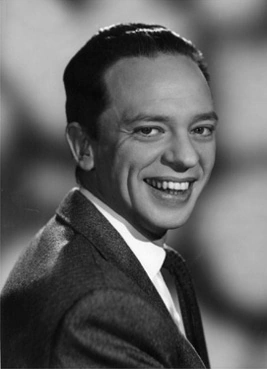
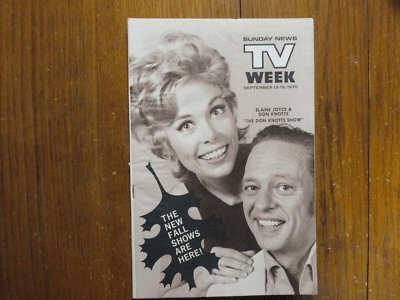
This month our theme is “Variety is the Spice of Life.” If I mention the name Don Knotts, almost everyone probably pictures Barney Fife from Mayberry. You might also think about some of his well-known movies including The Ghost and Mr. Chicken or The Shakiest Gun in the West. However, you might be surprised to know that Don Knotts had his own variety show on NBC for a season in 1970.
📷wikifandom.com
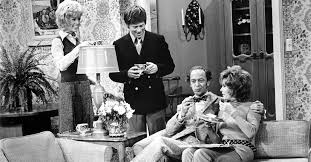
Don had a few regulars in his cast including Gary Burghoff, Louis Nye, and Elaine Joyce. He had musical guests interspersed with skits. Joyce might have made the worse choice in her entire career when she agreed to join this show because to do it, she turned down a chance to be part of the cast of The Carol Burnett Show.
Two recurring skits were about the process it took to put a weekly television show together and another one was similar to one Carol Burnett and Harvey Korman did called “The Front Porch” with Don and a guest sitting on a rocking chair discussing life.
Knotts’ show did not attract viewers. After a few episodes, the network hired Bob Sweeney who had directed The Andy Griffith Show. Don said Sweeney “came in and made some changes in the writing staff. Then he made some changes in the show creatively. And he did a good job, He improved the show, I thought.” Sweeney also hired Burghoff for the show.
While Andy Williams debuted the Osmond Brothers, Don’s claim to fame for his variety show was debuting The Carpenters.
While there were a lot of variety shows on television, the schedulers didn’t do Knotts any favors. His show was up against The Mod Squad on ABC and The Beverly Hillbillies and Green Acres on CBS. That is some tough competition. And this was an era when a family typically had one television, and the entire family had to agree on what they were watching together.
During his Television Academy interview, Don discussed his show. “We did all kinds of things, but in the end, the show just couldn’t compete with shows like The Carol Burnett Show, Donny & Marie, or Sonny & Cher. There was tremendous competition that season for variety, because everybody and his brother had a variety show.”
I think Don was right about why his show failed, but even with so many variety shows, I think there were a few other problems with this one. There were 12 other variety shows on the air during this year, including Knotts’ friend Jim Nabors, but scheduling was a huge barrier to overcome.
📷facebook.com
Also, Knotts was introduced to America as a cast member of The Steve Allen Show, and he was great on that one. I think the country wasn’t ready to accept him as a host on a show though. He spent his entire career as Barney Fife, an over-confident sidekick who helped the sheriff in Mayberry. His movie characters were all nervous, timid people who found a surprising way to beat the bad guys. Suddenly he was the star of the show and it’s a tough typecasting role for fans to adjust to.
That said, I’m putting this failure on the network for having too many variety shows on the air and not scheduling them against each other so the most popular ones rose to the top. And this was in the early seventies. Think about the shows that were starting at the time, very different shows from the fifties and sixties hits. Knotts was not the only one to fail at this time, so he could chalk it up to a life lesson learned and quickly wipe it from his memory.
They say, “Variety is the Spice of Life” and we are going to see if that’s true this month. During the fifties, sixties, and seventies, variety shows were a big part of the television schedule. If you were a singer or a dancer, you likely had an opportunity to have your own show.
📷imdb.com
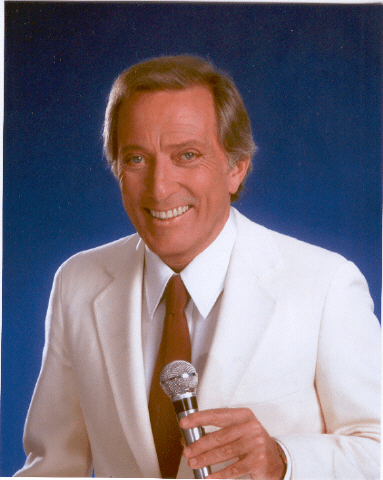
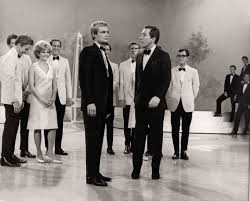
From 1962-1970, Andy Williams entertained us in our living rooms. Williams had a weekly series from 1962-1967 before deciding he wanted to cut back to three specials a year. By 1968 he changed his mind and went back to a weekly series that was on the air till 1971. When the show came back in 1968 it included more rock and roll, a talking bear, and psychedelic lighting which never seemed to fit what I thought of as Williams’ style.
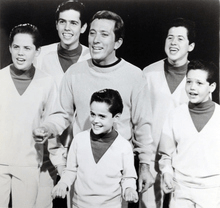
Like many variety shows, Williams had a cast of performers who helped out with skits and songs. During the run of his show, The Osmond Brothers, Jonathan Winters, Ray Stevens, and the Lennon Sisters were part of the act. In 1963 the show won for Outstanding Variety Series. Like Carol Burnett, guest stars also appeared weekly on the show. I remember watching his show, especially at Christmas and loved the Osmonds who Williams discovered at Disneyland; he originally introduced them as “a youthful barbershop harmony group from Odgen, Utah.”
📷thesaltlaketribune.com
Andy’s show debuted on NBC on Thursday nights. It was up against The Alfred Hitchcock Hour. The second season ended up on Tuesday nights taking on The Fugitive and The Jack Benny Show. Season three found it on Monday nights with the competition being a few new sitcoms and it continued in the same slot season four with Hazel as its strongest competitor. Believe it or not, season five found the show on Sunday night. No wonder it wasn’t in the top 30, no one could ever find it from year to year.
Once the show returned in 1968 with its 60s trippy themes it was on Saturday tackling the long-running The Jackie Gleason Show and the newer game shows Dating Game and Let’s Make a Deal. The only thing that changed the final year was that The Jackie Gleason Show was replaced with Mission Impossible. In addition to moving around so often, the show had to compete with a lot of other variety shows during that decade. Just a few others included Carol Burnett, Flip Wilson, Dean Martin, Dinah Shore, and Perry Como.
📷facebook.com
Eventually, Williams created his own very successful show in Branson, Missouri where he lived and performed until he passed away from bladder cancer in 2012.
I think overall Andy Williams had one of the more successful variety programs. No one did it better than Carol Burnett. I think Williams had a hard time trying to fit his style into the late sixties and early seventies. When he started, Perry Como and Nat King Cole were known for their variety series, but when his last show debuted, he was competing with people like Flip Wilson and Sonny and Cher. I’m exaggerating to a point, but it was like he began singing with Lawrence Welk and tried to change to singing with The Rolling Stones; he just needed to find his own lane and stay there.
 thewritelife61