McNultey v McNutley: Still Professing Comedy

Thanks for joining me this month in our blog series, “It’s Their Show.” As it became obvious that television wasn’t going away and movie stars were only hurting themselves shunning the industry, several celebrities decided to make the jump and star in their own show on the small screen. Ray Milland was one of the first stars to tackle the task. Milland had been known for many great movies including The Lost Weekend, for which he won an Oscar, and Dial M for Murder.

📷raredvds.com

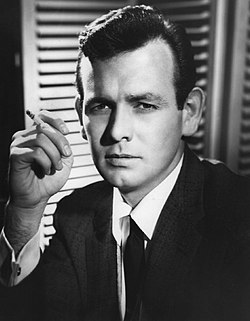
His show was originally titled “Meet Mr. McNutley,” but it became The Ray Milland Show. This is one of those shows that fans remember fondly as very funny and well written.

The show debuted in 1953 and ran for two seasons, two very different seasons. In the first season, McNutley is an English professor at Lynn Haven College for Women. Although all the students find him attractive his wife (Phyllis Avery) understood that this was not affecting her marriage. Rounding out the cast were their neighbors Pete and Ruth Thompson (Gordon Jones and Jacqueline DeWit) and the college dean (Minerva Urecal) who was not swooning over McNutley.

📷wikimediacommons.com

When the show returned for its second season, his name is now Mr. McNulty and he is a drama professor, moving from New England to Comstock University in California, a coed college. Dean Dodsworth (Lloyd Corrigan) and his wife (Madge Blake) take the place of their neighbors in this version.

The first season, CBS put the show on Thursday nights where it was up against Groucho Marx’s You Bet Your Life, a top ten program. Although many things changed from season one to season two, what stayed the same was that the show was still up against You Bet Your Life and Groucho’s show was still in the top ten. Ray’s show was cancelled at the end of the second season.

The producers of the show were Joe Connolly and Bob Mosher. The partnership would have some minor success in the early sixties after this show went off the air (Bringing Up Buddy, Ichabod and Me, Calvin and the Colonel) before hitting it big as the writers and producers for Leave It to Beaver and The Munsters. They were also behind The New Leave It to Beaver Show in 1997.

📷idahoseniorindependent.com “The Christmas Story”

I watched the Christmas episode from the second season for this blog. Peg gets involved with the local orphanage and agrees to host a child for Christmas. She is a difficult child and makes life and the holidays very unpleasant for the couple. However, as viewers, we are in on a scene where Susie (Beverly Washburn) reveals why she is so mean. She decides to become the perfect child so the couple will take her to the orphanage Christmas party, but her goal is to expose Santa as a fake to the other kids, and the show ends with an unexpected twist. It was a heart-warming story, and the humor was a bit subdued, but I enjoyed the episode. I was impressed by Washburn’s portrayal of a bad, good little girl. By the way, Washburn is still acting; she’s probably best remembered for her role in Old Yeller.

Milland would attempt another television series in 1959, and that show also ran for two seasons. As Markham, he portrayed a former attorney turned private detective who solved crimes around the world.  

It’s too bad that the network never gave this show a chance to move to a spot in the schedule where it didn’t have so much competition. I thought it was more sophisticated than some of the sitcoms during the fifties. I’m guessing that it might have been a big hit.

Richard Diamond, Private Detective: Living His Best Life

This month we are discovering some of our favorite “Crime Solvers of the Past.” Up today is a show I listen to on old-time radio quite often: Richard Diamond, Private Detective.

Dick Powell stared on the radio series which began in 1949, and the show ended its run four years later in 1953.

📷wikimedia.org

The television show went on the air in the summer of 1957. CBS aired the show through fall of 1959 when it moved to NBC for its final season. It was much more common in the fifties and sixties for shows to shift networks.

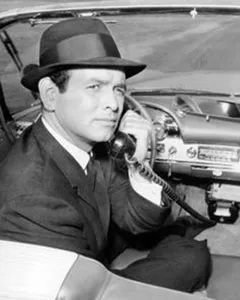
David Janssen starred as Diamond, a former cop in the New York Police Department. The television show kept the film noir atmosphere. It also kept the New York City location and showcased Diamond’s wit and charm with the ladies. Rounding out the cast was Diamond’s former superior Lt. Dennis McGough (Regis Toomey).

The third season moved Diamond to Los Angeles, and everything took on a new look. His life became more glamorous, and he lived in the Hollywood Hills and had a swimming pool. Apparently, private eyes earned a much bigger fee in Los Angeles. After taxis in New York, Diamond drove a new convertible which included a car phone, a high-tech feature for that time period. Lt. McGough remained in New York, and the LA police weren’t so fond of Diamond and his interference with their cases.

📷thrillingdetectives.com

Diamond’s phone calls are collected by Sam.  Often she passes the messages on to Diamond on his phone car. Car phones were pretty cool in this era. We don’t see her face, but we do see her legs on a regular basis. I’ll take their word for it that Sam was played by Mary Tyler Moore for part of season three and Roxane Brooks filled out the rest of year three and season four. No one knew who Sam was until Mary Tyler Moore modeled hosiery in the TV Guide and let the cat out of the bag. She was immediately fired and replaced with Brooks. I also read a version that Moore asked for a raise and was denied it and fired, which prompted her to talk about her identity as Sam on the show.

The theme also took on a contemporary jazz score that was now used for the theme song.

📷famousfixx.com

Apparently, NBC demoted Diamond because for the final season, he lost his ranch house with the fireplace and sunken living room. He lived in an apartment and worked from a typical, small office. The show lost a lot of its elegance, and fans probably missed Diamond’s former life after getting used to him in year three. Lt. Pete Kile (Russ Conway) has now found mutual respect with Diamond and the two of them work together on many of his cases. He also has an understanding with Karen (Barbara Bain), his new girlfriend.

Guest stars were plentiful on the show. Some of the appearances included Claude Akins, Ed Begley, Joey Bishop, Whitney Blake, Charles Bronson, Jack Cassidy, Jack Elam, Charles Lane, and Ruta Lee.

📷posterazzi.com

ABC aired the show on Thursday nights up against Zorro and You Bet Your Life, both shows in the top thirty. The next season it moved to Sunday nights and took on The Loretta Young Show. NBC moved the show to an earlier time slot on Mondays against The Kate Smith Show and the popular western Cheyenne. I’m guessing most families tuned in to one of its competitor’s series that early in the evening.

Maxwell House sponsored season one and Kent Cigarettes took over for season two. It seems that in the fifties coffee and cigarettes are what kept most detectives going.

From what I’ve concluded, the show didn’t age as well as the radio show. It lost some of its comedy and playful dialogue and became more somber and serious. The fact that Richard’s living conditions changed three times, along with the spot on the tv schedule where the show lived, probably didn’t help viewers stay tuned.

Let me qualify that I read many people’s views of the show who thought some of the seasons as high quality as you could get. However, I am just going to keep listening to the radio show and take a pass on watching Diamond’s more stressed-out, serious side on television.

Vera Miles: What a Character

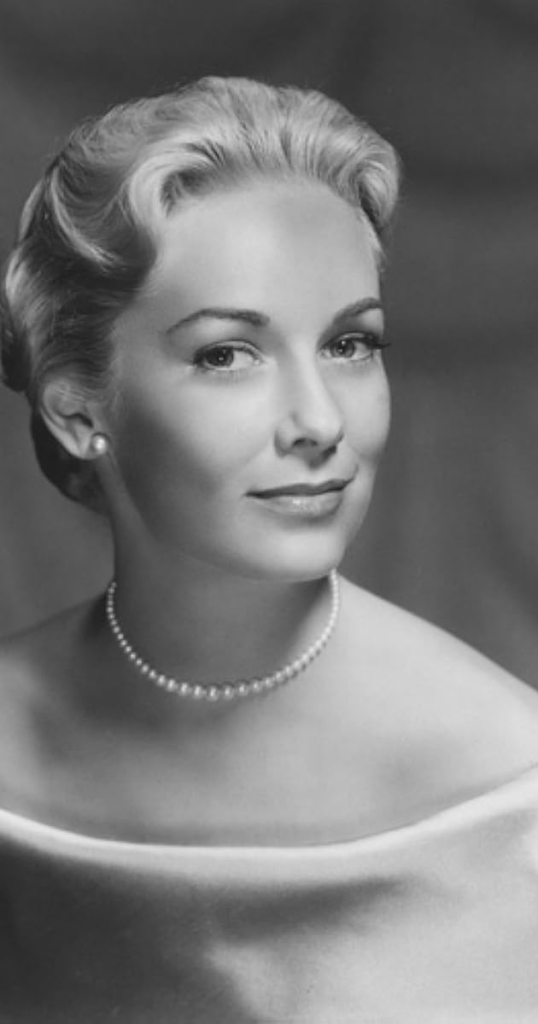
During this month of Supportive Women, I am excited to learn more about Vera Miles. For four decades, Miles appeared in our homes as well as on the big screen. With 162 credits, she may have visited your living room more than most of your family members.

📷facts.net

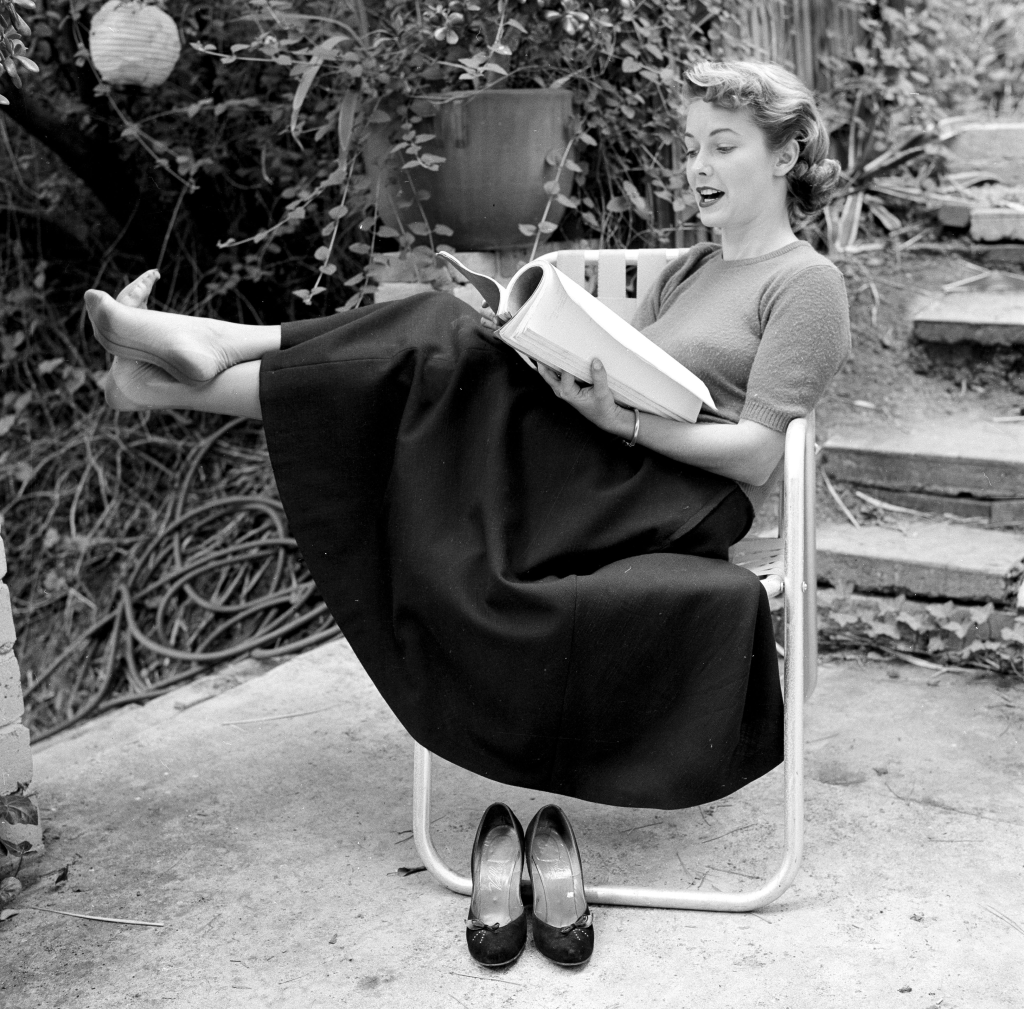
Vera Ralston was born in Boise City, Oklahoma in 1929. She grew up in Pratt, Kansas, and later she moved to Wichita where she graduated from high school and worked nights as a Western Union operator-typist. In 1948 she won the Miss Kansas pageant and was third runner-up in the Miss America contest that year. Miss Minnesota won the crown.

A year later she moved to Los Angeles to pursue a career in television and movies. Not long after arriving in Hollywood, Vera married photographer and stuntman Bob Miles. One source said that she enrolled at UCLA, hoping to become a teacher.

Bob Miles has 13 acting credits and 14 stuntman credits. The cast of Bonanza must have liked him because he appeared as a stuntman 99 times and as an actor on the show 76 times.

📷photos.com

After the birth of her children, she began doing some modeling and taking on a few roles to help provide income. Vera used her husband’s last name because there was already a Vera Ralston in the industry.

She appeared as a contestant in a 1951 episode of You Bet Your Life with Groucho Marx. Along with her partner, she won $8 in the quiz portion of the show but gave the wrong response to the De Soto-Plymouth question which was “Who was the first Chief Justice of the Supreme Court?” When Groucho asked her what titles she had held as a beauty contestant, in addition to Miss Kansas, she mentioned that she was Miss Chamber of Commerce, Miss Wichita, Miss Texas Grapefruit, and Miss New Maid Margarine.

She received her first movie role in 1950 and her first credit in 1952. In The Rose Bowl Story, a romantic comedy, she played a Tournament of Roses Queen. She would appear in about 40 additional movies during her career and quite a few made-for-television movies as well. She often worked with Alfred Hitchcock and was cast in Psycho.

In 1951 she appeared on Fireside Theater, her first television role. While she had more than 100 credits performing on television, surprisingly she never starred in a series. The only recurring character she had was Ernestine Coulter on My Three Sons.

📷fotogrammas.com

In 1956 she married Gordon Scott after divorcing Miles in 1954. They also divorced in 1960. Scott appeared to only work in Hollywood for a five-year period according to imdb.com. From 1960-1971 she tried marriage again with Keith Larsen, but their marriage also ended in divorce. Since the third time was not the charm, for two years in the mid-seventies, she wed Robert Jones but that ended in divorce as well.

During the fifties, she fit roles around her movie appearances, and you can see her in episodes of dramatic theater shows. In the sixties, she had no trouble finding work and she showed up on The Twilight Zone, Route 66, Wagon Train, I Spy, The Man from UNCLE, The FBI, and Mannix. Work did not slow down in the seventies, and you can spot her in a variety of shows including Gunsmoke, Hawaii 5-O, Bonanza, Cannon, Columbo, and Barnaby Jones. She might have taken thing a bit easier in the eighties, but she still worked on four or five shows a year, including Magnum, PI; Little House on the Prairie; The Love Boat; Hotel; and Murder She Wrote. Her last credit was for a movie titled Separate Lives in 1995.

📷imdb.com

Miles was a member of the Church of Jesus Christ of Latter-Day Saints and visited Salt Lake City quite often.

Early in her career, Miles appeared to be almost a clone of Grace Kelly but that never materialized into a movie star career. Hitchcock hired her for Vertigo with Jimmy Stewart, but her pregnancy caused her to back out of the movie, and Kim Novak received the starring role. Perhaps, that movie would have changed the trajectory of her film career. I’m surprised that she was never given an opportunity to star in a television show. With 162 credits, she had a prolific and busy career. I will definitely try to spot her when I watch some of my favorite classic shows.

..

The Secret Word is George Fenneman

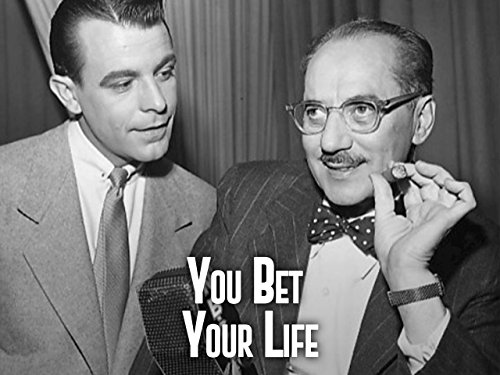
I am cheating just a bit with this post. During this Oddly Wonderful series, I think I can push the envelope enough. You Bet Your Life was a very different type of game show. If ever there was a person who personifies oddly wonderful it was Groucho. But I really wanted an excuse to write about George Fenneman.

George Fenneman is best remembered for his role on Groucho Marx’s quiz show, You Bet Your Life which began on radio in 1947 and transitioned to television in 1950. The show went off the air in 1961, the year I was born. Obviously, I don’t remember the original show, but I saw it in reruns and always had a crush on George; I think it was his smile that always got me.

Photo: imdb.com

George was born in Beijing (then Peking), China in 1919. His father was in the importing/exporting business. When he was not quite one, his parents moved to San Francisco where he grew up. After high school, he attended San Francisco State College. He graduated in 1942 with a degree in speech and drama. He took a job with a local radio station KGO for a short time. He married his college sweetheart Peggy Clifford in 1943 and they would stay married until George died. The couple had two daughters and a son.

Photo: collectors.com

Poor eyesight and asthma prevented Fenneman from military action in World War II, but he was able to become a broadcast correspondent for the War of Information. In 1946 he was back in California, in the radio industry again. One of the shows he announced for was Gunsmoke. After the episode concluded, he would introduce Matt Dillon (William Conrad) to discuss the sponsor’s products which often was cigarettes such as L&M or Chesterfield.

Some of the other radio shows he announced for included The Orson Welles Show, The Eddie Albert Show, and the Hedda Hopper Show.

Photo: aveleyman.com

He and Peggy were neighbors of Christian Nyby. In 1951, Nyby was hired as director for the film, The Thing from Another World. George joined the cast as in the minor role of Dr. Redding who has an important scene at the end of the film. It took 27 takes for him to get the speech right, and he realized he was better suited for radio. However, he would appear in two additional films, the little-known Mystery Lake in 1953 and How to Succeed in Business Without Really Trying in 1967. While his voice was part of several other films, most notably in the original Ocean’s 11 as the man talking on the phone to Sheriff Wimmer.

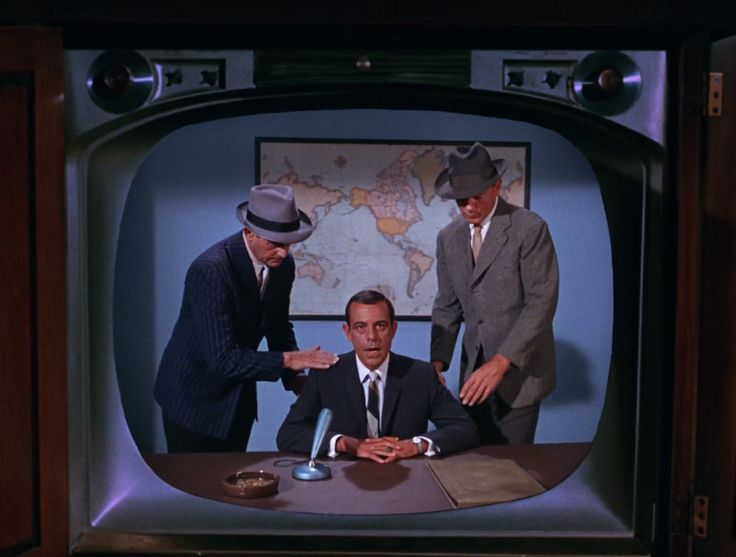
Jack Webb had worked on broadcasts with George during the war. He hired Fenneman as announcer for his radio show, Pat Novak, For Hire. When Dragnet aired the same year, Jack took George with him. George, along with Hal Gibney took on the role of narrator for the show. They both continued with the show in 1951 when it moved to television. Dragnet was off the air for a number of years and returned to television in 1967. Fenneman was again hired as narrator with John Stephenson for that version. George was the one who was heard saying, “The story you are about to see is true. The names have been changed to protect the innocent.” Stephenson handled the closing narration. Fenneman was also cast as a news reporter in a variety of shows including Please Don’t Eat the Daisies, The Man from U.N.C.L.E., The Name of the Game, and on Batman in 1966 in the episode, “The Yegg Foes in Gotham.”

Photo: pinterest.at
On Batman

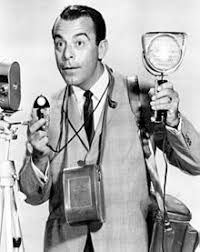
In addition to appearing on Groucho’s show on television, Fenneman was the host or announcer for several other shows. He emceed two games shows during his time with Groucho: Anybody Can Play in 1958 and Your Surprise Package in 1961. In 1963, He hosted a show on ABC titled Your Funny, Funny Films which was a cousin to the later Candid Camera and America’s Funniest Home Videos.

He was usually an unseen announcer on The Ed Sullivan Show, but in 1964, the night the Beatles were on the show for the second time, he did a spot on the air for Lipton Tea. From 1978-1982 he hosted a show on PBS, Talk About Pictures. In this show, Life magazine photographer Leigh Weiner and George interviewed respected photographers and looked at their best photos.

Photo: pinterest.com
With Leigh Weiner on PBS

He also was the voice for Home Savings & Loan commercials from the late 1960s until his death from emphysema in 1997. He also acted as announcer for shows such as Dean Martin and Jerry Lewis, Donny and Marie, The Jim Nabors Show, and The Life of Riley.

Photo: hollywoodphotographs.com
With Martin and Lewis

In 1993, The Simpsons aired an episode that spoofed Dragnet, and Fenneman can be heard on the show delivering his famous line about names being changed to protect the innocent.

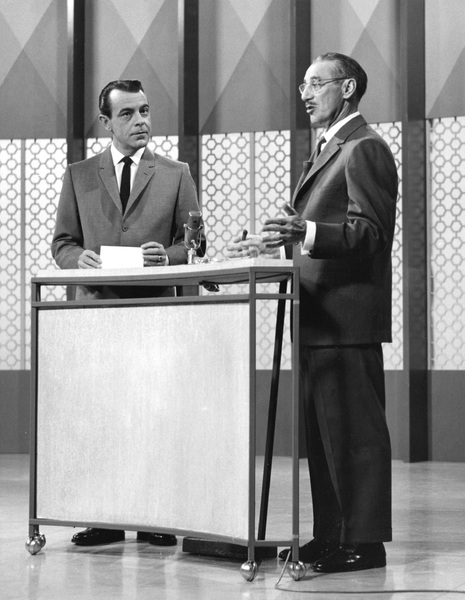
Despite his large cannon of work as an announcer and emcee, Fenneman became a household celebrity when he went to work for Groucho on You Bet Your Life. One day George was standing on the corner of Hollywood and Vine. Robert Dwan, who had hired him at KGO Radio, came up and told him he was holding an audition for a new show for Groucho. Fenneman went up against thirty other announcers and won the job which paid $55 a week. He was hired just to do commercials. At some point, Groucho decided he should also be scorekeeper, as well as his straight man.

Photo: usawoopro.blogspot.com

When discussing Groucho, George said, “I have to say he was unique, and he was fearless. It was a great privilege to work with him for 15 years and to be his friend for 30.” After Fenneman’s death, Peggy did an interview for an article by Lawrence Van Gelder for the NY Times in June of 1997. She said that George was always a fan of Groucho and the Marx Brothers. She remembered them often going to the Golden Gate Theater when they were in college. They went to watch the Marx Brothers rehearse future movie scenes for comic timing. She remembered watching scenes from A Night at the Opera and A Day at the Races.

Groucho, known for his quick wit and acid tongue, found an agreeable and attractive man in Fenneman. When viewers queried George whether the show was scripted or ad-libbed, he always said yes. Actually, it was about 50/50.  Groucho was fed some lines from the interviews with the contestants, but he never met them ahead of time and was given the freedom to interject whatever comments he chose.

Photo: mptvimages.com

George often took the brunt of Groucho’s humor. One time he had to inhale helium, one day he came down from the ceiling when the secret word was said in place of the usual duck, or he would be questioned about something on the show. For example, one evening each of the contestants was a very attractive woman and Groucho made it seem that Fenneman had set that up on purpose. One contestant mistakenly referred to George as Mr. Fidderman, and Groucho called him out to discuss his double life.

Photo: popflock.com

George never knew what Groucho had in store for him. Often Marx would summon George from behind the curtain, and he always looked uncomfortable which was quite genuine. But Groucho had great affection and appreciation for him, calling him the perfect straight man.

At times on the show, George could also be quite funny, but he knew his main role was straight man, and he usually toed that line carefully.

George and Groucho remained friends long after the show was cancelled. They often got together before Groucho’s death in 1977 at age 87. Groucho never lost his sense of humor. At one of their last visits, Groucho was in very frail health. Helping Groucho get across the room, George lifted him out of his wheelchair and carried him. He had his arms around his torso and began to shimmy him across the floor. Groucho’s rasping voice said, “Fenneman, you always were a lousy dancer.”

Photo: en.wikipedia.org

Although the shows have never been released in a chronological DVD collection, they are available. The programs were recorded in full and then edited to the desired length. On MP3 discs, some of the unedited tapes are available which provide a very different perspective than the aired show.

There are a few announcers still well known in the business. I think of Rod Roddy, Johnny Gilbert or Johnny Olson who have game show fame, but it is a career that is being phased out. There is something charming about watching the former announcers for shows promoting products and interacting with the stars. Harry Von Zell from the Gracie Allen and George Burns Show comes to mind or Don Wilson from the Jack Benny Show. Like rotary phones, transistor radios, and Polaroid cameras, they are fondly remembered from a slower and less technological period in history.

With this series being Oddly Wonderful, I am stretching it a bit by focusing on George. In our definition of oddly wonderful, he was definitely the wonderful.

1917 Was A Very Good Year

This week I was inspired by the blog “Once upon a screen . . .” to take a look at television pioneers who were born in 1917. (For some great articles on pop culture, movies, and television, check out her blog at aurorasginjoint.com.) Let’s get to know 17 of the stars who helped shape the direction of television during the golden age.

Herbert Anderson. Best known for his role as Henry Mitchell on Dennis the Menace, Anderson began his career making movies.  He transitioned to television in 1953, appearing on 61 shows over the years.  He appeared in episodes on such shows as Gunsmoke, Petticoat Junction, Batman, I Dream of Jeannie, Man from U.N.C.L.E., My Three Sons, Bewitched, and The Waltons.  One of my favorites is the first season of The Brady Bunch.  The kids are sick and both parents call a doctor.  The girls were used to a woman played by Marion Ross while the boys always had a man, Anderson.  After weighing factors to pick one of them, the family decides to keep both doctors. He died from a heart attack in 1994.

Carl Ballantine. Ballantine began his career as a magician and inspired many famous magicians since.  He began working in Las Vegas and on television as a magician.  Eventually he transferred to movie roles and after appearing in McHale’s Navy on the big screen, took on the same role of Lester Gruber on the television series. He went on to appear on 33 additional tv shows including That Girl, Laverne and Shirley, Trapper John MD, and Night Court. He passed away at his home in 2009.

bellamy1

Earl Bellamy. Earl Bellamy directed episodes for 101 different television shows.  He is best known for The Lone Ranger and The Tales of Wells Fargo.  He directed 82 episodes for Bachelor Father, one of my all-time favorite sitcoms.  In the 1960s he specialized in sitcoms including That Girl, The Brady Bunch, The Partridge Family, and My Three Sons while the 1970s saw him transition to dramas including Marcus Welby MD, The FBI, Medical Center, and Eight is Enough. In 2003 he passed away from a heart attack.

Ernest Borgnine.  Best known of his Oscar-winning role of Marty in 1955, Ernest enlisted in the Navy in 1935 until 1941.  In 1942 he re-enlisted and served until 1945.  After doing some factory work, he decided to go to school to study acting and began his career on Broadway.  He was also in the movie McHale’s Navy and went on to tackle the role in the television series.  He loved working with Tim Conway and in later years they did the voices for Mermaid Man and Barnacle Boy in SpongeBob SquarePants. He appeared in 47 different shows over the years, including the series Airwolf which he starred in. Borgnine appeared in the final episode of ER which he won an Emmy for. He was married five times, including a 32-day marriage to Ethel Merman.  His last marriage to Tova lasted 39 years. He died of kidney failure in 2012.

Raymond Burr. Best known as Perry Mason, Burr started his career on Broadway in the 1940s and then appeared in 50 films from 1946-1957. In 1956 he auditioned for the role of Hamilton Burger, the DA in Perry Mason.  He was told he could have the starring role if he lost about 60 pounds which he accomplished. He later starred in Ironside, another crime drama and appeared on a variety of other shows.  Burr had many interests including raising and cross-breeding orchids; collecting wine, art, stamps and sea shells; reading; and breeding dogs.  He was extremely generous, giving away much of his money over the years.  He passed away from cancer in 1993.

Phyllis Diller. Known for her wild hair and clothing, Diller was one of the pioneering stand-up female comedians.  She appeared in films in the 1940s, worked in radio in the 1950s, and began her stand-up career in 1955. Her first television appearance was in You Bet Your Life.  She appeared in 40 shows including Batman, CHIPs, Full House, and The Drew Carey Show.  She had her own show titled The Pruitts of Southampton, and in reruns The Phyllis Diller Show that ran from 1966-67.  She recorded comedy albums in the 1960s, wrote several books during her career, was an accomplished pianist, performing with symphony orchestras across the US and taught herself painting which she continued throughout the 1960s and 70s. Her husband Fang was not real, but she used him in her comedy routines.  She died of natural causes in 2012. My first memory of Diller was in the movie Boy Did I Dial a Wrong Number with Bob Hope which my parents took me to at the drive in.

Ross Elliott. A prolific actor on stage, film, and television, Elliott appeared in 184 different shows from sitcoms to westerns to medial dramas, all between 1951 and 1983. He passed away from cancer in 1999.

June Foray.  One of the greatest voice actors ever, Foray has been active in the industry since she had her own radio show.  She did off-air voices for many sitcoms including I Love Lucy, Father Knows Best, Jack Benny, Rawhide, Get Smart, Lost In Space, and Bewitched.  She also appeared in more than 76 animated series.  She is perhaps best known as Rocky in Rocky and Bullwinkle and as Cindy Lou Who in How the Grinch Stole Christmas and Karen and other voices in Frosty the Snowman. Foray is still alive today.

Zsa Zsa Gabor.  Unlike her sister Eva who became known as Lisa Douglas on Green Acres, Zsa Zsa seemed to make a career out of playing herself.  Of the 80 appearances she made in film and television, 20 of them were as herself. She was a true celebrity.  Crowned Miss Hungary in 1936, she came to the US in 1941 and began her career.  She was known for her extravagant lifestyle and many marriages: 9 with 7 divorces (including one to Conrad Hilton) and 1 annulment.

Sid Melton.  Known to most viewers today as handyman Alf Monroe on Green Acres, Melton began as a film star and went on to appear in 71 shows including Topper, Bachelor Father, Make Room for Daddy, That Girl, Petticoat Junction, I Dream of Jeannie, and Empty Nest. He died from pneumonia in 2011.

Alice Pearce. Although her career was cut short due to illness, I included Alice Pearce because her role as Gladys Kravitz in so memorable.  After spending her childhood in Europe, Pearce started on Broadway and after appearing in On the Town, she was brought to Hollywood to reprise her role in the movie version. She began specializing in comedy in the 1940s. In 1964 she turned down the role of Grandmama in The Addams Family and shortly after was offered the role of Gladys in Bewitched. She was already diagnosed with ovarian cancer when she began her role but didn’t tell anyone and was able to act for two seasons before she passed away from the disease. She received an Emmy for her work on Bewitched.

Gene Rayburn. One of the kings of game shows, Rayburn began his career as an actor, taking over for Dick Van Dyke in Bye Bye Birdie when Van Dyke began his television show. While he was on numerous game shows as a panelist or host over the years, Rayburn is best known for Match Game which first ran from 1962-69. It was revived again in 1973 and took several formats in the following years.  He died from heart failure in 1999.

Isabel Sanford. Best known as Louise Jefferson, she grew up in Harlem and performed in amateur nights at the Apollo Theatre. Her Broadway debut was in 1965.  After appearing as a maid in Guess Who’s Coming to Dinner, she was cast by Norman Lear in All in the Family which led to the series The Jeffersons.  When the show ended in 1985, she appeared in a variety of other shows until 2002.  She passed away from natural causes in 2004.

Sidney Sheldon.  A writer and producer, Sheldon created The Patty Duke Show, I Dream of Jeannie, and Hart to Hart, writing many of the scripts for all three series. After he turned 50, he began a career writing romantic suspense novels.  He died from pneumonia in 2007.

Robert Sterling. A clothing salesman before getting into acting, Sterling was best known for his role as George Kerby in Topper from 1953-55.  His wife, Anne Jeffreys played his wife in the show. From 1943-49 he was married to Ann Sothern. He appeared in 36 shows between 1951 and 1986. He passed away from natural causes in 2006.

Jesse White.  While White was a hard-working character actor, he is best known for his commercials as the Maytag repairman from 1967-88. After appearing in films for many years, he transitioned to television in the 1950s.  His daughter Carole Ita White also became an actress best known for Laverne and Shirley. White appeared in 113 shows, never receiving a regular series.

Jane Wyman. Wyman began working at Warner Brothers at age 16, claiming to be 19. Although she was a successful film star and began in television in 1955 with her own show, Jane Wyman Presents Fireside Theater, she is probably best known for her role on Falcon’s Crest from 1981-90 and her marriage to Ronald Reagan. She died in her sleep from natural causes in 2007.

These are just a handful of television mavericks that influenced television as we know it today.  I was amazed at the variety of different talents each of these stars displayed.  In comparing their television appearances, it’s surprising how many of them overlap and worked on the same shows.  What I found most surprising was that Ballantine, Diller, Melton, Sanford, Sterling, White and White’s daughter all appeared on Love American Style while Bellamy, Borgnine, Burr, Diller, Gabor, Rayburn, Sanford, White, and Wyman all guest starred on The Love Boat.  During my research, I ran across many shows that will become future blog topics.

Another fun fact about celebrating stars born in 1917 is that this week we are traveling to Pennsylvania to celebrate my grandmother’s 100th birthday who was also born in 1917.  Happy Birthday Mamie.