The Felony Squad: They Were Men Against Evil

This month we are taking a look at some of our favorite “Crime Solvers of the Past.” Today we wrap up the blog series with The Felony Squad which ran three seasons, debuting on ABC in 1966.

📷blu-ray.com

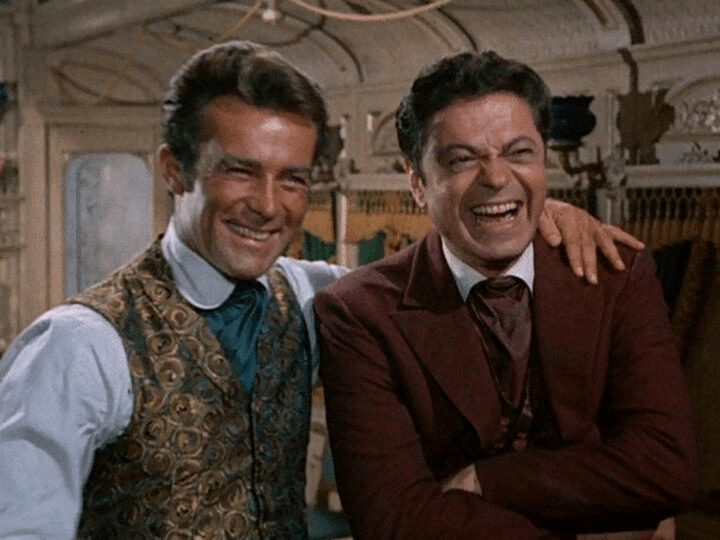
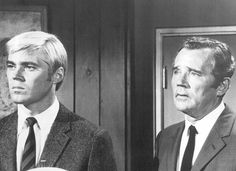
Originally titled “Men Against Evil,” the show was going to be more of a soap opera feel which was broadcast twice a week. However, by the time the show aired, most of the personal relationships had been taken out of the plot. The series focused on Sergeant Sam Stone (Howard Duff) and Rookie Detective Jim Briggs (Dennis Cole). Rounding out the cast was Desk Sergeant Dan Briggs (Ben Alexander), also known as Dad to Jim and District Attorney Adam Fisher (Len Wayland). The first seasons included Captain Frank Nye (Barney Phillips) while later seasons featured Captain Ed Franks (Robert DoQui).

The show was known for having some big names in directing, writing, and guest stars. Many of the directors racked up more than 75 credits each and included George McCowan who worked on The Mod Squad and Cannon, Allen Reisner known for Hawaii Five-0, Lee Katzin who directed Mission Impossible, Laslo Benedek known for work on Perry Mason, and Vincent McEveety who directed stars in Murder She Wrote, Heat of the Night, and Simon & Simon. Howard Duff jumped behind the camera in season two to direct “Deadly Abductors” after directing seven episodes of Camp Runamuck a couple of years earlier.

Crafting scripts for the show were writers such as Richard Murphy who was the creator of this show, Don Brinkley who worked on Trapper John and Medical Center, Jack Turley who wrote for Cannon and The Man from UNCLE, and John Kneubuhl who also wrote for the Wild Wild West.
📷pinterest.com

A handful of the guest stars included Ed Asner, Richard Dreyfuss, Robert Duvall, Roddy McDowell, Ricardo Montalban, George Takei, Vic Tayback, and Cicely Tyson.

The Felony Squad theme was composed by Pete Rugolo. Rugolo had 83 credits in the business including writing music for a wide variety of television genres including Leave It to Beaver, The Fugitive, and Family. This theme was an instrumental and very reminiscent of a sixties action movie.

I couldn’t find a lot of reviews, but the New York Times’ Jack Gould described it as “a very old-fashioned and conventional yarn about tight-lipped detectives doing a day’s work.”

The series was on Monday nights until 1968 when it was moved to Fridays. The first two seasons the show was up against The Andy Griffith Show which was in the top ten. For the final season, the show moved to the weekend where it was up against an Andy Griffith Show spinoff, Gomer Pyle USMC, which was also a top ten.

The show obviously did well to stay on the air three years when it faced such tough competition. I wonder if being a 30-minute show as opposed to an hour was part of its downfall. No matter how great the writers are, it’s tough to get sophisticated and detailed enough with a plot to wrap up in half an hour. The show certainly found talented directors, writers, cast members, and guest stars. The show was shot in color and had a different feel to it, more realistic. The action is right in your face like you’re on set instead of watching from far off. Considering it maintained decent ratings before it was moved, it would have been interesting to see what would have happened if this show had been the competition with a newer show to see how it fared. Fans loved it, so if you want to see something different, check out a few episodes. I’m not sure why this series isn’t seen more, but YouTube is your best bet to find the most available episodes. Also, as a fun aside, if you want to see Stone, check out Batman’s second season episode, “The Impractical Joker,” when Duff as Stone peers out the window while watching the Dynamic Duo climb the wall.

Virginia Sale: What a Character

We are learning about some of our favorite female character actresses. Today we are learning more about the life of Virginia Sale.

📷champaigncounty
history museum.com

Virginia was born in 1899 in Illinois. Her father Frank was a dentist, and her mother Lillie Belle was a poet and truant officer for the Urbana Illinois School District. After graduation, she attended the University of Illinois for two years and then transferred to the American Academy of Dramatic Arts in New York where she graduated in the early twenties. Her brother Charles was a vaudeville comic, and he persuaded her to go to Hollywood to pursue a film career.

She began her career in Hollywood as an extra. In 1931, she did an interview for the Kansas City Star where she said “I had known an assistant director [named Ned] when I lived in New York. He introduced me to King Vidor, then casting for The Crowd. He gave me quite a good bit in the picture, although it lasted only five days. When asked how much salary I wanted, Ned told me to say $350 a week. ‘Well, I think you ought to work for us for $25 a day’ the casting director said. ‘That’s an awful comedown I protested,’ trembling in my boots. ‘All right then, let’s compromise on $35 a day,’ he said. I was awfully glad to get it.” That would be almost $600 a day currently.

📷x.com

During her first two years in Hollywood, Virginia lived at the Hollywood Studio Club. She appeared in 54 films between 1930 and 1935.

The Hollywood Studio Club was created as a safe place for starlets to live. Mary Pickford, along with several other women, was trying to raise money to construct a new building to house actresses. Will Hays gave $20,000 and soon after the studios contributed. Julia Morgan was hired as the architect. She designed an Italian Renaissance Revival style building that opened in 1926. The first floor had a spacious lobby, a library, writing rooms, a dining room, and a stage. The upper stories were single, double, and triple rooms. Men were only allowed to be on the first floor. You had to be between 18-35 years old, be seeking work as an actress, and could stay a maximum of three years. A hundred women lived there, paying $10-15 a week for room and board.

📷mayberrywikifandom.com

Barbara Hale, Donna Reed, Dorothy Malone, Ann B. Davis, Barbara Eden, Sharon Tate, and Sally Struthers were just a few of the women who lived there. The most famous resident was Marilyn Monroe. After the culture shift in the sixties and seventies, the residents decreased until the Club could no longer financially exist. In 1975 the doors were closed, and the contents were auctioned off.

In Hollywood Sale was often cast as an older woman, even though she was still in her twenties. She entered the movie entertainment business just as silent films were ending. Her first role was in Legionnaires in Paris in 1927. During her film work, she met actor and studio executive Sam Wren, and they married in 1935. In 1936 they had twins named Virginia and Christopher.

In the thirties, Virginia developed a one-woman show based on her life growing up in Illinois which she called “American Sketches.” She performed the piece more than 6000 times throughout the thirties, forties, and fifties, even touring Europe during WWII. This sounds like it would have been a fun show to see. Some of the different pieces of the performance included: “Traveling on the Illinois Central” where she portrays a mother trying to keep her son under control after a visit with relatives; “Life of the Party” where she is a giggling, talkative woman who annoys a young man she is trying to impress;
“Mealtime in Indiana” where she impersonates a housewife trying to get ready for the Ladies Guild while preparing supper for her family; “Three O’Clock in the Morning” as a weary hostess trying to get her guests to go home, and “I Remember Abraham Lincoln” where she is Grandma Willoughby reminiscing about her encounters with Lincoln.

📷rottentomatoes.com

She also received some radio work, including a serial, For Those We Love, playing Martha the maid every Sunday for eight years.

Her film career continued to develop during those decades and she appeared in Topper, When Tomorrow Comes, They Died with Their Boots On, and Night and Day.

Sam served in WWII as part of the Air Corps. When he returned home, he had a six-year position as executive secretary for the Actor’s Equity. He was an executive at both Warner Brothers and Columbia studios.

📷imdb.com Topper

In 1949 as television was developing, she and Sam created a sitcom, Wren’s Nest which featured the life of the Wrens starring Virginia, Sam, and the twins. The show aired three times a week. Virginia took over writing duties on the show. Many of her scripts were based on real events that happened to the family. The series contained 47 episodes.

During the fifties, Sale took a break from the big screen, focusing on television shows and commercials. She appeared in several series in the fifties, but she hit her stride during the sixties. If you watch a lot of television from that decade, you can catch her in a variety of shows including The Many Lives of Dobie Gillis, Ben Casey, The Beverly Hillbillies, Wild Wild West, The Andy Griffith Show, Green Acres, and I Spy. She had a recurring role on Petticoat Junction where she played several characters. Her final television role was in Police Woman in 1975.

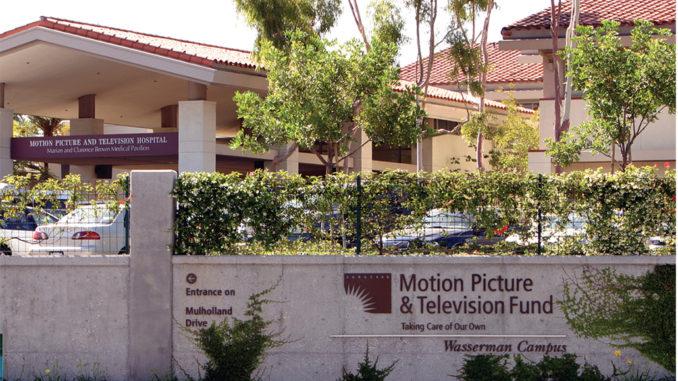
Sam passed away in 1962, and Virginia lived another thirty years, dying in 1992 from heart failure. Both Sam and Virginia are buried in Arlington National Cemetery. She spent her final years at the Motion Picture and Television Country Hospital in Woodland Hills, California.

📷

Sale could thank Mary Pickford for her home once again. Pickford was part of the Motion Picture Relief Fund which she founded with Joseph Schenck and Reverend Neal Dodd. When several former Hollywood stars died destitute in the thirties, 48 acres were purchased in the San Fernando Valley to build a Motion Picture Country House. In 1948, the Motion Picture Hospital was dedicated on the grounds. Later television actors were invited to live there as well. By that time, the site included a retirement community with individual cottages, administrative offices, and a hospital. Fees are based on the ability to pay. Actors, artists, backlot men, cameramen, directors, extras, producers and security guards are all eligible to live there. To live there, residents must be at least 70 and have worked in the entertainment industry for at least 20 years.

It was fun to learn not only about Virginia Sales but also the places she lived at the beginning and the end of her career.

Robert Conrad: Go West Young Man

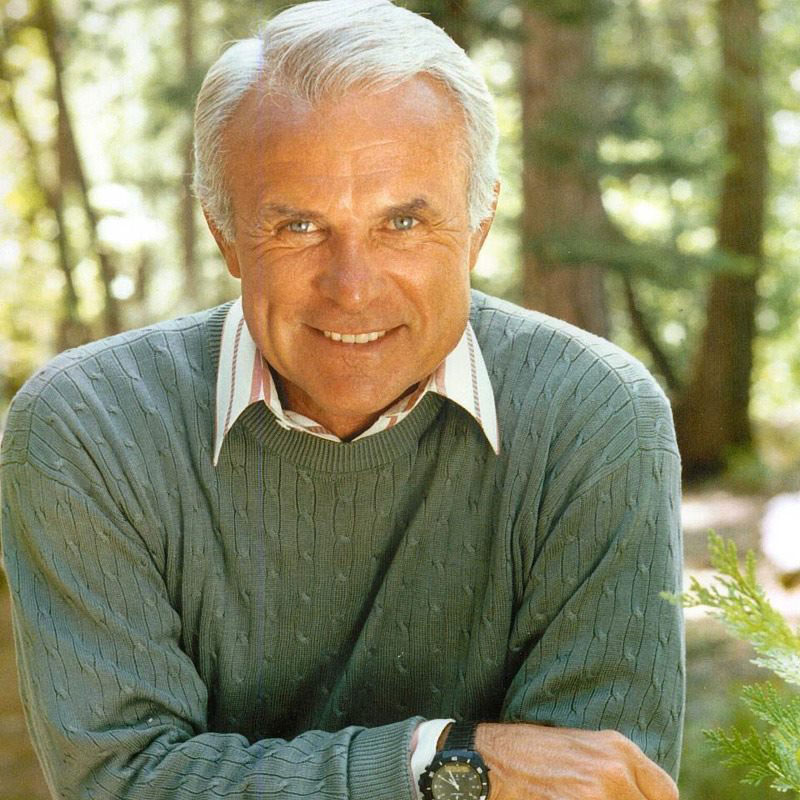
We are in the midst of getting up close and personal with some of our favorite television stars. Up today is Robert Conrad. Conrad was born Conrad Robert Falk in 1935 in Chicago. His parents were practically kids themselves when he was born at 17 and 15. His mother, Alice Hartman, was later the first publicity director for Mercury Records when she went by the name Jackie Smith. After divorcing Robert’s father, she later married Eddie Hubbard, a Chicago radio personality in 1948. They gave Robert one sibling before divorcing in 1958.

Photo: people.com

Conrad grew up in Chicago. He dropped out of school at age 15 to work for Consolidated Freightways and later was a milk truck driver for Bowman Dairy.

He studied theater arts at Northwestern University and then decided to pursue an acting career. He also studied singing with Dick Marx.

When he was 25 he met actor Nick Adams while visiting James Dean’s gravesite in Indiana. Adams had been a friend of James, and he talked Robert into moving to California for his acting career. (Adams died from an overdose in 1968.)

Adams was able to secure Bob a small part in the movie Juvenile Jungle which enabled him to join the Screen Actors Guild. Conrad continued to receive movie offers throughout his career, with his last role being in 2002 in Dead Above Ground.

In 1952 he eloped with Joan Kenlay. They had five children.

During the late fifties, Warner Brothers signed Conrad to an acting contract. He also worked in their recording division, releasing several versions including LPS, EPs, 33 1/3, and 45 rpm records. In 1961, he made the Billboard charts with Bye Bye Baby which hit 113.

In 1959, he made his television debut on Bat Masterson. He would appear in nine different series in 1959.

Photo: imdb.com

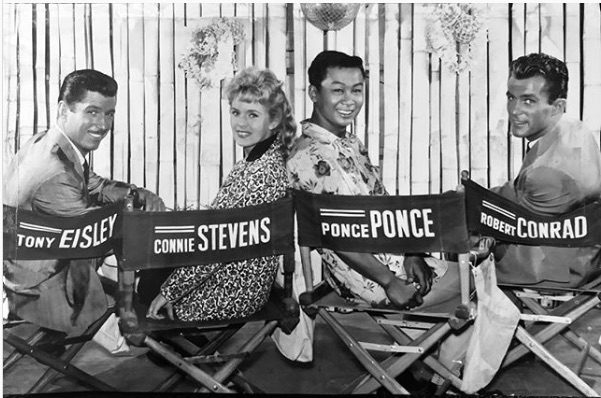
Warner Brothers created a detective show, 77 Sunset Strip. Conrad appeared on the show as detective Tom Lopaka. After appearing on four episodes, he was offered his own series, Hawaiian Eye which was on the air for four years. Set in Hawaii, this series featured Conrad as Thomas Jefferson Lopaka and his partner Tracy Steele, a Korean war vet and former city police detective played by Anthony Eisley. Their office was located at a swanky hotel where they were also the house detectives. Connie Stevens completed the trio as a scatterbrained nightclub singer and photographer Cricket Blake.

Photo: mortystv.com

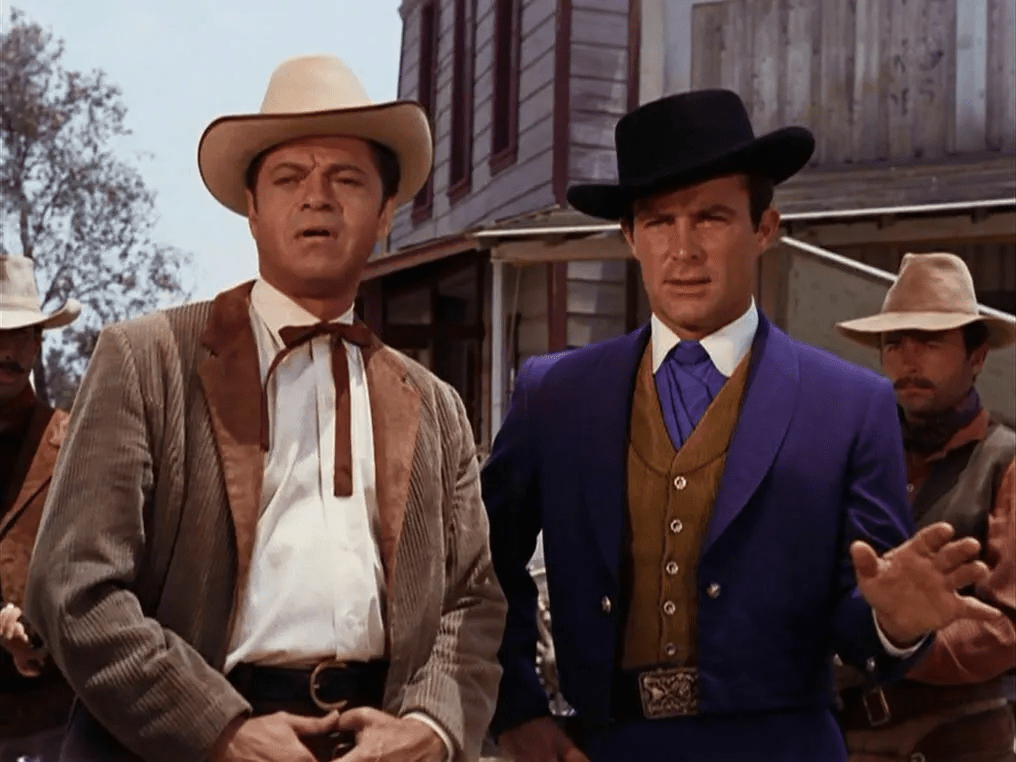
After the show went off the air, Conrad continued with several movies and television appearances until he received word in 1965 that he had been cast as government agent James West on the Wild Wild West with Ross Martin as his partner Artemus Gordon. For five seasons, the two agents worked together to solve cases primarily in the western region of the United States, often reporting to President Ulysses S Grant for their assignments. Conrad made $5000 a week for this show; it doesn’t sound like a lot today, but it was quite an increase from the $300 he made a week on Hawaiian Eye. Robert performed almost all of his own stunts on the show and was inducted into the Stuntman’s Hall of Fame.

Photo: pinterest.com

Later Conrad said he didn’t like that his character didn’t really act; it was just physical confrontation and stunts. He said he and stuntman Whitey Ford choreographed the fights. Although that made him unhappy, he enjoyed his time on the show because he loved working with Martin.

Conrad took on several television and movie roles for two years until he was offered another sitcom offer to star in The DA where he played LA District Attorney Paul Ryan. The show only lasted one season, but then he went directly into Assignment: Vienna where he played a rugged American spy Jake Webster. Unfortunately, this show only lasted eight episodes.

Photo: ebay.com Cast of Baa Baa Black Sheep

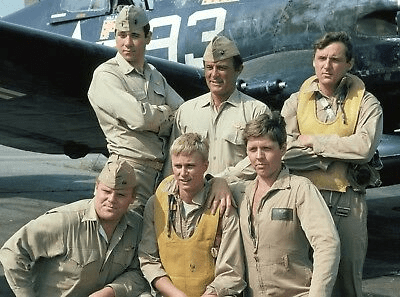
After this short-lived series, Conrad waited four years to try his hand at television again. From 1976-78, he took on the role of tough-guy ace pilot, Pappy Boyington in Baa Baa Black Sheep. Pappy led the US Marine Attack Squadron 214, a group of “black sheep” pilots who were not as committed to the Marines as they were having a good time. However, they were great at their job and desperately needed in World War II. Conrad directed three of the shows.

During the run of this show, Robert and Joan divorced after 25 years of marriage.

For the next fifteen years, Robert bounced back and forth between television appearances and movies. While he showed up on the big screen, television movies were where he earned most of his money between 1979-1995.

He would attempt to star in five additional series, none of which were very successful. In 1979, he was the star of The Duke about an ex-boxer Duke Ramsey who becomes a private investigator in Chicago. After only three episodes, the refs called the match. I’m guessing Conrad did his own boxing in this show because he was a semi-professional boxer and had an undefeated record of 4-0-1.

That same year he went on to star in A Man Called Sloane. Sloane is a freelance spy who often accepts assignments from a secret government agency. He must have had to go into hiding quickly because he was off the air after twelve episodes.

In 1983, Conrad married again. He and LaVelda Fann were married from 1983-2010.

In 1987 he joined High Mountain Rangers as Jesse Hawkes. Hawke led his family on adventures in the wilderness where he was employed in law enforcement and rescue. No one requested a baker’s dozen, so after twelve episodes, he was done again. The following year his series lasted half as long, six episodes only, when he played Jesse Hawkes once again, but on this version, he and his sons fight crime in San Francisco. Sticking with the same theme, in 1995 he became Griffin Campbell on High Sierra Search and Rescue, leading volunteers in a remote mountain town in dangerous rescue missions. Again, after six episodes, he was done.

While none of these shows could find an audience, there was some realism in the roles because Conrad was a deputy sheriff for eight years or so in Bear Valley, California where he lived.

For the last few years of his career, he took on various tv and movie roles. His last television role was in 2000 on Nash Bridges.

Photo: mortystv.com

After 2000, he managed to stay busy with a variety of projects. He ran for President of the Screen Actors Guild in 2005. In 2006 he provided introductory material for the DVD set of The Wild Wild West. He began hosting a weekly national radio show called The PM Show with Robert Conrad on DRN Digital Talk Radio.

In 2020, Conrad died from heart failure. He was 84.

It would have been interesting to see what Conrad’s career would have looked like if he had received some different types of roles. He did test for the role of Anthony Nelson on I Dream of Jeannie and was offered the role of Hannibal Smith on The A-Team but turned it down to pursue his own projects. I would have liked to see him in a comedy role.

Pernell Roberts: A Man of Many Talents

We are up close and personal this month with some of our favorite male television stars, and Pernell Roberts is definitely on that short list. Pernell Roberts was well known to television viewers in the early sixties and the early eighties. Some fans might not even realize the two characters he was best known for, Adam Cartwright on Bonanza and Dr. John McIntyre on Trapper John, MD were played by the same man.

The Family of Bonanza Photo: toledoblade.com

Pernell Elven Roberts Jr. was born an only child in 1928. He was named for his father who was a Dr. Pepper salesman. During high school, Roberts played the horn, acted in several school and church plays, played basketball, and sang in the local USO shows. He enrolled at Georgia Tech but then enlisted in the US Marine Corps. He played both the tuba and horn in the Marine Corps Band while sometimes tackling the sousaphone and percussion parts. After his time in the Marines, he enrolled at the University of Maryland where he enjoyed participating in classical theater. He left college to continue his acting career.

In 1949, he had his professional stage debut in “The Man Who Came to Dinner” with Moss Hart and Kitty Carlisle. He then took on several roles in Philadelphia.

In 1951, Roberts married Vera Mowry; she was a professor of theatre history at Washington State University. They divorced in 1959. They had one son who was killed in a motorcycle accident in 1989.

In 1952, Roberts made the big move to New York City appearing in off-Broadway shows. Several of his costars were Joanne Woodward and Robert Culp. He performed several Shakespeare roles.

In 1956, Roberts made his television debut in Kraft Theatre. In 1957, he signed with Columbia Pictures. His first big-screen role was as Burl Ives’ son in Desire Under the Elms. His second role was with Glenn Ford and Shirley MacLaine in The Sheepman.

Roberts continued to accept television roles with ten appearances in 1958 and six in 1959.

Photo: simple.wikipedia.org

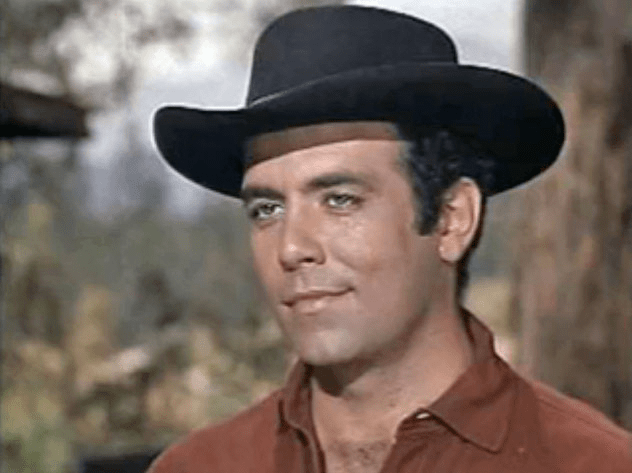
From 1959-1965 he would portray Adam Cartwright, Ben’s oldest son on Bonanza. Each of the brothers had a different mother, and Adam was the only Cartwright to attend college, studying architectural engineering. After acting in classical theater for so much of his early career, the transition to a weekly series was a difficult one for Roberts. He thought it a bit ridiculous that the independent sons had to get their father’s permission for everything they did. He wanted to act in a show with greater social relevance. So, although the show would continue until 1973, he left in 1965 after appearing in 202 episodes. The storyline was that Adam was traveling in Europe or living on the east coast. Bonanza producer David Dortort said Roberts was “rebellious, outspoken . . . and aloof, but could make any scene he was in better.”

The Odd Couple Photo: sitcomsonline.com

During this time on the show, Roberts married again in 1962; he wed Judith Roberts and they would divorce in 1971.

After leaving Bonanza, Roberts returned to theater, playing a variety of roles. He toured with many musicals including “The King and I”, “Kiss Me Kate”, “Camelot”, and “The Music Man.”

Pernell also became involved in the civil rights movement, joining Dick Gregory, Joan Baez, and Harry Belafonte in the sixties demonstrations including the March on Selma.

On Mission Impossible Photo: ebay.com

From 1972-1996, Roberts was married to Kara Knack. They also divorced.

Throughout the late sixties and seventies, Pernell continued appearing in television series and made-for-tv movies. You’ll see him in westerns such as Gunsmoke, The Big Valley, and The Virginian; spy genres including Wild Wild West, Mission Impossible, and The Girl from U.N.C.L.E.; crime shows including Hawaii Five-0, Mannix, Police Story, Ironside, Cannon, and The Rockford Files; and several medical series—Marcus Welby, West Side Medical, and Quincy. He even showed up on The Twilight Zone and The Odd Couple.

Photo: televisionacademy.com

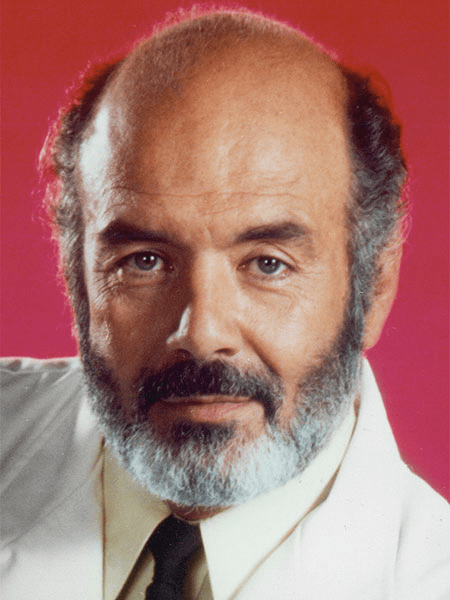
Perhaps he enjoyed those medical shows because he returned to television to star in his own series in 1979, playing Trapper John, MD. The plot was featured Trapper John from M*A*S*H later in his career at San Francisco Memorial Hospital where he was Chief of Surgery. He worked with a young surgeon who had also served in a MASH unit, Alonzo “Gonzo” Gates (Gregory Harrison). The series lasted seven seasons.

In 1979, he told TV Guide that he chose to return to a weekly show because he had “seen his father age and realized it was a vulnerable time to be without financial security.” Roberts felt the role allowed him to use his dramatic range of acting skills and to address important social issues.

In the 1990s, Roberts took on very few television appearances; his last television performance was in Diagnosis: Murder in 1997.

Roberts would attempt marriage one last time in 1999 when he wed Eleanor Criswell. When Pernell passed away in 2010 from pancreatic cancer after being diagnosed in 2007, they were still together.

Photo: Facebook.com

Pernell also enjoyed golfing, swimming, playing tennis, running, reading, cooking, and singing. He appeared on two record albums during his career. The cast of Bonanza recorded an album in 1959 and he released a folk music album in 1962, titled “Come All Ye Fair and Tender Ladies.”

He certainly had a long and varied career: music, movies, Broadway, and television. He also used his fame to help causes he believed in. I don’t think he is remembered as well as he should be. Maybe it’s because he left Bonanza too early to be included on a lot of the memorabilia that came out of that show or because there was such a gap between his two series that he starred in. Whatever the reason, I hope this blog has helped recall some of our memories of the three decades he spent entertaining us.