Viewers Found Best of the West “So-So of the West”

As we continue the “Living in the Past: Timeless Comedies,” we travel back to the frontier for Best of the West. Like the show we discussed in my last blog, When Things Were Rotten, this series was also a rapid fire of gags, puns, and one-liners.

Photo: wikipedia.com

Westerns ruled the airwaves in the 1950s, but with the demise of Gunsmoke in 1975, the cowboys shows had all ridden off into the sunset.  The Best of the West made its debut in 1981. The show, created by Earl Pomerantz, was a parody of the previous decades of oaters. Civil War veteran Sam Best (Joel Higgins) moves his family from posh Philadelphia to Copper Creek at the western border in 1865. He was not your typical western hero—more of a city slicker.

Photo: imdb.com

A store owner by trade, he knew little about guns or fighting. After arriving in the town, he accidentally scares off The Calico Kid (Christopher Lloyd), one of the “bad guys,” and the townspeople lobby him to be their mayor.

Sam’s nemesis is Parker Tillman (Leonard Frey), who runs the saloon with a slew of other bad guys, most notably his sidekick Frog Rothchild Jr. (Tracey Walter). With Sam are his southern belle wife Elvira (Carlene Watkins) and his smart-alecky son Daniel (Meeno Peluce). Sam is also friends with the town doctor, Jerome Kullens (Tom Ewell), who is a bit of a lush.

Photo: imdb.com

Sam reminds me a bit of F-Troop’s Will Parmenter. He’s a likable guy placed in a situation that he did not pursue. Sam’s family is not happy in their new setting. They had gotten used to the comforts of a big city. Elvira is beside herself because she can never get the dirt off the floor, until Sam reminded her it was literally a dirt floor.

Photo: imdb.com

The plots on this show were a bit similar to many of the story lines we became familiar with from decades of westerns. In one show the doctor’s mail-order bride is described as having a vivid personality with a past to match. In one episode, Sam and Tillman try to convince the railroad company to connect with Copper Creek. Another example is when Sam shoots himself in the leg and the jail begins to fall apart, and the town reconsiders his ability to lead them, or the classic tale of Elvira and Daniel exploring a cave that is booby-trapped and ready to collapse around them.

Photo: imdb.com

The show never seemed to catch on with viewers. It was hard to fault the writers. David Lloyd, Sam Simon, and Earl Pomerantz were working together on Taxi, and they would go on to write for Cheers in 1982.
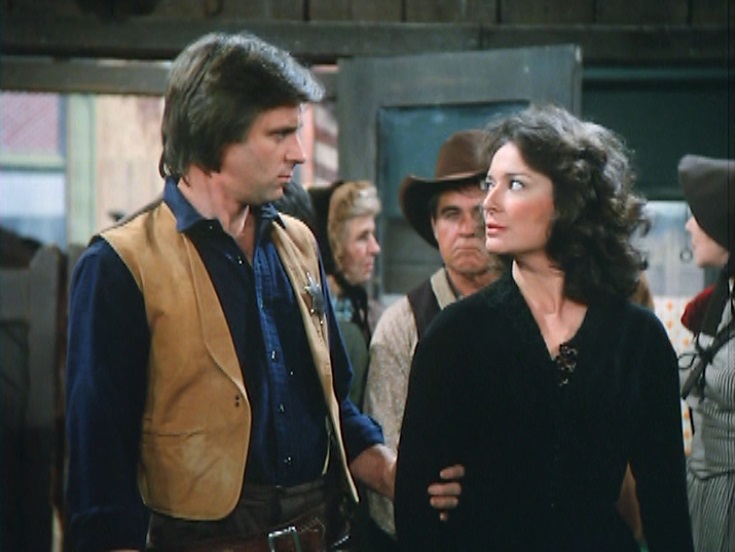
Photo: imdb.com
Dixie Carter

The show also had some amazing celebrity guest stars: Dixie Carter, Chuck Connors, Andy Griffith, Al Lewis, and Betty White.

Photo: imdb.com
Andy Griffith

For a while, parodies like Airplane! were all the rage, and maybe the fad had just played out.

Perhaps, western fans, with their fond memories of growing up with Bonanza and The Rifle Man, just weren’t ready to make fun of their childhood shows.

Photo: imdb.com
Betty White

It was hard to find information about the show. As you can see in these photos, the majority of them came from imdb.com; there just aren’t many photos out there otherwise.

ABC didn’t outright cancel the show, but they took a lot of time trying to decide whether to renew it or not. In the meantime, Joel Higgins got tired of waiting and accepted the role of Edward Stratton on Silver Spoons. With the star gone and the ratings mediocre, the show ended after 22 episodes.

Photo: pinterest.com

Silver Spoons would be the show that brought Joel Higgins success. However, he had an interesting career. He graduated from Michigan State with a degree in advertising. He went to work for General Motors for six months. When he enlisted in the Army, his title was Special Services Sergeant in Charge of Entertainment. This role seemed to redirect his path. Post-Army life, he was busy with both television roles and theater performances. He also started a business with two friends. They wrote more than 200 jingles for a variety of products, including Kool-Aid, M&Ms, Schwepps Soda, and Coors beer, as well as several themes for shows such as Life with Lucy, one of Lucille Ball’s many shows.
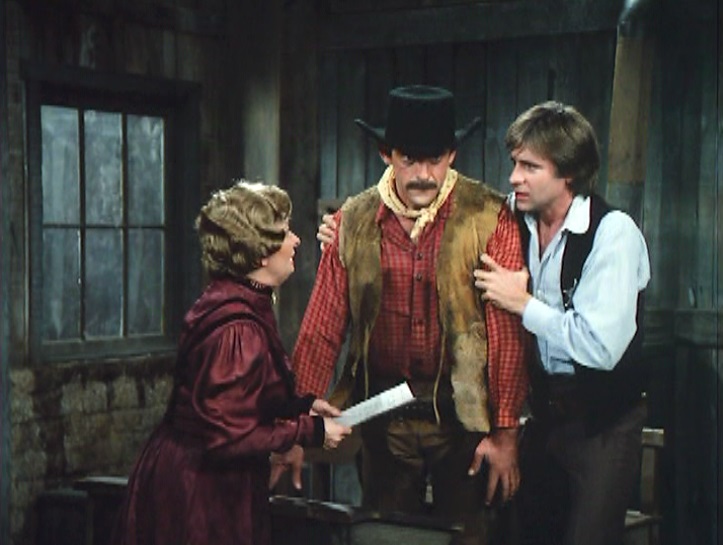
Photo: imdb.com
The Calico Kid

His family members Carlene Watkins and Meeno Peluce never found their “Silver Spoons.” Carlene had been on The Secret Empire in 1979. After Best of the West, she would go on to be part of the cast of five more shows–It’s Not Easy, Mary, The Tortellis, Dear John, and Bob–none of which lasted very long. Peluce was part of the Bad News Bears from 1979-80 and later would land a regular role on Voyagers from 1982-83. He did make appearances on many shows, including Silver Spoons in 1984.
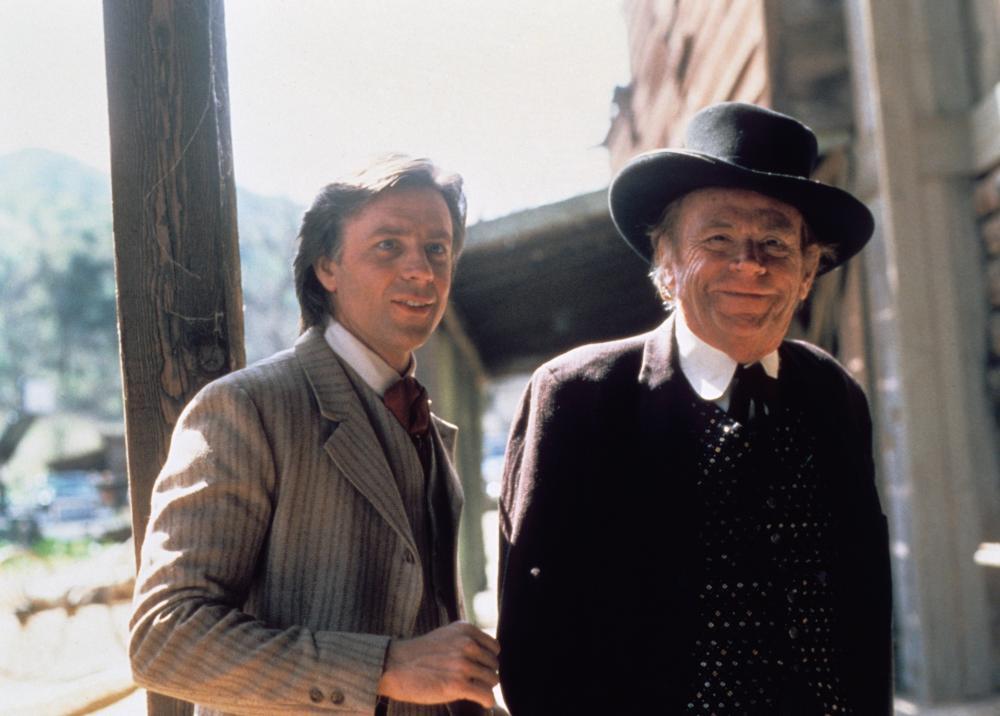
Photo: collider.com

Many viewers seem to have fond memories of this show. If you want to see what the show was like, CBS-DVD released the show as a manufactured-on-demand DVD in 2017. While this series might not portray the best of the west, it certainly was not the worst of the west either.
When Things Were Rotten: No “Happily Ever After” for this Tale

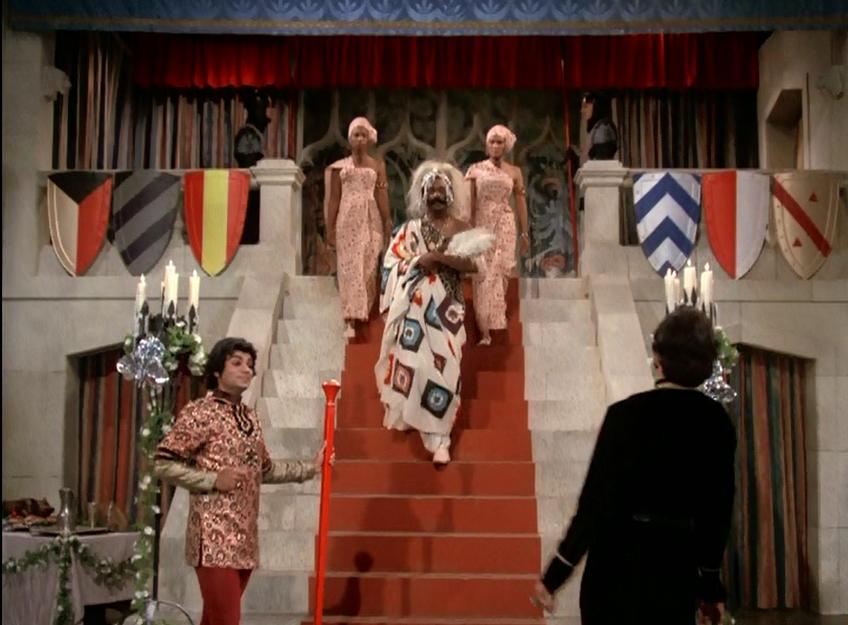
This month’s series is “Living in the Past: Timeless Comedies.” For our first blog, we travel back to the 12th century to Sherwood Forest to a time When Things Were Rotten. After viewing one episode of this show, you knew it could only have been created by the comic legend Mel Brooks. In this case, he had the help of John Boni and Norman Stiles.

Photo: nostalgiacentral.com

Debuting in 1975 on ABC, Brooks considered what life would have been truly like if the legend was just hype, and Robin and his Merry Men were just a bunch of buffoons. The series has many of the traits found in Brooks’ Blazing Saddles or Monty Python episodes.

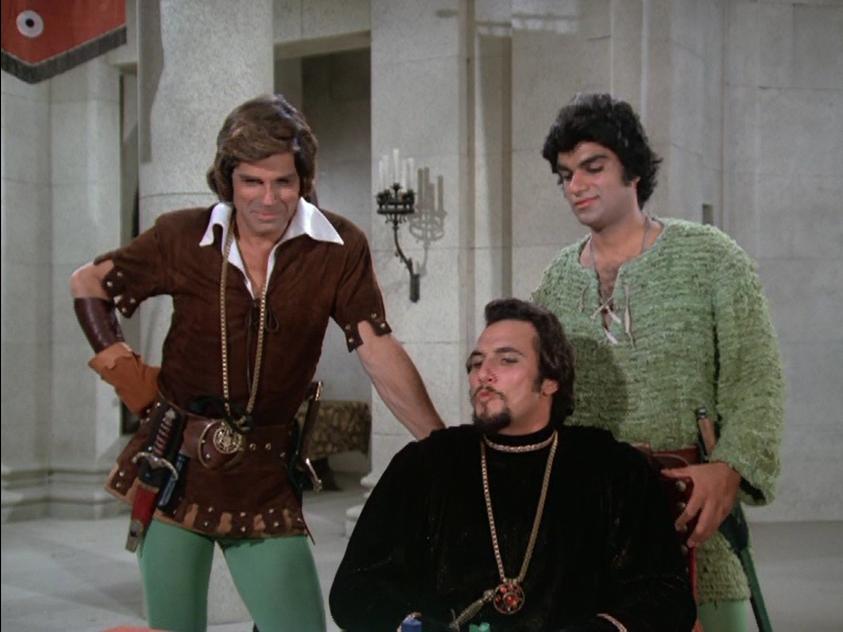
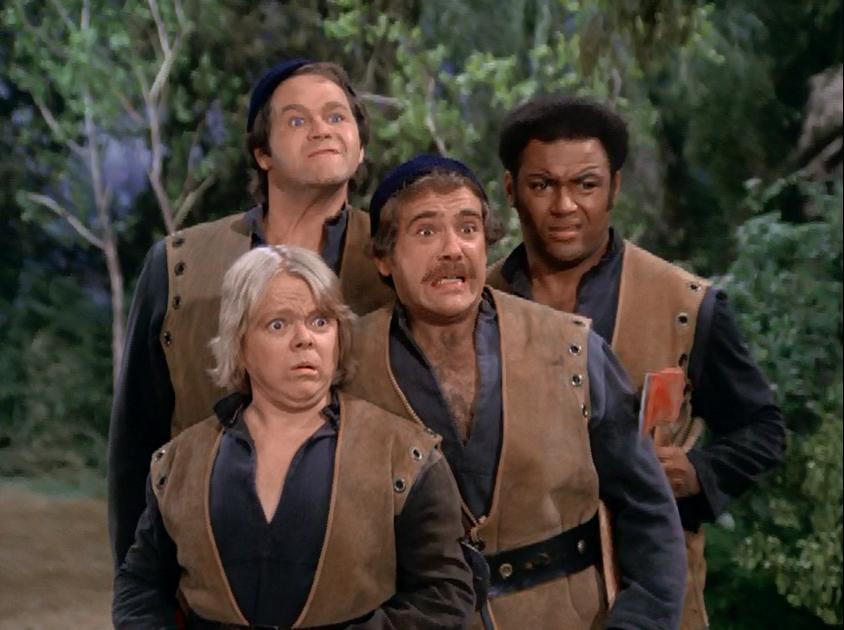
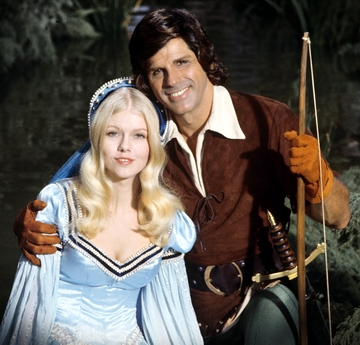
Reading the list of brilliant cast members, this show seems like one that should have been a huge hit, but in reality, it only lasted for thirteen episodes. Based on its brief airing, perhaps Robert Klein was wise to turn down the role of Robin. Dick Gautier, who worked with Brooks on Get Smart, agreed to take on the role of the heroic leader. Henry Polic II played the Sheriff of Nottingham who always got taken in by the gang. Ron Rifkin is Prince John. Misty Rowe, known best for her Hee-Haw performances, is Maid Marian. The Merry Men were indeed merry, being made up of Bernie Kopell, Dick Van Patten, Richard Dimitri (who had a dual role as identical twin brothers), and David Sabin.

Photo: sitcomsonline.com

Of course, in this parody, slapstick is involved in every episode. The sight gags were always described as hilarious, and every script was full of great one-liners. It was definitely not everyone’s cup of tea. For example, at times the sheriff was said to be barking mad and he would literally bark. In one episode, the “barking” sheriff asks Bertram to hang up some banners and a cutaway scene shows a husband, wife and two children on a wall saying, “Hi, we’re the Banners.” Another example is Richard the-Lion-Hearted coming ashore after the Crusades to be met by an umpire, yelling “Safe,” at which point the sheriff shouts, “Kill the umpire.” The humor came fast and furious at a rapid-fire pace. Brooks described the construction of the show by saying: “We took great liberties, and the writing was very crazy and funny.”

Photo: imdb.com

Unlike some parodies, the production of the show was high quality with lavish costumes and sets. Every episode featured a well-known guest star. Dudley Moore appeared as a piano-playing sheik named Achmed Muhammad Ben Gazzara. Other stars included Carl Ballantine, John Byner, Sid Caesar, Paul Williams, and Mel Brooks himself. Brooks said his favorite episode was “The French Disconnection” starring Caesar as a French ambassador.

Photo: imdb.com

The theme song was written by Lee Adams and Charles Strouse who had done the well-known theme for All in the Family as well as many composing for many popular musicals. The lyrics were:

“Once upon a time when things were rotten,
Not just food, but also kings were rotten.
Everybody kicked the peasants,
Things were bad and that ain’t good,
Then came Robin Hood (Ba-bahh!)

“Soon a band of merry men he’d gotten,
They wore outfits made of plain green cotton,
Helping victims was their business.
Boy oh boy was business good —
Good for Robin Hood!

“They laughed, they loved, they fought, they drank,
They jumped a lot of fences.
They robbed the rich, gave to the poor —
Except what they kept for expenses!

“So when other legends are forgotten
We’ll remember back when things were rotten.
Yay for Robin Hood!”

When Things Were Rotten was definitely a product of its time. Like Laugh-In or even Sesame Street, viewers had no time to reflect on a comment. Things moved at a frenetic pace. One of the New York Times critics, John O’Connor, timed the gags and noted there was a new one every fifteen seconds.

Photo: imdb.com

The critics gave the series great reviews and mentioned its inventiveness and quick humor. The ratings never backed up the praise however. Brooks had a different perspective. In an interview with Frank DeCaro in the New York Times (7-19-2013), Brooks discussed the show’s ending. “The show was canceled, Mr. Brooks said, not because it failed to find an audience — ‘The ratings weren’t bad,’ he insisted — but because, as a one-camera show, shot like a film, it just cost too much to produce. ‘I was very happy with When Things Were Rotten,’ he said. “We were on our way to doing 36 episodes, and then someone at Paramount called and said, ‘Mel, could you do it as a three-camera show?’ I said, ‘You mean like “I Love Lucy”? Are you crazy?’” When the network pulled the plug, Mr. Brooks remembers, friends offered their condolences. ‘Everybody said, ‘I’m sorry it didn’t work.’ I said: ‘It did work. It was just too expensive.’”

Photo:

The same reason many viewers might still appreciate the show today is also one of the factors of its demise. The show depended on fans knowing a lot of pop culture knowledge. People who love cultural history would have a blast watching the show, but the younger generations whom don’t have that database in the brain might feel disconnected.

Photo: imdb.com

Of course, the television schedule always has a lot of sway about whether a show is a hit or a flop. This show was on Wednesday nights. Its competition was Tony Orlando and Dawn and Little House on the Prairie. While Tony Orlando and Dawn was on its last legs and would not return in 1976, Little House on the Prairie was very popular. This was the second season for the show which had a huge audience; the show would continue until 1983.

Photo: nytimes.com
Comedy legend Mel Brooks

The show might have ended, but Brooks could not let the concept go. In 1993, his film, Robin Hood: Men in Tights would continue the concept. In this version, Cary Elwes as Robin leads his men, but if you look closely, you might think The Abbot (Dick Van Patten) resembles Friar Tuck in When Things Were Rotten.

Photo: imdb.com

One interesting technological advancement is that a show like this typically would never have been released on DVD because of its short run. Now, however, manufactured-on-demand makes the show available on Amazon. It’s the perfect length for a week-end marathon. You might realize that When Things Were Rotten, they were also pretty good and funny.