Walter Cronkite was the Best, And “that’s the way it is.”

This month we are learning about our favorite news anchors from the past in What’s News? Today we are learning about the man everyone respected: Walter Cronkite.
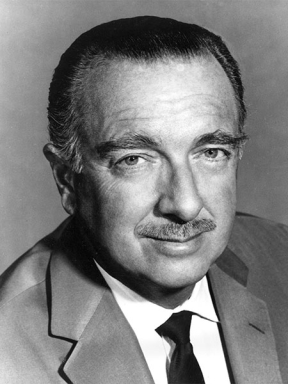
📷televisionacademy.com

Cronkite was born in 1916 in St. Joseph, Missouri, an only child. His father was a dentist there. During the sixties and seventies, he was described as “the most trusted man in America.” Let’s learn why.

He lived in Kansas City, Missouri until he was ten. The family moved to Houston, Texas when his father took a position at the University of Texas Dental School. No surprise he was a boy scout, always prepared, and worked on the newspaper in high school. He went to the University of Texas, Austin beginning in 1933 and majored in political science. He remembered reading adventures of reporters in American Boy magazine and said they inspired him to be a journalist.

📷warfarehistory.com

Walter left college during his junior year in 1935, perhaps because of the Depression. He took on a number of newspaper reporting jobs, and became an announcer for WKY in Oklahoma City, Oklahoma. In 1936 he met Mary Maxwell, whom he married. After their marriage, he became a sports broadcaster with the name Walter Wilcox. He also joined United Press International in 1937.

Edward R. Murrow had gained a bit of fame covering WWII, and he invited Cronkite to join the Murrow Boys, war correspondents. Cronkite became one of the top reporters during the war, covering action in North Africa and Europe. He was one of eight journalists selected by the US Army Air Forces to join bombing raids over Germany. After the war, he covered the Nuremberg trials and worked for the United Press from Moscow until 1948.

📷Biograhy.com

In 1950, Cronkite joined CBS News in its television division, recruited by Murrow once again. He went to WTOP in Washington, DC, serving as the anchor of Up to the Minute after What’s My Line from 1951-62. 

In addition, from 1953-1957 Cronkite hosted You Are There, an enactment of historical vents on CBS. He also popped up on The Morning Show in 1954. He interviewed guests and chatted with Charlemagne, a lion puppet.

1960 found him covering the summer Olympics in Rome. By 1962, he was anchorman of CBS nightly newscast for a feature called “Walter Cronkite with the News” and by 1963 he became the anchor of the first thirty-minute nightly news program.

📷facebook.com

Cronkite reported on the arrival of The Beatles to the US on the CBS Morning News, but another event took precedence that day and the story aired on December 10. That story was John F. Kennedy’s assassination in 1963. Walter had been standing near the wire machine when the news about Kennedy broke, so he rushed to the studio, so CBS would be the first network to air the news. Cronkite continued to read breaking-news bulletins through the afternoon. Eventually he read “President Kennedy died at 1 p.m. Central Standard Time.” He then paused, put on his glasses, swallowed to maintain his composure and with emotion in his voice told the nation that VP Johnson would be taking the oath of office shortly. In 2006, Cronkite was doing an interview with Nick Clooney when he admitted, “I choked up, I really had a little trouble . . . my eyes got a little wet . . . Fortunately, I grabbed hold before I was actually crying.”

His reporting began to gain more viewers than the former number one Huntley-Brinkley Report. By 1968 Cronkite traveled to Vietnam after the Tet Offensive with Ernest Leiser, executive producer. He would report on location during that time. The night Cronkite mentioned on air that we were never going to win the war, Lyndon B. Johnson was said to have replied, “If I’ve lost Cronkite, I’ve lost Middle America.” Cronkite also covered the Democratic National Convention. Johnson didn’t run again, and in 1973 Cronkite reported about Johnson’s death. In 1972 he covered Richard Nixon’s visit to China.

📷posterazzi.com

Cronkite was known for his coverage of space travel. He reported on almost every manned spaceflight for two decades (1961-81). He was willing to put in the time to learn everything he could about astronauts and the work of NASA. When watching Apollo 11 take off, his excitement overcame him as he yelled, “Go, Baby, Go.”

One of Cronkite’s trademarks was ending the news with “And that’s the way it is” with the date. In 1980, during the Iran hostage crisis, he began to add the number of days they had been held hostage to the end of his news.

In February of 1980, Cronkite decided to retire; his last day was March 6, 1981, and he was succeeded by Dan Rather. His farewell statement was: “This is my last broadcast as the anchorman of The CBS Evening News; for me, it’s a moment for which I long have planned, but which, nevertheless, comes with some sadness. For almost two decades, after all, we’ve been meeting like this in the evenings, and I’ll miss that. But those who have made anything of this departure, I’m afraid have made too much. This is but a transition, a passing of the baton. A great broadcaster and gentleman, Doug Edwards, preceded me in this job, and another, Dan Rather, will follow.”

A few years later, Arizona State University named their journalism school after him. He interacted with the faculty and students and annually traveled there to present the Walter Cronkite Award for Excellence in Journalism.
📷messingaboutinsailboats.com

Cronkite also became a pop culture icon. He made an appearance in 1974 on The Mary Tyler Moore Show. He also appeared as himself on Murphy Brown. From 1981-2002, he hosted the Kennedy Center Honors.

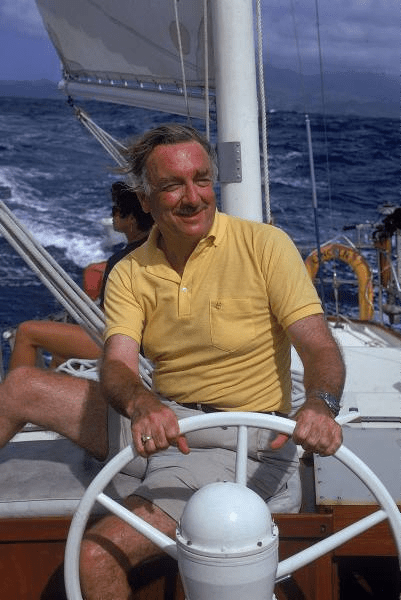
In his free time, Cronkite liked to sail.  He received the rank of commodore in the United States Coast Guard Auxiliary. Earlier in his career, he aspired to be a race car driver. He also loved music and had taken up drumming.

Cronkite passed away at his home in July of 2009 from cerebrovascular disease. Many journalists paid respect to him at the funeral including Tom Brokaw, Connie Chung, Katie Couric, Charles Gibson, Matt Lauer, Dan Rather, Andy Rooney, Morely Safer, Diane Sawyer, Meredith Vieira, and Barbara Walters.

Walter Cronkite had a career he could be proud of. He took his work seriously and was always prepared, taking the time to learn everything he could. Being the most-trusted man in America was no small feat, especially given the topics he broadcast about: politicians, the space race, and the Vietnam war. I can’t think of a news icon who has replaced his reputation. Wish we had a few Walter Cronkites today.

The Dick Cavett Show: Television’s Classiest Talk Show Host

Dick Cavett made a career of being a talk show host. He began on ABC in March of 1968 and ended on TCM in 2007. In between, he showed up during the day, in prime time, late at night, on PBS, in syndication, and on CNBC. The Dick Cavett Show seems to refer to all the shows as a collected whole, so that’s how I will present it in my blog.

Image result for images of dick cavett
Photo: chicagotribune.com

If you have ever seen Cavett in action, he has such a smooth, polite manner that sometimes you forget he may be asking an invasive question. Some of the most memorable shows were conversations with Christine Jorgenson (who walked off the show in 1968); Groucho Marx (1969); Jimi Hendrix (1969); The Woodstock Show (1969); Eric Clapton (1970); Alfred Lunt, Lynn Fontanne and Noel Coward (1970); Orson Welles (1970); Salvador Dali (1971); John Kerry debating on Vietnam (1971); Watergate and Beyond (1974); Angela Davis (1972); Jackie Robinson (1972); Marlon Brando (1973); Katharine Hepburn (1973); Carol Burnett (1974); and  Mohammad Ali (several shows). As you can see, in addition to entertainers, Cavett interviewed influential authors, politicians, athletes, and newsmakers.

Image result for images of dick cavett
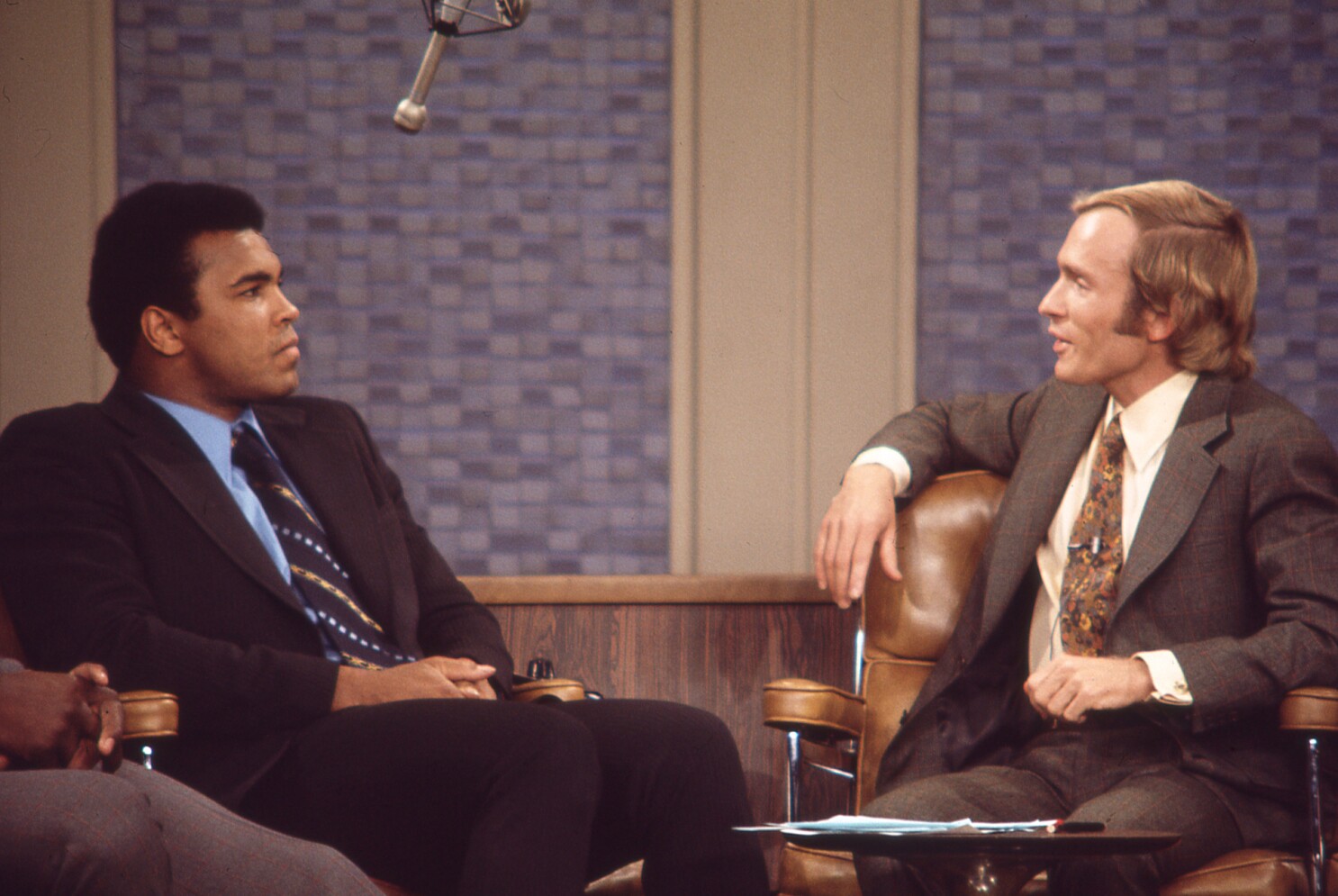
Talking to the Great One: Ali Photo: latimes.com

Cavett often had several guests on each show, but sometimes he devoted the entire night to one person such as Laurence Olivier, Judy Garland, Bette Davis, Janis Joplin, Alfred Hitchcock, Fred Astaire, Gloria Swanson, Lucille Ball, Bob Hope, and David Bowie.

Politics were often covered by Cavett, and over the years, he interviewed many including political guests including Carl Bernstein and Bob Woodward, Walter Cronkite, John Ehrlichman, John Dean, Gerald Ford, Barry Goldwater, Henry Kissinger, and G. Gordon Liddy.

In various interviews of his own, Cavett mentioned different shows that were memorable or brought in a lot of mail. Early in the show’s history, Cavett was interviewing Peter Falk, Ben Gazzara, and John Cassavetes about a movie they were in. Cassavetes was so drunk and incoherent, Cavett walked off the stage.

Image result for images of dick cavett
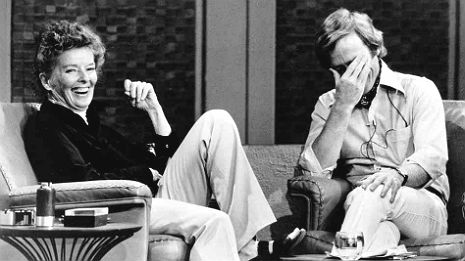
Laughing with Katharine Hepburn Photo: dangerousminds.com

Georgia governor Lester Maddox appeared in a panel with Truman Capote and Jim Brown about segregation. Cavett made a reference to “bigots” who supported Maddox. When Maddox demanded an apology, Cavett apologized to Georgians who supported him without being a bigot. Maddox left the studio. However, later Maddox relented and made another appearance, and Cavett walked off the set as a joke.

One memorable episode was something no host wants to encounter. Publisher J. I. Rodale was on the show. Cavett was talking to another guest when Rodale seemed to be snoring, but everyone soon realized something was wrong. He actually died there on the set. The audience didn’t even realize it until Cavett called for a doctor. The program was taped but not aired.

Director Ingmar Bergman did few television interviews and no US interviews, but he made an exception for Dick Cavett.

Image result for images of dick cavett
With David Bowie Photo: nostalgiacentral.com

So, what types of things might you have learned from Cavett’s show? Well, Hitchcock explained how some of his most ingenious special effects worked.  Gale Sayers talked about the movie Brian’s Song (maybe he could have given me a hint how not to cry every single time I see the movie.).  BB King revealed what his name stands for. Jack Benny demonstrated how to play the violin. Melba Moore told what it was like to open at the Apollo Theater. James Garner explained how he accidentally broke co-star Doris Day’s ribs, and Jacques Cousteau discussed the mystery of manatees.

And finally, I had to find out who was Cavett’s favorite interview, and who were the ones that got away? The two he never got to interview but always wished he had was an easier answer to find: Cary Grant and Frank Sinatra.

Image result for images of dick cavett and groucho marx
Photo: WBUR

It was a lot harder to answer the first question.  If you read the other three blogs in this series, you know the other talk show hosts (Mike Douglas, Phil Donahue, and Tom Snyder) began careers in Ohio. I was hoping to find an Ohio link for Dick, and that’s when I found the answer to my question of his favorite interviewee.  Cavett landed in Cleveland at the end of his career, which seems fitting since he is ending this series.

He was talking about an upcoming show at The Nightclub in Cleveland and mentioned Jack Paar was his mentor. (Cavett wrote for The Tonight Show when Paar hosted it, and Paar began his career in Canton, Ohio; I know it’s one coincidence after another.) Jack told him he didn’t need humor, singing, or anything except a desire to have a conversation. Then Cavett said, “I watch clips from the shows when I’m invited to give a talk and they show them, and I’m always surprised by the number of little delightful moments I’ve forgotten. I watched a moment the other night when Groucho was on the show with [zoologist] Jim Fowler. And Fowler brought a sloth on the stage, and Groucho said, ‘That’s the lousiest-looking dog I’ve ever seen.’ I’d forgotten that. That was the same night Groucho proposed marriage to Truman Capote. . . .’I love to do Q&A with the audience, but there’s only one forbidden question, and it doesn’t have anything to do with sex or politics,’ he said. ‘The forbidden question is, Who has been your most interesting guest?’ . . . But then he went on to say that ‘If pushed to the wall, I have to admit that Groucho was the guest who meant the most to me.’ Cavett said that ‘In a letter from Miriam, Groucho’s daughter, she wrote, ‘My father thought the world of you.’ It gets me even now when I say that out loud.’”

Image result for images of dick cavett and groucho marx
The unique Groucho Marx Photo: pinterest.com

In 2005 several box sets were released of some of Cavett’s shows. They are collected by theme of the interviewee such as The Rock Icons, etc. The network Decades, which recently went off the air, broadcast these shows also. Before the network was disbanded, I was able to watch about ten of these episodes, and they were as good as I had hoped for.

I have really enjoyed reviewing these talk show hosts and their guest interviews this month.  It makes me want to invite a bunch of friends over, one at a time, for coffee and conversation.  Just be forewarned, if I invite you over, I may have a list of questions I’ll want to be asking you.