This month our blog series is “All About The Bill Dana Show,” and we are learning about the careers of some of the cast members. Last week we looked at the life of Maggie Peterson, and today we are getting to know Jonathan Harris.
📷LostinSpaceWikiFandom.com
Harris was born Jonathan Daniel Charasuchin in the Bronx in 1914. His father worked in Manhattan’s garment district. His family often took in borders to make ends meet, and when they did, the border got Jonathan’s room, and he slept on a couple of dining room chairs.
By age 12, Harris was working at a pharmacy as a stockboy. Although money might have been short, Harris’s family’s love of music and theater was not. As a family they listened to opera in the dining room. Whenever they had some extra cash, they would take in a Broadway play. Harris was interested in archeology, poetry, and Shakespeare. He disliked his Bronx accent and taught himself to develop a British one.
Harris was able to graduate at age 16 from James Monroe High School. His pharmacy job paid off when he graduated from Fordham University with a pharmacology degree in 1936. Before entering college, Jonathan took the name “Harris” in place of his birth name.
In 1938 Harris married his high school sweetheart, Gertrude Bregman. They were married until his death.
While working in several pharmacies, Harris also worked on his acting skills. He created a phony resume which he used to land a spot in a local acting company. In 1942 he played a Polish officer in the Broadway production, “The Heart of a City.” He was persistent. He said that he went to Mr. Miller’s office to audition for a part in the play for two weeks, and everyday Mr. Miller’s secretary sent him away. Finally, she let him in, and Mr. Miller gave him his first part. Then he lied and said he could do a Polish accent. He then went to the Polish Consulate to listen to how they talked. So, despite a fake resume, being turned away for weeks, and then lying about an accent, he was a success in the play.
📷amazon.com
In 1949, Harris made his television debut in The Chevrolet Tele-Theatre. Throughout the fifties he would continue to appear in dramatic playhouse series.
In 1959 he had a recurring role in Zorro as Don Carlos Fernandez as well as an appearance on Father Knows Best.
The sixties brought him roles in several well-known series including The Twilight Zone, Bonanza, and The Adventures of Ozzie and Harriet.
In 1963 he was offered the role of Mr. Phillips, the hotel manager on The Bill Dana Show. I won’t elaborate on this series, but if you missed the first blog in March, you can read about this show which was on the air for a season and a half.
Harris did an interview with the Television Academy. He said that when he read the script for The Bill Dana Show, he decided he had to come up with some other characteristics for Mr. Phillips. He made him devoid of humor. But he said he was a different man with his wife on the show, played by Amzie Strickland. Harris said Bill Dana was wonderful to work with. He also said that the writing was so good on that show that he never had to re-write anything. However, if something felt off, he would ask Sheldon Leonard about changing it, and Leonard was always open minded about revisions.
Harris continued to appear on dramatic shows while waiting for his next role.
📷thenewyorktimes.com
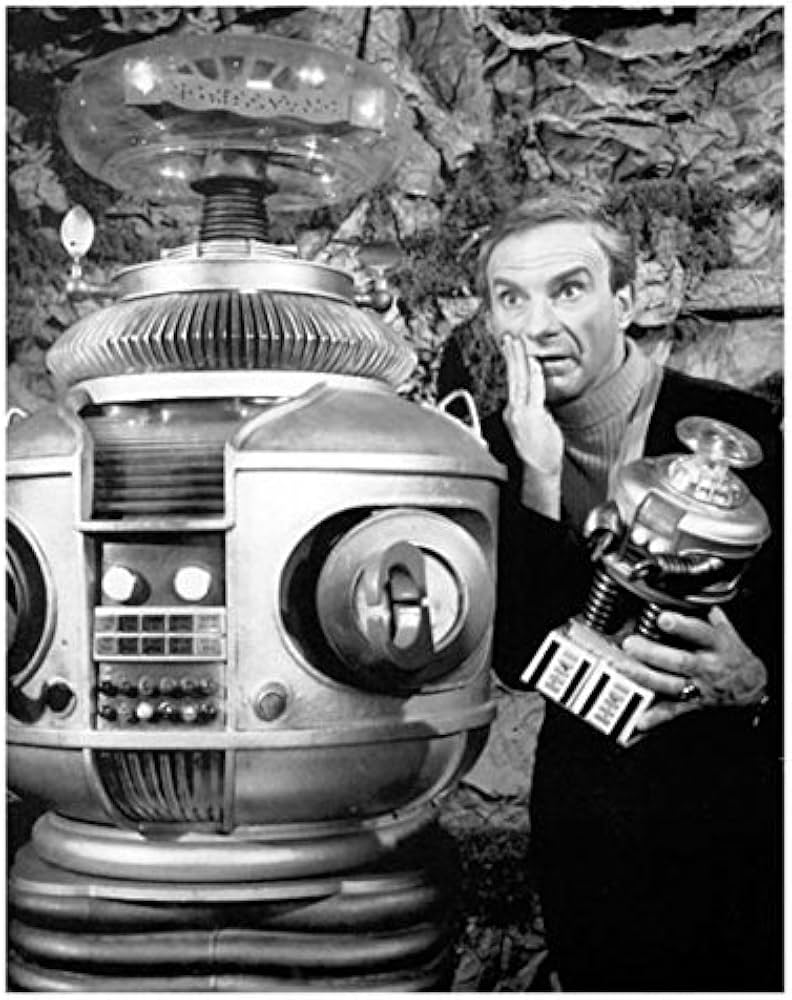
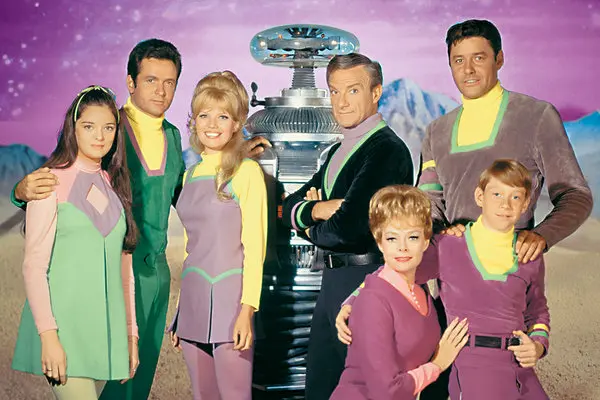
In 1965 Lost in Space was put on the fall schedule. Harris played Dr. Zachary Smith. Neither his role nor the Robot were in the pilot of the series, but they were both brought in before the show began.
The show was a big hit with viewers. Harris felt his character, who was not trusted by the family, needed a bit of comedy, so he began to adlib his dialogue. Irwin Allen, creator of the show, approved the changes and allowed him to be considered a writer. Harris said he was a good re-writer, but he was never a writer.
Bill Mumy, who played the son on the show and interacted with Smith quite a bit said that Harris “truly, truly singlehandedly created the character of Dr. Zachary Smith that we know—this man we love to hate, coward who would cower behind the little boy, ‘Oh the pain! Save me, William! That’s all him.”
The show was still high in the ratings during its third season, but the writers were running out of ideas, and the show was canceled after 83 episodes.
📷imdb.com
In the seventies, Harris joined the casts of two Saturday morning series, Space Academy and Uncle Croc’s Block. Uncle Croc’s Block was a very weird show in my memory. Even though it was on Saturday mornings, he parodied kids’ shows. Uncle Croc, played by Charles Nelson Reilly, butts heads with his program director Basil Bitterbottom, Harris’s role; Phyllis Diller played Witchy Goo to round out the cast. Uncle Croc has a sidekick Rabbit Ears and introduced the cartoons.
He also continued to appear on other series, and you can spot him in The Ghost and Mrs. Muir, Land of the Giants, Get Smart, Bewitched, McMillan and Wife, Love American Style, and Vega$.
After the mid-seventies, most of his work was in the animation field.
He also became a drama coach, and Chuck Norris was one of his students.
📷billmumy.com
In 1990, the cast of Lost in Space reunited for the 25th anniversary. More than 30,000 fans attended the event.
Harris also spent time on his hobbies, which were many. He loved gourmet cooking, watching movies, reading, traveling, painting, magic, playing piano, gardening, dancing, knitting, and spending time with this family. He also kept his interest in listening to opera that he cultivated as a child.
He passed away in 2007 from a blood clot that traveled to his heart.
Harris was a talented actor. I’m not sure why he was never offered another sitcom or a chance to play a different type of character. I’m glad he found a home in animation, but I wonder if he regretted leaving Broadway for television. It was fun to learn more about this man and his career.
This month we are exploring The Bill Dana Show for our blog series. Last week we talked a bit about the show itself, and for the rest of the weeks, we are looking at some of the other cast members’ careers. Today we begin with Bill Dana himself.
📷findagrave.com
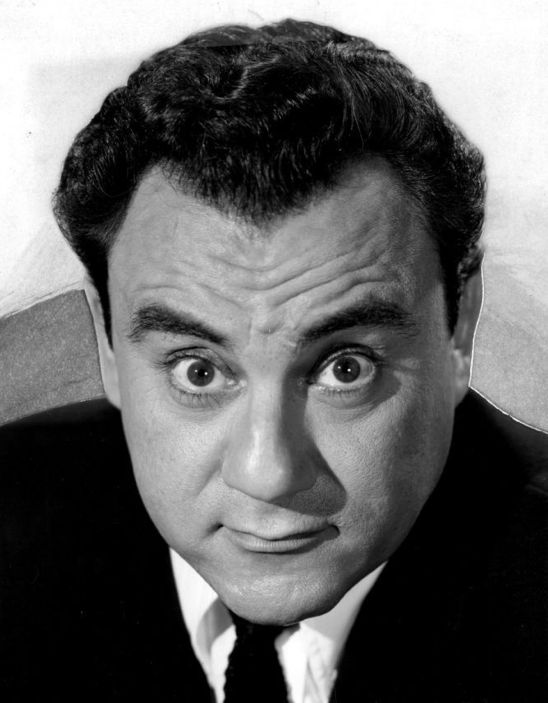
Dana was born William Szathmary in Quincy, Massachusetts in 1924. He was the youngest of six children. His older brother Arthur was fluent in several languages and inspired Bill to learn different accents.
Dana served with the US Army during WWII as a machine gunner and was awarded the Bronze Star Medal.
After the war, Bill enrolled at Emerson College. After graduation, he was hired as a page at NBC’s Studio 6B, or 30 Rock. He was also trying to break into comedy performing around New York. During the fifties he appeared on The Imogene Coca Show. He also did some writing and producing for The Spike Jones Show.
He met Don Adams and began writing routines for him in the fifties. He and Don would be part of each other’s lives for a bit. Don would be one of the cast members on The Bill Dana Show. Dana would appear on Adams’ show Get Smart, and Dana’s older brother Irving was the composer of the Get Smart theme song. Bill would also cowrite the script for the Get Smart film The Nude Bomb.
📷thenewyorktimes.com
In the late fifties, Steve Allen hired Dana as a writer. Bill created a character, Jose Jimenez, for the “Man in the Street” segments of Allen’s show. Soon Jose became his alter ego. He made appearances as Jose on The Red Skelton Show, The Spike Jones Show, The Danny Thomas Show, and The Ed Sullivan Show. He even had a comedy album featuring the character.
Dana told a story on Ed Sullivan’s show that some people truly thought he was Jose Jimenez. One lady who met him out and about asked if his birth name was Jose Jimenez and he told her, “No, it’s Bill Szathmary.” She said “Wow, no wonder you changed it to Jimenez.”
In 1961, Dana began a recurring role on The Danny Thomas Show. He played Jimenez as an elevator operator. People responded so well that Danny Thomas and Leonard Sheldon spun off the character, now a bellhop at a luxury New York hotel, and The Bill Dana Show was created. In addition to Adams, Jonathan Harrison was part of the cast and Maggie Peterson joined them in season two. The show was on the air for one and a half seasons.
As we discussed last week, some people saw Jimenez as a hard-working immigrant who noticed some of the crazy things Americans did, and others saw him as a stereotyped Latino caricature. The pre-show Jimenez fit the second description better and the show Jimenez leaned more toward the first portrayal. However, as the character developed, viewers were not flocking to the show. It was also up against Lassie which at the time was a huge family show on Sunday nights.
📷wikipedia.com
The last time Jimenez was on the screen as a character was a 1966 episode of Batman in a cameo on the famous wall. Later Dana apologized for his caricature of Jimenez and became a bit of an activist for Latino causes. The National Hispanic Media Coalition endorsed the Jose Jimenez character and invited Dana to sit on their advisory board.
Dana jumped back and forth from actor to writer for a couple of decades. He wrote the script for All in the Family’s episode “Sammy’s Visit” starring Sammy Davis Jr. He also wrote for Bridget Loves Bernie, Chico and the Man, Donny and Marie, The Smothers Brothers Comedy Hour, and Matlock.
His acting landed him in The Courtship of Eddie’s Father, Love American Style, The SnoopSisters, Police Woman, McMillan and Wife, Ellery Queen, Switch, Vega$, Fantasy Island, The Facts of Life, and Empty Nest among a few others.
He had recurring roles on two additional shows during his career. He was on St. Elsewhere as Howie Mandel’s character’s father for three episodes. He also was Angelo on six episodes of The Golden Girls.
One of his last projects was founding the American Comedy Archives at Emerson College. He and Jenni Matz interviewed more than 60 comedians for this archive, including Phyllis Diller, Norman Lear, Carl Reiner, Betty White, and Jonathan Winters.
Dana was a man of many talents. He also ran a talent management company and an advertising agency. He wrote a book, The Laughter Prescription, with Dr. Laurence J. Peter.
Dana passed away in June of 2017 at his home in Nashville.
Certainly, Dana had a full career. I think starting off with the Jose debacle probably kept him from getting different roles early in his career. He also didn’t seem to know what he wanted to be when he grew up. Was he a comedy writer? A dramatic writer? A variety show writer? Was he an actor? A talent agent? An author? Not that you can’t be more than one thing in life, but in the span of three decades he never seemed to settle on one or two careers. Hopefully he had fun and enjoyed all the different hats he wore.
It’s Eerie Shows month. Last week we learned about Alfred Hitchcock Presents, a thriller anthology show. Today we have another anthology series of science fiction themes – The Outer Limits. The show examined the nature of man every week and included many classic science fiction themes such as life in outer space, time travel, and human evolution.
The original title of the show was Please Stand By. It was on ABC from 1963-65. Joseph Stefano was the producer for season one and the creative guiding force, writing more episodes than anyone else. He was the writer of Hitchcock’s film, Psycho. Harlan Ellison, a prolific writer, wrote two episodes for season two. Robert Towne wrote a script for the show and later received an Oscar for his writing for Chinatown.
The show also employed a well-known cinematographer in Conrad Hall. He worked on a variety of television shows and in film, winning Oscars for Butch Cassidy and the Sundance Kid, American Beauty, and Road to Perdition; he was nominated for another seven movies.
📷imdb.com
The shows began with a Control Voice saying:
“There is nothing wrong with your television set. Do not attempt to adjust the picture. We are controlling transmission. If we wish to make it louder, we will bring up the volume. If we wish to make it softer, we will tune it to a whisper. We will control the horizontal. We will control the vertical. We can roll the image, make it flutter. We can change the focus to a soft blur or sharpen it to crystal clarity. For the next hour, sit quietly and we will control all that you see and hear. We repeat: There is nothing wrong with your television set. You are about to participate in a great adventure. You are about to experience the awe and mystery which reaches from the inner mind to The Outer Limits.”
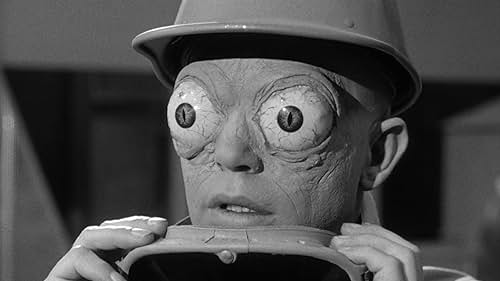
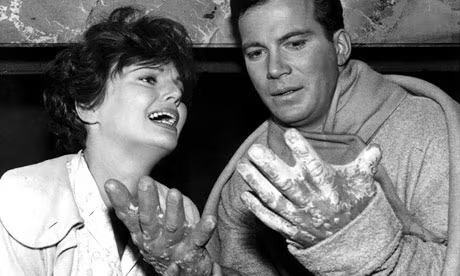
Seasons one and two were a bit different with season two focusing more on hard science. Sometimes we forget that special effects were not something these crew members had much experience with on television. Often, the cast was experimenting, just trying to find solutions to creating these new effects. Robert Justman, who was one of the assistant directors on the show, talked about how they created monsters on the show in his Television Academy interview. He said for one of the first monsters, they had planned to use a negative image instead of a positive one, but that was not enough. He got the idea to rub the image with Vaseline and it created these iridescent spots on it which gave them their monster.
📷moviemarket.com
The music for season one was by Dominic Frontiere and season two was supplied by Harry Lubin. Frontiere was credited with 59 shows and films, including Matt Houston and Vega$. Lubin was best known for his music on The Loretta Young Show and One Step Beyond.
Season one garnered good ratings and their fans were very loyal. However, the ratings dipped in season two after changing focus and moving from Monday to Saturday night. Stefano knew that competing with The Jackie GleasonShow on Saturday night meant the show was over, and he left before season two started.
The episodes of The Outer Limits were often confused with The Twilight Zone, not only by viewers but by actors appearing in them. We’ll learn more about The Twilight Zone next week.
Another fan of the show was Gene Roddenberry. He was often on set, and the show would become a big influence on Star Trek later in the decade. A lot of the crew, cast, costumes, and props on The Outer Limits made their way into StarTrek episodes.
📷theguardian.com
Like so many shows, this one was revived in 1995, and it ran for seven seasons.
I’m not sure why but I don’t remember watching this show in reruns the way I did The Twilight Zone. Maybe it was not shown as often or maybe it was on when our family was watching other shows, but it was interesting to learn what made it different from The Twilight Zone. I’m not sure how many of the “monster” episodes would compete with the special effects of today, but it’s worth taking a look at a few of them and the science they not only developed but the technology that was invented.
This month we are starting a new blog series, Casting Celebrities. We’re going to take a look at four shows that featured a group of celebrities every week. We’ll learn more about Love, American Style; Fantasy Island; The Love Boat, and Supertrain. When we discuss Supertrain, we’ll also look at the small number of stars who appeared on all four shows.
Today we begin with Love, American Style. This show was an iconic 1970s show. Like Laugh In, the clothing, furnishings, and vocabulary do not make it timeless. But it was a lot of fun. This fast-paced anthology series featured two to four mini episodes each week, and between them were quick skits, often featuring a brass bed. Each smaller episode is titled “Love and the _______.”
📷gms.com The regular cast
A troupe of players was featured on each show for the in-between skits. These regulars included William Callaway, Buzz Cooper, Phyllis Davis, Mary Grover, James Hampton, Stuart Margolin, Lynn Marta, Barbara Minkus, and Tracy Reed. Margolin went on to a regular role in TheRockford Files; Tracy Reed was featured in McCloud and Knot’s Landing; Phyllis Davis was part of the cast of Vega$ and Magnum PI, and James Hampton will be familiar if you watched The Doris Day Show or F-Troop.
The show had a memorable and catchy theme song. Written by Arnold Margolin, the first year it was performed by The Cowsills. The snappy melody was set to the following words:
Love, Love, Love
Love, American Style, Truer than the Red, White and Blue. Love, American Style, That’s me and you.
And on a star-spangled night my love,
My love come to me. You can rest you head on my shoulder. Out by the dawn’s early light, my love I will defend your right to try.
Love, American Style, That’s me and you.
📷imdb.com
During the second and subsequent years that Love, American Style was on the air, the theme song was performed by the Ron Hicklin Group. The Ron Hicklin Group could be heard in a variety of motion pictures and commercials, and they also appeared on recordings with stars such as Paul Revere and the Raiders and Cher. John and Tom Bahler, brothers who sang under The Charles Fox Singers were also part of this group. The band provided television theme song recordings including Batman, That Girl, Happy Days, and Laverne and Shirley. They also did the singing for The Partridge Family theme and songs performed on the show as well as the Brady Bunch Kids. Ron retired in the early 2000s, and Tom does a variety of things. He is also known for writing Bobby Sherman’s hit, “Julie Do You Love Me?”. John married Janet Lennon, one of the Lennon sisters who performed on The Lawrence Welk Show. He currently lives in Branson and conducts the “new” Lawrence Welk orchestra.
Paramount Television developed the show. The executive producer of the show was Arnold Margolin, Stuart’s brother. There were 53 different directors during the four-year run. The series received Emmy nominations for Outstanding Comedy Series in 1970 and 1971; Best Music Composition in 1971, 1972, and 1973, winning in 1973; and winning the Emmy in 1970 for Outstanding Original Music and Lyrics.
📷rewatchclassictv.com
Many people wrote for the show, but Garry Marshall and Jerry Belson received the most credits. One of the writers, Peggy Elliott, was interviewed by the Huffington Post in May of 2013, and she talked about her time writing for the show.
“But the show I loved writing the most, was Love, American Style. For every other show, I was writing for characters created out of someone else’s head. Sure, we could create the occasional guest-star role, and we had been told to make every role, no matter how small, a real person. ‘Think of the actor who’s playing that delivery boy,’ I can hear Billy Persky, the co-creator or That Girl, say: ‘This is a big break for him — it’s the biggest role he’s had so far. Give him something to work with.’
But with Love, American Style, every character was our very own; every situation came out of our heads. Each segment of the hour the show ran each week was a one-act play created entirely by us. Added to the attraction was the fact that we could say and do things that were taboo on every other TV show in the early ‘70s. Arnold Margolin, co-creator of the show with Jim Parker, told me recently that the creative side of the network wanted the show to be more daring, while the censors kept their red pencils ready. There was a full-time position on the show just to run interference.
We must have put both sides through the hoops with one episode we wrote: ‘Love and The Hand-Maiden.’ A young guy was dating a centerfold model. As their relationship developed, he discovered that she had no problem with shedding her clothes, but she always kept her hands covered — with artful poses in magazines, and with gloves in real life. He became obsessed with seeing her hands and came up with one ruse after another to get her to take off her gloves. We had a ball writing it, with one double-entendre after another.”
📷imdb.com
If you were a star of any kind in the early 1970s, you most likely were on Love, American Style. The show produced 108 episodes, and those shows featured 1112 different actors. Some of the famous names showing up in the credits include Milton Berle, Sid Caesar, Phyllis Diller, Arte Johnson, Ozzie and Harriet Nelson, Regis Philbin, Burt Reynolds, Sonny and Cher, Flip Wilson, and Jo Anne Worley.
Brad Duke wrote a biography about Harrison Ford, and he said Ford had fond memories of appearing on Love, American Style. “He recalled that he had been given little time to prepare his wardrobe for the role of a philosophical hippie in the November 1969 episode, “Love and the Former Marriage.” He appeared on set with long hair and a beard thinking they were appropriate for the role. He was surprised when he was told he needed a haircut and trim and then was given a navy blue dress shirt and vinyl burgundy jeans with a large belt. They even had a scarf with a little ring to put around my neck. And I thought, someone has made a mistake here. So, rather than argue with the wardrobe people, I put on the clothes and went to find the producer. I walked on the set and he was pointed out. I tapped his shoulder and when he turned around he had on the same clothes I did. He was a hippie producer I guess. At least the check went through, and I got paid.”
The best way to get a good understanding of what the show was like is to look at a couple of the episodes.
January 23, 1970: Love and the Big Night
📷facebook.com
Starring Ann Elder, Buddy Lester, Frank Maxwell, Julie Newmar, and Tony Randall, this episode is often listed as a favorite of viewers. Randall is a married businessman who escorts his voluptuous secretary (Newmar) to her apartment after a late night at the office. Eager to get home to his wife, Randall hurriedly tries to open a stubborn jar of mayonnaise and winds up covered with mayo. Newmar cleans his suit, but while it’s drying, it’s stolen. After a series of amusing mishaps, Randall finally gets back to his own apartment and creeps into bed with his wife–only to find out she’s not there.
February 25, 1972: Love and the Television Set
📷that’s entertainment.com
It starred Harold Gould, Marion Ross, Ron Howard, and Anson Williams. Reading this list of names might give you a hint about what happened to this episode after it aired. Garry Marshall had written a pilot about a 1950s family that did not sell. He turned it into an episode for Love, American Style. George Lucas caught the episode and was impressed with Ron Howard and offered him a role in his new movie American Graffiti about 1950s teens. The movie was so popular that the network decided to put Marshall’s pilot in the fall line-up as Happy Days. Harold Gould’s role was given to Tom Bosley for the series. When Love, American Style went into syndication, this episode was retitled “Love and the Happy Days.”
October 22, 1970: Love and the Bashful Groom
📷listral.com
This is the episode I recall when I think of the series. When I watched it originally, I was staying overnight at my grandparents’ house and my grandmother was shocked at the “vulgarity.” It really seems quite tame today, but back then it probably was unexpected. She would approve of Tom Bahler marrying Janet Lennon though because I watched Lawrence Welk with her and my grandfather whenever I was at their house.
In this episode, Paul Petersen, Christopher Stone, Meredith MacRae, Jeff Donnell, and Dick Wilson are featured. Harold (Petersen) and Linda (MacRae) are getting married. He learns that she grew up in a nudist colony and is not comfortable being naked for his wedding. After a soul-searching talk with his best friend, and realizing he loves Linda enough to be uncomfortable, he decides to go through with the ceremony. He gets to the church a bit late and walks in, only to see that everyone else is dressed in their Sunday best. His bride informs him that they always dress up for weddings. One of the congregation members says something like “Let’s not make him uncomfortable,” and they all begin to undress. Of course, you see nothing improper, no naked bodies, only clothes flying. This was probably not the best episode to “expose” my grandmother to as a first glimpse of the show.
The show lasted for four years and was cancelled in 1973. In 1985, a reboot was created, but it was on in the mornings and only lasted a few months. The show was on at the same time as everyone’s favorite game show, The Price is Right. For the 1998 fall season, a pilot was created for prime time, but it was never ordered. While doing my research for this blog, I noticed that there was a Love, American Style project in production, so we may see it resurface again. I’m not sure I would want to watch a contemporary version of the show though. It was such a product of its time, and I fear what a current version would be like after seeing the reboot of Match Game which has been airing the past few years.
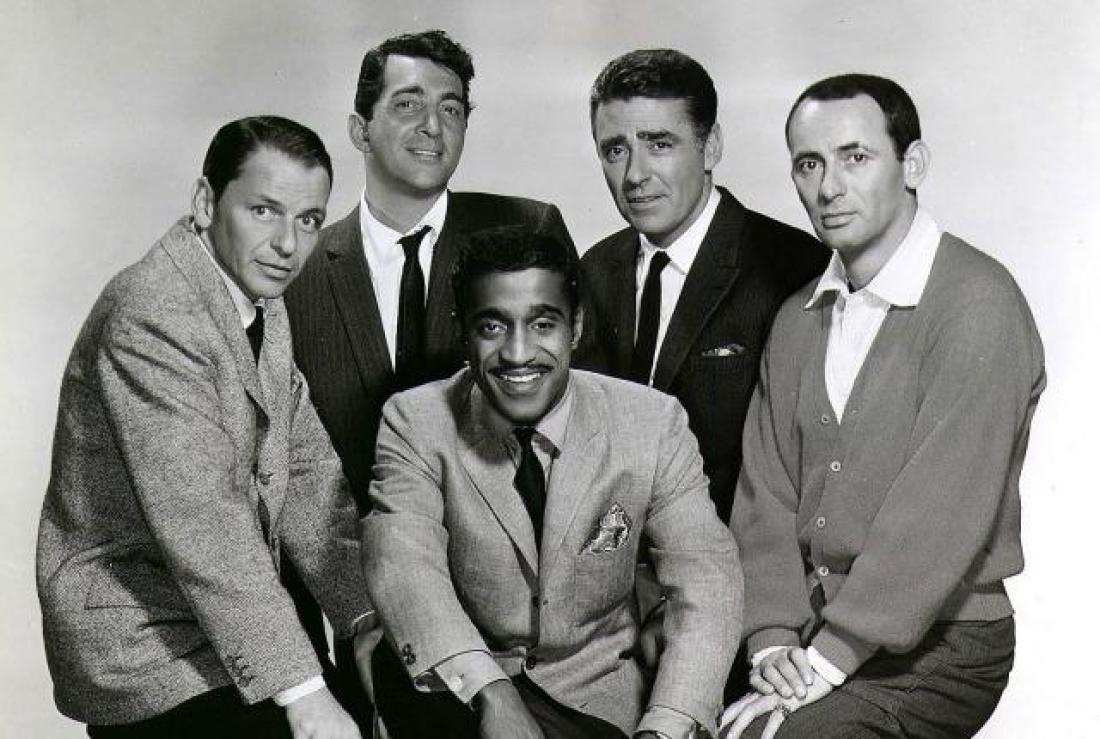
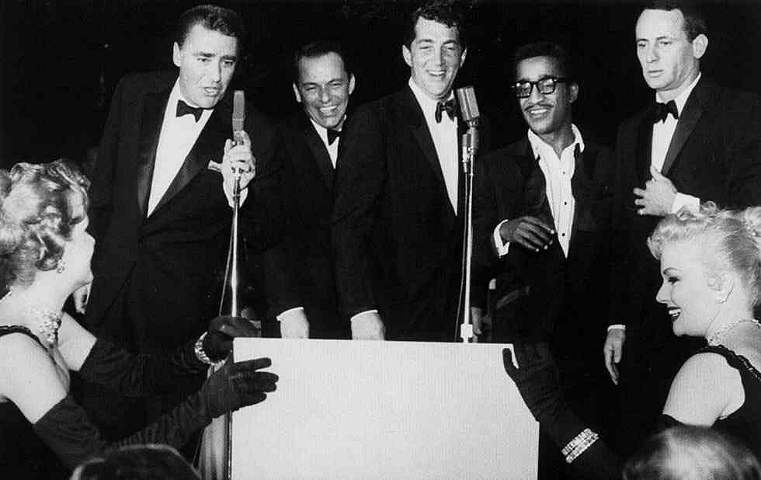
For some reason, the group including Frank Sinatra, Dean Martin, Joey Bishop, Peter Lawford, and Sammy Davis Jr. have been referred to the Rat Pack since the 1960s. The original rat pack was coined by Lauren Bacall about a group who gathered at her home whom she referred to as a pack of rats. The group we know as the Rat Pack preferred to call themselves the Clan or the Summit. Whatever they chose to call themselves, they had a hip, cool aura.
When one of the members of the group was scheduled to perform at Las Vegas, another one or two of the Clan would often show up as well. Because concert goers knew this, their shows tended to sell out. The Sands marquee promoted the possibility during one of Dean Martin’s shows when they put up “DEAN MARTIN – MAYBE FRANK – MAYBE SAMMY.”
I thought it would be fun to look at
the Rat Pack on television and see how much influence this group had. Let’s
start with Old Blue Eyes.
FRANK SINATRA
Frank began
his film career in the 1940s. In 1953 he had one of his most famous roles in From Here to Eternity. I was surprised
to learn that he began appearing on television in the mid-1950s as well. He
showed up in The Colgate Comedy Hour
in 1954, The Producer’s Showcase in
1955, and The Thin Man in 1958.
In the 1970s
we find Frank showing up on Laugh-In
for several appearances.
He also sang
a few lullabies on Make Room for
Granddaddy, Danny Thomas’ revival of his hit show Make Room for Daddy from the 1950s. I was amazed at the talent of
actors who guest starred on the reboot considering the short time it was on the
air, but that is a topic for a future blog. On this episode, he bumps into
Danny. His wife Kathy is not happy Danny is bringing home a guest for dinner on
“hamburger night” but then she learns it’s Frank. He sings “All the Way” and
“Baa Baa Black Sheep” for Danny’s grandson, Michael.
Photo: imdb.com
Jumping ahead a decade, we find Frank’s last two television roles, one as himself and one as a New York cop.
Frank had met
Tom Selleck in Hawaii on one of his trips. In 1987 Frank appeared as Michael
Doheny, a retired police sergeant on Selleck’s show, Magnum PI. Frank and his entourage traveled to Hawaii (although he
worked for scale) and took over a floor at The Colony Surf in Diamond Head. In
this episode he returns to help find the men who kidnapped his granddaughter.
There were plans for Sinatra to return in season eight as well but Selleck cut
back on the number of episodes he was filming, and the show was never written.
Photo: kiwireport.com
In 1989 Sinatra showed up on Who’s the Boss as himself. Angela is invited to an exclusive party, but she gets waylaid by a work issue. Mona and Tony decide to take the tickets, but they can’t get in when they get there and then Angela shows up, which results in all three of them being thrown out of the gala. As Frank is showing up to sing, Tony gets to meet him and tell him he is his idol.
DEAN MARTIN
Not surprisingly Dean’s first appearance on television was on Make Room for Daddy in 1958. He portrayed himself. Danny calls on Dean to help him out with his daughter Terry who has been not very nice to a boy at school who likes her. Danny learns she is ignoring the boy because she has a crush on Dean. The plan works, and she and Donald get together.
Photo: youtube.com
During the same year, Dean shows up on The Phil Silvers Show. Bilko (Silvers) is sent to Yucca Flats to work on a nuclear test program. Ritzik is amazed by one of the scientist’s machines. They skip the base and head for Las Vegas, so Rupert can demonstrate his gambling skills. Dean Martin is an unnamed gambler they run into.
In 1964 Martin got on the western bandwagon, appearing in Rawhide. Martin is stalking Hispanic cattlemen. His wife wants him to drop the assignment and retire to her family’s plantation with her, but he refuses, and she seeks help from Gil Favor, the boss of a never-ending cattle drive.
We see Martin
pop up on a Bob Hope special in 1968 and a Red Skelton show in 1970.
Photo: vegasmagazine.com
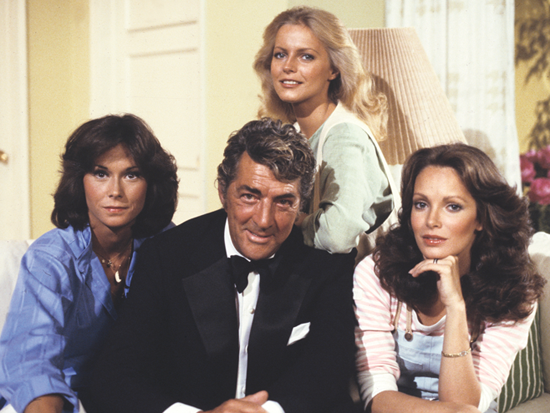
In 1978 Martin made an appearance on a show that surprised me: Charlie’s Angels. Martin plays the owner of the Tropicana Casino who hires the Angels to investigate several suspicious deaths that he thinks are part of a plot to make him think he’s going crazy. This was a two-part season opener and instead of singing, Martin got to display his magic skills. Naturally, he becomes romantically involved with one of the Angels, Sabrina played by Kate Jackson.
Fittingly,
Dean’s last appearance was in the show Vega$
in 1979 as himself.
JOEY
BISHOP
Bishop’s first role was not much of a stretch. He played a
comedian on RichardDiamond in 1959. Bishop’s plays Joey
Kirk and hires Diamond to determine who is following him and why, leading to a complicated
murder plot.
He appeared in the DuPont
Show of the Month in 1960 and The
Dick Powell Theater in 1963.
Like most of the Rat Pack, Bishop made an appearance on Make Room for Daddy in 1961. As Joey
Mason, he helps out Danny. Danny has flown from the east coast to the west
coast and took two sleeping pills. However, there are four conventions in town
and his assistant forgot to make him a reservation.
In 1965 he is Fred Jackson on an episode of Valentine’s Day starring Tony Franciosa
and Jack Soo about a young eligible bachelor who lives with his valet, a
poker-playing con artist who saved his life while they were in the Army.
Photo: tvtropes.com
From 1961-1965, Joey stars in The Joey Bishop Show as Joey Barnes. Barnes is the host of a talk show. He has to deal with his personal and professional life as a celebrity. A lot of guest stars show up playing themselves as guests on his show or friends of his. The show produced 125 episodes. I have recently been watching it on Antenna TV where it now is shown every morning.
In 1967, Joey had a cameo on Get Smart. Max and 99 are sent on an assignment to rescue Don
Carlos, the dictator of San Saludos. A general has imprisoned him and wants to
marry his daughter. Max and 99 try to disguise themselves as flamenco dancers.
When they are also thrown in jail, a guard, played by Bishop, attempts to bribe
the firing squad.
In the 1970s we find Joey on Chico and the Man in 1976. He plays an inept burglar and when Ed
doesn’t press charges, every lowlife crook appears at the business.
In 1981 Bishop appears as Dr. Burton on Trapper John MD.
Photo: basementrejects.com
In 1985 Bishop again takes on the role of a comedian on Hardcastle and McCormick. That same year he also played another comedian on Murder She Wrote.
PETER LAWFORD
Drama
shows were very popular in the early days of television. Lawford appeared in
quite a few of these shows from 1953-1965.
Photo: en.wikipedia.org
In 1954 he took on the role of Bill Hastings on Dear Phoebe. The show was on the air for two years, resulting in 32 episodes. Hastings works for a daily newspaper in a large city. He becomes the author of a lonely hearts column and advises his readers as “Phoebe” while trying to deal with his own issues in his personal life.
Photo: sitcomsonline.com
From 1957-1959, he was Nick Charles on the television version of The Thin Man. The show was very popular with 723 episodes filmed. Similar to the films, Nick marries Nora and lives in a luxurious Park Avenue apartment in New York. He was previously a private detective and many of his underworld friends get him involved in mysteries he has to solve.
Lawford
appeared as himself on an episode of Jack Benny’s show in 1961.
He also played himself on The Patty Duke Show in 1965. Patty is selected to find a star to perform at the high school prom. Sammy Davis Jr. also guest stars on the episode.
Photo: imdb.com
Apparently,
Sammy and Peter enjoyed working together because they guest starred on an
episode of The Wild Wild West in 1966.
Lawford is a wealthy ranch owner and Davis is a hired hand Jeremiah.
While Bishop showed up on Get Smart, Lawford chose the more realistic I Spy in 1967.
Like
Sinatra, he also appeared on Laugh-In
but must have enjoyed it more because he was on ten different episodes.
During
the 1970s, Lawford shows up on a variety of television show genres. He would be
on the western The Virginian in 1971,
Born Free about Elsa the lion in
1974, The Love Boat and Fantasy Island, the bizarre comedy High Cliffe Manor, the crime drama Hawaii Five-0, the dramady Supertrain, and The Jeffersons.
Photo: pinterest.com
In addition, he was featured on Bewitched in 1972. Lawford played Harrison Woolcott, a client of Darrin and Larry’s. Sam’s cousin Serena decides she wants to date him and try the mortal life for a while.
Photo: pinterest.com
He made several appearances during seasons four and five of The Doris Day Show. As Dr. Peter Lawrence, he begins a romance with Doris in 1972-1973.
SAMMY
DAVIS JR
Sammy probably appeared in the most television shows. Like
Peter, he began in drama shows and guest starred in several episodes of General Electric Theater.
He then appeared in The
Lawman in 1961, Frontier Circus,Cain’s Hundred, 77 Sunset Strip, The Rifleman,
and Hennessey in 1962.
In 1963 he was on Ben
Casey.
Like the other Rat Pack actors, he was on Make Room for Daddy in 1963 and the
revival Make Room for Granddaddy in
1970.
As mentioned before, he guest starred in The Patty Duke Show in 1965 and The Wild Wild West in 1966, both with
Peter Lawford.
Photo: pinterest.com
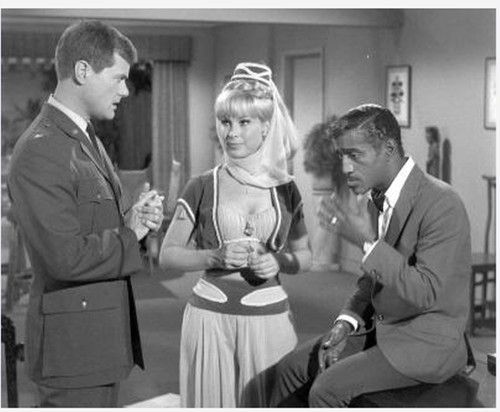
In 1967, he showed up on I Dream of Jeannie as himself. Tony tries to get Sammy Davis Jr to sing for General Peterson’s party. When he is already booked, Jeannie tries to help by duplicating himself, so he can be in two places at one time.
Davis also took a role in The Beverly Hillbillies in 1969.
Photo: tvinsider.com
The same year he took on his first of three roles on Mod Squad. His first role was a black priest who becomes the target of a bad guy after the church suspends him. The hood is afraid he will reveal his confession now that he no longer is part of the church. The next episode he appeared on was in the role of Billy Lee Watson, a recovered drug addict. He runs a half-say house and is accused of rape of a man’s daughter who he has been trying to help. Her father accused Billy of the rape and after investigating, it turned out Billy was her actual father. The last episode of Mod Squad he appeared on in 1970 had Davis portraying Willie Rush and actor and friend of Linc’s. He says someone is trying to kill him.
Photo: tumblr.com
The 1970s continued to be a productive time for Davis on television. He would go on to appear in The Name of the Game in 1970, The Courtship of Eddie’s Father in 1972, nine episodes of Laugh-In, and like his friend Dean Martin, an episode of Charlie’s Angels in 1977. He plays himself on Charlie’s Angels. When he hosts a charity event that includes a celebrity look alike contest, an attempt is made to kidnap him. The Angels take on the job of his bodyguards and Bosley becomes his chauffeur.
The 1980s were also busy times for him. He appeared as
himself on several Norman Lear shows including Archie Bunker’s Place and The
Jeffersons. He also could be seen on Fantasy
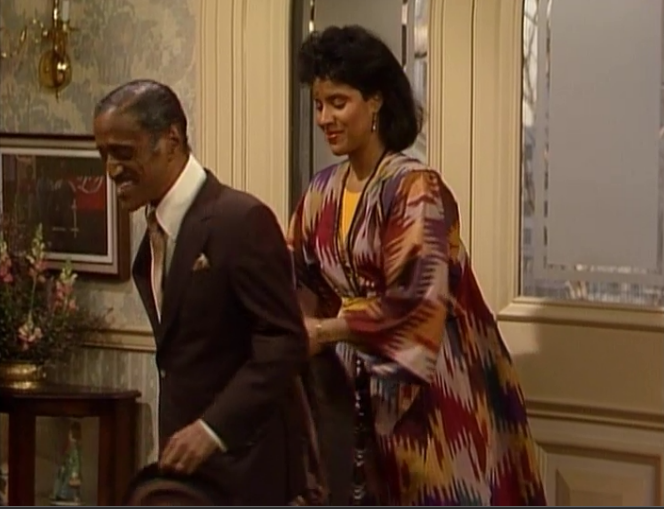
Island, Pryor’s Place, Gimme a Break, The Cosby Show and Hunter
in the 1980s.
Photo: atlantablackstar.com
One thing that surprised me was his roles on One Life to Live and General Hospital. I have seen a few stars like Carol Burnett who chose to appear on a soap opera. Davis had a recurring role on General Hospital; he didn’t seem to me to be the type of actor who would be interested in a soap opera, but he did receive an Emmy nomination for his role on General Hospital. Sammy was also nominated for an Emmy for his work on The Cosby Show.
While Joey Bishop hosted some of the Emmy Award shows, I
did not find any nominations for the other members of the Rat Pack.
Photo: peoplequiz.com
Overall, I was surprised how extensive the television careers were for the Summit members. I think of them more in their performing or movie careers and did not expect them to see that they guest starred in so many shows and starred in some of their own television series. Check out some of these shows or make a batch of popcorn and watch the ensemble in the original Ocean’s Eleven.















 thewritelife61