The Tom Ewell Show: Surrounded by Women

Thanks for joining me today. We are having fun with this month’s blog series, “It’s Their Show,” and today we are taking a closer look at The Tom Ewell Show. The shows we are delving into this month were all movie stars jumping from the big screen to the small screen. Some of them landed on their feet and some didn’t.
📷ebay.com

While most of the shows we are covering have a star we all know, Tom Ewell is no longer a household name. His first movie was in 1940, and he’s probably best known for The Seven-Year Itch with Marilyn Monroe. He did become a television fixture, starring in the soap Search for Tomorrow as well as a cast member of Baretta in the seventies and Best of the West in the eighties.

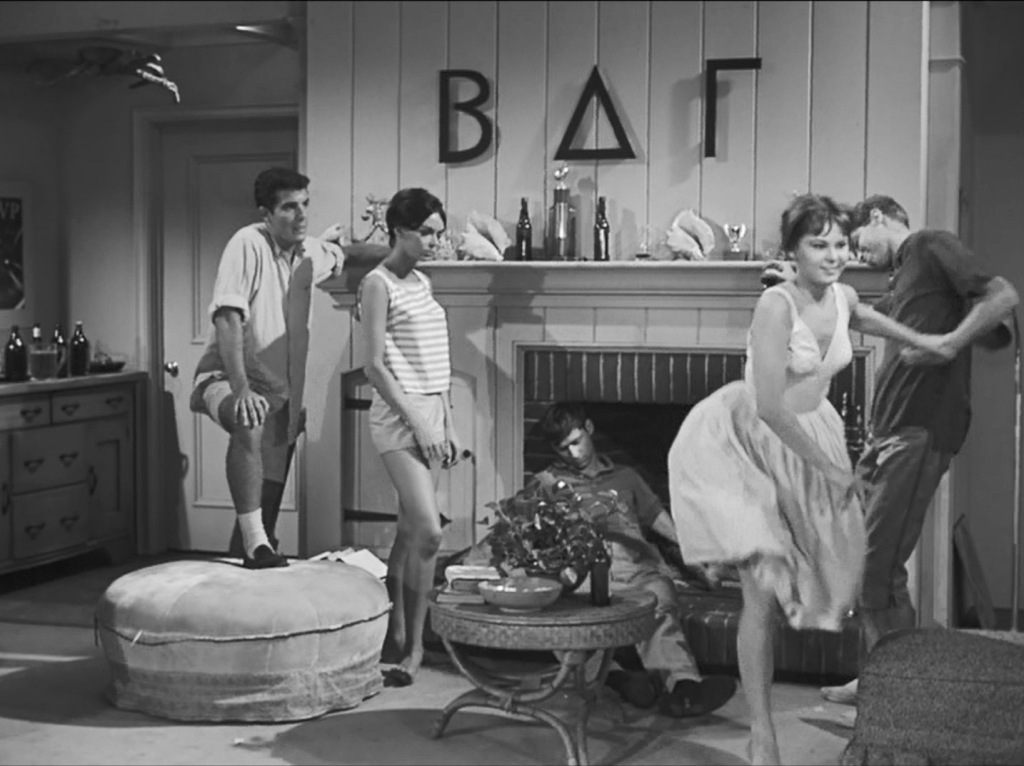
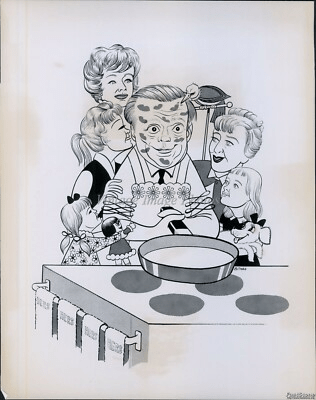
The Tom Ewell Show debuted on CBS in 1960 and was on for one season. The premise is about a guy who has to navigate life with a lot of women: his wife (Marilyn Erskine), daughters (Cynthia Cherault,  Sherry Alberoni and Eileen Chesis), mother-in-law (Mabel Albertson), and a female dog and a parakeet.

Tom Potter is described as a “bumbling” father. I’m not sure why so many shows in the early days featured a wife who caused complications for her husband or a bumbling husband. Potter was a real estate agent. Rounding out the cast are friends pharmacist Howie Fletcher (Norman Fell) and Jim Rafferty (Barry Kelley).

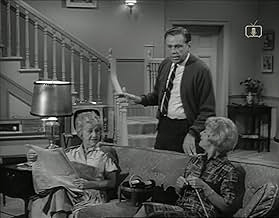
Potter loves sports, but the rest of his household is not too interested. Often, he is watching a sporting event on television while telling his family about the high points when they obviously could care less.
📷imdb.com

The concept of the show was set up in the opening which showed Tom looking around and then being put into a house before seeing the house overrun by women.

The show was created by Madelyn Pugh Davis and Bob Carroll Jr. who wrote for I Love Lucy. Pugh Davis said she based the show on her family. Her family had all girls and a mother-in-law in the house.

Ewell owned the production company in partnership with Davis and Carroll and Four Star Productions. Quaker Oats and Proctor and Gamble alternated sponsorship of the show.

Time reviewed the show after its debut and said “The Tom Ewell Show leads a relentless parade of situation comedies, all designed to show that American family life is as cute as a freckle on a five-year-old. The show, which might also be titled Father Knows Nothing, presents the comic with the excavated face as a bumbler named Potter who is trapped in the customary format: Harassed Man Beaten Down by Wife, Three Daughters, Mother-in-Law. In the opening episode, Ewell could find no better way to outsmart his spendthrift women than closing his bank account and ruining his own credit. For those who may have tuned out early, the women were all set to start spending again.” Not a great review.

📷imdb.com

This makes the female characters sound very unappealing, but on the show, his wife and daughters were delightful. His mother-in-law liked him and they often bantered back and forth; I think it’s worth watching the show just to see Mabel Albertson in action. However, the plots left a bit to be desired: Tom teaching his wife to drive a car, his daughter learning to play the tuba; and the typical sibling issues of everyone wanting to use the phone and the bathroom at the same time.

The show struggled finding viewers. Associated Press television critic Cynthia Lowry interviewed Ewell that fall, and he said that he had read both the positive and negative reviews of the show. He agreed with the critics who felt that Potter was too inept, and the comedy centered more on that and their family life. He said for December episodes, that issue would be addressed in the writing, and the family dog and parakeet were being dropped from the show. Unfortunately, it was not enough to attract viewers, and the show was canceled after one season.

📷youtube.com “Spelling Bee”

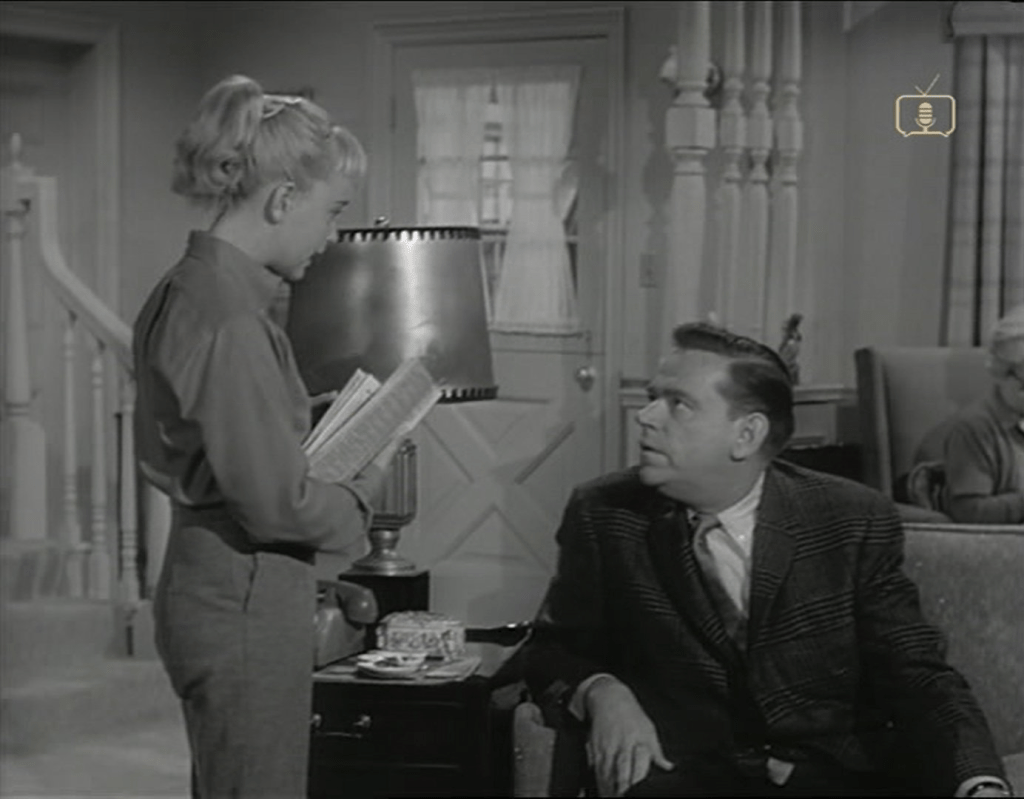
In an episode I watched, “The Spelling Bee,” from late November, Tom is trying to interest his family in golf. When he finally got them to watch a golf match, the females were more interested in what the golf spectators were wearing. And then his youngest daughter ran in and turned the station to a kid’s show. One of his girls is practicing her spelling to try to win a trip to Washington DC by winning the all-state spelling bee.

When Tom leaves the house, he continues to run into fathers and sons who are playing baseball, going fishing, working together, or talking about sports. Tom daydreams he has three boys, but we realize that he is holding a skein of yarn for his daughter while he does so. He tries to talk his oldest girl into going into the real estate business. Later he tries to talk his middle daughter Debbie into giving up spelling for golf. He also tries to get his wife to go bowling with him. When Tom realizes that one of his friends has a son trying to win the spelling bee as well, he turns it into a big sports event and is determined to beat them.

He buys a bunch of dictionaries and then gets up early to “train” Debbie. However, she had already left the house and when she returns, he finds out she’s been on the driving range practicing her golf, so they can be in a father and child golf match. He drills her on spelling the rest of the day. That night Debbie comes down with laryngitis.
📷imdb.com

Her grandmother gives her honey and lemon. The following night they attend the spelling bee, and Tom gives Debbie a pep talk, but then he reminds her he loves her no matter what. Of course, the final two contestants are Debbie and the son of Tom’s friend. She wins, and she and her dad get to travel to Washington, DC where they meet the President. The show ends with Tom telling his friend about all the great non-sport talents his girls have. It was a cute show, and the characters were all likable. There were a few great one-liners. It would not make my top 25 shows, but it was much better than many of the sitcoms in the sixties.

The show had a decent time slot. It was on Tuesday nights at nine, competing with Stagecoach West and Thriller. While both of those shows garnered decent ratings, neither of them was in the top thirty. The primary director was Hy Averback, who would later direct twenty episodes of MASH. So, they had the right elements in place, but the show just could never find its fans.

Larry Rhine talked about writing for the show. Rhine said Ewell was a nice man, but he said Ewell didn’t think the kids should be involved in the show much because they didn’t have the caliber of other actors. Rhine told Ewell they could consider them more as props which seems like a strange concept for a family show, considering that the episode I watched revolved around the daughters.

📷imdb.com

Rhine said Ewell found the show was over when he was on the set one day and he was called to the telephone about a trip he was supposed to take with CBS, and he was told that he was no longer part of the group because he had been fired.

I’m guessing part of the problem with this show getting renewed is that it debuted when westerns were still king and many of the television schedule spots were already filled with them. While it was definitely not a terrible show, the sixties were on the cusp of introducing very different sitcoms than the family-based ones that filled the fifties’ slots. By 1965 we would be tuning into Batman, Honey West, Hogan’s Heroes, The Smothers Brothers Show, and I Dream of Jeannie. However, that said, there are worse ways to spend a weekend than viewing a season of The Tom Ewell Show.
Good Evening Alfred Hitchcock

📷noizetv.com

In October, we are tackling a blog series on Eerie Shows. It would be almost impossible to not include Alfred Hitchcock Presents which was on television for a decade.

The show premiered in 1955. Hitchcock had been directing films for more than three decades at that time. The series experienced several changes. It began as Alfred Hitchcock Presents on CBS but would switch both nights and networks during its run. In 1962 it became an hour-long show and was called The Alfred Hitchcock Hour.

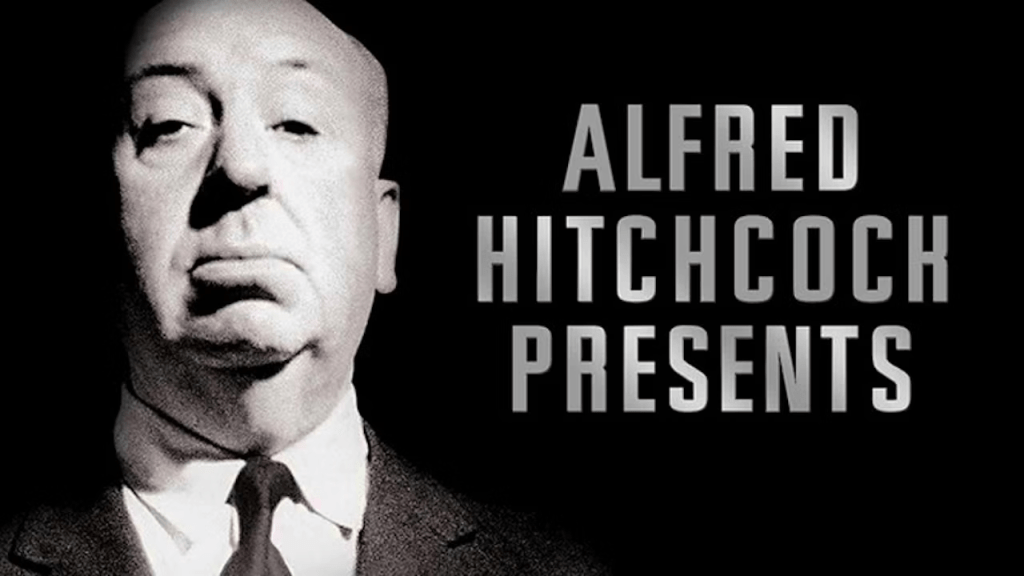
Many fans recall the opening. There is a line-drawing of Hitchcock’s profile with the “Funeral March of a Marionette” playing in the background. Hitchcock appears at the edge of the screen and walks to the center where he fades into the caricature line drawing. Then he said, “Good evening.” The silhouette was one that Alfred drew. He began his entertainment career illustrating title cards for silent movies.

📷peacock.com

Hitchcock himself directed 17 of the episodes of the series. Two of those were nominated for Emmy awards: “The Case of Mr. Pelham” in 1955 with Tom Ewell and “Lamb to the Slaughter” in 1958 with Barbara Bel Geddes.

Hitchcock’s job during this series was to introduce the story and then to wrap it up at the end. Both the openings and closings were written by James B. Allardice. Allardice wrote for 38 different shows, many of them very popular series in the fifties and sixties. Norman Lloyd, who produced the show and appeared in five episodes, said Hitchcock respected Allardice so much that he never even changed a comma that he wrote.

The network demanded that if a character got away with murder during the show, then Hitchcock would let them know during the closing that he was eventually brought to justice; in the TV Guide, Hitch described this as “a necessary gesture to morality.” Lloyd gave an example of this in a Television Academy interview. In one episode, a woman kills her husband with a frozen lamb’s leg and gets away with it. At the end of the show, Alfred explains that she later remarried and tried the same trick again but when she took out the leg and hit her husband with it, it was not frozen enough, so he caught her in the act and turned her in.

📷genresnaps.com

The episodes were not your average thriller shows. They included drama, suspense, and humor. Audiences never knew just “who done it” till the end.

The show debuted on CBS on Sunday nights for five years, up against drama anthologies for two years and then competing with The Dinah Shore Show for three years. For the next two seasons it moved to NBC on Tuesday nights. It aired against The Many Loves of Dobie Gillis on CBS those years and against Wyatt Earp on ABC. For three months it went back to CBS on Thursdays before moving to Fridays on CBS the next season with The Price is Right and 77 Sunset Strip. The ninth year found it on CBS on Fridays with little competition and the final year it showed up on NBC’s schedule on Mondays against Ben Casey. I could never find the reason for cancelling the show. I’m assuming ratings began to decline but if anyone knows, I’d love to hear it.

NBC chose not to air a 1962 episode called “The Sorcerer’s Apprentice” because the sponsor felt the ending was too gruesome. In the episode, a magician’s helper is supposed to help in a trick where he “sawed” a woman in half, but he doesn’t realize he truly saws her in half.

📷thecompletehitchcock.com

As you might guess, with a new story every week, many celebrities appeared on the show including Charles Bronson, Bette Davis, Bruce Dern, Robert Duvall, Clint Eastwood, Peter Falk, Joan Fontaine, Peter Lorre, Walter Matthau, Steve McQueen, Vera Miles, Claude Rains, Robert Redford, Burt Reynolds, Thelma Ritter, George Segal, and Jessica Tandy.

In addition to the Hitchcock-directed episodes, the show received Emmy nominations for Best Series four times. In 1956 it was up for Best Action or Adventure Series, but it lost to Disneyland. The following year found the show in the Best Series – Half Hour or Less category, but it lost to The Phil Silvers Show. 1958 found it in the category of Best Dramatic Anthology Series. You would think that would be a no-brainer win for this show, but it lost to Playhouse 90. It had its fourth category nomination in 1959 as Best Dramatic Series – Less Than One Hour and lost to Alcoa Theatre. I guess the Emmy committee had a hard time determining categories for a few years.

In a different twist, NBC tried to air the show again in 1985. Hitchcock had passed away five years earlier from renal failure. A made-for-TV-movie combined new stories with colorized segments from the original show. It lasted a year before NBC canceled it. USA picked it up for three more seasons.

📷screentunes.com

The original show can still be seen on a few different networks including MeTV.

With Hitchcock’s popularity in 1955, it’s no wonder that this show was a successful series for a decade. The episodes were well written, and they had a wonderful cast of actors. Many people probably tuned in just to see Hitchcock, and his personality was larger than life, even if his behavior was a bit despicable at times. One of Alfred’s quotes about the show was that “television has brought murder back into the home – where it belongs.”

Viewers Found Best of the West “So-So of the West”

As we continue the “Living in the Past: Timeless Comedies,” we travel back to the frontier for Best of the West. Like the show we discussed in my last blog, When Things Were Rotten, this series was also a rapid fire of gags, puns, and one-liners.

Photo: wikipedia.com

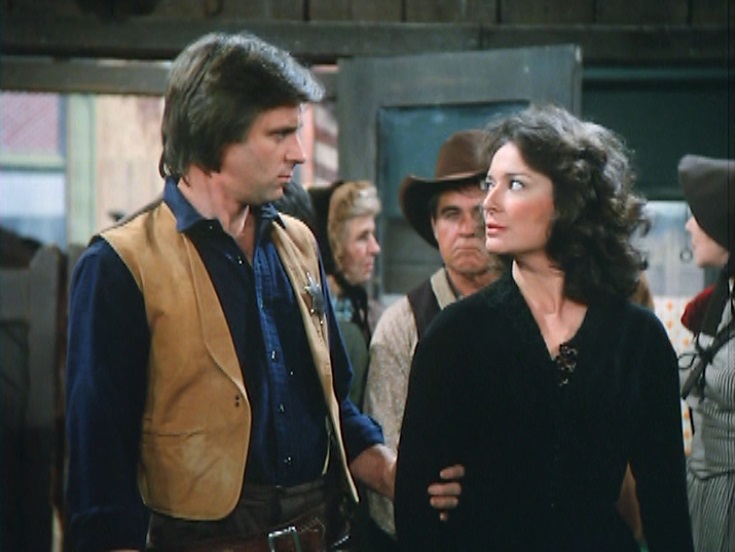
Westerns ruled the airwaves in the 1950s, but with the demise of Gunsmoke in 1975, the cowboys shows had all ridden off into the sunset.  The Best of the West made its debut in 1981. The show, created by Earl Pomerantz, was a parody of the previous decades of oaters. Civil War veteran Sam Best (Joel Higgins) moves his family from posh Philadelphia to Copper Creek at the western border in 1865. He was not your typical western hero—more of a city slicker.

Photo: imdb.com

A store owner by trade, he knew little about guns or fighting. After arriving in the town, he accidentally scares off The Calico Kid (Christopher Lloyd), one of the “bad guys,” and the townspeople lobby him to be their mayor.

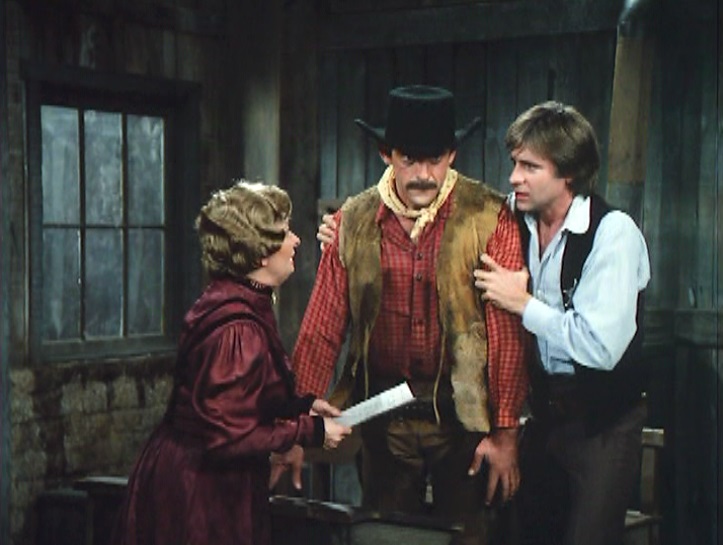
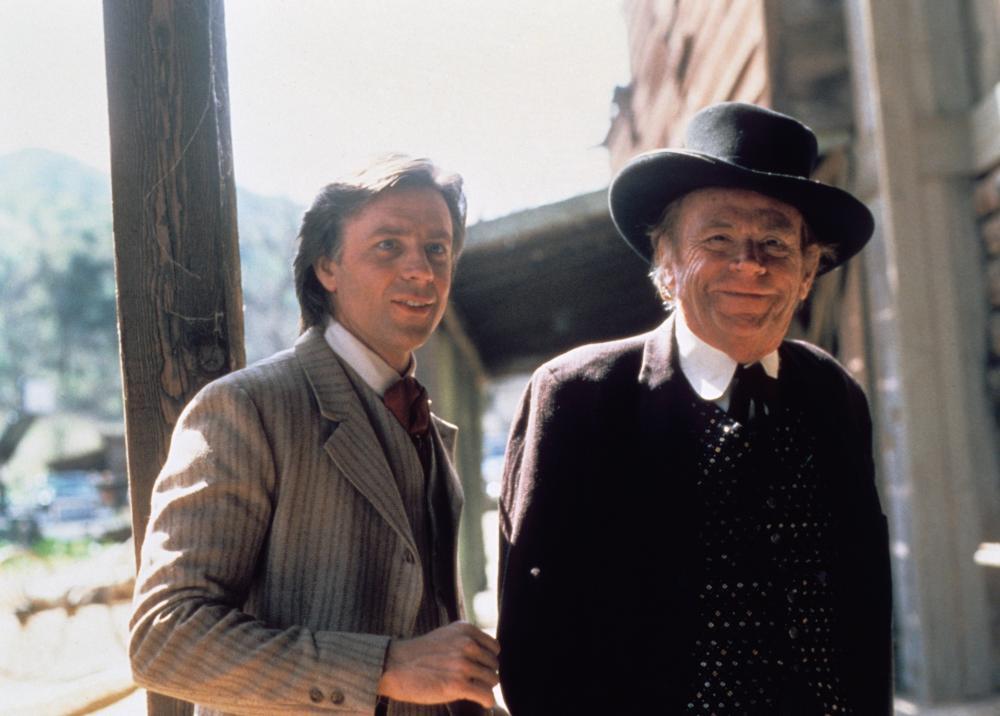
Sam’s nemesis is Parker Tillman (Leonard Frey), who runs the saloon with a slew of other bad guys, most notably his sidekick Frog Rothchild Jr. (Tracey Walter). With Sam are his southern belle wife Elvira (Carlene Watkins) and his smart-alecky son Daniel (Meeno Peluce). Sam is also friends with the town doctor, Jerome Kullens (Tom Ewell), who is a bit of a lush.

Photo: imdb.com

Sam reminds me a bit of F-Troop’s Will Parmenter. He’s a likable guy placed in a situation that he did not pursue. Sam’s family is not happy in their new setting. They had gotten used to the comforts of a big city. Elvira is beside herself because she can never get the dirt off the floor, until Sam reminded her it was literally a dirt floor.

Photo: imdb.com

The plots on this show were a bit similar to many of the story lines we became familiar with from decades of westerns. In one show the doctor’s mail-order bride is described as having a vivid personality with a past to match. In one episode, Sam and Tillman try to convince the railroad company to connect with Copper Creek. Another example is when Sam shoots himself in the leg and the jail begins to fall apart, and the town reconsiders his ability to lead them, or the classic tale of Elvira and Daniel exploring a cave that is booby-trapped and ready to collapse around them.

Photo: imdb.com

The show never seemed to catch on with viewers. It was hard to fault the writers. David Lloyd, Sam Simon, and Earl Pomerantz were working together on Taxi, and they would go on to write for Cheers in 1982.

Photo: imdb.com
Dixie Carter

The show also had some amazing celebrity guest stars: Dixie Carter, Chuck Connors, Andy Griffith, Al Lewis, and Betty White.

Photo: imdb.com
Andy Griffith

For a while, parodies like Airplane! were all the rage, and maybe the fad had just played out.

Perhaps, western fans, with their fond memories of growing up with Bonanza and The Rifle Man, just weren’t ready to make fun of their childhood shows.

Photo: imdb.com
Betty White

It was hard to find information about the show. As you can see in these photos, the majority of them came from imdb.com; there just aren’t many photos out there otherwise.

ABC didn’t outright cancel the show, but they took a lot of time trying to decide whether to renew it or not. In the meantime, Joel Higgins got tired of waiting and accepted the role of Edward Stratton on Silver Spoons. With the star gone and the ratings mediocre, the show ended after 22 episodes.

Photo: pinterest.com

Silver Spoons would be the show that brought Joel Higgins success. However, he had an interesting career. He graduated from Michigan State with a degree in advertising. He went to work for General Motors for six months. When he enlisted in the Army, his title was Special Services Sergeant in Charge of Entertainment. This role seemed to redirect his path. Post-Army life, he was busy with both television roles and theater performances. He also started a business with two friends. They wrote more than 200 jingles for a variety of products, including Kool-Aid, M&Ms, Schwepps Soda, and Coors beer, as well as several themes for shows such as Life with Lucy, one of Lucille Ball’s many shows.

Photo: imdb.com
The Calico Kid

His family members Carlene Watkins and Meeno Peluce never found their “Silver Spoons.” Carlene had been on The Secret Empire in 1979. After Best of the West, she would go on to be part of the cast of five more shows–It’s Not Easy, Mary, The Tortellis, Dear John, and Bob–none of which lasted very long. Peluce was part of the Bad News Bears from 1979-80 and later would land a regular role on Voyagers from 1982-83. He did make appearances on many shows, including Silver Spoons in 1984.

Photo: collider.com

Many viewers seem to have fond memories of this show. If you want to see what the show was like, CBS-DVD released the show as a manufactured-on-demand DVD in 2017. While this series might not portray the best of the west, it certainly was not the worst of the west either.