Good Evening Alfred Hitchcock

đź“·noizetv.com

In October, we are tackling a blog series on Eerie Shows. It would be almost impossible to not include Alfred Hitchcock Presents which was on television for a decade.

The show premiered in 1955. Hitchcock had been directing films for more than three decades at that time. The series experienced several changes. It began as Alfred Hitchcock Presents on CBS but would switch both nights and networks during its run. In 1962 it became an hour-long show and was called The Alfred Hitchcock Hour.

Many fans recall the opening. There is a line-drawing of Hitchcock’s profile with the “Funeral March of a Marionette” playing in the background. Hitchcock appears at the edge of the screen and walks to the center where he fades into the caricature line drawing. Then he said, “Good evening.” The silhouette was one that Alfred drew. He began his entertainment career illustrating title cards for silent movies.

đź“·peacock.com

Hitchcock himself directed 17 of the episodes of the series. Two of those were nominated for Emmy awards: “The Case of Mr. Pelham” in 1955 with Tom Ewell and “Lamb to the Slaughter” in 1958 with Barbara Bel Geddes.

Hitchcock’s job during this series was to introduce the story and then to wrap it up at the end. Both the openings and closings were written by James B. Allardice. Allardice wrote for 38 different shows, many of them very popular series in the fifties and sixties. Norman Lloyd, who produced the show and appeared in five episodes, said Hitchcock respected Allardice so much that he never even changed a comma that he wrote.

The network demanded that if a character got away with murder during the show, then Hitchcock would let them know during the closing that he was eventually brought to justice; in the TV Guide, Hitch described this as “a necessary gesture to morality.” Lloyd gave an example of this in a Television Academy interview. In one episode, a woman kills her husband with a frozen lamb’s leg and gets away with it. At the end of the show, Alfred explains that she later remarried and tried the same trick again but when she took out the leg and hit her husband with it, it was not frozen enough, so he caught her in the act and turned her in.

đź“·genresnaps.com

The episodes were not your average thriller shows. They included drama, suspense, and humor. Audiences never knew just “who done it” till the end.

The show debuted on CBS on Sunday nights for five years, up against drama anthologies for two years and then competing with The Dinah Shore Show for three years. For the next two seasons it moved to NBC on Tuesday nights. It aired against The Many Loves of Dobie Gillis on CBS those years and against Wyatt Earp on ABC. For three months it went back to CBS on Thursdays before moving to Fridays on CBS the next season with The Price is Right and 77 Sunset Strip. The ninth year found it on CBS on Fridays with little competition and the final year it showed up on NBC’s schedule on Mondays against Ben Casey. I could never find the reason for cancelling the show. I’m assuming ratings began to decline but if anyone knows, I’d love to hear it.

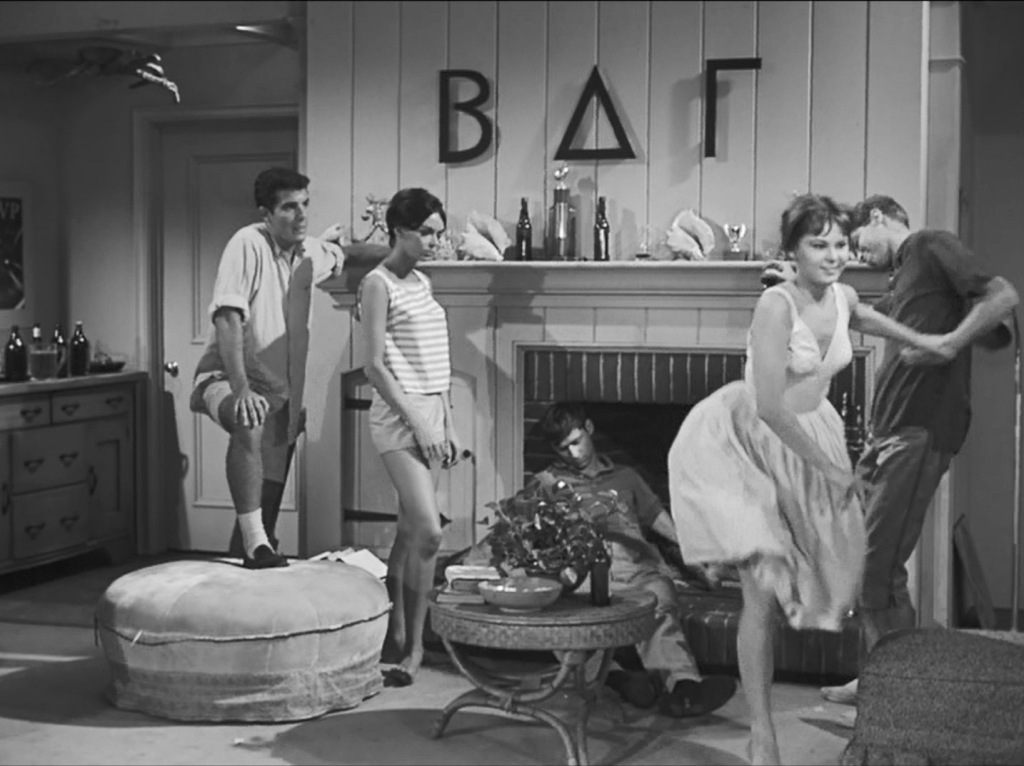
NBC chose not to air a 1962 episode called “The Sorcerer’s Apprentice” because the sponsor felt the ending was too gruesome. In the episode, a magician’s helper is supposed to help in a trick where he “sawed” a woman in half, but he doesn’t realize he truly saws her in half.
đź“·thecompletehitchcock.com

As you might guess, with a new story every week, many celebrities appeared on the show including Charles Bronson, Bette Davis, Bruce Dern, Robert Duvall, Clint Eastwood, Peter Falk, Joan Fontaine, Peter Lorre, Walter Matthau, Steve McQueen, Vera Miles, Claude Rains, Robert Redford, Burt Reynolds, Thelma Ritter, George Segal, and Jessica Tandy.

In addition to the Hitchcock-directed episodes, the show received Emmy nominations for Best Series four times. In 1956 it was up for Best Action or Adventure Series, but it lost to Disneyland. The following year found the show in the Best Series – Half Hour or Less category, but it lost to The Phil Silvers Show. 1958 found it in the category of Best Dramatic Anthology Series. You would think that would be a no-brainer win for this show, but it lost to Playhouse 90. It had its fourth category nomination in 1959 as Best Dramatic Series – Less Than One Hour and lost to Alcoa Theatre. I guess the Emmy committee had a hard time determining categories for a few years.

In a different twist, NBC tried to air the show again in 1985. Hitchcock had passed away five years earlier from renal failure. A made-for-TV-movie combined new stories with colorized segments from the original show. It lasted a year before NBC canceled it. USA picked it up for three more seasons.

đź“·screentunes.com

The original show can still be seen on a few different networks including MeTV.

With Hitchcock’s popularity in 1955, it’s no wonder that this show was a successful series for a decade. The episodes were well written, and they had a wonderful cast of actors. Many people probably tuned in just to see Hitchcock, and his personality was larger than life, even if his behavior was a bit despicable at times. One of Alfred’s quotes about the show was that “television has brought murder back into the home – where it belongs.”

MacMillan and Wife: The Show That Bridged the Generation Gap

Before launching into this week’s topic, I wanted to say thank you to everyone who has been following and reading my blog. This week begins my fourth year writing this blog. I was worried I would find enough topics to fill the first year but next year is already outlined, so another year of classic television is on the way. It has been a lot of fun, and I’ve learned a lot.

This month we are looking at crime-solving duos.  We start our series learning a bit more about McMillan and Wife. McMillan and Wife began as part of The Sunday NBC Mystery Movie which included Columbo and McCloud. The shows rotated each week, so fewer episodes were produced of each than a typical weekly show.

Photo: memorabletv.com

McMillan and Wife debuted in 1971 and was on the air until 1977, yet only forty episodes were produced. Leonard Stern was the creator, writer, and executive producer of the show; he previously produced Get Smart.

Photo: imdb.com

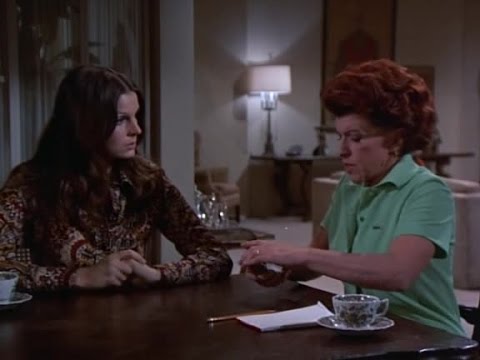
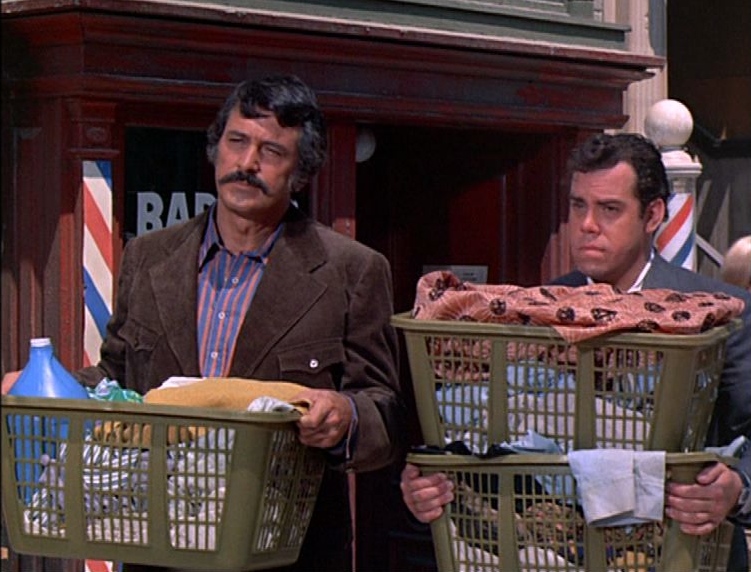
Stewart “Mac” McMillan (Rock Hudson) was an attorney and US Navy veteran who apparently had been involved in some CIA activities. He is now Commissioner of Police in San Francisco. He gets involved in high-profile cases. His wife is Sally (Susan St. James), and her father was a detective for the San Francisco Police Department; she learned a lot from him and helps her husband solve crimes. Sargent Charlie Enright (John Schuck) helps Mac with his cases. Sally and Mac have no children (it’s confusing because Sally was pregnant twice on the show, but the children are never mentioned in the show later). Their housekeeper Mildred (Nancy Walker) also lives with the couple. Mildred’s character resembles the role Thelma Ritter played in Pillow Talk, where Hudson starred with Doris Day. She is a sarcastic, hard-drinking woman and is always ready to offer her opinion, but she is devoted to Mac and Sally.

Photo: afinalcurtaincall.blogspot.com

Once Hudson was cast as Mac, the show got priority in development. Several actresses were considered for the role of Sally, including Diane Keaton and Jill Clayburgh, but Hudson was most comfortable with St. James.

Photo: pinterest.com

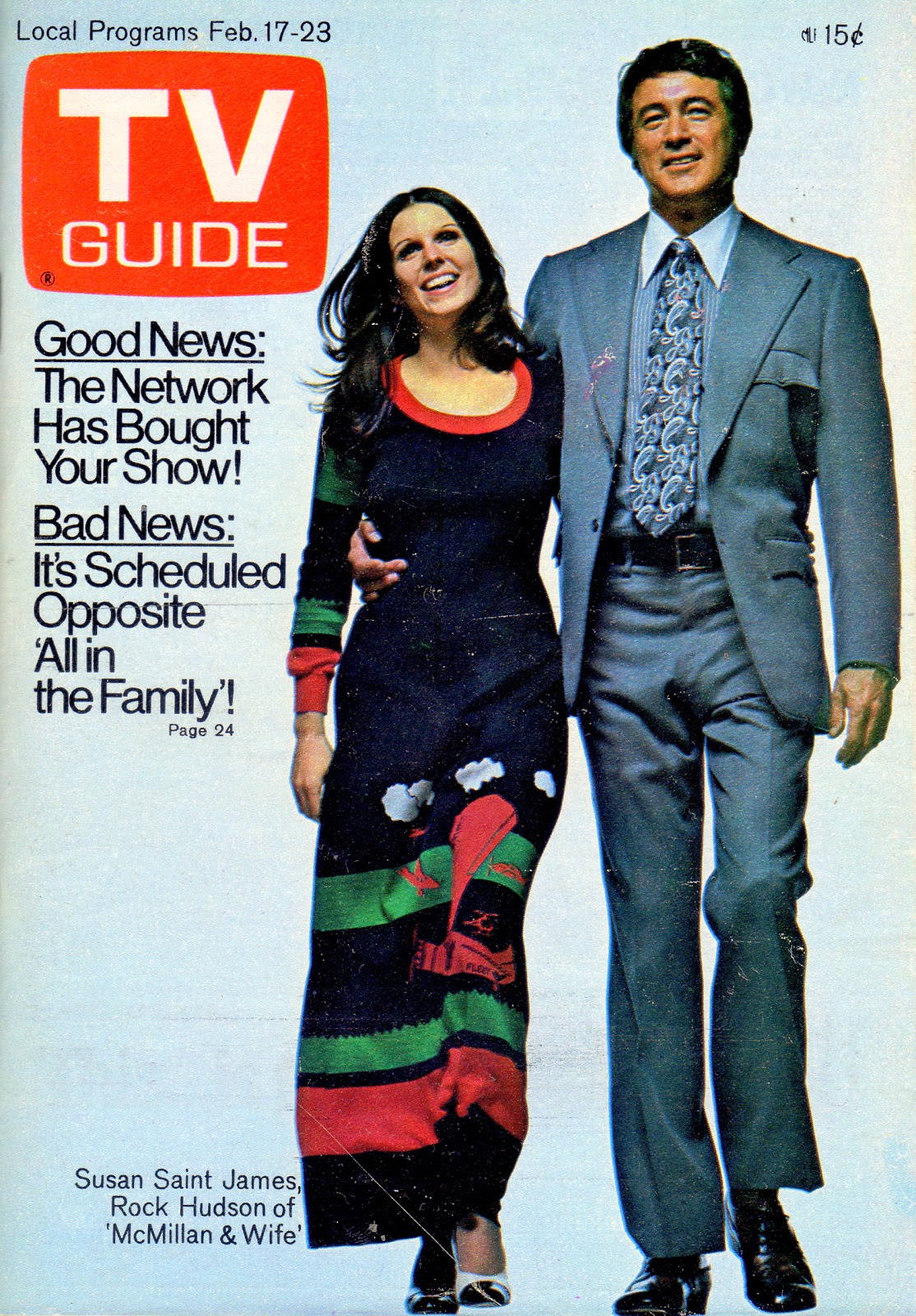
Hudson was 21 years older than St. James, but their relationship worked. Mac is supposed to be in his 40s and Sally in her 20s (he was 46 at the time and she was 25). Sally is self-confident and is not afraid to speak her mind. However, she is also a wife who loves her husband, and one of the running gags on the show is that Mac had dated a lot of women in his past, and when Mac and Sally are out and about, they typically run into some gorgeous woman who says, “Hi Mac.” Sally usually responds with a jealous comment or a withering look. The difference in their ages actually worked well for demographics. Hudson appealed to older viewers while St. James attracted younger viewers.

Photo: popflock.com

Often the cases Mac solves happen during events the couple attends. One episode featured a burglary at a charity event they were attending; once they found a skeleton in their house after an earthquake. Another show had Mac abducted by mobsters and replaced with a surgically-made twin replacing him.

Photo: youtube.com

An interesting fact is that the interior of their house in the pilot episode was in fact Hudson’s home. In the first regular episode, the MacMillans bought a new house. In the final season, the setting changed to an apartment.

Photo: madman.com.au

Sally and Mac led a glamorous life. The scripts were well written, and the dialogue was witty and clever. The couple was often compared to Nick and Nora Charles in the Thin Man movies. Mac and Sally have a lot of their best conversations after they go to bed at night.

Photo: sitcomsonline.com

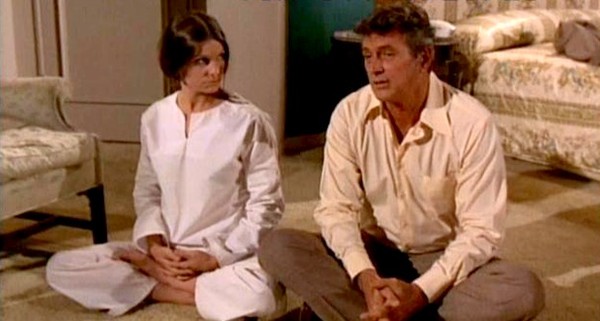
Sally was known for wearing a football jersey for her nightgown. The jersey was an authentic 49ers Jersey, number 18, George Washington, a wide receiver. Washington was a four-time Pro Bowler. He made a guest appearance on the show in season four, “Guilt by Association.”

Considering that there were only forty episodes produced, this show had an incredible number of guest stars. I apologize for the long list, but it’s the only way to capture how impressive it is. The stars included sport celebrities Dick Butkus, Rosie Grier, Alex Karras, and Bobbie Riggs.

Photo: amazon.com

It also featured a Who’s Who of television sitcom royalty: John Astin, Meredith Baxter, Tom Bosley, Michael Constantine, Bert Convy, Wally Cox, Richard Deacon, William Demarest, Donna Douglas, Barbara Feldon, Norman Fell, Buddy Hackett, Larry Hagman, Alan Hale, Shirley Jones, Stacy Keach, Bernie Kopell, Julie Newmar, Charlotte Rae, Charles Nelson Reilly, Dick Sargent, Natalie Schafer, Susan Sullivan, Karen Valentine, and Dick Van Patten.

The show, like McCloud and Columbo, was quite popular with viewers. The ratings were impressive until the sixth season.

Unfortunately, the last season had too many changes to overcome. St. James decided to leave to concentrate on her movie career. Schuck left to star in the sitcom, Holmes and Yo-Yo, and Walker left for her own sitcom, The Nancy Walker Show. Sadly, Walker and Schuck would have been better off staying because both their shows lasted only 13 episodes. St. James starred in a couple of movies, but they weren’t anything memorable. She would go on to star in Kate and Allie in 1984.

Photo: cult-tv-lounge.blogspot.com

On the show, Sally was killed in an airplane crash. Mildred was said to leave to open a diner, so her sister Agatha (Martha Raye) took over her job. Schuck made a few appearances but was said to have been given a promotion to lieutenant which kept him too busy to assist Mac much. The show may have been able to overcome one of these changes but not all of them. Much of the strength of the show was the relationship between Mac and Sally. Walker’s funny bantering and actions provided a comedic relief for the show. When Raye took over, she was just scatterbrained and loud; the appeal of Walker was not part of her character.

Photo: imdb.com

It’s wonderful the show lasted five good seasons, but it might have lasted many more if the original cast had been retained. At the other end of the spectrum, Columbo aired off and on until 2003 and is remembered by more viewers.

DVDs were released for all six seasons between 2005 and 2014. With only forty shows in the series, this would be a fun binge-watching week-end show to tackle.