“Oh, he was a nice, nice man.”

With all the research I have done, I have discovered a lot of nice folks in the entertainment industry (as well as a few not so nice people), but I have never read about anyone more liked than Howard McNear.  Everyone went out of their way to say what a kind and caring man he was.

mcnear5

McNear was born in Los Angeles in 1905. He studied at the Oatman School of Theater and then joined a stock company in San Diego. During World War II, he enlisted as a private in the US Army Air Corps. He went on to a career in radio, films, and television. In the mid-1960s, he had a stroke and died from complications of pneumonia in 1969. Parley Baer, a life-long friend, delivered his eulogy. He was buried in Los Angeles, completing his California life cycle.

mcnear3radio

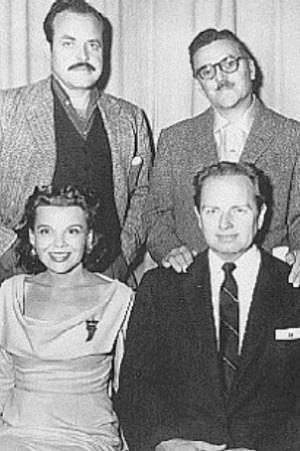
Howard began working in the radio industry in the 1930s. He was featured in many radio shows, including The Adventures of Bill Lance – a detective drama starring John McIntire as Lance. McNear played the part of Ulysses Higgins, a friend and assistant to Lance. He also filled the role of Clint Barlow on Speed Gibson of the International Secret Police. Some of the other shows he often appeared on included Suspense, Lux Radio Theater, Escape, CBS Radio Workshop, Family Theater, Let George Do It, The Adventures of Masie, Fort Laramie, Wild Bill Hickock, and Richard Diamond, Private Eye. He and Parley Baer were part of the cast of The Count of Monte Cristo, a drama. He continued to work often Baer they both voiced characters frequently on Yours Truly Johnny Dollar. He played congressmen, hotel managers, French detectives, and occasionally the villain.

mcnear6gunsmoke radio

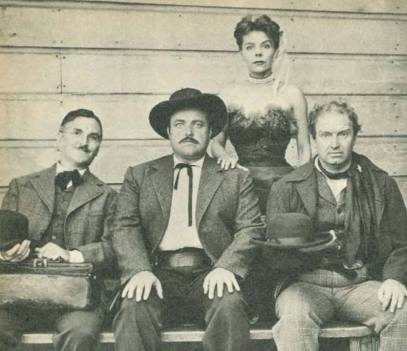
He was still working with Baer when they both created their most famous radio characters—Baer as Chester and McNear as Doc Charles Adams—in Gunsmoke which was on the air from 1952-1956. Baer would later show up in Mayberry as the mayor.

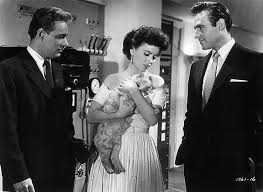
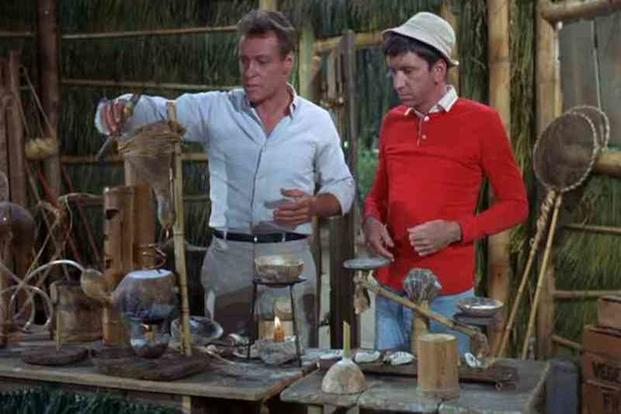
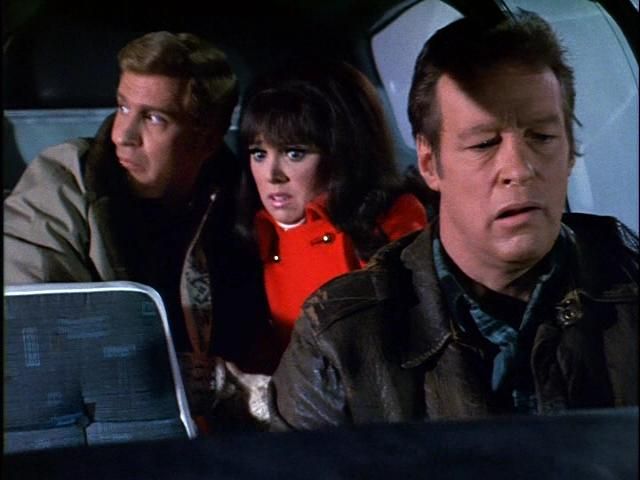
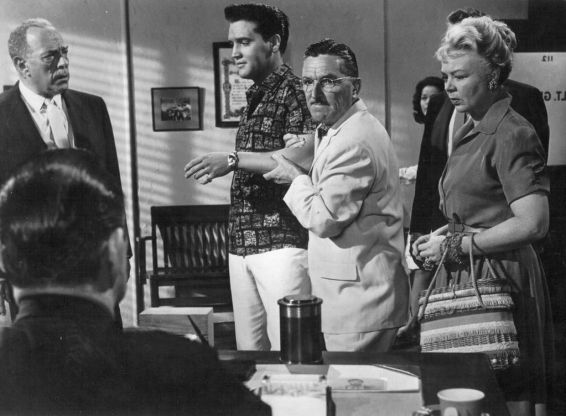
McNear made his film debut in the 1951 sci-fi film, The Day the Earth Stood Still. He followed that up with Escape from Fort Bravo. In 1959 he played Dr. Dompierre in Otto Preminger’s Anatomy of a Murder. Some of his most famous films were Voyage to the Bottom of the Sea and two Elvis flicks, Blue Hawaii and Follow That Dream. He was also featured in three Billy Wilder comedies: Irma La Douce, Kiss Me Stupid, and The Fortune Cookie.

mcnear7

Overall, he appeared in more than 100 films and television shows. He transitioned into television in the 1950s, appearing The Jack Benny Show and the Burns and Allen Show. He appeared in comedies such as I Love Lucy, Private Secretary, December Bride, The Donna Reed Show, Bachelor Father, and The Adventures of Ozzie and Harriet. He also showed up in dramas like The Thin Man, Playhouse 90, Richard Diamond, The Twilight ZoneThe Zane Grey Show, Maverick, and Alfred Hitchcock. Ironically, he had a role as a barber in Leave It to Beaver.

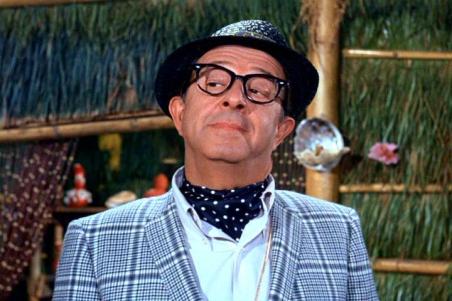
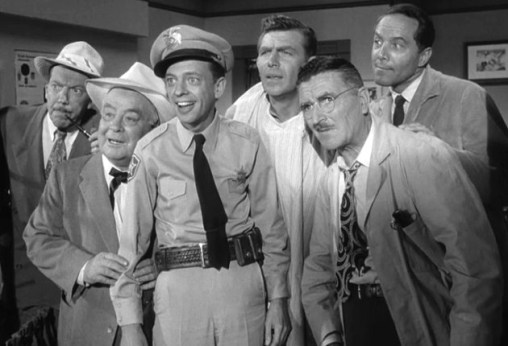
Although McNear had a long career on radio and in films, he will forever be remembered for his memorable and scene-stealing portrayal of chatty and naïve Floyd the Barber in the long-running The Andy Griffith Show (TAGS). Don Knotts once said that playing Floyd wasn’t much of a stretch for McNear, as his real personality was pretty much like Floyd to begin with.

baldwin

The first episode of TAGS to feature Floyd did not star McNear; Walter Baldwin was Floyd Lawson. After that episode, McNear took over and made the role his own. On his first appearance he was Floyd Colby, but the next time his name was mentioned it had become Floyd Lawson. Floyd’s shop was where the Mayberry men gathered to gossip and play checkers, and they occasionally got haircuts.

mcnear1

We usually see Floyd wearing his well-groomed mustache, thick glasses, and his white barber coat. We learned several things about Floyd during the course of the show. He is a widower. His wife was named Melva and they had two children, a son and a daughter. His son Norman plays the saxophone and baseball. When he retired he moved in with his daughter and her family. Floyd had a niece in town named Virginia Lee who entered the Miss Mayberry Pageant. He was also Warren Ferguson’s uncle; Ferguson would replace Barney as deputy when he moved from Mayberry to the big city.

Floyd often (incorrectly) attributed famous quotes to Calvin Coolidge. Floyd had a dog named Sam and raised pansies. He typically drank coffee but enjoyed a Nectarine Crush or a Huckleberry Smash soda now and then, and he thought Wally had the best pop in town.

mcnear8

Floyd liked to write. He wrote the song for the Miss Mayberry Pageant: “Hail to thee, Miss Mayberry; All hail to thee, all hail; Your loveliness, your majesty; Brings joy to every male; All hail, all hail, all hail; All hail, all hail, all hail.” He even tried to write a novel but had writer’s block after creating a brilliant first sentence: “The sun is dropping lazily down behind the purple hills in the western skies.”

floyd2

In the middle of the show’s run, McNear suffered a debilitating stroke, leaving half his body paralyzed. He took some time off to recover. Andy asked him to come back, and the production crew went to great lengths to make things comfortable for him. Although he could not walk or stand, he was seen sitting outside on a bench. There was a special platform built so he could cut hair looking like he was standing while sitting.  Often a he holds a prop with his left hand, using his right hand as he spoke his lines. In 1967, he left the series for good when he could not remember his lines.

floyd1

My two favorite Floyd episodes were “Floyd, the Gay Deceiver” and “Convicts At Large.”

In “Floyd, the Gay Deceiver,” Floyd has been corresponding with a wealthy pen pal, a widow. She wants to visit Mayberry which gets him frustrated. He wants to meet her, but he has painted himself as an equally wealthy man. Andy helps him maintain the ruse by using a mansion of a man who is out of town. Eventually, Floyd realizes that the widow was not the wealthy woman she made herself out to be either.

In “Convicts At Large,” the normally excitable Floyd displays a calm demeanor after he and Barney are taken hostage by three escapees from the women’s prison–Big Maude, Naomi, and Sally. When they go into town to buy food, Andy realizes that there is something fishy going on and recaptures the women.

floyd5

The cast members who worked with McNear can best describe the type of man he was. In Richard Kelly’s book, The Andy Griffith Show, Andy Griffith, Jack Dodson, and Richard Linke share their memories of Howard McNear. It seems fitting to let them have the last words of this blog.

Andy Griffith:

Howard, first of all, was a leading man in the San Diego theatre years ago. He never was in New York in his life. He developed this comic character, I believe, on The Jack Benny Show. Howard was a nervous man and he became that man, Floyd.

Then Howard had a stroke and was bad off for a long time. He was out of our show for about a year and three-quarters. We did a lot of soft shows, that is, those that were not hard on comedy — stories about the boy or the aunt. But we needed comedy scenes to break up things.

We were working on a script one day, and Aaron [Ruben] said, `Boy do I wish we had Howard.’ And one of us said, ‘Why don’t we see if we can get him.’ So right then we called up Howard’s house and we got his wife, Helen. ‘Oh,’ she said, `it would be a godsend.’

Well, we wrote him a little scene. He was paralyzed all down his left side and so we couldn’t show him walking. We had him sitting or we built a stand that supported him. He could then stand behind the barber chair and use one hand. Most of the time, however, we had him sitting. His mind was not affected at all. He was with us about two years after that before he died. Finally poor Howard died. I’m sorry because there was never anyone like him. Kind, kind man.

Jack Dodson:

Unfortunately, I didn’t know Howard before his stroke. Even after his stroke he was just a wonderful human being and a splendid actor. Sadly, it was during the playing of a scene with Howard that we realized he couldn’t go on anymore.

It was the segment where I wanted to raise the rent on the barbershop. The characters had a great falling out and then, at the end of the show, they were brought back together in the courthouse. Howard had a little difficulty with that segment. We had to change our shooting schedules a little so that his days were not quite so long as they had been. And then, finally, we had a very simple scene of reconciliation. He couldn’t remember it. He went over it and over it, frustrated with himself. Seeing his despair and anxiety was the most painful experience that I’ve ever had. And then he didn’t come back after that.

Richard Linke:

We went to the funeral, and I have to say that it was the only funeral I’ve ever been to where the laughs exceeded the tears. There were a couple of people who knew him well. They spoke in the form of a eulogy — I guess you could call it that. Oh, but it was funny. They related Howard McNear stories from the pulpit. It was something else. Really, it made a nice thing. I think Hal Smith, who played Otis, got up there. It was something else, those stories. And yet, it was all done with dignity. Oh, he was a nice man.


The Amazing, But Much Too Short, Career of Richard Deacon

Richard Deacon, 1960s

Richard Deacon was born in Philadelphia, Pennsylvania in 1921, but most of his adolescence was spent in Binghamton, New York. When he was only 11, he contracted polio. He took up dancing to build up his leg muscles.

Deacon’s first career choice was to become a doctor.  He was working as an orderly at the Binghamton Hospital when World War II began. He tried to join the Navy; they suggested he try the Army.  He did and joined the medical corps.

After the war, he studied medicine at Ithaca College but soon switched to acting. He studied drama for a couple of years and was the actor in residence at Bennington College.  After spending some time in New York, he headed to California to look for work.  After paying his dues as a bartender, he finally got a break and was offered a role in a film, Invaders From Mars.

When he first began his career, Helen Hayes advised him to become a character actor as opposed to a leading man.  It was great advice, and he was one of the most beloved and prolific actors during the golden age of television. During his career, he appeared in 66 movies on the big screen, guest starred on 92 different television shows, and starred in six series.

In the 1950s, he appeared in 48 television shows including Burns and Allen, The Life of Riley, Bachelor Father, and the Gale Storm Show.  He had regular roles in two sitcoms.

The Charles Farrell Show debuted in 1956. Farrell played himself as the manager of the Palm Springs Racquet Club, a resort he actually owned and operated. It was a summer replacement for I Love Lucy and only lasted 12 episodes. Richard played Sherman Hall.

deacon8

In 1957, he got another chance at being a regular in a sitcom, Date with the Angels starring Betty White. Deacon played Roger Finley.  This show lasted one year.

Richard continued his productive acting career, appearing in 43 shows in the 1960s.  He could be seen in a wide range of shows including Bonanza, The Rifleman, My Three Sons, Make Room for Daddy, Perry Mason, The Donna Reed Show, The Twilight Zone, Mr. Ed, I Dream of Jeannie, Get Smart, The Munsters, and The Addams Family. He was also appearing in a number of films during this decade. He appeared in four sitcoms on a regular basis during the ’60s.

Leave It to Beaver aired from 1957-1963. Deacon played Fred Rutherford, father of Clarence, or Lumpy, Rutherford, Wally’s friend. During the 6 seasons it was on the air, Fred was in 63 episodes.

Part way through the series, he was offered another regular role, that of Mel Cooley on The Dick Van Dyke Show.  From 1961-1966, he brightened the screen in 82 shows, putting up with his brother-in-law’s bullying and Buddy Sorrel’s belittling. Deacon had high praise for everyone connected with The Dick Van Dyke Show.

One day Morey Amsterdam was goofing around with Richard and said he didn’t think his hair had fallen out, he thought it had imploded and fallen into his brain, clouding his thinking.  Carl Reiner came running on the set and said to add that dialogue to the show.  From then on, there was an insult fest between Buddy Sorrell and Mel Cooley. When the writers were trying to come up with a comeback from Mel to Buddy, Reiner asked Deacon how he would respond to someone who continued to torment him.  Deacon replied, “Yeecchh!” and his trademark phrase was invented.

deacon9

Bud Molin, Dick Van Dyke Show film editor described Deacon as “the funniest human being on the face of the earth.” Carl Reiner said it was a joy to have him around and everyone on the show loved him.

Deacon, Leonard, Reiner, Paris

The Dick Van Dyke Show was one of the best shows ever written. It won the Outstanding Comedy Emmy in 1963, 1964, and 1966. After the cast of the Dick Van Dyke Show decided to end the show on its own terms, leaving the air with its quality reputation intact, Deacon was offered another sixties role.

Phyllis Diller had a fantastic cast on her show, The Pruitts of South Hampton, or The Phyllis Diller Show as it became known in syndication. This was about a formerly wealthy family who found out they owed $10,000,000 in back taxes.  They try to appear that they still have their wealth, while living in very reduced circumstances.  The cast included Louis Nye, John Astin, Reginald Gardiner, Paul Lynde, Gypsy Rose Lee, Billy De Wolfe, John McGiver, and Marty Ingels in addition to Diller and Deacon.  I don’t know how this show did not succeed, but it was taken off the air after only one year. Diller and Deacon continued to work together both on an episode of Love, American Style and in the production of Hello Dolly in the 1969-1970 season.

deacon14

Once the Diller show was canceled, Deacon was offered a role on The Mothers-In-Law starring Kaye Ballard and Eve Arden. Deacon took over the role of Roger Buell mid-way through the series. The concept was two families who didn’t necessarily get along were neighbors whose children  married so they had to find ways to get along and keep the peace.

deacon4

After the show was cancelled, he continued to stay busy with his acting career.  He also appeared in 17 episodes of Match Game and several Family Feud episodes.

deacon7

Deacon was a life-long bachelor.  He was a closeted gay man who had to keep his sexual orientation secret to keep his options open to work for companies like Disney. He was also a gourmet chef.  In the 1980s, he hosted a Canadian cooking show about microwave cooking, writing a book that sold almost two million copies. He spent a lot of his spare time working with SYNANON, an agency that helped teenage drug addicts.

On the night of August 8, 1984, he was suffered a heart attack in his Beverly Hills home. He was rushed to Cedars Sinai Hospital, where he died later that night. He was 63 years old.

deacon15 - Copy

Everything I read about Richard Deacon painted him as a gracious, friendly, very funny man who was caring and kind.  He had an amazing career, with 180 acting credits within a 30-year period.  The legacy he left was a rich and full acting life. Pretty good for a guy who chose to be a character actor and was humble enough to turn down two offers to star in his own show.